
Don Ward
This transcript was generated by AI and may contain errors. It is provided to assist those who may not be able to listen to the message.
We're titled the sermon today, The Power of God in You. The Power of God in You. Do you ever stop, think, and say to yourself, I have the power of God dwelling within me. The very power of God. Think about what I just asked you. Do you ever stop and say to yourself, I have the power of God dwelling in me. I seriously doubt that many of us have ever just meditated on the fact that we have dwelling within us, the very essence of God, the Holy Spirit. Through the Holy Spirit, God does works of power. Let's look at Zechariah chapter 4. This is in the middle of this vision that we mentioned last week, where Zechariah saw the bowl with the seven lamps in it and the two out of trees on either side, top of the candelabra. But here's what God says here. We used to have ministers, I think pretty much we've stopped this now go around saying, and church people, the Holy Spirit, the power of God. Or, whereas they should be saying that through God's Holy Spirit, you can do acts of power, as we see here in Zechariah chapter 4. In Zechariah 4 verse 6, then he answered and spoke unto me, saying, This is the word of the eternal unto Zarebo-bel, saying, Not by might nor by power, but by my spirit, says the eternal host. It is God's Spirit, the very essence of God within us, that we can do works of power. Have you ever done works of power through the Holy Spirit? What about the works that Jesus did while he was here on the earth? Did Jesus do the works through his own power, or did he do the works he did through the Spirit of God? Have you ever thought about that? Have you ever really read the verse and focused on it? We hope to go here today, where few have gone in the past, with regard to plunging the depths of having God living in you and what that really means. And can we really come to the point that we stir up the power of God that resides within each one of us? And can we really come to believe what Jesus says? Let's go now to John 14, verse 8. In John 14 and verse 8. John 14, verse 8. Philip asks Jesus, what about the Father? And Jesus said, well, if you have seen the Father, if you've seen me, you have seen the Father.
In John 14 and verse 8, Philip said unto him, Lord, show us the Father, and it suffices us. And Jesus said unto him, Have I been so long time with you, and yet you have not known me, Philip? He that has seen me has seen the Father, and how sayeth you, show us the Father. Jesus Christ was in the express image of the Father of the same essence. Jesus Christ and the Father are co-essential. That is, they have the same essence within them, same spirit that we have in us, and they are co-eternal, having existed forever without Father, without Mother, without beginning or end of days. Verse 10, Believe you not that I am in the Father and the Father in me, the words that I speak unto you I speak not of myself. I speak not of myself, but the Father that dwells in me, he does the works.
The Father who dwells in me, he does the works.
Believe me that I am in the Father and the Father in me, or else believe me for the very works sake. Verily, verily, I say unto you, he that believes on me, the works that I do, shall he do also, and greater works than these shall he do, because I go to my Father.
Jesus did not take credit for the works he did. He clearly states that the Father did the works.
He then says that he that believes on him will do greater works than he does because he goes to the Father. I would doubt there's anyone in the congregation here today that would say that he, she, has done greater works than the Father, or greater works than Jesus Christ. Has any man ever done greater works than Christ?
Christ says greater works than I have done, you shall do. And one of the main reasons is because I go to my Father. Was Christ stretching the truth when he said greater works than I have done, you shall do, because I go to my Father? I think we almost get uncomfortable when we begin to even talk about this, but it's clearly here in scripture. The reason he said that believers would do greater works than he did because he goes to the Father is because he had to go to the Father for the Holy Spirit to be sent. And it is through the Holy Spirit that we can do works of power. So we go now to John 16 and verse 7, which in essence summarizes what I just said. In John 16 verse 7, Nevertheless, I tell you the truth, it is expedient for you that I go away if I go not away. The comforter, the paracletos, which in John 14, 26 says this, the Holy Spirit will turn back there in just a moment. For if I go not away, the comforter or the Holy Spirit will not come into you. But if I depart, I will send him unto you. Comforter is masculine, therefore the referent pronoun is masculine. It doesn't make it a person. So we go back now to John 14 verse 22.
John 14 verse 22. Jesus said unto him, not as chariot, Lord, how is it that you will manifest yourself unto us and not unto the world? Why can't everybody else see you? Jesus answered and said unto him, if a man loved me, he will keep my word, and my father will love him, and he will come unto him, and we will come unto him and make our abode in him. The same Spirit that is in God is in Jesus Christ, is in us. It is that essence of God. It's not greater than God. It is the essence of God, and the Holy Spirit is under the direction of God and or Christ. And when God gives you the Holy Spirit, you have to decide whether or not you are going to utilize that gift of the Holy Spirit. The very essence of God, the very power of God, dwells in us. We will make our abode in him.
Greater works than I have done, you shall do, because I go to my father.
It is expedient for you that I go to my father, because if I don't go to my father, the comforter will not come unto you.
Verse 25, these things...
Well, verse 24. Verse 24, He that loves me not keeps not my sayings, and the word you hear is not mine, but the Father who sent me. These things have I spoken unto you, being yet present with you, but the comforter, which is the Holy Spirit, whom the Father will send in my name.
Whom the Father will send in my name. Of course, Jesus Christ, we shall see. Jesus Christ plays a role in sending the Holy Spirit as well. He shall teach you all things and shall bring all things to your remembrance whatsoever things I said unto you. Peace I leave with you, my peace I give unto you. Not as the world gives I give unto you. Let not your heart be troubled, neither let it be afraid.
You have heard how I said unto you, I go away and come again unto you. If you love me, you would rejoice because I said I go unto the Father, for my Father is greater than I. And now I have told you before it come to pass that when it comes to pass, you might believe. Do we really believe and understand the words of Jesus Christ? I hope as we continue through this today that we will come to a much deeper understanding with regard to God and Jesus Christ and the Holy Spirit and what we are to do. Most people just don't grasp the significance of the fact that the very essence, the Holy Spirit, the very essence of God is within us, and it's almost like it's their dormant, sort of like Bermuda grass in the wintertime. It's dormant, it's brown, it's lifeless, but it's there and give it, stir it up a bit with warmth and rain, sunlight. It comes to life again, and you'll have to start mowing. Now look at John 15.26.
The Gospel of John, to me, the most important Gospels—of course, every word of God is very important—but the Gospel of Matthew that bridges the gap between the Old and New Testament and then the Gospel of John that talks so much about the nature of God and Christ and the Holy Spirit, which is the essence of God. So now we're at John 15.26. Well, when the Comforter is come, whom I will send unto you from the Father. And we read earlier that the Father would send it in my name. Here we see that I will send the Holy Spirit from the Father, even the Spirit of Truth, which proceeds from the Father.
So the Father is like the source, and if He's not the one that begets us, then someone else is our Father. The Holy Spirit is not our Father. The Father is our Father. What about that? I mean, the Father is our Father. He is the one that begets us with His very divine essence, that which He is. God is Spirit, and those who worship Him must worship Him in Spirit and Truth. So where is this leading today? It's not just a vain exercise in knowledge.
We are hoping to go today where very few have ever gone because they apparently don't understand that they are supposed to utilize the Holy Spirit that is in them to do works of power, not like the fake healings and the fake things that you see in the TV ministries, people falling backwards, giving testimonies that are lies, ordering holy water. Yes, on television you go to Direct TV channel 367. There's this guy that's been around for, his name is Peter Popoff, and you can get his holy water. And if people do understand something about the Holy Spirit, it is more of an intellectual kind of grasp and understanding to some degree various aspects of the Holy Spirit that is in them. But so many people, and I would say I've been in this boat myself, how do you really utilize the Holy Spirit and what is the big key within it?
As a result, we have done and are doing a great job in quenching the Holy Spirit, as awesome as the power of the Holy Spirit is in us, we must consciously choose to put it into action through faith. We must consciously choose to put it into action through faith.
But oftentimes we're so busy with going through the form of what we think is righteousness that we're denying the power thereof. So let's go to 2 Timothy 3.5. In 2 Timothy 3, the first several verses is taken up with the various behaviors that will be extant in the world at the end of the age, perilous times, lovers of themselves, cavities, boasters, without natural affection, traitors, heady-minded. In verse 5, I think sometimes we read this and think, well, this is people in the world who go to church on Sunday. The Bible is written first and foremost to us. Paul is writing this epistle. He was in prison writing this epistle to Timothy to try to stir him up so that Timothy would use the power that was within him, that is, the Holy Spirit, through the laying on of hands.
Apparently Timothy was becoming timid.
Becoming timid. And he was somewhat ashamed or being silent. The guy of the very person that fathered me in the gospel, he's in prison. How could this happen? Beginning to draw back and all of that. Verse 5, having a form of godliness, but denying the power thereof, from such turn away. So are we denying the power thereof?
As I said earlier, I believe the Bible was written first and foremost to us.
Are you and I at best osmotic Christians? You know about the process of osmosis. I think to a large degree I have been. I am trying to wake up out of my dormant sea and to utilize the Holy Spirit to claim the promises, to believe in faith, and to be comforted by the very fact. I mean, when you really come to the point where you understand the significance of the Holy Spirit, the very essence of God dwelling in you, and that you have that within you, that power. It's such comforting, so comforting to know. Somewhat like Psalm 27 that's been set to music, the Lord is the light of my life, whom shall I fear? Of whom shall I be afraid? But I'm on a journey and a crusade within my being to change from being osmotic to being in the arena and utilizing the Holy Spirit. Osmosis in the physical realm is a process whereby a fluid, usually water, or if it's in the body, is to pass through a semi-permeable membrane into a solution where the solvent concentration is higher, thus equalizing the concentration of materials on either side of the membrane. Now, that's a highly scientific definition, one that you'd use more than chemistry, but here's a concrete example. If this is the knee joint, where I have my hands here, surrounding the knee joint are bursa sacs. Bursa sacs contain fluids, synovial fluid. This fluid seeps through these sacs, these bursar sacs, into the knee joint cavity and lubricates the knee joint. And if you don't have that lubrication, of course your knees get stiff and you might begin to grind and all kinds of things happens. In the spiritual sense, an osmotic Christian is one that believes if he-she goes through the form of righteousness, they will become righteous. I'm on the assembly line and I go down through the assembly line sort of robotically and I become righteous when I come out on the other end.
And some people are so busy with the form that they seldom recognize and meditate on the latent power that is within them through the Holy Spirit. Could any of us say that we're doing greater works than the works that Christ did? He said, you shall do. Was he just talking about the apostles of his day? I guess you could make that argument that it was just the apostles there, though we'll see that Paul, and he was an apostle also, that the apostle Paul did some very great works. So once again, do we ever just stop and think and meditate on the fact that since we have God's Spirit dwelling in us, we have the potential to do great works of power?
Now, some might get the wrong idea with regard to doing great works of power. I'm not talking about going out and raising the dead and healing all the sick. I'm not talking about that. Jesus Christ himself was very circumspect regarding the manifestation of the great power that was within him. And very often he would say, don't tell anybody about this. Go your way. Don't tell anybody that this happened.
John the Baptist was a great example of one who utilized the Holy Spirit that was leading him, and John did no miracle. This is not necessarily having to deal with miracle working. The Scripture says very clearly, John did no miracle. Yet he came in the Spirit and power of Elijah, and he turned the world upside down, basically that part of the world, in six months. In John 3.34, let's go there, in John 3.34, now some might use this as an excuse and say, well, I don't have this.
And I guess we could say we don't. So, in John 3.34, for he whom God has sent speaks the words of God, for God gives not the Spirit by measure unto him. So we could say it in the affirmative that God gave the Holy Spirit to Jesus Christ without measure. He was absolutely filled with the Holy Spirit.
So what about the power to overcome Satan, sin, and self? We tend to focus on the big eye, what the big eye needs to do. I need to do this, I need to do that, I need to overcome this, that, or the other. The emphasis is on the big eye. This is what I need to do. Now, don't misunderstand what I'm trying to get all of us to see. We must choose and will to follow God, and we have to trust and obey. We have to exercise faith and obey. But are we really utilizing the great power, the very essence of God that is dwelling within us? If we have God's Spirit, and I believe we do, but I believe that we are not doing as much with it as we should.
Let's note Philippians chapter 2. The Apostle Paul writes concerning God's work within us. In Philippians chapter 2 verse 13.
Philippians chapter 2 verse 13.
For it is God who works in you, it is God who works in you. And oftentimes we're more caught up with, I'm trying to develop character, I'm trying to do this, I'm trying to do that. And of course, we have to work in concert with the Holy Spirit. Romans 8.14 says, those who are led by the Spirit of God, they are the sons of God. Paul admonishes us in 1 Thessalonians 5, quench not the Spirit. Don't let the Spirit go dormant within you. It is God who works in you both to will and to do his good pleasure. God is working within us. Are we allowing God's work to be done in us? Or are we standing in God's way? Are we quenching the Spirit by not even recognizing the power within us? Do you ever meditate on the fact that you are partaker of the divine essence? Let's go to 2 Peter chapter 1. Hopefully, if you really understand what we're trying to get across here today, and I don't think it's that complicated, I believe that a sixth grader can understand it. Maybe a fifth grader. Maybe a fourth grader. They recently did, with regard to various translations of the Bible, and more and more in the Church of God, people are drifting toward these newer translations. Most of these newer translations are corrupt in many ways. They leave out several verses. They change many verses. They change the meaning.
Basically, it's due to the work of, this is a little diversion here, Westcott and Hort. Westcott and Hort, in the late 1800s, came up with a manuscript that was basically based on manuscripts that came out of Egypt. They reasoned that these manuscripts are earlier, therefore they are more accurate. The manuscripts, the two main ones, and the families off of that, Vaticanus and Sinaiticus, this guy out one day, I guess, he is hurting, cheap, or whatever, found this manuscript in a cave. So there are about 44 of those, and most of these newer translations are based on those manuscripts. Whereas, there are some 3,000 other manuscripts, and basically we have emphasized the Byzantine manuscripts, which were basically kept by what was called, came to be known as the Greek Orthodox Church out of Constantinople.
And the Byzantine texts have proven to be just about 99% in agreement. Whereas these other manuscripts, they have many disagreements and many errors within it, so be careful. I know that they say he put it in everyday language. What got me off on this, they had literary experts, reading experts, to do a test on the reading grade level of the King James versus the NIV.
And this is what they said. They said that the King James is written on a sixth grade level, and the NIV is written on an eighth grade level. So, the power of the language and the eloquence in the King James has not been equaled, in my opinion, though, thee and ye and all that stuff, you can easily change to what we say today. In 2 Peter chapter 1, verse 1, Simon Peter, a servant and apostle of Jesus Christ, to them that have obtained like precious faith with us through the righteousness of God, through the righteousness of God, and our Savior, Jesus Christ, grace and peace be multiplied unto you through the knowledge of God and of Jesus Christ our Lord.
According as to his divine power, according as his divine power, have given unto us all things that pertain unto life and godliness, through the knowledge of him that have called us to glory and virtue, whereby are given unto us exceeding great and precious promises, that by these you might be partakers of the divine nature.
The very essence, the very mind of God and Jesus Christ can be in us. Remember how Jesus Christ equates the words he speaks with the Spirit in John 6 63. The words I speak unto you, they are spirit and they are life, that you might be partakers of the divine nature, having escaped the corruption that is in the world through lust.
So are we focusing on the divine power of God, or are we trying to muster up enough willpower to overcome whatever your sin or whatever your witness is? Whatever my sin is, whatever my witness is, do I have enough willpower to overcome it? If it's just a matter of willpower, then we're no better off than the people of the world.
People can will themselves do all kinds of things. Diogenes willed himself to live in a barrel for several years, a Greek philosopher. My daddy came home one day and said, I'm not smoking anymore. He used to smoke maybe four or five a day of good PA. We'll row your own. He said, I don't want my son to grow up in a house where the daddy smokes. That was it. He never touched another cigarette.
Now we have people today who say, well, I need to get baptized, so God will give me the power to quit smoking. Now, once you know and convicted of what the truth is, you've got to obey it or reject it. If you reject it, you quench the Holy Spirit.
But in some ways, that's not the main thrust of where I'm trying to go with this. You might ask yourself, am I caught up in trying to go through the form of righteousness while denying the power thereof? I'm so busy with being busy, church things, and whatever I do with regard to the church. And yet, at the same time, not really realizing the power that we have within us.
Are you so busy being an osmotic Christian that you cannot see the forest for the trees? Note Paul's admonition to the Corinthians. Passover is just around the corner as they say. Look at 2 Corinthians 13.5. And one of the main ways, of course, that you examine yourself is through God's spiritual mirror, the Word of God. In 2 Corinthians 13.5, examine yourselves, whether you be in the faith.
Prove yourselves. Know you not, your own selves, how that Jesus Christ is in you. Do we understand that? Do we utilize Jesus Christ in you? Realize that. Contemplate that on that. Lest you be reprobates. Is Christ really in us? If so, is he dormant? Just waiting to be stirred up. Now we go back to 2 Timothy chapter 1. We read 2 Timothy 3.5 that having the form of godliness but denying the power thereof.
And I told you that when Paul wrote this epistle, he was in prison. Timothy was apparently becoming a bit timid and fearful and drawing back. And so Paul writes this letter. It's like if he could have gotten his hands on him, he would have probably got him by the shoulders and shook him and said, wake up, Timothy.
Get with it. Don't you know what you're involved in? Don't you know what you have within you? So he writes 2 Timothy 1.6, "'Wherefore I put you in remembrance that you stir up the gift of God.'" Now this word, stir, it really comes from... it's a compound word. It comes from three different Greek words, which I'm not going to try to go into. But it has to do with like rubbing together, like friction to stir something up. Of course, if you rub two sticks together, boys' gouts can do this.
I can't. I mean, they can make a fire. Another, what it'll say in Strong's one point, it says, "'To inflame your mind.'" Now, inflame not in the sense of inflammation, but to inflame in the sense of being on fire. I'm on fire.
"'I put you in remembrance that you stir up the gift of God, which is in you by the putting on of my hands.'" The gift of God, the Holy Spirit. "'For God hath not given us the spirit of fear, but of power and of love and of a sound mind. Be you not, therefore, ashamed of the testimony of our Lord, nor of me his prisoner.'" No telling what all people were saying, and people in the church. Do you think that the people in the first century are any more righteous than they are today with regard to human nature and all that? Just read the book of Corinthians. Some of them claimed to be in the church. They didn't even believe in the resurrection.
"'Be you, therefore, be you not, therefore, ashamed of the testimony of our Lord, nor of me his prisoner, but be you partaker of the afflictions of the gospel according to the power of God, who hath saved us, called us with the holy calling, not according to our works, but according to his own purpose and grace which was given us in Christ Jesus before the world began, but is now made manifest by the appearing of our Savior Jesus Christ, who has abolished death, has brought life and immortality, delight through the gospel, whereunto I am appointed a preacher and an apostle and a teacher of the nations.'" So let's get with it, Timothy. Let's stir up that gift that is within you. Don't let it lie dormant. Paul did mighty works and miracles in the course of his ministry. How did he do those works? Let's go to Galatians 3. Galatians 3 and verse 1. Paul did many mighty works during his ministry. Remember that he was preaching through the night and a man fell from the loft dead, and Paul raised him from the dead.
Many people were healed as he went various places. I'm always just taken with this story, and I'm not turning there, Acts 14, where he comes to this place. And here's a lame man, and he looks at him in perceiving that he had faith to be healed. He said, rise up and walk. I wonder if Paul looked at me today. Would he perceive? Well, he has faith to be healed. Rise up and walk. In Galatians 3 verse 1, O foolish Galatians, who has bewitched you that you should not obey the truth, before whose eyes Jesus Christ has been evidently set forth, crucified among you. Of course, the Galatians had Judaizers among them saying that you had to have these certain physical works in order to be justified.
This only would I learn of you, receive you the Spirit of the works, receive you the Spirit by the works of the law. Did you receive the Holy Spirit because you were circumcised? Did you receive the Holy Spirit because x, y, or z with regard to a physical work? No, you received the Holy Spirit by repentance and faith toward God. Did you receive the Spirit by the works of the law or by the hearing of faith? Are you so foolish, having begun in the Spirit, are you now made perfect by the flesh? Have you suffered so many things in vain? If it be yet in vain, he therefore that ministers to you the Spirit and works miracles among you, does he it by the works of the law? Paul said, the things that I have done among you, the miracles that have been wrought, how was it done? Or by the hearing of faith, the hearing of faith, the stirring up of that Spirit that lies within the very Spirit, the very power of God. Now we're going to turn to Acts 6, and we will see an example of perhaps the greatest stirring in the Spirit outside of Jesus Christ. Of course, Paul did many great works. But here in Acts 6, the first part is taken up with a dispute between the Hellens and the Grecians with regard to the daily administration. So Paul says, go out and select men among you. Well, the apostles, not Paul in this case, misspoke there. Paul has not yet converted. He's part of this story. But the apostles say, go out and seek men of good report. We may appoint them this duty of the daily administration. So here's how deacons began in the church. And among those deacons was one named Stephen.
One named Stephen. And we look at Acts 6, verse 8. And Stephen, full of truth and power. Stephen, full of truth and power, did great wonders and miracles among the people. Here's a deacon. He's not an evangelist. I don't guess he's ordained an elder, but he's a deacon. He's a deacon, not an apostle by any means. But he did great wonders and miracles among the people. Then though there arose certain of the synagogue, which is called the synagogue of the Libertines, and serenians and Alexandrians and them of Cilicia and of Asia, disputing with Stephen. And they were not able to resist the wisdom and the spirit by which he spoke.
Then they suborn men. Oh yeah, we'll get him. How do we do it? We go plot. We tell lies.
Then they suborn men, which said, We have heard him speak blasphemous words against Moses and against God. And they stirred up the people and elders and scribes, and came unto him and caught him and brought him to the council. Council is that means the Sanhedrin. Then set up false witnesses, which said, This man ceases not to speak blasphemous words against this holy place and the law. For we have heard him say that this Jesus of Nazareth shall destroy this place, and shall change the customs which Moses delivered us. And all that sat in the council, looking steadfastly on him, saw his face as it had been the face of an angel. And then one of the most inspired passages of scripture in the whole Bible, Acts 7, is taken up with Stephen's response to the charges, which is this great sermon here. And as a result, you look at the last part of Acts 7, verse 54, When they heard these things, they were cut to the heart, and they gnashed on him with their teeth.
See, the power of the Holy Spirit, it will convict down to the very core. Now, there are two, of course, possible responses. There are many responses in between that you try to kill the messenger, or you accept the message and repent. On the day of Pentecost, when they were cut to the quick, they repented.
Here, when they heard this, they gnashed on him with their teeth. But he, being full of the Holy Spirit, looked up steadfastly into heaven and saw the glory of God and Jesus standing on the right hand of God. And said, Behold, I see the heavens open and the Son of Man standing on the right hand of God. Then they cried out with a loud voice and stopped their ears and ran upon him with one accord and cast him out of the city, stoned him. And the witnesses laid down their clothes at a young man's feet, whose name was Saul, who became Paul. And later, Paul was converted and did some of these same great works, though at first he was out trying to kill, and evidently did kill, Christians. Verse 16, He kneeled down and cried with a loud voice, Lord, lay not this sin to their charge. And when he had said this, he died. He fell asleep. So how is the power of God put to work in our lives? It is put to work through faith. Paul said, as we read from Galatians 3.5, it is put to work through faith. Let's look now at 1 Corinthians 2.5. 1 Corinthians 2.5.
Paul writes this letter to the Corinthians with a great rhetorical question as Christ divided, and he shows from your calling to the resurrection, though Christ is not divided.
And he said, He came to them not in the wisdom of men. So we'll read 1 Corinthians 2.4. My speech and my preaching was not with enticing words of man's wisdom, but in demonstration of the Spirit and of power, that your faith should not stand in the wisdom of men, but in the power of God.
So once again, we ask, do we really understand that power? So you have to believe in trust in the power of God that dwells within you. I believe that one of the greatest things lacking in the church today and has been basically lacking since the day, since the first century, is how we are to utilize the Holy Spirit and exercise faith in the power of God to help us overcome all obstacles. We know well the verse in James 2.17, which says, faith without works is dead. And we know that faith and obedience are inextricably linked together. And we know that we cannot just say that we believe and not obey because the devils believe and tremble. We know all of that, and we emphasize that, and we emphasize especially the forum in doing those things. But there is a dimension of faith that is beyond our doing.
We must believe God who is promised, God who is faithful, who is promised. Look at 1 John 5, 4. 1 John 5, 4. John, the great apostle of love, 1 John to a large degree, is written to combat Gnosticism. The Gnostics claimed that Jesus Christ didn't really come in the flesh, but they taught a thing called lucidism or docetism, seamism, that he just seemed to be a fad of in human form. We'll look at 1 John 5, verse 4. For whosoever is begotten of God, God now overcomes the world, and this is a victory that overcomes the world, even our faith.
So it's faith in this power that is within us. And, of course, to begin with, we have to repent and exercise faith in the sacrifice of Christ. There's no other way that sin can be forgiven other than through faith in the sacrifice of Christ.
Why? Because the wages of sin is death. Who is he that overcomes the world, but he that believes that Jesus is the Son of God? So we must believe that God will give us the power to do all things through Christ who strengthens us. Paul writes this in Philippians 4.13. I can do all things through Christ who strengthens me. Do we really believe that? We can quote it. We can quote it, but do we believe it and do we live by it?
The sad truth is that our spiritual power and potential is oftentimes wasted because we do not believe. Even if Jesus Christ, as it is said during his earthly ministry, says, and he did very few or no miracles in that area because of unbelief.
So is our potential being wasted because we do not believe. Oftentimes we don't even ask God for whatever it is we need. And if we do, do we really believe that he will hear and answer our plea?
So start with small things. Start with small things. You need to be writing. Start with small things. What are some of the small things maybe with you might be able to start with?
What about an ache or a pain here or there? If God were to suddenly remove all our trials and heal all of our aches and pains and afflictions, we would soon forget him.
So what about if we just start with small things? To some degree, our needs can keep us in contact with God, relying on him to fulfill all our needs. I have had this experience many times in recent times of God relieving pain, and he will, and he can. But you say, I plead with the Father every day to take away whatever it is, but I receive no answer. If that is the case, so far you have received the answer. The answer is no so far. So why is the answer no? Well, in all of that, I don't know for sure what the answer is. God knows, but I do ask, are we really asking in faith? Do we really believe God will hear an answer? And are we really casting all our care on him? Notice now, 1 Peter, back a few pages if you're in 1 John, 1 Peter, chapter 5, 1 Peter chapter 5 verse 7.
1 Peter 5, 7.
Casting all your care upon him, for he cares for you. Casting all your care on him, because he cares for you. Just think how you talk about freedom and being set free. How could you ask for any more? And that begins to give you the peace of God, which surpasses all understanding. Casting all your care on him, for he cares for you. Let's go quickly to Matthew 11, verse 25. The words of Jesus Christ here, Matthew 11 and verse 25.
Matthew 11, verse 25.
At that time Jesus answered and said, I thank you, O Father, Lord of heaven and earth, because you've hid these things from the wise and prudent, and have revealed them unto babes. Matthew 11, verse 26.
Even so, Father, for so it seems good in your sight, all things are delivered unto you of my Father, and no man knows the Son but the Father, neither knows any man the Father, save the Son, and he to whomsoever the Son will reveal him.
So the Father and the Son have been revealed to us through the word and Spirit of God.
How many people have labored through the centuries to preserve this truth and bring it to us, some of whom did not know the truth as you know the truth but gave their lives to preserve the word of God? Come unto me, all you that labor and heavy laden, and I will give you rest.
Take my yoke upon you and learn of me, for I am meek and lowly in heart, and you shall find rest in your souls to your very being. For my yoke is easy and my burden is light.
You see, if we trust and believe God and cast all our care on him, start with small things. I'm sure that you have lost things and you prayed that God would help you find them.
And oftentimes, probably after you pray, maybe you do find them.
Now, Wanda lost a set of keys, a car. The summer we were moving up here, she was in Houston, and I was here, and she was without a car, and we were 250 miles away apart. And so I threw down everything, jumped in my vehicle, and took off to Houston, and get her the keys. We never found those keys. Even when we just knew when we were moving, we'd find those keys. We never found them.
But it might be trying to find something, and you don't ever get the idea that the devil is hidden it from you. Now, when you begin to attribute physical phenomena to the devil, then you're on dangerous ground. But on the other hand, I believe you can pray to God to help you in anything. I don't care what it is. If it is according to His will, keep reminding yourself that you have the divine essence of God dwelling in you. Trust God. Believe He will light your load and bear your burden. He said He would. There is no power, no force, no organism, no disease, no trial, no obstacle that is greater than God. Not only do we have the Holy Spirit dwelling within us, we have an advocate, an intercessor sitting at the right hand of the Father, who makes pleadings and groanings for us according to the will of the Father. Jesus Christ, our High Priest, makes intercession for us. Therefore, He is able to save us to the uttermost. Look to Jesus, who is the author and finisher of our faith. Look at Hebrews 12.
Sometimes it's like, well, I've got to have faith in Jesus Christ up front to have my sins forgiven, and it's like, well, I've done that. What about Jesus Christ for the rest of our lives? Romans 5.10 says, having been reconciled to God by the death of His Son, we shall be saved through His life. Paul writes, I am crucified with Christ. Nevertheless, I have lived, yet not I, but the Son of God, who loved me and gave Himself for me. We still have to make that decision that we're going to believe, we're going to have faith, we're going to trust, we're going to obey, and regardless of what the answer is, we'll remain faithful. Hebrews 12.1, wherefore seeing we also are accomplished about with so great a cloud of witnesses as cataloged in chapter 11, let us lay aside every weight and the sin which does so easily beset us. Let us run with patience the race that is set before us. Looking unto Jesus, the author and finisher of our faith, who for the joy that was set before Him, endured the cross, the stake, despising the shame, and is set down at the right hand of the throne of God. And He is sitting there making intercession for us. Now, 2 Corinthians chapter 4.
2 Corinthians chapter 4 and verse 5 we begin. 2 Corinthians 4, 5.
For we preach not ourselves, but Christ Jesus the Lord, and ourselves your servants for Jesus' sake. For God who commanded the light to shine out of darkness, has shined in our hearts to give the light of the knowledge of the glory of God in the face of Jesus Christ. That we have this treasure. We have this treasure in earth and vessels that the excellency of the power may be of God and not of us. We have this treasure, this Holy Spirit, the very power and essence of God. The power may be in God, not of us. We are trouble on every side, yet not distressed. We are perplexed, but not in despair. Persecuted, but not forsaken, cast down, but not destroyed.
Always bearing in the body the dying of the Lord Jesus, that the life also of Jesus might be made manifest in our body. For we which live are always delivered unto death for Jesus' sake, that the life also of Jesus might be made manifest in our mortal bodies.
We have that power, that excellency, abiding in each one of us. I hope that we will meditate on these things, that we will think on these things, and we will just set aside. If you set aside one minute, two minutes, or five, I have God's Spirit within me. I have the very essence of God, the divine nature abiding in me. Am I using it? Am I stirring it up? Am I leaving by faith in the sense of believing that what God has promised he will do? Jesus Christ said, Drater works that I have done you shall do because I go to my Father. And he said, if I don't go to the Father, the Comforter of the Holy Spirit will not come unto you. But when it has come, you have that power residing within you. In Acts chapter 1, just before Jesus ascended, he tells the apostles to wait here in Jerusalem, and you shall receive power from on high. So, brethren, let's think about these things. Let's meditate on them and see if we can come to that point where we just totally surrender unto God. He's not going to do it for us in the sense, but to just meditate on what is within you and what comfort that has. And once again in Psalm 27, whom shall I fear? The Lord is the light of my life. Of whom shall I be afraid?
And yea, though I walk through the valley of the shadow of death, I shall fear no evil, for you are with me, your rod and your staff. They comfort me.
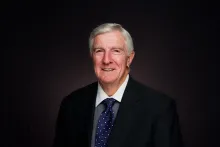
Before his retirement in 2021, Dr. Donald Ward pastored churches in Texas and Louisiana, and taught at Ambassador Bible College in Cincinnati, Ohio. He has also served as chairman of the Council of Elders of the United Church of God. He holds a BS degree; a BA in theology; a MS degree; a doctor’s degree in education from East Texas State University; and has completed 18 hours of graduate theology from SMU.
