

Robin S Webber
This transcript was generated by AI and may contain errors. It is provided to assist those who may not be able to listen to the message.
The following message was given by Mr. Robin Weber on August 28, 2010, in the United Church of God at Redlands.
The rabbi sent in a couple of his followers to prepare the room. Nothing seemed to be extraordinary. It was all actually to be ordinary, routine, for after all, the people have been doing this for over 1,500 years. When you've been doing something for about 1,500 years, there's not too much extraordinary to be expected. But on that evening, as it arrived, and as one would walk into the door on that second floor, and walked into somewhat of a warm, musty room filled with men, there in the midst of those men was a rabbi. He was talking, and he was speaking, and he was sharing himself with them. On that night, and in that crowded room, surrounded by those men, the rabbi was doing things that had never been done before. Things that made people wonder and pause and consider and think, what is indeed going on? For he was doing things that no rabbi had ever done before in the midst of his disciples. The rabbi had gotten down on his hands and on his feet, and he had actually washed the students' feet, the followers. He had gotten right down there on the floor, all of them, washing them and cleaning them. Later on, as the minutes went by, there would be a man that would actually come to be found out to be a traitor, and one that would betray the rabbi as he slinked out the room. One moment he was there, and then the next he was indeed gone. Later on, as the evening progressed, the followers, the disciples, the students began to question and argue amongst themselves as, who would be indeed the greatest amongst them in that kingdom that was to come?
And then to recognize that not only that, but then what really startled them was that he changed the symbols of a festival that had been kept a certain way for over 1,500 years. It was a night like no other night. It was a night that was supposed to be ordinary, but it became extraordinary. But things were happening so quickly. It seemed as if everything was coming down around them, even as new understanding and new truth and new ways were being visited upon them. It seemed as if their brotherhood and their fellowship and the oneness that they had had was being dismantled amongst men that had known one another all of their lives. And many of them going back to the shores of the Galilee, growing up as boys on the fishing boats of the sea up in the hills. They had known one another. They had loved one another. They had walked with one another. Oh my, they had camped with one another for the last three and a half years in the ways and the byways of the Galilee and Judea. And yet now it seemed on an evening that was supposed to be special, special to their people down for 1,500 years. A holy time and a holy festival. It seemed as if perhaps everything was going to fall apart. People were walking out the door, and those that didn't walk out the door were fighting amongst themselves as to who might be in control of the future. It was indeed an extraordinary evening. And as people were talking back and forth, maybe beginning to yell back and forth, the rabbi did one thing. He did not chide them. He did not talk to them any longer. But he looked up, and he offered a prayer. The prayer that he gave was a prayer that they had never heard before. They had heard him pray many, many times over the years. Maybe even since then, when they were boys, when they would go and visit Azareth. They would hear him pray on the banks of the Jordan. They would hear him pray on the shores of the Galilee. They would hear him pray in the villages and the cities of Judea. But they had never heard the prayer that they were about to hear. Perhaps some of them that were in that room would be like you and me. If we were there, we would say, Oh, it is good that Judas is not here. For indeed Judas is a traitor, and he should not hear that prayer. For indeed he is not worthy to hear such a prayer. But little did they realize that within minutes, if not hours from that time, humanly neither would they deserve to hear that same prayer.
For little did they really understand their own hearts. Little did they understand their own condition. And little did they understand the great love that the rabbi was about to visit upon them regarding this prayer. You see, all of them that were in that room that night had made a classic mistake that many followers of the rabbi made then and have since made since that time. And it is simply this. They did not understand the words that he had first shared with them on the banks of the Jordan when he said, The kingdom of God is at hand. Repent and believe the gospel.
For them, as for the many, many students and many disciples of that rabbi from that time down to the ages, they made a fundamental mistake as to the rabbi's teaching. They looked at the kingdom of God as being a destination. They looked at the kingdom of God as simply being something offered in the future.
They looked at the kingdom of God as being something mortgaged far off rather than recognizing that the kingdom of God is a way of traveling to that destination.
That wherever the Christ, wherever the master rabbi has appeared, the presence and the holiness and the sacredness of the kingdom of God has been visited upon the creation of God.
With that said and with that understood, noting that not only those followers in that night, but sometimes those followers since have made that mistake, nonetheless, the rabbi did something profound.
Rather than continuing to look down or to look around, he did something for his followers in that room that night and for all followers hence to emulate, to copy, and to follow.
And as he began that prayer, he was not only speaking to those that were in that room on that night, but he would speak to the body of Christ henceforth, forevermore, down through the ages.
Let's understand that prayer as we turn to John 17.
That utterance to God Almighty, the Father, on that evening when it seemed as if everything was going askew, everything was going astray, everything was coming down around.
And Jesus did something profound for you and I to understand as he prayed the prayer for the body of Christ.
Chapter 17, verse 1.
Jesus spoke these words, not just any words, but these words, as he lifted up his eyes to heaven.
He lifted up, he chose, and he made a choice no longer to simply be entrapped in this world of time and space with its problems and with its issues and with its foibles.
But he decided to move beyond the condition and put himself in the position of looking up to the source of all answers, to the one that could give him what he needed at that time on that evening when he was dedicating himself for all of humanity, all of humanity for all time.
He chose to take his eyes off of this, which seems so real to those that occupy the world of flesh and blood.
And he decided to look up and to look to that real world, to that eternal world, to the world that is beyond confusion and doubt and despair.
He looked to the world of answers. He lifted up his eyes to heaven. And he said, Father, the hour has come.
He said, glorify your Son, that your Son also may glorify you.
He spoke in a tone of solemnity that the hour has come.
Jesus recognized that he had only so much time in this human sphere to accomplish that purpose and that mission that his Father had given him.
And he said, the hour has come, even in the midst of all this confusion and all of this pandemonium that was occurring in that room on that night, on that holy night of festival, of Passover.
He said, I am here for a purpose, and I have a mission. And the hour has come. Glorify your Son, that your Son may glorify you.
The rabbi, the Christ, understood that he was in a transactional relationship, that his Father above wanted to give him something, but down here below that he also had to offer up something to the Father.
And he recognized that at that time that he had been called for a purpose and a mission to give his life for all of humanity, for all of those that would hear these very words that were spoken on this evening.
He recognized that he was going to have to go through some hoops, that humanly he did not want to go through. Humanly he wanted to go the other way. But he recognized a principle that he had shared with the prophets of old, that God would take that which had been abased, and would magnify it, and to exalt it.
That's just how it is. That going back into the words and into the passages that the word inspired the prophet Isaiah, that every valley shall be lifted up and every mountain shall be taken down.
That Jesus recognized that he'd come from the top, and now he was going to go into the valley of death.
But before he did, he wanted to remind his father, Father above, as I glorify you by my actions, I would ask that in turn that you glorify me. As I surrender my personal kingdom to you, remember me in glorifying you. As you have given him authority over all flesh, that he should give eternal life to as many as you have given him.
Things were confusing that night. Things were getting very, very different.
Things were not going according to Hoyle, and perhaps they would not for many, many years to come in the lives of those that were hearing those words that night in that room.
But as he prayed the prayer of magnification to God above, he said to that audience, and he was reminding them. He was praying to the Father.
He recognized his audience, but he also recognized the audience around him. He said, Father, you have given me authority over all flesh.
There is nothing that is going on down here below that I do not see and that I do not understand.
I want my Believers, Father, to understand that we are working together.
And sometimes it seems as if your purposes and your mission and your goal is being thwarted.
It seems as if sometimes, whether individually or collectively, that we have bumped into a dead end.
But, Father, as I pray to you, and as my disciples hear this, I want them to be invested in the confidence that you have granted me all authority over all flesh, over every human being, that he should give eternal life to as many as you have given him. Jesus, as he was magnifying God and beginning the blessing, going up and getting his focus set, setting the example for all followers for all time, he wanted them to understand something that the Father above, for those that will hear the words that are spoken here, the Father above has given his followers to Jesus Christ.
For safekeeping.
No matter what happens in a room, no matter what happens in a house, no matter what happens in a congregation, no matter what happens at work, no matter what happens in a family.
Christ has authority, been granted authority over all of that.
Christ was echoing words of confidence. He knew this. He was praising God for it. He wanted all of us that might hear these words down through the ages to understand the same.
He said that I might give them eternal life.
And this is eternal life, that they may know you, the only true God, and Jesus Christ, whom you have sent.
Jesus was moving beyond simply information, but was speaking of a transformational relationship.
That he was speaking to this audience and to all audiences that would hear this word of what eternal life is. That eternal life is not just being introduced to God, but it is experiencing God.
Jesus might have had a different mindset or mindset when he mentioned this, based upon what the disciples around him were hearing on that evening.
He said that eternal life is to know the Father and to know the Son.
His mind might have been going back to a time before there was sin that had come upon the world.
You see, Jesus had been the one that had been the Word.
Jesus had been there in the beginning.
Jesus had been the one that had created all things.
And Jesus was the one that, as the Word of God and as the Lord of the Old Testament, had been the one that had walked with Adam and Eve in the garden.
And Adam and Eve, before they made that choice, had an experience that no other human beings have ever, ever had.
They lived in a world where they could walk and talk with God. God would be in the midst of the garden with them and with them and talking and walking.
And there were no wrong words spoken.
There were no wrong actions given birth. Because before that, there were no wrong motives.
There was, to that point, no protection or vaunting of self. Humanity had, as the Word would later inspire the preacher to write, humanity had had eternity set in their heart. That humanity had been created with a capacity for the spiritual, a capacity for that which is eternal.
And there was a union and there was a joy and there was a happiness in that garden experience that you and I have not since experienced because of the decision of Father Adam and Mother Eve.
This is beyond just simply knowledge. This is eternal life. To experience the one that's been revealed as the Father and the one that is known as the Word and as the Savior and as the High Priest and as the Christ. To know them and to experience them. To love them and to be loved. To have full union. Not broken up by time and space, but forever. And Jesus said, and this is eternal life, that they may know you. Know that which was and is and what I'm looking up to, but is not down here right now. I've glorified you on the earth and I have finished the work which you have given me to do. Jesus knew that the hour had come. Jesus knew the transaction of glorification of that he would have to, in a sense, give himself away. That you and I might one day eternally gain. And he says, I've finished the work. I've done it. I'm there, Father.
Basically now that as I look up to heaven and I'm in union with you, help me to move through those last hoops. Because I'm encapsulated in this flesh and I'm going to need your help. And now, O Father, glorify me together with yourself with that glory which I had with you before the world was.
He says, I've manifested your name to the men whom you've given me out of this world. They were yours and you gave them to me and they've kept your word. I have manifested. I have spread out like a blanket. I have moved out like a roll of paper.
I have spread out like a tapestry. Exactly what you're like, Father. I've told them things about you that they didn't know before. Perhaps they thought that you had been a remote God, like the gods that are around and the nations that are around. But I came and I revealed to them things about you that they never really knew. They had known words, but they couldn't put the color into the words. I shared with them what you're like, Father. I told them a story about the prodigal son who had a father who stayed and waited at the door and kept on looking out over the horizon, waiting for that son to return.
And I wanted to share with them that story, which moves beyond words and which moves beyond rules, to let them know of your anxiousness, for humanity to return to you, to stop sinning, to stop living in this world of conflict, to stop living in this world of doubt, to stop living in this world of envy, and to recognize that you are always there. Oh yeah, Father, I've told them about you and of your great love, which has no limits.
Now they've known that all things which you have given me are from you. For I have given to them the words which you have given me, and they have received them and have known surely that I came forth from you, and they have believed that you sent me. Now something happens as the rabbi is in that room. People are settling back and listening now. They're no longer just thinking about themselves. Kind of like people when they come to church in the years that would come later, that when we first come in we have our own agendas and we have our own thoughts, and we wonder, am I going to get anything out of church today?
Am I going to receive anything? Is this going to be about me? But now you could hear a needle or a pin drop. For all of those that were listening to the rabbi were now listening very intently because the course of the prayer began to change, because he was now not just simply extolling the Father, but what is it when people start talking about us, we start listening. For now the prayer in verse 9 says, I pray for them.
I don't pray for the world, but for those whom you have given me, for they are yours. Again, he's affirming in the listener's ear that the disciple is specifically given to none other than Jesus Christ.
We are his possession, granted by none other than the Father for his safekeeping. And all mine are yours, and yours are mine. And I am glorified in them. I am honored by them when they understand that, and when they understand that you and I, Father, are not working apart, but that we are working seamlessly together. We are of one heart, of one mind.
We are of one Godhead, one deity. We worked together to bring about what we said so many years ago when we said, let us make man in our image and after our likeness, that our goal together has never changed. Since that verse in Genesis, it said, let us make man in our image and after our likeness.
And then Jesus becomes very specific with what he is praying, not only for those that are in that room, but as his voice moves beyond that room to us today, that Jesus begins to specifically, pointedly, pray a prayer for each and every one of his followers in the body of Christ. He says, now I am no longer in the world, but these are in the world.
I come to you, Holy Father, keep through your name those whom you have given me, that they may be one as we are one. The first thing that Jesus was speaking to Peter and Bartholomew and Andrew and all the others, that would follow, is he is praying that the body of Christ would be united. When he says that as you and I are one, he's not speaking of the nature of God, he's not speaking of theological, anatomical thoughts.
He's speaking of the attributes. He's speaking of the unity of purpose, of mission, of cause, of going back, and he says, in the beginning of the prayer, I am doing what I have been asked to have done, and I am finished.
He says, I want them to be in harmony. I want them to be in unity. While I was with them in the world, I kept them in your name. Those whom you gave me, I have kept. And not one of them is lost, not one, except the son of perdition, that the scripture might be fulfilled. Jesus was reminding them in that prayer, as he had spoken to them before, that I am the Good Shepherd. In fact, I am so good that I go after the One and I leave the Ninety and Nine. I will not lose one that the Father has given me. He's saying this to his followers in that room that night, because he knew what they were going to be going through, and the hours that were going to be upon them, the days that were going to come.
He knew something that they didn't know yet, and that was that he was going to ask them to stay in Jerusalem.
After the whole thing bursted on the scene, after he would be taken and dragged through the streets, after he would be crucified by the Romans, after this and after that and all of this and all of that coming upon them, and perhaps they were boring, well, why me and why now? Why was I called? Does God really know what's happening?
And Jesus said, I haven't lost one.
Perhaps some of them that were hearing those words, hearing that prayer as he looked up to heaven, were feeling for the moment that they were lost. Perhaps there would be those in the days, the years, the millennia down the line, that for one reason or another, perhaps, they would feel that they are lost when they heard the words of that prayer. And Jesus was saying, I have not lost one. All serves a purpose. But now I come to you and these things I speak in the world that they have my joy fulfilled in themselves. The joy that he was speaking about was not a joy that was based upon external happiness. The purpose of mission, of spiritual accomplishment, of God's righteousness working in us.
I have given them your word, and the world has hated them because they are not of the world. They're not of this society or this culture, just as I am not of this world. And then Jesus, as he's looking to heaven, mentions again a very specific aspect of his prayer for his people.
He says, I do not pray that they should be taken out of the world, but that you should keep them from the evil one. Jesus was not only praying for the unity of the body of Christ, he was praying for the protection.
He knew what later on Paul would know, that he would, as the word of God, inspire Paul to put in the written word, that there is a force, that there is an element out there that is the prince of the power of the air, that causes people to act and to react. He recognized that there are spiritual influences out there, influences that do not say, at four o'clock this afternoon, you will be on the freeway, and somebody will look over at you, and they will give you a mean-looking face, and then you will, in turn, look at them on the Interstate 10 freeway going east, and give them an evil, mean, awful, worst-looking face that you have ever given, to let them know what you really think of their driving.
That's not how the prince of the power of the air works. But the prince of the power of the air works with attitudes, and moods, and persuasion, and allowing us to move and to act in his culture and in his world, that somehow we have been left out of the loop of opportunity. Somehow our world is being invaded, rather than we are to have surrendered our world to God above. Just as Jesus Christ did in this prayer. He knew that he wanted his disciples to be out in the world, but he wanted them to be protected. He said, you're the light of the world.
He knew that in the years, in the decades, the millennia down the line, that he was calling his disciples to be in the middle of things, not in the margins of life or society. He was not calling his disciples to live in caves like bats and mushrooms, because that's all you find in caves and bones of the dead. He wanted his disciples to be living. He wanted his disciples to be vibrant. He wanted his disciples to be seasoning the world around that needeth the salt. That comes from above. But he also knew that they would need to be protected.
They are not of the world, just as I am not of the world. And then he turns his thoughts and his prayer to something that is so special and so precious that even his own followers, perhaps, did not understand then. And perhaps some of his own followers still don't understand even to this day. He said, they are not of the world, just as I am not of the world.
I'm different. I have been called to service. I have been called to glorify God, as I just mentioned to the Father above. I am here to be in transaction with them and in relationship with them. Sanctify them by your truth. Set them apart. Your word is truth. And as you sent me into the world, I have also sent them into the world.
And for their sake, I set myself, I sanctify myself, I've set myself apart. I have lived the sacred holy life that they also might be sanctified, live the sacred holy life. Help them, Father, to recognize that they are an instrument of your righteousness. And I've given the word. I've given the truth. Equip them, Father. Set them apart with your truth. Equip them. Don't only help them to be unified, teach them how to be equipped to be unified. Don't help them just simply to be protected, but to be protected not because of what they've done, but because of what they're doing for you being your instrument.
And then it's as if, perhaps for a moment, he paused because he realized that Peter and James and John and Bartholomew and Nathaniel, perhaps that this was just for them. But Jesus wanted his voice that night to move beyond that room. And he said, I do not pray for these alone, but I also for those who will believe in me through their word. You see, on that night when everything was coming down around the Master, and human nature abounded on a holy day, when people that had known one another all of their lives were acting against one another, Jesus looked beyond that, and he wanted them to have this holy existence.
I'm looking down. I'm not only praying for these. I'm praying for those that are going to believe in me through their word, that they all may be one as you, Father, are in me and I in you, and that they may be one in us, that the world may believe that you sent me, and the glory which you gave me I have given them, that they may be one just as we are one. I in them and you in me, that they may be made perfect in one, and that the world may know that you have sent me, and have loved them as you have loved me.
Jesus, as he was in that room that night, would know that there would be many devoted followers that would come down through the ages. Men and women and teens that would, in one sense, give their life and give their devotion to God. He knew that there would be people that would go on to every continent preaching the gospel.
He knew that there would be churches and that there would be organizations that would want to telecast, that would want to broadcast, that would want to put things on the Internet, that would want to put things on the computer as much as they could, that they would want to put flyers on every desk, on every desktop of every store, in every office that is in every city. But he said, that is not how people are going to know about me and that you sent me. They are not going to know through telecast or broadcast.
They are not going to know through magazines. No, no, no, they will not know that, simply by what they read, what they will understand. And they will know that there was a loving Father that sent a Son to this earth because of what they see in people. The unity and the love and the harmony that was before what occurred in Eden.
And that there are people that have made that right choice and that good choice and that sacred choice to partake of the Tree of Life. It is that! It is that that the rabbi on that night put the spotlight on, that would demonstrate, totally, completely, fully and forever, the validation that the Divine had sent His Son into this earth. It would be that sign, no other sign.
Father, I desire that they also whom You gave Me may be with Me where I am, and that they may behold My glory, which You have given Me. For You loved Me before the foundation of the world. At this point, Jesus is in full union with His Father as He is speaking. There are no walls, there is no time, there is no space. He begins to share a world that you and I have difficulty understanding at times. You and I that are trapped by sun and stars and moons, and the world and the twirl and the motion of gravity, and the laws that are around us. He begins to speak and remember what it was like. And He says, Father, I want to have them have what You have given Me. I want to take them there. That glory which I had with You, I want them to experience.
He wanted each and every one that would hear that prayer on that night, or hear that prayer in the years down the line, to consider what it would be like to be in the glory of the kingdom of God. I'm not just talking about millennial artifacts of fig trees and streams running down mountains.
I'm not just talking about cities whose walls are full and kids are running in the street. And that as well, and that as good, and that as millennial, and that as a part of the journey. But what Jesus is speaking here in the glory is far beyond fig trees and far beyond that which any nurtured earth can offer up.
But the glory of being in the spiritual realm of eternity, the glory of what is in a sense best, in a small part, put in the Greek, in the book of Revelation, in Revelation 1 and Revelation 3, of what the throne room of God is like. Now, you and I in that sense, when we say in Jesus' name and our prayers, and Jesus invites us to do that, He says, Whatever you ask, ask it the Father in my name. And so that when you and I do ask in that name, yes, in the sense that we are put in the presence of God, and we do enter that throne room through the auspice of our high priest, Jesus the Savior. But have you ever dared to think, to dream, to ponder, and to realize what it must be like to enter total glory in the total realm of the fatherhood? In that time and in that day when we not only experience the glory of Jesus Christ, for when we do, and when we are at that throne before Him, that you and I are going to have an opportunity, not just by prayer. And that is wonderful, and that is fantastic, but where you and I are going to be up close and personal to experience the glory of God. And that there will be no separation. We will be on the other side of Eden, back, where there is no break, where there is no remembrance of man's decisions, of man's rebellion, of man's stupidity. There will be no serpent allowed in that garden that we find in Revelation 22. You do not find Him. But you find the Father, and you find the Lamb. And you and I are going to experience the Father. You and I are not going to be remote. It's not going to be a dial-in. It's not going to be a call-up. You and I are right now not equipped for what we're going to experience. That's why one day God is going to give us those glorified bodies, glorified eyes, glorified ears, glorified senses, glorified hearts, because we have abased ourselves that He might exalt us just as this prayer brings out. And you and I are going to be able to come right up to God, not just simply in prayer, which is beautiful and wonderful. You know, many of us write people that perhaps we've never seen before. Sometimes we call people—that's my call gesture—sometimes we call people that maybe we have never met in person, and we think that we know them, and we love them, and maybe we feel loved in return. But Jesus here is speaking of a world in which there are no walls, there are no doors, there are no shades or blinds or curtains on windows between us and God. We become one in the family of God, and we experience that which God set in the heart of man long ago, when the preacher said, I have set eternity in their hearts. And Jesus recognized that night, as many have since then, that there's a spiritual component in every human being that goes a-wanting. There is that relationship that God wants every human being to have. There's something that is out there that is driving man, and sometimes he does not know what it is, but God above knows.
And he says to the Christ that I have given every human being to him to bring those people to me.
And then he concluded in verse 26, And I have declared to them your name, and will declare it, that the love which you loved me, speaking of the Father to the Son, to that rabbi in that room on that night that was like no other night, you loved me, and that that might be in them and in them. The last thing that Jesus prayed for the body of Christ down through the ages is simply this, that they would have the love of God.
After he prayed that prayer, another one of the Gospels says that they got up, they went out, and they left.
Because after all, he was about his Father's business.
Christ had prayed the prayer that they had never heard before, and that maybe those that thought they knew it, even in this room today, have never really heard before.
Jesus went out that door that night, and he went out to meet his prayer. He went out to glorify his Father, that in turn he might be glorified.
I wanted to bring to you this message today, those of you that are in Redlands, for some very specific purposes.
I thought today that you would like to know that someone very special is praying for the body of Christ today. His name is Jesus Christ.
I thought you might like to know that, beyond that, that somebody is praying for you individually today. And his name is Jesus Christ.
I thought today it might encourage all of you, sometimes when perhaps it seems as if your world is falling all down around you, and things aren't going as they were supposed to go.
Things aren't, shall we say, too regular. I thought you would like to know that Jesus Christ is not only praying for the body of Christ, but praying for you and specifically.
He's praying that we can have unity. He's praying for your spiritual protection. He's praying that you might be holy.
He's praying that you might understand the love of the Father and the Son, and that it might reside right here inside of you. That it might be a true witness of all that God is.
He did that for a specific purpose, that now in turn we might leave this room this afternoon and go out and meet his prayers that become our prayers that we pray for others.
It was a night unlike any other night, and it was a prayer like no other prayer.
God's people have been called to be like no other people.
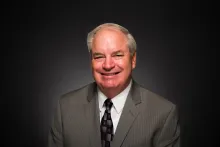
Robin Webber was born in Chicago, Illinois, in 1951, but has lived most of his life in California. He has been a part of the Church of God community since 1963. He attended Ambassador College in Pasadena from 1969-1973. He majored in theology and history.
Mr. Webber's interest remains in the study of history, socio-economics and literature. Over the years, he has offered his services to museums as a docent to share his enthusiasm and passions regarding these areas of expertise.
When time permits, he loves to go mountain biking on nearby ranch land and meet his wife as she hikes toward him.
