
Robin S Webber
This transcript was generated by AI and may contain errors. It is provided to assist those who may not be able to listen to the message.
Well, this is the day of Pentecost. It's also known, as we've heard this morning, as the Feast of Weeks. It's also known as the Feast of First Fruits. What I would like all of us to go away with today is to understand it as a day of fulfillment. It brings us into direct contact, right between our eyes and right in our heart, that this is a day of incredible loving and personal promises and pronouncements given by Jesus Christ on the night of His betrayal that did come true and are coming true every day around this world, even in the 21st century.
It's very interesting on that night in which He was betrayed that, especially when it seems as if He was about to become most distant from those whom He loved, He proclaimed just the opposite. Here He was, a young man, only 33 years of age, whose human life was about to come to an end.
And yet, when it seemed as if He was about to go through that brutal experience that night and then to be crucified the next day, what He was saying to His disciples then was just the exact opposite, because He began speaking of two words that I'd like to kind of key into your minds and hearts as we begin this message.
He spoke of an intimacy and He spoke of an immediacy that had never been known amongst any covenant people down through the ages. And that's what we're here to consider today. If there's anything that we're going to go away with this afternoon as we put a cap on this Feast of Pentecost 2015, I want you to go away with God's Spirit convicting you and prompting you and filling you that He has called you to an immediate and a very intimate relationship with Him. Jesus repeatedly invited His followers then, as He does now with that phrase, and of course I write a column on this, but it's called, To Follow Me.
And He kept on always telling His disciples. It was the first thing that He tells the disciples, and it's the last thing that He tells the disciples. He tells them, Follow Me, and that we have that trust, we have that confidence, that as He looks at us in the sense and says, Come, that indeed we do follow Him. But here is the point where it seemed on that night of betrayal that the disciples were not going to be able to follow Him.
And thus we need to look at some of the Bible to understand what was going on. Join me, if you would, in John 14. In John chapter 14. And let's pick up the thought, if we could, together in verse 18. John 14 and verse 18. He says here, in verse 18, I will not leave you orphans. I will come to you. I will not leave you orphans. I will come to you a little while longer, and the world will see me no more.
But you will see me, because I live. You will also live. And at that day you will know that I am in my father, and you and me, and you and me, and I in you. So he said here that he was not going to leave them as orphans. Even with that said, and perhaps to the limited human understanding that the disciples had, they must have had an emotional load of feeling abandonment.
Separation does that when we have all of a sudden been distanced, separated from loved ones. And sometimes, all of you out here, at one time or another, whether as a kid in elementary school, high school, college, perhaps even in a marriage, perhaps in relationships, perhaps things that are happening in work, we have at all, at one time or another, felt so very abandoned, and so very alone. And yet, here the disciples were going through all of this. They're hearing something's going on. They didn't quite get it, because we look back in the book now, and we understand what was going on.
And they said, what's going on? We feel so very lonely. But what's fascinating, if you join me in chapter 16 as he goes through this discourse with them, we notice in verse 5 something that maybe you've never noticed before. In verse 5 it says, But now I go away to him who sent me, speaking of the Father, and none of you ask me, where are you going? But because I have said these things to you, sorrow has filled your heart.
Nonetheless, I tell you the truth. It is to your advantage that I go away. For if I do not go away, the Helper will not come to you. But if I depart, I will send him to you. Have you ever done that one before, talking to somebody that's kind of crying, and kind of sad, and mopey, and down, because you're about to leave?
And you say, you know, it's a really good thing that I'm leaving. He says it's to your advantage. And sometimes even when we feel alone, when we feel down, when we feel that nobody else cares, is to recognize that it's to our advantage. Because it's then and only then that God begins to do his most delicate, and most sensitive, and most caring, and most abiding work in us to turn to nobody else but he alone. And to recognize that he'll supply the immediate need for us to be connected with him.
Now, why did he say this? Why did he say this? We need to understand that he wanted those men in that room to know that they were going to go out.
Because they were going to face incredible things, perhaps in a way, some way that perhaps you and I never will. We will in type, and so please stay on board of this message. We realize that these men were going to go around the then-known world, and then some. Some have been said to have gone as far as India, the disciples, the early ones.
And to recognize what they were going to face. You know, any full reading of the Gospels will open our eyes and open our hearts to the full ramifications of what those men were going to be going through, whether they were then or some of us, what we are going through now in our own lives. To recognize that as they heeded the invitation of Jesus Christ to do what?
To follow me. What would happen? He said that as they went out from Jerusalem, that they could be incredibly happy, even when there was nothing happy happening around them. He told them that their hearts could remain firm, even as their knees were shaken away. He told them, because of the message that they would send and give out to others, and face a world that confronted the God of truth, that would confront the ways of the Creator. That even in that confrontation, in their heart and in their existence, there would be a peace that passeth all understanding, because of what He was about to send.
And thus, the question for us, because that's not any kind of a job that humanly we would want to volunteer for, is that to have this in the most unnatural of circumstances, to be happy when nothing is happy happening around us, to recognize our situations that we would get into where our knees might be shaking, that otherwise we would not be in it if we did not follow this one, and to recognize that He had an answer for it. Why did they do that? I have a question for you this afternoon.
Why are you here? And why are you a part of that long line of disciples that have chosen to follow none other than Jesus Christ? We need to understand that this day of Pentecost is what it's all about. In Acts 2 and verse 38, join me if you would there for a moment, in Acts 2 and verse 38, we notice something very simple that we're going to build upon for the rest of the message.
This has already been alluded to, but we keep on rattling the thunder of Scripture. We keep on going back and we'll focus on a verse. Acts 2 and verse 38, notice what it says here. And then Peter said to them, The early disciples took him at his word and they remained in Jerusalem, receiving something that they didn't fully understand, but Jesus had said that you're going to receive a gift. You stay in place and I will come to you. We're going to build upon that now, friends. Are you ready? Because we've mentioned that this is a day, a day about a gift that was given to humanity.
And so the title of my message is simply this, unwrapping the gift of the Holy Spirit. Unwrapping the gift of the Holy Spirit. Remember when we were kids and we might get a gift from a grandfather or from a grandma or maybe from parents, etc., etc., from a dear friend? You know, so exciting to be able to open it up and see what was in it. Now, you know how men open up wrapping and you know how ladies open up wrapping. Ladies open up wrapping like a brain surgeon, slowly and surely and slowly and surely. I'm not saying surely like a name, I'm saying surely like the pace.
Men rip! Now, whether you rip or whether you open up slowly and surely, then you look at it. And you're praying that the batteries are included. Well, this is the one thing we want to share with you this afternoon. What God gives us, this gift, is God all the batteries that we need. There's not a battery short. God knows exactly what we need. Do you be able to worship Him? Do you be able to honor Him?
In every thought, in every word, in every deed. He gives us every gift and every battery we need that we might be that living and acceptable holy sacrifice unto Him. He knows exactly what He's doing. With this set, then, with this set, we're going to look at what is residing inside you this afternoon. And why it is residing inside of you. And the grand purpose of why God has given you His Holy Spirit.
I hope by that Spirit, and by the inspiration of the Spirit, and by the words before us, and what we will convey to you based upon the blessing of this service today, that I'm going to stretch your mind. Ready to get stretched a little bit? I'm going to stretch your heart as to why God granted you His Holy Spirit. Now, with this set and promised when the first Pentecost came, I would suggest that initially those apostles and fellow Christians didn't fully understand what was coming.
And there was a very, very good reason for that. Because their understanding up to that point on June 1831 A.D. was predicated, that means founded upon three historical considerations found in Scripture. Number one, are you ready? This is why they were kind of wondering. Number one, that the Spirit of God, to that point, was basically a very abstract and distant force. The people of the book, the people of Israel, the people of the Jews, they looked at this Spirit of the One True Living God as a great and it was a dramatic, abstract force.
And it was basically beyond human comprehension. They would go to Genesis 1 and verse 2 and where it says, The Spirit of God, hovered over the deep. That was the beginning. So it was abstract. It was kind of out there and kind of big. Number two, seemingly, by recorded writing, it was selectively given.
Selectively given to deliverers, like a Samson, to judges, like a Samson and others, to kings, like David, and to some of the prophets. What is interesting is the king might have the Spirit, but it doesn't mention that the people had the Spirit. The prophet might have the Spirit, but it doesn't say that his scribe or his servant had the Spirit. So number one, it was abstract and big. Number two, it seemed to be selective. Not that it wasn't given in the Old Testament, but it was by God's grace and design back then somewhat selective. Number three, it was transitory. Trancatory. You say, well, what does that mean? For the kids out there, it's like a yo-yo. It goes up, goes down. It goes down, it comes up.
And it seems as if God's Spirit sometimes would come from on a high and it would rest on somebody, and then it would go up. It did not remain. It did not necessarily stay in place with certain people. It would come, and it would go, based upon the need. And sometimes based upon, unfortunately, the disobedience of the people. Thus, the nature that the disciples understood as men of Galilee was basically that God's Spirit was considered impersonal. It was considered remote. It was considered awesome. Think of Genesis 1 and verse 2. It was considered selective and, at times, temporary. Just as much as when God would come down in that Shekinah presence, in the Holy of Holies, at Shiloh, and, or as that Shekinah presence came down into the Temple of Solomon, and it would be there, and it would be there. But then, it would go. Beyond this, there had been no agreed-upon revelation of the Spirit since the time of Malachi. It was considered, in some sense, by this time, the first century, as if God's Spirit has been retired. That might be a question that we ask ourselves right now. Is God's Spirit living in retirement in you? Some of you might think that it's gone on vacation.
And because it's gone on vacation, you're not about the vocation that God has given each and every one of us as firstfruits in the making. When we look at all of this, the Temple had been rebuilt. Herod's Temple, now the third Temple on that spot, was there, and it was massive. It was grand. It was, in one sense, so Roman, built by Herod. And yet, there was no Shekinah presence in that Temple. God himself had not, in that sense, other than figuratively, dwelt there as he had in Solomon's Temple or in the time of the wilderness with Moses. And the community of God there had become accustomed to what is called Ba'ath-Qal, in Hebrew. And that was the daughter of the voice. And I say, boy, when are you going to get off the history? Well, it's all for a point to make it very personal to you as we go along. They were not hearing directly from God. They were kind of getting it from around the corner. They were, in a sense, getting it indirectly from the Ba'ath-Qal, from the daughter of the voice. They did not feel or understand. And perhaps they were not listening to that Spirit. And now, this gives us entrance to what's happening in John 14. Why was Pentecost so very different? And why should this Pentecost 2015 be so relevant and so incredible and different in our lives? These disciples, these men that were as human as you and me, and sometimes when we read their story, we think more so, they had come into contact with one outstanding life. You think about that for a moment. They had come into contact with one outstanding life, the one named Jesus of Nazareth, who seemed to have and to be full of the great Spirit of God that was mentioned in Genesis and in Chronicles and in Numbers, that in this man there was indeed something very incredible. Let's understand that by going to Scripture in John 1 and verse 4. In John, the Gospel thereof, verse 4. Actually, verse 14. Pardon me. Gospel of John 1 and verse 14. Notice what it says, and the Word, the Word was in that sense the pre-incarnate Christ, the Word became flesh and dwelt and, or shall we say tabernacled, tabernacled, notice, skinew, that's the great word, among us, and we beheld as glory, the glory of the only begotten of the Father, full of grace and of truth. Now, you say, well, what does that mean? Well, we have to go up to the beginning of John, where it says, in the beginning was the Word, and the Word was with God, and the Word was God, and He was in the beginning with God. The Word was, in that sense, no less than a member of the Godhead. And then He came down and He tabernacled, in that sense that Shekinah, presence of God, came into human flesh for you and for me. That in one sense, God might be able to touch humanity, and in the other sense that God the Father ultimately might be touched by our humanity through Jesus Christ. And it tabernacled. The Shekinah, in that sense, was not an Herod's temple, but it was in this, the temple of Jesus Christ on two legs. Now, stay with me. Let's go to another verse here. Notice what it says in verse 32, John 1. Remember how the Spirit of God in the Old Testament was transitory. It came, it went.
And sometimes just, go, go, go, and it was gone. But notice what it says here in verse 32. In verse 32, it says in John 1 and verse 32. And this is about the baptism, and John bore witness saying, I saw the Spirit descending from heaven like a dove. Speaking of the Spirit. And then, of course, because in the Greek, you see the he, which is a pronoun. We can say he, we can say it. We understand that as we understand it, that the Holy Spirit is not a person. But notice what it says here. And it remained upon him. It did not leave. It was not like the Old Testament, where it came and it went. It remained. Because he was no less than fully God, fully man, encapsulated. This Galilean, of whom the disciples saw in him, they saw that great spirit that they had read about and believed in for all of their life, but could not get their hands upon. And they gave their sole allegiance to this man from Bethlehem, from this citizen of Nazareth. And their lives were going to be changed. Now, let's understand something. They took Christ at his word that something was going to come. Even though they didn't understand it exactly, but it was going to come. But here's the one thing that they needed to do. And it was kind of mentioned in one of the morning messages. That when it came, they had to use it. Are you with me? They had to use it. They couldn't use part of it and put the other on the shelf. That's not why it was given. The Holy Spirit is to be given to each and every believer. Because we will need it just as much as those early disciples did as they went out around the world. Different gifts of that spirit. And I'm not really going to be getting into the gifts of the spirit this afternoon. But every element of that spirit and what it brings is designed to move you towards something incredible. That we'll be talking about in a few minutes. And nothing less. Sometimes we stand in all of those men that are in Acts 1 and Acts 2. And we say, oh look at the spiritual rush more. I see Peter's face on there. I see Andrew's face. I see John's face. And it looks like there's no more room on the mountain. I have a question for you. May I? Is the spirit that God gave the early apostles? By the end of this, it's not going to be multiple choice. Okay? Is the spirit that God gave the early apostles somehow a kind of different spirit than he's giving us today? Did God visit upon the 21st century giving us a half a spirit? Do we just have a quarter of a tank of the spirit? Do we have something different than they had? I think that's a good question. Is it that they add something different? Or we don't understand how to unwrap the gift of the Holy Spirit? And, are you with me? Understand ultimately what it is intended for. Because as human beings, sometimes we set up goalposts that God has not designed. And I think he stretches us and moves us towards something that perhaps we have not fully fathomed. Let's understand this. Ephesians 1. Join me if you would there for a moment. For you that are here today that, do I dare say, are a little spiritually wobbly? And yet God's spirit convicted you to be here this afternoon? Or this morning, even when maybe you were thinking about going the opposite direction? And wondering a little bit whether or not you were just having the daughter of the voice. That God was remote. That God had somehow given up on you.
That you were no longer God's beloved child.
That somehow God had another plan, another day for you.
This is the day of his visitation.
God operates in the now for those that are being called now to be first fruits. I have a very encouraging scripture that I'd like you to tuck away in your heart this afternoon. Join me again in Ephesians. You're there. I'm not. I have a different Bible today. I left it at home. I've got my wife's Bible, so she's just taking notes. Different Bible, but same spirit. So we're going to put it here together.
In Ephesians, let me get there. You're already there because you have your Bibles.
Notice what it says. I'm reading this to encourage you, friends. Notice what it says.
Because sometimes we wonder if God gave us the full load of everything that he promised to deliver.
Let's go in verse 2. Grace to you and peace from God our Father and the Lord Jesus Christ.
Blessed be the God and Father of our Lord Jesus Christ. Now notice who has blessed us with half a tank of spirit.
Just a few of the tools on the spiritual tool shelf. Doesn't say that.
Who has bequeathed or blessed us with every spiritual blessing in the heavenly places in Christ.
Just as he chose us in him before the foundation of the world, that we should be holy and notice without blame before him in love.
God has given us every spiritual blessing. He says also that he gave it to us in Christ.
Now that's going to be very important as this conversation continues.
But for what purpose? Join me if you would in Ephesians 3 and verse 14. Let's allow the Bible to explain the Bible.
What is the purpose for that spirit? What is that purpose for the spiritual blessings?
We find that again over in Ephesians 3 and verse 14. And for this reason I bow my knees, Paul speaking to the Father of our Lord Jesus Christ, from whom the whole family in heaven and earth is named, that he would grant you, according to the riches of his glory, to be strengthened with might through his spirit. In the inner man.
It's not something you have to reach for. God has bequeathed it to us as a gift that Christ may dwell in your hearts through faith, that you being rooted and grounded in love may be able to comprehend with all the saints what is the width, the length, and the depth, and the height, and to know with the love of Christ which passes knowledge, that you may be filled with all the fullness of God.
Now here's the one I want to share with you, friends. And I'm your friend. I've been here for 40 years. We're friends. Sometimes we can feel that somehow the blessings have passed over us.
We feel that somehow that we're an orphan, that somehow God, even though we pray to him, our heavenly Father, that somehow we get something in our mind that somehow we've been left out of the will. God says through the inspiration of his words that each and every one of us, and I see a lot of your eyes right now, so I'm pinning in on your eyes, you are my notes.
God has done nothing less than give you the fullness of himself through his Spirit.
God is holy, God is Spirit. Jesus Christ is holy. He is Spirit.
That essence of eternity, that essence of eternity, that essence of God is in each and every one of you that have been baptized, have accepted in faith Jesus Christ, have repented of your sins, have been baptized, and have the hands of a minister laid on you and had the seal of the promise given to you. Let's notice what it says here in Ephesians back in Ephesians 1.
In Ephesians 1, and let's pick up the thought here in verse 11, "...in whom we also have obtained an inheritance being predestined or shall we say determined or purposed according to the purpose of him who works all things according to the counsel of his will, that we who first trusted in Christ a thought of being firstfruits those that are out there in the bush on the line facing the cold, facing the heat, facing the bugs, facing the birds, facing you and I as firstfruits of the world around us and confronting our own human nature.
In him we have attained an inheritance, absolutely, that we who first trusted," verse 12, in Christ, "...should be to the praise of his glory, in whom you also trusted, after you heard the word of truth, the gospel of your salvation, in whom also having believed you were sealed with the Holy Spirit of promise. God's name was placed upon you, his Spirit was put in you." This term of seal is what they used to do when they would take cargo from Alexandria to Ostia, that's the port of Rome, or move it to Corinth or move it to Athens, that when there was a barrel just like today they would put a stamp on it, they would put a seal on it. They would say, this belongs to so-and-so. They are the owner, and they have claim, they have purpose, this is theirs, and it is to go based upon that commission from this point to that point to produce a product.
In him you also trusted, when you heard that word of truth, and that you've been sealed with the Holy Spirit of promise. It's a promise, it's a gift, who is the guarantee of our inheritance until the redemption of the purchased possession to what? So that we can just merely be saved, and that's nice, humanly speaking, no, to the praise of his glory.
Ultimately, Scripture reminds us, and God's Spirit kind of zicks us, that it's not about us, it's about him, and that you and me, as men and women, children and older children, young adults, have been purposed, have been created, for one thing, to worship God.
And thought, word, and deed, and to be a holy people, just as he is holy.
Now, let's notice a few things here as we go forward, because this is a big charge. Let's go back to John 14 for a moment. John 14. Do you know why I get excited when I speak? You ever wonder why I get excited when I speak?
Because I worship an exciting God. I worship a God that wants all of you excited as much as you hear my voice right now go up. I cannot but touch and put my heart and my eyes and my finger into this word and almost be electrified by what our God is purposing in us. So sometimes you wonder why Weber goes up in decibels is because I can't stand still and just whisper this.
This is powerful stuff. This is the day of Pentecost. This exciting calling is what we've been called to and no less. So we look at this and we understand this as we go to John 14. There's a couple things I'd like to go over about this promise that he's given us. On that last night of his life that when it seems as if he was about to be most distant, he said, I'm going to be the closest that I've ever been to you. He said, what's that mean? How's that happen? We're going to find out in John 14. In John 14, and let's pick up the thought in verse 17. John 14 verse 17. Notice what he says here. The Spirit of truth, whom the world cannot receive, because it neither sees him nor knows him. So we understand that it's not whomsoever wills, but it is whomsoever is it called in God's time and in God's purpose. And that's why in one sense we call this the Feast of First Fruits. Because it neither sees him nor knows him, but you know him. For he dwells with you. Now who did they know? They knew this great man, this individual that seemed to have that Spirit of God in him. So they knew him. And he said, for he dwells with you. But now notice what it says. And will be in you. And will be in you. Hmm.
What does that mean? Now so often we think of the Holy Spirit when we look at the Word, and we go back to it, the word Comforter, the word the Holy Spirit, the word Comforter, comes from the word Greek root paracletos, which means one that walks alongside. Right? One who walks alongside. I didn't say parakeet, I said paracletos. Okay? One is for the birds, the other is for Christians. Okay. So there's a difference. David, would you come up here a second please, Hoover? Remember, I'm an old teacher, and when I see a prop, he's coming up.
So I'm just a prop? Yeah. Oh, no, you're... Now I've insulted him. He said, I'm just a prop.
He's bigger than I am. No, you're more than a prop. Okay. But, you know, here I am. You know, but what is Jesus saying here? He's saying, you know me, I dwell with you, and we know what it says about the Holy Spirit in one sense of word, that it will be one that is a comfort, as one who literally walks alongside of us. Now, we can be here and we can be walking. This is when your feet are supposed to be going up prop. Is that... I didn't call them pop. I call them prop. So anyway, we're walking together and we're side by side. But there is a difference between walking with Jesus Christ as the disciples did and having Jesus Christ walk inside of you.
It makes all the difference in the world. It makes all the difference in the world.
In a sense, what Christ was saying that night... You just stay there, Mr. Hoover, Dr. Hoover, is that, in a sense, he was going to become one with us. That he had to go away and that it would be good because when he came back, he would not just be by the side of his disciples walking together, but he would literally, in that sense, be inside of us as that spirit which is holy and is spirit, the same spirit as his father, and that he was saying is that shekinah... Thank you, David. That shekinah presence would literally be inside of us. Now, I have a question for you that demands your answer because your answer will state what your actions are as you leave this building tonight. Do you believe that the Holy Spirit and that spirit of Christ is inside of you? Or do you feel like an orphan? Do you feel like you're living your Christianity alone? Do you feel like you're on an island without anything but the palm tree and the tortoise as a friend? That's the promise of the Scripture. That's what the Day of Pentecost is about. This is what Christianity is about, that God is dwelling in us and we have surrendered our life to him, not as a robot, but as a free moral agent that has decided to surrender our life, to be convicted by that spirit, to abide by the wisdom that Jesus Christ lived by when he was on this earth. That's what this Day of Pentecost is all about. Let's also notice verse 16.
Verse 16, it says, Remember when we're talking about how the disciples understood the Spirit of God before this time that it came? And it went. It was here and it got out of dodge.
It would drop like a yo-yo and it would go back up to heaven. Notice what it says here about being a New Covenant Christian and being the elect of God and being a spiritual first fruit. Because it says here now in verse 18, notice what again what it says. Excuse me, not verse 18.
I may even, notes are falling wrong here. Pardon me. One second. Backing up.
Just saw it here. Oh, okay, verse 16. That he may abide. That word, abide, you might want to jot that down. That sounds kind of like the sweet by and by, the abide, and no, that means that he will dwell. He will dwell. He will be in us. And notice what it says here forever.
And it sounds very much like when he was baptized by John and it says in the spirit of God remained with him. It didn't go back up. And he was the first of the first fruits.
He's the example. He is the model. He is that which is the head of this spiritual creation that God is creating. And it can't always be seen by human eyes or heard by human ears in this day and age. The first creation was of dust. But what we come to understand is that when God gives his spirit, something new happens. We are a new creation. We are a part of that spiritual creation, which is called the body of Christ. And he has a purpose for it. And it's a wonderful purpose.
Notice what it says now again in verse 26.
But the Helper, the Holy Spirit, whom the Father will send in my name, he will teach you all things and bring to your remembrance all things that I said to you.
Now, this is important. So far, I've given you the salad. We're going into the main plate now, so stay with me a few minutes. Our minds sometimes are minds that work with boxes.
Our minds sometimes are those that we set artificial gold lines or finish lines that God never set. And how sad it is sometime to fix your eye or fix the eyes of your heart on a goal or a finish line to recognize it is not the goal and it is not the same finish line that God desires of us. When you notice what it says here in verse 26, the Helper or that Comforter, the Holy Spirit, whom the Father will send in my name, he will teach you all things. What does that mean? He will teach you all things. We're not talking about a Rolodex of knowledge, but that which is pertinent to imbibing in a relationship with God towards salvation. I want you to understand something. Listen carefully. A relationship with God towards salvation. I did not say salvation and then God. Well, God has always been desirous of since Eden when he walked and when he talked amongst Adam and Eve, that which he made out of the dust of this earth. He wanted a relationship. When they were made and their eyes opened, he wanted them to open up upon him and see him and love him for what he was.
Love him for what he was. Not even for what he did, which is enough. Please understand. But for him, for what he was and what he is. Not with all the gifts along the way. Not with all of the provisions that he provides, which are glorious. Understand. But just simply to love him. Remember when Jesus had that conversation with Peter at the end before he ascended, he said, Peter, do you do you love me? Do you just love me?
Personally. Do you have a feeling for me? I'm not talking about emotionalism, but do you have a feeling for me? Do you get... are we just connected being to being? Do you want to just be around me?
I have that feeling sometimes if I can make a comment and all analogies break down lonely, but I sometimes, you know, people when I walk into that, when I walk in that room, when I walk through that door, and I did today because I haven't seen many of you, I can go through that aisle and people are touching me here and touching me there and they want to say hello, which is all beautiful and wonderful. But what would happen if I were just a member? Would people just enjoy knowing me, Robin? Would they come up and sit down beside me? Would they spend time with me just as a person, just as an individual, despite the speaking, despite the writing, despite the organizing, despite maybe what in some way God has allowed me to do in your life by His grace and by His Spirit? Could we have a relationship? Would you be satisfied just getting to be with me?
Oh, you're all about to leave. Just teasing. That's what God wants. That's what God wants, not only in eternity, but right now that we get to know Him. Have you ever noticed that what one of the fruits of the Spirit is not? God says there's love, there's peace, there's long suffering. There's no fruit of the Spirit of knowledge. Do you ever notice that? Because God is not just simply dealing with the brain. He's dealing with our heart. He's dealing with our passion. He's dealing with our inner being. That is where He wants to go. And for some people, that gets uncomfortable. But that's where God does His most sensitive and caring work, is not with our brain. In fact, join me if you would for a moment. Let's go back to Ezekiel 37.
Actually, Ezekiel 36. I spoke about this this morning.
I want to show you something for a moment. We're going to take a vacation. Watch this. Let's look up here. Remember Joshua, where the Son stood still?
Just joking. Okay, I've got you laughing. We've got some oxygen going on here. Notice what it says here. Speaking of those under the new covenant, I will sprinkle clean water on you, and ye shall be clean, and I will cleanse you from all your filthiness and all your idols, everything that was pulling you away from me. And I will give you a new heart, and I'm going to put a new spirit.
And by the way, I'm going to put a new brain inside of you. Is that what it says?
It doesn't. God said He would grant us a new heart and a new spirit, and not one of stone.
I'd like to read from a book. It's called Surprised by the Power of the Spirit.
It's by a gentleman named Jack Deere. I'd like to break into a thought on page 187.
He says on page 187, that is, Mr. Deere speaking, in the process of getting theologically trained and becoming a seminary professor, I developed an intense passion for studying God's Word. I found myself loving the Bible more than I loved the author of the Bible.
I was caught in this trap for more years than I'd like to remember.
Without realizing it, I began to think of the essence of the Christian life as Bible study or Bible knowledge. C.S. Lewis referred to my error this way.
One is sometimes, not often, glad not to be a great theologian.
One might so easily mistake it for being a good Christian. This is an easy trap to fall into when you live in an academic community whose major purpose is to teach the Scriptures and to train others to teach the Scriptures. It took me a long time to learn that knowing the Bible is not the same thing as knowing God. Loving the Bible is not the same thing as loving God.
And reading the Bible is not the same thing as hearing God. The Pharisees knew the Bible, loved the Bible, read the Bible, but they did not know, love, or hear God. Wow, that's quite a statement. How judgmental.
But he backs it with Scripture out of John 5, verse 37 through 40.
And the Father who sent me, Jesus speaking, has Himself testified concerning me. You have never heard His voice, nor seen His form, nor does His word dwell in you. For you do not believe the one that He sent. You diligently study the Scriptures because you think that by them you possess eternal life. These are the Scriptures that testify about me, and yet you refuse to come to me to have life.
And all of this, brethren, as we speak to you on this day of Pentecost, is simply this.
Two thoughts. Number one, where is your spiritual destination leading you to?
Two.
Years ago, years ago, some thought and had a goal post or a goal line in a term called the place of safety. Some have grown beyond that, matured, and so we've set another goal post called the thousand-year period. And there is a thousand-year period, and it's going to be a wonderful time.
Others have set the goal post for eternity itself because it says that God inherits or, excuse me, inhabits eternity, Isaiah 57 and verse 15. I suggest to you that you lead and allow God's Spirit to direct and to guide you to where God is and wants you to arrive beyond all of those goal posts, some of them worthy, some of them wonderful, and more people are going to come to know about God and know about Jesus Christ in this lifetime and in the millennium. And by God's grace, many are going to become the immortal children of God, but then what? Rest yourself, but then what?
First John 3. First John 3. So that's what it says. 1. Behold, what manner of love the Father has bestowed upon us.
Very interesting when you move down into the Greek root phrase, the Greek root word.
The phrase here really means, this is not from around here. This is like from outer space. This is not from this world, this outflowing and outgoing concern that God has shed upon us by the gift of His Son and by the giving of His Spirit. He's saying, Behold, this is not from around here, this manner of love. Bequeathed, laid out upon us, that we should be called the children of God. Therefore, the world does not know us because it does not know Him. And beloved, now we are the children of God and has not been revealed what we shall be, but we know that when He is revealed, we shall be like Him.
If we abide by that Spirit that is in us, that Holy Spirit, that Spirit of Christ living in us, we shall be like Him, for we shall see Him as He is. And everyone who has this hope in Him purifies Himself just as He is pure. Again, what is the goal line of our hope? And what is the purpose of God having sent His Son and granted us this Spirit that was not understood for millennia given to us, that we might experience God face to face and without thought of any further return.
And He'll always be giving. He'll always be our Father. He will always have an outpouring towards us, but that if He did not give us one more thing, one more item, we would love Him just simply for what He is and have a ball in eternity, spending time with Him. You say, what do you mean by that, Wapper? Join me if you would in John 17.
In John 17. Jesus spoke these words. Verse 1, He lifted up His eyes to heaven and said, Father, the hour has come and glorify your Son, that your Son also may glorify you.
And as you have given Him authority over all flesh, that He should give eternal life to as many as you have given Him.
And what we have by God's grace, by God's favor, not because of who we are, but because of what He is, and because we have been purposed in this time to worship Him, to honor Him, to surrender ourselves to Him in thought, word, and deed. But not only thought, word, and deed, but can we go a little bit deeper? In every motive underneath every thought, every motive under every word, and every motive under every deed. Because even sometimes what seems good is fostered by that which is ill. Because remember, God looks from the inside out, not from the outside in as you and I do. So let's notice in what this is in verse 3. And this is eternal life. This is what it's about.
Sometimes people want to, and I've done this in the past where I've tried to stretch your minds like rubber bands talking about eternity. And it's kind of fun for a moment, but you know what? That's dealing with numbers. That's dealing with knowledge. And ultimately, God starts and then builds with knowledge. Please understand, knowledge has every point in every place in being a Christian. But it starts with God. And God's love for you and God's your love for God.
It begins with that and your belief in Him. That He loves you. That He cares for you.
Have you ever run into somebody, a family member or a neighbor, even somebody at work, and they've just done something wonderful for you? And what's the first thing out of our lips? You didn't have to do that. You just simply didn't have to do that. And yet God knew that He did have to do something.
And He did something wonderful for each and every one of us. He gave no less than Himself. He gave His Son. Now, you're going to go out of this room this afternoon, and you're going to have to face Monday and Tuesday and Wednesday. And it's really exciting sometimes being in a room with 300 saints.
But it's sometimes very lonely being in Tohonga or Kukumonga, Azusa, Placentia, Chula Vista, Tarsana. But you need to know, on this day of Pentecost, and I speak to you as God's servant and messenger, that God loves each and every one of you. You say, how do I know that? Because He gave a Son. That is the witness. That is the justification of His love personified, stamped forever, that He came down. And that Son loves us so very much that He says, I'm going to send you a gift.
I'm going to bring it to you. You've walked by my side for three and a half years. You've seen me from the outside. Now, I'm going to see you from the inside out, and I will never leave you. I will never forsake you. I will keep you. I will be the wisdom of God in you. I will teach you.
I will bring up that verse, that story, that understanding, not the whole Bible, not the whole Bible, but that verse, that understanding, that story, that encouragement out of Scripture that you need at that moment in your marriage, on the job, at school, in the hallway, at college, in the dark, in the quiet of your bedroom at night, at three o'clock, when you're up in the morning, you can't go back to sleep. And you say, God. And you start perhaps saying that 23rd Psalm. I do that all the time, because sometimes I get to be a lonely sheep.
And God supplies me the peace that passeth understanding and gives me not all of His knowledge, but the knowledge that I will need to make it through that next day. And that's His promise. That's what He told the disciples, and when it seemed as if He was going to be so distant that He was going to be more intimate and loving and personal and immediate than ever before.
To bring us to this point in verse 3, and this is eternal life, that they may note you, the only true God in Jesus Christ whom you have seen. Well, you say, well, I know God the Father. I believe in the Father, and I believe in the Son. Yet you know them. But this is speaking of the ultimate. That one day when you are resurrected, in that resurrection of firstfruits, that you are going to meet the Father. You are going to be with the Son, and you will see them for what they are, and you will have that garden-eaten experience. You know what's really cool about the Feast of Pentecost? I'm not looking at the clock. I'll be done in two minutes. What's really cool about the Feast of Pentecost? Pentecost means what? Somebody tell me real quickly.
How long have you guys been in the church?
Count 50. What is that number 50 about? It's about Jubilee. It's about starting all over again.
It's about, yeah, we blew it. We didn't have anything to stand upon, humanly speaking. We came to that understanding. And then God, in His mercy and in His visitation, and in His selection and election at this time, which can baffle our mind because He's called the weak of the world, but He called us. He says, I'm going to provide you a Jubilee. I'm going to allow you to be a first fruit. I'm going to allow you to start your life over again with a new mind and a new spirit, not of stone, not petrified, but living clay, living flesh that can be molded by my spirit.
And as we say in Southern California, He's given us the whole enchilada. He's given us every spiritual blessing so that one day we might be with Him forever, beyond this day, beyond the millennium, beyond the judgments, that forever we might be in His creative, dynamic, incredible presence that is personified by one great quality. John put it down into three simple words. God is love. And to recognize that as we go out from this room this afternoon, that that is the abiding sign of His disciples. He said that by my spirit that this is what men will know you for, that you will have love one for another. Let's think big. Let's think great. We have a great God.
He is all in all through all with all for those that are the first fruits of God today.
May God bless you. May God keep you. And may you rejoice in that spirit that God has given each and every one of us in this room today.
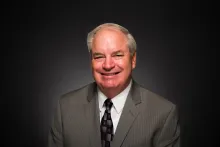
Robin Webber was born in Chicago, Illinois, in 1951, but has lived most of his life in California. He has been a part of the Church of God community since 1963. He attended Ambassador College in Pasadena from 1969-1973. He majored in theology and history.
Mr. Webber's interest remains in the study of history, socio-economics and literature. Over the years, he has offered his services to museums as a docent to share his enthusiasm and passions regarding these areas of expertise.
When time permits, he loves to go mountain biking on nearby ranch land and meet his wife as she hikes toward him.
