

Robin S Webber
This transcript was generated by AI and may contain errors. It is provided to assist those who may not be able to listen to the message.
Thank you very much, David. Thank you, Christina. Appreciate that. A very moving, powerful song when you consider the lyrics. Thank you very, very much. Well, here we are, the Sabbath after the festivals. We've gone through, again, the annual cycle of God's sacred festivals that are framed in Christ's life, His death, His resurrection, His second coming, and ultimately our union through Him with God the Father, portrayed by the eighth day. In all of this, when you think about the festivals, it's in a sense God's GPS to move us from where He found us to where ultimately He wants us. With that thought in mind, I'd like you to open up the Scripture, and let's turn to Proverbs 29, and let's pick up the thought in verse 18. In Proverbs 29 and verse 18, it tells us this, and this is out of the New King James English, where there is no revelation that people cast off restraint, but happy is He who keeps the law. In the King James Version, what we sometimes call the Old King James Version, it says, where there is no vision, the people perish. In the New Living Translation, which is very interesting, it says, when people do not accept divine guidance, they run wild. Thus, God is encouraging us through the Scriptures that we need to hold to a vision, and we need to understand the direction of divine guidance. Now, you know that, and I know that as individuals, and we want to do that, and we want to follow the lead of God's Holy Spirit. Unfortunately, what happens so often is that our human nature shows up first. What we need to understand and what we need to do is to hone in on this, what we might call the divine guidance, so that we can move forward from these festivals and give God our best. Join me, if you would, in Philippians 3. In Philippians 3, because in a sense, this is speaking to that vision. Shall we say that divine guidance that is mentioned in the New Living Translation of the book of Philippians? Philippians is always an interesting book when you recognize the background, that you've got to remember that the Apostle Paul is writing this from a prison. He's writing from a prison. Whether it's house imprisonment or whether it was in a prison, we'll find out one day. As I often say, I wasn't the fly on the wall. But we know that he was, to one degree or another, incarcerated. And yet, to recognize that with the Apostle Paul, no matter what life's circumstances brought to him, and you think about your own circumstances that you're going through, I'm going through, we're all going through, to recognize that Paul always lived with a life of windows, looking out, looking at what could be, rather than just simply looking into a mirror and seeing himself. So much so that when you notice his writings, especially the prison epistles, he never talks about being a prisoner of Rome. He talks about being a prisoner of Christ. God is in charge of everything. Christ is in charge of everything. But with this specific thought of divine guidance and moving forward, let's just go through Philippians 3 and picking up the thought, if we could, in verse 7. But what things were gained in me, these I have counted lost for Christ. Yet, indeed, I also count all things lost for the excellence of the knowledge of Christ Jesus, my Lord.
He personalizes it. He's my Lord, for whom I have suffered the loss of all things and count them as rubbish that I may gain Christ. That was then. That was then. God found me and rescued me, and now this is now. It's going to be very important in the course of this conversation, because too often, we, even as Christians, can be caught in the quicksand of then and looking back and staying stuck in our past, never being able to move forward, rather than recognizing that God always speaks about what are we about now in service to Him. And being found in Him, not of having my own righteousness, which is from the law, but that which is through faith in Christ. The righteousness which is from God by faith, that I may know Him, and the power of His resurrection. Paul always focused on the resurrection, even more so than most of the writers of the New Testament. God's power was enshrined or framed by the power of the resurrection. And, yes, also the fellowship of His suffering, being conformed to His death. If by any means I may attain to the resurrection from the dead. Verse 12. Not that I have attained already or am already perfected, but I press on that I may lay hold of that for which Christ Jesus has also laid hold of me. He saw His life as having purpose, having a destiny. He uses this in a very graphic sense as the only way that I can put it. He uses this tangible thought that Jesus literally laid hold on Him. Grabbed Him, as it were, so that He might grab, in turn, the things that God wanted Him to know through Jesus Christ. A lot of interaction. God started the process through Christ. But now with that process moving forward, He also has a part in this. Brethren, I do not count myself to have apprehended, but one thing I do, forgetting those things which are behind and reaching forward to those things which are ahead. Verse 14. I press towards the goal for the prize of that upward call of God in Christ Jesus. The upward call. He's pressing. He's moving forward. Therefore, let us, as many as our mature, have this mind, what mind, of pressing forward, of rising up to that upward call. Let us have this mind, as many as our mature, and if anything you think otherwise, God will reveal it to you. Nevertheless, to the degree that we have already attained, let us walk by the same rule. Let us be of that same mind. That's why today I want to bring you a message, brethren, that is entitled, simply this, pressing towards the prize of the upward call. We're coming off the feast. We are not yet fully in the kingdom of God. We do experience it. Our citizenship is in heaven. God sees things as if they already are, but when I woke up this morning and pinched myself, I didn't have the glorified body yet. And when you saw me walk up those stairs, you recognized that I don't have the glorified body yet. And yet God says to press ahead. And that's what I'd like to do today with you here in the San Diego congregation and our dear friends that have come and visited with us today. I want to kind of take you through looking ahead, pressing ahead towards that upward call. It says to be of the same mind. I want to kind of give us the same footsteps. I want to give us the same heart steps, things that you can grab a hold of and work this coming year as we move now from this festival season as we move forward to the spring festival season.
So I'm going to give you simply five basic points. We're going to go through them rather rapidly. I know you've already heard a lot of messages for about a week and a half. But what these points are going to give to you are simply two things. It's going to talk about your individual responsibility before God the Father and Jesus Christ. Your individual responsibility because God calls us as individuals.
But it's also going to bespeak to your collective responsibility as members of the body of Christ, recognizing that Christianity is never just about the vertical. It's not just about you and God. It's always about encompassing other people and what we do with that. These are going to be five basic reminders.
Many of you have heard these things. You say, well, why don't you just quit now? Well, you're going to be reminded again. But we're going to be reminded about it. Let's build upon it. Let's talk about it later on in the message chat. But these are the points that I want to give you as a congregation. Number one major point as we press forward is to always remember that we have been called to be holy.
We have been called to be a holy people. You say, well, Mr. Weber, you spoke about that during the Feast of Tabernacles and on the Eighth Day Festival. Well, I'm going to speak about it again, and I'm going to speak about it again. I'll probably speak about it again next month. We are just not simply a religious, intellectual society. We're not a social club. You don't join, quote-unquote, the Church. God gives us a calling, and He places us in the body as He sees fit. And the body of Christ is a spiritual organism. It's a spiritual organism. And all of those that God has called into the body of Christ have been given a commission by none other than God Almighty. What is that commission? We are to be holy as He is holy. Let's look at it in Leviticus 11, verse 44 again. Leviticus 11, 44. What does it mean to be holy? It just doesn't mean, kind of, be good. It doesn't even mean to be very good. It means to be holy. You actually see that in the Creation Week, where God started as He moved through the days of Creation, He says, that's good. By the time you get to the sixth day, He says, it's very good. But it is on the seventh day that He enshrined and imbued that day with His presence. And that's what makes it holy. And God wants to live in us. He wants us to breathe Him. He wants us to feel Him. He wants us to experience Him. He wants us to act and respond as Jesus Christ would in every thought, word, and deed. God the Father is holy. Jesus Christ is holy. God the Father is spirit. Jesus Christ is spirit. They give us, what? The Holy Spirit. We are to be a holy people. Leviticus 11.44, again, saying right here, For I AM. For I AM. And there's the name of God, the I AM, the Lord, your God. And you shall therefore consecrate yourselves, and you shall be holy, for I AM holy. God says here, you're to consecrate yourself. You're to be holy. That word holy comes from the word hagia in the Greek. It literally means that God, by His grace, by His foreknowing, has taken us, not because of what we are, but because of what He is, and has set us apart. Set us apart. He's not doing that with all of the rule at this time. But He has set us apart for this purpose to dedicate ourselves to Him, and to be in a covenant relationship. A covenant relationship is different than a contractual relationship. A covenant is for life, and a covenant deals with blood. It's normally dealt in olden times with the life that is given. The difference between a covenant and a contract? Contracts, by their very being, are normally created to somehow be broken and to find loopholes in.
Baptism is a covenant. It's holy.
Marriage is until death do you part.
It's through thick and thin.
It's a covenant. Marriage is holy because it represents the relationship between Christ and the Church. It is not an institution crafted by cavemen in a cave in southern France.
It is not the result of evolution. It is a gift that is given by God. Brethren, as we go through this year, and we are going to be pressed, and we are going to be challenged, and as we're pressing forward just as much as we did sometimes when we were in high school or junior high running a 400 or running an 800 meter, we're going to run out of steam. We're going to get tired. We're going to get distracted. Let's remember that God has called us to be in a covenant. Join me, if you would, in 1 Peter 2. In 1 Peter 2, and let's pick up the thought, if we could, please, in verse 9.
1 Peter 2, verse 9. You are a chosen generation, a royal priesthood, a holy nation. Now, this is not talking about any racial group. This is not talking about one specific ethnicity.
This is talking about what God is doing, calling men and women from around this earth through all ages of what He is crafting and what He is molding. That it's to His glory. It is to His own special people that we might proclaim the praise of Him who called you out of darkness into His marvelous light, who once were not a people but are now the people of God, who had not obtained mercy but now have obtained mercy.
When we think of Days of Yore and we think of Moses, remember when he was on Mount Sinai and he'd gone up to the Mount and was approaching the burning bush.
God said, Moses, take off your shoes. Remember Moses, that's for the older audience, took off his shoes.
He'd say, wow, that was really something. He had to take off his shoes. Let's understand something with our covenant relationship that God's calling the Holy People. When we approach God's throne, we too are to put off more than our shoes, but all of that we are apart from Him and allow God to cloak us with something that's very special.
Join me, if you would, in Isaiah 61. In Isaiah 61, notice what God desires to clothe us with in this covenant relationship that is so incredibly special. It is so unbelievably wonderful to say, well, how do we know that? Because Christ gave His life and His blood that we might come into the presence of God Almighty. Isaiah 16, verse 10, Now let's bring this down to common denominator so we all understand it. God has called us to be holy. Our thoughts are to be His thoughts. Our manner of being is to be His manner of being. Let's take it a step further, please. Why we do what we do is a little bit like what David was talking about here earlier. It's not only believing on something, but believing enough that your life changes.
And this is the great step that I think all of us frankly have to take as human beings, and even as Christians, is not only to do the right thing, but to do it for the right motivation. The right motivation. Why are we doing what we are doing towards our God, towards our mates, towards our children? You know, I break in from what I was actually going to share on the eighth day, because I know so much that, it's actually a thought that I wanted to share, is that why do we do what we do?
Why do we press towards that upward call? Why do we do it? Are we only doing it for the heavenly carrots? I didn't say the carnal carrots, but the heavenly carrots. Are we doing it just simply for the reward? Are we just simply doing it so that we will live forever? I have a question that I often think about. Why do I do what I do? And I says to myself, God loved me so much that He gave His Son for me. And in turn, then I give myself to God.
And my God has been so gracious and wonderful to this man named Robin Weber, that He doesn't really have to give me one more thing in this life. He doesn't really need it. He doesn't owe me anything. I owe Him everything. And why, then, do I press forward? Would not God just enjoy that if I meet Him in eternity, that that is enough? Is that enough? That He doesn't have to put all sorts of things on my shoulders? But just to know Him, to know Christ, to be able to share time together, do I need something beyond that?
Now, God says He is going to give us something beyond that. Please don't mistake me in that what I'm saying. But why, what is my motivation? Hopefully my motivation, ultimately, is to one day, by God's miracle, meet Him on His own terms and in His own existence, and be able to meet the person that has given me everything in life, and promises me life. Why do I do what I do? And if I do that for Him, then what do I do? What do I do and why do I do for my wife?
Why do I do and what do I do? What is my motivation? Think about it for a moment. You might want to jot this down if you're taking nights. Jesus Christ never had one bad motivation. The foundation, the root of all of His thinking as God on earth was motivated by love.
Thus, we see what it says in Romans 12 and verse 1. Romans 12, when God has called us to be a holy people this year, let's remember that we are to be that perpetual continuing sacrifice that the Apostle Paul speaks about here in verse 1. I beseech you therefore, brethren, by the mercies of God, that you present your bodies a living sacrifice, holy acceptable to God, which is your reasonable service. Powerful words. Notice what it says. By the mercies of God, you present your bodies a living sacrifice.
Not as a dead duck. Okay, God. That's what you want me to do. I'll do it one more time, because I guess I have to. That's not what God wants. He says there will be a living sacrifice. Notice the word there? Holy. Acceptable to God. Abiding by that covenant. Recognizing that if we do not allow Christ to reign over our hearts in this lifetime, that God the Father is not going to allow us to reign in the wonderful world tomorrow. Point number one. As we move through this year, let's remember we are to be a holy people. Number two.
Number two. Let's move forward, press towards that upward call placed before us that God starts what he finishes. God starts what he finishes. Let's remember, friends in Christ, that we are in a spiritual race. Join me if you would in 1 Corinthians 9. The Apostle Paul, who traveled the Hellenistic world, was familiar with the Olympiads that would come in place and was familiar with the Olympics that would take place.
And he says here in 1 Corinthians 9, verse 24, Do you not know that those who run in a race run all, but only one receives the prize? Run in such a way that you may obtain it. And everyone who competes for the prize is temperate, moderate in all things. Now they do it to obtain a perishable crown to get something. But we for an imperishable crown, therefore I run thus, not with uncertainty, thus I fight, not as one who beats the air.
I was talking about Eric Lidle the other day in the famous movie Chariots of Fire. Remember the Scotsman, how he had run? He's out of breath and people were just transfixed by the way he ran. His arms would go up in the air when he was finally there. And if you've ever seen the movie, his arms were moving. This is what he was doing. He put his whole body into it. He ran as he said to his fiancé, I run to feel God's pleasure.
And so we look at this and it says, therefore I discipline my body. Oh, excuse me, verse 26. Therefore, thus I run, not with uncertainty, thus I fight, not as one who beats the air, but I discipline my body and bring it into subjection. Last, when I have preached to others, I myself should be disqualified.
I don't know how long your race is and I don't know how long my race is. It's only God that determines whether once he calls us and we're in this covenant relationship as to whether it's going to be a sprint or whether it's going to be a marathon. But let's, the bottom line is simply this. Let's remember that we don't run this race alone. We don't run the race alone. And we never know when God calls us into the race. I ran into somebody the other day and said, you know what, Mr. Weber? God just called me and I'm 80 years old. And this is my first feast of Tabernacles.
I just, what's God doing? And, you know, they were kind of down about it. And I said, well, you know what, you're 400 years ahead of Noah. God didn't start calling Noah till he's 480 years of age. And not only that, you don't have to build a boat like Noah did.
God alone knows when he puts us into the race. But we need to know that we are never forsaken by our God. Join me if you wouldn't, Philippians 1 and verse 6. And Philippians 1 and verse 6. Again, remembering this is a prison epistle and Paul, the prisoner of the Lord in a cell, is writing this, which gives it even greater merit when you think about it. Philippians 1 verse 6. Being confident of this very thing, that he who has begun a good work in you will complete it until the day of Christ Jesus. What God begins, he will finish. Now, some of you may not be aware of this. I'm sure all of you have heard this verse at one time or another. But when you go into the Greek of this, when you see the terms of what he has begun, and when you see the word complete, that is Greek language that is talking about sacrifice.
That's Greek language talking about sacrifice. A sacrifice that we've given something away and put ourselves aside, that we are no longer running or living, even loving for ourselves, but emulating the example of the ultimate sacrifice, Jesus Christ himself. I want to give you a really encouraging verse as we move out of these festivals. Join me if you would in John 6.37. Because sometimes I can realize on a Monday or a Tuesday or a Wednesday in La Mesa or El Cajon or Alpine or down in Chula Vista, that we can feel alone. Does anybody see that I'm putting one foot in front of another? Does anybody know that I am here? I think that's why God put John 6.37-40 into the Bible. Jesus speaking, God knows right where we are. Christ knows right where we are. And this is the will of him who sent me, that everyone who sees the Son and believes in him may have everlasting life, and I will raise him up that last day. You know, one of my favorite stories in the Bible, and I'll just paraphrase it, is the story of the man blind and able to see. John 9, you can read it this week. It is the most fascinating story, and it heartens me and encourages me whenever I read it. That here was a man that everybody thought, ugh, you know, as they say in the valley these days, ugh, that's a valley girl, ugh, and they go away because he's blind. And back then they felt that people were blinded or lame because of something of a sin, or the sin of their parents. Nobody, this individual in a sense, had cooties, and Jesus came along and said, This man has not sinned, but that what has befallen this man might be to the glory of God. And he made them whole, and he made them see. And you would have thought everybody in the community would have been happy. Wow, our neighbor has this sight, and he was blind. No. His parents basically said, we're not going to speak for him, you speak for him. His neighbors said, is this the same guy that we saw before? And then the people in the church community that day basically said, hey, this is all wrong, this cannot happen. And that man was thrown out of the house of the Lord. His family denied him, his neighbors denied him, and even his church community denied him. Jesus, that good shepherd, sought him out. The man that was thrown out of the house of the Lord was found by the Lord of the house, and found him when everybody else had rejected him. That man was not alone. Isn't that wonderful? That man was not alone. Of course, he got the big question asked of him, who do you say that I am? And that is a question that will be asked of every follower of Jesus Christ. Who do you say I am? And beyond that, do you know Philippians 1 and verse 6? To know that you will never be left alone. Please know, brethren, that you will not be left alone. In fact, let me take you to John 10 for just a second. In John 10, another really encouraging verse, John 10 and verse 27, where Jesus, speaking, says, My sheep hear my voice, and I know them, and they follow me. And I give them eternal life, and they shall never perish, neither shall anyone snatch them out of my hand.
My Father has given them to me, and he is greater than all, and no one is able to snatch them out of my Father's hand. By the way, my Father and I are one. Thus, as individuals and as a congregation, let's take responsibility for sharing what God is doing. Let's, in the course of this year, members of San Diego, when we're dealing with people, when people come and share their lives and their hearts with us, let's share the promises of God.
Each and every one of us can open a Bible and open our hearts and remind them, It doesn't have to be me. I know I'm 65 miles up the road, and all of Southern California, and everything that I do.
It's not about, alone, what I can do. You can open up a Bible, and you can talk to a brother, and you can talk to a sister, and you can remind them about the race, about the run, about pressing ahead towards that upward call.
You can do that.
I've never done that before. We are in training to be a kingdom of priests.
We can open up our Bibles, and we can share the promises of God. Point number three. Loving like God loves is God's goal for us. Loving like God loves is His goal for us, and nothing short of us.
Let's continue. You are a wonderful example of this, San Diego.
Of embracing people, of opening up our doors and our hearts to people, making them feel welcome. Making them feel welcome. Inviting them to the family of God. Jesus said in John 13.35, that all men shall know that you truly are my disciples, if you have love one for another. A little bit again, like what David was saying about. A little bit again through 1 Corinthians. Though, as Paul says, who is probably one of the most intelligent people that ever lived, he says, though I have all knowledge, and though I know this, and though I know that, if I do not have love. I'm like a tinkling cymbal. I'm just like one more flat note. I am a clank. I ain't making any music or any sense.
That's where we need to be as a church culture. We need to be exhibiting the love of God. It needs to be outflowing and outgoing, moving away from us, and saying, welcome.
When people come through our door, there should be literally, in a sense, a welcome sign over it. But you are the welcome signs by how you receive people and how you share your life with people. That is what we are to be about. And all the more so, especially as these days proceed. Join me if you would in Hebrews 10. Let's look at Hebrews 10 here.
Again, this was a time of challenge around Jerusalem. This is written to the Hebrews 10, verse 19. Therefore, brethren, having boldness entered the holiest by the blood of Jesus, by a new and a living way, which He consecrated for us, and He goes on to talk about this in verse 22, Let us draw near with a true heart, in full assurance of faith, having our hearts sprinkled from an evil conscience, and our bodies washed with pure water, and let us hold fast the confession of our hope without wavering.
Verse 24, and let us consider one another in order to stir up love and good works, not forsaking the assembling of ourselves together, as is the manner of some, but exhorting one another, in so much as you see the day approaching. And that's what we need to be doing, brethren. We need to be growing in that kind of love. It's very easy to love somebody that is lovable. I've never had any problem with that, to love somebody that is unlovable. But God has called us to love the unlovable, to give hope to the hopeless.
That is the call and the role of a Christian. That needs to permeate our very existence. That is what we've been called to. Point number four. Let us, in moving towards that upward call and pressing ahead, let us grow in grace and knowledge. Let us grow in grace and knowledge. I want to remind you what that Scripture says, because sometimes we cut Scriptures in half and we forget what the full read is. That's why we all need to turn over there right now. Here is Peter, a seasoned senior citizen of God's way of life, one of the men that had literally seen the transfiguration.
And to recognize what his last words recorded are in Scripture, but grow in the grace and knowledge of our Lord and Savior, Jesus Christ. That was his admonition to grow in the knowledge of our Lord and Savior, Jesus Christ. How important is that? Incredibly important. God the Father wants us to grow in the grace and knowledge of his Son.
After all, it says in 1 Corinthians 1, 26, it says, God is not called the great and the mighty of the world, he's called the weak of the world. He's called the base things of the world. And it says within that set of Scriptures, And he gave us Jesus Christ as wisdom, as wisdom.
Therefore, we have to grow in grace and knowledge and the wisdom that is in Christ. What are you going to be centering on this coming year in your studies? What are you going to be looking at? What are you going to be focusing on? What is going to be dominating your time as you open up this Bible or some commentary about the Bible or some book about the Bible? Where is going to be your focus?
Is it going to be about setting dates? Trying to figure out the exact moment when Jesus Christ is going to come back? I learned that lesson about 50 years ago. I was a teenager. I figured out, henceforth, after that, the only date I ever set is with my wife. That's how I set dates. Where is going to be your focus? Are you going to be labor over one Greek word or one Hebrew word that dominates your life, that just soaks up all of your time?
Are you going to be growing in the grace and the knowledge of our Lord and Savior Jesus Christ? Are you going to be dedicated, as we are here in San Diego, of reading about the life of Christ, talking about it with one another? Not only facts and figures and what other people don't understand about Christ on a technical level, but what we ought to understand, what we ought to embrace, what we ought to internalize, what we need to absorb, the relationship and the love of God that He gave us Christ.
And then that wisdom of Christ that Paul speaks about as to how we incorporate it in our lives, as we look at an example of how Christ might have shared thoughts with the Pharisees, the Sadducees, the Scribes, and on the other hand, how He might have dealt with a lady from Samaria, or how He dealt with a leper, that He would even approach a leper. That's what we need to be focusing on. Not just gnosis, not just being in the know, that's what gnosis is basically about, being in the know, but realizing that apart from the grace of God, apart from the love of God, we are nothing.
God has not called us just to be a part of an intellectual spiritual factory, but to be growing in the love of God, of where we put ourselves away, as Christ did willingly, recognizing that's a part of the covenant, and allowing God and His Spirit to live in us.
That's where we need to grow. Dean Blackwell used to put it this way in past needed days, we need to be majoring in the majors. We need to be majoring in the majors. If we are going to press forward and move to that upper call, ask God to help you to understand what are the big points of the Bible, and get off the anthills, that at times have taken people down a very, very, very bad path. And they become God in their own eyes because they're the only ones that understand the Scripture. And they look at you and they say, one day, maybe, they will understand, but for now, I do.
You see such people approach you. It's always like, have you ever seen that leash that doesn't have a dog at the end? And that's kind of what it is. They have their pet doctrine, and it's always before them. It's always moving towards you, and you go, oh, here they come again.
And they center on some esoteric, far out, far off doctrine that is not central to the will of the Father and to the love of Christ. If whatever you're studying is bigger than the will of the Father and the love of Christ, you need to ask God for an intervention and ask in His mercy to get you back on the right path.
As we move forward this year, let's allow the Bible to read our hearts rather than us simply reading its words. And let us, as we study the Word of God, let us allow God to make us over into His image rather than us trying to make Him over into our image. That's not how God designed it to work. We are being made into God's image. So very, very important. And allow the living God to be sovereign in your life by the living Word, this holy canon. And allow Him to make an impact of this written Word. This is the way, walk you in it. Let's go to point five and we'll conclude. Point number five. We all serve a purpose in the body of Christ. We all serve a purpose in the body of Christ. I realize we had many visitors here and have some visitors here today with us that may not be members of the United Church of God, but this is the United Church of God congregation. So I do want to share what the vision statement is of the United Church of God because it's germane to this point.
And I think it's germane in the hearts of many people that are apart from our fellowship as well. But this is what we say. We are a church led by God's Holy Spirit, joined and knit together by what every member supplies, with all doing their share and growing in love to fulfill God's great purpose for humanity to bring many children to glory.
Every member doing his purpose. One thing I've done in Southern California for 40 years and hopefully grown in grace and knowledge of our Lord and Savior Jesus Christ in doing this is that I look at every congregation that I pastor, is that this is a congregation that is pastor led, but not pastor dominated.
I hope that still remains the case. God raised up pastors to lead his people to be shepherds. But the heart and the fire and the love has got to be in the people themselves. I will come to you sometimes, motivate you, encourage you as I do. Hopefully it's encouragement. But it's you that is important. I remember many, many years ago that somebody interviewed Winston Churchill and said, What is it with you, Winston? What is it with those words and that verb and that power that you are able to mold into shape of people?
And Winston Churchill said, Oh, no, no, no, no, no, no, no, no, you've got it all wrong. You've got to understand that it is the people that have the lion's heart. I just get to give the roar. And you see, that's what our congregations need to have. Our congregations are the ones that need to have the heart of Christ. Mr. Clark, Mr. Smith, Mr. Gardinhire, Mr. Miller, others of you will come up. And we can, in that sense, roar for a little while, for a few minutes. But it's what God is doing in your heart. And each and every one of us have a role. Each and every one of us apart.
We talked about Chalk and Kim today of what they do. I want to see more of that. I think that's exciting. I'll share another thought with you. We recently had a public Bible lecture back in Cincinnati. Ultimately, we will again be having open houses here in San Diego. And what I would like to see of our members and ask of our members is, rather than waiting on a letter, rather than waiting on some internet connection, I would like to see you, if you are excited about what God is doing in San Diego, California, in this congregation, I would want you to personally invite somebody that you know.
You personally invite somebody. And whether they come or not, it'll be good for you to personally invite somebody to your congregation. Chalk and Kim invited people to the way of life. And I think sometimes, and I'm just speaking very bluntly, I think sometimes we wait for media, I think we wait for pages and magazines, we wait for somebody across the Ohio River to do what we ought to be doing here in this congregation and reaching out in our community and sharing the way of life, sharing this way of love and being a part.
Everybody has a part. I see young people here today. One of my favorite stories, and I'll conclude with this, and everybody doing their part, is, you know, what happened was, you know, Jesus got off the boat on the Sea of Galilee, and he thought he ditched the crowd on one side of the lake, and they showed up on the other side of the lake.
How's that for planning? But he already knew what he was doing. Five thousand people were over there. The disciples are looking, oh yeah, that's really great. He thinks he's the Son of God. Look what he's gotten in his sin, too. And one of the disciples, one of the men, one of his would-be managers that didn't understand him said, look, you know, I'm from around here. There is not enough bread. There's not enough bread down in that town to feed this crowd. The underlying thing was, what have you gotten us into? And then we know the story of how Andrew went out and found the youth. Andrew went out and found the youth, and that little youth brought his little brown bag lunch with a few fish and a few loaves of bread.
And what happened? The rest is history. Jesus Christ fed that crowd of 5,000 people. You can see the story in John 6. He fed a crowd of 5,000, and just to, and this is kind of fun, just to rub it into his disciples, he said, get the baskets and pick up the leftovers. Is that not neat? I wonder if that little boy had been just lost in the crowd. See, what that little boy did is what each and every one of us need to do in our lives. Whatever God has given us, we give to him. Even if it's a little, we give our little, because in faith and confidence, if we give our little, God can make a lot out of it.
He can make history out of it. And see, each and every one of us, each and every one of us, or not all of us, let me change my words, we may not have the ability to get up here and to lead songs, or to play the piano like David does, or to play the flute so lovely as Christina does, or to do this or that, but each and every one of us can be a connector.
How much do you know about Andrew? How much do you know about Andrew? Remember I mentioned Andrew, didn't I? Andrew is the one that found the lad, right? Andrew found the lad. Andrew connected the lad with Christ, and history was made. Andrew, later on, would find others by the temple and connect them with Christ, and history would be made. Andrew did what he could naturally do. You know what Andrew was? He was a connector. That was his gift. He was a connector. Each and every one of us have that ability, as God leads us, to connect people to God the Father, to Jesus Christ, to the Good News of the Gospel, and this way of life.
Now, what we're going to do is to recognize, here we are, I've given you five points. Here we are, we're probably just a little bit humanly tired. We've done a lot over this last week and a half. But let's remember what the Apostle Paul said. No, I have not apprehended. But I am going to give all I have to God, and I am going to rise upward to that heavenly call.
We're going to conclude today by hearing a song. You've heard it before, those of you that are here in San Diego, but I love it.
And I think it's a good way to start the rest of our lives as we come off of this feast. And I think you will appreciate it and enjoy it. It's a song by Marty Gatz, and it is called, Let Us Run. Let us run.
And then what we will do is we'll have a message chat afterwards and be happy to hear some of your thoughts. So let's start playing it right now, Mr. Will, and then we'll have him in prayer.
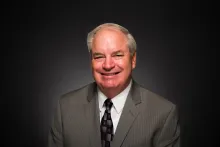
Robin Webber was born in Chicago, Illinois, in 1951, but has lived most of his life in California. He has been a part of the Church of God community since 1963. He attended Ambassador College in Pasadena from 1969-1973. He majored in theology and history.
Mr. Webber's interest remains in the study of history, socio-economics and literature. Over the years, he has offered his services to museums as a docent to share his enthusiasm and passions regarding these areas of expertise.
When time permits, he loves to go mountain biking on nearby ranch land and meet his wife as she hikes toward him.
