
Robin S Webber
This transcript was generated by AI and may contain errors. It is provided to assist those who may not be able to listen to the message.
Thank you very much to the hymn choir. We always appreciate those hymns of praise directed towards God. I do want to mention, while I am up here, Mr. and Mrs. Helge are out serving the Redlands congregation today. So that's where the Helge's are. When we have the Helge's go out, it's always nice because we call it a tufur, because Mr. Helge can go out, and I know we all appreciate the messages that he brings us. And then, of course, Mrs. Helge can sing as well. And sometimes, when we send out the Shemets, it's a threefer, because Bonnie plays the piano, they do special music together, and then Paul can speak sometimes when we send him out. We have not yet developed a fourfer in this congregation. And it's not coming from me, because all I can do is make a joyful noise, as many of you have heard over the years in the pews. But Mr. Helge is doing fine. If I can make a comment for a moment about Ralph, and that is that it was just amazing at the feast.
Do you all realize what a blessing it is that we have Mr. and Mrs. Helge with us? And to recognize what a blessing it is to have Ralph, you know, I asked somebody, I said, hey, come over here. During the feast, I said, how old do you think this guy is up there speaking? And you know how Mr. Helge speaks. And I said, I don't know if I should say it, Ralph may sue me, he's a lawyer. But anyway, is that, you know, as I think most of us realize, Mr. Helge is 85 years old. And that how much God has blessed him with strength and with power. It reminds me of the book of Deuteronomy. I'm going to start calling him Moses. That when you think about it, says that, you know, in the end of Deuteronomy, you're talking about Moses, it said that his eye did not dim, and neither did his strength go out from him. So I like to mention that. Next time when Mr. Garnet is away, I'll say something nice about John. Might be a while. And we don't want to leave Frank out and vow. I think all of you really realize, and I think this will go into what I'm speaking about this afternoon somewhat, is how much we do appreciate what every man and every lady brings, whether they be an elder, whether they be ordained, whether they be male-female, married-single. It really is a whole church effort. And what has been laid upon me as a person over these last several years, plus most of my lifetime, simply could not be done without the love and the help and the many hands and the many hearts of the brethren. And perhaps that is what I would like to speak to you today. I mentioned that Mr. Velazquez started this message, and I will just simply conclude it because we work for the same boss. That's God Almighty. But allow me to begin with this, that the the autumn festivals just experienced offer and does offer us an incredible view of an awesome future laid before each of us as a people of covenant with God Almighty.
And this is what we are going to center on in the congregations that I pastor in California in the course of this year. To never forget that you and I are a people of covenant with and before God Almighty. The festivals and their portent are designed to parallel the experience of Israel, looking over the river at a land of milk and honey prepared for them. And ultimately, they would enter that land of promise, just as you and I had an opportunity proverbially, as it were, to look over a river for seven days plus one and see the land of promise that God has in store for each and every one of us.
As Israel would cross the Jordan, they would go from a pilgrimage, that means an on-the-move people, to settled folk that were called upon by God and privileged by God to display the works of God to the nations. But their history in general displays a promise unfulfilled on their part, a future unrealized for Israel till now. Question is, how does that relate to you and me on this first Sabbath after the autumn festivals? We have been a part of a pilgrimage festival, and now we settle after the autumn festivals into the continuing promises and provisions of God. The promises, the provisions of God, is the territory that He plants a follower in.
It is the territory in which a Christian exists. Allow me to make myself plain again. The promises, the provisions of God, are the territory that He plants you and me in, not only in pilgrimage, but to settle before the nations. The nations which can be parallel to our community, our family members, our high schools, our colleges, junior highs, elementary school, each and every one of you out here is in a faith community.
Each and every one of us out here have to one degree an understanding, big or small, of covenant that God has called us and or for some of the young folk here, that God has called your family to be a light, to be an example. And thus, we need to always understand with Israel that they went from wanderers to planted. And that's why God gives us the book of Deuteronomy, even after He spelled out most of it in Exodus, Leviticus, and Numbers, because one set of books was for a people that were wandering. Deuteronomy was written for a people that were about to cross river, were to settle, and were to be a light unto the nations.
Now, with this parallel understood, let's establish a title for this message and create relevance for you and me as an audience. And I'd like you to join me in Philippians 3, in Philippians 3, so that we might gain a title for this message and to be able to proceed. Now, I say this to you, and I speak as one who is a human being. I realize that in a sense, you and I have just wherever we might have been, Puerto Biarto, Escondido, Hawaii, Florida, or parts international, etc., etc.
You and I have had the opportunity to experience something incredible, something beautiful. It's called a microcosm of the kingdom of God, the experience of God. At camp, they call it the zone. You and I have been with people of like mind and like heart for seven days plus one.
I realize, if I dare say, may I, could I, that coming off of that and coming back into the world can kind of jolt us. All of a sudden, we recognize, like Dorothy said to Toto, we're not at the feast anymore, Toto. I say that, and I paraphrase it up.
No, we're not at the feast anymore, and we're not going to have people opening doors here and opening doors there and opening up the doors of their hearts and smiling at us and trying to work with us even when sometimes they're a little frustrated themselves. But you know that these are people of faith. You know that these are people that are wanting to be something more than they are, and you know that these are people that have surrendered their life to Jesus Christ. And then you come home, and you're either with a spouse who's a non-member, you're going to school, you're going to work, and somehow it's not that happy feeling that you necessarily received at the feast.
And thus, and thus, there can be somewhat of a jet lag, as it were, or an attitude adjustment, and or somewhat of a letdown, because you've been to the mountaintop, and now you've come back down, as it were, to the swamp of human nature all around us. Thus, this is why I want to give this message to you, and that's why we want to look at Philippians 3. Join me there for a moment. You may already be there, but this will set the stage.
Philippians 3, 12. Now that I have already attained or am already perfected, but I press on that I may lay hold of that for which Jesus Christ has also laid hold of me. Fascinating wordplay that Paul, the apostle, as a Christian, is saying, I am now still moving forward, and I have to grab a hold of that which now I am in, or lies before me, because I have been grabbed a hold by Jesus Christ. God laid hands on me, thus now I must lay hands on the things that God presents to me in my life, and in that sense, to do it Godly.
Brethren, verse 13, I do not count myself to have apprehended, not quite there yet, but one thing I do, forgetting those things which are behind, and reaching forward to those things which are ahead, I press towards the goal for the price of the upward call of God in Jesus Christ. Therefore, let us as many as are mature have this mind. And if in anything you think otherwise, God will reveal even this to you.
Nevertheless, to the degree that we have already attained, let us walk by the same rule, and let us be of the same mind. And those would be my words today echoing the words of the apostle Paul, let us press forward towards the price of the upward call. And that is the title of my message to you today, pressing towards the price of the upward call. It's very interesting when you come back here for a second.
You look at verse 13, brethren, I do not count myself to have apprehended, not quite there in my total grasp. And that's what it's talking about. The figurative language, Christ grabbed ahold of me. Now, I grabbed the hold of things of Christ, but I have not yet, even quite yet, apprehended or grasped at all. But one thing I do, forgetting those things which are behind and reaching forward.
Let's talk about that for a moment. I hope that as we've gone through this festival experience, seven days plus one, plus all of the sacred festivals and holy days before, that you and I are indeed not the same man or woman or young person that we were as this season of God began back in March and April.
You may not even be the same person that you were when you went to Florida or Florida or to Branson or to wherever you might have gone for the feast.
Notice what it says here. Forgetting those things behind.
We now move forward. I'm not sure where you might have been two or three weeks ago in your own spiritual life, but God here says to Paul, leave that behind.
Make that commitment. Remember what you heard at the Feast of Tabernacles. Remember what you read from the Word of God. Remember the inspiration that you received from God's servants.
But now we need to move forward. We need to do something about it.
It's interesting that in this passage he says, let us walk by the same rule. Let us have the same mind. There is a familiarity of the word same. Same rule, same mind. Thus a question looms before us here today in this room as where we go from how we settle as a person and as a people after the Feast of Tabernacles and the Eighth Day Festival.
Here it goes. How do we make a home for God in our hearts? How do we make a home for God in our hearts? And how do we make our congregation a home for others?
I want to give this message as a pastor. As you know, I'm off and away.
Nonetheless, I want to establish a pathway for each of us as we press forward towards that upward call. I want to share themes this afternoon that I will be sharing throughout this coming year to allow us to press towards the goal of that upward call of God in Jesus Christ. I expect, I pray, and I hope that others of you that are communicators in this congregation and other congregations that you teach and preach in will build upon what I share today.
And that I pray that all of you will study and discuss and share these basic biblical principles that will, number one, establish our individual relationship with God through Jesus Christ. Number two, personify the collective household of God of which we are jointly fit together.
As Mr. Velasquez mentioned us. So we're going to be discussing our individual role and our collective role as a congregation. I'm going to give you seven points. I'll try to go through them very rapidly but thoroughly. These are thoughts that are on my mind as a Christian, as a student of the Bible, as one that has been given responsible charge over the people of God.
And you are part of that. And thus I speak. This is what will allow us to settle off the pilgrimage and to be a light, if not to the nations, to one another, to our families, to our schools, to our workplace. Point number one. Point number one is simply this. We are called to be holy. We are called to be holy. That is the great anthem and that is the echo that reverberates down through the ages. In Leviticus 11 and verse 44. In Leviticus 11 and verse 44. And remember Leviticus is about priesthood. And you and I are being called and installed forward into being a kingdom, a priest. Leviticus 11, 44.
For I am the Lord your God, and you shall therefore consecrate yourself. And you shall be holy, for I am holy. And because of that, neither shall you defile yourselves with any creeping thing that creeps on the earth. For I am the Lord who brings you up out of the land of Egypt to be your God, and you shall therefore be holy for I am holy. God always reminds us and takes us back to who delivered us, who is the source of our strength, who is the source of our power, that there is a purpose that is being worked out here below.
For you that come to Los Angeles every week, I hope that you're not just coming to join a church and to be a part of a social club, to be at a coffee-clotch together, to simply have something for the family. These are all wonderful by-products. Fellowship is a by-product, and a wonderful one, and a needed one, as this world is around us that I talked about. But our primary goal when we come to the United Church of God Los Angeles is about our vocation that God has set before us. And to recognize that now that we're back from the Feast of Tabernacles and the Eighth Day Festival, we are never spiritually on vacation. But we are always on the vocation that God has planned it before each and every one of us to be holy as I am holy. Now this is not just simply lost on the Old Testament. Join me in 1 Peter. In 1 Peter 1 and verse 16. Again, coming down through the ages, this echoes through the epistle that Peter wrote in Ephesians 1 verse 15. But as he who called you is holy, you also be holy in all of your conduct, because it is written, Be holy for I am holy. It doesn't say just to be spiritually pretty when we come to church. It doesn't mean to be just simply humanly nice when we come through the doors of the brethren. This is a full-time vocation that we give everything that we have towards and do. It's not what you do. It's what you are. God does what He does because He is.
It is not just simply His nature. That's what He is. It's His attributes. It's who He is. He's holy. Let us all this year, as we go from pilgrimage to settling as a folk, let us all dedicate ourselves to this godly appeal to a covenant people. A covenant people, again, for those of you that may not be familiar with this term and just coming to church recently, that is a formal binding agreement. A covenant is a formal binding agreement. With that spoken, let us all pray that our Heavenly Father will grant us the information, the inspiration to develop towards God's desire for us, that His Spirit will guide us towards transforming our life's energies to imitate Jesus Christ. As I so often say, if we are going to grow as Mr. Valesk has mentioned, you and I as Christians cannot just simply settle for information. There are many people that have graced the Church of God doors over the decades that are excited about the information that they might receive. They come into our church halls and because of the revelation that God has granted us, they say, wow, I find a church that finally agrees with me. And or they begin to put the information together in an exciting way, just like a jigsaw puzzle. The difficulty is simply this. They have worked with the information like a jigsaw puzzle, but they never took it to the next step of working with their own hearts. You and I have not been called as Christians to simply work with information. Bottom line, to be holy as God is holy, God has called you and me to open up our hearts to Him and allow Him to do open heart surgery on us by the example of Jesus Christ, by the power of His Holy Spirit, and by the authority of God's Word. Join me if you would. Join me in 1 Peter 2 9. 1 Peter 2 9. 1 Peter 2 9. Again, this is God's Word speaking, but you are a chosen generation, a royal priesthood. Notice a holy nation. Now, this was initially spoken to Israel as they came up against Mount Sinai, where He said to Israel, which was indeed a nation that was being molded by God, He was saying, you're going to be a treasure to Me, and you are going to be a holy people and a holy nation. You can see that in Exodus 19 5-6. So, this is a reiteration, but now God is not just dealing with the race. Under the New Covenant, it is about grace in whom God chooses to be a part of the body of Christ. And He says, you are a holy nation, His own special people, that you may proclaim the praises of Him, who called you out of darkness into His marvelous light, who were once not a people, but are now the people of God, who had not obtained mercy, but now have obtained mercy. A holy nation. As this congregation is in membership with the body of Christ, is to recognize that we are a holy nation. We're not just an organization. We're not just a corporation. We're not just an almanac of biblical knowledge that someone happens to agree with, that titillates the gray matter. If we are only dealing with your gray matter during church time, then we are of all communicators not good. We always go for the heart. For all of you that are speaking before this congregation this coming year, never settle for simply dealing with the gray matter. Never settle for the up and down of just simply inspiration. We are here to be transformed. That's it. Because when we started this pilgrimage and this process, we were not holy. God selected and called us in spite of that. What makes such a covenant to holiness possible?
Simply this. We find it in 1 Corinthians 6. Join me there, please. 1 Corinthians 6. I'm spending a little bit more time here because when we deal with the foundation, then we can do the other points. 1 Corinthians 6. Let's pick up the thought in verse 19.
Or do you not know that your body is the temple of the Holy Spirit? That word temple that is used there is actually out of the Greek neos, which nearly means the holy place of the Holy Spirit who is in you whom you have from God and you are not your own. For you were bought at a price. You were bought at a price. We were redeemed. The Greek word for redeem, which is Greek, but going back to the source root, redemption is what is done for somebody that cannot do it themselves. Cannot do it themselves, whether it was a gladiator, whether it was a slave, whether it was an indentured servant. In other words, that arm of salvation, that hand of taking that which could not for itself do for itself, had to come from somewhere else. Thus it says we were redeemed at a price. Therefore glorify God in your body and in your spirit. And by the way, we don't belong to ourself any longer when you're in this covenant. It says, notice friends, which are gods? Thus we're not our own person. This covenant has not been nurtured by the sacrifice of living animals, but the blood of the Son of God.
When we think back to the book of Exodus with Moses, when he came up to Sinai and he approached the burning bush, what did he do? He took off his shoes. He recognized that he was in the presence of holiness. Thus, you and I as covenant people, under the new covenant, we are to take off more than the outer man and the outer apparel, but we are to surrender everything that is inside of us to put off and to put on. And we'll be having those discussions in the course of the year.
I'd like to go to point number two. Having established that this coming year, our communicators, our speakers, and you amongst yourself as a people, are going to remind one another, this is not just coming from the pulpit, but in our conversations with one another, to bolster up and to buckle up one another and to remind one another that God has called us to be a holy people. Point number two. God starts what he finishes. God starts what he finishes. Let us remember that we are in a spiritual race. God alone determines whether it is a sprint or a marathon for each of us, but let us always remember that we do not run this race alone.
Let us run the race before us with the encouragement provided by the apostle Paul in Philippians 1. Join me there if you would. Let's open up our Bibles in Philippians 1.
And noticing verse 6, being confident of this very thing that he who has begun a good work in you will complete it until the day of Jesus Christ. It's very interesting when you look at the language that is used here in the Greek, that the words there of begun and the words of complete were used in extra-biblical literature about sacrifice. So when you look at this, what is being talked about because Jesus sacrificed himself, we in turn, because we have surrendered ourselves to God the Father and Jesus Christ, to recognize, be confident then, that he was begun a good work in you. What is the good work about? Sacrifice. Sacrifice what? Our human nature.
Sacrifice what? Our will. Not my will, but thy will be done. Thus, this is what we are called to. That's going to be a challenge, but we need to understand that. Join me if you would in John 6, verse 37.
I realize that this coming year there are going to be challenges that are going to, what do I dare say, are going to affect our reading of this verse and wondering if God has left us alone. I want to share a promise with you, a proclamation that is rendered by none other than Jesus Christ in John 6. And I say this, dear brethren, to encourage you and remind you that when you are down and you think that you are alone and that you're running alone and that the race is too hard to remember what it says here in John 6 and verse 37. John 6, 37.
All that the Father gives me, John 6, 37, all that the Father gives me will come to me, and the one who comes to me I will by no means cast out. For I have come down from heaven not to do my own will, but the will of Him who sent me. And this is the will of the Father who sent me that all that He has given me. I should lose nothing. Jesus Christ is not a butterfingers, but should raise it up the last day. And this is the will of Him who sent me, that everyone who sees the Son and believes in Him may have everlasting life, and I will raise Him up the last day. Can you, as Christians that have been in the way for 30 or 40 or 50 years, can we galvanize as a congregation to remind one another, not from this pulpit, but from one another, that when we run into a brother or a sister that feels lost or alone, that we will personally galvanize them and strengthen them with the declarations of God? That we will, rather than just staying with their own human premises, turn them to the promises of God. We have a choice. We can stay here in the downward world, or we can press towards the upward call of God to the prize. And it is a choice that you and I make. It's a choice that you and I make. See, this is a whole church effort. This is a whole church effort to encourage one another, to be there for one another, to strengthen one another, as we're going to have challenges this year in our marriages, in health issues that are going to affect us, in child-rearing issues that we wish would go away. But you know what? The kids aren't going to go away. God's given you them to deal with, with situations with the economy that we're living in. We're going to have to strengthen one another. We have to encourage one another. We have to be loud where God is loud. And God is so loud, brethren, with His promises and His provisions, that that is where we need to stick our nose and stick our heart. You know, I just have a little sheet. I'm going to pass it out again after church. I'll send the rest of them to you, the rest of you that are on computer tonight, one that I've sent out. And you've heard this sometimes, but you know what? I'm going to go down these for just a moment again. And I'm going to ask you, since the last time you heard them four or five years ago, how are you doing? You say, there goes Weber. He's reading them again. But I'm going to ask you, how are you doing? Here we go. We either have the promises of God or we can stay stuck, like a stuck 45 record for those that are older around and around and around and around. God's promises, human premises, human premises first. We say it's impossible.
Anybody said that this year? Anybody said that today? God says all things are possible.
We say, I'm too tired. God says, I will give you rest. We say, nobody loves me. God says, I love you. We say, I can't go on. God says, my grace is sufficient.
We say, I can't figure things out. God says, I will direct your steps. We say, I can't do it. God says, you can do all things through Christ. We say, I'm not able. God says, I am able. We say, it's not worth it. God says, it will be worth it. We say, I can't forgive myself. God says, I forgive you. We say, I can't manage. God says, I will supply all of your needs. We say, I'm afraid. God says, I have not given you a spirit of fear. We say, I'm worried and nervous. God says, cast all of your cares upon me. We say, I'm not smart enough. God says, I give you wisdom. We say, I feel all alone. God says, I will never leave you nor forsake you. Is that how you are talking to your fellow Christians? Is that what you are sharing with them? Is that where your natural turn goes to? Or your spiritual turn goes to, to declare the promises of God? Is that going to be your foundation? Or are you going to be the wobbly wobbly? Are you going to be like the cowardly lion? Are you going to be burnt lard? Scared of your tail? Scared of Toto? You probably think I've been watching The Wizard of Oz recently. I haven't been. It's just indelibly entrenched in my mind. Oh, it's my tail! See, this is what we do as the household of faith. Jesus Christ is the head of the church. Then we are His feet to do His walking. We are His arms to do His reaching. Our tongues, our conversation, how we communicate with one another is to speak His word, to speak His promises. And as we do, we give Him praise. And then we are holy as He is holy. I'm going to pass this out to you later on, but let's remember just one thing. Remember, whatever happens this year, you are not alone. I often recall that beautiful and wonderful story. It's one of my three favorite chapters in the Bible of the story that Jesus came upon that man that was blind since His birth. And He had to remind the audience that this was not done because of the parents' sins or what this man had done, but that the glory of God might indeed be expressed.
And of course, we know the rest of the story of what happened. Jesus healed that man. And then before you know it, what happened was that His family ditched Him, His neighbors threw Him under the bus, and the fellow church members threw Him out of the church. Nice group! And they kept on having to try to change His story. This didn't really occur. And He says, I don't know about all of this, but there's one thing I do know. I was blind, but now I see. Now, He was cast out of the community of faith that He was attending. He had been attending the house of the Lord. What's beautiful about that story, and I'll let you do the reading later on, John 9, that can be your homework this week. It's interesting as this young man was thrown out of the house of the Lord, but the Lord of the house, Jesus Christ, came and found Him when nobody else was around. That good shepherd, of which He Himself said that if the Father has given me somebody, I will not lose Him. So are you ready to stay in the race? This is how you settle. You don't settle on fear, but you settle on the promises of God, which takes me to point number three.
Point number three, loving like God loves. Loving like God loves is God's goal for us. Let me repeat that. Loving like God loves is God's goal for us, and nothing short of it. This coming year, as we settle, let us endeavor to mirror Christ's own defining statement that identifies His followers. Point number 1335. Just allow me to read it. By this will all men know that you are my disciples, if you have love for one another. Not what you know, not what's stored up in the gray matter, but what you do. I know I see Mr. John Garnett here. He spoke to this subject during the Feast of Tabernacles. Sometimes God asks us to love people that are not necessarily lovable. He asks us to love not those that we know, but those that we don't know. We need to ask ourselves, how important is this kind of love, godly love? It's called agape. Let's remember, when the Bible was being created and brought together, that in being written, there wasn't a word in the Greek that really expressed what God's love was like. The word had not been coined. It was odd at best, perhaps here and there a little bit, and the word agape or agape, however you want to pronounce it, was what was best expressed about this love of God. Because it was not worldly. It's beyond this earth. It's about that upward call. It's not happening down here. It's not homegrown. It's heaven sent. Join me if you would in 1 Corinthians 13. In 1 Corinthians 13, let's take a look at this. Notice what it states. Verse 1, Let's go to the bottom of chapter 13. How important is this kind of love? And now abide. Faith, hope, love. These three. But the greatest of these is love. As people come into our lives, as people come into the life of our congregation here in the United Church of God, allow it to be said that our doors are open. Our hearts are open. And our hearts are open because the Bible itself is open to us. And we understand some of the things that it expresses to us. Join me if you would in 1 John 4. Regarding this agape love. 1 John 4. Let's pick up the thought, if we could, in verse 14. I'll just read it. Please listen. Let God speak to you on this Sabbath day. And we have seen and testify that the Father has sent the Son as Savior of the world. Whoever confesses that Jesus is the Son of God, God abides in Him and in God. And we have known and believed the love that God has for us. God is love. And He who abides in love abides in God. And yes, God in Him. Love has been perfected among us in this. That we may have boldness in the day of judgment. Because as He is, so are we in this world. Remember what I said that we want to develop the love that God and how He loves to be like Him. There is no fear in love. But perfect love casts out fear because fear involves torment. But He who fears has not been made perfect in love. Then notice verse 19. Why we are duty bound and given the high calling and the wonderful privilege of expressing this outflowing and outgoing concern away from self that is sacrificial in nature. Verse 19, we love Him because He first loved us. And we know what we were like. And thus we need to recognize this coming year to experience this kind of love, to understand it and to express it. Just simply be prepared. Please write this down. To express agape love means that most likely, no not most likely, it will happen that God will put somebody unlovable in your life. It's easy to love the lovable.
Are you with me? Do we understand?
To understand, to experience, and to express love as God loves us, and to practice it in training as a kingdom of priests in training, God will plant that unlovable person right in your path. And you know what's going to happen? You're going to have a choice. As to whether or not to walk right towards them and deal with them or to walk around them. Just like the man that was going down to Jericho. Just like the individual that for everybody else it was inconvenient and or unthinkable. And yet, that was the target that was set before that man. And one person rose up to the challenge, and that was the individual that was known as the Good Samaritan.
Number four. Let us grow in grace and knowledge. And may it ever be so in our lives and in our congregation. In 2 Peter 3 verse 18, a spiritual veteran of God's way of life, Peter, at the very end of his life says, But let us grow in the grace and the knowledge of our Lord and Savior, Jesus Christ. To Him be glory now and forever. Amen. We are to grow in grace and, yes, indeed, and knowledge. Let's not leave knowledge out of the book. We are to grow in understanding the grace of God, the favor of God that has been shed upon us and that we experience today. We are also to grow in the knowledge of the Scripture so that, in turn, as we have received God's grace, we might be able to respond to the King by living His Word every day in our life, not just simply by the letter, but not by the letter, but also by the Spirit. Let's appreciate this coming year that the greater the need, the greater the grace. But it comes at a cost. How do we experience God's grace? James 4. Join me if you would there for a second. In James, a book of wisdom, a book of how to apply God's way of life. James 4. Let's pick up the thought in verse 6. But He gives more grace. It seems as if there's a steady supply coming our way if we are open to it. Therefore, He says, God resists the proud but gives grace to the humble. Therefore, submit to God, resist the devil, and He will flee from you. Draw near to God, and He will draw near to you. Cleanse your hands, you sinners. Purify your hearts. You double-minded. Lament and mourn and weep, and let your laughter be turned to mourning and your joy to gloom. Verse 10. Humble yourselves in the sight of the Lord. And He will lift you up. Have any of us recently been thanking God for the humility that we have? I would suggest change that prayer. We have to go deeper. We have to go deeper. Join me if you would in 2 Chronicles 7. 2 Chronicles 7. Just pick up the thought in verse 14. If my people, who are called by my name, will humble themselves and pray, and seek my face, and turn from their wicked ways, then I will hear from heaven and will forgive their sins and heal their land. Now my eyes will be opened and my ears attentive to prayer made in this place. For now I have chosen and sanctified this house, that my name may be there forever, and my eyes and my heart will be there perpetually. If my people will humble themselves. Join me over in Psalm 149 verse 4. Psalm 149 verse 4. For the Lord takes pleasure in His people, and He will beautify the humble with salvation. Such a humble spirit will submit oneself to the Holy Word of God. There will be like the Bereans. There will be like the folks that Jesus spoke about that are blessed, that hunger and thirst. After the Word of God and after righteousness, they will be people that will be reading God's Word. To grow in grace and knowledge means to allow the living God to be sovereign in your life by the living Word, Jesus Christ, by the written Word, His Bible, and the spoken Word that will come to us this year. This is the way. Walk you in it. Brethren, are you ready? Are you buckled up? Airbags deployed? Are you getting set to settle? This is what God is calling to. Point number five, we're going to go real quickly. We all serve a purpose in the body of Christ. We all serve a purpose. Let's remember the vision statement that we just saw at the feast video. Let me read it to you here for a moment.
What we are about as a people and as all people in the body of Christ ought to be, that we are a church led by God's Holy Spirit, joined and knit together by what every member supplies with all doing their share and growing in love to fulfill God's great purpose for humanity, to bring many children to glory.
That comes from Ephesians 4 verse 16 and also Hebrews 2 and verse 10.
Our church, our congregation has one head and that head is Jesus Christ. He's also the head of your individual life, but He's the head of this congregation.
Now, this congregation is below that, pastor-led. Absolutely understood. I understand that. You understand that.
But below that, we are fed by the Word and we are Spirit led as a congregation.
And in all that we do this coming year, in all of those that will come up and speak to you, that it will always be known that in this congregation that we always speak of God and we always speak of Jesus Christ more than ourselves.
He's the head of the church. He is the heavenly Apostle. He is the one that is the foundation of the church.
It is not our story, it is God's story in us. It is not the story of Robin Weber, but the story of what Jesus Christ did with His life, His death, His resurrection, and His ascension, and His heavenly ministry to you and me on this day and every day until He comes back to this earth.
It's not about us, brethren. It's all about Him. And when God's story is bigger than our story, when His promises are bigger than our premises, can I tell you something?
This church will continue to expand and grow to be a lighthouse amongst the nation, amongst the community, amongst the nations, amongst the people.
And it will not just simply be because of what we might know or glean from the Scripture, but it will be because of what we are and who we represent, and that His story emanates from us more than our own story.
I want to share something with you. Each and every one of you in this congregation have a part. We have young people over here. We have young Rudays over here.
We have the Apis here. We have others that are here, the Australis and all the other families. This is each and every one of us, young and old, married and single, ordained and non-ordained.
Listen, there's enough division out there in this country during this political season. Let's not put wedges between us. We're all in this together.
And never underestimate what God is doing with you and through you. Never underestimate what He can do with you.
Never underestimate that we say, well, you know, I'm just a lad. I'm just a little boy in the United Church of God Los Angeles, or I'm a teenage girl, or I'm just a young single, or I'm not married, or I'm not ordained.
God doesn't look at things that way. The greatest story, one of the greatest stories, there's so many great stories in the Bible, is the little boy that came up with that bread.
When everybody else was trying to figure out how are they going to feed the mob, the crowd.
And everybody had their calculators out, and, you know, they had all their computers going, as it were in that day, figuratively speaking.
And that little boy came up, and he gave Jesus his bread, and he gave him his fish, and the rest is history. Now, how does that affect you and me?
Here it goes. If we, no matter how little, little is, if we do not give God even our little, are you with me? So far.
If we do not give God our little, he has nothing to use. But if we will even give him our little, he can take our little, as he did with that little boy, and make much, change history, and put a whole next chapter of the Bible in there about the bread of life.
This coming year, as a member of this congregation, as an individual within the body of Christ, never underestimate what God is going to do with you, as this is all fitly framed together.
Point number six. We have been called to more than personal salvation. We have been called to more than personal salvation.
Let's remain focused on the spirituality that we have been called to more than this. I remember Herbert W. Armstrong saying this 35 years ago from the College of Elysium.
Brethren, do you get it? We have been called to more than personal salvation alone, but to be a part of something greater than our own self-interest.
Now, when I say this, yes, indeed, we have been called, and now is the time of our visitation, and God is granting us personal salvation.
Just hold on that for a second. But not that alone. We have been called because we have that agape love in us.
We have a collective opportunity to spread the net as fishermen of men, as well as lend a hand of care to those that are like-hearted, like-minded, here in our congregation.
Why do I dare even say this? Out of the Scripture it says in Philippians 2.5, Let this mind be in you, which was in Christ Jesus, who did not think it would be robbery to be equal with God, but gave himself.
In other words, He did not grasp to what was His. He did not just hold on of the divine, but came to this earth that you and I might one day go from dust to that which is divine.
So He did not hold on to it for the heavenly goodies of and by and for Himself, but divorced Himself of those attributes of Godhead.
The Apostle Paul said that because he felt so strongly for his people that he says, I wish myself a cursed that Israel might know of God.
Now, I'm not asking anybody. Sometimes you have to pause here for a moment. I'm not going out to ask anybody to become a cursed at five o'clock this afternoon.
If you understand what that means. I'm using that as a principle of the longing that both Christ and a man of God named Paul had, that others might have the good news of God's nature, of God's attributes, the good news of Jesus Christ and that gospel of the kingdom of God.
And that if it took them moving out of the way that they might have it, that they might have it.
And that's why collectively we preach that gospel of Jesus Christ in the kingdom of God and we do sacrifice for it. We do extend ourselves. We do welcome people coming into our doors because it is not our private property. It's not our private domain.
God says that it is his desire in Peter that all men, all men might come to an understanding about him.
Thus, we do what we do as a congregation. We look beyond these walls and we recognize that we are not a solitary institution. But we are a part of a greater fabric. A greater fabric as a church, the United Church of God. A greater fabric in the body of Christ.
And thus, we recognize that it is not just about us. Point number seven.
Point number seven is simply this. God's church is to be a house of prayer. Mark 11 verse 17.
God's house was being used for anything but when Jesus made a visitation.
And he reminded them out of Jeremiah and out of the Old Testament that my Father's house will be a house of prayer.
I want the United Church of God and I believe God Almighty wants this church to be a house of prayer.
We need to be instant in prayer. We need to not cease with prayer from one another during the Feast of Tabernacles.
We offered intercessory prayer a couple of times for a very unique and challenging human situation.
We felt helpless. We put it in God's hands. God's will be done.
But we did our part, as we do here in Los Angeles. We prayed from the pulpit.
There are going to be times when you're not in church and maybe you're with somebody that is discouraged, that is down, that is emotionally beat up, that is looking for answers.
Pray with them. Remind them about the promises of God.
Point them towards the upward calling rather than the downward gravity that brings us down and removes us from the holy calling that God has given us.
1 Thessalonians 5 says to pray without ceasing. Philippians 4 and verse 7 just jotted down and says, Don't be anxious, but in all things offer up prayer with thanksgiving.
That doesn't mean, oh God, I really appreciate it.
I want to thank you so very much for the trial that you have just visited upon me.
We're not talking about being like Pollyanna.
We're not talking about using the voice of Hayley Mills. That'll date me.
But for those of you that are baby boomers, who remember Pollyanna and Hayley Mills, everything's wonderful.
No, but you thank God that you know that you are God's child.
That you have been called as one out of season.
That you are being molded into being a holy nation and a holy people before Him.
And that while He may not remove that trial, whether it is in marriage, whether it is in economy, whether it is in health, whether it is in child rearing, whether it be in that battlefield between your two minds of something that you're having to deal with at a personal level, He may not remove that trial, but He will give you the spiritual tools, the example of Christ, the Holy Spirit, the written Word, to transform, not transfer, but transform that which has come upon you.
And that is why the Jewish community can say, Shalom, peace.
Not peace being the absence of conflict, but a peace that comes by recognizing with the conflict that God will grant you the wherewithal to surmount it.
That's the peace that we need to be praying for one another today, tomorrow, next week.
As we come into this congregation, and that's one of the reasons why we come to church, is to understand these things about one another.
That is not just about personal salvation. I'm going to conclude on this point. It's not about personal salvation alone.
That's where it starts, but then it flows from that.
That's why the author of the book of Hebrews says, Do not forsake the assembling of yourselves together, as is the manner of some.
But more so as you see the days approaching come together so that we can provoke one another, boost one another up, get one another's eyes from looking down to looking up to the upward prize calling us.
I'm going to share something to you. People make a big mistake about church sometimes. They come to church, why? As to what they will get rather than to what they will give in the hallway, in the midst of the pews, out by the restroom, out in the garden.
They come to get something from some man for a few minutes. Will he share something absolutely new that I've never heard before? Will he somehow keep me awake for the time that he speaks?
And I realize at times that I am up here and I can be judged as a person as to how effective a communicator I am with the Gospel. I will tell you something. I will allow God to be my judge and He alone.
And I say that recognizing I fall short.
But each and every one of us has a story. Each and every one of us is preaching a sermon during the Sabbath as we come together.
Each and every one of us has an ability to link one another up. And we will need to do so more so as we see the days coming.
When we come to church the rest of this year, let's understand something. It is not about what we will get, but what we can give.
And then it's interesting when you do that, you will indeed receive more from God.
Let's conclude this sermon by where we began. Let's go to Philippians 3 and read the Scripture one more time, which is the foundation of our discussion today. So that we can go from pilgrimage to being a subtle folk, both individually and collectively as a church. Philippians 3.
Philippians 3, and let's again pick up the thought. And perhaps this will read differently to you now.
Not that I have already attained or am already perfected, but I press on.
That I may lay hold for that which Jesus Christ also laid hold of me.
Brethren, I do not count myself to have apprehended, but one thing I do. For getting those things which are behind.
What happened before the feast is before the feast. We only have today. Tomorrow is gone.
Yesterday is gone, and tomorrow has not arrived. All we have is today, and today is mine.
And I am not alone, because you and I have been called to be a holy people.
I press toward the goal for the price of the upward call of God in Christ Jesus.
Therefore, let us, as many as are mature, have this mind.
What mind? The mind of Jesus Christ.
And if anything you think otherwise, God will reveal even this to you.
Lastly, nevertheless, to the degree that we have already attained, let us, Paul speaks in the collective, as well as the familiar individuality, let us walk by the same rule, and let us be of the same mind.
Let's settle together. We've been to the feast.
Now let's live for that kingdom of God experience throughout this coming year.
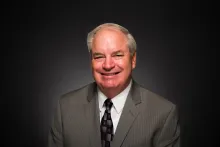
Robin Webber was born in Chicago, Illinois, in 1951, but has lived most of his life in California. He has been a part of the Church of God community since 1963. He attended Ambassador College in Pasadena from 1969-1973. He majored in theology and history.
Mr. Webber's interest remains in the study of history, socio-economics and literature. Over the years, he has offered his services to museums as a docent to share his enthusiasm and passions regarding these areas of expertise.
When time permits, he loves to go mountain biking on nearby ranch land and meet his wife as she hikes toward him.
