
Robin S Webber
God's Word tells us -- "Blessed is the Nation whose God is the Lord, the people He has chosen" (Psalms 33:12) It further states--""Bless the Lord, O my soul, and forget not all His all His benefits (Psalms 103:1-2). What does that mean in real time for our nation and personally for ourselves---not merely on one day set apart, but every day of our existence. Is America exceptional because of "Yankee ingenuity" or because it has an exceptional God who has blessed us in spite of our historical cultural frailties. This message brings together God, David the shepherd, the Pilgrims of Plymouth, Abraham Lincoln and ourselves, now, to personally "put thanks into Thanksgiving".
This transcript was generated by AI and may contain errors. It is provided to assist those who may not be able to listen to the message.
Well, looking forward to bringing this message to you today. It's a very special time of year for Americans, and in the sense that we're coming up to a holiday, a moment, a date that everybody enjoys. I'll probably be talking more today than what will be discussed at tables around the nation. America tends to be...they love Thanksgiving, but it can be wrapped up in an acronym in today's America, by and large. Basically, it's the three F's. Food, football, and family. And sometimes there's a word or a thought that is left out that would make Thanksgiving Day more special to all, including we that are in the Church of God community. It's good to remember. It's good to know our past, because those that don't know history are doomed to repeat it, according to Santiana, the famous writer that mentioned that. Let's talk for a moment as we begin this message about America, the land that we love, the home of the free, the brave, etc. America has a unique spot in the history of humanity.
And somewhat amazing. Somewhat a miracle.
And I don't stretch my words or use words cheaply. America has been on the world scene as a nation for 250 years. But there was a promise given long ago to a man named Abraham that through his seed, through his seed would come a two-fold chapter. Number one, it says that all the nations of the earth would be blessed because of the seed that would be issued forth from him and Sarah forward. First and primary would be spoken of about Jesus Christ, who is of that physical seed of Abraham. And we always need to remember that when discussing Genesis 12, that primarily it is the seed of Abraham that would come down through the nations, down through all of that time.
The second one was concerning his other seed, those that later on would be the house of Jacob, who, Jacob himself, was of the seed of Abraham. And there'd be a blessing upon them too, as they would be stretched out around the globe, and that we could learn from them. But there's something interesting about America.
And sometimes as an amateur historian, much less the pastor. That to recognize that that promise to Abraham, by God, sometimes cannot be registered or denoted in a straight, straight, unbroken line. I'll let you figure that one out.
But I will share this with you. There is no mistaking the United States of America, the United States of America, that God has placed a touch. That's how I like to see it. And you see that every so often, and when it happens, you go, that's it. God's put a touch here on something. He's still active, and he's bringing out that promise, not only for we that live in America, but those that America might touch. Now, when I say that, please understand, America is a people.
It is an imperfect nation. All nations of the earth down through history happen imperfect to one degree or another. But what occurred here, from the pilgrims forward to what happened in Philadelphia in 1774, 1775, 1776, as they were beginning to develop this need for distance from Mother Britain, of what kind of governance that might be theirs, that would keep people heard, but also disciplined through the Republican, small r form of governance. He once asked Benjamin Franklin when questions about what was occurring at the Constitutional Convention in 1789, and he said, we will have the best form of governance that man can imagine, comma, that is, if we can keep it.
If we can keep it. From that beginning in Philadelphia, through the Revolutionary War and through the last 200 years, it's interesting that what has occurred. This group of peoples that was initially founded in Jamestown and also Plymouth, Jamestown came first in about 1607, later Plymouth in 1620, and what occurred there. And some of the fruit and the activity that we can denote and learn from those early followers. I'm basically going to save that for later on.
I'll talk a little bit about the pilgrims, because they are, in a sense, our brethren, because we are pilgrims, too, spiritually speaking. But I want to move beyond that from over the next 200 years. America grew and grew. There was a thought of manifest destiny from coast to, from sea to shining sea, this landmass in between. As we enter the 20th century, there is a trade-off in history from what we call Pax Britannica to Pax Americana. In other words, Pax meaning, not Pax, like smallpox, but Pax, meaning peace. There was a British peace as Britain would rule the waves, but then things began to transfer over starting after World War I, when the Old World came to the rescue of the New World, as Winston Churchill would say would come eventually, but it was like, come on Franklin, let's get the troops over here.
Because we didn't enter that war until 1918. And then came World War II. There was kind of an emergence that was occurring. And in World War II, at the end of World War II, the United States became the unipolar power on Earth to begin with. There was nothing like it. And since that time, over the last 80 years, America has not just simply ruled the waves, but has been responsible for so much as the global leader in one sense or another.
I know that sometimes creates antipathy, and who do you think you are, but it happened. And the one thing about the United States of America is that it is a benign superpower. It's not a Rome. It's not an ancient Persia. It's not an ancient Mongol empire that reached from the Japanese Sea all the way over to Danube at the Buddhist past.
They controlled, they killed, they slaughtered. They took an empire. I always remember what Colin Powell once said about the United States of America when it comes to war. And that was simply that we are not here to seize other people's country. We're not here to be an empire. And all we ask of you is Earth, that we might bury our dead that came over and protected you. I always think about that statement.
In world history, recorded history, or thought of history for six thousand years, there's never ever been anything quite like America.
Powerful militarily, powerful in the aspect of trying to spread peace, powerful in economy, blessed here that we are blessed. I know that we hear a lot about the aspect of right now, the affordability crisis understood. But to recognize there has never been any nation on Earth blessed as much as we have. You hear people come over and see what we experience every day in America. You go to a store, our shelves are filled to the brim. You want one kind? No, there's ten kind. When I was growing up, I thought there was only one kind of potato chip. Now it's a zoo. There is the medical industry above and beyond all that is out there, and our access to that medical industry can go on and on and on. We have freedom of religion. We have freedom of speech. We have freedom of assembly.
You go to other countries, they don't have that. They don't have that. What is this all about? Sometimes we can think, oh, we know why, because it comes to Yankee ingenuity. Look at us, and look what we have wrought over 200 years on the world stage. But there's a very famous author and commentator. His name is Michael Medved. He mentions this in his book. He emphasizes that this connection has shaped American history and identity, suggesting that divine providence has played a crucial role in this nation's development. In other words, he says that America is an exceptional country, nation in world history, because they have looked at times at an exceptional God. It's not about us. It's not about Yankee ingenuity. There's something... Yankee ingenuity will get you so far. Okay, that's fine. And in a sense, every other ethnic group or racial group comes here, basically, finally, clones into Yankee ingenuity. There's a type. There's a personality. There's a moving above and beyond, stretching out, just like they did in the 1800s, stretching from the Atlantic Ocean to the Pacific Ocean. And they even got Alaska from the Russians up there in the 1860s. But again, allow me to point this out. And I want you to think not only of the country, but yourself and what is happening in your life. I'm going to repeat it again. That Medved put it this way, that America is an exceptional nation due to its unique relationship with an exceptional God. Where does that leave us? Join me if you will. Let's open up our Bibles today. Let's open up our hearts. Turn with me, if you will, to Psalm 33. In Psalm 33. Let's pick up the thought in verse 12. And it's not one of these that Bob has to figure out the Hebrew on, Bob. It says it like this, Blessed is the nation which God is the Lord, the people that He has chosen, at His own inheritance, as His own inheritance. The Lord looks down from heaven, verse 13, He sees all the sons of men from the place of His dwelling. He looks on all the inhabitants of the earth. Go back to the promise to Abraham about His seed. And that He would use His seed at times to not only touch that nation, or the nation before it, Great Britain, Pax Britannica, but that He might be revealed that not only we that are in the spiritual church, but in this nation, that it might be to the glory of God, and not only serve ourselves, but to serve others. Let me use that as an example. After World War II, of course, after the dropping of the bomb in Hiroshima, I'll say that as tragic as that was, when you understand history, and the conflicts coming up to that, that probably saved a couple hundred thousand lives, if our military had to go into Japan. It's that simple. It was a calculation. But to recognize that, beyond that, in World War II, after 1945, how many have ever heard of the Marshall Plan? Okay, history lesson time. The Marshall Plan. Europe was devastated by the Nazi regime. Not much standing when you see those pictures of Dresden or Berlin in 1945. It looked like a beehive. People were starving. People were being transferred into refugee camps. One that you might know as Victory Cubic, who used to be the president of the United Church of God. And the United States went in with what is called the Marshall Plan. Marshall was a bigwig in the military. It went in with the Marshall Plan.
And they fed Europe for years. You see right now the feeding of Gaza. We see the feeding of this place, that place, etc., etc. That's what we did for an entire half of a continent. The rest was Russia. We fed them. Doesn't it kind of remind you of Joseph in the Bible? What did Joseph do? When the world had a worldwide famine, he had interpreted that dream to Pharaoh. And he was made second in command, and he began to store the host and keep it for a rainy day, because it was more than a rainy day. And Egypt, under Joseph, fed the known world of that time. There's something different going on here, and it's not from around here, and its head stems from above. Let's open up our Bibles, consider for a moment not merely nations, but ourselves in real time. In real time. And what does that mean? Not only nations, but people. Not only people, but you. Let's make this personal. And like I said, it begins in 33 verse 12, the Psalms are of. So let's open up the Bible, and I'll give you real quickly the title of this message. Putting personal thanks into thanksgiving. Putting personal thanks into thanksgiving. It's very interesting, I say that, because today, America is suffering from an identity crisis. It's not like it used to be, in certain ways, as much as I extolled all the things that we have here. There's something in the air, and change is underway. We can go back to the 60s. A lot of us were growing up as teens at that time. Some of you weren't here, but we can tell you about it. But that was the beginning of a great cultural shift. Basically from what we call the left.
Today, that has morphed into things that we would never could have imagined. Never could have imagined. And people have lost a sense of their history. And they've lost the feel from us being united, the United States of America. They've lost that feel. They've lost that frame of reference. History is not being taught like it used to be taught. And you can't pick up everything on a computer these days. America at one time was the number one in global education. Today it ranks 26th. You might say, what's going on here? But I'm going to fill in a few of those blanks today about this. It's very interesting when you look at the United States of America. The different things that you and I have grown up with, many of us, some in the 40s, 50s, 60s, 70s, etc. But here's a nation that was a miracle on the world scene. A band of lawyers and merchants and frontiersmen that took on the greatest empire on earth. And a birth to this nation was given. It's very interesting in the United States of America how God used to be mentioned, and still is. But it's one thing to mention God. It's another thing to believe in Him, and it's another thing to follow His ways. When you think of our own scenario, I talked a little bit about the Declaration of Independence. And it's very interesting that in that it uses the language of nature's God. In other words, that's enlightenment language for a supreme being. And they felt that. And they were connected to that. And that laws came from God and not here below. Laws that were immutable, unchangeable, and were invested in us. And that we didn't have to ask permission from royalty or a governance official trying to cram His thoughts down into us. There was a freedom. Speaking of nature's God, I was thinking about God being used in our language in our nation. What's on your dollar bill? Can I ask you a question? What's on your coins? What's the national motto? Can I hear it from a bunch of Americans? In God we trust.
How's that working today? Another one I remember is, there was a little guy in San Diego growing up here. It was the National Pledge. We all know it. I pledge allegiance to the flag of the United States of America, and to this republic, I do.
I do. Under God. Pudging to a flag. Now, you and I know that we have a greater pledge. To the kingdom of heaven up above, at this time where our citizenship is. But here we are in America as well. So you and I exercise somewhat of a double citizenship. There's another patriotic song, God Bless America.
But what does all that look like in real time? Day by day. Not only with what's going on right now, where people are trying to tear down the very basis of republican, small r, governance.
And introducing new thoughts. Some that are not biblical.
Where has this nation gone? And what do we do about it?
So we're going to talk about the nation, but we're also going to talk about things that are personal. I'd like to share a thought with you from Calvin Coolidge. For those of you that didn't meet Mr. Coolidge, he's dead. He's been about 60, about 80 years. But he was president of the United States in the 1920s. And this is the phrase that I'd like to give you. A thankful people are a growing people. A thankful people are a growing people. But today we have this lament about where is America going? It's losing its moral compass. But that raises a deeper question. What happens to a people when they begin rejecting the idea that there is an objective moral authority above human opinion? Join me, if you would, in Isaiah 1 verse 6. We probably haven't been there for a while, but let's turn to the book of Isaiah. Isaiah 1 verse 6.
What's going on here?
In Isaiah 1.
Here we go. I'm getting there. Let's pick it up in verse 1.
Hero heavens and givero earth, for the Lord has spoken. I have nourished and brought up children, and they have rebelled against me. Now notice what it says. The ox knows its owner, and the donkey its master's crib. But Israel does not know my people do not consider. A last sinful nation, a people laden with iniquity and a brood of evildoers, children who are corruptors. They have forsaken the Lord. They have provoked to anger the Holy One of Israel, and they have turned away backward. Who should you be stricken again? Why should you be stricken again? You will revolt more and more. Notice what it says. The whole head is sick, and the whole heart faints. And from the sole of the foot even to the head, there is no soundness in it, but wounds and bruises and putrefying sores. They have not been closed or bound up. Your country is desolate, your cities are burnt with fire. Strangers devour your land and your presence, and it is desolate, as overthrown by strangers. So the daughter of Zion is left as a booth in a vineyard, as a hut in a garden of cucumbers, and besieged unless the Lord of Host has left to us a very small remnant. We would have become like Sodom. We would have been made like Amorrah. Basically what Isaiah is declaring to Israel from God to them is simply this. It's not just the head. The whole body is sick. The whole body is sick. So often we want to blame one person. We want to blame a congressman. We want to blame a statesman. We want to blame a president. So often what is voted into office is what we deserve to be able to come back to God and say, this is not working. We have to be at a higher standard. And then we lose the whole aspect of God's moral compass for us, and how precious life is, and the life He's created, the life that He's allowed. And today we live in a country that takes life, takes life from an infant. Think about that. I'll share a story with you out of the Punic wartime, about 220 BC. The Romans, as brutal as they were, were appalled at the Carthaginians. They thought they were doing their gods a service because the Carthaginians, being Phoenicians, transported to a colony now growing great, child sacrifice. Where is the morality of life? Where is the morality today of taking a seed, a little one, out of a mother's womb? We think of other situations of things and items that God speaks about marrying. A man is to marry a woman. A woman is to marry a man. Where is the moral objectivity? We recognize that children are born, male or female. They're not born, mister in-between or missus in-between. This is what we're living with and we get used to it. We get used to it. And so we need to ask ourselves, what are we going to do about this? How do nations and societies get there? There's a passage in Romans that I'd like to share with you that is very important. Join me if you would in Romans 1. In Romans 1...
Let's go to verse...
Let's go to verse... I'm looking for a right one. Let's go to verse 18.
So that they are without excuse, because although they knew God, they did not glorify Him as God. Nor were thankful, but became futile, and their thoughts and their foolish hearts were darkened. And professing to be wise, they became fools. You might say they became stupid and changed the glory of the incorruptible God into the image made like corruptible man and birds and four-footed animals and creeping things. Therefore, God also gave them up to uncleanliness, in the lust of their own hearts to dishonor their bodies. Doesn't that sound familiar today? Who exchanged the truth of God for the lie and worship and serve the creature rather than the Creator, who is blessed forever. Amen. For this reason, God gave them up to vile passions, for even their women exchanged the natural use for what is against nature. Likewise also men, leaving the natural use of the women, burned in their lust for one another, men with men, committing what is shameful, and receiving in themselves the penalty of their error which was due. Now notice verse 28, It says here that they gave themselves up to vile for every cause there is an effect. And they took God out of the picture, and they made themselves gods with a small g. And just like Adam and Eve in the beginning of the Garden of Eden, they decided they were going to do what they thought was right and wrong. They became little gods, and they were not thankful at all. Professionally wise, they became fools, and they were not thankful. It's very interesting. That's why Calvin Coolidge, long ago, over 100 years ago, said the aspect of that of thankful people are a growing people.
Excuse me a second.
Let's go back to Psalms for a second. Psalms 33.
How do we praise God?
We've already turned to verse 12. Blessed is the nation whose God is the Lord, and the people he has chosen as his own inheritance. Blessed is that nation. Blessed is that individual amongst us today that does this and is blessed by God. What do blessings... How do we... When it says blessed is the nation here whose God is the Lord, the people he has chosen are his inheritance. We are blessed by God, cause and effect, even our nation, but we're going to go back and forth between the nation and ourselves. What does this look like, this God? And why do we praise him? Why do we give thanksgiving to him? Why do we humble ourselves before that God? These are all interchangeable parts of this tapestry of what God wants us to be. Let's start in verse 1. Notice what it says. Rejoice in the Lord, O you righteous. Now, when you see the word rejoice, I like to put it this way. This is on joy on double steroids. Okay? Rejoice. You see that a lot in the New Testament, especially, but also in the Old Testament. Rejoice in the Lord. Yes, you can be happy also your part in it, but it says rejoice. When it says rejoice, that's almost like a double rebound rather than a missed shot. Praise the Lord with the heart. Make melody to him with an instrument of ten strings. Sing to him a new song. Play skillfully with a shout of joy. For the word of the Lord is right and all his work is done in truth. He loves righteousness and justice. The earth is full of the goodness of the Lord. That is, if the eyes of our heart are open and to recognize these things that God is giving us by his miracle of calling us into his family at this time. For the word of the Lord is right and his work is done in righteousness. Okay, righteousness and justice. The earth is full of the goodness of the Lord. By the word of the Lord, the heavens were made and all the hosts of them by the breath of his mouth. He gathers the waters of the sea together as a heap. He lays up the deep in storehouses. He's on the job. It never stops. There's no beginning. There's no end. Maybe that's another reason why he's called the Alpha and Omega. And he does this for us, not just ancient Israel, not just for David. Let all the earth fear the Lord. Let all the inhabitants of the world stand in awe of him. For he spoke and it was done. He commanded and it stood fast. The Lord brings the council of the nations to nothing. He makes the plans of the people of no effect. The council of the Lord stands forever. It doesn't just come and go. When you look at world history and you look at the rise and fall of empires from their genesis to their ending, it's normally about 200 years. Save Rome. These empires upon the earth, they basically have a beginning, they have a middle of a tendency, kind of stay on that breeze floating into their sails for a while, and then watch this.
Goes down. In a sense, if America was like any other nation, we'd be overtime. Because we've been around for 250 years as a people of identity. But because of this core of basic moral understanding of nature's God, that's an enlightenment term, that we would know as God, that we would know as the I Am, that we now know as Jesus Christ. That's the one that we're talking about. That wrote that. Inspired that long ago. Notice what it says here.
You can have all the army that you want. If you don't have God's blessing, it's going to be derailed. Behold, the eye of the Lord is on those who fear Him. Honor Him. Respect Him. It's not that they're trembling in their boots, but there's a fear of reverence, knowing that as much as David in that famous Psalm, in the Psalm but in 1 Samuel 17. You know, He has to do what He had to do. He went down to the brook there, and in that Psalm it says, and He went down, knelt over, and He picked up five stones. He picked up five stones. He thought that He might be there for a while, slinging. Not just one. The bottom line is this, and I've often used this with people. It's all right to pick up five stones. That we can do. When we do what we can do, God will then come along, and He will do what only He can do. It's a partnership. It's a relationship. Let's finish off this Psalm. Our soul waits for the Lord. He is our help and our shield, for our heart shall rejoice. That means bounce up and down. Rejoice, because we have trusted in His holy name. Let your mercy, O Lord, be upon us, just as we hope in you. That should fill up your bag of thanksgiving, of what you can praise God about, thank God about, and sing a new song. You know, all of us that are in this body of believers. We were given, whether five years ago or ten years ago, over fifty years ago. I'm only talking about myself, not Susan. She's not that old. Is that fifty years ago? We were created to sing a new song. A song of praise, a song of thanksgiving, a song of meaning. Not because of what we know here, not because we can say in God we trust, not that we can sing God bless America. Words are cheap. You can sing that, but God has called us to sing a new song. And by having that new song in our life, stands upon stands of what we do, whether at work, whether at home, whether at the school. It's a new song. And it's driven by God's Holy Spirit in us, to come out of us, to reflect that He is the one that we trust. You can take dollar bills all day long and maybe look at once a year down at the bill and say, in God we trust. How's that working? It doesn't work.
You can, in that sense, say, God bless America. You can sing that probably twice a year here and there. Maybe it's to myself anymore. I'm not sure. I don't go to sports programs that much anymore. We can also think about this, that we can repeat one nation under God, indivisible, united, and yet divide every day that we're walking in this community. The one thing I want to share with you, and all of this, if I can make a comment, we pray for our nation and we pray for our leaders. And that we ought to do. It's actually a biblical command. But to recognize there's something happening out in the world right now, something happening in this nation. I'll put it this way. Especially our young people. They're being groomed. They're being groomed.
Sometimes groomed away from their parents' values. They're being groomed. It's not the America I grew up in.
I say that loving America very much. Something's happening out there. And sometimes putting thanks back into thanksgiving goes down to the individual. You and me, the values that we stand for. Think in a sense for a moment of whatever is happening out there, everybody senses it. There's something that's in the air.
And that force is not going to stop. I think that Satan would like to put America out of business. I'll be that blunt. And he is the prince of the power of the air. Many of our young children and our young adults who we love are probably receiving more grooming sometimes from their little signal device, their little smartphone, meeting more people than our generation ever met. We knew maybe the people down the block. Now everybody's talking to everybody around the world. And what are they talking about? Away from their parents' presence and their guidance. That's why it begins with us. We need to make a statement that we are a thankful person, thankful to God, not because we are exceptional like the country, but because an exceptional God is called us. And it can't be reserved just for one day of the year, of which you finally maybe get to a short blessing over the turkey, maybe the turkey, you look at it, maybe the turkey needs it, a little sauce of blessing. But what about the rest of the year? Of daily praising God, daily thanks, giving Him thanks, and making sure that He knows that you know He's the exceptional one. That'll be a cure for the grooming. Our young people, again, are being groomed as much as Daniel, Meshach, Shadrach, Abednego, and Babylon.
And they're in that world. They obviously were enlightened captives to be there. And they could do so much. You could put a new set of clothes on me, as they did. You could even change my name, which maybe I can't have any control over. They were all named after Babylonian gods. Michelle, Hananiah, Azariah. But there came a place that a line was drawn. Daniel 1-8. Daniel drew the line. I'm not going any further. I don't know what you're feeding us, but I'm not going to eat it. That was said to the head custodian over Nebuchadnezzar's court, and he was willing to take ability. And Meshach, Shadrach, and Abednego, when there's the story of the statue, and everybody starts bowing down to it. And they're very mindful of what God taught Moses to teach them. You shall have no other gods before me. That stuck. There are people who have been blessed when they obeyed that God that said that, and they went, no, no, no, no, no.
Imagine yourself—you know, we did that the other day with Jesse Trone, where we had eight people go over and stand around her. You imagine yourself. We're going to have fun with this. I'm going to pick on my wife because she can't go anywhere. Honey, would you stand up?
And Dan Fuller because you gave us your wonderful honey today. You get to stand up, too, if you can.
And Kim—hello—let's bring you up. Would you please stand up? Thank you. Just keep on standing. What did Michiel, Hananai, and Azariah go through? Otherwise known as Meshach, Shadrach, and Abednego. That's her Hebrew names.
It's one thing—you're all seated. I'm not calling you pagans or idol worshippers, but we're just getting a feel for this. You're all down there. Is this a little lonely in this crowd? I wonder if there are hundreds or thousands in the courtyard, and you're the only three dudes—that's a Hebrew word, Bob—dudes. Kim, you're not a dude, but anyway, it's that. You're up. You're all down. You're not pagans. This is all, but just—and then start looking at one of these three, okay? Just—what—and you'd say that—what are they doing? Such disrespect to our king.
It's one thing to stand. Number two, it's another thing to keep on standing and not bow. And number three, it's something to keep on standing all alone. And nobody rising.
Thank you for your cooperation. Sometimes seeing helps a little bit what's going on here.
Scripture tells us something very special over in 1 Thessalonians 5. 1 Thessalonians 5.
And picking up the thought—let's see where I'm at here. Oh, verse 16. Pardon me. Yes. Notice what it says. Rejoice always. Pray without ceasing. Now put those two things together. Rejoice—excuse me. Rejoice always. That means joy on steroids because we know who our master and our guide is. Then notice what it says. Pray without ceasing. Don't stop. Don't stop. In everything give thanks for this is the will of God in Christ Jesus. Let's think about that for a minute. In everything to give thanks. But things happen to us sometimes that we don't like. We can't even believe that God would ask us to give thanks at that time and to remember Him at that time.
Rejoice in everything. Give thanks. So very, very important to understand that. I'm going to use an example. If I can find it. In everything give thanks. Some of you will not realize this story, but I'm going to share it with you. We often think of the aspect of thanksgiving. We go back to the pilgrims. I'm going to touch on them for a second. That's a whole story in itself about giving thanks in all situations. But what I like to do is to share something I don't usually share. I share other things about thanksgiving. And I'm going to give you an assignment after this to take home and do. Are you with me? Okay. I want to quote from Lincoln's proclamation of 1863. Why is that so important that this proclamation would go out for something on a Thursday of that year? What also happened in 1863?
Isn't the American education system just a marvel? Go ahead. What happened in 1863? Susie, you know this. Where were we last year? Gettysburg. Yes. Let's talk about that for a moment. I've come to appreciate—I'm going to say this, Justin J I've come to appreciate Abraham Lincoln so much more over the many years that I've studied him. You know, we think so often of the Gettysburg Address. We think so often of the second inaugural. He would be killed two weeks after that. These are written or imprinted on stone in the Lincoln Memorial. The second inaugural and the Gettysburg Address.
But this proclamation I went over very carefully this morning. There are leaders that we can learn from. To set up the stage in 1863, the war had already been going on for two years between Northern brethren and their southern cousins. Killing thousands and thousands and thousands of people. Sometimes in reading and writing about history, you come to find out that the closer people are, the more challenging it gets, the more horrible. Especially when families are slaying families.
It's one thing to know the accent of being thankful. It's another thing in speaking the whole language. Let me use an example. I grew up in San Diego. I know a little Spanish. So when I'm ever with Latin people, I give them all three words that I know. In other words, I speak the accent without a trace of the language, basically. I don't want any of you today here or those that are watching today go away from this sermon and just saying thanks on Thanksgiving Day. I hope you do. I hope you share it. I hope you share it if you have a table of children, you have your grandchildren. I know my hour grandchildren. They know my love for history. They know they're going to have about a 15-minute sit-down. And Grandpa is going to explain to them again before the Turkey of why we are here and who we come from. And to travel in between that point and us today, Lincoln got it. I want to share something about Abraham Lincoln and Mary Todd, his wife. They did not lead an easy life. Lincoln had his own depression. Mary Todd had her own personality and her depression. They had lost a child during the 1860s.
Then the loss every day that he heard about on the battlefield. But here's what I want to share with you. And I ask you then, could you insert yourself and put this speech together? You ready? Okay. It's only 10 pages long. I want your attention. Okay. No, it's only... Liars will not make it into the kingdom. Okay, here you go. It's only one. But listen, because then you're going to have an assignment after this.
Lincoln's Thanksgiving proclamation, October 3rd, 1863, three months after the Battle of Gettysburg, the year that is drawing towards its close, has been filled with the blessing of fruitful fields and healthful skies, to these bounties which are constantly enjoyed, that we are prone to forget the source from which they come. Others have been added, which are of so extraordinary a nature that they cannot fail to penetrate and soften the heart, which is habitually insensible, to the ever-watchful providence of Almighty God. In the midst of a civil war of unequaled magnitude, this is Lincoln writing, and severity, which has sometimes seemed to foreign states to invite and provoke their aggression, peace has been preserved with all nations, order has been maintained, the laws have been respected and obeyed, and harmony has prevailed everywhere, except in the theater of military conflict. While that theater has been greatly contracted by the advancing armies and navies of our Union, needful diversions of wealth and of strength from the fields of peaceful industry to the nation's defense have not arrested the plow, the shuttle, or the ship. The axe has enlarged the borders of our settlements, and the mines as well of iron and coal as of the precious metals have yielded even more abundantly than heretofore. Population has steadily increased, notwithstanding the waste that has been made in the camp, the siege, in the battlefield, and the country. Rejoicing in the consciousness of augmented strength and vigor is permitted to expect continuance of years with large increase of freedom. Now, notice, no human counsel, hath devised nor hath any mortal hand, worked out these great things. They are the gracious gift of the Most High God, who, while dealing with us in anger for our sins, has nevertheless remembered mercy. It has seemed to me fit and proper that they should be solemnly, reverently, and gratefully acknowledged, as with one heart and one voice, by the whole American people. I do therefore invite my fellow citizens in every part of the United States, and also those who are at sea, and those who are so journeying in foreign lands, to set apart and observe the last Thursday of November, next, as a day of thanksgiving and praise to our beneficent Father, who dwells in the heavens. Abraham doesn't just mention him in what should be their gratefulness and thanksgiving towards him, but where he lives, up in the heavens. Interesting.
It says in here, and I recommend to them that while offering up the ascriptions justly due to him, capital H, for such singular deliverances and blessings, they do also with humble penitence for our national perseverance and... Excuse me. With humble penitence for our national perverseness and disobedience, commend to his tender care all those who have become widows and orphans and mourners or sufferers in the lamentable civil strife in which we are unavoidably engaged, and fervently implore the interposition of the Almighty hand to heal the wounds of the nation, not only physically, but emotionally, and to restore it as soon as may be consistent with, not what we're doing down here, but with, it says here, his divine purposes, to the full enjoyment of peace, harmony, tranquility, and union.
Have you heard any politician share the time with God that much? I believe that God put such a man for us to learn from. Put such a man with everything, a man that knew victories and failures before he got to the White House. It's unbelievable when you read the matchup. They're almost equal. And yet, remember what the scripture said that we wrote, rejoice and speak to God in all ways, in all things. Yeah. To speak to him and give him thanksgiving for things that you know that he's allowed. But I thought about that scripture this morning, and the woes upon me are slight and slim. Susie knows this. I often sometimes mention it to people. I'm going to mention to all of you right now, but I think most of you know that I haven't walked well for many years. Don't cry. I'm not crying. That's all right. Try to fix it up. Try to use those five stones. Like David. And after that knee surgery, people said, how are you doing? Not well, honestly. And to recognize, people say, well, how's your knee? That's always the most famous one. How's your knee? I said, my knee's fine. It's artificial. My fingers bounce off it like Mount Rushmore. And I've come to conclude, and my woes and my walking is not near what other people's might be. They might not have legs, of which I've dealt with with several people over the years. But I've come to understand, and I thank God, and I tell people, I thank God that it didn't totally heal. Because when I walk, trust me, I feel it. And God has been good to me, so that I might one day understand other people's pain. You know, so often we say this expression, I feel your pain, right? Bill volunteers who's done that with other people. Richard, don't worry about it. We'll talk later. Not just joking. It's that. But I'll say, he gave it to me so that I could sense other people's pain. So don't feel sorry for me. I rejoice in it. I'm thankful. And it's not like I can't walk at all. But I feel about every millimeter when I walk. I know you all stare at me sometimes when I'm going up those stairs. Is he going to make it? Yeah, I'm going to make it. It's not that bad. But it's helped me as a Christian and also as a pastor in dealing with people that are dealing with pain. Pain physically, pain emotionally. Because when you've walked in their shoes and you're walking beside of them and you kind of get it, I think that's cool. So I'm glad I have that. So when I talk to people, it's not like I'm on a foreign planet. I know what's going on.
Lincoln has every right to be on Mount Rushmore. With three other great men. I look forward to meeting him one day in the wonderful world tomorrow, and in that time, I'd like to meet him head-on, person to person, and tell him thank you.
As I begin to conclude, I'd like to also thank people that have a common name like you and me. They came from England.
They had not gone with the Church of England. Neither the Major Puritan movement. They were called Separatist. They had a uniqueness about the religion. But one thing, whatever you're believing in, the uniqueness should always be there. That there's a God. That there's something beyond that's controlling human destinies. You mostly like this story. I'm going to conclude this in about five minutes.
Most of us know that they were Englishmen. Most of us know that they fled England and they went over to Holland. They were over there for a while and they were afraid that their children were going to lose their history with the Dutch people. Probably some who might have been my relatives. So they came back to England. They were desperate to live their lives before God without interference. So they signed up as indentured servants. They were going to be sent to the New World.
They were indentured. So when you go to Plymouth, Massachusetts, the fort up there and the land around it is called the Plymouth Plantation. That's the full name. They were going into, in their minds, a new world and crossing a body of water as much as ancient Israel crossed the Jordan into the Promised Land.
But at first the Promises were kind of shrinking there. As they landed at Provincetown first before they went into the Bay of Massachusetts and looked over towards what would be Plymouth.
They knew it was going to be interesting. On that Mayflower, which had been actually a merchant wine ship, maybe that's why they stayed down in the hall, got a few fumes, they then sighted land.
They left, and this was in the fall, and they started building Plymouth on December 25th, just to let the people across the ocean know that they didn't keep Christmas. Just kind of a little pfft, like that. Sometimes holy people can be a pfft, like that. But here's the story. While the men were on land, and I don't think they stepped on a rock, I think it's part of the lore. So you have to separate the lore from fact. But there were about 100 people that were on the Plymouth, actually on the Mayflower.
About 50 of them were what were called the Saints, because the term Pilgrim would not come for another 200 years when Daniel Webster gave the big speech for the 200th anniversary. They called themselves Saints. And the men that they brought along, a few soldiers, contractors, people that knew how to build stuff, kind of keep them going. They were called the Strangers. So a very famous book about this situation is called The Saints and the Strangers. The men stayed on land in December, January, until it was built. Guess where the women were, ladies? Guess where the children were? They were out in the middle of Massachusetts Bay, offshore, in the hull of an old ship. From that, with about 100 people, five wives would die. There were only eight families. We're not talking about hordes of people. Five wives would die. Multiple children would die.
The sacrifice is so great for the spiritual freedom that they desired, and trusting in the guiding hand of God. See, actually, they were supposed to go to Virginia, not Massachusetts, so it was quite a trap. They got blown into Massachusetts Bay, and there they stood, and there they waited.
God did some marvelous things during that time.
He would utilize an indigenous person, Squanto. They were having so many problems, just even surviving. And one day, a Native American, all by himself, came out of the woods and walking towards them.
Not too many people around, other than the tribe, and one of those tribes had been obliterated by Western European disease that had spread amongst them. But here comes Squanto.
He opens his mouth. What's going to come out? He's speaking English! You cannot make this up! There was a touch here from above. He's speaking English! For he himself had been kidnapped years before by some fish traders. He had been sold into slavery down in Spain, but some Franciscan friars picked him up and brought him in, finally released him. He went back up to England for a while, learned English, and got on another fishing boat, not to China, but back home. How do you make that up? You cannot. You cannot write a novel this good. This was the touch of God that we ought to be thankful for. That tells me something's going on down here below.
And not only that, but that the indigenous people, the tribes, the tribe, because one had been wiped out nearby from European diseases, how that goes, smallpox and other things. But there was another tribe that helped them, taught them how to fish, taught them what to eat, and I don't think we need too much of that from the marshes of New England ourselves. You've got to remember, their meal did not look like our meal's going to look on Thursday. Unless you're fasting that day, there is no meal. But probably on that plate that day, there would be eel, because the Eel River runs right into Massachusetts Bay, right on Eel Eel. So guess what? Roasted eel. They'd have wild deer, they would also have wild turkey, they'd have a crab or two, and a big, big lobster. Sorry, just tell you history like it is. But God overlooked that one, because they didn't know yet, and He still blessed them. And they made it through another year. And then they gave God thanks. See, giving God thanks and putting thanks into thanksgiving is not always when everything's going all right.
We are to rejoice in all things. That's the goal. That's the goal. I hope I've not just merely shared American history with you today. I hope I've shared with you God's point of view and what He wants us to do. He wants us to sing a new song, no matter what is coming our way. The Psalms can often be prayers. You can just go to the Psalms and read a prayer. Think of Psalms 23 for a moment. Psalm 23, have you ever thought of it as a Psalm of thanksgiving?
Where David says, the Lord is my shepherd, I shall not want. He doesn't have to look over the wall to some other God or gods. The Lord is my shepherd, I shall not want. He makes me to lie down in green pastures. He leads me by the still waters. Should I complain or should I give thanks? He leads me in the paths of righteousness for His own name's sake. And yea, though I walk through the valley of the shadow of death, I shall fear no evil.
Because the Lord's with him, anoints his head with oil. David in thanksgiving and praise and humility, says, covers up. And then there's an assurity at the end, in this praise, and I know no matter what happens, I shall dwell in the house of the Lord forever. Do you think we have a thankful shepherd out of Bethlehem? Can we join him? I'm speaking to myself. Not always when everything is rolling, rolling, rolling. Thank you, Lord. And then you drop it for another year. And even when there is persecution, even when I stumble, even when this is happening, that happens. I will still give God thanks and know that He is with me. Remember when David in 1 Samuel 17, he says to Goliath, Buddy, you're coming down. You have insulted the God who has given me so much that I thank. But now you're coming down. You have bullied the people of God. You have defamed the God of Israel. So get ready. I'm coming your way. And remember, I'm not walking away from you. As the Scripture says, He ran towards Goliath. And after that, He was the only one left standing. Goliath wasn't.
We have so much to be thankful for. Bob, I gave a somewhat of a thanksgiving. I wanted to be on praise and thanksgiving and everything. So, appreciate it.
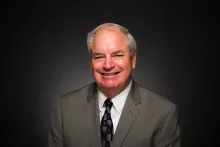
Robin Webber was born in Chicago, Illinois, in 1951, but has lived most of his life in California. He has been a part of the Church of God community since 1963. He attended Ambassador College in Pasadena from 1969-1973. He majored in theology and history.
Mr. Webber's interest remains in the study of history, socio-economics and literature. Over the years, he has offered his services to museums as a docent to share his enthusiasm and passions regarding these areas of expertise.
When time permits, he loves to go mountain biking on nearby ranch land and meet his wife as she hikes toward him.
