


Robin S Webber
This transcript was generated by AI and may contain errors. It is provided to assist those who may not be able to listen to the message.
We want to welcome everybody here today, and we certainly want to welcome those that are on the streaming today, wherever you might be, that in the days, the months, maybe the years ahead, that this message will be a blessing for each and every one of us that are present, and those that will be present through God's Spirit in the future when perhaps they hear the words of God and we go to Scripture and have our hearts and our minds moved. Today we're going to have a unique opportunity to witness a baptism, to witness a baptism, and with the New Testament Passover just around the corner, this allows for a teaching moment, a teaching moment for each and every one of us to bring these two factors together, a baptism, and then that which proceeds afterwards, abiding in the New Testament Passover, that we bring them together, and that we, we, not just the person being baptized today, but that each and every one of us, the we, can contemplate partaking of the two symbols of Jesus Christ's sacrifice, of the bread and of the wine. In both, we make a solemn statement. It's actually the only time in our way of life that we take a vow. We take a vow at baptism and we take a vow, we do take a vow at marriage. Both come together. Both are about a relationship with God and before God, and both are to be until death do us part. And when we do that, we're giving God an answer, and that's what we're going to be centering on in the course of this message. Now, as we proceed with that thought, let's understand something, please, friends. Both are joined not at the hip, but today we're talking about the heart, as to how we respond to God's initial interruption. I'm going to use that word. I'm going to build on that for a moment. I gave a message somewhat like this last week in Redlands because we had a baptism and we were coming up to the New Covenant Passover. And so that word interruption, my friend, known as Susan, my wife said that needs to be delved in a little bit more and to go a little bit deeper. So we're going to go deeper a little bit later in the message. But with baptism, and with the New Covenant Passover, as it comes up to us year and year, God is providing an interruption. And not only at baptism and interruption, but an ongoing inquiry, an ongoing inquiry. Join me if you would in 1 Corinthians 11. In 1 Corinthians 11, Paul's words following the instructions of Jesus regarding the New Testament Passover. In 1 Corinthians 11, 26, it says, As often as you eat, speaking of the bread, speaking of the symbol, and drink this cup, you proclaim. I love that word. You proclaim. That's loud. That's vigorous.
That's got some meat behind the bone and on the bone. You proclaim. You do. You proclaim this. That as you do that, it's wonderful. The Lord's death till he comes. Therefore, whoever eats this bread or drinks this cup of the Lord to an unworthy manner will be guilty of the body and the blood of the Lord. But then verse 28, But let a man examine himself, and so let him eat of the bread, and drink of the wine. For he who eats and drinks in an unworthy manner drinks judgment to himself, and not discerning the Lord's body.
So today we're going to have an individual in our San Diego Church family.
Take a vow before God. And once again, when we come up to the Passover, we again are going to reconnect with that initial birth, with that initial time in which God interrupted our lives. This time, though, when we see this, this judgment, we are assured that God is on our side, gives us all the tools that we need. And as we approach the Passover, God is asking us to let us examine ourselves not so much in fear, but in faith.
As we come to the Passover, in faith as we come up to a baptism, and to understand His grace, His sustaining provisions, to remember that we are not alone. So allow me to give you the title of my message. It's going to be simple. It's simply this. The two great questions of our calling, the two great questions of our calling. Very simple, just two. Almost just like, you know, when Jesus said, the two great commandments of which are part and parcel of this. What are those two great questions of our calling? These are questions that are not designed to simply come and go today. Or, got those done, we're going to go to the next ones. These are the divine inquiries from above that are going to knock at the door of our hearts the rest of our life. I want you to really think about this. These are not questions just in passing. This is a compass. This is a guide to establish, to keep us in the faith between ourselves and God the Father and Jesus Christ. And it's not merely a baptism that we're speaking about. And it's not only at the New Testament Passover, but every day of our lives. Every, every, every, every motive that's tucked down in our hearts. Every thought that proceeds from that motive. Every word that comes from that. And every action and every deed. All of this is going to be predicated upon this foundation of which Lori is going to be in that sense answering today. And we are to answer every day, past a baptism, past a Passover ritual and observance. But every day, because what this does, if we can respond this way and think about this, we want to bring this up at the very end of the message. These questions demand answers, not merely of what you know. Sometimes we can just, we can. And I'll say this culturally. We, we rest on what we know. We call it the truth. Have you ever heard that term? The truth. We rest on what we know or what you do. All of this is going to rest upon who, like the owl, who you know that has changed your life in every way for everything and for him. So here we go. We're going to take a breath for a moment. You ready? I'm just going to give you question number one. The first question is simply this. It's found in Matthew 16 verses 15 through 18. And it simply goes like this. Who do you say that I am? Who do you say that I am? Join me if you would. Let's explore the scriptures together and open up our Bibles on this Sabbath day. In Matthew 16 and verse 15. Let's notice what's going on here.
Now, I'm actually going to go up another two verses to verse 13. I think that's a good start. When Jesus came into the region of Caesarea Philippi. Now Caesarea Philippi is in the very northeast. It's above Galilee. Jesus would sometimes refer to it as that far country. A lot of gentile influence. A lot of Greeks that were up there. And so he's up and away from Capernaum. He's up and away from Judea. And he's up in an area that was occupied by a lot of gentiles. And so we're going to have to understand something that's going on. He asked his disciples saying, Who do men say that I am? Who do men say that I, the Son of Man, am? So they said, Some say John the Baptist and some said Elijah and others Jeremiah or you know one of the prophets. And he said to them, Jesus speaking, But who, who do you say that I am?
Simon Peter, never shy, but inspired and led by the Spirit at this point, said this. Simon Peter answered and said, You are the Christ. You are the Son of the living God.
This is big. It's often been said that geography is the fifth gospel. Matthew, Mark, Luke, and John. And you have to understand the setting. In Caesarea, Philippi, it was up against an escarpment. And most likely where Jesus is speaking at this moment, there is a ridge of high hills of cliff that are behind him. And there are pock markets that are within that cliff that have been used by the pagans, that have been used by the others. It's very much akin, this setting, to where Paul is giving that address on Mars Hill and right behind him, the PowerPoint behind him, is the Acropolis with the Temple to Athena. See, God never wastes a statement or waste a miracle. He knows what he's doing. So he says, Who do men say that I am? Now, again, a part of that is from the people of God, and they say, well, you're this prophet or that prophet. But this is actually a much wider statement for our time and our way. And Peter says this again, allow us just to reverberate it. And Peter said, You are the Christ. You are the anointed. You are the son of, notice, the living God, not stone, not marble, not made out of wood, as are the gods of the ancient world. But you are him of the living God. Now, notice in what how Jesus responds to this, and this is important. And Jesus answered and said to him, so often we put the emphasis on the first layer of words. Now let's look at the second layer. It says, Blessed are you, Simon Barnabas, for flesh and blood has not revealed this to you, but my Father who is in heaven. This is not of man. This is not of this world. This is coming from elsewhere, some place that is not from around here. And recognize that there is a divine, here goes the word, interruption, a divine moment where the Spirit of God breaks in through time and space and calls somebody. We are here today because of a calling. Lori, you're here today on the second row, surrounded by spiritual family because God called you. We are all here, whether it's been 30 years, 30 months, or 50 or 60 years, because God called us. He's opened our eyes. He's opened our hearts.
Susan and I were just watching something last night where there was a debate between a scientist of this world and somebody that believes in God. And they were both brilliant in their own ways and in their explanations and arguments. But you know what? At the end of the day, it was like two ships passing in the middle of the night. There was ultimately no conversation because the man of God was basing his on the Word of God and taking God's Word straight. The other man just could never cross over that bridge. And there's a reason. Because just going back to Matthew 16, it says, God has done this. God has invited us. Not because of who we are. Not because of our good looks. Okay, you know. Not because of our good looks. Not because of our intellect. There's far wiser people than you and me. And yet God reached down and intervened in our lives. This interruption in our lives. What's this all about? Join me in John 3. No, actually, I'm going to pick this up. Pardon me a second. Let me just make sure I've got the right... Yeah. Let's pick this up in John 644. We're going back to basics. John 644. I remember years and years ago, Mr. Armstrong, back in Pasadena, would always say, brethren, why are we here? I was always waiting for a new question, but every holy day would come. You know, I grew up in Pasadena, then later on with college and everything else. You said, what's the next question?
But he'd always start with, why are we here? And in John 644, this tells us the beginning of why we are here. And it says, no one can come to me unless the Father who sent me draws him, and I will raise him up at the last day. You're here because the sire of the universe has called us to be family. Brethren, it's a miracle. Praise God and glorify God in what He has done in our lives. The same thought as He did with Peter. And He asked you, and He asked me, why are we here? Who started the process? It starts with God. And through, of course, Jesus Christ. Now, you know, sometimes it says, you know, if you read something in the Bible, and God just says it once, that's pretty important, isn't it? You say, okay, that's pretty important. But right in the same chapter, John 665, I know most of our people in the Church of God know John 644. But then let's say, let's notice again, John 665. And He said, therefore, I've said to you that no one can come to me unless it has been granted him by the Father. By the Father. What's that all about? Join me if you would in John 3 16, the famous conversation between Jesus, the rabbi, sent from heaven, and Nicodemus. John 3. And here it says, speaking to Nicodemus, he says, this man came to him by night and said, Rabbi, we know that you are a teacher, come from God, for no one can do these signs that you do unless God is with you. And Jesus answered and said to him, most assuredly I say to you, unless one is born again. That's what the Scripture says. Born again.
This does not mean one saved, always saved, but they're talking about a process of rebirth, of being born from above, of a miracle, of something new, of something different, of something that interrupts the physical creation of just simply brain and mind, and the Spirit and man, but to be offered the Spirit of God that allows you and me to become, are you with me? A new creation. Christians that are sincere, that live up to their baptismal vow, that partake of the symbols at the New Testament Passover, the bread and the wine. We are a new creation. God is doing something down here. Are you with me? Does this excite you? Are you ready to go to worship God, to worship the Lamb?
A new kind of human being, a new kind of man, a new kind of woman, and a new kind of community that comes together as the body of Christ. And it goes back to that. And what does God offer with all of this? As we go down, it says in John 3 16, for God so loved the world that he gave his only begotten Son, that whoever believes in him should not perish, but have everlasting life. For God did not send his Son into the world to condemn the world, but that the world through him might be saved. And he who believes in him, God, is not condemned, but he who does not believe is condemned already, because he has believed in the name of the, because he has not believed in the name of the only begotten Son. Now that's going to be important, that scripture, as we go a little bit further, belief that Jesus, born in Bethlehem, raised in Nazareth and crucified on a piece of wood, which was not a good thing for an Israelite or a Jew to be had to them. Because back in Deuteronomy it said, cursed is he who is hung on a tree, hung on wood. So what's that all about?
And how does that work out? But we recognize that it was for a purpose. Join me if you would in Mark 114. In Mark 114, let's talk about Christ. Let's talk about another interruption.
In Mark 114, one of the great clarion moments, pronouncements of scripture. In Mark 114, allow me to read it to you, please. Now, after John was put in prison, the messenger who came in the spirit of Elijah, Jesus came to Galilee, preaching the gospel of the kingdom of God. God's doing something down here.
The way of life that you and I believe in is not just simply a philosophy. It's not just a nice thing to kind of think about. A kingdom is coming. And in one sense, as we're going to find by the words of Jesus, it's already here. The time is fulfilled. God is not only the creator of time, but he is the master of timing, and he knows exactly when to intervene in our lives as well. And this was the time. It was the time that everything came together, that the Son of God came to this point. He said, the time is fulfilled, and the kingdom of God is at hand. And, or another translation, probably true to the sense, it is near. The kingdom of God is near. What's that mean? Does it mean it's going to be here tonight, tomorrow? No. We'll talk about that in a moment. Repent and believe in the Gospel. To repent and to believe. Now, Laurie, that's what we've been talking about, haven't we? To repent and to believe. That's what we all talked about. That's what we hear throughout the year. That's what we re-read during the year.
What does that mean? What is that all about? What is this interruption about? You see, when Jesus came up to Galilee and make that pronouncement, it was just like Patrick Henry.
Just like Patrick Henry in Richmond when he got up from the church and, give me liberty or give me death. This is what we call in Hebrew, a biggie. Okay? A biggie. This was it. The stake was down. The flag was planted. And this was the inauguration of Jesus' ministry. This was the inauguration of the kingdom. The one that is going to be that king in the future is landed. But he's in human form right now. And he's making a statement. This is coming. You are to repent and you are to believe the gospel. Let's just talk about interruptions for a moment. I told you I'd get to that in a moment. What is an interruption? Now, I'm sure you've experienced interruptions before because you've probably been inter- just when you thought you really had a good story or good phrase, somebody, oh, wasn't I speaking? You know, what's going on? And somebody comes in and just when they do it, they do it again. Wow! Lightning strikes twice. I'm interrupted. Lost my thought.
So interruption can kind of be that way. But let's take another thought. Interruption. It's a Latin word. It's out of the Latin. It's a Latin noun. It comes from the word interrupti- inter- interruption them. And just think about this from one. Simple interruption definition 101. Are you ready? It is a break of continuity. It is a break of continuity. And, you know, we are continuous in our conversations until it's broken by somebody else from somewhere else with a different thought. So in that thought, think of a break of continuity. It's by an act of interrupting that something or someone as in conversation, which we're probably most familiar with. And at time, as I said, repeatedly. And what God is doing when he made this pronouncement to Jesus to repent and to believe in the gospel, he was breaking the continuity of man's story. He was breaking the words of man of and by themselves, the thoughts of man, the story of man by themselves, a story that starts in Genesis 2, Genesis 3, where they decided to have a different story than God did. And he comes and he makes this announcement that the kingdom of God is at hand. Now let's understand something. The one that is defined in John as the Word was co-existent with the one that we now know as God the Father. Then that Word came down to earth. He came through, think about this, talk about interruptions. He came through time and space. He came through time and space from the realm of the uncreated through the realm of the spiritually created and came right down to you and me. We that are in the kingdom of dust made of clay walking around on two feet.
Think of all the different interruptions for a moment just to get you excited about what we're coming up to, Laurie, today, the baptism. And for all of us as we're coming up to the new covenant Passover is to recognize this. Think of it different. In the beginning, God, first four words, so in the beginning, God. Now, it could have just been left there, but then everything proceeds from that. God begins to create time. He creates space, right? He's interrupting for a purpose, a good purpose, not a bad purpose. He brings light and the light came in to the darkness. As we go down the line, He interrupts again. He was making everything every day, and He made the birds, He made the bees, He made the cows, He made things after the animal kind. And you see, that's where the world around us, with their conversation, thinks it keeps on going because we're just the the descendants of monkey's uncles. But He interrupted. He stopped making after animal kind, and He made you and me after the God kind. Not that we're God, don't mistake me, but He made us in His image, and He made us in His likeness, an interruption.
Now, if you get tired of thinking, you know, God, you've really been bugging me recently, and you keep on interrupting my life, just think of all the different, you know, think of all the different interruptions that occurred in the Bible. Think of, again, the aspect of light and darkness. We think of the animal kind to the God kind. We think of a brahm. That's a pretty big interruption, right? Get out! Get going! Get up! Leave! Civilization! Go!
Depart! We think again of Israel during this time of the year. The Passover, the Exodus, the interruption of liberating of people that were in a living death of slavery and guiding them towards the sure shore of freedom. We think again of Jesus' interruption at the Jordan, a new kingdom, a new creation of those that would believe, that we repent believe. This was so important, this interruption that you and I are being called to.
We lose the sense sometimes. Here's this man on the banks of the Jordan.
And he says, here he says, the time is fulfilled and the kingdom of God is at hand. What was extant at that time? Of course, Herod had his puppet kingdom, which was but a part of the the Roman kingdom, the Roman Empire, that stretched from Britannia all the way over to the banks of the Tigris and Euphrates. And this Yeshua of Nazareth comes along and says something about the kingdom of God. And you can be a part of it. You can be a part of it. We can be a part of it. How daring was that? You see these words where it says, and believe in the gospel.
Believe in the good news. Allow me to share a thought with you, the word there for gospel comes from the word, this is very important, eugelion. I'm going to call it that. Eugelion. And in that you see angel in there and or message. This is the good tidings. This is the good message. Jesus is basically saying, I am coming to prepare to be a king in an empire that already existed. And there was there was competition here because a Roman Caesar thought of himself as, in a sense, a deity. And at that time, there was Octavian, who you and I might know as Augustus Caesar, ruler of the world.
And he would carry on ultimately the same and those that followed him like Tiberius, Caligula, Nero, and everybody after him, they carried the same title that the early Christians talked about as far as Jesus Christ, being curios, being king, and being Lord. Do you know how dangerous that was in the Roman Empire, the courage that it would take to do that? Because every Caesar would come along and say, you know, the empire has been a mess.
We've been divided. This Rome that could conquer the world could not conquer itself. It's always under civil war. And so Augustus came along and he said, I bring you good news. Peace is now at hand. It's over. It's done. You don't have to worry. And they gave him the title of Augustus. What's that mean? To be August, to be majestic, to be supreme. And Augustus being the adopted son of Julius Caesar, the father, the son. Can you see what was happening back then? And to recognize the courage that people had, not only by the Jordan, but later on in Philippi and Thessalonica and in Athens and Berea and Lystra and in Ephesus, in a crowded world, that they would stand up for the Lord of their life and would not bend the knee, would not bow the heart to either a Caesar God and or to their own little God that sometimes we all become because we want to write our own rules.
Jesus is very serious about repenting. I'd like to share a little bit about out of the interpreter's Bible. The kingdom is the reign of God. It says, sovereignty over mind and heart and will and in the world. It is sonship to God and brotherly relations with men. It is in the future. But whenever a human life, whenever your life, whenever my life is brought into harmony with the Father's purpose, it is present. What did you think about that? It is present. The kingdom of God, while it's not here in its totality, obviously at this point, and that's why we pray, thy kingdom come, nonetheless, when Paul said that Jesus Christ lives in him.
I would say that's pretty near. Are you with me? Is that pretty close? Is that on the mark? That we are experiencing that kingdom today. I'd like to share something, again, from the expositors.
Jesus called men to repentance as emphatically as did John. But there is here this notable addition, believe in the gospel. Jesus never minimized sin or repentance, as do some churches of this world today. He proclaimed that a new order is at hand and get a mind that fits it. But he brought more than just judgment and inflexible demand for turning away from sin. There's more. And that's the steps that we're going to be dealing with in baptism today. There's something about going down, but there's also something about coming up and to recognize what he gives us to be able to do that.
And that is the Holy Spirit.
He brought good news. He was good news. And it was voiced in the phrase, your heavenly Father. It spoke in his words, Come unto me. There was good news of reliance on God, of utter confidence in his love, of invitation to believe in that love and to accept it.
Laurie, I called on the other person last week. So I have to do it on both congregations. That's what you're going to do today when you take that vow before God.
And to each and every one of us that have been baptized. Are you with me? We're all together on this. I'm going to read that again. He brought good news. He was good news. And it was voiced in the phrase of your heavenly Father. He shared his Father with us. It spoke in his words, Come unto me. There was the good news of, again, as you partake of the bread and the wine on Passover Eve. This is it. There was good news of reliance on God. Let's put a preposition in front of that, your reliance on God as you partake of the bread. Let's put a preposition in front of it, my reliance on God as I partake of the bread, of utter confidence in that love, of invitation to believe in that love and to accept it.
I want to go to John 17. Join me if you would there for a second. When we're here with you on the evening of the Passover, we normally read through John 17. And yes, we will once again, because this is the most extended prayer that Jesus gave in his ministry that is recorded. It's very interesting, and I want to share something with you and to understand your part in this in John 17. In John 17, it's very interesting that there are three different times when Jesus mentions something very special. Let's just start in verse 18. John 17 verse. Let's start in John 17 verse 8. I want you to notice something. For I have given to them the words which you have given me, and that they have received them, and have known surely, notice this now, that I came, I'm going to read it solely, from you. And they have believed that you sent me. He says at once, join me now. He says at once. Join me now again in verse 20. I do not pray for these alone, but also for those who will believe in me through their word. That's you and me, two thousand years later through the words of Matthew, Mark, Luke, and John, and Paul, and Peter, and James, and John, and Jude, who will believe in me through their word. Who will believe in me through their word. Verse 25. Oh righteous father, he's winding up now. This is the crescendo of his prayer. Oh righteous father, the world has not known you, but I have known you, and these have known that you sent me.
What was the apostles doctrine that we read about in Acts? Where did it start? Of course, it would extend from that basic doctrine, but what was the apostles doctrine that's mentioned? That God so loved the world that he gave his only begotten son, and that Jesus of Nazareth, the Messiah spoken about from Genesis 3 forward, that Messiah that was spoken by Isaiah, and Zephaniah, and the prophets of old was embodied in this Jesus of Nazareth, and that it's under his name, and only his name, that all man might be saved. Let's look at this at Acts 14, 12. Acts 14, 12. Let's say Acts 14, 12. Excuse me, Acts 4. And Acts 4. Verse 12.
Peter and John. They got a little pressure on them. They're there before the religious courts. They're getting the squeeze, as we say. Come on, guys, no more. And notice what they say.
They come back in verse 11, saying, This is the stone, speaking of Jesus of Nazareth, this man that you killed, which was rejected by you builders, which has become the chief cornerstone. Now there is no, there is now there, now, excuse me, nor is there salvation in any other, for there is no other name under heaven given among men by which we must be saved. No other name.
Dear friends here in San Diego, those that will be listening to this in the future, how many names are out there today? How many different ways are out there today? How many ways do people think there is this path to Nirvana, this pathway to the Vikings Valhalla, this world that they imagine? One of the core elements, if not the core, is that we have a father above that is broken into time and space, and the word that was with him, eternity, gave himself, and that that father raised him up. No other name. Remember, remember with Peter, with the cliffs of Caesarea Philippi behind him, with all the little pockmarked caves, with all their little grottos, with all their little mystification, and all their little idols up there to pan into Hermes. Same thing Latin Greek, but all the different ones that were up there.
And remember again, Jesus speaking to Peter. But who? And I'm asking each and every one of you today, today. Don't wait till Passover, and keep on thinking about this after Passover, as you wake up in the morning and your beginning is the same with creation in the beginning God every day. And these two questions, the first one is, who then do you say that I am? And that the one that died for us, and dead for three days, died that death that we might live with God the Father and Him forever. Interesting. And that is why, Laurie, this afternoon, and all of us that have been there before, we're going to have this come to you. We're going to say, Laurie, have you repented of your sins? Don't answer. It doesn't count right now, but I know it's in your heart. Okay. Is to direct you, have you repented of your sins? And have you accepted Jesus Christ? Think back to your baptism, and have you accepted Jesus Christ as your personal, cool, your personal Savior?
And then you'll most likely say yes. Okay. Or we'll all walk out, okay? But you'll probably say yes. And then I'll say, Laurie, because you have accepted Jesus Christ as your Lord, your Savior, your Messiah, Passover, and soon-coming King. And because you have repented of your sins, of not only what you have done, but what you are. You know, the human nature factory that lies within us of what you are. And because you have repented of that and want to go that different way. I'm therefore, as a minister of Jesus Christ, going to baptize you. That means to immerse you. I'm going to baptize you in the name of the Father, and of the Son, and of the Holy Spirit. And I'm also going to say this. I, therefore, am going to baptize you not into any church, sect, creed, or denomination of this world. You are being called individually. Each and every one of us was called individually by a loving Father. Once we have that calling, we've made that individual decision to stay the course. Then God places us within His spiritual body. It's called the body of Christ. Known to Him. You might not always recognize it, but known to Him. Even as Jesus said, I have sheep and other flock. God knows who He's calling. God knows those that keep the commandments and believe in Jesus Christ and have that faith in Jesus. Shot down in Revelation 14, 12. Very important. I like it when God brings it down to two things, to keep the commandments and to have the faith of Jesus in us. Let's go to Philippians for a moment. Let's go to Philippians. What is that name like?
Who are we rendering ourselves to? Ephesians 2. Join me if you would, please.
Did I say Ephesians? Pardon me, Philippians. I'll give you a second. Very familiar set of scripture of how Jesus came to this earth and the likeness of man and died. And let's pick up the thought in verse 8, And being found in appearance as a man, He humbled Himself and became obedient to the point of death, even to the death of the cross. Now notice this. Therefore, God also has highly exalted Him, speaking of Jesus, and given Him, speaking of Jesus, the name, oh, there's the name, which is above every name. Now you and I think of that as this physical world. We think of that as kings and rulers and presidents. We might even think above the angelic world.
But a Jew would have understood this as being over all realms, all dominions, all societies, those that are evil, like Satan's and the demons with their structure and with their wrongful ways, that Jesus is going to be above all of that. And therefore, God also has highly exalted Him, given that name, which is above every name. And notice, and at the name of Jesus, every knee should bow of those in heaven and of those on earth. So this is universally dimensional, everywhere. All is going to come underneath His feet, because as we give ourselves to our Father above in confidence and faith, that's what Jesus did. He practiced what He preached to the very end, and that every tongue should confess that Jesus Christ is Lord to the glory of God the Father. Never separate God the Father from Jesus Christ. Always look for that seamless stream that comes between both of them. They're in this together. Now let's take a look at this.
It should confess. There's a lot of people that will confess Jesus. It's not enough to confess, but it is to it is amply important to profess by what you do, by how you act, by how you behave. Confession is important.
Profession is just as important that we do not render God's grace as liberty, or just because we show up in church on the seventh day Sabbath, because we know that's the Sabbath. But what our inner man, our inner woman, is all about, and that we are striving with the help of the Holy Spirit to emulate the example of Jesus Christ, to praise and honor God the Father by our words, by our tongue, by our actions, by our interaction with them, God the Father in Christ, with our mates, with our children, with our grandchildren, with our neighbors, with those that we work with, etc., etc. The Lord Jesus Christ. I know sometimes I say this probably, but this was the basic early creed of the church, to confess under that name, that name is Lord Jesus Christ. Jesus, again, means what? Who can help me out there? Real quickly, unless you want this sermon to go over time. What is the definition of Jesus? Yeshua.
Jesus is salvation. Jesus is Yeshua. Jesus is the same as Joshua. Yeshua, salvation. Jesus Christ. Christ is anointed. He is the one that God told us about from the very beginning in Genesis 3.16, and said that the seed of the woman will come and ultimately stomp on the head of the serpent. Yes, the seed of the woman will be bit in the heel, but at the end, it's always good to get to the end of the story, but the seed of the woman will prevail and be victorious. He was predicted. He was prophesied. It says that, what's it say? That from the foundation of the world, this was set in motion. And that's the God that you and I can come to love and trust in. That when God says that we are one of His, and that we are put in motion by His grace, and then His sustaining grace to comfort us, to guide us to the Holy Spirit, we can have that assurance. And He's Lord. He's King. He's curious. Oh, that was a dangerous, dangerous name to use back in 31 AD, 41 AD, 51 AD. It got some of our fellows saints martyred for that. In a world that was very, very crowded.
In a world of Corinth, or a world of Ephesus, where everybody knew one another's business, cities where some of you have been to those cities, traveled, gone down those roads, cities were very crowded. They're very jammed. Oh yeah, there were some of the rich folks that had the palaces or the villas outside. But everybody else, it kind of looked like 1915 New York on the Lower East Side. You ever seen that, where everything's jammed together, and all the immigrants are there, and you have the carts being brought in with the apples in the back, and you have all the, you had all the laundry hung up. Second, third story. Welcome to not, Mr. Rogers' neighborhood. Okay, everybody knew one another's business. And then you have a calling.
You said, you're going down this way, and all of a sudden God says, I'm going to turn around, repent. You're going to go this way, but you're not going to be alone.
And maybe some of you feel lonely right now. That's why I'm bringing this out. We are not alone.
And coming up to the New Testament Passover reminds us, as we partake of the bread and the wine, that we're not alone. That he not only died, but he was resurrected. And he said, I will come to you. Think of creation, that when the light came into the darkness, and Jesus is light, and he breaks that darkness, he breaks that morbidity that we're in. And some of us might be there today. Break out! Know that God exists. Know that the Word, know that the I AM is with you. As David said, the Lord is my shepherd. I shall not want. Let's go to number two.
Just cut out two pages of notes. You'll be happy. Page number two. Second question. Do you love me? Second question. Do you love me? Who is he talking to? You know, if you go to John for just a second, the book of John, John 21, where I know we're familiar with this, but it's a good time to bring it out again. In the Gospel of John, verse 21, this is after the resurrection. He told the disciples to go up to the Sea of Galilee, and he would meet them there. Of course, he met them in a way that they would never believe. He's doing a fish fry and says, Come on over, boys, and eat with me on the beach. But then we notice something here. When he gets back to you know who? Peter. And Peter is you and me. Peter is you.
I you know, you look at Peter and you know, he's like a you know, he wants to be strong for Christ, but he gets kind of slippery. Sometimes you just can't get your hands on him, you know, because that's Peter, but that's us. And it says here in John 21, he comes to Peter and says, So when they had breakfast, Jesus said to Simon Peter, Simon, son of Jonah, do you love me more than these? God is the master of timing. Jesus is God in the flesh, now the resurrected living Christ. And he's there. He says, Do you love me more than all of these?
This can be taken two ways. One is, Peter had said on that last night, if all, you know, you can just have all of these abandon you, I will, I will be there. You and me, boss, we're in. We're tight. Of course, we know he fled like everybody else, like a scaredy cat. That's one way of looking at Barkley has another way of talking about I've written this in articles before that he's looking at Peter as I'm talking to you today, please, in Bible this. It's as if Peter here we are again. We're back together. This is where it all began.
This is where you dropped your nets to follow me.
All of this. And when you can see the scan of his hand, maybe the boats that were on the shore, the nets that were drying over those boats, seeing the fishermen going out toiling day in and day out. And Peter was called out of that. We're Peter. We're back here again. It's where it all started.
And I want you to think about that today as I've been giving this message, not just for Lori, but for all the children of God and for myself.
Baptism is where it started. We're back here again.
And when we come up to the New Testament Passover and we see that bread in our hands and we see what Jesus did for us through the wine.
You in that moment, myself in that moment, can hear Jesus' words with a question that we answer by partaking that bread and wine. Do you love me? It was offered three times on that occasion. Maybe it would just be once on Passover evening. But do you love me? And he broke it down finally to where he even said, the last love is, Philia, do you even like me? Not just the high godly love, but do you even like me? You that I said, I now call you my friends.
It was okay. Peter answered at the end and God gave him more work to do.
He said to tin my flock, take care of the sheep. We're on board now. And remember that, Peter, and I speak to all of you here, that God will always ask us to do something. One thing about Jesus, when he's talking to people, he not only talks to them, not only when he's healing somebody, not only when he's calling somebody, but he often will ask them to do something. He brings them into a relationship and he asks the disciples to do what they can do. Just as much as David going into the valley of Elath and picking them up, five stones.
God knew that the five stones weren't going to bring down Goliath, but he asked David to do something. See, that's what we're going to do in faith as we partake of the bread and the wine, and as you're going to be baptized here in a few minutes now, Lori, is that we're saying, God, I trust you. I love you. Thank you for that relationship that you are investing in me, and I will do what you ask me to do, knowing that it's not by my strength, it's not by my power, and that's why you're going to give me your Holy Spirit. But it's not just enough to have the Holy Spirit, it's then to abide by the words, this is the way when that Spirit speaks to us. This is the way. Walk you in it. So I'm going to conclude right now. I just took out another page of notes, but that's all right, because it's time to have a baptism, and it's time for you, dear friends. You know, Susie and I have been here with you for 20 years.
It's amazing. We've seen you all grow young.
We've gone through a lot together. We're going through another year. A lot has happened.
But the question will always come. Today for Lori, hopefully for all of us tomorrow morning, when we wake up and at the New Testament Passover. Just simply two questions that only you can answer. If you've gotten anything out of this message, and I've tried to keep it shorter than it could go, it's simply this. Always remember those two questions.
Who do you say that I am?
And then to remember the other one. Do you love me?
See, that's the kind of God that we worship. Not one in fear, but in faith, and of relationship, and of inclusiveness. That's what it's all about. And that's where we're headed.
And you alone can answer that question. May God be with you. May God keep you. May God bless you. When those questions come, and remember the day of your baptism.
You were no longer your own person. You're no longer your own man. You were no longer your own woman.
You were bought and paid for by the blood of Jesus Christ.
That is why He did what we could not ever do ourselves. And that's why God the Father says He has a name above all names. Let's abide in that name in faith, in love, and confidence.
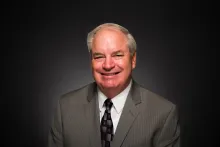
Robin Webber was born in Chicago, Illinois, in 1951, but has lived most of his life in California. He has been a part of the Church of God community since 1963. He attended Ambassador College in Pasadena from 1969-1973. He majored in theology and history.
Mr. Webber's interest remains in the study of history, socio-economics and literature. Over the years, he has offered his services to museums as a docent to share his enthusiasm and passions regarding these areas of expertise.
When time permits, he loves to go mountain biking on nearby ranch land and meet his wife as she hikes toward him.
