
David Mills
This transcript was generated by AI and may contain errors. It is provided to assist those who may not be able to listen to the message.
I have here a copy of our booklet, Fundamental Beliefs of United Church of God. Most of us have a copy of this. There are 20 of these fundamental beliefs. Got a question for you. Which one of these beliefs is actually here basically saying the same thing? Anybody know? They're really on the same fundamental belief. Maybe a slightly different way of approaching it. Well, it is on, number one, the sacrifice of Jesus Christ, and number two, the Passover. I want to read just a little bit from our booklet on these two and begin to direct our attention toward the Passover sacrifice of Jesus Christ. As far as the fundamental belief itself, this is in our Constitution. The sacrifice of Jesus Christ here is what we find. We believe God so love the world of helpless sinners that He gave His only begotten Son, who though in all points tempted as we are, lived without sin in the human flesh. That Son, Jesus Christ, died as a sacrifice for the sins of humanity. His life, because He is the Creator of all humanity, is of greater value than the sum total of all human life. His death is therefore sufficient to pay the penalty for every human being's sins. In paying this penalty, He has made it possible according to God's plan for each person and for humanity as a whole to have their sins forgiven and to be released from the death penalty. And then, of course, there's a full write-up, a couple of pages that cover this fundamental belief, the sacrifice of Jesus Christ. That's what we will be commemorating three weeks from tomorrow night. Well, that is fundamental belief number six. And if we turn on over a few pages, we come to fundamental belief number eleven, and that one has the title, the Passover. And it simply says, we believe in observing the New Testament Passover on the night of the 14th of Abib, the anniversary of the death of our Savior. And verses are given for each of these two fundamental beliefs. You know, in the Bible, we know that when something is given twice, it's therefore the added emphasis. And hasn't God then inspired His church to put an added emphasis on the sacrifice of Jesus Christ? He has. Let's turn over to Acts chapter 4 and verse 12.
Acts chapter 4 and verse 12. It is time for us to begin to think about this sacrifice and the meaning of the Passover. This will be the next holy day that we observe in God's church on Friday night, the 18th of April, just three weeks away. In Acts chapter 4 and in verse 12, beginning even in verse 11, maybe even in verse 10, let it be known to you all and to all the people of Israel. Acts chapter 4 and verse 10. That by the name of Jesus Christ of Nazareth, whom you crucified, whom God raised from the dead, by Him this man stands here whole, before you whole. This is the stone which was rejected by you builders, which has become the chief cornerstone. And verse 12. Nor is there salvation in any other. Nobody else. There's salvation through no one else. No other way. For there is no other name under heaven, given among men, by which we must be saved. There's no other name than that of Jesus Christ. Of course, we know that Jesus Christ, as far as the meaning of those words, that Jesus means Savior and Christ means anointed or the anointed one. Sometimes we say Christ Jesus, the anointed Savior. Jesus is the anointed Savior. He's the one that God has set aside to be the Savior of mankind. This idea of God doing it this way goes back a long time. It goes back. Well, let's notice how far back, in fact, it goes by reading a few verses on it. 1 Peter 1, that Jesus Christ would be set aside as the anointed Savior of mankind, which is what Jesus Christ means. Christ Jesus. That's the meaning of Christ Jesus. 1 Peter 1, verse 19. And I guess we ought to skip back to verse 18, knowing that you were not redeemed with corruptible things like silver or gold from your aimless conduct received by tradition from your fathers. But how were we redeemed? With the precious blood, of Christ, as of a lamb without blemish and without spot. He indeed was foreordained before the foundation of the world, but was manifest in these last times for you. Do you know, God waited about 4,000 years into human history before Jesus Christ came, before He was manifested.
But the sacrifice was ordained before the foundation of the world. So this idea, this plan that God has worked out, beginning with the Passover, goes back before the foundation of the world. Let's go back and read Revelation over to the final book in the Bible, Revelation chapter 13, and verse 8. Revelation chapter 13 and verse 8.
All who dwell on the earth will worship him, this beast, whose names are not written in the book of life, of the Lamb slain from the foundation of the world. Another verse showing that the sacrifice of Jesus Christ goes back to the foundation of the world. Let's also read in Titus chapter 1.
Yes, this thing that we are now a part of goes back a long time. It goes back a long, long time, even before the creation of the universe we see here in Titus chapter 1, verses 1 and 2. Paul, a servant of God and an apostle of Jesus Christ according to the faith of God's elect, and the acknowledgment of the truth which is according to godliness in hope of eternal life.
That's what we all have. We're not satisfied with seven decades of life, three, score, and ten. We're not satisfied with maybe it's going to be eight decades, eighty, or maybe it's going to be nine decades, ninety. But eternal life is what we have hope of. In hope of eternal life, which God, who cannot lie, promised before time began. And we believe there that before time began would be before God made the sun and the earth and ways in which time could be reckoned as we know it. So this idea of a Passover lamb goes back before the creation of the universe before time began.
I want to have us to go back and to see that God carefully laid a foundation for the coming of Jesus Christ. You know, I think I would have done the same thing, wouldn't you, if I were God?
God did not have Jesus Christ to come pretty soon after Adam and Eve sinned, but He waited four thousand years before Jesus Christ came, four thousand years into human history. And one major reason, I believe, is that God was preparing and laying a foundation for the coming of Jesus Christ to make that supreme sacrifice. Let's notice even at the very beginning there began to be some things done that looked ahead to this supreme sacrifice.
Let's go back to Genesis chapter 3. Even right after Adam and Eve sinned, there were animals slain, and clothing from the skins of these animals was put on Adam and Eve. God killed the animal and clothed Adam and Eve from the skins from the animal. In Genesis chapter 3 and verse 21, Genesis chapter 3 and verse 21, also for Adam and his wife, the Lord God made tunics of skin and clothed them. We've felt that here is an indirect, let's say, sacrifice that is made representing Jesus Christ and His sacrifice. But certainly we know that right away that the patriarchs began to sacrifice. And we know that Cain did not bring a suitable sacrifice, but in chapter 4 and verse 4, Abel also brought of the firstlings of his flock and their fat.
And the Lord respected Abel and his offering. Cain was not really following some instructions that had been given. So animal sacrifices come on the scene right away with the patriarchs. But you know, they did not have a Levitical priesthood that was set up at that time to do the animal sacrifices. When they wanted to sacrifice, they just went out and built their own altar. They took stones and they set up an altar and then they killed the animal. And they sacrificed the animal. They did their own sacrificing. Abraham did. Isaac, Jacob.
It was not until later that the Levitical priesthood would be set up to do sacrifices.
All sacrifices, and you can read extensively about it in the book of Hebrews, foreshadowed the coming of Christ. All these sacrifices, even that big sacrifice that we remember many times referred to, the lamb that was slain when the Israelites were in slavery. The lamb that lain was put up on the doorposts. That lamb symbolized Jesus Christ. It was a lamb without blemish. And it was a type of the sinless sacrifice of Jesus Christ. So all of those sacrifices that were done in the Old Testament were just looking forward to that supreme sacrifice. And in a very real sense, they were setting the stage. They were preparing the way for the supreme sacrifice of all sacrifices, that of Jesus Christ.
Also, during this same time, God inspired prophecies to be written during this 4,000 years. Let's read some of them. Go over, please, to Genesis 49 and verse 10. Here we have the, let's say, the race and even the tribe from which the Messiah would come.
We notice just how many detailed prophecies, then, in the Old Testament are given concerning the coming of Jesus Christ. In Genesis 49 and in verse 10, the scepter shall not depart from Judah.
Nor a lawgiver from between his feet until Shiloh comes. Shiloh is properly capitalized here, and it is a reference, we believe, to Jesus Christ until Shiloh comes. And to him, him is also capitalized, to him shall be the obedience of the people. And so this is a reference to the coming of Jesus Christ. And that actually rulership and also, of course, maybe the first and the second coming of Christ could be referred to in this verse.
We have the city, the very city from which in Judah given as well. Let's go to Micah 2. Jesus then, the Messiah, would come from the tribe of Judah. And in Micah chapter 5, we find even the city where he would be born. In Micah chapter 5 and verse 2, So even the city in the tribe of Judah from which the Messiah would come. So even the city in the tribe of Judah from which the Messiah would come.
The city of Bethlehem. Even the time element from a certain point was given. Let's go back to Daniel chapter 9. Daniel chapter 9.
In all of these prophecies, God was set in the stage for the coming of Jesus Christ to make that supreme sacrifice. In Daniel chapter 9 and verse 24, the very well-known 70 weeks prophecy.
Daniel chapter 9 and verse 24. 70 weeks are determined for your people and for your holy city.
70 weeks, 490 days, each day representing a year, as we notice in certain Bible prophecies.
And six things will be accomplished when the Messiah would come to finish the transgression. Number one. Number two, to make an end of sins. Number three, to make reconciliation for iniquity. Number four, to bring in everlasting righteousness. Number five, to seal up vision and prophecy. And number six, to anoint the Most Holy. And so verse 25, Know therefore and understand that from the going forth of the command to restore and build Jerusalem until Messiah the Prince shall be seven weeks and sixty-two weeks and the street shall be built again in the wall even in troublesome times. And after the sixty-two weeks, we believe that would be combined with the seven weeks before it, the sixty-nine weeks, the Messiah would be cut off but not for himself. The word Messiah in the Hebrew means the same thing as the word Christ in the Greek or Christos in the Greek. Messiah means anointed one and Christ or Christos means anointed one. So we are able to go from a certain point in verse 25 from the going forth of the command to restore and build Jerusalem until the Messiah the Prince will be this period of time. And we are able in history to establish that decree under Artaxerxes in BC 457 BC under the Persian king Artaxerxes. And you'll find this decree found in the book of Ezra chapter 7. And we can count down to the very year that Jesus Christ began His public ministry. So even when to expect the Messiah in the very well-known 70 weeks prophecy. Let's go to Isaiah chapter 7 in verse 14. So God was laying a foundation for the supreme sacrifice that His Son would make. Isaiah chapter 7 and in verse 14.
By the way, you'll find many references to these verses that we're reading in the New Testament. Many verses that we will not take time to turn to right now. But in Isaiah 7 and verse 14, therefore the Lord Himself shall give you a sign, behold, the virgin shall conceive and bear a son and call His name Emmanuel, which means God with us. So a virgin, Jesus Christ, would be born of a virgin. And again, this is referred to in the New Testament writings. Jesus Christ, born of a virgin. In Isaiah chapter 9, it shows where His ministry would be out of. Isaiah chapter 9 and verse 1, nevertheless the gloom will not be upon her who is distressed as when at first He lightly esteemed the land of Zebulun and the land of Naftali, and afterward more heavily oppressed her by the way of the sea beyond the Jordan in Galilee of the Gentiles. The people who walked in darkness have seen a great light. Those who dwell in the land of the shadow of death, upon them a light has shined. These verses are referenced in the New Testament gospels. But Jesus Christ would begin to preach the gospel of the kingdom of God in Galilee. That is where He began His public ministry. It would be a message. The gospel message would be a message of good news. Let's turn over to Isaiah 61. It would be the gospel, the good news of the kingdom of God. Isaiah 61 and reading verses 1 and 2, the Spirit of the Lord is upon me. Jesus referred to this in Luke chapter 4 in His own hometown of Nazareth. He said in Isaiah 61 and verse 1, the Spirit of the Lord is upon me because the Lord has anointed me to preach good tidings. The word good tidings is the same as what gospel means. To preach the gospel to the poor. He has sent me to heal the brokenhearted, to proclaim liberty to the captives and the opening of the present to those who are abound, to proclaim the acceptable year of the Lord and the day of the vengeance of our God, to comfort all who mourn, to console those who mourn in Zion and give them beauty for ashes and the oil of joy for mourning, the garment of praise for the Spirit of heaviness, that they may be called trees of righteousness, planting of the Lord that He may be glorified. To rebuild the old ruin, some of this skips on over to the second coming of Jesus Christ. It certainly does include the first coming as well. It's special to the preaching of the message of the coming of God's Kingdom.
There were prophecies of just how Jesus, just right before He would be crucified, would ride into Jerusalem. Let's read about that in the book of Zechariah. Brethren, aren't these amazing prophecies? Wasn't God set in the stage for the coming of the supreme sacrifice of all time, the sacrifice of His Son? I mean, this is the way God is working. This is the way He did it. He took 4,000 years of sacrifices and giving specific prophecies through His servants before Jesus Christ even came to lay the foundation, to prepare the way in Zechariah 9. You're probably there, but let me turn over to it. Zechariah 9, and let's read verse 9.
Zechariah 9, in verse 9, Rejoice greatly, O daughter of Zion! Shout, O daughter of Jerusalem! Behold, and it gives the city then where this would be, Jerusalem, behold, your King is coming to you. He is just and having salvation, lowly and riding on a donkey, a colt, the foal of a donkey.
And you can read about this also in the Gospels. This is how Jesus Christ entered Jerusalem when He was to be crucified. We also find exactly how He was to be betrayed, even. Details about that in the prophecies. Chapter 11, verse 11. Zechariah 11, verse 11. So it was broken on that day, thus the poor of the flock who were watching Me knew that it was the word of the Lord. Then I said to them, If it is agreeable to you, give me my wages, and if not, refrain. So they weighed out for my wages thirty pieces of silver.
That is exactly how many pieces of silver were given to Judas at the time of betraying Jesus Christ.
And in chapter 12, verse 10, we find how He would actually in the end die. He was hung up and crucified, as we know, but it was through a piercing of a Roman soldier. Chapter 12, verse 10. I will pour on the house of David, and on the inhabitants of Jerusalem, the spirit of grace and supplication. Then they will look on Me, whom they have pierced. They will mourn for Him, as one mourns for his only Son, and grieve for Him, as one grieves for his firstborn. Yes, Jesus Christ was pierced by a Roman soldier. The book of John brings out that detail. Aren't these amazing prophecies exactly what tribe Jesus would come from, the tribe of Judah? What city in the tribe of Judah? He would be born. It was Bethlehem. But He would come at a certain time at the end of the 69 weeks of the 70 weeks prophecy. He would be born of a virgin. His ministry would be out of Galilee. He would bring a gospel, the message of good news. He would come riding in on a coat to Jerusalem. He would be betrayed for 30 pieces of silver. And He would be pierced to death, praising promises that were given, preparing the way for the cunning of Jesus Christ. You know, not only that in the Old Testament, but we have some of the best description of the actual scourging and the beatings of Christ. And let's read them last, Psalm 22. Psalm 22 and verse 1. Prophecies of how Jesus would suffer for mankind. Psalm 22 and verse 1. My God, my God, why have you forsaken me? Words that Jesus Himself would speak on the cross. Why are you so far from helping me and from the words of my groaning? Let's go on down to verse 6. Some of this just depicts the thoughts of Jesus Christ and what was going on in His mind. What was He thinking as He was suffering such pain, hanging up on the cross? What thoughts were going through His mind? Verse 6. I am a worm and no man, a reproach of men, and despised of the people, all those who see Me, laugh Me to scorn. They shoot out the lip, they shake the head, saying, He trusted in the Lord, let Him rescue Him, let Him deliver Him, since He delights in Him. And verse 14. I am poured out like water, all my bones are out of joint. And very likely when Jesus Christ was hoisted up into the air and He came down in the hole that had been dug for that stake or that cross, His bones probably did just come out of joint. All my bones are out of joint. My heart is like wax. It has melted within me.
My strength is dried up like a pot-shirt, and my tongue cleaves to my jaws.
You have brought me to the dust of death, for dogs have surrounded me. The assembly of the whip entwined me. They pierced my hands and my feet. I can count all my bones.
They look and stare at me. They divide my garments among them. Even those things all happened.
Dividing of the garments. And for my clothing they cast lots.
Tremendous details were given about what would happen to Jesus Christ. Let's go to Isaiah 52. This is perhaps, if not the finest, it certainly is right near the very top as far as describing the sufferings of Jesus Christ. And brethren, these are all verses that are good for us to be aware of today.
Maybe these are things that you already have thought about.
The four thousand years that God prepared for the coming of His Son.
But you know, maybe this will deepen our understanding of that and the supreme sacrifice.
I hope it will. And these certainly are the verses in Psalm 22. And Isaiah 52 would be good verses to read between now and the Passover. Maybe even several times. Maybe even on our knees.
We'll begin in Isaiah 52 and also read Isaiah 53. Isaiah 52 verse 13, Behold, my servant shall deal prudently. He shall be exalted and extolled and be very high.
Just as many were astonished at you, so his visage was marred more than any man, and his form more than the sons of men. So shall he sprinkle many nations.
Kings shall shut their mouths at him. We all shut our mouths at him. It doesn't matter what lot in life we are. Kings or slaves, everybody ultimately shut their mouth before the great God.
Kings shall shut their mouths at him. For what hath not been told them they shall see? And some of that will be in the second resurrection even. While they have not heard, they shall consider when they will understand what happened when Jesus Christ came and died.
In chapter 53 now, Who has believed our report? To whom has the arm of the Lord been revealed? For he, and thus is talking of Christ, when he came as a human being, he shall grow up before him as a tender plant, as a root out of dry ground. He has no form or comeliness, and when we see him there is no beauty that we should desire him. He is despised and rejected by men, a man of sorrows, and acquainted with grief. We hid, as it were, our faces from him.
He was despised, and we did not esteem him. Surely he has borne our griefs, our sicknesses, and carried our sorrows, our pains. Yet we esteem him stricken, smitten by God. Smitten by God, our Father, then, is the ultimate one that allowed that sacrifice and was making it. Our Father was making the supreme sacrifice. And you would have to say that the Father and the Son were working together in perfect unison, perfect harmony. It was Jesus Christ who was willing, and it was our Father who was willing to make that sacrifice.
Smitten by God, and afflicted, verse 5, but he was wounded for our transgressions. He was bruised for our iniquities. The chastisement for our peace was upon him, and by his stripes we are healed.
All we like sheep have gone astray. We have turned every one to his own way, and the Lord has laid on him the iniquity of us all. He was oppressed, and he was afflicted, yet he opened not his mouth. He was led as a lamb to the slaughter, and as a sheep before its shearers is silent, so he opened not his mouth. He was taken from prison and from judgment, and who shall declare his generation. Nobody stood up to defend Jesus Christ.
But then again it was that time when that supreme sacrifice was to be made.
He was cut off from the land of the living, for the transgressions of my people he was stricken. They made his grave with the wicked, with the rich at his death, because he had done no violence, nor was any deceit in his mouth. Yet it pleased the Lord, and that would be our Father.
It pleased, it wasn't easy for our Father to do this. Our Father gave his only Son.
It wasn't easy, but it pleased him even so, because it fits into the great plan that was ordained from the foundation of the world before time began. It pleased the Lord to bruise him. He has put him to grief. When you make his soul an offering for sin, he shall see his seed, he shall prolong his days, and the pleasure of the Lord shall prosper in his hand. He shall see the travail of his soul and be satisfied. The Father saw the travail of Jesus Christ and is satisfied. And God's law and the requirement, the death penalty of God's law, breaking God's law, is satisfied. By his knowledge my righteous soul shall justify many, for he shall bear their iniquities. And therefore, working on ahead, even perhaps to the millennium and the conclusion of God's plan, I will divide him a portion with the great. He shall divide the spoil with the strum, because he poured out his soul unto death, and he was numbered with the transgressors, and he bore the sin of many, and made intercession for the transgressors.
So, brethren, this is a rich chapter, isn't it? One that we want to study and ponder in the days ahead.
No matter how many years we've been in God's church, we go back over verses like this, and each year we just deepen our comprehension. We deepen our appreciation for that supreme sacrifice that was made by Jesus Christ and our Father. For four thousand years, God laid the foundation. What a foundation was laid!
It took a long time to lay this foundation. Finally, the time did come, and Jesus Christ showed up on the scene. And one by one by one, he fulfilled all those prophecies. It was to a virgin of the tribe of Judah that he was carried in the womb. It was in the tribe of Bethlehem where he was born, by decree of none other than the Caesar Augustus of the Roman Empire had this decree that everybody be enrolled or a census taken.
And so they went down to their home. Joseph and Mary went down to their home in Bethlehem. That's where Jesus, at the time when Jesus was born. So one by one by one, all these prophecies that we just read in the Old Testament were fulfilled right down to the scourging, the beating, the suffering that Jesus went through, and his death for us. When we come together to take the bread and the wine, it's just good to keep all this in mind, how the stage was set in the Old Testament for this supreme sacrifice. When we come to that taking of the blood of the bread and the wine, Jesus instituted this.
And I would like to at least go back and read those verses at this point. On the night before his death, he instituted what we will be doing on the Pass overnight. Of course, he washed feet in John 13. And I will not take time to read that right now. A symbol of humility and humble service toward one another. But in Matthew 26, he instituted the bread and the wine as a memorial to his sacrifice. And that's what we will do on the Pass overnight. You know, the Pass overnight is a night when we come into communion with this sacrifice. We come face to face with it.
It's a night that is very sober in many ways, but it's a night that is also very fulfilling and you feel so well-loved because we are my Almighty God. And he has shown it with this sacrifice of his Son. Well, Matthew 26 in verse 26 during the evening and after we wash feet, actually, we will come to this, the taking of the bread.
Verse 26 says, They were eating, Jesus took bread, blessed it and broke it, and gave it to the disciples and said, Take, eat, this is my body. So we do break bread and we do pass it around. And it represents the broken body of Jesus Christ. All that will be explained at the Passover service. Verse 27, He took the cup and gave thanks and gave it to them, saying, Drink from it, all of you, for this is my blood of the new covenant, which is shed for many for the remission of sins.
And so then we will take the wine that has already been poured and ask God's blessing upon it and give thanks. And we will then each of us partake of a symbol that represents the blood of Jesus Christ. On that Passover night, we come face to face then with this same sacrifice of all time. We have communion with that sacrifice. We have fellowship with that sacrifice. We identify with that sacrifice. Let's go over to John chapter 6. In another passage, we can be reading and pondering and thinking about a lot in the days ahead as we begin to prepare for the Passover.
I'm especially focusing on the Passover today. I think Mr. Kylo is going to give things on Passover and the Days of Unleavened Bread. I'm not sure exactly all the things he will cover.
There may be some things I bring out today that he will also cover, but I do know he's mentioned that that's what he wants to speak on because that is meet in due season just a couple of weeks before the spring holy days begin. John chapter 6 and in verse 48, Jesus said, I am the bread of life. And in verse 49, he said, your fathers ate manna in the wilderness and they're dead.
This, though, is the bread which comes down from heaven that a man may eat of it and not die. I am the living bread which came down from heaven. If anyone eats of this bread, he will live forever. And the bread that I shall give is my flesh, which I shall give for the life of the world.
The Jews said, how can this man give his flesh to eat?
When they heard this, they did not comprehend. Many would no longer follow Jesus Christ. They said later after, this is a hard saying, and many of them no longer followed him.
Verse 53, Jesus went on to explain more about what he meant. He said to them, most assuredly, I say to you, unless you eat the flesh of the Son of Man, you have no life in you.
He even went beyond the eating of the flesh and said, you also have to drink my blood, or there's no life in you. You know, when we repent, I gave a sermon on that a couple of weeks ago, repentance from dead works, and we're baptized, we come to the sacrifice of Christ. There's no other way. There's no other name given under heaven to men by which we may be saved. We come to Jesus Christ. Every one of us that is baptized, that's what happened to us. We came to the sacrifice that our Father provided, which had been determined from the beginning of time, before even time began. That's what we came to, and we were able to be forgiven by that sacrifice. We came to the bread and the wine. We came to the broken body and the shed blood of Jesus Christ.
That is the beginning. That's where we all have to start. Repentance from dead works and coming to the sacrifice of Christ for forgiveness. Every young person here needs to think seriously about this. If you've grown up in God's church and you understand these things, you have this knowledge, then you need to think about this. One day you will have to come face to face with this sacrifice. One day you will have to have communion with it. This is not just a Passover service, but it is daily that we eat the flesh and drink the blood of Jesus Christ, or we have no life in us. Verse 54 says, whoever eats my flesh and drinks my blood, somebody that really has a communion with this sacrifice of Jesus Christ, then he has eternal life. I will raise him up at the last day. For my flesh is food indeed. It really does fill. It really does satisfy. And my blood is drink indeed.
You know, he's talking spiritually about coming to the sacrifice of Christ, to the Passover. He who eats my flesh and drinks my blood abides in me. The deepest communion and fellowship that there could possibly be, and I in him. As the living Father sent me, and I live because of the Father, so he who feeds on me will live because of me.
This is the bread which came down from heaven, not as your fathers ate the manna and are dead. He who eats this bread will live forever. So on that night before he died, Jesus instituted the symbols. He did not institute them here in John 6, but later he would institute them, the symbols of his flesh and broken body and of his blood. On that night before he died, Jesus hung up on the cross in great agony and pain. It would be good to just try to maybe think about that a little bit too. Tremendous pain and suffering. He had gone through the scourging.
The crucifixion was in such a way that there were nails in the hands, or maybe the rest area, and there were hand nails in the foot area. A person, the victim, would be able to push up and get his breath, but then that put extreme pain upon the nails and the feet. Before too long, he'd have to give in to those pains and let down. But then the victim would find himself hanging from his hands and in great pain and suffering and also affixiated, not able to breathe. And so before too long, the victim would have to push himself back up again in order to breathe.
So Jesus went through six hours on the cross in that manner. Finally, let's turn to John 14 in verse 34. It would be good to go back and read some of the last chapters in the Gospels about the final sufferings of Jesus Christ, very agonizing and painful and brutal death, and our stead. It would be good to do that. In John chapter 19, verse 34, finally the time came in John 19 and verse 34 that one of the soldiers had come around, and actually the Jews were, in verse 31, were asking about the legs being broken because they did not want the dead bodies on the cross on the Sabbath. It says in verse 31, that Sabbath was a high day. It was a Thursday, the first day of the Feast of Unleavened Bread.
And so they were trying to get all the ones who had been crucified down before sundown. So they came and broke the legs of the first and the other, the ones on either side of Jesus Christ. But verse 33, when they came to Jesus and saw that he was already dead, they did not break his legs. But one of the soldiers pierced his side. I believe the Greek has had pierced his side with a spear, and immediately blood and water came out.
And so that is the manner that Jesus died. His soul was pierced, as we read in the Old Testament prophecies. And we believe that to be about 3 p.m. in the afternoon. Well, that is given as the time, the ninth hour, 3 p.m. in the afternoon. So the supreme sacrifice had been made.
When we think of the sacrifice, of course, we most often think about the suffering of Christ, and that is all well and fitting and good. But what about the Father? We should also include the Father and what was going through his mind. It was not easy in John 3 and verse 16, perhaps that most quoted verse of all. It was not easy what our Father had to do.
But yet it pleased him in making this sacrifice so that we may be in God's kingdom.
In John 3 and in verse 16, God so loved the world that he gave our Father, our Father so loved us, us humans, that he gave his only begotten Son that whoever believes in him should not perish but have everlasting life. So God wants us and his family very much.
And we do have that communion with the Passover. We do sense that love. We sense that warmth, that warm relationship that our Father has toward us.
Through the sacrifice of Christ, the Father was reconciling us to himself. We were cut off by our sins, but through the sacrifice of his Son, our Father was bringing us back, reconciling us, putting us in good standing before him. Let's read about that in 2 Corinthians chapter 5. 2 Corinthians chapter 5. And as we're turning there, I think I may have failed to have announced that we do have Bible study today, about 10 minutes after the service, and we will be discussing further things about the Passover and the Feast of Unleavened Bread. So please do plan to stay for that. In 2 Corinthians chapter 5 and verse 18, Now all things are of God, who has reconciled us to himself through Jesus Christ, and has given us the ministry of reconciliation, that God was in Christ through this sacrifice, reconciling the world to himself, not imputing their trespasses to them, and has committed to us the word of reconciliation. So through the sacrifice of Jesus Christ, through the Passover, he was reconciling us to himself. But it was not easy. Let's go to Romans chapter 5 and verse 17.
But God commends his great love toward us by the sacrifice.
In Romans chapter 5 and verse 17.
Now that's not where I really want to read. Let's go a little bit earlier in this chapter.
Verse 8. Romans chapter 5 and verse 8. But God demonstrates his own love toward us.
Brother, we come into communion with the love of God on Passover night.
I mean, is there any greater way that God could prove his love for us than letting his own son die? Demonstrates his own love toward us. In that while we were sinners, Christ died for us.
God has really proven it. Much more than having now been justified by his blood, we shall be saved from wrath through him, the wrath of the lake of fire. For if when we were enemies, we were reconciled to God through the death of his son, much more having been reconciled, we shall be saved by life. We're saved by a living Savior, Jesus Christ.
Our Father then was hard. It was not easy, but he was willing and it pleased him to make this sacrifice. What about Jesus Christ? It pleased him too. You know, not easy. At first, he even said, well, if it's possible, take this cup away from me. But then he quickly said, not my will, but your will be done. And so it pleased Christ who did the suffering to make this sacrifice.
Let's go over to Philippians 2. He humbled himself to make this praying spice.
These are all good things for us to be reading and thinking about in the days ahead. Things about the Passover and that supreme sacrifice of Jesus Christ. In Philippians chapter 2 and verse 5, let this mind be in you, which was also in Christ Jesus. This mind is one that is humble. It is one that is willing to empty itself. Not trying to be somebody, not trying to be somebody important. It's not pride, but the opposite, humility. Let this mind be in you that was in Christ, who being in the form of God, Jesus had always existed with God and even created all things. Being in the form of God did not consider it robbery to be equal with God, but made himself. He chose. He volunteered. He made himself of no reputation, taken the form of a servant, and coming in the likeness of men. And being found in appearance as a man, he humbled himself and became obedient to the point of death, even the death of the cross.
And it wasn't just any death then. It was a hard and agonizing death that Jesus Christ suffered. Therefore, God also has highly exalted him and given him the name that is above every name. And it's the only name by which we can be saved. Read that first verse, the name Jesus Christ. It's a name we need to think about, you know, in these days ahead, more deeply, the name of Jesus Christ. In verse 10, that at the name of Jesus, every knee should bow of those in heaven and those on earth and those under the earth, that no one has left out, that every tongue should confess that Jesus Christ, that is the Savior anointed. The anointed Savior is Lord to the glory of God the Father. So we do have some wonderful things to be thinking about, God's deep abiding love for mankind. I want to just conclude the sermon by encouraging everyone. And I do hope that our young people will get hard copies. You know, it's fine to have electronic copies, but there's still hard copies or hard to beat. You can mark, you can highlight. We would encourage everyone to have a hard copy of our booklets. But read this section, a two-page spread on the sacrifice of Jesus Christ. Read over the verses we've read today. Add to them. There are so many more that could be read and appreciate this sacrifice. Also read fundamental belief number 11 on the Passover, page 25. I believe this is about a two and a half page spread on the Passover. These two really are on the same thing, the sacrifice of Christ. I want to conclude by reading from our fundamental beliefs on the sacrifice of Jesus Christ. Jesus Christ lived a perfect life and therefore did not deserve the death penalty. However, he was preordained from the foundation of the world to die, Revelation 13.8. Even though Christ, as the perfect sacrifice for sin, was accused of violating God's law, on more than one occasion, he never broke God's law. We accept his sacrifice as essential to our salvation. As we model our lives after Jesus Christ, we take up our cross and follow Him, which includes a willingness to suffer and be persecuted as He set the example. We thank God the Father for giving up His Son Jesus Christ to be the perfect sacrifice for all mankind. All sin is forgiven upon repentance. There is no sin that God cannot forgive, no matter how bad, if it is repented of. All sin is forgiven upon repentance and the acceptance of Christ's sacrifice. Forgiveness of sin requires the supreme sacrifice, the death of Jesus Christ.
His crucifixion more than 1,900 years ago was essential to God's plan of redemption and salvation. Step number one, that's where we all begin. That's where we all get started. The foundation of repentance from dead works and coming to the sacrifice that God has provided. The last paragraph in this, you know, as we do this, it is very encouraging to our faith. It strengthens us in our Christian walk. By understanding this fundamental belief, we can be assured that our sins are blotted out. We can go forward in our Christian lives with confidence. Rather than we can go forward with confidence. God is for us. What more would it take to prove that? We can go forward in our Christian lives with confidence, knowing that through the sacrifice of Jesus Christ, we can be reconciled to the Father. As a result of this reconciliation, we can develop a relationship with our Father that provides hope and assurance for our future. We can look forward to each life in the kingdom of God as a God's grace because of the sacrifice that Christ willingly gave for every one of us. So I'd recommend that we go back and review some of the things from today's sermon. Think about that. It's kind of awesome to think about the way God laid this foundation 4,000 years before He let His Son come. But He was laying the foundation for this coming of Christ and that sacrifice to be made. Go back and review all of these verses and also read and study the fundamental beliefs that we have gone over today, the sacrifice of Jesus Christ and the Passover. Let's be examining ourselves. The Scriptures encourage us to do that. Ask God to help our hearts to be in the right place, to help us to be walking more closely with Him than ever. Many we can be thinking about in the days ahead before the Passover. It's a time of introspection, a time of examination, a time of deepening our faith, our walk with God. And it is a time of rejoicing and having great confidence because we see that God loves us so deeply that He would sacrifice His own Son. Well, we'll discuss a few more of these things and maybe have some interaction even in the Bible study.
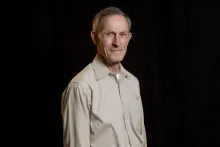
David Mills was born near Wallace, North Carolina, in 1939, where he grew up on a family farm. After high school he attended Ambassador College in Pasadena, California, and he graduated in 1962.
Since that time he has served as a minister of the Church in Washington, Florida, North Carolina, South Carolina, Oregon, West Virginia, and Virginia. He and his wife, Sandy, have been married since 1965 and they now live in Georgia.
David retired from the full-time ministry in 2015.
