
David Mills
This transcript was generated by AI and may contain errors. It is provided to assist those who may not be able to listen to the message.
Well, I know we all are getting excited about the spring Holy Days. It's a beautiful, beautiful time of the year. All of creation is putting out colorful blossoms, new buds, ready to make growth and bear fruit. And, shall we not also, at this time of the year as we think about the Holy Days, begin to get ready for new spiritual growth and bearing fruit as we look forward to the Passover and the Feast of Unleavened Bread. Keeping these days can make a difference if we keep them in spirit and in truth. We know that Thursday night will be the Passover service. This will be the first one we've had as a congregation, all of us together since 2019 last year and the year before COVID was still around. So Thursday night we'll be keeping the Passover all together right here. Then Friday night, the night to be much observed, begins the seven days of the Feast of Unleavened Bread with the night to be much observed. You can read about that in Exodus chapter 12 verses 40 through 42. And it is a night of spiritual rejoicing. The Israelites began their journey out of Egypt. There was a time we began our journey and we're continuing that journey spiritually. The next Sabbath, keeping the Holy Day here, services at 10 o'clock in the morning and the following Friday, the last day of Unleavened Bread with services also right here. And as the Apostle Paul said, let us keep the feast. That's in 1 Corinthians chapter 5. So let's rejoice as we keep the Passover and the Feast of Unleavened Bread and be ready to begin some brand new spiritual growth and bearing spiritual fruit. But today I'd like for us to focus on the Passover. Passover is just five nights away from tonight. And so the title of this message is, Who Needs the Passover? I'd like for us to go through, before we answer fully that question, to go through the five parts, the five main parts of our Passover service. It is a solemn, a most solemn service. You know why we are in the presence of death? Not just the death of anyone, but that strange man that came to the earth 2,000 years ago with a message that he delivered. But he was rejected, and eventually he was put to death. We're going to go through the five parts of the Passover service then. First of all, there is the foot washing. We will begin our service after a few brief introductory remarks. We will get into the first part. Let's turn over to John chapter 13 and read just a few verses.
More verses will be read on Thursday night. Let's begin reading in verse 12. When Jesus had washed their feet, He took His garments and sat down, and He said to them, Do you know? Do you understand what I've done to you? You call Me, Teacher and Lord, and you say, Well, for so I am. If I then, your Lord and Teacher, have washed your feet, you also ought to wash one another's feet. For I have given you an example that you should do, as I have done to you. I say to you, the servant is not greater than his Master, nor is he who is sent greater than he who sent him. If you know these things, happy are you if you do them. So we will read these verses and the ones before on Thursday night, and have a foot washing service following the example of Jesus Christ. It shows our determination to follow Jesus' humble example of service. He had illustrated that example for three and a half years, and I'm sure all of his life he had illustrated that before his ministry as well, serving others and looking out for others, not himself. So we will have a foot washing ceremony to begin our Passover service. Then after that, after we come back from the foot washing, what will we do? Let's turn to Matthew 26 and verse 26, and we'll read what comes second in our Passover service. This is that Passover that Jesus was eating with his disciples on the night before he died. And in verse 26, as they were eating, it was eating the Old Testament Passover, which we don't do today. We don't eat the Old Testament Passover lamb. And here is why. As they were eating, Jesus took bread, blessed it, and broke it. So here are all the disciples around. Jesus took some bread and broke it and said, Take, eat. This is my body. This bread, which we will break this coming Thursday night, represents the broken body of Jesus Christ. It represents the pain and the suffering and the death hanging on the cross, the pain that Jesus went through. We read in other verses that by his broken body, our sins are forgiven and we are healed of our sicknesses. Turn one chapter further over, Matthew 27, and here's what the broken bread represents. Matthew 27 and verse 22, Pilate said, What shall I do with Jesus, who is called Christ? They all said, Crucify, let him be crucified. The governor said, Why? What evil has he done? Here was a man that was totally innocent. He had never done anything wrong. We all have sinned, but Jesus had never sinned. Pilate recognized that. What evil has he done? They cried out all the more, let him be crucified. When Pilate saw that he could not prevail, but rather a tumult was rising, he took water and washed his hands before the multitude and said, I am innocent of the blood of this just person. You see to it. All the people answered and said, His blood be on us and on our children. And then he released Barabbas to them, and when he had scourged Jesus, he delivered him to be crucified. So the broken bread represents the scourging that Jesus went through. The Roman scourging was called the halfway death, a whip that had several strips of leather with metal or bone tied at the end of each one. We're tied to the end of a of a stick, and this would be brought forward upon the body. The jagged pieces of metal or bone would crash into the victim's skin and flesh, opening up the flesh and blood vessels, convulsing the victim with pain. Many of the victims would actually eventually pass into unconsciousness. And notice the last part of verse 26. He delivered him after the scourging and beating, then he delivered him to be crucified.
Roman crucifixion was a brutal death for the worst offenders of the law, like thieves and murderers and rapists. Heavy square nails were driven into the wrists and through the arch of each foot. The victim would feel the searing agony of nails tearing the flesh and the nerves. Muscles would cramp. Breathing would become a struggle. The victim would have to push up. His heart was compressed and struggling to continue pumping. The tortured lungs gulping for small breaths of air. Jesus went through six hours of unlimited pain, twisting, joint-wrenching cramps, intermittent partial affixiation. This is what the broken bread symbolizes that we will be taking on Thursday night. It is symbolic of the suffering that Jesus did because of our sins. His broken body is for the healing of our minds and bodies.
The third part of our Passover service on Thursday night. Let's go back to Matthew 26 once again. Just back a couple of pages. Matthew 26. And after the bread, we read that in verse 26. In verse 27, after the broken bread, He took the cup and gave thanks and gave it to them, saying, drink from it all of you. For this is my blood of the new covenant which is shed for many for the remission of sins. We will pass around glasses with a swallow or two of wine. It's a symbol of the shed blood of Jesus Christ. It is because of our sins that Jesus Christ had to die, because the penalty for sin is death and forgiveness is available through the blood of Christ. Jesus Christ has paid the death penalty in our stead. And so the Passover wine is a symbol of the very life and blood of Jesus Christ, the Lamb that was slain, we read, from the foundation of the world. Let's go to John chapter 19. This shows here what that wine represents, exactly what it represents, the very life blood of Jesus Christ. John chapter 19 and verse 34.
Here Jesus had been crucified already, and for about six hours he was on that stake or that cross.
In verse 34, about the middle of the afternoon, one of the soldiers pierced his side with a spear, and immediately blood and water came out. And he who had testified, John, who was writing this Gospel, had saw this. He was an eyewitness. His testimony is true. He knows that he is telling the truth so that you may believe. For these things were done that the Scripture should be fulfilled. Not one of his bones shall be broken. They came around to break his bones, but they found him already dead. The soldier had come around to pierce his side. Verse 37, another Scripture says, they shall look on him whom they pierced. It was the fulfillment of that prophecy. And so the Passover wine that we will take is a symbol of the very life and blood of Jesus Christ, the life in the water that came pouring out when the Roman soldier pierced his side. Jesus then would have lapsed into unconsciousness. At that point, he would have died at that instant. And it's about the priceless blood of Jesus Christ that we may be forgiven our sins. Let's go to read a few verses about the Passover wine and what it represents, the forgiveness of our sins. Go to 1 Peter chapter 1. It's good that we review and think about these verses as we are here. This is the final message to be given before the Passover service. This is proper to read today. 1 Peter chapter 1 and verse 18.
Well, let's see, verse 18. Knowing that you were not redeemed with corruptible things, redeemed has to do with a payment that was made. That you were not redeemed. A payment was not made with corruptible things like silver or gold from your aimless conduct received by tradition from your fathers. But with the precious blood of Christ, that blood is priceless. It delivers us from the penalty of death, the priceless blood of Christ that came pouring out when the Roman soldier pierced his side. As of a lamb without blemish and without spot, Jesus was the fulfillment of that Old Testament lamb that was slain at Passover. He indeed was foreordained before the foundation of the world that was manifest in these last times for you. Let's go also to Colossians chapter 1. We read about what this wine represents that we will take on Passover night in Colossians chapter 1 and verse 13.
Colossians 1 and verse 13. He hath delivered us from the power of darkness and translated us into the kingdom of the Son of His love, in whom we have redemption through His blood, the forgiveness of sins. So that is what the wine represents that we will take on Thursday night. The blood by which we are our penalty, our spiritual debt, is paid. In verse 19, it pleases the Father that in Him all the fullness should dwell, and by Him to reconcile all things to Himself. The death of Christ does reconcile us to the Father. By Him, whether things on earth or things in heaven, have He made peace through the blood of His cross. And you who once were alienated and enemies in your mind by wicked works, yet now He has reconciled in the body of His flesh through death to present you holy and blameless and irreproachable in His sight. Brother, it's good to be reading and reviewing these verses and what they mean.
These verses show that it is by the blood of Christ, then, that we are redeemed and that our debt is paid for our sins. So the third, again, the first part of the Passover is footwash, and the second part is the broken bread, the broken body of Christ, and the third is the wine, representing the shed blood, the very life of Jesus Christ. The fourth thing or part of our Passover service will be reading from John 13-17. We will read excerpts of those final words. Those are the final words Jesus gave to His disciples. But guess what? Not just to the disciples of old, but to us today. Words of instruction and words of encouragement. We will be reading excerpts, then, from John 13-17, the fourth part of our Passover service. And then we end the service. Let's go back to Matthew 26, and we'll see the final part of our Passover service.
Matthew 26. Go back to Matthew 26. And after Jesus had given the broken bread that we read about earlier, and after He had given them the wine representing His blood, He said in verse 29, back in Matthew 26 and verse 29, I say to you, I will not drink of this fruit of the vine from now on until that day when I drink it new with you in my Father's kingdom. You know, just to comment about this verse, this indicates, does it not, that Jesus is going to keep the Passover again, but it will be after He has returned to the earth. And I wonder, in Jerusalem, if there won't be a big Passover night, and could Jesus Himself be officiating, taking of the bread and wine? You know, we just have to wonder, then. He said He would. He does indicate here that He would drink it new with us in my Father's kingdom. Well, the last part of the Passover service, then, verse 30, when they had sung a hymn, they went out to the Mount of Olives. So I spend a little bit of time explaining these five parts of the Passover service. We have young people here that I would like to encourage to think about this more deeply and do some spiritual growth of your own. You can. I know I begin at around age 15 or 16 to be serious about these things, and I know that our young people can do that. And that around the end of the adolescent period and the beginning of adulthood, sometime around high school, graduation, age 18, 19, somewhere along there, it begins to be a mature mind that is able to make a decision that will be kept for one's lifetime. So I hope that our young people will want to be a part of the Passover in the future. We even encourage young people in the latter years of high school to come and be and observe our Passover service. They can come right here Thursday night if they choose and see what it's like, but not participate, not take part in the foot washing, not take part in the bread and wine, bring their Bible and just follow along with the Passover service. You are invited to do so. But in the future, as you reach adulthood, why not go ahead and be baptized and make that commitment and begin to keep the Passover year by year? Brother, let's say a few other things about Passover. Passover demonstrates to us the love that our Father has for us.
How could He demonstrate it any more deeply than what He has done? Let's read a few verses about that. This Thursday night, we will celebrate in a way the Father's love for us. Go to John, Chapter 3. We have that verse that is so well known. You've seen it printed up on billboards. You've heard it quoted maybe more almost more than any other verse in the Bible. In John, Chapter 3, this is the incident where Jesus was talking with a Pharisee named Nicodemus, and he was telling Nicodemus in verse 3 that the latter part of verse 3 that unless one is born again, he cannot see the kingdom of God.
In verse 6, that which is born of the flesh is flesh, and that which is born of the Spirit is spirit. Jesus went on down to explain more things to Nicodemus. In verse 13, no one has ascended to heaven, but he that came down, that is the son of man who is in heaven. So you know that verse alone shows that the doctrine in the world of people going to heaven, and that you hear so much about at the time of one of funeral services, people going up, they're looking down from heaven. No, they're not. They're dead. And this verse is a strong verse showing that no one has ascended up to heaven except Jesus Christ.
In verse 14, as Moses lifted up the serpent in the wilderness, even so must the son of man be lifted up. And he's talking about his crucifixion here. Whoever believes in him should not perish but have eternal life. In verse 16, that verse that is so well known and publicized in the world, even, God so loved the world, God our Father, so loved the world, so loved us, that he gave his only begotten son that whoever believes in him should not perish but have everlasting life.
Does God love us? You know, how could we ever doubt that? Yet somehow, human nature is such we sometimes think God is out to get us. He's not. The only way he's out to get us is into his family, and he wants to forgive us. He wants to help us every step of the way into his eternal kingdom.
So God's purpose is eternal life. He's not to lose us. He's not willing for any to perish. Verse 17 goes on to say, God did not send his son into the world to condemn the world, but that the world through him might be saved. He who believes in him is not condemned, but he who does not believe is condemned already because he has not believed in the name of the only begotten son of God.
So God wants us in his family very much. He's let his only begotten son die so our sins can be forgiven, so we can be released from our death penalty, our sins brought upon us. Let's go to Romans chapter 5. These are good verses to review here and read before Passover on Thursday night. Romans chapter 5 and verse 5, hope does not disappoint because the love of God has been poured out in our hearts by the Holy Spirit, which is given to us. Verse 6, when we were still without strength, in due time Christ died for the ungodly.
That's what we will be commemorating Thursday night, that Jesus died for us, the ungodly. You know, we should look at our past way of life not as being righteous. No matter how good a person we may think we were, we were still ungodly, and Jesus died for us when we were yet without strength. For seventh scarcely for a righteous man will one die, yet perhaps for a good man someone might even dare to die. But God demonstrates his own love toward us. Here God so loved the world, in that while we were still sinners Christ died for us, much more than having now been justified by his blood.
We shall be saved from wrath through him. For if when we were enemies, we were actually enemies to God in his way of life, before God brought us into his church, when we were enemies, then he called us, and we were reconciled to God through the death of his Son, much more having been reconciled, we shall be saved by his life.
And not only that, but we also rejoice in God through our Lord Jesus Christ, through whom we have now received the reconciliation. We do rejoice. We've received the reconciliation. We don't stand before God guilty. There's not something that our sins are between us and our God that has been taken out of the way. Let's go to John chapter 4.
So these verses show God's love for us, and this Passover would be a good time to grow in the love of God and see how much he has demonstrated his love toward us and for us. In 1 John chapter 4 and verse 9, this and this the love of God was manifested toward us. How was the love of God manifested or shown to us? It goes on to say that God has sent his only begotten Son into the world that we might live through him. And this is love, not that we loved God. You know, we were yet enemies. Not that somehow God did this because we loved him or were doing things so right in his sight. Not at all. We were enemies. Not that we loved God, but that he loved us and sent his Son to be the propitiation for our sins. And in verse 19, we love him. Do we love our Father? I think that's a good question to ask ourselves this Passover. The Passover Thursday night, the Passover service, is not only about the death of Jesus Christ. Our Father is very much a part of this Passover service. He so loved the world that he gave his only begotten Son. The Father is just as much a part of the Passover as Jesus Christ. They both stand side by side as far as making this sacrifice.
And we need to love our Father for giving his only begotten Son, that he did so love the world. This would be a good time to think about our love toward our Father. And we should grow in that love and thank our Father for the sacrifice he made, because it was not easy for him to send his Son down to the earth and then to have him to die in this manner, a hideous, painful death. How would you like to see your own flesh and blood go through something like this? A scourging, a beating, and then to be hung up on a stake or cross? If you were given a choice of yourself doing it or your son doing it, which would you choose? As painful as it would be, I think I would want to choose to let it happen to me, not my son. But the Father had to look on as he saw Jesus Christ go through that suffering and death. So let's thank our Father and let's love him more deeply. Think about how much we do love our Father and grow in this Passover. The Passover also, of course, does demonstrate the love of Jesus Christ. Let's turn to Revelation 1 and verse 4. Of course, Jesus Christ loves us deeply. He was willing to be the sacrificial Lamb of God that takes away the sin of the world. And we need to grow this Passover in our love for our Savior, our elder brother, our high priest, Jesus Christ. We need to say thank you, Jesus Christ, for being willing to die so that I could be released from the death penalty. Thank you for being willing to suffer in this way. Revelation 1 and verse 4. John, to the seven churches in Asia, grace to you and peace from him who is and who was and who is to come. By the way, that's the Father here in verse 4. And from the seven spirits who are before his throne. So our Father was and is and is to come. He will always, has always existed and always will. That's what that means. But verse 5 also, we have grace and peace from Jesus Christ as well. You know, this again shows God's love toward us. How much does God want us in his family?
What could he do to demonstrate how much he wants us in his family? Could you make any greater demonstration than what our Father and Christ have made? Well, this is grace and peace. Verse 5, from Jesus Christ, the faithful witness, the firstborn from the dead, and the ruler over the kings of the earth, and notice to him who loved us and washed us from our sins in his own blood. You know, Jesus Christ loves us deeply. We need to grow in our love for our Savior and elder brother and thank him for being willing to suffer the pain and agony he went through. You know, this Passover, then, let's get to know and to love our Father and Jesus Christ more deeply. Make that a goal. Let's go to John 17, verses 1-3. John 17. These are verses here that were spoken, words here spoken, on that final night before Jesus died. John 17, in verse 1, Jesus spoke these words, lifted up his eyes to heaven and said, Father, the hour has come. Glorify your Son that your Son also may glorify you, as you have given him authority over all flesh, that he should give eternal life to as many as you have given him. Ultimately, that's going to be everyone. And look at verse 3. This is eternal life. Here's a definition of eternal life that will be given to us. That they may know you. We come to know the Father, the only true God. We come to know the only true God and Father, and Jesus Christ. We come to know both the Father and Jesus Christ, whom you have sent. And this is eternal life. This Passover, determined to grow then in your appreciation and knowledge of our Father and Jesus Christ, grow in 2 Peter 3 verse 18 ends by saying, grow in the grace and knowledge of our Father and of our Lord and Master Jesus Christ. What great love then the Father has for us.
And we can comprehend it more deeply. I'm striving to do so myself. Why does God help us to keep Passover year after year? Because we learn something most basic, deeper and deeper every year. We are to grow in appreciation and comprehension of what the Passover pictures.
Brother, we have just a few days then to do some final examination. The Bible encourages us to examine ourselves before Passover. We heard a message here a couple of weeks ago about that. Let's go to 1 Corinthians chapter 11. The scriptures encourage us to do examination. I hope that we will reflect on yourself, reflect on how much you do love and appreciate our Father and Jesus Christ, reflect on the meaning of the Passover, how much we need it. We could not even get started toward eternal life without it. 1 Corinthians 11 and verse 27. And this is after Paul had given or reiterated about eating of the broken bread. Verse 24, verse 25, the cup representing the blood of Christ. And in verse 27, Therefore, whoever eats this bread and drinks this cup of the Lord in an unworthy manner will be guilty of the body and blood of the Lord. These people in Corinth were not doing it right on the Passover. Some were even getting drunk at the Passover. So they just were not really keeping the Passover in a proper worthy manner. Verse 28, Let a man examine himself, and so let him eat of that bread and drink of that cup. Let's do some self-examination. Maybe a little bit of extra time in study and prayer and meditation would be appropriate. I think it would be. A little bit of extra time. I said, When can I do that? Well, you got this afternoon, don't you? You can certainly do extra time studying and thinking about the Passover. Reading some of those verses, like in Psalm 22. We won't turn there. Isaiah 53, John 6. There are many, many passages in the Bible that would certainly help us as far as the Passover. Paul goes on to say in verse 29, that he who eats and drinks in an unworthy manner eats and drinks judgment to himself, not discerning the Lord's body. We don't want that to happen to us. So let's meditate and reflect. Reflect on that strange man that came to the earth. There was never a human being that was like that one because he was also the Son of God. God in the flesh.
And we can reflect about that. God has the chemistry that can make that happen, and it did happen. So reflect on the Lamb of God who came to the earth. That strange man who eventually was rejected and put to death. But according to the Father, to God's purpose, this Lamb was slain from the foundation of the world to take away our sins and the death penalty.
So getting back to the title of the message, who needs the Passover? Who really killed Jesus Christ? Who is to blame? Who caused his death?
The truth is, all of us, our sins required his death. Let's go to Romans chapter 3.
Romans chapter 3 makes it so plain. Hey, we all caused the death of Jesus Christ.
We're all guilty. In Romans chapter 3 and verse 9, What then? Are we better than they? Not at all. For we have previously charged both Jews and Greeks that they are all under sin. As it is written, there is none righteous. There's none that understands. No one seeks after God. They've all gone out of the way.
And skipping on down to verse 19, now we know that whatever the law says, it says to those who are under the law, that every mouth may be stopped and all the world may become guilty before God. My mouth is stopped. Your mouth is stopped. All the world is actually guilty.
But verse 21, the righteousness of God, apart from the law, is revealed, being witnessed by the law and the prophets. Even the righteousness of God, which is through faith in Jesus Christ, to all and on all who believe. For there is no difference, for all have sinned and fall short of the glory of God, being justified freely by His grace through the redemption that is in Christ Jesus, whom God set forth to be a propitiation by His blood through faith to demonstrate His righteousness because in His forbearance God had passed over. There's that word, passover. Passed over the sins that were previously committed. So it passed over time. We face and admit our guilt. Let's turn to 1 John 1.
1 John 1. We'll begin reading in verse 5.
So we come to recognize that we caused the death of Christ. Our sins brought it on.
Have caused it. 1 John 1 and verse 5. This is the message we've heard from Him and declare to you, God is light, no darkness. Verse 6. If we say that we have fellowship with Him and walk in darkness, we lie and do not practice the truth. But if we walk in the light as He is in the light, we have fellowship with one another, and the blood of Jesus Christ, His Son cleanses us from all sin. If we say we have no sin, we deceive ourselves. The truth is not in us. But if we confess our sins, He is faithful and just to forgive us our sins and to cleanse us from all unrighteousness. If we say we have not sinned, we make Him a liar and His word is not in us. We have sinned in the past and we do yet sin, and we will yet sin. We fall short. We need that Passover, don't we? Chapter 2, verse 1, little children, these things are right that you may not sin. We should continue striving to put out sin. If anyone sins, we have an advocate with the Father, someone that is on our side, an advocate, Jesus Christ, the righteous. And He Himself is the propitiation for our sins, not ours only, but also for the whole world. So who killed Jesus Christ? All of us. We're all guilty because of our sins. It wasn't the Jews, it wasn't the Romans, it's all of us. The Passover releases us from the death penalty. How many here have ever gone to prison? Okay. You know, I have been in prison a good number of times. I must confess. Visiting prisoners. And as you go in, the metal gate, big heavy duty metal gate it unlocks. You've already made your appointment. You're approved to come in as a minister of the Gospel. So the big gate opens up and lets you come in. And you go on in. There may be an iron, another gate or two, two or three gates you go through, an iron door. All those locked behind you and you're in prison. There you are. Same place the prisoners are. And I've been, I've had that to happen to me quite a number of times in my ministry. But then after the visit with the prisoner, the doors unlock in reverse order of coming in. And finally that the final gate opens up and there you are out in open fresh air. It's a wonderful feeling to be free. A wonderful feeling. You know, we had the death penalty and we were in, we were awaiting the execution which would be death. And Jesus Christ through and our Father through the sacrifice of His Son unlocked that gate. And we are, we have been set free. And it's a wonderful thing. It is the Passover Lamb of God, the Passover sacrifice that opens that door and releases us from our death penalty we brought upon us. So think about these things, these next few days. Who needs the Passover? We all need the Passover sacrifice.
Very much. We could not make it to God's kingdom without it. There's a wonderful example of one who deeply realized she needed the Passover. Let's go to Luke chapter 7. We'll conclude on this.
Luke chapter 7 and beginning in verse 36. It's a wonderful example for us, written in the Scriptures and is to help us so that we have the right perspective and attitude as we come to the Passover service on Thursday night. Luke chapter 7 and verse 36. Then one of the Pharisees asked him to eat with him. Jesus would eat with different ones. He went to the Pharisee's house and sat down to eat. Behold a woman in the city who was a sinner. Well, who isn't a sinner. When she knew that Jesus sat at the table in the Pharisee's house, brought an alabaster flask of fragrant oil, and she stood at his feet behind him weeping. And she began to wash his feet with her tears and wiped them with the hair of her head. And she kissed his feet and anointed them with the fragrant oil. Well, when the Pharisee saw this, he spoke to himself and said, this man, if he were a prophet, would know who and what manner of woman this is who is touching him, for she is a sinner. Of course, the Pharisee wasn't. Pharisee didn't need the Passover.
Verse 40. Jesus answered and said to him, Simon, I have something to say to you. And he said, Well, teachers say on. There was a certain creditor who had two debtors, one owed five hundred denarii and the other fifty. When they had nothing from which to repay, he freely forgave them both. Tell me, therefore, which of them will love them more? Simon said, I suppose to one whom he forgave more. And Jesus said, You have rightly judged. And Jesus turned to the woman and said to Simon, Do you see this woman? I entered your house. You gave me no water for my feet. But she has washed my feet with her tears and wiped them with the hair of her head. You gave me no kiss. But this woman has not ceased to kiss my feet since the time I came in. You did not anoint my head with oil, but this woman has anointed my feet with fragrant oil. Therefore I say to you, her sins, which are many, are forgiven, for she loved much. But to whom little is forgiven, the same loves little. And he said to her, Your sins are forgiven. This woman faced up to her sins, and she had a humble and repentant attitude. I wonder if she was not in the early church. She would certainly have had no problem answering the question, Who killed Jesus? She would quickly say it was me. And this woman, she had the attitude that we want to have this Thursday night. And always, verse 47 again, I say to you, her sins are forgiven, or which are many, are forgiven, for she loved much. To whom little is forgiven, the same loves little. Let's examine our own hearts and minds and be sure we have the same attitude this woman had. I hope you have the best and most meaningful Passover ever.
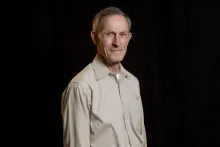
David Mills was born near Wallace, North Carolina, in 1939, where he grew up on a family farm. After high school he attended Ambassador College in Pasadena, California, and he graduated in 1962.
Since that time he has served as a minister of the Church in Washington, Florida, North Carolina, South Carolina, Oregon, West Virginia, and Virginia. He and his wife, Sandy, have been married since 1965 and they now live in Georgia.
David retired from the full-time ministry in 2015.
