
Gary Antion
Part 5 of the Pastoral Epistle series presented by Randy Stiver.
We ready? Okay, well, welcome everybody to a Bible study here at the home office in Milford, Ohio, also known as Cincinnati. Milford is a little town just outside of Cincinnati, and we're glad all of you who are on the webcast are able to be with us or be listening maybe later. We have a nice collection of brethren from the local area here. I'm going to be delivering the Bible study alone this evening. Mr. Gary Antion, who teaches here at the Ambassador Bible Center, was scheduled to be doing half the Bible study, so I get to do maybe not his entire half, but I'll very well. And so he sort of tossed the baton my direction, and I managed to catch it through the phone. And we're ready to begin. The remainder of the book of 1 Timothy. So first of all, though, we certainly need God's inspiration on our study of his Scriptures. So if you'll all bow your heads, I'll go ahead and ask the blessing. Heavenly Father, we come before you in these incredible times in which we live, seeing the news and reading about all the economic trials that the world is going through right now and all the other troubles that are in this world. We marvel that in one way that we have lasted this long. We look forward, though, most especially to your great kingdom that is coming and an entire age when all that stuff—economic, morals, everything else—will be straightened out and be led your way. We look forward to the leadership of our Savior Jesus Christ. And right now, we're trying to understand your word and your way ever so much better to put into practice in our lives. We're going through one of the books that were written, or the epistles, that were written to Timothy by the Apostle Paul so many years ago. And yet, it is just as fresh and active and directly applicable to us now. We pray your inspiration shall open our ears and our minds, Father, and our hearts, to be able to take in all that you have for us in the section of Scripture we'll be looking at tonight. We pray for your inspiration, Father, on the teaching as well as the listening of all who listen. We thank you for your great kingdom that is coming and just the more eagerly look forward to it. So please be with us now. Be with those who are ill in the church and need your healing. And all glory and majesty and wonder is yours. We give you thanks in Jesus' name. Amen. Okay. Well, once again, welcome to the Home Office Bible study. Mr. Antion, who was unable to be here because he's not feeling well, suggested a point that, I don't know, it slipped my mind and it surely shouldn't have since I have to do the reporting on the council meetings that are next week. But the Council of Elders are coming in for their December meetings. They'll be arriving this coming weekend. The meetings will be taking place from Monday the 5th until Thursday the 8th.
They are always hopeful that they will end early, and they're almost always disappointed.
There just is a lot to do. I thought maybe it would be interesting before we launch into the Bible study to do just a few announcements. Certainly ask you to please remember to be praying for the wisdom, God's insight and wisdom. When we say wisdom, we don't mean not praying for love. God's love, and to love God above all, love our neighbors, ourself, is the first point of wisdom. And then everything else descends from that. But certainly pray that God will give them phenomenal wisdom and deliberating and weighing and considering and finally making decisions for the guidance and direction of the church and the many areas that they have to go in. Now, you might think with that setup that, well, council meetings are very exciting stuff and lots of dynamic action. And what they are is a lot of grunt work. And the ministers who serve on the council of elders have to be very patient and slog away going through this and going through that and duly considering this and duly considering that and discussing it back and forth and back and forth and then finally rendering a decision seeking Christ's guidance all the while. So on Monday, just to give you a little bit of an idea of how the agenda works, Mr. Rhodes, Melvin Rhodes, who is the chairman of the council. And by the way, please remember his foot in your prayers. He had a foot surgery which has not healed now since before the feast when it started giving him problems. So it's a good, very long time. We just need to ask God's special blessing there. But he'll be here. I promised to round up a chair that he could elevate his foot on in time for the council meeting. The chairman will, on Monday morning, will call to order welcoming and open comments and then there'll be an opening prayer. Then there'll be the routine approval of the previous meeting, which was three months ago, or four months ago. It escapes me now.
Then they will have to approve the proposed agenda. Now, they've all looked at the agenda and they may want to add something or switch an order of something. Sometimes that happens. And then, once that's all done, we get down to the initial business of the first day, which is always the operations reports from the administration. Mr. Luker is president. We'll give the president's report, followed by Mr. Kubik with ministerial member services, giving a report, an update on how the churches are doing and the growth of our congregations and the ministers and where they're deployed and that sort of thing, especially where there are updates that they need. Most of it they already know, but there are always some updates and quite a few in his case that he has to cover. Media and communications. Mr. Eddington will be presenting that and give them an update, the latest news of what's going on with the good news with Beyond Today, with all the other aspects of our media output. Then Aaron Dean will give the report on the financial strategic finances of the church. Once that's all done, they get to go on to really exciting things.
The proposed additional by-law, 7.9.2.2, process for submitting agenda items. Now, doesn't that sound thrilling? It's important. We have due process. We have to cross the T's and dot the I's and curl the L's. But this is the slog work that has to be done. Bill Eddington, one of the council members, one of the elders from Australia, is a master at organizing these details for the council. And I appreciate it sitting there taking notes on the process, but I know the other council members very much do too. Then we go on to more interesting things, perhaps from our perspective. A home office building expansion. We have long planned to enlarge the studio for Beyond Today. We're shooting in a room, a studio now that's, well, it's not much bigger than a double garage. And they really do need considerably more room to do effective shooting beyond today, especially as we begin to do the daily spots that we're starting up now. So that has got to be discussed. And as you change the shape of the home office, then you have to analyze whether you need to enlarge this part of that part. So all that will come under discussion by the council. That will be interesting indeed. Then Council Velders nomination process has some discussion there that has been brought forward. Then they go back to something else. This is a proposed additional bylaw, 8.2.2, for a deputy chairman. Mr. Rhodes' illness or problem with his foot has brought this to our attention that perhaps we need to have one of the council members be appointed by the rest of the council as the deputy chairman. So when the chairman isn't able to chair the meeting, the deputy chairman just routinely can step in to do that. That makes sense, and that'll be discussed. But that has to be presented to the general conference, and the council has to review all the proposed bylaws on all the proposed amendments before they're sent on to the general conference. When they do that, they make a recommendation of we support it, we don't support it, or we're ambivalent, as the case might be. Ministerial code of ethics will be reviewed and discussed and balloted on. This has been an ongoing discussion for several council meetings, and a fair amount of time has been invested there. Discussion will then ensue on the media philosophy to statement to see if it needs to be upgraded or improved or strengthened, perhaps. That will be looked at as well. Then there is a report from the doctrinal committee.
Mr. Bob Barrett from Up in Canada is the council member that heads the doctrine committee, so he'll bring the report and any doctrinal items that are under consideration the council has to discuss. They'll be discussing terms of council members as in when do they take office after an election is essentially the key point there. Recommendations from the amendment committee for amendments to be placed before the GCE. They, again, they have to discuss each one and analyze their support or non-support or the degree of support. Mr. Antion will then, from something carried over from the August meeting, report on the educational task force for the church. There will be a review of annual reports.
We'll discuss risk management. That's insurance. Conductive executive sessions. Prophecy Advisory Committee and Doctrine Advisory Committee will be discussed. The recommendations will be made. A self-evaluation retreat, which the council does periodically to evaluate how do we think we're doing. That kind of internal analysis definitely improves and from sitting there watching this and taking notes, I can see how it improves the processes considerably. We are always trying to make them work better.
We're going to have a presentation called The Secrets to Masterful Meetings. Again, carried over from the August meeting. We didn't have time to cover it all apparently, so we'll get the mastery of the meetings into a course. There's just a lot that has to be done. Formation of Advisory Committee to review the responsibilities of the General Conference of Elders will be discussed. Dual membership of council committees will be discussed. All the council members are on various committees. Strategic Planning and Finance, the Doctrine Committee. Let me think what some of the other committees are. There are about four or five or six of the committees, and the council members volunteer to sit on those committees. You think, what does a committee do? A committee does the homework for the rest of the council. They're the ones that have to read and read and read and read and read all the things that are under discussion for doctrine or for whatever happens to be the committee that's doing the report. Then they have a final meeting just prior to these meetings getting started. Then they report to the council. This is what we have distilled from all the information. That way the whole council doesn't have to do it, unless it's a very popular committee. And on a popular committee, sometimes we have six or seven. So, you know, you wonder, why didn't they just have a committee of the whole if it was so much fun? Committee of the whole would be everybody. But whatever the case, the committees serve a very important role in the smooth functioning of the council by doing the previous homework and giving the report. And the other council members read a lot of the material, too, but the committee really focuses on it. And they all are serving on several different committees in almost every case. There'll be a review of ordination, prophecy, and policy and procedures for elders, deacons, and deaconesses. Again, carried over from the August meeting. There were lots of things that we got partly done.
Then there will be other items that will be covered, but we have there a lot. And that's a very optimistic list, but I think we'll plow through a great deal of it and certainly need God's blessing in that discussion and in all the decisions. So do remember the council meetings as they're coming up. Okay, now we'll go to our Bible study here. And bearing in mind what I mentioned in the opening prayer, we do live in monumentous times. The economic situation that we see developing in Europe or collapsing in Europe, depending on how you look at it, it's both actually developing the problems developing and the economies are collapsing. And how exactly that goes in the next, I think the term that was put in the main item in the news today, in the next nine or ten days, will be very critical for economies around the world, including Americans. We are in the cusp of the events that could lead to the return of Christ. We don't know when that's going to be, but we do know that we have seen in history books similar circumstances to these. Circumstances that led to the rise of military powers that wanted to dominate the world, not unlike the final military political power, rather than military political and religious power that will want to dominate the world. And the great prophecies about that. Though we have some things that are happening, and who knows how close that is? But it's certainly not getting further away, not by any means. We have two questions, both of them pertain to 1 Timothy, the first one of just a quick review of something from the previous Bible study of Scripture that was covered and needed to be clarified or, I don't know, made it a little more intense, perhaps. But they were asking about 1 Timothy 4, verses 3-5. And then the person pointed out that many traditional Christians use these verses to try to prove that man can consume any kind of meat. So let's go to 1 Timothy 4. The Bible study actually begins in 1 Timothy 5, so we won't be far away. It talks about that the Spirit expressly says, beginning in verse 1 of 1 Timothy 4, the latter times, some will depart from the faith, giving heed to deceiving spirits and doctrines of demons. And we have to realize that there is craziness at all levels of education, of philosophical thought, of religious thought, of political thought, craziness in the world. And it increases the closer we get to the return of Christ and into the events that immediately lead to that, that is. Speaking lies in hypocrisy, having their own conscience seared with a hot iron. And we have to beware, potentially, that could strike at us in the very body of Christ. Forbidding to marry, commanding to abstain from food. So here we come to this point that was questioned and asked about again for clarification. Abstain from foods which God created to be received with thanksgiving by those who believe and know the truth. And then verse 4, for every creature of God is good and nothing to be refused if it is received with thanksgiving, for it is sanctified by the word of God and prayer. So this, verse 4 in particular, is used to say, well, you see, the clean and unclean meat laws of the Old Testament don't mean anything today.
You know, those don't apply to Christians in this age. For every creature of God is good and nothing to be refused if you just thank God for it and it's good. Well, if you don't read beyond, you know, the thanksgiving word there, giving thanks, then you'll realize we'll hold it.
There's something wrong. This doesn't jive with Leviticus 11 and Deuteronomy 14, where God very specifically, in paragraph after paragraph, listed which kinds of animals are clean and by His definition, and His definition is the only definition of any importance, which animals are meant for human consumptions and therefore are clean and which animals are not meant for human consumption and therefore are unclean. For the quadrupeds, they have to have a split hoof and they have to chew the cud. In other words, they have to be a ruminant. Ruminant means they have four stomachs, a digestive process, and somewhere, I forget which stomachs, in between which two stomachs, the animals burp up what they ate, probably after the, you know, between the first and second stomachs. They irp up what's in there, which is partially chewed grass hay or other kinds of fodder, and then they lay around and chew that.
You know, just you expect them almost to need a spittoon of some considerable size, but cattle are neater than humans, and so they chew their cud and then swallow it again. Isn't that nice of them? And so the pastures are cleaner for that.
How thoughtful. But that is the way God intended them to digest the food. They have to have the split hoof and chew the cud. Now, one animal chews its cud. That's a rabbit. Have you ever seen a rabbit sitting there nervously watching for predators from side to side, which is why his eyes are on both sides of his head, and chewing away on something, but he's not biting anything. He's chewing his cud. However, if you catch a rabbit and you check his hooves in the vernacular, they ain't there. He doesn't have hooves at all, let alone a split hoof. He has a little paw, a rabbit's foot. If you catch him, it's an unlucky foot for him.
Now, porcupig, which serves a great purpose, is a garbage disposal and a rotorooter of garden soil, cleaning up things, has a split hoof, but hogs don't have four stomachs. They're not ruminants, thus they aren't edible. A horse, and there are some people in this world that eat horses, which American cowboys think is just awful. Horses weren't meant to be eaten, at least they got that point right in the Old West. But a horse does not have a split hoof, nor does it chew its cut. Deer are clean, all the deer family, the elk, antelope, and so on, moose, and cattle, and sheep, and goats, etc. They are the ruminants with a split hoof. Birds are listed in more on their categories. We boil down in analyzing the categories of birds that are listed as clean. Generally speaking, they need to have four toes forward and one toe back on their foot, and they need to have a gizzard for digesting secondary digestion of the food. Raptors don't have the gizzard, and they have two toes forward and two toes back, raptors and most carrion eaters. So we know that the common birds that we usually eat are fine. You know, chickens and pigeons. Most people don't eat pigeons unless you go to a really expensive restaurant, or you're very poor and you hunt under highway bridges. There are lots of them there. Turtle doves, both pigeons and turtle doves, were acceptable as sacrifices at the temple. So obviously, they're clean. Turkeys, geese, ducks, and so on. The usual birds we eat don't eat seagulls, don't eat raptors, that's for hawks and things. And then fish. Fish are pretty easy to figure out. They have to have scales and fins. If they have fins but no scales, then it's no go.
And the catfish are very happy about that. I'll be happier in the world tomorrow because they don't have any scales. If they have scales but no fins, and I'm not sure if I know of anything that does that except serpents, then they're unclean. So we leave them alone. All right. Now, what I just pointed out, those who believe and know the truth, I just cited to you what those two chapters of God's Word, which is truth, John 1717, what they say about what we should and shouldn't eat, as far as meats and animals, creatures, go. So if you believe and know the truth, you already know.
Or you are in the process of learning the clean meats versus the unclean meats. For every creature of God, that explains verse 3, that we are to, some command us to abstain from foods that God created to be received with thanksgiving by those who believe and know the truth. And those clean foods, we should give God thanks for, because we do know the truth of God. The second verse, I mean, rather the fourth verse, For every creature of God is good and nothing to be refused if it is received with thanksgiving, again, referring back to the previous thanksgiving. And in verse 5, 4, it is sanctified by the word of God in prayer. What animals are sanctified by the word of God in prayer? Well, we just went through them from Leviticus 11 and Deuteronomy 14.
So they're sanctified by God's word. That means they're set apart. These you can eat, the others you don't eat. It's really clear. And then we pray. We always give thanks for what God gives us to eat. We're always thankful. So when you stop and think about it, this simply does not prove what traditional Christians often think it does. And thus, it's a revelation for them, if their mind is open to understand what God's word actually says. Okay, well, that covers that. The next question that I had delivered to me at the beginning of the Bible study is about 1 Timothy 5 and verse 20. And I won't answer that right now.
I'll answer that after I explain verse 19, because that's where we're starting. We'll get to verse 20, and then we'll answer his question. That basically has to do with what verse 20 says. So we'll begin in verse 19 of 1 Timothy 5, and then we'll move on through chapter 6 and conclude the Bible study here this evening.
In verse 19, do not receive an accusation against an elder except from two or three witnesses.
Do not receive an accusation against an elder except in the mouth of two or three witnesses. Now, the two or three witnesses reference has to do with a part of the commandments back in, well, one place is Deuteronomy 19 verse 15. We'll look at that very briefly. Deuteronomy chapter 19 and verse 15. This is the law concerning witnesses, the code of law that God gave the statutes and judgments for Israel. One witness shall not rise against a man concerning any iniquity or any sin that he commits. By the mouth of two or three witnesses, the matter will be established. The matter in the mouth of two or three witnesses. Now it says here that an accusation should not be received against an elder except from two or three witnesses. Does that mean that the... Bear in mind, we're not talking about the governance of the nation of Israel. We're talking about the governance of the church as a spiritual body. A pastor on a report of one may question a member, because it specifically identifies it as applying to an elder, and you wonder, well, why does an elder get the two or three witnesses? Well, stop and think about this. What is an elder or pastor's job? To some degree, it's telling people what they should and shouldn't do.
And I don't know if you've ever heard the joke about, well, you started preaching, but now you've gone to the meadowland. Okay? So then sometimes the preaching upsets some people. Should it? No, it shouldn't, but it does sometimes. Thus, Timothy has said, don't jump at everything you hear. Wait till you get it from two or three, then follow up on it. Bear in mind, Timothy had responsibility over a number of small congregations, maybe a number of larger ones, where he was located. And so he had to oversee the work of overseers. That's what the elders were, the overseers of the congregations. So when there were two or three that made a report, a negative report about someone who was an elder or a pastor, well then Timothy should follow up on that. Remember that Timothy is being given instruction on how to conduct the church, how to lead the church in his area. And looking back over time, you realize how important that was. The age of the original apostles, and we'll lay Paul into the original apostles there, because he died right amongst the time that many of them died.
When they died, either through martyrdom or of old age, which was in John's case, then who of those that Christ trained directly would be left to run the church? You could say, well, he trained a lot of other disciples. Yes, they were all either about the age of the apostles or older. Remember, the apostles appeared to be all men who were about Christ's age.
Maybe some a little younger, but not much, because his ministry started when he was about 30. Therefore, you had men in their late 20s to early 30s, probably, from the best that we can ascertain, who were his initial close disciples. They, therefore, were going to run to the end of their tether close to the same time, John being the exception and living out a very long life.
So the teaching of how the church of God, the true church of God of the Bible, must go forward, needed to be handed on. Timothy was another generation, because he was young when Paul began to preach. He was in Lystra, which is in Asia Minor or Turkey today. That's the town that Timothy grew up in, and that was the town where Paul was persecuted by some of the Jews in the area that were very angry with him. And they stoned him and left him for dead outside the city. I mean, they were very angry. Now, we don't know if he was actually dead or only mostly dead, but there were, it appears to be brethren standing around, and suddenly he started to get up.
So if he was dead and God revived him entirely, or if he was only, as they say, mostly dead, and God then healed him, he got up. And I suspect that Timothy was one of those standing there, and he was a young teenager at the time, and had to make a profound impact upon him. That's where his mother and grandmother, Lois and Eunice were, was there in Lystra.
Okay. So Timothy had a responsibility. How do I deal with issues when I hear bad reports about elders? Well, Paul said you get two or three witnesses, follow up. But don't jump every accusation, because elders are going to tend to irk certain people, human nature being what it is. So be prudent. Those who are sinning, and this is where the question came in, question number two, those who are sinning rebuke in the presence of all that the rest may also fear.
So the question actually was, does this apply to sinning elders or sinning church members, or both? Well, it directly applies to sinning elders. And you know we do that.
We don't necessarily rebuke by name, but we do rebuke those who are sinning. We don't necessarily go into a lot of detail. But there are times, looking back over our history, even very recent, where in fact we have rebuked the sins of those who bore the badge of elders because of sins that they had committed in the Church of Causing Division, things like that. Usually that's it. It's one of the main ones, main issues. So the public rebuking does not have to be personal, and it doesn't have to be highly specific, but it has to be noted. And we take note of that. We do it tactfully and we do it respectfully, but we do identify when there is sin within the ministry or within the membership in a broad way in that sense. Now, I charge you before God and the Lord Jesus Christ and the elect angels the great two-thirds, because they're the elect angels. The word can also be used for chosen, can be chosen angels. And then chosen in two ways. One, God chose them because they chose Him. So they are the holy angels. They're not the third that rebelled.
So I charge you before God and the Lord Jesus Christ and the elect angels that you observe these things without prejudice, doing nothing with partiality. So He says, be cautious, but here's the import. Stop and think about this. Anything that we do is done before God, the Father, and our Lord Jesus Christ, and as many of the angels as are watching.
Now, angels can see, even if you're behind a sheet of lead, so far as we know, Superman can't, but angels can. They're impervious to Krypton or Kryptonite or whatever it was called. But I don't know if they have omniscience where they see everything like God does. I doubt that. But they're there, and there are some who are watching because we have guardian angels that are referred to. We don't know who they are. We'll get to meet them after the resurrection. We only know three angels by name. Michael, who stands up for God's people in the end of the age. Gabriel, we don't know Gabriel's rank.
We suspect it's probably also an archangel. And Lucifer. Lucifer appears to also be an archangel who was one of the covering carib, which caribim, sorry, or cherub if you're American. I like carib better. It's the British pronunciation. There is an interesting reference in Jude.
I think it's about verse eight or nine in Jude. Where Michael faced off against Lucifer in a dispute over the body of Moses. When Moses died, why would Satan want Moses' body? So he could get the Israelites to worship it. I mean, they worshiped anything, especially anything that seemed to have importance. So that would be the likely reason. And it says that Michael did not rebuke him directly, but he said the Lord rebuke you. Thus he appealed to the higher authority of God to rebuke the devil, meaning that he did not rank above him.
It appears. This is our best understanding of what Lucifer had been prior to his rebellion, that they at best they would have been peers. If they were peers, then Michael, as an archangel, would have been one of the caribim too. So when you stop and realize that you have an audience, and whatever you do, whatever you think, whatever you do, whatever you think, whatever you say, it puts a certain impetus on trying to think, do, and say the right things.
And that's good. We need that motivation. Observe these things without prejudice, doing nothing with partiality. Treat everybody fairly and respectfully. You don't put people on the spot. You don't drag them into the public eye of the people. The public eye unnecessarily, the rebuking of sin, is done respectfully and carefully, as is mentioned in verse 20. But don't be prejudiced. Don't do things with partiality. Be fair and honest.
That is a critical factor. Now, you stop and think about that. Well, yeah, they sure should do that, but everybody should do it. But in a leadership position, to be unprejudiced and without partiality takes a great deal of wisdom. Because your emotions want to push you to do this or push you to do that, I really feel like, you know, so-and-so would make a great astronaut.
Well, we don't have astronauts, so that's a safe thing to say. You know, I think because I just like him, so he should be it. Well, no, you have to weigh and consider who has the fruits in their lives. You go to Exodus 18.
You read what Jethro said to Moses. You find men who believe and know the truth and who don't have, who are not covetous. And he has a whole list of leadership qualities. That's what you look for, Moses. Now, Jethro had a lot of wisdom. He really did. So, Timothy also needed that.
So, Paul is giving him guidance here. Now, you put yourself a little bit in Timothy's position and in Paul's position, as you read through the epistle. Do not lay hands on anyone hastily, verse 22, nor share in other people's sins. Keep yourself pure. Don't lay hands on anyone hastily. In other words, don't get mad and grab them and throw them out the door. No, it's not that kind of laying on of hands. This is the ceremony of laying on of hands. In this case, and in the context of discussing elders, it would be ordaining somebody to a position of responsibility.
Don't do it hastily. Wait. Watch. Weigh and consider. Pray and fast. Those are all the things we're told to do in various parts of the Scriptures. When Paul and Barnabas were selected to be apostles, all the elders at Antioch—this is Antioch of Syria, not Antioch of Pisidian, just in case you wondered—all the elders at Antioch fasted and prayed, and God inspired them through His Spirit to pick Paul and Barnabas.
You two are the ones. You've got to go. In this case, you've got to go out there and preach the gospel on our behalf. We'll look after the brethren here, and you go elsewhere. Then come back, and we'll support you as you go.
That was a case of everybody evaluating those who had responsibility, or for this responsibility, and fasting, and really asking God's will to come through the decision. It's not unlike how we are praying and fasting for the counsel of elders to give us guidance and the wisdom that they need to do in the oversight of the Church under Christ. So don't lay your hands hastily on anybody. Wait and see. What are the fruits of their lives? What's the fruit of their wisdom?
How deep is the conversion? How do they think? How do they deal with small responsibilities?
We start watching, by the way, in the ministry. We start watching when you hit around 12, 13. We start looking for our natural leaders. You'd be amazed. I just went through the winter camp applications of all the campers today, and there's a section on the ministerial evaluation form for each camper, and I go back and read all of those. And I'm amazed at the comments that indicate that the pastors are prudently watching the young men and the young women to see how they're doing. For one thing, how do they dress? How do they show themselves to the public in that sense? How do they conduct themselves? I get all these comments, and so-and-so helps with the sound system. It helps with this. It helps with that. And it is heartwarming and frankly very exciting to see so many of our young people eagerly involved in the service of the Church. And across the board, these are from a whole lot of states here in America for the winter camp in Wisconsin that's coming up here in just a few weeks. We'd appreciate your prayers for that. God's blessing on that, by the way. Little prayer requests added in. But we watch our teens as they're maturing. Sometimes we even watch before they hit that teenage marking point, and we watch them all the way up through because we're thinking, okay, who among our teens are going to end up being our next layer of camp staff, counseling staff, activity staff? Who has the ability? Who has the balance? Who has the common sense? The wisdom that's already developing? Who has the love of God in his way and his word? Already written in their hearts. We're watching that, making mental notes. And then when we have camp applications, sometimes we make actual notes. And then we watch as the young men mature and the young women, and we begin to see where the leadership is going to be, and we give them opportunities. We want to see that develop. We want people to have the chance to develop extra wisdom and a sense of service and care and concern for others. So that's part of the duty. Timothy was being given the same advice that we've taken because this is writing not just to Timothy, but all of us who are in the eldership of the Church of God all down through time, and to all of us because there's so much that you can learn from it. So Timothy was told, do you pick carefully? Now, dealing with all of this, you don't share in other people's sins. You don't want to pick somebody who has not really overcome to a sufficient level to be in the leadership position. You go back to 1 Timothy chapter 3, you read about the qualifications of elders and deacons, and then you say, okay, I've got to be careful. I've got to make sure that they're not quarrelsome, that they're not covetous, etc., etc., etc. And then Timothy is probably thinking, oh man, this just ties my stomach in knots. How am I supposed to do all this stuff? And I've got all these congregations, and oh, why? You can just put yourself in Timothy's position, and Paul anticipated that. And so God said, no longer drink only water, but use a little wine for your stomach's sake and your frequent infirmities. Paul knew who he was writing to. He'd been watching Timothy for a long time, from the time that he came back from being mostly or totally dead. And there's Timothy probably standing there, very good possibility, at least that's how I like to imagine it. So he'd been watching him a long time, and he knew that he tended to internalize the stress.
So he says, you take a little wine for your stomach's sake. Wine, you know, good natural wine, has a lot of digestive qualities that help with the digestive system. In moderation, obviously, but it is wine that he could take, and even at least for medicinal purposes. I would say Timothy probably tended to be kind of a tense young man. Took his responsibilities very seriously. That part's good. He's got to learn to be able to relax and breathe along the way. So wine could be used for all kinds of medicinal purposes. Wine has lots of service, but particularly for digestion. And again, in extreme moderation, and if by chance, because everybody could say, wow, it's illegal, I should drink wine. Not if you're addicted to alcohol. I suggest drinking apple cider vinegar and tea. Anything that doesn't have alcohol in it, because if you're, you've got an addiction, don't mess with that. Stay away from any alcohol at all. There are other things that will suffice. So you can't look at the Scripture and say, okay, this is this sanction that I can be drunk tonight after Bible study. Wrong!
Yeah, normally we would be able to think, well, that's crazy thinking. You know what? Alcohol addiction makes you think crazy. So don't abuse it so that you can enjoy it. But if you have abused it so that you can enjoy it, that's fine. As I said, apple cider vinegar is pretty tasty. I like it anyway. I put it in tea and a little honey and, oh well, so much of recipes. This is not a cooking show. Now, here comes the next statement that is just remarkably insightful. Some men's sins, he's back on task. You think, well, why did Paul throw that verse 23 in there? It's just sort of out of order. Shouldn't it have been after verse 25 or something? Well, listen. Paul couldn't see very well. He was writing on parchment or vellum. He didn't have a word processor or a handy-dandy computer like sitting here in front of me, which is, by the way, gone to sleep and would have to have a password to wait back up again with a lazy computer.
He didn't have any of that. He had to write with a stylus and ink on vellum or parchment. Vellum is a clarified thing, usually sheepskin. And then the parchment is from papyrus, reeds, or other plant matter to make the parchment. Paper was not inexpensive in those days. It was very dear.
There were no emails. So Paul was busy writing, and oh yeah, Timothy's got sick. He's got to stop that. Okay, take a little wine for your stomach's sake, and he would painstakingly write that out. If Paul was writing this, and that escapes me at the moment. I don't know if we have a note at the end on that. Paul wrote some of his own epistles and others he dictated, because based on the scriptures and the comments he makes about himself, he couldn't see. Bear in mind, he got struck blind when God converted him. When he called Paul on the road to Damascus, he struck him blind for three days. Now, we don't know if he was myopic before I doubt that he was. I suspect that he was struck blind and left a little blind after that. A good reminder. So in one case, I think it's Galatians, he says, see what's so large a hand that I have written this. Meaning, when he wrote, his letters were large so he could see what he was doing. So he remembers that Timothy has the stomach illness, so he throws in verse 23, right where it's going to go. And then he thought, oh, now there's some more I needed to say about the other stuff. Well, do I want to blot that out? No, it's too much trouble to write it. Well, just carry on. Timothy will see the parentheses there. He can figure that out, and so can we. Some men's sins, verse 24, are clearly evident, preceding them to judgment, but the sins, those of other men, follow later. Some men's sins are clearly evident, preceding them to judgment. This has more to do with not laying hands on anybody hastily, because some people can hide their sins quite effectively. For a while, other men's sins, other people are just pitiful when it comes to trying to hide anything, and their sins are right out there where everybody sees it. Those are the easy ones to pick out. The hard ones to pick out are those who are good at hiding. They cover their trail. So if you watch a while, if you are concerned, if you watch a while, you'll see it, because they can't hide forever. We know that, because of what it says in Numbers 32-23 and what Hank Williams used to sing. I'll tell you the first verse and the second later. Numbers 32-23.
Verse 23 of Numbers 32, Moses is talking to the Israelites, and he tells them that there's something they're supposed to do. But if you do not do so, then take note. You have sinned against the eternal, and be sure your sin will find you out.
Some men's sins go before them, and some men's sins follow after, but they do follow, and they will become evident you can't hide sin for long. Now, Hank Williams, American country and western singer, considered to be by some the king of country and western, or country and western blues, anyway. He sang a song called, Your Cheating Heart Will Tell On You. Essentially says the same thing, is what we just read in Numbers. You just have to wait. Thus, don't be hasty, take some time, and then move forward. Davy Crockett, great American patriot and pioneer hunter in Tennessee. And did you know that Davy Crockett served in the American Congress? We don't hold that against him, but he did. His wife had to teach him how to read, because he didn't know how to read or write. But he learned, and then he had one wise say. I don't know of any others. He probably had others. You know, don't shoot the bear until you're really close. So you can't miss. Maybe that was one.
But Davy Crockett had a wise saying that I've always enjoyed, because it was short, and I can remember it quickly. Be sure you're right, then go ahead.
Be sure you're right, then go ahead. All right, so the apostle Paul is adding a little detail to Davy Crockett's summary. Now, in verse 25, we have the reverse of verse 24. Likewise, the good works of some men are clearly evident, and those that are otherwise cannot be hidden. So it isn't just negative. Some people will serve, and you'll see them doing it. Other people serve quietly. Something needs to be done. They go pitch in. One of the widows needs help with their yard. Well, they're over there doing it, but not everybody sees that. But eventually, somebody sees it. Ah, did you know that so-and-so has been taking care of this person's yard and that person's yard, and that person's yard and the congregation here, because they aren't able to do it, and he's been doing that for like three years?
You know, that's happened often enough before, that kind of thing. So it isn't just the sins that are either clearly evident or very obvious or not so obvious. It's also the good works, and the good works will show something that's on the inside of the person. So Timothy had to watch for both. And we try in the ministry to do the same today. We try to take the advice like Paul was writing to us. Now we go to chapter 6. Chapter 6 makes a shift of topic.
We're not now talking about elders, but other issues in the church at the time.
Let as many bondservants as are under the yoke count their own masters worthy of all honor, so that the name of God and his doctrine may not be blasphemed.
And you think, okay, bondservants. A bondservant was a slave.
Slavery, in America at least, has a very bad name because of the way American slavery was run.
Slavery at that time seemed to be somewhat different. It's a little hard to discern all the differences because that's ancient history where we have only records, partial records. But some people were serving as bondservants or slaves to other people when they were called to the truth. And they were told to count their masters worthy of all honor. In other words, serve well. I mean, you think, well, I'd never be a bondservant. How long in America do you have to work before you've paid all your federal taxes?
No, what date of each year? Sometime in May, I think, before you actually have paid all your taxes. This would be state and federal taxes. Sometime in May, for the average laborer, you know, it's way down the line there. You finally have earned enough that pays your taxes. Now, granted, you're just taking out part of the time. But when you look at it like that, and you think, well, yeah, well, I'm my own person. You know, I don't have to have my job.
Oh, yeah? Do you like groceries? How about fuel for the vehicle? I have fuel for the house when the wintertime comes. In a way, we're not so very different from bond servants, those of us, you know, who are average, you know, working at jobs for salaries and wages and that sort of thing. And we should count our masters or our bosses, employers, worthy of all honor, so that the name of God and his doctrine not be blasphemed. In other words, to respect them. Now, what if you work for a church member, a fellow member in the church? That's going to be covered.
See, we want to have a good example. Those who work hard, no matter if they were a slave, according to Roman law, or they're just employees with enslaved to whatever economic system we happen to live in, depending on which country we live in, in the modern time, we want to work hard, do well, serve well, and cheerfully so that the example, when they find out who we really are, will be a good one. The example will underscore the positive aspects of God's way of life. And those who have, in verse 2, those who have believing masters, let them not despise them because they are brethren, but rather serve them because those who are benefited are believers and beloved. And from time to time, over the years, I've hadn't had to deal with it in pastoring a great many times, but occasionally others have told me about the circumstances, where you find there's a dispute between an employer and employee, and they both are in the church, both are in the faith. And so, you know, there are challenges that have to be overcome. And Paul said, this is how you solve the problem. If you work as a believing boss, or in those days, a believing master, perhaps, then don't despise them because they're brethren. You don't despise them, well, you know, I'm just as good as you is, or bad grammar, you know, meant here. I'm just as good as you are, but rather serve them because those who are benefited are believers and beloved. They're beloved brethren of yours. So work, if anything, even harder than you were if they weren't.
If you do well, will you not be accepted? That's what God told Cain. If you do well, will you not be accepted? Cain did not do well. But we don't have to raise Cain. We need to do what's right.
Now, Timothy was given one final bit of advice in this regard, and it's a simple sentence there at the end of verse 2. Teach and exhort these things.
Wouldn't teach have been satisfactory? If it was that hard to write, why did you use two words to say the same thing?
And the answer is because teach is the formal instruction. Formally instruct all the brethren in these things. And exhort is a different kind of instruction. That's where you sort of, the word implies coming up alongside. This is what you call the motivational instruction.
And when we preach or write the gospel, you know, preach it in print or in person or on the television program or whatever, we want to teach what is true. And with that instruction, the formal instruction, bring in the exhortation, the motivation. This is why you need to do this.
Because God will bless you for it. He loves you. He wants you to be in His kingdom, in His family. And the gospel of the kingdom of God has to have both elements. Teach and exhort.
Instruction and motivation.
Okay, now we go on to verse 3. And this carries on in the context, partly in regards to how people conduct themselves as either masters or bondservants. If anyone teaches otherwise and doesn't consent to wholesome words, even the words of our Lord Jesus Christ, and to the doctrine which accords with godliness, that he is proud, he knows nothing, but is obsessed with disputes and arguments over words, from which come every strife, reviling, evil suspicion, the useless wranglings of men of corrupt minds and destitute of truth, who suppose that godliness is a means of gain. This is one of Paul's unleashed sentences. And we'll go back and look at the first part of it.
If anyone teaches otherwise, otherwise with regards to employer-employee relationships, or the managing of the development of the ministry and the eldership, and they don't consent to wholesome words, it can be applied to that or can be applied to any aspect of God's way of life. Wholesome words, the wise and the balanced teaching, the clear word of God.
They need to listen to wholesome words, even the words of our Lord Jesus Christ, and weigh and consider the meaning of those words, pertains to what they're doing, and to the doctrine which accords with godliness, how our conduct should be, that we would be godly. Then if they don't do that, then that person is proud.
And this is not the good proud, this is the smoke and mirrors proud, because the word actually means wrapped in smoke. In other words, you're a vapor, you're just so much hot air, that kind of proud. He is proud knowing nothing, but is obsessed with disputes and arguments over words. Oh, this is a big lesson. You have to have a sense of balance, where the truth lives, and if you don't, you will set yourself up. And I say this because I have seen it as a pastor for many years. Periodically, now I have to answer letters, I see it then sometimes in letters. People that set themselves up as their authority, they try to go head to head with the church, the established church of God, and they think that whatever they say or however they read the scriptures carries as much weight as the church does. Well, they can do that, but that's not wise nor spiritually healthy. It's not a good thing, because they become obsessed literally with disputes and arguments over words from which come envy and strife and reviling and evil suspicions and useless wranglings of men of corrupt minds, useless wranglings, back and forth, back and forth. Constant friction is what that can also be rendered, useless wranglings, as the margin points out, and destitute of the truth. Those who don't listen carefully and consider the whole picture of God's Word and those who don't listen to the words of Jesus Christ, periodically throughout history, we have had heresy that Jesus Christ is a lesser being and that He's not eternal God. Well, that's not true. That's not what the Bible says at all. But there are some who contend that even today that are in the periphery of the church of God.
And they don't submit or consent to wholesome words, even the words of our Lord Jesus Christ, on that or many other issues, many other issues. And who suppose that godliness is a means of gain? And usually you get the ones that have the drive, they'll push and push and push, and they'll claim, though I'm just doing this, I don't want anything for what I'm saying, what I'm telling you, but the established churches of God aren't telling you the truth. I'm telling you the truth. We don't really need a ministry to tell us what's right. And they'll go on like that and on like that, and pretty soon when they have a following, they say, however, it would be helpful if you could help support what I'm doing. There's always those little fingers rub back and forth together, just a matter of time. You know, the priesthood of all believers, but some people are better priests than others, and so they should be supported. Now, priesthood of all believers was an idea that, you know, we don't need ministers. Members can read the Bible, and that's good enough. Wrong. And here's why that's wrong. 1 Peter chapter 1, 2 Peter, rather, chapter 1 and verse 20. Well, second or it's first, let's find out. I wrote down one, but I think it's the other. Yeah, it is 2 Peter. Let me correct my marginal notes. 2 Peter 1 and verse 20. And we'll actually back up to verse 16 to get the the impetus of this. For we did not follow cunningly devised fables, whom he made known to you the power and coming of our Lord Jesus Christ. They just taught what they saw. They were witnesses. We were eyewitnesses, Peter said. We saw his ministry. We saw his death. We saw him resurrected. We were eyewitnesses of his majesty. For he received from God the Father honor and glory, when such a voice came to him from the excellent glory, meaning the Father, this is my beloved Son, in whom I am well pleased. And Peter quotes what they heard. And we heard this voice, which came from heaven when we were with him on the holy mountain. That was the at the time of the vision of the Transfiguration, Matthew 17. But, and so, because of this, in other words, we have the prophetic word confirmed, which you do well to heed as a light that shines in a dark place, until the day dawns and the morning star rises in your hearts, knowing this first. This is a key rule in learning God's way of life. Knowing this first, that no prophecy of Scripture is of any private interpretation.
It's not of private interpretation.
God has worked through human beings. In the rare instances, he would work through one for a time, and then there would be many. Like he did, he worked through Christ, and then he had the apostles coming along. They cross-examined each other. Case in point, Acts 10 and 11. The apostle Peter went to the house of the Gentile. He was a centurion of the Italian band, I think it was called, and baptized him because God was calling Cornelius in most of his household. And when Peter got there, it was made very clear to him, miraculously, that you need to baptize these people. You can read it, and you can find out. And so he did. How can we forbid water that these people should not be baptized? And they were converted, and they were Gentiles. And at that time, the Jews of the church, which were almost all Jews, didn't believe that God was going to call Gentiles. Peter came back to Jerusalem after that and, whoa, talk about a cross-examination. Read chapter 11. The apostles, the rest of them, were upset with him. What were you doing going into the house of a Gentile? Which, according to sort of fair and sacred Judaism, was considered to be a big sin. And then Peter said, okay, guys, let me explain this to you. This happened, and this happened, and that happened, and that happened, and this happened, and finally the other thing happened, and what was I to do?
And when they heard the story, after they cross-examined him, then they all fell silent, which is amazing because they're Jewish, you know? Smart Jewish. And they all fell silent, but not for long. And then they said, then God, they glorified that God had granted the Gentiles repentance unto life. Ah, but you see, they cross-examined Peter. They kept each other on the right track. That was a classic case in point. The established church, if it's doing its duty, and we strive to in the United Church of God, we cross-examine. The elders cross-examine one another in that sense so that we stay on the right path and we're teaching the true things.
No prophecy is of a private interpretation. For prophecy never came by the will of man, but holy men of God spoke as they were moved by his Spirit. God inspires the process, and thus it works through us. We don't decide to be the great authority. We need to look to the established church. Now, Paul already told Timothy that in chapter 3 and verse 15. But if I am delayed, he said, I write to you, chapter 3 in 1 Timothy, and just back a page from where we're actually working here, I write to you that you may know how you ought to conduct yourself in the house of God, in the house of God, how you should conduct yourself, as in his case an elder and a pastor, in the house of God, which is the church of the living God, the pillar and ground of the truth. So, that it is through the organized church that God is going to work until anybody that decides to reject that has to be sorted out, and God, as we have seen in our time, sorts out that as we go along. So, we come back then to the principle of needing to have wholesome words, balance, and wisdom, looking not only to what the Bible says, but how has God led us to understand that over the years. Don't move quickly. You don't lay hands hastily on any man, and you don't move quickly on a doctrinal issue. Even if you think that you read this verse seems to disprove everything else. Let me tell you, the question's already been asked. If you go back over the decades and the early years of the church in particular, and I've sat and listened, well, to Mr. Bob Dick, for one, out in Portland, Oregon, who has served for many years on the Council of Elders, and he told the story growing up in Pasadena, and on the Sabbath's afternoons, or before or after services, there are various ones who later were in the ministry, or were in the ministry at the time, would gather there at their family's house. It was just a nice gathering point, and they would discuss various things, and they would try to reason through the scriptures to answer questions. Many of them actually had to write answers to those questions. So, these questions were all analyzed. Any questions that were stumpers, they obviously went up to Mr. Armstrong in those days to get his judgment on it, but they analyzed virtually every question you can imagine being asked. The chances are, if you think you see a new revelation in the Bible, yep, yep, we had that five years ago. Well, maybe we had it three years ago, and then it was seven years ago, too. You know, it comes up. There's nothing new under the sun. So, be happy to learn the wholesome words. Don't go into disputes and senseless arguments. Steady out and realize that godliness is not a means of gain. We're not in here to play a game and get greater honor and maybe more money, you know, because we're, you know, serving in the church in some way. Rather, for those who want to do that, they want to argue endlessly. They want to have wranglings over this word or that word or this idea or that idea, that doctrine or this doctrine, from such, withdraw yourself. You know, with all due respect, people who are of that mindset, when their audience disappears, they get quiet.
Audience walks by, volume goes up. It's human nature. Now, let's get to the subject of contentment as we try to finish this. Verse 6, now, godliness with contentment is great gain.
See, these other people suppose that godliness is a means of gain. He says, no, no, no. Godliness with contentment is great gain. For we brought nothing into this world, and it is certain that we can carry nothing out.
I was reading through a cartoon calendar that I have. It's like 12 years old. When I go around the office to go talk to somebody, I tear off a page and I give it to them. When I get there, I ask them a question. They're kind of funny. They're funny if you thought Gary Larson was funny. The Far Side Cartoons. So this one I page through the other day, I looked at it, and here's a cloud with sort of bright lines coming out from it, so it's supposed to represent heaven, I suppose. And here's this house where somebody has died, and everything in the house is being sucked up into the sky, including the guy's wife and everything, and the bereaved relatives are saying, he's taking it with him! Everything is car, his wife, his dog. Anyway, it's funny. If you have that sign of a sense of humor. But it illustrates the point. You're not going to heaven in the first place, but we brought nothing into this world, and it is certain we can carry nothing out. It isn't going to happen. And having food and clothing with these, we shall be content. God has blessed us with what we need. Let's just really be thankful for what we need. You get up tomorrow morning, and you have a sock for your right foot. And then you'd look again, and, well, there's one for my left foot. God is good. Especially if there's snow on the ground. You have socks, and you get to put them inside of shoes for most people. That's fantastic. And the rest of the clothes go up on top of that. So if you have food and raiment, we have something to eat. Let's be content. We live in an age of great abundance. How long that abundance will last, we don't know. A lot of us wish we could lose a few pounds. Not just the English.
And we might find ourselves doing that.
So let's just be thankful that we have what we have. And not get into the useless wranglings and arguments. Be thankful for the blessings God has given us. We just finished, not long ago, the American Thanksgiving Day holiday, which is about the only really, really good national holiday we have over here. Or up here, or down here, or around here, depending on where you are in the world.
But we need to be thankful. It's a good lesson. Always be thankful. Seek you first the kingdom of God, and all these things will be added unto you. Matthew 6, 33. There's the bottom line. You know, Jesus earlier in that section of Matthew 6, he says, don't take any thought for tomorrow. Don't take any thought about what you're going to eat or what you're going to wear. You know, everybody else in the world worries about those things. I'll provide what you need. Work hard, do well. You might have an abundance. If you have an abundance, share it. Be generous. But otherwise, just be thankful that you have what you need. You know, marvelous thing. But those who desire to be rich fall into temptation. So here's the contrast. And a snare, because the seeking of riches can be a snare, if he gets carried away, and into many foolish and harmful lusts which drown men in destruction and perdition. I think those who are naturally capable in business need to be very careful. Because if you have a natural bent for making money, then you can get to loving it too much. So you have to watch for that.
For an awful lot of us, it isn't as much of a concern as far as the wealth part.
Which is alright, because in verse 10, for the love of money is a root. King James used to say, the root isn't the root. It's a root. Actually, that's what it should be rendered. It is a root of all kinds of evil. And we can surely see that in this age. In all of the economic maneuverings and game-playing and destruction that the very, very super wealthy, super rich sometimes do. For which some have strayed from the faith in their greediness and pierced themselves through with many sorrows. Be thankful with what God blesses you with, work hard, do well. But don't look at the pursuit of money as being what you should be pursuing. We are pursuing godliness and pursuing the coming of the kingdom. But you, O man of God, flee these things and pursue righteousness and godliness and faith and love and patience and gentleness. Those are the qualities. Think about it. There's a good list there. You can put them on a little card and put them on your mirror and read them. To pursue righteousness and godliness, faith and love, patience and gentleness.
And it's not always easy, so fight the good fight of faith.
Lay hold of eternal and eternal life, to which you were called and have confessed the good confession in the presence of many witnesses. Timothy had been effective as a minister and as a speaker, as a preacher. You have confessed by the good confession. The good confession is the confession of the true faith of Jesus Christ, the explaining of it, the expounding of it, the living of it. You know, we confess it personally to God initially through repentance and the belief and the faith that's required for conversion and baptism. But then the confession goes on by how we live our lives and how we talk to people and how we are willing to explain things about God's way or if you're in the ministry to preach things. So, confessing the good confession through the presence of many witnesses. Timothy had done a great work and Paul was thankful and proud of him in that sense. I urge you in the sight of God who gives life to all things and before Christ Jesus who witnessed the good confession before Pontius Pilate. Now, what good confession did Jesus confess before Pontius Pilate? Well, it's in John chapter 18.
It's probably the longest run of it.
At that point in his life, Jesus was not anxious to say many words, for he'd been severely beaten. It starts in verse 33.
And then Pilate entered the Praetorium again, and he called Jesus and he said to him, Are you the king of the Jews?
Jesus answered him, Are you speaking for yourself about this, or did others tell you this concerning me? And Pilate answered, Am I a Jew? Your own nation and the chief priests have delivered you to me. What have you done? And Jesus said, My kingdom is not of this world. If my kingdom were of this world, then my servants would fight so that I should not be delivered to the Jews. But now my kingdom isn't from here. So he just said he was the king, didn't he? Because he talked about his kingdom. And so Pilate picked up on that. He said, Are you a king then? And Jesus answered, You say rightly that I am a king. For this cause I was born, and for this cause I have come into the world, that I should bear witness to the truth. Everyone who is of the truth, here is my voice. There is the key confession of faith that Jesus gave to Pontius Pilate about the kingdom of God and about him being the king of that kingdom, the Messiah. So Paul is referring back to that. I urge you in the sight of God, back in 1 Timothy 6, 13, I urge you in the sight of God who gives life to all things and before Jesus Christ, who witnessed the good confession before Pontius Pilate, that you keep this commandment without spot and blameless until our Lord Jesus Christ appearing, to keep confessing the good confession and the confession of faith is not telling everybody what your sins are, that that's a different kind of confession. This confession is the expounding of God's truth, the explaining of God's truth, which we have the opportunity to do every so often. A door will open. If you're studying, if you're praying, you'll be walking along. Somebody's going to ask you a question, out of the blue, maybe in the checkout line at the grocery store, maybe here, maybe there, and you'll talk about some aspect of God's way of life and talk about the return of Christ, the kingdom of God, or the millennium, and you then will be able to share a good confession. Don't shrink away from that. When the opportunity comes, take it.
Okay, where was I? Verse 14. That you keep this commandment without spot, blameless until our Lord Jesus Christ appearing, which He will manifest in His own time. We anticipate His coming very soon, relatively speaking. We don't know how soon, as we have always been anticipating it very soon. And with cause, but even more now, the cause is much more now, that He who is blessed, the blessed and only potentate. Potentate means sovereign. Nobody bosses Him around. He's the Lord over everybody.
The sovereign and King of kings and Lord of lords, who alone has immortality. Oh, there's a little side note. This teaches the doctrine of the mortal soul.
Jesus Christ alone has immortality. Traditional Christianity doesn't teach that. They teach that all humans have immortality within. The natural immortality of the soul is how Plato said it. Plato, of course, was a pagan Greek. But, therefore, was obviously a doctrinal authority on the Bible, or at least, apparently, obviously to some. But here it says, Jesus Christ Himself alone has immortality. Of all who have ever been humans, He alone has immortality. Dwelling in unapproachable light, whom no man has seen or can see, in these glorified conditions, and to whom be honor and everlasting power. Amen.
So, it sounds like Paul was addressing that prayer extensively to Christ, to the Father, too. But that was actually a prayer that he went from advising and admonishing Timothy into a prayer that he concluded there.
And then a couple of addendums brings us to the end of this book, or this epistle. Command those who are rich in this present age not to be haughty, nor to trust in uncertain riches, but in the living God, who gives us richly all things to enjoy. Don't trust in our riches. Don't be haughty or arrogant, because that cuts us off from God.
And not trust in uncertain riches, riches in general, or certainly uncertain riches of gold and silver, or paper dollars, or e-money that says it's in there in your electronic bank account. But in the living God, that's who we trust in, who gives us richly all things to enjoy. Now, I might add that as we look at these economic times, which really have huge prophetic significance, that it might be good that we pray that God will sustain the economies for the good of the gospel. As long as the gospel needs to be preached, please sustain the economies at a reasonable level of functionality so that we can continue to do the work powerfully and effectively. Now, when the gospel has been preached to God's satisfaction, then he doesn't need to bless the economies anymore. So, please bless the economy for the good of the gospel. And he knows when the word has been preached satisfactorily in his mind, to this world as a witness. It seems like, from our perspective, that there's a lot more that needs to be done. We need a lot louder voice somehow. We just pray that God will provide that and provide the functionality so we can travel and go and do and reach out to others very effectively and powerfully at the end of this age. Okay, so we're not trusting in uncertain riches. We're just asking God to guide the events. And he is but trusting the living God who gives us richly all things to enjoy. And when we have things, we go home from Bible study, or you finish watching the Bible study, and you decide you're going to have a cup of coffee because if you're in our time zone, you just can't get to sleep without a good cup of coffee. And there are very few, I suspect, who think that. But maybe a glass of decaffeinated tea. Yuck. With all due respect, kind of ruins the flavor. But be thankful for what God has given us to enjoy. Let them do good. They may be rich in good work. For those who are rich, let them do good. If you have an abundance in some way, and maybe your riches aren't just in dollars and cents or pounds and pence or euros and whatever little euros are, the change, I don't know what that's called, then if you have that, be ready to give. Use it well. But if you have riches in skills or other things, then use those for the good of others as well and for the good of God. Willing to share, storing up for themselves a good foundation for the time to come that they may lay hold on eternal life. It's a good stirring part in drawing into the conclusion of this excellent epistle. And now finally, we go to the final sort of the salutation. Bear in mind, Timothy is like a son to Paul, a son in the faith. As far as we know, Paul didn't have any sons. We don't know that he was ever married or had any children, therefore. So he looked upon some of the young men who he trained and guided in the ministry to be like sons to him. Oh, Timothy, guard what was committed to your trust. Think of how if Paul was writing that and what he was thinking, and he was far away from where Timothy was, and then he was wanting to pour his heart out, and God was inspiring the whole process, which is the beauty of it and the pathos and power of it. Guard what was committed to your trust, avoiding the profane and idle babblings and contradictions of what is falsely called knowledge by professing it some of strayed concerning the faith.
When you try to come up with some new thing about the church, make sure that it's actual knowledge and not falsely called knowledge. In general, you just try not to come up with new things. God has given us the understanding of his way. It's pretty clear, but it's clear to you that those minds that are headed for conversion are not headed for conversion, they're headed in the wrong direction, or who are not pursuing the continued converted thinking.
And by professing it, some have strayed concerning the faith. So Timothy was to stand in the gap, hold the line on the faith, teach God's people the truth in the right way, in the balanced way, the wise way, and thus he said, grace be with you. Amen. So it's a very powerful, wonderful letter that the Apostle Paul wrote to Timothy that God inspired, and that we have the opportunity to look at and wade through and savor time and again. The next Bible study in two weeks will be going into 2 Timothy. Get into the background of it. Question? Next week. Is it next week? Oh wow. Is we getting back into synchronicism somehow? All right. Oh, okay. So the next Bible study is next week, which is what date?
The eighth or seventh? The seventh. Okay. Well, it's all right, Catherine. I would have gotten the wrong date, as you well know. Okay. So it's December next Wednesday, December 7th. So be sure to be here. We'll get into 2 Timothy. And if you have questions, send them in. We did get one extra question. I don't have time to answer tonight, but it will be answered next week. So you all have a safe journey home, and thank you for tuning in and being here at the Bible study.
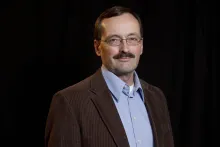
Randy Stiver is pastor of the United Church of God congregation in Rapid City, South Dakota.
