


Rodrick Foster
In ancient Rome, sports were big business, much like they are today in this country. They were a consuming distraction from the worries of life, the cares of what was going on around them. And for all of those sort of faults and weaknesses, and the sometimes overemphasis we can place on these sort of things, sports still can provide great metaphors for life lessons. Learning to master a skill set, playing as a team, dealing with loss, and maybe even harder, dealing with success. One of the interesting things about any sport is that the basics of that sport, the fundamentals, whatever those are, are usually not hard to understand. It involves a ball, getting through a goal, you know, in a certain manner, something along that line. The rules are usually pretty simple overall. It's mastering those skills that make any sport challenging. With that in mind, I'm going to highlight here as I begin one player in basketball. Famous, I think most people here would recognize who this is. If not, I'll explain here shortly to highlight some of his achievements and set the stage. This is Shaquille O'Neal. He's been retired from basketball now for some years. Shaquille, or Shaq as he was called, is considered one of the best all-time basketball players. He was 7 foot 1 inch tall, 325 pounds, and as you see the young man there on the side holding one of his shoes, I got different information here. It was either a size 22, a 23, or a 24. Whatever size it is, it's not off the rack. Basically a mountain of a player. On two occasions during his first season in the NBA, his powerful dunks broke the steel backboard supports. And so consequently, the league had to increase the brace strength and stability of the backboards for the following season. Shaq probably succeeded to a large degree because of his size. He just dominated that area underneath the goal. He was such a large individual that any ball that got to him around the hoop he could probably put in. But he had a major weakness, and it showed in his initial lack of mastering one of those fundamentals. Opposing teams would oftentimes, early in his career especially, use up their fouls on Shaquille Neal for one very specific reason. His primary weakness was free throw shooting. He was terrible. He was the third ranked player of all time in free throws taken, having attempted 11,252 shots. But he only managed to make 52.7 of those shots. He once missed all 11 of his free throw attempts in a single game, setting a record. In basic and foul line shooting, he was one of the weakest players ever. You and I are called to be spiritual athletes and warriors. What's our skill set like? We have to be at the top of our game so that we're balanced and yet thorough in our skills. And God gives us instruction in his word to this end. He helps us through books in the Bible that he's preserved. One of those books is Hebrews because it's such a meaty treatise. The Apostle Paul wrote this later in his life, and I think he was imminently more qualified than the other apostles to write this address to the Hebrews, the Jews, because of his background. I'll get to that here in a moment. But the book of Hebrews was clearly written to an audience that was familiar whose background was the Old Testament. Most of the Gentiles had never even heard of these words in Scripture before. They didn't grow up with it to use our speak. They wouldn't have been familiar on any level with it. And so when Paul wrote those audiences, he was coming at it from a very basic background. He's not doing that here with this book of Hebrews. These are individuals who had come out of the Jewish faith and had become members of the Church of God.
But like the Gentiles, they were coming to understand the calling God was giving them on a level they didn't know before. The Jews of that first century were a people in transition. And let me explain that with a little bit of history. The King of Judea, the southern kingdoms, fell to the Babylonians around 587 B.C. This is the captivity of Daniel when they went into Babylon. Babylon, as empires tend to do, also then fell in the course of time. And around 539 they were conquered by the Persians, bringing in their own form of government. Not as overbearing as the Babylonians were. They were a little more enlightened, allowing many, if not all, of those conquered nations to practice their own religions as long as they didn't create problems.
The Persians lasted for a couple of centuries, and then around 331 B.C. Alexander the Great rolled through the Middle East, conquering nation after nation in the name of the Greek Empire. But even after Alexander's death, the Greek Empire had a general respect for the Jews, allowed them to freely practice their religion.
It's an interesting story. Alexander never invaded Judea, and it's an interesting story. Why? If you ever want to look that up. After all that, then we come down to the time of Antiochus Epiphanes, one of the last of the Greek rulers. This is around 170 B.C. The Greek leadership by this time had to become very harsh, disrespectful, even brutal to the Jews.
The icing on the cake, if you will, was when Antiochus provoked the Jews. He, for whatever reason, decided he was going to show them who was boss. And he took over the temple, and in doing so, he set up a statue of their primary god, Jupiter Olympus, and commenced to offer swine on the altar before this image.
And you can imagine how that incensed the Jews. It was the start of the end of the Greek Empire in that area, especially, but it was also the initial fulfillment of Daniel's prophesied abomination of desolation. This is around 167 B.C. With all that provocation from the Greeks, the Jews had had enough and decided they were going to try to regain their freedom.
And so, as they were politically weak and militarily weak, the priestly family of the Maccabees decided they would lead a revolt, as others were doing. They came to the forefront. And it was a number of years. They fought a guerrilla war with them, and eventually broke the power and the will of the Greeks.
This was around 165 B.C. And for the first time in many, many centuries, the Jews, once again, were a sovereign nation. It was not to last very long, because shortly after this, then, we had the Roman general Pompeii decide that Judea was a land that needed to be in the Roman Empire.
There are different reasons, thoughts as to that. One was that the Romans wanted a buffer on their eastern border with Parthia and the Scythians. There's some fascinating history there as well, if you want to look that up. But Pompeii finally managed to subdue the region, conquering the land of Judea around 63 B.C.
All of this sets the stage, then, for the new history to come of the New Testament Church and for the Apostle Paul. There were a number of years that passed. Some say that Paul was born around 6 or so B.C., somewhere near the time of Christ, John the Baptist as well.
But Paul grew up in this Roman Empire. They quickly took over the areas that used to be part of the Greek Empire. But Paul was also schooled under the rabbinic master Gamaliel. So Paul understood both cultures. He had citizenship in both cultures. He had freedom of movement within both cultures.
And although his commission from Christ was to go to the Gentiles, as Paul moved through the Roman Empire and went to the various cities, he regularly interacted with the Jewish communities. This dysphoria had taken place over centuries. In all of these various conquests and empires, not all the Jews came back from the Babylonian captivity. Not all the Jews stayed in one place during the Greeks and the Persians. They moved around. And so Paul would interact with these enclaves as he came across them. And so the book of Hebrews then is a bridge between what God revealed in the Old Testament to his people and what he revealed by the Father through the Son in the New Testament to his people.
The book of Hebrews is that important. It really does put the two together. And this will be explained a little more here as we progress. Paul begins his epistle by quoting scriptures from the Old Testament. Remember, he's writing to a primarily Jewish audience. So he knows what they know. He knows what background they have. He knows what they're familiar with.
And he's quoting from scriptures to show that Christ was and is indeed the Son of God. They were all anticipating that Messiah. In many cases, they anticipated it from the time of the captivity, if not before. They longed for that time. The problem was they had a wrong expectation of what that Messiah was coming to do. They believed he was coming to set them free as a sovereign nation to once again. Chapter 2, then, he's encouraging them not to forsake the offer of salvation that Christ brought. Simply because he was not what they thought or expected him to be, he's reminding them, telling them, look, don't walk away from this just because it's not what you think or expected. So then in chapter 3, he touches on Christ being greater than Moses. And this is important because Moses is perhaps the greatest prophet ever by Jewish reckoning. To this day, they put Moses above everybody. There might be exceptions here and there in specific conversations, but as a whole, they go back to Moses. And so here Paul is talking to them and showing them that Christ is the one, was the one who taught Israel through Moses. If they venerate Moses this highly, then why aren't they considering the one who taught him? Chapter 4, then, continues this thought by showing that it was Christ who gave them the Sabbath. This was a hallmark. This was an identifying feature of Israel, was the Sabbath day. The Jews still keep it today, and it's a big part of why they have their identity still. But he also shows the Hebrews that the Sabbath rest is a type of rest possible through the ultimate high priest, Jesus Christ.
Even in these physical things that God had Israel do, they were always pointing to something bigger on a spiritual level. And then the beginning of chapter 5 finishes that thought. And then Paul warns them that while they had some understanding of the Old Testament, they were really only babes in their comprehension. They had really only scratched the surface. They thought they knew more than they did. And this is always the case, isn't it? We get a little bit of knowledge, and we think we've got it all figured out. He's not speaking condescendingly to them. He's speaking to them as one who knows. He came with the credentials. He came with the background. He came with the authority. They needed a more solid understanding in God's Word in order to have their senses exercised to discern both good and evil. So these first five chapters then bring us to chapter 6. Paul has set the stage here for some solid spiritual food he'll give them in the balance of this letter, what we now call the book of Hebrews. So if you're not turning there, let's turn to Hebrews 6, and we'll read verses 1 and 2.
Hebrews 6, verse 1 says, Therefore, leaving the discussion of the elementary principles of Christ, let us go on to perfection, not laying again the foundation of repentance from dead works and of faith towards God, of the doctrine of baptism, of laying on of hands, of resurrection of dead, and of the eternal judgment. Verses 1 and 2 here give us an understanding of what our spiritual foundation should look like, what our fundamentals should be in basketball, foul shooting, free throw shooting, learning how to shoot beyond the three-point line, defenses, and all kinds of basics that you have to have in place in order to develop a winning team and someone who's balanced on that sports floor.
It is really no different for us. There are basics that God gives us, that He outlines in Scriptures, that He has us rehearse the Sabbath day, week after week, the Holy Days, year after year, to remind us and to show us so that we come to a deeper understanding, a better application, a more thorough knowledge and understanding.
The Jews had an understanding from Old Testament Scriptures. There's no doubt that they did, but they had an incomplete foundation. Much like that slide, what would you build on that? You don't know without the plans, do you? It could be anything. They thought righteousness was found in the actions of living the law. That's a weak position. Can you keep the Sabbath and still be unholy before God? Oh, absolutely. There are people that have such an amazing ability to do certain things with Scripture.
I used this illustration this morning. I once knew a fellow years and years ago. If you gave him just a short summary of a verse, he could give you the verse verbatim and quote what Scripture it was. It was very impressive. The problem was he couldn't live it. He was able to do this because he had spent most of his adult life in prison. And in prison, there's not a whole lot to do. So you have hours and hours and hours of the day to fill. What are you going to do with it? Well, he picked up a Bible because of some extended family that attended the Church of God.
And he read and he discovered that those other verses referenced in that center column in his Bible connected verses to verses. So he began to read these verses and go back and forth. He began to memorize them. Evidently, he had a mind to do that. But when he got out of prison, he could not live it.
The Hebrews worshipped their traditions and their ancestry more than God. This is a shortcoming they have even to this day. Their spiritual skill set was off kilter, like Shaquille and Eel, because they had misunderstood or they had neglected fundamentals. So this is what we're going to cover today. Going on to perfection, we're going to look at the fundamentals of our calling, setting the stage here today. We're going to do this first by just going back and kind of parsing this, dissecting these first two verses here. Beginning in verse 1, it says, Therefore leaving the discussion of the elementary principles of Christ.
That's not a very good rendering of the Greek, unfortunately. And there aren't many other translations that do much better in it. And that's a shame. The words we need to focus on here in the New King James are the words elementary and principal. In the Greek, the word elementary has the meaning of commencing or beginning. We use that word for schooling. Kids go to elementary school. It's the beginning of their schooling. The beginning of the process of the body of knowledge they're going to achieve.
Or be exposed to. The word principals is in the Greek word logos. You might recognize that word. Logos can have a variety of applications. And in this particular context, it has the meaning of a topic of discourse. We would say teachings. You might even say a syllabus. So let me read it to you in a translation that is technically accurate, but is going to make no sense to you. This is the Young's literal translation. And it says, Wherefore, having left the word of the beginning of the Christ, unto the perfection we may advance, not again a foundation lain of reformation from dead works and of faith on God.
Technically, that's a better translation with the Greek. But it's a bit like Yoda speak, isn't it? It doesn't really make a whole lot of sense. All right, so I took the liberty, and I translated this the way I would read it. I would clean this up, and I would say it this way. In light of all of this, meaning all the previous five chapters that Paul has already written, in light of everything we've covered, having started from the teachings of Christ, we can now go on to becoming perfect, not needing to lay again the foundation from dead works.
What are dead works? Works that lead to death. Our life before God called us, before we repented, before we became baptized, was a life that at best would lead to death, meaning not eternal life. You could live five years, or one year, or you could live 50 or 100 years, but it still ended in death. And it can be variations of good to bad on that spectrum. But if it's not thoroughly grounded and built upon the Word of God, and if it is not a life lived in submission through baptism to His calling, then it is a limited life.
Let's look at Hebrews 12. We're going to be back here to Hebrews 6, but let's go to Hebrews 12 next. Hebrews 12 and verse 2. Now bear in mind, Paul has just written in chapter 11 what we call the faith chapter. He's rehearsed the many wonderful examples of the faithful that had gone before centuries and generations before. And then in verse 12 he says, because then we have these great examples, let's run the race before us.
In Hebrews 12 verse 2, Looking unto Jesus, that is, we commence moving forward, looking unto Jesus, the author and finisher of our faith, who for the joy that was set before Him, endured the cross, despising the shame, and sat down at the right hand of the throne of God. The author and finisher, Jesus Christ, is the beginning of everything towards our spiritual salvation. If He had not come for the joy set before Him and endured the cross, we would have nothing.
We would still be in our dead works. We would have whatever life we have physically, and then that would be it. But because He did come, we have a Passover. We rehearsed that about a month ago. His blood, as Creator of all life, is more than valuable enough to pay for all of mankind's sins.
We are then washed, and we stand before Him, and we can begin to walk out of sin as we pictured in the Days of Unleavened Bread. But it's still predicated on Him, isn't it? Who led Israel? Who was the rock? Who was our salvation? He is the foundation upon which we build our calling, mentioned there at the end of verse 1.
That's verse 1 back in Hebrews 6. I have on the screen there the verse for Revelation 22.13, and that's just a reference, where it talks about Christ being the Alpha and the Omega, the beginning and the end. I'm not discounting the Father in any of what we're talking about here today, but what we're talking about is what we build on. We build on what Christ came and laid for us. It has to be that foundation, or it will not survive.
I remember watching a home show years ago. It was back before cable, and I forget the fellow's name now, but he would basically remodel these houses, as many of these programs highlight now today. But the one that I particularly remember was, he was doing a home on Malibu Beach. Do you know how they do foundations on Malibu Beach?
They don't. They do piers. So they're driving pylons down into the sand, because when you compress sand, it becomes very, very hard. But the problem with sand is what? You put enough water around it, and it moves. It doesn't stay put. But it's code. You drive enough pylons, and you drive it down hard enough, far enough, it's considered stable. What did Christ say to build on? It wasn't sand. Sand moves.
Build on the rock. This is what we're talking about here today. We're talking about these elementary principles. What are them? What are they? What is Paul talking about at the beginning of Hebrews 6.1? He's talking about the basics. If we go back to the sport analogy with Shaquille O'Neal, it's how to do a foul shot. It's how to do a basic layup. It's how to have the right form when you're shooting from the three-point line and so forth. It's the basics. It is the rare individual who can exceed and become skillful at something and not master the basics. We'll come back to that thought as well.
But consider this from a simple physical perspective. All life starts in the smallest possible way. You have an egg cell, you have a sperm cell, and when we're conceived, we're no bigger than the period at the end of a sentence. And from there, it takes about two decades for us to gain physical maturity. We grow in size, we grow in mental ability, emotional stability, until we're considered mature physically. For some of us, that never happens. But for most people, it does. In the learning, we start with basics, and we add to that a growing volume of knowledge and experience. We learn. We don't start out as babies learning at a college-level instruction. They're not going to understand.
Telling abstract jokes to a three-year-old is not going to work. They don't have the concepts down. Our spiritual maturity is very similar. While it's true that Christ is at the beginning of everything, it's also true that he starts small with our spiritual understanding.
Anybody that has been baptized more than a few years has enough history, if you will, to look back on their life and realize, there's enough now that they know that they didn't know before. And depending on how long you've been baptized, you'll look back at that time and realize how in the world you ever became baptized. Because the more you see in your life, the more you understand that you need to overcome. But we start out as babies, don't we, spiritually speaking? We have the basics down. And this is what I do when I work with people and other elders as they counsel individuals for baptism. Do you understand the basics? Are you keeping the Sabbath day? Are you observing the Holy Days? Are you tithing? Are you following the food laws? Are you doing the basics? You can build on the basics. Do I understand every aspect of prophecy? No.
One of the really wonderful things in my experience in being part of this way of life for most of my life is how exciting it is that God is always working with someone to reveal more knowledge and to give more understanding to. How many times has it happened for you? That on a Sabbath or a Holy Day or whatever message has been given, somebody will make a statement from behind a similar lectern. And in your mind, you'll say, I never knew that. That's not a bad thing. That shows that we're growing. But in order to advance in spiritual understanding, we must start first with the teachings of Christ going back to Hebrews 6.1.
Let's next go to Hebrews 5. Let me back up here. Anybody know who that is? It's our twins. I had to throw that in there. Hebrews 5 and verse 12. Paul then is being very direct with this audience. And as I said earlier, I don't think he's coming across as condescending. He's coming across as one with authority. And he's being very blunt with them here.
He's saying, look, you have some understanding, but you're missing the mark. And so let's just read it. Hebrews 5 and verse 12. He says, For though by this time you ought to be teachers, by this point, with the knowledge that you have, the background that God has given you, the history you have as a people, you should be teachers.
And that should apply to every one of us as well.
On various levels, but we should always be able to teach God's Word. But notice his correction here. He says, instead of that, you need someone to teach you again the first principles of the oracles of God, the teachings of God.
He says, basically, we go back to the beginning. We've got to start all over because you started on the wrong foundation.
And notice, he says, you have come to need milk and not solid food.
This is very much like a baby, isn't it? You don't start baby out on meat. They can't digest it. They can't chew it. They can't process it. It's too hard on their system.
Their gut doesn't have the right bacteria in it.
But milk has what the baby needs to help with immunity, to help with growth.
Paul's saying, look, you need to start over. You're at a place where you've missed enough. You have to go back. He was trying to oppress upon the Hebrew audience here, was that the knowledge they had was missing the foundation.
What is the foundation? Jesus Christ.
It's one thing to understand the Sabbath day and to keep the holy days and to tithe in the food laws and so forth. But if it's not based on the foundation of Christ and if it is not built from there, it will be compromised.
Let me give you a few examples. You're all familiar, probably, with the leaning tower of Pisa.
Why does it lean? Because it had a bad foundation. They didn't go down deep enough. They didn't go wide enough. They built on ground they thought would compact when they put weight on it. And it did, but it compacted unevenly. So it started to lean.
And so then if you straightened up the leaning tower of Pisa now, it would still look crooked. Because as they built to it, they compensated for the lean, thinking that if they put a little more mass on one side, it would slow down or stop the tilt. It's compromised from the beginning.
Our family took a trip down to Florida over the twins' winter break. And we visited some friends in the Tampa area, and they took us on a boat tour of Tampa Bay. There were a lot of celebrities. I didn't realize how many lived around Tampa Bay. They were pointing out these multi-million dollar mansions and all these different things and telling you some history of the area and showing some things of note.
But at the head of the bay is the river that feeds into it. And as we started to progress up that river a little ways, the guide pointed out a spot that was on our right at that point, to the east. And he was talking about how there was a developer that wanted to build a high-rise luxury condo there. It was prime real estate there at the mouth of the river, at the head of the bay, and even managed to sell a fair amount of the condos before they even started any construction pre-sells.
So they had enough capital at this point to figure they could go ahead with the project, and they started to build and they had to abandon it. Because that spot is a spot that in Florida, you have a lot of these. Florida is a lot of limestone, and under the right conditions you can dissolve limestone. They call them sinkholes when they show up on the ground. You can have sinkholes under the water as well.
And so in this area, locals from years ago, decades, if not centuries, knew that area was deep. It was deeper than other spots around all the other water, the river or the bay. They used it as a dump. They'd throw all their trash in there. And so as the developer comes in and he starts driving for pylons, you have to put something on solid ground.
At some point there should be rock, and they pounded and they pounded and they pounded and they pounded, and they could never find enough solid rock. And so they had to abandon the project. And so there that spot sits. You wonder why nothing is built there, because everything else is up to the water's edge. And this is conspicuously absent of anything. There's no foundation. When we begin, newly begotten in Christ, we must start thoroughly grounded in the fundamentals.
And that never changes. Athletes of any note, and remember, we're called to be spiritual athletes. In the off-season, if they're worth their money, they go back to the fundamentals. They spend the off-season going through the basics, being grounded in it, so that becomes second nature, so they can learn what they can do to add to that.
By definition, mammals begin life by taking milk from their mother. That's what Paul was talking about earlier. This milk establishes their health, gives them the nutrition they need to grow. That milk starts them on their journey to being full grown, to eventually becoming perfect. Notice verse 13 here of Hebrews 5, For everyone who partakes only of milk is unskilled. You need milk to start, but milk at some point should be augmented with other things.
Maybe you only understood the Sabbath day. I've heard stories over the years of individuals who were convicted of God's way of life solely on the Sabbath day. They knew they needed to keep it. They knew they needed to be baptized. They were. And then they suddenly discerned or heard, came to the conclusion, What is this tithing? What are the holy days? They begin to add to it. It's not that they should never have been baptized. It's just that you have to start somewhere. And with the right heart, humility, being founded on Christ, the rest is really not that complicated, really.
So he says here, He who only partakes of milk is unskilled, for he is a babe. This is where then Hebrews 6, verses 1 and 2 comes in. Paul is reminding the Hebrews, he's reminding each one of us, what Christian fundamentals are. If we skip the fundamentals, we can possibly still succeed in some other areas. We might even be notable in our walk before God, but we will forever be hampered as a son or daughter of God without the right foundation. Let's just look at this list. You can read through it with me. I've summarized them here. Verse 1 starts then with the repentance from dead works. We've talked about that already. That's where we are before baptism. We acknowledge that that way of life is not going to give us salvation. That way of life will not lead to a spiritual life. That way of life will not be the life that God wants us to have. Then the next one at the end of verse 1 there is faith towards God. So then we see that we need God. We see that He is creator, that He is sustainer, that He is the life giver, that He is the only one in whom there is life. And that then we trust Him. We rely on Him. We believe Him. Then we move to the third one there at the beginning of verse 2, the doctrine of baptisms. There is more than one type of baptism. There's the baptism you want, and there's the baptism you don't want. The one you want is the baptism of water, of going under the water, symbolically having that old man, that old person die. That person cannot bring me eternal life. And so I yield my life through the blood of Christ to have His life. The other baptism is the baptism of fire. Then next is the laying on of hands. Why do we do the laying on of hands? Simply put, it is a recognition and a submission to authority God has placed. It could be anointing. It could be after baptism. It could be blessing the little children. It could be any number of things. But in every regard, it is a submission to God's authority.
Then next, he talks about the resurrection of the dead. This is huge in the Church of God. There is no other church, no other denomination, no other religion that understands this truth. They simply don't. It is a really sad thing to go to a funeral of someone who was by title Christian. They're preaching them into heaven. Then next Sunday in their church, they'll talk about the body that will be resurrected when Christ returns. I tell you what, if I get upgraded, I don't want the old model. I don't want this life. Once I have a spirit life, I don't need this body.
They miss the whole point of what God is doing, but also they miss the whole timing. So then they worry about people that died without knowing the name of Christ. They worry the sad news of this week, of the employees there at home office whose granddaughter died unexpectedly. In the world, what do you do with that? I went through enough cemeteries in New England. You look at some of those headstones, headstone after headstone after headstone, they'll have the dates on them, and they're a year or less, or two years. That throws a lot of people. We know where they are.
We know that God will resurrect them. We know that God will give them a life that they can understand why they are alive and what they're choosing. And then lastly, he touches on eternal judgment. It was mentioned in the video for the camp program. There are rules in sports. Things you can do, things you cannot do. There are rules in life. If we want to live forever, God says there are things you can do and there are things you cannot do. We will all stand before God and He will say, why did you do that?
Why did you not do this? We will all have to give an answer. But everyone will be judged according to His word. By the time Shaquille O'Neal retired, he had a career average of 23.7 points per game. Not a bad average. Most basketball games end up around 100 points for the winner, sometimes for both with a small, slim margin for the victor.
So if you consider 27 or 24 rounding it up points, that's almost a quarter on any given game that he would score. He also had a career average of 10.9 rebounds, almost 11 rebounds. So the ball goes through the hoop, it doesn't go through, he manages to grab it for his team. Hopefully then they can race towards the goal of the other end and get a point for their team.
2.3 blocks per game. A field goal accuracy of .58, which doesn't sound very good, but it's like baseball. When you consider the whole number, and when you're shooting, you have people trying to stop you from shooting, trying to get in your way, trying to block your shot, trying to do all sorts of things so that you cannot shoot, that's a pretty good accuracy. Not stellar, but good. He led the NBA in field goal percentages 10 times. He broke Wilt Chamberlain's record of 9. Some of you might remember Wilt Chamberlain, Wilt the Stilt.
But one thing that Shaq never did was master his free throw shooting. If you look at his averages, they all hovered around 52.7%. One year, and I didn't get this part of the story, I wasn't able to find enough information, he got the bug, whether it was his coaches, whether it was the fans yelling at him, whether it was somebody else, but he decided he would spend the offseason working on his free throws, his foul shooting.
He managed to get that season up to almost 60%. And if you look at his stats, then all the following seasons dropped back down to around 52.7%. He gave up. He never did master that, by comparison. I don't have this on the slide because I wanted to stress this.
So what is a good free throw average in the NBA? If you take all the players, lump them together, and you take an average, it's around 75%.
We need to make sure we have the right foundation. Because when we do, then we're established with the right fundamentals and our calling with God. You have to start with the right foundation and everything in life. You start with the wrong premise. You're going to make decisions accordingly. You start with the wrong building materials. You're going to build the wrong building. You start with the wrong information. You're going to go down the wrong path spiritually. In order to establish the right path, we need to build on the right foundation. We must have a thorough understanding, not just a cursory knowledge. This is why God commands us to come before him on the Sabbath. It's not because God is so shallow. He needs our adoration. He knows it's important for us to learn, to be grounded in these things. The Holy Days, the year after year that we add bits of knowledge here and there to become more spiritually mature. Because anyone who is baptized or anyone who is considering being baptized should have gone through these fundamentals. And even if you didn't, there are always something you can go back to because those fundamentals lay the foundation for going on to perfection. Let's look at one last verse, 1 Corinthians 3. 1 Corinthians 3 and verse 10. Paul here says, According to the grace of God, which was given to me, as a wise master builder, I have laid the foundation. Many of you have had wonderful pastors in the past, men that you still speak of. They laid a foundation in you. Other men have come along teaching from God's Word to help build on that foundation for you. Your own work, Bible study, prayer, meditation, fasting before God, your submission to Him, you build on it. He says that. Another builds on it. But let each one take heed how he builds on it. It has to be the right way with the right material. For no other foundation can anyone lay than that which is laid, which is Jesus Christ. There are not many paths to heaven. There's only one. There's only one foundation that we need to build on. And then verse 12, if anyone builds on this foundation, meaning Jesus Christ, if anyone builds on that foundation with gold or silver or precious stones, you lay the right foundation. There are all kinds of really good materials you can use to build up from that. But there are some things that you don't want to use. He goes on here. Notice how it sort of steps down. Wood, hay, straw. Can you build with straw? Sure you can. It will not last. It will degrade very quickly. Even if you coat it with plaster or mutting, it will only hold up for a certain amount of time. Conversely, you can go to places in Europe and Asia. There was a temple in Asia. I was just astounded at this. It's completely made of wood. Not one nail in the thing. And it's been there for over a thousand years.
Look how long the temple lasted before it was destroyed. It didn't crumble through neglect or bad materials. What will you build on? Christ has given us the foundation. What are we building on it? Is it gold? Is it silver? Is it precious stones? Or is it hay and straw? There's more to come in this. Today we've just touched on this. I've just set the stage here. Because what I'm going to do is go through each one of these items in Hebrews 6 verses 1 and 2. And each of those are going to be a separate sermon. It's worth going through this to understand on a deep level what those fundamentals are. We're going to progress on that in the coming weeks, not necessarily in succession. But I would encourage you to read ahead and to consider what foundation are you building on. Because the end result, the end goal of every one of us is to go on to perfection.
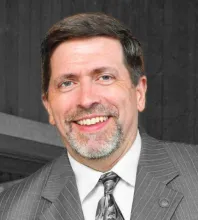
Dan currently pastors 3 congregations in Wisconsin (Milwaukee, Oshkosh and Wisconsin Dells). He has been associated with God’s church since he was a young boy.
Dan has an Associate degree in Commercial Art with almost 26 years in the publishing/advertising field. He also has a Bachelor of Arts degree (in Theology) from Ambassador College (graduating in 1986), was ordained an elder in 1997 and then was hired full time in 2004 as a minister in United Church of God.
Dan currently lives just north of Milwaukee, Wisconsin with his wife Roxanne.

