

Mark Welch
There's not a person who will hear this message in person today or via webcast or later in recorded form that's not experienced loss and death. As a child and as most children are, we don't understand death. I was the first funeral I remember was at my grandmother's and a few days before all of that took place, the funeral itself, we were visiting and then next I knew we were at the funeral and there she was, was open casket laying in the casket not moving and I didn't know how to process that as a child. As we get older, we understand more and more the loss of death, even though we may not talk about it more, but the loss that comes from the separation in those relationships, the conversations we won't have, the time together we won't be able to spend, whether it's just being together or whether it's family activities or sharing of inside jokes or any of those sort of things.
And as much as we hate death, unfortunately in this life it is a reality of life. The sad dichotomy to me in the Western world, the Western nations, is that we say we hold life precious. We have many organizations that lobby and work hard to save various animals or protect the planet or do a number of things along this line, but then on the other hand we embrace what many call a culture of death, whether it's pushing abortion rights, whether it's violence that's accepted in general, whether it's even something as simple, if you will, as demonic tattoos that people will put on their bodies, just hatred in the world in general around us.
For the vast majority, overwhelming majority of mankind, death is not something that's talked about. It's avoided at all costs. But it's a question, what happens at death or after death, is one of those questions of life that philosophers and theologians have pondered down through time, trying to answer this question, because it is such a deep thing to ponder. We yearn for more, because I think God has placed that in us.
Some believe in reincarnation leading to Nirvana. If you know anything about that philosophy, it's not God-based. It's simply that we become a better person until we reach this state of eternal bliss. Some think that we'll go to heaven, live on a cloud, play a harp for eternity. Some believe that others will writhe in pain for that same eternity, because they weren't saved in this lifetime.
But what is the answer? As I said, many have tried to ponder and come to some conclusions. The first century world was not much different than the world around us today. They had numerous teachings, conflicting ideas about life after death. In Christ's physical lifetime, you had the Pharisees and the Sadducees who had opposing views.
The Pharisees believed in a resurrection, the Sadducees did not. You also had the greater Greek culture that was still influencing a great deal of thought, pagan philosophers that clouded the understanding of most people. If you recognize some of the individuals on the slide there, the two on the right are mathematicians. You had Euclid, and you had, if you remember, your algebra, Pythagoras.
The Greeks pondered life. They sought order in it, and they tried to come to some conclusion through something like math in some cases. But in a modern world, we've added to those pagan philosophies by creating new pagan thoughts, such as evolution, which displaces God from any of the discussion. God doesn't leave us without any answers, however. There is great understanding in Scripture that there's more to this life than the philosophers and the theologians would ever understand. And so today we're going to continue our review of those fundamentals in becoming perfect before God. And as I've done in previous messages, I'd like to go to Hebrew 6 and reread that section.
If I achieve nothing else through the course of this series of sermons, we'll probably all remember Hebrew 6, verses 1 and 2. Hebrews 6, verse 1, Paul writes, therefore, leaving the discussion of the elementary principles of Christ, let us go on to perfection, not laying again the foundation of repentance from dead works and of faith towards God, of the doctrine of baptisms, of laying on of hands, of resurrection of the dead, and of eternal judgment.
Paul has laid out here the overview, if you will, of how we come to this matter of perfection before God. That once we've repented and have faith towards God, we become baptized. We learn submission to God through the various aspects of the setting apart that God performs through laying on of hands. And then through that understanding, we add these other things. And so today, then, we come to the aspect of resurrection of the dead. The title of my sermon then simply is going on to perfection, the resurrection of the dead. While we're here in Hebrews 6 verse 1, I'd like to just highlight what I see as a few things here of note.
And the first is the very first word of verse 1, the therefore. As I said in the first message setting the stage for these sermons, therefore is talking about the previous five chapters. Paul is saying, in light of all that I've talked about before, then let's leave the discussion of the elementary principle so we go on to these other things. In verse 2, then, we find this aspect of resurrection of the dead being a primary doctrine. It's not just a New Testament understanding.
It is a truth of God. We'll come to this a little bit later, but I'll go ahead and quote it here at this point. Even Job, back in Job 14, asks the question, if a man dies, will he live again? As I mentioned, this is a question that's been pondered for eons. But before we begin to answer those questions, let's go to chapter 11, Hebrews 11 and verse 6. In order to answer the question about whether there is life after death, we must first consider if the question is even answerable.
A lot of people would say no, but God's word says otherwise. In Hebrews 11 verse 6, we find here, Paul again writing, saying, but without faith it is impossible to please him, meaning God, for he who comes to God must believe that he is. And this is where so many fall short in this discussion right at the get-go. If they don't believe in God, then they're not going to find an answer about what is the truth of life after death.
But once we do have an understanding of God, which is another aspect of these principles leading to perfection, then we must, as it says here, see that he is a rewarder of those who diligently seek him. So in that verse, then we see two things. One is that seeking is not there by default. It's not something mankind is inclined to do on their own, but that we must then also add to that this belief in God, having faith and diligently seeking him. Again, because that's not our default.
And so I want to read to you, in framing all of this, our statement, fundamental belief statement from our booklet and specifically the section on the resurrections. We write this, we believe that the only hope of eternal life for mortal humans lies in the resurrection through the indwelling of the Holy Spirit. We believe at the return of Jesus Christ, a resurrection to spirit life will take place for all who have been God's faithful servants. We believe that after Jesus Christ has ruled on earth for a thousand years, there will be a resurrection to physical life of the vast majority of all people who have ever lived.
We believe that after these people have had an opportunity to live a physical life, if they become converted, they too will receive eternal life. We also believe that those who reject God's offer of salvation will reap eternal death.
This is a truth of God that is almost exclusive to the Church of God. This is not understood in many, many denominations, let alone other aspects of Christianity. But again, let's continue this discussion and let's look next at 1 Corinthians 15. As I mentioned, there is truth in Scripture.
There are answers. This is knowable. And so in 1 Corinthians 15 and verse 32, Paul's talking here in this chapter specifically about resurrection in part because there was already error being taught.
There are already individuals who were muddying the truth about this aspect of resurrection in life after death. And so he's discussing that in this chapter, but in verse 32, 1 Corinthians 15, he asks this question we're asking here. If in the manner of men, I have fought with beasts at Ephesus, what advantage is it to me? In the Roman culture, unfortunately, as I said, they had a culture of death, much like we have today. They didn't value life, and they showed it even in their entertainment. And so you would have these gladiatorial contests in the arenas, and oftentimes it would be a wild animal like a lion with a gladiator fighting.
Later they even used that as sport for the Christians. But Paul here is asking the question, look, if I've gone through that, what benefit is it to me? He asks the question then, if the dead do not rise, let us eat, drink, for tomorrow we die. And he's quoting from the philosophers of his day, look, if there is no life after death, then we might as well just enjoy what we have.
And again, we see that in the world around us, don't we? People pursuing all matters of lifestyles, all matters of distraction and entertainment, to give life some meaning because they don't see anything beyond this life. Because if there is no salvation, then what's the point? That's what Paul is asking here. I'm not willing to accept that premise based on Scripture, and that's what we're covering here today. To sort of back up, though, and highlight we've talked about this in other sermons, mankind is incapable of giving himself eternal life. He is not immortal. That's another truth of God. Thus, we have the need for this resurrection. If we want a life beyond what we have, then something has to impact that to change it. Let's go back to Genesis chapter one, as you see there on the screen. Let's set the stage for some items. Genesis 1 and verse 27, we have God, of course, creating mankind. It says here that God created man in his own image. In the image of God, he created him male and female. Now, we're in the image of God. We're similar to God, but we're not exactly like God. I expect that that runs the gamut on the physical level as well. We're not exactly like God, but we are close enough that we reflect him, which is the meaning of an image.
We reflect the original. If we move down then to chapter two and verse seven, it says, then God formed men of the dust of the ground. We're corporal, temporary, physical beings. We came from the dust. We returned to the dust. God then breathed into, in this case, Adam's nostril, the breath of life. It says, man became a living being. In Hebrew, the word is neifesh, and it simply means what the New King James says. A living being. In other cases, it says, air breathing, creature. Without air, without food, without water, we die. We're not eternal. Let's go to Job 14 now that I quoted earlier. Job was pondering this question as well. We went through a series of Bible studies some months back covering the book of Job and looking at what Job was going through.
Job was not without understanding. God did not allow Job to go through what he did because Job was ignorant. God was using these circumstances in Job's life to challenge his thinking in certain areas and to lead Job to a deeper understanding. But we see glimpses of things that Job did understand. In Job 14 verse 14 is one such place. Job is asking the same question we're asking today.
If a man dies, shall he live again? Is there life after death? He says, all the days of my hard service, I will wait till my change comes. You know, as some say, life is hard and then you die.
Job saw that. He certainly saw it in the trials he went through. But he's saying here as well that he would remember these things. I will wait till my change comes. Job understood a resurrection.
He affirmed that the dead will live again. Many other writers did this, understood this as well.
Daniel 12 to the reference on there talks about those who sleep shall wake awake. They will wake up again. The Bible talks about death as being sleep, much like sleep. We go to sleep and whatever time period passes, depending on how well you sleep, that time period is as if the next second, isn't it? And death is going to seem like that for us. In Hebrews 11.10, I thought of this later after I had created these slides, Hebrews 11 verse 10 talks about Abraham having a picture of a city to come without foundations, meaning another world. He understood this aspect as well.
But let's look at what Christ himself did say next in John chapter 11.
John 11 and verse 25. Christ is giving insight to the disciples as he was want to do, as he interacted with other individuals. In this case, earlier in the chapter, we have the story of Lazarus and his death. And Christ used that as a teaching moment. Lazarus was a good friend of Christ. He was known by the family. And I think Christ deliberately delayed his going to see Lazarus so that he could make this point. But in John 11 verse 25, we simply read here that Christ is speaking to Martha and he says to her, I am the resurrection and the life within me. He says, I have that power. He who believes in me, though he may die, he shall live. So even at death, we know from Christ himself that that's not the end of the story because Christ has life in himself and through him we can live. Notice that even Martha was not without some understanding. In verse 24, speaking of her brother Lazarus, she says, I know he will rise again in the resurrection at the last day. That's the eighth day. That's the last great day. That's the concluding Holy Day of God's plan of salvation for mankind. Martha understood that to a degree. Christ was elaborating here and we learned from it as well. Let's go to the next verse there in 1 Corinthians 15. Back to where Paul was talking about the resurrection. And in this, then, he shows that through Christ we have life. Again, in Genesis 2 verse 7, we see that we don't have life. We are physical. We are temporary. We have the breath of life in us, but we do not live forever. In 1 Corinthians 15 and verse 22, we read here it says, for in Adam all die, even so in Christ shall all be made alive.
That as Christ said in John 11 that he is the resurrection in life, we have that life through him. We have it available to us. And so in that first century church, we see it growing in record numbers. You know, that on occasions there were 3,000, 5,000 individuals that would hear a message by the apostles, and they would be convicted, and they would act on that conviction. And that young church grew dramatically as the gospel spread, as God allowed them to be scattered throughout the region to begin to take that gospel message to other nations. A big part of that message that they brought was the hope of eternal life. Let's look at that in Acts chapter 2. This was the beginning of it while they were still in Jerusalem. And after the dramatic giving of the Holy Spirit at the beginning of chapter 2, Peter speaks to the crowd that had gathered some out of curiosity, and some for other reasons I'm sure. But I believe God allowed that or directed it so that Peter could have the interaction, the conversation, if you will, with them about what it was all about.
So in Acts 2 and verse 22, to break into the thought here, he says to the group, men of Israel, hear these words, Jesus of Nazareth, a man attested by God to you by miracles, wonders, and signs, which God did through him in your midst, as you yourselves know.
So this was not an unknown to them. There were probably stories floating all around Jerusalem of individuals who firsthand saw what he did, the various ones that were healed.
I suspect we only have a fraction of those recorded for us in Scripture, but he's reminding him, look, you know, you know what Christ did. Verse 23, and him, being delivered by the determined purpose and foreign knowledge of God, you have taken by lawless hands. In spite of this being what God had determined, you did it illegally. You crucified him and put him to death, but God raised him up, having loosed the pains of death because it was not possible that he should be held by it.
Loosed the pains of death. And death is painful, isn't it? Even when we see someone in the midst of horrible health trial leading to death, and we know that death would be relief, it's still painful.
It's a loss, as we read earlier. But the disciples here were teaching under God's inspiration that all who accept Christ as their personal Savior and then repent and are baptized and receive the Holy Spirit will be resurrected. We see that in verse 38 at the ending of his sermon message. They're convicted. They hear what he's saying, and to their credit, they're not trying to walk away from it. They're not trying to justify their actions or pretend it didn't happen.
And so they asked in verse 37, what do we do? So in verse 38 he says, repent.
Let every one of you be baptized in the name of Jesus Christ for the remission of sins, and you shall receive the gift of the Holy Spirit. Verse 39 is the point of this all.
For the promise is to you and your children and to all who are far off, as many as the Lord our God will call. What is the promise?
The promise is eternal life. If you live according to my instruction, I promise to give you eternal life.
That's huge, isn't it? Through the promise of the Holy Spirit, he promised that he would send his Holy Spirit. And through that promise, then, we can have that eternal life.
And so let's turn next to John 14.
Not too far back from where we were there. John 14 and verse 19.
Christ, again, is talking in this section.
Chapters 14, 15, 16, 17 is all that he's trying to say to his disciples before his crucifixion comes.
And while I suspect he knew he would have additional time later with them, there's nothing like the moment. And he's trying to give them as much as he can while he can.
So in John 14 and in verse 19, he says to them, a little while longer, and the world will see me no more. They're not going to know that I'm still here.
They won't know that I'm around still. But you will see me because I live, you will live also.
Going back to what we read earlier, that in Christ we have life.
Let's go back to chapter 10, John 10.
Which Christ makes a statement here as well, talking about his role and what we have through him.
And in John 10, 10, he says, the thief does not come except to steal and kill and to destroy.
That's the job description. It's very selfish, isn't it?
He says, but I have come that they may have life and that they may have it more abundantly.
Christ's responsibility, the role he played in coming as our Savior, was so that we could have life.
It's interesting that he puts to it, though, this statement, that not only would we have life, but we would have it more abundantly. So do we all have an abundant life now?
No, we don't. I know we don't. I hear the stories. I know in my own life, I don't have an abundant life the way I would want. Do we even have an abundant life after God calls us? It can be unsettling to some to think that, once upon repentance, life doesn't just become easy street. There are still challenges and trials and difficulties we face. But on the other hand, we do, in a limited sense, have a better life now. We have the blessings that come from obedience to God's way. We have the natural consequences of living a way of life that brings those things.
But the abundant life that Christ is talking about here is a life to come.
It's abundant from completely having God's nature. Think about what we will be able to be like when we become like God. We spend a great deal of effort and time just simply taking care of this life. We feed it, we bathe it, we clothe it, we try to provide nice things for it, living environments and whatnot. When we're eternal, we won't have to do any of that. But even more importantly, we will have the mind of God. And we don't, I think, have a clue what that really means. We have glimpses of it. But we will truly have an abundant life to think like God, to be like God, to never tire, to never age, to never wear out. But we must become like Christ in order for these mortal bodies to have true life, in order to have this abundant life that Christ is talking about.
So let's go to Romans 8 next. Paul is having an interesting discussion here in the book of Romans. And it's one of my great laments that the book of Romans is in the wrong place in my estimation in Scripture. In the Bibles we have, it's the first of Paul's epistles. But it was not even close to one of the first books he ever wrote. Paul wrote this about a quarter of a century after his conversion. And he's looking at things from that perspective, that down the road he's acknowledging the struggle that even Mr. Barnett talked about in his sermonette, that we still go through these trials. But it's not that the trials are overwhelming. They shouldn't thwart us from the end goal, but acknowledged and worked with in order to gain the character. And so we come to chapter 8. And Paul says, there is therefore now no condemnation to those that are in Christ. That is, no condemnation because of falling short of the glory of God. The sin that we have, that condemnation or requirement of the penalty is no longer there. He says, who do not walk according to the flesh, but according to the Spirit. Because we have repented, because we have become baptized, because we have God's Holy Spirit in us now, that condemnation is removed. Verse 2, for the law of the spirit of life in Christ, Jesus has made me free from the law of sin and death, free from the penalty again. For what the law could not do in that I was weak through the flesh, God did by sending his own Son in the likeness of sinful flesh. What could the law not do? The law did a lot of things and still does. It shows us behavior that is acceptable to God, and by extension, as we act on that behavior, how we can take on a similitude of God. But the law could not make us righteous. The law can help lead us to righteousness, because behavior follows actions, character follows.
So he says what the law couldn't do, the law could never bring us to eternal life.
As good as we might keep the law, even if we kept it perfectly, it does not obligate God to give us eternal life. Again, it doesn't mean the law is not valuable. He simply says what the law couldn't do, then God did through his Son. It says on account of sin, he condemned sin in the flesh. How did he condemn it? Because he ruled it. He never sinned. Verse 4, that the righteous requirement of the law might be filled in us who do not walk according to the flesh, but according to the Spirit.
What is the righteous requirement? I've given sermons on this in the past concerning the law.
The righteous requirement is to take on the nature of God, to submit, to yield, to humble ourselves before God, to let him dwell in us, to change us. Verse 5, for those who live according to the flesh set their minds on the things of the flesh. If you and I knew nothing about this way of life and God's truth, we would be like the world, wouldn't we? We would chase things of what we would think is of value to try to gain some meaning in life. Paul's reminding us we don't live according to those things anymore, but rather, the end of verse 5, those who live according to the Spirit are concerned about the things of the Spirit. Verse 6, for to be carnally-minded is death.
To have that focus only on this temporary life will not bring us eternal life. It only brings death. But to be spiritually-minded, to think on the things of God, to act on His truth, to make it part of our character and our nature, then it says, is life in peace?
Verse 7, because the carnal mind is hostile against God, it's enmity, it's in opposition to God.
Because it's not, if I may insert a word, naturally subject to the law of God.
Now, mankind has, I think, enough of God's Spirit in our human spirit to know that certain things are just right. So universally, people generally condemn murder and theft and things of this nature.
But on our own, we don't seek God. And so we have to acknowledge here, at what it's saying, that we don't have this life in us. If we want something different, then we need to be spiritually minded. Verse 9, but you are not in the flesh, but in the Spirit. Again, talking about the way we think, if indeed the Spirit of God dwells in you, now if anyone does not have the Spirit of Christ, he is not His. And if Christ is in you, the body is dead because of sin, but the Spirit is life because of righteousness. This body will end, but that's okay because we have life in Christ.
But if the Spirit of Him who raised Jesus from the dead dwells in you, He who raised Christ from the dead will also give life to your mortal bodies through His Spirit who dwells in you.
And so then we find this truth of resurrection that it provides the comfort. It answers that question. What happens after death? Death is like a sleep, and then we're resurrected to an immortal, eternal body. The reference there in 1 Thessalonians 4.18 is simply a reminder, as Paul did in many other places—that's just one example—to comfort one another with this.
Because this is very unsettling. I've only been by the bedside of a few individuals who are dying, who have no hope, and it's a very sad thing. What was the point of my life? Do I leave anything of value? What happens when I die? That's why Paul reminded even those of his day to comfort one another. There are many spreading so many different false teachings that people were very unsettled.
But why should we believe that there's a resurrection?
Well, we can take it to heart because we have recorded for us in Scripture many historical events regarding resurrection. We have several, but we also have Christ Himself, more importantly.
After being executed and entombed by the perspective of the Roman culture, the Jews around them, Christ's body disappeared. Nobody knew where it went, and they even had to make up a story that the disciples came and stole it. But Jesus's resurrection was not based solely on that, the belief in His resurrection. We have the example in 1 Corinthians 15.6, where Paul talks about Christ's resurrection being witnessed on one occasion, that is resurrection, rather, His life after death being confirmed by more than 500 individuals. And then in Acts 5, it talks about, we are witnesses to these things, the disciples mentioned, and that's the reference on the screen, to the fact that the God of our fathers raised up Jesus. They had seen it firsthand, and they were passing it along. There were many, many others that saw this. Paul, in Acts 13, verses 30 to 31, similarly documented that God raised Christ from the dead, and He was seen for many days by those who came with Him from Galilee to Jerusalem. We know from other scriptures that He spoke to the disciples for 40 days afterwards. But in all of this, we also find that there's an order to these things. God does not simply resurrect everybody. In many ways, that would be chaos. That's true His plan of salvation. We even see this order. The fact of a resurrection is known and understood by many Bible readers, but what is not clear to most is that the Bible describes more than one resurrection. Let's look at 1 Corinthians 15 again, this time in verse 23.
All of the New Testament writers, with a touch on this aspect of resurrection, confirm this truth, that there's more than one resurrection. In 1 Corinthians 15 and in verse 23, if I can get to 1 Corinthians, there we go. Paul writes this, he says, but each one in his own order.
Now, we read earlier that the verse prior, for in Adam all die, and Christ all shall be made alive.
Even though there is the truth of the resurrection that all will be made alive, then Paul continues, and he says, but each one in his own order. And so he elaborates Christ, the first truths, afterwards those who are at Christ's coming. So we even see here in what will term a first resurrection. We'll come back to that here in a moment, that even within that first resurrection, there are two groups. There are those that have already died in Christ and those that will be made alive eternal spirit as he is coming. And so this reference to the first fruits also indicates another thought. If I state that I have the first of something, it must mean that there's more than the first. And so then we see this in Scripture. We'll come to that shortly here as well. But Paul was specifying that God set an order in his plan. So we see that truth as the Holy Days play out.
God's Spirit given to his people at Pentecost. And at Trumpets, we see the second coming of Christ.
And through that blowing of the trumpets, the analogy of a calling, we find then that Christ is raising those first fruits. And then through the millennium, working with a group of mankind that lives through that time period, and at the end of it, then working with others.
Let's look at the next aspect of this. Every man is in his own order. And part of the reason why is because Satan has deceived the world. Let's go to Revelation chapter 12.
What most, even in the Christian community, miss is that Satan has been allowed to deceive the world.
They have a great problem on their hands because they don't see and understand the timing of God's plan of salvation, how God is working with mankind in different groups, if you will. But also then that Satan has been allowed to deceive and sort of cloud and muddy the waters.
To them, they don't understand this. Those disciples should be made now that this is the day of salvation, some of these statements. And if that's not the case, then those people are lost.
Or rather, if it is the case, they're lost. If they don't turn to Christ, if they don't accept his name now. But what do you do with people that have never heard his name? Billions of people in China, India, never heard the name of Christ. What do you do with the people that lived prior to Christ coming? And so they end up jumping through all kinds of hoops to try to work this out.
There's a simpler answer. And in Revelation 12 in verse 9, we have the statement here. It simply says, and it's talking about end time events. I'll come back to that. But it says, so the great dragon was cast out, I mean cast out of heaven, that serpent of old called the devil and Satan, who deceives the whole world. God allows this. God is ultimately the one in charge of everything, but he has allowed Satan to deceive the whole world. And so then as Satan was cast out, so were those demons that were with him. Now, an interesting point in the Greek here is when it talks about...
Let's see, let me get my reference here. Satan deceiving the world. The word deceiving there in the Greek is planio, P-L-A-N-A-O, from which we get our English word planet. Because as the ancients looked at the heavens and they pondered those stars, they'd see certain stars that stayed where they were always, or they would move relative to each other. They would move as a group.
But there were a few that seemed to move independently across the sky, and they considered these wandering stars. In the Greek usage of the word, though, it could also mean to seduce or to cause someone to err, because they weren't predictable. They didn't understand the circuit of the planets. But then we also know, in considering this aspect of Satan's deception, as I have there, 1 John 5, 19, where it talks about the whole world lies under the sway of the wicked one. Now, if God is truly in a contest for men's souls, then he's losing, isn't he?
And he's losing big time. Because even if we look at the world as a whole around us, Christianity only makes up about 33 or so percent of people's beliefs around the world.
So even as a world, most of the world doesn't even understand Christianity. But even when we look within Christianity, we see much division and dispute there, don't we? Ephesians 2, 2 there talks about Satan being the prince of the air, the prince of the power of the air, that he has this influence because he can do something we're very familiar with. He can broadcast his influence over all of mankind. And perhaps we're able to better understand this than any other point in mankind's history, because we're surrounded by, and we make great use of, radio waves.
Anyone that has a cell phone is using a radio wave. TV signals are radio waves, radio signals are radio waves, and this is broadcast out. All you need is the right receiver. I have a TV and I turn to a certain channel, I have a radio, I turn to a certain frequency, I have a cell phone and I dial a certain number. I can receive whatever is being transmitted. In this case, God is showing that not all the world is being judged right now. Christ is indicating here that only firstfruits will be in that first resurrection. Those who specifically are called by God, who have been shown the need to repent and have repented, become baptized, received his Holy Spirit.
So God is only calling a few now. Again, that's part of his plan. It goes back to the aspect of every man in his order. What confuses Christianity as whole then is that they see this as second chance salvation. Well, if God raises a people again, then he's giving them a second chance.
Well, one of the things I really love about God's way of life is that ultimately God is fair, isn't he? Anyone here exempt from trials? Anyone here exempt from overcoming? Anyone not face Satan as an adversary? We all go through these things. It's not the exact same thing, but we all face this aspect of overcoming, whether it's Satan, whether it's the world, whether it's ourselves.
But even when it comes to aspects of judgment, God is fair. Is it fair to be judged on something you don't know? You drive through a small town, you don't know the speed limit, you get pulled over by a policeman and he says, didn't you know the speed limit was? And you say, no. And he gives you a ticket anyway. We don't see that as being fair, do we? For the vast majority of mankind for God to say, I'm going to judge you on what you didn't know, their probably primary reaction would be that that's not fair. Well, God knows that, and so he's not judging them now. Doesn't mean there aren't consequences, but he's not judging them for eternal salvation based on what they don't know.
So let's look more directly at these aspects of the different resurrection. And the first is obviously the first resurrection. Those, again, as we've briefly covered already, those that are called now. Paul refers to them as firstfruits, as they're called in Scripture.
We're here in Revelation. Let's go back to chapter 20. Revelation 20 and verse 4.
John here in vision is looking down close to the very end of time, mankind's time.
And unfortunately, the Greek can be confusing to us because the Greek didn't have punctuation the way we use it. We can insert pauses by way of different punctuation, dashes and commas and colons and so forth. But also in Greek, when you insert what's called a parenthetical thought, you have to pay attention to the context to know if it's something that is being inserted that references a different part or a different time period or whatever happens to be. And Revelation 20 is one such place. So in verse 4, John here writes, he says, I saw thrones and they sat on them and judgment was committed to them. And then I saw the souls of those that had been beheaded for their witness to Jesus and the Word of God, those that had been faithful down through time who had died because of being true to what God showed them. They had not worshiped the beast or his image. They had not received his mark on their foreheads. So specifically, he's looking at those that died in the tribulation time period. He says they lived and reigned with Christ for a thousand years. These are the firstfruits. These are the ones in part that are resurrected at the return of Jesus Christ that become rulers under him during what we call the feast of tabernacles, during that millennial reign. So the beginning of verse 5, then, if you put a starting parentheses, but the rest of the dead did not live again until the thousand years were finished. And then a closed parentheses. The beginning part of verse 5 is an inset thought.
John now is looking beyond that thousand year period because then at the end of verse 5, he says, this is the first resurrection, meaning verse 4. So then verse 6, he says, Blessed and holy is he who has part in the first resurrection. Over such the second death has no power. Once we are no longer mortal, once we are eternal, we will no longer face death.
Over such the second death has no power, but they shall be priests of God and of Christ and shall reign with him a thousand years. And so we see then this aspect of the first resurrection being a better resurrection because in verse 6 it says we're blessed and holy in this.
I'll come back to that thought. 1 Corinthians 15, we won't turn back there. In verses 50 to 52, it talks about the dead will be raised. Again, we cover this in more detail, typically, on the feast of trumpets. But we have this reassurance that the dead in Christ will be raised.
Let's go to 1 Thessalonians chapter 4. We don't normally turn to that, but it is a parallel account or a complimentary account of the resurrection chapter in chapter 15 of 1 Corinthians.
1 Thessalonians chapter 4 and in verse 14, Paul says, For if we believe that Jesus died and rose again, even so God will bring with him those who sleep in Jesus. Again, talking about death like sleep. Christ will bring them with him. Verse 15, For this we say to you by the word of the Lord, that those who are alive and remain until the coming of the Lord will by no means proceed those who are asleep. If perchance Christ were to return in the very near future and we are still alive, we would not proceed those who have already died in the faith. Verse 16, For the Lord himself will descend from heaven with a shout, with the voice of an archangel, with the trumpet of God, and the dead in Christ will rise first.
Then we who are alive and remain shall be caught up together with them in the clouds to meet the Lord in the air. So there's two parts to that first resurrection. I suspect they're going to be in very quick succession. But nonetheless, this is the way it will happen. This is the way it will play out, and it's absolutely incredible to consider, isn't it? We have no comprehension, really, what that means. We have certain glimpses. We have certain hopes. We have anticipation, surely. But we don't know it because we've never lived it. To be immortal, eternal, to have God's mind, everyone whose name is in the book of life and has died, or is still alive when Christ returns, will be resurrected. Hebrews 11, verse 35 there, talks about this first resurrection being a better resurrection. It's not better because we're better. It's better because of what we have to go through.
It's better because it's a harder path.
Anytime you're the first of something, you're blazing a trail, aren't you?
You're the first to develop some software technology. You're the first to invent some other piece of technology. It's harder because you have to figure everything out.
Well, spiritually speaking, it's harder for us as well because we're fighting a three-pronged attack.
We're fighting against Satan. We read earlier he deceives the whole world. We have to understand his tactics. We have to understand what he does. We're also fighting against the world because it's so willingly follows Satan. Anybody that stands up gets pounded down, don't they? You don't want to be different, especially when you're a teenager. You want to be unique like everybody else.
You don't want to stand out. Then we have ourselves to overcome. That's harder under Satan's influence than with the world promoting certain things. So in the millennium, Satan will not be around to not have that heat on the kettle. All of the animosity, all the turmoil, all the greed, all the competition, all the strife, and envy, all the negative things that Satan magnifies, all of those will be gone. Now human nature won't be gone, but it won't be constantly fired up. In the world then, because of Christ's rule, because the saints assisting him, the world will be predisposed to promote God, not be antagonistic.
And so even overcoming themselves will be easier, if I can use that word, because of the other things that won't be there.
And so then Malachi 3 verses 16 to 17 talks about those firstfruits being jewels in God's crown. In that day, they will be jewels. God values us because of the effort it takes now. The resurrection we rehearse in this future fulfillment, again, is pictured in the Feast of Pentecost that will rule with Christ, as we could read in Revelation 20 verse 5.
But that brings us then to the second. If there's a first, there has to at least be a second.
And so let's turn to Matthew 13. We are given an understanding of a first resurrection through God's plan of salvation, as we understand it through the Holy Days, but we're also given an understanding that there is a second resurrection. We've touched on it somewhat already. All the billions of individuals who have ever lived and died, what are their hope? What is their hope, I should say? Well, they have a hope whether they realize it or not, but in Matthew 13 verse 9, Christ here is in the midst of several parables. And in verse 10, the disciples come to Him and say, why are you speaking in parables? Now, it's interesting how many commentaries you'll read, and they'll say, well, because they were simple people and He was using simple illustrations to explain it in a way they could understand. That's not what Christ said. Notice verse 11. It says, in other words, He's saying, I'm not making it clear because it's not their time to understand.
This is why you and I could talk until we're blue in the face with anybody that would ask us why we do the things we do. And if God has not opened their mind to it, it's going to make no sense, not one bit. They don't have that understanding.
But notice what has been given to us. It has been given us to understand the mysteries that through God's Word we understand these things. Again, not because of any great acumen on our part. We're not the best and the brightest of the world. Now, it's not to say that we can't be, but 1 Corinthians chapter 1 tells us God's not calling those people. He's working with the weak in the base to show what's possible through Him. But if God has not revealed it, then again, back to the aspect of fairness, is it fair? Well, if He's not judging them, it is. He's going to raise them again. God's not harsh. He's not capricious, changing his mind constantly, changing the parameters. But God has allowed most of mankind to live their lives apart from His instruction, I think, to a great degree, to show a couple of things. One is that it is not possible to have eternal life outside of Him and also to understand the contrast between Satan's way and God's way. Right now, all we know is Satan's way. The world is at large. But when Christ institutes that thousand-year reign, it's going to begin to change dramatically, very quickly.
And by the end of that thousand years, when those billions of individuals are resurrected, they're going to see a world that will eclipse anything that we're aware of now.
And so we read Revelation 20 verse 5, where it talked about the rest of the dead not living until after the thousand years. Let's go back there, though, and read verse 11. Revelation 20, in verse 11. I talk about this aspect of fairness, and part of what's required for it to be fair is for them to understand what they're being judged on. And if Satan has deceived them, if he has clouded it so they don't know, then it is not fair for God to judge them. But there is a requirement, there is an expectation that they will know. So Revelation 20, and in verse 12, it says, And I saw the dead. This is the great white throne time period. This is what's pictured in the last great day, or the eighth day, as it's called in the Old Testament. John sees and vision all of these individuals, billions and billions of people, resurrected, small and great. It doesn't matter what they had in this life didn't have their status one way or the other. They're standing before God, and it says, And the books were opened. The word books there is biblios, which we get our English word Bible from. The Bible will be opened to them. They will understand it for the first time. They will see what God is showing you and me, what we understand.
They will begin to see God's truth. And it says, Then another book was opened, which is the book of life, And the dead were judged according to their works, and by the things that were written in the books or in the works. They will be called to understand God's truth.
In a time period when they will not be deceived, when they will have an understanding.
But judgment is much more than a final decision or a reward. We can oftentimes picture that God's going to resurrect them, and then on the spot he's going to say, All right, now you're accountable.
Why did you do what you did? And so forth. But he's going to give them time.
We have just one verse that alludes to a hundred years of that last great day. It could be shorter, it could be longer, but let's just accept a hundred years. That's a lifetime, isn't it?
That's enough time to choose, to understand, make decisions based on those things that they would choose. We'll come to that matter of judgment in the next sermon in this series, but those brought to a temporary physical life again in the resurrection will, for the first time, have their minds opened. And so then we have the reference to Ezekiel 37, which is the Valley of Dry Bones. This is a time period. Let's just turn there. Ezekiel 37. Ezekiel here is envisioned seeing the house of Israel resurrected, that God had let them go their way because of rebellion and disobedience, but they were not lost. And this is what Ezekiel is writing about here. And so we have this great imagery here. Verse 1, chapter 37, Ezekiel says, The hand of the eternal came upon me and brought me out in the Spirit to the Lord, set me down in the midst of the valley, and it was full of bones. And he caused me to pass by them all around, and behold, there were very many in the open valley, and indeed they were very dry.
So you have this great multitude, and they had been dead for a long time. And so then he asks a rhetorical question. He says, Son of man, can these bones live? And he said, you know, which is always a good answer when you don't know. You know. And so then God says, Surely I will cause breath to enter them, and I'll put sinews on them. Verse 6, and flesh. And so I prophesied as I was commanded, and there was noise, and suddenly a ratting, and all these bones came together. Sinew and flesh came upon them, skin covered them, but there was no breath. And so then God tells him, prophesied. Verse 9, to the breath, say to the breath, Come in four winds, O breath, breathe on these slain that they may live. And so I prophesied, and they lived. They stood on their feet, an exceeding great army, or a multitude, this huge crowd of people. And he said to me, Son of man, these bones are the whole house of Israel, and they indeed say, Our bones are dry.
Notice, our hope is lost, and we ourselves are cut off. Before they died, they had no hope.
The world around us has no hope, not real hope. And so verse 12, Therefore prophesied, and say to them, Thus says the eternal God, Behold, O my people, I will open your graves, cause you to come up to your graves, and bring you into the land of Israel. Notice that you will know that I am the eternal, and I have opened your graves. This is not just Israel. This is all of mankind. He's just talking to Israel in this particular case, but all of mankind will have the hope of the resurrection that they don't even know they have at this point. They'll have a second chance in a physical life, but their first opportunity for salvation. And so then, 2 Peter 3, 9, we also see where it says that God desires that all men should come to repentance. He created us with the potential to be in his family. He wants everyone to have the opportunity to be in his family. And so then during that thousand, or that last great day time period, whatever that ends up being, they will have the opportunity to understand God's truth. You and I will have a great role to play in helping to teach that truth. But then God will offer salvation to all who have lived and died throughout eternity, or mankind's history, without knowing the meaning of their existence. And so then that brings us to what Scripture refers to as the second death. We call it the third resurrection. The third resurrection takes place at the conclusion of all of this. And the timing is not extremely clear from Scripture, whether it's an actual separation, if you will. There's another death and then a resurrection to life. That seems to be the case. Or whether it's a continuation, sort of an addendum at the end of that last great day time period. But in this whole plan of salvation, what God is doing is giving everyone an opportunity to have eternal life. And again, going back to the previous reference in 2 Peter 3.9, that all should come to repentance. But what if someone refuses?
I mean, if we have free will, we can have the choice, if you will, to refuse. And as astounding as it may seem, there will be some that will say, no, I don't want that. So why would there be a need for a third resurrection? Why would God go to all the bothered to resurrect someone who knowingly rejected Him, who knowingly turned their back on the opportunity for salvation, simply then to cast them into a lake of fire? Well, let's go to Revelation 20 again. Let's read a little further from where we were previously. The third resurrection is an important part of God's overall plan of salvation, but many view it as unnecessary. It is necessary because of what else is in Scripture, and I'll elaborate on that here in just a moment. But Revelation 20 in verse 14, we read here, it says, after all of this, then death and Hades were cast into the lake of fire. This is the second death. At that point, all of mankind will have had the choice to choose life or death, God's way of life or Satan's way of life. And so then there is no more death. And so God here symbolically casted into the lake of fire. Verse 15, if anyone is not found written in the book of life, was cast into the lake of fire. The book of life is separate. It's those that God writes down who have accepted His way of life. So if someone is not in that book, then they are cast into the lake of fire. So in chapter 21, verse 8, to continue the thought, these are the types of individuals.
But the cowardly, unbelieving, abominable, murderers, sexually immoral, sorcerers, idolaters, and all liars shall have their part in the lake which burns with fire and brimstone. This is the second death. These are the individuals who are incorrigible. They refuse to change. They refuse to acknowledge the need to repent, to be baptized, to have God's Spirit, to have eternal life.
They're stubbornly set in their sin. In another place, this is what Scripture calls the unforgivable or unpardonable sin. An unpardonable sin is unpardonable because the person refused to repent. God can forgive any sin that's repented of, except He can't forgive the one that is unrepented of. So these people are set. This is a life that they choose instead of a life based on God's truth. We know in the reference there, Hebrews 10, verses 26-29, to simply summarize, that once someone understands and rejects Christ's sacrifice, then there is no more sacrifice for that sin. If a sin does not come under the payment of Christ's blood, then what else is there?
There is nothing else that can cover it. So the question, though, then becomes, why bother?
Again, why raise someone from the dead, only have them put to death once again?
Well, there are many things, points of illustration, in terms of God's faithful, that God wants to acknowledge it here in all of this. First of all, it will be the last, vivid example of what the consequence of the choice of sin and rebellion is to God's way of life.
We read those scriptures regularly. The wages of sin is death. Okay, there are some people that aren't going to believe that. They're going to be adamant that, like Satan, they can do it better than God. So not only will those resurrected to this face their final death, but we will be witnesses to this. It will validate what God has done through us. Those that choose to live in sin will be accountable for their own. Sin is paid for, one way or the other. It's either through our own death or through the death of Christ. And if we refuse to come under the blood of Christ, then it's required for our own death to pay for it. And so then they'll also face the consequences of their choices. There are many times, especially in the Psalms, you could go through and you could make a study of this, where David laments, why do the wicked prosper? Why are they not held accountable now? Why do people that do such bad things seem to not have any consequences?
God's going to show that in the end, it all balances out. They will reap what they sow.
We have a reference in Matthew 10. Let's just turn there. Matthew 10, verse 28, where Christ is reminding us not to fear those who can take our life. Now, humanly, that's a hard pill to swallow. We value this life, even if it is temporary. But Christ is showing us here to not be focused on the short term of this life, but rather the long term of what God is offering.
So in Matthew 10 and verse 28, he says here, do not fear those who kill the body but cannot kill the soul. Now, the soul is not the immortal soul, as many will teach. The soul is our life before God, the essence of who we are. They can't destroy that. Only God can. So he says, don't fear them that can kill the body but not kill who you are, kill what God has given you, but rather fear him who is able to destroy both soul and body in hell. God can wipe it all away, and then we cease to exist on every level. So by way of comparison, we should fear him who can do both to listen to what God says and change, because God will one day cut off every memory of the incorrigibly wicked.
It says we will remember them no more. It says they never existed. They just disappear from our memory. The other reason that we won't elaborate much on here today, but at the end of that, the reason why all of that is thrown into the lake of fire. They're incorrigibly wicked, deaf, and Hades, and then ultimately the world itself is burned up, is to just cleanse everything of sin. So it's no more a part of what God will do moving forward. So just a few more things to consider here.
In doing all of this, then, let's go to 1 John 3, 8. In doing what God is doing, then, there will come a time when Satan will have no more impact over mankind. We see that in the concluding two holy days in God's plan of salvation, but there's more to it than that. It's not just that Satan is removed.
It is that God will destroy all of what Satan has done. In 1 John 3 and verse 8, it says, He who sins is of the devil. He who sins is following, listening to, absorbing what Satan teaches. But it says, For the devil has sinned from the beginning. For this purpose, the Son of God was manifested. Christ came to do away with that, to take care of it, so that we would not be under that forever. This purpose, the Son of Man was manifested. Also notice that He might destroy the works of the devil. Satan's ultimate desire to upset everything God is doing will not succeed, rather the opposite will. Christ will destroy everything that Satan has tried to do to circumvent God's plan. He will destroy the works of Satan. And so then in Revelation 21 verse 4, we have the promise that there will be no more death. Satan brought death. One of the things that describes him as it says was that he was a murderer from the beginning, to bring death, that he didn't want mankind to have eternal life in God's family. He wanted to never have that happen.
And so then, as we read in Revelation 20 verse 14, death in the grave or cast in the lake of fire.
And then in 1 Corinthians 15, 25 and 26 there tells us that death itself is destroyed.
We're so used to it, I don't think that we can comprehend that right now.
But at that point, the judgment of God is complete.
Individuals have either responded to God's calling or are in his family or they are dead forever.
Which brings us then to the conclusion of all this. Understanding the three resurrections reveals more aspects of God's plan of salvation. It's not enough to know that we need to repent and be baptized. That as we take on God's Holy Spirit, we understand the purpose of life.
We understand God's plan of salvation. That we have the wonderful potential to be in God's family.
Every individual that has ever lived and died will have the same opportunity. Because God is creating a family. It's not family as the world pictures it as it lives it. God's family will reflect him, full of love, joy, serving each other, building each other up. The understanding of the resurrection of death is critical to our understanding and our calling. In knowing what happens after death, we understand the purpose of life and what God has called us to. For those called in this lifetime, we understand the commitment. We need to have an obeying God and living by his instruction that we are accountable now. But we can also overcome our carnal nature by taking on his nature.
We repent from dead works. We develop our faith towards God. We become baptized and have the laying on of hands on us so that we can be resurrected to eternal life. And through all of this, then, we go on to perfection. What an amazing understanding God gives to his people.
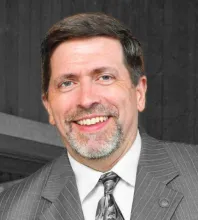
Dan currently pastors 3 congregations in Wisconsin (Milwaukee, Oshkosh and Wisconsin Dells). He has been associated with God’s church since he was a young boy.
Dan has an Associate degree in Commercial Art with almost 26 years in the publishing/advertising field. He also has a Bachelor of Arts degree (in Theology) from Ambassador College (graduating in 1986), was ordained an elder in 1997 and then was hired full time in 2004 as a minister in United Church of God.
Dan currently lives just north of Milwaukee, Wisconsin with his wife Roxanne.

