
Robin S Webber
This transcript was generated by AI and may contain errors. It is provided to assist those who may not be able to listen to the message.
Mr. Robin Weber. Well, I want to get right into the message here this morning for you. I recently addressed a great gnawing question with the San Diego congregation, and that was, why does God let good people die? I gave that a couple of weeks ago in San Diego, right after Mrs. Sheila Gardinhire had died, and it was very important. I think all of us realized that Mrs. Gardinhire had been a very relevant part of the San Diego congregation, along with her husband, for about 50 years. And if you're not speaking about that, which is not relevant, then you're not speaking about anything at all.
And so that was that message. I would encourage you, if you can, to listen to that message. I think it was helpful to the congregation there, and would be helpful in whatever venue there might be. But I want to build upon that, so I'm going to ask you to kind of go back and maybe listen to that.
You can pick that up on the San Diego webpage. I think it'd be really important to look at. But I want to build upon that today, for all of you, because I'm going to be giving this message as well this afternoon, when we're going to be having the San Diego congregation.
We'll be having a lot of family members coming in, and friends in the community. And today, I want to build upon that foundation. What is the foundation? Why does God allow good people to die? But I'm going to build upon that foundation this afternoon, because if we do die, then here's the question. So what's life about anyway? And that's the title of my message this morning to you. So what is life about anyway? Because the message that I'm going to give today, we're going to touch on death again for a moment. But this is really about life and the life that you and I can have by the guidance of God the Father and Jesus Christ.
The matter of life and death has weighed heavily, I would suggest, on all of us of recent date. I know for Susie and me, it has, because we interface with five different congregations. Many of you, to a degree, stay focused on Redlands, even though we have friends and acquaintances everywhere else.
And well, sometimes what is happening in one congregation is multiplied five times with us, and all coming at us at once. And to a degree, it can be very, very sobering. Just recently, over the last two weeks, we've had three deaths in our circuit, just almost one after another, etc., etc. I know here in our own congregation, over the years, we have had deaths. Understand that. But we need to talk. So we're going to talk today a little bit about, so then, what is life all about? And I realize, in speaking about this, that when somebody experiences death in the church, the church comes alongside.
And as a minister, we come alongside. But I also recognize that we're not in the actual goldfish bowl with the person that is going through that experience at that time. But nonetheless, with so much happening, it has allowed us to consider life and consider death seriously. And it reminded me, I'm speaking to myself, that it reminds me that no matter how well we feel today, and some of the younger people here, the teenagers, they even might feel semi-immortal. That the truth of Psalm 90 pounds away at us. The days of our lives are 70 years. And if by reason of strength, they are 80. Now, that sounds like a long time, especially when you're reading that as a teenager.
When you're 65, as I am, as some of you are, that doesn't sound so long away. But the wisdom of James, and the book of James tells us this, for what is life? Because that's what we're going to be talking about. For what is life?
It's like a vapor that appears for a little time and then vanishes away. What is death all about? And what purpose does death serve we that are the living?
Death jolts us, just like a two by two by four, straight across the kisser of our life. It halts us, it wakes us up, and it makes us consider what life is all about. Some people can stay frozen in death's dark grip. But the purpose of this message today is to make us to think about life, and life before God, and to realize that God wants to also give us life eternal. So we're going to examine life today, okay? Your life, my life, the Christian existence.
Why is that important? Of all people, I'm going to start with the Greek philosophers saying we mentioned that our people are going to the Greek feast site, but it's a phrase that you often hear, especially in philosophy in college, comes from Socrates. The unexamined life is not worth living.
The unexamined life is not worth living, and when people in our midst have died, we grieve, we long for them. But it's like that two-by-four that smacks us in the kisser of life, makes us stop and makes us think about how we are living while we have this vapor of life within us. Socrates, the unexamined life is not worthy, worth living. About 2,000 years later, Thoreau added to this, or as they say in New England, Thoreau.
That's how they pronounce it back there, the New England philosopher. And he wrote in Walden's Pond, please listen but for a moment. Thoreau said, I went to the woods because I wished to live deliberately and to front only the essential facts of life. And, see, if I could not learn what it had to teach and not when I came to die to discover that I had not lived, I did not wish to live what was not a life, because after all, living is so dear.
He went on later on to say in Walden's Pond that our life is frittered away by detail. And he encouraged simplicity, simplicity, simplicity. It's very interesting that even the Apostle Paul said that there is what? A simplicity which is in Christ. So, what Thoreau was basically advocating in his own unique way, because he was indeed unique, is simply this, back to basics. And what is life all about? Life for us as Christians is about responding to the call of God the Father. And it's about emulating the example of his son, Jesus Christ. Being a Christian, we come to realize that we only have so long to exist.
That's what the Scripture tells us. In what the Apostle Peter calls in 2 Peter 1.13, you can jot that down. He calls it a tent. He calls it a tent. I know many of you are campers here. I'm looking at one. And you go and you set up a tent, and as well and as sturdy as those poles are, compared to your house, it looks pretty flimsy.
And if you have a big gust of wind up in the mountains, it may blow down. But Peter calls our life a tent. And recognizing that, we come to realize we only have so long to exercise the indwelling of God's Spirit in us. That precious possession, an essence that God has embedded in our existence, we only have so long to use this gift and to glorify Him in thought, word, and deed.
Jesus understood this. I'd like you to join me if you would in John 9 verse 4 for a second. John 9 and verse 4. In John 9 and verse 4, let's take a look. Jesus speaking as it is in red in my Bible. I must work the works of Him who sent me while it is day.
The day the night is coming, excuse me, the night is coming when no one can work. Jesus, being the I Am and being the Son of Man and having that measure of divinity in Him, understood that He had three and a half years to do the work of being the Son of Man, of being on this earth, three and a half years until He would be crucified for us. So He understood that, and He had to be about His Father's business. I have a question for you. Do you and do I have three and a half years to be about our Father's business?
Jesus said He had to be about it now. Every moment counted. Now, He's our example. He's the one that the Father has placed before us to emulate, and He was busy about being the example for us. And everything He did on this earth was to glorify His Father above. Right?
Do you have three and a half years? Do I have three and a half years? So today, my focus for the remainder of this message is simply this. So what's life about anyway? There are big questions, great questions through the Bible that beg an answer from us. I'm saying that in the plural, from us. I'm talking to myself. That we might live, and I'm going to hope to pinpoint them one by one in a systematic manner that allows us to have a renewed existence for we that are living. People like Mrs. Gardenhire, people like Mrs. Mueller in Los Angeles, and others.
Their journey is done. Their pilgrimage is over.
Ours goes on. We're going to talk about that then. We're going to look at it. I'm just going to go through some of the major questions, and a lot of this is frankly just going to be Bible reading. Nothing like just quoting God to make a sermon. So we're going to start with Job 14. Join me if you would for a moment. One of the great questions that was asked nearly 3,800 years ago in the book of Job, Job 14. Let's take a look at it. Job 14.
And you know what's interesting is that when you see this written 3,700 years ago, they had the same questions. And these people have the same hopes as you and I do. Look at Job 14.
Let's start in verse 13. Oh, that you would hide me in the grave, and that you would conceal me until your wrath is passed, that you would appoint me a set time and remember me. Now, here comes the question. One of the great questions of the Bible. And we notice it here. If a man dies, shall he live again? That is the question. And here is the plea. All the days of my hard service I will wait till my change comes, and you shall call, and I will answer you. And you shall desire the work of your hands. For now you number my steps, but do not watch over my sin. My transgression is sealed up, and in a bag, and you cover my iniquity. There is a question that is asked, and there is an exclamation of hope that is rendered by the verses that follow. Job, the patriarch, understood that a purpose was being worked out here below. Not by accident, but by design. I have a question for you that I want to pose to you. Do you live a life of design as a Christian, or do you live an accidental existence?
You know, we do say that some people are accident prone. I happen to be one. It's a good thing I played ball, and my high school coach taught me how to roll and to fall.
God probably knew I was going to need it in my life. And to recognize this, though, all levity aside, are you living by design? Or are you just living from feeling to feeling, and moment to moment, and turbulence to turbulence, as if there is not a God? There is no lonelier, there is no lonelier Christian than one that lives as if God does not exist in their life. David had another question. Join me if you would. We're just looking at questions, and answers are coming here. In Psalm 8, verse 3. Psalm 8, verse 3. When I consider your heaven, the work of your fingers, the moon, the stars which you have ordained, now comes the question. What is man that you are mindful of him, and the son of man, that you visit him? It's interesting that David denotes that God is mindful. He's concerned, and it does say that he does visit. There is an immediacy and an intimacy that only the living God can provide. What is man that you might be mindful of him? We go back to Genesis 1.26, the very foundation of this entire book, where we understand the purpose of God for a moment. Let's come to 1.26. Then God said, Let us make man in our image, and according to our likeness, unlike any of the rest of the creation, and let them have dominion. Verse 27, so God created man.
Man was not an accident. Man was not initiated by photosynthesis, but was created. Not by design.
So God created man in his own image. In the image of God, he created him, male and female, he created them. But we recognize something between Genesis and Job and David, that this is merely the first creation. There's another creation, which comes with the indwelling of God's Spirit. When God the Father begins to call us, as it says in John 6.44 and John 6.65, there's a calling, there's an acceptance, there's a repentance, there's a faith towards God Almighty, and that there's a purpose, and that he is our Father, and that Jesus Christ is our Savior.
And we submit to that, and we surrender to that. In 2 Corinthians 5 verse 17, you might want to jot that down. We're not going to turn to it right now. It says, don't you know that you are a new creation?
So often people talk about, and you're probably with me, everybody always talks about the creation story, right? No, the creation story is continuing. There's two creations. There's one of dust, or clay, you have your choice, and there's one of the Spirit. That's why God says to Paul, you are a new creation. Now that creation is still in process, and it is still molding, and we're going to talk about that towards the end here. But to recognize then that because of that, brethren, we are not to live accidentally. Actually, the Sabbath is a great joy because the Sabbath itself allows us to pause, and to reflect, and to rewind, and to reboot, recognizing where we are in this world, and or how much we're trying to strive to be like God.
Let's go to another question, okay? Join me if you would in Psalm 15.
These questions are to the living, for there is no knowledge that goes to the grave, is there? So this is for us now that proceed and move forward.
Psalm 15.
I want you to put on your seatbelts because we're going to get personal here in a few minutes.
Psalm 15 verse 1, Lord, who may abide in your tabernacle?
A Psalm of David, who who may abide in that holy spot? It's a question. And who may dwell in your holy hill? We might move this forward from the tabernacle to the temple, to ultimately the heavenly Jerusalem, where we will abide forever.
Then it gives the answer. And ask yourself, is this your answer? Is this where you are headed?
Is this the design that you're allowing the Spirit of God to develop in you? He who walks uprightly and works righteousness and speaks the truth in his heart?
You know, when you speak the truth, you never have to remember what you said. A Christian is not only to love the truth, but is to speak the truth.
Not only to love the truth, but to speak the truth. Because if you don't speak the truth, you have more to deal with in your love affair with God's truth.
Notice verse 3, He who does not backbite with his tongue, nor does evil to his neighbor, nor does he take up a reproach against his friend, in whose eyes a vile person is despised, but he honors those who fear the Lord.
He who swears to his own heart and does not change. Because you and I are people of integrity. He who does not put out his money at use, nor does he take a bribe against the innocent.
He who does these things shall never be moved.
By your life's actions right now, we the living that have time for the moment, that are not to live by accident, but by design. By reading this, are we inching towards dwelling on God's holy hill?
I really reflected on this this morning, looking at myself and analyzing, because I'm just preaching to myself. I realize sometimes I have spiritual goals or I have spiritual needs. I have things to change in my life. Susie and I talk sometimes about this, and we've got to do this, and we've got to do that, we've got to do this, and we've got to do that. And sometimes we say, well, we'll start tomorrow. Tomorrow is a double-edged word. It is a word that, in a sense, it comes with incredible opportunity to sleep on things and start anew and to start afresh. And it's likewise perilous, based upon how we choose it. We that are just a hundred miles above the Mexican border, we know the Spanish lingua, we always say, mañana, mañana!
We quote little old Scarlett O'Hara in Gone with the Wind, oh, Rad, I'm just so tired. Well, after all, there's just always tomorrow.
What are we putting off tomorrow that we ought to be starting right today on God's Holy Sabbath?
I'd like to read from, like for many lamps, it speaks of a sermon that was given nearly 120 years ago by a very famous New York preacher. His name was Philip Brooks. He was in a big church, and you can imagine all the people from Park Avenue and Fifth Avenue and Manhattan would come to that church, and they would come not in their Sabbath best, but they would most likely come in their Sunday best. But you know what? You can wear your Sabbath best, and you can wear your Sunday best, and you both have human nature that we need to contend with. And it's very interesting because he, as every pastor, knew all the ins and outs and the angst and all the corners that people were walking up. Why that person was sitting over there and that person was sitting over there, and why that person sneezed when the other person passed by so they wouldn't have to talk to them. This happens in congregations. Avoiding one another. Putting off and putting off. And I'd like to quote from Mr. Brooks for a moment, because what he would do to you would plead for tolerance and understanding. What he was pleading for was brotherly love. What he was talking about was Psalm 15. And he said, oh my dear friends, he said, and it was as though he spoke to each person separately and alone as I do to you right now. You who are letting miserable misunderstandings run on from year to year, meaning to clear them up someday. You who are keeping wretched quarrels alive because you cannot quite make up your mind that now is the tie to sacrifice your pride and kill them.
You who are passing men suddenly upon the streets and not speaking to them out of some silly spite. And yet, knowing that it would fill you with shame and remorse if you heard that one of those men were dead tomorrow morning.
You who are letting your neighbor starve till you hear that he is dying of starvation. Or letting your friend's heart ache for a word of appreciation or sympathy. Would you mean to give him someday, if you only could know and see and feel all of a sudden that the time is short? How it would break the spell? How you would go instantly and do the thing which you might never again have the chance to do? Indeed, the time is short. Indeed, we have situations in our marriage, situations in our extended family, situations at work, situations in our community, situations right here.
It's interesting. It goes on to say that as the congregation went out that day, it was like they were on a spiritual high. People started talking that had not talked for years because those words were directed to them straight on, just like that two by four. Life is short. Time is short. What are you doing about it? Rather than tomorrow, today is the day to begin whatever action you need to have in your life. Because remember, we only have so long to utilize in this physical tent the gift of God's indwelling Spirit, His very essence, the Spirit of God the Father, the Spirit of Jesus Christ in us. We hold it in this vessel, and we only have so much time to utilize it and to give love to others and to honor God and to glorify God by how we utilize it. Join me if you would now in Micah 6 and verse 8.
This is the GPS. Another question out of the Scripture. We find it in Micah 6. I think of Micah. I almost skipped over to the New Testament here in my book, my Bible. Here we go. Micah 6 and verse 8. Another question. Just questions. Not my questions. This is what God is. These are God's questions that fall on our heart. He has shown you, O man, what is good and what does the Lord require of you? Question. What does the Lord require of you? But to do justly.
To love mercy and to walk humbly with your God.
Do justly. To love mercy. Just to love it. Just as much as Jesus Christ, during his earthly ministry, loved granting mercy to people. Just as much as with that woman that was caught in the act of adultery. How he thrived in that moment. Recognizing the sin, recognizing the law, but providing mercy. And to walk humbly with your God. Humility is the graveyard of pride.
Humility is the death of pride. It's putting away your favorite idol, which is you and which is me, spelled little God. Lower cat. Lower case. G-O-D. And surrendering, surrendering our pride, our human reasoning, our self-justification, and our self-righteousness. And giving it to God. Mark 12, 28.
Mark 12, 28. Another question. Now we move to the New Testament. In Mark 12, 28. Let's notice what it says. Then one of the scribes came, and having heard them reasoning together, perceiving that he had answered them well, asked him, notice, which is the first commandment of all? Question, what should be our priority? And Jesus answered him. The first of all of the commandments is, and he quoted from the Old Testament, he quoted what is called the Shema. O Israel, the Lord our God, the Lord is one. God alone. God alone.
That is where our allegiance is. And ye shall love the Lord your God with all your heart, with all your soul, with all your mind, and with all your strength. Nothing left on the bench, all the skin, all the heart, on the floor, in the arena of life, with certain teams, certain opponents that are coming at you that you haven't expected, that maybe you have not even trained for, if we use the athletic analogy. And yet, knowing the wisdom of God as spoken by James will guide and help us. And notice the second like is this, you shall love your neighbor as yourself, and there is no other commandment greater than these. No commandment greater than these.
Kind of interesting. You shall love your neighbor as yourself, understanding that the way of life that you and I exist in is both vertical and horizontal. Some people that call themselves Christians are real good at the vertical. You and me, God, we're one. But that oneness with God has got to go out. It has to go out. You cannot just simply be a horizontal Christian. You must also be a vertical Christian, because Jesus himself said, if you have loved the least of these, then you have done it unto me. One of the great questions of Scripture, and I'll just allude to you. You can go to Luke 10, 25, 29. It's the story of the Good Samaritan. And the man came up to me and said, okay, with all of that said, who then is my neighbor? And thus becomes the greatest, one of the greatest, two or three greatest messages in all of Scripture. Utterly profound, so Jewish in nature, story to point, inductive. And it's the story of the Good Samaritan.
It's the story of the outcast, he that has looked down, who is the one that takes care of the man that's been robbed on the way down to Jericho, which Carlisle's have probably been on, or the March Banks, on the way down to Jericho, because you are going down. Jericho is below sea level.
See, I knew that, and I haven't even been there, so that it's below sea level. It's like going up to Jerusalem. It's like going down to Jericho. And then at the very end, he says, and he asks a question, so Jewish in nature, so rabbinical, he says, who then is neighbor? That's all he says.
Because the Jewish manner of education is to put the answer in the question, and you're left hanging, and you better fill in the blank. For you do you know that the term good Samaritan is never mentioned in the Bible? Did you know that? And yet, for 2,000 years, even atheists who help somebody off the road, they're called good Samaritans, aren't they? Christianity, while we have life, is not only vertical, it's horizontal. Join me if you would in Matthew 19, 16. Matthew 19 verse 16. Another question. Now behold, one came and said to him, good teacher, what good thing shall I do that I may have eternal life? That's a good question. Are we all in agreement? What can I do to have eternal life? So he said to him, why do you call me good? No one is good, but one that is God. But if you want to enter into life, keep the commandments. And then he said, which ones? And Jesus said, don't commit murder, adultery, don't steal, don't bear false witness, honor your father and your mother, and to love your neighbor as yourself. And the young man said to him, all these things I have kept from my youth, what do I yet lack? Question, what do I yet lack? And Jesus said to him, if you want to be perfect, go sell in what you have and give to the poor, and you will have treasure in heaven. And come follow me.
But when the young man heard that, saying he went away, very sorrowful, for he had great possessions. Well, how can we understand this? You and me, perhaps we don't have great possessions. Perhaps we have very few possessions. But all of us have possessions, things that we have held on in our life for 40, 50, 60 years. Some of our hurts, some of our sorrows, some of our fear. And we don't let go of them.
In some distorted way, they are rich to us because we become secure in our insecurity.
And they become like a worn-out wallet. They become like a comfortable slipper. They become like a familiar shoe, and we just kind of keep on holding onto them. When everybody says, including God above, I can carry your burden. You unload, and I will carry you. I will help you. And yet we hold on to it. When God says, just as Jesus said to the rich man, overboard, get rid of them, toss them, rely on me. The guy didn't know what to do without his possessions. Do you, as a Christian, know what to do without your lifetime fears? Your lifetime worries.
That which you are still carrying in your life that God has said, you put on my shoulders, and I will carry you.
Big questions that only you can answer.
We the living. The time is short while we have time. You know, God, in turn, asks his own questions. We have questions. The patriarchs have asked questions. Let's turn it around for, as we begin to conclude, questions that God would ask of us. To the living. And to those that have Jesus Christ himself living in us. To remind us of what the Apostle Paul says. Don't you know... Hello out there? Is anybody listening?
Don't you know that Jesus Christ himself dwells in you?
And there are three questions that the Christ asks of us.
I'll just allude to them, and you can go home and study them this afternoon. Matthew 16, 15.
Who do you say that I am? Who do you say that I am?
And like Peter, only you can provide that answer.
And there's a question that he will always pester us with, and he will keep on coming at us. That we find in John 21. Do you love me?
Do you love me?
Not Lord, Lord.
But do you love me?
Do you even like me?
A little.
Of course, like Peter, we say, looking at John, but what about that man? What about him?
And the Christ says, don't worry about that man.
I'm talking to you.
Do you love me?
Jesus in Bethany.
Talking to Martha said, I am the resurrection and the life.
And he, even though he were dead, if he believes in me, he shall rise from the grave. And Jesus asks a question.
See, God has questions too. We're turning around the table. Do you believe this?
Do you believe this?
It's very poignant right now with what we're going through as a circuit. Let's continue and finish with verses that we find in Romans 8.
Three big questions. Again, God turning the tables on us and asking of this. Romans 8, 31. Follow with me. This is laid out as a case. Question answer.
What then shall we say to these things? That's the question.
The answer is this. If God be for us, who can be against us? Well, how can we say that? He who did not even spare his own son but delivered him up for us, all. How shall he not with him also freely give us all things? Next question. Who then shall bring a charge against God's elect?
It is God who justifies is the answer.
It is God that justifies. Verse 34. Another question. Who is he who condemns? It is Christ who died and furthermore is also risen, who is even at the right hand of God, who makes intercession for us.
God doesn't condemn us.
We condemn ourselves. But with that spoken, we are offered grace.
You may want to jot this down very quickly, and you can go home and think this one out this afternoon. Judgment is simply what we deserve. Just like a baseball player. You're out!
Tomorrow at the Super Bowl. 15-yard penalty. Whole crowd starts booing. At least half of them.
Judgment is what we deserve.
Mercy.
Mercy is God not giving us what we deserve.
And grace.
Grace is God giving us what we don't deserve. What we don't deserve.
But with everything that I've seen, brethren, I want to show you something. Let's all look over here. Here goes the PowerPoint.
We need to understand this.
That eternity, and God, and the Word, now Christ, they're on this side. One day, they are going to welcome us into eternity. We are going to become the immortal children of God. And they're going to welcome us, and that door is going to open.
But it opens from their side. Eternity opens from God's side, okay?
I'm going to come back in a moment. I'm going to close the door, okay?
Did you hear that?
But God wants to know that we're pushing. He wants to know that we are leaning. He wants to know that with all God, God's entrance into eternity is by God's grace. But He wants to see our effort. He wants to see our desire with all of our spiritual weight, with all of our hope, leaning on that door, because we recognize how pressured it is what God has in store for us.
Last question. Last question. Last question. Last question.
Who then shall separate us from the love of Christ?
Shall tribulation or distress or peril or sword, as it is written, for your sake we are killed all the day long, and we are accounted as sheep for the slaughter. And then Paul rolls off, because he even thinks about more of things that you and I might think are going to separate us, but it doesn't.
Let's conclude this message.
So what is this life about anyway? Try to answer it by asking the big questions of the Bible, giving some of God's answers. Allow me to conclude with something that was written about 140 years ago by an American writer, Uncle Waltie Walt Whitman.
Goes like this.
O me, O life, of the questions of these recurring.
Of the endless trains of the faithless, of cities filled with the faithless. What good amid these? O me, O life.
And here's the answer.
Because Uncle Waltie said answer, that you are here, that life exists, and you have identity, and that the powerful play goes on, and that each and every one of us, with the story of God, I'm now paraphrasing, but now back, may contribute a verse.
Look forward to seeing you after services.
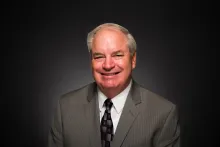
Robin Webber was born in Chicago, Illinois, in 1951, but has lived most of his life in California. He has been a part of the Church of God community since 1963. He attended Ambassador College in Pasadena from 1969-1973. He majored in theology and history.
Mr. Webber's interest remains in the study of history, socio-economics and literature. Over the years, he has offered his services to museums as a docent to share his enthusiasm and passions regarding these areas of expertise.
When time permits, he loves to go mountain biking on nearby ranch land and meet his wife as she hikes toward him.
