
Robin S Webber
This transcript was generated by AI and may contain errors. It is provided to assist those who may not be able to listen to the message.
I'm looking forward to bringing this message to you because I think it's one of the most important messages that I've given for some time. And I should go back a fortnight. For those of you that know what a fortnight is, that's 14 days. That's two weeks ago, and it was on God's Holy Sabbath day that we began to receive breaking news that was happening on that Saturday at an event back east.
The shocking news came that there was an attempted assassination on a presidential candidate. And we that are older, going back to the 60s, remember many, unfortunately, in an assassination attempt on public personalities, most of them successful, that changed the course of lives and changed the course of history. As things began to settle in and we got more information and couldn't verify what was happening, my takeaway at that point was it was amazing and stunning what can happen just in one moment in time that can change our lives. Here, two weeks ago, it seems like it's been a lifetime with all the news that has come out since, that there was an attempt to snuff out the life of a presidential candidate by an ear, by two inches, literally, by two others that were wounded, and by a very brave bystander, an ex-fireman that was trying to save his wife and children and became a human screen and died.
All our fellow Americans, one and all. As events settled a bit, people began to wonder about the individual that had been the center of that assassination plot. And two questions began to swirl. There are questions that were not only asked by the media and all of our American friends and fellow Americans, but by all of us. And I'm going to lay them out for two questions began to swirl.
Number one, will it change and will it humble the candidate? We're all familiar with that. Will it change and will it humble that candidate? Number two question was this, will it alter the divisive political discourse that now splits America more than ever, probably as much as any election since 1800 between Jefferson and, yeah, between Jefferson and John Adams.
So our energy and our thought goes, well, what about that individual? Are they going to change by what has come to them in one moment of time? My question and my takeaway is simply this, and all things make it personal, because those that do not learn the lessons of history are doomed to repeat them again and again, all of the saying of the historian Santiana. And it is simply this, will this event and what I take from it personally myself, will it jolt my personal perspective, spiritually speaking, as to how fragile and how temporary our own lives are, and recognizing how precious our allotted time here and now truly is.
For after all, we've been reminded with this tragedy that we all have, all we have, all we have is this moment in time. And we don't even necessarily have tomorrow. Even as human beings, as human beings, and being in Southern California, we're more attuned to the Latin language than the Spanish.
We tend to exist on mañana. We all know mañana. A little bit like, again, I don't think she was speaking Spanish, but I remember Scarlett in Gone With Who End. Oh, I can't think about it today, because, well, after all, well, there's always tomorrow. And then, you know, the swelling MGM music and the clouds and the heavens and the whole thing. But do you and do I have tomorrow? We're going to discuss that today and how we deal with that. Let's ask ourselves a very basic, personal question. How would we live tomorrow, today, if we knew there would be no tomorrow for us?
I know I talk to people, and looking at this audience, I know that all of us at times have experienced great jolts in life. All of a sudden, life turns upside down. And it's only by the grace of God that we can put two steps together and begin walking again, recognizing that God is still with us. We don't, I've told you this before, I remember long time, oh, must have been about three or four years ago, and you've heard this, but I walked into the kitchen. See, you've got to remember, you know, I'm your pastor, but I'm just Susan's husband, right? I'm just a man. And I went in, I thought, is there anything that I can maybe say?
Like, wow, you know, I'll get it, you know. And I went, I walked into the kitchen, I said, Susan, I said, all we have is today. I thought, pre-convise, and Susan said, no, wrong. All we have is the moment.
And that's been one of the greatest, soundest advice that I've ever received. That life is not in days, it's not in weeks, it's not in years. It's moment by moment as to how we enter it, how we exist in the moment, and hopefully by God's grace we will have more moments along, but only God knows that. Allow me to share a story with you for, to bring you into the message. There was a man who was having a medical checkup, and he went in to see his doctor to get the results. The doctor said that he had bad news and that he had worse news for him. So which did he want to hear first? Well, the man was kind of nonplussed. He said, well, doctor, just give me the bad news.
And the doctor said, well, I've got to let you know this. You only have 24 hours to live.
And the man was no longer nonplussed. He was, what? Got up, walking, oh, this is horrible. This is terrible. How can this be? How can there be anything worse? This is the bad news? He says, well, there's worse news. He says, I was supposed to tell you yesterday, but I forgot.
And so let's think about that for a moment. Let's think about this for a moment. Because it leads me to the title and the specific purpose of my message to all of us today. And when I say to all of us, I want to put me right in there with all of you, because I think this is important for us to allow what happened two weeks ago to sink in so that we might better be able to serve God and to be able to serve one another as Will just brought out in the fine lyrical message that he just sang to us. The title of my message is simply this, teach us to number our days. The title itself begs us to understand who is the teacher, number two, who are the students, and number three, then, the grand necessity of why this assigned task. For those that are disciples of Jesus Christ, for those that are the members of the body of Christ, this is an assignment that each and every one of us got to come to. Grab a hold of, live within, embrace, and to be able to learn from it. Join me if you would, and let's go to Psalms 90 and verse 10, which spells out the thought of, teach us to number our days. Psalms 90, if you'll join me there, and picking up the thought if we could in verse 10.
And the days of our lives are seventy years, and if by reason of strength they are eighty years, and or for score. Yet they're boast is only labor and sorrow, for it is soon cut off, and we fly away. Who knows the power of your anger? For as the fear or the reverence thereof of you, so is your wrath. So now notice, here's the assignment, so teach us to number our days that we might gain a heart of wisdom. There is a cause, and then there is an effect.
If we take the time and consider and add up not only days but our lives, and give them to God, that we will be able to gain wisdom. And all we have is the moment. I'd like to read this out of the Passion Translation. I'm not overly familiar with it, but I thought it was a good rendering. The Passion Translation puts it this way, help us to remember that our days are numbered, and help us to interpret our lives correctly. What does the Scripture say about that? There isn't a man who walks, and ladies too, who alone knows how to direct their steps. Set your wisdom deeply—speaking, imploring God—set your wisdom deeply in our hearts so that we may accept your correction. The one difference between our God, who inspired David with these words to bring down to us 3,100 years later, and the doctor, is simply this. God has not forgot to inform us. God has not forgotten to inform us, and this is why Psalm 90 is like a lighthouse. Wake up! Wake up! We know the old expression from the times that we were youth, where it says, you know, death and taxes—death and taxes—doesn't happen to everyone else. It does come our way. It does come our way sooner or later.
If you go to a cemetery, and as a pastor I'm often there, it's kind of like a virtual office, because I'm often asked to give messages. And I also go and, at times, have had opportunity to visit my brother's tomb down here in San Diego. I also, on occasion, go up, and I go up to see my folk's tomb up at the National Cemetery in Riverside. But, you know, all these tombs have something in common. There is a birth date, there is a dash, and then there is a death date. Birth date, dash, death date. Sometimes when you have created your tomb ahead of time, and perhaps another mate is in at this time of sleep, that your name might be on there, where you just have your birth date and you have the dash, but you don't finally have the end date. We know when we were born. We do not know. Any of us do not know the moment that we are going to die. And if we die, we're maybe not even aware of that moment. The bottom line is simply this. We had nothing to do being born. That was our parents. We don't know we're going to die. So we've got to place our emphasis on where do we center our life's energy. It is in that dash.
That maybe the audience that goes by and looks down and sees so and so and so and so, they see the dash.
But God knows what you have put into that dash. That dash is really what says everything about you that is recorded by God as He looks down and wants our very best. God can count the hairs on our head. We can't, even though it's getting simpler for me at age 73. And He alone knows the number of our days. So let's ask ourselves the big question. Not about everybody else but ourselves and be real today.
Here's the question to ask. Do events really change people? Not just for the moment, but enduring. Join me if you would in Exodus 8 verse 19.
This is the story of the plagues of Egypt.
And they have begun.
And then notice what happens here as we go down to verse 18.
Exodus 8, 18, Now the magicians so worked with their enchantments to bring forth lice.
Serpents for serpents, lice for lice. You know, it just kind of was going. But it wasn't happening.
They couldn't. So there were lice on man and beast. Now notice verse 19. Then the magicians said to Pharaoh, This is the finger of God.
This is we're not we're not fighting with the ordinary.
Something extraordinary is occurring here.
He's put the touch on you, Pharaoh. He's put the touch on Egypt. But notice what it says, but Pharaoh's heart grew hard, and he did not heed them just as the Lord had said. Interesting.
Pharaoh ignored the finger of God. I have a question for you.
To be honest, are there times when the moment of waking up has come your way for one reason or another, and you knew it was a moment that there was an expectancy of where were you going to go from that point forward in being God's child?
And you had momentary enthusiasm. You took one step. You took two step, and then you started doing the old back step. The moment came. The moment jolted you, and then we went flat.
Let's talk about moments for a moment. Join me if you would in Luke 13. In Luke 13 and verse 1, remember, we have moments.
It's not the matter of moments, but what will we do with them? In Luke 13 and verse 1, there were present at that season some—this is defining where Jesus is going to speak—there were present at that season some who told him about the Galileans whose blood Pilate had mixed with their sacrifices. Galileans were always a little excitable. Those guys from the north, and they'd come to Jerusalem, and they were ready to rumble. They didn't like the Romans.
Pontius Pilate seemingly massacred some of them.
Verse 2, Jesus answered and said to them, Do you suppose that these Galileans were worse sinners than all other Galileans, because they suffered such things? I tell you, no, but unless you repent, you will all like perish.
Here's the moment. Here's where change may be needed.
This may be the moment in which, as it says in Revelation 3.20, where Jesus says, I stand, I stand at the door knocking. If you will open that door, not tomorrow, not next week, not beyond Monyana, I will come in and I will dine with you. Let's take the story further.
Of those eighteen on whom the tower in Silion fell and killed them, do you think that these were worse sinners than all other men who dwell in Jerusalem? I tell you, no, but unless you repent, you will also likewise perish.
We don't know about these individuals. The tower at Silion was probably near the temple area. It was in that part of Jerusalem. There's not a lot known about that edifice, etc. But what happened is there was a moment where somehow that tower collapsed. I don't think there was any dynamite back then. These things happened. Just as much as the experience I talked to you about going on the northbound 15 to Las Vegas, that happened yesterday and backed up all of LA trying to leave the state in that sense for going to Las Vegas. Things happen. Things happen in the moment. Join me, if you would, in Ecclesiastes, a book of wisdom, where to gain a heart of wisdom. So Ecclesiastes is good. In Ecclesiastes 9, I'm picking up the thought if we could in verse 5.
For the living know that they will die. Don't know when, but they know they will die. If you don't think you're going to die, you might just start pinching your... I'm going to die. Okay.
Poke. We're humans. But the dead know nothing, and they have no more reward for the memory of them as forgotten amongst men, not not by God. And their love, their hatred, and their envy have now perished. They've come, they've been, they were. Nevertheless, they will have a share in anything done under the sun. Go eat your bread with joy, and drink your wine with a merry heart. For God has already accepted your works, and let your garments always be white, and let your head lack no oil. Live life! This is not about doom and gloom. This is not... No. God wants us to have an abundant life. God wants to have joy in life, every chapter of life. Is, is it always to be a joy bunny? No. There are chapters in life, and we may cover those later. But He wants us to exist with Him and to have, to have the fullness of life. Live joyfully, verse 9, with a wife whom you love all the days of your vain life, which He has given you. Under the sun, all your days of vanity, for that is your portion in life, and in the labors which you perform under the sun. Whatever your hand finds to do, do it with your might, for there is no work or device or knowledge or wisdom in the grave where you aren't going. Exist in the moment. And of course, as Christians, not just simply for ourselves, but in partnership and in obeiances, in obeyance and in faith towards a good God.
He says, I return and saw under the sun that the race is not to the swift, nor the battle to the strong, nor bread to the wise, nor riches to men of understanding, nor favor to men of skill, but time and chance happen to them all. For man also does not know his time, does not know his time, like fish taken in a cruel net, like birds caught in a snare. So the sons of men are snared in an evil time when it falls suddenly upon them. The wisdom I have also seen under the sun, and it seemed great to me. There was a little city with few men in it, and a great king came against it, besieged it, and built great snares around it. Now there was found in a poor wise man in it a poor wise man, and he by his wisdom delivered the city, yet no one remembered that same poor man. Then I said, wisdom is better than strength. Nevertheless, the poor man's wisdom is despised, and his words are not heard. Time and chance. Is God asleep at the switch? I say, no. Time and chance happens to us, and at times what God allows and pours into our life. Sometimes not understood is beyond the moment.
But in faith we recognize that one day we will see those that perhaps we wonder what happened here.
The question is when big things happen in our life, and or Christ is knocking at the door of our heart.
What happened two weeks ago? Will it change that presidential candidate? Will it change the American population the way that they think about this or that? And one half of the population looking at the other half of the population saying what are they doing here would be a much better country if the other half did not exist? That's where we are today. We have to ask our question, whether it be about the men at the Tower of Selium or situations like I've just read about time and chance. Such jolting near-death experiences, will it change that individual? On the other hand, will near-life experience with Jesus Christ change us? Will near life—not death, but life experiences—where the Prince of Peace and the Prince of Life knocks on the door of our heart in that moment and are moments that have happened to others, but somehow we need to internalize that to be able to serve Him better. Will that enhance this? Join me if you would in Luke 9.
In Luke 9, verse 56, this is not a near-death experience, but this is a near-life experience.
Now it happened as they journeyed on the road, verse 57, as they journeyed on the road, that someone said to them, Lord, I will follow you wherever you go.
And Jesus said to them, foxes have holes and birds of the air have nest, but the Son of Man does not have a place to place his head.
What happened to that individual? No. Bye-bye. He was near the Prince of Life, and you don't hear about that individual again.
Christ was knocking on his door. There was an invitation. It was challenging because there was going to be sacrifice by what He says. We don't hear about that individual again. Verse 50, then He said to another, follow me. But He said, Lord, let me first go and bury my father.
Jesus said to him, let the dead bury their own dead, but you go and preach the kingdom of God.
We don't hear about that individual again, and there's a greater explanation and messages I've given in the past on this specific one. But in that moment, that gentleman did not rise to the occasion. That gentleman did not rise to the occasion. And another also said, Lord, I will follow you, but first let me go back and bid farewell to my household, my family, my village, my friends. But again, what happened? But Jesus said, No one having put his hand to the plow, and looking back is fit for the kingdom of God. A question to make this come into our lives. Again, how often has the moment come? A moment that is to move us not further from, but towards the life of Jesus Christ living in us. And we've said, not today, not now. No, I'm not going to change right now. See, we as Christians, we can't worry about a presidential candidate, whether he should change or not. That's the business. That's between him and God. We can't worry about the differences between our fellow Americans. We can pray about it, and we need to be praying about that, especially that the gospel then might have free course. But so often we put it off on other people, rather than asking, What about me? What am I going to do about this?
That's the point I'm trying to make today. Isaiah 64, verse 8.
We talked about the finger of God. We're going to take it a step further.
In Isaiah 64, verse 8, But now, O LORD, you are our Father, we are the clay, and you are the potter, and all of us are the work of your hands. God has just had a finger.
He's molding, and he's shaping us. Not just for the moment, yes, in the moment, as we draw upon him, as was our special music day, as we yield to him, as Jesus said, as we allow God to shape us.
He's molding us, not just for the moment, but that one day we might be in eternity with him. The Apostle Paul, on the road to Damascus, had a near-life experience with Jesus Christ.
He had a bolt of blindness. It wasn't his ear that got shot. He lost his eyesight for a while, but God jolted his heart.
And that man heeded that moment on that road to Damascus and changed life forever. And by God's grace, using him has allowed us to explore and understand the fullness of the Christian experience of grace and law, of obedience to Jesus Christ, of the aspect that God is not afar, but has set up shop in our hearts for those that have been baptized.
We often think of Saul, who became Paul. The difference, though, about Saul and Paul when he studied him, it wasn't a change of names. It was a change of heart. It was not a change of names.
It was a change of heart. Very important to understand.
Let's consider who appeared to Paul. Join me if you would, please.
Join me if you would, please, in 1 Corinthians 1.
Remember that, teach us to number our days that we might gain what? A heart of what? Of wisdom.
We notice in 1 Corinthians 1, picking up verse 24, where wisdom lies.
Actually, I'm going to start with verse 22. For the Jews request a sign, and the Greeks seek after wisdom. But we preach Christ crucified, and to the Jews a stumbling block, and to the Greeks foolishness. But to those who are called, both Jews and Greeks, notice this. Christ the power of God, and the wisdom of God. The wisdom of God. Join me if we drop down to verse 30.
But of Him, speaking of the Father, you are in Christ Jesus, who became for us, notice, wisdom from God, and righteousness, and sanctification, and redemption, that it is written that He who glories, might He glory, notice, in the Lord. I have a question for you that we can say that, okay, Jesus is wisdom. What does that mean? We're going to break it down in a second with two verses, according to the point of teaching us to number our days. Join me if you would, please, in John 9, the Gospel thereof, John 9, verse 4.
In John 9, and picking up the thought in verse 4, this is breaking into the very wonderful story of how Jesus Christ healed the blind man, the man that had been blind since birth. I've always told you, in audiences I write to, that Jesus never wastes a miracle. This man was not a charlatan. Everybody had known this guy since he was a kid. He was blind, blinder than a bat. And so this is a break-in, because they're asking, well, who sinned? Was it this man, his parents? Because in that time, everybody thought, cause and effect, this man is cursed because either he is sinned or his parents have sinned. And Jesus answered, neither this man nor his parents sinned, but that the works of God should be revealed in him. Now notice, for I must work the works of him who sent me while it is day. Now, now, now, now, that that night is indeed coming, when no one can work, meaning himself for that moment in time of that three days and three nights, I want to share something with you, what I'm trying to get to. Jesus being the Son of Man, and the wisdom of God together, understood the power and the depth of the moment.
It was not Manana. He realized he had three and a half years to do the ministry that he had been given as Messiah. And that time had to come up to that Passover in 31 A.D. Every moment counted. He could not waste time. He could not indeed waste moment. Another verse I'd like to share with you, and that's in John 2. Join me over in John, verse 13. In John 2 and verse 13.
Notice what it says. They'll be familiar, verse 2, when we get to it. Let me make sure I've got it here. Pardon me a second. John 2. 13. Now the Passover the Jews were at hand, and Jesus went up to Jerusalem. And he found in the temple those who sold oxen and sheep and doves and the money changers doing business. And when he had made a whip of cords, he drove them out, all of them out of the temple with the sheep and the oxen and poured out the changers, monies, and overturned the tables. And he said to those who sold doves, take these things away. Do not make my father's house a house of merchandise. Then his disciples remembered that it was written, zeal for your house has eaten me up. What do we gain from bringing these two verses together? We look at this. In John 9 verse 4, we found that time is precious. There is day and there is night. But then we find here in this verse, in this treatment, John 2. 13, the aspect that how we exist in time, that we have that zeal towards God, that we are open to his intervention in our life. And once he intervenes, once we've had our ongoing road of Damascus thinking we're going the right direction, and God does, over this way, over this way, and or wrong road altogether. Get back on track. What is this telling us? All that I've shared at this point. Join me if you would in James 4.13.
James 4.13. And again, James is a book of wisdom, isn't it? It's the Proverbs of the New Testament. In James 4.13. Come now, you who say today or tomorrow we will go to such and such a city and spend a year there. Buy and sell and we're going to make a profit. Big time. That's my words. Whereas you do not know what will happen.
Skip. Right now, this very second, he says, you will not know what will happen tomorrow. For what is your life? It is even a vapor that appears for a little time and then vanishes away. Instead, you ought to say, if the Lord wills, we shall live and do this or that.
But they were off kilter and they were boasting amongst themselves.
Jesus gave a parable, and it's interesting that his half-brother here is sharing something that was actually spoken of Jesus long before. Join me if you would in Luke 12. In Luke 12, and picking up the thought in verse 19. In Luke 12 and verse 19.
Actually, I actually went verse... Let me see where did I go here. One part. I think it's 16 I want.
Yeah, 16.
Then he spoke a parable to them, saying, the ground of a certain man, rich man, yielded pleniply. And he thought within himself, saying, what shall I do, since I have no room to store my crops? So he said, I will do this. I will pull down my barns and build greater in there, and I will store all my crops and my goods. And I will say to my soul, you have many goods laid up for many years. Take your ease, eat, drink, and be merry. But God said, whom fool, this night your soul will be required of you, then whose will those things by which you have provided? So lay up treasure. So he who lays up treasure for himself and is not rich towards God, not rich towards God, they'd left God out of the equation. I have a question for you today. We can think we're walking the walk. We think we can be talking to talk. Whether as a pastor, whether you as members, for how many decades or scores of years you've been, is your pathway still rich towards God?
Is yours a life of expectancy?
Are you on the same walk that Will talked about as—where's Will? He left me right—where's Will?
He's gone. Maybe there is a rapture. No, I'm just joking. Okay, so that—but as Will was quoting out of Mark, where Jesus is a Jew, is reciting the Shema, Hear, O Israel, the Lord your God, the Lord your God is one. And we could say, and to the spiritual Israel of God, Hear, O Israel, and we that have been grafted into Israel as disciples of Jesus Christ, Hear, O Israel, the Lord your God, the Lord your God is one, and you shall—you shall love the Lord your God with all of your mind, with all of your soul, with all of your heart, with all of your strength. And the second is likened unto it, and you shall love your neighbor as yourself. All we have today is today to be able to do that. I'm going to wrap this up for sake of time, but I'd like to share something. I've shared it with you before, but I think it's good to be able to share. And you can just jot this down if you're taking notes. The time is short. It's that famous sermon that was given by Philip Brooks at the end of the 19th century.
Preacher in Boston. This comes from light from many lamps. And beforehand it says, as usual, the great church was filled. Philip Brooks faced the enormous hushed congregation as he had so many times Sunday to Sunday. It's not a part of the Church of God community, but what he says is priceless. The expectant, well-dressed congregation, the Boston Brahmins, were there for his weekly message. And he looked into the faces of men and women that he had known. He knew all of their stories. Men and women who had come to him to tell their problems, who had asked for his help and guidance, and how well he knew what seethed behind their pleasant, smiling mask of their Sunday best respectability. How well he knew the petty spites that embittered their hearts, the animosities that set neighbor against neighbor, the silly quarrels that were kept alive, the jealousies and the misunderstandings, the stubborn pride. Bumped into that recently with somebody? Or maybe we've just seen it at times in our mirror, and we find our image there. But today his message was for those bitter, unbending ones who refused to forgive and forget, he must make them realize that life is too short to nurse grievances, to harbor grudges, to harbor resentments. He would plead for tolerance and understanding for sympathy and kindness. He would plead for how original, brotherly love.
He recognized that life is not about tomorrow, it's about today, it's about the moment, and it's about not only experiencing the touch and the finger of God, but the embrace of God as He molds and shapes us into the image of His Son, Jesus Christ, who Himself knew that He only had so much time on this earth to accomplish the business that God had given Him to do.
We as disciples of that Christ, we have time right now. Right now. Right now. Whatever is on your plate that God has given you is now, not tomorrow.
It's like in the book of Ephesians, it says, wake up! Wake up out of slumber! Ephesians 5 and verse 12, and redeem the time. Redeeming the time, the term there, redeem, is speaking of there is only a set part of time to be able to harvest. When it's ripe, when it's in the moment, now is the time. Now is the moment. You only have so much time as Jesus did, and He knew His time better than we did. But He also knew to turn on the lights to allow God the Father to work in Him and to do His will, not our own. Here's what Brooke says, oh, my dear friends, he said, and it was as though he was speaking to each and every individual. Separately. You who are letting miserable misunderstandings run on from year to year, meaning to clear them up someday. You who are keeping wretched quarrels alive because you cannot quite make up your mind that now is the day to sacrifice your pride and kill those thoughts. You who are passing men sullenly upon the street, not speaking to them, out of some silly spite, and yet knowing that it would fill you with shame and remorse if you heard that one of these same men was dead tomorrow morning. You who are letting your neighbor starve till you hear that he is dying of starvation, or letting your friend's heart ache for a word of appreciation, or sympathy, which you mean to give someday if you only knew and see and feel and all of a sudden that the time is short. But how would break the spell? How you would go to instantly and do the things which you might never have another chance to do?
Hmm. This was spoken to an audience 140 years ago. Perhaps it speaks to us today. As the congregation poured out of the church that Sunday morning, people who had not spoken in years suddenly smiled and greeted each other and discovered it was what they had been wanting to do all along.
They had a touch. They had a finger of God.
And they changed. I don't know if they changed for that moment or that week or solidified that as a way of life. I don't know about them.
I wasn't the fly on the wall. I wasn't really that old, just in case you're wondering.
I don't know about the presidential candidate, whether he will change. That's up to him. That's between him and God. I don't know if the American populace will change. I would pray that they do and that they would. It's not as wonderful to live in America today as when I was growing up in San Diego, California in the 1950s and the 60s. But I know God is in charge.
I know that he wants to mold us. The question is not, do we live in the moment? The question for you that I leave you with until I see you two weeks from now, what will you do in the next moment that comes? How will you, you, me, me, not everybody else, how will we exist in that moment to glorify our Father, to honor the sacrifice of Him giving His only begotten Son for our stead, that we might have life and allow that bubble of that moment to expand and to touch the lives of others? Only you can provide that answer.
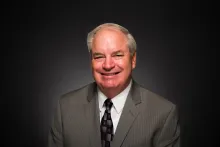
Robin Webber was born in Chicago, Illinois, in 1951, but has lived most of his life in California. He has been a part of the Church of God community since 1963. He attended Ambassador College in Pasadena from 1969-1973. He majored in theology and history.
Mr. Webber's interest remains in the study of history, socio-economics and literature. Over the years, he has offered his services to museums as a docent to share his enthusiasm and passions regarding these areas of expertise.
When time permits, he loves to go mountain biking on nearby ranch land and meet his wife as she hikes toward him.
