

Jorge de Campos
This transcript was generated by AI and may contain errors. It is provided to assist those who may not be able to listen to the message.
I want to thank Mr. Adams for his sermon that I really appreciated. And once again, I believe it has a good lead-in to the sermon today.
And what I thought of starting as a sermon is really relating some things that I like to admire.
I like to look at the sky at night and admire the stars. I don't sit there for hours looking at it, but every time, particularly when I'm away from a big city, Kathy and I would like to admire and look at the stars and just see how brilliant they are and how beautiful it is, God's creation. It's just wonderful to see, and we wonder, therefore, about the greatness and the power of God through that.
And indeed, when we look at creation, we can but simply admire God's wisdom in creating things. I was talking to somebody the other day about DNA and the amazing, and in fact, I got a few books about it because some writers recommended some books. I ordered, I just received them.
And it really is amazing what God does and how He creates things. The creation is awesome. It really is amazing. Seven years back, in fact, many years back, we used to have some booklets about certain animals. One was called A Whale of a Tail. If you remember, if you've been around for a while, there were some very interesting books about creation and how those animals could, quote, quote, evolve that. And it was just amazing. I mean, for instance, one recent, I think it was a recent Good News album. I think it was a recent news album. An article about a hummingbird. And now it authors some of the creation behind it. It's just amazing. It's beautiful.
So indeed, God does create a lot of physical things that give us amazing analogies. So I want you to turn with me, please, to Romans chapter 1, verse 20. Romans chapter 1, verse 20 just brings one simple point there that I want to narrow in.
Romans 1, verse 20. And it says, For since the creation of the world, these invisible attributes are clearly seen, being understood by the things that are made. And it was the invisible attributes of God are clearly seen by the things that are made. So I can look and admire it to see God and really see the attributes of God, the power, the beauty that He has. I can admire how our hummingbird just hovers in the air like a helicopter, and it doesn't have to go to fly school to learn how to do that. He just knows how to do it. Or you can admire how an eagle flies, and he just flies and knows how to do it. And knows how to go to the wind and hardly flaps the wings, and it's just amazing. So you can admire and look at things and look at God's invisible attributes by the things that are made. It really is amazing. And when you study about DNA and things that you actually identified, it actually is a program, and it requires programming.
And you think, well, the programs in my computer obviously require somebody to program, otherwise it wouldn't be there. The DNA is a program. And the amazing thing is that it can be read forwards or backwards, so that you have additional instruction in the same code, because you can read it forwards or backwards.
It's like, when I write, I could read it from the left to the right and get one message, and I could read from the right to the left and get a different message. But it's got information there, and it's amazing. It makes a mind, a super mind, God's wisdom, God's greatness, to be able to do that. So the invisible attributes of God are clearly understood by the things that are made, even His eternal power, and He's Godhead. In other words, His very divinity, divine nature, can be understood by the things that God has made, so that people in the world without excuse, yeah? They've got excuses about evolution and this and that, but one day, when they'll face Christ, they will have no excuse. They will have no excuse. And they'll have to put a tile between the legs and say, yes, sir. But the point here is God uses the physical creation as an opportunity to teach His lessons, lessons about Him, about His power, about things that are invisible. In other words, the spirit world, it teaches us things through the physical creation or through analogies or physical examples that He gives us. So these things that God has created as physical are in the sense a shadow of the spiritual or a shadow like there is a shadow in the sun, there's a shadow. That's not the reality. It's just a shadow. It's just an image of the reality. Now, something that is amazing is modern science does amazing things. I mean, true science, there's nothing wrong with true science. The problem is when science is twisted to not be true, but true science, it really is amazing. Like they can work out how many years the planets have existed and the Earth and all that, and then they can kind of imagine how things just came to existence, that all came to existence at one time. Well, we know in the Bible that all came to existence at one time, so we think they conclude that. But what they can't see is what happened before. Why? Because there's nothing physical, because science is a study of the physical things, and they can't see what happened before. So, with the five senses, you cannot go back to what happened before. But you know what? They have found out now that things happened before. Do you know how? With mathematics. With mathematics. You see, God, everything is mathematically correct. And so, if they take with mathematics, they can see there were certain things before. It's amazing. It's amazing.
Another thing, for instance, they're doing is studies, and now they're certain labs where they're looking for these, what they call dark matter. They're called dark matter, because they know there's energy, and they're shooting these electrons, and then they see that there's a certain thing that blocks it. You know, like dark matter, so they call it dark matter. But what it is, it's invisible. It's spirit. They're spirit in there. You know, it's not dark. I mean, that's what mankind calls it. Dark. But if there is, and they say there's more dark matter, then there is actually visible matter. You know, there's more invisible things than they are visible. And that's what God says, you know, that God, Christ, created the visible and the invisible. And how they're realizing that they really give it some physical excuses, like saying there's a parallel world, and they say there's a physical parallel world, and things like that. Well, what it is, there is a spiritual. But they're trying to dabble with things, physical, giving them a physical explanation.
But God uses physical or duality or parallel examples to teach us spiritual lessons.
And that's what I want to show you today, a few examples of that from the Bible.
And then focus on one specific analogy, which actually has real meaning to us as we approach the days of the Second Red.
So, so what? So that you and I may learn key spiritual lessons, key lessons which are eternal from the physical.
You see, God teaches us through the physical senses. And so these physical things are a teaching, let's call it a training ground for spiritual things.
For instance, think about it, trust. He continuously taught using parallel concepts, what we call parables.
He used parables. He gave a story and then had a spiritual meaning beyond it. So God uses that approach time and time again.
Sometimes it's to teach you something, sometimes it's to hide. He said, well, why are you talking parables? Well, you that you've been called, you can see it, but yet God sees it.
So God, in his wisdom, has this capability. But I want to look at one of the, I'm not saying it's the first example in the Bible, because as we heard, for instance, in the sermon, we'll teach Adam.
We talked about Adam as the first Adam and Jesus Christ being the second Adam. And we look better there. We saw duality.
We saw, for instance, the example about the bow and the sword that was mentioned in the sermon.
Again, a duality with a spiritual meaning behind it. In one of the Psalms we sang today, in hymn, we talked about the rock.
And even in the hymns, we got the rock in the capital letters. And well, it's a physical rock, but it's an analogy of the spiritual rock, you see.
So the Bible is full of these analogies. But one of the first ones in the Bible that is quite meaningful, that is a multidimensional duality.
By meaning, you can look at this way, it's duality. But you look at that way, there's more duality. And look at that way, there's even more duality.
It's the Sabbath. Think about it. The Sabbath is full of duality in it.
You see, God created, and for six days he refashioned the earth, let's put it that way. He remodeled it, and he made it look clean and tidied up, etc. for six days. That's the six days of the physical creations that he described. And then he rested on the Sabbath.
Now, did God need to rest? Was he tired? He's an old man, I can feel tired. No! It didn't mean to rest. So why did he rest?
For you and I, for us, an example for us. Why? Well, for one, to teach us, we actually need physical rest, but also to educate us.
An opportunity for us to stop the daily activity, so we have time to be educated in spiritual principles during the Sabbath.
In other words, to educate us. But what is another reason of the Sabbath? Well, it's family time. Always refer to our children, the Sabbath is family time.
Family time for us is a family, but also the time that we have with God's family. And that's why it says, for Satan not assembling of ourselves together.
Why? That's commandment! So why? Because in the Sabbath, that's the reason why we stopped working, to have family time. Family time in our physical family, and family time in the spiritual family.
Now, you also know the Sabbath, when these relights went out of Egypt. They went to spy the land. They sent twelve spies. And not only two, Joshua and Caleb, get a good report.
And they went to spy the land for how many days? Forty days. Now, they didn't want to go to the Promised Land, so they were punished for, how long? Forty years. A day for a year.
So again, there's a duality there again. A day for a year. But then, they went into the Promised Land. We'll talk, and we'll go into that a little later, about going to the Promised Land as a rest.
So, they were in the wilderness, and when they went to the Promised Land, that was a rest. And the Sabbath pointed to that rest. So, he has another duality of the Sabbath. That is a rest.
So, now we have two dimensions of the Sabbath, going into a race. But nothing about it another one.
You and I know that mankind, since Adam has lived nearly six thousand years. Not exactly, but, you know, some people have different ways of God, but you are excited about six thousand years.
And you and I know that we are near the end of the stage. I mean, we're not another thousand years to go. Really not.
And I don't even think we are a hundred years to go. We are very near. Could be a few years. Could be maybe a decade. Could be less. Could be more. Could be two. I don't know. No man can sit the times. We don't know. But we do know the seasons and says, watch the seasons and you'll get an idea. So, where are we then?
Well, we know we're approaching the millennium. So, that's a thousand years. So, if we have six thousand years and we're nearly finished, and there's another thousand years to go, which is the millennium, we're talking about seven thousand years.
And doesn't second period, three verse eight, you're going to have to turn there, talks about to God a thousand years is a day. And so, yeah, we have a week, a millennial week of six thousand years of mankind doing their own thing under man's government. And the seventh millennial day, the seventh, for mankind, which will be a rest, a millennial rest, a time of peace on earth, which will be a rest. But that is pictured as the promised land to come. You see, there's duality all along, even on the seventh. It's a rest, a physical rest. It pointed to the promised land. But the promised land is thought to come, as we'll see in the scripture in a moment. But it actually points to the wonderful world tomorrow.
The wonderful world tomorrow will be a millennial, be a rest, in which spirit beings, which will then be the kingdom of God, will reign over physical human beings, which will be those living in the world tomorrow.
But those physical beings in the world tomorrow will one day become spirits and will be part of the kingdom of God. And so when they become spirit, the kingdom of God is the ultimate rest, which now points to even another dimension of the Sabbath, which is the kingdom of God, which is the ultimate rest. So now we have the Sabbath, which is a rest, which points to the promised land. The promised land was, for the Israelites, but the real promised land was going to be at the second Exodus, again, an analogy, first Exodus, second Exodus, which is thought to come, which will be the Millennium. But the real rest will be the kingdom of God, the spiritual, eternal life. Can we see how the Sabbath has so many dimensions of duality to bring us a lesson which is spiritual? Let's look at Hebrews chapter 4, where it describes this very thing. So, because I've talked a lot, but let's look at it from the Scriptures. Hebrews chapter 4, and we're starting verse 1. Therefore, since a promise remains of entry, he is rest. A promise remains of entry, God's rest. What is God's rest?
Let us fear lest any of you seem to have come short of it. So there is a rest. So, yeah, there is a Sabbath, but there's a rest to come. Now, let's jump to verse 4, and you can read this whole section in your own time. But let's just jump to verse 4. For he has spoken in a certain place, which place? In the Old Testament.
Of the seventh day, in this way. You know, we're talking about the seventh day, the Sabbath. It's very clear. And God rested on the seventh day from all his words. And again, in this place, also in the Old Testament, they shall not enter my rest. But they were keeping the Sabbath. This is, they will not enter my rest, because, like Yahweh, to duality. He was talking about the rest, the Sabbath. But the real rest is they will not enter the promised land. And they died in the desert. So the rest was the promised land. They died in the desert. The children entered, but those adults did not. They did not enter the rest. Why? They said, now, verse 6, since therefore it remains that sun must enter it. Aha! Now he's elevating it to a different point. Because now he's saying, while he said that to the Israelites, they will not enter the rest, which was the promised land, the physical promised land, forty years after the desert. He's now turning up to the present, to the time he's writing. And he says, since before it remains that sun must enter it. So he's now elevating it to the wonderful world tomorrow and or to eternal life. You see? To those too, it was first preached, did not enter because of disobedience. They just abide.
And so you can see this duality, and you can continue reading every verse in this section, but I'm just liking you a few points. In verse 9, he says, there remains therefore a rest. In Greek, the word there is sabbatizum, which means a Sabbath observance. There remains therefore a Sabbath observance for the people of God. But it there remains a rest, a future rest for the people of God.
Number one will be the Malenian. The people of God that are physical, that are still living, they'll go into the Malenian. But the people of God that are spurged that are of Christ now, and they convert, they'll go into the eternal rest, the final rest, which will be the kingdom of God. You see, so the duality is very well described. But the point is, there remains the keeping of the Sabbath. In other words, the physical is not thrown away. You know, the baby is not thrown away from the bath or whatever. You know, the Sabbath remains, and that is a physical lesson, a physical reminder of spiritual things.
So, the Sabbath reminds us of the world tomorrow, the rest, a weekly reminder, like the feast reminds us of the world tomorrow. But the Sabbath also reminds us of the final, ultimate rest for us, which is the kingdom of God. You see, there's a lot of lessons in the Bible, and the point is, the physical is not thrown away, but it is a lesson to the spiritual.
Sure, physical is temporary. Yes, because, you know, all the physical things, this physical body is temporary. But one day we'll have a spiritual body, which will not be temporary. It will be a permanent body, and it won't degenerate. It won't get old. It won't get off-rattles and pains in the joints when the weather changes. It won't go through... You won't get head bags and sleeping correctly and wake up, or creaking neck, or... It'll be a spiritual body. It won't have any of those problems. It will be beautiful. You see, God uses many dualisms in the Bible. Many, many, many, many. I mean, we've seen about the promised land. I mean, look at another simple example. Bread. Bread. Isn't that a dualism? It's physical food, yes. But bread was a manna that came from heaven, pointing, but it was physical, pointing to something which is the real manna, which is Christ. It doesn't speak about the bread, the real bread that came from heaven, which is Christ. And if you don't eat of this bread, Christ said to them, if you don't eat of my body, my bread, I'm the bread of life. You'll have no life. You see, and that brings again a lot of examples. For instance, about the Pasalva, the living bread that we eat during the Pasalva. There are very deep meanings that will go into another time. Look at the human body. I mean, I've got a finger, I've got an arm. I mean, the arm doesn't want to act like a finger. I mean, sometimes the finger is sore, and we have to do a few things to help out. But, you know, my foot is not a finger. My liver does not do the job of a finger. And it's not an envious of the finger either. Notice the finger envious of the liver. They're all different members of the body, but they all work together for the body. The human body is an amazing analogy. Even Paul uses it to describe how the church is. The church of God, which is the body of Christ. And they are different members. They all to edify the body. They all have different functions, but it's one body. So, continuing that scene that we are in Hebrews, let's just go forward to chapter 8, Hebrews 8. And we'll look at verse 4. Hebrews 8, verse 4.
For if you were on earth, that is Christ, if Christ was on earth, he would not be a priest. Of course not, because he was not a Levite. He was a Jew. He couldn't be a priest. So if he was on earth, he could not serve as a priest on earth. Since they are priests, well, after the gifts according to the law, and the law is, the Levites are to be priests, and they offer them according to the law and to them.
But those who serve the copy and shadow of heavenly things. You see, the altar, the Holy of Holies, all those things, we're the copy of heavenly things. So, yeah, we read through those things in Old Testament, and sometimes we read through them, and, oh, it's difficult to read, you know, this looks like that, and that, and you kind of don't picture it.
But one day, we'll be able to picture it a lot better, because it's a copy of heavenly things that exist.
And then it goes on. As Moses was divinely instructed when he was about to make the tabernacle, for he said, that's God said, see that you make all things according to the pattern shown you on the mountain.
So he was given like a pattern, a design document, a vision, and he had to write it down and bold it exactly according to that.
So there was a pattern.
But now, he has obtained a more excellent ministry. So we can see, there was a pattern. There were things that had to be done exactly as the heavenly. They had to be done on earth exactly.
It's a copy, a shadow, I...
Let's call it the microcosm of the reality, just an image of heavenly things.
The altar, the mercy seat, and the high priests all carry duties that were heavenly.
The sacrifices, even the sacrifices, pointed to Christ, which is a heavenly thing. It's a spiritual thing, so on.
So continuing verse 6, But now he is obtained a more excellent ministry, even as much as he also the mediatiff of a better covenant. Aha! So what is this better covenant?
It's a new covenant. So the other one was the old covenant.
Was it bad? No, but this one's better.
You see, this one's better. Why? Well, for one, this new covenant, the old covenant, what was the old covenant? Had God's law. Anything wrong with the law? No.
But it was written on titles of sin.
What's the new covenant? The same law, but it's written in our heart and in our minds.
So it's better because it's the motivation of our hearts of what we want to do and the way we think that we want to do it according to God's way. We just want to do it God's way. We want to please God. We want to do the way He wants it. It comes from inside. It's from us.
And that's why it's better. But even now it says, continue it says, which was established on better promises.
Ah-ha! You see, the old covenant had a promise of a rest.
That rest was a physical rest.
That you'll be dwelling the land and with that first peace and you live a long time.
So it's a physical promise.
The new covenant, which is of a spirit, which is spiritual, has spiritual promises. So we live eternally, not just for a long time. We live eternally. We will live in a promised land. We'll not be physical, but it will be a spiritual promise land. Eternal promise land. Better promises. Eternal life. So you see that the physical has a purpose.
The physical has a purpose. To teach us some lessons. To teach us some lessons. Turn with me please to 2 Corinthians chapter 4 verse 8. 2 Corinthians chapter 4 verse 8. 2 Corinthians chapter 4 verse 18. 2 Corinthians chapter 4 verse 18.
And we're jumping in into a sentence, they understand, but bringing the point here. And it says, while we do not look at the things which are seen, we're not looking at the physical things, but at the things which are not seen. Here it was that we need to look through the physical things to the spiritual, to the things that are not seen, here it was to the invisible, which the scientists call a dark matter. It's not dark. It's the light. It's the reality. It's just they can't see it.
For the things that are seen are temporary. The physical is temporary. This wall, this physical wall, will be vanished. There'll be a new heaven and a new earth. There will be eternal and permanent. This is temporary. Our bodies are temporary. These physical things are temporary. But the things that which are not seen are eternal.
So there is, beyond the physical, there is spiritual around us. There are angels around us today, observing and reporting to God as we are. And observing the sermon. And there is a spiritual. And we're going to realize that. That's reality.
Now, the physical world today is going to have to change to a physical world in the world tomorrow.
Will the world in a millennium be better? Yes, it will be better. In other words, we will have a better world tomorrow than what is today. But it's still physical. Why? Because we need to point, God needs to teach us a lesson that there's going to be something a lot better. And so there is a lesson in there that the millennial will be better because there is even better beyond that. It's a lesson of a better world, of a better eternal life. Turn with me to Jeremiah chapter 23. Jeremiah chapter 23.
We'll start in verse 5. It says, Behold, the days are coming, says the Lord, I will raise to David a branch of righteousness. That's Christ. That's the branch of righteousness. A king shall reign and prosper. Christ is a king, and he will reign and prosper. And he and Christ will execute judgment and righteous in the earth. And righteousness in the earth. So Christ is going to come with His saints, those that are He's, that have been trained now to rule with Him. You see, now is not the time to save the whole world. Now is the time to train those that will save the whole world with Christ. The time to save the whole world is still coming. And that's when Christ, that's Christ's role. He will save the whole world. And when He comes, He will execute judgment and righteous on the earth to save the world. In His days, when He comes, Judah will be saved. The Jewish nation will be saved. And Israel will dwell safely. Now that's not the nation we call today Israel, because that's the Jewish nation. Israel is the rest of the tribes of Israel. So Judah and Israel, all twelve tribes will be saved and dwell safely. Now this is His name in which He will be called. That's Christ, the Lord, our righteousness.
It's talking about Christ, and He will be called the Lord. And right there, it's talking about YHWHs. That's talking about Christ.
Then for the days are coming, says the Lord, that they shall no longer save, as the Lord loves who brought up the children of Israel from the land of Egypt.
The days are coming when people once say, The Israelites, look out, they came out of Egypt, crossed the Red Sea, and look at the miracle. That will be nothing. That will be a shadow of the reality, which will be when, it says in verse 8, As the Lord lives, but they will say instead, as the Lord lives, Who has brought up and led the descendants of the house of Israel from the north country and from all the countries that have driven them, and they will dwell in their own land. The second Exodus will be far greater in magnitude, where all the nations from around the world, where Israelites are, will come. It will be a miracle where God will bring all those physical people together through the second Exodus to start up the millennium. That will far shadow the first Exodus.
Again, a duality. Can you see the duality? Can you see that one thing points to a bigger thing, which points even to a bigger thing? It really is amazing how God shows us these things. Why? For education. For our teaching. Because the physical is there to teach us bigger things. It's an education. It's a training ground. It's a training camp. It's a boot camp, you know? It's a training ground.
The millennium itself will be a great physical lesson to teach spiritual principles. That is not the ultimate. The millennium is kind of another stepping stone to the final one, which is the kingdom of God. See, the millennium is not the kingdom of God. Yes, the millennium will be ruled by spiritual beings, which are already in the kingdom of God.
But the millennium is not the kingdom of God. See, yes, the millennium will be ruled by spiritual beings, which are already in the kingdom of God. But the kingdom of God is eternal. The millennium will only last for a thousand years. It says for those physical human beings. The millennium is ruled by those spiritual rulers in the kingdom of God.
But the millennium is just a temporary thing. And so the millennium is a physical lesson to all those physical human beings and even to us, and we'll teach us spiritual principles. So what do we see in the millennium? Well, for one, we'll see in the millennium a temple. A temple will be rebuilt in the millennium. Why? To teach spiritual lessons. Sure, you and I are justified by Jesus Christ's blood and by His sacrifice. But there will not be sacrifices in the millennium. The physical is a training, teaching ground to the spiritual, pointing to Christ as a reminder of what Christ did.
So it will be a training ground, a teaching opportunity. Like we do to children, you know, we throw pictures and things like that. Why? To teach! The teaching ground. You see, there are only lights. And certainly, lights will have certain responsibilities, and other lights will have other responsibilities that we'll see in a moment. Israelites will be able to go into certain areas.
Gentiles will not. It's not discrimination, no. It's just to teach a lesson that you have to be of Israel to be in that. And so, the spiritual Israelites will then, ultimately, get the same lessons. It teaches a lesson. Let's look at some of those examples about the millennium in Ezekiel, starting from Chapter 40. Ezekiel, from Chapter 40 to the end of the book, talks about the millennium, about things around the temple.
And it brings a few very interesting points that sometimes we don't pay attention to. So obviously, you're not going to touch all of them. But it's a good to remember, easy thing to remember, that Ezekiel, from Chapter 40 to the end of the book, it's all about the temple and the holy city and how that will be due during the millennium.
So that's interesting to go through that. But anyway, let's read, start in verse 1, just to put it in a bit of a timing point of view. In the twenty-fifth year of our captivity. Now, that means, was Jewish captivity. They already had been taken captive into Babylon and was the twenty-first year. So they already were in the captivity. They were in Babylon. They were not in Israel. They were not in Palestine. They were not in Jerusalem. Now, what had happened before that? You think about it. First, the northern ten tribes were dispersed.
They went into Assyria. That was, the northern tribes was called the House of Israel. The southern tribes were called the House of Judah. The House of Israel had gone to captivity in Assyria and they were dispersed. That's what's called the last ten tribes. A hundred and twenty years later, the Jews disobeyed and they went to captivity. Now, twenty-five years down the road, they already kept to this. That's like a hundred and fifty years or so after the Israelites had been dispersed. The answer is prophecy.
So let's continue in verse four. Ezekiel chapter 14 verse four. And the man said to me, Son of Man, look with your eyes and hear with your ears and fix your mind on everything I show you, for you were brought here so that I might show them to you. So, listen, young man, Ezekiel, take note.
Open your eyes and take note exactly what's happening and write it down because this is why you're having this vision. Because you need to take note carefully of this. And then look at it. Declare it to the house of Israel. How could Ezekiel declare it to the house of Israel? Number one, he was a captive in Babylon 150 years after Israel had already been dispersed. Or at least one captivity and then dispersed. Well, obviously it didn't. But he wrote it down for today, for the last days, because the house of Israel today can read it.
It's a prophecy for our day today. Declare to the house of Israel everything you see. So, let's go a little bit further to chapter 44. So, there after being in those few chapters, he describes the measurement, the sizes of the temple, because they're going to rebuild it in the world tomorrow. And so all the sizes are already there. Sure, Christ will be there and will guide them to do it, but it's all written down. It's amazing. So, when you go to chapter 44, it's actually talking about the priests and how the priests will conduct themselves. And there's a few little things that are interesting, yeah? That I just want to draw your attention to. So, start in verse 9.
Chapter 44, verse 9. Thus says the Lord God, no foreigner, uncircumcised in heart, or uncircumcised in flesh. Ha-ha! In other words, they have to be converted, because if you are uncircumcised in heart, you can't go in there. So, you have to be converted, and you have to be circumcised in flesh to go into the temple. Because you've got to be an Israelite. That is part of the Old Covenant. That's not thrown away, in a sense. The Israelites today, the Jews, still circumcise their children. Paul never said to the Jews that you don't have to circumcise your children. He said, Gentiles, you don't have to circumcise.
But not to the Jews. Gentiles do not need to be circumcised. That's what Paul was explaining, and that's why the Jews got all upset. But you have to be circumcised. Well, we're talking about spiritual Israel, not physical Israel. But he asked, talking about physical Israel, which has responsibilities in the temple, and particularly the Levites.
So those are some interesting things. But let's continue then, in verse 10. And the Levites, who went far away from me, there were Levites that disobeyed God very badly. He said, when Israel went astray, who strayed away from me after their idols, they shall bear their iniquity. The Levites that went wrong, when Israel went wrong, they will not be able to minister in the very holy parts.
Oh, but is there forgiveness? Yes, there is. But there's consequences for sin. And yes, consequences. Yes, they're forgiven. They can still be in sight, in spirit beings. But from a physical point of view, yes, there are some consequences. Verse 11, yet they shall be ministers in my sanctuary, as gatekeepers of the house, and ministers of the house. In other words, they'll do the heart labor. They'll do that. They'll slay the burned offering and the sacrifice for the people, and they shall stand before them to minister them. So they'll do all those physical things there. Because they minister to them before their idols and cause the house of Israel to fall into iniquity, before I've raised my hand in an elf against them, says the Lord, they shall bear their iniquity. They will not be able to serve in the most holy place. They will do the physical heart labor around, etc., etc., with a vertical work. But they will not serve in the most holy place, because they did wrong. And you've got to sit right clean from unclean. And he said, God said, that's it. The children will not be able to serve, even though they're revised.
Verse 13, and they shall not come near to me, to minister to me as a priest, nor come near any of my holy things, nor into the most holy place. But they shall bear their shame and their abominations, which they've committed. Nevertheless, I'll make them keep charge of the temple for all its work, and for all that has to be done. In other words, yes, they will still serve and do the other things, but the very holy functions, they cannot do it. Only one line, one physical line of the Levites can do it, which is in verse 15. But the priests, the Levites, the sons of Zadok, who kept the charge of my sanctuary when the children of Israel went astray, they shall come near to me to minister to me, and they shall stand before me to offer me the fat and the blood, says the Lord God. You see, why all these physical things? Because it's spiritual lessons that the people need to remember spiritually speaking. There are consequences, and if you do a wrong, there'll be punishment for it. It will get into the people that are living around and the Gentiles that will be outside looking at it and learning from this. They'll learn the lesson. The physical teaches the spiritual lessons.
Look at verse 20. And they shall look at some examples of how the people who live there and the priests, they shall neither shave their heads. So these people will not go and pick up a razor and shave everything off their heads.
He says, no. Nor let their hair grow long. He says, no. They won't have ephemeral-like looking hair. They won't be serving them like that. But they shall keep their hair well trimmed.
And you can read again. 1 Corinthians 11 verse 14. It says, it's a shame for a man to have long hair.
But for a woman, the hair is given to her as a covering. And so these things continue right into the millennium. The physical example to the spiritual because brings the principles there, which in fact Paul explained further. In verse 21, the priest shall drink wine when he enters into the court. There was no minister today who has priests during the Holy Days. You go and priest as you have lunch. And minister does not drink wine and then go and preach. They don't. They don't. The minister of God does not do that. And if you're giving a semanet, then you don't drink wine before the semanet. That's it. As simple as that. That's what it is. That's the principle. So that your mind is clear and it's not in any way going the wrong way.
Let's continue there. And they shall not take his wife, a widow or a divorced woman, but take virgins of the descendants of the house of Israel, widows of the... or widows of priests. In other words, there's going to be no adultery. In other words, they'll take virgins. They'll be showing examples. They shall teach my people the difference between a holy and a holy, and cause them to discern between unclean and the clean. They will be teaching what's clean and unclean right there in the world tomorrow.
And they'll... in in controversy, they shall stand as judges and judge it according to my judgments. They shall keep my laws and my statutes in all my appointed meetings. What are all the gods appointed meetings? It's the feasts.
The word there is the same as the appointed feasts, the appointed times, the feasts.
And they shall hallow my sabbaths, plural. What are the sabbaths during the feasts? Those are what we call the annual holy days.
It's amazing how it all ties together. Why?
Because it points to these physical things have spiritual examples behind them, analogies behind them, and it will be right there in the millennium.
Look at, for instance, Ezekiel 45 verse 18.
And thus says the Lord God, in the first month, on the first day of the month, you shall take a young bull without blemish and cleanse the sanctuary. So they'll do offerings. Why? Because it points to specific spiritual lessons that they will highlight at that time and emphasize. And then look at in verse 21. In the first month, on the 14th day of the month, you shall observe the Passover, a feast of seven days, and leavened bread shall be eaten.
So they'll keep the Passover and they'll keep the days of leavened bread. Look in verse 21. In the seventh month, I beg your pardon, in the seventh month it says on the 15th day of the month at the feast, you shall do likewise for seven days. So at the feast, they'll keep the feast. So you can see that the annual sapphops, the feast, they're all being observed right there in the millennium. And they'll offer sacrifices. Now, this is interesting because you can see, in verse 21, and leavened bread shall be eaten. Yes, another physical that points to a spiritual. Why unleavened bread? Because it teaches us spiritual lessons. And leavened bread teaches us very important spiritual lessons. Now, people say, oh well, why do we do that? That's egoism. We don't need to do it. But Christ kept those leavened bread to me. And I want you to follow Christ's example. But some will say, oh well, but it's nailed to the cross. You don't have to do it. It's nailed to the cross. And see, after Christ died, He kept it because He hadn't died yet. But after Christ died, He smelled the cross, and after Christ's death, then we don't have to keep it. Well, that's a great misunderstanding. In first place, it's not God's law or God's principles that are nailed to the cross. What's nailed to the cross is the penalty of sin. The penalty of sin, the fine for sinning. Christ forgiven us the fine. He's paid the fine for us. That's what's nailed to the cross. It's the fine for us breaking God's law, which is death. So that is put away so we can live again. But also, the apostles kept the days of unleavened bread. The apostles kept the days of unleavened bread. The church, after Christ's death, kept the days of unleavened bread. So if that was nailed to the cross, then Christ would have told them, and the apostles said, we don't have to keep the days of unleavened bread anymore. But we're reading 1 Corinthians 5, and you can go into there 1 Corinthians 5. 1 Corinthians 5, verse 6 to 8. He's talking about their glory. And remember, Corinthians was written about the year 55 after AD, and the current year, which is about 24 years after Christ's death. So this was like more than two and a half decades, about two and a half decades after Christ's death. And now he's saying, in verse 6, 1 Corinthians 5, your glory is not good. Do you not know that a little leaven leaven is all love? You see, it's another physical giving a spiritual lesson. And then he says, therefore purge out the old leaven. What is the old leaven? It's the old man. You see, the old leaven is sin, leaven is sin, representing your analogy, symbolically, during this period. But the old leaven is the old man that we've got to put out, that old man. And he says, take out the old man and put on the new man. That's what he's talking about. He says that you may be a new love. What is a new love? A new man.
Since you are truly unleavened, what do you mean you are unleavened? Because they were doing this during the days of unleavened bread. You were writing this during the days of unleavened bread. So truly they were unleavened. Why? Because they were keeping the feast of the days of unleavened bread. So they were unleavened. For indeed, Christ our past self has sacrificed for us. So yes, Christ our past self has sacrificed for us. Therefore, let us keep the feast. What feast? The feast of unleavened bread. Not with the old leaven, not with the old sin, the old leaven. And leaven can appear in various forms, but with, nor with the leaven of malice and weakness. And it was thinking bad, and weakness is doing that, but with the unleavened bread of sincerity and truth. So they kept the days of unleavened bread. Now is leaven sin? No. Leaven is not sin. I mean, there's animals that talk about the kingdom of God is like leaven, because it grows and grows and it's grown from where they are. So leaven is not sin, but during this period, as a symbolic meaning, a physical meaning, which points to spiritual. God used that to teach us a lesson. You think back about the Exodus. You think back about Exodus. And you can read that in your own time in Exodus 12. You know, we heard about that even during the sermon, after the plagues. And then after the 10th plague, the firstborn of those that did not have the blood on the day of those posts would have to die. But God forced over those that had the blood. They put the blood there on the 14th, which was a post-elven. And at midnight, the angel went over. And he says, and if you don't do that, you will die. So they had to do it. Your firstborn will die. And then he says, then after that, you've got to eat a leavened bread.
And it says that you'll be now leavened in your territories. You can read that through Old Testament. There are different examples. And so we have to take leaven out. Now, what is leaven? Leaven is anything that causes what we're baking with to rise. And leavens are. It could be baking powder. It could be other items which are active yeast that would cause things to rise, such as a bacophony of soda, such baking soda, such a cast-on of phosphatic. And the light is now what those things are. But it's not beer. You've got to put beer, and it won't make the bread rise. So people say, oh, beer is not leavened well, but it's inactive. It's going to be active leaven. So we are now approaching the days of leavened bread. I mean, born in this weekend, there's three weekends to go.
And then the following weekend is possible, and then the days of the great fall. You know, the leavening is a big job. The leavening is a big job. I mean, it could be a lot easier to have two days of no bananas. I mean, it'll be so easy to take the bananas out of the house.
But today is a no leaven, no leavened bread. It's a little bit more difficult because you've got crumbs, those leavened crumbs everywhere. And you know territory means in your desk, you need to work, your car, behind the seats, in the trunk, whatever.
Maybe you put bread in your jacket, maybe it's in the pockets. So one thing we learn is not to put bread in the pockets throughout the years, so we don't have to worry about that. But it could be anywhere. So it's a big job. It's a big job. It's in many places and in many forms. I mean, it can be bread, it can be in cookies, it could be if you come from South Africa called biscuits, you know. It could be in different things, you know. It could be in different forms, in different shapes.
Likewise, leaven can be in different shapes. It can be, as we saw there in Corinthians, that leaven pops up. So it can be in glory and malice and wickedness. And the other one could be, for instance, as Christ talked about in Matthew 16, it talks about the leaven of the Pharisees. And then it explains who's their doctrine. So it can be in different forms, like it can be in bread, it can be in cookies, it can be in different forms.
So it could be in the doctrine, it could be in the way of a fact, it could be in malice, but it's still leaven because it's sin. It could be, for instance, in hypocrisy. As elsewhere in Luke 12, it says Christ talked about the Pharisees, and he talked about the leaven of hypocrisy. So it can be in many forms, but it's basically sin. It's the example of that.
And it hides everywhere. I mean, elsewhere, Christ talked about the example of washing your hands. And the people were worried about washing their hands, and they said, hey, you know, yeah, not saying don't wash your hands. But they were washing the specific manner up to the elbows, a very ritual type manner. And he was saying, look, it's not what goes into your mouth that really defiles you. Because if you are healthy, a normal healthy person, if you have certain physical problems, you've got to be careful. But if you are a normal healthy person, some of these things, the body, the immune system handles it and throws it away.
But the problem is what comes from the heart and comes out through the mouth. And sometimes comes out when we don't expect it in any other. Myself says, George, where did this guy come from? Well, it's from the heart. And we've got to say, whoops, there's a problem here. I've got to fix it up. I've got to fix it up. It comes from the heart. And so, as we go through those I don't even read, sure, we have the cleansing process or the de-leavening process, which is a long laborious process.
But we use it as a physical reminder of the spiritual. That's what we've got to do. And therefore we've got to think about it and pray about it and maybe even fast about it to for God to help us to look at the spiritual inside us, to actually cleanse ourselves inside us. And so, with the de-leavening process, the physical exercise helps us to mentally go through that exercise to look at the spiritual, which is even more important than the physical.
It does not mean you don't go through the physical because the spiritual is more important. Now, we use the physical as a lesson to the spiritual, as a stepping stone to the spiritual. Look for this as Jeremiah chapter 10, please. Jeremiah chapter 10. Jeremiah 10 verse 9 and 10. Sorry, I'm sorry. Jeremiah 17 verse 9 and 10.
He says, the heart is deceitful about all things and is desperately wicked. Now, if it is deceitful about all things, it means that it deceives me, myself and I. That means problems I have in my heart, I can't even see them as I. I just can't, but I can't. That's the problem. And we need to maybe fast and ask God, please show me in your mercy, in your kindness, not everything at the same time because we'll be discouraging, but please, just in your mercy, show me and help me.
Because he says, he's desperately wicked and we cannot. And it's deceitful. I, the Lord, search the heart. I test the mind, even to give every man according to his ways, according to the fruit of his doing. So God tests our heart and our minds and our thinking. Our heart is the motivation and our thinking is the thinking and the logical process. Around all that, all the reasoning process and all the excuses we make. So God tests that, and we see the wealth, and we need to look at ourselves, genuinely look at ourselves and say, well, I better change.
So brethren, the physical teaches us many, many spiritual lessons. We started by looking at some simple analogies. Looking at the skies, at the heavens. We looked at the Sabbath, how it looks at so many multi-dimensions. And next time you read the Bible and study it, and it kind of means that. But think about it, it could also be dual. It could be a duality. It could be a physical and a spiritual lesson in there. And how many times we read problems in this, and we read it a second time, there's so much more meaning, because you dig deeper and there's that deeper meaning.
So the physical brings us many, many spiritual lessons. As we approach the eyes of a lemon bread, and you and I have another opportunity to learn a lot more.
As we practice the commandment to prepare and deliver, let's learn from those lessons. Let's keep the feast physically, but kind of real, spiritually-tentered there are. It's not just a physical thing, and I've got to do this, and that becomes the mind thing. Yes, that's important, we've got to do it. But let's get the spiritual value out of it, in the words of the lemon bread of sincerity and truth. Let's thank God that He has given us physical things to learn of His invisible attributes to develop His divine nature in us through physical examples. And why? Why? For our own good, for our own eternal life.
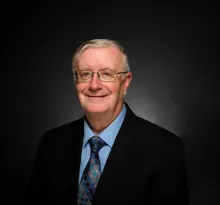
Jorge and his wife Kathy serve the Dallas (TX) and Lawton (OK) congregations. Jorge was born in Portuguese East Africa, now Mozambique, and also lived and served the Church in South Africa. He is also responsible for God’s Work in the Portuguese language, and has been visiting Portugal, Brazil and Angola at least once a year. Kathy was born in Pennsylvania and also served for a number of years in South Africa. They are the proud parents of five children, with 12 grandchildren and live in Allen, north of Dallas (TX).
