
Robin S Webber
This transcript was generated by AI and may contain errors. It is provided to assist those who may not be able to listen to the message.
Well, good afternoon, everyone! Hope you're all doing well. Wasn't that beautiful special music that we just had here on God's holy Sabbath day? Well, both McNeelys and myself are delighted to be with you, and we appreciate the kind offer of the hard groves to have us come up and to be able to share the Sabbath day with you. This actually all started in the Oceanside this year. We got to know the Hopkins some, as well as all the rest of you that come out to enjoy the Southern California sunshine. And Jim said, Why don't you come up next time you're out?
And I said, Well, you work it out with the hard groves, and we'll see what we can do. And I said that McNeelys and I will come up and split the time and share some time. So really appreciate the offer up here. There are so many of you that I've already met and know and going to get to know more afterwards. And I could mention by name, but if I leave somebody out, I'm going to be in trouble. And I want to leave town with a good reputation of those that I've already seen that I know.
And it's just amazing wherever you do go that you have those acquaintances over the years. So really, really wonderful to be here and to be able to be in the household that's at work that is pastored by the hard groves. We've never been intimate since over the years, but I think anybody that knows the hard groves knows where their heart has been towards this way of life. And a couple that I have respected from afar. And what a blessing that you've had to have as your pastor over all of these years, the congregations that are meeting here today.
So you've had a blessing. I've also had a blessing. My biggest blessing, other than the revelation of God is, I'll put this in order, is marrying a Buckeye. How's that? And it used to be that wherever I went in Ohio, I'd always say, you know, it's amazing, you know, Buckeyes, it's amazing what God can do with a bunch of nuts. But I'm not going to mention that here in this congregation. So anyway, it's wonderful to be here. We are going to have a Q&A after services.
It won't be long. That'll be to depend upon you. As a member of the council and as the chairman of the council, I always like to be able to wherever I do have an opportunity to visit, to just spend a few minutes. I love the Q&A format. You can ask your questions. If I don't have the answer, it doesn't put me off. I'll go find it and I'll get back to you. But that you are the shareholders, as we've heard for the many years that we talked about being in the church, you are the co-workers.
And we have a responsibility to come before you, to allow you to ask your questions, and to hopefully, as Mr. McNeely said, together move forward into doing the task better. That is set before us. I'd like to speak to that task today in this second message that's going to be brought to you. And I want to build upon the very fine foundation that Mr. McNeely laid out, because I want to continue to develop the theme of following and serving the one true, living God.
And to explore and to define and establish what is our ultimate purpose in this lifetime and towards eternity. A. J. Tozer, Christian writer of the early 20th century, once said that worship, worship is the missing jewel of the church. Worship. Now, today we are gathered on God's Holy Sabbath day, and we come to attend a worship service. But where does the worship of God truly begin? I'd like you to join me if you would. Let's open up our Bibles on this Sabbath day and turn over to the very beginning, the book that is called Beginning, the book of Genesis.
And we're going to begin in the beginning of Genesis. And we need to establish for a moment why was Genesis written? Why did God inspire Moses to start with this story, these names that are before us?
We need to understand that God had called a people that were not a people out of Egypt, a bunch of slaves, and said, I will be your God, and indeed you will be my people. But these had been people that had been in slavery for nearly 250 years. And after 250 years, you kind of lose your identity.
You don't know where you came from. And so the book of Genesis was offered to Israel as a family scrapbook to go back to the beginning before Egypt, which had already been around seemingly forever, before Pharaoh, the God-King, and to take them to the beginning. And here before us then lies four of the great words of Scripture. And maybe you've never thought about that, but in this, God was inspiring a people that would wander through the land for 40 years to give them two things. You might want to jot it down. Number one, to give them roots. To give them roots, to establish and grant them moorings. Number two, to give them wings, that ultimately they could fly in service and in honor to glorify Him. Isn't that after all what all families do, all fathers and mothers do, all grandparents do? We give our children roots and wings to that next generation. And it is here in the beginning, Genesis 1.1, the four great words of the Scriptures in the beginning, God. The rest of the Bible follows based upon this, that before all was in the beginning God.
We see these four incredible words that speak to ultimately a physical creation out of dust.
And ultimately then beyond that, a spiritual creation made of spirit. And here is this sovereign, here is this active, and here is this engaging being. And then the story begins in Genesis 1 and Genesis 2, to where we understand that this Creator, this one that is outside of time and space uncreated, comes into time and space and creates out of dust this very, very special creation. And why does He do that? He develops and crafts the man out of dust and takes the woman out of the man's side. And He creates something very special because He wants He wants to share all that He has with this new creation. A creation beyond dust, beyond trees, beyond plants, beyond animal kind. And He wants to walk and He wants to talk. He wants to have this incredibly intimate and immediate relationship with humanity that He's made. He's made it and designed it.
And He wants to, in that sense, to be able to look upon and to be and to talk and to walk with that creation. And the first things that He wanted that creation to do, be it in Adam or be it in Eve, is to open their eyes and to see Him and to worship Him. To give Him the worth, because the word worship comes from the old Anglo-Saxon word worth-ship, worth its worth, worth its value. And to begin to develop a sustaining love affair, one with another.
But God didn't just impose that on man. He wanted humanity to have a choice.
Hear me? A choice as to whether or not to worship Him. Remember, going back to Tozer's words, that worship is the missing jewel of the church. You and I know the church is not a building. We know that the church is not an organization of and by itself. The church is the ecclesia.
Those that God has separated. And as much as God separated Adam from the dust and made him whole, He's separated you and me, drawing us out from the quilt of humanity to allow us to have this relationship with Him. That's what He's always wanted. It's very interesting in His book, called Cries of the Heart. Ravi Zacharias, Christian writer, paints his own picture of a very famous picture that you and I are most likely acquainted with. It's the picture that's on the Sistine Chapel, the picture that was designed and painted by Michelangelo. If you'll allow me to draw a picture from I Am the PowerPoint, I don't have one behind me, I'm sorry. But that we're, I think we're very famous with the picture of this bearded figure reaching down. God, the Creator. And in that is a very forceful, very dynamic, the energy is just exuding from Him. You see the arm outstretched, you actually almost see the ripples, the sinew, the muscles, the extension of God's purpose towards this creation that is in repose and reclining, the picture of Adam leaning not forward, but backwards. And here's God with all of this energy, and it's as if almost, because there's this thought of the touching of fingers, that you almost see this, do we dare say this, limp hand, this hand that is not strong like God.
A hand that is weaker, a hand that is wondering. And you see this, and you understand then the rest of the story, that Adam and Eve did not make the right choice. The one that God wanted them to make, but they did not make, because they in their own way wanted to make themselves God. It would take thousands of years until there was a man that did not only want to touch the finger of God, but wanted to hold the hand of God. And it is his name that is a brahm. And that'll be the main figure that I'm going to be talking about today, because I want to give you the title of my message. The title of this message is simply this, the spiritual pilgrims legacy. The spiritual pilgrims legacy. And I want to talk about the man that did not only want to be touched by God, but wanted to hold the hand of God and became the friend of God. And there are things that we need to understand about this. When we speak of a brahm, it's here we discover the legacy of what a spiritual pilgrim is like. And I'm going to give you some very, very basic terms. This is going to be extremely basic. This is not the end of the story. I hope it's going to engender an enthusiasm in you to continue to explore and to build as we're going to build upon the message of Mr. McNeely. Hopefully you'll build upon this as you go home and continue the study. I'd like to quote from the Jeremiah study Bible under picture this. And the title of that sidebar is Abraham's tents and altars. Because it's here that I think it'll define what are the elements or the instruments of the spiritual pilgrimage not only set before a brahm, but for you and me, we that are looking to a brahm, that father of the faithful, as it were. Allow me to quote from this passage out of the Jeremiah study Bible. It's been said for a brahm, later named Abraham, that the symbol, hear me, the symbol of his life was a tent. But the secret of his life was an altar.
The symbol of his life was a tent. He was a Hebrew, of Eber, a wanderer. But that was not the secret of his life. It was the altar. The tent spoke of his pilgrimage of the fact that he never owned the land. There were times in a brahm's life that he moved from place to place. There were also long periods where he lived in tents in the region of Hebron, or Beersheba. But only rarely do we read of Abraham living for a time in a city. That's found in Genesis 20 in verse 2. Allow me to continue to read, but for a few more moments.
Speaking of the tent, we have done. But now let's focus on the altar. The altar speaks of his fellowship with God, for it was the focal point of his worship. As God confirmed his commands, Abram confirmed his faith by worshiping and building an altar. In addition to Abram's worship was his witness. Refusing to worship on pagan altars, Abram built his own, a clear testimony of his commitment, as we heard in the first message, to the one true God. This is remarkable because he had been an idolater. Back to Joshua 24 verse 2, which speaks of his forebears. And when he had called on the name of the Lord, it was more than prayer. He proclaimed those promises in the Lord's name, testifying of his faith in the living God to the people who then in that community observed his worship. Again, continuing, but for a moment with this reading. A tent likewise pictures the Christian life. God's word states, we are pilgrims and strangers here. That is the tent. Stay with me now. That is the tent. But we're also to be in fellowship with the Lord by the worship. That is the altar. And we, like Abram and Sarai, are to be witnesses at the reality in our lives. Now, are you with me so far? This is not complex, but it is profound.
Our lives, like Abram, must be centered on two things as spiritual pilgrims. Number one, the tent. We need to understand that. Number two, then, we need to understand the altar and where that altar is today in 2014. Join me. Let's have a scriptural basis for this. Join me, if you would, in 1 Peter 2. In 1 Peter 2 and verse 9, Peter speaking, But you are a chosen generation, you are a royal priesthood, a holy nation, his own special people, that you may proclaim the praises of him who called you out of darkness into this marvelous slice, who were not once a people like ancient Israel, but are now the people of God. Paul calls it the spiritual Israel of God, who had not obtained mercy, but now have obtained mercy. Beloved, I beg you as sojourners, pilgrims abstained from fleshly lust, which war against the soul. And then it speaks about conduct, which is honorable. Now, let's understand in a sense for a moment, friends, what is the definition of a pilgrim? A pilgrim is one who is on a journey towards a specific destination or shrine. Mr. McNeely spoke to that, our pilgrimage, over these three years, 30 years, 50 years, 60 years, whatever it is. We are moving towards something very special.
Once that pilgrim settles and puts down roots, his pilgrimage is over. A pilgrim is only a pilgrim as long as he is moving towards a destination which he has not yet arrived to. So, let's think this through for a second. The determining factor, then, is not simply the destination. Are you with me?
Let's understand. It's how you travel. That's why it's important to not only understand the tent, but to understand the altar. Let's go back now for a moment to that great pilgrim, a brahm. Join me if you would in Genesis 12 and verse 1. In Genesis 12 and verse 1, we begin to see the start of this spiritual pilgrim's journey. And God set the destination.
In Genesis 12 and verse 1, now the Lord had said to Abram, Get out of your country.
He said that to Abram nearly 2,000 years before Jesus the Christ. Just as he told you at one time in your life, it's time to get up, get out, and get going. And it seemed to be very lonely business at the time, but Abram shows us that we had company. I'd like to make a quote from a book that Mr. McNeily showed me many years ago by Thomas Cahill. It's a book entitled, and you might want to take a look at it, The Gift of the Jews, published in 1998 and on page 63. It captures this moment when all of a sudden God said, Abram, you ain't seen nothing yet. You get up, you get out, and you get going. The way Cahill captures this, he says this, so Abram went, two of the boldest words in all of literature. They signal a complete departure from everything that has gone before in the long evolution of culture and sensibility. Out of Samur, civilized repository for the predictable, comes a man who does not know where he is going but goes forth in the unknown wilderness under the prompting of his God by no known compass. You might want to jot that down for a moment. By no known compass. We're going to be talking about that. And out of mortal imagination came a dream of something new, something better, something yet to happen, something in the future, because he had not yet reached the destination. Make no mistake, then, Abram's focal point and God's purpose in all of this was to worship, to give God his worth. The word worship in the Greek, in the New Testament, the word is proskoon. Proskoon. It's two words that are put together.
When you're pro, that means you're for something to be pro, to be proactive, proskoon. That means you are, in a sense, leaning forward. The second syllable, schoon, speaks to affection. Thus, this is what worship is if you want to jot it down. Weber dictionary. Leaning forward with affection. Even sometimes when you don't know where you're going. Is anybody like that today here in Columbus? Somewhat, no compass right now. Waters look deep. Clouds look dark.
Life looks scary. And yet, you and I have been called to continue this line, this legacy of being a spiritual pilgrim. Again, Abram's focal point was to worship God. His wheels, to get there, was the tent. But don't confuse the tent with the altar. Don't confuse the tent with the altar, because it is the altar. It is the relationship. It is the worship. It is the intimacy. It is the immediacy of our understanding. The altar. That moves us forward. Let's see how this works in Scripture for just a second. A lot of us know that Abram moved in a tent. Maybe you've never seen the connection between the altar. Join me if you would in Genesis 12. Genesis 12 and verse 8.
In Genesis 12 and verse 8, let's notice what it says here. And he moved there. This is the beginning of his pilgrim. And he moved from there to the mountain east of Bethel. And he pitched his tent with Bethel on the west and I on the east. And there he built an altar to the Lord and called on the name of the Lord. He pitched his tent and noticed he built an altar.
With Abram, you could not just do one. He did both. It was not only moving for moving sake out of fear, but building the altar in that pilgrimage out of faith and desire to worship God. And so, Abram journeyed. Later on then, he was moved because of the famine down to Egypt, a land of many gods and many goddesses. They worshipped every creature under earth for every season for every reason. It's interesting, though, that when he returns from Egypt, he does not worship on somebody else's altar. Genesis 13, verse 4. And to the place of the altar, which he had made there at first, and there Abram called on, notice, the name of the Lord.
Wherever Abram went, there was notice not just a tent, but there was an altar. There was that connection, as we heard in the first message, to the One and the True and the Living God.
We notice verse 18, same chapter, Genesis 13, 18. Now, a different altar, not the same old altar, but when he moves again, notice verse 18. Then Abram moved his tent. Oh, my, my, my. Can you imagine how many times Sarah saw Abraham or Abram coming towards her? Oh, no. What's he going to say? He's been talking to God again. He's going to say, God told him this, get up, get out, and get going. And she had to pull the stakes. Notice what it says in verse 18. Then Abram moved his tent and went and dwelt by the tiberent trees of Mamre, which are in Hebron, and built an altar to the Lord. It was not only in the tent, are you with me? It was not only the tent that showed the movement of pilgrimage, but it was in the altar that showed his motivation. Have you ever seen people that have all the right moves, but they don't have the right motivation for what they're doing? They do the right things, but not for the right motivation.
And then they wonder, perhaps, why they're not being blessed by God.
We can even do that as Christians, that thinking by doing all the right things, all the right things, but not having that inner motivation inside of us to do it the right way, as the Christ would do it. And then we wonder why perhaps we're floundering on the pilgrimage that God has set before us. Genesis 22 in verse 9. One more thought. In Genesis 22 in verse 9. Then came to the place which God had told him. This is the story of now the potential sacrifice of the Son of Promise, Isaac, the one that would come from Abram and Sarai. And this would be the one that the legacy would run through. But all of a sudden, we see here in verse 9 that he's going up to the hills of Moriah. And notice what he does. Then he came to the place of which God had told him. And Abraham built an altar. He built an altar.
God sometimes tells us to build altars, not when everything is right and when we understand it.
That's the easy part of the pilgrimage. Are you with me? Do you understand? Can we talk?
It's when God asked us to continue to build that altar when we don't understand.
When we have been faithful up to this point and say, God, what else do you want me to do?
It is then that the relationship comes to its most sensitive moment to recognize that we do worship that God, that is indeed that Good Shepherd.
And just like the sheep, when they go from the low land to the high land and move through the ravines, that is when the shepherd is at his most sensitive spot in caring for those that he loves and that he's been in charge of and to guide them from the lower field to the upper field through that valley of the shadow of death. We know that Paul fills in the rest of the story in Hebrews 11 that Abram counted God worthy that he might resurrect. So there was that faith and there was that hope. You know, sometimes we can say, God should have given me more to know about this. I have a story I'm going to just throw in a sight. Ready for a sidebar? There it goes. Side bar coming into the message. Have you ever thought about Noah? You know Noah was also on a pilgrimage. He was going from one world to another world. The world that was to the world that is today. And Noah was extremely faithful. And if you've ever noticed the story in Genesis, I just met a lady here. I think she says she's the oldest lady here in the church. She's about 89. If you don't agree with her, have the fight afterwards. Okay, I'm sorry. Anyway, that. But, you know, can you imagine coming? You're 480 years of age and you've never built a boat, and God says you're going to build a boat. Get ready for the pilgrimage. And you read how that boat is built in Genesis 6 and 7 and 8. But there's one thing that you have. Have you ever noticed the one thing that God did not tell Noah to do or to put on the boat?
It's fascinating. Are you ready to be fascinated? Make it out of this wood. But the two things that are left out is there's no sail, and there's no rudder. There's no sail, and there is no... Have you ever seen that?
Look it up and get excited. There is no sail, and there is no rudder. And then, when you read the rest of the story in Genesis, it says that God sealed Noah in the ark. This movement of pilgrimage from one world to the next, from one age to the next, was not going to be by human works.
But it's so much more fun when I do it because I kind of know where I'm going.
No. It says that God sealed them in. As we say sometimes colloquially, God shut the door. How about you and me in this day and age of GPS's, where we want everything lined out before us? We want some gal with an English accent, or if you don't like English, you can go Bulgarian. If you don't like Bulgarian, you can push a button, you get it in Swahili. Whatever turns your cork, as we say. Take a... go straight. Go a half mile. Take a right. Take a left. Do this. Do that. Pull over at Starbucks. Have a cup of coffee.
If you don't like Starbucks, another mile down the line to the left is Tim Hortons.
Brethren, that's not how the Christian life works. I wish it did. Wouldn't that be easier?
But then it would be by our works. It would be by our works, and not by God's hand.
It would be us putting down our roots rather than still moving towards that destination that is yet set ahead of us. Hebrews 11. Hebrews 11, verse 6. I hope you realize I'm just speaking to myself up today, here today, and I hope some of you are listening, because I would sure sometimes like to have that sail or have that rudder.
I don't know how to work a GPS yet. That's how old-fashioned I am.
But I would like a sail and I would like a rudder. In Hebrews 11, verse 6, But without faith it is impossible to please him, for he who comes to God must believe that he who those who did not seek him, that have that tent, that have that altar. My faith, no, but he who finally is born.
He prepared an ark for the saving of his household by which he condemned the world and became heir of the righteousness, which is by faith.
It's interesting that if you'll join me in James 2 and verse 23, just a few minutes over, I want to encourage you, brethren, that this indeed can not only be a relationship of old, but God wants to have this relationship with every man and every woman and every boy and every girl that is in this room this afternoon hearing the living Word of God. In James 2 and verse 23, it says, James 2 and verse 23, pardon me a second. Peter, here we go. I know I switched time, but not switched pages when it came to Ohio. Okay. James 2, verse 23, here we go. And the Scripture was fulfilled which says, Abraham believed God, and it was accounted him for righteousness, and he was called the friend of God. The friend of God.
Is that not neat? Is that not wonderful? He was not the reclining Adam leaning back with wondering if his fingers should touch the finger of the Creator. He embraced that hand even though he did not know where he was going, and even at times when he did not know for the moment on the journey what was going to happen.
And yet, along with David, like you and me that are here today after these many years of journey that Mr. McNeely spoke to, continue to believe in that resolve that first verse in the beloved chapter of Psalm 23, the Lord is my shepherd, not a rudder, not a sail, and not a GPS made of man. There is a purpose that is being worked out here below. The Lord is my shepherd, and indeed I shall not want. But you have to wait on the Lord.
The book of Isaiah that Mr. McNeely quoted out of Isaiah 40 verse 30, when it says that those that wait on the Lord, even though their strength is expended, that he will in that sense lift them up as with wings of an eagle.
Sometimes it's not easy following a God that doesn't give us every inch of the way, and sometimes we want to put them in a box. It's interesting when you think of the pilgrimage that is set before you and me, that the original tabernacle in the wilderness, and you can look that up in Exodus 26, that the tabernacle was portable. It did not put down roots.
The Ark of the Covenant itself was in a little box, perhaps about this big, and was made portable in a very special way.
All the building materials of that tabernacle in the wilderness were made out of cloth, were made out of fabric. It meant were a curtain all put up. That where God moved, the people moved.
And then, with the design of the camp layout, that the tabernacle was put down in the midst of the tabernacle. God was in the midst of his people. He wanted to be worshiped in the midst of his people. That presence, that Shekinah presence, came down into the Holy of Holies in the tabernacle. And he would be their God, and he would be their people.
It's not like they had to travel to God. God was in the side of the camp. Do you understand Eden to the wilderness? And that wherever God takes you, wherever he took Israel, the altar, the holy place, the presence of God was in their midst. But it's very interesting if you'll join me in 2 Samuel for a moment. In 2 Samuel 7. Sometimes people thinking they're wanting to do God a favor don't understand the pilgrimage. This question comes out of 2 Samuel 7 in verse 4, speaking, but it happened that in the night the word of the Lord came to Nathan, saying, Go and tell my servant David, thus says the Lord, would you build a house for me to dwell in? For I have not dwelled in a house since that time that I brought the children of Israel up from Egypt, even to this day, but you have moved about in a tent and in a tabernacle that had the holy of holies, had the altar, the tent, are you with me? And the altar. Wherever I have moved about with all the children, have I ever spoken a word from the tribes of Israel whom I commanded to shepherd my people, Israel, saying, Why have you not built me a house or an altar? God does not want to be boxed in. How do you box in that which is uncreated, which is unfathomable in his power, in his presence, in his love, and in his wisdom? How do you put it in a zoo and put bars around it?
It's very interesting that, again, back to that book, Christ the Heart, Ravi Zacharias writing says this regarding the challenge of temple worship. From being owned by God, they would now own him. They would put him in a box. Please understand my answer, thinking that they were doing God a favor. From journeying with him, they now had to journey to him. As God became immovablely housed, spiritually became localized, and life became disconnected from worship.
There came as a tragic result of the glorification of the means that ultimately lost the ends.
Now we can ask ourselves a question. Was the psalm temple, was the Herodian temple glorious, majestic, fantastic? Did it serve a purpose? Absolutely. But Ravi Zacharias continues with this. In this temple setting of striving to box in God, it is here that worship became distorted. The books of the law were lost. The sacrificial system became corrupted. And the priest became politicized, especially under the Sanhedrin, and that house of Aaron that cozied up with Herod and later on the Romans. And it's here that the glory of God departed and the people became lost.
Zacharias concludes with this. It's not that the temple didn't serve a purpose, but there is an inherent spiritual danger in permanence apart, my words now, from God and His Word and from the eternal purpose that Mr. McNeely spoke to in the first message. It is an invasion to Him who transcends us and moves apart from our best thoughts.
It distorts. It distracts. It makes the means the end rather than the end. How can I say that? That's probably the question you're asking. Thank you for asking it. That when Jesus came in John 3 or John 2 and He speaks that in three days that this temple will be destroyed and be raised up, they're going, oh, the temple! The temple! And they did not recognize that God Himself had come in the form of a tent, in the form of flesh.
And He was speaking of Himself as the temple.
Brethren, can I make a comment? Are you with me? They didn't get it. They had boxed in God they had been come concrete in their thoughts.
They put a sail. They put a rudder, thinking they were doing God a favor.
But in that sense, what happened at the end of the day is they worshiped the house of the Lord rather than the Lord of the house. I have a question for you. May I? How fluid are you and how willing are you to be to wherever God leads you in your pilgrimage? Not my pilgrimage. We're on the same pilgrimage, but you've got to walk the walk. You can't pop on somebody's back. How fluid are you as this pilgrimage continues? You know, when you think about it, that Jesus Himself, and speaking of the Samaritan woman and John 4, said that there is going to come a time, there's going to come a day in which we do not worship on this mountain or we're not even going to worship on the mountain that your forefathers have set up. But those that come to me in that true worship, do I dare say, on that spiritual pilgrimage towards the kingdom of God, are going to worship me in spirit and in truth. 1 Corinthians 6, moving towards conclusion, even though I'm on West Coast time, so I might get confused here.
1 Corinthians 6, verse 19. Let's notice what it says, Let's notice what it says, Paul lifts the expansion of God's revelation that what he is saying is that you no longer go to the temple. It is what God intended from Genesis. And that is that he wants to walk and talk amongst us and in our heart and in our being, and that by every thought and by every word and by every deed and by every turn and by every curve and every bump in our life, nonetheless, we have that intimate, immediate relationship with God that we are that temple. The word there is naos in AOS, speaking of a shrine, speaking of an altar. And when used in the rest of the Bible, it is actually speaking of that holy of holies, that the presence of God is now inside of us. We are that temple. That is the revelation of, in that sense, the book of the New Testament, which leads me then to begin to conclude, why are you and I here today? What are the roots? What are the legacy? What are the roots? What are the wings? What do we learn from a Brahma Noah and from the scriptures themselves? Why are you here? There used to be a gentleman that I had the opportunity to hear for many years in Pasadena. He'd always say, brethren, why are you here? Because many of you have heeded that same call as a Brahma and Sarai, the same call of Noah, who found favor with God. And you are here, ready and able, and sometimes even in this human framework, that you do want to continue on this journey that Mr. McNeely spoke of in the first message. It is to be faithful to the Father. It is to be faithful to Jesus Christ. And we do not yet know when the moment is that he'll say, by the way, it's time to pull up stake. It's time to move. It's time to get up, to get going, to get on. You are a Christian pilgrim. We're on the move. As Cahill said, does something better, something yet to happen, something in the future, indeed, the eternal kingdom of God. In this thought of pilgrimage, are you with me?
Thinking of the tent. What is the great wonderment of the first chapter of John? Is it so much that it says that in the beginning was the Word, and the Word was with God, and the Word was God?
There are many, many religions that believe in a first cause. The wonderment must be attached to verse 14, where it says, and the Word came and dwelt with us.
That word, you might want to jot this down, is skinnu, not scooby-doo.
Skinnu. It means to tabernacle. It means to tent. It means to tent. That the Word came and tinted with us. Tinted with us. And that same Word in human form, the Son of Man said that my will is to do the will of the Father. And in that role as the Son of Man, I worship that, and I point you all down here to Him. Jesus, the ultimate pilgrim that came from heaven above to this earth. You talk about a journey and you talk about a change.
Came and tinted with us for a season. Are you with me? That we might dwell with God forever.
I want to show you something really neat. Let's go to the book of Revelation.
Revelation 21. Genesis and Revelation are pulled together by this thought. Genesis 21, 22.
Have you ever noticed this? Speaking of the heavenly Jerusalem. But I saw no temple in it.
For the Lord God Almighty and the Lamb are its temple.
Lord God Almighty and the Lamb are its temple. They cannot be botched. So often we think of eternity being forever, where we use examples of incredible extravagant time examples to somehow capture eternity. But sometimes we diminish eternity by just simply thinking it as solely a destination or a spot of time without time beyond it. Brethren, eternity is a relationship. As it says in the book of John, John 17, verse 3, that it says that this is eternal life. And he does not describe it as a matter of time or without time. It says this is eternal life. That they may know you, the only true God, and Jesus Christ, whom you have sent.
For we that are here today, friends, the journey is not over.
The journey is not over. If it is, you're no longer a pilgrim.
Pilgrims don't set down roots. They focus on the Father, they focus on the Son.
They are motivated by their spirit, and they move forward. Sometimes without a rudder, sometimes without a sail. But just like Noah, they know that the hand of God has closed them in to this journey for a purpose. For something better, something greater, something new.
Friends here in Columbus, it's been a joy speaking with you today to share the word, to share the hope that lies before every spiritual pilgrim. May we continue to move forward, not because we are anything, but because he is everything.
Not because life is in us, but because life is in him. And by his wonderful divine grace, he has shown favor to each and every one of us. What a joy as we experience this day of joy, God's holy Sabbath. God bless you, God keep you. Look forward to meeting a lot of you after surfaces.
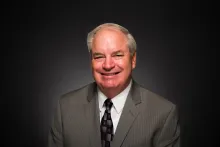
Robin Webber was born in Chicago, Illinois, in 1951, but has lived most of his life in California. He has been a part of the Church of God community since 1963. He attended Ambassador College in Pasadena from 1969-1973. He majored in theology and history.
Mr. Webber's interest remains in the study of history, socio-economics and literature. Over the years, he has offered his services to museums as a docent to share his enthusiasm and passions regarding these areas of expertise.
When time permits, he loves to go mountain biking on nearby ranch land and meet his wife as she hikes toward him.
