
Robin S Webber
This transcript was generated by AI and may contain errors. It is provided to assist those who may not be able to listen to the message.
This morning I'd like to give you the title of my message. I want to make it simple. I want to make it direct. And so that we can all build together towards the same direction. The title of my message today is, A Spiritual Pilgrim's Legacy. A Spiritual Pilgrim's Legacy. Tense and Altars. I'd like to begin this message by quoting from A.J.
Tozer. A.J. Tozer was a Christian writer at the beginning of the 20th century, back in the 20s and in the 30s. Nearly a hundred years ago, A.J. Tozer made this comment. He said, worship is the missing jewel of the church. And with that thought, I'd like to build upon it, indeed, in what is true worship. And looking at examples in the past as to how they worshiped. This thought was very important to God as He led Israel out of Egypt.
Israel had been in Egypt for hundreds of years. Egypt was already thought to be a very old society, an ancient kingdom. And the line of Pharaoh had gone back beyond human memory. And indeed, Pharaoh himself had been a God-King. And thus we find that God inspires Moses to write down five books of the Bible. To give ancient Israel a legacy. To give them a scrapbook.
These people who had not been a people. These people that had perhaps in part lost touch with their roots. And thus God, in that sense, the father of this movement, did what every parent does for the generations that follow. And allow me to put down two points. You might want to jot them down. Every parent and every grandparent, and indeed every family member, as I see here, we even have aunts and nieces together. You supply to the next generation two things. Roots and wings. Roots to develop a foundation. And wings that every generation that comes along will indeed be able to fly. And thus, this is one of the major reasons why God gave the book of Genesis.
And why we go to Genesis 1 and verse 1. Let's go over there. Let's open up our Bibles on the Sabbath day. And understand why God does what he does. And it is here in the book of Genesis that are four little words. And yet they are profound when you think of why Genesis was written to give a foundation and to move ancient Israel beyond the land of Egypt. And what they came out of. Four little words. In the beginning God, not Egypt, not Pharaoh, that there was a time and there was a beginning and it is God alone that was indeed in that beginning.
And that's why it's always important to start at the beginning of the book or the beginning of a movie. You never want to either on television or going to a theater or today with DVDs, get it in the middle of a movie. You're missing something here. And to recognize that in the very beginning when you go through Genesis 2 and Genesis 3, to understand what God was doing by creating this special creation called Man and Woman.
That he understood that he himself wanted to develop a relationship with this that he had made out of dust. It was not going to be like the animal kind. It was not going to be like the plant kind.
It wasn't going to be about water or the skies. And those are all well and good, but those were to support what God was doing with this special creation made, made, Genesis 1.26, after his image and in his likeness. Because he wanted to have a relationship and Man and Woman were made to worship God. That's why you and I were created. You say, that's all? What am I, a monk? Man and Woman were created to worship God, to show appreciation and wonderment.
That that which is uncreated would develop the creation out of dust with the destiny ultimately to become spirit. And that God would look down upon this very, very special creation and love to it and give to it. And that the creation in turn would look back with wonderment and awe and respect and love. And to recognize that this Sovereign, this Creator, wanted to be their God and He wanted to be their people.
And that He would be in their midst. Adam and Eve, stay with me, were in the garden. And God would come and visit them. They didn't necessarily have to go to God. That was not what God intended in the beginning. That God would be in the midst, in the core of their existence. And that's why we have to understand Genesis 2. God wanted to have a relationship. But we know that man and woman made choices. And God gives us free moral agency and those choices did not go down the same track that God desired.
In his book, Cries of the Heart, Christian writer, Ravi Zacharias, paints his own picture, interestingly, of what occurred by referring to another picture. And it's a picture that all of us have seen at one time or another in an art book or in history books, etc. It's that very famous picture that's at the top and some of you have seen it in person. The picture that is at the top of the Sistine Chapel in the Vatican. And it's that picture of creation. The picture of the bearded God reaching down with his arm. And in that arm it is rippling with energy and purpose and dynamism. You just see that outstretched arm. There is one thought in God's mind. I'm going to make man in my image and likeness and here it is. And I want to have a relationship with him. I'm that God and I'm reaching down with all of my strength. Ravi Zacharias makes a comment, but notice Adam. And now you're all going to go home tonight and look it up. I'm sure you notice Adam. Adam, in that sense, is in a declining repose.
He's not quite sure. And the hand goes out in a limp fashion. There is an unsurety to Adam what is occurring. And there was never any doubt in God's mind that he wanted worship. He wanted the worship that when you go to the Greek it is proskoon.
The word pro, when you're pro for something, you are leaning forward. You are at the edge leaning forward. It is an act of motion. It is your heartfelt desire. The word schoon comes from the word affection. Thus, worship is leaning forward with all of your being with affection to the Creator.
But we know what Adam decided to do. We notice what he decided to do. He did not hold God's hand. It would take millennia down the line until one man would not only allow God to touch him, but you see the detailed account in the Bible that he wanted to hold the hand of God. That man's name was Abram. And I want to introduce that man to you. It's here in the life of Abram that we discover the legacy of a spiritual pilgrim. And this is given full definition in a concordance or excuse me in a commentary. It's entitled the Jeremiah Study Bible. And it's under a sidebar entitled Picture This. And the title within that sub-bar, and I want to give credit where credit is due, is entitled Abraham's Tints and Alters. Allow me to read for a moment a couple of thoughts out of this commentary. Stay with me. We'll build upon this foundation. It's been said that for Abram, the symbol of his life was a tent.
The symbol of his life was a tent, but that the secret of his life was an altar. Interesting. The symbol of his life was a tent. Abram was of the stock of Hebrews from Iber. They were the wandering people, and more he would wander even more than his ancestors. And so often we think of Abram with the tent, but the secret was the altar. Continuing, the tent spoke of his pilgrimage, of the fact that he never owned the land.
There were times in Abram's life that he moved from place to place. There were also long periods of time where he lived in tents in the regions of Hebron and in Beersheba. But only rarely do we read of Abraham living in a city. We can jot down Genesis 20, verse 2. Thus now, friends, let's continue with this thought. Let's take a break. Let's continue. We've talked about the tent. There's more to the altar.
The altar speaks of his fellowship with God. For it was the focal point of his worship. We're just saying a song to begin with today, longing for the altar of God. It was interesting. As God confirmed his commands, Abram confirmed his faith by worshiping and building an altar. In addition to Abram's worship was his witness. Refusing to worship on pagan altars, Abram built his own, which was a clear testimony of his commitment to the one true God.
This is remarkable because when you go to Scripture, you can jot down Joshua 24, verse 2. Abram himself came from a line. His ancestors were idolaters and worshipped other gods. But it says, when he called on the name of the Lord, it was more than prayer. He proclaimed those promises in the Lord's name, testifying of his faith before other people.
One last thought. This is the launch pad. Then we'll take off. Again continuing and concluding. A tent likewise pictures the Christian life. God's word states, we're pilgrims and strangers. That is the tent. But we're also to be in fellowship with the Lord by way of worship. That is the altar. And we, like Abram and Sarai, are the witness of the reality of God in our lives. Let's as a congregation now turn to 1 Peter 2.
In 1 Peter 2, let's look at a biblical anchor for all that is being mentioned here. In 1 Peter 2, and let's pick up the thought if we could. In verse 9, you're a chosen generation, a royal priesthood, a holy nation. His own special people that you may proclaim the praises of Him who called you out of darkness into His marvelous light. We have been called to lean forward in affection for the God that gave us the truth that Mr. Hall spoke about this morning.
Beloved, I beg you as sojourners and, note, pilgrims abstain from fleshly lust, which war against the soul, having your conduct honorable amongst the Gentiles and, or we could say, others. Now let's understand what a pilgrim is for a moment. What is a pilgrim? A pilgrim is one who's on a journey towards a specific destination and or shrine. Once he settles and puts down roots, the pilgrimage is over. The pilgrimage is over. So, let's think this through. The determining factor then is not simply the destination, but it's a way of traveling. It's not only a destination.
How we travel and where we allow the altar of God to be in our life is equally, if not more important in the spiritual legacy of roots and wings, tents and altars, to be able to receive the good blessings that God wants to give us. Let's notice how this works. Let's turn to Genesis 12 and verse 1. In Genesis 12 and verse 1 comes some of the great words speaking out of the Bible. When Abram decided to hold the hand of God, Now I, the Lord, had said to Abram, get out of your country and from your family and from your father's house to a land that I will show you, and I will make you a great nation, and I will bless you, and make your name great, and you shall be a blessing.
In other words, I will come and I will dwell amongst you. That's my promise. But you have to do something, just as we today in 2014 have to also do something. Here we go. When we look at this, to recognize that he was asked by the sovereign God to pull up his stake and go somewhere else.
Thomas Cahill in his book, Gift of the Jews, page 63, captures the essence of this experience. So, Abram went, two of the boldest words in all of literature. They signal a departure from everything that had gone before in the long evolution and culture and sensibility of mankind. Out of Samur, that civilized repository for the predictable, comes a man who does not know where he is going, but goes forth into an unknown wilderness under the prompting of his God, traveling by no known compass. Out of mortal imagination comes a dream of something new, something better, something yet to happen, something in the future.
Just think about this just for a moment. How often would Sarai be over there? And she said, oh look, Abram's coming to... Oh no, I know what's happening. He has been talking to God again. Here comes the big talk, and Abram would come to Sarai. And he didn't have to say anything. It was time to pull stake. Time to pull stake, go somewhere else, and pitch tent. The tent had to be pitched, but to just simply pitch a tent without the altar is a folly. And for you and I today to simply pitch our tent and obey God without understanding the relationship that he wants with each and every one of us can also be a folly. With that stated, let's make no mistake, Abram's focal point, wherever he went, was not a vacation but a vocation. It was to worship and give God his due. His wheels were the tent, but don't confuse them with the worship, with the altar. That was the engine. Just like you and I, if we have a car, or Bob here builds a truck or remakes a truck, and he puts the greatest wheels on them that you can imagine as you're going down the freeway. Have you ever done that? You look, wow! Look at those. Look at those. Look at those hubcaps or look at those wheels. If you only look at the wheels and don't understand it's the engine inside the vehicle that makes it run, that keeps it sustained, that moves it towards its destination. Folks, we have a problem. Let's see how this works literally out of the Bible. Join me if you would. Let's go to Genesis 12.
In Genesis 12, and see this combination of the tent and the altar. Genesis 12 and verses 8. We pick up the thought. And he moved from there to the mountain east of Bethel, that is the house of God. And he pitched his tent with Bethel on the west and Ai on the east.
And notice then, and there he built an altar to the Lord and called on the name of the Lord.
Folks, understand what's being spoken here.
Tent, altar. Tent is, in a sense, the roots of a pilgrim. But it is the altar that gives us the wings to fly in that spiritual legacy that God wants us to understand from this mind. Genesis 13.4. This is after he had come back from Egypt, after he'd seen all the gods for every reason and every season. Notice here in verse 4, 13, chapter thereof. And he went on his journey from the south as far as Bethel to a place where his tent had been at the beginning between Bethel and Ai, to the place of the altar which he made there at first. And there a brahm called on the name of the Lord. Okay, you say, well, Mr. Weber, it sounds like a different tent, but same altar. Well, let's take it a step further. Chapter 13, verse 18 at the end. He is now on the move. Remember, a pilgrim is always on the move and does not put down permanent roots. Then a brahm moved his tent, went and dwelt by the tiberenth trees of Mamre, which are in Hebron. And notice, and he built an altar there to the Lord. I'm trying to create an impression in all of us as we read the word, that a tent must be accompanied by the altar. By the altar. So very important to understand. Genesis 22 and verse 9 again. Sometimes God asks us on this pilgrimage to go to places that we don't understand. And even when we don't understand it, he asks us to build an altar. How dare he? How dare he? I don't understand what you're doing, God. And yet it requires an altar. A brahm, Abraham, Isaac, on the hills of Moriah. Then they came to the place which God had told them. And notice, Abraham built an altar there and placed the wood in order and bound his son and laid him on the altar upon the wood.
Powerful point for you and me is simply this. Our worship of God and putting him first must at times be in places where we do not fully understand what God is doing. In the moment. It's very easy to build an altar in our heart or in our life or congregations and give God lots of praise and honor.
Proscoon in the Greek to lean forward affectionately when we're getting all the, do I dare say, spiritual goodies in life. But that's not worship. Worship ultimately is for every season and every reason where God says, I am the Lord your shepherd in which and whom you shall not want. And there will be green pastures. There will be streams that flow nicely. And yes, indeed, there will also be valleys of the shadow of death. But I do know, I do know that before me is goodness and mercy and God will see me to the end. This is just not talk, brethren. These are some of the things that we're going through in our life right now. There are places in our life that God knows but we have not figured out yet.
And He wants us to understand the powerful lesson of the tent and the altar. Sometimes you have to leave some things to God. Unlike Adam, unlike Eve, thinking that they were missing out on something. I have a comment for you. Have you ever thought, let's bring in another spiritual program? This is called a sidebar that we're going to bring in. Are you with me? Have you ever thought of Noah? Noah was a spiritual pilgrim. He was moving from one age to another. He was moving to the age that was, to the present age that you and I are in. And God at age 480 said, Noah, you've never done this before, but I'm going to ask you to build a boat.
Why? There's no water around. Build a boat. I'm going to tell you exactly how to build it. And you go to the Count of Genesis. And you do this, you do that, you do this, you do that, you build it with this, you do... And, you know, it did not look like the Queen Mary. It did not look like the QE2, 3, 4, wherever we are with the QE2 things these days.
It was a rectangular box of wood. There's three things that happened in that account. Are you ready to hear them? You'd think with God being God, if anybody knew how to build a boat, it would be God. Are we all in agreement with that? There's two things that were left out of those instructions. Number one, there was no sail.
And number two, there was no rudder.
Is this any way to start out a pilgrimage? No sail, no rudder. And not only that, but I think you know this story. It's normally a trivia. Who closed the door of the Ark? Was it Mrs. Noah? No. And it said that God sealed them in. God was going to move that spiritual pilgrim from one age to the other. And it would not be by human works, or human understanding, or a human compass.
God alone, the hand sealed the Ark. And the rest is history. What is interesting in all of this, if you'll turn over with me to Genesis, in chapter 8. Yes, chapter 8, verse 20. What it says here is notice after this pilgrimage, Then Noah built an altar to the Lord.
He'd been in the tent. He'd been in the Ark. But the tent, or the Ark, without an altar of leaning forward and worship is for naught. Did Adam, after he was given dominion of all of creation, did he build an altar? We can argue for silence, but it's never recorded. What we do know is that in this sense, this man who in type, hear me, we also recognize that oftentimes Christ is called the second Adam.
And I'm not to dispute that, but I'm saying in type Adam became the source of all living. With Mrs. ... Excuse me, Noah became the source of all living again. And he was given dominion over the earth, as you read the verses before, just like Adam. But he did something that is recorded that's never recorded about Adam. He built an altar. I'm trying to establish in our minds, brethren, how important it is, the spiritual legacy that comes down to us from a Brahm sidebar of Noah.
We must have both in our pilgrimage. We must have the tent, which is the symbol of our life, spiritually speaking, as sojourners on this earth. But again, the secret of the pilgrim's life is that relationship with God, that that altar is always with us, and it is in us, as I'll bring out at the end of this message. Now, with all of that spoken, let's understand something. Let's understand something. Hebrews 11 and verse 6. Hebrews 11 and verse 6. How important is this? Without faith, it is impossible to please Him, for He who comes to God must believe that He is, not the rudder and not the sail, that He is, and that His rewarder of those who diligently seek Him.
A Brahm would seek Him. And in James 2, verse 23, it says that a Brahm became the friend of God. He was not just simply touched by God like Adam, but He embraced that hand, picked up that tent, wherever God's Spirit would guide Him, and set up that altar. Today, friends here in Redlands, in a world where everything is more and more made simple and direct, we don't fully know the Course it set before us.
We live in a world where we have what is called GPSs. And we, to a degree, while they are wonderful at times, they have also taken away an ability for us to utilize critical thinking and use our minds. And we get used to that voice talking to us, whether it's with a Bulgarian accent, an English accent, a French accent, a Ukrainian accent, a Swahili accent, you name it, I guess, with these things where you can do it, you can get the whole world in your car.
And it will tell you every turn to make. It will tell you to take a lap, it will tell you to ride. It will even tell you how congested the freeways are ahead of you, and that you might want to take a different way. Brethren, that's not how God operates. He gives us an overview, He gives us a sketch, He gives us a map, and then invites us on the journey.
He says, I want you to journey with me. Take up your tent, but also have that altar everywhere you go. Because there are going to be times when there are dips, there are some times where it looks like the road is a dead end. There are curves, there's some gravel out there, there's a cow crossing the road. For Stephen and Shalee, there's a deer crossing the road, but I'll be with you. We travel by the GPS, and we set that button. In the beginning, God, one that wants to have this loving relationship with us, and walk with us, and thus in this uncertainty at times, it says in Isaiah 40 and verse 31, you that are weak, you that are spent, that God will lift us up in that journey just as much as on the wings of an eagle.
But in this journey at times, down through the thousands of years at times, man wants to box up God, to make it convenient to have a GPS, to have a handle on God rather than God having a handle on us. I thought, may I share with you for a moment, have you ever thought of the original tabernacle in the wilderness? And you can go to the book of Exodus, and I hope that you will in Exodus 26, and you'll see that it was not made of stone. It was not permanent. It was made out of fabric. It was made out of curtains. The Ark itself that housed the Ten Commandments, the Rod of Aaron, and the portion of manna, was a box that was portable.
And it's interesting that this tabernacle was set up in the midst of the congregation. All of the pattern of the tribes when they encamped, there was a certain pattern, and in the middle, it was in the middle that the tabernacle was set up, because it goes back to Genesis. God has always wanted to walk and talk with humanity, and you and me, and be in the midst of our existence. That we don't have to go out and find Him, that He is in the middle of our life.
That we are immersed with this relationship of worship. That we give God His due, we give Him His honor, we love Him for what He's done for us. Everything flowed from it and to it. God was in the midst of His people, but something changed. Sometimes people do things thinking that they're doing God a favor. Join me if you would in 2 Samuel 7. And let's pick up the thought if we could in verse 4. God speaking through Nathan to His servant David. But it happened that night that the Word of the Lord came to Nathan, who was a prophet for those that are just becoming familiar with the Word.
Go and tell my servant David, thus says the Lord, Would you build a house for me to dwell in? For I have not dwelled in a house since the time that I brought the children of Israel up from Egypt, even to this day, but have moved about and notice a tent. And a tabernacle. Wherever I have moved about with all of the children of Israel, have I ever spoken a word to anyone from the tribes of Israel, whom I commanded to shepherd my people Israel, saying, Why have you not built me a house of cedar?
A question. And an answer that you and I have got to consider. It is here, if we look at it fully, that God challenges the notion of permanence and being made static. For it is here that God says, He Himself tinted.
And we'll build upon that towards the end of the message. And He asked the question, Did I ever desire to be encased in cedar, which was a remarkable product of the ancient world that came from the cedar trees that were from Phyllistia, or Phoenicia, that we now know as Lebanon. They did this. Jot this down if you want to. Obviously David, later Solomon, did all of this thinking they were doing God a favor. But again, allow me to go back to Cries of the Heart, the book thereof, and what Ravi Zechariah says about this.
Regarding the challenge of temple worship. From being owned by God, they would now own Him. Put Him in a box. From journeying with Him, they now had to journey to Him. As God became immovably housed, spiritually became localized, and life became disconnected from worship, there came as a tragic result the glorification of the means, rather than the ultimate. They lost the end of the journey and the destination.
The personalization, the immediacy, the intimacy of a relationship with God. Zechariah continues in this vein, was it elegant? Was it spectacular? Absolutely. But then he adds, it was here that worship became distorted. The books of the law were lost. The sacrificial system became corrupted. The priest became politicized. What will the king think? What will the king do?
Later on in Jesus' time, the high priest and the satuaries became politicized. Zechariah continues to say, it's here that the glory of God departed, and the people became lost. What I'm stating in all of this, friends, is simply this. You and I individually have a responsibility to care for our tent that God has given us, and to be assured and be sure that the altar as well is inside of each and every one of us. Zechariah continues with this thought, it's not that the temple didn't serve a purpose.
It did. And God allowed it, as God allows many things after he asked the questions. But there is an inherent spiritual danger in permanence apart from God and His word. It is an invasion of who transcends up and moves, and is, and moves through each and every one of us.
Allow me to share this for a moment. If the temple itself became an end in itself rather than the one that we worship, this caused problems when Jesus came. John 2 and verse 19 jotted down. You can look it up later. When he said that this temple, this temple will be destroyed and yet rise up in three days. Up on that great plateau with that majestic, carotid temple.
They didn't get it. They had locked God in a box and they ultimately rejected the Son of God. Did not worship Him when God in the flesh was amongst them. They confused the house of the Lord for the Lord of the house.
We can even do the same today as Sabbatarians. The Sabbath, the Sabbath is a beautiful thing. It's a commandment of God. God's law is holy, but it's not an end in itself. It's a means of worship towards the God of the Sabbath, the Lord of the Sabbath. And that's very important to understand. And again, I say this quite sincerely. I've never found people that don't think they're doing God a favor by some of the things that they do. But Jesus speaks to this. This journey that each and every one of us are on, whether we're from Riverside, or whether we're from Temecula, or whether we're from the mountains or the deserts up above.
Let's notice the words of Jesus Himself in John 4. John 4, verse 21. The Gospel thereof. In John 4, verse 21. Jesus, in that conversation recorded, speaking to the Samaritan woman. Let's remember, Samaria had at one time been the Northern Kingdom. And there had been a Southern Kingdom. And that there were two temples. And the Samaritans were apart from the Jews. And the Jews looked down upon the Samaritans. So there's this fascinating conversation going on.
Verse 19. The woman says to Him, Sir, I perceive that you are a prophet. Our fathers worshiped on this mountain. And you Jews say that in Jerusalem is the place where one ought to worship. Jesus said to her, Woman, believe the hour is coming when you will neither on this mountain nor in Jerusalem worship. That means to lean forward affectionately. Neither in Jerusalem. You will worship the Father. Verse 22. You worship what you do not know. We know what we worship for salvation as of the Jews. But the hour is coming and now is when the true worshipers will worship the Father in spirit and in truth.
For the Father is seeking. He's desirous. He has the same power. Not by what a man even Michelangelo thought of God, but what the Scriptures say. Because God cannot even be formed on canvas. His delight, his pleasure, his purpose, his desire that drives him and fills him. To have this relationship. To be our God. To be your God. To be my God. And that we might worship him. That missing jewel within the Ecclesia. The body of Christ. For the Father is seeking such to worship him.
It's all about the worship of God and understanding what he's doing. And God is spirit and those who worship him must worship him in spirit and in truth. Must move beyond a tent and have that altar residing inside of us. 1 Corinthians 6 verse 9. Let's pull the pieces together as we begin to conclude. 1 Corinthians 6 and verse 9. 19. Pardon me. 6-19. Paul takes this. What is in the first century A.D.
A man that had worshiped at the temple. A Jew of the Jews. A Hebrew of the Hebrews. One that understood the law. One that had come up beyond the court of the Gentiles. The court of the women. The court of Israel. And had gauged upon that which is holy. And he says this about the temple experience today. 6-19.
Or do you not know that your body, your person, is the temple of the Holy Spirit who is in you?
Whom you have from God and you are not your own. For you are bought at a price. Therefore glorify God in your body and in your spirit which are God's.
The word there for temple. It's the word naos. N-A-O-S. It speaks of a shrine. A place of devotion. It is the term that is used for the temple. It is the term of intimacy. Utilized that when the priest went up on the day of atonement and entered. That it was there. The holy of holies. The presence of God. The throne of God symbolically on this earth. The altar of God. As near as you might be to God in that day, in that age. Paul through the inspiration of the spirit now says it is that altar that is inside of us. That as much as that Shekinah experience filled the holy of holies in the tabernacle. And at the inauguration of Solomon's temple. That God dwells in each and every one of us.
So the question with all of this from the time when Abram had the devotion and the courage to set up an altar. To only sacrifice to the only true living God. And never used another altar. Made by the pagans. Made by those around him that he would honor God. Where then are you and I today? Where are you and I today? Because you've also heeded that call. You also are on a journey.
We also move towards a destination. Join me if you would in Hebrews 11. In Hebrews 11 we find this destination laid out before us. These men like Abram and Noah and Sarai and perhaps Mrs. Noah. We'll figure, we'll let God figure her out for the future.
But speaking here in Hebrews 11 gives us some incredible words here. It says, These all died in faith, not having received the promises, but having seen them afar off or assured of them. They were still on the journey of worshipping God. Not by what they knew, but what they were. Knowing that God had something in store for them that they didn't fully understand on this world. Oh! Sarai... Oh no! Here he comes again. It's hubby. He's been talking to God again. Okay, Abram, where are we going this? Don't even tell me. I'm already pulling up the stake. I'm already pulling up the stake. Just have this conversation with God and let us know where you want to pitch tent.
And you and I would at times today want to pitch tent by still waters. We'd like to pitch tent by green pastures. But God in His love and in His wisdom, the same God who says that He would never leave us nor forsake us. The same God who in that sense will test us and puts us in places we don't understand. And that His Spirit takes us sometimes places you say, you've got to be kidding me. In our marriages, in our employment, at school, in this world that swirls between these two ears, the greatest sphere in the world. And He says, remember this, My Spirit will never lead you to where My grace cannot uphold you. You keep that altar in place. You're special. I've sanctified you.
And it says, For those who say such things, declare plainly they seek a homeland. And truly, if they had called a mind that country with which they had come out, they would have opportunity to return. But now they desire a better that is a heavenly country. Therefore God is not ashamed to be called their God, for He has prepared a city for them. Remember how I said that ultimately that altar today, as we understand Christianity, resides within us. That's where God has placed it. You say, well, I don't know. But who's going to guide us in this pilgrimage? Have you ever considered that the greatest spiritual pilgrim that ever existed is Jesus Christ? Jesus Christ, who transferred from one realm to another.
He who is no less than uncreated came into time and space. And what are we told in John 1 verse 14 that He dwelt with us? The word dwelt in John 1.14 is the word, skanu. It means literally, He tinted. He tinted.
He tabernacled is another definition for skanu. He was the pilgrim. He gave up all that was above to come to fulfill the Father's will. And He always kept that worship towards His heavenly Father, that intimacy that He had had forever with Him. And He said, not my will, but Your will be done.
Jesus is beyond Abram, beyond Noah, the ultimate spiritual pilgrim example for you and I to dwell upon. Is there any wonder then, as we turn to Revelation 21 verse 3, where we see this word mentioned, And I heard a loud voice from heaven, saying, Behold the tent, that is, the tabernacle of God is with men.
And He will dwell with them. That has always been God's desire to be in the midst of those that would worship Him, And lean forward with affection, and they shall be His people. And God Himself will be with them, and they will be their God. With that thought, then, is there any wonder when you look at this in Revelation 21 verse 22?
Notice, but I saw no temple in it, this heavenly Jerusalem, come down, for the Lord God Almighty and the Lamb are its temple. That's what God wanted always. Not for us to go up to the mountain, but to surrender our lives and allow Him to live within us in a life of intimacy and immediacy and worship and relationship, and surrender our lives to Him.
When Christ returns, and our journey is done, whether in this lifetime or at the resurrection, here's one thing that you want to remember, especially off of the lessons of David and Solomon. When Christ returns, He isn't coming down here to search for a house. He's looking for a home. Isn't there a difference between a house and a home? Ladies, a house is a structure.
A home is built and directed towards one simple thing, a relationship in which the family abides. Last verse, John 17, verse 3. John 17, verse 3, to bring this point powerfully home. The Gospel thereof, John. In John 17, verse 3.
How do we mark? How do we measure eternity? I know at times over the years I have often used incredible examples of time and space and planets and solar systems and universe to stretch your rubber band in your mind and imagination what it must be like. But sometimes when I do that, and I've come back and I've recognized it's like that song about looking for love in all the wrong places.
I've been speaking about eternity in all the wrong places. Indeed, it is out of time and space. But God measures and marks eternity this way. And this, chapter 17, verse 3, this is eternal life, that they may know you, the only true God, and Jesus Christ whom you sent, eternity is filled with relationship.
Relationship. The Greeks, and all of us have a little Greek in us, we want to measure God or we want to encapsulate God. We want to figure out God. And I will continue after this message sometimes to try to figure out God. It's just human. God says, figure this, in the beginning God, I want a relationship with you. I want you to worship me. I want you to love me. I want you to adore me. I want you to be able to follow me in faith even that you will know that it's going to rain when you don't see the clouds.
And honor me that wherever I send you, you take your tent.
And you honor me by wherever you go, no matter what the pressures are, no matter what the social pressures are, no matter what the circumstances are, you keep that altar in place. So this has been a very simple message, friends. The spiritual legacy. The legacy of a spiritual pilgrim. It's not complicated.
A little bit like the two trees. Aren't you glad there's not three trees? I have a challenge enough for the two. And like that with this, let's keep it simple. Tents and altars. Don't leave home without them.
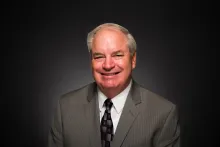
Robin Webber was born in Chicago, Illinois, in 1951, but has lived most of his life in California. He has been a part of the Church of God community since 1963. He attended Ambassador College in Pasadena from 1969-1973. He majored in theology and history.
Mr. Webber's interest remains in the study of history, socio-economics and literature. Over the years, he has offered his services to museums as a docent to share his enthusiasm and passions regarding these areas of expertise.
When time permits, he loves to go mountain biking on nearby ranch land and meet his wife as she hikes toward him.
