
Robin S Webber
This transcript was generated by AI and may contain errors. It is provided to assist those who may not be able to listen to the message.
Caroline and Kaylee, that was just like a sweet aroma of praise going up to God. That was just utterly beautiful. Thank you very, very much.
That beautiful music is a sweet aroma going up to God is a wonderful way of moving into the message that I'd like to give you this afternoon. For those of you that are taking notes, I'm going to put it right out there so you'll know what the title is so that you won't have to guess what I'm speaking about. And the title of my message is simply this, A Spiritual Pilgrim's Legacy. A Spiritual Pilgrim's Legacy. And I'm going to give you two points of that legacy right out front so there is no guessing. So that at the end of this message you will have takeaways from the time that we are spent together here in this worship service.
That spiritual legacy can be defined by two items, a tense and an altar. A.J. Tozer, a Christian writer at the beginning of the 20th century, once said this, Worship is the missing jewel of the church. Worship is the missing jewel of the church. When God brought a people out of ancient Israel, the first commandment that He gave them is simply this, I am the Lord your God which brought you out of the land of Egypt. Therefore, you shall have no other gods before Me. In this being spoken, He had brought a people that had been in bondage for nearly 250 years, a people that in a sense were not a people.
And thus He had to tie them to Him. See, these people had been in Egypt and even by the time of Moses, seemingly Egypt had been around forever. This stream of civilization that had gone back in a time and there had always been a line of pharaohs. And the pharaoh was a god-king. This was the culture and this was the environment that they came out of. God would now be, in that sense, their Father. He would be the one to guide that nation. And He would take on the role that you and I take on as parents, as mothers and fathers and as, do I dare say, also grandparents.
That what we establish to the next generation down the line are simply two things. We give that next generation, number one, we give them roots. We give them a foundation. We give them a mooring.
So that when the storms of life come, that they will be anchored in something that moves beyond the moment. Number two, we give that next generation wings, recognizing at times that they will indeed be apart from us. And those challenges will come up and that we give them, in that sense, wings to fly, to soar and to rise above that which might come. And also then, ultimately, to develop their own nest. And that's what exactly God did with Israel.
And he inspired Moses, the leader of those people, to do something very special. A people that were not moored to understanding, necessarily, where they had come from. And so he inspired Moses to write the first five books of the Bible. And he inspired further to have Moses write the book of Genesis. To give these people that were slaves a family scrapbook. To realize who that God was that brought them out of the land of Egypt.
And to anchor them for the journey, the pilgrimage that was set aside. And so God inspired Moses. Join me, if you would, to Genesis 1 and verse 1. Let's open up the Scriptures on this Sabbath day. And notice the first four words of the Bible. Realizing, maybe you've never thought about this before, that every word in the Scriptures, be it the Old Testament and the New Testament, are founded on these first four words. These first four words are paramount. In the beginning, God, before Egypt, before Pharaoh, this is the one that will guide you on your pilgrimage.
From that beginning, we go back to the book of Genesis, and we see how God said in Genesis 1, 26 and 27, that speaking to the Word, let us make man in our image, and in our likeness, it was God's desire in that sense to have a family, and to have one that is made in their image and likeness that comes from the dust and ultimately might be spirit.
But beyond that, why was man created? Man was created to have a relationship with God Almighty, and when God made man, he made man that he could enjoy him. It was not only a matter of purpose, but it was a matter of pleasure that he would look at his creation, and his creation would look at them. And there would be an immediacy, there would be an intimacy, there would be this locking of being to where he would be a father, and they would be their children, Adam and Eve.
And that's what God desired, that every time that when a man or a woman's eyes opened, that they were looking towards God, and wanting to experience this that was uncreated, coming through time and space and walking in the garden. Walking in the garden. And God says, I will walk with you and I will talk with you and I will be your people and I will be you will be my people and I will be your God and there will be nothing between us.
We will be one and you will come to worship me. And that was God's desire always to be in the midst of his people and not to be remote, not to be distant. That was that relationship. But you and I realized that Adam and Eve made different choices. Different choices. And it's very interesting that that choice can be summed up by some writings by a gentleman named Ravi Zacharias. Ravi Zacharias wrote a book entitled, The Cries of the Heart.
And he paints his own picture of a picture that all of us are very familiar with. If we've ever studied art history or even just Western civilization, or some of you that have actually been to Rome, where you walk into the Vatican and you go into the Sistine Chapel and you look up. And there is that very, very, very famous picture of God reaching out to touch Adam. I think all of us, to a degree, are acquainted with that. And to recognize that when you look at that picture, and may I dare say it as always, again, we do not do this in our own culture. But it was done, so I draw that parallel.
But you see that picture of God reaching down, and you see a God who is determined. He has purpose. He has plan. He has desire. And you really gain a sense that in that picture, every fiber of God's being wants to have a relationship with this man that he's bringing into creation and bringing into the land of the living, breathing the breath of life into. It's all directed by God.
And then you see the picture of Adam in a reclining repose. And where God's arm is strengthened and lengthened, and with force to do that, which he desires in this relationship, you actually notice Adam in a repose, and actually, as if just his finger is out there, almost in a sense, awkwardly wondering if he should touch the hand of God.
Interesting that that picture is created, but there is a truth to it. But there's more to the story, and that's why you have to read in the book of Genesis.
Adam, who was hesitant to have that relationship with God and have the finger of God touch him and have faith in that hand wherever it led him, that it would take millennia until there was a man who desired not only to be touched by God's finger, but to hold his hand. Allow me to mention his name. You might want to write it down to stay within this message. The man was Abram. The man was Abram, later on called Abraham. And it's here in his life that is recorded at length that we begin to understand the legacy of a spiritual pilgrim. This legacy of a spiritual pilgrim is given full definition in the Jeremiah Study Bible. Under the sidebar, entitled, picture this. And in that sidebar, picture this. It says this. Abraham's tense and altar. Allow me to quote some from this sidebar. Please listen carefully. It has been said that for Abram, the symbol of his life was a tent, but the secret of his life was an altar. The tent spoke of his pilgrimage of the fact that he never owned the land. There were times in Abram's life that he moved from place to place. There were also long periods where he lived in tents in the regions of Hebron or Beersheba. But only rarely do we read about Abram living in a city. You can note that in Genesis 20 and verse 2. Continuing, moving from the thought of tents, moving to the thought of altars. The altar speaks of his fellowship with God. For it was the focal point of his worship. As God confirmed his commands, Abraham confirmed his faith by worshiping and building, notice, an altar. He never worshiped on the altars of other people, but he built an altar to worship the living God. In addition to Abram's worship was his witness. Refusing to worship on pagan altars, he built his own, which was a clear testimony of his commitment to the one true God. The Jeremiah study Bible says this is remarkable because he had come from a line in a family of idolaters, Joshua 24 and verse 2. And when he called on the name of the Lord, it was more than prayer. He proclaimed those promises in the Lord's name, testifying of his faith in the living God to the people, the others, those noticing his worship of the living God. Again, but for a moment continuing on this thought. A tent likewise pictures the Christian life. God's word states, we are pilgrims and strangers. That is the tent.
But we're also to be in fellowship with the Lord by way of worship. That is the altar. And we, like Abram, Sarai, are to be witnesses of the reality of God in our life. By what, folks? Friends? By the tent and by the altar. To have the tent without the altar is not enough.
And we're going to build upon this and expand upon the altar that is in each and every new covenant Christian today. But we're going to build to that point as we go along in this message.
Join me if you would in 1 Peter 2. In 1 Peter 2, let's anchor this with Scripture. In Peter's comments in 1 Peter 2 and picking up the thought in verse 9, You are a chosen generation, a royal priesthood, a holy nation, and His own special people that you may proclaim the praises of Him who called you out of darkness into His marvelous light. What's the light? The light is the relationship that God is so desirous to have with each and every one of us.
Beloved, I beg you as sojourners and pilgrims, abstained from fleshly lust which swore against the soul, and having your conduct, notice, honorable amongst the Gentiles, that wherever you might be, wherever you and I go with our tent in Los Angeles or Burbank or Glendora or Southgate, that we not only have our tent, but we also have that alter existence inside of us, that people can know that we worship the one and only true and living God.
So as we look at this, we need to understand what a pilgrim is. A pilgrim is one who's on a journey towards a specific destination or shrine. A pilgrim has a vocation. He's not on vacation. And he's moving towards something that is yet beyond him. He has not yet planted down his roots. Because once you plant down your roots and sink into this society and worship on their altars, you're no longer a pilgrim. So the logic is this. The determining factor isn't simply about the destination alone, but the way that we travel. The way that we travel with the tent and with the altar. Let's understand how this works further.
Join me if you would in Genesis 12. Let's pick up the thought if we could in verse 1, where we see the beginning of Abram's pilgrimage. Now the Lord had said to Abram, get out of your country from your family and from your father's house to a land that I will show you. And I will make you a great nation, and I will bless you and make your name great. And you shall be a blessing. This was the beginning of the pilgrimage.
God desired to grant something, but Abram had to do something as well. He was to get up. He was to get out. He was to get going. And this was not simply a one-time activity in his life, as we'll come to see. Cahill, in his book, Gift of the Jews, captures this experience when it says, So Abram went to the boldest words in all of literature. They signal a complete departure from everything that has gone before in the long evolution of culture and sensibility.
Out of some more civilized repository for the predictable comes a man who does not know where he is going, but goes forth into that unknown wilderness under the prompting of his God, traveling by no known compass. Out of mortal imagination comes a dream of something new, something better, something yet to happen, and something yet in the future. How do you and I understand this? Abram's focal point was the relationship. It was to worship God.
His wheels were a tent, but don't confuse them. Both are essential. The tent was but his form of wheels, but the engine, the dynamism that allowed him to do seemingly the humanly impossible was the altar that he would set up again and again. How often he did that? You and I don't know. I was not a fly on the wall in the tent. Maybe you thought I was. But can you imagine all the times that Sarai would be working with the women and getting ready for the night's meal?
And then all of a sudden she saw Abram coming over the sand dune, and she went, oh no, he's got that look. He's been, yeah, gals, he's been talking to God again. And as he got closer, she didn't have to ask. She knew that Abram had been talking with his God. And she knew that that God, the living God, the true God, the God that he alone put up in the altar to worship, had given him a message.
It was time to continue the pilgrimage. It was time to pull stake. It was time to get up, to get going, to get out. Wherever he went, though, wherever he went, are you with me? Wherever he went, that God would be their God, and they would be his people. Let's see how this works in the Scripture. Join me if you would in Genesis 12, verse 8.
Genesis 12 and verse 8. A couple of thoughts as we tie in this powerful concept of the tent and the altar. In Genesis 12 and verse 8, we notice what it says here.
And the witness of his relationship, and that God was with him no matter where he was, was paramount in his mind and in his heart. And so, Abram journeyed and going on still towards the south. Later on, the next chapter, or the end of this chapter, it speaks of him going to Egypt. Egypt, that land that had gods and goddesses for every season and for every reason, but it did not tarnish the pilgrimage. He did not worship on their altars. In fact, what we find in chapter 13 and verse 4, when he came back to the place of the altar, which he had made there at first, and there Abram called on the name of the Lord. We say this to Weber, what? It's the same altar. Big deal! That's why I have to keep on reading the rest of the Bible. Let's notice 13, verse 18. Then Abram moved his tent and went and dwelt by the Terabimth tree of Mamre, which are in Hebron. Did you notice? He pitched the tent again. He is on the pilgrimage. But also, what did he do? And he built an altar to the Lord. Now, let's understand the fullness of this. You might say, so far, so good, just like the guy that jumps off the building.
And people on each story of the building, as the guy is jumping off the building, they say, well, how's it going? And he says, so far, so good. And that's kind of what we see in this, so far, so good. But what happens when God asks you and me, as He did this Father of the Faithful, to build an altar that we don't understand why we're building the altar on that spot? Join me if you would in Genesis 22, verse 9.
Then they came to the place of which God had told him, and Abraham built an altar there, and placed the wood in order, and he built Isaac his son, and laid him on the altar upon the wood.
Initially, it would have been very hard for Abraham to understand this. For indeed, Isaac was that son of promise, the seed that was prophesied, the promise that was granted, the gift that was incarnate, that was real and in the flesh. And now, God, you're asking me to sacrifice my son one more time on this altar? How is this going to help our relationship?
And yet we recognize that a Brahms saw beyond the moment, and as it says in the book of Hebrews, that Abraham accounted it, that God might even raise up Isaac from the dead.
It goes to share the story of another pilgrim, to make the story clear about Abraham on Mount Moriah, or the hills of Moriah, actually, is how it's accounted for. There was another pilgrim, and he was a pilgrim, indeed, because he was called to move from, are you with me? One age to the other, from one point of reference to the other, from the age that was to the age that is right now. That pilgrim's name was Noah. I think you know him. Don't you, Mr. and Mrs. Noah.
And Noah was told at age 480, guess what, Noah? You're going to build a boat. And I'm going to tell you how to build it. How do you build it, Lord? Thank you for asking that question. This is how you'll build it. And basically, he built the boat out of the wood and with the dimensions that God asked for. I can guarantee you, it did not look like the QE2, or the QE3, or wherever they are right now with the Queen Elizabeth line. But I challenge you, please, to go back to the Genesis account. There's one thing that every boat needs to have. If you go out of Marina del Rey, if you go out of Long Beach Harbor, I grew up earlier on in Newport Beach.
Every boat had this. Actually, normally had two items, if not at least one. Go to the Book of Genesis, go to the account about Noah, and look at the building ingredients towards salvation, and move from one side to the other in this pilgrimage. And in that account, you'll find two things missing. Do you know what they are?
Thank you. Okay. I can see you're just ready to bounce forward. Okay. Number one, there was no sail. Mr. Weber, we knew it wasn't a sailboat. But there was no sail. But what is fascinating is, number two, there was no rudder. Think about that. No rudder. Would you be willing to get on a boat without a sail, and or without a rudder?
And not only that, but when you look at the Genesis account, and this is normally a trivia question, they'll ask, who closed the door of the Ark? Right? Who closed the door of the Ark? The answer is God. It says that God sealed the family of Noah and the Ark. Why did he do that? I ask you that question, and I will supply you the answer.
That as this pilgrim, without rudder and without sail, would move from one point to another on the destination of something better, something new, something greater, that it would only be by the hand of God and the works of God, so that no human works could state that salvation was theirs, or somehow that Noah had done it on his own. See, God has a purpose, and God has a plan, not only for Abram, not only for Sarai, not only for Noah, and yes, Mrs.
Noah. Know what Mrs. Noah's first name was? Mrs. Okay. So we move this forward, and to recognize that, and to recognize at times it's so different than the world that you and I live in this world of GPS. The world of GPS that now we have this voice talking to us all the time. Two blocks down, take a left, take a right, and they're so advanced now that they can detect the amount of traffic on the freeway before you avoid that traffic.
Get on the side street, which actually has more traffic, trying to beat the traffic. You know how it works on the 210 and on the 5. Brethren, one thing about the Christian pilgrimage, God sets the pace, God sets the path, and Jesus Christ is ahead of us. And not every turn, and not every curve, and not every dip, and not every gravel pit in our life is going to be manifest.
Otherwise, it would be by our works rather than God's grace. God says, I will be your shepherd. I will be your guide. I will be your God, and you will be my people. And I will dwell in the midst of you. That is the great promise of not only the Old Covenant, but the New Covenant.
That we indeed are not alone. And that as God inspired King David, the Lord is my shepherd, and I shall not want.
I shall not want when I am in still waters, I shall not want when I am green pastures, and I shall not want when I am in that valley of the shadow of death. For like that pilgrim that is moving towards that destination, I know there's something better, something wonderful, something more. And God promises that indeed mercy will be to those that follow Him.
Hebrews 11 and verse 6.
But without faith, it is impossible to please Him. For He who comes to God must believe that He is, even when you don't have a sail, even when you don't have a rudder, even when you don't have a GPS talking back to you, and that He is a rewarder of those who diligently seek Him. Abram, the Father of the faithful, believed that. And He not only was satisfied with touching the finger of God, but to hold on to that hand of God. And as the book of James says in James 2 and verse 23, this man, this relationship, the man of the tent and the altar was called the friend of God.
Let's move forward now. People were put on a pilgrimage. They were called Israel. But when they landed in the Promised Land, they lived there a couple hundred years. But before they got there, God had said, You will put in your place a tabernacle. If you'll just look at Exodus 26, I'll let you do the homework. But when you go to Exodus 26, you recognize that the tabernacle in the wilderness was made by cloth, by fabric, and by curtain.
It was purposely designed to be portable. And that tabernacle was put right in the middle of the camp. All the different tribes of Israel were placed around that camp, so that God would be in their midst. Just as God desired to be in the midst of the Garden of Eden with Adam and Eve on both sides. He was there. God was home with His people. He was not remote. He was not unreachable. And His presence was there in the Holy of Holies on that altar.
The people could be secure. Everything flowed from the tabernacle, and everything flowed to the tabernacle. But things changed. Time does change things. And sometimes people think God is doing God a favor. Join me if you would in 2 Samuel. 2 Samuel 7. In the Old Testament, and let's pick up the point. It's the conversation of Nathan to David on behalf of God. 2 Samuel 7, verse 4. But it happened that night that the word of the Lord came to Nathan the prophet, saying, Go and tell my servant David, thus says the Lord, Would you build a house for me to dwell in?
For I have not dwelled in a house since the time that I brought the children of Israel up from Egypt, even to this day, but have moved about in a tent and in a tabernacle. Wherefore, I have moved about with all the children of Israel. Have I ever spoken a word to anyone from the tribes of Israel whom I commanded to shepherd my people Israel, saying, Why have you not built me a house of cedar? God was on the move. He wanted His people to be on the move. And trusting that He would be their God and that they would be His people. And He would always be in the center of their experience because of this relationship that He had with them.
You notice this, that God Himself tinted. He did not desire necessarily to be encased in cedar. Ravi Zacharias, once again in his book, Christ of the Heart, writes some thoughts about, you might want to jot this down, the challenge of temple worship. From being owned by God, they would now own Him. They'd put Him in a box. From journeying with Him, they now had to journey to Him. As God became immovably housed, spiritually became localized, and life became disconnected from worship when He had been in the midst of them at the tabernacle. There came as a tragic result the glorification, Erme, the glorification of the means that ultimately lost the ends.
They stopped short of the ultimate destination. Ravi brings forth this question, was it elegant? Was it spectacular? Absolutely! Be it the Solomonic or whether it be the Herodian temple. But it was here that worship became distorted. The books of the law were lost. The sacrificial system became corrupted. The priest became politicized, whether under a king of ancient Judah or later on in the first century under the high priest and the Sadducees, in trying to favor the Romans.
It's here the glory of God departed, and Erme and the people became lost. It's not that the temple didn't serve a purpose. But there is an inherent spiritual danger in permanence apart from God and His Word, and being on the move to that ultimate destination.
It is an invasion to Him who transcends us and moves apart from our very best thoughts. And then we can't experience His perfection. Let me make the sense out of this. Are you with me? John 2, chapter thereof. Jesus is speaking about the temple. And Jesus said that, speaking of Himself, self-disclosure, that this temple, speaking of Himself, knowing that the Spirit of God was in Him, that He was God incarnate, says that this temple will be destroyed, but in three days it will rise up.
They didn't get it. They did not get it. They're looking up there, that plateau. They're looking at the Herodian temple. They're looking at the porch. They're seeing all the people streaming up. They didn't get it. They had boxed in God, and not being fluid enough, not being on the move enough to understand the ongoing revelation of God.
And thus, what it came about by the first century AD, they worshiped the house of the Lord, rather than the Lord of the house, as He tried to explain things to them. They thought they were doing God a favor. A big question out of all of this, as spiritual pilgrims, friends, is simply this. How big is your God? And are you moving in the same direction that He desires for each and every one of us? John 4, verse 20. Let's take a look at this.
As Jesus speaks about the pilgrimage experience, in the Gospel thereof. John 4. He's speaking to the Samaritan woman. And the Samaritans that had a religious edifice to the north, the Jews had one to the south to understand the framework.
And it says in verse 19, the woman said to Him, Sir, I perceive that you are a prophet. Our fathers worshiped on this mountain, and you Jews say that this in Jerusalem is the place where we ought to worship. And Jesus said to her, Woman, believe me, the hour is coming when you will neither on this mountain nor in Jerusalem worship the Father. You worship what you do not know. We know what we worship for salvation as of the Jews.
Seems as if there's a disparity and a gulf and a chasm between the Jew and the Samaritan. But let's follow the remainder of Jesus' words. But the hour is coming, and now is when the true worshippers will worship the Father. That worship, that missing jewel of the church, that relationship will worship the Father in Spirit and truth. For the Father is seeking from the Garden of Eden on, to Noah, to Abram, to Sarai, to you and me, whose ever words that this falls upon. God is Spirit, and those who worship Him must worship Him in Spirit and truth. The Apostle Paul speaks of this in 1 Corinthians 6. Join me there for a moment as we begin to move towards conclusion. 1 Corinthians 6, verse 19.
Paul, who had been reared as a Jew, a Hebrew of the Hebrews, a man that studied in Jerusalem and knew all about the Temple, says this in verse 19 of 1 Corinthians 6.
Or do you not know that your body is the temple of the Holy Spirit who is in you, who you have from God and you are not your own, for you were bought with a price. Therefore glorify God in your body and in your spirit, which are God's. The word there for temple comes from the Greek word, and when that Greek word is used, it is used concerning a shrine or a devoted spot. It is the same word that is used for the temple, speaking of the Holy of Holies, speaking of where God's presence was, where He came down on this earth, and where He communed with the high priest at that time on the day of Atonement, that when the priest went in behind the veil and into the Holy of Holies, that is the naos. And God is saying through Paul, don't you get it?
You don't have to go looking for an altar. That altar, that presence, the Holy Spirit, the essence of God is our GPS. I have a question for you. Maybe you're from Elmani, Rosemead, Lacresena, I'll throw in Sierra Madre, and I see Winchester out here. What would you rather have? Would you rather have a rudder? Would you rather have a sail? Or would you rather have the presence of the Holy Spirit inside of you to be the guiding element from God the Father and Jesus Christ to guide you further on your pilgrimage? Even sometimes when you don't understand it, just like a brahm up in the mountain until you kind of put two and two together.
That we say, well, God, I've been on this journey for 30 years, 40 years, and I've been with you all the way, but this one just doesn't make sense. I'm going to encourage you as a fellow Christian, as a friend, remember you are a pilgrim, and a pilgrim is known by his tent. But the secret of his success is the altar that lies within each and every one of us as revealed in the New Testament. Let's bring this to conclusion. Why then are we here? You are here, brethren, fellow pilgrims, Holy Nation, called to offer God praises of relationship and worship, that we might show forth as praises.
You're on the move. We're moving towards something new, something better. It's spoken of in the book of Hebrews. Join me if you would there for a moment. Hebrews 11, speaking of the pilgrims down through the ages. Verse 13, For these all died in faith, not having received the promises, they were still on the journey, and the destination into eternity, by God's grace, as yet set before each of them and us.
But having seen them afar off, were assured of them, embraced them, confessed them, that they were strangers and pilgrims on the earth. For those who say such things declare plainly that they seek a homeland. They carry their tent, and they worship no other altar than the altar to the true and the living and the only God. And truly, if they had called this to mind, this country for which they came out, they would have had opportunity to return. But now they desire a better, that is, a heavenly country. Therefore God is not ashamed to be called their God, for indeed He has prepared a city for them. Wow! I can give you, as one Christian to another, out of the Holy Word, brethren, this afternoon, no better news than God is not ashamed to be your God. And that He has with you and me the same relationship that He's wanted from the very beginning when the family scrapbook opened and it was written, In the beginning God. In the beginning God. I've talked about Abram, I've talked about Noah. But brethren, I would be remiss if I did not talk about the greatest spiritual pilgrim of all, Jesus the Christ, the man from Nazareth. That is, it says in John 1 in verse 14, that He came and He dwelt amongst us. He dwelt amongst us. The very word out of the Greek, schadu, means to tabernacle and, or you might want to jot this down, be careful, it's a four-letter word, tent. He tinted. He came from another sphere. He came through that gulf of time and space. And because of God the Father, His great love for us and His great love for us was willing to become a pilgrim and tint. But no one could ever confuse His altar, His worship, His devotion to God the Father, in which He said, not my will, but indeed Your will be done, no matter where You take me. Please remove this, Father. But if not, I continue on the journey. Let's conclude. Last verse, going to Revelation 21 verse 22. It's always good to bring the ending to the beginning and the beginning to the end.
Revelation 22, and I want to point out something here. In verse 22, something, maybe some of you that are new to the Word have never seen. But in Revelation 21 and verse 22, please notice what it says. Speaking of the heavenly Jerusalem, when God the Father comes down to dwell, to tabernacle, to tent, and to be in the midst of His people when the New Jerusalem comes, which is described in Revelation 21, 1-3. Notice now verse 22, but I saw no temple in it. Number one, God cannot be boxed in. He saw no temple in that heavenly Jerusalem. For the Lord God Almighty, for the Lord God Almighty and the Lamb are its temple. All the way back to Eden and all the way forward that God has always desired to be among His people, not boxed in. That His love, that His grace, that His excitement, that you can be a part of that eternal family of immortal children, and that He wanted us so much to finish this journey that He gave His only begotten Son, that we might be redeemed, that we might be transformed, and that we might receive the Holy Spirit to continue this journey that is set before us that sometimes humanly seems so hard. You know, when Jesus Christ comes back to this earth, brethren, when Jesus Christ comes back to this earth, He's not searching for a house. He's not searching for a house. He's not searching for a temple made with concrete or fiberglass or stained glass.
When Jesus Christ returns to this earth, He's not looking for a house. He's looking for a home. He's looking for an altar. He's looking for a place that we have reserved in our life and put Him first. And thus, we understand the scope of the Bible from Genesis to Revelation, that God is calling a people. He wants to be their God.
He wants people, and He wants to be in the midst of them. As you and I proceed this day, going forth in whatever we do, dear friends, let's remember the spiritual, the legacy of a spiritual pilgrim. It surrounds two elements, the tent and the altar. And wherever we put up that tent and wherever we worship on that altar, the best news that I can tell you is simply this. We are not alone.
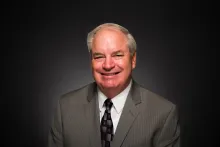
Robin Webber was born in Chicago, Illinois, in 1951, but has lived most of his life in California. He has been a part of the Church of God community since 1963. He attended Ambassador College in Pasadena from 1969-1973. He majored in theology and history.
Mr. Webber's interest remains in the study of history, socio-economics and literature. Over the years, he has offered his services to museums as a docent to share his enthusiasm and passions regarding these areas of expertise.
When time permits, he loves to go mountain biking on nearby ranch land and meet his wife as she hikes toward him.
