
Robin S Webber
This transcript was generated by AI and may contain errors. It is provided to assist those who may not be able to listen to the message.
And now for the sermon, Mr. Robin Weber.
Well, thank you, Mr. Richardson. And also, I want to say thank you to Dr. Henderson for a very fine opening message that certainly gets our minds and hearts thinking on the Sabbath day. I want to bring a message to you today that I hope that we can put on our Internet, our homepage, because I hope that it will not only be relevant to you, but to all of those that might at one time or another click in and see what we're doing in the United Church of God, Redlands. This past month has offered incredible and unfathomable lessons for all of us in preparedness for disaster.
So far, the Gulf States have experienced two major hurricanes, one which is going on even as we speak and, frankly, not over. So things can even happen from that, even yet. And not only that, but here we are. It's only the middle of September. And to recognize the hurricane season goes for yet another month. So more may come. The losses are staggering. And in many cases, they will be life-altering. As we go back, and as Monday morning quarterbacks go back and look, we come to realize that many of these situations could have been avoided. People, cities, states, and a national government were either not prepared, ill-prepared, or simply overwhelmed, frankly, by the size of the storms that confronted them. Perhaps most tragic of all is that many of these governments or agencies had plans that were simply never put into action. I think all of us have now seen either the famous or infamous parking lot in the city of New Orleans with all the buses that were never used. Now, today, there's analysis, evaluation, and finger-pointing all around us. Some is justified. Some is unjustified. But whether justified or unjustified, I think it's worth for all of us to take note and consider. Here are some of the basic lessons that I've pondered and thought about and come to in the last month of becoming a hurricane watcher. 1. Prepare for worst-case scenarios, for they will come. 2. Therefore, be careful where you build and choose to live, because tomorrow's reality isn't always today's paradise. 3. The middle of a crisis is no time to learn about leadership. 4. Not making a decision is a decision. A decision that can affect countless others other than ourselves. 5. Communication is important. Above us, around us, beneath us, we must be connected with others to get where we need to and want to go, and also to be able to bring others along with us. Maybe you've come to other conclusions. I'm sure that there are other points. Some of you might be saying, right on, and Weber nailed it right to the board. But the question I have for you today is simply this. How personally prepared are you for the storms of life that are headed your way, that are headed my way? Jesus personally speaks to us, not Louisiana or Texas, but to us in the book of Matthew, beginning in chapter 6. Come with me if you would, and let's open up our Bibles on this Sabbath day and come to learn what God would have us to know. In Matthew 6 and beginning in verse 24. Actually, pardon me, Matthew 7 and verse 24. Therefore, whoever hears these sayings of mine and does them, I will liken to a wise man who built his house on the rock. And the rain descended, the floods came, and the winds blew, and beat on that house. And it did not fall, for it was founded on the rock. But everyone who hears these things of mine and does not do them will be like the foolish man who built his house on the sand. And the rain descended, and the floods came, and the winds blew, beat on that house, and it fell. And great was its fall. Jesus tells us those that would follow Him then and now, that we need to build carefully, that we need to consider our foundation, because the storms will come. Allow me to share some of the storms with you that will yet come in our life.
Number one, humanly calamity awaits each and every one of us. Death is a stranger to none. In Hebrews 9, 26-27, the Word of God tells us, quite simply, that it is appointed unto man, each and every man, once to die. I have a question for you, friends. Are you prepared? And are you preparing for that eventuality? Number two, beyond that time, circumstances and accidents happen to each and every one of us. Jesus spoke to this over in the book of Luke, if you'll come with me, please. And let's explore this example together in Luke 13, because people gathered around the Christ, and they wanted to talk to him about some of the current events of that day, of disaster, and of what had occurred. And why did it occur? Because in the Jewish train of thought, it was a matter of this happened, it was because of a blessing. When that happened, it was because of a curse. So certainly, this must have been something that individuals had done to bring this tragedy upon them. There were present at the season some who told him about the Galileans, whose blood pilot had mingled with their sacrifices. And Jesus answered and said to them, Do you suppose that these Galileans were sinners in all other Galileans? Galileans were known to be the hot heads of the region. They were always agitating against the Roman rulers. They were always pushing the envelope. So perhaps the thought behind this verse is, Maybe they got their just desserts. Jesus said with a question, which was his answer, Do you suppose that these Galileans were sinners in all other Galileans? Because they suffered such things? And then in the divine wisdom, he moves away from the Galileans and talks to the audience, it's present. I tell you no. But unless you repent, you will also likewise perish. He did not address the humanness or the carnality of the Galileans. But he asked the audience and reminded them that time is short, events can occur, and unless you repent, you might have the same fate. Or those eighteen on whom the tower in Seliom fell and killed them, do you think that they were were sinners? Then all other men who dwell in Jerusalem? These men that were building perhaps for either Herod or the Roman occupation forces? People that had given in and building the edifices of the enemy or the puppet ruler? He says, I tell you no. But unless you repent, you will also likewise perish. So we see these things occurring. Now, when death or tragedy strike us, we might call it a personalized Katrina, named after the hurricane that just came through a week or two or three ago. And when either death or these kind of circumstances occur, time and chance, things that occur, it can just blow us over unless we are personally prepared and in training and in preparation now. One thing that came across to my mind as I was watching what was happening in New Orleans, and recognizing that much of that city, not all of the city, but much of that city, is under eight feet of sea level. I began asking myself, how much of my life, how much of my existence, how much of the neighborhoods of my heart are under sea level, and are not at the level of God's love, of God's Word, and God's commandments? And then somehow I think I can make a breach, or I can create a levee, and somehow exist down here when God says, Robin, I want you to exist a different way. See, these things occur around us, friends, for a reason and for a purpose. Sometimes I found, you found, we know that sometimes we want to live our life down below sea level, and it had the blessings of living all the way up in Denver, the Mile High City.
We want what is up there at the end, but we don't want to accomplish the means to create the end. Number three, allow me to bring this point to you. We've talked about death faces each and every one of us. We've talked about accidents can occur, calamities can happen on a daily basis. Number three, globally, calamity awaits us. Globally, calamity awaits us. The book of Revelation describes the track of a hurricane pin coming our way, coming humanity's way. It's out there. It is coming. We don't know exactly when landfall is, but it is inevitably coming our way. Question, are we prepared?
I realize that, for many of us right now on this Sabbath afternoon, life is already challenging enough, even as I speak. And yet I must share that it may even become more challenging for each and every one of us. God tells us so, and He does ask us to prepare. There's a fascinating verse I'd like you to look at over in the book of Jeremiah, back in the middle of the Old Testament. Jeremiah, and come with me to chapter 12.
Jeremiah 12, and let's notice in particular, if you would, verse 5. Jeremiah 12 and verse 5. Because there's a chiding that's going on here in times that seemingly are tough and rough. And in Jeremiah 12 and verse 5 it says, If you have run with the footmen and they have wearied you, then how can you contend with the horses? And if in the land of peace, in which you trust it, they wearied you, then how will you do in the floodplain of the Jordan? And basically the thought is this. If you're getting tired running on foot, then how ever are you actually going to be able to keep up with the horses?
Now with that chiding in mind, and or that admonition in mind, the question I have for you this afternoon is simply this. How then do we prepare for such an eventuality? Today I want to give you a spiritual survival plan to guide you through the storms of life. The title of this message is Surviving the Storms of Life, for they surely will come. And what I want to do and have this thought in mind to you is, I want to help as your pastor to pre-position resources to help you secure your spiritual moorings.
We found the difference between right now in these hurricanes, the difference between the state of Louisiana and the state of Texas. And it's not over and more will come in. The lessons learned and the pre-positioning of resources to help the many. With that thought in mind, recently there have been many, many articles and programs on readiness. Whether you're in Orange County and read the Register, some of you might read the LA Times, we received the Press Enterprise. We've all noticed there's been a whole flock of articles on how to prepare for, here in California, the big one. You know what they say, have a week's worth of food, have drinking water on hand, take your insurance papers, take your will with you, have an exit plan from your house, been thinking that one out, and have an exit plan from your community.
After I saw what happened in Houston, I immediately took that to heart. I've got my plan now. I don't want to be stuck on the freeway with everybody else, but I'm not going to tell you where I'm going. I've got a plan. I've got a plan. Anyway, I'll tell you after services. And yet, how many of us have followed through on what we've read in the newspaper? With that thought in mind, how many of us over the years have heard sermons that offer us pre-positioned spiritual resources to battle the storms of life? They are so basic that we can almost say them in our sleep. And they are so basic that at times when those messages are being given, we have probably gone to sleep because we know what they are.
We know what we ought to be doing, but we don't do it. And then when we need them, they'd better be there because the one thing I want to share with you, and I'm trying to get across with all of our friends out there today, is simply this. Life is what's happening that you haven't prepared for. Life is what is happening that you have not prepared for.
With all these thoughts in mind, then, what resources then do we pre-position ourselves with? Just like the buses that were pre-positioned in that parking lot in New Orleans, but were not used. We'll talk about that a little bit later. Let's go down to check-off list, okay? We have a check-off list, so get ready to just write the title. And at the end, grade yourself as how you're doing in spiritual preparation for the storms of life that will come.
And be honest, the first thing that we need pre-position, point number one, is prayer. Prayer. Never underestimate the power and the purpose of prayer. If it's big enough to worry about, it's big enough to pray about. Why? Because life comes in pretty big packages, even for Texans this weekend. Life comes in pretty big packages. I've already defined the personal Catrinas that we can expect in our existence.
Even so, if you haven't discovered them, if you don't believe that, you better understand that they will come. And we will need to have the resource of prayer. Simply put, with some of the challenges that are around us, friends, we need to turn some of our cares into prayers. All of us come into this building today, and some of us have the cares of the world on our shoulders, the cares of the family on our shoulder, the cares of ourselves on our shoulders, and the bottom line is, we're probably just caring too much.
And we're worrying too much. When we recognize that worry is not a responsibility that God has not given us, it is vitally essential that every day, every day, we perfectly walk into the throne room of God and meet Him on a daily basis and ask that He supply our daily bread, and that His will be done. Because of this world that we've got to walk in. You know, it's very interesting. When we go to the book of Ezekiel, as we did last time in our class, Ezekiel opens up with a picture and a portrait of God's throne. Why did God do that for Ezekiel?
Because of what God was going to have Ezekiel do with the nations of Judah and Israel. That He had to get secured and locked into the glory, the power, the purpose of God's throne. Using that as an anchor. And being anchored and being moored and having that in the sense as a levate. Then, proceed in life. It's interesting when you go to the book of Revelation. Revelation opens up in Revelation 1, Revelation 4, and Revelation 5 with what? The spiritual portrait of Jesus Christ. It talks about the throne of God. And it does all of that before it goes into the issues and the calamities that will occur.
Prayer, meaningful prayer, brings us into that throne room connection with God. To ask for our daily bread. It's interesting that Jesus in that prayer in Matthew 6 says to pray for our daily bread. And you see, back in that time bread was made daily, wasn't it?
Didn't say, pray so that I can get to the supermarket and have bread full of preservatives. It was a matter that it was daily bread, and therefore it gives you the connection that we ought to be praying daily for the provisions from God. And not only that, but it also is a matter that His will be done. When we pray that prayer, then we need to recognize that whatever does come, it is for our good to become complete in Him.
His will isn't simply to make us physically happy. Frankly, His will is not to keep our homes up with all four walls and a roof on it, said. That's our desire, but that may not necessarily be His will. I'll talk about that in a moment. Allow me to share with you what we do when Susan and I travel. Whenever we travel, we either stand at our front door or we get down on our knees. And sometimes we have some of our girls with us.
They know the routine, and they join us, and we have a family prayer. And we ask God to bless our house while we're gone. We ask God to look over our grounds. Don't think it's too big, but it's a lot to us when I say grounds. We ask God to look over our pets, because we love them just as much as the people of New Orleans love their pets. We ask God to watch over our California family, our Ohio family, and our church family. We commit everything that we have to God. We ask His blessing. He knows it's our human desire, and then we commit it to Him.
When I do that, and as I leave, and I might go to Ohio with Susie, and if something happens to my house, that will not disturb me near as much if I didn't commit it to God first. It's much worse for me that I didn't commit that which God has graciously given me and allowed Susan and I to have over these years than to have that house standing.
It's more important that we acknowledge God's house than our own personal property. So that if I did come back, then I recognize that I have done what I could. I've said, thy will be done. Because, you see, God's purpose for you and me in this life and making us complete in Christ is not just simply to have happiness and to hear and now. Allow me to share a story with you, because so often we put so much on the physical and or physical preparations to avoid disaster. It's like when the story of Clara, there was a tornado that was coming in the Midwest, and you think of the Wizard of Oz, remember Dorothy, going down into the basement with her ankle and ant, that kind of scenario that occurs.
And everybody was trying to grab this and that, you know, the insurance, the will, water, flashlights, and they were all trying to get down into the basement then before the tornado came. And then finally said, well, where's Clara? Where's Clara? They couldn't find Clara, especially when you're in the basement and it's dark and you haven't turned on the flashlight yet, because you can't find the flashlight because it's dark. And you're scared and you forgot it's right in your hand. So they're saying, well, where's Clara? They're nervous. They're little ones missing. Clara hadn't been there for a few minutes. They got concerned, just as each and every one of us would.
And then all of a sudden they heard a rustle out of the dark, and out behind the staircase came Clara. They said, Clara, where are you? While they were doing all of that, Clara, little Clara, was behind the staircase. She said, I was praying. I did what I could. Oh, if life could be so much different if each and every one of us, like Clara, did what we could. To give our all, to ask our daily bread, to ask if I will be done, and then to recognize that we have put it in the best hands, the best heart in the universe, and to recognize that God's will be complete.
Philippians 4 and verse 6 addresses this because all of us worry. All of us get anxious. Notice Philippians 4 and verse 6. Philippians 4 and verse 6, so that we can be anchored with Scripture in the Bible. Be anxious for nothing. The Bible is saying, don't worry about anything. But in everything by prayer and supplication, which is prayer that is broken down in increments, about specific items, with thanksgiving, let your request be made known to God. And notice what happens. That's the cause, and what is the effect? And the peace of God, which surpasses all understanding, will guard your hearts and minds through Jesus Christ.
I'm not afraid to lose anything, brethren, but I am afraid not to invite God into my family's plans as a partner. Little Clara was prepositioned for survival. How about you? Point number two, the second resource of prepositioning is study of the Word. Study of the Word that we have on our lap this afternoon. You know, it's interesting that in Matthew 4, Jesus had three storms come at Him in a row, just like a Texas, just like a Florida, just like Louisiana.
In Matthew 4, He had that standoff with Satan. Only thing is, it didn't seem like storms. They weren't named like storms. Rather, they were disguised as requests and gifts. After all, what's wrong with answering a few questions with a little action of your own? Just for a moment. God, turn away. Just turn your head for a moment. Let me do my thing. It's all right. Because what I'm going to do is, I'm going to go below sea level, but I want to act like I'm up here in Denver.
So just turn around for a moment. But you know, it's interesting that each time Christ responded to Satan in those temptations that are in the wilderness, it's powerful what He said. It is written. How did He know that? How did He know that? Because He'd read it.
He was in the Word. He'd studied the Word. And He recognized that that Word was vital. When Satan asked him one thing, he counted with a verse right out of the Bible. Deuteronomy 8 and verse 3. Man shall live by every word of God, and not by bread alone. Satan came back. He came back again. Deuteronomy 6, 16. And Jesus chided him and says, don't you know that it is written, you shall not tempt the Lord your God. Well, Satan thought he had Him on the ropes and when the third time was willing to offer Him everything, if He just would bow down. And Jesus quoted Deuteronomy 6 and verse 13, that He was to worship God and God alone.
Now in all of this, friends, Jesus is our example. He's our obvious example. And when you go through Matthew 4, it is obvious that Christ as our Savior, and He that was qualifying to be our high priest, was obviously pre-positioned to face the storms that were going to come to Him in the desert.
What else did He read? It is also written in Psalm 119. Join me on this one, please. In Psalms 119, and let's notice verse 105. Psalms 119, 105.
When you're in the 119th chapter of Psalms, you've got to turn some pages, don't you? Notice what it says. Your word is a lamp to my feet and a light to my path. You know, they could understand this in New Orleans.
The power and the purpose of a lamp. When all the lights were out in the city, and if you had a kerosene lamp or some portable lamp, when everything else was dark. Last night I was watching news, and one of the reporters said, I can't see anything that's coming my way. There's just the lights that are on me based upon this generator that's about to go out. It's all dark out there, and I don't see what's coming at me with all of those, at that time, gale force winds before the hurricane came.
But that's odd in mind, friends. Your word is a lamp to my feet and a light to my path.
God's word grants us a sense of placement.
It grants us perspective that is ageless beyond the moment in the culture and the trends in our family or in our culture. It grants us a sense of proportion as it teaches us to number our days.
And when in doubt, it reminds us the destination that we are headed for.
To not use this word, to not read it, to not allow it to be a lamp and a guide to us in a very, very dark world, basically is simply to say, God, I'm just going to simply use this fleshly human flashlight.
I'm going to use my own light. I'm going to do my own thing. I'm going to use my own reasoning, thinking that our batteries are going to last forever.
When we read God's word and we find what is written, we can gain golden perspectives, as is mentioned in Matthew 6, if you'll join me there. In Matthew 6, let's just take one inkling of Scripture and understand the security and the confidence and the assurity that it can afford us when we come into those storms of life. In Matthew 6, coming from the Sermon on the Mount, Matthew 6 and verse 19, Do not lay up for yourselves treasures on earth, where moth and rust destroy, where thieves break in and steal. Don't get stuck on things. Don't hoard stuff, as it were, because when it's all said and done, it's going to disappear. It doesn't mean that we shouldn't take pride and enjoy the good things of life. No, not in any stead, is that what we're talking about? But don't make them a god. Don't make them an end-all, as it were.
But lay up for yourselves treasure in heaven, where neither moth nor rust destroy, and where thieves do not break in and steal. For where your treasure is, there your heart will also be. And then let's notice verse 25. Therefore I say to you, don't worry about your life. So what do we all worry about? We worry about our lives and every moment and what's not working, what you will eat or what you will drink, nor about your body.
What you will put on is not life more than food and the body more than clothing. Look at the birds! Get your mind off yourself. Look up. For they neither sown or reap nor gather in the barn, yet your heavenly Father feeds them. And aren't you more valuable than a bunch of birds? Which of you by worrying can add one cube into a statue? So why do you worry about clothing? Consider the lillings of the field and how they grow, how they don't toil or spin.
And yet I say to you that even Solomon in all of his glory was not a raid like one of these. Now, if, now, because I want to share something with you, very important. If you're bold enough, got your pen ready? Who's got a pen? Got a pen? Who's the interactive portion of services?
Ever got a pen? Who's got a pen? Wake up. Okay. Circle now. That's it. It's over. Because God always operates with all of His servants down through the ages in the moment of now. Now! And now is our time. Now is our time. If God so closed the grass of the field, which today is and tomorrow is thrown into the oven, will He not much more clothe you?
Oh, you of little faith. Therefore, don't worry saying, what shall we eat? Or what shall we drink? Or what shall we wear? Now, that doesn't mean that we're not to set aside water. That doesn't mean that we're not supposed to set aside a week or month's worth of food. That doesn't mean that we shouldn't have a plan out of our house, out of our community, and all the responsible things that every citizen of the country should do. But don't allow that to be your saving grace. There's more beyond this physical life. Therefore, don't worry about tomorrow. For tomorrow, we'll worry about its own things. Sufficient for the day is the trouble thereof.
See, these are the vitamins. These are the spiritual resources that we need to be drinking in. So that if Suze and I had come back, honey, from Ohio, and our house was burnt to the ground, we've already given that house to God. He already gave it to us. It's not our house. We just live there. He blessed us. He gives. He takes. And we learn from the divine one and become complete in Him.
Point number three. Meditation. We must preposition meditation in our lives. Let's remember that God's ways are not our ways. It reminds us that in the book of Isaiah. In Isaiah 55 in verses 8 through 11, I'm not going to turn there for sake of time, but it says, my ways just simply are not your ways, as your thoughts are down here in New Orleans, as it were, below, and I love the people of New Orleans. I don't want to, you know, I'm saying I'm dealing with the issue of being below sea level.
As you're way down here, you've got to recognize that my mind is up here. Now, God says our thoughts are down here, and He says He's up there as far as the heavens are above the earth. That means once we have prayed, once we have studied and understand what is written, then we've got to think about it. Then we've got to take these words and make them applicable for 2005 and in our lives.
Because what God is saying in Isaiah, which is the whole book about the new mind, and to have the new mind, you have to think about it, is simply this, that His ways are not just in our natural rhythm of life. God goes to a different beat than we do. You've got to get into His rhythm, and the only way we're going to rhythm is to think about it. Consider this for a moment, some of the examples in the Bible. You've read these over before, but recognize what happened. In the book of Matthew, it tells us that Joseph fought.
That's it. Joseph fought with all of those things that were coming at him. It says that he fought. Now, he'd read what is written. He knew that he could either put Mary away or could annul the situation or whatever. He knew what the Bible said, but then it says that he fought. He meditated off of God's law of what he already knew that was written, and as he meditated, God gave him a third option. Know what that was? Mary her. Hmm. Hadn't thought that one up. How many of us need God's third option in our life right now because we're up against a blank wall?
What about Luke, where he mentions about Dear Mary? It says that Mary pondered. What's that all about, as we say in L.A.? What is that all about? It says that Mary pondered. She thought. In Ezra 7 and verse 10, I'll let you look this up this week. It's a wonderful verse. Ezra, who had the burdens of the world and the nation on his shoulder about moving people from one spot to another, said that he prepared his heart. Hmm. Sounds to me as if he was prepositioning himself.
You see, meditation is considering how to apply God's Word in our daily lives. Some of us pray to God. Some of us read His Word. I think some of us sometimes fall down on this point as far as meditating. How do we do that? Meditation means that we just need to have some set-aside time to allow God to work with our minds. In Ephesians 5 and verse 12, Paul calls it redeeming the time, taking that time, making that time, and if need be, stop everything and give God our time so that he can work with our heart and our mind and our existence so that we can truly survive the storms of life.
Time is a tool. We all have the same equal amount of time, whether we're over six feet tall or under five feet tall, whether we're black, white, brown, or purple, whether we're rich or whether we're poor. We all have the same amount of time. And it's like those buses in a parking lot in New Orleans.
It's not that they aren't there. It's how and when we use them. All of us have the same amount of time we need to use it. Point number four, fasting. Fasting. If I dare say this, this is one vital tool that more than one of us, and myself included, are in short supply of.
And yet we constantly see it mentioned in Scripture. We know it's not natural. We know it's not easy. We know that it's not fun. We easily know that there's a hundred other things that we would rather do than fast. But we come face to face and eyeball the Scripture, and this is what the spiritual survivors of the Bible did. Isaiah 58, if you'll come with me there for a second. In Isaiah 58. And notice with me verse 6. Isaiah 58. And beginning in verse 6.
Is this not the fast that I have chosen? To loose the bonds of wickedness, to undo the heavy burdens, and to let the oppressed go free, and that you break every yoke. Those storms of life that come at us, those calamities, those unexpected things. Is it not to share your bread with the hungry, and that you bring to your house the poor who are cast out? When you see the naked that you cover him, and not hide yourself from your own flesh. And then it speaks when we do fast and fast properly, and then your light shall break forth like the morning, your healing shall spring forth speedily, and your righteousness shall go before you.
And the glory of the Lord shall be your rear guard, and then you shall call, and the Lord will answer, and you shall cry, and he will say, Here I am. Now, who doesn't want that kind of a blessing? Or am I talking to the right crowd? That's an amazing set of Scriptures when we fast, and if we fast properly before our God.
But like I said before, all of us, probably to a degree, myself included, are in short supply of that spiritual heavy lifting that God wants us to do. In 2 Corinthians 11 and verse 27, I'll just allow you to jot that down and look at it this week. Paul states that in his life's journey, and all those storms that came at him, it says that he was in fastings. Plural. Got my drift. Plural. Fastings often. He was pre-positioned to respond in a Godly manner in this human framework. All of us have homework, myself included. I'm going to dedicate myself more than ever this year to kind of come up to Paul's level. Now, I know he was a Pharisee, and that means Tuesdays and Thursdays. Not guaranteeing that. But there's something there about spiritual survival that God nails down for us as it is written. Isaiah 58 is out there as some spiritual heavy lifting that all of us have to do, and we need to pre-position ourselves. One thing, one of the best sermonettes I ever heard, Susan, was there with me. It was in the auditorium PM. A gentleman named Mr. Tom Root gave it because he basically spoke about fasting. And he said, this is the way that you fast and do it on a regular basis. Fast, fast. Fast, fast. Because if you think about it too long... I see some nods. Yeah, I hear you. If you think about it two minutes, you'll think about going to a restaurant before you know it. Use that as the key. When God's Spirit is prodding us and prompting us and working with our hearts and our minds, respond. Fast, fast. Point number five. Just ten more points. Now, I'm just watching the kids out there. That is the older ones. But I want to share this with you because I'm not going to be with you for a couple of weeks. And I think God's put this in my heart to give to you, to help each and every one of us preposition ourselves for the storms of life that are ahead. Point number five. Ministerial support. Ministerial support. Let's come to understand and appreciate this valuable resource. A resource that is God-ordained. Come with me if you would to the book of Ephesians. In Ephesians 4. And join me in verse 11. Paul speaking, then and now. And he himself gave some to be apostles, prophets, evangelists, and some pastors and teachers. That he is capitalized. Jesus Christ. And this is an article of faith. It's an article of my faith. As I read Ephesians and recognize that the work of God, the assembly of God, the ecclesia of God still exists around this world. So this verse is not extinct. If there is an ecclesia, that also means that there are shepherds, that are prophets and evangelists, pastors and teachers, for the equipping of the saints, for the work of ministry, and for the edifying of the body of Christ. Why? Until we come to the unity of the faith, of the knowledge of the Son of God, to that perfect man, to the measure of the stature of the fullness of Christ. That we should no longer be children tossed to and fro, and carried about by every wind of doctrine, by the trickery of men, and in the cunning craftiness of deceitful plotting, for that we can all speak the truth and love. Ministry is given to the ecclesia as a gift from none other than Jesus Christ. It is defined by the words of Paul in 2 Corinthians 1.24. I've got my marching orders, as it says in the authorized version, I am to be a helper of your joy. That's it. I can go. I'm to be a helper of your joy.
I know other ministers and other times and other pastors have talked to you about rule. The rule over you. That rule, though, is when you understand it, that's the kind of rule that a shepherd has over sheep.
To guide and to move them, to bring them from this pasture to another good pasture, to prepare the pasture ahead, just as we go often. I will probably again sooner or later give that message on the 23rd Psalm.
The rule that a pastor or an elder has in the church is the kind and generous and gentle rule that the shepherd has in sheep.
That is the definition. And I'm to be a helper of your joy.
And to be called to salvation in this time and in this age is a joyous matter. Before services day, I saw Marty, and I do it with every speaker that I ever see, whether it's in this church or at the feast, no matter who they are. I'll say, do you feel the joy?
Feel that joy! You're speaking from God's Word. You've got God's Spirit. You're one of God's children. Feel that joy. Let it energize you.
Well, sometimes that joy isn't always there, energized on Mondays, Tuesdays, Wednesdays, Thursdays, Fridays, even Saturday afternoons during a sermon. Maybe the joy is not there.
But I'm to help. I'm to guide. I'm to be there for you. Joy does not always equate with happiness. Happiness are things. Happiness are things that are happening down here.
Joy is having the vision of God's Kingdom, of the throne of the Father, the throne of Christ, and recognizing we are being called to that.
My calling, my role is to preach the Word, protect the righteous from the unrighteous, care for the widow, and mind the orphan. It's pretty clear in the book.
It's to guide and to point the way through life's intersections for some of us when those intersections seem to...seems like a freeway in Houston.
Has life ever seen that way to you? Like a freeway in Houston two days ago. Your life seems all clogged up. Doesn't seem like you're traveling. You ran out of gas. You did what you were told to. You told to get out of town. So what do you do? You get out of town. You'd think you're going someplace. And what happens?
You're run out of gas because everybody else decided the same thing.
My role as a pastor is to bring you some gas.
Fuel up. Drink in. Get to going again.
Let's be frank. Each and every one of us have a different story in handling this vital resource.
Some of us have homework to do in this area.
Some of us have had wonderful experiences with pastors and elders. Congratulations. Some of us have not.
Some of us have enjoyed one minister more than another. That's natural.
Some of us have just clicked by personality with one more than another. That's natural.
Some of us have felt that our situation was not heard or dealt with properly.
Some have felt ministers at times have not been true to the Word. And you know and I know they have not.
And that may well be. Has been. I've got news for you. Sitting down. Got your seatbelt on. Airbags ready to deploy. Probably going to happen again.
But nonetheless, God asks something of us. At times the ministry has not been responsible with their calling.
The fruit has borne them out. At times members have placed their personal responsibility to think and to make decisions at the feet of a man.
Rather than determining their own life's course. And that fruit bears them out. But two wrongs do not make a right.
Two wrongs do not equate with the responsible role of relationship that God desires between people of like spirit.
What am I saying? I said, what is this coming to? Fully understood. We are to preposition ourselves. Me and you to know one another.
To develop relationship so that when those times come and they will come, all three, at least two in our life, third maybe.
Stick around. We'll find out. There needs to be leadership. There needs to be brotherhood. There needs somebody to help get through those intersections of life.
With that thought in mind, let me come to point number six. Another one.
Prepositioning now, not later, but now. It's got to be now. We learned that through New Orleans. It's got to be now and now and now and now.
When you go to the book of Hebrews, look at Hebrews 3. Now is the time. Now, if you will not harden your heart. Now is the time.
Tomorrow is one of the most dangerous words in the dictionary. God has not called us to be Scarlett O'Hara. Oh, Rhett, I'm too tired. I don't want to think about it. Because after all, there's always tomorrow.
No, tomorrow may not come. Tomorrow may not come. Now is the time. We need to preposition ourselves with member support and be involved with the people of God. I'm not talking about being involved in activities. I'm talking about being involved in the lives and the hearts and the existence of people.
God calls us people sheep. I is one, as we say in bad English, to make a point. You rarely see a sheep alone.
I remember I mentioned that one time up in Fresno. I was going to Bakersfield in the afternoon. I was running the circuit. So I think Susan was with me. And I'm going down the field. I see this big flock of sheep on my right side going south.
And I saw a sheep alone. I thought, boy, what's that? I just said that you never see a sheep alone. And I knew somebody was coming down to give the sermonette behind me that just heard the sermon. I go, great. So, you know, confession is good for the soul. And so I said, by the way, over by Delano, did you have to see that sheep alone?
And they said, no, that sheep was not alone. That was the mother. And we noticed that it was taking care of its lamb.
Isn't that nice, ladies? But the point is this. Sheep are rarely alone. They need a shepherd. And they need one another.
Or they get lost. They stray. Or they get picked off.
When the storm of life comes, let's face it, it's natural to withdraw. It just really is.
We become depressed. We become inwardly angry. We don't think God is fair. We don't think anybody likes us. We think that somebody is going to give us a contract, the one that Marty described, where it's no sign, and sign, and sign, and sign.
And we're offended!
As if it's something that we shouldn't be.
Jesus Himself said that, woe, because offenses shall come.
Offenses shall come. Jesus, the divine one, walking on this earth, knew that as people got together, His followers, that were human beings, that guess what? They would offend one another.
But when you go to Luke 17.1, I'll let you do that. It's homework. Go down and He tells you how to take care, then, in the next six verses, or five verses, of how to deal with offenses.
Hmm. I'll give you a hint. It deals with forgiveness.
Ecclesiastes 4. Join me. Book of Wisdom. Ecclesiastes 4.
Let's notice verse 9.
Two are better than one, because they have a good reward for their labor.
For if they fall, one will lift up his companion.
But woe to him who is alone when he falls, for he doesn't have anyone to help him.
And again, if two lie together, they will keep warm.
But how can one keep warm alone?
That's why, when we notice the words of God and His encouragement in the book of Hebrews, join me.
Hebrews 10 and verse 22. We need to understand that this is set in the time of the Judeo-Romanic wars that were looming on the horizon.
This is addressed to the Hebrews.
The Jewish Christian church in Jerusalem would read this.
The Romans were coming. The Jews around them were probably wondering who were these Christians.
It wasn't easy. Life looked bad.
The apostles were dying.
He didn't know who was your friend.
Jesus had not come back. He was supposed to. They said, if you see Him go up in the air, you'll see Him come down.
So there was a lot of discouragement. There was a lot of depression. There was a lot of worry.
And notice a part of the cure, as mentioned by the author of Hebrews.
Let us draw near with a true heart in full assurance of faith, having our hearts sprinkled from an evil conscience, and our bodies washed with pure water.
And let us hold fast the confession of our hope without wavering, for He who promised is faithful.
And let us, plural, remember sheep are not alone, let us consider one another in order to stir up love and good works, not forsaking the assembling of ourselves together, as is the manner of some, but exhorting one another.
And so the more, as you see, the day approaching.
I see what lies ahead of us. I see what lies ahead for the Church of God. I see what lies ahead for the United Church of God as an organization.
I recognize our past story, our present moment, and I look into the future.
And brethren, this is a time more than ever when we need to preposition ourselves in faith.
I didn't say in perfection, because you'll never see a perfect Church. You'll never see a perfect pastor. You already knew that.
And you'll never see perfect brethren.
But if you go with what Jesus did, it is written. It says here, it is written to come together, to join together, prepositioning ourselves.
Okay? Are you with me? To survive the storms of life.
Lastly, last point, thanksgiving.
We need to preposition ourselves against the storms of life with thanksgiving.
All of us have heard sermons on thankfulness linked with the story of the ungrateful lepers.
We always know that only a tithe of that group came back and said, Thank you, Lord, for healing me from lepercy.
And when God grants us a blessing, yes, we do want to be prepositioned to return thanks to God.
One of the first things that Susan and I did when we got home from Ohio was we got down on our knees and we returned thanks.
Because how ungrateful of us if we ask God to be our partner and come along with us to leave him out once we got back.
And so we thanked him.
But my purpose in raising this point is not to thank God for the good times, but also to thank Him for the troubling times.
And to have the predisposition that is described in Ephesians 5.
Join me, if you would, please, in Ephesians 5, and we're beginning to wrap up. In Ephesians 5, and let's notice verse 15.
See then that you walk circumspectly, not as fools, but as wise, redeeming the time because the days are evil.
Therefore, do not be unwise, but understand what the will of the Lord is.
So that's kind of put out there.
That's what's going to be dealt with now in the next few verses. Not what is my desire, or what I think I should give thanks for, but the will of the Lord.
And don't be drunk with wine, which is dispensation, but be filled with the Spirit, speaking to one another in psalms and hymns and spiritual songs, singing and making melody in your heart to the Lord.
That means, basically, when you understood the community then, those songs and psalms was filling yourself with what is written, the words of God, the purpose of God, the love of God.
Verse 20 now.
Giving thanks always, always, for all things to God the Father in the name of our Lord Jesus Christ, and submitting to one another in the fear of the Lord.
There it is. Bottom line, friends, we are to give God thanks for all things.
You know how when you go to a salad bar, you know you're at the hometown buffet or one of these soup plantation places, and you know you see something that you don't like, you know, like the broccoli.
You do a leap. You do a leap over the broccoli. No? Not going to do that. And then all of a sudden you see those funny-looking beans.
You know, like they're from... I won't go there. Anyway, they're just funny-looking. I don't know where I'm going with that one.
But you skip it. How many of you skip things at the salad bar?
Okay. The salad bar of life that comes our way, we cannot skip. We've got to give God thanks each station of the way.
There are some things going on in our lives right now. Family, illness, sickness. And you know what? I read my Bible right. God says we're supposed to give thanks.
We're not to give thanks to God for the problem, but we are to give thanks to God for the strength and what He will do through us.
You see, Christianity is not about storm transference. Are you with me? Do you understand?
It is about transforming the storm to serve God's purpose.
Give thanks not for having cancer, going through a divorce, being low on income, not paying the bills, the death of a child, God forbid.
But to give thanks and acknowledgment to God that He will give you the tools. Give us the resources.
And by doing that, as Paul says in the book of Ephesians, having done everything, it says just to stand.
It's not like we're going to go off on a skip. Having done everything, pre-positioning ourselves with prayer and study and fasting and working with our pastors, working with our elders, being involved with the flock of God, all of these things.
Having done all of that, when that wind comes, it's going to hit us.
And yet God says we will stand in Him at the end. Let me conclude with this. I know I've gone long. I apologize. You're Christians. You have to forgive me.
But I think this is important. I'm going to speak my heart.
In assessing the lessons of the past month of major storms in the Gulf States, I think all of us have come to an understanding that when it's all said and done, we can't rely on others.
Notice that? We can't rely on others alone. Can't rely on government.
And I know the government in every way has tried to do what it can, not perfectly. That's a whole five hours of talk radio.
But if we simply are relying on others, if we do, we are going to be stuck in a never-ending blame game.
You know people like that. I've met people like that. And there are people that are frozen, fossilized in the blame game.
Blame because of a pastor. Blame because of members. Blame because they didn't read the Bible right. Blame and blame and blame and blame and blame.
It's like cancer, and it eats you out.
God is not calling us to play games. But the victory threw and by Him. But we have a part. What does it say in Philippians 2 and verse 12? I couldn't help it. That was just echoing when I began to recognize the importance of personal responsibility in storms.
Philippians 2 and 12 simply says this, that we are to work out our own salvation with fear and trembling.
You can't grab my skirt, well, frankly, because I don't wear one.
You can't grab your mother or your grandmother's skirt. You can't grab me by the arm. Bible clearly states, because what our Father in heaven is offering is so wonderful.
He's going to do His part, but we've also got to do our part. Our part does not merit us being in the kingdom of God. That's simply by God's grace.
But He'd like to know that we're leaning on the door, and then He'll open it from the other side.
With that thought in mind, allow me to conclude with one of the most important articles I ever read, and that certainly affected me about 10 or 11 years ago.
In a March 1995 article in Reader's Digest entitled, Your Most Important Decision, this observation was made.
Our lives are a sum of our decisions, whether in business or personal spheres.
And in every decision, there comes a crucial point when you must make up your mind.
Deciding too quickly can bring disastrous consequences, and delaying too long can mean missed opportunities.
Often when, when you decide, is as important as the decision itself.
The bottom line is simply this, friends here in Redlands. This is the line.
It's not always what, but when.
Today's message has given you the what's of surviving the spiritual storms of life.
The when will be up to you. And it is in the when that will make all the difference.
In conclusion, a hint of a starting point, as found in Hebrews 3 and verse 7.
Today, if you will hear His voice, see at the Refreshing Center.
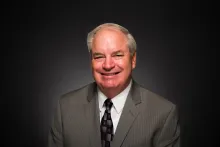
Robin Webber was born in Chicago, Illinois, in 1951, but has lived most of his life in California. He has been a part of the Church of God community since 1963. He attended Ambassador College in Pasadena from 1969-1973. He majored in theology and history.
Mr. Webber's interest remains in the study of history, socio-economics and literature. Over the years, he has offered his services to museums as a docent to share his enthusiasm and passions regarding these areas of expertise.
When time permits, he loves to go mountain biking on nearby ranch land and meet his wife as she hikes toward him.
