

Robin S Webber
This transcript was generated by AI and may contain errors. It is provided to assist those who may not be able to listen to the message.
I'd like to draw your attention to a verse that we find in the book of Psalms. I'd like to use it as an anchor of our thoughts today. If you'd join me, please, and let's go to the Old Testament, to the book of Psalms. And if you'll join me as we open our Bibles together as a congregation, let's go to Psalms 26 and let's note verse 2.
In Psalms, chapter 26, verse 2, the psalmist implores God, examine me, O Lord, and prove me.
Try my mind and my heart, for your loving kindness is before my eyes, and I have walked in your truth.
It's interesting. I'm reading out of the new King James translation in the Revised Standard version, which was very popular, especially back in the late 50s and early 60s. It goes this way, test and examine my heart and my mind.
Now, all of us, to a degree, might be willing to offer our mind, and you can play around with my mind. You can deal with my thoughts all you want. But when you go to my heart and want to test my heart, well, you've gone to meddling.
Well, again, let's face it, folks. That's what church is all about. It's to meddle with your hearts. It's to get down and to talk and to learn, to go deep so that we can be servants of God Almighty.
I'd like to follow up on the words of the psalmist today, and I'd like to provide you a test today as we are moving towards the New Testament Passover. He said, well, I didn't come to church for a test. Well, this one, you do.
But really, the test that I'm going to provide you is really ethereal, because every day that we're walking out there, meaning out there, we're being tested as to what we believe and what we hold near and what we hold dear.
The test that I give to you today is not to discourage you by any means, but hopefully to encourage you as to what our Father and Jesus Christ truly do want to offer us.
Do you remember when we were in school and we'd take a test and we'd be studying the night before and then we'd open the test? And guess what? Everything that we had studied for and prepared for were not the questions that were on the test. Maybe I'm Dutch, maybe that's what happens to Dutch people, but that was my experience so often, is that I was studying all the wrong pages. Somewhere I missed it in class as to what perchance the instructor was going to have.
And or when it was all said and done, you'd say, well, why were they asking that?
What was the purpose and what was the reason for the question?
When it's all said and done, what was the answer?
Well, having been an instructor for many, many years, both having been a student before and then later on an instructor, I very much, when I teach a class, want to make sure that all of the students go out of the room knowing what, as a teacher, I consider important. So that at the end of the day, it is not just simply a mental activity and it's not just facts, but that we've developed a relationship. So what I want to do for you as a congregation today here in San Diego is to guide you through some questions. I'm going to give you the questions and guess what? I'm going to pause. So if the if the if the sermon goes over time, that only means that you've taken time with your answers and not my questions. Okay, but I'm going to pause and I'm going to let you write it down. I'm going to let you think about it for a moment. And then I'm going to come back and we're going to have a talk and I'll share with you why I asked that question. And we'll see how many questions I get to. I could have 15 or 20. Let's see, 10 minutes per now. Well, we're going to go with some questions. So this is hopefully going to prepare us and encourage us as we're coming up to the New Testament Passover. Here's the first question that I have for you as we begin to center our minds and to give God our hearts. Number one, first question, who was Jesus Christ before he was born of the Virgin Mary? And in what capacity did he serve? Again, who was Jesus Christ before he was born of the Virgin Mary? And in what capacity did he serve? Now, let's think about it for a moment.
Looks like some of you are writing a booklet out there. We could use more writers. That's good.
Okay, I'm going to open it up to the congregation here. Can somebody please help me? Who was Jesus Christ before he was born of the Virgin Mary? And in what capacity did he serve? I'll take a hand. Sandy, nice and loud so everybody can hear on the other side, please. He was the creator of the universe, although we see a lyric, and trying to give God of the universe.
Okay, now at this point, is everybody nodding this way? Or are they just... How about somebody on this side? Would anybody else like to add to that? Mr. Braden, sir.
Okay, he was a spokesperson in the Greek. We normally call it the logos. Okay, would anybody like to add? Yeah, Mr. Coel.
Okay, he is the creator. Bob, you had your hand up, please.
Okay, he was the Jehovah of old. Okay, good answer. Allow me to build upon the foundation that you have already set. Let's appreciate as a congregation and an assembly that Jesus was no less than a member of the eternal Godhead, and that he is revealed to humanity in the sense of being the one that was known as the Word. Let's appreciate that if he was a member of the eternal Godhead, therefore then being God and knowing the properties that are incumbent upon God, he was all-knowing, he was all-wise, he was all-powerful, and God's own self-description of himself is that he was all-love and has from beyond the beginning been engaged in humanity's salvation and in being your personal champion. From the very beginning, maybe as you were considering for a moment some of the words that you might be wanting to write down, perhaps we reflect it. Join me as we go along just for a moment to kind of move through the Scriptures rapidly on this, to reinforce what God's activity is in our hearts and in our minds. In John 1 and verse 1, one of the great treatises of Scripture, because John at the end of the first century is not writing to a people that were familiar with a Davidic covenant or genealogy. He was basically writing to a Greek audience. So he takes it back. He takes it back beyond David. He takes it back beyond Abraham. He takes it to beyond time. The Greeks could understand a first cause, and they understood that there might have been a Creator. They called it by a different name. They also looked at a Creator being a first cause and not an act of force in their life. But nonetheless, is what John draws their attention to this, Jesus, which is Yeshua in the Greek.
In the beginning was the Word, and the Word was with God, and the Word was God. And He was in the beginning with God. And all things were made through Him, and without Him nothing was made that was made. So in that sense, beyond the beginning, because beginning is spatial, that demands a creation, the one that was God and the one that is identified as the Word were there before the beginning, creating all things. Perhaps our minds went to Job 38 in verse 4. Join me there for a moment. In Job 38, for those of you that may not be familiar with God's Word, is to recognize that Job is the most ancient of books that we have in the Bible. Even beyond the Decalogue, that is the book of Job. And here is something interesting that comes out of Job in Job 38 and verse 4. Again, speaking of this member of the deity in Job 38 and verse 4.
And God's having this conversation with Job, and He says, Where were you when I laid the foundations of the earth? Tell me, if you have any understanding, and who determined its measurements? Surely you know. Or who stretched the line upon it?
To what where its foundations fastened? And so we understand that this Creator, the Jehovah, the Word, was there from the very beginning. Again, our minds might have gone to Revelation 1.
Now join me there for a moment to recognize that here's a member of the Godhead, one that has existed always in splendor and in magnificence that our human mind can't even begin to comprehend. But we're given an inkling. We're given a little consideration in the book of Revelation as to what the throne room of God must be a little bit like. In Revelation 1 and verse 12, join me there if you would. And then I turned to see the voice of spoke with me, and having turned I saw seven golden lampstands, and in the midst of the seven lampstands, one like the Son of Man, and his clothes with a garment down to the feet and girded about the chest with a golden band, and his head and hair were a white like wool, as white as snow, and his eyes like a flame of fire. His feet were like fine brass, as if refined in a furnace, in his voice as the sound of many waters, and he had in his right hand seven stars, and out of his mouth went a sharp two-edged sword, and in his countenance was like the sun shining in its strength. That's the throne room of God, and that's what Jesus is always. That countenance, that magnificence. And yet, with all of that spoken, join me if you would in Revelation 13, to recognize that the one that is all-powerful and all-wise and all-loving, along with the Father, made a conscious decision, along with his Father, in Revelation 13 and in verse 8, where it says, "...all who dwell on the earth will worship him, whose names have not been written in the book of life of the Lamb." And then notice, slain from the foundation of the world.
It's interesting when you go to the Greek and understand the root element of foundation, it actually means that the seeds were planted then. The foundation is talking about a startup, where when things actually are first seeded, that later on will bear fruit. So that long before even there was an earth, long before there was the creation as we know it, the one that was God, and the one that was revealed as the Word, using the words of the Bible, made a decision that they not only had a purpose, but there had to be a plan. And that plan would have promises, and those promises would be backed up by provisions, all of which would center on this one known as Jesus Christ. Why then do I ask the question, who was Jesus before he was born of the Virgin Mary? That's to remind us and refresh us that Jesus was God, and that he had everything, and yet he was willing. Allow me to put it this way, desire us to put all of that aside for you and for me. Beyond that, then, the reason why I bring up the scope of his majesty is to engender in our mind the preciousness and the enormity of that sacrifice. Jesus was more than just a good man worth following. Jesus was God in the flesh worth dying for. A lot of people, even in Jesus' time, would say or have different opinions about. And finally, Jesus said, who do you say that I am?
I know what everybody else is saying, but you that are following me, who do you say that I am?
See, that's the answer that we must consider, not just simply as we partake of the bread and the wine, at the Lord's table on that night of Passover. But who do we say he is thought by thought, action by action, and deed by deed every day of our life? And if the one that has made all and made everything has invited us to be members of his family and wants to live inside of us, then our actions are going to bear that out. Join me if you would in 1 Corinthians 1.
I'd like to share some thoughts here.
1 Corinthians 1, because this is what fascinated the apostle Paul. And this was the mainstay of his preaching in 1 Corinthians 1 and verse 20.
Where is the wise and where is the scribe and where is the disputor of this age?
And has not God made foolish the wisdom of this world? For since in the wisdom of God, the world through wisdom did not know God, it pleased God that through the foolishness of the message preached to save those who believe. For the Jews request a sign, and the Greeks seek after wisdom. But we, speaking of Paul and his party, we preach Christ. Now let's understand the term Christ means anointed. This is not just simply about a man. This was the anointed. This is the Son of God. And we preach him crucified to the Jews a stumbling block and to the Greeks foolishness. But to those who are called both Jews and Greeks, Christ the power of God and the wisdom of God. We just heard that in the song, Ye Su, Joy of Man's Desire, that Jesus is that Wisdom. I'd like to actually go to a different translation here if you'll bear with me for a moment. I'd like to read this out of the New Living Bible translation because I think it'll make it a little bit clearer. In 1 Corinthians 1 and verse 20. So where does this leave the philosophers, the scholars, and the world's brilliant debaters? God has made them all look foolish and has shown their wisdom to be useless nonsense. Since God and his wisdom saw to it that the world would never find him through human wisdom, he used our foolish preaching to save all who believe.
God's ways seem foolish to the Jews because they want a sign from heaven to prove it is true.
And it is foolish to the Greeks because they believe only what agrees with their own wisdom.
So when we preach that Christ was crucified, the Jews are offended and the Gentiles say it's all nonsense. But to those who are called by God to salvation, both Jews and Gentiles, Christ is the mighty power of God and the wonderful wisdom of God. Interesting to be able to look at that. Allow me to consider for a moment with you the thought of how this would have played out in that day and age that as the Apostle Paul was preaching this, we know that the Jews were a suffering people. They were looking for a different kind of answer for God to divest himself of his Godhead. And to become a man like you and me was foolishness. And to the Roman world, it just wasn't manly. And yet that's what God decided to do. Paul had a real problem getting this across to that first century world of how God entered history. How does that relate to you and me?
Allow me to ask you a question. Does God's plan and methodology have a place in your life, in your everyday life? Do you expect one thing and then God brings it another way and you don't understand what God's trying to do for you and with you?
God entered human history through Jesus. And yet most of the world did not understand what was going on. We could say, well, how could that be? This was a good man. Miracles and signs and wonders.
Well, let's bring it personal because you and I, we confess that we are believers in God the Father and Jesus Christ. But do we see in our own lives on a daily basis the entrance of God and His answers in our life? And will we accept them? And or are they foolish? Are they contrary?
Are they illogical? Or are we willing and able to receive them?
The bottom line is Jesus was a member of the Godhead before He was born of the Virgin Mary and He was willing to give all of that up. Join me if you would in Luke 22 and verse 15.
In Luke 22 and verse 15. In one of the hallmarks of wherever we are on the night of the New Testament Passover, this is often read, speaking of the words of Jesus. And then He said to them, with fervent desire, with eagerness, I've desired to eat this Passover with you before I suffer. I think sometimes I've heard messages before and we've often said that as a member of the Godhead, Jesus was willing. Jesus was more than willing. The noise that comes out of this verse and the power that comes out of this scripture is that Jesus was eager and He was desirous.
He was desirous. It's like how many of us have ever been in a classroom where we ask for volunteers.
Everybody starts looking around. No hands are going. Am I the only one that's been in that situation? It's like everybody's going to help Mr. Colwell with the chairs this afternoon after services. I'm up. I'm ready. Jesus wasn't waiting for anybody. Father, I am ready to go.
We have a plan. I know what we want to do for our creation that's made in our likeness and after our similitude. No one else needs applying. As we come up to the table that evening and as we partake of the bread and the wine, let us remember that we are taking of nothing less in that sense than the symbols of one who is a member of the Godhead. Allow me to give you point number two. Question number two is who allowed Jesus to die and didn't put up a fight? Who allowed Jesus to die and didn't put up a fight? I'll let you think about that for a moment.
We're going to call on new people besides Sandy and Jim and Bob and Mr. Braden.
Everybody say, well that means me. Yeah, okay.
Okay, let's see a show of hands. Go ahead and, ladies, you can raise your hands. All right, it's fine with me. Go ahead. Chris, please.
Okay, as well as...
Okay, that's good. Anybody want to add to what Chris just mentioned?
Are we all nodding at that? Okay, Chris, the other Chris. Go ahead.
His mother allowed him to die.
Oh, okay. Susan's back there saying, well these are really good answers. Okay, yeah, okay.
You're all getting credit. You know, did you ever do the right answer and you didn't get credit on a test because it wasn't the answer that the teacher was looking for? So, okay. Go ahead. Chris, very good. Okay, Chris, go ahead. Another one over here? Yeah, Mr. Jacobs.
Okay.
Okay, excellent point. For sake of time, you know, you've all given correct answers. I'd like to start with where Mr. Jacobs is. You know, we might have said that, well, it was Peter, it was John, it was Andrew, it was little Mark who ran out of the garden in Gethsemane so quickly, he licked his split, that he went out and the scriptures say about that young man that he got out of there without any clothes on. That's pretty scary. Anyway, that a lot was happening in the garden. So, we could say it was Peter who'd say, Lord, I'm always going to be with you. Everybody else, I'm going to be with you. We know that Peter, in a sense, allowed him to die. We know that Judas offered him up and allowed him to die. We know this and we know that. We also know that Mary had to be willing. You know, that's one of the things that when Gabriel came to her early on, and it's manifested in the book of Luke, that she had to come to know that there would be, in a sense, great blessing and great suffering at the same time being chosen as the one that would be the mother of Emmanuel. Chris offered a good answer that Jesus himself, and you touched on that, that Jesus being God, in that sense, in the flesh, could also have kept his life. Allow me, as the instructor now, to take an upper step back to Chris, because what I wanted to share with you, while all of these are good answers, what I wanted to focus on for the sake of our topic today is, God the Father is the one who ultimately allowed Jesus to die. If we limit it strictly to humanity, whether it be a Peter, whether it be an Andrew, whether it be a Mary, we lose the power of the question and one of those great moments in all of history. Perhaps our answer might be flavored by Eloi Eloi, Lama Sabachtina. In other words, my God, my God, why have you forsaken me? Now, this is a statement that sometimes can be misconstrued or misunderstood, because in a sense, if Jesus was the Son of God, and Jesus was no less than God, and Jesus was in communion with God because of the Spirit, how could Jesus do that? Was there somehow some moment of self-doubt? Was there a moment of wondering and or, let me put it this way, was that rather a moment of extreme sensory perception?
That at that moment when he mentioned that, he recognized that he was devoid at that moment of the Father's presence. Allow me to draw you into the Bible to come up with some thoughts on that regards. Join me if you would in 2 Corinthians 5. In 2 Corinthians 5, and let's notice verse 21 together as a congregation. In 2 Corinthians 5, verse 21, for he, speaking of the Father, made him, speaking of the Christ, who knew no sin, he was that perfect unspotted lamb, to be sin for us, that we might become the righteousness of God in him. So in other words, what was happening on that cross at that time is that the sins of the world of all and all that has ever occurred or yet occurred was in that sense placed on Jesus Christ as the Lamb of God. We recognize that we consider the immensity of that load that was placed on Jesus. What it mentions over here in Isaiah 59, and join me if you would, in Isaiah 59 and looking at verse 1, Behold, the Lord's hand is not shortened, and neither that it cannot save, nor his ear heavy, that it cannot hear. But your iniquities have separated you from your God, and your sins have hidden his face from you.
And it was at that time when the sins of humanity were placed on the Christ that the Father, in that sense, moved heaven and earth away from the one that he had experienced worthwhile eternity with forever. That was the first disconnection, the one that had been the word and the one that is now revealed as the Father, that there had been a separation. Because the Father cannot come into contact, as it were, with sin. You know, it's interesting that in the book it says that God makes the seeing eye and the hearing ear. So God doesn't miss anything, does He? And yet at that time, He had to remove his eyes, and He had to remove his ears at the one time when the one that was the most precious to Him needed Him the most.
And Jesus didn't know what it was like until it happened.
See, that's why in a sense Jesus came to this earth. He came to this earth so that God might in a sense touch man, and at the same time God might be touched by man, by one who had become a man and understands what loneliness and separation is all about.
Why then do we ask the question? To help us to comprehend and appreciate the strength of God's love for us. Join me if you would in John 3 and verse 16.
John 3 and verse 16, my friends, must be the beginning of our journey as we allow God's book to be written in our life, and it should be the book marker of every chapter of our existence.
It is the Gospel. In John 3 and verse 16, for God so loved the world, and it is love that we can humanly understand. We try to, even as we are led by the Spirit, and we have the Spirit indwelling, it is still something almost unfathomable as to how much God loves us, that He gave His only begotten Son, that whoever believes in Him should not perish, but have everlasting life. And again, this goes back as this was being spoken to the Jewish community of the time of Jesus and the apostles. They were familiar, in a sense, with the story of Abraham. They were familiar with the story of sacrifice. They were familiar with the aspect that as Abraham and Isaac went up Moriah, that Isaac, looking around like a kid, will look around, or a young man saying, excuse me, Dad, but where's the sacrifice? That's a good question. And what did Abraham say? God will provide. And even when Abraham's arm was stayed at the last moment, because then God knew it was in his heart, and that ram was caught in the thicket, do you remember what was spoken of and what was given the name of that mountain that they were on upon? If you'll go to the account in Genesis 22, that'll be your homework this week, go to Genesis 22. Abraham named that mountain. God will provide. It's interesting that that is in the vicinity of where?
Jerusalem. And the ultimate sacrifice would be laid out on that altar of Golgotha, where?
Probably in the vicinity of where Abraham and Isaac had originally trod. So we recognize in the immensity of the sacrifice, not only of Jesus, but of his Father, and what God the Father had to do for us. Join me if you would for a moment in John 5.17. In John 5.17, it's interesting, maybe you've never thought of it this way. When speaking and giving a self-definition of the Godhead, Jesus answered them, My Father has been working until now, and I have been working. It's revealed here that both the Father works and the Son works. Now, they're working towards the same goal, but to recognize that their activities may take a different vein. And in this sense, it was Jesus in that sense that was the sacrifice. But let us understand that the Father, because of his great love for you and for me, was in a sense the ultimate sacrificer. He had to let go.
Now, you think about that, parents, we that are parents and our grandparents having to let someone go.
That we love. Flesh of our flesh, bone of our bones, for someone that we've, frankly, has not been living our way, is the opposite of everything that we believe in.
And yet, we allow it.
That is why when we come up to the Passover, the Passover is more than just simply an event.
And it is an event that we partake of as the saints of God.
The Passover is an existence that we live day by day.
These are thoughts, these are motivators that should be not only allowing Jesus to be the sacrifice, but all of us being living sacrifices day by day. As we're going to be covering later on in the Bible class this afternoon, behold, what manner of love the Father has for us.
When John uses that phrase out of the Greek, it's kind of interesting. He says, really, what he's saying is it sure doesn't come from around here. It's not from these parts.
He's saying it's extra worldly. It's from a place that we haven't been.
What manner of love the Father has.
So then we recognize that, and I hope that this is our experience as we come up to the Passover, because it should not only be a mental experience, but a heart experience. It's more than just simply a rule. It's a relationship.
It's about God's love and calling us children.
That God has a way and a plan and provision to bring us back past our sins, no matter what we've done, into a sense of reconciliation. And not only to reconcile, but to fully restore us as much as that prodigal son, where the Father says, get him a robe. Get him a robe. Get him the ring.
Bring him some shoes. Restore him fully. He is mine. He was lost, but now he's found.
This is what the Passover is about.
Question number three. Name a chapter in Isaiah which prophesies and vividly illustrates the sacrifice of Jesus.
Now, when I say a chapter, you may come up with three or four knowing this group. That's really good. It shows me we're all thinking. Okay, go ahead.
If you can't name it, find it. How's that?
Okay. So, I'm going to say, I'm going to say, I'm going to say, I'm going to say, I'm going to say, I'm going to say, I'm going to say, I'm going to say, I'm going to say, I'm going to say, I'm going to say, I'm going to say, I'm going to say, I'm going to say, Are you there? Are you in Isaiah 53? Oh, you're in Spanish. This is not Pentecost. We're not going to go bilingual here. Okay? Okay. Who has an English? Are we all agreed? Is Isaiah 53 all right? Okay, Jim, would you please stand and would you read out Isaiah 53, 1-7 for us? Nice and loud and with some thought. Okay?
He is despised and rejected by men, a man of sorrows and acquainted with grief. What we did as were our faces from him. He was despised and we did not esteem him. Surely he has borne our griefs and carried our sorrows, yet we esteemed him stricken, stood by God, afflicted. But he was woven for our transgressions. He was bruised for our iniquities.
The chastity of our peace will applaud him. By his side, we are healed. All of these like sheep have gone astray. We have turned every one for those ways. The Lord has laid on him his equities of his fault. He was oppressed and he was afflicted. Yet he opened not his mouth. He was led as a lamb for the slaughter. Thank you, Mr. Colwell. Isaiah 51, 53, 1-7. I hope that we will do some homework, what we might call some heart work, and going through this as we approach the Passover.
The purpose of asking this question, friends, is simply to remind us that Christ's sacrifice was not merely for God's eyes above to see and to remember, but it's for our eyes, every festival, every Passover.
It's for our eyes and for our remembrance, every day. Our minds, need to rest at the foot of that cross and work ourselves up as we squarely confront a man, a young Jew of 33 years of age, hanging like a piece of meat, nailed to a piece of wood, with rusty, old, crusty Roman nails, and remember what the sacrifice and the crucifixion of Jesus Christ was all about. It was very graphic, and it's not my point here to make it more graphic than need be. But that was done for you and for me. What is interesting is to contemplate for a moment that when we think of Jesus, we think of the word crucifixion. It is of note that thousands and thousands and thousands and thousands of people in the course of the Roman Empire were crucified. Sometimes the Romans, doing the Roman thing, they would literally crucify thousands of people along the road to Rome or along the road to Jerusalem. What made this crucifixion different is that the creation crucified the Creator. And that is all the difference in the world. Let us understand again so that we can fully appreciate in this era of moral relativism where I'm okay and you're okay and your religion's like, well, that's for you, that's good, and all religions can lead to one place. No, they don't. No, they don't. For it is only in Christianity that we come with the hallmark and the understanding that no less than God sacrificed Himself. That is what makes Christianity Christianity. God put Himself on the altar. Not a lamb, not a bullock, not a turtle dove, not a goat.
In the world of antiquity, the gods that were above the clouds of Olympus had demands. They were not nice gods. They demanded sacrifice to the people. The people never knew where they were coming from. They could not be pleased. And so they had to, in a sense, worship those gods out of fear, not faith. Out of fear, not faith. It is only in Christianity that we come to a God that we do not have to fear, but that we can love because He first loved us. These are the basic tenets of Christianity. For God so loved the world. This was unknown in the world of antiquity. My question to you as we come to that evening of the Passover, how much do we understand God the Father and Jesus Christ loving us? 1 Corinthians 2 and verse 2. Let's take a peek here at the scripture of Paul. 1 Corinthians 2 and verse 2.
This understanding that the Messiah did not come as a conquering hero of Judah, but allowed Himself to bear the indignities of the cross, overwhelmed Paul. 1 Corinthians 2 and verse 2. For I determined not to know anything among you except Jesus Christ, and notice, and Him crucified. Didn't lay out a whole long list. This was the specific purpose statement of everywhere where Paul went, was this magnificent understanding that no less than God, the Creator, as we first brought out in our first question, allowed Himself to be brutalized and murdered by His very creation.
It was a stunning thought to a Jew out of the line of Benjamin, because they'd always hoped for a guy like David to come along.
That kind of Messiah, kind of like Arnold Schwarzenegger, and leading thousands and thousands of Israelites behind Him to lift the boot of Rome, to lift the boot of oppression, and to liberate Israel, and restore it to that time of David and Solomon when it passed in its glory. And yet rather than leading an army of thousands, Jesus walked alone into a crowd of thousands, healing the sick, curing the blind, taking demons out of people, and feeding those that were hungry. Didn't make sense to them. Does the way that God walks into your life today make sense to you?
Do you see God's hand in your life? Are you looking for something? Are you looking in a direction when God is working over here? Let's remember what it says. God's ways are not our ways. His thoughts are not our thoughts. Nobody human would ever think that the way to bring man to God would be for God to sacrifice Himself. And yet Isaiah 53 tells us that He became one of us. You know what is interesting? Join me if you would in John 1.14. In John 1.14, I always like to bring this out to students of the Word. Because again, if we look, we started with John 1, which is a fascinating thought of who Jesus was. But that's only a part of it, that He was indeed the Son of God. But when you look at John 1 in verse 14, let's notice this. In John 1.14, the Word, this one that had been with God and was God from the beginning, and the Word became flesh. And it says He skenued. He dwelt. He tinted. He tabernacled among us. And we beheld His glory, and the glory as of the only begotten of the Father, full of grace and truth. It says that Jesus encapsulated Himself in this flesh. He dwelt in this tint called humanity. Thus, we understand, out of the prophecies, Isaiah 7.14. When speaking of the One that would come, that His name would be what? Emmanuel. God with us.
I'd like to share a thought with you for a moment. It comes out of Brown Low's Today is Mine, and it's entitled Need More Than a Mirror Man. It's from his entry of December 24. We admire the heroism of Napoleon and the dauntlessness of Caesar. We admire the fortitude of Stonewall Jackson.
But would a man call for Napoleon when his wife lies a corpse? Or seek the consolation of a Caesar when he buries his child? Or send for a Jackson as he prays at the dying bedside of his mother? No. No. He feels the need of a man possessed with more than courage.
He craves the aid of a man of sympathy and kindness, a man acquainted with grief, a man whose words can heal a heart that aches and breaks. And Brown Low concludes, a man like Jesus. Join me if you would in 1 Peter 2 and verse 21.
In 1 Peter 2 and verse 21, we come to recognize that as Jesus is our guide, and he said, follow me, we must also understand that we, in a sense, will have come upon us what came upon him. Jesus in the flesh suffered. We are reminded in verse 21, for to this you were called because Christ also suffered for us.
And he left us an example that we should follow in his footsteps. As I read this, I'd like to share a thought as one Christian to another. And that is simply this, that we realize that on that night of nights before he was taken, that Jesus was in the garden praying. And he said, Father, if in any way please remove this cup from me. But even so, if you don't, not my will, but your will be done. One thing I think that more than ever in the body of Christ that we need to understand and thus then experience, is rather than always simply praying for deliverance, to pray for perseverance, that God will us as a witness by our perseverance, by doing God's will, even when we are humanly challenged, that we might witness for the Father and for Jesus Christ.
Now please understand, when I say that, I'm just like any scared duck, so get me out of here! Nobody wants to suffer. Nobody wants to feel pain. And yet it says to this we were called, and to understand that as Christ suffered, we're going to suffer. Thus, what I'd like to share with you for a moment, as we come to the Passover, is, and as we're considering the sacrifice of Christ, is to recognize that Christ did not look for exits.
He looked for an existence by which he might serve his Father. Understanding then, as we partake of these festivals throughout the year, that when it's all said and done, and we read this book, friends, right here, the Bible is not a book about physical deliverance. It is a guide to spiritual salvation. Why do we follow God in this day and in this lifetime? Is it simply to be physically delivered? Do we just want to be like the Israelites of old?
Or does it not say in Galatians 6, 16, that God is calling a new Israel? It's called the Israel of God. He's asking us to cross the river so much better than Jordan. He's asking us to move from death to life, into the kingdom of God, and not just simply Canaan. Let's appreciate, as you partake of that bread and that wine, and you saying, I want Jesus to exist in me, that Father, you will bless me more than ever with a spirit of eagerness to do your will, even when I don't see my physical deliverance in the picture.
That I want to serve you without gain. I asked this question at the Feast of Tabernacles this past year, and I'll ask it of you again. And maybe this will allow us to have an even more meaningful evening with the Father and Jesus that night of the Passover. And it's simply this. What would you not do for God? What would you not do for God, saying He's done everything for you? Does God have to give you one more thing in this life?
Does God even have to give you His kingdom? He is, because He's willed Himself to it. Please understand. So don't run out of here. But would you need to have a kingdom promised to you to maintain a relationship with God? Has He not done enough already by giving His Son and giving His relationship? And to have eternity enter into your life, and you experience a relationship with the Divine, with the Father, and with the Son, who are one in their desire to have you as a part of their family?
The reason why I bring this up, it's interesting, and there's a biblical note on this. Was it not Paul himself that said that I'm not in it for my gain? He said, I, in a sense, would wish myself a cursed if my people could get to know God the way that I've gotten to know God. I don't need any more. Remember when Paul kept on praying up this storm about this thorn in the flesh?
And three times Paul must have really focused on this thing, whatever it was. You don't know what it was. I don't know what it was. You can read all the commentaries. We don't know what it was. And I'm sure there's been many a messages given up in Northern California as well as down here trying to figure out what it was.
But what I do know is the answer that Paul got was this. At the end of the day, Paul, and we have to keep on being reminded of this, Passover to Passover, an event to event, and chapter to chapter, as Paul would write it, where Paul had to come down to an understanding when it was all said and done, Father, Your grace is sufficient. You don't need to do anything for me.
Having known You, and having had fellowship in the suffering of Jesus Christ is enough. You don't have to do one more thing for me. Now please understand, I want that kingdom as much as you do. I want to see in all of its fullness. But I would hope to God, I'm choosing my words very carefully, that what He's done for me is enough already. Let's go to question number four.
I was going to give you eight questions. We'll probably just do four. You never know how these things are going to go. That's why I have a blessing. How old was Christ when He died? How old was Yeshua that we in the Greek call Jesus when He died? Okay, let's see a hand up on there.
He's got a hand going. My call on Tina, get careful. I'm going to move to the back. Okay, Tina. 33. What does that tell us? 33. Who's about 33 in this room? David Beatty. Stand up a second, David. He's gone. Okay, go ahead. Okay, 30. David, somebody that we know, we got some color on this now. We got some flesh and blood here. David's got a whole lot of life ahead of him.
That may be a prophecy, okay? He's got a whole lot of life ahead of you. He's right in the prime of life. Jesus was, in that sense, cut off in the midst of the week. Now, there's other meanings of that verse as well, but He was cut off in that sense. The prime of life. When you're a 33-year-old man, you're right at the top of the game, as we say.
Things are happening. You've got a future. You're moving up the line. And yet, we recognize that it was at that age that He died. Now, why do we ask this for the sake of time? To show His total dedication and focus towards His Father's will. And that no matter what His Father asked, even if it was being cut off in the prime of life, He was available.
He was available to serve God. It was His priority. He gave up everything at the zenith of His life. To understand the contrary part of this humanly, join me if you would in Luke 18. In Luke 18, verse 18. There was another Jewish man, younger man, had a lot going for him. Jesus had a conversation with this guy. Now, a certain ruler asked him, saying, Good Teacher, what shall I do to inherit eternal life?
So Jesus said to him, why do you call me good? No one is good, but one that is God. Maybe this is not what I want. Excuse me a second here. Yeah, let's go back a second here. Luke 18, verse 18. Yeah, we're in the story. Now, a certain ruler asked him, saying, Good Teacher, what shall I do to inherit eternal life? And so Jesus said to him, why do you call me good? No one is good, but one, and that is God. You know the commandment, do not commit adultery, do not murder, do not steal, do not bear false witness, honor your father and your mother.
And he said, well, all of these things I have kept from my youth. I'm a good boy. So when Jesus heard these things, he said to him, you still lack one thing. Sell all that you have and distribute to the poor, and you will have treasure in heaven, and come and follow me. But when he heard this, he became very sorrowful, for he was very rich. And when Jesus saw that he became very sorrowful, he said, how hard it is for those who have riches to enter the kingdom of God.
For it is easier for a camel to go through the eye of a needle than for a rich man to enter the kingdom of God. That man, even in all of his goodness, was not available. Allow me to share something as we approach the Passover, that there is a difference between goodness and holiness. There's a difference between goodness and holiness. There's a lot of good people that are out in the world.
There's a lot of very good people out in the world. There's a lot of good people in a church service. There's some very good people in a church service.
But we want to move from being good and very good to being holy. A part of that is being available and making God's priorities your priorities.
I'm going to conclude there, but I'd like to share a story with you.
I think it's meaningful in all that we've talked about today. And as I've concluded, that what we've come to find out about our Savior is that He was no less than God. He was open to God's will. He was available. And He was eager. And He didn't look over His shoulder at somebody else, but He allowed Himself to be served up.
Jesus says in John 15 that no man hath greater love than to lay down his life for his brother. He himself being the chief example of all of that. But I'd like to share a story with you because the story of salvation begins and ends with God. But we have a part in it because we're to be available. We're to be willing. We're to be eager.
We've got to give up our life. And isn't that what the Passover is all about? As we come and recommit to the New Covenant on that evening that we're saying, I surrender my life. I give up my life. I want you to walk inside of me, Father. I want you to walk inside of me, Jesus Christ. I want to abide and imbibe of you.
Now, when you say that and you partake of the bread and the wine, then you have to be ready to go out and to live like Jesus Christ. I'd like to just share a story with you because when we come up to the Passover and we partake of the bread and we partake of the wine, it's a decision that we make yearly to do so and to renew the covenant. But remember what I said earlier that the Passover is not simply an event. It's an existence. While it is a commemoration and we partake of it on an evening and we go through the symbols and the ceremony that Jesus initiated, it doesn't end that evening because it's going to come to you somewhere in your life as to whether or not you're truly imbibing of the bread and the wine by the decisions that you make. Allow me to share a story with you. The title of the story is The Great Decision. And we'll conclude with this. And then you think about yourself in the story. A little boy was told by the doctor that he could save his sister's life by giving her some blood. The six-year-old girl was near death, a victim of disease from which the boy had made a miraculous recovery just a couple of years earlier. Her only chance for restoration was a blood transfusion from someone who had previously conquered the illness. Since the two children had the same rare blood type, the boy was the ideal donor.
Johnny, would you like to give your blood for Mary? The doctor asked. Well, the boy hesitated, and his lower lip started to tremble. And then he smiled and said, sure, Doc, I'll give my blood for my sister. Soon the two children were wheeled into the operating room, Mary, pale and thin. Johnny, robust, and the picture of health. Neither spoke, but when their eyes met, Johnny grinned. As his blood siphoned into Mary's veins, one could almost see new life come into her tired body. The ordeal was almost over when Johnny's brave little voice broke the silence. Say, Doc, when do I die? It was only then that the doctor realized what the moment of hesitation, the trembling of the lip, had been earlier. Little Johnny actually thought that in giving his blood to his sister, he was giving up his life. And in that brief moment, he made his great decision. For you and for me, this moves beyond Johnny. There is a life that's precious, a decision that was made before the foundation of time, and one that we're going to memorialize at the Passover coming up very soon.
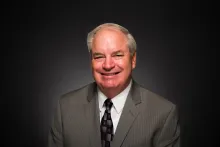
Robin Webber was born in Chicago, Illinois, in 1951, but has lived most of his life in California. He has been a part of the Church of God community since 1963. He attended Ambassador College in Pasadena from 1969-1973. He majored in theology and history.
Mr. Webber's interest remains in the study of history, socio-economics and literature. Over the years, he has offered his services to museums as a docent to share his enthusiasm and passions regarding these areas of expertise.
When time permits, he loves to go mountain biking on nearby ranch land and meet his wife as she hikes toward him.
