

Robin S Webber
This transcript was generated by AI and may contain errors. It is provided to assist those who may not be able to listen to the message.
This afternoon, brethren, I'd like to share a paradox with you. And that is exactly what I would like to do today. Before we talk about giving you a paradox, I think it's best to give you a definition of what that three-syllable word means. Paradox. The definition of a paradox is a statement that seems contrary to common sense. Just the opposite of what we would think and or, as those thoughts are manifested, what you or I might desire to do or need to do. And yet, even so, that paradox could possibly be true. That's what I'd like to do this afternoon, is to share a paradox that we find in the Scriptures. In fact, it is embedded in the Gospel, the Good News of Jesus Christ and the Kingdom of God. It is embedded in that. It is embedded in the thoughts that we need to consider as we come up to the Passover. Let's consider it for a moment as we anchor this message, and as is my habit, I always like to go right to the Bible, because that's why we're here. We wouldn't be here if we were not opening up our Bible and then having our hearts open. That's what makes the Church of God. So we want to anchor this message in Scripture by opening to John 12. And we were there just a few minutes ago, but I'd like to expand upon it some. John 12 and verse 23. Let's notice what it says.
Verse 24. Most assuredly, and that is usually used in a solemn sense when that phrase is used.
But if it dies, it produces much grain. Then he moves on to another verse to explain what he's talking about. He who loves his life will lose it, and he who hates his life in this world will keep it for eternal life. Then he continues to expand, If anyone serves me, let him follow me. And where I am, there my servant will also be. And if anyone serves me, him my father will honor. So we look at this. This is foundational. And this is core to our understanding about what the gospel is all about.
Now, why paradoxical? Why the subject of that which is dead? Why is that paradoxical? Something that is dead, and yet bears much fruit. Let's consider for a moment that there is nothing stronger in the human framework. There is no stronger human motivation than self-survival.
There are several motivations, and maybe you're familiar with them. But on this one, let's all stay together for a moment, there's probably no stronger human motivation than self-survival. And for this audience, I would maybe focus on the word self. And yet Christ not only speaks of himself in this verse, but also to those that would follow him. And our need, hear me, our need to join him in the fellowship of death that we might live. The fellowship of death that we might live.
Just as much as that seed is dead in the ground, and that before it bears fruit, it was in that state of death. Allow me to awaken you as we move into this message, a thought that I'd like to share from author John Stott. And he put it this way, his way, in a book entitled The Radical Disciple. Now, we're not talking about some wild-eyed, wild-hearted revolutionary. You have to understand what the word radical means.
And the Latin radical means, actually comes from the word foundational or the root. Just think of a radish, radical. So this is what we are to be grounded in. This is what we are to be rooted in. And this is what author John Stott says, The radical biblical perspective is to see death. To see death. Not as the termination of life, but as the gateway to life.
Scripture sets before us the desirable glories of life and then insists that the indispensable condition is death. In short, the Bible promises life through death, and it promises life on no other terms. So the Apostle Paul describes Christian people, here it may please, as those who have been brought from death to life. Are you with me so far? From the authority of God's Spirit through the Apostle Paul, this is what defines a Christian. Those who have been brought from death to life. You find that in Romans 6 and verse 13.
I'm utilizing the New International Version. So with all that said, let's put it all together for a moment so we know where we're going together in this message. As we approach the Passover of the New Covenant, I would bid you remember the words of the Apostle Paul, simply this. There is a simplicity, a simplicity which is in Christ. And there's also a very loud and a recurring thematic underlying principle to grab a hold of, to embrace, to internalize, to focus upon regarding the Gospel, regarding the Good News.
And it's very loud. Now sometimes we can look at Scripture and we can get excited about a verse. We can get excited about a verse and say, wow, I never saw all this in this verse and it's just kind of singular. We might take it out of context and we get all excited and we start telling people about it. And that's what I would call something that is quiet in the Bible.
It's a quiet verse. It's a quiet verse. And that which is quiet should not define the loud. It can be added to that which is loud. And what I'm going to share with you, brother, in this afternoon as we approach Passover is extremely loud. And that is simply this, that the Good News and a portion of that and the paradox that is within it is, here's the equation. As we move from life, we move into death. And from death comes eternal life.
Not trying to make it high geometry or trigonometry. It's that simple. One plus one equals three. We live and in this life, which is so precious to us in self-survival, we are called in that sense figuratively and at times as martyrs, literally, to die for God the Father and for Jesus Christ. And it is only in that death, just like that seed that is in the ground, that fruit can truly emerge. There is a simplicity which is in Christ. There is the theme that runs through the Bible.
And especially embedded in the New Covenant, this paradox. None of us want to die today. You know, you've heard me say before about Woody Allen. Woody Allen once said, you know, I don't mind dying. I just don't want to be there when it happens. None of us want to, in that sense, die. It's very hard with our human nature to give ourselves away.
And yet, that is the very core essence of what God has called us into this room this afternoon to understand. That life to death is the ultimate way to eternal life. You and I, you and I here today, have the keys to that paradox. We understand that simplicity which is in Jesus Christ. And that is why when you all enter the door on that eve, just a week from now, and there'll be a table laid out here before us, there'll be a beautiful linen cloth on it.
There'll probably even be some nice roses down below, but nothing on the table! Save the symbols of our Savior and our Master's sacrifice for us. The bread and the wine alone are the symbols that you and I will imbibe of.
But they're symbolic of something that Jesus did. He lived and he died, and now is at the right hand of his Father. He sets us an example that we live, that we die, that ultimately we might experience when you think about it, what eternal life is all about.
Today, then, the title of this message is simply this. Dying that we might live.
The subtitle might simply be this. The paradox embedded within the New Covenant. Each and every one of us that comes on that evening on Thursday night, we're here to participate of the Passover of the New Covenant. This Passover is not about lambs, it's not about turtledoves, it's not about bullocks. It's about the Lamb of God. Behold the Lamb of God. And we behold his example. And then, in that bonding covenant that we take with him, we say that, yes, indeed. You are our Lord, you are our Master, your Father is our Father, and we will follow you wherever it takes.
And we will follow you wherever it takes. And we will give ourselves away, whatever it takes, that we might be as close to you and hard as possible. Join me, if you would, for a moment in 1 John 5. In 1 John 5. Before we talk about death, I kind of want to go to the end of the movie as it were and talk about life here for a moment. Then we'll go back and forth. 1 John 5 and verse 10. Because this is what our Father has in store for us through his Son, Jesus Christ. In 1 John 5. 10. One second.
1 John 5 and verse 10. Let's notice what it says here.
He who believes in the Son of God has the witness in himself, and he who does not believe God has made him a liar, because he has not believed the testimony that God – hear me, brethren – God has given his own Son.
And this is the testimony that God has given us.
Eternal life and this life is in his Son.
Now, let's ponder on this for a moment, talk about it for a moment.
What we understand is what God wants to grant you and me, and why we heard the message that Mr. Josephic just gave, and why Jesus on that evening before was brutalized, and then crucified in that morning, is that we might have that relationship with God Almighty through him, and that we might have, ultimately, life eternal.
You know, in John 17, on that last night of his life, Knut alluded to it. It said, and this is eternal life, that you might know my Father and me.
You know, years ago, I used to, as a young minister, I used to deal with, have you ever thought about what eternity is like? And I kind of go through some mathematical equations, which is hard to do, because eternity is outside of math, at least in my little brain. And so, I'd kind of try to make people imagine what eternity is like, and I'd kind of talk about, here's a string, and now, just think, this string is kind of straight, and this string goes that away, and this string goes that away, and they just keep on going that away, and they never meet.
Just keep on going on, and on, and on. And I thought that was a really good analogy at the time.
I can just tell by your faces you don't think that's a good analogy. But anyway, okay, just joking.
But then I came to the great reality that eternity that is mentioned in the Bible is not even dealing with quantity of, quote-unquote, time. It's not dealing with quantity. And that's where our human mind will live forever. I know that there are people today, when I mentioned to them as a minister, that you're going to live forever, they say, not me, buddy. This life has already been too tough, and if eternity is like this life, I don't want to be there.
Eternal life with God the Father and Jesus Christ is so cool and so neat, but you don't want to miss it. It has nothing to do with quantity. It has everything to do with quality of experience, of existence, of being in that throne room of God, as it mentions in the book of Revelation for those saints of God that are our firstfruits. That they're going to be right in the hub and the activity. They're going to see God the Father. They're going to see Jesus Christ at the right hand, Savior and high priest. They're going to see the dynamism and the activity of the 24 elders, the four living creatures, the seraphim, the carabim. God is always going to be active. He's always going to be dynamic. He is love. It's going to continue to extend and expand. And the only way that the book of Revelation kind of describes that is the energy and the light that is mentioned in all of those jewels and the garb that Jesus is wearing and the different diadem. And that there's just simply going to be love. Think of the world that's around us today, the problems, the division in our country, in our state, in our communities, in our families.
And one day, one day, will no longer exist.
And it's going to be worth every stroke going upstream and every bit of giving your life away now to match that of Jesus Christ. Let's take it a little bit further then. Let's discuss this.
As we approach the Passover, and let's come to grasp that Christ practiced what he preached. He didn't just give a nifty little parable about a dead seed going into the ground.
See, what makes Jesus so real to us and why we love him is because he practiced what he preached.
He was, indeed, the real deal. And he would never ask you and or ask me to do what he has not done himself. In Luke 9 and verse 51, you might just want to jot that down. I'm not going to turn to it right now, but it is what it's kind of the dividing verse in the book of Luke. Until that time, Jesus is basically, do I dare say, staying out of town. He's not moving in and out of Jerusalem a lot. He's been up in the Galilee. He's been up in Samaria. He's been up in the northern tier.
And now it says in Luke 9 verse 51, it says, and he set his face. Are you with me? He set his face towards Jerusalem. He was dedicated. He was on fire. And he was going to follow his father's will, because it was going to be in Jerusalem where all the action was going to occur. And we're going to allude to that at the end of this message, where some of the great sacrifices down through history had been made. And he set his face. See, what I want to share with you is the encouragement that Canute gave you today is that you and I do not have an accidental Savior. We don't have a God that is playing dice with the universe. And he's not playing dice with your life or my life. He has a purpose and he has a methodology for you and me to meet him one day in the air through Jesus Christ. So he set his face towards Jerusalem. Canute already alluded to it, but I want to expand on a verse. Join me if you would over to John 10 verse 17. In John 10 verse 17, and we notice what it says here, where it says, therefore my father loves me because I lay down my life.
I lay down my life. Brethren, the grand reality of Scripture is, yes, in a sense, his physical life was terminated, but he gave it. It was his to give and he wanted to give it because he obeyed his father above. And that's why he was sent to this earth for you and for me. I lay it down all by myself. Didn't have a gun to his head. He had nails in his hand later, but he didn't have a gun to his head. He could have been a Jonah. He says, no way, no how, ain't going down there. Not going to Jerusalem. Not today. He wasn't like Jonah and went the opposite way. He was willing. He who lived was willing to die that he might be with his father once again and prepare the way for you and for me. 1 Timothy 2. Join me if you would. Let's fortify ourselves with what our God and what our Christ is, his Christ has done for us. In 1 Timothy 2.
1 Timothy 2 and let's pick up the thought if we could in verse 3. 1 Timothy 3. For this is good and acceptable in the sight of God our Savior.
It's interesting that God himself, our Father, is also called Savior in that sense, because he and the one that is, was, and always will be in that sense the word that we know as Jesus of Nazareth, that they were in this together from the beginning. This is part of the plan.
For this is the good and acceptable in the sight of God our Savior who desires all men to be saved and to come to the knowledge of the truth. For there is one God and one mediator between God and men, the man Jesus Christ. Notice who gave himself a ransom for all to be testified in due time. He ransomed himself. Now, most of us in this room probably have not been kidnapped. If you have been... Oh, don't don't raise your hand. We'll talk about it later. But, you know, when you're kidnapped, people usually... they want to ransom you. They want to get something for you. You can't do it yourself. You can't ante up the money as you're tied up and shoved into some closet. So there has to be a ransom to get you out of there to somewhere else. And this is what Paul was speaking about in his world, the Roman world. The world in which the word redeem was used. To redeem something was to take something that could not take care of itself and to free it. To free it.
That... like a little bird that's caught in a thicket and goes like this and goes like this, you know, that little bird's not going to go anywhere. There has to be a hand from somewhere else to unloosen it from the little thicket so that it can fly again. Back in Paul's time, there were... you know, one quarter of the empire were slaves. There were criminals and there were gladiators. They didn't have it within their means to purchase their freedom. It had to come from somewhere else. And that is likened to you and me that that's why Jesus came to this earth, because there is no amount of even keeping God's holy and righteous and precious law that allows us salvation down here below. That's why the book of Galatians is written. Paul basically makes this argument. If God's holy and righteous law alone by how you keep it is your bet on salvation, then why did God send His Son to this earth? There had to be somebody that was precious and perfect and laid down their life and loved us so very much even before we were a gleam in our Father's eye.
And He saw you and saw your heart and knew you by name and wanted to give His life for you. And that's why we come to the Passover. One of Paul's most favorite themes in his epistles is simply this. He became poor, speaking of Jesus the Christ, that we might become rich. Well, then why did He die? Why did mankind, both the Jew and the Roman, representing all of us? It's not just lay it on the Romans. It's not just lay it on the Jews. Dorothy Sayers in her writings, speaking of Christ, commented that He had a daily beauty in His life that made us ugly. And officialdom felt that the established order of things would be more secure without His.
And so they did away with God in the name of peace and quietness.
That's our challenge during the year ourselves. We that are followers and disciples of Jesus Christ that have heeded the call to follow me. That there are times that we have come up and in the name of peace and quietness, and it seems so difficult. And we don't have it in us in that moment to follow the example of Jesus, to lay it down and to lay our life no matter what comes, and to have that faith, that no matter what happens, that all things, not all things are good, but all things work together for good. We strive, we desire, we really want to follow Him with all of our heart, all of our mind, all of our soul. But yes, at times we weaken.
And that's why we come to the Passover Table, Canute, and each and every one of you that I spoke about. And he already knows that. It's not our perfection that we come before God on the Passover evening. It's, frankly, that we're still in the human condition. But we know that the entirety of the Bible moves in this centrifuge force towards one thing and one thing alone. Restoration. Restoration of the creation with the Maker. And God's not going to allow anything to get in the way, even you, even you, even me. So why did He have to die?
Hebrews 9 and verse 7. Join me if you would for a moment. We're going to go quickly into Hebrews just to look at one verse.
In Hebrews 9. And Hebrews is just a magnificent treatise, isn't it, brethren? I mean, I just marvel as how this is put together. But what is being alluded to here is they're talking about, in verse 6, about how the high priest would go into the holy place on the day of atonement. But now we move to verse 7, which is about going into the holy of holies, which is separated by the veil. But into the second part, the high, but into the second part, that is, the holy of holies, the high priest went alone once a year and not without blood, which he offered for himself and for the people's sins committed in ignorance. Under a covenant, both in the old covenant, are you with me? Both in the old covenant and in the new covenant, there is nothing that is done without blood. And this is the blood of the precious Lamb of God, that we behold in those symbols that we partake of in in by-bon and the Passover, and like John, on the banks of the Jordan, under the inspiration of the Spirit, and that we are led by that Spirit, and that Spirit imbibes in us today. We say, behold the Lamb of God. And that's what we do at Passover.
1 Corinthians 1. 1 Corinthians 1.
Moving towards the point. 1 Corinthians 1. This is what fueled the Apostle Paul around the world of antiquity. This is why at times he suffered persecution. This is why at times he was ridiculed. Didn't matter to Paul. He kept on going. 1 Corinthians 1. And this will share in a sense, remember the word paradox? Paradox. This is the paradox right here.
Cross, per se. That was an instrument that was used as an instrument of death. For the message of the cross is foolishness to those who are perishing.
Those who just want to live in this lifetime alone.
Doesn't make sense. But to us who are being saved, it is the power of God.
For it is written, I will destroy the wisdom of the wise and bring to nothing the understanding of the prudent. Where's the wise? Where's the scribe? Where's the disputing of this age? Has not God made foolish the wisdom of this world? And he's going to describe why.
For since in the wisdom of God the world through wisdom did not know God, it pleased God through the foolishness, this paradox, of the message preached to save those who believe. Now why was it a paradox? Let me explain it for a moment. For the Jews request a sign and the Greeks seek after wisdom. See, the Jews were looking for a messianic conqueror that would come from the line of David and remove the hated Roman boot off the throat of Judea. That's what they were looking for. And the Greeks? And the Greeks? Well, you know, they just could not compute. They had issues with their own gods and goddesses, but they could never figure out why somebody would come down from below the clouds of Olympus and make themselves...are you ready? Us? Me? You? Flesh and blood? That one that was a creator, as Knut mentioned, would actually become a part of the creation?
Didn't make sense. Back to the Jews, another paradox. When you look at the Jews request a sign, so they were looking for this Arnold Schwarzenegger type coming to save their people. And then what they find out, what they find out is they go crucify somebody from Nazareth. And then they're told that, well, that's Messiah. This does not compute. It says in the book of Deuteronomy that anybody that is hung on a tree, anybody that is hung on a tree is anathema, is accursed, is double cursed.
The Jews would never receive anybody of and by themselves until God's Spirit started working with them, that would be hung on a piece of wood. As we say, does, are you with me, does not compute a paradox. He who lived died an ignominious death, and yet God the Father above and that Supreme Court of Heaven overturned the judgments of this world and those that think themselves wise. And by the miracle of His Spirit guiding and leading you, you have chosen to follow His Son. You have chosen to follow His call. God, here I am. This is it. Not much, but with the much do what you can.
It's a miracle. We don't have everybody in this auditorium today. We're only filling up half the seats of one auditorium, and yet you are here for a purpose. You are here for the grand reality of what God is doing, and that's a beautiful thing. He was crucified for you and for me.
You and I, brethren, if I can speak to you personally as your pastor, you and I often, and so glad that I is here because this is the third session in your baptismal counseling, Aya. Just everybody sharing into it. Sometimes I know I've been remiss in this, and I know others that I talk to that get a little bit ahead of themselves, like we're talking about with Peter. Look what everybody else but not me. We forget where God picked us up on the journey. We forget where the journey began. We forget where we were when we first heard that first little bit of truth, and then you and I were baptized. I remember years ago now, about 47 years ago, I remember the one that was my mentor. We would sit down, and we'd be in a baptismal counseling. I was just a young guy, probably 23, 24, and he would always go through the story in baptismal counseling, just kind of to wake up people to make sure they knew what they were doing. He talked about a story about a man that was convicted and was about to, well frankly, to go into the electric chair. You have to see some of those old 1939-45 black and white movies, Humphrey Bogart, who's the other guy, Jimmy Cagney, you know, the gangster movies, Sing Sing, 1939, all black and white shadows. And here's this guy, he's in the cell, and he's in his Last Supper. None of his family has come to visit him. They don't want him. They don't like him. They're tired of him, waiting for that proverbial phone call that's going to maybe come from the governor. Always that last minute reprieve. You know what, folks? It ain't coming. He puts his head down and all of a sudden he looks up. Notice he hears a little rattle on the on the jail cell door, and he looks up and he says, who are you? And he says, that man that's on the other side of the door, that is locked from the outside, not open from the inside, says, I am here to take your place. I am here to take upon me what you by your own actions so richly deserve. You deserve to sit in that seat. You deserve to have that electricity come on and bake you for what you have done before others and done to others. But I tell you what, this is what I'm going to do. I'm going to open up this jail cell door from the outside and I'm going to trade places with you and you're going to go free.
Prisoner says, is that it? Oh no, there's just one more thing. And he hands him a piece of paper.
Prisoner opens it up slowly, kind of rolls it out. And you know what it's written in? It's written in red. It's written in red.
And the man that was not known before that says, this is written in my blood.
And if you will do all that you can do to follow me, even if it's imperfectly, I want you to do that for the rest of your life. For the rest of your life, my life for your life. And one day I'll meet you on the other side. Is that a deal? Is that okay?
That's what all of us did, brethren, when we were baptized. Tonight we're going to have little Aya, now a lady. She's going to be baptized. I'm going to have Aya in that water and others are going to be there to rejoice. And we're going to talk to Aya as I've talked to so many of you over these last 40 years when you're baptized. And we're just simply going to ask your name, because God needs to hear that, okay, it's Aya, okay, it's Robin. And I'm simply going to ask Aya this evening, as you were asked whether it was in a trough in some Midwestern Deacon's basement, or maybe it was in a river. And of course, out here in Southern California, we like to use Jacuzzis that are warm and sometimes get cold in the ocean. It all works in Southern California, doesn't it? And we're sincere wherever it is. And I'm only going to ask Aya, what is your name? And Aya's going to tell me Sophia and everything else in between Reyes. And we say, Sophia, have you repented of your sins? And most likely Aya will say yes. And then I'll say, have you accepted Jesus Christ as your Lord and as your Savior? And she'll say yes. Then I'll say as a minister, as a minister of Jesus Christ, I therefore, because you have accepted Jesus Christ as your Lord and as your Savior and as your King, and because you have repented of all of your sins, which is the breaking of God's holy and righteous law, I'm going to baptize you, not into any church that create and or denomination of this world, but I'm going to baptize you in the name of the Father and the Son and the Holy Spirit for the remission of all of your sins. Then we'll look at Aya.
This is a warm-up, Aya. And we'll look at Aya. And I'm going to say very sincerely, do you understand? Because every action and every action that we take henceforth from that vow is predicated upon what we said and did before we went underneath that water.
Every, everything, every motive that is in our heart, every thought that stems from that motive, every word that stems from that thought, every action that proceeds from us is all predicated in that moment of time when we laid down our life figuratively and went into that watery grave and said, figuratively, we die in Christ, as it says in Romans 6. Now, the good news of all of this is the hundreds of people I've probably baptized over the years, I've never lost one. Always bring them up. But even in that bringing up, hear me play, bringing you up, we are now, we are now, we are symbolizing the resurrection. The old man goes down, the new man comes up.
A baptism is not only about a funeral, it is about a resurrection, a new life, a new start, sins forgiven, and knowing that we will never be alone. Join me if you would in Philippians 3.
In Philippians 3. And let's pick up the thought in verse 8. Again, just like Jesus, his master, Paul set it aside. Yet indeed, in verse 8, I also count all things lost for the excellence of the knowledge of Christ Jesus, my Lord. Even the paradox, if I can use a parenthetical thought, even the paradox that he sets before me of life and death to eternal life, it's worth it.
For whom I have suffered the loss of all things and count them as rubbish that I might gain Christ. And being found in him, being embedded, brethren, in his example of a righteous life, of an ignominious death. We live with him, we die in him, and as he has been raised, we look forward to being raised. We notice this. Found in him, not having my own righteousness, which is from the law, but that which is through faith in Christ, the righteousness which is from God, by faith, by faith.
As Knut brought out, not by what we bring to the table that night, but that we have living, abiding faith. I remember many years ago, in the auditorium, had the honor at times of being with Mr. Armstrong at the table. And I remember one time, got to share a story with you. It's a good story.
And we had about 1,500 people out there, and I was up there. A couple others were up there. I was up there. And all of a sudden, Mr. Armstrong decided to pray. Well, if you ever notice our little book, you that are ministers, it says you just open up the surface. And you wonder why, where we are in our circuit, why we always open up with prayer. I'm still following the example of a man that I respect it, as well as I respect everybody else. But I'm probably about 30 years old at the time, and I say to myself, well, Mr. Armstrong's not supposed to do that. Hasn't he read the book?
He can't pray. And he gave one of the most rousing prayers that I will ever remember, that just kind of jolted everybody awake. And he said, Father in heaven, allow the brethren here to believe and to have living faith, to wake up, to have living faith in what they are about to partake of.
I decided to chuck that one out of the rule book and keep his example on this one. And that's what the Passover is about, as are all the festivals, all seven festivals, with the Holy Days embedded in them. These are festivals of faith.
Because faith is not always seeing it in our hands at the time being, but knowing that God is rewarder of those that follow him and keep him. And that's very important. As we come up to this Passover, very interesting, there's a verse, just jot it down for right now, 1 Corinthians 11, 26. You may want to ponder on that more. Why did Jesus on that night of nights ask us to observe the Passover of the New Covenant? He simply said this, you do show the Lord's death till his coming. You show the Lord's death till his coming.
There are many people that believe that Jesus was indeed a historical figure. He's mentioned in Josephus and other places, extra-biblical literature, etc., etc. But his death to you and to me that are in this room today is not merely a fact, but it is to impact our lives every day.
Not just the week or two as we come up to the Passover of the New Covenant, but every day.
To be found in him every day, to be found in his life, to be found in the example of his death of dying to ourselves, to be found in the faith of the resurrection.
1 Corinthians 1531, just so I'll mention it to you, a principle out of it, and we're going to build upon it. 1 Corinthians 1531 is simply this. Paul said, are you with me? Paul said, I die daily.
I die daily. He didn't just save it for the week before Passover. Now, when you look at that, he's talking a lot about the different persecution that he's been in, etc., etc., and the beast and the shipwrecks and this and that, and that he's being, in a sense, physically pummeled every day.
So he says, I die daily. And that's the strength, and that's the mainstay of that verse, and I don't want you to be mistaken in that. But I have a question for you. If he was not dying daily and giving his life away daily and believing in faith that Jesus Christ is the Son of God and was sent for him, and we know what kind of a character Paul was before that, he was trying to save himself by his good works and by keeping the law. The law is beautiful. It's wonderful. Romans 7, 14 says that the law is spiritual. David just gives praise and praise about the law, but the law of and by itself does not save. Because we are in the process of salvation, we abide by the King, we abide by his Constitution, and we keep his holy and his righteous law. I would suggest, stay with me, please, moving into this story, I Die Daily. I do believe that Paul, who wrote so much of the Gospels that inspire us, he did choose to die daily in his own life, to give his life away so that the life of Jesus Christ could be found in him. Galatians 2 and verse 20. Galatians 2 verse 20. See, brethren, you and I, when we talk about that we do show the Lord's death till his coming, it's not merely fact, it's a daily reality in our lives. We find this mentioned in a verse that many of us are aware of, but it's always good to open up our Bibles because that's the can opener to our hearts, that God might be able to work in us and work with us and work through us. In Galatians 2, speaking of the crucified life, I have been crucified with Christ.
It is no longer I who live, but Christ lives in me.
I believe without a shadow of a doubt, and I know that the Lord Jesus Christ, the gift of God the Father, abides in me by his spirit as well as the Spirit of the Father. I know that. And I'm here to encourage you in the faith today, brethren, that you know that and realize that. Grab ahold of that, and yet we do live this crucified existence. We have, like Christ, chosen to, in that sense, die, figuratively die, and allow that Spirit, and allow that grand personage of Jesus Christ to live in us.
But Christ lives in me. And the life which I now live, not our former life which is forgotten, whose penalties of sin are as far as the East is from the West, are forgotten and forgiven. And I live by faith in the Son of God, who loved me and gave himself for me. And I do not set aside the grace of God, for if righteousness comes to the law, then notice Christ died in vain. I'd like to read for a moment from Barkley. Barkley's commentary.
On the book of Romans, I hope you'll hear it out for a moment and listen.
William Barkley, now deceased, writer, Think of the Christian experience. The more a Christian thinks of his experience, the more he becomes convinced that he had nothing to do with it.
And this speaks to what Knut was talking about. It's all of God. Jesus Christ came into this world.
He lived. He went to the cross. He rose again. We did, you and me, we did nothing to bring this about.
That is God's work. We heard the story of this wondrous love. Love woke our hearts.
The conviction of sin came, and with it came the experience of repentance and salvation.
We did not achieve that. This is what Knut was speaking about in his first message. We did not achieve that. All is of God. And that is what Paul is thinking here.
But then we are invited into this story to believe, to embrace, and to obey God.
To obey the sayings of Jesus. And to strive to live that example. The invitation is there.
Like you just close your Bibles for a moment, I'm going to read something to you, and you don't have to worry about it because I'm going to actually read another translation.
I really just kind of want you to think about the words I'm going to speak for a few minutes here, because I'm going to take them out of the New Living Translation. And it comes from Romans 8, verse 28, and leads forward. And I hope that this will be God's gift to you, and to encourage you to recognize, as Knut said, I said that these would dovetail. That it's not about us. Oh yes, we have our responsibility. We are disciples. But to imagine and to know what God has done for you and me as we come to this table of reconciliation and restoration after all the year that we've been through. This is out of the New Living Translation, and we know that God causes everything to work together for the good of those who love God and are called according to His purpose for them.
For God knew His people in advance, and He chose them to become like His Son, so that His Son would be the firstborn among many brothers and sisters. And having chosen them, He called them to come to Him, and having called them, He gave them notice right standing with Himself, and having given them right standing. In other words, they were acquitted. They were now free by His grace and by His love, and by the sacrifice of His Son, He gave them His glory.
Then comes in the book of Romans. I'm just going to read it to you, and I want you to think about this for a moment. For some of you, that might be hesitant. Might be just beating yourself up. You know, we sometimes are so good at just, you know, like just like meat that you're trying to tenderize. This is not a time to beat ourselves. This is not a time to look around. This is not a time to look down. This is a time to look up. For there, hence, is our salvation. He asked four great questions, and He speaks to you and to me on this afternoon through this epistle of Romans.
In verse 31, what shall we say about such wonderful things as these?
If God is for us, who can ever be against us? Here comes the answer.
Since He did not spare His own Son, but gave Him up for us all, won't He also give us everything? This alludes back in this verse, He's thinking, He's sharing with the community. He did not even spare His own Son. He knew that 1,800 years before there had been another Father and another Son, the Father of the faithful and the Son of promise, they were on a hill.
And that Father raised His hand and was ready to slay His Son to follow God.
And then God said to me, hold it! I now know, I know more about my servant Abraham.
And it's very interesting because remember what Abraham said on that mount? He said, God shall provide. It was more than just the goat that was caught in the thicket. This was speaking to that which would happen in those same hills of Moriah, 1,800 years later, another Father and another Son. But that Father would not spare His Son for you and for me. And that's why we come humbly to the Passover Table 2018 in recognizing the greatest act of life and death that the cosmos has ever witnessed.
What shall we say about these wonderful things? See, when people ever wonder about the love of God, God says, well, excuse me, just wait a minute. My love is personified, made real and in flesh.
And in your real time in human history, down in time and space, by the death of my Son.
You see, God is a Savior and He uses His Son as the instrument of salvation on the cross.
And God never does, in Christ, never preached what they do not do or what they do not do, of and by themselves, as our example. Second question. Who dares accuse us whom God has chosen for His own? God is saying, where are the finger pointers? I'm not pointing a finger. I'm not pointing a finger. No one for God Himself has given us right standing with Himself.
How often do the eyes and the words of other people affect us? Just stop us. Just paralyze us.
Just no motion, no energy to be the example that we are in following Jesus Christ because of what other people think, how other people stare at us. Other words, other words, other words, and it just paralyzes us. And we worry about people rather than what God. See, when you come and you imbibe with the bread and the wine on Passover evening, you're saying, Father above, through Christ, I am yours. And by the way, I'm going to follow that example long ago that you said to Jeremiah, don't look at their faces. You go on my mission. Number three, who then will condemn us? It goes on to say no one for Christ Jesus died for us and was raised to life for us. That's the paradox. He lived, he died, he's now raised, and he is sitting in the place of honor at God's right hand. And by the way, he's pleading for us.
And when he's pleading for us, he's not always saying they're innocent.
It's not a matter that we're always innocent, even after baptism, because we'll continue to sin.
But he says, Father, I've been down there. I know what they're going through.
And allow my blood, allow my sacrifice, because they are exhibiting and exuding that faith that it really is what we say that it is. And allow them to have it. Last fourth question.
Can anything ever separate us from Christ's love? Can anything?
That's where faith comes in. Faith that will be challenged.
Faith that will need to be bucked up by courage at times by you and me as we proceed from the Passover this year. You know, courage is just fear that waits a minute longer and looks up to God.
Does it mean that He will no longer love us if we have trouble or calamity and are persecuted, or hungry, or destitute, or in danger, or threatened with death? As the Scripture says, for your sake, we are killed every day. We are being slaughtered like sheep. No, despite all these things, overwhelming victory is ours through Christ who loved us. It's almost as if Paul stopped there. Then he got to thinking about some more. He says, there's some more I want to share to encourage the people of God, the disciples of Jesus Christ. And then he goes on another role, and I am convinced that nothing can ever separate us from God's love. Neither death, nor life, nor angels, nor demons, neither fear for today, nor our worries about tomorrow. Not even the powers of hell can separate us from God's love. No power in the sky above or in the earth below. I mean, you're looking everywhere. Considering everything, indeed, nothing in all of creation will ever separate us from the love of God that is revealed in Christ Jesus our Lord. That's the paradox answered. As we come to Passover 2018, let's consider three statements. You might just want to jot them down. They're very short. Maybe ponder on them. Maybe read them. Look them up. Just three simple statements. Again, remember there's a simplicity which is in Jesus Christ. Remember what he asked everybody that ever followed him, and certainly with Peter, in Matthew 16. He always asks, who do you say that I am? It doesn't matter who my wife Susan says he is, or Knut, or Mr. Garnet, or Mr. Helgi. He always wants to know personally, who do you say that I am?
Then once you establish that, the second thing he does, he gives you an invitation. He says to follow me. That is the first statement he made to Peter and the last recorded statement that he made to Peter in the Gospels. Follow me. The invitation. I'm picking you up on the journey of life and death and eternal life. Follow me. And the third statement that he will make is simply this.
And he won't only just ask us once. He's been asking me a lot over these years, and he's very patient with me. Just like Peter. He'll come back to you all the time and say, do you love me? Do you love me? Not the other person, but do you live me? Don't worry about John. Don't worry about the other guy. Do you love me? And as we answer that year by year, as we take the Passover year by year, I do believe that that deepens and widens and gets richer and wonderful. This is what we're about to partake of, brethren. Allow me again to, from the NIV, read Romans 6 verse 13, to solve the paradox, to speak of this inconvenient human dilemma, but this very rich, grace-filled, grace-filled gift that God gives us. Do not offer any part of yourself to sin as an instrument of wickedness, but rather offer yourselves to God as those who have been brought from death to life and offer every part of yourself to Him as an instrument, as an instrument of righteousness. Have a blessed, have a wonderful Passover. May God bless each and every one of you richly with the riches that stem from heaven above to we that are below, His children, called by His name. May God bless and keep you this Passover.
Susan, I will be with you in all of our congregations in spirit and in truth.
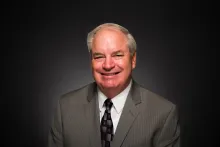
Robin Webber was born in Chicago, Illinois, in 1951, but has lived most of his life in California. He has been a part of the Church of God community since 1963. He attended Ambassador College in Pasadena from 1969-1973. He majored in theology and history.
Mr. Webber's interest remains in the study of history, socio-economics and literature. Over the years, he has offered his services to museums as a docent to share his enthusiasm and passions regarding these areas of expertise.
When time permits, he loves to go mountain biking on nearby ranch land and meet his wife as she hikes toward him.
