


Robin S Webber
This transcript was generated by AI and may contain errors. It is provided to assist those who may not be able to listen to the message.
It's been said that what we hold in our hand is what we hold in our heart.
What we hold in our hand is what we hold in our heart. And with that thought in mind, allow me to share a story this afternoon to challenge you, to make you consider, to make you to contemplate, to allow you to begin to meditate as to where I'll be guiding you, hopefully by God's Spirit, and through the examples that I'm going to share in the scripture.
A challenge that is here to motivate us, not only on the Sabbath day, but what I'm about to share with you, as with Brandon before me, can motivate us. It can stir us, can encourage us, not only on the Sabbath day, but tomorrow on Sunday, and then again, to bring it on a Tuesday or Wednesday, and every day of our life, to understand of what lies inside of us, what anchors our heart. I want you to think about that phrase. What does anchor our heart? Not just merely our hand, but what anchors our heart beyond our, do I dare say, our momentary experiences that come upon us, that, as was mentioned earlier, can create worry. I'd like to share a story that I think will speak to this. It's about the story of two little girls that were counting their pennies, just like little girls will. One by one, I've got a penny here. I'm not going to do the fullness of that, but just to let you know, here's my prop. They were counting their pennies, and the first girl mentioned to the girl by her, look in my hand, look what I have, I have five pennies. Well, the other girl, not to be outdone, but, you know, wanted to open up her hand, and she said, well, you know, look what I have in my hand. I have 10 pennies. Well, the first girl stopped right there, and kind of jolted, and said, no, no, no, no, no, no, no, you don't have 10 pennies. You have five pennies, just like me.
The little girl said, no, no, no, a lot of no, no, no's going back and forth. No, no, you don't understand. Before my father left for work, he told me that when he came home, that he would give me five pennies. Therefore, I have 10 pennies. Interesting, interesting.
What is the takeaway from this story? What is the moral that we can begin to work with, to ponder, to contemplate, to meditate upon? The child's faith gave her proof of that which she did not see, and she counted it because it had been promised by her father. She wasn't just simply looking at what was in her hand, but what was now lodged in her heart based upon a promise from somebody that she loved and somebody that she respected. So what might we glean? We that are tuned in here this afternoon, what might we be able to glean from this story? Let's understand to begin with that the one girl, the one girl, very human being, they're both human beings, but the one girl, let's think about it this way, the one girl had the mind of a bank teller. What do bank tellers do?
They take in your money and they count it and they register what they see, but the other girl, but the other girl had the heart of an investor in something greater than the moment.
With that thought, speaking of the banker and speaking of the investor, my question is simply to you, and I presume that you are here because you're wanting to be motivated, you're wanting to be challenged, you're wanting to move out of just simply taking up time and space, but to recognize that God is speaking to you today, and to simply ask you, which mind do you have? Do you have the mind of a banker or do you have the mind of an investor?
What made the difference with this young lady? She made a choice, and it is a choice.
She made the choice to invest in her father's love and his promise. She made a choice to invest in her father's love, and in his word, that was a promise, and that is what made all of the difference. Her response to the other little girl by her kind of brings to four, two basic underlying articles about faith. Allow me to share them side by side. Number one, number one, simply this. Now faith is the substance of things hoped for and the evidence of things not seen. From Hebrews 11 and verse 1. Notice again what it says. Now faith is the substance of things hoped for. The evidence of things not seen. Human eyes would just see five pennies in her hand, but she saw something different. Number two, number two, do not fear, little flock. It is your father's good pleasure, just like that human daddy. It is your father's good pleasure to give you the kingdom. Luke 12 and verse 32. With that story laid out in front of us and thinking about, let's ask ourselves a question. How do we count? How does Robin count? How does Susan upstairs count? How do you count in Nevada? How do you count in Arizona? How do we count in Southern California? How do we count our heaven-sent pennies and invest them, being an investor, towards something promised yet to come to totally be fulfilled?
With that thought, then, some questions. I'm going to pile on you for a moment, and we're going to be coming to some answers. How do we maintain our personal witness of the coming kingdom of God in an ever-darkening time, which is increasingly becoming hostile to followers and disciples of Jesus Christ? To echo the clarion words of our Lord and our Master, how do we in the 21st century go about our heavenly Father's business?
Well, to answer that slew of questions that maybe I put into your head to think about, I just don't want them swirling. We're going to kind of bring them together now, because this afternoon I want to share with you three specific biblical answers, three specific biblical answers to answer those questions in a message entitled, Spiritually Coping, Spiritually Coping in Times of Darkness.
Now, Mr. Milner started it, and like I said, I'm going to build upon it, but if we are going to be spiritually realistic, dear friends, we need to know where we are, what we're going through, and what is surrounding us. Allow me to share a few things. I dare say it's time for a reality check.
Allow me to be frank, as your friend and as your pastor and as a fellow disciple of Christ, looking at not only what is in front of me like my hand, but also looking at what is around the world that God has elected for us to remain in and yet to be loyal and to be true to Him. Let's talk about the world that you and I are inhabiting in the 21st century. Allow me to be frank. Allow me to be bold. Allow me to tell it like it is. Society is rapidly sliding away from any concept of a sovereign and a loving heavenly Father.
The light of Christ and His teachings are being extinguished daily. You say, well, how? Prove it to me. Let's just go through it for a second. How is the name of Jesus Christ and the understanding of a loving and sovereign heavenly Father being cancelled in that sense in the culture of the world that is around us? Let's just think about it for a moment to think about the aspect of social media and the impact that that has had on all of us to distract us, to disturb us, to be focused on God the Father and Jesus Christ, much less the information that is distributed on social media today and or as we are beginning to see this year more than ever, what is not even allowed to come onto social media, that people have chosen themselves to be the arbiter of what is good or not good, what should be passed onto the world or kept or swept down a memory hole, just like in 1984.
We look at the aspect of academia. We look at our universities. We look at our colleges. We look at sometimes how parents spend a lot of money to send their children to university or to college. And after a couple of years, those same young people that were taught one way come out godless, come out Christless, come out that I'm okay, you're okay, everything goes, and they don't have a value system of their own other than to make up their own rules and to become their own god. That's what humanism is. That's what secularism is at its base. What about the aspect of the so-called entertainment industry?
And I say that somewhat carefully. Entertainment? You might add one sense more and more, and every day and every way it becomes more and more Sodom and Gomorrah.com, because it is not how God speaks about entertainment in the Bible or what he would think entertainment is, or what Jesus would pull up a chair by you or by me in our living room or in a movie theater when they do reopen.
We ask ourselves, would Christ, would Jesus be here with me, soaking this in? What would Jesus do? We also look, unfortunately, at times at the passivity of those that call themselves Christian, those that call themselves disciples of Christ. You know, you can call yourself a Christian, and you can have a name tag. But you know what happens, unfortunately, is we oftentimes run into people that are what I call Christless Christians. They are people that, like our vehicle that's in our garage or out in our driveway, they've got the license plate, they've got the name tag, but they don't have any, they don't have any gas in their tank.
They don't have the ability to go anywhere. They haven't claimed the whole package that God has offered. And so, just like that car that sits in a garage and doesn't go anywhere, they wonder then why they aren't going anywhere. And that's one of the reasons why I want to bring this message is to come with some of those answers down the line.
I'd like to share a thought with you for a moment. Brandon brought it up for a moment, but join me in Isaiah 1 for a moment to understand, in a sense, some of the darkness that is around us. But understand that God Himself has kept us in this world. That was Jesus' prayer. Jesus said, Father, I don't ask that you take them out of this world, but that you might keep them. But notice the world that we're at. You know, it's interesting Brandon just mentioned the aspect of the recent elections. And with elections, everybody chooses their champion. They choose their, what they consider their human door to light and bright, and everything is going to be all right, and like the old political slogan back in the 30s, happy days are here again. And so we put our trust, we put our confidence, we put our energy, we put our hope in a human champion. And we think that, oh, if only this individual comes to the fore, everything will be okay if we just have a leader. But what I want to share with you for a moment is, what does Isaiah say in his commentary about a people like us in America today that back then had a veneer of God. They had a skin covering of God, but there was something down deep in their hearts that was wrong. Notice what it says in Isaiah 1 and verse 4, Alas, a sinful nation of people laden with iniquity, a brood of evildoers, children who are corruptors, they have forsaken the Lord, they have provoked to anger, the Holy One of Israel, and they have turned away backward. Why should you be stricken again? You will revolt more and more. Now notice this, please. This is where I want to focus. Enough has already been said, but now let's focus.
Notice what it says. The whole head is sick. The whole head is sick. And the whole heart faints.
From the sole of the foot, even to the head, there is no sound that's in it, but wounds and bruises and purifying sores, and they have been closed or bound up or soothed with ointment. Your country is desolate. God calls, He's a heavenly empire. He calls it like it is. Your country is desolate. Your cities are burned with fire. Strangers devour your land and your presence. And it is desolate as overthrown by strangers. God is saying it like it is. It's not just the people that are at the top. That something in toto has occurred from top to bottom. You say, if we only had a leader, but leaders are put in by people, the leader would be nothing without the people, and the leaders look for the people to follow them. There's almost a magnetic attraction.
And this is where we are today. People want to put trust and confidence in a man, and the scriptures themselves don't put your trust in the sons of men. How did we get here?
How did we get there? After 60 years of this multi-pronged tsunami wave of godliness—academia, entertainment, social media, etc., the United States is becoming less anchored to its traditional Judeo-Christian moorings, and the decline in religious affiliation is melting. It's literally melting. The percentage of U.S. adults who describe themselves as Christians today has fallen to 66%.
When we were young, that was well over 80%, but it's dropped just 12%. That was a few several decades ago. But just in the last 10 years, it's dropped by 12%, and basically amongst younger Americans, the future that lies ahead. And you look at that. What we plainly see occurring can be disturbing and limiting. But what I want to challenge us with the rest of this message is to think about that little girl. To think about that little girl in the opening of the story.
What did she have in store that I'm going to build upon now for the rest of this message? Number one, who we know is very important. Who we know. She knew her father. She knew her father.
So let's ask who the who is in our life. Is it us? Is it somebody down here?
Who is the who that our Father in Heaven wants us to focus on? Number two, it's also what we believe that gives us hope. It's what we believe. Let me just simply ask you a question.
As I'm speaking to you just person to person this afternoon as a friend, and as a spiritual guy, how do you live your life? I'm talking to you. I'm talking to myself.
Are we living just with five pennies? Or do we live life like we've got to die?
Because our Father above says so, and we believe in Him. And we believe in Him. Therefore, we're going to look at this.
Therefore, as our times are getting tougher and edgier, we've got to become brighter.
Now, what do we learn from where do we go? There's an old expression that we've seen this rodeo before. We've seen this rodeo before, and we have seen this rodeo before. We find that in the very early lives of those that first followed Jesus Christ. And that's what I want to take you back to, and we want to build upon that. I want to share a thought with you. And that is simply this.
God has not called us simply to cope. If we are merely coping, how can our light shine in us and be bright in a world of darkness? We have not just simply been called for personal salvation. We've called to be a witness and a living witness. And normally, when it gets darker and darker and darker, any light, be it a flashlight, be it a candle, becomes brighter and brighter and brighter.
So how do we do that? Are we just here to kind of wander around and worry like Brandon was talking about? There's a difference between coping in the darkness and copying the example of Jesus Christ and copying the example of the early disciples, the first ones out of the block of that new creation that God is establishing. So here's what I want to ask you. Are you just coping? Did God call you and reveal His truth to you just to cope? Or are you ready to cop the incredible examples that are before us? So that's where I want to go, and I want to share that with you. Two verses that I want to share with you, then we're going to move into the three answers. Number one, in Matthew 5 in verse 14, allow me just to read it to you and allow it to sink in. Remember what Jesus said, you, that's me, that's you, we are to be the light of the world.
Not a candle that's been snuffed out by the cancel culture, by the thoughts, by the words, by the indifference of others. We are to be a light. We've been called to be a light. We've been called to be bright, even when it's dark. Not only in the world that is around us, but our own personal world, when our own world seems like it's dark, it's squeezing in on us, and it's getting dark. These are lessons that I'm going to share with you, both for our interior lives and the exterior life of which we're to be bright. Number two, Jesus said in Matthew 16, Matthew 16, 18, I will build my church, and the gates of hell shall not prevail against it.
Christians are not to be on the defense. It says that the gates of hell, speaking of a city under siege, that the word of God, the Spirit of God, is going to go forward, not shrink, not go back, not dissipate, not just simply cope, but to copy the examples that are set before us.
So let me give you three observations. Simply out of the rodeo that came before us, go back to that best generation. Sometimes, you know, Tom Brokaw wrote the book The Best Generation, the best generation, that World War II generation of which many of our parents were a part of, and or our grandparents. And sometimes we can say, well, a wonder about me, that best generation that was in the book of Acts. Did they have a different God than we do? I don't think so. Do they have a different Savior than you and I do? I don't think so.
Let's allow God's best to dwell in us, because he's a God that's eternal, whose purpose stands. He does not change. And he doesn't have grandchildren and great-grandchildren and great-great-grandchildren. He says, we, just like they in the first century, are the children of God. I'm going to give you three points. Here we go. I'm going to try to move through them rather rapidly. Stay with me. And as we're going along, here's what I want you to ask as we go through this. Each one. What do you hold in your hand? Five pennies or ten pennies? With each of these, are you just holding on to a nickel? Or do you live every day of your life as if God the Father above has given you a dime and place it right in your hand by his Son Jesus Christ? And as we do, just simply ask yourself, why am I giving this message? Because I, myself, do not simply want to cope in a world that's turning increasingly dark, and I want to copy that which God has laid out. Here we go. Number one. The first followers gave undivided commitment to our Master. The first followers gave undivided commitment to our Master. Every individual, from the Gospels, the Book of Acts, down to our age and in our time and before you, have had to personally confront the big question that Jesus asked Peter. And I think we know what it says. It's over in Matthew 16. Join me if you would. In Matthew 16, because this is where it begins, whether we're simply going to cope or whether we're going to be a bright light in a world of darkness. Matthew 16. And it says here in verse 13, I'll go to the... When Jesus came into the region of Caesarea Philippi, he asked his disciples, saying, Who do men say that I, the Son of Man, am? So they said, Some say John the Baptist, and some say Elijah, and others Jeremiah, or one of the prophets. And he said, But who do you say that I am? It went singular. It went up close and personal. Who do you say that I am? And Simon Peter answered and said, You are the Christ, the Son of the Living God, the Son of the Living God. Then just say the Son of God.
When you go from the law all the way through the Bible to the very end, the term living is always the adjective that is used about God, about God. He's not an idol. He's not a deadhead. He's God. He's living. He's real. And so Jesus is saying, Who do you say that I am? And so this is the first thing that we are confronted with. He said, You are the Christ, the Son of the Living God. Such human affirmation that was mentioned by Peter is what our Heavenly Father had already stated about this Jesus that came from Galilee down to be baptized in the Jordan, when God Himself said that this is my Son, in whom I am. Well, please, so we see the Father and the Son on the same page.
What is interesting here when you look at this, just a little bit further down, when in verse 17 it says, Peter saying to him, Blessed are you, Simon Barjona, the flesh and blood has not revealed this to you, but my Father who is in heaven.
This was not with the eyes. This was not with human intellect. There was an interruption. There was an intervention in the life of Peter. He was going around with five pennies in his hands.
And then God the Father inspired him and showed him that the promises of Messiah were coming true and real, and that it was right in front of him. Peter began to live and move away from five pennies to having that diamond in his head, and he knew that it was right in front of him. Interesting.
You are the Christ. Join me if you would in Isaiah 90 verse 2. In Isaiah 9, too, we often think of this. It's in song, but in Isaiah 9, I just want to share this with you. Look what this says.
9 verse 2, the people who walk in darkness, hello, out there, have seen a great light, and those who dwelled in the land of the shadow of death upon them a light has shined. This was not only the wise men going to Bethlehem following that star, but this is the a light that comes on inside of us as we are miraculously at by again by responding to that calling by acknowledging that Jesus is his son, that he is the Savior. This was an inquiry that went from person to person throughout the world of antiquity as this recorded encounter in the Gospel was passed on from person to person, maybe from a house to house because they were home churches back in those days, and or that women would be talking to one another as they gathered water at the well that they would share this story of this Jewish man, this conquered people who was the Son of God, and they claimed him as that Son of God.
They echoed the sentiments and the voice and what Peter saw that it was not just a man, it was not just five pennies, but there was something beyond this that God had promised long ago, and he was now beginning to deliver it through the inauguration of his kingdom on this earth through Jesus Christ.
Not only that, they had undivided it loyally because—please understand this—remember what Paul says in Acts 4 and verse 12. We might want to jot that down and look at that later. He said, there is no other name under heaven by which men might be saved. No other name!
You can't do that today. People say, oh no, that's so exclusive.
You're not honoring what everybody else is believing or doing.
I want to share something that is being alike, and a light is not just something that buzzes with a filament where it sparkles in this light. Being alike also means that you have a tongue.
Being alike means that in using that tongue, it should have love, it should have wisdom, it should be sound, it should be in a sense like grace, like salt on a meal, salt on words, seasoned well. But it's got to say something. I talked earlier about being a passive Christian today more than ever. That witness has got to go out as far as what we believe. That moves beyond just simply what comes out of Cincinnati, Ohio, or some other spot, or by presenters, or by what I write in a magazine, or Darris McNeely writes in a magazine, or Scott Ashley writes in a magazine. That's every one of us. That there is no other name. We need to, in wisdom and wisely, but with courage that comes from God, not be implicit, but be explicit. Explicit. Our Christian witness can die in quiet.
Our Christian witness can die in quiet. And our example is just as important as our word, but this is what they believe. Let me share something with you for a moment.
Why is this important? You've got to recognize that the world that the early Christians lived in, and to recognize that in that world, when they said that there was only one way to salvation, imagine what that did is that excluded them from their families, their villages, their culture. In the ancient world, when you added a God, you added it to all the rest of the gods. You kind of put them on your mantle. There were gods for every reason, for every season. So if you had a Jupiter, if you had Athena, if you had Pomona, if you had and you fill in the rest, oh, and here's Jesus. That's great Priyeshwara, and we'll put him up there. But when you became a follower of Jesus Christ, your soul allegiance, your soul devotion, you surrendered yourself to God the Father through Him, that He was now going to be the captain of your salvation. And that as you became a disciple of Jesus Christ, you recognize that, as it says in Exodus 20, you could have no other gods. There is only God the Father and Jesus Christ.
And they had to witness. They had to stand up tall. And not only that, but to recognize in the Roman world that they were in, that to say that, as it says, and you can jot this down, and, well, let's turn over there a second. Philippians 2. In Philippians 2.
Notice what it says here in verse 11. Paul speaking, Paul writing, and that every tongue should confess that Jesus Christ is Lord to the glory of God the Father. They're in this together.
This is the divine tandem, God the Father and Jesus Christ, that every tongue should witness about the Lord Jesus Christ. What does this mean in that day and that age? No, we can, we can just kind of say that. But what they were saying is that they have sole allegiance to Jesus Christ, that Jesus Christ is Lord. He is kurios. He is soter, S-O-T-E-R. He is Lord. He is master. He is king.
That he is Jesus from the Hebrew, Yeshua, and or Joshua. He is Savior. He is salvation. It is from him that we are liberated. The Lord Jesus Christ, that he alone is Christ, Christus, that he is anointed, that he is the Messiah, that he is that promise just as much as that that father promised that little girl five more pennies that would make it dine, that he is the promise of our Heavenly Father, that he would be the fulfillment of hope, and it allowed people to look differently and to hold on to something, even when they had to give their life away. Back in the ancient world, especially starting with Julius Caesar, in the time of Julius Caesar, they began to connect the divine to the household of Caesar. And it grew, and it grew, and it grew to Augustus Caesar, his grand nephew that followed him. And just think of the word, August, supreme, benevolent, almighty, greatest. And it just continued to build and to build and to build until they began to have to, in that day and age, they had to annually go in, check in, and they would have to offer incense to the divinity of the intellect of Caesar.
And by doing that, then they would get a certificate. That certificate in Greek is shiragma. You say, well, what does that mean? Shiragma is translated Mark.
Do I need to take you any further? They had to bend their mind, they had to bend their knee, and they had to give allegiance to this one. Back then, Rome, that could conquer the world, could cannot conquer itself. And so every Caesar would come along and say, now comes with me peace.
We are now going to be in unity. I am going to be the one that is going to solve all of the empire's problems. With me comes the gospel, with me comes the good news.
But that's not like our fathers and the Lord. There is only one name by which men might be saved.
The Prince of Peace. And they were willing even to go to, yes, into the lion's den.
Join me if you would for a moment in Revelation 13.
Revelation 12 verse 11. And they overcame him by the blood of the Lamb and by the word of their testimony. And they did not love their lives unto death. Some were murdered, killed. Now you may not be stalked by lions, okay? You may not be stalked by lions. And you might not have to, in a sense, give your physical life away. But if you have Jesus Christ, as your Lord, as your Savior, and anointed. Remembering this is what God has put before us, his Son.
You may not be stalked by lions, but we can every day be stalked by our own human nature.
We may not be held captive by empires, but we can be held captive by our human nature.
Paul says in 1 Corinthians 15 verse 31 that I die daily. I die daily.
When you have Jesus Christ as your Savior who died for us, who died for us, do you turn around and are you willing to die to the kingdom of self and to give your soul allegiance to him? It's very interesting that in Matthew 6, in Matthew 6, it says that a man can serve, I think it's Matthew 6, 24, a man can serve two masters. If you want to be like that little girl, and if you want to live with a dime rather than a nickel, knowing that God's promises stand true, then you have got to have soul allegiance to his Son and allow that King of heaven to rule in our heart and to copy his example who himself gave himself to his Father's will. It is the one thing, it is the one name by under which we might be saved, and it is that anchor and it is that light. I am the light of the world, Jesus speaking, that will allow you and me not merely to cope, but by copying his example, B, B1, that lives with a dime rather than settling for a nickel. I'd like to go to point number two.
I'm going to point it here a second. Point number two.
Jesus' first followers never believed that they were truly alone. Jesus' first followers, the first rodeo, never believed that they were alone.
We just prayed that prayer for our friend over in Mesquite, Nevada. I do not believe that he is alone, and I don't believe that you're alone either. Otherwise, our God and his Christ are not telling us the truth, and we're living a fable with our invisible best friends.
I believe in all of my heart of hearts that God has given me and you a dime to hold on to, and to know that when he comes back to this earth, when he makes this earth his home, he's going to deliver everything that he told us that he would give us.
If they never felt alone, then let's ask why. On the last night of Jesus' earthly existence, he offered this encouraging declaration to his followers over in John 14. Join me with you there.
Join me with you there. John 14. John 14 and verse 18. Let's notice what it says.
I will not leave you orphans. I will come to you. I will come to you.
That's a promise. Just as much as that earthly father promised his daughter five pennies, Jesus made a promise. He made a promise. Notice what it says here.
Let's go up to verse 16. I will pray the Father, and he will give you another helper and or comforter that he may abide with you forever.
That word, helper, comforter, comes out of the Greek. It's paracletos, not parakeet, paracletos, which means literally one who literally comes alongside of us to help.
And that was his promise. And the early disciples took that to the bank of their heart, and they would not be shaken or shook by that. They've been promised something. And let's notice the intimacy of that promise when you come down here a little bit longer. Notice what it says here. After he says, I will not leave you orphans, and I will come to you. Now let's notice verse 19. Are you with me? Have you opened up your Bible? Because you don't open your Bible. I don't know if you want to open up your heart today. So let's go to John 14 verse 19. A little bit longer, and the world will no longer see me, but you will see me because I live.
You will live also. Now stay with me. Stay with me. At that day, you will know that I am in my father, and you in me, and I in you. That's pretty tight. Okay, I'm going to read that again.
I'm reading it to encourage you of the intimacy and the presence of God in us, and that he fulfilled that promise. It says, at that day you will know that I am in my father, and you in me, and I in you.
Just like this, woven together, not to our glory, but to his glory. Interesting.
Let's talk about this for a moment. To understand what was in Jesus had given his early followers, his disciples. I want to share something with you. You are a disciple.
A disciple simply means one that is a learner, and none of us have mastered this, but we are learning. As we learn to copy the example of Jesus himself, and to learn to copy the hope and the faith of the early disciples of Christ, then we will not just simply cope, but as we copy them, we are going to be able to be that light.
What did the early disciples understand about what this comforter was about?
Whatever one, they knew that something very spectacular had happened when Jesus was baptized.
They came to understand that there was something that was unique, that when that dove came down, the representation of the dove in the Gospels, that it, as it says, it alighted. It came upon Jesus at that time. And there was something special. It was very special, that blessing that came down from the Father. Because before that time, the Holy Spirit had been basically either transitory, kind of like a heavenly yo-yo going up and down from heaven to servants on earth, and it had been impersonal. It had been basically the power of God. It came, it went. Just think of the example of Samson, where it says the Spirit of the Lord came upon him, and then it would depart. But now it remained on this man, and that is why he was able to do the miracles, and he was able to do the wonders, and he was able to witness that inauguration of the kingdom experience on earth, and those teachings that he gave that have held up over 2,000 years. There was something different about this man. There had been an interruption from heaven that would never change again.
There had been an intervention, and it was him. He was the one that had been promised. He was Messiah. Number two, Jesus had promised a gift. He'd made a promise. Join me if you would over in Acts 2.38. In Acts 2 and verse 38. In Acts 2 and verse 38, notice what it says here. We're going to start in verse 36. Therefore, let all the house of Israel know assuredly that God has made this Jesus, whom you crucified both Lord and Christ. There's those two words. This right here, you see the word Jesus. You see the word Lord. You see the word Christ. He's not shrinking back. He's putting out all of those titles, and not just titles, but what the Christ is to us. Now, when they heard this, they were cut to the heart and said to Peter and the rest of the apostles, men and brethren, what shall we do? This was a dark moment. They came to the understanding that they had killed the Messiah. They had killed the best hope that God had sent to this earth.
They had been in Jerusalem at that time. They had not stuck up for him. Maybe some of them had been the very ones that had said, crucify him. This was a moment of darkness.
And then notice what Peter says, and Peter said to them, repent and let every one of you be baptized in the name of Jesus Christ for the remission of sins. And noticing you shall receive the gift.
You're going to get five more pennies. Don't look at your hand. Don't look at what you've accomplished, because it won't merit salvation. And Peter got up there as one himself who had been humbled.
Peter, when Jesus needed him the most in those last days of his life, threw away his dime and settled for his nickel, abandoned his master, denied his master.
It was dark. And then he gets up when that spirit comes, and he stands up, and he proclaims that his friend and that his rabbi is of Jesus and his Lord and his Christ.
And he's there speaking as dying men, as a dying man to dying men.
He's not speaking from a position of, oh, look what I did. Look what I saved up.
Look at me, but he's speaking from an experience. He didn't deserve this gift, and neither do we. And neither do we. But God willingly gave it to you and to me so that we could be able to see something beyond ourselves, to have eyes to see, and to know that we're not alone.
1 Corinthians 2. 1 Corinthians 2.
Notice what it says here. This is the scripture that is kind of, well, it says it all about the first story that I told you about the two girls. Notice, but as it is written, I has not seen, neither has notice ear heard, but notice neither has I seen, nor has entered into the heart of man the things which God has prepared for those who love him. That understand that we need to have sole allegiance to his greatest gift of all, and that was his son coming to this earth and being the ultimate lamb. Something we could not even imagine. It's not of this world. It's not logical thinking of what God did for us. It's divine thinking.
And he had promised for since the time of when Adam and Eve were exited out of Eden, that through the seed of Eve, that a hero would come, that the answer would come. And he made good on that promise, and now he's making another promise. He says, I have not seen. And the people around us may not understand, because what I'm doing is I'm putting my spirit inside of you. I'm putting it inside of you, my spirit, me and my father's spirit.
When you go to—and you can jot this down—jot down Romans 8, 11 through 14. When Paul explains what the Spirit is, did the early disciples in 31 AD fully understand what the Spirit was? I don't think so at that point. It was an understanding that grew. They knew it was the power of God. They knew it was come from God. They knew that it was a gift. It's Paul that later on in Romans 8, 14 really spells it out when it talks about living by the Spirit, that those that do not have the Spirit of Christ do not have Him. And to recognize then he speaks about the Spirit of the Father. He speaks about Christ dwelling in us. That to recognize that the Holy Spirit, the Holy Spirit, is not just a power tool. It is literally the essence. It is God. Remember what Jesus said on the last night of his life? Are you with me? He said, I'm going to be in you. The Father's going to be in me. I'm going to be in you. You're going to be with us. We're going to be tight.
Is it any wonder that Jesus could say that at the end of Matthew, lo, I shall be with you always, even to the end of the age? Wherever you are today in Nevada or Arizona or California or elsewhere, you are not alone. Sometimes what happens, like that old country song, we're looking for love in all the wrong places. Sometimes we're looking for what God is doing in all the wrong places. We're looking out like here, looking around here when God says it's inside of you. If you've given your life to God through Christ, if you said, Heavenly Father, I accept your gift, and you've given your life, the indwelling of the Spirit comes inside of us. And it works from the inside out, not the outside in. The outside in can hamper that Spirit. The darkness around us can hamper that Spirit. But the light of eternity dwells in us. Embrace it. Get a hold of it. Understand what God is doing, just like the early disciples did. And not everybody's going to see it. I have not seen, neither has Aaron heard. But, but God has blessed us, not because of who we are, but because of who He is and what Christ did for us. Let's go to point number three. Just three points. I'm going to find it here in a second.
Okay, we're going to find it. Patience is a virtue, other than when you're speaking. I want to find it. Okay, one second.
Okay, one last there.
Okay, good. We found it. You thought this was going to be short. Here we go. Point number three.
Okay, we'll just go a few minutes here. Here we go. Number three. Jesus' first followers. You want to just cope, or do you want to copy what made the early church, the ecclesia, the assembly, those that had been set apart for a purpose, what made them cope in darkness? They copied the examples of Jesus Christ. Jesus' first followers made prayer a prioritized way of life. Prayer was not only a given, it was needed, it was a priority. Just as today, instantly, we prayed for Dale Hart, we came before God's throne, and we petitioned him. Jesus' first followers made prayer a prioritized way of life. If the Holy Spirit is the dynamic needle that runs through the book of Acts, then prayer is the thread that binds that fabric. Why do I say that?
The book of Acts is oftentimes called the Acts of the Apostles. It could well be called the Acts of the Holy Spirit, because therein lies the difference. These were not the same men that were in the Gospels. The promise was in the Gospel, but it came in the book of Acts.
As a doctor, when he's looking in and seeing all this happening, he's going to be in the book of Acts. As a doctor, when he's looking in and seeing all this happening, he's doing, from his background, he's doing a diagnosis. What was the difference here?
Luke records the Holy Spirit more than any of the other Gospel writers, and the Holy Spirit is mentioned, I believe, 55 times in the book of Acts. It made all the difference. It made the ladies, women, and young people between coping and copying the example that had been sent down from heaven by the person of Jesus Christ. Just think about this for a moment. How important prayer is in Acts 1. In Acts 1, it says here that it was pretty dark out there. The posse was out for the apostles and the early followers of Jesus, but in Acts 1 and verse 14, it says this, that the apostles and that the women and that the family of Jesus were all together in the upper loft. And what were they doing? They were praying. That's where it starts. Prayer.
Talking to somebody that can do something, not one of the princes of men, not what's down here, but going boldly before the throne of God. Across that sea of glass, going to our Father who keeps his promises with that rainbow that's behind his throne of faithfulness, and they petitioned him. Now, why is that important? Because when you think of the disciples, when you think of the women, when you think of the family of Christ, these were people that had not always gotten along together.
We know about the disciples. They were always trying to shove one another out of the way as to who Jesus loved the most or who was going to be on the right hand and who was going to be on the left hand. Women, just basically because of the cultural norms of those days, might have in that sense been given a backseat on the bus of that day. But they're right there. They're praying together. Then there's the family. It seems that they didn't first embrace Jesus. Of course, if your brother came up to you and he said, by the way, I am the Lord Jesus Christ. I'm not saying quite did it that way. But if your brother was later on speaking about how he was the one sent from the Father, I don't know if that's going to be happening at your Thanksgiving table. No, Christ has already come, but I'm just using that as a—can you imagine that coming up as a matter of conversation at your Thanksgiving table this year? These were people that were diverse. These were people that had not always gotten along. But here's the bottom line. If we're going to live with a dime rather than a nickel, we need to be praying for one another and praying to God, rather than praying on one another. We want answers. We pray.
Acts 2, 1 comes along and it says, and they were all in one accord and in one place. Prayer.
Prayer. God had heard their prayers. He protected them while they were in Jerusalem, which was a hot place to be for them. And it might say, dark. But he delivered them, put them on that Jerusalem stage that day, and the rest is history.
What about the example, then, of later on in the book where Peter and John are taken before the Sanhedrin, and they are basically cancel culture. The religious authorities are trying to stamp out right then and there this movement of Jesus followers, of those that are now saying that we are a part of the way. And we notice over here in Acts 4, if I can just draw my attention to it for a moment. After Peter and John are released, we notice then where it says here, for truly against in chapter 4 verse 20, for truly against your holy servant Jesus whom you anointed, both Herod and Pontius, pilot with the Gentiles and the people of Israel, were gathered together to do whatever your hand and your purpose determined before to be done. Now look—this is a prayer, this is a plea—looked on their threats. Grant to your servants that with all boldness, brightness, let our light shine. Don't allow us just simply to cope, but to emulate the boldness of Jesus Christ, the life of light. That might speak your word by stretching out your hand, not about us, to heal, and that signs and wonders may be done through the name of your holy servant Jesus Christ. Prayer is not only requesting needs from God, it is praising God when He does deliver us. Let me just—two more examples, and we're done.
What about the example of Peter and Cornelius? Why don't you think about this from him?
Here are two men in two different cities, two different backgrounds, praying before the same throne. They might have different mamas, but they have the same Heavenly Father. Peter is praying in Joppa, Cornelius is praying, and he prays so much that the book of Acts says that his prayers are coming up like sediment. They're just piling up there as a memorial of his faith to God.
What is powerful in Acts 10 is simply this. The Judean, the man of the conquered people, and Cornelius of the Italian Legion, a man of the conquering people, are both praying to the same Father. That is the starting point. That is the diving board. That is the launchpad for one of the great, great chapters.
Now God was not only going to be dealing with a physical people as a model Israel, but now he was going to expand his newness, his spiritual creation, to the Israel of God, something beyond physical genes, but now spiritual genes, because we all have the essence of God.
And when the gospel moves to the Gentiles, it starts with prayer. What's not happening in your life, or what maybe we don't even realize is going to happen in our lives, because we're not praying to God and bringing him into our story and allowing his story to be our story, and that when we pray that there is expectation.
You just want to cope?
Just want to live with a nickel? Or do you want to have this spiritual diamond in your heart?
Praying doesn't always mean that everything nice is happening.
It's very interesting that if you'll join me over in Acts 7. In Acts 7. Let's pick it up towards the end of the chapter. Here's the example of Stephen.
Stephen was a Hellenistic Jew that was hauled before a religious court, just as Jesus was, and the same charges were trumped up against him, and he had to put his life down on the line. He put his life down on the line. Stay with me now.
What allowed him to be a light in a world of darkness? What allowed him to move beyond coping and offering his physical life to be pummeled by stones?
It was copying the example of Jesus Christ. Jesus Christ was his master, and he witnessed that God the Father, the God of his forefathers and of the patriarchs, had sent this man to make a difference in this world. Not him, but the one that he espoused, Jesus Christ, and he was willing to give his life for it. Notice what it says here.
Now, when we pray, verse 55, but he, being full of the Holy Spirit, gazed into heaven and saw the glory of God, and Jesus standing at the right hand of God, and said, Look, I see the heaven open and the Son of Man standing at the right hand of God. And then he cried out with a loud voice, stopped their ears, and ran at him with one accord, and they cast him out of the city and stoned him, and witnesses laid down their clothes at the feet of the young man named Saul. And they stoned Stephen as he was calling on God.
Stephen, his last action in his human life was prayer. It's not always where God starts with this, it's where we end with God. And they cast him out and stoned him. But it said that. And they stoned Stephen as he was calling on God, as he was praying with confidence that he was modeling Jesus Christ. His soul allegiance was there. He knew that he had the Holy Spirit. And so he was not merely coping, but copying those examples before him. And then he knelt down and cried out with a loud voice, Lord, do not charge them with the sin. And when he had said this, he fell asleep.
He completely copied the example of Jesus Christ on Golgotha.
He forgave people of their sins in prayer. Have we recently update, forgiven those that have trespassed against us? Do we merely only accept forgiveness, but we don't share it in prayer? And he committed himself. What were the last words of Jesus? Into your hands, I commit my spirit.
Brethren, our Father above has called us as his lights to shine brightly in a world that I can only say is going to grow darker. Are you ready? Oh, no, not by ourselves. It can't be ready. This is not going to be done by us. It's going to be done by God the Father and Emmanuel, God in us.
In Acts 4 and verse 13, you can jot that down. Look at it later. Acts 4 and verse 13. It says that they dragged Peter and John into a religious court.
And they were struck by the boldness of these two guys from Galilee. These were Galileans. These were kind of what we say people from the sticks. They were not urban. They were country boys.
They were thought to be uneducated and unlearned.
But you know what? When it comes to being a disciple of Christ, you can't judge a book by its cover.
Because it's not about us. It's about what is inside of us. The allegiance to Christ, the Holy Spirit in us, a life of prayer. And you know what it says? And they noted that these two men, that they had been with Jesus. Words right out of the Bible.
What kind of a witness are we? What kind of a light are we in a world of increasing darkness?
Can people tell that we are not just simply living with a nickel, but that we exist in faith, in confidence, that our Father in heaven knows best, that he loves us, that his word is true. And what he says is going to come about, not in necessarily our time, but in his way. Not what we think is best, but in his perfection.
You know what you might do? Just put out a nickel and put out a dime on your table.
Maybe scotch tape them down. And just look at them from time to time. And to recognize what God has called us to. And to recognize that God has not called us to be a bank teller, but he's called us to be an investor, and that he's a Father that says, I will bring a kingdom unto you. Let's do it together. It's got to start individually, but to recognize that God has called us to be a family in the body of Christ. Let's encourage one another, not by what we've done, but what God is doing inside of us. And if we do, I know that our Father of God will be able to sing, as he did with his own son, this is my child, in whom I am well pleased. May you be such.
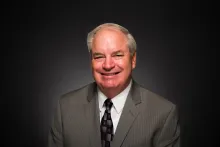
Robin Webber was born in Chicago, Illinois, in 1951, but has lived most of his life in California. He has been a part of the Church of God community since 1963. He attended Ambassador College in Pasadena from 1969-1973. He majored in theology and history.
Mr. Webber's interest remains in the study of history, socio-economics and literature. Over the years, he has offered his services to museums as a docent to share his enthusiasm and passions regarding these areas of expertise.
When time permits, he loves to go mountain biking on nearby ranch land and meet his wife as she hikes toward him.
