

Chuck Smith
This transcript was generated by AI and may contain errors. It is provided to assist those who may not be able to listen to the message.
All set? Okay. Got to get this technology down there. We're thankful for it, especially when it works well. It's very nice to be here in Lubbock. First time visiting this area. I've been north to Amarillo. I've been south down to El Paso area. I did also a marriage down there probably about a year ago. My job is a lot south of the border. I'm the senior pastor of Latin America and a known hymess since he was a young kid going to the Bogota Columbia Church. Two of the brothers are here, David and Cyril, as well as Father Abraham, who's been very faithful there in the Bogota Columbia congregation. My wife, Kadi, and I had a chance to serve the area of Columbia back in the late 70s when we were just starting our ministry. We spent two years there and our oldest daughter, Natalia, was actually born in Bogota Columbia. Then we moved down to Chile and spent 21 years there with a large congregation of over 300 that we served. Also, the rest of the area ended up serving Argentina and Brazil for a couple of years. Then, as the girls grew up, we were both U.S. citizens. My wife was naturalized when we started living in San Diego. There was an opportunity to come back to the States. The girls were all preparing for college at that time, and we wanted to keep the family together. One of the openings was in the Garden Grove California Church. We visited and we all loved the area, the brethren. We've been there now. This is going to be our celebrating 12 years in Garden Grove. But going back to why we are here, Jaime and Janet got engaged, had the honor of helping them and counseling them through the years. Jaime is my administrative assistant in Columbia. I'm here also as the council member visiting one of the outlying areas here in Texas. Killing a couple of birds with one stone, as they say. I'd like to update a bit about South America. I probably don't have too many chances to know about that area, but we have approximately 500 brethren in nine of the countries there in Latin America. We started out in 2010 with 443 and we're up to 500 now. God has blessed the area. We have five fisites, one south of the border here in Puerto Vallarta, which we've really found a wonderful place. Fisite, we had 220 Americans go last year. It's an all-inclusive type site where you just pay the fee for staying in the hotel. That includes all the meals, all the wine, beer, and drinks. Also, the kids up to six years old are free.
It's a wonderful deal. Of course, in Mexico, we're able to get much better rates than any other place. We could not afford anything like this. To boot, we're able to have all the Mexican brethren stay in the same hotel with all the American brethren.
Basically, nobody has to cook, nobody has to wash dishes. It's just meals, a buffet, virtually until five o'clock in the morning. They've still got some crew there at night if somebody wants to go in for a snack.
We have that fee site as well as one in Guatemala, which is a wonderful fee site, too, by a beautiful lake. We have had a number of Americans go there this past year. Then, in Colombia, we have one in Cartagena, which is a national heritage site, a United Nations site.
It's a wonderful, beautiful place. Also, we have one in Bolivia, another wonderful place, a semi-tropical region.
Then, we have the one in Chile, which was in the Central Valley, so five fee sites.
We have seven ministers serving the area, two ministerial assistants, and one administrative assistant, which is Jaime Selec. Five deacons in the area, 15,000 subscribers of the good news. Internet is really picking up. People are interested. We're seeing that is the chief way that God is calling people through the Internet.
How the Church is sustaining itself, we're so blessed. All I can say is Mr. Armstrong's principle that when we please God, He blesses the Church because we know we have an aging Church.
Yet, income is still positive. It's growing. I just think it is God being pleased with the spirit of the Church, with the way it is going forward. Truly, much more united than ever before. We have peace. We don't see the jockeying and all this that was very traumatic.
It's taken time, but God has the right to test His bride. He's going to have a bride that is going to be prepared for Jesus Christ. It's not about numbers. God is more concerned about attitudes, a docile spirit, an obedient spirit, as was brought about here in the Sermonet.
It's been a long trek, but it's been a wonderful trek, too, as God matures the Church, as we learn more about that Christ-centered servant leadership, or as we call it, Christ-like service.
That is something that, in the ministry, needs to be emphasized, because as soon as a person receives a certain amount of authority or position from God, you have to maintain that humility.
Some day, some trial is going to get there, and it's going to not find the person out for it. They either got too big for their own two branches, or they just lost it along the way. We are here to serve the congregation, not for the congregation to be serving us.
We are here to step into the gap, to guide and lovingly, and also teach. But it's a loving obedience. It is the right type of obedience to God.
I also wanted to preface the sermon today with something that happened.
We stopped off in Houston to come over here to Lubbock, and one of our daughters is there. We were able to visit her. We went to the National Science Museum, or the Natural Science Museum, in Houston on Thursday.
I love biology, and they had a section there on what they call paleontology, which is the study of very ancient fossils. This is the best example I've ever seen in a museum of that section. It went from tiny trilobites all the way through dinosaurs to the present era. It was like being in a Jurassic Park, but a real one full of these huge skeletons. They had some pterodactyls, which are these huge bird-like reptiles. They were taller than that roof. That's how big they were. They were like huge cranes that were two stories high. To me, what highlighted things was how they all say, Well, evolution did this, evolution did that. It was so sad when you realized, what is evolution? Evolution is a natural law that God set up so that things can vary and adapt. They're using a natural law to say the law has a mind, has creative abilities, which it doesn't at all. I like to collect trilobites. Every time I go down to South America in Bolivia, they have them. You can see from this book, it's called Darwin's Doubt. You see that trilobite. In Houston, they have one of the best trilobite collections in the world. They have from tiny pea-sized trilobites to trilobites that were two feet long. They were two feet in length. What you see there is the beginning of life, which is created already with all its parts. There aren't previous ancestors to these trilobites. They appear at the beginning fully formed with compoundized and no previous ancestors. They've scoured the oceans and the mountains. They've never found any previous ancestors to them. To me, it's just a wonder of creativity, how God added more and more as things developed. He finally prepared an earth with mammal life, which was adaptable to human beings living here. You wouldn't want to live in that Jurassic Park. You wouldn't have lasted half an hour. I tell you, you had been eaten by all kinds of dinosaurs. You'd have been lunch, if not breakfast. You would have lasted a day there. That wasn't the world for man. But to me, when you look at the evidence, only a person that doesn't want to see will not see them, God, behind this. To me, it just confirms that this evolution that is taught in schools, in colleges, as the saying here in Texas, has an ice cube's chance and health of being true. You put an ice cube in hell, you see how long it's going to last. Well, it's really sad. Now, I'd like to go to one scripture in Zechariah 13, which is a bit humorous. We've got humor in the Bible, and here's one of the places, because in Zechariah 13, after Jesus Christ establishes his kingdom, it says here in chapter 13, In that day a fountain shall be open for the house of David and for all inhabitants of Jerusalem, for sin and for uncleanness. So there is going to be a repentance. Starting with the Jewish people on earth, they will start being baptized. They will recognize the Messiah, as a matter of fact, here in chapter 12, verse 10, it says, And I will pour on the house of David, on the inhabitants of Jerusalem, the spirit of grace and supplication. Then they will look on me, whom they pierced. There is only one person that claimed to be the Messiah that was pierced in this way. That was Jesus Christ. And they will recognize that they did not accept the Messiah, and now they are looking at him in living color. And they will repent. That's why there will be this fountain opened up.
And then it says in verse 3 of chapter 13, It shall come to pass, that if anyone still prophesies, and the word here just means inspired speaking, today you would say, preaches. If anyone preaches, then his father and mother, who begot him, will say to him, You shall not live because you have spoken lies in the name of the Lord. Jesus Christ is coming, and he's bringing the doctrines that are taught in the Bible. And all these preachers that still want to continue with their versions of Christianity, their own parents are going to say, You were a lying minister, and you will not be allowed to live.
It says, And his father and mother, who begot him, shall thrust him through when he prophesies. See, people's eyes are going to be open to the truth. And this is kind of a humorous part in verse 4. It says, And they shall be in that day that every prophet, talking about ministers, will be ashamed of his vision when he prophesies. They will not wear a robe of coarse hair to deceive. And see, all these types of trappings that the ministry have, these special robes that they wear to sort of look with authority and with power.
And it says, But he will say, I am no prophet. I am a farmer. They're all going to be hiding. And they're not going to want to come forward, because they say, Oh, yeah, you were the one that took this money from the people, and you preached all of these false things. Well, where are they going to be? They're going to be hiding behind trees. And also, the evolutionists, they're going to be hiding behind trees.
Oh, yeah, this professor who taught evolution and taught about atheism, and that God doesn't wear them. They're all hiding. Oh, no, I'm not a professor. No, I worked in a farm. You've got the wrong identity here. I look like that guy, but I'm not him. So, people, it's going to be a day of reckoning. There's going to be a lot of humorous things going on. You know, Dr. Theophilus, oh, no, no, no, that's another. That's a brother that I had. No, I'm just a regular hand. I didn't teach the wrong thing. So, it's going to be very humorous, and that's why God's people are going to have to be trained.
Because we're going to have to sort of hold people back. They're going to want to lynch some of these people when the truth actually comes out. We're going to have to control things, and hopefully they'll come to repentance, and then they'll have a chance. But, boy, are they going to have to eat crow? Are they going to have to repent? They're going to have to publicly kneel down and repent, just like Job did, and dust and ashes, because of all the false things that society has allowed now under Satan's rule. So, anyways, that's what happened when I went to the museum in Houston and just thought, meditated on some of these things that are going on, and how people have been fooled, and a lot of what's going on with this immoral society has to do, because they have been taught this false teaching of evolution, that you just evolved, so everything you do is up to you, your opinion is as good as any others.
But there is going to be a day of reckoning. But it's not going to happen until Christ comes back. So we have to wait patiently for that. With that, I do want to share a message with you now today about the sermon. And it does have to do a little bit with the sermonette as well, but focusing not so much in the wedding that we have, but just about the right outlook in life.
How important is having the right outlook on things? It is so important as we finish these feasts, and now we have a long trek before the next feast that come for Passover. And we as pilgrims have to walk during these months. This is an oasis, every Sabbath, that we drink in of God's Word, but we don't have a long-term feast for a long time.
It's very important, our outlook. Jesus Christ mentioned this in Matthew 6, verse 33. He gave us a key concept. He says, let's start a little bit before here, Matthew 6, verse 31. It says, Therefore do not worry, saying, What shall we eat, and what shall we drink, or what shall we wear? For after all these things the Gentiles seek. For your heavenly Father knows that you need all these things. But seek first the kingdom of God and His righteousness, and all these things shall be added to you. Talking about the physical and material things.
Therefore do not worry about tomorrow, for tomorrow will worry about its own things. It is sufficient for the day is its own trouble. What He's basically saying is, once you put your spiritual things in order, then you should focus on the physical things one day at a time. Don't become overburdened. You should plan, you should prioritize, but you should stay positive. Not worrying about, Oh, tomorrow probably is not going to work out, it's not going to be good.
Let's not think about that. Let's think about what we can do today to stay positive. Because that is part of our own makeup. Our body works better, our mind works better. Once we start letting worries and negative thoughts take over, even our own biochemistry changes. The hormones change in our bodies. It's incredible how our thoughts can change what's going on in our own system. The question is, how do we face life? It's going to be a mixture of things. One member said, we know God's wonderful truths, but the difficult part is how to apply them.
One thing is to know the truth, another is to put it into practice. The reality of things is that life is a multitude of experiences, positive and negative. It was made to be enjoyed. God did not create us to be miserable, to go around regretting, living. But life was also designed as a character-building obstacle course. So it's not just a walk in the park. He didn't create us to just eat, to multiply, to get old and then to die. He had a bigger purpose. He gave us challenges, because he wants to make us into better people.
He's got a goal in mind for all of us. We need to always keep that big picture in mind of the coming Kingdom. That one day, this life is not going to mean that much in comparison to that future life that we have. We have to be able to enter that Kingdom. That Kingdom that God has prepared is going to be a place to have fun, but it's also a place to apply that Godly character. To grow in grace and knowledge. The Church should be a spiritual university, and it also should be a spiritual gym.
You develop that spiritual muscle. You build that willingness to go forward. It's through the trials that you become spiritually mature, that you are strengthened. Just like a child, if they never had any resistance, if they didn't have to fight gravity, they wouldn't stand up. They get up, and they fall, and they get up until they finally make it. They pass that stage to the next stage. So we're always overcoming natural barriers.
Think how the Apostle Paul could stay so positive with all the things that he went through, and what he went through more things than any of us ever did. Let's just look a little bit about what the Apostle Paul said.
Let's go to 2 Corinthians 4.
Starting in verse 7.
Paul is talking here about his body.
He says, So we've got wonderful spiritual things, but in physical bodies. He calls them earthen vessels.
They're just made out of physical earth. We're just all made out of elements. One day, those decompose, but not the spiritual parts that he is developing in us.
He says in verse 8, We are perplexed, but not in despair, persecuted, but not forsaken, struck down, but not destroyed, always carrying about in the body the dying of the Lord Jesus, that the life of Jesus also may be manifested in our body.
Paul is saying, we're going through tough things, but you know what? We have joy. We have so much positive that we don't get discouraged. We don't get dismayed. He says that, yes, we've got the sufferings of Christ, that sometimes because of our faith, because of what we believe, we're going to go through some persecution, misunderstandings in life.
But that part comes with the territory, as they say. Notice in 2 Corinthians 11, verse 20, some of the things that Paul went through.
2 Corinthians 11, verse 20, He says, for you put up with it if one brings you into bondage, if one devours you, if one takes from you, if one exalts himself, if one strikes you on the face, to our shame. I say that we were too weak for that, but in whatever, anyone is bold, I speak foolishly. I am bold also. So he's saying the brethren were putting up with a different type of leadership than the one that Paul had, and people put up with it. Some people just like to be told exactly what to do. They don't like to be asked to think, to decide for themselves.
They were kind of being beaten up, and Paul was saying, here he was coming, and they thought, oh, he's not as strong, and as dynamic, and he's not as authoritarian. We need somebody like that. He was saying, we're of a different type, and yet you were tolerating that. So then he goes on, and he says, are these Hebrews? So am I. Are they Israelites? So am I. Are they of the seed of Abraham? So am I. Are they ministers of Christ? I speak as a fool. I am more. So some of these were even ordained, but he's saying they didn't have the right spirit, the right attitude, and they weren't really with Paul at all. They were undermining his teachings. He says, in labors, more abundant, in stripes, above measure, in prisons more frequently, in deaths often, from the Jews, five times I received forty stripes, minus one, three times I was beaten with rods. Once I was stoned, three times I was shipwrecked, a night and a day I have been in the deep. So he was shipwrecked for following Christ. It's much tougher, but what did he say? He was still faithful. He was still positive. How would you like to be a day and a night stuck there, grabbing on to some wooden plank in the middle of the Mediterranean Ocean? He could have said, well, God, I'm your apostle. How can I be there? But he knew God's going to work it out. So the apostle Paul didn't just talk the talk. He walked the walk. Notice in Colossians chapter 3, verse 16. This is what Paul was teaching, although he was going through so many difficulties. He said, Let the word of Christ dwell in you, richly in all wisdom, teaching and admonishing one another in psalms and hymns and spiritual songs, singing with grace in your hearts to the Lord. And whatever you do in word or deed, do all in the name of the Lord Jesus, giving thanks to God the Father through him. Despite all the things that he went through, he was still positive, giving thanks, realizing there is a purpose for things that we go through in life. And God is guiding us through all of this. So I'd like to share three key points to stay positive amid the difficulties. Three key points to stay positive amid the difficulties in life. This is the first principle. You can't change circumstances, but you can change your attitude towards them.
See, that's what we can do. We can't change our bodies. We can't change many things of our circumstances, but we can change how we view those things. That's where we are different.
Now, when a sailor is in one of these sailboats, what happens when all he has is the wind in front of him? Incoming wind. Well, he needs the wind to be in the back to be able to propel him forward. But there is a way for a sailor to be able to go forward even with oncoming wind. Do you know how it is? You trim your sails and you go sideways. And you go zigzagging and you're able to catch enough wind to propel you forward. But you have to go zigzagging and you can go forward that way. So it's the same way. When there are difficulties, don't curse the wind. Trim your sails. See how you can adjust it so that you can still go forward with them.
William James, a famous psychologist in the early 20th century, said the following, The greatest discovery of my generation is that human beings can alter their lives by altering their attitudes. And it was a big moment in my life that I was able to understand that. Very early on. Well, if I can't change the circumstances, I can change my attitude toward them.
And if you change your attitude, all of a sudden the same circumstances don't seem so dire, so negative. It's like the story of the little lady. She said, well, I've lost all my teeth but two. But I'm happy because they joined. See? I can still bite. I can still bite.
See? So instead of seeing what you're missing, you're thinking, well, what can still work? You can change your attitude by really thinking that in a positive way it changes things. Now, that's something that walking by faith has to do a lot. It doesn't mean you're always going to get everything you want, but you're going to get a lot more. I remember this past feast in Puerto Vallarta. It was very early in September. We had the feast early this year. And it was more of the rainy season at that time. And I looked before I left for Puerto Vallarta, and it said, ten days of rain and storms. And so we arrived in Puerto Vallarta on Monday. And everybody was going to be arriving Tuesday and Wednesday. And it was raining cats and dogs, as they said, on Monday.
And they had this big tropical storm, almost, of hurricane force called Manuel. So, you see, we have Manuel here, right? Manuel remembers that. And Manuel was heading up toward Puerto Vallarta. And I remember asking God and asking others to pray about it. And it was five o'clock in the morning, and it was raining.
And I said, Father, okay, this is your feast. This is where you're going to have your people. And we need for you to act now. And sure enough, it started settling. And the storm went, hit Acapulco, flooded that town.
Twenty thousand, twenty-two thousand tourists were stranded. And then it went toward Puerto Vallarta, and it skipped Puerto Vallarta and went up north to Mazatlan, hit Mazatlan, hit Cabo in that area. But we had days that were wonderful. We didn't have big storms at all. We had sunny days. We were able to do all the activities. It was like a bubble. People said there was a bubble around the feast time. Now, again, if you don't think that God can act, how can you be positive? You can't let circumstances just dictate. You can say, oh, well, the weather forecasters, they know. They might as well get used to it.
Or you can say, well, God is the God of miracles. And He did a miracle at that time. And it is the first time.
But again, your attitude is so important. As Paul mentioned in Romans chapter 8, Romans chapter 8, this is why He was so full of confidence. It says here in chapter 8, verse 32, it says about God, He who did not spare his own Son, but delivered him up for us all, how shall he not with him also freely give us of all things?
So, if God is for us, and he says in the previous verse, what shall we say to these things? If God is for us, who can be against us?
So, that's where the fountain of that spiritual positive energy comes from. We limit God. God is not limiting us.
In Acts chapter 16, let's look at that example of Paul and Silas. In Acts chapter 16, verse 21. It says, then, they are talking about Paul and Silas. They were being blamed. They say they teach contrary things which are unlawful for us to receive.
Then the multitude ran up and gathered against them, and the magistrates took off their clothes and commanded them to be beaten with rods, and they were thrown in prison. Then it says in verse 25, So, they did not get down. They did not lose heart. They knew God was with them, and God is with us as well. That's the importance of changing the attitude.
Let's go to Proverbs 17, verse 22. Proverbs 17, verse 22. It says here, in verse 22, A merry heart does good like medicine, but a broken spirit dries the bones. Two different attitudes. The Good News Bible version says, being cheerful keeps you healthy, but it's a slow death to be gloomy all the time.
So again, our attitudes are in our hands. We determine what somebody thinks is the end of the world for the other person isn't such a big thing. And we have to be able to change it so we don't get discouraged so easily.
It was a story that happened, and it reminded me when we got to Chile for the first time. My wife and I, back in 1980, we were sent to pastor the church. And at that time, it was a very small group, and they've been through a lot of things. Some of them had actually come from the Sardis era, which was a previous era.
They were called the Israelite Church of God. They had come in, but they had all kinds of different ideas. So the group was pretty split up and divided. We arrived there, brand new in a sense, starting out, pastoring the church. I remember the first couple of months was just keeping the group consolidated and trying to just work and keep them together. I once sent a message to my supervisor. I said, well, this reminds me of those two shoe salesmen that went to India back in the 18th century.
One of them went all around India and sent that telegram to his boss and said, well, the situation in India is terrible. Nobody wears shoes here.
Another shoe salesman had gone around and, once belonged to the other one, sent this message. He said, wonderful news! Everybody needs shoes in India!
And you know what? People wear shoes in India today. So who do you think got the big sale? Same circumstances, but a whole different perspective on things. I just find it so important. Sometimes a person defeats themselves. They themselves become the worst enemy because they're always, oh, I can't do this. No, it's not going to work out. No, this is going to be negative. And you basically almost defeat yourself before getting started. And as you know, everything that is carried out and every endeavor, you've got to think, yes, this can work out. This is something that I'm going to put my best energy into it, and I'm going to be positive about it. And it does change life enormously. Notice even Jesus Christ, when he was going through the worst trial of his life, being crucified as he was in Hebrews 12. What was he thinking about? Could he have gotten down? Could he have gotten negative? Of course he could have. The human beings were not worthy of the sacrifice that he was carrying out. They were sneering at him, and he said, Father, forgive them, for they don't know what they're doing. And in Hebrews 12, verse 3, it says, For consider him who endured such hostility from sinners against himself, lest you become weary and discouraged in your souls. So he had an attitude. Notice in verse 2, it says, Looking unto Jesus, the Author and Finisher of our faith, who for the joy that was set before him, endured the cross, despising the shame, and has sat down at the right hand, the throne of God. So he says, you're for the joy placed there, because he knew what that sacrifice was going to do for all of us. He wasn't joyful for what he was going through, but he had a vision. He was looking at the positive results that his sacrifice was going to carry out in all of us. And that's why we have a positive attitude, because of what he has done. When he has given us the opportunity to one day be part of that kingdom. So you can't change circumstances, but you can change your attitude toward them. The second point is, carefully choose the words, for they will become your daily vocabulary. Carefully choose the words that you use, because they are going to be your daily vocabulary. We just have a set of words that we use, and they have very powerful effects on us and on others. And sometimes we don't even think about it. We just pick up the vocabulary from our parents and from our surroundings. And we don't realize how much your words are going to impact others and impact yourself as well. In Proverbs 18, verse 21, it says here, Death and life are in the power of the time, and those who love it will eat its fruit. You have the power to discourage someone to the point that they can take their own lives. Or you have the power to lift that person up out of their depression, and you can do so much good. And we, as ministers, have had to deal with people going through spiritual depression, going through difficult times, loss of person, of jobs, or many things that go through. And it's so important, the words that you use. They can either pick you up or they can put you down. We can have a word of encouragement that helps a person. That's why the book of Proverbs tells us so much. We have to be careful how we choose our words. Notice in Proverbs 15, verse 1, it says, A soft answer turns away wrath, but a harsh word stirs up anger. And constantly, in the book of Proverbs, it says, the words that we use are going to shape us and are going to shape others. If you notice, we can mold others according to the words that we use.
We can mold our children by the words that we use. And I remember in school, when our daughters, we had four of them, were growing up. And sometimes, maybe they didn't turn in the best report card or something. But we always said, we know that you're trying your best. We're going to help you. We're going to do better. Not you. We're going to do better. And we were there working away, and when they had some job that needed to be done, we were helping them out. We were there backing them and encouraging them. Well, all four daughters are professionals now. And they've been able to go through college. One's going through medical school right now, finishing medical school. The other one finished medical school and chiropractics. But, see, they knew what encouragement was. There wasn't a discouraging word. And I said, I don't care what you're going to be. We just want you to be the best in what you choose. You are the one that's going to choose, but we're going to be there, and we want you to be the best. Don't be mediocre. Don't fluff off. And to this day, our daughters have been able to develop, and we've seen so many children do that. So, the right words spoken in the right way can bring love, success, and respect. Whereas the wrong words can bring about dismissal, shame, anger, and even lead the country to war. So, remember, the words you use will shape your destiny. First come the thoughts, then come the words, which form the attitudes and then the results that we produce. Words that are negative and defeatist will lead more to failure. Words that are positive and winning words lead to triumph. That doesn't mean you're going to win every time, but you will greatly improve the odds of winning with that. You notice the great leaders, the Apostle Paul that we just talked about, of course, Jesus Christ, the greatest of them. But then we have some modern ones. Did you ever see Winston Churchill say, Oh, let's just give up. Let's give in. The Germans are too powerful. No. He said, you know, we will never give up. And he infused the British people with such courage and positive attitudes that they couldn't be defeated. They got pounded and pounded, and it just built more resolve. And so you have to apply those same principles. Ronald Reagan was a good example of how he brought such a positive attitude to the country after being in a negative funk for a while here. The country had been going through that type of what the previous president said. There had been sort of a morass, and the people were discouraged. And just one leader can turn it around. We had Mr. Dennis Luker, about as positive as a person and encouraging. And I always think, those are the type of men that you would go into the Philistine camp and bring water back, because they just brought that love and encouragement and were always positive, even amidst the most difficult things. I saw him in the last week. I was there when they diagnosed he had cancer. And you know what? He said, I'm okay with it. Whatever it is, I've done my job.
And just stayed that way. Boy, what an example that he can give to all of us.
So we need to develop that right vocabulary. How hard is it for us to choose the words that we pick? Not very hard. Just leave out those negative and what I call matchstick words. You know, the ones, okay, you know, you light up. Okay, let's have a fire here. I'm going to light up a fire. We're going to get angry. Here's the matchstick. Forget matchstick words. You don't have matchsticks. You can't start a fire. And those are words that we just have to avoid. What does culture mean? What does being a cultured individual? It is a person that is considerate of others. Considerateness is something that we all need to be. Considerate toward others. You know, a cultured person is thinking about the other person. How do we consider it? You go to another country, you don't need to learn all about the culture, but you learn to be considerate. You will be respected, and you will fit in well. But how about the other ones that just don't fit in? They always feel everybody else is the one that doesn't fit. I'm fine. Just like the old story of this marching band that were going through the streets, and this mother was there, and she was there with her little son. Little Dickie was going through as a soldier, and she turned around and said, Oh, I'm so proud! There's my little Dickie, the only one that's marching to the tune. Everybody else is out of tune, except my son Dickie. Some people are marching out of tune, but they think everybody is the one that's out of tune. So we have to learn that we're the ones that have to adapt. We have to make the changes that are so positive. Often the difference between a successful and a failed marriage has to do with not saying three or four words per day. If you just avoid those words that are going to do the damage, sometimes that makes the big difference. The words that will cut, that will affect the other person. Now, why say it? It's not going to do any good. It's just going to produce negative effects on the person, and you have the power. You've got to think of your teeth sometimes like they're in a cage. Keep those words inside the cage. Don't pop the cage open, because this little beast is going to get out there and bite somebody before it comes back.
You can keep that cage closed.
Words have a biochemical effect on the body. The moment you use a word like, I'm crushed or I'm angry, the whole body starts producing all kinds of hormones in your system. The stress level goes up. It's a whole different thing if you said, I'm a bit disappointed, but you're not crushed, you're not devastated. I'm disappointed. It didn't turn out. Guess what? My system is still normal. There's a big difference between using your adrenal glands for an emergency and one that you're using all the time.
Someone brought up, have you seen the tigers that have been captured from the wild many times? They have huge adrenal glands, because they're always up trying to chase prey, going after this or others. So they've got these huge adrenal glands. But then you go into the cage where they have crocodiles. You know crocodiles are there all day. They just wait for their lunch to come to them. They've got tiny little adrenal glands. They hardly have to use it. But we have adrenal glands, too. And what should we use them for? For daily things? No. Because those adrenal glands are made to produce that adrenaline when there is something, when a child is sick and you have to rush into the hospital. Of course that's the time. There are emergencies. But you're the one that gets to use the adrenal glands or not. You choose to use them. Do you want to end up being like an old lion, or do you want to be like a crocodile, fresh, and hardly ever has to worry about using it unnecessarily? So those are points that are so important. There are words that I used to use. I don't use them anymore. Because they still provoke, and there are words that you can say the same thing without provoking a wrong reaction. It's so important, are choosing the words.
And we go to the third point, which is, look at adversity as a challenge and an opportunity to prune and grow. Look at adversity as a challenge and an opportunity to prune and grow. Many times we have to go through things until we learn a lesson. Sometimes they say you have to be hit with a 2x4 before you say, hey, you know what? Either God's getting my attention, or life is getting my attention. Maybe I need to take care of myself better, whatever it is. But we have to look at it as this is an opportunity to change positively, to turn for the better. Notice in Proverbs 24 verse 10, Proverbs 24, verse 10, it says, If you faint in the day of adversity, your strength is small. If you don't make it when the time of trial comes, then it says we weren't ready for it. Our strength is small. We weren't prepared. You see that even in sports, football teams. Sometimes they don't prepare as well as the other one, and they get defeated. They just didn't do the work enough to put them above. Look at the great professionals. They're always training. They're trying to improve, to get better. I was looking at sports news, talking about who would you rather in basketball shoot the last hoop to win a game. Who would you choose? They had three. Michael Jordan, Kobe Bryant, LeBron James. About 75% chose Michael Jordan. Then they chose Kobe and then hard anybody, LeBron James, who was up and coming. They said Jordan was one fellow who would shoot 300 shots before going to a game in practice. He was just relentless. He was such a perfectionist and a worker. When he got there, that last shot, he'd already shot it 300 times. He'd already missed it a whole bunch of times. He'd made the adjustments. He was known to be the hardest working fellow. Many of these results are earned. They're just not lucky flukes at all. It tells us through the trials that we go through, we are strengthened. We are made into better and stronger people. Just look back on your life. Isn't it that when you've gone through some of the toughest things, that you've had to get closer to God, that you've had to step up?
I remember Dennis Luker mentioned this many times, that during the period of time when he had the hardest trial, he said, that's when we grew spiritually. Of course, when you're going through it, you don't realize it. But you look back and you say, you know what? That period was the most growth, because that was the one that required us to get closer to God, to depend more on God.
To test our strength, our resoluteness, how strong we are. I remember as well that going through the different trials, we would say the same thing. It was through the difficult trials that you know yourself, that God is there, and He's going to do His part if we do our part.
And so, these trials are not just haphazard. God created life so that there would be tests for us to develop that godly character.
In a thousand years from now, supposing all of us were able to make it into the kingdom, and we're all transformed into spirit beings. We no longer have to worry about diseases, getting old, spirit bodies. You wake up the same, you don't even have to go to sleep. You just feel energy forever. And we're going to look back at this time, whatever, 70, 80, 90 years, if we're lucky, and we're going to look back and we said, you know, all of those things we stressed about and we worried about, and we're going to laugh a bit about, boy, we thought those things were so enormous, and we were making mountains out of molecules. And looking back on the trials that we went through, thinking, oh, they were so tremendous, and then we're going to look back and say, well, you know what? They really weren't. When you look back the rest of our lives, and just having physical sickness for a while, we're not going to have physical sickness for the rest of eternity. So God only has a certain amount of time to build godly character. You know, if we're 100% healthy, 100% wealthy, 100% good-looking, and everything else, we're going to be spoiled rotten. We haven't learned one spiritual lesson. So it is. God only has a limited time to work with us while we're in the flesh. And so He's going to allow us to go through things to see what's in our hearts. Are we going to grow? Are we going to go up a notch? Are we going to be able to go over the next barrier? Or are we stuck at two and a half feet? Is that the only spiritual barrier that we can jump over? Or are we able to progress? So God is testing us. Notice in Philippians chapter 4. Philippians chapter 4.
Let's start in verse 8. This is one of the greatest scriptures in the Bible, in my estimation. Philippians 4 verse 8, it says, Finally, brethren, there are eight different qualities that He says we should think about. And these are the categories. Whatever things are true, whatever things are noble, whatever things are just, whatever things are pure, whatever things are lovely, whatever things are of good report. If there is any virtue, and if there is anything praiseworthy, meditate on these things. Eight things. The way I remember them is, the tin man got gypped and logged a complaint to a VIP.
So you get T true, N noble, then got gypped just the J, and then the P pure, and so then he logged L lovely, a G good report, which is a complaint with a V, I P, which is virtue, and then the last one is praiseworthy. That's why I remember the eight virtues that are mentioned here, to keep our thoughts on these things. And continuing on, he says, the things which you have learned and received and heard in Psalm, in me, these do, and the God of peace will be with you.
But I rejoiced in the Lord greatly, that now, at last, your care for me has flourished again through, you surely did care, but you lacked, the light isn't too good here. He says, not that I speak in regard to need, for I have learned, in whatever state that I am, to be content. I know how to be abased, and I know how to abound, everywhere, and in all things I have learned both to be full and to be hungry, both to abound and to suffer need. I can do all things through Christ who strengthens me. So he had to learn this. How did he learn it? Through the trials that he went through. So if he didn't go through those trials, he couldn't have been teaching those principles. So take our lives as these opportunities and challenges that God presents to us to build more of that godly character. I enjoy watching tennis, and this past year they had Andy Murray, who's a famous tennis player, the first one, who finally won Wimbledon, after something like 70 years. No British tennis player had won. This was a top trophy in tennis. And this is what a reporter mentioned when Andy Murray had the performance at the Australian Open, which was previous to his win. He said, Andy Murray's fine, mature performance in the Australian Open semi-final on Friday was in part Roger Federer's fault, of course. If Federer had not set the bar quite so stratospherically high for men's tennis in the 2000s, young Andy Murray might have been tempted to coast on his gifts. Might have been content to keep chomping candy bars and guzzling soda and putting in the practice hours, but not to toy with a British expression, due to hardest yards. If Federer had not driven Murray to tears in a series of grand slam finals, which Murray lost all of them, and left him reeling with doubt and potential unfulfilled, Murray might never have felt the need to transform himself into quite such a physical specimen. Might never have maximized his speed and his serve, or kicked his nasty energy-sapping habit of grousing at himself, his entourage, and the vagaries of a game that is ill-suited to the demands of a perfectionist. But an incomplete commitment to one's self, to one's gain, simply wouldn't cut it in the era that has belonged to Roger Federer, more than to any other man, but has gradually, inexorably, become more communal property. The result was there for him and everyone else to see on a cool Friday night as Murray defeated Roger Federer to the Australian Open Final with a five-set victory. Sometimes we need certain amount of adversarial circumstances, which make us have to concentrate to get up a little more, to become a little more disciplined. If we don't have any challenges, we usually slough off. But if you have those difficulties, you realize, this is what I need. This is why I need to fast more. This is why I need to pray more. This is why I have to persevere more. Because it's a tough one!
It's not one that just goes away after five minutes. And so, we, in the process, build our spiritual immune system. See, the next time around, it won't catch you so unexpectedly. If you overcome this trial, the next one will not be as difficult. You already have a built-in immune system. It's easier. I know my daughter was telling us about two months ago, she was going through really the toughest rigors of fourth-year medicine. She was putting in hours during the week, just 16, 30 hours sometimes. She said, oh, this is so tough. She doubted herself. We just said, well, keep at it. Whatever doesn't kill you is going to make you stronger.
She went through that period of time. She was able to pass, and she did it fine. You know what she said later on? She said, Dad, I'm glad I went through that. Because now, what they throw at me, I'm going to be able to handle. She had 20 patients with two others that were helping her. 20 patients to deal with that were just coming in. She said, you know, some of these others only had four or five. So, with those 20, she said, I'm ready for whatever to throw at me. She said, I'm glad I went through it. Isn't that what sometimes in sports, you get so tired, but you know afterwards, I did it. I'm able to overcome. And so, small successes lead to bigger successes. Small defeats lead to larger defeats as well. So, we are building a spiritual immune system. Notice in 1 Peter 1, verse 10.
1 Peter 1, verse 10. He's talking about the salvation. And he says, of this salvation, the prophets have inquired and searched carefully, who prophesied of the grace that would come from the to you, searching what or in what manner of time the Spirit of Christ who was in them was indicating that he testified beforehand the sufferings of Christ and the glories that would follow.
This is the salvation that all of these people have been searching for, that God is offering to us. Now, we're not worthy. Most people have not built any real spiritual character. Although, there are people out there doing good things, that they build a certain amount of character in the process. We understand that. But these wonderful truths highlight for us such wonderful future kingdom that we have. God is training us for something in the future. And that's why in this humble life, he's calling humble people to go through humble trials. Things that many people go through and they never realize, hey, you know what? I can build some spiritual character. God can use me better through what I'm going through. And so, these are the principles that Paul and many others in the Bible have brought about. Let's go to Romans chapter 8. This is the summary of what the Apostle Paul was talking about. God gave him just such special insight. How much he must have meditated to come up with these words that he shares with us. Just think about all the experiences he had to go through before he finally said, I got it. Now I understand what God was trying to do. It says in verse 18, So he says, all of these things are not worthy to be compared and to help us stay positive. We've got something so wonderful to have been called at this time with all the billions of people. God could have called many other people, many people that are much better prepared. And much more privileged and much more talented. But he chose us. It's like winning the lottery ticket of the universe. All you have to do is persevere, stay faithful to the end, and then you're able to cash with that future resurrection.
You would have cashed that lottery ticket for that first resurrection. That's what God has offered to all of us. And he says here that the whole universe is awaiting the manifestation of the children of God.
So we have so much to be thankful to God about. Now, our pains are not going to go away from one day to the next. We're going to go through trials and difficulties. But we have to show God that we're not going to give up, we're not going to give in, we're not going to get negative. Because Satan loves to... He thrives on negativity. He says, you know, he'll throw those darts of doubt. See if something is going to land. But if you've got the shield of faith, you can block it. You can lock those darts out. And to be able to keep the faith. So I want to share with you these three points that I want to summarize now. Remember to change your attitude. Look at the glass half full instead of half empty. You can look at it three quarters full, even better.
Positive thoughts lead to positive actions. They have to begin with us. Nobody's going to do it for us. You can't go to a bubblegum machine and pull out the bubblegum that's going to say, here, chew this, and it's going to turn you into a positive person. There's no such thing. It has to be our mind, our attitudes, our wills that have to be there. Remember, change your vocabulary and you will change your life, your relationship with others. It's the simplest tool to immediately change the quality of your life by just changing words. Have you seen words have power? If we don't use words that are demeaning, that are negative, that are humiliating to others, we can avoid that. Even if we feel disappointed, there's a way to express it that isn't going to turn the person off or turn the person and start feeling down.
And remember to look at adversity as a challenge and an opportunity to prune and to improve. Sometimes we need to be pruned. That's the way God gets our attention.
Just like childhood diseases, they improve our immune system. When you get them as an adult, if you didn't have them as a child, it's a lot worse. Sometimes we have to go through things that will prepare us to face more difficult things, but with better tools.
We can't live in a protective bubble. We can't just avoid problems. We have to know how to face them with courage, with intelligence, with faith.
Remember these seven points about God's kingdom. It says, that kingdom come, there are seven points that can be brought up. That's the long-term view. First, that is our goal. That is our ultimate goal in life, to make it into God's kingdom. That's what God is offering us.
Number two, that gives us hope. Because of the hope of that coming kingdom, and that we're preparing for it.
That gives us also faith to walk the walk, to walk toward that goal. Faith is the walking, whereas hope is the destiny. You need both. That gives us meaning in life.
Because it isn't just about living. There's a goal there. God, who created all the wonderful things in the universe, created this life, just as He thought it would be best to get us to that goal.
So, it gives meaning. It also gives us satisfaction. We know not all wrongs are going to be righted in this life. But we know there is going to be a time of reckoning. All wrongs will be righted one day.
Everybody will come before the throne of Jesus Christ. So, it gives us satisfaction. Well, maybe you got gypped. Maybe some unfair thing happened in your life.
Maybe it's not going to be resolved in this life. I lost my country at the age of seven. We had everything going for us when I was a seven-year-old boy in Cuba. My father was a medical doctor. We had a big clinic. We had the big country club. We had chauffeurs. We had maids. And Fidel Castro took over. And guess what? We ended up with the clothes on our back. And we took one of those freedom flights, one of the last ones, with our family to Miami in 1960. And we had to start from zero. We lost it all.
So, you know, that prepared me for losing it when I came into the church when I was 17. Yeah, I already lost this before. It doesn't hurt that bad to have gotten ostracized from my family and friends. I've gone through that.
And the world doesn't offer me the frills. I saw how quickly things can disappear from one day. I wasn't some spoiled kid. I had been humbled by my experience. And that prepared me for accepting God and walking with God.
I was the only one in my family at 17 left. I'd already been accepted to go to pre-medical school. I was going to follow my dad's footsteps. And you know what? I wanted to go to Ambassador College to learn God's way of life. But you see, that previous experience helped me to have the maturity at 17 to say, you know what? I'm not going to turn my back on God. And just think of the good life. Because I know that's just a passing thing that can be taken from you one day to the next.
And so, you can't live in a protective bubble. Life consists of 24 hours in a day. And how are we going to live it? With that God-Spirit looking positively at that kingdom, as I said, there is satisfaction in the future.
And then, the sixth one is motivation. It gives us motivation to get up in the morning because we've got that God's kingdom and we're part of God's family and we're sustaining a work with our prayers, with everything that we do. And finally, it provides perseverance to persevere to the end because that kingdom is worth it. So, brethren, that's the message for today. It's been wonderful to be here with you in Lubbock, Texas.
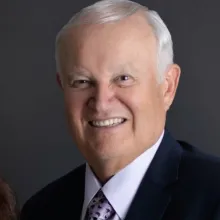
Mr. Seiglie was born in Havana, Cuba, and came to the United States when he was a child. He found out about the Church when he was 17 from a Church member in high school. He went to Ambassador College in Big Sandy, Texas, and in Pasadena, California, graduating with degrees in theology and Spanish. He serves as the pastor of the Garden Grove, CA UCG congregation and serves in the Spanish speaking areas of South America. He also writes for the Beyond Today magazine and currently serves on the UCG Council of Elders. He and his wife, Caty, have four grown daughters, and grandchildren.
