

In These Challenging Times, What Should Be Our View of Prophecy?
Given on
Given in
Downloads
Downloads
To download a file, right-click (or long press) a link above and choose Save As.
This sermon covers four areas of concern in relation to our individual walk with God.
Transcript
This transcript was generated by AI and may contain errors. It is provided to assist those who may not be able to listen to the message.
You know, brethren, a number of people have, as I've contacted some of you on the phone, on email, and so forth, as you've contacted me, there's a question that is going through probably all of our minds as we watch what's happening in the world scene, and that is, where are we in Bible prophecy? Where are we in Bible prophecy? Well, brethren, I want to begin our study today on that subject by reminding you of what we covered here in Beloit in Chicago when I began the series on the book of Daniel. When I began that series, I outlined some of the basic thinking about the subject Bible prophecy. Now, there are many different ways we can go about looking at Bible prophecy. Obviously, the Bible is the Bible. The truth is the truth, but we can have perspectives on how we see that truth. For example, you've got four Gospels. The truth is the truth, but you've got four men who had different perspectives on how to view things, how God wanted us to view things, and that's why it was put together the way it was. The same thing is true with Bible prophecy. What I'm about to give you now, I'm not going to go through in any detail. I'm just going to simply go through some things here I covered with you some months ago when we were going through the book of Daniel. Mr. Herbert W. Armstrong had three major points of emphasis regarding Bible prophecy. This is the way he perceived things. This is the way his perspective on prophecy and the way he looked at it. Number one, he looked at the decline of the English-speaking peoples.
Number two, he looked for the decline or some of the rise, the rise of Europe. And number three, he was watching the trouble in the Middle East. Well, those are three points of emphasis he would look to. Mr. Melvin Rhodes gave a caution, and I think we should pay close attention not only to what Mr. Herbert Armstrong said, but also to what Mr. Melvin Rhodes said, where he says there's a great caution the church needs to take in looking at prophecy. He said, in a church that is entirely too specific. This is where we get in a trouble, he said, where we begin to speculate. We need to view trends and not get too bogged down in trying to nail down each little detail in world news. As an example, he quoted Daniel chapter 7, the first seven verses. In Daniel chapter 7, those first seven verses, that covers 26 years of human history, or roughly 43 percent of human history. So obviously, we want to look at trends. Now, in the church, and I covered this again when we were starting the book of Daniel, there are four major keys to understanding prophecy that the church understands, but the world does not. And we want to make sure that we understand that. Again, I'm just going to go through what I gave you some months ago, because this is not going to be the hardcore what I want to give you today. Number one, things that we understand about prophecy in the church that the world doesn't understand. Number one, the identity of modern Israel. Number two, the identity of the two women in the book of Revelation, the two churches. Number three, the plan of God, and especially the fall holy days, which show great prophetic significance. And number four, the duality of prophecy. Many times it's more than dual. For example, the abomination of desolation has three occurrences. Two we've seen historically, and one we'll see in the future. I also outlined how we should view prophecy in terms of it being positive. That number one, the central focus of prophecy is the establishment of the kingdom of God. Number two, prophecy should strengthen our faith. And number three, prophecy should help us to watch world news and our own individual spiritual condition. Now that last point is what I want to zoom in on. We want to take a look at four different areas of concern in relation to our individual walk with God. So the point, my theme for today is this, in these challenging times, what should be our view of prophecy? In these challenging times, what should be our view of prophecy? And brethren, what I really want to get to is, we will look at certain prophecies, obviously, in the rest of this sermon, but I want us to think about where we individually stand in light of these prophecies. Okay? Jesus Christ commanded us, He commanded His followers to watch. Turn, if you would, to Luke chapter 21, Luke chapter 21 and verse 36. Luke 21 verse 36.
Chapter like Matthew 24 and Mark chapter 13, it goes through and talks about the end of the age. And notice Jesus Christ's admonition here to all of us today and to all Christians of all times in their own settings, here in Luke 21 verse 36. Watch, therefore, and pray always that, number one, you may be counted worthy to escape all these things that will come to pass, and number two, to stand before the Son of Man. So, yes, we are told to watch. Watch world news. Watch the happenings of society around us, but also watch our relationship with God, because it does no good for anybody to have all the information they would ever need so you can build whatever kind of charts you want. It doesn't do any good to know everything about prophecy if we are separated from God. So, let's take a look at these four areas of concern. Number one. Number one, what is the status of the world and society around us? What is the status of the world and society around us? You know, we quoted Luke chapter 21. Let's turn over to Matthew chapter 24. Again, the Olivet Prophecy, Matthew 24, and we'll be looking at verses 37, 38, and 39.
This is the status of the world at the time and society at the time of the return of Jesus Christ. We need to be watching and looking and asking ourselves, are we in that time period? And what is our relationship with God in this particular time period? Matthew 24 verse 37. But as the days of Noah were, so also will be the coming of the Son of Man be. Whereas the days before the flood, they were eating and drinking, marrying, and giving in marriage until the day Noah entered the ark. In other words, life was going on. People were living, people were dying, they were getting married, they were having babies, you know, people were working, they were taking time off from work. It was a typical society.
Verse 39. And did not know until the flood came and took them all the way, so also will be the coming of the Son of Man be. So it was a typical society, but it was a typical godless society, very godless. And it says here, verse 39, they didn't know. Now, how could it be they didn't know? If you would, turn in your Bibles to 2 Peter 2 and verse 5. 2 Peter 2 and verse 5.
Break you into the middle of the clock, it says, And did not spare the ancient world, but saved Noah, one of the eight people, a preacher of righteousness, bringing in the flood on the way of the Lord. Bringing in the flood on the world of the ungodly. So, brethren, besides God giving Noah the commission to build this enormous ark, and here this last November when I was at the conference in Cincinnati, several of us took the time to go down into northern Kentucky and look at a scale model, full-scale model of the ark. And it was truly impressive. I mean, as you were driving near into the park where it was sitting, you can see from a ways off this big structure, this huge ark. And then the closer you got to it, it was just fantastic. Walking around inside of it and seeing all the different things that could have been inside the real ark, of course a lot of that was conjecture. But it was just amazing to see the size of that. Besides building that enormous ark, Noah also had another thing that he must be doing. He was a preacher of righteousness.
Obviously, the ark was a tremendous calling card. And we have thought, we've speculated, that not only Noah preached to the people right there in those surroundings, but he may have made evangelistic tours of every place else that he could get to, the guy would allow him to get to, to let people know what was coming. He warned the world. He told the people that that ark was representative of saving their lives. Of course, he was thinking about, at that time, saving them physically. Well, today we are also preaching to the world. And we are wanting people to realize that, you know, as God is calling them, they can have salvation in God.
But let's keep on turning here. Let's go back over to Genesis chapter 6. Again, take a look at the context of society of Noah's day.
Genesis chapter 6, starting here in verse 3. You know, after 120 years, 120 years, we're going to see that in just a moment, of Noah proclaiming the truth of God, the righteousness of God, there was no evidence that people were responding. None. He went into the ark and his family, and that was it. Eight people. Here in Genesis chapter 3, let's look at this. Excuse me, Genesis chapter 6, verse 3. Genesis chapter 6, verse 3. And the Lord said, My Spirit shall not strive with man forever, for he is indeed flesh. His day shall be 120 years. 120 years to build the ark. 120 years to proclaim righteousness. To let people know there is something they needed to do to draw close to God in their very perverse society. How perverse? Look at verse 5. Genesis chapter 6, verse 5. Then the Lord saw that the wickedness of man was great in the earth, and that every intent of the thoughts of his heart was only evil continually. Wow! Every intent of the thoughts of his heart was only evil continually. As we look at prophecy, we've got to ask ourselves, are we there yet? Obviously, this world is tremendously evil, corrupt, unbelievably so. Could it get worse? Verse 6. The Lord was sorry that he made man on the earth, and he was grieved in his heart. So the Lord said, I will destroy man from whom I have created from the face of the earth, both man and beast, creeping thing and birds of the air. For I am sorry that I have made them. Brethren, society of that day lost its conscience, lost its ability to discern values, true values, real values, decency, a relationship with God who had been talking to them through Noah. They were no longer redeemable in God's eyes. What a statement to make!
Now, there's an interesting statement made a few chapters down the road here in Genesis chapter 15. And there's a principle here. Let's take note of that. Genesis chapter 16 and verse 16. Genesis 15 verse 16. End part of the verse. Genesis 15 16. For the iniquity of the Amorites is not yet complete. The iniquity of the Amorites is not yet complete. God was giving human beings, or in this particular case, the Amorites, time to repent. And Noah's day was 120 years, maybe even more than that before Noah began building the Ark. Think about how much of a relationship Noah had with the people in the society. But here we see where God says, you know, there's, I'm making it count. And there's going to come a time when enough is enough. You know, we see that same thing. I'm not going to turn to these verses. We see the same kind of thing in Daniel chapter 8 verse 23. And also in Matthew chapter 23 verse 32. Daniel chapter 8 verse 23. And Matthew chapter 23 verse 32. Interesting insight on how God works with men. Like to quote Jameson, Fawcett, and Brown's commentary on this particular section of Scripture, where the iniquity of the Amorites is not yet complete. Jameson, Fawcett, and Brown says this, the statement implies that there is a progress in the course of sin and vice among nations as well as with individuals, and that although it be long permitted by the tolerant spirit of the divine judgment to go on with impunity, it will at length reach a culminating point where in the retribution of a righteous providence, the punishment of the sinner, even in this world, is inevitable. So there came a point in Noah's day where enough was enough. Of course, I believe the same is true today, that we are living in the days like Noah. We are preaching righteousness. How big a response are we getting? Not nearly what we would like to see, but that's up to God. God's the one who calls. But society has sunk so deeply into deviant thinking. Now we're talking about worldwide society, not just American society. Worldwide society. I can't recognize in so many cases right from wrong. In so many cases, it wonders if there is a right or wrong. Good is called evil. Evil is called good. Consciences are defiled and deadened. Biblical truth is continually being deconstructed and ridiculed.
The world has an issue whether they can tell the difference between a man and a woman.
Deviant behaviors are being sanctioned. Our society prides itself on allowing, even admiring, taboo corruption. Basically, what we're seeing in our society, worldwide society, is drift. I've been talking about that lately, drift, because it really has been striking my mind. Brethren, God's clock is ticking down. Time is running out on the world. But where do you and I stand in that? Where are we regarding society? You know, we just recently passed Days of Unleavened Bread, talking about Israel, God allowing Israel to escape the bondage in Egypt.
And certainly, as you read those sections of Scripture that talk about that, you see where the Israelites were clamoring for deliverance. They were slaves. As slaves, they had no control over their life. They were abused. They had no future. They probably lived in abject poverty, for the most part. And yet, when God delivered them out of society, what did God have to do with those Israelites who were moaning and complaining about wanting deliverance? God had to allow them to go through the first three plays, along with Egypt.
Could it be the reason for that was they were more attached to their society than they wanted to think about? And brethren, if people who were in that condition, slaves, abused people, had pause about leaving their society, how about us? We have all these modern gadgets and live like kings, plenty of food, great jobs, and so many things that we take for granted in this, our American society, our Canadian society. Could it be that we are more attached to our society than we would like to think?
So when we're thinking about Bible prophecy, brethren, yes, take a look and ask ourselves, where are we in terms of being in a place like where Noah was? But are we also in terms of prophecy and where we're living today? Are we too much like the ancient Israelites? Are we too hung up? Are we too attached to our own society? So point number one is, what is the status of the world around and society around us in our relationship with them? Point number two, we're going to drill down here.
We're going from the world scene, societal scene, to point number two, what is the status of God's covenant people? What is the status of God's covenant people? Now here I'm sitting, I've got a gallery view. I can see one lady from Canada. I see a number of people here from this area.
And we obviously know from the scriptures that we are God's covenant people. What is the status of God's covenant people nationally right now? Well, let's take a look at Genesis 17 and see a tremendous prophecy that was given to Abraham. And let's think about what God has done to fulfill that prophecy. Genesis 17, the first seven verses, we see God's covenant with Israel, with his people. Genesis 17 verse 1, and when Abraham was 99 years old, the Lord appeared to Abraham and said to him, I am Almighty God, walk before me and be blameless, and I will make my covenant between me and you, and will multiply you exceedingly.
Then the brown fell on his face and God talked to him, saying, ask for me, behold, my covenant is with you, and you shall be a father of many nations. No longer shall your name be called a brown, but your name shall be called Abraham, for I have made you a father of many nations. I will make you exceedingly fruitful. I'll make nations of you, and king shall come from you, and I will establish my covenant between me and you and your descendants after you and their generations, an everlasting covenant to be God to you and your descendants after you.
Now, brethren, we appreciate just how faithful God has been in fulfilling those promises, fulfilling that commitment that he gave to Abraham and has come down to us today. You know, people of the world who don't have the privilege of knowing what we know, they ask, how could a relatively small island nation and a group of backwater colonies huddled along the coast of the continent rise to dominance in about 200 years to be the dominating force of the world?
You think about England, for example. As I was putting my thoughts together on this, I got to thinking, wow, you know, England is such a small landmass. We're not talking about population at this point, but just looking at the landmass of England. What does that relate to, let's say, in the United States of America? Which one of the 50 states is about the same size as England? Well, there's a couple of states that are almost the same size. Those states are Alabama and Louisiana. Alabama and Louisiana. Now, both Wisconsin and Illinois are much larger in landmass than England. But think what God did with that little tiny island landmass.
Now, eventually, God's decided, well, you know, I'm going to work with these people and we need more population. Colin Cross, in his fall of the British Empire, writes this, One of the unexplained mysteries of social history is the explosion of the size of the population of Great Britain between 1750 and 1850. For generations, the British population had been static, arising only very slightly. Then, in the space of a century, it almost trebled from 7.7 million in 1750 to 20.7 million in 1850. Britain was a dynamic country, and one of the marks of its dynamism was the population explosion.
We have our book, The United States and Britain in Bible Prophecy. There's so much there, talking about the territories and colonies, the dependencies we have. The British Empire had peoples under its banner on the six populated continents. One quarter of the world's population was under their dominance. One quarter of the world's population.
At the peak of our possessions, the United States and the British Commonwealth controlled vast swaths of tillable ground, farmland. We had tremendous quantities of natural resources. It's just astounding all that we had. I won't take the time here to go through all of that, but it's just amazing what can be seen there. Amazing. As a matter of fact, when you think of the world's great empires—I was recently this week watching something about the Roman Empire, and every so often they would show a picture of the Roman Empire and how great it was and how extensive it was. But, brethren, the British Empire was larger than Rome by five and a half times. The British Empire had four times the population of the Roman Empire. God fulfilled his promise. God was true to his covenant. But, as we know, God also said something else to his people. Let's turn to Deuteronomy chapter 28 and look at verse 15. Deuteronomy chapter 28 and verse 15.
The blessings and cursings chapter. I was just summarizing some of the blessings that we've had, but there comes a time where enough is enough. Deuteronomy 28 verse 15, it shall come to pass if you do not obey the voice of the Lord your God, to observe carefully all his commandments and his statutes. It's like I command you today that all these curses will come upon you and overtake you. And I'm not going to go through all of that. You can read the rest of Deuteronomy chapter 28 starting in verse 16 and to the end of the chapter. Tremendous numbers of curses when enough is enough. Ezekiel chapter 7 starting in verse 2. Let's turn there. Ezekiel chapter 7 in verse 2.
And you, son of man, thus says the Lord God to the land of Israel, and end. The end has come upon you the four corners of the land. Now the end has come upon you, and I will send my anger against you. I will judge you according to your ways, and I will repay you for all your abominations. My eye will not spare you, nor will I have pity, but I will repay for your ways, and your abominations will be in your midst. For then you shall know that I am the Lord. When God is spanking us, then we'll know.
Dropping down the same chapter, verse 25. Destruction comes, they will seek peace, but there shall be none. Disaster will come upon disaster, rumor upon rumor, then they will seek a vision from the prophet, but the law will perish from the priests and the counsel from the elders. The king will mourn, the prince will be clothed with desolation, the hands of the common people will tremble. I will do to them according to their way, and according to what they deserve, I will judge them. Then they shall know that I am the Lord. For then this is one of the reasons why I quoted Genesis chapter 15 verse 16. There comes a time when enough is enough. Prophetically, we should be watching and asking ourselves, have we come to that point where it says disaster will come upon disaster? Is COVID-19 the beginning salvo of a number of different types of disasters that we see in Deuteronomy chapter 28? Is it just the beginning? I don't know. I don't profess to know. God knows. It's good enough that he knows. It's good enough that he's going to do what he needs to be done in a time it needs to be done. But when you think about our society, you think about, and my point here was, what is the status of God's covenant people? We see where God was true to his portion of the covenant. He's always going to be true to his portion of the covenant, whether in blessing or cursing us. The question is, brethren, as we relate prophecy to us today, what about our covenant with God? Currently, I'm counseling a couple of people for baptism. I recently baptized one person here in the Chicago area. In counseling them, I always go through Romans chapter 6, the baptismal covenant chapter. How are we doing? God fulfilled his covenant. Are we fulfilling ours? What is the relationship that we have with our great God in terms of our baptismal covenant? Romans chapter 6 says we should be dead to sin. Are we? Are you? Am I?
Talks about how the old man needs to be crucified. Have you done it? Are you doing it? Same goes for me. That sin should not reign in our mortal bodies. That we have been raised to newness of life as we came out of those baptismal waters. That we are now slaves, but not slaves to Satan. We are slaves of righteousness, slaves to God. How are we doing, brethren, with our covenant with the great God? Yes, we can take a look at world scene. But what about our scene? Now, this is a good segue. These next—and I'm going to take the time to go through these next two points and not leave you hanging just with the first two. So again, we'll be going probably about to 3.30. But point number three, what is the status of God's true church? Prophhetically, what is the status of God's true church? We talked about our society in the world. We're drilling down to our nation. Now we want to drill down to God's church. Now, there's the good, the bad, and the ugly. Let's take a look at the good. Revelation 19. Revelation 19 talks about the good. And I'm so hoping as your pastor that we don't have to worry about the bad and the ugly. I'm hoping all we've got is good. But I don't know your heart. You don't know my heart. This is where we have, as we do in Passover time, a period of self-examination. It shouldn't just be for Passover time. It should be at all times. Every time we get down on our knees to pray, every time we open to scriptures, we need to be examining ourselves. What is the state of the church? Now here I'm talking about the broad church in terms of the true church of God. You know, all the various congregations. We'll talk about individually a little more specifically later on. But here in Revelation 19, verse 7, Let us be glad and rejoice and give him glory, for the marriage of the Lamb has come, and his wife has made herself ready. His wife has made herself ready. Boy, those are good words to hear. Those are a positive, encouraging words. These words speak to people who look at society and say, we want none of that. We look at society and say, I want none of that. We look at society and say, I want God's society. I want God's kingdom. I want God's way.
And as we see things that shouldn't be there in our life, we say, I want none of that. And we do everything we know to do to repent of that. And we go to God and we ask for his power to repent of that. Those are the good things. Excuse me, people are praying zealously, fasting, to draw near to God, looking into the Word of God, being excited about what they're seeing in the Word of God. New truths to them may not be new truths to the church, but maybe something you've never really quite seen before in your study. And you're excited because you've seen it. You want to talk to people about it. That's the good thing. That's the good. Now, let's take a look at the bad and the ugly, where we don't want to be. As a church, as United Church of God, as whatever church group you may be a part of as you're listening in on this webcast.
Turn to Luke chapter 14. We'll look at verses 16 through 23. Luke chapter 14 verse 16. Then he said to them, A certain man gave a great supper and invited many, and sent his servant at supper time to say to those who were invited, Come for all things are now ready. And he sent us verse 18, But they all with one accord began to make excuses. The first said, I have bought a piece of ground, and I must go and see it. I ask you to have me excused. So perhaps this person had a business venture. Maybe we've got a business venture. Maybe that's encroaching on our relationship with our great gun. Verse 19. And then I said, I have bought five yoke of oxen. I'm going to test them. I ask you to have me excused. Perhaps this is materialism, purchasing things. Interesting.
See how it works and how today we probably have gadgets we can purchase and see how those work and various things. Still verse 20. Still another said, I have married a wife and therefore I cannot come. Nothing wrong with getting married to the right person. Nothing wrong with having a tremendous family life. But, and I've seen this so many times, when our family is number one, and God is further down the road, that's not what God wants. God wants to bless our families. He wants us to have strong, vital, vibrant families. But not in the number one position. That's God's position. As Bible says, He's very jealous about that, because it's good for us that He is in that number one position. Verse 21. So that servant came and reported all these things to his master. Then the master of the house, being angry, said to his servant, go out into the streets and into the city and bring here the poor, the maimed, the lame, and the blind. And the servant said, master, it is done as you commanded, and there's still room. Then the master said to the servant, go into the highways and hedges and compel them to come in, that they might, that my house might be filled. Compound them. Discuss their various objections. Show them the value of being a part of God's true church. Brethren, where is it? I don't hesitate to use the phrase, God's true church. Now, we're not talking about an organization here. We've come to realize that God's true church can encompass a number of organizations. It can encompass people who don't have a local church nearby to fellowship with, and they basically do what we're doing here. They've got to stay at home and hear a webcast or read literature. But what is the state of God's true church? Do we have fire in our belly to get the work of God done? Do we, when we get those co-worker letters, do we rip into those and read those and are excited to hear about what's taking place? Mr. Armstrong was so enthusiastic about that. Are we? You know, I know I'm talking to a group of people who really appreciate the legacy of Herbert W. Armstrong, but let's really appreciate all of his legacy. He was always talking about the work of God. He was always praying for the work of God. Most of us have lived during those days, many of his days, but he was still alive. Was the work perfect back in those days? No. Has the work ever been perfect at any age in the history of the New Testament church? No. Why? Because we're human beings. Because we're human beings, we're going to be fallible. We're going to do things that we're going to make. God's going to allow us to make decisions that aren't the best and see where we respond. Brendan, now I want to bring this home a little more to you and I on an individual basis, and this is going to be a segue to my fourth point, but on an individual basis, as I'm talking about, what is the status of God's true church? What is my status in the true church right now? What is your status in the true church right now? You know, when you and I take a look at the book of Revelation, and we see Revelation chapters 2 and 3, we see the letters that Christ wrote, his personal epistles, to the seven church eras, and I really believe strongly that those were historical eras. I also believe very strongly that you can have people of any one of those seven eras alive at any one time during the church. Do we have some in our midst who are Ephesians?
Start off really strong, zealous, people who had great faith and great love. Or, are we more like the Sardis church? Are we basically dead men walking? Are we like the Philadelphia church, where we may have a little bit of strength, but we're taking every bit of that little bit of strength we have and doing something with it. Probably like the Laodiceans. We sit back and say, well, man, I've been in a church all these years, and I've learned a great deal. I'm rich. I'm increased with goods. I have need of nothing.
Those are questions as we're thinking about prophecy, as we're thinking about the church in prophecy, and as we think about us in prophecy, where do I stand? Where do you stand? Now, that leads me a great segue into the fourth area. Fourth area concern number four. What is our personal spiritual status?
What is our personal spiritual status? I was talking a moment ago about the church in Ephesus. Let's turn to Ephesians chapter one. Ephesians chapter one.
Verses 15 through 19. Ephesians chapter one, verses 15 through 19. Notice what Paul says here as he's writing to them. Therefore, I also, after hearing of your faith in the Lord, Jesus, and your love for all the saints, he had heard a tremendously good report. I do not cease to give thanks for you, making mention of you in my prayers, that the God of our Lord Jesus Christ, the Father of glory, may give you the spirit of wisdom and revelation in the knowledge of him. Paul's saying, because you are such great Christians, you're growing, you're overcoming, you're doing with what God has given you, I'm going to pray that God gives you more. So there could be more overcoming, more growing. So you'll be more of a light to the churches around you. Verse 18, the eyes of your understanding being enlightened, that you may know what is the hope of his calling, what are the riches of the glory of his inheritance in the saints, what is the exceeding greatness of his power toward us who believe according to the working of his mighty power. So here the Apostle Paul is just talking to the people here as individuals. Brethren, does that speak to you and I? Does that speak to you and I? That we're known far and wide in the congregation we attend, that we are growing people. Do people come up to us and just say, I see you growing. It's a good thing to see.
No, then there's the, that was the good. Then we've got the bad and the ugly. I covered a lot of this last week, so I'm not going to cover it just to touch base on it here. We talked last week about Hebrews chapter 2. I want to read that again because my mind, for whatever the reason, has been on this a lot lately. Hebrews chapter 2 and verse 1. Again, the Hebrews were people that were, because of persecution, thinking of lead in the Jewish faith was sanctioned by Rome. Christianity was not. And so some of the people that Paul was writing to here in the book of Hebrews were thinking about going back into Judaism.
Hebrews chapter 2 and verse 1. Therefore we must give the more earnest heat to the things which you have heard, lest we drift away. Lest we drift away.
I quoted last week—I'm just going to touch on here—Hebrews chapter 6 verses 4 through 6, talking about people who were in the process of drifting to the place where they're going to fall away. Hebrews chapter 6 verses 4 through 6. And I'm just giving that so you can put in your notes. And then we concluded that section of Scripture last week by quoting Hebrews chapter 10 verses 26 and 27. You know, in chapter 2 verse 1, Paul's saying, you're drifting. Be careful. You know, your boat is heading toward to the end of the waterfall there. You're going to go over. Hebrews chapter 6, he says, more information about how they were once enlightened and so forth, and now they're kind of turning away from that. And then in Hebrews chapter 10, it talks about sinning willfully as a way of life and then looking for an expectation of judgment, because we know we've left the church. We may be sitting in it, but we've left it. But I do want to now turn to two final scriptures before we conclude today. We're in Hebrews—let's go to Hebrews chapter 4 in verse 1. Hebrews chapter 4 in verse 1.
Hebrews 4.1. Therefore, since the promise remains of entering as rest—and as you know from your study of the book of Hebrews, there are many shades of meaning to this idea of rest in Hebrews chapter 4— certainly one of those shades of meaning is talking about the kingdom. Therefore, since the promise remains of entering as rest, let us fear lest any of you seem to have come short of it.
You know, brethren, one of the things that sometimes keeps me up at night is this thought here, am I coming short? You know, there's a number of ways a person can come short. You can come way short. So short, you're not even hardly in the picture. You know, you sometimes—well, many times we see this in these long marathon races where you've got the winner crossing the finish line, and then many, many minutes later the end person finishes the—I mean, they're way out of it. But what sometimes my mind will think on is, what if I fall just short? What if I'm just short? You know, this word short in Hebrews 4 and verse 1, according to Peirus Greek lexicon, means to come late or to tardy.
What if I'm too late? What if I'm too tardy in seeing myself? Because I didn't go to God and ask him about helping me see my secret sins. Or I was too late or too tardy to ask for the help I needed to overcome. What if I didn't use God's Spirit? We'll talk more about that perhaps on Pentecost. What if I didn't use God's Spirit? And I fall just short because I wasn't yielded enough.
Adam Clark, in talking about Hebrews 4 and verse 1, says this, the verb is applied here metaphorically. It's an allusion of which there are many in this letter to the races of the Greek, the Grecian games. He that came in short was he who was any distance, no matter how small, behind the runner.
I don't want to be standing in the judgment of God in the third resurrection. God saying, Randy, you know, you just came short, just a little short. You want that? I don't want that. So what do we do about that? 1 Peter chapter 5 and verse 8. 1 Peter chapter 5 and verse 8. Last scripture for today. 1 Peter chapter 5 and verse 8.
Be sober. Be vigilant. Because your adversary the devil walks about like a roaring lion seeking whom he may devour. Yes, brethren, it is on our minds. What's where are we in Bible prophecy? Where is this pandemic in Bible prophecy? Is this specific pandemic talked about in the scriptures? Well, in one sense, yes. In one sense, no. No one that I don't believe I can point to a verse and say this is talking about the pandemic of 2020. But yes, in the sense that God talks about at the end of the age, there would be disease epidemics. Is this the beginning of a salvo of many? I don't know. We'll have to wait and see. God knows. It's important that God knows. It's not necessarily important that we know. What is important is that you and I remember prophetically where we need to be. We need to be close to God. We need to be sober. Time is short. We need to be vigilant. We need to be looking not only at the world, but ourselves and what relationship we have with God right now. So, brethren, I asked the question in these challenging times, what should be our view of prophecy? Brethren, our view of prophecy should always be where do we stand with God in our lives right now? I gave you four things to think about. What is the status of the world and society around us? I asked, are we too attached to our society spiritually? I mean, from a spiritual perspective, are we too attached? Do we have a hard time letting go? Number two, I said, what is the status of God's covenant people? God has blessed us, His covenant people tremendously. God has blessed His covenant people in terms of baptism tremendously. But how are we? Are we being faithful in our baptismal covenant with God? Number three, what is the status of God's true church?
Are we just mechanically going along? Are we just giving some sort of compliance?
Or do we have fire in a belly? Do we have the kinds of thoughts that we the zeal we saw in Jesus Christ that we see in Jesus Christ? And lastly, what is our personal spiritual status? Brethren, let none of us be found coming short. We don't want to come short. We want to be right at the beginning of that finish line as God gives us the help.
But brethren, I will be praying for you. You pray for me. We're brothers and sisters in the faith. Where are we in Bible prophecy? Wherever God wants us to be. But where are you and I in a relationship with God? Are we where we need to be? Well, that's the question. That's the question I want to leave with you today.
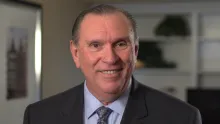
Randy D’Alessandro served as pastor for the United Church of God congregations in Chicago, Illinois, and Beloit, Wisconsin, from 2016-2021. Randy previously served in Raleigh, North Carolina (1984-1989); Cookeville, Tennessee (1989-1993); Parkersburg, West Virginia (1993-1997); Ann Arbor and Detroit, Michigan (1997-2016).
Randy first heard of the church when he was 15 years old and wanted to attend services immediately but was not allowed to by his parents. He quit the high school football and basketball teams in order to properly keep the Sabbath. From the time that Randy first learned of the Holy Days, he kept them at home until he was accepted to Ambassador College in Pasadena, California in 1970.
Randy and his wife, Mary, graduated from Ambassador College with BA degrees in Theology. Randy was ordained an elder in September 1979.
playlist
