


Robin S Webber
This transcript was generated by AI and may contain errors. It is provided to assist those who may not be able to listen to the message.
If you're going to pardon me, I'm going to go away, but I'm going to come back in a moment, okay? I'm watching your faces.
I'm going to write down four words, and if you'd like to join me, that's exactly what I'd like you to do. I was going to write down three words, but then out of Bill's first message, I'm going to add four words. They're not too long. There's not ten syllables in them. So, if you want to write, to the degree you want to write is to the degree, probably, that you really want to experience the best festivals yet that are coming up. So, I'll leave that to you. Don't look at anybody else. So, here we go. First word will be this. Focus. Thank you, Bill. We're going to build upon what you said. That's what this message is going to be about. The next word is going to be this. Information. Infor-mation. Okay, the third word is going to be inspiration. And the last word, if you're joining me, which I hope you are, will be this. This is what we're shooting for. This is pushing through, Bill, the tape. Transformation. Okay. See, that was God's voice saying, you better write. Okay? Please join me, if you would, as a congregation. Let's turn to the Word of God. Let's go to the second epistle of Peter. Second Peter. And join me, if you would, to anchor ourselves in Scripture, and where I'll be leading you in the course of this second message. This is Peter talking to individuals that have been in this way of life for perhaps multiple decades, to encourage them, as Bill brought to us today, to be able to have a focus and to push through the tape. Therefore, brethren, be even more diligent to make your call and election sure. For if you do these things, you will never stumble. For so an entrance will be supplied to you, abundantly into the everlasting kingdom of our Lord and our Savior, Jesus Christ. For this reason, I will not be negligent to remind you always of these things, though you know and are established in the present truth. Yes, I think it is right, as long as I am in this tent, to stir you up by reminding you, knowing that shortly I must put off my tent, just as our Lord Jesus Christ showed me. Moreover, I will be careful to ensure that you always have a reminder of these things after my decease. With this as a platform and a foundation to move towards this message, thus today I want to focus on a subject in which you are well familiar with.
Many of us have been a part of what we're going to be talking about for many, many years. But nonetheless, I am here to remind you and to hopefully expand upon what you already know and to enhance your understanding with a godly focus, especially with the upcoming fall festivals that are upon us. The fall holy days, which covenant people have observed down through the ages, that Jesus Christ himself observed, that the early apostles observed, the early church observed, were observed in the light, ultimately, as it came to being, in the light of Jesus' life, his death, his resurrection, his ascension, being exalted at the right hand of God, and then the promise of his return to this earth.
And as you and I understand it, that every human being is going to have an opportunity to come before the throne of grace, the throne of the Almighty God, and to be able to understand the truths of God, surrender themselves, and as the book of Philippians says, that every knee might bow. That's the incredible truth. And again, there are spring holy days and there are fall holy days. And all that I have mentioned are kind of spread out through both the spring festivals and the fall festivals.
And those fall festivals are now right around the corner. And a part of my encouragement, and why I want to spend this time with you today, is that they're all going to be coming right in rapid order, aren't they? And you and I are already thinking about that. We've got them marked on our calendar. But here is going to be my basic encouragement to each and every one of you. Are you with me? Here we go. That we experience, that we learn from, that we enjoy. That means to feel the joy of God through each and every one of these festivals, one at a time. Don't get the cart ahead of the ox. We're going to move through them, but move through each one.
I have a question for you. When very common parlance in Church of God language, we say, aren't you excited about the feast? Well, which feast are we talking about? What feast are we talking about? Say, are you ready for the feast? Now, normally, if I'm talking to the right audience, what feast are we talking about? Could somebody help me? This is the interactive portion. Go ahead. Yeah, Tabernacles. Excuse me. Is everything else chopped meat? Co-shirt, but chopped meat?
And we immediately leap over all of those. Oh yeah, we kind of go through them, but our whole focus is on the Feast of Tabernacles. We call it the Feast of Tabernacles. What about the Eighth Day Festival? If you want to have a transformative festival experience this year, take them each, one at a time. See, God's agreeing with me every time. I love it. Keep it going, okay? That's God saying, Amen, brother. Go! You're in L.A. We can have fun. But in all seriousness, if you want to do something different, don't get ahead of the game.
Don't put one tree ahead of the forest of God's great purposes that each of these holy days bring out, that Jesus Christ lived and died for and is resurrected for. Yes, God is the overall architect, but Christ is the centerpiece of all of these festivals. We want to do God the Father honor and we want to do Jesus Christ the honor. For a moment, as we move into this message, I'd like to just consider the word feast.
Feast. Because that's really... I'm going to crowd this bulletin board. Feast. If you wonder where I'm going, I'll just give you the title now and I'll repeat it when it says my SPS. It's simply this, Which Will It Be? That's a question for you. That's the title. Which will it be? God's feast or yours?
Which will it be? God's feast or yours? But with that thought of feast, we're going to do some biblical contrast. Contrast is the best way of allowing God to show us where He is going. Join me if you would for a moment in Leviticus 23. Leviticus 23, which gives us the plethora of the festival, starting with the weekly Sabbath, which is a weekly festival day. It's a feast. Leviticus 23. I'm picking up the thought if we could in verse 1.
The Lord spoke to Moses, saying, Speak to the children of Israel and say to them, The feast of the Lord, which you shall proclaim to be holy convocations and or, as you go to the Hebrew, a summons, a call to assembly.
Notice what God says. These are my feasts. They're not Moses' feasts. They're not even our feasts. They're the feasts of the eternal. They're the feasts of God. So we take a look at that and we understand that. These are thoughts that I'm sure have been shared with some of you when you're teenagers in a church coming up to the feast days.
We're understanding the importance of the festivals. We go through that. They're not Moses' feasts. They are God's feasts. They say, Yeah, they're not Moses. They're God's. So we've been coming and observing these festivals for 15, 20, 25, 30, 45, do I hear? 50 years. But what can happen, because we are still in this human framework, we can make God over into our image as to what a feast day is. Versus what God wants us to experience as He guides us and leads us by His Spirit. There are many people that have kept the feast over the years, including the covenant people of old. I'd like to just show you something to kind of wake you up here for a moment. Join me if you would in the book of Amos, one of the minor prophets. Let's go to Amos. And we're going to pick up the thought in chapter 5. If you cannot find Amos 5, it is on page 1060 in my Bible. Hosea, Joel, Amos, Obadiah, Jonah, Micah. Got it? We're all there together. Here we go. Amos 5 and verse 21. Now God is addressing this to covenant people. People that He called out of slavery, rescued them, was their deliverers, that I will be your God, you will be my people. And they said yes. And then gave them these wonderful days to remember them that they did not deliver themselves out of Egypt on their own. Neither did Moses. He was an instrument. He was a human. It was God. But notice what He says to the covenant people as they would come to before Him. I hate. I despise. Verse 21. Your feast days. Oh my. There's my feast. Now He's talking about your feast days. And I do not savor your sacred assemblies. Though you offer me burnt offering and your grain offerings. Seems like they're doing all the right thing. Those are kind of the information. That's kind of the instructions. If you look up here at the whiteboard. Seems as if they're doing everything right. They're going through the activity. They're going through the motions. But notice He says, I will not accept them. Neither will I regard your fattened peace offerings. Take away from me the noise of your songs. For I will not hear the melody of your stringed instruments. God's making a statement. God's making a statement here. Let's build that a little bit further. Join me if you would in Exodus 32 and verse 5. In Exodus 32 and verse 5. Picking up the thought, this is the very famous story about Aaron and developing and building up the golden calf. But notice what it says here in Exodus 32 and verse 5. So when Aaron saw it, he was left to, quote unquote, babysit Israel while Moses was up on the mountain. So when Aaron saw it, he built an altar before it and Aaron made a proclamation and said, notice this, a little bit like Jeroboam, what he did, Bill. He said, tomorrow is a feast to the Lord.
He says, tomorrow this is a fancy theological word for those of you who want a fancy theological word. This is called syncretism. This is like mixing colors and getting another color. Aaron, of all people, should have known that what he was doing and with the idolatry in pack was not a feast to the Lord. Just because somebody's talking about God, just because somebody shows up to something that is said to be of God, does not make it godly. So we take a look at all this. Again, because if we are not careful, even as people in this way of life, even in what we call this community, generally called the Church of God, if we are not careful, either as an organization, as a group, as a body, as a congregation, or as individuals, we can slowly and surely make God and his festivals over into our image and what we like and how we want to do it and what we want to experience, rather than what God intends by giving us these seven incredible steps regarding his salvation in the course of the year. Join me if you would in Deuteronomy 31 now. Deuteronomy 31.
Fifth book of the law. Deuteronomy 31.
In Deuteronomy 31, we're going to find that God Almighty offers us specific instructions and sets the tone and the expectations of why and what we do as the spiritual Israel of God.
In Deuteronomy 31, and God, excuse me, and Moses commanded them, saying, The end of every seven years at the appointed time in the year of release, at the feast of Tabernacles, when all of Israel comes to appear before the Lord your God, in the place which he chooses, you shall read the law before all of Israel in their hearing.
Gather the people together, men and women and little ones, and the stranger who is within your gate, that they may hear, and that they might learn to fear the Lord your God. And carefully observe all the words of this law and that their children, who have not known it, because Deuteronomy is being written 40 years after the initial Exodus, may hear and learn to fear the Lord your God as long as you live in the land which you cross the Jordan to possess. Now, I'm going to be taking some principles. This is about a specific feast, the Feast of Tabernacles, and it's also dealing also in part with every seven years that they would read the law.
And of course, back then the law was five books. That's another sermon, another aside, and somebody else will give that. But we're going to draw some principles out of that. Join me if you would. It's going to be very quick if you want to jot them down. And this is the road map to where we're going here over the next two to three weeks. Number one, first point, is that we are all to appear. Not just the males. This is a family thing. And it's also, if you don't have blood family, it is a spiritual family thing to all appear before God.
Number two, where He chooses, where He chooses. Very important. God is the deliverer. He continues to deliver us, and He continues to create that green pasture before us as that good shepherd. And He chooses where we are to worship Him. Number three, we are to carefully observe the Word of God. To carefully observe the Word of God.
And the Word of God at every festival is to be our anchor. Opening up the book. Opening up the revelation of God. We that are in the Church of God and in this assembly of believers, we are not here just to hear poetry. Not just to hear jokes that have nothing to do with services. We are here as a serious people, a joyful people, to learn about the love and the majesty and the intervention of God Almighty, not only in the world yet to come, but in our personal lives now.
Point number four. Point number four is this. And to pass it on to the next generation. It's kind of nice seeing a family thing here today during the hymn sing and to see both Bob up here and then his son coming up here. And being together. This is wonderful. All of us would rejoice in that if all of our families could be here together. But you can see how it's happening. We pass it on. We pass on the joy. We pass on the respect and the awe and the worship towards God.
And that's what these festivals are about. You've heard me say this many, many years. You might want to jot this down. You don't have to. But I'm here to remind you and to stir you up about the festivals coming. We are not on a vacation. We are on a vocation. We are a holy people keeping holy days towards a holy purpose towards a holy God. That's it. Fun is a byproduct of that. Having family time. Enjoying fellowship. But we're going to find out, first and foremost, in a few minutes where our fellowship is.
Join me if you would in Ephesians 5. In Ephesians 5. A principle that maybe you've never thought about concerning the upcoming fall festivals. Ephesians 5 and picking up the thought in verse 14. Therefore, he says, Awake, you who sleep. Of course, how can you go to sleep when God keeps on answering the sermon upstairs? You know what that brrrr? Arise from the dead and Christ will give you light. He'll stir us up by His word and by the messengers of His servants.
See then that you walk circumspectly, not as fools, but as the wise. Redeeming the time because the days are evil. Therefore, do not be unwise, but understand what the will of the Lord is. That's why I'm giving this message today. God willing by His words and by His Spirit to our dear friends here in Los Angeles. To redeem the time, the term redeem, which comes out of the Greek, is really speaking of actually about harvest.
And here we're coming up to the festivals that are in the fall harvest. Redeem was a term that it was basically that there is a certain time, either in the spring, but the spring harvest and or in the fall, there is a certain time that you have to be out in the field.
And if you are not out in the field, that crop will pass. The ripeness will come. You need to be there at that moment. I see some people from the Midwest nodding their head. For those of us like Frank and Val and Suzy and I, we're up in the Central Valley a lot.
You see the workers out there in the fields. They've got to be out there. They've got to redeem that time and or it will pass. And brethren, that's what I'm saying. We have a harvest. God wants us to harvest His love, His purpose, His relationship with us during these days, starting with the Feast of Trumpets, then the Day of Atonement, then the Feast of Tabernacles, then the Eighth Day, one by one, even as they're connected.
We don't want one to go by to the other unless we truly reap, reap that which is given to us. Very important. Therefore, I'm going to go back a second for a moment. Focus on what the title of this message is. Which will it be? God's Feast and or yours? Or let me put it this way. I'm a minister. I'm a pastor. I'm a festival coordinator. How much room am I making for God to work and mold and to shape me during these festivals? Either than just busy work, getting everybody else set for them. Will it be, in that sense, in which will it be? God's Feast or mine? Whose name will be on it? Feast by Feast. Will it be God Almighty? Will it be Jesus Christ as the centerpiece of His activity throughout the universe? Or will it be Robin Weber? I think it's a good question. Are you ready? Do you have your seat belts on? Air bags deployed. We're going to go a little bit further. We're going to get personal. I'm going to give you some points. Therefore, let's consider and let's ponder some of these things. Join me, if you would, to begin with by going to Psalm 100. Psalm 100.
You know, if you can never find the book of Psalms, just open up your Bible about halfway through. Eight times out of ten, you'll get it. Psalm 100. Let's take a look at this. Beautiful, beautiful Psalm. Make a joyful shout to the Lord. All of you, lands, serve the Lord with gladness. Come before His presence with singing.
Come before His presence.
It's not a bumper party with a bunch of our friends. We are coming before the very, very presence of Almighty God and His Christ. Know that the Lord, He is God.
It is He who made us and not we ourselves. We are His people and the sheep of His pasture. Enter into His gates with thanksgiving and into His courts with praise. Be thankful to Him and bless His name, for the Lord is good and His mercy is everlasting and His truth endures to all generations. It almost gives us our activity to do on any holy day, doesn't it, including the weekly Sabbath, that as we come, where to enter, where He's placed His name with thanksgiving, are you thankful today?
We are to bless His name. Have we done that today? We see that our job description as priests in training for the wonderful world tomorrow is right here. Allow me to take you to another Psalm, Psalm 122, just a few pages over, in Psalm 122. Beautiful, beautiful. I was glad, verse 1, when they said to me, Let us go into the house of the Lord, not my house, but in the presence, in the house of the Lord. And our feet have been standing within your gates, O Jerusalem. Let us go up to the house of the Lord.
This is a great joy. This is called one of the Psalms of Ascent. There were 15. And when you read the commentaries of the people that were coming from Bethlehem, or Nazareth, or wherever it was in between, that they were singing together in caravan, in a true pilgrimage, as they went up to Jerusalem, they would be singing this. They were anticipating. They were preparing that they were having the privilege of being God's beloved, chosen, elected people, a covenant people.
And they rejoiced. Oh, they were so glad. And then, then the Levitical servants of the temple would also be singing these Psalms, they're called the Psalms of Ascent, as they went up. There's 15, and as they went up the 15 steps up to the temple, the Levitical servants would be singing this. Can you imagine the stereophonic praise that was happening, coming and going, as they were coming up to keep the festivals? Jesus experienced this, as he would come up from Nazareth. He'd maybe be tagging along with his buddies, or his brothers, or his sisters. But the congregations, the pilgrimage, the group, the family, the village, all going up together to worship God.
Can I ask you a question? How cool is that? Because it wasn't about them. It was about what God had done for them. When we look at Psalm 122, there are three basic principles that come out of this. Allow me to share them. They're very short, if you want to write them. Number one, how happy and how anxious are we to go to the Feast of the Lord? Number two, are we not only physically, but spiritually, preparing to go where God has placed His name? When Moses approached the burning bush with the I.M.'s presence there, he was giving a little homework.
He said, Moses, take off your shoes. When Israel came up against the mountain, God told Moses, have them prepare, get them ready, have them get themselves ready. Do they know who they are approaching? Number three, and now that we are within the gates, as Psalm 122 brings out, what's our reasonable service when you're in the ocean side or bend or wherever you might be going? What is going to be your reasonable service once you get there? Once you get there, are you going to be about our Father's business?
Are you going to be about our vocation, or is it simply going to be a vacation with a little spiritual frosting? Maybe you've never experienced the feast that God wants you to experience. I've been observing the feast now for 56 years. The Lismans are here. They know that. Lee was the second teenager I think I ever met.
The first was his brother Ray. For those of you that knew my dad, my dad was talking to Ray. He said, Hey, kid, come over here. This is my boy. This is 1963, and you're going to be friends with him. These things keep on popping up with my dad now, as soon as they keep on going through all of this. But the Lismans and the Weber's have been friends for over 56 years. Their parents, their grandmother, was like my grandmother, Mrs. Lisman, for those of you that remember Mabel, Loma, their aunt. But the point being here, then, that are we ready? Or are we just going to do same old, same old?
You know, this thought that comes out of the Scriptures, Behold, I create. I create. See, God is still circumcising our hearts with hands that cannot be seen. And he says, Behold, I create a new thing. I'm about creating a new man. I'm about creating a new woman. I'm about creating a new community, a new way of being a human being and observing my festivals. Are you ready? Are you prepared? Or are we just going to fall into it? Are we just going to touch the tape? Or are we going to go through it the way that Jesus Christ would go through it?
Let's take some very basic points, then. Number one, I'm going to go right down the line real quickly. Some things that I want to share with you now. Because what happens here, I'm just looking. Okay, point number one. Simple. You've heard me say it before. Just like Peter said things before.
You have been called to be a first fruit. Did you know that? You have been called to be a fourth fruit, a fifth fruit, or a rotten fruit. You've been called to be a first fruit. There must be something about first fruits because you see the aspect of first fruit from the beginning of Genesis through the New Testament. You do not want to settle. God does not want us to settle for anything less than being a first fruit.
To have the ability, as it says in Revelation, to be in His presence as a part of His throne room. What part of that don't we like? Don't we get? So much so that Christ gave His life that we might be there with Him and with the Father. First fruits put first things first. First John. Join me if you wouldn't. The epistle thereof. First John.
First John 1.
Focus. Big word today, Bill. Focus. Brethren, focus. Here's our focus. First John 1. This is who we are appearing before that bids us to come to Him whose presence we enter. This is the ultimate fellowship. Are we going to have fellowship with our spouses or our children? See the Osterlies here with their daughter. Are we going to have fellowship with our children? Are we going to have fellowship with our grandchildren? Absolutely! But if you want that to be blessed, put first things first. This is the ultimate fellowship. That which we have seen, verse 3, and heard, we declare to you that also may have fellowship with us. Now notice this, please. And truly, our fellowship is with the Father and with His Son, Jesus Christ. And I'm telling you these things, John says, that your joy might be full.
As the body of Christ, as followers of Jesus, as children of the Father, as we approach Trumpets, Atonement, Feast of Tabernacles, 8th day, focus on your fellowship as you anticipate it, as you prepare for it, as you experience it. First things first. Our fellowship is with the Father. And when we do that, when we seek His righteousness, what does it say in Matthew 6? It says, and these things shall be added. And these things shall be added. But we seek that kingdom of God, which is a relationship, which is a way of traveling towards the destination, ultimately of eternity. That's where our thing... Join me if you would in John 15.
In John 15, the Gospel thereof. Let's pick up the thought if we could in verse 4. Abide in me, and I in you, as the branch cannot bear fruit of itself unless it abides, abides. Remains in that framework, in the vine. Neither can you unless you abide in me.
I am in the vine, you are the branches. He who abides in me puts first things first and realizes that as wherever we travel for the feast, our first and foremost time, devotion, sacrifice, eyes, and hearts lean towards the Father and towards the Son.
As we do that, everything else will also work out with the rest of his children as we come into contact with them.
I am the vine, you are the branches, and he who abides in me, I in him, bears much fruit.
Harvest fruit. I'm a simple person, so I'm just going to ask a simple question.
Are you ready to bear fruit to offer God during this festival season? Isn't that what it's about? To harvest? Are you ready individually to harvest fruit of God's Spirit in you and to give to others during this festival?
I want you to think about it. I want that to soak in. I'm looking forward to this. I'm getting galvanized. I'm getting excited about the feast.
I recognize that the best feast is never ever. The best feast is always yet. Because I am still being molded by God. That's the important part.
Point number two. Oh, stay with point number one. Putting first things first. Here's my question to you. These are the three words here.
If you haven't written them down, you may want to write them down afterwards. What are we going to the feast for? Are we just simply going for information?
I think most of you are informed about the feast days. 95% of you. Now, some of you are waking up for the first time, especially some of our teenagers, even though we have wonderful teenagers.
But I mean, you start hearing this more and more, and so you're kind of adding to your recipe list of how to be a first fruit in the making.
We've got... Most of us here have the information. That's not the issue, brethren. The second thing is... The point is inspiration.
But I'm not going to settle for that this feast, are you? Inspiration is kind of like making the balloon go up only to see the air come out.
You know, the hotter the flame, the quicker it burns out. And we will be inspired during the feast. I hope that, frankly, this message will inspire you and inspire me to move forward past that tape that Bill brought out.
But again, it's like the man that came down from heaven, but if it wasn't worked with, it just kind of dried up there in the Sinai Desert.
As Christians, as Jesus followers, as children of the Father, these are important information and inspiration.
You know, ancient Israel was inspired when God delivered them through the Red Sea, and they were a hooping and a hollerin' there with Miriam and the girls doing a dance and doing a jig.
But how long did that last?
No. This is what we're shooting for, brethren, right here.
This is the gold. This is why Jesus came to this earth and gave his life for us and his Father allowed it, that we might be transformed.
That we might be different as we go through these festivals.
That we will be different as we go through these festivals.
That we'll be a newer, new creation.
That those hands that cannot be seen, that are from above, will circumcise our hearts and mold and shape and guide us.
Because, again, the whole lesson of the Feast is simply this. The Feast of Trumpets is not only God intervening in the future, but he's intervening in our life now.
Sometimes he just took the macro picture, God's gonna intervene. Good thing!
But then, when he begins to touch us and intervene, whoa, whoa, whoa, whoa, no.
The Feast of Trumpets says there's a tension between what is happening now and in the future.
The future is gonna be on grander scale.
And we normally have no problems when, like on the freeway here, when you see an officer pull somebody else over.
But when you see red, and I'm not talking like the bull, but through your rear, what? Yeah. Oh, it's my turn. I'm being intervened in. God's not only dealing with the world right now. That's gonna be on his schedule.
He's intervening with us that we believe, that we believe, and that we not only hear, but in the Jewish sense, to obey. To hear is to obey.
Transformation. Now, we're gonna stop here for a second.
I just want you to think about it. I know some of you already pack in your suitcases for the feast.
What have you been thinking about as we're coming up to Oceanside and Bend? Where you at?
See, my role as a shepherd is to, following the Great Shepherd, is to lead you to greener pasture.
To allow you to come to the living waters of God that he wants you and me to experience.
Are you just gonna settle for information?
And we will be inspired. I was inspired just listening to the bill today and the beautiful music.
But knowledge is of no use and inspiration is of no use unless it changes us.
The T word here is the big word. See, we're being transformed.
God is dealing with this hunk of junk, this dust man, who he's put his spirit in and he's put his spirit in you.
To give him glory, to give him honor, to believe in him in the exodus that he's calling us out of this world.
And he's asking us to do something very, very special.
Point number two, prepare to learn. Prepare to learn.
Matthew 7. Join me if you would there for a moment. In Matthew 7. And let's pick up the thought if we could in verse 7. Ask, and it will be given to you. Seek, and you will find.
Knock, and it will be opened to you. For everyone who asks receives, and he who seeks finds, and to him who knocks, it will be opened.
I'm just reading the scriptures, dear friends. Are we asking God to do a powerful work in our lives as we go through these festivals?
Are we seeking his will, or are we just looking at the clock?
Do, are we sensitive by his spirit, to hear his knocking by his spirit? Maybe in the middle of the night a thought comes to you.
How often were some of the great thoughts in the Bible, did they come in the middle of the night?
How sensitive are we as we come to these festivals?
Psalm 51.
David's incredible prayer. I'm just going to read a portion of it.
Verse 10. Create in me a clean heart, O God, and renew.
Renew, that means something kind of went out. That's why in that sense God does give us the festivals. They are spark plugs.
They bring us back into alignment with his purposes, with his plan, with his love, with his grace, with a society of hope, with a leader who leads that we can respect and look up to, who says that he will never leave us nor forsake us, who says we're on this exodus out of this world and out of our own lives.
And renew with me a steadfast spirit within me, and do not cast me away from your presence, and do not take your Holy Spirit from me.
Notice this, verse 12. Restore to me the joy of your salvation, and uphold me by your generous spirit, that I will teach transgressors your ways, and sinners shall be converted to you.
David prayed that he might become steadfast again. He prayed that God's joy might be restored to him.
Can we talk? And those that are listening from around this nation. A lot of us have been on this pilgrimage for a long, long time.
We started it with great sacrifice, our families, Susan's, my parents.
And you came out of this world and joined God's exits and joined this pilgrimage towards the wonderful world tomorrow, towards the kingdom of God, towards eternity.
And either people have, or organizations have, or you have had your vision dimmed, that you were called for a purpose.
And so we're just like Hammy the Hamster. We're putting in time. We're putting in motion. But we're not bearing fruit.
I'm here today on the authority of Jesus Christ to talk to myself and to talk to you that God the Father did not send his Son, Jesus Christ, the Word, to this earth for us to falter, but to finish the race.
And just like he finished the race, that he set his eyes before him, moved beyond the people.
Sometimes we wrestle with God, don't we? Just like Jacob.
But then our biggest wrestling is down here with people, like Moses. This is it? This is what you put me into? Is there anybody else up there? Hello?
I was waiting for that noise to come down. It didn't come.
Brethren, I believe that we that are in the body of Christ, this portion of the body of Christ, this instrument, this congregation, our hearts, we need a revival.
We need a steadfastness beyond where we are right now. We need some of us to be restored to the joy of our salvation that God has given us.
Restored to not all the little details that we pondered over the years and sometimes put in our booklets, but the great overarching themes of Scripture, of the revelation of God, that Jesus is coming back to this earth as King of kings and Lord of lords.
And that God is so great and so magnanimous that he is going to extend salvation. Not a chance, but an opportunity in his time and in his way to every human being that is made in his image and likeness.
They're not going to an ever-burning hell. They are being invited to have a relationship with God Almighty.
Wow! That's Hebrew for wow!
I'm here to stir you up, brethren. I've never been called just to entertain people. I'm sorry, I'm not funny, I'm German. You can be anointed for that.
But I've been amongst you now for over 50 years. I've been a pastor to many of our 45 years.
Either I'm doing something right or God keeps me here until I get it right with all of you. And you've been patient with me.
But brethren, the feasts are upon us. We are to be stirred up. We are brought into remembrance what we are about. The big question as we ask God and pray that he might teach us, that we might learn, the big question here it is, are we hearing what we want to hear?
And are we going to hear what God wants us to hear?
Are we going to be opening up our scriptures when a minister of God or the speaker, whoever it is, this Bible, brethren, is so holy. It is so incredible.
This Bible is the divine Word of God. And sometimes as a speaker we can mutilate it. Okay? We don't mean to, just humanly. We can not do it justice.
But it's the revelation of God.
You know, when you look at the New Testament and a lot of Bibles, it's written in what? Red.
Now if you only have a black Bible, that's okay. But the red Bible.
But that also reminds me that that New Testament and being under the New Covenant is also because of the blood of Jesus Christ.
Who was the Word, who inspired this Word to the people of old, the prophets of old, the covenant of people of old, that this is God's holy Word.
And when we come to church, when we go to the feast, we bring our Bibles.
When a minister mentions a verse, open your Bible.
The Bible is the can opener to your heart.
When I see people and they don't open up their Bible, I just presume that they're here. They've got all the information that they need.
They just thought they were coming for information. They don't want to be inspired, and they certainly don't want to be transformed.
This Word of God that we've been reading through today, dear brethren, is made possible by the death of Jesus Christ, by the pleasure of God Almighty, and by men and women that died.
They died that we might be able to have this Word in our common tongue and know the wonderful things of God.
When we don't open our Bible in church, we're not ready to grow.
We're dishonoring God. We're dishonoring the memory of people like a Tyndale who was strangled at the stake before he got burned.
That we might have this in our English tongue. Are you with me?
Or a Martin Luther who translated for his people in German later on.
This is a gold mine.
Sometimes it's like the old story, the guy that's up on the roof during the flood.
And the canoe comes by and says, I'm going to be okay.
And then what happens next? The motorboat comes, no, it's cool. I'm all right. I'll just wait.
Then the helicopter comes in, right? And, no, no, we're fine.
And then later on he complains to God, why didn't you send anybody?
This word is the divine word sent from heaven to weed below that are of the kingdom of heaven, are of the kingdom of God.
And we need to give it total respect.
Are we ready to learn? Are we ready to have fertile ears?
I could go on for an hour, but I don't want to press your conversion.
I'm just going to wrap it up by just going to one verse.
Join me if you would in Revelation 3, verse 20.
You will be so happy that I just skipped over three pages of notes.
But I've been doing this for a while.
This is at the conclusion of Revelation 2 and Revelation 3.
Sometimes you want to part in parcel, try to figure out who's who.
I personally believe that this was written to the church of God at large because it did go through the church of God at large.
If you want to figure out what century, what decade are they, I'll leave that to you.
I do know that God knows, so I just leave it with him.
But I do know that this message was given to the entire church.
It was read to all of the churches.
And at the very end, it's the best God saves the best and puts the cherry on the top.
Where it says this, verse 20, Behold, I stand at the door and knock.
If anyone, what's your name? As Doc Z used to say, what's your name?
If anyone hears my voice.
And that voice is not necessarily going to be in the wind. It's not going to be in the fire. It's not going to be in the earthquake.
It is going to be because you are the temple of God.
It is going to come from within because the spirit of the Father and the spirit of the Son is in us.
But we've got to get all this noise out of the way out here so that we can hear him how he wants us to experience these festivals coming.
If anyone hears my voice and opens the door, I will come into him. That's a promise. You can take that to the bank of your heart and live on that.
That is a promise. That is cause and effect.
If we knock and we ask God to give us that steadfast spirit, if we ask God to restore the joy of his salvation in us, he's going to hear that. We're opening up. We're saying, God, we need help, and we can come to you through the high priest in heaven, the apostle in heaven, Jesus to Christ, and continue to develop that relationship that you've called us to, the great theme of the Bible, that I will be your God, and you will be my people. I want to walk. I want to talk amongst you.
And I will come into him, and I will dine with him, dine with him, and he with me.
As we come up to the fall festivals, dear brethren, God wants to feast with us. He wants to dine with us.
And the feast is, again, part and parcel of experiencing the good things of God.
Others will share Deuteronomy 14 with you, that we are to have an abundant experience and in type, remembering that it comes from God because of the slavery that ancient Israel was in and the spiritual slavery that we were in, and now that we can have a taste of the good life. We can have some joy. We can have some fun. We can have some fellowship at the feast.
But we must remember, as we go to different restaurants, that maybe we could not afford during the rest of the year.
And God wants you to be able to do that. Absolutely. I'm not a party pooper. Looking forward to that, Susan and I ourselves doing some things.
But first and foremost, I draw you back to the words of Jesus the Christ.
Man shall not live by bread alone, but by every word that proceeds from the mouth of God.
And Jesus himself, in those wonderful words out of the bayat, said, blessed are those who hunger and thirst after righteousness.
And it says, for they shall be filled.
Let us then, as prepared for trumpets, move through atonement, come up to the Feast of Tabernacles, and experience the eternal bliss of what the eighth day means.
Let us go up to the mountain of the Lord. Let us be filled with his Spirit.
And let us rejoice, and as Paul would say, and rejoice again.
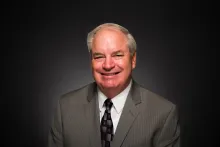
Robin Webber was born in Chicago, Illinois, in 1951, but has lived most of his life in California. He has been a part of the Church of God community since 1963. He attended Ambassador College in Pasadena from 1969-1973. He majored in theology and history.
Mr. Webber's interest remains in the study of history, socio-economics and literature. Over the years, he has offered his services to museums as a docent to share his enthusiasm and passions regarding these areas of expertise.
When time permits, he loves to go mountain biking on nearby ranch land and meet his wife as she hikes toward him.
