
Don Ward
This transcript was generated by AI and may contain errors. It is provided to assist those who may not be able to listen to the message.
The title today, Who Do You Listen To? Who Do You Listen To? Men or God? Who do you listen to? Men or God? Over the past several weeks, I've been made keenly aware of three contrasting views concerning making it into the kingdom of God. I was listening to the radio one Sunday morning, probably several months ago now, at a well-known Church of God personality, especially in the past, was making what he thought would be a highly appealing intellectual and emotional argument on what is important in the salvation process. He stated that doctrine was not important, but we should come to know God. Well, obviously, we should come to know God, but is doctrine important? To me, here's a person who's lost in his own intelligence, but people who think they are hearing something really profound can be lost in the intelligence of another person if they don't examine for themselves the truth of the matter. One of the things we have been exhorted to do historically in the Church of God is to prove for yourself. Go get your Bible, examine for yourself whether or not these things are true.
So what or should I get upset if someone says the earth is flat? I know that the earth is spherical based on a mountain of evidence, no pun intended.
And we have pictures from outer space, and it goes on and on with regard to evidence, but yet there are the flat earth society does exist. But if a person doesn't know when they don't know what they don't know, then they are right for deception, and those they try to teach are also right for deception. The old Arab proverb goes like this. He who knows and knows that he knows I want to start it over and lead up to that. The old Arab proverb goes like that, like this. He who knows and knows that he knows not is a child teach him. He who knows that he knows not is a child teach him. He that knows not and knows not that he knows not is a fool shun him. And he who knows and knows that he knows is wise follow him. Paul admonished the Corinthians in 1 Corinthians 11 verse 1 to follow him as he followed Christ. Now, how would one know whether or not Paul was following Christ? Could they just take Paul's word for it, or would they have to search the scriptures and know for themselves whether these things were true? Of course, in Paul's day, it was very difficult to prove whether or not things were true from the scriptures because basically the scriptures existed in the synagogues and might be a few fragments here or there. It was basically done through letters. You look at Colossians chapter 4. You'll see an example of this in Colossians chapter 4. Of course, we often talk about the seven letters to the seven churches in Asia Minor as recorded in Revelation 2 and 3. In Colossians chapter 4, Paul writing to them, he writes, verse 14. This is Colossians 4. Luke, the beloved physician and Demas, greet you, salute the brethren which are in Laodicea and Nymphus and the church which is in his house. Of course, they didn't have church buildings and much like the church of God is operated in the 20th century, now into the 21st century, meeting in various places wherever they could. So blessed to have this facility, and we all know that.
And verse 16, and when this epistle is read among you, cause that it be read also in the church of the Laodiceans and that you likewise read the epistle from Laodicea. Of course, many of them were able to, from time to time, read the Old Testament, as in the synagogues, the scrolls there, but to a large degree, the communication was done through letters. So when I hear the person on the radio make this statement, my question immediately was, can you come to know God apart from doctrine? Paul writes in Romans, if you want to turn back there on page 2 to Romans 10 and verse 4, Romans 10 and verse 4. As you're turning there, I'll also include John 16, verse 8, which says, when the comforter is come, which is the Holy Spirit, it will convict the world of sin, righteousness, and judgment. The Holy Spirit works in conjunction with the Word of God, as we see here in Romans 10 and 14. How then shall they call on him, in whom they have not believed? And how shall they believe in him, of whom they have not heard? And how shall they hear without a preacher? So the doctrine, the Word, there are two convicting agents. I say over and over again. I say it in council meetings. I say it almost every chance I get. The two convicting agents, the Spirit of God and the Word of God. So how shall they hear without a preacher? How shall he preach, except he be sent? And that's one of the main reasons why God raised up the church. Paul goes on to say in Romans 10 and 17, you look down, verse 17, so then faith comes by hearing and hearing by the Word of God. Faith comes by hearing and hearing by the Word of God. If you want faith, you have to read the Bible. Now with the Bible, the Holy Spirit and the Word convict you and lay this thing on your mind, but you have to respond to it. And if you respond to it, see, faith is a gift of the Spirit, and it's also a fruit of the Spirit. So it's like a reciprocal. God initiates the process and lays it on your heart and mind, and then the challenge is for you to respond to it. If you respond to it, you can begin to act in faith. Look at 2 Timothy 3, verse 16. Now remember the title, Who Do You Listen To, God or Man? Who do you listen to? And can you really develop a relationship with God apart from the Spirit of God, the Word of God, and the teaching that is in the Word of God? So we're in 2 Timothy 3, verse 16. All Scripture is given by inspiration of God and is profitable for doctrine, that is, the teaching, the literal meaning, for reproof, for correction, and instruction in righteousness, that the man of God may be perfect, thoroughly furnished, unto all good works. So the Word of God does all of these things. It's profitable for doctrine, the teaching. It's profitable for reproof, correction, instruction in righteousness, that we may be furnished in good works. So we'll know what the will of God is, what to do.
So it's not surprising that Paul continues his exhortation in 2 Timothy chapter 4. There should be no chapter break here. So he instructs Timothy, I charge you therefore before God and the Lord Jesus Christ, who shall judge the living and the dead at his appearing in his kingdom. 1. Preach the Word 2. Your Word is Truth 3. Preach the Word 4. Be instant in season, out of season, reprove, rebuke, 5. Exhort with all long-suffering and doctrine, the teaching. 6. For the time will come when they will not endure sound doctrine, but after their own lust. 7. Shall they heap to themselves teachers having itching ears? 8. And they shall turn away their ears from the truth, and shall be turned unto fables. 9. But watch you in all things, endure afflictions through the work of an evangelist, make foolproof of your ministry. So it is clear that preaching and teaching should revolve around sound doctrine. 10. But some have itching ears, some have heaped to themselves teachers who teach fables, or who teach things maybe that we would say that's on the fringe of things that are not really the core teachings and teaching things that they really don't understand or have knowledge of in the way that they should. Now, why do people have itching ears? To some degree, it's because they assume that they have already mastered the basics. So we're going to go out here in the branches, we're going to go out here in the twigs, we're going to go in out into the pseudonosticism. 11. That is, we have special knowledge, when in fact they are babes and in need of milk themselves. Note the words of Isaiah the prophet in Isaiah 28 verse 9. Isaiah 28 and verse 9. In Isaiah 28 and 9, 9. Whom shall he teach knowledge?
Very often the people who spend a lot of time trying to teach other people things that are not usually taught or may not even be a part of the teaching of the church are those who are having difficulty in their own lives, usually not doing what they know to do. I've said for years the greatest challenge in the church that I know about is to close the gap between what we know and what we do. We have lots of knowledge. And of course, Paul writes in 1 Corinthians 8 that knowledge puffs up, but charity edifies, builds up. So verse 9. Whom shall he teach knowledge? Whom shall he make to understand doctrine, the teaching? Them that are weaned from the milk and drawn from the breast.
Paul admonishes Timothy in verse Timothy 3. He says, lay hands on no man suddenly. If you don't have background and knowledge with regard to how we got to where we are, then why would you ever set yourself up as a teacher?
As we'll read a little bit later about that, but continuing with whom shall he teach knowledge? Look at Hebrews 5.11. Hebrews 5.11, and continuing there, Hebrews chapter 5 and verse 11.
In Hebrews 5.11, of whom we have many things to say and hard to be uttered, speaking of Melchizedek, saying, you are dull of hearing. It's not hearing in the sense that the words don't get through. They don't need hearing aids, per se. They need the spirit of understanding.
For when the time you ought to be teachers, you have need that one teach you again, which be the first principles of the oracles of God, and are become such as have need of milk and not of strong meat. For everyone that needs milk is unskillful in the word of righteousness, for he is a babe. But strong meat belongs to them that are of full age, that are going on to maturity and on to perfection, even those who by reason of use. In other words, they are already doing what they are convicted of, what they know to do. Who by reason of use have their senses exercised to discern both good and evil. They're not still hung up on the little do's and don'ts. They are doing the things that they've been convicted of, and thus not even a concern anymore. They're going on to perfection. In the next two verses in chapter 6, Paul exhorts them, therefore leaving the principles of doctrine of Christ, let us go on to perfection, not laying again the foundation of repentance from dead works, of faith toward God, of the doctrine of baptisms, of laying on of hands, and of resurrection of the dead, and of eternal judgment. And this will we do if God permit. And so, here we are. So many of us have been in the church 20 years, 30 years, 40 years, and some over 50, and some perhaps a little over 60 years in the church. They have background. Before a person appoints himself or herself as a teacher, he or she had better weigh the consequences. You look at Hebrews 5 at the top, we just read. I'm going to read the rest of this verse I left off there. Strong meat belongs to them that are of full age, even those who by reason of use have their senses exercised to discern both good and evil. Now look at the first verse of this chapter, Hebrews 5.1, For every high priest taken from among men is ordained for men and things pertaining to God, that he may offer gifts and sacrifices for sins, who can have compassion on the ignorant and on them that are out of the way, for that he himself also is composed with infirmity. And somehow people build some kind of barrier wall between themselves and the ministry oftentimes, thinking that because he gets up and pontificates and seems like he, you know, is doing everything, and is a great struggle for all of us, and all of us have infirmity. All of us have weaknesses, and we all well know that.
In verse 3, And by reason hereof he ought as for the people so also for himself to offer for sins. Of course, that's the priesthood, I know the Levitical priesthood. And of course, now we offer up spiritual sacrifices, and prayer is one of the main spiritual sacrifices that we offer up. And no man takes his honor unto himself, but he that is called of God, as was Aaron. And Melchizedek was given that office by God himself, verse 5, so also Christ glorified not himself to be made in high priests, but that he said unto him, You art my son, this day have I, Gennao, O you, begotten you. And he said also in another place, you are to priests forever after the order of Melchizedek. Now look at James chapter 3, James chapter 3 and verse 1. We've already mentioned this, and once again, the title, who are you going to listen to? Are you going to listen to God or to man?
In James chapter 3, verse 1, My brethren, be not many masters, knowing that we shall receive the greater condemnation, the greater judgment. For in many things we offend all, if any man offend not in word, the same is a perfect man, and able also to bridle the whole body. Behold, we put bits in horses' mouths that they may obey us, and we turn about their whole body. Behold also the ships, which though they be so great, and are driven by fierce wind, yet are they turned about with a very small helm, whithersoever the governor wishes it. Even so, the tongue is a little member, and both great things. Behold, how great a matter a little fire kindles. So the warning is there. No man takes this honor to himself, and those that do, shall receive the greater condemnation. Satan is one of the most intelligent beings in the universe. You know, he may rank, of course, God as one and Jesus Christ, too, and then you go to the three archangels, two of whom remain faithful, Gabriel and Michael, and then Lucifer, who rebelled, according to Isaiah 14. And so, it's no question he's one of the most intelligent beings in the universe. He talks about in Ezekiel 28, that because he was puffed out with his beauty, his wisdom, that he thought he should be number one. So, being one of the most intelligent beings in the universe, he has deceived many millions of good men and women. Good in the sense of they're not out to do evil, per se, but they just fall victim. Satan launched a frontal attack, a frontal attack. Satan launched a frontal attack on the Church of God, beginning in the 80s, especially. Of course, he's always there to attack. With blatant heresy and was able to wreak spiritual havoc on the lives of thousands, Magus blatantly says, okay, the law of God is done away with. When there are so many scriptures in the Bible, to the contrary, that how can anyone possibly believe that law? Psalm 19, the law of God is perfect, converting the soul. Romans 7, the law of God is spiritual. The law of God is good. It's eternal. It's just holy. You could go on and on with the various positive things that could be said about the law of God.
If he can shipwreck thousands with a blatant frontal attack, what can he do through subtlety and deceit?
Not all that long ago, it's been several months now, I talked about the great deceit that is coming. Matthew 24 says that if it were possible, the very elect would be deceived. That's how great the deception is that's coming on the peoples of the world. So a little compromise here, and almost a little compromise there, almost imperceptibly, Satan weakens the spiritual power of a person, and for that matter can weaken the spiritual power of an organization. The Holy Spirit is the essence of God. Through it, God performs works of power. But if we quench the power of the Holy Spirit, we become spiritually weak. It's obvious. The Holy Spirit conforms to the laws of biology. If you overload your bicep, it's going to increase in strength and girth.
If you don't, if you put it in a cast, it's going to atrophy. And so it is with the Spirit of God, even though it is a spiritual thing, it conforms to the laws of biology, that is, use and disuse. Use it or lose it, as the saying goes. As we've already noted, the Spirit of God and the Word of God are the principal convicting agents and movers in the lives of humans, but it can be quenched. That's why we're exhorted time after time in the Bible today if you would hear His Word harden out your heart. Today, if you would hear His Word harden out your heart.
In each of the messages to the seven churches, how does it close? How does it close? It says, He that hath an ear, let him hear what the Spirit says to the churches. So many people confuse the spokesman with the message. Regardless of the spokesman, it is the Word of God we should do well to heed. When this speaker on the radio that I referenced earlier was going through his pseudo-intellectual arguments concerning what he viewed as most important, he quoted no Scripture. He just wallowed in the wash of human reasoning. And human reasoning, apart from the Word of God, when you're talking about spiritual things, is one of the great enemies of faith. And one of the greatest weaknesses of the nominal Christian professing world is that they do not understand the great questions of life. Now, they admit they would say God exists. But who is God? Well, they may say He is our Creator. He is a Father. What is God? Well, John 4.24 says He is Spirit. Then what is His purpose? Well, His purpose is to bring sons and daughters to glory in His family as Spirit beings on the God plane, inheritors of God, and joint heirs of Jesus Christ. But they would say, oh, you're either going to heaven or going to hell and burn forever, and thus that's the corollary to that, not understanding who man is, made in the image of God with faculties akin to God, what is man made of the dust of the ground, but not having that essence of God. He is physical and subject to sin and death. They don't understand that. It's either, well, God is here through Christ to save the world, give your heart to the Lord tonight so you won't go to die in your sins, and sin is not all that often mentioned, and so that you won't burn in hell forever. On the other hand, if you give your heart to the Lord, you can spend eternity in heaven. This man I heard on the radio held many high offices in the past in the Church of God through the years. The people of Jesus' day attacked the messenger and denied the message. Lots of people do that today, and as long as there's breath in me and opportunity, I will strive to do what the Apostle Paul says that he did. Let's go to Acts 20 and see what the Apostle Paul says here. Know the Apostle Paul, in addition to all the physical trials and troubles that he experienced, he experienced great criticism and persecution among the brethren in the Church, and also the Jews being run out of several towns, cities from time to time. In Acts 20, verse 27, For I am not shunned to declare unto you all the counsel of God. I mean, you can't just pick and choose here and there what you want to hear or what agrees with you. You have to put it line upon line, precept upon precept, here a little, there a little. Put it all together. Take heed therefore unto yourselves, and to all the flock over the which the Holy Spirit that made you overseer, speaking to the ministry, to feed the flock of God which he hath purchased with his own blood. For I know this, that after my departing shall grievous wolves enter in among you, not sparing the flock. Also of your own self shall men arise, speaking perverse things, to draw away disciples after them. Therefore, watch and remember that by the space of three years I cease not to warn everyone day and night with tears. You know, I have in one case pastored one church ten years.
And you just wonder whether people get it. And who do you listen to, God or man?
Verse 35, I've showed you all things how that so laboring you ought to support the weak to remember the words of the Lord Jesus, how he said, it is more blessed to give than to receive. And when he had thus spoken, he kneeled down and prayed with them all, and they all wept sore and fell on Paul's neck and kissed him, sorrowing most of all for the words which he spoke, that they should see his face no more, and they accompanied him unto the ship. But sadly, they didn't all remain faithful.
Even this scripture I read earlier about Demas in Colossians in 2 Timothy chapter 4, he's one of the ones that says, Titus and Demas have forsaken me. The son of another well-known personality in the church in the past, he wrote a book a few years ago about preserving the legacy of Mr. Herbert Armstrong. In the advertisement that he presented to the public when the book was introduced, he writes an open letter to the scattered brethren of the Church of God. The essence of the letter is that he and his father are the ones who have been faithful to the teachings of the past, and they're the ones that are learning new truth, and you need to be affiliated with that organization that is really doing the work. One must ask, what work? Whose work? Then another person was preaching that you have a better chance of making it in the kingdom of God if you're affiliated with their organization. So what do you mean a better chance the door to salvation is not based on chance, it is not by chance that you sit here today. If you look at 1 Peter chapter 1, see, God called you, and we can read James as well, of his own will beguet he with the word of truth. If you look at 1 Peter chapter 1 verse 1, Peter, an apostle of Jesus Christ through the strangers scattered throughout Pontus, Galatia, Cappadocia, Asia, Bithynia, elect according to the foreknowledge of God the Father through the sanctification of the Spirit unto obedience and sprinkling of the blood of Jesus Christ, grace unto you, and peace be multiplied. You have been drafted into God's great spiritual army, and it is through the Spirit of grace. We talked about the Spirit of grace recently, and do you do despite to the Spirit of grace. When you look at James chapter 1 verse 17, every good gift and every perfect gift is from above and comes down from the Father of lights with whom is no veribilis, neither shadow of turning of his own will beguet he you with the word of truth that we should be a kind of firstfruits of his creatures or creation. Here's what Christ states. Let's go to Matthew 17 verse 12. You see the gate, the road, the path, however you want to phrase it, to eternal life is not being found by everybody. And if you have had the scales lifted off your eyes and you have been called into God's marvelous light, it is through the Spirit of grace, and it's no accident, according to what I read from 1 Peter 1-2, that you are here. In Matthew chapter 7 and verse 12, Matthew 7, 12, Therefore all things whatsoever that men should do unto you, do you even so to them, for this is the law and the prophets. Enter you in at the straight gate, for wide is the gate, and broad is the way that leads to destruction, and many there be which go in there at, because straight is the gate, and narrow is the way that leads unto life, and few there be that find it. Beware of false prophets which come to you in sheep's clothing, but inwardly they are ravening wolves.
You shall know them by their fruits. Do men gather grapes of thorns or figs or thistles? Even so every good tree brings forth good fruit, but a corrupt tree brings forth evil fruit. Now you look at John chapter 10 and you'll see further how it is that you sit here and I stand here today. It's surely not because of any goodness in the physical or prior spiritual sense that we are here or that I'm here or any of us are here. You look at John chapter 10 and John chapter 10.
Barely I say unto you, he that enters not by the door into the sheepfold, but climbs up some other way, the same is a thief and a robber. Look at verse 7. Then said Jesus unto them, barely, barely I say unto you, I am the door of the sheep, all that enter before me are thieves and robbers, but the sheep did not hear them. I am the door by me. If any man enter in, he shall be saved and should go in and out and find pasture. The thief comes not but for to steal and to kill and to destroy. I am come that they might have life and that they might have it more abundantly. I am the good shepherd. The good shepherd gives his life for the sheep. But he that is in hireling and not of the shepherd, who's on the sheep or not, sees the wolf coming and leaves the sheep and flees and the wolf catches them and scatters the sheep. The hireling flees because he is in hireling and cares not for the sheep. I am the good shepherd and know my sheep and am known of mine. And one of the main responsibilities of a shepherd is, in the spiritual sense, is to declare the whole counsel of God, as Paul said he had done in Acts 10 verse 27. Now look at verse 29. Look at verse 29.
My father which gave me is greater than all and no man is able to pluck them out of my father's hand. But you, you know, you have that admonition in Revelation chapter 3, let no man take your crown.
Most people's crowns are taken by themselves. Maybe by listening to another man, what he might say, or not say, mainly what he says. So if we depend on men for salvation, we're going to be sorely disappointed and fail miserably. The contrast between the first person I heard on the radio and the last two is stark by comparison. The first person is just saying, come to know God, have a relationship with him. Don't worry about doctrine. Well, you can't come, as we have seen, unless the word is preached.
We must never let this happen to us. The pearl of great price is of the spirit of grace, and to entreat it as profane will result in ending up in the lake of fire.
The other two are saying individually, in their own way, you really need to be affiliated with us if you want to be in the kingdom of God. What is inherent within the statements? If you want to be in the kingdom of God, you need to be with us. Right off, you could conclude that they're saying that they are more spiritual than the other groups. There is definitely an air of spiritual superiority. They, in effect, are saying, just look at what we've accomplished and how we understand more than the rest of these spiritually weak Laodiceans. Also inherent with such an attitude is the notion that by changing an organizational affiliation, you will come under their umbrella and thus be more spiritual. You know, if I could move from this position over that position and by just doing that, it would change my mind and heart. By all means, let's step over there. But obviously, and you know that's not the case, there may come a time for truth's sake one might have to make a move. But the notion that by merely changing church affiliations will change a person's mind and heart is blatantly false, and we all know it. But why do some fall for it? Furthermore, inherent in such preaching and advertising is that they are personally spiritually superior. It is Phariseeism all over again. For example, the Luke 18, the Pharisee and the publican went up in the temple to pray. The Pharisee said, I thank God I'm not like these people. Oh, no, I am righteous. I give all my tithes. I help the poor. I fast twice in the week.
So once again, a word of caution. Who you associate with, fellowship with, affiliate with, will invariably shape your attitude. Birds of a feather flock together. We've heard it all of our lives. If you are affiliated with a minister or organization that waters down the truth of God, you're apt to find yourselves compromising on what you believe. Thus, it is true that who you affiliate with will have a strong influence on your spiritual stability and growth if you follow their lead. But that's not always the case. That is not always the case. You know, one of the things that happened there in 1st Samuel 8 when the elders came to Samuel and said, well, your sons, you've made them judges over Israel, and they are corrupt. And they're not walking in your steps. They're not administering things correctly, not administering justice. So give us a key, like the other nations have. So Samuel took the matter to God, and God said, Samuel, they've not rejected you, but they rejected me, that I should not reign over them.
You know, in the days of Elijah, after his big confrontation there with the priest of Baal, he got word that Jezebel was apt to kill him, and so he fled for his life. And he came to the point, one point, and he said, you know, I alone, I'm only one left that's faithful. And God says, no, I have reserved unto myself seven thousand that have not bowed their knee to Baal. In the days of Daniel, Daniel went to graduate school, as it were, in Babylon, and he was skilled in all the knowledge of the Babylonians, and yet remained faithful.
Of course, there may come a time in which, when heresy hits, as it hit in the worldwide church of God, that you have to make a move. Now, some people said, oh, this is where God called me. It's what it is. Where I'm going to stay. You know, at one point, God allowed the tabernacle to be pitched at Shiloh. And a lot of people said, well, God never destroyed that. That's where he placed his presence. But he did destroy it, and he chose Zion and the city of David. You can read that in Psalm 78. So, once again, where you affiliate will have a strong influence on you if you let it. But if there are all those examples, I just cite it. Now, what if the worldwide church of God leadership was still holding together and had not departed from the truth and the faith?
Wasn't the battleground the truth? Somewhere along 19... it's either 19... I think it's early 1988, I was serving at that time Vice Chancellor of both campuses. And I gave a Bible study in the auditorium in Pasadena. The title was The Last Battleground. What will be the last final battleground? And it is the truth. At that time, of course, I was in one sense defending those that were there because there had been some who had departed, even ministers. The final battleground has to do with the truth, with the doctrine. So, what if, ironically, the very people that were many sitting there led within a year or two, came out with the heresies that caused the church to fragment and wind up to a large degree where it is now? Now, some people don't want to face the reality. Some people don't want to hear about or talk about it. Just speak to us smooth things. We don't want to hear anything about the past. Those who don't understand the past oftentimes repeat the sad errors of the past.
So, wasn't it the battleground? The reason why we're here in the United Church of God? Would we have all the various splinter groups that we have now if the leadership had remained faithful to the truth of God? However, would the people be any more spiritual and mature if such a structure and organization had been allowed to continue? There were a lot of people just sitting there, lamps going out, and even though we thought we were really doing great things with our collective efforts and our large income, were we really converted? Were we really spiritually mature? Well, Satan launched a frontal attack on basic doctrine and how many people departed.
Based on those who remained faithful to the faith once delivered, you would have to conclude that the organization was sorely lacking in bringing its disciples to spiritual maturity. And, brethren, I try to pour out my being to help all of us come to the point that we are spiritually mature. It seems that far too many people, despite the warnings in the past, thought salvation was inextricably linked to an organization or a man. And even though Mr. Armstrong would occasionally warn people about thinking that the physical organization was not the spiritual organism, basically everyone believed that if they were not in the organizational structure, they could not make it into the kingdom of God. And even though we said from time to time the church is a spiritual organism and not an organization, we probably didn't get it. Many people thought that an organization or a man was their ticket to the kingdom of God. And one of the things I think that God is showing us now is that is not the case and that we're being tried and tested.
People ask why God permit the things to happen that have happened in the church over the past 20-so years. My response, I believe God is trying to teach us that salvation is personal, individual matter, that no organization or man can justify you or make you holy in the sight of God. Furthermore, He's testing us. Do we really love the truth? Now look at 1 Corinthians 11. People want to lay things off on God. Why did God permit it? God could have prevented it. God could have prevented Satan from rebelling. But He didn't, and He drew one-third of the angels, and therein ensued the battle of the ages from that time forward to the Garden of Eden to the present time. In 1 Corinthians 11, 19, 19, For there must also be heresies among you, that they which are approved may be made manifest among you.
So God places the responsibility on each one of us. But don't jump to the conclusion. Oh, don't jump to the conclusion I'm saying that offices, structure, authority are not necessary in the church. Far from it. In fact, I'm saying the opposite. Such thinking is equally dangerous and deadly. I remember one man who became an administrator in one of the colleges who began his tenure with two principal, well, three admonitions, do away with coke and candy in the commissary, teach natural childbirth and home economics and wholesome nutrition, and emphasize divine healing. The stated purpose of those admonitions was to become more pleasing to God, and God would thus shower His blessings on us or them. There would be miraculous healings, and that area would come to be viewed as a spiritual center of the work of God. We're more spiritual than you are. The focus was on doing things that might appear to be a sign of spiritual superiority. I hasten to add that avoiding junk food, eating wholesome nutritious food is very important. Your body is the temple of God. We're instructed in the scriptures not to defile the temple. We're in the spirit of God dwells, and God is our healer. When it comes down to certain things, there's medical science. Oftentimes, you cannot do a thing. And if God doesn't heal, you aren't healed. So God is our healer. But on the other hand, I could avoid all junk food, never take a drink of alcohol, exercise daily, eat a perfectly balanced diet, and yet be as carnal as the day is long and some are.
People get confused over self-discipline or will worship versus true righteousness. They are prone to compare physical things with spiritual things. If you're still in 1 Corinthians, go back to chapter 2. 1 Corinthians chapter 2. One of the amazing things about Paul's preaching, Paul was one of the most learned men of his day. The Pharisee of the Pharisees taught at the feet of Gamaliel. He had read the classics as evidenced by quoting one of their poets there when he talked to the philosophers on Mars Hill, as recorded in Acts 17.
But when he came to Corinth, 1 Corinthians 2.1, and brethren, when I came to you, I came not with excellency of speech or of wisdom declaring unto you the witness of God, Matorio, testimony witness record, for I determined not to know anything among you, save Jesus Christ and him crucified. And I was with you in weakness, and in fear, and much trembling.
And my speech and my preaching was not with enticing words of man's wisdom, but in demonstration of the Spirit and of power. Paul apparently was not a handsome person, apparently not an eloquent speaker, but God had chosen him to take the truth to the nations. In verse 9, but as it is written, I have not seen, nor ear heard, neither have entered into the heart of man the things which God has prepared for them that love him.
But God hath revealed them unto us by his Spirit, for the Spirit searches all things, and ye ate the deep things of God. Now we have to follow the track of where he's going. For what man knows the things of a man save the spirit of man which is in him, even so the things of God knows no man but the Spirit of God.
Now we have received not the Spirit of the world, but the Spirit which is of God, that we might know the things that are freely given to us of God, which things also we speak not in the words which man's wisdom teaches, but which the Holy Spirit teaches, comparing spiritual things with spiritual. And oftentimes people compare physical things with spiritual. Yes, self-discipline and willpower are necessary, but that in and of itself won't get you there. But the natural man receives not the things of the Spirit of God, for they are foolishness unto him, neither can we know them because they are spiritually discerned.
But he that is spiritual judges all things, yet he himself is judged of no man. For who hath known the mind of the Lord, that he may instruct him, but we have the mind of Christ. Do we really have the mind of Christ? Do we understand the mind of Christ and what true spirituality is all about? Look at Colossians chapter 2 with regard to, in Colossians, Paul is addressing ascetic Gnosticism. That is, deny the flesh to purify the body and soul. Of course, we know you don't have a soul. And so, in Colossians chapter 2, he directly confronts this ascetic Gnosticism of touch not, taste not, so on. Colossians chapter 2. Verse 18, Let no man begou you of your reward in a voluntary humility and worshiping of angels.
Of course, one of the things that the Gnostics taught was that you get back to God through genealogies and going through the various bands of light and emanations. A lot of the fraternal orders of the day, like Masonry and Knights of Columbus, the Mormon Church, others have this hierarchy of knowledge kind of thing. Intruding into those things which he has not seen, vainly puffed up by his fleshly mind, not holding the head.
Who is the head of the church? Jesus Christ, from which all the body by joints and bands, having nourishment ministered and knit together, increases with the increase of God. Wherefore, if you be dead with Christ from the rudiments of the world, the elements of the world, why is though living in the world you are subject to ordinances, touch not, taste not, handle not, which are to perish with the using after the commandments and doctrines of men, which in things have indeed a show of wisdom in will worship and humility and neglecting the body, but not in any honor to the sanctifying or satisfying of the flesh.
There was one Greek philosopher that said that he lived his life for, I don't know how many years, in a barrel. That's how people starve themselves to death. There are no more converted, as grandma says, than a goose. So you have to have a more. So make no mistake about it. Self-discipline and strong will are necessary in seeking first the kingdom of God, but self-discipline and a strong will, apart from true righteousness and holiness, cannot save you. Through the years in the church, you would hear people say things like, I am exercising character when they pass the dessert around after dinner.
Some threw out the white sugar and white bread. I'd throw out the white bread, but and went and bought brown sugar. And maybe this was good up to a certain point, but did this really develop spiritual character? In about 1971, we were sitting in the fieldhouse area on campus. Mr. Herbert Armstrong was giving a forum at the college here in Big Sandy when suddenly he stopped and asked someone, I'm thirsty, go get me a Coke. And he would have thought some were fainting.
Yet water was readily available.
No, I could tell many things that he did that were not what was commonly understood by some of the ministry or the brethren. There were various people who made will worship and self-discipline and outward shows of righteousness into their doctrine and foisted it off on the church in several areas.
Humans like to set up some kind of physical mark to show that they are spiritually superior to others. The great physical mark of spirituality in the early church centered on ceremonial cleanliness and circumcision, even after the day of Pentecost, even after the Acts 15 conference. You know, Paul and Barnabas went up to Jerusalem and consulted with the elders there.
Peter gave his testimony how that he had taken the gospel to the house of Cornelius to the Gentiles, and it was made known the Holy Spirit fell on the Gentiles, and they were baptized. Paul and Barnabas testified how that scores of people had repented and been baptized as they preached throughout the Gentile world. And there was much disputing back and forth. Then finally, James gets up and says, now here is my sentence or my conclusion. And then he quoted from Amos chapter 9, I think it's verses 14-15, somewhere along in there, that God was raising up the tabernacle of David, and it included all nations. So therefore put no other burden on the Gentiles other than to abstain from meat offered to idols and not eat things that have been strangled. So, but even after that, look at Acts 21. Acts 21, I don't have time to read the whole chapter, but to illustrate to some degree what I've talked about here of who are you going to listen to and what are you going to set up as the marks of righteousness? Will it be according to what God has said or according to some kind of tradition or something that man sets up? Or you listen to some kind of fable or teaching or whatever that is contrary to the teaching?
In Acts 21, Paul was determined that he was going to return to Jerusalem. The first part talks about the sailing over. This is verse 2 from Phoenicia. We went aboard and set forth, and they went to Cyprus, one of the islands in the Mediterranean, and they finally wind up in Syria. Of course, Antioch is in Syria, and that's where Paul had done a lot of work. In fact, he was on the road to Damascus in Syria when he was struck down. And so he spent some time there. But you look at verse 4, and finding disciples, we waited there seven days or stayed there seven days, who said to Paul through the Spirit that he should not go up to Jerusalem. And when he had accomplished those days, he stayed there those seven days. He kneeled down and prayed the last part of the verse.
And then, verse 7, we'd finish the course from Tyre. Tyre's on south of Damascus in Syria. Verse 8, "...and the next day we that were of Paul's company departed and came into Caesarea. We entered into the house of Philip the Evangelist." He was a deacon to begin with in chapter 6, which was one of the seven original deacons. And the same man had four daughters, virgins, which did prophesy. Yes, there are women in Acts who prophesy. Now, to prophesy does not mean that you go into church services or any other place and teach others, but they prophesy. The Bible says it, so I'm going to accept what the Bible says. And as we waited there many days, there came down from Judea a certain prophet named Agabus. And when he was come unto us, he took Paul's girdle and bound his own hands, and feed and said, Thus says the Holy Spirit, so shall the Jews at Jerusalem bind the man that owns this girdle, and shall deliver him into the hands of the Gentiles. And when he had heard these things, both we and they of that palace besought him, that is Paul, not to go to Jerusalem. Then Paul answered, What mean you to weep and to break mine heart? For I am ready and to be bound only, but also to die at Jerusalem, for the name of the Lord Jesus. So Paul was determined to go to Jerusalem, and so he did.
And when he came to Jerusalem, he was received gladly by the brethren in verse 17. And of course, he told the stories about their travels and people being turned to the truth. And you notice in verse 21, And they are informed of you, and this is James talking to him. You look back at verse 17, I mean 18, and the day following Paul went in with us unto James, and all the elders were present. And then James tells him, verse 21, And they are informed of you, that you teach all the Jews, which are among the Gentiles, to forsake Moses, saying that they ought not to circumcise their children, neither to walk after the customs. I doubt Paul said not to circumcise them, but probably said you don't have to circumcise them. What is it therefore? The multitude must needs come together, for they will hear that you are here. Do therefore this, that we say to you, we have four men which have a vow on them. So verses 24, 25, so on, they go through the ceremonial cleansing. Paul does it too, and then after that happens, there's a big tumult, starting in verse 28, 29. Paul is beaten, he's put in handcuffs just as Agapus had prophesied, and from that point on he was in and out one trial after another, finally winding up in Rome as a prisoner.
So this thing of setting up marks of righteousness has plagued Israel, it plagued the early church, even on the night that the New Covenant symbols pass over were introduced, the disciples got into a dispute over who was the greatest. But brethren, here we are.
One of the greatest lessons that we're yet to learn is a balance between relying on men and relying on our organization versus relying on what the Bible says and your personal relationship with God. All are needed. We need one another. There is structure, there is order, there is government in the Church of God according to the Bible.
If you know and know that you know what the Bible says, why would you chase after every wind of doctrine? Paul writes about that in Ephesians 4, some will be tossed to and fro. And just because a minister or person says X, Y, or Z is true, it doesn't make X, Y, or Z true. Always keep in mind what Isaiah 8.20 says. If they speak not according to the law and the testimony, it's because there's no truth in them. Keep in mind what 1 John 2 verse 4 says, and he who says that he knows me and keeps not my commandments is a liar and the truth is not in him. And always do what James said to do under inspiration in James 1.21. Receive the truth with all meekness, a perfectly teachable heart, and do what the Bereans did. They search the Scriptures daily whether these things be true. So, brethren, I have tried to pour out from my innermost being also from the head and the heart and the Word of God, an admonition, exhortation, and asking the question, who will you listen to, God or man?
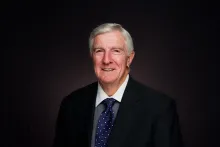
Before his retirement in 2021, Dr. Donald Ward pastored churches in Texas and Louisiana, and taught at Ambassador Bible College in Cincinnati, Ohio. He has also served as chairman of the Council of Elders of the United Church of God. He holds a BS degree; a BA in theology; a MS degree; a doctor’s degree in education from East Texas State University; and has completed 18 hours of graduate theology from SMU.
