
Robin S Webber
This transcript was generated by AI and may contain errors. It is provided to assist those who may not be able to listen to the message.
We're going to move into the third part of a three-part series. I'm going to go right for the gut and the core of this today. The name of the series is, How Come It's Taking So Long? I think it will really fit in with the first message that was given today. We've been actually going through two other parts until this time. We are going to finish it up today.
We are dealing with what sometimes is a spiritual dilemma in that we remember what Paul's words say out of Corinthians, 2 Corinthians 5, 17, that we are indeed a new creation in Christ. And yet, at the same time, we are affected with some of the challenges that Mr. Luhan brought up.
How is it indeed possible that we can be this new creation in Christ and yet still be plagued with human nature? It sounds almost like an oxymoron. Well, we've come to understand that there is a difference, friends, between being committed to Christ and growing in Christ.
And if we don't understand that difference, that can create the frustration that we don't want you to have and that God Himself has not visited upon you. In understanding all of this, we dealt with two key elements.
Those two key elements came out of the analogy that we've been using of how the United States Marine Corps went up through the islands during World War II and would occupy island after island after island, starting with a beachhead and then moving in to occupy the island. Well, what happens is when we establish a beachhead, to a degree, that is a victory. But it is not the total victory that is yet at hand. And so we had to come to understand something very important. We have to lay out two thoughts for you, you that were not here, like our friends on the back row, and for all of you that are here.
Because I found last week, when I gave this in Redlands, people said they really appreciate it when they would write down something that the teacher asked them to write down because it was for a purpose.
To help them to stay with us on the journey and the course of occupying the island. There's two terms that I'd like to share with you. The first term is our position in Christ. Incredibly important to understand. Our position in Christ. That never changes. But the challenges on the ground do. The challenges on the ground will change as we move forward to surrender our total being. The challenges that Mr. Luhan talked about in his message. Those challenges will come at us in different ways, in different directions. But if we maintain the position in Christ, we will be able to overcome them.
So today's message is simply this. Understanding our victory in Christ. Understanding our victory in Christ. You say, well, then that must mean it's all up to Christ. Well, there is the victory that comes in Christ, but we have a role in it. Now, I know we've had two messages already. Two parts of this series. We're going to go through this message. But if you fall asleep, fall asleep now. Wake up the last five minutes.
Because the preacher always deals with the most important thing in the last five minutes that he wants you to get. That is what this entire series is going to move to. It's the last five minutes and a teaching of God, about God, from God. The understanding that can change your life. And I presume that's why you came to church today. To learn to understand how you can indeed change your life. So let's move forward here. As we move from the beachhead, as we remember what the island was like, we've been dealing with the interior. But while we're in the interior of what we are going through, in the middle of what we're going through, as individuals in a collective body, it's sometimes important just to stop and look around and see the material that God is using and he is working with.
Now, let's understand something very, very basic about the Bible. May we? The story of the Bible is basically this. It's the story of God using ordinary people. Ordinary people to do extraordinary things. Simply put, that's my analysis of Scriptures. How can I say that? Just go back to the beginning. When God called a nation from the banks of the Nile, a slave race and a slave people, and he said that I'm going to cause you to be the first fruit of all of the nations.
The same God that would call shepherds to be kings or to be prophets, such as King David and later on the prophet Amos. The same God that would call fishermen that for a time portion were cowards, but later on would become conquerors as they went out across the Roman Empire, not only telling a story. I think that's the mistake that we make sometimes.
They were not only telling a story, but the story that had happened inside of them. That is what propelled them forward. Ordinary people, women that had challenges and problems, that would become the best friends of Jesus Christ during his earthly ministry. And when you think about somebody very ordinary, even under ordinary, if that were a word, is simply to recognize that at the end of his life, Jesus spent the last few minutes of his life talking to criminals, six or seven feet above the ground.
The last guy that really got in the best conversation with Christ is the one that has come to be known as the good thief. Yes, God does use ordinary people. Why is that? Join me, if you would, in 1 Corinthians 1. Very important point to understand about this. Let's go to Scripture to anchor that thought, 1 Corinthians 1.
And join me, if you would, in verse 26. Now, Paul is speaking to the Corinthians. He's not speaking to the Athenians, who were kind of the wonder city of Greece, kind of one of the great cities of antiquity. He's dealing with the Corinthians. It was a different crowd over in the port town of Corinth.
And the people reflected the city that they were called out of. But there was a reason for it. You know, have you ever thought about it that in the Bible, are you with me here a second? Have you ever thought about this? There is 1 and 2 Corinthians, but there is not 1 and 2 Athenians. Have you ever wondered why? Because God deals with ordinary people to do extraordinary things. How many of us at all in world history study a little bit about Athens?
How many of us here? Pericles, the Parthenon, the Acropolis, the Agora, and all the things of Athens? And we study, perhaps, the Peloponnesian Wars, if you went a little bit further. How many of you really got into Corinth? I don't think so. How many of you can tell me about Corinth? But God tells us a lot about Corinth. Point well taken. Thank you for your silence. God does extraordinary things with ordinary people.
Now why? Well, the answer is given to us in verse 29, that no flesh should glory in His presence. It's not of and by itself about us. It's about what God and Christ are performing in us. But of Him you are in Christ Jesus. There is our position. Remember, the position in Christ, as we hold that, allows us to deal with the challenges that Mr. Luhan brought out. Who became for us wisdom from God and righteousness and sanctification and redemption. That as it is written, He who glories, let him glory in the Lord. So let's understand, friends, we're basically here as ordinary people that God wants to do something extraordinary with. And that is to perform His works in us. Now let's please understand something. Even as we look at any class or we can look at any school, sometimes there is what we call the gifted one, the prodigy. There is always a Mozart crawling around somewhere, writing symphonies at age 6 or 7. Most of what we listen to, you know that Sleepy Time music by Mozart? Most of those glorious symphonies he wrote at about age 12 to 14. I was just playing basketball on the court at that time, and Mozart was sharing his genius. But we've got to understand, because there may be some prodigies within our faith community, does not mean that God does not continue with the overall education program for the rest of us. And we have to understand that. I think one of the greatest challenges that we have to be able to be God's tools and servants is to recognize where people are and who God is dealing with. Sometimes we overwhelm people because of where we are and we don't understand where they are at. Sometimes we are already in the interior of the island. We are working on things and dealing with things that God has just recently maybe revealed to us this last year, this last decade. And we're trying to relate with somebody who's just a baby Christian, who's just at the beachhead. But we're trying to relate with them in a manner that they're not accustomed to because they haven't been there. I know, allow me to make this relevant to all of us for a moment. Think of the situation of how often do we that are older that includes me, older have our adult children and we wonder why our adult children are going through what they're going through and we go, why don't they get it? But you and I are looking at life through middle-aged eyes. We've already taken our laps. We've already gone around the globe more than they have. And to be irrelevant, we have to understand where they are. Well, the same thing happens with some of us in church. To be relevant, we have to recognize where people are and meet them where they are. That's not only a pastor's job. That's not only just a job of the elders. We also must recognize where our fellow Christians are if we are going to help them. Now, there's a reason why I bring that up, and I want to show this thought with you. If you want to draw on your paper, we can do this today. There's two things that we need to think about. Oftentimes, as Christians, we think about our vertical relationship. Here's me. Here's God.
But God is now called us simply to be a part of a vertical relationship. He's called us also to have a horizontal relationship. This is vertical. Me to God. And what's God doing for me? But God has also called us to a horizontal relationship that as we have been comforted by God, as God is performing His works in us, we likewise need to be there for others and understand where they are coming from. In other words, let's put this down if you want to if you're taking notes. One shoe does not fit all people. We need to know who God is working with. I've shared with you that out of 1 Corinthians. We also need to recognize that we are at all different stages of this journey that God is calling us on. Now, with all of this said, have you ever considered that God intended all of us to enjoy this process? Something that Mr. Luhan brought out. Join me if you would in James 1. In James 1.
God intended us to enjoy the process that we're going through as we're going into new, unoccupied territory that is not yet surrendered to God. Now, understand I said to enjoy, which comes from the word joy. I didn't say about being excited. I didn't say about being happy. Happy is based upon external events and good things happening to you. There's a difference between happiness and joy. Let's notice what God says here in James 1, verse 2. My brethren counted all joy when you fall into various trials, knowing that the testing of your faith produces patience. It does not happen overnight.
It doesn't happen with the waving of a magic wand in our Christian experience. Why, that you may be perfect and complete and lacking nothing.
Patience.
God is patient with us.
At times, God is more patient with us than we are with ourselves. And we are with others. Let's talk about it for a moment about how incredibly patient God is. And what do I mean by this? How patient would we have been with the twelve disciples become apostles? With everything that they have been given. When you think that they were able to walk and talk and live and eat and experience life with Jesus Christ for three and a half years, just think of what those people experienced.
They heard words that had never been spoken. They heard stories that had never been told. They had seen miracles that had never yet occurred in human history. And yet, one betrayed him, one denied him, and all the others forsook him when he was needed the most. Their development at a given stage, if he took it at a given stage, would have been what? An F. Humanly speaking. But God said that if I've begun a good work, I'm going to see it through to the end. God was steady with them.
God did not abandon them. God was patient with them. And those same individuals are going to have their names written on the gates of the New Jerusalem. Let's take it a step further. Jesus had said, Go you therefore into all the world preaching the gospel to all people. But basically what we find for the first years in the book of Acts is basically those apostles being glued to Jerusalem and not getting out, not going to Samaria, not getting further up into Syria.
And it was only when the persecution came that finally they began to move out. But why is that? Perhaps it's because they needed to mature. They needed to mature with the truth that God had given them. Just because God gives us truth and revelation doesn't mean that we're always necessarily ready to share it with somebody else. Maybe their relationship with God was, in the beginning, shall we say, more vertical than horizontal. The power of the book of Acts and the story of the New Testament is not simply that the disciples went out to tell the story about Christ.
The power that allowed their story to move others was the story of Christ in them and their changed lives. I have a question for you for a moment. Just think about it. You can only answer it yourself. How do you convey what God has given you? Do you convey just simply facts? Do you convey simply the story? Do you simply convey the words of the Scriptures? Or do you share God's story that dwells deep inside of each and every one of us?
Do you share the story of your own beachhead, your own moving into the interior, your own frustration, as Reuben brought out, all the things I want to do I don't, and all the things I'm not supposed to do I do? This is where people relate. This is the horizontal relationship that crosses with the vertical relationship that begins to allow transformation into another individual. Have you ever asked yourself, why was it that it took so long for many of the letters and the epistles of the Bible to be written?
Why did so many of them come after 62, 63 AD, 65, and John's did not come to 85 or 90 AD? Why? What is that gap between the event and the telling of the story later on?
Maybe it's because they weren't ready to share it the way that God wanted them to share it with their own personal experience, their own dealing with the unoccupied territory that had not yet been surrendered in their lives, and to be able to convict and to convey somebody about that you have got to have been there yourself. I want to share a thought that I was thinking about when Reuben was speaking, because what happens so often...
Do I have my eraser? My little eraser went away. Do you have an eraser down there? Is there an eraser there floating around? No eraser? Maybe I have it. Oh, thank you. What's that? Oh, you of little faith. Okay, thank you. You know, as we move off the beach... I need all the help I can get. Thank you. As we move off those beach heads, as we begin to establish a beachhead at baptism, of which some of you are going to hear in the coming week, and we begin to move into the interior of the island, what had started small begins to expand, and it seems like, boy, once we're baptized, more comes at us.
Yes, because now God's allowing us to move into more territory. But then what happens is we can say, well, here I am after 10 or 15 or 25 or 40 years in God's church, but look at the gap. Look at this tremendous gap between my personal conversion and my personal desire, and yet the perfection of Christ that yet stands out in front of me.
And so what we do as human beings, because we're caught in time and space, we start getting out our rulers, measuring others, or measuring ourself, and becoming discouraged. Here's the good news of the gospel that I would like to share with you today, and that is simply this. Yes, there is a gap, and yes, there will always be a gap, especially when we read John's words here in a moment.
But let's understand something. Each step of the way of this gap is covered with something. Reuben mentioned it with the festival that's coming up.
Each step here, as we measure ourselves, we fail to find what we are walking on and covering us with, and that is the blood of Jesus Christ. So often we look at the distance of what we have to do, rather than what the Passover is all about, and that's what Jesus Christ performed on behalf of His Father.
You think of where you are, and you think of where we must yet go in this year. And if we only look in a mirror, we will, yes, indeed, become frustrated. Let us remember that every inch, every step along the way that fills in this gap is not our good deeds, but is the blood of our Savior, Jesus Christ.
I want to share a thought with you here for a moment, see if I can find it on my notes here for a second, because I kind of got ahead of myself. Kind of trying to cut this down because of the time. So tell me if you would in 1 John. 1 John is good.
1 John 1 It's kind of interesting. John's self-revelation here about himself.
Verse 8.
Here's a man that had been there in the very beginning, as it says in 1 John. He'd actually handled the Christ. He'd been there. He'd handled the Word. He'd experienced this way for 60 years. But what is profound is what begins in verse 7. But if we walk in the light as he is in the light, we have fellowship with one another, and the blood of Jesus Christ, his Son cleanses us from all sin. If we say that we have no sin, we deceive ourselves, and the truth is not in us. Well, you say, well, I've read that before, Mr. Weber. Yes, indeed, you probably have. But have you ever noticed the pronoun personality? We. John is still in the journey. John still has unoccupied territory in his own aged life that is not yet fully surrendered to God. There are caverns of his heart that have not yet been explored. There are sins that have not yet come his way for him to overcome. And rather than claiming that he is Jesus' favorite and the closest friend and the one that leaned on his breast on that night, he says, I still have sin. We that say that we have no sin, we deceive ourselves, and the truth is not in us. When we admit who God is and are honest about who we are and yet our need for him, what relief! When we don't do that, we pose the challenge of becoming a defeated Christian. We begin to deal in a world of spiritual unreality and shame and guilt and hypocrisy, rather than having the courage to admit what John meant. If we confess our sins, verse 9, he is faithful. Our position is in Christ and just forgive us our sins and to cleanse us from all unrighteousness. If we say that we have not sinned, we make him a liar, and his word is not in us. Now, as John is talking about this, he is not negating the righteousness of God by still, unfortunately, sinning. He talks about unrighteousness, which when you go with logic tells you that the righteousness of God does stand.
And yet, the blood of Christ, as I mentioned here, is going to be there for each and every one of us this year when we most importantly need it.
That is so incredible, and that is so beautiful when we think about that. And we need to encourage others about that, friends.
We have a story to share. If we are going to grow and if we are going to develop as a congregation, each and every one of you need to be a vibrant part of this. Now, that doesn't mean that we all become pastors. Please, there's one pastor of the congregation.
But each of us have a role in fortifying this point when we are talking to people, when we're encouraging people, when we're listening to people.
Sometimes what happens is that we confuse God's gifts of the Spirit with the fruit of the Spirit.
Unfortunately, sometimes too many churches focus simply on the gifts of the Spirit rather than what the fruit of the Spirit is. They look at their amount of revelation rather than the amount of the content of their heart. You say, well, what do you mean by that, Mr. Weber? Join me if you would in 1 Corinthians. 1 Corinthians 13.
In 1 Corinthians 13. Though I speak with the tongues of men and of angels, but have not love, I have become sounding brass or a clanging cymbal. And though I have the gift of prophecy and understand all mysteries and all knowledge, and though I have all faith, and I can remove mountains, I'm a spiritual superman, as it were. But if I don't have love, I am nothing. I am finding more and more, my friends, that as we continue on this journey together and striving to move through unoccupied territory, yes, we do have our own individual responsibility, but we need to be there for one another, encouraging one another, loving one another, and sharing our own stories. Too often, when God wants us to be an ear, we're using our tongue. We take somebody's challenge, and all we do is we over-speak them, and we go on to another subject. Rather than really recognizing the beachhead experience somebody is under, the fire that they are under, the bombardment that they are under, and not being sensitive to where their needs are at the time. We choose to be a tongue rather than an ear. Sometimes, when people are going through things, we dismiss it. We want to be God's laughter rather than God's tear for an individual. And then sometimes, frankly, I'll be very honest. May I? That's when you're supposed to nod, unless it's about you. What happens too often, we listen too long, and too long, and too long for a person to talk about themselves. And we don't, not man up, but Christian up, and help them and show them that they need to claim the blood of Christ, the promises of God, go to the Bible, find the answer in the Bible, pivot them on Scripture, rather than allowing them to stay stuck in their problems. Now, when I say all of that, that takes the wisdom of God. But that is indeed what we need to do. Join me if you wouldn't first, 1 Thessalonians 2.
1 Thessalonians 2.
Let's notice Paul. Paul, who had so many gifts as an individual, when it was all said and done, exercised the fruit of the Spirit.
1 Thessalonians 2, verse 6.
1 Thessalonians 2, verse 6. Here we go.
2 Nor did we seek glory from men, either from you or from others, when we might have made demands as apostles of Christ. That was a certain gift that he had. He was indeed an apostle.
3 But we were gentle among you, just as a nursing mother cherishes her own children.
4 So affectionately, longing for you, we were well pleased to import to you not only the gospel of God, but our own lives.
5 They gave a measure of themselves, because you had become dear to us.
Interesting how he conveys that.
6 For you remember, brethren, our labor and toil, for the laboring night and day, that we might not be a burden to any of you.
We preach to you the gospel of God.
7 And you were our witnesses, and God also how devoutly and justly and blamelessly we behave ourselves among you who believe.
8 And as you know how we exhort it and comfort it and charge to every one of you, notice, as our Father does his own children.
9 What is very important in the journey that they were taking in the first century, and the same that we're doing as a church today here in San Diego, is to deal with one another as a family.
10 Remember, they were coming out of the experience of the Jewish synagogue and with the elder and with the patriarch.
11 And dealing with the spiritual truths of God, they did not do it like an army of general and colonel and major and captain to make sure you over somebody make you a private first class.
12 It was not in that style. It was in the style of family, of concern, of deep, not only sympathy, but empathy because you were one of us.
13 That's what molded the New Testament church, which is very interesting.
14 I want to begin to conclude. Join me, if you would, in Colossians 2.
15 Because we do have that victory in Christ. We've been going through this island for a long time. We've been crossing it.
16 But we're going to take you up now into a mountain peak so that we can get the rest of the view to understand where we go from here.
17 We're going to go up to the mountain top because sometimes we need a big view and a big panorama of what has occurred.
18 So often we can become frustrated. Reuben mentioned his frustration. I had those frustrations.
19 We can kind of turn around and be like in a hamster wheel a lot of time, a lot of energy, a lot of steps.
20 Simply, we are going nowhere because we think the whole thing depends upon us.
21 That is why when we look at Colossians 2, it is so important to understand that the victory has already in that sense been won.
22 Colossians 2, verse 10.
23 And you are complete in him. That's why the position in Christ is so important.
24 Who is the head of all principality and power? In him you were also circumcised with a circumcision made without hands by putting off the body of the Son.
25 And you are the sins of the flesh by the circumcision of Christ, by the whittling away, by the massaging, by the nurturing, by the formation of Christ, buried with him in baptism, 26 in which you also were raised with him through faith in the working of God, who raised him from the dead.
27 And you, being dead in your trespasses and the uncircumcision of your flesh, he has made alive together with him, having forgiven you all trespasses.
28 Having wiped out the handwriting of requirements that was against us, which was contrary to us, and he has taken it out of the way, having nailed it to the cross.
29 Having disarmed principalities and powers, he made a public spectacle of them, triumphing over them in it.
30 What is Paul conveying to the people of Colossae? The victory is won.
31 What Jesus did on the cross is that our sins were put upon him.
32 That which we so richly deserved, because of what we have bought into, was in that sense put up there and nailed firmly.
33 And that curse of the law, not a cursed law, and that's where people make a mistake sometimes, the curse of the law is death.
34 The curse of the law, that which held us from any movement, any full relationship with God, was nailed to that cross.
35 The victory was won. The rest is in the details.
36 He said it made a spectacle, and that spectacle continues as we continue to work on that unoccupied territory that sometimes we stumble and falter in. 37 Because when we do falter and we do sin and we pray to God and we say, Father, I repent, here are my sins, I lay them out before you.
38 Satan is the accuser of the brethren, and he's there saying, Look at Dick, look at Mark, look at Reuben, look at Fernando, just look, look, look.
39 Satan wants to make a spectacle in front of the Father, and then Jesus is there as our Advocate, as the heavenly Christ.
40 And what does he say? Father, I know what they have done. Jesus, as our lawyer in front of the Father, isn't trying to get us off. He knows that we are guilty, because we're still in the human tent. 41 He's not justifying what we have done, but he is justifying our belief in him and our belief in the Father.
42 And he says, Father, I know what they have done. They are guilty, but my blood was for them. They come to you in my name, receive them, restore them, keep them in my name. 43 The Father says, Yeah, I remember what it was like at three o'clock on that afternoon. I remember when I had to turn my head from you, my son, and all the sins of the world came upon you.
44 I do know what you did. I remember that blood that was shed for them.
45 He looks at Christ, he looks at our prayers, he looks at Satan, and Satan withers. He's been made a spectacle of, and he whimpers away. 46 That is the most beautiful news I can share with you this afternoon. It's just utterly incredible. Utterly fantastic.
47 Let's conclude by going to Romans 5. Romans 5.
48 Therefore, having been justified in verse 1 by faith, we have peace with God through our Lord Jesus Christ. There is the position in Christ, through whom also we have access by faith into this grace in which we stand.
49 The grace that we stand in is our position with what no matter comes from the beachhead, into the interior, into climbing the mountains of our life, and being in the valleys.
50 And we rejoice in the hope of the glory of God. And not only that, but we also glory in tribulations, knowing that tribulation produces perseverance, perseverance, character, and character hope.
51 Hope does not disappoint because the love of God has been poured out in our hearts by the Holy Spirit who has given to us.
52 For when we were still without strength in due time, Christ died for the ungodly.
53 And for scarcely for a good guy, a righteous man, will one die? And yet, perhaps for a good man, someone would even dare to die.
54 But God demonstrates His own love toward us.
55 Let's understand something about Christianity and the focus of the Bible.
56 It's not about our upward movement. It all begins with God. God demonstrates, revealed His own love towards us, in that while we were still sinners, Christ died for us.
57 Much more than having now been justified by His blood, we shall be saved from wrath through Him.
58 For if when we were enemies we were reconciled to God through the death of a son, much more having been reconciled, we shall be saved by His life.
59 And not only that, but we also rejoice in God through our Lord Jesus Christ, through whom we have now received the reconciliation.
What point do I want to bring you to? It's simply this, friends, when we think about it.
60 The victory has been won.
61 In 1 John 3 and verse 8, you can jot that down and look at it later, it said that Jesus came to destroy the works of the devil.
62 When He was slain and nailed to that piece of wood, the victory was in place.
63 Only the details had to be borne out. Now, we have a detail on that. We are not talking about cheap grace here.
64 And therefore, because Christ did that, we're off the hook. No.
65 When we understand the magnitude of what it says in the book of Romans, then we tremble.
66 Not simply in fear, but with love.
67 We reflect on what it says in Romans 2 and verse 4, that it is the goodness of God that brings us forth to repentance.
68 How good was our God? How wonderful was He that He did this when we did not even know Him?
69 And therefore, as Paul says in the book of Philippians, we therefore work out our own salvation, trembling as it were, with fear.
But what does that mean?
When you really love somebody, you do not want to disappoint them.
When you really fully understand the magnitude of what our Father above and the Christ did for us, we ought tremble when we are thinking about doing this or doing that or being tempted with this or wanting to go here when we recognize that God wants us to go here. We don't want to disappoint Him.
People sometimes say, Mr. Weber, how do I know that God loves me?
I say, I can only tell you this. He gave us a son. What more can I say? He gave us a chunk of Himself.
If you can't accept that, I don't know where to go beyond that. But once you accept that, your life begins to change.
Let's consider this as we conclude. And it is simply this. I'd like to share a thought with you, and I hope that you will write it down.
And I hope that you'll go home this week and think about it.
As we've finished with Romans 5, we've come to understand that God's love is the love that accepted us as we were, from the beachhead to the interior to now.
And He accepted us even when his initial encounter with us, our nature was reprehensible.
But He loved us anyway, and He accepted you and me not for what we were, but what we can be in Him.
And this is the great understanding that I would like to leave you with today.
I believe in sharing this, and I am still, frankly, working it out in my mind and my heart as well, because I have got to come to understand this more fully myself.
But this, I believe, is the great understanding of the good news that is called the Gospel.
It is simply this. God doesn't change us in order to love us.
God doesn't change us in order to love us, but He loves us in order to change us.
And I think this is a big challenge that a lot of Christians have, because they feel like somehow that they're always having to measure up to gain love.
We do that humanly with other human beings. So we equate God's love with the love that we've experienced down here.
I would suggest when that equation clicks in your mind, you're going to walk with a lighter step.
You're going to grow in understanding. You're going to appreciate God's love even more. Allow me to repeat it.
God doesn't change us in order to love us.
You think of these people that want to get married, and they say, Oh, I just like you the way that you are. And then the door closes.
Change, change, mold, mold. Change, change, tweak the nose. Change, change, change.
I'll get them just right like my papa was. No. God doesn't do that. He does that because he loves us.
I want you to think about that phrase. I've been working on that phrase for about two months since I first saw it.
Allow me to share something with you. I just speak to you as a friend in Christ in this. That's a deep one.
But I think it is so deep that it is worth the exploration.
And I would suggest that as you explore it, it will fill up with a greater love for God vertically and a greater love for our fellow person horizontally, because we'll really understand what God has been about. It's been great occupying the island with all of you.
We are a new creation in Christ, yet we are still plagued with human nature.
1) Our position in Christ never changes, but the challenges before us change as we move forward. Don't lose our base camp in Christ. Today, "understanding our victory in Christ" we have a role -- Ho w can I change my life? The story of the Bible is God using ordinary people to do extraordinary things. Examples: slave Israel, shepherds to prophets, fishermen to conquerors. 1Cor 1:26 Corinth is nothing compared to Athens -- just ordinary. Why the ordinary? That no flesh should glory (v 29). It's not about us, but what Christ is performing in us. In the island analogy, maybe we've moved just past the beachhead, while others are not there yet. We need to recognize where they are and help them! One shoe does not fit all people. Are we all to enjoy the process?
James 1:2-4. How patient is God? All forsook Jesus at His hour of greatest need.
The power of Acts and the New Testament is the story of Christ in the apostles and their changed lives. Why were so many of the letters and epistles written so late? Because of their own life experiences and their changes needed to be related.
1 John 1:8 John says "we" - he is still on the journey.
Encourage others with our story.
Contrast the gifts of the spirit with the fruit of the spirit. Gifts being tongues, prophecy, etc. (1 Cor 13). Fruit being love, joy, peace, etc.
1 Thes 2:6-11 Paul gave a measure of his own life (v8) because they were dear to him as a family. Exhort, comfort, (v 11) as a father does.
Col 2:10-15 My position in Christ. The victory is won!
Romans 5:1-11 My position in Christ, no matter what comes. Christianity is about God's love toward us (v8)
1 John 3:8 The victory is won, but we have a role.
Rom 2:4 Goodness of God brings us to repentance. God's love accepted us as we were, in spite of our initial reprehensible behavior.
God doesn't change us in order to love us, but He loves us in order to change us.
We are used to having to measure up to be worthy of being loved. Not so with God.
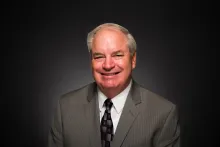
Robin Webber was born in Chicago, Illinois, in 1951, but has lived most of his life in California. He has been a part of the Church of God community since 1963. He attended Ambassador College in Pasadena from 1969-1973. He majored in theology and history.
Mr. Webber's interest remains in the study of history, socio-economics and literature. Over the years, he has offered his services to museums as a docent to share his enthusiasm and passions regarding these areas of expertise.
When time permits, he loves to go mountain biking on nearby ranch land and meet his wife as she hikes toward him.
