
Roy Holladay
This transcript was generated by AI and may contain errors. It is provided to assist those who may not be able to listen to the message.
In Psalm 8, verse 4, David asks the question, What is man that you are mindful of him, and the Son of man that you visit him? Why does God pay attention to you and to me, to mankind? Why does God thank or remember us, reflect on us? Why is he concerned about us? In Isaiah 40, verse 15, God states that all nations are like a drop in a bucket, compared to him, and are counted as a small dust of the scales. So, compared to God, all nations are nothing.
We may strut around in our vanity and our pride with our militaries, our armies, our accomplishments. But God says all nations are insignificant when they are compared to God, to his power, his glory, his greatness. The Apostle Paul, in the book of Hebrews, added a little bit to what David had said in the Psalms. Let's notice in chapter 2, the book of Hebrews. Hebrews 2, verse 5. Hebrews 2, beginning in verse 5, says, For he has not put the world to come, of which we speak in subjection to angels.
The angels are not going to be in charge in the world tomorrow. But one testified in a certain place, What is man that you are mindful of him, or the Son of man, that you take care of him? So God is mindful, as it says here, What is man that you are mindful of him? You know the word mindful means to think about, again, to remember or to recall? Why does God remember us? Why does he think on mankind?
Then it says to take care of. The word take care of means exactly what it says, to look after. But actually it means also with continuous responsibility, to look after or to take care of, just like you might have to take care of somebody. So you find that God looks down on mankind. In verse 7 and 8, let's notice about man, it says, You have made him a little lower than the angels, and you have crowned him with glory and honor, and sent him over the works of your hands.
Now, as the margin says, you have made him a little while lower than the angels. And the implication is, there is going to come a time when mankind will be higher than the angels. You put all things in subjection under his feet. For in that he put all in subjection under him, he has left nothing that is not put under him. But now we do not yet see all things put under him. So even though God is going to put all things under the feet of man, not yet, you and I are not able to travel to the moon or to Mars or out of the solar system or to the third heaven. We have difficulty sometimes driving a car and traveling.
But there is going to come a time that the Bible says that all things will be subject to mankind. But let's notice verse 9, what we do see. We see Jesus, who was made a little lower than the angels. In other words, he came to the earth as God in the flesh. He was the son of man and the son of God. So he walked this earth. Why was he made a little lower than the angels at that point? It's talking about his composition and so on as a human being.
Well, he did that for the suffering of death. And now he is crowned with glory and honor that he, by the grace of God, might taste death for everyone. So Jesus Christ was willing to come to this earth to live as a human being, to walk 33 and a half years on this earth, and to die so that he could, as it says here, might taste death for everyone. He died so that our sins could be forgiven. Now we don't have to die again the second death. Now in verse 10, for it was fitting for him, for whom are all things and by whom are all things, and bringing many sons to glory.
So this is the reason why he did it. So that our sins could be forgiven. But the main purpose was God wants to bring many sons to glory in his family. God is creating a family. And so he wants, even as Jesus has been glorified and given honor, so God will one day glorify his family. Jesus Christ, as we go on to read here, it says, To make the captain of their salvation perfect through suffering.
Jesus was made perfect through suffering. And brethren, why are we faced with trials and tests? Why do we have problems that we're confronted with? Well, they are for our perfecting. So that you and I might be perfect, that we might develop God's holy and his righteous character. Then going on in verse 11, For both he who sanctifies, sanctified meaning setting apart, so he who sanctifies or sets us apart, and those who are being sanctified, that's us who are being set apart, are all of one, for which reason he is not ashamed to call them brethren.
Jesus Christ is not ashamed to look down on you and say, You're my brother, or you're my sister, you're a part of the family, because, you see, he likewise, he who sanctifies or sets us apart, and those who are being sanctified, God is not afraid, or Christ is not afraid to call them brethren, saying, notice verse 12, I declare your name to my brethren in the midst of the assembly, I will sing praise to you. And again, I will put my trust in him, and again, here am I in the children whom God has given me.
So we are the children of God now, and we are brethren of Jesus Christ. He is our elder brother, and he has gone before, and he has shown that it's possible to make it into the family of God. Now in verse 14, inasmuch then as the children have partaken of flesh and blood, so that's us, we're flesh and blood, he himself likewise shared in the same.
So Jesus Christ was born of a woman, as a baby, and he was God in the flesh. And so he shared in the same that through death he might destroy him who had the power of death, that is the devil. Now, is the devil still alive? Is he still active? Well, sure he is. The word here, when it says destroy, it can mean to destroy, but it also can mean to render inactive, idle, useless, ineffective.
And so I think that's more the meaning here, that through death, in other words, Christ, through his death, has been able to render, null and void, so to speak, inactive, the power that Satan has over death. Because now you find that God has the power over death, that he will resurrect us, and Christ's death and sacrifice made the resurrection to eternal life possible, so that we can be members of the very family of God. So Jesus Christ, through his sacrifice, has made this possible. Go on in verse 15, and he released those who threw fear of death.
And let's face it, brethren, when a person gets older and you're confronted with your mortality, there is a certain fear there. But notice it says, those who, through fear of death, were all their lifetimes subject to bondage. Now, we may realize that our physical existence is going to end, but we also understand that there is a resurrection, that the Bible has promised that God will resurrect every human being who has ever lived, and especially those who will partake in the first resurrection, that we will have the opportunity to be resurrected at that time. So even though we might want to continue to share life with our family and our friends, we also understand that if we go to sleep, we die. We await the resurrection. The amazing thing about death, it doesn't matter if you've been dead 6,000 years, 4,000 years, 2,000 years, 1,000, 100, whatever. You have no cognizance of the passing of time. To you, you die the next second you're alive, as far as you know. And so, God has been very merciful in that sense. So we have a hope that transcends being in bondage to death.
Going on here in verse 16, it says, For indeed, he does not give aid to angels, but does give aid to the seed of Abraham. God gives us help. He gives us strength. He is there with us to help us. Therefore, in all things he had to be made like his brethren, that he might be a merciful and faithful high priest, in all things pertaining to God, to make propitiation for the sins of the people. Word propitiation here means to forgive with the focus upon the instrument or the means by which forgiveness is accomplished. So, through Christ, we can be forgiven for all of our sins. For in that he himself has suffered, being tempted, he is able to aid those who are tempted or those who are tested. So, why Christ was tested, so we are tested, and he can come to our aid, and he can help us. So, we find that Jesus Christ is able to be a merciful high priest because he has gone through all of the tests, the trials, the difficulties that we as human beings have. He knows what it is like to be human. He knows what it is like to be hungry. He knows what it is like to go without water. You fast 40 days and 40 nights, as he did.
You know what true hunger and thirst can be. So, let's come back to the question I asked to begin with. What is man that God is mindful of him? Well, let's go back to John 3 16. John 3 16.
And we read this. When we ask the question, what is man that God is mindful of him?
That God so loved the world, or you might say mankind, humankind, that he gave his only begotten son that whoever believes in him should not perish but have everlasting life.
So, notice God's love. What motivated God to come up with the plan of salvation, to create human beings as we are, to give us the opportunity to become one of his family. Why did he do that? Well, it says, God so loved the world. That's why. It's based on the motivation that God has of love, of wanting to share. And it's expressed through his mercy, through his grace. And what did he do? Well, he gave us his son. He was willing to give the second member of the God family for us. Going on in verse 17. For God did not send his son into the world to condemn the world, but that the world through him might be saved. So, notice God wants to extend salvation to us. He wants to give eternal life to us. But he gave his son, and he sent his son into the world. Now, the son was willing to come. He was willing to come to this earth. Verse 18, He who believes in him is not condemned, but he who does not believe is condemned already because he is not believed in the name of the only begotten son of God. For this is the combination that light has come into the world. Christ, as the light, came into the world. And men loved darkness rather than light. Why? Because their deeds were evil. See, people don't want to come to the light because the light displays everything. It shows up. You can go hide in the darkness. Even an ugly person looks pretty good in the darkness. But you and I need to realize that when you see the light, which is God's word, what the Bible says, then it exposes our sins, our faults. Verse 20 says, For everyone practicing evil hates the light. Why do people hate the Bible? Why do they hate the Scriptures in God's way, God's law? Because it's a reflection. It shows that what they're doing is wrong, and they don't want to be wrong. So, you know, they just dismiss it. For everyone who practices evil hates the light and does not come to the light, lest his deeds should be exposed. So, he doesn't want his deeds exposed, but he who does the truth comes to the light that his deeds may be clearly seen, and they have been done in God. So, brethren, you and I open up this mirror, this light, this word of God, we look at it, so that our deeds can be exposed, and so that we can change, we can repent, we can be a different person, and that our deeds are then done in Christ. That what we do will be patterned after God. So, God wants to give us eternal life, and he wants to give us salvation. Back up to chapter 1 of the book of John, and notice how it's expressed here in John chapter 1. We'll begin to read in verse 1.
In the beginning was the Word, and the Word was with God, and the Word was God.
So, here we have two beings. One was with the other, and he was known as the Word. He's the one who became Jesus Christ, fulfilling that responsibility. And he was in the beginning with God. He coexisted. He is eternal from the beginning. In the Old Testament, when the term is used about the God of the Old Testament as the Eternal, Jesus Christ was the God of the Old Testament who dealt with mankind. So, he has always existed with the Father. All things were made through him, and without him was nothing made that was made. In him was life, and the life was the light of men. The light shines in the darkness, and the darkness did not comprehend it. Jesus Christ came to this earth. He came among his own people, and they didn't accept him. They rejected him. They rejected the light. They rejected the teachings, what Christ brought to them, his example, who he claimed he was. Notice in verse 10, he was in the world. The world was made through him, and the world did not know him. He came to his own, but his own did not receive him. For as many as received him to them, he gave the right to become the children of God. So, you and I have the authority, or the right, because we believe. Our minds have been opened. We see, we understand, we have the right to become the children of God. We are God's children today, begotten today, and the resurrection we will be born into that family, to those who believe in his name, who were born not of blood, nor the will of the flesh, nor the will of man, but of God. You and I are begotten now, the resurrection we will be born, changed, made immortal, given a spirit body. For the word became flesh and dwelt among us, and we beheld his glory, the glory as the only begotten of the Father, full of grace and truth. So, brethren, the word became flesh, as we read back here, and dwelt among us. So, he was not flesh at one time. He was a glorified God being in the very family of God, and yet he became flesh. Why? Well, let's go on. In Philippians, the second chapter. Philippians 2, and we'll begin to read here in verse 1. Philippians 2, verse 1.
It says, therefore, Philippians 2.1, if there is any consolation in Christ, any comfort of love, of any fellowship of the Spirit, of any affection and mercy, fulfill my joy by being like-minded, having the same love being of one accord and of one mind. Brethren, as we approach the Passover season, ask yourself, are we all like-minded? Are we all of the same love, being of one accord, of one mind? Letting nothing be done through selfish ambition or conceit, but in lowliness of mind, let each esteem other better than himself. Let each of you look not only for his own interest, but also for the interest of others. Let this mind be in you, which was also in Christ Jesus. You pray every day that God would give you the mind that Christ had. What kind of mind did he have? Well, the Father was in him. So let this mind, the mind, the attitude, the humility, the approach that Christ had as a human being, let that same mind dwell in us, who, being in the form of God. Now, notice how he was. He was in the form of God.
Did not consider it robbery to be equal with God. So on the Spirit level, he was God. There were two members in that family. He did not consider it robbery to be equal with God, but he made himself of no reputation, taking the form of a bondservant and coming in the likeness of men. So he was made flesh. And he came in the likeness of men. And being found in appearance as a man, he humbled himself and became obedient to the point of death, even the death of the cross.
Now, why was Jesus Christ willing to do this? He was willing to take the form of a human so that he could die for the sins of mankind, so that he could be a Savior, could be the high priest, to make this whole plan possible.
With regard to the existence of Jesus Christ, just as a side note, the existence and thus the life of Jesus Christ did not depend upon his life beginning with Mary.
Now, listen to what I'm saying here. It did not depend on his life beginning with Mary when she was impregnated by the Father through the Holy Spirit.
And you being and you life did not come into existence at that time. When the Logos was impregnated within the womb of Mary, there was a transformation in the form of life. Transformation took place. The Logos was made flesh and dwelt among us. See, he was God, but now he was made flesh. He gave up his glory, but not his life and his divinity.
So when he walked the earth, he was God in the flesh.
That's the only way you can understand that. Let's read verse 6 again.
Who being in the form of God did not consider it robbery to be equal with God, but made himself of no reputation. He emptied himself, taking the form of a bond servant. See, he was alive. He now becomes a bond servant, coming in the likeness of a man.
So again, a new being did not come into existence at this junction when he was begotten. So, Bradley, God, when you began to study the Scriptures—I've only quoted a handful of them here—when you began to study the Scriptures and you began to realize what the Father and what Jesus Christ did to make it possible for the plan of salvation to come about, you can see a tremendous love, a tremendous willingness to sacrifice, a tremendous willingness to go all out to make it possible for you and for me to be in his family. God wants to share his level of existence, share his life, give his eternal life, give his glory, and extend salvation to all of us, to all mankind. This could not happen unless and until Jesus Christ, as God in the flesh, came to this earth, lived a sinless life, and was willing to die for us, to make it possible for our sins to be forgiven. He willingly gave himself as an offering and a sacrifice. Let's notice Ephesians 5. Back up a couple of pages. Ephesians 5 verse 2 in your Bible.
Well, verse 1 says, Therefore, the imitators of God as dear children, and walk in love as Christ also has loved us, and notice, and given himself for us, an offering. An offering is something you offer up. So he was willing to offer himself up and a sacrifice. Sacrifice is the taking or the giving of a life to God for a sweet-smelling aroma. So he was willing to offer himself. He was willing to sacrifice himself for us.
The Father loved us so much, brethren, that he was willing to give his Son, and he sent that Son to this earth. And the Son was so willing to die for us that he was willing to go through this transformation of giving up his glory, a spirit, body, and come to this earth as a human being. Every year at this time, we stop, we reflect, we thank, on the great sacrifice that Jesus Christ went through, and as we prepare for the Passover. There are two chapters in the Bible that clearly explain Christ's sacrifice in great detail. One is Isaiah 53, the other is Psalm chapter 22. Let's go back to Isaiah chapter 53, and I think it's very fitting when you consider what God was willing to do for us and what Christ was willing to do to make it possible for us to be forgiven, to have our sins forgiven. Notice what Isaiah 53, and then later on we'll take a look at Psalm 22, what they have to say. First two verses talk about Christ coming as a child.
Notice it says, who will believe our report, to whom has the arm of the Lord been revealed? He shall grow out before him as a tender plant, and as a root out of a dry ground, he is no former comeliness. When we see him, there's no beauty that we should desire him. He was not an overly radiantly handsome individual that knocked people dead. No, it says there was his appearance. There was nothing there that we would desire him. Notice verse 3.
He is despised and rejected by men. The word despised and rejected means rejecting him, despising him. I think the words convey the meaning very well here. He was not somebody he was looked up to and honored and appreciated by the vast majority, but he was despised and he was rejected. He was a man of sorrow. When you look at sorrow, the word there means he was a man acquainted with pain and grief or sickness, and we hid, as it were, our faces from him.
We know that Jesus Christ was perfect. He never sinned as he walked this earth. It might be hard for us to think that people would despise him and reject him, and yet that's exactly what happened. Remember Luke 19 verse 12? I'll just refer to that. It says that his citizens hated him, that those of his days hated him. As we read back in John 1 verse 11, he came to his own, but his own received him not. How do we feel when somebody despises us, somebody doesn't like us, somebody looks down on us? He came claiming to be the Son of God, the Messiah. They rejected him. They called him what? A bastard. They called him a fraud. They called him every name you can think of, a drunkard, and they went on and on when they were talking about Jesus Christ. So Christ knows what it's like to not be accepted, to be spoken against, to be looked down upon. Now, as it says here, he was a man of sorrow, the word sorrow means pain. He was a man who was acquainted with pain and means both physical and mental pain. Remember Jesus Christ the night he was crucified, went out three times and prayed, or the night before his crucifixion, and he prayed to God. His perspiration, his sweat, was like drops of blood coming from his body.
Notice the net translation of Isaiah 53, verse 3. He was despised and rejected by people, one who experienced pain and who was acquainted with illness. People hid their faces from him. He was despised, and we considered him insignificant. The NIV says, he was despised and rejected by mankind, a man of suffering similar or familiar with pain, I should say, like one from whom people hid their face. He was despised, and we held him in low esteem. And so, you know, this describes the reaction that he had. Jesus Christ suffered physically, he suffered mentally, and emotionally, not only when he was crucified and beaten, but a number of times throughout his ministry. Remember when Jesus Christ wept over Lazarus, why did he weep? Because of their unbelief, because of their hard hardness.
How many times did he agonize with his disciples and he tell them what was going to happen, and they didn't believe him? The agony that he suffered when he prayed before he was captured. Why did he go through all of this? Well, we've already read it, but in another scripture, in Hebrews 5 verse 8, he did it so he can have empathy for us. Hebrews 5, 8 says, "...though he were a son, yet he learned obedience by the things that he suffered." And so, Jesus Christ learned obedience by the things that he went through.
Now, verse 4, back here in Isaiah 53, verse 4, "...surely he is born are griefs," which means sicknesses, "...and carried our sorrows," or our pains, both physical and mental. "...yet we esteemed him stricken, smitten by God, and afflicted." The word stricken means to strike or to touch. You might remember when he was captured that they beat him with rods. They spit in his face. They slapped him. You know, he went through all of this.
He was smitten, which means the strikes might hit, beat, slay, or kill. Afflicted, humbled, to be bowed down.
So, Christ was humbled, humiliated, made fun of, ridiculed. Now, why did Jesus Christ go through that?
Why did he suffer through that? Why did the Father have to watch his Son go through that, through all this suffering?
Well, let's notice, verses 5 and 6 here.
Verses 5 and 6.
"...but he was wounded," word means pierced through. Why?
For our transgressions. Why did he go through this suffering, this pain, the beating, the piercing, for our transgression? The word transgression means our rebellion or transgression?
We have all been rebellious in the past.
We've all done things our own way. Notice, it says, he was bruised. The word means crushed for our iniquities.
Iniquities means our perversities, our depravity, our guilt, in other words, our sins.
And the chastisement for our peace was upon him.
Word chastisement means to be chastised, our correction for our peace. And then, it goes on to say, by his stripes, we are healed.
So Christ went through this so that we could be healed.
We could have peace. You know, the word peace is interesting here.
It is the Hebrew word shalom.
And we're all familiar with the word shalom. You can take on many meanings, meanings, depending on the context.
It means soundness, wellness, health, prosperity, peace, quiet, tranquility. You can have all of this.
Rather, you and I can have peace of mind.
You know, there are a lot of people in this world who have mental problems and difficulties. And why?
Because they're not able to deal with, perhaps, some pain, some affliction, something they've gone through before.
We've got a lot of veterans coming back from the war zone, and many of them are suffering because of what they've been through, what they've seen. Having somebody blown to bits, you're right next to them. Having their best friend shot through the head or dying. And, you know, they've seen suffering, and they come back with limbs missing, body parts that are no longer there. And they suffer, and they have trouble handling that.
A lot of people have gone through all kinds of problems. You and I can have peace of mind in this way, knowing that whatever we've done, whatever we've gone through in the past, that our past sins are forgiven. That we no longer have to be guilty. Our guilt, our sins have been removed. Guilt precedes repentance. Guilt leads us to repentance. Once we repent, we ask for God's forgiveness. We don't have to carry that guilt, that burden around with us. We've been brought into a right relationship with God.
And, yeah, you know, we all struggle with things that we've done. And sometimes they're never forgotten. But, you know, you don't have to carry this deep burden of guilt.
Remember, in John 14, 27, Christ said, "'Peace I leave with you, my peace, you not as the world gives.' You know, God can give us peace of mind.
And the world doesn't understand that.
Christ bore pain. He went through pain and suffering. So, He knows what it's like to have a weak body. He knows what it's like for us to go through suffering.
We realize also that sin produces.
When we sin, it produces a lot of harmful effects, a lot of side effects, both spiritually and physically. When we sin, it affects our minds.
It has a definite effect on our minds. Our minds can become perverted.
A lot of people walking around this society with perverted minds, twisted minds, and can twist our thinking.
People can have vile affections, as Romans chapter 1 talks about.
Wrong desires. When God begins to deal with people like that, they've got to be healed.
A miracle has to take place in their lives.
Their emotions, their feelings, their outlooks, their view of the opposite sex, of whatever, has to change.
We all have mental and emotional scars that we bear.
Emotional effects of sin. Likewise, we humans react emotionally, don't we? Somebody punches you in the nose and you say, Oh, that felt good. I'm sorry you did that. No, somebody punches you in the nose. You're ready to punch them right back.
Sin seems to heighten and misuse our emotions.
You have violent crimes.
When a violent crime takes place, what happens to the perpetrator and to the victim?
What happens to the victim's family?
What do sexual perversions do to the mind and to the emotions? What about not being able to handle guilt or resentment or bitterness or bad feelings? People have gone through abuse, rape, incest, death, human tragedies.
A lot of humans have been exposed to when you think about war and suffering. You think about plagues. You think about starvation. You look around this world and you see the reason why Christ said to pray, Thy kingdom come. You see all of these problems that human beings are exposed to.
Aren't these areas where we need forgiveness?
That is, human society, human beings, individuals, and we need a sound mind.
We need self-control. We need God's Spirit. That God would give us a spirit of love, power, and of a sound mind. That we can be sound-minded in our approach. That we can be healed through God's Holy Spirit.
What about the physical effects of sin?
Somebody commits fornication, adultery, homosexual acts, comes down with a sexually transmitted disease.
That has a tremendous impact on their life, on society.
What impact does this have on a person, on their mate, on their family, their friends? Society as a whole. People need to be healed. Look at the greed and the avarice of human beings. The pollution of water, air, soil, food, minds, and bodies of human beings. We eat contaminated foods, contaminated meats, depleted vegetables, refined foods, overabundance of sugars, and so on. We wonder why we get sick.
And we have all these physical ailments.
We live in a society in an age today where it's hard to even find good food.
There are many things that we can think of, but, brethren, this world needs deliverance. This world needs healing. Society is crying out for the revelation of the sons of God, for you and for me, to be in the family of God so that God can set up his government on this earth.
You might remember in Matthew 26, 38, before Christ went to pray, the night before he was betrayed, he said to them, Matthew 26, 38, My soul is exceedingly sorrowful. Even to death, stay here and watch with me. And three times he went and prayed, and he said, Father, if it's possible, for there's another way, remove this cup from me. Nevertheless, not my will, but your will be done.
And he prayed three times.
Brethren, we can go to God through Christ to ask for forgiveness, ask God to remove our fears, our dreads, our scars, our hurts, our pains, our sicknesses, our diseases. God is willing to forgive us.
We need to be willing to forgive one another.
We should not come to the Passover.
Should not be a person here in the room who comes to the Passover with resentment, with bitterness, with antagonism towards others.
We need to repent of those. We need to rectify those.
You see, Passover is a time that pictures the wonderful plan of God and God being willing to forgive us. How much he loved us, that he sent his own son. How much Christ loved us, that he was willing to die for us. And how much should we love others and not carry around these burdens, these emotions that people have?
Let's notice, verse 6, what the problem is with us as human beings. Verse 6, All we, like sheep, have gone astray.
We've all erred, as the word means, or wondered. We've gone astray. We've staggered. We have turned everyone to his own way. You and I, before we were converted, and we still struggle with doing the same thing, have turned to our own way, our own ways. We've done what seem right in our own eyes. Conversion is turning from our way and going God's way.
Remember, Proverbs 14, 12, there's a way that seems right to a man, but the end thereof is a way of death. That's the way human beings have gone.
Proverbs 21, verse 2, tells us, every way of a man is right in his own eyes.
We have to turn from our own way and go God's way.
We need to make sure that we're no longer going astray and that we don't turn to our own understanding. We end our own understanding. And notice, and the Lord has laid on him the iniquity of us all.
All of our sins have been laid on him, and he's willing to forgive all of those sins if we repent.
That's why baptism is so important. Number one, you have to understand what sin is. Number two, you have to repent of those sins. In verse 7, let's go on reading here, he was oppressed and he was afflicted. In the open knot his mouth he was led as a lamb to the slaughter as a sheep before shear is quiet. Jesus Christ willingly went to the slaughter, so to speak. He came into the world for that very moment, for that very purpose, to die for the sins of mankind. The only way that that sacrifice would have been sufficient is that he was God and he never sinned. So he was not dying for his own sins, he died for our sins.
Verse 8, he was taken from prison and from judgment.
And he was cut off from the land of the living, for the transgression of my people was he stricken. He was stricken for our transgression.
And they made his grave with the wicked.
Notice verse 10, yet it pleased the Lord to bruise him.
And he put him to grief when you made his soul an offering for sin, when he shed his blood and made his soul an offering for sin.
In verse 11, he shall see the labor of his soul and be satisfied.
Jesus Christ can look down even right now and see the labor of his soul.
He can look at you and he can look at me and say, this is the reason why I was willing to come and do this. The Father can look at us and he can say, this is why I sent my son into the world. Because I want members of my family. And here is whoever it might be, whoever you are, I am. But he looks down and he can see that it was for a purpose, for a reason. And he knows that every human being is going to be given that opportunity here in the future.
And he shall see the labor of his soul and be satisfied. And his knowledge of my righteous servant shall justify many, for he shall bear their iniquities.
Therefore I will divide him a portion with the great, and he shall divide the spoilt the strong, because why he poured out his soul unto death? He was numbered with the transgressors, and he bore the sin of many, and made intercession for the transgressor. So Jesus Christ was willing to do this so that you and I could be a member of the family of God.
You might remember in 2 Corinthians 5, verse 21, 2 Corinthians 5, verse 21, talking about Christ's sacrifice, for he made him who knew no sin, Christ never sinned, to be sinned for us. Our sins were placed on him, that we might become the righteousness of God in him.
We become the righteousness of God.
Let's finish by turning back over here to Psalm 22, verse 1. Psalm 22, verse 1. Psalm 22 describes the thoughts, the emotions that Jesus Christ was going through.
Isaiah 53 describes what man did to him, the suffering he went through, what our sins caused. Because remember, Isaiah 53 is talking about Christ did this. Why? Because of sin.
All have sinned. You and I have all sinned. And so, therefore, it was because of our sins that he had to go through that.
But let's notice here, beginning in verse 1.
My God, my God, why have you forsaken me? Why are you so far from helping me?
You might remember Christ cried that out on the cross or on the stake. Verse 6, he says, I am a worm and no man, a reproach of men, despised by the people.
All those who see me ridicule me. He was rejected and despised. He was ridiculed.
They shoot out the lip. They shake the head, saying, While he trusted in the Lord, let him rescue him. Let him deliver him, seeing he delighted in him.
They ridiculed him, humiliated him, made fun of him. If you're the Son of God, come down off that cross. If you're the Son of God, you'll just ask God to deliver you.
But you are he who took me out of the womb. You made me trust while on my mother's breast. I was cast upon you from birth, from my mother's womb. You have been my God, so you find from a very early age he relied upon God. Be not far from me, for trouble is near, for there is none to help.
Many bulls have surrounded me. Strong bulls of asian have encircled me. They gape at me with their mouths, like a raging and roaring lion. They walk around in their vanity, in their arrogance, in their pride, in making fun and ridiculing Christ.
I am poured out like water. All my bones are out of joint. My heart is like wax. It is melted within me. So he's describing what he's going through, and his bones are out of joint. He did not have a bone broken, but that didn't mean that some might have been misplaced. My strength is dried up like a pot-shirt. My tongue clings to my jaw. You've brought me to the dust of death.
In verse 16, for dogs have surrounded me, and the congregation of the wicked have enclosed me. They pierce my hands and my feet. They count all my bones. He was scourged and beaten. Apparently, you could see his bones through his flesh that were just hanging in shreds.
They look and stare at me. They divide my garments among them. In my clothing, they cast lots.
Here's Christ. He's hanging on the stake. These are the thoughts that are going through his mind as he sees all of this unfurling before him. But you, O Lord, do not be far from me.
O my strength, hasten to help me. That didn't mean he was not going to have to die, but that God would help him, give him the strength, the bear, deliver me from the sword, my precious life, from the power of the dog, save me from the lion's mouth, and from the horns of the wild oxen. Then he says, You have answered me. God answered him. God helped him. I will declare your name to my brethren. Brethren, that's you. That's me. And so he says he will declare his name to us. So this gives you the mental and emotional anguish that Christ was going through.
Let's turn back one last scripture to 2 Timothy chapter 1. 2 Timothy chapter 1 verse 8.
We'll begin to read here in verse 8. 2 Timothy 1.8. Therefore, do not be ashamed of all the testimony of our Lord, nor of me his prisoner, but share with me in the suffering for the gospel according to the power of God, who has saved us and called us with a holy calling, not according to our works, not because of our goodness, righteousness, but according to his own purpose.
See, God has called us according to his purpose and grace, which was given to us in Christ Jesus before time began. Even before the sun was set, the earth was put in orbit, and the moon around the earth. This was God's purpose. But now he has been revealed by the appearing of our Savior Jesus Christ, who has abolished death and brought life and immortality to light through the gospel. Jesus Christ is our Savior. He has destroyed death and brought life and immortality to light. You and I can have eternal life, and we can possess immortality and live forever. So, brethren, we, as we come to take the Passover tomorrow night, we need to realize how great Jesus Christ's sacrifice truly is. Isaiah 53 reveals how complete that sacrifice was. It was for our healing in all aspects, emotionally, mentally, physically, spiritually, for the forgiveness of mankind, of our sins. So we must take the Passover with understanding.
Understand what a great Savior we have. Understand what a loving Father we have. And the awareness, the length, the depth, and the breadth that God has gone to, to make it possible for you and for me to be a member of his family.
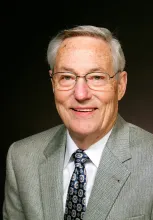
At the time of his retirement in 2016, Roy Holladay was serving the Operation Manager for Ministerial and Member Services of the United Church of God. Mr. and Mrs. Holladay have served in Pittsburgh, Akron, Toledo, Wheeling, Charleston, Uniontown, San Antonio, Austin, Corpus Christi, Uvalde, the Rio Grand Valley, Richmond, Norfolk, Arlington, Hinsdale, Chicago North, St. Petersburg, New Port Richey, Fort Myers, Miami, West Palm Beach, Big Sandy, Texarkana, Chattanooga and Rome congregations.
Roy Holladay was instrumental in the founding of the United Church of God, serving on the transitional board and later on the Council of Elders for nine years (acting as chairman for four-plus years). Mr. Holladay was the United Church of God president for three years (May 2002-July 2005). Over the years he was an instructor at Ambassador Bible College and was a festival coordinator for nine years.
