
Robin S Webber
This transcript was generated by AI and may contain errors. It is provided to assist those who may not be able to listen to the message.
Well, I want to welcome everybody. I didn't have an opportunity during the announcements to welcome those that are on the stream service today. I certainly want to welcome you wherever you are reaching us from or coming into.
Welcome, welcome. We're all together here on the Sabbath day. Back in college days, now a number of years ago, in the class on the Gospels, what was called first-year Bible in Ambassador College, we would study the four Gospels, and we would study the book of Acts. In a year-long class, you don't necessarily remember everything that was taught to you day in and day out, week in and week out, month in and month out. But there is one thing that always stuck in my mind, and I'd like you to open your Bibles for a moment and join me in the book of Acts.
And let's go to the last chapter. In the last chapter of the book of Acts, we see in Acts 28, verse 30, then Paul dwelt two whole years in his own rented house and received all who came to him, preaching the kingdom of God and teaching the things which concern the Lord Jesus Christ, and with all confidence, no one forbidding him.
And then notice the last word in the book of Acts. Amen. Did you see that? You're still searching for it? Why is there no amen at the end of the book of Acts? I remember our instructor at that time saying that God still has a story. He has acts through his disciples. They were yet to be down through the ages. They were yet to witness to his glory and to his honor. And that would go around the world. That is the story that I'd like to share with you this afternoon about some of our fellow disciples that are witnessing at this time in another part of the world that all of us can glean from and learn to grow in the grace and the knowledge of our Lord and Savior Jesus Christ.
Right now, on this world that you and I happen to live in at this time, a lot is going on. A lot of challenging, horrific news from abroad. Not that there is not at times bad news, domestically, here in the United States, or even in our own local community. I think all of us have recent dated following what's happening in the Middle East and recognizing what occurred to the Israelis on October 7th, where once those people were killed, martyred in that sense for who and what they were, we began to see pictures. We began to have names.
And when you have pictures and when you have names, it makes it oh so personal. You begin to say, that could have been my son, that could have been my daughter, that could have been my family member. The Jewish community has been going through this for 2500 years, back from the first great genocide that would have been perpetrated against the Jews in the Persian Empire from northeastern Greece all the way over to the western tier of India. That genocide did not occur, but many pogroms and much genocide has occurred towards this people. And we grieve for that and to recognize that it has been challenging for them all of these millennia.
At the same time, not to appropriate the horrificness of what has happened in the Jewish community, but recently we have seen those pictures. We see those names. You even saw three individuals today that were killed by friendly fire in the tunnels underneath Gaza. And you see a name. You see a face that makes it oh so real. The Jewish community is not the only ones that are suffering today. That is not to appropriate or to downgrade the suffering at all of what they're going through, but to recognize that those that espouse the name of Jesus Christ have also suffered, have also had pogroms against them, have had slaughter of their relatives.
I'd like to address that for a moment. I looked at Christianity today in 1922—not 1922, but in 2022 it was estimated that there were 5,600 individuals who espoused Christianity. They may not believe like you and I do and have our set of doctrines. That's not the question at this point, but they espouse Christianity. 5,600 have died just in that one year in 2022 around the world. 124,000 of them were displaced due to persecution. Basically in what we call the sub-Saharan, where the Christian community meets the Islamic community is where much of the challenge has been.
And also as well as in Asia. How did this come to be and where were we at? Join me, if you would, in the book of Acts. Let's go to the book of Acts and recognize that Jesus, right before he ascended to heaven, he gave his disciples some instructions. In Acts 1, in picking up the thought if we could, in verse 8, But you shall receive power when the Holy Spirit has come upon you.
And notice, and you shall be witnesses, key word, witnesses to me in Jerusalem and in all Judea. And Samaria, and to the end of the earth. That what had started basically as the gospel first went to the Jew, then later the Gentile, it would start in Jerusalem, and then it would begin to move into Samaria. It would move into Judea as a whole. And it says, and to the ends of the earth. Now, what this meant to the writer at that time, the ends of the earth normally meant Ethiopia.
But the story was simply this, that this was going to expand and impact people in a multinational, multi-empire, multi-racial, multi-ethnic, multi-linguistic community that this would go around the world. Now, that really sounds exciting, doesn't it? Wonderful! But also to recognize another statement that Jesus made in John 15. Join me if you would there. Jesus is always very upfront, very honest what it meant to heed his invitation to follow made.
And we find in John 15, in picking up the thought in verse 18. In John 15, verse 18, it says simply this, if the world hates you, you know that it hated me before it hated you. If you were of the world, the world would love its own. Yet because you are not of the world, but I chose you out of the world, therefore the world hates you. Remember the word that I said to you, a servant is not greater than his master. If they persecuted me, they will also persecute you. If they kept my word, they will keep yours also.
So we notice that Jesus was very clear that what they have done to the master would also happen to the disciples. We've heard these verses, but now join me over in Revelation as we build a foundation here. In Revelation, in picking up the thought in verse 12.
Not only speaking of a specific event, but what would happen for the thousands of years up till now. This is not only time specific, but basically what would occur down through the ages, whether it was in Jerusalem, whether it was in Asia Minor, whether it was in Rome, whether it was around the world. Speaking of the saints, those that are sanctified, those that have the testimony of Jesus Christ and keep the commandments. And they overcame him by the blood of the Lamb and by the word of their testimony. And they did not love their lives unto death. Now we can read that. And we they is what? It's a pronoun, but who is they? What is the substance of they? What is the content level of they? We know these things exist even now, but dear friends here and those that are listening, when we put someone's name on it, it changes it. It makes it more personal. We can think of the, in Revelation, where it talks about the church in Pergamos. And we say, oh, the saints in Pergamos, but it says it mentions the name Antipas. Antipas, who is martyred, doesn't mean that he was the only martyr in that church. But Antipas is known. Or we can think of Stephen. We can think of the persecution that happened after Jesus. But when you when you mentioned Stephen, that Hellenistic Jew, that was the first martyr. That becomes real. When you think of Paul and the reveal that he had, because once he got the word and understood who Christ was, he got too hot to handle. They had to get him out of Dodge, as the old expression goes. They had to get him out of Damascus. So they put him in a bucket and lowered him by a rope down the wall to get him out of town. We could also think of the followers in Philippi and what they had to go through. We can think of the situation of Paul and Ephesus. You know that great amphitheater on the outskirts of Ephesus that held about 20,000 people. And the Ephesians had a religious hissy fit because Paul was speaking about this God. And here it was the center of the worship of Artemis and or in the Latin tongue Diana. And can you imagine you're one man—I'm going to move here for a second. I won't move too far. But here you are. You are in the middle. You're on the stage, and you have 20,000 people around you. For hours they were having—they were kind of getting you whooped up. For hours, great is Diana of the Ephesians. Great is Diana of the Ephesians with all the acoustics coming right at you.
Put a name to this. We love the saints of God, but when you put a name, it becomes personal. It becomes real. You think of where Paul, at the end of his life in 2 Timothy, he says, and I stood alone. I stood alone. And I think he says only Luke was with me. You get a postcard. You have a snapshot. There's Paul facing the Roman bureaucracy that is about to put him to death. So what does that have to do with you, and what does that have to do with me? This is going to follow along with the very fine message that Mr. Miller gave today.
I brought this up today.
You know what this is, right? I'm not tooting my own horn to blow my reward, okay? But this is a part of the prop today. And for those that are listening, what we do every year is we save our pennies and we save our coins. We start with pennies and coins. I realize many of you put in more, especially as we get closer to the date, but we try to help and serve those feast sites that are international to make a wonderful feast for them. We all know that. Now you know that, that are listening later on. So we do that. We do that because we think we're filling a need, and they really need us, and what a wonderful thing it is to do in it. It is wonderful. But I was recently with the letters that have been coming out, the prayer updates from Mr. David Schreiber, who's the regional coordinator of some of our work in Asia. He began writing the prayer updates, and that's what I want to share with you today. Maybe you've read them already. There's been three now. John had three epistles. David has now written three times about our brethren in Bangladesh, and to recognize what's going on there. And it has moved me so much and taken my life ahold of what I need to do. Here we were thinking in Southern California, we were helping them. But if you take the three letters that Mr. Schreiber has now sent to us, prayer updates, they are there to help us. We can learn from their example as babes in Christ, and recognize three basic principles that we can learn from that. And we can learn from their example, which has been so incredible.
And there's names that are included. So I kind of want to share that today with you. I want you to turn to Matthew 5 for a second. Matthew 5. In Matthew 5, which is right there in the midst of the Sermon on the Mount, Jesus says something quite startling. He says this in Matthew 5, and picking up a thought in verse 10, Blessed are those who are persecuted for righteousness. Now, brethren, stay with me. I will say this. This could be one of the most important messages. Throw me out of the mix, but this is fundamental. This is Christianity 101 brought home to us through the example of our brethren in Bangladesh. Blessed are those who are persecuted for righteousness' sake, for theirs is the kingdom of heaven. Blessed are you when they revile and persecute you, and say all kinds of evil against you falsely for my sake. Then it says, Rejoice and be exceedingly glad for greatest reward in heaven, for so they persecuted the prophets who were before you. So, the heavenly rabbi, Jesus Christ, instructing his disciples in that kingdom huddle up there on the Mount above Capernaum on the northwest side of the Sea of Galilee, says, Get ready. This is going to be the gameplay as you go forward. You have to know what you're going to be involved in. We're here alone, but you're going to be going out to all of the world, and this is the world of the world, and this is going to happen to you. Be aware of this. And so then we take a look at this, and then we see the end. You are the light of the world. A city that is set on a hill cannot be hidden. Neither do they light a lamp and put it under a basket, but on a lampstand it gives light to all who are in the house. Now, notice the admonition of encouragement. Let your light, let your light, let my light, let the light of Christ, who is the light, who created light, let your light so shine before men, that they may see your good works, and then glorify, notice what it says, your Father in heaven.
Let your light shine. It goes on later on saying that you are the salt of the earth. I'd like to give you the title of my message as we proceed, and it is simply this, witnessing as salt and light under tribulation. Witnessing as salt and light under tribulation. What do salt and what do light have in common? I'm going to just throw out a couple words. You can jot them down. I'll go slow. Light and salt both penetrate. Keyword, they penetrate.
They influence.
They not only penetrate, but they also permeate. Permeate.
They flavor the substance that they touch.
And not only that, but it transforms that which is. Jesus Christ said that we are to be the salt and the light of the world. I'd like to share with that thought. I have to warn you, I am now going to do a reading. The reading is probably going to take about five minutes, so buckle up. Stay with me. I always like to know how long it is so I can be mentally fixed and emotionally ready to receive whatever comes our way. Why am I reading this to you? This is one of the most profound things I've ever read. I've actually assimilated all three letters and put it into one. I'm not reading all three letters in photo, but I put them together now because they just continue to fascinate me and to interrupt my life, and I want to interrupt your life. And I realize all the information that is out there and everybody checking their smartphones and this is happening, that's happening, life's happening to us, big events. I don't want any of you to miss this. And all those that are going to be listening to this in the months, maybe the years ahead, I don't want you to miss this either. This is powerful. This is from Mr. David Schreiber, again, who's our senior pastor, and I kind of mixed and mingled it so we get the entire picture because now there's been three entries. Stay with me, please. This is just read for you and for me. Your prayers are requested for our members and prospective members in Bangladesh. On Thursday evening, December 1st now that's just two weeks ago, a fortnight or so, there was a major disturbance in the village of our UCG members, Manik and Rita Balam. Manik writes, the land office sent the final land title transfer certificates of the church and the graveyard to the village headman that he might give it to us. Just to explain this, over there for governmental reasons, to be recognized as a church, for some reason if you buy the church, you have to buy the graveyard spot too, just to let you know what's going on here. Actually, all properties and other government matters on behalf of our village is handled by the headman. Who is Hindu? We never told anyone we bought the lands for the church and graveyard as it is a very sensitive subject to our Hindu and Muslim communities. Almanac time, you can look it up, Bangladesh, which many of us that are older grew up thinking that is East Pakistan on the east of India, is 89% Muslim. It's about 10% Hindu. The percentages afterwards tell you that, yes, you're shaking your heads right now. Humanly, that could be scary. We feel many of these Hindus hate us and are against having a Christian church in our village because they fear a Hindu or Muslim may convert to Christianity. When the headman received the certificate, he became very angry, called all the Hindu leaders and villagers as well as some Muslim gangsters. However, I nor any of our family and fellow Christians who meet with us each Sabbath knew the headman had received our title certificates. I called the police and local government for help. But before the police came, the local gangsters and Hindu leaders threatened us. On Thursday evening, December 1st, a mob of about 200 villagers attacked us. They did not attack me, Malik speaking, as I'm an outsider who did not grow up in this village and had recently moved into the area. They were searching and inquiring, put yourself in this situation where you are a melted down minority.
In this nation, they were searching as they were inquiring the names of whoever helped me to buy the lands for the church and the graveyard.
That's scary. With all the stories that have been coming out of Israel about what it means for the Jews to have been stalked and slaughtered. And some of them probably being asked, are you a Jew? Are you a Jew? And to say that I am a Jew historically, meant death. You think of the 2600 years of the Jewish community in Persia, in Alexandria, in Constantinople, in Spanish Empire under the Inquisition, and asking, are you a Jew? And to know to say that I am a Jew, I am a practicing Jew, meant death.
Christians, are you a Christian? Are you a part of that group? It sounds like a story out of World War II of tracking down the Jews in Germany, in the Ukraine, in France. And I think of the brave kings of Holland and Denmark, who put on a yellow band, and their solidarity at that time for the Jewish community. These are our members over there that were being asked and stalked my people. Now, I realize all of us have our own personal challenges, don't we? But I'm sharing this to galvanize not only our need to pray for them, as Mr. Schreiber is asking, but for us to recognize that we have to stand up and to really believe, as Skip brought out in his fine message, that the Word of God is God-breathed. It's not a fable. It's not a myth. It's not a It's not a make me feel good as I go to bed, but it's there to transform us. It's there to encourage us. It's there to embolden us, just like it did with these people. They took one person. They beat Tarun, his wife and son, and my father-in-law. Tarun is a prospective member that had personally worked with Manik to successfully file government-required paperwork to register the United Church of God in Bangladesh and to purchase a required plot of land for a future church building and land for a required graveyard. There were four who were hit. This is real, brethren.
Our fellow members in the body of Christ, this is not back in Reformation days. This is not back in this day or that day. This is in 2023. They were hit with fists and beaten with sticks. One 60-year-old man, Santi, the father-in-law of our members, Manik Bizwas, was hit on the backside and is in bed with pain and swelling. Santi and another prospective member, Michael, have grocery shops and have tried to open their shops, but no one has come because they're being boycotted by the rest of the population. They have boarded up the shops as the local police have suggested their shops remain closed until things further settle down. Back to Tarun Bizwas. One saint, one man, one person that we thought that we were going to be helping supply a good meal to during the feast, and yet the meal that he is bringing back to us by his example. Tarun Bizwas, age 45, was beaten badly on his chest and arms. He still has back and shoulder pain, but the swelling has gone down. Their 20-year-old son also went out to try to stop the mob, to get in front of the mob to protect his father. He, too, was beaten. Because of the unrest, he had to leave the village. His father and two brothers who are Hindu forced him out of his home, which is located on family property. He has tried to contact his father, but his father will not take his calls. Tarun had to leave his farming job in the village and is now staying about three hours away with his wife's family. He is asking for prayers that he'll be able to get a job in the local area where he now resides. He also is requesting our prayers—our prayers, Robin Webber's prayers, Susan's prayers, Suzanne's prayers, April's prayers, all of our prayers—that he'll be able to get a job in the local area where he now resides. He is also requesting our prayers that God would soften the heart of his father and two brothers and that he be allowed to return to his home village. That's a lot already, but there's more. The local police and local government arrived that evening, and they handled the matter. They attempted to explain to the angry Hindus and Muslims that we may maintain all the legal procedures to buy the land for the church and the graveyard, and even the district commissioner had ordered us to buy lands for church and graveyard in order to be registered. They did not agree with the authorities. However, the mob was broken up. Now, stay tuned here. The rest is incredible. The police and the government told us to file a case against them. Yeah! But we told them we had already forgiven the villagers, and we are following Jesus' teaching not to file any case against others, but to try to solve it.
That's a spiritual showstopper. Being in California, with all the legalese that we have here and more lawyers than are in some communities, in the almanac, to forgive and put in God's hands. There's a word in Hebrew for that. It's called WOW. We want peace and live with them in peace. The government officers are very astonished at our decision, but they threaten the villagers and leaders. If they do anything to us, then they will take serious steps. Still, the police are giving us security. From Thursday, a police van staying on our main road to protect us and stop the villagers from getting together again. And right now, it's voting season in the nation, and they don't want this to go on television. What's happening? It further says it's now quiet in the village of Bangladesh, where violence broke out. The police are still parked in the village, and five officers are now on duty to assure peaceful conditions. There is a five-day Hindu festival going on, and many Hindus are coming to the village. The members and prospective members are requesting our prayers for their safety during this Hindu festival. This is indeed a challenging time. Manik and Rita are putting their trust in God and are asking for our prayers for God's guidance and His protection. Manik said that there are many good Hindus in the village. However, many were stirred up by the angry religious leaders. Amazing what a few can do. And then the many come along and join the crowd, rather than stand up. We don't want to be like those kind of people. In the near future, Manik and fellow Christians hope to work with UCG Good Works to drill a much-needed well and open this to all nearby Hindu villagers. Manik is anxious to construct the well in the village as they remain hopeful that the community will understand what's going on as it promotes goodwill among their Hindu and Muslim neighbors. This deep well will be a blessing for everyone in the village, as during the upcoming dry season, most wells dry up. Even as, I think it was in the second letter that David sent out, that a cyclone was coming through in the wet season in Southeast Asia.
So what do we learn? In this moment of time that the 30 of us share time here and those that are listening will be listening in the future, what can we learn from this? When I read this again, I'll just be very personal and talk about it. I thought, oh, we're going to get an opportunity to help somebody afar and get them set up so that they can, quote unquote, learn the truth. That's the classic Church of God phrase, right? To learn the truth and become a part of the body of Christ.
Little did I know when I talked to David and said we'd like to help out last June of how much I have personally, as a Christian, learned from these people, these babes that are in Christ. What does it say out of the Psalms? You may want to jot it down. Psalms 8, 1 through 2. From out of the mouth of babes, Jesus would later on use that verse in Matthew 21 verse 16, from out of the mouth of babes that praise, praise towards God, might be had. The one thing that you learn from this, that you learn from this, is that you don't find your values in trial. You take your values in the trial with you. Just think of David, 1 Samuel 1740. Before he went to face Goliath, he picked up five stones before he met the giant. And most importantly, in 1 Samuel 17, he gave the battle to the Lord. Let me just give you three succinct items to take home with you today and to incorporate in your life. Number one, what struck me about this, number one, forgiveness. Was not only on the tip of their tongue, because it's not going to be on the tip of your tongue unless your heart is full of God, full of God's Spirit, and wanting to serve Him. Forgiveness, forgiveness. Forgiveness in a very trying situation. Their lives are perhaps forever changed, but their example can also change us. Join me if you would in Acts 7. In Acts 7. Another name I mentioned it earlier. This is Stephen, the Hellenistic Jew, the deacon, who proclaimed the apologetics of the Gospel before the Sanhedrin. They could not take it. They took them out. They were going to stone him. And notice what it says in Acts 7, verse 54. When they heard these things, that is Sanhedrin, they were cut to the heart, and they gnashed at him with their teeth. But he, being full of that is Stephen, full of the Holy Spirit, gazed into heaven and saw the glory of God, and Jesus standing at the right hand of God. God granted a miraculous blessing of vision and said, Look! I see the heavens open to the Son of Man standing at the right hand of God. And then they cried out with a loud voice, stopped their ears, and ran at him with one accord. And they cast him out of the city and stoned him. And the witnesses laid down their clothes, and at the feet of a young man named Saul. And they stoned Stephen. This is more than even a beating. They crushed him with stones. They stoned him as he was calling on God and saying, Lord Jesus, receive my Spirit. And then he knelt down and cried out with a loud voice, Lord, do not charge them with this sin. And when he had done this, he fell asleep.
Hello. Hello.
There are two things that he did. Number one, he committed himself to God. And as he committed himself, number two, he forgave. Where did he learn that from?
Where did he learn that from? Just a season before there had been a crucifixion up in Jerusalem.
Another individual.
And he has seven famous sayings from that crucifixion. Two of them, as he was nailed to a piece of wood, like an animal, with the nails through his hands and feet. And he said, what? Father, forgive them, for they know not what they do.
And towards the end, I think it's the sixth saying, he said, into your hands, or the last saying was, into your hands, I commit my Spirit. I think the sixth says, it is finished. The seventh was this. As we walk out of this assembly today, you came to hear. Sometimes people kind of come to hear. They hear. They say hello. They have a cookie. They have coffee. They go home. I want this to be more penetrating than just showing up. But what are we showing God? Here we have the example of the God-man, the Son of God, Yeshua, Jesus, forgiving and committing Himself. God didn't take him off that cross. He died. But He forgave and He committed. So we have the God-man. Then we have the man of God, the man of God, the follower of Jesus Christ, the disciple. What does He do?
He forgives.
And He commits His work to God. What of our friends over in Bangladesh know our dear brothers and sisters, not just friends, but what have they done? They've made a choice that perhaps we have not come to terms yet with making in our own lives and whatever our situation is.
Fighting our own battles, wondering why. They did two things.
Not to confuse us with ten things, but two things. To forgive and to forget. Sometimes in our Christian community, people want to know this, they want to know that, they kind of want to know about this thing in prophecy or this matter in prophecy, or they want to figure out something that, frankly, we're probably not going to figure out until God comes back. And then we're going to kind of learn, like the Jews have known for so many years, leave some things to God. But I'm not here to entertain you with the quiet, but the loud. And what is loud by the example of Jesus Christ is He forgave and He committed His life to God. What is loud about our brethren, the example that they've set us, through these letters that have come to us, they did two things. Number one, they forgave and they've committed their works to God. Think about that. Number two, number two, they want to reconcile. How Christian of them! To reconcile, to reconcile with your enemy. What's that like? Join me if you would in Romans 12.
In Romans 12, I'm picking up the thought in verse nine.
Let love be without hypocrisy, abhor what is evil, cling to that which is good. Be kindly affectionate to one another with brotherly love in honor giving preference to one another, not lagging in diligence, fervent in spirit, serving the Lord, rejoicing in hope, patient in tribulation. Can I say it one more time for effect? Patient in tribulation, continuing steadfastly in prayer, distributing to the needs of the saints given to hospitality, bless those who persecute you, bless and do not curse, rejoice with those who rejoice, and weep with those who weep. Be of the same mind toward one another. Do not set your mind on things but associate with the humble. Do not be wise in your own opinion. Repay no one evil for evil. Have regard for good things in the sight of all men. If it is possible, as much as depends on you, live peaceably with all men, Hindus and Muslims and fellow Christians that don't quite understand the Bible like we do and have had that blessing. But to be an example, to be light, to be salt. Beloved, do not, do not, avenge yourselves but rather give place to wrath, for it is written, vengeance is mine and I will repay you, says the Lord. Therefore, therefore, therefore, therefore, therefore, therefore, therefore, therefore, is always a very important word. Right, Sandy? Therefore. If you've been in the Bible, please. Therefore, if your enemy is hungry, feed him. If he is thirsty, give him a drink, for in so doing you will heap coals of fire on his head. Therefore, do not be overcome by evil, but overcome evil with good. What does manic, manik, and our friends over in Pakistan desire to do? After they've shut down their businesses, after they beat up on old people, after they thrust down a young man, after they have further split up a family generationally, our friends over in Bangladesh, with your help and with my help, they're going to create a fountain, a spring, a water well.
By their example, the loudest sermon that we will ever preach is not in words, but by what we do.
And they're doing it.
I have come back, and we thought we were going to help them out of the starting blocks. After reading this, I need to go back to basics. Number three. Number three. We need to support the body of Christ. Skip wrought this out. We need to support the body of Christ. Join me if you would, and let's go to 1 Corinthians 10-17. 1 Corinthians 10 and verse 17. Notice what it says here. For we, though many, are one bread and one body. For we are all partaker of that one bread, which is Jesus Christ, who is the bread of life. We are one body. And God knows who are His, this spiritual organism. Called the body of Christ. That's how Susie and I pray. I don't know everybody that God is working with around the world. I do know that they keep the commandments. I know number two that it says in Revelation 14, 12, that they have the testimony of Jesus Christ. I'm kind of simple. I just leave it there, and I give the rest to God. But this is within our own fellowship, within that body of Christ. And we need to be there for them. I wanted to share 1 Peter 2 17. 1 Peter 2 17. That's where Peter says he's on a roll, and he says, honor the king. And you know what? Number two, he says, love the brethren.
That's not a choice.
Love the brethren. That means we need to love people sometimes that are kind of human. But they're in the family. But we're to love them. To learn to reconcile with them, as we just saw in the other point. And people that we don't even know. One that you know when it says that we, being many, are one, what is particularly interesting when you go through the book of Acts early on, is to recognize that, I'll use this phraseology that, remember growing up as a boy in Pasadena that Herbert Armstrong used to say, brethren, I'll go like that, brethren, we have not been called simply for personal salvation. That was his words, not mine. Now we have been called personally for salvation, in a sense individually wrapped one-on-one. Can't look around saying, well how are you doing? No, it's one-on-one. But also we've been called to a greater whole to help one another. This is made manifest in book of Acts when you recognize that while the gospel started in Jerusalem, going out to the world through Judea, through Samaria, down to Ethiopia, later on into Asia Minor, that Paul took the initiative that when the Jewish Christians in Jerusalem were starving during the time of famine, that they sent relief. They gave back in time of need. As the gospel had come out to the world through the support of the congregation in Jerusalem, and there was a time to give, there's also a time to return. In other words, the example is right there in the book of Acts that it's not just about us. There's a network of love and outreach to others to support one another and come alongside. How do we know that? Ecclesiastes 4. Ecclesiastes 4 says that if there's just one man—I'm just going to, this is called Weber paraphrase, Southern California accent—if there's one man, you're not going to go too far. But if two people come together, it says there's heat. But it says if three come together, there is a three-fold cord, and that's togetherness creates an impact. And that we come alongside our brethren, whether it's in Bangladesh, whether it's in the Philippines, whether it's in Zambia, whether it's in Benin, whether it's in Togo, different sites that we've helped over the years from our congregations here in Southern California. But we can also do one more thing. Join me if you would in Hebrews. In the book of Hebrews, and let's pick up the thought in verse 4. This is actually going to be 2nd Miller 1-1, if you heard the sermon at. What can we do?
In Hebrews 4 and verse 12, this is what we can do.
Stay with you. I look up—this is the PowerPoint. You don't want to miss it, okay? Now, we're all the way over here in Southern California, right? And they're like, well, I don't know. I don't even—I forget what East Pakistan was, and I'm not sure where Bangladesh is. You can leave that aside. Think of Malik. Think of Turun. Think of Sati, names that make things real. Saints. It says there are those that have not loved their life unto death. Now, they, thank God, are not dead, but they've taken a beating, and they're continuing to take a beating, and they need wisdom. They need guidance. They need encouragement. And there's nothing like somebody coming alongside, and that people, as Dave Schreiber mentions in his last letter, they will be so encouraged that if we are praying for them—we have some names—Malik, Sati, S-T-I, Turun. These are real people. I'd like to introduce you to your family, and we can pray for them. Now, while they're there, and we're over here, there's one thing we can do. Join me if you would, this. Hebrews 4, 14, 13. And there is no creature hidden from his sight, but all things are naked and open to the eyes of him to whom we must give account, seeing then that we have a great high priest who has passed through the heavens. Jesus, the Son of God, let us hold fast our profession. For we do not have a high priest who cannot sympathize with our weakness, but was in all points tempted as we are yet without sin. Let us therefore—Sandy, there's the word again—let us therefore come boldly. That means with confidence, with knowledge, to the throne of grace, that we may obtain mercy and find grace and favor to help in time of need. That is so very, very important. Paul mentions in the book of Corinthians, as I conclude, it says, when one member is honored, we are all honored. 1 Corinthians 12. And, and, if one member suffers, then we all suffer, that there be no schism, that there be no division in the body of Christ.
I am so very, very thankful for the new family members that I've become acquainted with.
Manik and his wife, Turun, Sati, some of the other prospective members that have decided they're going to follow Christ, even if their business crashes, even if they have canceled culture over there on Christians, they're going to stand fast. They're going to stand firm.
All I can say is, wow!
And praise God that they brought this example for us to incorporate in our lives where these lessons fit of forgiveness, of reconciliation, of coming alongside and going up to God in prayer, going through the gate of heaven, going over the Sea of Crystal, coming to the throne of God, Jesus Christ at the right hand of the Father. There's God the Father. We come in His name. He's our heavenly High Priest, and He's not only our heavenly High Priest, but He's our the heavenly High Priest of our friends in Asia, in South America, in Europe, and North America, and every place in between. And we say, God, hear, and we commit them into your hands.
Brethren, we have some homework. We have some hard work. Let's be about our Father's business.
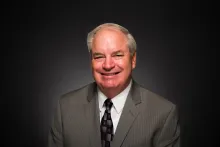
Robin Webber was born in Chicago, Illinois, in 1951, but has lived most of his life in California. He has been a part of the Church of God community since 1963. He attended Ambassador College in Pasadena from 1969-1973. He majored in theology and history.
Mr. Webber's interest remains in the study of history, socio-economics and literature. Over the years, he has offered his services to museums as a docent to share his enthusiasm and passions regarding these areas of expertise.
When time permits, he loves to go mountain biking on nearby ranch land and meet his wife as she hikes toward him.
