
Robin S Webber
Jesus in facing Satan in the wilderness threw down the gauntlet 3 times when stating, "It is written!" not merely defensively, but on the offensive! The Apostle Paul would later inquire "What says the Scripture?" (Rom. 6:3) I.E.--Not merely what we think it says, but how in turn we internalize and express it before God and man. How may we expand the internal "new wine skin" granted by God and further fill it with God-breathed revelation (2 Tim. 3:16)? 5 Keys ("The 5 R's") are shared in compass-like fashion to grant us an enriched manner in studying "God-breathed" revelation to not merely inform and inspire us, but ultimately to transform us.
This transcript was generated by AI and may contain errors. It is provided to assist those who may not be able to listen to the message.
Well, we want to welcome everybody today here on God's Holy Sabbath Day. We want to welcome our San Diego congregation, as well as those that may be tuning in. And as I mentioned during our own local announcements here, I'm going to be building upon the very fine foundation that Mr. Butler gave us, dealing with the Word of God.
And what he stressed, which is so very important, is to think of the words that Jesus Christ Himself said, It is written. But we have to know what is written and how to be able to handle that, and how to share that with others in a spirit of love and humility. And yes, as much as we know, correctness. In so doing, I'd like to begin by sharing the story with you. In one part it's humorous, and in one part it's, well, mmm. But I'm going to share it nonetheless, to be able then to build on that foundation and to move forward. When a clerk started working at a store, the owner of that store said that whatever we do in this store is that we want to use Scripture at all times to back up everything that we do. Well, the clerk answered, fine, no problem at all. Well, a lady came in and she wanted some material. And he got out some and laid it out and showed it to her. And she said, how much a yard? How much? And he came back and said, two dollars and fifty cents. Well, that's really nice, but I want something a little bit more exquisite. Something a little bit nicer that I can really get into. So he took the material and he went back to the store looking. At least that's what the lady thought. But what he did then was that he just kind of ruffled up the same material, kind of stretched it, kind of did this, kind of did that. And then brought it back and said, well, here it is. And she kind of looked at it and then she said, hmm, that's kind of nice. How much?
He said just five dollars and fifty cents. She said, I'll take it. Now, remember the first time it was 250. Now it's up to 550. Do I hear 650? No. And anyway, then she said, well, how much is it? 550. She said, I'll take it. Now, the owner who said that you have to have a scripture for everything was watching all of this and asked them, after the lady left, paying more for the same material, he said, do you have a verse to back up your deal? And he said, oh, yes, absolutely, Sir, said the young clerk. She was a stranger and I took her in.
And that's where I'd like to begin and to build upon as to how we learn scripture, interpret scripture, and are then able to share it with others.
This story is a poignant reminder that how we internalize, how we understand and express the word of God, be we ministers and or be we lay people, has consequences. Not only for ourselves, but to the many others with whom we have come into contact with, as to whether we are serving God, worshiping God, even in thought, word, and deed, and are simply thinking of ourselves and serving ourselves.
Join me if you would. Let's open up the Bibles today. That's why we're here. Join me in the book of Psalms, Psalms 119.
Let's explore and study a verse together here to begin with. Psalms 119, and picking up the thought, if we could, in verse 105.
Familiar, but perhaps needs to become even more familiar, where it says, your word is a lamp to my feet, and it's a light to my path.
And I have sworn and confirmed that I will keep your righteous judgments.
Now notice what it says. Your word.
Think of this. We'll use the antique term of a light and or a lamp. We might say today it's a flashlight to the path where Jesus says, I am the way, I am the truth, I am the life. But let's note who is speaking. The one that is speaking that said John 14 in verse 6 is the one that is the living word.
He is the spoken word, and in here he is the written word. Very important to understand as we begin to explore the scriptures. All of these, this verse again, let me focus on 105 again. Your word.
Well, where's that? Well, it's right here in front of us. It's on your lap right now. Your word is a lamp unto my feet. Nice words. But we have to know out of that, number one, how to hold the lamp. How to hold the lamp. And then, number two, where to shine the light.
And then, number three, what to look for. What to look for. Or it serves no one. Not you, not God, not our neighbor, not a family member. Just ask our lady friend the way she was handled by the young clerk that we just mentioned in the story. One thought that Mr. Butler brought out that I'd like to build upon a little bit more simply this. Let's appreciate and consider for a moment that God's greatest gift to us is also our greatest challenge. It's almost like an oxymoron, if you know what an oxymoron is. I'm not talking about cattle, oxymoron. God's greatest gift is our greatest challenge, and that is to master our free will that he has gifted us with.
He was not monkeying around at the end of the sixth day when he made man. Man is not a monkey. My great-great-great-great-granddaddy is not an orangutan. My triple great-granddaddy into the Pleistocene period is not a love sick of me, but they got hit by sunlight and all of a sudden, voila! And there was life. No, that's not it. There's a difference. As much as the primates are around us, we're not a monkey. I'm not a monkey's uncle. We are human beings. We are made in the image of God, and in that image he gave us this free will to ultimately harness and to make the right choices. And that very same free will, choices in the Bible, will always come into one contact point. Know who that is? You and me. The Word of God and free will come into a contact point as to whether we're going to serve God or whether we're just simply going to serve ourselves. And that means choices. We can choose to use God's Word as a guide or not. We can choose to open the Bible or not. But here's one thing I want to share with you. I can't move. See, those that are watching elsewhere, they've told me not to move today because of the microphones from here. But let's do this. This is called interaction. Would you all do me a favor?
If your Bible is open right now, would you close it? I'm going to close it.
Everybody closed?
A Bible that is not in use, a Bible that is closed, might as well be lost.
Because the Word of God is lost on you, and you are lost away from God, unless you are able to be washed by the water of the Word and to breathe in the inspiration of God, which is a verse that we'll go to a little bit later. A Bible that is not opened might as well be lost. And that's why I'm giving this instruction to you today, how to use that Bible. But opening up a Bible is only the first step. Opening God's Word without opening our hearts is going to get us nowhere. Opening up the Word of God, I've opened it up. But if my heart is not open, we're not going to go anywhere. And God's going to be upstairs saying, come on, come on, don't you remember what Weber said here, that my son who came down to you is not only the living Word, but he spoke words, he is the spoken Word, and those words were encapsulated that we might have life and a different life in a world which is increasingly getting darker and darker. And even in this nation that we live in, in which our national motto is, until they change it, is, in God, we trust. But do we? By how we understand the Bible and share it with others. The bottom line is just like the young store clerk. A lot of people read things into the Bible rather than allow the Bible to read them. And that's all the difference between the world and you. It's not only to read the Bible, but then to allow God's Word to read us and respond to it. That's why today, and this is the title of my message that I'm going to be giving you, Five Keys to Meaningful Bible Study. Five Keys to Meaningful Bible Study. The purpose is to help you not only to read from the Bible, but also to experience the joy, the joy of receiving God's Word as it was intended by God, not our young friend the store clerk that took advantage of people. Because even in the world of religion, there are pastors, there are ministers, unfortunately, that will buy their read on things and or buy their misuse of things.
Take advantage of the people that are in front of them. We don't do that here.
We don't do that in the United Church of God. We are here to be servants of God.
We need to be loud where God is loud. We need to be quiet where God is quiet. And in between, we can use a little bit. But also, we want to make sure that we don't get over our skis.
Because when we as ministry get over our skis, we are not the only ones going down the snowbank.
Oftentimes, we take people with us. So in all of this, what I'm sharing with you today is simply this. I'm speaking to myself up here as I'm sharing this story with you. And the purpose is then to do that. Join me if you would in Psalms 119. Again, Psalms 119. And let's pick up the thought if we could in verse 17. Psalms 119 and verse 17. Excuse me. Psalm 119 verse 17. Okay. Deal bountifully with your servant, that I may live and notice, keep your word. You just haven't bumped into it.
Once God reveals that to us, we're to hold on to it. We're to keep it. It's to be a foundation.
Notice that I may live and keep your word. Open my eyes that I may see wondrous things from your law. I am a stranger in the earth. Do not hide your commandments from me. My soul breaks with longing for your judgments at all times. You rebuke the proud, the cursed, who stray from your commandments. Remove from me reproach and contempt, for I have kept your testimonies.
Interesting when we read that. David was a stranger on this earth. He was a stranger on this earth.
Sometimes people can get lost when we're in strange territory, and they can get lost, just like people get lost in the wilderness. In the wilderness, you need a compass. On that compass, unless AI is maybe we're all going to have an AI plug in us one time. We won't need a compass. It used to be when I was in the Cub Scouts, it was north, south, west, and east. Ocean's over here, right? That would help. We were always looking for that pointer up towards the north. That's kind of how God's word is, as we're going to approach it this afternoon and break it down. A compass may have four directions, northwest, east, and south. I'm going to give you five keys about how to provide, having the same purpose. Number one, to get us back on course. It's one thing to get back on course. It's another thing to stay on course. Or am I the only human being that's ever had that challenge when we face God's word? It's not just to get on course, but to stay on course. So I'm going to give you now what I call the five R's. First one, here we go. And if you don't get any everything, I'm going to pass out my notes to you anyway. I'll send them out tonight or tomorrow to all of you because I may not cover it all. Number one, the first key is revelation. God's word is a revelation from above. Let's appreciate the words of Moses in Deuteronomy 32. Would you join me over in the fifth book of the Bible, Deuteronomy 32? And picking up the thought, if we could, in verse 44.
Deuteronomy 32 and verse 44. Here we go.
Deuteronomy 32 and verse 44. Yeah. And so Moses came with Joshua, the son of an island, and spoke all the words of this song, and the hearing the people. And Moses finished speaking all these words to all Israel, and he said to them, Set your heart on all, all the words, which I testify among you today, which you shall command your children to be careful to observe, all of the words of this law. For this is not a futile thing for you, because it is your life.
And by this word you shall prolong your days in the land that you cross over the Jordan to possess.
The words of God are life. It's just subtle here from the words of God are life. What does that mean? We need them.
We continue to need to read them, to rehearse them, to know them, to not only breathe them in, but to breathe them out. Now, when you think about survival, it's very interesting that we can go five minutes without air. I know we recently baptized somebody in this congregation.
We didn't hold him down for four minutes and 59 seconds. We brought him up pretty quickly. We didn't want to scare him. He's smiling right now. His initials are BJ, and we all know BJ here, and glad to have he and his wife with us. But you can go five minutes without air. You can go 30 days without food. You can go 10 days without water. But there's one thing that we cannot go without, and it's a four-letter word, hope. We cannot, as human beings, go without hope, and know that the one that offers us hope has elected us to come to understand his word and to follow him in this day and at this time. The Apostle Paul built upon the words of Moses about 1500 years later. Join me, if you would, in 2 Timothy 3. In 2 Timothy 3, and in 1 and 2 Timothy, they are often called the pastoral epistles, but in 2 Timothy, and picking up the thought if we could in verse 14. Here we go. But you must continue to stand, pardon me, but you must continue in the things which you have learned and have assured of, knowing from whom you have learned them. Then notice what it says here. And that from your childhood you have known the holy scriptures which are also to make you wise for salvation through faith which is in Christ Jesus. Now notice verse 16, extremely important. All scripture is given by inspiration of God and is profitable for doctrine, for reproof, for correction, for instruction in righteousness that the man, and do I dare say in the 21st century, and the woman of God, may be complete, thoroughly equipped for every good work. Now if we draw our attention as we go up here, all scripture is given by inspiration. You see the word inspiration and that's a Latin word, comes off the Greek word before that, and you think of spire, inspira spire. This is talking about breath, you know, how we expire. What this is basically saying, if you'd like to jot this down, and you can see this in the commentaries, what Paul is saying to you and to me 2,000 years later, simply scripture. Holy word between two covers is God breathed, and you can put a hyphen between that if you want to be correct. It's God breathed. Now it does come through human vessels. It comes through a Moses. It comes through a David. It comes through a Nehemiah and throw in Habakkuk and Malachi. It comes from Paul and James and John, but the inspiration, the spirit that guides and opens up what they wrote comes from the throne of heaven. That's our faith. That is faith, that God has, as a good father, has not left us alone. And Jesus, as that heavenly rabbi, that teacher, has not left us alone. But we know how he walked and how he honored his father when he was here, born of woman, son of man, and tinted amongst us that we might be able to later, be able to touch God, and through Jesus Christ, that we might be touched by our father above.
When we understand this and that this God has chosen to draw us towards him because of his purposes, and as Jim so eloquently and continued to pound away there in his message, and to experience his great love, something is going to happen in our response. Join me, if you would, in the book of Ezra. Ezra named my Esther Job. And it's before Psalms. If we go back to Ezra in the book of Ezra. Okay, and just look at Ezra 7 and verse 10, if you'll join me there, please. In Ezra 7 and verse 10, notice here's Ezra. And this is the time, post-exile, the people of Judah have gone back.
Jerusalem is once again becoming a center of activity. We have Ezra, we have Nehemiah, we have Zerubbabel, the different figures that are helping to restore it. But here's Ezra, and notice what happens in verse 10. For Ezra had prepared his heart to seek the law of the Lord, and to do it, and to teach statutes and ordinances of Israel. Before we, as God's spokespeople, can share with you. We likewise, because we just use bad English to make a point, we is just you. We are people. We have opportunity. God is elected to utilize us to talk about his truths, but we have to prepare our hearts. I want you to always remember something. At the resurrection, it's not your brain that's going to be... You'll have your personality, but I'm making a point. God doesn't want your brain. He wants your heart. I remember Denny Luker, and some of us finally remember Denny from years back. He'd always say, I want to be a heart Christian. That doesn't mean to be all over the place, and like this, and you know. No, but he always centered on the heart.
Sometimes we simply remember, or we take it easy based upon, what we know. But what we know, in God's word, and reading it and practicing, what we know only goes so far. That's only information. God not only wants us to be informed, he not only wants us to be inspired, but he wants us ultimately to be transformed, to be transformed. And sometimes we just settle for information. Sometimes we can go up and down when we hear some inspiring message, or this or that, or read something inspiring. But inspiring can come and go. Information and inspiration are vehicles towards what God ultimately wants in all of us, and that comes by the Holy Spirit, and that is to be transformed into the image of his Son, Jesus Christ.
Why is preparing our heart then so important to allow God's revelation to flow through us?
Many of us can sincerely bring, when we're studying the word, myself, in my eighth decade, seventy-five, going a long way back. I had a lot of religious teaching. This church, in that church over here, over there, in the Church of God community of thoughts that were thought prevalent and relevant fifty years ago in the Church of God community, that we've learned from and gone a different course, elevated our closeness to the Scriptures, and understanding that God will do what he will do in his time. And one thing I learned from many, many years ago when it comes to prophecy, I don't set dates. We know it's coming. I don't set dates. What I learned long ago and far away is the only date that I set is with my wife. And she may say no. She hasn't yet. That's a safe course. God gives us much to understand, much to know.
But he's got the keys. And he not only created time, but he is the master of timing. And he will do things in his way in his time. But until then, we still need to be at alert.
Let's go to Luke 5.37.
Gospel of Luke 5.37.
Let's notice what it says here. No one puts new wine skin, no excuse me, no one puts new wine into old wineskins, or else the new wine will burst the wineskins and be spilled. And the wineskins will be ruined. But new wine must be put into new wineskins and both also preserved.
My simple question to you, and listening to Mr. Butler today, his message, listening to this message, knowing that we're coming up to the Feast of Trumpets, knowing that we're coming up to the Day of Atonement, that Day of Holiness, knowing that we're about to embark on the Feast of Tabernacles, which is a picture of the wonderful world tomorrow when Jesus Christ comes back to this earth and reigns, and his kingdom begins to spread from Jerusalem.
And a lot of things are going to be planted. A lot of things are going to be different. My question is simply this, are you still holding on to your old wine skin, or are you ready to break out? Just break out and say, God, I need to be stretched. I need to be filled more. Allow me as your servant to have the capacity to understand what I need to understand today in 2026. Because so often we can become impacted by where we grew up. Maybe who was our first minister might have been a great guy.
That's not the question. Or this happened, or that happened. Or our own way of approaching the Gospels. Ask God to not only open up your eyes, but to open up your heart so you can be in tune with him, and not just everybody down here below.
And have that private time with him to study his word. I'm going to share something with you. I don't know where it's in my notes. I went to Ambassador College for four years. A lot of classes. A lot of classes on the Gospel, the Gospel, four Gospels, Paul's teachings, and this and that. There's about 10 things that I take away from my experience in Ambassador College, but this is one that I'd like to really share with you, because I think it will make all the difference. And it wasn't in a religious class.
It was in a class I minored in education. And it was a class on education. How many of you remember Mr. Floyd Lochner? Anybody remember Floyd? Yeah. Yeah, you know him, too, from Floyd Lochner. Great guy. He'd actually been our principal at the parochial school, Imperial schools in Pasadena. But I had him in, I think it was second year. And there's one thing that Dr. Lochner said, because you know and I know, in the Church of God community, we love to mark our Bibles.
That was my first impression when I walked in the San Diego congregation in the beginning of 1963. I said, and I've shared this with you before, look at these people. They are really serious about church. And I'd look over and I saw this guy writing in his Bible. I had never seen that in the Lutheran church. No good Lutheran would ever write in his Bible in the church, at least back in the 60s.
In fact, the Bible was always in front of you, in the back of the pew, but you might not use it during church. And these people were like taking class. I thought this was church, you know. This was class. And not only that, but then the guy got out his colored pencils. And I said, what's he think God's word? Is it a coloring book or what? And he's coloring. He's activated. He's wanting to learn. You remember how those days were? You know, this was all brand new. Wow! Dr. Lochner, though, who goes way back, said this, everyone should have a Bible that is not marked, that does not have those, what we call, you'll remember this term, inspired margins.
Everyone needs to have a Bible that is not marked, and that you open up, and you take a walk with God. As if there's snow in front of you that nobody has ever stepped upon, and you and God as your partner are walking through this alone. Without anybody else's thought— are other people's thoughts good?
Yeah, please understand that. Understood. I hope I've helped you here for the last, what, 25 years. But that, to recognize, sometimes you just need to have that walk with God without everybody else's voice, and just spend that time with God, just as if there's that snow in front of you. It's virgin snow, it's pure, you don't see anybody's footprints, not even the local raccoon on it, and you're going to go over that, and you're going to walk with God and experience Him, and maybe learn something that you've never learned before.
Just a thought I'd like to share with you. Let's go to 1 Corinthians 2, and then we'll finish this point.
1 Corinthians 2.
1 Corinthians 2, just remind us again, but as it is written, 2 I has not seen, neither ere heard, nor have entered into the heart of man, the things which God has prepared for those who love Him. But God has revealed them to us, not about us, it starts with God, but God has revealed them to us through His Spirit.
For the Spirit searches all things, yes, the deep things of God. For what man knows the things of a man except the Spirit of man which is in him, except even so no one knows the things of God, except the Spirit of God. That's what makes the difference between man and the monkey.
That's what gives us the opportunity to have free choices, that Spirit in man. But there's that other Spirit, a Spirit above that, that interrupts and intervenes and says to follow me. And it's God's gift. It's the very Spirit of, it's the very essence of God the Father and Jesus Christ that is now dwelling, the indwelling inside of our hearts. Our hearts become the temple of God. That's where He resides. That's where He presides. This is where we hear those voices of Isaiah 30 and verse 21. This is the way. Walk you in it. This is the voice, that echo that comes to the Gospels where Jesus says, follow me, follow me, follow me. But you have to have a heart for this.
In finishing this point, I want to share a thought with you. What is most important is our Heavenly Father looks down upon us. Do you know what your IQ is? Been tested?
Most of us think of IQ as intelligence quotient. But you got to remember what it says in the book of Corinthians. God is not called the mighty, the strong, the great of the world, and more power to them. But God says in 1 Corinthians, He is called the weak things. He's called this. He's called that. That no flesh should glory. Here's the IQ that you might hear. It goes to the notes if you want to take a note, and that's simply this. The IQ that we're talking about today is not intelligence quotient. It's identity. It's your identity quotient. It's how you identify with God, and that He identifies with you that you're ready and willing and desirous to drink in more of His word, to be washed in the water of the word of Ephesians 4 verse 26, and to give yourself to Him completely. Let's go to point number two real quickly. The second key to focus on is, the second R is relationships. The first was revelation. The second is relationships. In training with the compass, the key direction is north. Likewise, whenever we're lost or wandering in life or wandering in the scriptures, and they both come together, center on relationships. They will always get us back on track with God. And, Jim, you spoke to this. I'm just going to build upon it right now.
Relationships. God wants a relationship with us. When you go back and you think about it, a relationship is what God is offering. If you just gently go down the Bible quickly, I'm just going to roll this off right now. I'm going to send out my notes to you, but simply this. From beginning to end, it's about relationship. In Genesis 1, 26 through 27, I've already mentioned it, and God, and the one that was the Word that we now know as Jesus Christ, when it says us, it said Genesis 1, let us make man in our image, and after our likeness. Wow!
Nothing like that up to that point the first five days, but on the sixth day, God broke new ground. He wanted relationship. He wanted to be able to mold and to develop, like the pot or the clay, and take that clay out of the Garden of Eden and shape this man, and that would bring life to that man as the Spirit came into him, and that their eyeballs might be able to lock, and that there begin to be a relationship. He extended himself from eternity into this world of time and space to create a being. And yes, time and space, and yes, in a physical way. He wanted that relationship, and he wanted the first thing for Adam to see is to look into his eyes. But you know, it's very interesting. You look at the picture of Leonardo da Vinci, or is it Michelangelo, of God, you know, as he's reaching down, and you know, the touch with Adam. God's arm from on high goes down. It's direct. It's powerful. It's wanting to interrupt. It's wanting to bring back and say, let's do it together. But if you ever notice Adam's hand, Adam's hand is like this. It's limp.
Even the Italian painters caught the story of Genesis, that God wanted to give everything, but you know, and I know, and you know, and I know that all of us at one time or another have also bitten from the fruit of the tree of good and evil when God was offering us the fruit of the tree of life. The first commandment, Exodus 20, I am the Lord your God, which brought you out of the land of Egypt. I am the name of God. I am. I am that I am. If you ever remember the Ten Commandments with Charlton Hestid on the mountain, that voice that came out through the cave, through the canyons, I am that I am. I am the Lord your God. Notice this in studying the Bible, as Jim is encouraging us to, always look at pronouns. I am the Lord your God. God wanted that intimacy and that relationship and made himself open. We also look at Leviticus 26 and verse 12, where it says, I will be your God and you will be my people. Underlined and bold, God is always seeking relationship. Jesus, in stating how we are to be talking with God, starts with relationship.
Help me with that. Matthew 6, remember that? Disciples say, Lord, teach us how to pray. And so we have that model prayer. And how does that model prayer begin? I don't know. I have about a little bit louder. Our Father. It's about relationship. That's what you need to be looking at when you're wondering, what in the world am I doing down here? Does anybody care to recognize that we have a God that wants our best? He is our Father.
Jesus didn't say, He's my Father and you can't have Him.
Jesus was willing to share His Father with us. And He was sent by His Father to this earth, made in the form of man, to inform us exactly about that. That's how you study the Bible. You know how I am about small words in the Bible. I'll use an example. When I'm writing columns for the United Church of God, the Follow Me column, I look at every word. I'm not saying this is perfect, please understand. You already know that. But when I'm writing for that column, I'm looking at words.
Words describe things. Adjectives. How quiet is the adjective? Does it need to be quiet? How powerful is the verb? What is going to be the predicate nominative? What is going to be the direct object? And the one thing about direct objects when we're writing columns, when we're giving messages, when we're talking to one another, as Jim, you brought out, is the direct object is that we are the direct object of God's love. Again and again, always and forever. The most beautiful four-letter word in the world. Love. We think again of John 3 16 through 18 about the relationship. For God so loved the world that he gave his only begotten son, that whosoever should believe in him shall not perish but be saved. For God did not send his son into the world to condemn the world, but that he might save that world. Relationship. We think again of 1st Corinthians, 1st John 4 7. God is love. I'm not going to go through all of them. I'm going to send them out to you and you can read them. Here's the bottom line. When it comes to...we often think of the...a lot of people think of the Bible as a book of prophecy. Amen. It is. A lot of people think of it as a book of rules. Yes, it is. Yes, it is too. It's not just simply grace versus law. It is grace and law. Grace comes first because we would know nothing about this, but by the divine touch and the favor of God to work his miracle as his spirit becomes ours. But there are rules of engagement as well. Here's one thing I'd like to share with you, simply this as we end up at this point. Rules without a relationship. Am I talking to the right audience? Are there a lot of rules in here beyond the ten? Yeah, right. Absolutely. But rules without a relationship are like a postcard without a stamp. It's not going to go anywhere. Rules without a relationship is like a postcard as colorful as it might be, but everything that you might have written on the back is going to go nowhere unless it has a stamp. Let's go to point number three. The third key is to focus, yeah, guess what, on rules. Absolutely. You can have the shiniest new car to drive the road, but if you don't have an instruction manual, well, good luck on the road. Likewise, God has given us a gift by, yes, His favor, yes, by His grace. He's opened our minds to how we are to live before Him.
An instruction manual comes with all of this. When you recognize who the giver is and the cost behind it, you're not going to forego how He says to use it or to drive it. One thing that I'm actually going to be giving this message back in Walnut Creek. I think I've given it here before, but in Genesis 12, when God spoke to Abram in Ur of the Chaldees, He said, basically, in my own words, get up, get out, and get going. The word of God came to Abram, who is a prominent individual, I think, even in Ur, but a city that was based upon paganism. The word, and it is written, to use that famous phrase, is there, He said, to get out. And the amazing thing is, within two verses down the line in verse four, it says, and Abram departed. Abram went. When God told him to do something and created a rule, and that Abram did not respond based upon a rule in fear, but in faith, that it's for his well-being, even though he didn't know where he was going for that man, went the rest of his life as a pilgrim.
Going up the Tigris Euphrates, going up the Mesopotamia, going into upper reaches, going over to Syria. He was a pilgrim. And the only two things that defined Abram, later Abraham, are two markers. I've given this message to you before, but I'm warming up for Walnut Creek later on, because I'm going to give a whole split on it. It's simply this, is that he's known by two things. Number one, he was a man of a tent. He obeyed God. He became a pilgrim. And a pilgrim is one that is moving towards a destination or a shrine that is assigned. But as soon as you put your roots down, you're no longer a pilgrim. And Abram lived his life as a pilgrim and lived in the tent, except for one small portion of that journey over the years. But that was only the outward sign of Abram. The inward sign was this, and this was the secret of Abram. And that was what made him tick to be able to stay in that tent, is that he never worshipped God on another altar, other than that which he himself built for God. He was God's child. He was God's man, even though he's 75, 100, 120. I think, what, didn't he go up to 175? Do I hear 200? No. He was up there, right, Sandy?
He was older than you and me combined. That's a lot, okay? So that, and that's what he did.
He took God at his word. When it says he told Abram to depart, that was written, and that was preserved when we study it, for us to notice when our time comes, when there's a challenge before us, you go, hey, what? Are you kidding me? Really? No way.
But it's God's way. And in faith, in Abram, and Abraham later, was the father of the faithful.
He was also known as the friend of God, and yet he abided in God's rules. Let's go to the fourth key.
The fourth key is to focus on reward. To focus on reward. Another R. All of these are R's, right? Revelation, relationships, rules. We're on number four. The fourth key is to focus on reward. The end result of godly revelation, staying in relationship, yielding to his rules. Not man's.
You know, as we're coming up to the autumn festivals, God said to go up, to be a pilgrim.
We're not talking about John Wayne.
What we're about to do, we observe God's holy days. We don't observe that, which is syncretistic over 2,000 years of merging paganism with gospel. It's not how God works. It's either or.
And to recognize that we see that Jesus and the apostles, what did they keep?
They kept the festivals. But all in light of what God is doing, and that Jesus Christ is in each of those festivals. They are not fossils and relics of the past. They are not just for one people, the Jewish people. For today, they are for the Israel of God. What's that? Galatians 6, 16. That's Paul's words. Both Jew and Gentile. We are the Israel of God. We are those that are prevailers. Israel means to prevail. But we only prevail by God's Spirit. We only prevail by reading God's Word to keep us on track and on tune and on the path and being that hearing aid to that one that is the living Word, that is the spoken Word, that is the written Word.
The fourth key is a reward. From beginning to end, God speaks of reward. Deuteronomy 30, fifth book of the Pentateuch. Blessings and cursings I set before you. Therefore, choose blessings. Choose blessings. Numbers 6, 23 through 27. I like this one. I'm going to show you something. Numbers 6, 23. In Numbers 6 and verse 23, this is the very famous benediction that Aaron was told by Moses that God wanted him to do. It says, the Lord bless you and the Lord keep you. The Lord make his face shine upon you. Be gracious to you. The Lord lifts up his countenance upon you. That means he's looking up. He's looking right at you. You ever seen this one before? You know, today, you know, you go like this. You know, Bob, I'm looking at you, man, right here. You got my countenance? I've got your countenance. There's that connection right there. That's how God the Father is with us. That's how Jesus Christ is with us. But let's go further. It says, the Lord lift up his countenance upon you and give you shalom, give you peace. So they shall put my name on the children of Israel. And this is the neatest part of this whole verse. And I will bless them. God is basically saying, I will do it. You do your part. You do what you're able to and what you can't do and what only I can do. We're going to put that all together because I am your God. You are my people. You are my children. We're hitting this together. I want to share one other thought with you on this. Let's go to Deuteronomy 17 when it comes to reward. Deuteronomy 17.
We are almost done, folks. Hold on. Deuteronomy 17.
But I wanted to read this to you. Most of you will be familiar with this story. Some of you that are new to the way. And this is a very interesting story. One that maybe you've heard before. That a king of Israel... Actually, this is proscribed ahead of time because God lets Moses know that basically there's going to come a time when they're not going to want to have God as king. They're going to want to have their king be like all the other kings. But God says, no, whoa, whoa, whoa, wait a minute. To keep this future king straight, this is what we're going to do. This is the deal. And it says, and also when he, that's the king, sits on the throne of the kingdom, that he shall write for himself a copy of this law in a book from the one before the priest, the Levites. Speaking of the scriptures. And it shall be with him and he shall read at all the days of his life. Very interesting. It doesn't say every other day, every third day. He needed to have a transfusion of the divine every day lest he thinks he himself is divine. And you know how that worked when they didn't follow these rules. And be careful to observe all the words of this law and these statutes. That his heart, not his brain, but that his heart, the heart is the engine of everything that motivates us forward, whether it's for good or for ill, for holy or for human.
The heart is what affects the brain. The heart is where the motivation is. That's where the engine is. The heart affects the brain. The brain affects the tongue. The tongue affects others. That creates acts. That creates deeds. Sometimes we say, oh, I wish I could take that back.
My eye teeth didn't see it. I wish I could take it back. Too late. Too late. Oh, you can repent, change. It starts in the heart. We want to be heart Christians and at the same time use our brains, but it starts in the heart. Why? Why is he going to do all of this? This is a... are you with me? This is a rule. God gives, you know, he's the sovereign of the universe. He's going to give the ruler of his people a rule. This is how it's going to be done. You're going to write this out on your own. You're going to write all of this so you have your own copy of handwriting, of my words. That his heart may not be lifted above his brethren. That he may not turn aside from the commandment. Oh, the rules. To the right hand or to the left. Well, I'll go... no.
Right or left. No good. And that he may prolong his days in his kingdom, he and his children in the midst of Israel. For doing this, for being a servant to his people, being likened to them, not getting the hottie, heady head. There's a reward. He will remain on the throne. And not only that, but it's going to pass on to other generations. Interesting.
Point number five. The fifth key, last key, is personal responsibility.
Personal responsibility. Yours. The R there is responsibility. Jesus always directed his audience to the Scriptures. Be it a spirit being, Lucifer out in the wilderness, after 40 days of fasting, and the serpent... you could say the snake... the serpent comes and taunts him and tempts him with this and that. 40 days out in the wilderness. And every time, Jesus comes back. I love this story.
Hope that one day in the wonderful world tomorrow, God will have a video of everything that's ever happened. And I want to see that take... can I say this with a smile? I want to see that take down of the serpent in the wilderness. He comes out of... you do this, you know? And every time, there's a rhythm, and it never breaks. Coming out of Deuteronomy 6, he knew the Scripture. He was the I.M. He was that God that dealt with ancient Israel, but he practiced what he preached.
It is written. I can just see Lucifer. Oh no, not a lecture. Comes back again. Comes from another angle. It is written. Comes back a third time. You think third time might be a charm?
Not for Jesus. He comes back and says, it is written. Let's always remember that Jesus is not only the living Word, he not only gave the spoken Word, but it is the written Word for you and I to emulate and to follow Jesus Christ to this day. And to remember what the Apostle Paul said in Romans 4 and verse 3. I love it, and I want to share with you simply this. For what saith the Scriptures. When in doubt, when you're at a fork in the road, maybe on Mondays, Wednesdays, or Fridays, Romans 4 and verse 3, what saith the Scriptures? Are you bold enough? Are you daring enough? Are you courageous enough? Because you might recognize that what the Scriptures say might alter your good thoughts or your smooth path, but God asks you to step up. And just like our Lord and Master to be able to say, it is written. Five keys for you today. As we conclude, let's come to point. And that is simply to understand one important item regarding the Word of God.
That you hold in your hand, that you hold in your heart, and desire to be the guiding compass of your life. It's not written to trick, to scare, confuse, to handicap you, or to overwhelm you. But always, and always, and always to remind you of God's great love. You say, this is love.
We go back to the book of Romans, Romans 5, where there's a question about God's love. And God says, Paul scribes in there, this is love that he gave his son. Is this not enough? I think so.
Let's conclude Philippians 4. Join me if you would. A quick verse.
Philippians 4 and verse 4. Rejoice in the Lord always. Rejoice in the Lord always. Rejoice when you rejoice. That is joy on steroids. That's joy having taken its vitamins because you've had your vitamins by reading the Word of God from the living God. Let your gentleness be known to all men. The Lord is at hand. Be anxious for nothing. Who? Me? Anxious? I've had a good... No. It says, be anxious for nothing. But in everything by prayer and a supplication. That means praying again and again, sometimes about the same thing. Supplication is coming back to God. God, almost like that lady that came before the judge. And the judge said, well, anybody, please save me from this woman she keeps on appearing.
God says to come boldly before his throne and be anxious for nothing but in everything by prayer and supplication with thanksgiving let your request be known to God. And the peace of God, which surpasses all understanding, which is better than the facts that are on the ground in your life maybe on this Saturday or Sunday or something that's coming up. Whatever God has in store for us is ultimately by the Spirit, his strength and his love and his wisdom and our growing patience because God's best... excuse me, God's perfection is always more than our human best.
And it will guard your hearts and minds through Christ Jesus.
Five keys to more effective Bible study. I'll be sending out my notes to all of you. Some of you that are watching this in the future, wherever you are, and I do get these requests sometimes from different countries and wherever, you feel free to write me and I'll send you notes too.
Have a blessed Sabbath wherever you are and we're going to have message chat here five minutes after church.
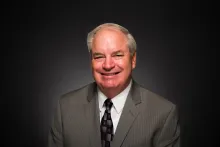
Robin Webber was born in Chicago, Illinois, in 1951, but has lived most of his life in California. He has been a part of the Church of God community since 1963. He attended Ambassador College in Pasadena from 1969-1973. He majored in theology and history.
Mr. Webber's interest remains in the study of history, socio-economics and literature. Over the years, he has offered his services to museums as a docent to share his enthusiasm and passions regarding these areas of expertise.
When time permits, he loves to go mountain biking on nearby ranch land and meet his wife as she hikes toward him.
