

Robin S Webber
2 Peter 3:18 implores us to grow in the grace and knowledge of our Lord and Savior Jesus Christ. How may we as members of the Body of Christ not only know, but grow in worshipping God not only "in the truth", but in the spirit" (John 4:24). As we move into a new calendar year, here are 7 signs to show us how to OPEN UP OUR LIVES before God and His Son in our walk before Them and those here below. The opportunity, the role, and the responsibility lies before us and in us to be about our Father's business.
This transcript was generated by AI and may contain errors. It is provided to assist those who may not be able to listen to the message.
Okay, we want to welcome everybody. Here we are on the Sabbath day, and we want to welcome those that are on our telecast here today. Welcome, welcome. And also those that may be listening to this message in the days, weeks, months, and sometimes the years that are ahead of us. And I think this is one that will be hopefully useful and productive in our walk towards the kingdom of God.
As we enter a new calendar year and face the future, and face that future—and I want to break this down right from the beginning—both individually and collectively. And this is going to be a message that deals with us specifically as individuals, but also then brings us together individually for the great call that God has given us.
I'd like to share with you today the opportunity, the opportunity. And the opportunity is a word that is Greek in nature, just as Bob is talking about the Greek in his first message. Opportunity means that when the time is right and comes, that there is that moment when the tide is up, and that we are able to reach the dock and unload the merchandise that is in the hull of the ship. And so we're talking about timing.
And actually, when you think about timing, that timing has come to each and every one of us that is here today. And one of my favorite verses over the recent past is simply going to the book of Esther. And I don't think it can be lost just in the book of Esther for Esther.
That was given for us, the message of Mordecai through somebody to Esther, when there was a door in front of her, and going through that door could possibly mean her death. But the message came to Esther, and it said, for such a time as now has the kingdom come. And if you do not do it, somebody will rise. Somebody will be raised up to do it. But now, now is your opportunity to do so. So we have this individual and this collective opportunity that is set before us that also brings responsibilities.
Opportunity linked with responsibilities that all of us have an opportunity to share. Not only what we know, what we know, but are we growing in it? It's kind of a rhyme, and it's on purpose, okay? It's one thing to know something, and we know that it's another thing to do it. And I'll talk about that a little bit later. But I would like to phrase it this way, so it'll stay in our consciousness every moment of the day, every day of the week, every week of the month, every month of the year. Have I covered the bases? And that is that not only to know, but that we are to grow in it.
Because remember what 2 Peter 3 18 shares with us at the very end. It's the exclamation mark. It says, Therefore grow in the grace and the knowledge of the Lord Jesus Christ. So we're not just supposed to know and settle for knowing. We are to grow in each and every step of what God has shared with us to develop.
And we're going to talk about that today because all of us, we have an individual calling, and I'm very strong on an individual calling. And of course, that's woven into a collective calling as well. But to recognize that we have something that is before us, because all of us, we have in a sense, we know who our daddy is. It's our Heavenly Father. And all of us are, number one, a child of our Heavenly Father, no matter how old we are.
Number two, we are a disciple of Jesus Christ, His Son. That's how I always like your phrasing. We never want to separate the Father from the Son. They're working together, and they come at us in different ways. They are joined together at the hip. They have a hip. At the hip with love for one another, love that is inherent within them, and then it spreads out to you and me that accept the calling of being a child of the Father and being a disciple of Jesus Christ.
So we're going to weave this all together today, and I hope you won't mind, but I'm going to be using a four-letter word during church. Oh, got some people up. But you're not going to have to stop up your ears. It's a good four-letter word. But I'm going to share it in a few moments, okay? Boy, you all woke up all of a sudden, okay? I thought you were nodding in agreement, then all the heads went up.
That's exactly why I did it, okay? Many of us have been in the Church of God community for 30, 40, 50, 60 years and more. And we have vocabulary, we have thoughts, we have titles, etc. I'm going to share some stuff with you today that I think is important for you.
Not only is being a member of the United Church of God that you've chosen to associate here, but we're going to be talking about a greater entity, a greater entity which is the body of Christ. And not only that, but what our organization that we've elected to be a part of defines as the body of Christ. I think you'll find it very interesting. So first of all, getting into this, we're going to ask the what. What do we do as members of the United Church of God in supporting the activity that comes out of Cincinnati?
It's found in our mission statement, and this is what, if you want to jot down an A4 letter word, here's one. It is what we do. What? W-H-A-T. Here it is. It's our mission statement. Our mission is to preach the gospel of Jesus Christ and the kingdom of God in all of the world, making disciples in all nations and caring for those disciples. Most likely, most of us that attend the United Church of God have heard that at one time or another, that as we formulated ourselves back in 1995, this is what we elected to do, felt that we were being revealed to do, and that is our mission statement.
I would suggest that most of our members are not as familiar with our vision statement, because the vision statement is actually the primary paragraph in our Articles of Confederation. It's the vision. What is the vision? Remember, it's what the Scriptures say, that without vision, the people perish. So I'd like to share with you what is the vision statement.
When you open up all of our articles and this and that of the Constitution, the vision statement is on top, followed by the mission statement. But the vision statement is the big one, and that's why I'm giving this message today. The vision statement says this. It is a church led by God's Holy Spirit, joined and knit together by what every member supplies, with all doing their share and growing, remember, knowing and growing, growing in love to fulfill God's great purpose for humanity to bring many children to glory.
That comes from out of Ephesians, also comes out of the book of Hebrews, and it's melded together. So these are very primary. I want you always to know what you are a part of and what you are supporting, what you're praying for, but also how we approach others outside of the United Church of God community, and how we approach God, knowing that He is omnipotent and He is loving, and He knows the sparrow that falls from the tree and or the sparrow that is climbing up to Him and wanting to be a part of the same way of life that we are.
Here's what they say in our own Constitution. It's Article 2.1, and this is very important. It says it's under the title of The Church. How many of you ever heard that phrase before? The Church. Am I talking to the right audience? We say sometimes over the years, I think since the time I was 12 years old and started attending the Radio Church of God, there is the Church, and then there is the world. You just don't say the Church of the world. It's always the Church and then the world.
Am I talking to the right audience? Okay. Got to be fair with this. Okay, so we take a look at this, but let's see how we that are in the United Church of God define the Church. This may surprise you. You may have bumped into it before, but it's very important to understand what God is doing. The Church is that body of believers who have received and are being led by the Holy Spirit.
The true Church of God is a spiritual organism. It's a spiritual organism. Its biblical name is the Church of God. As defined in the Holy Scriptures, the Church is the body of Christ and is greater and more inclusive than any corporate or associated organization established by human beings. Interesting. God is wider than us at times, and God knows what He is doing. Even His Son, while He was walking this earth, said, I have followers in another flock that you don't know about. And so in all of this, we have to give something to God and follow God, that God has a great plan, a wonderful plan, and that you and I, by the grace of God, have an opportunity to be a part of that plan.
We're going to be talking about that because God has plans for you, and I'm going to spell out some of them here in just a few minutes. So we take a look with all of that stated now, with all of that stated, more from our Constitution. Together, we preach the Gospel, that is the eugelion, if you want to use your Greek, Bob, the good news of Jesus Christ and the kingdom of God into all the world.
And we are committed to creating and maintaining a positive, dynamic, and nurturing environment based on the Bible, which is the Word of God. And this enables all members to learn and to—there's that word again—and to grow in the grace and the knowledge of our Lord and Savior, Jesus Christ, laboring in love and unity to serve all. That last part, laboring in love and unity. Going back up to the vision statement for a moment, allow me to repeat something, that we are a church led by God's Holy Spirit, joined and knit together.
This is going to be the PowerPoint. I don't know PowerPoint, so I am the PowerPoint. I had a lady come up to me, raising—you know, at the face I tell about that. The lady came up to me at the face, you know—we were so crowded and I love Temecula, but you know, you're kind of like this, and all of a sudden you turn around and you're right there with somebody, and she said she just went like this.
I am the PowerPoint. Somebody's been listening out there. There were others that came up and mocked me other ways, but anyway, I can take it. So to recognize that—but notice what it says, joined and knit together. Here's the PowerPoint on this one. And simply this. We can do this, and this seems nice. Are we joined? In a sense, we're joined. This was over here, this was over here, joined. But what this statement is saying is that we are joined and knit together.
It's hard to get apart. And why does it become hard to get apart? Because we love God, we love Jesus Christ, and we've been given a responsibility to be like God's Son, and to learn not only to be joined, but to be further knit, to grow in that here in 2026. So a question is this. Beyond the words just shared, how do we collectively, person by person, develop an atmosphere committed to creating and maintaining a positive and dynamic and nurturing environment based on the Bible, the Word of God?
See this Bible? See that it's open? A Bible that is not open, a Bible that is not used, might as well be a lost Bible. And we'll talk about that in a few minutes. I'd like you to join me over in John 4.24, Gospel thereof, in John 4.24. In the Gospel of John 4, it's the story about the Samaritan woman. And this is one that I've used for many years now, and it gives me great comfort when I share this with people in John 4, and picking up the thought in...I'm going to come up here one.
A little bit higher. And verse 19. Pardon me for the intrusion here. Chapter 4, verse 19. The woman said to him, that is the Samaritan woman. Remember, here's the Samaritan and the Jew by the water well, Jacob's water well. Sir, I perceive that you are a prophet. Our fathers worshiped on this mountain, and you, Jesus, say that in Jerusalem is a place where one ought to worship. Jesus said to her, woman, believe me. Now notice this. The hour is coming when you will neither on this mountain nor in Jerusalem worship the Father. Now notice this, and this gives credence to what we state in our documents in the United Church of God.
I'm not sure what other like-minded believers might do in their assemblies of this, but this is what leads us to where the body of Christ is. Notice what he says. Women, believe me, the hour is coming when you will neither on this mountain nor in Jerusalem worship the Father. You worship what you do not know. We know we worship for salvation of the Jews. But, I love that word, but, that always means symbol clash.
Wake up. Here comes the big thought. But the hour is coming, and now is when the true worshipers will worship the Father in spirit and truth. For the Father is seeking such to worship Him. God is spirit, and those who worship Him must worship Him in spirit and truth. Words have meaning. Remember when we had that series on what saith the word? Words have meaning. Notice what it says here. It says, God is spirit, and those who must worship Him in spirit.
Now, notice the conjunction and truth. Let me use some Church of God jargon. It's always fun having spoken that dialect for 60 years. I'm sure at one time or another, and if you did not do it yourself, you've heard over a deacon or somebody that met somebody at the door, or having coffee, and the person just thought that they were having coffee, but then the big question comes, When did you come into the truth? Silence. These are jargons that we use, and I say this with a smile.
And obviously the intent is good. The bottom line is this. When we see the words of Jesus Himself, it's not enough to know the truth. It's not enough to know the seventh-day Sabbath. It's not enough to know simply the Feast of Tabernacles. It's not enough to simply not eat the piggy, the oinkie, or those things that crawl out the bottom of the ocean that you say, who would ever eat them but all of the East Coast and the Gulf Coast does. There's more to what you and I are being called to. That's truth. That is the Word of God. And I'm not here to mock the Word of God.
I'm here to expand what our responsibility is as a child of God and as a disciple of Jesus Christ, and that there is a spirit that needs to go along with that, and not only to know, but again to grow. And that is why I am going to be giving this message. Why is this important? We all, you may or may not understand that, and women are allowed to do this.
We don't have our ladies preach in church, but you can preach the way I'm talking about here in a moment when you're on your Mondays, Tuesdays, and Wednesdays. All of us, the loudest sermon that is preached and understood, is not what you say, but what you do. Not your words, but your example. Jesus calls it light. Light that is shown forth. And that's what we're going to be talking about as we go through this message. So today I'm going to share with you seven signs of a... Here comes the four-letter word. Seven signs of an open church.
Seven signs of an open church. O-P-E-N. And it's going to be very important for us to be able to go through this, because the key word in all this message will be the word open. I'd like to give you some definitions of open. Open can mean to change from a shut or closed position. To change. Something is transformed. Something is different. Also, to make open by clearing away obstacles. By clearing away obstacles.
Here's another definition. To make accessible, not only for ourselves, but to think outside of ourselves and for others. And to make or become functional to reveal. Open.
And when I say open, I don't mean to come you all, come as you are, etc., etc. That's not what we're even talking about. But we have an opportunity, each and every one of us, to be a part of what I'm going to be speaking about here today.
Join me if you would in 1 Corinthians 12. In 1 Corinthians 12, in picking up the thought in verse 12, 1 Corinthians 12, 12, notice what it says, For as the body is one and has many members, but all the members of that one body being many. There's many of you, and only one of me as a pastor. So there are many in that body.
So also is Christ. For by one Spirit we were all baptized into one body, whether Jews or Greeks, whether slaves or free, and have all been made to drink into the one Spirit. For in fact the body is not one member, but many. Even though my typewriter is an old model, it works quite well, except for just one of the keys. I have wished—and this is the old copy, but I've read through this before—I have wished many times that it worked perfectly. It is true that there are 46 keys that function well enough, but just one key not working makes the difference. Can we agree on that, Matt?
Yes, okay. Sometimes it seems that our church is like my typewriter—oh, now it's all of you. Sometimes my church seems like my typewriter. Not all the keys are working properly. You may say to yourself, well, I'm only one person. I won't make or break the church. But it does make a difference because a church, to be effective, needs the effective participation of every person.
So the next time you think you are only one person and that your efforts are not really needed, remember this little note—Matt will never forget it—remember this little note about my typewriter and say to yourself, I am a key person in the congregation, and I am needed very much. Just like that lady, Bob, that you talked about, we don't know her name, but we know what she did.
We don't know her name. She's in that roll call of the nameless that we need to look at. I am a key person in the congregation, and I am needed very much. Amen, I mean. Can I hear an amen? Amen, which is the last word. So with that thought, recognizing that each and every one of us in this congregation, in Redlands, in Las Vegas, and to all the members in the United Church of God, and all those that are in the body of Christ, wherever they are, whoever God has called at this time, we have a responsibility not only to know about God, not only to know about the truth, but to grow in that truth so that we can grow in spirit and truth.
Which leads me then to point number one. These are going to go real quickly, so here we go. Point number one. The first point that we want to give is simply this. Open doors. That's the first key, is to have open doors. Yes, a church with not just a literal, but a proverbial and spiritual sign at the door coming in. Not written on a door, but written on our hearts. If you're taking notes, how open is your heart to receive other people as you come in the door at Sabbath services and or as you go into the store on a Monday or Tuesday or Wednesday or go into a school?
Open. Your door, your heart is open. Jesus said in Matthew 5 verses 13 through 16 that you are the light of the world and not hidden under a bushel. Now that's very interesting. He said that you are the light of the world. In John, he said, I am, which is interesting. Name of God. And there I am light. I am light. Let's understand something about the flow of activity about light.
If you think of Genesis 1 through 3, it says in the beginning God. And it says that God said that he created the heavens and the earth. And it says one of the great statements about Genesis 1 verse 3 is simply, I'm going to check because it's so good.
One second. Stay with me. This is Genesis 1. The great verse is actually the revelatory statement for all that follows in the Bible. And God said, let there be light. Let there be light. And there was light. Light is something that invades. It intervenes. It changes the environment that it enters. Nothing is ever the same. And God said, let there be light. And then Jesus would come along later in John and said, I am the light.
I am the light. He was going back to Genesis and the story flowing forward. And then he says in the Gospel, he says, you, in Matthew, he says, you are the light of the world. When he says that about you and me, this is going all the way back to Genesis 1 verse 3. What Jesus is saying is that we have been created. We have been given this new birth. Can a man, as Nicodemus' question was, can a man be born again? Are you kidding me? And Jesus said, yes. Yes. And there's light. And the light needs to grow in us and not diminish as the years go by.
It is to grow, and it is to develop, and it is to mature. We are that light, which is so important. He further illustrates in Matthew 11.28. Join me if you would there for a second. In Matthew 11.28, under this first point of being an open door. In Matthew 11.28.
This is our Savior, the Lord of our life, the head of the body, which is named after Him. Notice what it says. Come to me, all who labor and are heavy laden and I will give you rest. Take my yoke upon you and learn from me, for I am gentle and lowly and hard, and you will find rest. You will find rest for your souls. But my yoke is easy, and my burden is light. Jesus put out a welcome sign, and that's important to understand. Important to understand. Society is burdened today, all around us. People are wondering what is going on. You know, having grown up in the 50s in San Diego, Orange County in the 60s, etc. I look back then and there's always been challenges, but today we know all about them, all around the world, coming at us in our little electronic gizmos. And it doesn't give us a break. It's no wonder people are so fragile and worked up and stressed out.
Our great-grandparents didn't know what was going on on the other side of the hill from them, back in the Midwest. We know everything. And sometimes more than we can take in. And to recognize that we need this rest, that is so important. It's important that each and every one of us, the one key that we are, that we can provide that rest. Church is to be an oasis. An oasis usually has water, doesn't it? That's why it's called an oasis. And how much does the Bible talk about water? How does Jesus liken himself and what he gives us water? And invites people to partake of it. Well, sometimes they're going to partake of it through your example, and that's very important. And to recognize that. Sometimes, though, people are coming. They've had it up to the gills. They come, and they're not with a welcome. It seems like if they've been disinvited or uninvited, and or in churches, we can have that attitude of the Pharisee that Jesus talked about. What are they doing here? What are they doing here? And it's almost by our lack of engaging, lack of a smile, lack of a welcome, that we disinvite them on our own. And we've got to be up for the challenge of whatever comes through the door to be like Jesus Christ and to be welcoming. We don't want to be like the Pharisees and the scribes of that day, and that's very important. One thing I want to share with you about being welcoming is when you think about Jesus Christ and his ministry while he was here on earth, is to remember that basically his ministry was engaging, engaging. Those that nobody else would have anything to do. Or were down in the status portion of life. Luke bears this out more perhaps than any of the other gospels that Luke, you will find, in Luke, you will find that Jesus basically engaged the disinvited.
The lepers. Bob, the Samaritans.
I always like to talk about—I was right on that one. The Samaritans, the lepers. Women. Women that, yes, the scriptures said much, but sometimes man added their own thoughts, and the woman was like, remember the woman that entered with her jar of spikenard? And all the men were like, wooo, wooo, wooo, you know? That's a man thing, women. I just did—no, just teasing. What is she doing here? Get her out! He welcomed her. He welcomed the attention and the seriousness that she perceived of that moment to be there. And sometimes a part of ministry, whether it's as an ordained minister or how we serve and minister to others, is simply to show up and to be there. And to, when you think of the paracletus, the term paracletus in the Greek, literally means to come alongside. To come alongside. And it are a little bit like, you know, when Moses, the Battle of the Amalekites, and Moses is up on the hill, and her—H-U-R from Ben-Hur—her and Caleb were the ones that did what? But held Moses' arms up. Got a little weak. Didn't go well for the—back up.
That's what we've been called to be. You might just want to jot this down. You and I have been elected by God, called by God, not simply to know the truth, but find that the truth lives in us and is growing in us as we love others as Jesus Christ loved us. And that we, in a sense, humanly give the grace lower cap. Give the grace to others, and the time, and the forbearance, and the patience that God the Father and Jesus Christ gave us with that greater form of grace in all caps. Point number two.
Open Bible. Seven signs of an open church is an open Bible. Allow me to be blunt.
A closed Bible—and I mentioned this already—a closed Bible, whether as services or at home, might as well be labeled a lost Bible, because its life-given qualities have been lost on you. Lost on you. An open Bible. I love—I'm going to share a little personal testimony here—I love opening up my Bible at home, and I love opening up my Bible. And one of the favorite things I like to do is simply say, come along with me, and let's open up our Bible together. And I'll tell you why. I find that an open Bible personifies an open heart. There's a link. When you open your Bible, you're telling God that you're willing to put your heart on the table and let Him to go to work on you with this Bible. I remember—and I've probably shared this story. I'll make it short. The first time I came to—I think I just shared that here—but the first time I came to the Radio Church of God back—I think it was late 1962—and I walked into the church, and I'm sitting down, totally life-changing experience that day. And I'm looking, and the person next to me—he was a man that was next to me on my right. I remember it. And I'm looking, and he's got coloring pencils. He's not a coloring book, but he's coloring in his Bible. And he's writing in his Bible. I'm going, I thought, we never did this in the Lutheran Church with the Reverend Mitzki. Bibles were always in back of the pew in front of us at that time. We're talking about going way back.
At that moment, I said, there's something happening here. These people are really serious. Something's being given out, something special that I need to grab a hold of. I was 11 years old at the time. Never underestimate how young children are. I know Susie and I, we always talk about the aspect that at age 11, we're coming in, we're listening, and we were called then. This all made sense then at that young age. We just had to grow in it and learn more as we've gone along. Don't ever underestimate an open Bible and the encouragement that you can also give others. Another reason why I open the Bible is because I love and admire the men and the women that lay down their lives for us. That we might be able to open the Bible and have it spoken in our own tongue. I think of the words of Bob, help me. I lost it. The Lawlords. White Cliff. White Cliff. White Cliff would write and said, I am going to write so that the man or the woman on the loom might be able to sing the praises of God, and that the shepherd boy out underneath the tree might be able to understand the words of God. Later on, Tyndale, back in the 16th century, the man that put the Bible together in the general sense that's come down to us in different translations, Tyndale was fluent in the Greek, but then he had to escape over to Germany. Through the Jews over in Germany, he learned Hebrew, and then therefore was able to translate the Old Testament as well as dealing with the New Testament. And he put it all out there, and then you know what he got for doing that? He got burnt at the stake by Henry VIII. And he said, Lord, open up the eyes of the king that he might see.
You wonder why I think we need to open our Bible, and that it's a sign of an open church that we respect God. I'm just going to use one verse here. I'll send you out my notes later, but let's go to—I'm going to just take one verse out of this. Let's go to John 668. John 668.
John 668. Pardon me. Notice what it says here.
We're getting there.
Well, that's what I want or not. One second, sir. Oh, pardon me.
One second. Yeah.
You have the words of eternal life. And when you look at John 8 and verse 32, just a chapter over, it says, Then the Pharisees heard the crowd murmuring that these things concerning him—that's not what I want there. But anyway, I'll leave that for what it says for the moment. We need to be anchored in the Word of God and not man's device theories, philosophies, or the latest feel-good craze. In John 1, verse 3, John opens up the book of John by talking about the Word. You and I have the opportunity to have experienced the living Word and the written Word, and that His words might be engraved on our heart and taken with us. The living Word, who gave actually the spoken Word, and the spoken Word that He gave became the written Word, and the written Word is to be in our hearts. To be a church that is open, we must be Bible-focused, Bible-saturated, and not only know what it says, but to do what it says and to grow in it. Point number three, open hearts. Open hearts. We can open our doors, our eyes, and ears, but God desires for us to go deeper into God's spoken and read Word. Excuse me. We can open our doors and our eyes and our ears, but God desires us to go deeper. God's spoken and read Word in church is to be not only informational but transformational. I want to share, let's go to Ezra for a second. Ezra, just a quick point here. Book of Ezra, and picking up the point in chapter seven and looking at verse nine.
Now notice verse 30. For Ezra had prepared his heart. It doesn't just happen. It doesn't happen. Ask God to guide your study. Ezra, number one, prepared his heart to seek the law of the Lord and to do it, to grow in it, and to teach statutes and ordinances to Israel.
Ezra prepared his heart. That means we have to open it up, to recognize that we have the need, that we're not there yet. Susie and I have had an opportunity to be in this way of life for 60 years and more. I'm looking forward, I think I can speak for Susan, careful, but I think so, is that we want to learn more. We want to grow more. We don't want to stop. We want to fill up the jar while we have this time. We're in our eighth decade now. In each moment of time that is ahead of us becomes more precious. Becomes more precious, not less. We have more to learn, more to grow, more to develop. And I'm going to encourage all of you that we want to do this together. Those that are listening today, we can do this together because we've been called to be a light to this world. Point number four, open to apply God's Word. Now this sounds a little bit like what we were just talking about. Apply God's Word. In James 1 verse 22 it says, Don't only be hearers of the word, but be doers of the word. This is so Jewish in origin because this goes back to the... And James was a Jew. It goes back to Shammah. Back to Deuteronomy 6.
Sometimes it's easier to love God. Are you with me? Then you're all looking at me like I have a problem. It's easier to love God than to love your neighbor. But if you're going to love God... This is the equation. This is my kind of simple math before I got into algebra. God plus neighbor equals growing in the Lord.
It's called the Shammah. And it says here, the word there is Shammah. In the Jewish mindset, to hear was to obey. It was to obey. It was one fluid action without interruption. Now, just so you know, I've had interruptions from hearing to obeying. But God is merciful, and we pick ourselves up again. And you know what? If you didn't succeed the first time, just look for it to come around the corner on another time. Life is a circle, and you will meet that which you have not yet mastered. And God is generous, and God is good, and He's going to help you with your chin-ups, getting up to the bar that He has established.
In Psalm 143, verse 8, it says, "'Cause me to know the way in which I should walk.' "'Cause me to know the way that I should walk.' My favorite verse from the time that I was a youngster going up to Squaw Valley for the feast, and we'd have these Feast of Tabernacle sermons, and about every other sermon would always go to Isaiah 30, verse 21, whatever it is. "'This is the way. Walk you in it.' At that time, and we continue to teach it, what we are learning now, we are being groomed by God the Father and Jesus Christ to be a realm of priests, to assist the great High Priest, to assist the great Savior, the only Savior.
That's all. He's making sure our words. There's only one Savior. But He's calling us to be teachers. He's calling us to help. And that one day it says in the Old Testament, and there'll be a voice that comes behind, saying, What? This is the way. Walk you in it. Now grandparents here and parents that have children, never underestimate what your children are hearing. I heard that for years when I went to Squaw Valley, Long Beach for the feast, some other feast sites. What I heard that a minister was sharing that day later on, years later, probably 30 years later, I would start writing 150 columns.
A column that was entitled, What? This is the way. That minister said something that lodged in my heart that I wanted to share with others. Never underestimate the words that are spoken in a sermon.
Never underestimate what your children are picking up now that someday they're going to be able to share with others later. Point number five, real quickly. Be open to change. Let's remember that when we read God's word in Hebrews 4 verse 12, that the word of God is like a sword and a spear, and it goes down deep. That means it mixes it up down there in our hearts. God is working on something. And then it is our responsibility to respond.
To respond. Interesting. Understand that. Let's go to Luke 18. Luke 18. Luke 18 and verse 18. Luke 18 and 18. Okay. Now a certain ruler asked him, saying, Good teacher, what shall I do to inherit eternal life? And so Jesus said to him in verse 19, Why do you call me good? There's none good other than God. You know the commandments. Do not commit adultery. Do not murder. Do not steal. Do not bear false witness. See, he knew. He know. K-N-O-W. He knew. He knew what the commandments said.
And Jesus is about to tap him on the heart and ask him to expand. Honor your father and your mother. And he said, Well, all these things I've kept from my youth. So when Jesus heard these things, he said, You still lack one thing. Sell all that you have and distribute to the poor, and you will have treasure in heaven. And come and follow me. But when he heard this, he became very sorrowful, for he was very rich. And when Jesus saw that he became very sorrowful, he said, How hard it is for those who have riches to enter into the kingdom of God.
The young man didn't come up. People with an open heart—are you ready? You might want to jot this down. People with an open heart are going to be ready to be bumped into by Jesus Christ. And he's going to ask us something that we have not been thinking about. Not because he's against us, but because he loves us—after all, he gave his life for us— he wants us to grow in the stature of his Father and for us like him to be about our Father's business.
And our Father's business with us through his Son Jesus Christ, who's the head of the body, is when we come together, or when we're in the Scriptures ourselves at home. There are three phases that we go through. The Word of God is informational. It's information. But God wants us to take it to the next step. The next step is to be inspirational. Inspirational. And you can hear inspiring sermons. They know, oh, that was—oh, I really—hmm.
Yes! I'm going to do it! By the time we're out the door, something else has caught our attraction. God has not called us to read his Word, to bump into Christ, just simply for information. Not just simply for inspiration. Number three, he has called us for transformation. And I think that's some of the greatest keys that I can share with you today, that as a fellow member of the Body of Christ with you, that we need to continue to transform and rise and fill ourselves with the example of Jesus Christ, as to how he would respond to his Father, how he would respond to his neighbor, and recognize even as a kid, 12 years old, he's in the temple courtyard, and the people say, what are you doing, kid?
Oh, no, not the people. It was his father and his mother, Joseph and Mary. You know, he was lost on the hill. Goes back, well, what were you doing? And what did he say? He said, I must be about what? Somebody help me. My father's business. That's exactly what we're talking about today. Number six, real quick. Be open to Christ living in us. Be open to Christ living in us. Point number six, there's an old German proverb, the main thing is that the main thing always remains the main thing. And that's what we are to be doing. Let's go to Galatians 2. In Galatians 2, and picking up the thought if we could, in verse 19.
Yeah. For though, excuse me, for I through the law died to the law, that I might live to God. I have been crucified with Christ. It is no longer I who live, but Christ lives in me. And the life which I now live in the flesh, I live by faith in the Son of God, who loved me and gave himself for me. That's pretty powerful. Well-known verse. But how well is it lodged in our hearts and in our minds, in our actions?
Always remember, the main thing about the main thing is that it always remains the main thing. And this is what God did, as it says in John, it says, he sent his son into this world, his beloved son in this world, that we might be saved. Not to be condemned, but to be given life. And when that life comes around to us, don't take that for granted. It is not just informational. It is not just inspirational.
It is transformational. You know, and be ready for that. Starting tonight, starting at services after today, starting on your Mondays and Tuesdays. Remember what Jesus says to John at the end of Revelation 3 verse 20? He says, Behold, I stand at the door, knocking. He will come when you least expect it. But be ready to bump into opportunity.
He did that to a gentleman who had grown up. He was kind of like the theological Einstein of his era. He was raised up by some of the great teachers of Judaism, and he's on a road going to Damascus. He wasn't planning to meet the living Christ, the risen Christ. No, not at all. And yet, Jesus had a plan to bump in for him. But unlike that young man that became sorrowful, his life changed dramatically, incredibly. For an example to us, be prepared to have the Spirit of God bump into you when you least expect it to help you grow. What about the man at the gate beautiful in Acts 3, where Peter and John go up to the temple?
And he's just, you know, hey, I do this all day, I've got this down. It's like going to Vegas, you know, like, you know, but it's this way for the man, it's blind. He goes, hand out, coin in pocket. Hand out, coin in pocket. Then all of a sudden he comes up. And what do Peter and John tell him? Silver and gold have I none.
I said blind man, late man, is that silver and gold have I none, but that which we give unto you receive. The guy, you know, he's at the big tourist attraction. He's out there outside the gate. People are coming and going. He just waits, maybe every other kind of working the customers. He had this life and then all of a sudden, boom, his life changes. If you don't expect your life to change, it will not change. God is the potter. We are the clay. Be prepared to change. Point number seven. Be open to serve. This is it. Be open to serve.
Paul has this beautiful line in 2 Corinthians, chapter 1, 2 through 4. Bottom line, simply put, we are comforted that we might comfort others. Why are we going through what we're going through? Perhaps not quite ultra-Jobean in style, but enough to settle us in our tracks. It's for a purpose, that we might help others. Shakespeare once said that he just had scars that never felt the wounds.
And when you've been wounded in life, emotionally, relationally, whatever, we're able to come alongside somebody as a spirit of experience. And perhaps we will even hug more and talk less, because that person needs the touch of God for the moment. And to be understood before we ask them to understand, and to give them the same patience that God has given you and me as people. I want to conclude with this. It's from Michael Green's book, a fantastic book. I've read it for years.
It's called Acts for Today. He's speaking about the early church. Now I'll conclude with this. Speaking of these people, in house churches, house churches in Jerusalem, probably more than one house church in Jerusalem, there was Mary's, the sister of Barnabas, but there were probably others.
And later on in Ephesus, later on in Thyatara, later on in Boraia. Notice what it says. Speaking of they, they being the early disciples, members of the body of Christ. That, in a sense, maybe they didn't know the seven points that I had given you in the order that I have, but they got it together. They had no backing. They had no power base. Indeed, most of them did not even live in Jerusalem, their first headquarters.
They had no organization and no backup. They had no secretaries, no phones, no TV. None of these things that we regard as indispensable for outreach. There were no buildings. The people today consider it an albatross, but don't know what to do without them. This proved to be a great advantage. It kept them mobile, and it meant they didn't see their identity in buildings. And their role as curators of ancient monuments. It kept them open. It kept them moving. And moving forward, an expansive church for an expansive God, for an expansive work. One of the first things I learned coming into the radio church of God a long time ago, as a kid listening, is that these very words, in a sense, that the church is not a building.
The church are people. We don't go to church. We do go to surfaces. We do go to services. But the point is this, is that we are the church. We are the living, walking and talking temple of God. That holy spot where he's placed his spirit in us. 1 Corinthians 6, 19 through 20, 1 Corinthians 3, 16 through 19. Therein. We are the temple of God. When we were baptized, this is the way the creed goes. I therefore baptize you, not into any church-sect creed or denomination of this world.
Any organization. But I baptize you in the name of the Father and the Son and the Holy Spirit for the remission of your sins. You didn't have a group baptism where you're all holding hands and going down together. You went down on your own, making a commitment and making a vow to God the Father through Jesus Christ. Can I share something? I betcha. That's my Minnesotan. I betcha that they were listening and observing. You have an individual responsibility. And yes, as we are individually baptized, then we are placed into his body, then we use the Holy Spirit of God to determine a growing and safe spot for us to assemble. And to utilize these, the seven signs of an open church. I have a suggestion as we conclude. Let's be about your Father and my Father's business.
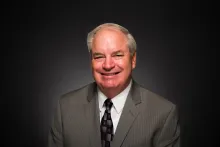
Robin Webber was born in Chicago, Illinois, in 1951, but has lived most of his life in California. He has been a part of the Church of God community since 1963. He attended Ambassador College in Pasadena from 1969-1973. He majored in theology and history.
Mr. Webber's interest remains in the study of history, socio-economics and literature. Over the years, he has offered his services to museums as a docent to share his enthusiasm and passions regarding these areas of expertise.
When time permits, he loves to go mountain biking on nearby ranch land and meet his wife as she hikes toward him.
