

Robin S Webber
This transcript was generated by AI and may contain errors. It is provided to assist those who may not be able to listen to the message.
Tomorrow is coming, and tomorrow is the feast of Pentecost. Pentecost is often described as the birth of the church. It's the day that Christ promised that another Helper would come, and that that Helper would make all of the difference in the world.
In fact, it's very interesting that when you think of what is often called the Acts of the Apostles, it would be better rendered the Acts of the Holy Spirit. For Luke, as an author of the Gospel and the author of the Book of Acts, mentions the Holy Spirit more than any other item in his writings, which is of note. You think of Dr. Luke, you think of him being a physician, and that a physician takes a diagnosis as to what is either helping a patient or hindering a patient.
And what he noticed from analyzing the men that he would come to know, and what he had heard about them, and now what he saw about them, that he came to understand that the great difference, the incredible difference, was simply how these gentlemen utilized the Holy Spirit. Coming up to Pentecost tomorrow, this allows us to consider a few items, and I'd like to share them with you.
I welcome you to take a few notes to stay along with me because I hope to have answers to the questions that I'm about to ask you.
For you and I, as Christians, as we move through the Feast of Pentecost, cannot be the same once we leave. We are asked to consider. We are asked to ponder. We are asked to hopefully grow during this festival, for indeed this is why these festivals of God are given. But allow me to roll out, if I could, just a few questions for you to consider.
Just what is the church? That's a term that we often use, the church. We say that it is the birth of the church, which is often signified with the day of Pentecost. So what is the church? What was given birth? What is the role of the Spirit? What is our role? And why does God allow us to even participate in the matters of the Spirit? To be able to enter, as it were, another realm of existence, and to be able to experience it, and allow us to surrender to the help and the love of God by His Spirit.
Let's begin by answering all these questions by laying a scriptural foundation. Join me, if you would, in Matthew 16. In Matthew 16, and let's pick up the thought if we could, in verse 15. Famous conversation with the disciples and with Peter.
In Matthew 16, in verse 15, he said, he said to them, but who do you say that I am? And Simon Peter answered and said, well, you are Christ. You are the Son of the living God. And Jesus answered and said, and blessed are you, Simon Barjona, for flesh and blood has not revealed this to you, but my Father who is in heaven.
And I also say to you that you are Peter, and on this rock I will build my church, and the gates of the grave shall not prevail against it. You look at this set of verses, especially on verse 18. It's very interesting when you notice that I will build my church. Please notice for those of you that are just becoming acquainted with the scripture that the pronoun there, my, is capitalized. That means that pronoun is of the Godhead, either of God the Father and or Jesus Christ. And he says, and I will build my church. God is doing something through Jesus Christ.
And so what we notice in all of this is simply this. Number one, he gives a proclamation of what he is about, that Jesus Christ is building, and he calls it my church. And we'll discuss that pronoun further and define it. Number two, he gives a promise. The promise is that even the gates of death shall not hold it back. But that promise is also based upon a premise that demands our participation. So with all that said, to lay a foundation so you'll know where I am taking you.
Allow me to give you the title of my message today. Allowing Christ to build my church in me. Allowing Christ to build my church. Not yours or my church, his church. My church in me. And understand how this works by going to the Scripture and understanding what the church is and what is being built and how you and I can be a part of it and how we can be built up and grow in this and be excited about what God is doing with us.
We often hear the term, are you with me? The church. We talk about the church. Some of you, having refreshments this afternoon, will most likely be talking about the church. Some of you at dinner time tonight or at lunch tomorrow will be talking about the church.
Let's understand that many organizations use this word to describe their own religious entity. Most churches believe, are you with me? Most churches believe that they are the church. There's a church that has over a billion adherents and they call themselves the church. We ourselves often use this term to describe the United Church of God and or at times we use it for a wider group called the Church of God Community of which we have shared history and or we have some doctrines and teachings that we have in common.
But the question I have for all of you and I hope can draw you into this message is simply this. But what is the biblical definition of the word church? I remember well when I came into the church quote-unquote back in 1963. We've been keeping this way of life for a year, year and a half by ourselves because we didn't realize that there was a church to go to.
But what I'm about to share with you in the next few minutes had a profound effect in my life and ramifications that even, well, they go on to this day of understanding what many years ago my mother and I were called to and that is the body of Christ.
So what is the church? That term is interesting when we try to define it. Until approximately 250 A.D., not 325, that was a little bit later, that was Constantine. But until approximately 250 A.D., the church wasn't defined by a building. It was not defined by an organization or even a prescribed organizational orthodoxy of creed. Simply put, these were men and women that surrendered themselves to God Almighty through the life, through the death, and through the resurrection of Jesus Christ. And at times they literally gave their lives, as we know, through the ways of persecution that happened during the Roman Empire.
By around 250 A.D., there became a certain orthodoxy.
Became an organization that developed in concrete. Great buildings began to be built, the silicas, after the Roman style.
And later, under Constantine, it would all be woven together. So that people no longer understood themselves as a church that Jesus Himself was building for His Father. But it became concrete. It became finite. And so many things happened after that.
What did these men and women understand that you and I need to understand as we are in the shadow of the Feast of Pentecost? These men and women understood Christ's statement. When it talked about My Church, what allowed them to come into that church that God the Father had called Him to build? John 6, verse 44. Let's go back today, brethren, to our very roots and understand the church that we are a part of. The church of and by itself is not an organization. It is not a building. Not a building. The people of God down through the ages don't go to church. They are the church. They are the flesh and the blood cemented by the Spirit of God called to worship and to glorify God and to be a blessing to others. We notice in John 6, verse 44, where it simply says this, Jesus speaking. Because again, when He says, I will build My church, we need to understand where it begins with the Father, our Heavenly Father. No one can come to Me unless the Father who sent Me draws Him.
And it says, and I will raise Him up on that last day. So what we come to understand, brethren, we are here today not by accident, not by coincidence, not because we wanted to join a organization. You don't join the church that Jesus is building. You are invited. You are called out once. There is a miracle that comes from on high as much as the day of Pentecost 31 A.D. and we come upon the Spirit of God. It's interesting that throughout the Bible, and you can look this up in Vine's commentary if you want to, but the very word church has nothing to do with a facility like this. The word is ecclesia, spelled with an E, and the word ecclesia simply means those that are called out or the called out ones.
They may not have been on a roster of an entity or an organization, but God knows who they are, and He beckons them. He offers invitation to be a part of the greatest journey anybody can have in this and or any other lifetime. It's very interesting again. Let's throw down one word on our notes right now if you're taking notes, because I hope this will impact you, brethren, the rest of your life in relationship to the Feast of Pentecost and understand when Jesus says, I will build my church exactly what He is talking about. We've covered the word ecclesia. Let's go to another passage, John 8, 31. In John 8 and verse 31, another very common phrase that was used amongst the followers of Jesus at that time in John 8 and verse 31, we notice what it says here. Then Jesus said to those Jews who believed Him, if you abide in my word, you are my disciples indeed.
And then comes a promise, if you abide in the word, it says, and you shall know the truth, and the truth shall make you free. The chains of human nature, the chains that are placed upon us by our past, the chains that are put upon us by ourselves and or by others, melt under the power of God as we participate in allowing Christ to build my church, His church, in us. But it does demand our participation. So the early church did not even have a corporate name at the time. It was called the ecclesia. It was called disciples. The disciples were those that were in the ecclesia. Let's notice another thing in John in Acts 9. Acts 9.
Again, it's very interesting. It talks about Saul still breathing threats and murder against, notice, the disciples of the Lord, those that were learning to be like Jesus Christ. And they went to the high priest and asked letters from him to the synagogues of Damascus, so that if he found any notice who were of the way, whether men or women, he might bring them bound to Jerusalem. Early on in the history of what we call, are you with me? In quotes, the church, those that were of the ecclesia, those that were disciples throughout the book of Acts. And for those, anybody that's ever been in Ambassador College freshman Bible, this is drilled into you as you go through the book of Acts. And that is the way, the way, the way, the way that there is a way. There is a literally a course that is set. There is a walk that, based upon God's invitation, and by that grace bestowed upon us through him, that we then surrender our way, or that fork of the road of our existence, and choose to go the way of Jesus Christ. The way. These individuals, it was called the way, because Jesus Christ in John 14 and verse 6, you can jot that down, says that I am the way.
I am the truth. I am the life.
That's where we focus. That is what we spiritually crave and desire that God the Father will plant in us, and it is that Spirit of him and Christ in us that allows us to stay on that way.
As a congregation, let's grab a hold of this thought for a moment. That's how important it is when we speak of the way. Because that's what we're, in a sense, celebrating, and I do use that word correctly, celebrating tomorrow, and rejoicing it, is that God gave his Spirit shed abroad, not only to an individual, not only to a king, not only to a prophet, as in olden times, but now began to spread it out to the many, that they might be able to follow the way and allow Jesus Christ to build his, to build my church in us. The way in Scripture is used as a metaphor, as a course, or a path.
The one thing that you want to understand, when the term is used in Scripture, it is very definable. The term, the way, is extremely distinguishable. Scripture speaks of the way of wisdom.
You know what dead end you're going to run into if you don't follow the way of wisdom. You go into the cul-de-sac of no return. It speaks of the way of the ant.
It speaks of the way to her house. And Isaiah 30, verse 21 says, this is the way. Walk you in it. And it says, and the Spirit will call out and guide that individual in that day. The Feast of Pentecost, brethren, reminds us that today, tomorrow, that we do not wait into the future, but we live today. God has called us the Ecclesia, disciples, those that are of the way to surrender ourselves, not only once, not only to God the Father and Jesus Christ through baptism, but when we hear their Spirit, this is the way. Yeah, but I want to go this way. Yeah, but this way seems better that we surrender ourselves and say, yes, sir. Let's understand something. Those that are of the Ecclesia, the Church, those that are disciples, those that are of the way, began their relationship individually. Join me if you would in 1 Corinthians 12, 27. In 1 Corinthians 12, 27, I want to show you an equation that develops in the writings of Paul that is very important, because being in the Ecclesia, being of the way, being disciples, is not about being alone forever. But it starts with an individual decision, just as much as a brahm of Ur, who walked out of civilization, going not knowing quite where he was going, but followed a compass from above and gave his life and the life of his family to God Almighty and was blessed by him. But notice what it says in 1 Corinthians 12, 27. Now you are the body of Christ. So it speaks of Christ now. Well, Christ died and Christ was resurrected. So what do you mean, body? But notice what it says here. You are now the body of Christ and members individually.
Let's understand something about this, and this is very important. And I'm glad to rehearse this with you. You've heard me say it before, but it all begins when one is baptized, when one begins to respond to that call, when one counts the cost and then surrenders and gives their life over to God Almighty through Jesus Christ. You are called members individually. When I or Mr. Fish or Mr. Garnet or Mr. Helgi, Mr. Budge, I don't know if he is here today, but he does baptisms as well. We take somebody down into the water, and we do go into the water following the example of Jesus Christ Himself, and then as we saw the apostles baptize people.
Many of us have been in baptism before, but we're not all in the pool together. That's called a pool party. A pool party and a baptism are two different things. When you are being baptized, you are down in the water or in the jacuzzi, depending what vehicle we're using, and you're down there alone with the minister, and the minister simply asks you this, have you repented of your sins? And most likely you'll say yes. And then you'll say, and have you accepted Jesus Christ as your personal Savior? And again, you'll say yes. And the minister will say, because you have repented of your sins with the breaking of God's holy and righteous law, and because you have accepted Jesus Christ as your Lord and as your Master and as your Savior, I therefore, as the minister of Jesus Christ, am going to not baptize you into any church, into any sect, into any creed and or denomination of this world, but I'm going to baptize you into the family by the name of God the Father, Jesus Christ, the Holy Spirit, for the remission of your sins. That's where it begins.
You cannot hold onto mama's skirt. You can't hold onto daddy's side. You are making that decision individually, responding individually to the call of God Almighty.
We start individually, but we don't stop there, because then notice what it says here again in verse 27. It says, now you are the body of Christ and members individually. So we start individually, but then Paul creates this awakening that we're not alone, that God now places us into something called the body of Christ to offer definition to that. Join me if you would in Ephesians 2.
In Ephesians 2, and join me if you would in verse 15.
See, what happens in baptism is you take responsibility for your life. We're all pretty good at accepting responsibility for what we do right. The hard part is to take responsibility to recognize that we have, we've missed the mark.
And we're alone in there. But we're before a gracious and a loving God.
Have you noticed that today, it's just the Garden of Eden on steroids? If you go back to the Garden of Eden, everybody was pointing at everybody else, you know? The man was saying, look at the woman you gave me. The woman looked at the serpent. The serpent, well, serpent went cross-eyed and was looking for somebody, but he was himself to blame.
Everybody wants to blame somebody else for what has happened to them. They don't stand still and say, not simply, I'm sorry. There's a difference between saying, I am sorry and saying, I am wrong.
I am wrong. I'm not using my finger like a gatling gun going like this at everybody else. I take responsibility, and that's what I'm trying to share with you today, brethren. We individually have got to take responsibility for what Christ is doing in us, in building us up as disciples, as ecclesia, and not looking over our shoulder, worrying about somebody else. We have enough homework on our own. Not placing blame on an organization, for in the greatest sense, we have not been called into an organization. We have been called into a body of believers, called the body of Christ, to take responsibility and allow God through Christ to do His work in us. As a pastor now for nearly 40 years, the one thing that I notice with so many people is that they want to turn the tables and have everybody else take responsibility for their life of what they're saying, of what they're talking, of what they're doing, rather than recognizing that anything, any constructive growth of allowing Christ to build my church in us is to be a committed one, to stand erect on the foundation of Jesus Christ and not looking at that man, not looking at that pastor, not looking at that person. Don't look to the left or right now, looking at that person down the road from you, but taking responsibility for your own actions and your own life, recognizing that, yes, indeed, you were individually called, but it's also to a purpose to serve the body until you learn to look at yourself in the mirror.
Dear brethren, and I speak to myself as well, you cannot serve the body as a whole. If we're looking at everybody else and not looking at ourselves and saying, thank you, Lord, that you have called me, I am yours and you are mine of all 7.6 billion people that are on earth, you have chosen me in this day and in this age to be a first fruit, to be molded by your spirit, to literally have you and your son dwelling inside of me.
It just sends goosebumps me thinking about it. Brethren, this is, we're on the weekend of Pentecost. This is the time that we celebrate and rejoice that God has called us in spite of ourselves, in spite of Robin Weber.
This is not just a day to go through. This is a day to comprehend and to grab a hold of and say, I'm going to be different. I'm going to learn to approach God the Father and Jesus Christ and exercise their spirit in me in a new and innate dynamic way. Ephesians 2.
In Ephesians 2 and verse 15, let's just read it together.
Actually, I want to go down here too, not verse 15. I'm going to come down a little bit further. Let's go to verse 18. No, let's go to verse 17. And he came and preached peace to you who were far off, and to those who were near.
Now, in the Course, this is really talking about the Jews and the Gentiles coming together, but all of us today in the 20th and 21st century were far off from understanding the purpose of God, but are now brought together. For through him we both have access, noticed by one Spirit, one Spirit to the Father. Now therefore, notice then, you are no longer strangers and foreigners, but fellow citizens with the saints and members of the household of God. And having been built on the foundation of the apostles and the prophets, Jesus Christ himself being the chief cornerstone, in whom the whole building, that is the church as it were, the whole building, being fitly framed together, grows into a holy temple in the Lord, in whom you also are being built together for a dwelling place of God in, notice, in the Spirit. Because this framing that goes on, whether it be citizens of a kingdom, whether it be members of a family, whether it be part and parcel of a holy temple being erected by the Spirit, of the Spirit, the body of Christ is, notice what it says, by God in the Spirit. Now you and I are members individually, but then God puts us into this spiritual organism called the body of Christ.
And what is that about? What is he building? He says, I will build my church. What does God, the Father, commission Christ to develop and to build? Number one, we see it right here from scripture. Notice what it says, that you are no longer strangers and foreigners, but fellow citizens with the saints. God, the Father, has commissioned Jesus Christ to establish a kingdom. And we are to be citizens of that kingdom. No longer sojourners, no longer pilgrims, no longer on visa, no longer on a passport, no longer looking over our shoulder wondering if ice is going to come after us. Because our visa has run out.
But we belong. God sees things as if they already are. And we are citizens of that kingdom. This is interestingly written to these people that did not have a society before, but now are brought together in this new society. It says here too that, notice another thing that Jesus is building when He's building my church for His Father, is that He is building a household. He's creating a family, which is a beautiful thing. You can build a kingdom. You can have a society, but He takes it deeper. He says He's building a family. This demands intimacy. It goes back to the Father. I want to share a beautiful verse with you, Galatians 4. In Galatians 4. And join me if you would in verse 6.
And because you hear me, brethren, because you are sons, God has sent forth the Spirit of His Son into your hearts, crying out, Abba, Father.
And therefore, you're no longer a slave, but you're a son.
And if a son, then an era of God through Christ.
God is developing and building a family.
That verse should just, brethren, just make a stop.
And to think of the slavery that God called us out of.
We didn't deserve hope. Gave us mercy when we did not deserve mercy. Gave us forgiveness when we didn't even know at the time that we needed to be forgiven at first. But as the Spirit began to work with our mind and with our heart, for as many as are led by the Spirit of God, they are indeed the sons of God.
And the miracle began to occur. And that's why you're here today.
Interesting in Ephesians 2. As I go back to Ephesians, I hope you'll join me a second.
It says something else very special is being developed here.
And it says at the very end in Ephesians 2, it says, "...in whom the whole building fitted together grows into a holy temple." Remarkable. Fantastic. Incredible.
We're not talking about Shiloh of old, the tabernacle. We're not even talking about Jerusalem. And you pick your temple. That was built on the Temple Mount. We are talking about now that God is consecrating a new temple, a spiritual temple, of which while we are called individually, we are being fitly framed together to adorn His calling. Join me, if you would, in Romans 8. In Romans 8, and let's pick up the thought if we could in verse 8, what allows Paul to say in 1 Corinthians 3, 16, don't you know that you are indeed the temple of God? Well, we find it right here in Romans 8, in verse 8. So then those who are in the flesh cannot please God, but you are not in the flesh. But notice, brethren, in the Spirit, if indeed the Spirit of God dwells in you.
Now, if anyone does not have the Spirit of Christ, He is not His. And if Christ is in you, the body is dead because of sin, but the Spirit is life because of righteousness.
But if the Spirit of Him who raised Jesus from the dead dwells in you, He who raised Christ from the dead will also give life to your mortal bodies through His Spirit who dwells in you. Brethren, on this the Feast of Pentecost of Coming, unlike Moses, we no longer have to go up to the mountain.
God says that His Spirit and the Spirit of His Son reside in us.
And that Spirit is holy, and that is what allows us then to be the temple of God.
Therefore, let us understand that you and I were individually spiritually called, brought into the spiritual creation, but are now being collectively assembled and brought together by the Spirit for two specific purposes.
Number one, two purposes I want you to think about that we're going to explore by Scripture. Why were Adam and Eve and why were you and I created? Number one is to give God glory.
To give God glory.
And the exercise of His Spirit in us, and that recognition, and that ongoing surrender that started with baptism.
For baptism is an event. Conversion is an experience. Even with all of its... Are you with me? Even with all of its stumbles.
And God the Father and Jesus Christ wait for you and me at the end.
And they keep on saying, we bid you welcome. Hang in there. Stay with it. Number one, we are to give God glory. The word glory comes from the word doxa. We talk about a doxology. Oftentimes the buildup at the end of an epistle. What does glory mean? It means to magnify.
It means to extol. That was one of the words that we sang today as we were giving God glory in the hymn service. It means to give God praise, not just by our lips but how we live. It means ascribing honor to Him, thanking Him, praising Him for the calling that He's given you and me and acknowledging Him as to His being, as to His attributes, as to His saving works down through the ages with the people of God and to you and to me today. Join me if you would for a moment. Let's go to Psalm 86. We were created first physically but now spiritually in the spiritual creation to glorify God. Psalm 86. Now this is back in the Old Testament, and the purpose never changes. In Psalm 86, and let's pick up the thought if we could in verse 8, Among the gods there is none like you, O Lord, now are there any works like your works. All nations whom you have made shall come and worship. That means to give God His worth.
Shall come and worship before you, O Lord, and shall glorify your name, for you are great and do wondrous things. You alone are God. Now David is speaking of a time in the future when all the nations are going to come before God and worship Him and give Him glory then. But now, verse 11, Teach me your way, O Lord, and I will walk in your truth and unite my heart to revere, to respect, to honor your name. And I will praise you, O Lord, my God, with all of my heart and I will notice glorify your name forevermore. Now let me ask you a question.
When we wake up in the morning, 5 30, 6 o'clock, 7 o'clock, very simple question, and I know you have to wake up at least for half a minute or a minute, and once you've had your cup of coffee and you're up, what is your thought?
Are we any longer just simply here to do our own thing, or do we think as we experience our marriage, experience our working relationship, experience our involvement in the community, experience our interaction with the brethren, with men and women, young people, senior citizens? When we experience the guy that cuts us off on the in the road, oh, do I? No, I won't go there. It takes 20, 20, we just had a really good one when we were traveling with the girls, but I won't talk about that. Do we wake up in the morning with this thought like David? I was born, and I have been called, and I'm allowing Christ to build my church, His church, in me. And I'm going to glorify God today by every motive that brings forth a thought, every thought that brings forth a word, every word that brings forth an action.
Is it about me, or am I here to honor God Almighty, and to honor the sacrifice that His Son, Jesus Christ, did for me? Whose will we heard about in the first message?
Number two, the second purpose and what Christ is developing, building in us today, is to be a blessing to others, to give God above glory that alone is His. But as we awaken with this thought, then, to be a blessing to others. Matthew 5 and verse 16. Matthew 5 and verse 16.
Let your light so shine before men. Notice that they may see your good works.
So we are to be a blessing to others as we emulate the foundation of Jesus Christ in our life.
And as we do that, we also glorify our Father, which is in heaven. Hebrews 10 verse 24.
In Hebrews 10 verse 24. And let us consider one another in order to stir up love and notice and good works.
When I say that we are members individually, we're not talking about being in your selfish closet. Christians are not to be isolated. Jesus Himself said, don't put your light underneath a bushel.
Do you think in the morning, number one? It's just a simple question. The questions are simple. It's harder to do it. But here's a simple question. Do I wake up to glorify my Father in heaven and to let Him know how much I have appreciated and deeply internalized the sacrifice of His Son that even allows me to call Him Abba, Father? And number two, because of that then, do am I personally a blessing to other people? Can this be said of us today?
Two thousand years after the Spirit was poured out in Jerusalem, can this be said of us today, as we are the custodians of God's Spirit now for 10, 20, or 30 years? Can this be said of us as we come upon and are in the shadows of a holy festival starting at sunset this evening in which personal sacrifice is needed? Join me if you would in Romans 12.
In Romans 12, it's amazing the verbiage, the wording that the Apostle Paul has inspired you. I beseech you. I implore you. I reach out to you. Therefore, brethren, by the mercies of God, that you present your bodies a living sacrifice, holy, acceptable to God, which is, after all, your reasonable service. So we're to be a living sacrifice. It's not about us. It's not about us puffing up our opinion, having our agenda.
Brethren, the body of Christ today cannot help but be affected by the culture that is around us, castigating one another, pointing the finger at one another, not looking for things that are lovely or just or pure, but any trip up, anything that can make the other person look poorly.
That's what's making the headlines today. Not events, not facts, but pillarizing one another, bringing one another down, speaking ill of the other person, speaking ill of the other party, whatever party that might be. And brethren, that cannot but help affect the church.
Just as much in Revelation 2 and 3, the societies that were around Philadelphia, in Laodicea, in Smyrna, in Pergamos, in Thyatara, in Ephesus, and yes, I think I just left one out. There's still seven churches. But those churches were affected by the climate, and everybody was pointing at everybody else rather than taking responsibility, rather than being a committee of one. Brethren, that is what is going to allow us to glorify God. That is what is going to allow us to be a blessing to other people, not waiting for somebody else to step up. But because the Spirit of God has stepped inside of us and resides in us, that we're responsible for it. Not just simply an organization, not just simply an entity.
And organizations and religious entities are needed down through the ages to get the work of God done.
But you're members individually. You're members of the body of Christ. And yes, at this time, most of you that are in this room have made a choice to be members of the United Church of God. And I have made that choice.
And I'm satisfied with it. Is any organization perfect? No, not at all.
But if we're looking at everybody else to satisfy our needs, wondering what's being done over here, wonder what's being done over there, why isn't this happening? Why isn't that happening? Why doesn't so-and-so, does the pastor know about this? Does the elder know about this?
Does Cincinnati know about this? Brother, that's taking us...
that's taking us down a bad road.
And I say that having been in multiple boardrooms of different organizations. The way that God's Word, the way that God's work will be worked out in this lifetime is by what you're doing, by what comes into your sphere of influence, by the way that you're walking as you strive to walk in the footsteps of Jesus Christ, and as you come upon a person as to what impact you will have on them, that you will have on them. Not that I will have on them. I can't possibly do that anymore as the pastor. You know that, and I know that. Can we talk? I've got to look over all of Southern California, and I thank God every day. I have to share a thought with you that the Spirit of God is alive and well in our elders and their wives and our deacons and deaconesses and their wives. But beyond that, brethren, in the lives of each and every one of you, as the Spirit of God moves you to help one another. And I think that because of where we are today in the Church of God history, we have been led to what God wanted all along for the body to be fitly framed together in every member of the body doing their part. Because one pastor or two pastors in Southern California, Nevada, Utah, Northern Arizona can't do it. It was never meant to do it. But we can strive to do it as we all work together and love together and give one another the benefit of the doubt as God Himself has granted His mercy, His forgiveness, and the benefit of the doubt to each and every one of us. There's one phrase that over the years, and we'll just talk because that's what we do in church. Can we talk a moment? We have this phrase that's often called the church. Well, what is the church doing? The church, the church, the church, and nothing but the church.
The reason I'm giving this message to you on the day before Pentecost is simply to remind you that the church is not something ethereal. It's not something in Cincinnati. It's not something somewhere else. Brethren, you and I, or me, I, we are the church, the ecclesia, those that follow the way, those that are disciples. You and I have got to take responsibilities for our own actions. If the Spirit of God is going to be able to flow and going to be able to grow and be able to develop in us, to glorify God and be a blessing to other people.
The church is not a building. It's the people that we don't go to church. We are the church, not just on a Sabbath, not just on a holy day, but every moment of our lives.
Join me if we would in Romans 8. Just going to go a few more moments. Romans 8.
Let's consider this as we're in the shadow of Pentecost. There is therefore now no condemnation to those who are in Christ Jesus.
Those who abide, those that have the framework of his life and his death and his resurrection as the borders of their heart. Who do not walk according to the flesh, but notice according to the Spirit.
For the law of the Spirit of life in Christ Jesus has made me free from the law of sin and death. For what the law could not do in that it was weak through the flesh God did by sending his own Son in the likeness of sinful flesh on account of sin he condemned sin in the flesh that the righteous requirement of the law might be fulfilled in us who do not walk according to the flesh but notice according to the Spirit.
The New Living Translation calls it a life-giving Spirit. Brethren, we need to be very careful that we appreciate the gift of the Spirit that God has given us. Join me if you would in Ephesians 4. In Ephesians 4, and let's just notice this for a moment, in Ephesians 4.
And notice what it says in verse 30. And do not grieve the Holy Spirit of God by whom you were sealed for the day of redemption. Don't grieve it. The word there is very interesting. It can be thought of in many, many different ways. To grieve the Holy Spirit. We're not talking about a person, but we are talking about the Spirit of God the Father and Jesus Christ in us as we have seen through Scripture. Don't grieve it. Words for grieve would be like, don't cause distress.
Don't allow it to sorrow, to cause pain, because after all, it is the Spirit of God.
What does a Spirit-led heart look like? What does a disciple of Jesus Christ look like? What is the ecclesia called to look like collectively in glorifying God and being a blessing to other people? Notice what it says here. It follows. It tells us. The Bible defines it. Don't grieve that Spirit of God. Let all bitterness and wrath and anger and clamor and evil speaking be put away from you and with all malice and be kind to one another.
Don't be cutting. Don't be edgy. Don't be sarcastic. Don't be demeaning. Don't talk about other people when they're not there. You are trespassing.
You're breaking and entering without a person's permission and forgiving one another, even as God and Christ forgave you. Brethren, I speak from the heart.
And all of this is not about myself. I'm not even talking about this. I'm not talking about me or what's coming at me. I'm talking about how we impact and affect one another, what we ought to be. We had a small memorial service last week for a gentleman down in San Diego. Beautiful man. Those are words that don't often go together. Beautiful man.
He came into the way. He became a part of the ecclesia.
He was a disciple. He showed up at every time that a Bible was opened.
He was so eager. And we just had a very brief memorial service for him afterwards. He was being buried elsewhere. But I remember what I said about Kenneth. I said, here is a man that always had a smile. He was so thrilled that God had called him. Thrilled! And thrilled to come amongst the people of God as often as he could, even as he was dying.
And I never, ever heard him say. Ever, ever.
An ill word about anyone else.
You know why? You know why? He was minding his own business. He was doing the work of God.
He was glorifying God. And being a blessing to other people.
I'm going to miss Kenneth. But there are more Kenneths that are out there. We can all be a Kenneth, and we can all be a disciple of Jesus Christ. Brethren, you and I have an opportunity on this Pentecost to thank God Almighty for giving us His Spirit. And that Spirit can only be granted to us and lodge and abide in us. Remember, you don't have to reach for it. God's put it inside of us. Maybe we're looking for the Spirit in all the wrong places, like the old country song goes. And that it's there. Don't allow this Pentecost to pass.
Leave the malice. Leave the anger. Leave the bitterness. Leave the issues.
We have a whole incredible calling yet ahead of us. I'm talking to somebody the other day. I mentioned something that they said, you know, a little bit of where we're headed is like driving in a car. How many of you have a question for you? And if this be your case, let me know what freeway you're traveling on when you come to church.
How many of you use your rearview mirror and just look in the rearview mirror as you're going down the 210 freeway? And that's the only mirror that you use. You ever done that one before? I'm just watching you, looking at your eyes. I'm looking at the white of your eyes.
Anybody just looked at the rearview mirror? Oh, I'm going down the... oh, I'm going down the...
No. There's a big, big, big window that we focus on. That's in front of us. That's in front of us. Yes. Not the rearview mirror. Not Lot's wife's mirror.
As we come and move through this feast of Pentecost, ask God for healing, for spiritual healing, emotional healing, an uplift, an awareness, an excitement, a joy that we receive by having His Spirit. If you do so, then you are offering a sacrifice. I know we're going to be giving an offering tomorrow, which is monetary. God does not need your money. God needs your heart. God needs to exercise His Spirit. And He needs to allow you to continue to surrender to what He has allowed Jesus Christ to do.
Jesus long ago said, I will build my church.
But we've got to get out of the way, and we've got to allow Him to do it and claim the promise of His Spirit. May each of you do that as we approach the Feast of Pentecost. And brethren, as the Apostle Paul said so long ago in Philippians 4 and verse 4, as we come up upon the Feast of Pentecost, rejoice! Rejoice! And again, I say, rejoice.
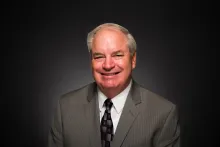
Robin Webber was born in Chicago, Illinois, in 1951, but has lived most of his life in California. He has been a part of the Church of God community since 1963. He attended Ambassador College in Pasadena from 1969-1973. He majored in theology and history.
Mr. Webber's interest remains in the study of history, socio-economics and literature. Over the years, he has offered his services to museums as a docent to share his enthusiasm and passions regarding these areas of expertise.
When time permits, he loves to go mountain biking on nearby ranch land and meet his wife as she hikes toward him.
