
Ben Light
This transcript was generated by AI and may contain errors. It is provided to assist those who may not be able to listen to the message.
Well, good morning once again, everyone. It always feels weird to thank the group that you were a part of for special music. So thank you, everyone in the group but me. No. It is good to be here with you all, keeping this feast of trumpets today before God, ushering in the beginning of this fall. Holy Day sees that it's really hard to believe that 10 days from now we'll be commemorating the Day of Atonement. And then a few short days after that, people will be traveling and heading in all different directions around the world for the Feast of Tabernacles. And we recognize there's rich meaning that's found in these days. It's embedded in these holy days. The Feast of Trumpets represents a linchpin in the plan of God. It's time where the fulcrum finally tips, and the age of man comes to an end, and the kingdom of God begins. You know, without the events pictured by this day, without the events that we are here to commemorate and to symbolize today, the events that are pictured by the Day of Atonement, the Feast of Tabernacles, and the 8th Day, simply can't occur. This is one of those linchpin parts of God's plan. For the plan of God to come to its fruition, the Day of Trumpets must first take place. So set the stage today. Let's go ahead and turn over to Leviticus 23.
Leviticus 23. And we'll see the description that's provided by Almighty God to Moses to present to the Israelites. Leviticus 23, as he outlines his feasts, not Israel's feasts, his feasts, to the people. Leviticus 23. And we'll go ahead and pick it up in verses 23 through 25. Leviticus 23, verse 23.
It reads as follows. Leviticus 23.23. Then the Lord spoke to Moses, saying, Speak to the children of Israel, saying, In the seventh month, on the first day of the month, you shall have a Sabbath rest, a memorial of blowing of trumpets, a holy convocation. Verse 25. You shall do no customary work on it, and you shall offer an offering made by fire to the Lord. And so here we are. Here we are. We're gathered here together today, commemorating the Feast of Trumpets. It is a high Sabbath, a holy convocation, in which we do no customary work, no servile work. We've come before God today, not empty-handed. We've brought our offering before Him, not with fire in this case. But we've brought our offering before Him, and we commemorate this day. Again, not with the level of blowing of trumpets that it was once commemorated. Again, those physical patterns have a spiritual pattern, but with a recognition of what those trumpets symbolize and a spiritual focus. God gave Israel very clear instructions for the production and the use of trumpets in Numbers 10. Let's turn over to Numbers 10 real quick, because I think an understanding of what the purpose for these trumpets was will help us to better understand what is going on with regards to this day in God's plan. Numbers 10, and we will pick it up in verse 1. Numbers 10 and verse 1.
Numbers 10 and verse 1, It says, And the Lord spoke to Moses, saying, Make two silver trumpets for yourself, you shall make them of hammered work. You shall use them for calling the congregation and for directing the movement of the camps. So we had two basic purposes, calling the congregation and directing the movement of the camps. Verse 3, When they blow both of them, all the congregation should gather before you at the door of the tabernacle of meeting.
But if you only blow one, then the leaders, the heads of the divisions of Israel, shall gather to you. So these trumpets, which God provided Israel, were given for two very specific purposes. The first of those purposes was to call the assembly of Israel together, to come before God at the front of his tabernacle. Now you can imagine, the host that left Egypt was immense. The number of Israelites that walked out of Egypt was immense. Scripture specifically records that there were 600,000 men on foot. We think, well, okay, that just indicates they're walking. But that word, men on foot, actually refers to soldiers, foot soldiers.
And it's the same root that is used to describe foot soldiers. So the Hebrew word here implies men of fighting age, military men. And then it specifically states, besides women and children. So 600,000 military-aged men, which started at 20 in Israel. And I don't know if there was an upper limit. I looked all over the place. I couldn't find an upper limit.
It seems like they probably fought until they couldn't fight anymore. But, you know, you take a look at those numbers. There are estimates anywhere from 1.5 million to 2.5 to 3 million people out there walking through the wilderness. How do you gather a group of that size? How do you gather a group? You stand on the side and go, Hey, hey, everybody!
Hey, we're over here! That didn't get worked. There's no way. And so God put his system together, especially while they're out there going about their lives, and they're still cooking and doing different things. God put a system together that would gather the assembly. You blew one trumpet, you just got the leaders. You blew both, everybody assembled. And so there was a system that God had put in place. He goes on in Numbers 10 and Verse 5, When you sound the advance, the camps that lie on the east side shall then begin their journey. When you sound the advance, the second time, the camps that lie on the south side shall begin their journey, they shall sound the call for them to begin their journeys.
And when the assembly is to be gathered together, you shall blow, but notice this, but not sound the advance. Not sound the advance. Sons of Aaron, the priest shall blow the trumpets, and these shall be to you as an ordinance forever, throughout your generation.
So we hear a sounding of the advance, right? Sounding of the advance. In this case, we're not 100% certain what that sounds like. But Verse 7 indicates that there were two different blasts, that they were recognizably different. One sounded the movement of the camp, the other sounded for an assembly. You wanted to gather people together, you blew the trumpets one way, but you didn't sound an alarm. You wanted people to start moving, you sounded a different sound. You made a different noise. And people would recognize that and understand, now is the time. Now we do this. Numbers 10 and Verse 9, it gets into a little bit more of this.
Numbers 10 and Verse 9, when you go to war in your land against the enemy who oppresses you, then you shall sound an alarm with the trumpets, and you will be remembered before the Lord your God, and you will be saved from your enemies. Also in the day of your gladness. So these can be sounded for rejoicing as well in your appointed feasts. And at the beginning of your months, you shall blow the trumpets over your burnt offerings and over the sacrifices of your peace offerings. And they shall be a memorial for you before your God. I am the Lord your God. So these were to be blown for joyous occasions as well, to mark the passage of time, to enable everybody to recognize, oh hey, the calendar just switched over.
It's a new month now. I just heard the sound. So there was a system that was put into place that God had provided for the Israelites, and they were to be a memorial before him. But when you consider these purposes, these two things, when you consider assembling a crowd and then sounding an alarm, both of those things are designed to get your attention. At their core, both of those things are designed to get your attention, in one case to gather you together and in the other case to cause you to advance, to move out of where it was that you were.
They are designed to snap you out of whatever it is that you're currently focused on and to draw your attention to something else. In this case, the sound of the shofar or the trumpet.
Everybody's heads immediately. It was like lemurs on Animal Planet. If you've ever seen the lemurs, head pops up. What's over there? That's exactly what just happened. You were drawn from what you were doing at that point in time. You heard the sound and you went, huh, what's that? And you turned over to our resident trumpet player, Luke Hanson, who thankfully played the trumpet, given my chicken scratches that I gave him on a piece of paper that said, play it at this time. You got it.
Nice work. Thank you. You know, when you look at the study of human attention, it's fascinating. It really is. When you look at why humans pay attention to the things that they pay attention to and what allows them to shift attention, it's fascinating. One of the theories of modern neuroscience that investigates how we focus and how we pay attention is referred to as the spotlight model of attention. There's two kind of somewhat competing theories that they really kind of jive together.
It is the idea that our environments are so sensory rich that we are surrounded by so many different things at different times, likes and sounds and movements and somebody tapping a pen over here and somebody clicking, you know, or clicking a pen over here and tapping a pencil over here, that what our brain does is it helps us to focus on singular aspects by reducing down all of those things to a singular spotlight and that we focus on the thing that the spotlight is in, or on, rather, I should say. Individuals who have what they refer to sometimes as sensory processing disorders, that spotlight is larger and they take in more sensory at the same time and it can overload.
It can cause an overload. Now, it doesn't mean that the rest of those inputs aren't there. It doesn't mean that the things stop going on around you. It just means that your brain, for the sake of your sanity, shuts those things out so that you can focus on the one thing that you are focused on at that given time. Now, if something happens and something brings us to an awareness of something different, we can shift that spotlight.
For example, many of you were working on your notes a second ago until the trumpet blew and then spotlight shifted to now over here. It caught your attention. It got your awareness. And it caused you to shift. Sometimes we don't always pay attention to things until they're brought to our attention, to our awareness.
As you're sitting and listening to this sermon, there are millions of sensory neurons firing in your brain in an attempt to catch your attention. People with ADD aren't good at ignoring them. And so, they go, what's this? Oh, this is... Oh, what about this? Oh, because those neurons are flooding them and they can't select out those things. The spotlight doesn't work as well.
Perhaps. Some of them make it through the filters and they allow your awareness to shift to that signal. For example, here's an example for you. You probably weren't really aware of the position of your elbows until I just mentioned it. And now you're thinking, where are my elbows? Huh! Because I've shifted your awareness now to one of those signals that is coming in, but was not in your spotlight. So when we shift that awareness, just like, you know, you've ever noticed you're outside around a campfire and a mosquito starts buzzing in your ear, suddenly you now notice every mosquito in the area.
You now know they're all there. I don't know about you, too. Sometimes noises and distractions get me, people tapping pencils, clicking pens. And until I notice it, I don't notice it. But then as soon as I notice it, it is like, just unbelievable.
Scientists have been able to demonstrate and illustrate through study that these attentional spotlights, if they don't shift over, it's very difficult for people to focus in different places, which is some of the science behind why multitasking is really not truly multitasking. You are here on your spotlight. You really can't be doing other things. To be doing other things, it requires you to move your spotlight. And you'll either do both of those things poorly, which is context switching, or some other things. Anyway, science has been able to illustrate through study, too, that people don't pay attention to boring things.
Duh, right? You're all like, yeah, I know. That's one of the things that's most of implication for us in education, is we realize that we keep things lively and try to keep kids engaged, because they don't necessarily pay attention to things that are boring.
But you know what is interesting? Science has found that people do tend to pay attention to things that interest them, that bring to mind a memory, or connect in some way with them on an emotional level. That will draw attention now to what is being presented by that individual. Those things have been scientifically demonstrated, statistically significant, to cause a shift in attention.
Anyone else works really well? Loud noises. They get your attention. Last evening, one of my children was... he moved funny or something while he was sleeping, and I was working on putting finishing touches on this message, and I heard this crash come from the bedroom. My attention was pulled away from what I was working on to go figure out what had just happened.
So, loud noises, things like that, they get our attention. Or, the other things sometimes, those of you that have cellular phones, dings and notifications and buzzes of our phones. I remember a time before my friend Drew, the guy I used to teach with, moved to teach in China. He's now living in China. Teaching in China has been for a while. We'd taught for a number of years together at Waldo. We'd coached and lost a lot of football games together. This was Drew's farewell tour. It was the day before they left, and we decided, you know, let's go out to Tap House. We'll go out and get a brew and talk, and just kind of enjoy each other's company before you fly away for an extremely long period of time.
So, we ordered and sat down and talked for a while, and then suddenly I felt my phone buzz. And then the guy at the table across from me, all the way across the room, his phone dinged. And then suddenly, this guy over here's phone buzzed, and pretty soon, the whole entire place was ding, buzz, buzz, buzz, ding, ding, ding, buzz, buzz, buzz, buzz. The whole entire place just lit up all of a sudden. Drew reached for his phone, as his went off, I reached for mine, to see that they had sent out a network-wide Amber Alert, and they had sent out a license plate number and a description of the vehicle, and a generalized location telling people anywhere within a however many mile radius of where this alert went out to be on the lookout.
I later found out it wasn't just us, it was people all over the northwest that that had happened to when that occurred. For a moment, everyone in that bar stopped what they were doing and looked down at their phones in silence. It didn't matter what they were doing before. Suddenly, their attention was now shifted, and they were focused on something different.
And in this case, it was the notification that came in on their phone. It caused them to shift gears. You know, ancient Israelites didn't have the Verizon network, you know? A little dude out there in a pair of sandals running around going, Can you hear me now? Sorry, he works for Sprint now. But God had a system in place. God had a system in place, a blast of trumpets to assemble the people and to sound the alarm to advance and to move.
These things were designed to get their attention. And likewise, brethren, the Feast of Trumpets is an annual festival that is designed to do the same thing. It is designed to get our attention. It is designed to be a trumpet blast once a year to get our attention, to draw us back in from all the distractions, all the chaos, all the insanity of life, and intended to pull us back in from the world around us and refocus us on what is truly important. Today, in the time that we have left this morning, I'd like to spend some time looking very specifically at the meaning of this day and the lessons that we can learn from it, as these trumpets are being blown for us specifically.
And when you take a look at the three core aspects of this particular Holy Day, it can really be broken down into three basic categories. Judgment of God on this earth, the return of Jesus Christ, and the resurrection of the saints. When we boil it all down, those three things are core aspects of this day. And this day represents a watershed moment in history, which represents the return of Jesus Christ and the establishment of the Kingdom of God.
If you're interested in the title, the title of the sermon this morning is, Can I Have Your Attention, Please? Can I Have Your Attention, Please? One of the aspects of this Holy Day which really is implicit in its meaning is the concept of judgment and the judgment of God being poured out upon this world.
The Jewish name for this day is Yom Teruah. The Jewish word for this name and the name for this day is Yom Teruah, which pretty much the correct translation means day of shouting, day of making a great noise, a large noise. And trumpets were used, again, to sound an alarm to get people's attention, and in the process of pouring out God's wrath on the nations, as we see in Revelation 8, 9, 11, and 16, which we won't be turning to, He will get the attention of the world at large.
When these things start happening, and when all of these bull plagues come, and these trumpets come, and all these woes, He will have the world's attention.
Absolutely will have the world's attention. Let's go over to Jeremiah 25. Jeremiah 25.
Pardon me. Jeremiah 25. Let's go ahead and turn to verse 30 of Jeremiah 25.
I came across something interesting as I was going through some of this, and I don't know, it was just a little random connection that I dug a little further into. I found it fascinating, so I thought I'd share it with you today. Jeremiah 25 and verse 30. Some of you may go, whoop, known that for years. I didn't.
Give a shout as those who tread the grapes against all the inhabitants of the earth. A noise will come to the ends of the earth, for the Lord has a controversy with the nations. He will plead His case with all flesh. He will give those who are wicked to the sword, says the Lord. Verse 32. Thus says the Lord of hosts, Behold, disaster shall go forth from nation to nation, and a great whirlwind shall be raised up from the farthest parts of the earth. And at that day the slain of the Lord shall be from one end of the earth, even to the other end of the earth. They shall not be lamented, or gathered, or buried, they shall become refuse on the ground. Is that going to get the world's attention? I think so. Yeah, I think so. Interestingly, there's a number of places in Scripture that reference shouting as the wine presses tread. A shout being made as the wine press itself is tread. In fact, archaeological evidence has discovered some of these wine presses in Israel. Smaller wineries would have these stone depressions on a hillside, and there'd be one up at the top, and then there'd be a smaller one at the bottom to collect the juice from treading out the grapes in that larger depression up top. But from a cultural standpoint, it sounds like, and it appears that, there were shouts made as those grapes were tread. Those could be shouts of joy, those could be shouts of singing while people were treading out the grapes. But in this case, in this time of judgment, the prophecy that Jeremiah was given to proclaim, the Lord would give a shout. He would make a noise. He would get their attention, just as those who tread the grapes, but this time against the inhabitants of the earth. Let's go over to Isaiah 63. Isaiah 63.
I see some continuation here and some connection. Isaiah 63.
Isaiah 63, we'll pick it up in verse 1.
Isaiah 63, verse 1, says, Who is this who comes from Edom, with dyed garments from Basra, this one who is glorious in his apparel, traveling in the greatness of his strength? Who's this guy high on the hog, as they say? Who is this guy? I who speak in righteousness, might he to save. Why is your apparel red and your garments like one who treads in the winepress? I have trodden the winepress alone, and from the peoples no one was with me, for I have trodden them in my anger and trampled them in my fury. Their blood is sprinkled upon my garments, and I have stained all of my robes, for the day of vengeance is in my heart, and the year of my redeemed has come. Again, this metaphor of treading the winepress to describe the fury that God would pour out upon the world in this day of judgment and vengeance. This is also used as a connection in Revelation 14 and Revelation 19. In fact, we sang about it in our Middle Hymn today. Battle hymn of the Republic, the Grapes of Wrath, treading out the grapes of wrath, wrath and judgment on the earth. As can occur in Scripture sometimes, metaphors can be lost on us in today's day and age. The treading of the winepresses, customarily being accompanied by shouts, would not have been a connection that necessarily would have been lost on those that received the book of Revelation during the time of the early Church. That was still close enough to the cultural understanding. They likely would have connected that. To us today, we buy our wine in the store in a bottle and there's no shouts. Maybe there's short shouts of rejoicing. Like, oh, is there really good red? I don't know. But when you take a look at the meaning of this particular day, when you look at the seven trumpet blasts, or shouts, that are mentioned, that are directly connected to the judgment that God treads out on this earth, there's a connection. Now, judgment for what? Judgment for what? It's interesting to dig into. Let's go to Romans 1. Romans 1 is we make the personal trumpet blast connection here. Romans 1.
That, yes, this judgment is being poured out on the earth and will be poured out on the earth.
Romans 1. And we're going to read through a fairly substantial section here.
Pardon me. Romans 1. Now, Mr. Duncan, you should always say, I got a little froggy. Romans 1. It says, Paul, a bondservant of Jesus Christ, called to be an apostle, separated to the gospel of God. I'm sorry, I want to start in verse 18. That's going to save us some time here. Verse 18, For the wrath of God is revealed from heaven against all ungodliness and unrighteousness of men, who suppress the truth in unrighteousness, because what may be known of God is manifest in them, for God has shown it to them. For since the creation of the world, his invisible attributes are clearly seen, being understood by the things that are made, even his eternal power in Godhead, so that they are without excuse. Because, although they knew God, they did not glorify him as God, nor were they thankful, but became futile in their thoughts and their foolish hearts were darkened. Professing to be wise, they became fooled. They changed the glory of the incorruptible God into an image made like corruptible man, and birds and four-footed animals and creeping things. The wrath of God is revealed from heaven against ungodliness and unrighteousness, which are outlined here in Romans 1. It gets more specific. It discusses that because of those who see the hand of God in creation, but deny him in their hearts, who look at creation around them and think that this is an accident, that somehow God is not involved in any of this. His invisible attributes are seen, and what they've done is they've crafted an idol to worship instead of the God who created it all. And they've set that idol up, and they've worshipped the creation instead of the Creator. Romans 1, verse 24, continues, Therefore God also gave them up to uncleanness in the lust of their hearts to dishonor their bodies among themselves, who exchanged the truth of God for the lie and worshipped and served the creature rather than the Creator, who is blessed forever. Amen.
For this reason God gave them up to vile passions, for even their women exchanged a natural use of what is against nature. Likewise also the men leading the natural use of the woman burn in their lust for one another, men with men committing what is shameful, and receiving it in themselves the penalty of their error which was due. In verse 28, and even as they did not like to retain God in their knowledge, God gave them over to a debased mind to do those things which are not fitting. Or some translations say which are not convenient, just means which do not become them, which are not fitting, things that they should not be doing. Verse 29, being filled with all unrighteousness, it gets into a list here now from 29 to 32, being filled with all unrighteousness, sexual immorality, wickedness, covetousness, maliciousness, full of envy, murder, strife, deceit, evil-mindedness, they are whisperers, gossippers, backbiters, haters of God, violent, proud, boasters, inventors of evil things, disobedient to parents, undiscerning, untrustworthy, unloving, unforgiving, unmerciful. You wonder if at some point in time as Paul is writing this, he's going, did I get them all? Did I get them all? I think that's a pretty decent-sized list there of the things that go on as we see in the world around us. Who, knowing the righteous judgment of God, that those who practice such things are deserving of death, not only do the same, but also approve of those who practice them. You know, the perfect judgment of God that is implicit in this day of trumpets is poured out upon a world that embodies this final statement in Romans 1. They which commit such things are worthy of death. They are deserving of death. And not only do they do the things that are worthy of death and deserving of death, they encourage them and they take pleasure in seeing other people do them.
They take pleasure in seeing other people do them as well. There's no regret. There's no shame. There's no repentance in the hearts of these in which it speaks in Romans 1. And that is, that's a strong indictment against the world around us. But how is God getting our attention with the trumpet blasts in our own life? Let's look at Romans 2, keeping in mind there were no chapter breaks and verse breaks in the original manuscript. You know, there may have been completions of thoughts and paragraphs, and the guy who did this back in the 16th century may have used those. But we don't know for sure.
Romans 2 follows on the heels of Romans 1. In fact, it's got one of those connecting words. Therefore, because of all these things that I just said, therefore, Romans 2, verse 1, you are inexcusable, O man, whoever you are who judge, for in whatever you judge another you condemn yourself, for you who judge practice the same things. But we know that the judgment of God is according to truth against those who practice such things. And do you think this, O man, you who judge those practicing such things and doing the same, that you will escape the judgment of God? Or do you despise the riches of His goodness, His forbearance, and His long-suffering, not knowing that the goodness of God leads you to repentance? But in accordance with your hardness and your impenitent heart, you are treasuring up for yourself wrath in the day of wrath and revelation of the righteous judgment of God, who will render to each one according to His deeds. Eternal life to those who by patience continuance and doing good, seek for glory, honor, and immortality, but to those who are self-seeking and do not obey the truth but obey unrighteousness, they will receive indignation and wrath. Tribulation and anguish on every soul of man who does evil, of the Jew first and also of the Greek. But glory, honor, and peace to everyone who works what is good to the Jew first, and also to the Greek, for there is no partiality with God. Cutting through the noise, brethren, can we hear that trumpet blast? Can we hear that call to attention in our life?
Can we hear God asking, can I have your attention, please? Examine your life. Is this you? Is this me? The judgment of God will be poured out upon this earth, but we can't forget the judgment first begins with the house of God. It starts with us first. Those who know better.
It starts with us. We must be using this annual Holy Day to reflect on the judgment of God, not just on the world, not just looking at all these terrible bullplagues that are going to be poured out upon the world at the very end of things, but instead looking into our own lives as well and repenting where necessary, preparing our hearts and our minds for the Day of Atonement. The Jews call the time between now and Atonement the ten days of awe, and it is a time of repentance.
They spend time looking at their lives and repenting of the things that they go into the Day of Atonement. They spend time looking for us, and even greater understanding of the Day of Atonement and the precious price that was paid for us. Sacrifice of Jesus Christ to allow us to reconcile to God. We have to ensure that going into these fall Holy Day seasons that our hearts and our minds are prepared for us to go up to the mountain of the Lord, to go into keep these days.
As these trumpet plagues described in Revelation pour out upon the earth and as devastation and disaster come to this earth in judgment, the final trumpet sounds, the seventh trumpet sounds, and that fulcrum tips for good. It tips for good. The age of man is over, and the kingdom of God begins. Let's turn over Revelation 11, verse 15, as we step into the second aspect of this day, the return of Jesus Christ. Revelation 11, verse 15, and it's hard to separate these things from one another. They're all integrated and they're all connected.
So treating them separately in some ways is doing them a disservice, because they are all connected. Revelation 11, verse 5, which turns out Revelation's still in the back of the book. I don't know why I was turning towards the front. I have moments where I say things and then I go, you know, if I didn't tell them that, they wouldn't have known. Anyway. But see, now you know that I did the same thing that you might have done.
It's comforting. Revelation 11 and verse 15, as we see again this fulcrum tip, and as we see things shift now to a permanence, to something that's not temporary anymore, that's not mankind messing things up with the decisions that they make, but holy and righteous and perfect judgment, we see that fulcrum tip. Revelation 11 and verse 15 says, There it is. Then the seventh angel sounded and there were loud voices in heaven, shouts in heaven, saying, just like treading the winepress, shouts, The kingdoms of this world have become the kingdoms of our Lord and of His Christ, and He shall reign forever and ever.
The twenty-four elders who sat before God on their thrones fell on their faces, they worshipped God, saying, We give you thanks, O Lord God Almighty, the one who is and who was and who is to come, because you have taken your great power and reigned. The nations were angry and your wrath has come, and the time of the dead that they should be judged, and that you should reward your servants, the prophets and the saints.
Those who fear your name, small and great, and should destroy those who destroy the earth. You know, that seventh trumpet blast, there's a lot going on. There's a lot of things going on, as all these pieces, you think of it sometimes as a giant chess game, and I'm terrible at chess.
I'm terrible at chess. I am one of those that falls into every single trap that somebody baits me into, and I look at it, I just mirror them. If I don't know what to do, I just mirror their move. So, like, they'll move their... I'm like, oh, that's that one. Ha! Take that mirror image. But then they figure it out, and they end up defeating me handily. You know, God is the perfect chess master, and He can see these moves in these places, and things have been moving and being put into place until that final piece moves. And then the cascade effect of the end of the game happens. Checkmate, at that point in time.
When the seventh angel sounds the trumpet, that fulcrum tips forever. The age of man comes to a close that's present evil age, as it's referred to, and Christ returns to possess the kingdoms of this world. A righteous and a just government is established, and of that government and of that peace, there will be no end. That's incredible. It increases and increases and increases. Will it be immediate? No. No. Will it be immediate? Will there immediately be peace, and everybody goes, oh, this is great, I'm so glad you're here?
No. No. I have a house across the street from me that's been in foreclosure since 2008. You know, in the market tank. And it's just been sitting since 2008, by and large. The bank is in war with the owner. The owner's in war with the bank. They're both angry at each other, and so it's just rotting across the street from me, has been for the last, what is it, 2017?
Almost ten years. We recently have been moved into by a group of squatters. So that's cool. There's lots of foot traffic all day long. There's cars in and out every two to three minutes. They'll come in, they'll stay for two to three minutes, and they'll go. We're pretty sure there's some nefarious activity going on across the street. It's been an interesting couple of months.
So I have decided to become a detective and an investigator, and so I'm writing down all the license plate numbers that come in and giving them to the police to run, just because that's fun. It gives me something to do. What they don't realize, they don't understand that we've been keeping tabs on things. They don't know that. They don't know that between the police are running those plates. In fact, I had my SRO, I gave him to my SRO at school, and he'll run the plates. And he's like, hey, thanks for the tip on that one car.
We got some stuff. All right! Good work! Happy to help! But what these people that are there right now don't realize, what they don't understand at the moment, is that, one, we have tabs on almost a month's worth of license plates that have come in and out of that house, establishing connections with other people that are all over the place. What they don't realize is that the legal owner and the police have been in contact with one another. The city of Salem has been contacted with one another.
They're all talking to each other, and the end is nigh. The process has been started for these guys to be removed. Now, is it going to take a while? Absolutely. But the process has been started. At some point, it's all going to happen. They'll be out the door, and the locks are going to be changed. And it's going to come as a surprise that they're going to be out the door, and the locks are changed.
They don't know it yet, but the handwriting is on the wall. Are they going to accept it and just let it happen? Probably not. I'm going to venture a guess that they're going to do something horrible to that house before they leave. Dump concrete down the toilet or whatever. I've heard of that happening all over the place. But it's going to happen. It is going to happen. And, brethren, the kingdoms of this world are in the exact same position. They don't realize that the end of their reign is nigh. They don't realize that the handwriting is already on the wall, and that at some point in time, it's going to happen.
Christ returns, puts them out, and changes the locks. For the first time in human history since the fall of Eden, mankind will have true, lasting hope. True and lasting hope for the first time in human history. And it is a hope that is so desperately needed. So desperately needed. You know, when we travel—I mentioned the Africa trips earlier— when we travel over to Africa, there is such incredible need.
There is. Everywhere. Everywhere there's need. You drive down the roads in Ghana and Nigeria. Every time you stop at a stop sign—which, there aren't many, so it's not often that you stop at stop signs— but when you do, when you stop at the rare light or whatever else or get bogged down in traffic, people come out of everywhere and surround your car. And, I mean, not violently by any means. They're selling—like, there's a person carrying an entire convenience store on their head, selling gum and other things right through the window of your vehicle.
But often what you'll see is you'll see people that'll roll up just mangled with polio. Just mangled. Legs wasted away, tripled up and twisted and just mangled. And some of them are in wheelchairs. You know, people have come up, they'll fold themselves up on skateboards and wheel themselves around on skateboards. And they're coming to get a handout. They're coming to get something that you can give them.
And I'll be perfectly honest, there's been times this brought me to tears. Because you realize you want to help. You want to help so much. You want to be able to provide. You want to be able to assist. And you want to do everything that you possibly can. But you also recognize that you're putting a band-aid on an arterial tear. It's not going to help. You could sell everything you own. You could donate every dollar that you had. And it would be a drop in the bucket. The need is just too great. And so it doesn't stop you from trying. It doesn't stop you from trying. It doesn't stop you from trying to help as best you can. But the only legitimate solution, the only possible fix, for the problems of this world in which we look around and see, is the return of Jesus Christ and the Kingdom of God. That's it. That is the only legitimate fix for this world.
You know, we don't know the day or the time. We know that it's closer this year than it was last year at Trumpets. Right? Brethren, have we seen an increase in growth in our relationship with God since the last year? Time has gotten one year shorter since last year. Have we seen growth in ourselves? Have we seen a change in our lives? Have we built that relationship stronger with a sense of urgency knowing that time is growing shorter? How much more time do we have? We don't know. But what do we need to be doing? What must we be doing? Let's go over to Matthew 24. I'm going to try not to go too far in here. I want to see Mr. Kester going crazy back there and scratching any of these out of his notes or anything, trying to purposefully pick places that other people aren't going. I don't know if I did well or not. We'll find out. Matthew 24. Matthew 24 talks a little bit about this particular concept. Matthew 24 and verse 36. Matthew 24, 36 says, But of that day and hour no one knows, Not even the angels of heaven, but my Father only. So we don't know. We really don't. We can look at the situation of the world around us. We can make predictions. Some people have declared dates. I'm kind of of the opinion that as soon as a date is stated that God goes, No, it's not going to be that day. The Harold Camping guy down in California for a while was setting dates that seemed like every three weeks. God's not going to let him predict a date. No way. Not just for his glory. No way. But of that day and hour no one knows, Not even the angels of heaven, but my Father only. But as the days of Noah were, so also will the coming of the Son of Man be. For as in the days before the flood they were eating and they were drinking, They were marrying and giving in marriage, Until the day that Noah entered the ark, And did not know until the flood came and took them all away, So also will be the coming of the Son of Man. In other words, life's going to go on just like normal. It's not going to seem any different. It's going to seem the same until all of a sudden, boom. Here comes the return of Jesus Christ. Verse 40, Then two men will be in the field, one will be taken, and the other left. Two women will be grinding at the mill, one will be taken, and the other left. Watch therefore, for you do not know what hour your Lord is coming. But know this, that if the master of the house had known what hour the thief would come, He would have watched and not allowed his house to be broken into. Brethren, I don't know when that hour is, but I can tell you it's a year closer as of today. Verse 44, Therefore you also be ready, for the Son of Man is coming at an hour that you do not expect. Verse 45, Who then is a faithful and wise servant, whom his master made ruler over his household, to give him food and do season? Blessed is that servant whom his master, when he comes, will find so doing. Surely I say to you that he will make him ruler over all his goods. But if that evil servant says in his heart, My master is the laying is coming. In other words, we see this servant that's been given here, as blessed is this servant who has found so doing, who is actively doing the things that they know to be true and following through. We see the opposite example now laid out starting in verse 48.
We just read verse 48, If that evil servant says in his heart, My master is the laying is coming, and begins to be this fellow's servant, and to eat and to drink with the drunkards, the master of that servant will come on a day when he is not looking for him, which it sounds like based on the actions he is not looking for him. So it could be any day there, and at an hour that he is not aware of. And he will cut him into an appointess portion with the hypocrites, that shall be weeping and gnashing of teeth. On this day of trumpets, on this memorial of the blowing of trumpets, this day of shouting, a festival designed by God to get our attention, God asks us again, Can I have your attention, please? Can I have your attention, please? When he comes, when that trumpet sounds, and Jesus Christ returns to this earth and takes those keys of the kingdom, will he find us so doing? Will he find me so doing? Will he find you so doing? Will he find us visiting widows and orphans, keeping ourselves unstained? Will he find us loving one another and serving one another and reconciling with one another, preaching the gospel to the world? Or will he find us sitting on a talent that we have buried, hoping for mercy? The final core aspect of this day is the resurrection of his saints. Psalm 116, verse 15 states, we won't turn there, but states, precious in the sight of the Lord is the death of his saints. And you know, you can understand why that is when you take a look and consider those who have lived this way of life before us, who paved the way, so to speak, who have gone through so much and gone through so many different things, who have stepped out on faith, who have sacrificed so much to bring the gospel to the world, some of them their lives, to bring the gospel to the world. Men like Abraham and Moses and Abel and Stephen, Paul and John, among many others, women such as Sarah and Rahab, Deborah, Esther, Priscilla, Tabitha. You know, there are many who have attained to the resurrection of the dead in Christ. Hebrews 11 is a shortlist. There are just a few, you know, remarkable ones here and there that are standoutables. 1 Corinthians 15 discusses in detail the importance of this doctrine and the resurrection of the dead that this day symbolizes. 1 Corinthians 15, we'll pick it up in verse 23. 1 Corinthians 15 and verse 23.
1 Corinthians 15, 23 says, but each one, actually I'm going to start in verse 20, but it's just easier. But now Christ has risen from the dead and has become the firstfruits of those who have fallen asleep. And sleep in this case, metaphor for death. For since by man came death, by man also came the resurrection of the dead. For as in Adam all die, even so in Christ all shall be made alive.
Verse 23, but each one, each man, some translations say, in his own order, Christ the firstfruits afterward those who are Christ's had his coming. Verse 24, then comes the end. When he delivers the kingdom of God, the father, when he puts an end to all rule and all authority and power.
For he must reign till he has put all enemies underneath his feet. And we see it mentioned specifically that the last enemy that will be destroyed is death. We see that there's an order to this. First Christ is the first of the firstfruits, then the firstfruits, and then those who are Christ's had his coming. He expounds on this idea a little further down the page in verse 51 and 52 of 1 Corinthians 15.
51 and 52 of 1 Corinthians 15, we see a little bit of an expansion of this. Behold, I tell you a mystery. We shall not all sleep. Not everybody's going to die. There will be some who are alive at Christ's coming, who will have the opportunity to be changed. In a moment, in the twinkling of an eye, at the last trumpet, the seventh trumpet that sounds, at that last trumpet, for the trumpet will sound, and the dead will be raised incorruptible, and we shall be changed. Those who are Christ's that is coming, those who remain, who are alive, who will be transformed, the trumpet will sound, the dead will be raised, and those that are Christ's will be changed.
1 Thessalonians 4 gives some additional context to this. 1 Thessalonians 4 gives kind of another connection to the blast of the trumpet here. 1 Thessalonians 4, and we'll go ahead and pick it up in verse 13. 1 Thessalonians 4, verse 13, under a heading in my Bible, I have the New King James says, the comfort of Christ's coming. 1 But I do not want you to be ignorant, brethren, concerning those who have fallen asleep, lest you sorrow as others who have no hope.
2 That we sorrow like others who have no hope, no understanding of what happens after death. 3 For if we believe that Jesus died and rose again, even so God will bring with him those who sleep in Jesus. 4 For this we say to you, by the word of the Lord, that we who are alive and remain until the coming of the Lord will by no means precede those who are asleep. So there is an order to this. 5 For the Lord himself will descend from heaven with a shout, with the voice of an archangel. Again, that shout, that trumpet blast, that connection to this day, and with the trumpet of God, and the dead in Christ will rise first.
6 Then we who are alive and remain shall be caught up together with them in the clouds to meet the Lord in the air. Here on this earth, not out there somewhere, magically disappearing in the teaching of the rapture. It goes on, 7 And thus we shall always be with the Lord. Therefore, verse 18, comfort one another with these words. Comfort one another with these words. We've all lost people that we love in the faith. We've all lost people over the years. People who lived a good, long life serving God, and who finished their race and who obtained their crown.
And now they await the resurrection. Death is never easy. I think death is probably one of the most difficult things that we as humans deal with from a standpoint of processing it and working through it. And, you know, it sounds cliche. It sounds so cliche, but it's true. The only thing that heals it is time. The only thing that heals it is time. You know, people can say things, people can do things.
You know, we have a greater understanding of what occurs after death, and I think that helps a lot, that we understand that there will be a resurrection. We know the plan of God. We know that they are figuratively asleep right now, and that God has plans for them and for us. The hope in that resurrection is comforting to us, and it should be comforting to us.
And we should use that to comfort others as well. The reality is, when we look at how difficult this life gets, when we consider all of its struggles and all of the trials, the ups and the downs of life, sometimes even if it ends prematurely, we know that there's something far greater waiting on the other side. And personally, that enables us to face life when it's hard, with the knowledge that God has promised us something wonderful, eternal life in His kingdom. Let's go to Hebrews 6, as we kind of start to wrap things up this morning.
Hebrews 6, verse 17, as the plan... or as the plane starts its final approach, wheels go down, the flaps go up, down. I don't fly. I don't know. Roger, up, down. Roger's not here. I'm not a pilot. Don't be concerned. I don't know how to land this plane. Hebrews 6, verse 17. Hebrews 6 and verse 17. Again, recognizing that life is tough. Life is difficult. This life, this physical life, and all of its trials and struggles, it's not easy.
But it's not supposed to be easy. That's the other piece. We weren't promised...we mentioned this before. We weren't promised a rose garden. It's not supposed to be easy. We're supposed to learn from the trials and struggles that we have. Hebrews 6 and verse 17. Thus God, determining to show more abundantly to the heirs of the promise, thus the immutability of his counsel confirmed it by an oath, that by two immutable things in which it is impossible for God to lie, we might have strong consolation who have fled for refuge to lay hold of the hope that is set before us.
To recognize what that hope is. And it mentioned earlier not to sorrow like those in the world that have no hope, that don't understand the plan of God, that don't understand what's going to happen after they die. It's not sorrow as those that have no hope, because we have hope. We have an understanding. So those who fled for refuge to lay hold of the hope that has been set before us, this hope of eternal life, this hope that we have as an anchor of the skull, both sure and steadfast, and which enters the presence behind the veil, where the forerunner has entered for us, even Jesus, having become high priest forever, according to the order of Melchizedek.
You know, that God has promised us the gift of salvation, and ultimately, eternal life through the sacrifice of Jesus Christ on our behalf. He has entered the veil, He has become our high priest, torn the veil, has become our high priest, has enabled us to come boldly before the throne of God, given us access to the Father.
We know that He will return. We know that He'll establish His kingdom on earth. These things have been promised to us, and we know that it is impossible for God to lie. So we can take hope in those things. We can take consolation in these things, knowing that that hope should anchor our boat when the waters get rough. And in our lives, when we're looking and we're staring down trials, and that water starts coming over the bow, and the boat's sinking, and you don't know if you're going to make it, that's the hope you hold on to.
That's what you've grabbed for, is knowing that that promise has been made, and that it will be fulfilled. We can take comfort in the promises of God. With the blast of a trumpet and the shout of the archangel, Jesus Christ will return. The dead in Christ will be raised incorruptible. Those who are at Christ that is coming will be changed. And you know, sometimes I think we can look at those promises, and it's important for us to consider where we fit in.
It's really important for us to consider where we fit in, because again, the Feast of Trumpets invites us to pay attention. It's a trumpet blast to get our attention. God asks us once a year on this day, can I please have your attention? The first resurrection will be made up of those that have lived God's way, who have internalized and have lived the principles that Jesus Christ taught, and whom were willing to lay down their lives for Him.
The latter not necessarily a requirement, but that they were willing. It may not have to happen, but that they were willing. Let's go to Revelation 20. Let's go to Revelation 20. As we nearly touch the plane down on the tarmac, this is where the stewardesses come around with the bag, gather the things, tell you to put your seat back up, tray tables in the upper right, lock positions, seat belts on.
Revelation 20 and verse 4 says, And I saw thrones, and they sat on them, and judgment was committed to them. Then I saw the souls of those who had been beheaded for their witness to Jesus and for the word of God, who had not worshipped the beast or his image, who had not participated in that world religion, who had not received his mark on their foreheads and on their hands. And they lived and they reigned with Christ for a thousand years. But the rest of the dead did not live again until the thousand years were finished. And then it specifically says this is the first resurrection, referencing back to those who were there for the one thousand years.
Blessed and holy is he who has part in the first resurrection. Over such the second death has no power. But they shall be priests of God and of Christ, of the Father and his Son, and shall reign with him for a thousand years. A piece of trumpets invites us to take stock of our own lives as we reflect over the next ten days moving into atonement. We prepare to fast, we prepare to pray, we prepare to recognize and internalize and really truly take to heart what was required for us to be reconciled to God.
Jesus Christ's blood bridged that gap. That is what reconciled us to God. And so the piece of trumpets invites us to take a look at our lives, to take stock, to see where we are. Are we living where we need to be? Are we doing what we can to grow? You know, as the difficulties and the trials and the struggles of the world around us rage, we can take hope in the promise of the symbolism of this day.
There is rich meaning embedded in the fall holy days, and today the Feast of Trumpets represents a lynchpin in the plan of God. It represents a point with which that fulcrum finally tips and the kingdom of God can be ushered in. The age of man comes to an end, and the king of this world is perfect and holy and righteous. Brethren, without the events pictured by this day, the culminating events that are pictured by the day of atonement coming up shortly and the Feast of Tabernacles, which we'll all be often in keeping here a little while, they simply can't occur without the events of this day.
This peace is a piece of the puzzle that has to be there for that picture to be seen. For the plan of God to come to its ultimate fruition, the day of trumpets must first take place. God will judge this world. He will judge us. He will judge this world. Jesus Christ will return, and He will resurrect, and He will change His saints. Trumpets were designed to get your attention.
That was their original purpose, to call an alarm, to call an advance, to assemble the people. They were designed to draw you out of whatever you were focused on at that point in time and to bring your attention to where God desired it to be.
God uses this annual feast day once a year to jar us out of everyday life, to pull us away from our customary servile work, and to assemble us together, and to give us opportunity to be together with one another, keeping this day to commemorate and to symbolize these things. Once a year, every year, God asks, Can I have your attention, please? Can I have your attention, please? Pushing us out of the distractedness and the preoccupation of life and really boiling it down to what is truly important. What is truly important in the grand scheme of all of this? What is truly important? And what is truly important in the grand scheme of this are the coming events that this day symbolizes, that tipping point in human history.
Shannon and I pray that you all have a wonderful Holy Day season. Please remember your brethren in your prayers as they begin to travel, starting this next week, heading out for atonement services, wherever they might be going. But please keep your brethren in your prayers, and, brethren, happy Feast of Trumpets!
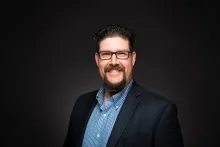
Ben is an elder serving as Pastor for the Salem, Eugene, Roseburg, Oregon congregations of the United Church of God. He is an avid outdoorsman, and loves hunting, fishing and being in God's creation.
