

Don Ward
This transcript was generated by AI and may contain errors. It is provided to assist those who may not be able to listen to the message.
The title today is Christ our Wave Sheath. Tomorrow the world will celebrate Easter. The word Easter only appears once in the Bible in Acts 12 and verse 4. If you want to turn to Acts 12 and verse 4, let's see if you can turn there before I do. In Acts 12 and verse 4, there's a mistranslation, and when he had apprehended, some days I don't need these and some days I do, and when he had apprehended him, he put him in prison and delivered him to the equaternarians, the soldiers, to keep him intending after Easter. In the Greek word there's pasha, p-a-s-h-a, it means it's literally Passover, to bring him forth to the Passover, to bring him forth to the people, to keep him intending after Passover, to bring him forth to the people. But the celebration of Easter focuses on the resurrection of Christ. It doesn't focus on the Passover per se, it focuses on the resurrection, and to a large degree the passion of Christ is ignored. Many churches will observe so-called Easter sunrise services tomorrow morning to commemorate the resurrection. I remember they always sung the hymn back in the Baptist church that I attended years ago, titled, He arose. The song has the words, Up from the grave he arose with a mighty triumph over his foes. It gives one the impression that Jesus resurrected himself. And I attended the Baptist church for 25 years, and I don't remember anyone ever reading any of the verses that states that God the Father raised Jesus from the dead, which of course he did. Jesus did not resurrect himself. Before Jesus died on the stake, he said, Father, in your hands, commend I you my spirit. And there were two parts to that spirit essence, the Holy Spirit, the Spirit that represented the word that had lived in eternity, and the breath of life, and the Greek word for pneuma, for the Holy Spirit, can be translated as breath of life or the Holy Spirit. But the Father is the one who resurrected him from the dead. We know that the resurrection took place about sunset on this day, the weekly Sabbath. At the end of the weekly Sabbath within the Feast of Unleavened Bread. And today, and this week, parallels the events as they took place back then. That is, on Tuesday evening, the Passover, on Wednesday, Jesus was crucified. And Mr. Dr. Erwiller gave quite an interesting sermon, and the song leader, Mr. Moody, said thank you for the technical sermon with regard to clarifying that Jesus kept the Passover before he was crucified. You couldn't keep the Passovers. Some think you keep the Passover at the same time that Jesus was crucified, but that's not what the Bible teaches. In 1 Corinthians 11, the Apostle Paul says on the night that he was betrayed, Jesus instructed me, here's how you keep the Passover. So it was on that night before the crucifixion that he was in the grave at the end of Wednesday, and Wednesday night, Thursday, and Thursday night, and Thursday, and Friday, and Friday night, and Saturday, and at sunset he was resurrected. So as we shall see on this day, some 1986 years ago, a new order of spirit beings came into existence. Christ, a born son of God, the first of the first fruits as we shall see. Christ existed as the word in eternity.
God the Father would delegate to him, Jesus Christ would speak, and so things were done. The creation was made manifest through Jesus Christ as we read in John chapter 1, that all things were created through him. So Christ existed as a word in eternity, and now is the Son of God by the resurrection from the dead, the first born from the dead. Revelation chapter 1 and verse 4, let's turn there, Revelation 1 and verse 4.
John, to the seven churches which are in Asia, grace be unto you, and peace from him, which was past eternity. He lives in eternity, not through eternity, not out of eternity, but in eternity. There is no beginning, there's no end, as in Hebrew 7, without father, without mother, without descent, without beginning or end of days, which is to come and from the seven spirits which are before his throne, and from, you see that, and from Jesus Christ, and from Jesus Christ. I hope you get the connection. And from Jesus Christ, who is the faithful witness and the firstborn, prototichos, this Greek word for born in the old King James, it means the firstborn of the dead and the prince of the kings of the earth, unto him that loved us and washed us from our sins in his own blood. Now in Romans chapter 1, of course, we have from time to time, there will be, and I've had discussions with ministers, which will say, are we born again now? Well, in one sense, you could say, yes, we have new life from above, we have the Holy Spirit, we have the opportunity to have a new conscience, a new knowing within ourselves, and to be able to delineate between right and wrong and a new mind in the Spirit of God to guide us, but we're not literally spirit beings yet. And this verse makes this very clear. Jesus Christ in the flesh was the Son of God, we are children of God, but we're not yet born of the Spirit, we are begotten of the Spirit, and here we see that at the resurrection we become literally born again of the Spirit.
So in Romans chapter 1 verse 1, Paul, a servant of Jesus Christ, called to be an apostle, separated in the gospel of God. You might see the phrase gospel of God, you might see the phrase the gospel of Christ, same gospel, which he had promised before by his prophets in the holy scriptures, many messianic prophecies concerning Jesus Christ. Over 60 prophecies point toward the birth of Jesus Christ.
Concerning his Son, Jesus Christ our Lord, which was made of the flesh of the seed of David, and declared to be the Son of God with power. When was he declared to be the Son of God in the born again sense, according to the spirit of holiness by the resurrection from the dead?
So those events took place on this night, and my knee is bumping against his plate here. Now let's go to Romans 8 and verse 29, and then this includes us.
In Romans 8 and verse 29, For whom he did foreknow, he also did predestinate to be conformed to the image of his Son, that he might be the first-born among many brethren. And in Hebrews 2 it says that he is not ashamed to call us brethren, because we are heirs of God and joint heirs with Jesus Christ. We might read that scripture later, Romans 8 and 17. So Christ's resurrection as a spirit-born being marked one of the most significant steps in God's great plan of sharing who he is and what he is with humankind, and he is not ashamed to call us brethren.
Thus we are heirs of God and joint heirs with Jesus Christ. It's Romans 8 and 17 again. This is the greatest mystery of God. So go to Colossians 1 and verse 23. G.E.P.C. In Colossians chapter 1 and verse 23. If you continue in the faith, grounded and settled, and be not moved away from the hope of the gospel, which you have heard, and which was preached to every creature which is under heaven, whereof I, Paul, am made a minister.
Of course, if you read Revelation 14, you'll know there's time of coming when the three angels' messages go forth, and everybody on earth is going to be weird to preach the gospel as long as we have opportunity, but God is going to make sure that everybody has an opportunity to hear. And if you read Revelation 14 and the three angels' messages, that one of the angels goes forth declaring the gospel, who now rejoice in my sufferings for you, and fill up that which is behind of the afflictions of Christ in my flesh, for his body is safe, which is the church. And once again, we see that another thing you discern before the Passover is the body of Christ, which is the church, which it says very clearly right here.
Whereof I am made a minister according to the dispensation, or the administration of God, which is given to me for you to fulfill the Word of God, even the mystery which had been hidden from ages and from generations, but now is made manifest to his saints. Now, unlike like I was talking about with the announcement of come with the right attitude to choir practice, I didn't write this, I just read it.
This is what it says, and you need to think about what it says. Now we go to Revelation 10 verse 7. We see where this mystery is completed. In Revelation 10 and verse 7, we'll see where the mystery is completed. But in the days of the voice of the seventh angel, the seventh angel, the seventh trumpet plague, when he shall begin to sound, the mystery of God should be finished as he has declared to his servants the prophets. The mystery of God should be finished when the seventh angel begins to sound.
Well, what happens when the seventh angel begins to sound? You look at Revelation 11.15 across the page, perhaps, or maybe you have to turn a page to Revelation 11.15. And the seventh angel sounded, and there were great voices in heaven, saying, The kingdom of this world become the kingdom of our Lord and of Christ, and he shall reign forever and ever. So the resurrection takes place, pictured by the Feast of Trumpets.
So what is this great mystery? The great mystery is how human beings, consisting of flesh and blood and bones, can become glorious, radiant spirit beings in the kingdom of God. That's a great mystery. You would have never thought that to be remotely possible, but that's what the Bible teaches. Jesus Christ, the firstborn among many brethren. Of course, he, after his resurrection, he appeared to the apostles on several occasions, at least three, recorded in the Bible of his appearance to him, even had a meal with them.
The resurrection of Jesus Christ from the dead makes him the first of the first fruits. So let's look at 1 Corinthians, chapter 15, as oftentimes called the resurrection chapter. 1 Corinthians 15, and we'll start with verse 13.
The last sermon I gave here was titled, Is Christ Divided? and we went through 1 Corinthians, showing the many divisions that existed in the church of Corinth, but that Christ, and the body of Christ, the true body of Christ, is not divided. There were some, even in Corinth, that taught that there was no resurrection from the dead, as we'll read here in 1 Corinthians 15, 13. But if there be no resurrection of the dead, then is Christ not risen? And if Christ be not risen, then is our preaching vain, and your faith also vain? Yea, and we are found false witnesses of God, because we have testified of God, that he raised up Christ. This is one of the many, many places that shows God the Father raised up Christ. Christ did not raise himself, whom he raised not up if so be that the dead rise not. So if the dead don't rise, Christ wasn't resurrected, and there is no Savior. Now verse 20, But now has Christ risen from the dead, and become the first fruits of them that slept, those that have died in Christ. For since by man came death, by man came also the resurrection of the dead. For as an Adam all die, even so in Christ, in Christ, shall all be made alive. But every man in his own order, Christ the first fruits afterward, they that are Christ, at his coming. When does it take place? At his coming. When the seventh angel begins to sound, the mystery of God should be finished. That's what it clearly says. We read it from Revelation 10 and verse 7. We also read Revelation 11, 15, which says, And the kingdom of our Lord and Christ have become theirs, and they begin. Of course, it takes some time for that to take place. Now with that backdrop in mind of Christ as the first of the first fruits, and became the Son of God by the resurrection of the dead, let's now pursue the part about He is the wave sheath and how that took place. We go back to Leviticus 23 and the description of all the Holy Days, and we'll begin in verse 5.
Passover is one of the Holy Days. Sometimes in the New Testament, Passover is lumped with the Feast of Unleavened Bread. In the 14th day of the first month, it even is the Lord's Passover. Add even. It tells you there's no getting around it. That's when Passover is to be observed.
Add even. And on the 15th day of the same month is the Feast of Unleavened Bread unto the Lord seven days you must eat unleavened bread. In the first day, you shall have a holy convocation. So we had the holy day on Thursday.
You shall do no servile work therein. The newer translation says, the word I don't like, customary work. What is customary work? But you shall offer an offering made by fire unto the Lord seven days. In the seventh day is a holy convocation, the last day of the Feast of Unleavened Bread. You shall do no servile work therein. And the Lord spoke unto Moses, saying, this is a vital part of how they kept the Feast of Unleavened Bread, which has rich symbolism for us with regard to Christ.
Speak unto the children of Israel and say unto them, when you shall come into the land, which I give you, and shall reap the harvest thereof, then you shall bring forth a sheaf. Now, there are two Hebrew words that are translated sheaf, two different Hebrew words that are translated sheaf in the Old Testament. Now, quickly hold your place there. Go to Genesis 37. Genesis 37. is a different Hebrew word that is translated sheaf, and it's literally what we think of when we think of a sheaf. It's a bundle of cut grain or stalks bundled together. For behold, you were binding sheaves in the field, and lo, my sheaf arose, and this word for sheaf is alumma. It's A-L-U-M-M-A-H, and that U-M has a um, alumma. So that's one Hebrew word, and it's very different, and it literally means a bundle of stalks. So my sheaf arose and stood upright, and behold, your sheaf stood round about and made obesience to my sheaf. Now, back in Leviticus 23, the word sheaf here is a totally different word. The word here is omer, O-M-E-R. It's a unit of measurement, and it equals about two quarts in our measurement. So you shall bring a sheaf, an omer, of the first fruits of your harvest unto the priest, and he shall wave the omer before the Lord to be accepted for you on the morrow, see, to be accepted for you on the morrow after the Sabbath, the priest shall wave it. And you shall offer that day when you wave the omer a he-lamb. And you can begin to see, and we'll cover this more, some of the symbolism between this and Jesus Christ, a he-lamb without blemish of the first year for the burnt offering unto the Lord. And the meat offering thereof shall be two-tenths deal of fine flour mingled with oil, an offering made by fire unto the Lord for a sweet savor, and the drink offering thereof shall be of wine, the fourth part of a hen, another unit of measurement. And usually neither bread nor parched corn nor green ears, until the selfsame day that you have brought an offering unto your God, it shall be a statute forever throughout all your generations and all your dwellings. So they couldn't eat anything of the land until this waving of the omer, the wave sheath, took place.
So in Leviticus 23, the word for the sheath is omer, which we have talked about, about two courts, or two liters of fine flour. In this case, it was to be baked. So this is how the entire ceremony probably took place. Now you can go online and you can go to Edersheim. Edersheim is one of the main sources that you can read about what the Jews did on Holy Days. Edersheim is one of the main and there are other messianic groups that will talk about this, about how this ceremony took place. This is basically what I'm going to say right now, is how it took place. The barley grain was the first of the first fruits. It was the early grain crop. It was the grain crop of the poor, really, because barley could be easily grown and didn't take all that much land, whereas the wheat crop, which was offered at Pentecost, was different. It was generally of wheat. Well, I think it was altogether of wheat. So, the barley grain was actually cut by members of the Sanhedrin. The Sanhedrin was revived during the days of the Maccabees. By the way, the Sanhedrin was revived again in about, I think, it was 2008. One of the things that the Jews have said that the Sanhedrin has to be in place before Messiah can come. So, there has been a revival of the Jewish Sanhedrin. So, the 70 literally means the 70 leaders or heads according to the Sadduceean tradition at the end of the weekly Sabbath during the days of Unleavened Bread. Of course, there was a controversy between the Sadducees and the Pharisees and others with regard to when do you actually cut this and go through the ceremony. Some say it is from the first Holy Day, so it would be like on Wednesday, that this past Wednesday, that this took place. But the Church of God, both worldwide and united, we have studied this for years and years and believe that the Sadduceean tradition is the correct one. It was the Sabbath after the weekly Sabbath within the Feast of Unleavened Bread, after the first Holy Day. So, after the barley grain was cut, the stock, the heads of grain were separated from the stocks, and the grain was removed and threshed and parched with fire and ground into fine flour in the courtyard of the temple that evening. The flour was then sieved until it was pure. And of course, we go through the fire trials and so did Christ. It was pure and a very fine texture. According to the Mishnah, oil and frankincense were added. And of course, I gave it a sweet-smelling aroma. From this, the omer was taken. The omer was then baked and then offered the next morning at about 9 a.m. the time of the morning sacrifice in the temple as a meal offering waved before God. And there is some confusion when the various Bible translations describe this offering as a sheaf offering wave because a sheaf, in the usual sense, is a stalk of grain. And that was not what was waved here. It was the omer. It's very clear in Leviticus 23. And we turn to Genesis 37.7, where in that case, sheaf was from the Hebrew word malumma, which is a bundle of grain, or a bundle of stalks. In fact, the Bible does not actually refer to the ceremony as the wave sheaf offering. The Hebrew word omer, that is translated sheaf, was a measure about two quarts, and actually means a measure of things dry. The very first of the first fruits crop was offered. That is the barley. The Jewish Encyclopedia states under the article omer, the following, it declares that a handful of it was burned on the altar, and the rest was eaten by the priest in accord with the traditional wave sheaf offering previously described. Ceremony was obviously of great importance. In ancient Israel, it was a commanded observance. And we look at 2314 again.
And you shall eat neither bread, nor parched corn, nor green ears, until the selfsame day that you have brought the offering unto your God. It shall be a statue forever throughout your generations in all your dwellings. So they couldn't eat of the grain of the land until this ceremony had taken place. Unless the wave sheaf offering was successfully carried out, no spring grain could be harvested. The command count from this day onwards also gave it a pivotal role in the sacred calendar. So if you look at verse 15, and you shall count unto you from the morrow after the Sabbath, that's beginning today, from the day that you brought the omer of the wave offering, seven Sabbaths shall be complete. So that's the counting of Pentecost.
So the offering of the wave sheaf, or the wave of the the offering of the omer marked point for counting to Pentecost, as we just saw from verse 15. Because of the connection between the wave sheath on Sunday and counting to Pentecost, it became common in some quarters to confuse terms and refer to wave sheaf Sunday as the Feast of First Fruits or Pentecost. But Jesus says, we read it from 1 Corinthians 15, 23, that it is at his coming when the first fruits, he is the first of the first fruits, it was offered during this time the wave sheaf offering, the wave omer offering, I keep saying sheaf myself. So, as we noted earlier, Christ is the first of the first fruits. And this day, and you could call it today the Feast of the First Fruits or the Feast of the First Born, because at the end of this Sabbath, if you go back in time, some 1986 years was when Christ was resurrected and born as a spirit being and the Son of God, as we read from Romans 1, verses 3 and 4.
Jewish tradition teaches that Pentecost is the culmination of the Passover season, the two being connected by this counting of the day the omer was waved. Now, when I came to the Church of God in the 60s, we were observing Pentecost on Monday, because at that time, the understanding was not that you count this day, I mean tomorrow, that you didn't count Sunday, you didn't begin that, it was after that. So, you count beginning with Sunday and you come to the Sabbath the following Sunday, which will be the 50th day, which is Pentecost.
So, the Passover, the Feast of Unleavened Bread, Pentecost are all tied together in that sense, because the counting to Pentecost begins with the Sunday after the omer was waved.
Now, there are 50 days in between, of course, Unleavened Bread. Of course, some of Unleavened Bread is counted in the 50. In this case, you've got, we're in the third day, so there are 47 more days to go to Pentecost, and a lot happened. I know a long time ago, I gave a sermon on the 50-day journey of all the things that happened to Israel during that 50 days on their journey to Mount Sinai. So, the 50-day period incorporated the deliverance of ancient Israel from the slavery of Egypt through their baptism in the Red Sea, their arrival at Mount Sinai, where they received the law and entered into the Law Covenant.
Now, let's go there to Exodus 19, back a few pages to Exodus 19 in verse 1. See, this is within that 50-day period where they're journeying from coming out of Egypt on the last day of Unleavened Bread, crossing the Red Sea, and then 50 days to Mount Sinai.
So, in Exodus 19, we see where they arrived in the third month when the children of Israel were gone forth out of the land of Egypt. The same day came they unto the wilderness of Sinai, for they departed from Rephidim and were come to the desert of Sinai and had pitched in the wilderness, and there Israel camped before the mount. And Moses went up unto God and unto the Lord, and the Lord called unto him and out of the mountain, saying, You shall say to the house of Israel and tell the children of Israel, You have seen what I did unto you, bringing you out of from the house of the Egyptians, and I bear you in eagle's wings and brought you unto myself. Now therefore, if you will obey me, keep my covenant, then you shall be a purchased treasure, a peculiar treasure, unto me above all people, for all the earth is mine. And you will be a kingdom of priests and a holy nation. These are the words which you shall speak unto the children of Israel. Now that verse 6 is a very key verse, and with regard to the New Testament, if you look at 2 Peter chapter 2 verse 9, 2 Peter chapter 2 verse 9 is almost a paraphrase of this verse here that we just read from Exodus 19. So I think I said 2 Peter. Well, 1 Peter chapter 1 and verse 9.
At 2 Peter chapter 2 verse 9. But you are a chosen generation, a royal priesthood, a holy nation, a purchased people, that you should show forth the praises of him who has called you out of darkness unto his marvelous light. So we are now, both Jew and Gentile, joined together, as it says in Ephesians 2 and 3. We are now the Israel of God, and we are that holy nation. We've been purchased by the blood of Jesus Christ. And so let's go back to Exodus 19, read this verse again. Verse 6, You shall be unto me, the kingdom of priests, a holy nation. These are the words which you shall speak in the children of Israel. So now that has passed to the church, but that's a different subject, so we won't pursue that farther here today. Now, Exodus 19 prepared Israel, to receive the Ten Commandments, and it's basically what Moses was to tell the people. They were not to touch the mountain. They were not to go to it or anything like that, because he was going, he being God, was going to come down and speak the words of the Ten Commandments to them. So in Exodus 20, and God spoke all these words, saying, I am the Lord your God, which have brought you out of the land of Egypt, out of the house of bondage. You shall have no other gods before me. So he proceeded then to give them the Ten Commandments. Verse 21, And the people stood afar off, and Moses drew near in the thick darkness where God was. And the Lord said unto Moses, You shall say unto the children of Israel, You have seen that I have talked with you from heaven. You shall not make with me gods, not make with me gods of silver, neither shall you make unto you gods of gold. And it goes on giving him instructions. And then we come to, we're skipping a lot, but we come to Exodus 24. After they had received the law of covenant, it came time for the people to enter into that covenant. And according to Jewish tradition, the law of God was given on the day of Pentecost. And the Holy Spirit came on the day of Pentecost, making it possible for the law of God not to be written just on tables of stone, but on tables of the heart. In Exodus 25, I'm 24, Exodus 24. In Exodus 24, we'll start with verse 6. We're sort of breaking in on the thought. Exodus 24 verse 6, and Moses took half of the blood and put it in basins, and half of the blood he sprinkled on the altar. And he took the book of the covenant and read in the audience of the people, and they said, all that the Lord has said will we do and be obedient. So this was like the marriage ceremony of the one who became Christ to Israel. And Moses took the blood and sprinkled it on the people and said, behold, the blood of the covenant which the Lord has made with you concerning all these words. So each covenant made with God is ratified by blood as we shall see.
So the offerings of the wave she parallels to a large degree what Jesus went through in becoming the first of the firstfruits. It parallels what we go through as we enter into the sufferings of Christ. Just as the grain was threshed and ground up, Jesus's body was beaten and broken. Just as the grain was parched, roasted, Jesus suffered the fiery trial of culminating in the fiery pain of death. Just as the grain was sieved many times until it was pure, Jesus was tested, purified, and perfected by his earthly experience, including the ordeal of his crucifixion. For in that he himself suffered being tempted or tried, he's able to aid those who are tested or tried. So let's go to Hebrews and read that. It's something we can continually claim. Hebrews 2. And we'll begin in verse 16. Hebrews 2 and verse 16.
For verily he took on him the nature of... He did not take on the nature of angels. He was flesh and blood and bone, here on earth, but he had the Holy Spirit without measure. But he took on him the seed of Abraham, wherefore in all things that behooved him to be made like unto his brethren, that he might be a merciful and faithful high priest, in things pertaining to God to make reconciliation for the sins of the people. So he is our wave sheath. I keep saying wave sheath. That's what the common language is. By the way, if you go... I went to, like, Bible Hub last night, and you look at all the many translations. There must be a dozen or so. They all translated as wave sheet, but if you go to the lexicon, it will say that it is Homer, that the word there in Leviticus 23 is Homer. For he that himself hath suffered, being tempted, he is able to sucker them that are tempted. So Jesus Christ was a son, yet through his obedience, through his suffering, he learned obedience. And how did he learn obedience through which he suffered? When he was on trial, when he was going through the beating, when he was trying, at first, struggling to carry the cross up the delirosa, when he was nailed to the stake, when he was so thirsty he couldn't stand it. When he was about to die, all of that suffering and pain, he said, think not that I could call a legion of angels and rescue me. He could, but he didn't, because he was obedient even unto death, and so must we be obedient unto death. Some won't have to go through the trials that Jesus did, but we are all called, as we'll read in just a second, here if you'll be turning to 1 Peter chapter 4, 1 Peter chapter 4, and we'll begin in verse 12. 1 Peter 4 verse 12.
Beloved, think not, think it not strange, concerning the fire of trials, which is to try you as though some strange thing happened to you.
You see, oftentimes in this fiery trial, we may have the notion we want to give up. But we want to stop struggling. Is it really worth it? Yes, it is worth it. Eye has not seen, ear has not heard, neither has it entered in the heart of man what God has prepared for those who love him. So we have to focus on what lies before. And so, Christ, one of the main things he focused on was to see you and I in the kingdom of God.
Beloved, think it not strange, concerning the fire of trials. Verse 13, but rejoice in as much as you are partakers of Christ's sufferings, that when his glory shall be revealed, you may be glad also with exceeding joy. If you be reproach for the name of Christ, happy are you, for the Spirit of glory and of God rest upon you on their part he is evil-spoken of, but on your part he is glorified.
So you go through that trial as Christ went through it, obedient unto death. The symbolism of the wave offering of the omer, the unblemished male lamb as well, as a burn-off and represented Jesus Christ, the oil mixed with fire represented the Holy Spirit. God gives us the Holy Spirit after we repent and exercise faith in him. Of course, Jesus Christ had the Holy Spirit from birth. There were three individuals in the Bible, Jeremiah, John the Baptist, and Christ, who had the Holy Spirit from birth. And Jesus had it without measure. So the lamb without blemish was offered during that day, and in addition to the omer being waved.
The sheaf of grain, even though of green ears, had to be standing, and had to be standing tall, not blown over a bent or anything like that. When it was cut just after sunset, be after sun- if you day for day after sunset today, cut.
See, when Jesus Christ was resurrected, he stood tall.
But he didn't immediately reveal himself to everybody. If you recall, that on that morning they went to the tomb, the women did, and eventually some of the apostles went, and they found the tomb empty. But now we'll turn to John 20, and we'll see that eventually he did reveal himself to one Mary Magdalene.
He stood there resurrected, unblemished. He appeared as a human being, but he was a spirit being.
In John chapter 20, verse 17, And Jesus said unto her, Touch me not, for I am not yet ascended to my father. And that word, touch me not, means don't cling to me, but go to my brethren, and say unto them, I ascend unto my father, and your father, and to my God, and your God. So Jesus Christ's ascension came 40 days later, but his ascension back to heaven in the permanent sense, but he ascended to the Father that day. So on that early Sunday morning, Christ, though resurrected, had not been exalted to God's right hand. He was accepted by God as the grain was waved. The Homer was waved before the altar, as we read about in Hebrews chapter 9. And this is very important. You see, unless he had been waved and accepted, just as they could not eat of the grain of the land until this offering has been successfully offered, we have no savior unless the Father accepted him. Hebrews 9, we'll read 12 and 13, and then we'll go to 18. In Hebrews 9, 12, Neither by the blood of goats and calves, but by his own blood, he entered in once into the holy place, having obtained eternal redemption for us. For if the blood of bulls and goats and the ashes of a heifer sprinkling the unclean, sanctifies to the purifying of the flesh how much more shall the blood of Christ, who through the eternal spirit, that phrase there, eternal spirit, is very important. There is one spirit, Ephesians 4, many other places, by one spirit are you all baptized into one body. That's 1 Corinthians 12, 13.
See, there's one eternal spirit. Back when the doctrinal wars were going on in the early 90s, some from the headquarters were saying, Oh, you can't be on the God plane because you are a created being. But you see, we are begotten of the eternal spirit. And upon resurrection, we are spirit beings, and we are brothers and sisters of God and Christ. Well, brothers and sisters of Christ.
He's not ashamed to call us brethren. So we are partakers of that eternal spirit, who through the eternal spirit, offered himself without spot to God, purged your conscience, conscience means the knowing within. And you have this new law written on your hearts, from dead works to serve the living God. Now we go to verse 18.
Of whom it was said that in Isaac shall your seed be called. That was what God told Abraham, accounting that God was able to raise him up even from the dead, from whence also he was received in a figure. I'm reading the wrong place here. I turned too many pages, stuck together. Now in verse 18 of chapter 9, we're upon neither the first testament was dedicated without blood. So we read that. We read from Exodus 24 how that the blood was sprinkled on the people. They said, I do. For when Moses has spoken every precept to all the people according to the law, he took the blood of cams and goats with water and scarlet and wool and hyssop, and sprinkled both the book and all the people, saying, This is the blood of the covenant which God has enjoined unto you. Moreover, he sprinkled with blood both the tabernacle, the vessels of the ministry. Almost all things are by the law purged with blood, and while the shedding of blood is no remission. So here enters, once again, Christ as the wave offering, that omer that was waved before along with the lamb without blemish that was offered that day. It was therefore necessary that the patterns of the things in the heavens should be purified with these things, but the heavenly things themselves with better sacrifices than these. So the better sacrifice is Jesus Christ. For Christ has not entered in the holy places made with hands, which is the figure of the true represented, but unto heaven itself now to appear in the presence of God for us. So he said, I have not yet ascended to my Father, touch me not. Now later on that day, he was touched by the people. They held his feet in Matthew 28 and verse 8. So we go back to Matthew 28 and we'll start in verse 8 and we'll see. See, that's one of the things that people again, serious would say, Oh, are you telling me that Jesus made a trip to the Father's throne and back? Yeah, I'm telling you that. He told Mary, touch me not. Then later in the day, in Matthew 28, 8, and they departed quickly from the sepulchre with fear and great joy, and then run to bring his disciples word. And as they went to tell his disciples, Behold, Jesus met them, saying, All hail, and they came and held him by their feet, and worshipped him. Then said Jesus unto them, Be not afraid. Go tell my brethren that they go into Galilee, and there shall they see me. So Jesus Christ appeared before the Father, and his sacrifice was accepted. He is the firstborn among many brethren. Brethren, you and I are going to go through the same process. He's the head of the body, even the church. He is the beginning of the firstborn from the dead, as we have read. He's the firstborn of creation.
In all things, he's been given the preeminence. He has now been exalted and sits on the right hand of the Father in the heavenlies. Look at Ephesians 1, 20. Ephesians 1 and verse 20. Ephesians 1 and verse 20.
Which he wrought, that is, God wrought in Christ, when he raised him from the dead, there it is again, and set him at his own right hand in the heavenly place, far above all principality and power and might and dominion and every name that is named, not only in this world but also in that which is to come, and has put all things under his feet, and gave him to be the head of all things to the church, which is his body, there it is again, the fullness of him that fills all in all. So Jesus Christ is now seated at the right hand of the Father. He is making intercession for you and for me.
And he's on the job all the day, all the night, 24-7, as they say. He is at that right hand of the Father.
He has exalted him to his right hand. He is our prince. He's our savior. He gives repentance. He gives forgiveness, as you heard in the special music. He is all in all. And he has now commissioned the church. And, brethren, we are the body. We are the church. Let's read the commission here as we close down today in Matthew 28 and verse 18.
Matthew 28 and verse 18. Jesus came and spoke unto them, and saying, All powers given unto me in heaven and in earth, Go you therefore and teach all nations, baptizing them in the name of the Father, the Son, and the Holy Spirit, teaching them to observe all things whatsoever I have commanded you, and lo, I am with you even unto the end of the age. So the promises of God, they are in the Bible, they are true, they are sure. The fields, indeed, are white to harvest. All you have to do is turn on the news, watch the news on television, pick up a paper if you ever read a paper anymore. Probably not. And you will see the condition that this world is in. Indeed, the fields are white to harvest. We have won a forerunner who has gone before. Just as that wave offering was waved this Homer back during the days of ancient Israel, Jesus Christ has been waved before the Father. He's entered into the holiest of all. His sacrifice has been accepted by the Father. He has made it possible for us to enter into the holiest of all. That is, come before the very throne of God, boldly, as it says in Hebrews 4, and make our wants and petitions known unto God. There's no mediator standing between us. Not even Jesus Christ were to pray in Jesus' name, but it says, come boldly before the throne of God. Jesus himself taught us how to pray. He said, pray after this manner, our Father who art in heaven, hallowed be your name, your kingdom come, your will be done, and the rest of the prayer. The understanding about how flesh can become a spirit being, Jesus Christ has gone through that. He is the Son of God by the resurrection from the dead, and we too are going to go through that same process. And we too are going to be raised to newness of life through that spirit. One final scripture here, Romans 8 and verse 11. If you don't remember any other scripture today, memorize this one. Romans 8 and verse 11.
But if the Spirit of him that raised up Jesus from the dead dwell in you, he that raised up Christ from the dead shall also make alive your mortal bodies by a spirit that dwells in you. And when you go into that grave, your spirit apparently ascends to the Father, and by that spirit he resurrects you into the kingdom of God. So what will we do in the months and weeks ahead? Will we labor in the harvest? So people will be able to call on the name of the Lord and be counted among the first fruits. God has not called us as first fruits just to hear what God and Christ have done for us. We are so thoroughly apprised of that it's unbelievable. He has called us to go therefore into all the world to be a light, to labor in the harvest. No, you don't need to be in any office. You don't need to be a minister. You don't need to be a deacon, a deaconess, or choir leader, song leader, or anybody that has an office or stands before people. More people, I believe, have come into contact with those who hold no office than those who do hold office. I speak, in a sense, to our shame that there are not as many of us as there are of everybody. So, brethren, it is high time to be about our father's business, finish the work. And you have been called for such a time as this.
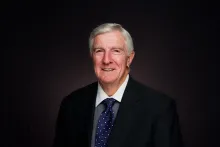
Before his retirement in 2021, Dr. Donald Ward pastored churches in Texas and Louisiana, and taught at Ambassador Bible College in Cincinnati, Ohio. He has also served as chairman of the Council of Elders of the United Church of God. He holds a BS degree; a BA in theology; a MS degree; a doctor’s degree in education from East Texas State University; and has completed 18 hours of graduate theology from SMU.
