

Don Ward
This transcript was generated by AI and may contain errors. It is provided to assist those who may not be able to listen to the message.
This past Sabbath was the anniversary of the resurrection of Jesus Christ, the weekly Sabbath, day before yesterday. On that day, 1979 years ago, approximately, a new order of beings came into existence. That is born sons of God. Jesus Christ existed as the word in eternity, and now upon the resurrection from the dead, 31 A.D., he became the first born from the dead. Oh, there had been people resurrected from the dead in the past, but this was the first one who had lived in the flesh, who died and was resurrected as a glorious, radiant, life-giving spirit. If you would turn to Romans 1, verse 3, we'll see this. Here, he becomes the Son of God through the resurrection. He was the only begotten Son of God.
Somehow, some way, Jesus Christ gave up His glory, not His divinity, humbled Himself, took on the form of a man, lived in the flesh, as the Son of God was counted worthy to die for the sins of the world.
In Romans chapter 1, concerning His Son Jesus Christ our Lord, who was made of the seed of David according to the flesh. David was in his ancestral background, the Son of David according to the flesh, and declared to be the Son of God with power according to the Spirit of holiness by the resurrection from the dead. Also, we want to note in Revelation chapter 1, Revelation chapter 1, verses 4 and 5, where it clearly says that Jesus Christ was the protatocos, the first-born from the dead, the one first-born to this glorious radiant state of a spirit being, a life-giving spirit, what Paul calls it in 1 Corinthians 15. In Revelation chapter 1, verse 4, John to the seven churches which are in Asia, grace be unto you, peace from him which is, which was, which is to come, and from the seven spirits before his throne, and from Jesus Christ, who is the faithful witness.
You notice in verse 4, from the seven spirits which are before his throne, that's the throne of God. And then verse 5, and from Jesus Christ, who is the faithful witness and the first-born. Protatocos in the Greek, the old King James says, first begotten. New King James says, translated correctly, first-born, first-born of the dead and the prince of the kings of the earth, unto him that loved us, washed us from our sins, in his own blood. This event marked a great significant step in God's great plan of sharing who he is and what he is with humankind. And now Jesus Christ is not ashamed to call us brethren, as it says in Hebrews chapter 2. So we are heirs of God and joint heirs with Jesus Christ. Notice in Romans 8, verse 17. In Romans 8, verse 17. And sometimes we look over and read over this first part of this verse in Romans 8, 17, which says that we are heirs of God. We inherit his divine nature, his essential being. We are already partakers of his divine nature. In Romans 8 and verse 17.
And if children then heirs, heirs of God.
Now in the human realm, if we are heirs of someone, our parents, we inherit material things. But here we inherit spiritual things and we are resurrected to be on the very plane of God and Jesus Christ. Heirs of God, joint heirs with Christ, joint heir. He's already inherited that glorious, radiant spirit state of being by the resurrection from the dead. If so be that we suffer with him, that we may be also glorified together. This is the great mystery of the ages, as it were, how human flesh, human beings, can become the very sons of God. The resurrection of Jesus Christ from the dead marks him and makes him the first of the first fruits. We'll go now to 1 Corinthians 15.
And the way this relates to unleavened bread, that yesterday, the first day after the weekly Sabbath within the Feast of Unleavened Bread, the waved sheaf was offered the first of the first fruits. In the spiritual realm, Jesus Christ is the first of the first fruits.
And on that day, which was yesterday was the anniversary, Jesus Christ was waved. You want to speak of it in those terms before the Father, as we shall see. In 1 Corinthians 15 and verse 17, "...And if Christ be not risen, or if Christ be not raised, your faith is vain, and you are yet in your sins, then they also which are fallen asleep in Christ are perished. If in this life we have hope in Christ only, we are of all men most miserable. But now is Christ risen from the dead and become the first fruits of them that slept." And we have turned to the Scriptures that clearly show that he was the first born from the dead, Revelation 1.5. For since by man came death, by man came also the resurrection of the dead. For as an Adam all die, so in Christ shall all be made alive. But every man in his own order, Christ the first fruits, he is the first of the first fruits, we are first fruits being called out today, afterward they that are Christ at his coming.
But every man in his own order, Christ the first fruits, afterward they that are Christ at his coming. Now we go to Leviticus 23 and we see how this wave sheep offering was presented before God in the Old Testament under the terms of the Old Covenant. And then we'll bring it back to today and what it represents today and what Christ represents as the first of the first fruits as he was waved before the Father.
In Leviticus 23 beginning in verse 7, in the first day you shall have the Holy Convocation.
You shall do no servile work therein. This first day of unleavened bread, verse 6 says on the 15th day of the first month begins unleavened bread. Verse 8, But you shall offer an offering made by fire unto the eternal seven days, and the seventh day is an holy convocation. You shall do no servile work therein. And the Lord spoken to Moses saying, Speak unto the children of Israel and say unto them, When you become into the land which I give unto you, and shall reap the harvest thereof, then you shall bring a sheaf of the first fruits of your harvest unto the priest.
A sheaf of the first fruits. Have you ever looked up that word sheaf until even just a few years ago that I looked it up after doing some reading and came to understand what this word is in the Hebrew? I always thought, well, they went and cut fresh darks of wheat, and then they got out there and weighed these fresh darks of wheat before God. That the priest did that. That's not what happened. If you'll look in your concordance, if you look in any concordance you want to, this word sheaf is the word omer, O-M-E-R. It means a measure, and it amounted to slightly over two courts, about two liters, as far as the actual measurement. You shall bring an omer of the first fruits of your harvest unto the priest.
And he shall wave the sheaf, the omer, before the Lord to be accepted for you on the morrow after the Sabbath, which was yesterday, and the priest shall wave it. And you shall offer that day when you wave the sheaf, the omer, and he lamb without blemish of the first year for a burnt offering unto the Lord. And we're going to see how this omer and this lamb, a lot of symbolism here of what Christ went through in him becoming the Savior of the world and the first of the first fruits.
So it's a sheaf, a lamb without blemish of the first year for a burnt offering unto the Lord. And the meat offering thereof shall be two tenths deal of fine flour mingled with oil. That meat should be translated meal. Meal offering thereof shall be the two tenths deal of fine flour. Mingle with oil. This is really the omer after it had gone through the process of thrashing, and grinding, and sifting, and all the things you had to go through to get it purified. Fine flour mingled with oil and offering made by fire unto the eternal for a sweet saver. And the drink offering thereof shall be of wine, the fourth part of an hen, and you shall eat neither bread, nor parched corn, nor green ears, until the seph same day that you have brought an offering unto your God. This is very important even from a material point of view in that until this was done you couldn't go out into the fields and harvest your crop. This had to be done first. Read it again. And usually eat neither bread, nor parched corn, nor green ears, until the same day that you have brought an offering unto your God. It shall be a statue forever throughout your generations and all your dwellings. And it will mark the day, yesterday marked the day of the beginning of the countdown, 50 days, to Pentecost. And you shall count unto you from the moral after the Sabbath, yesterday, from the day that you brought the sheath, the omer of the wave offering, seven Sabbaths shall be complete. There is a man named Edersheim who lived in the latter part of the 1800s. He was a Jewish rabbi that converted to Christianity. He wrote quite a bit about the Jewish traditions and what they did during this period of time. And I'm reading here from what he wrote and others have written concerning probably how this took place during the time of Jesus Christ. The barley grain was actually cut by members of the Sanhedrin, according to the Sadduceean tradition at the end of the weekly Sabbath during the days of Unleavened Bread. So that would have been on Saturday evening late. Right after sundown, they would go out and cut this grain. And it was the barley grain, the early spring grain. It was the courses of the grains. It was the grain that the poor people offered when they came to the temple or the tabernacle to offer an offering. The heads of grain were separated from the stock.
And you do that through various thrashing processes. And they removed the grain, and then they parched it with fire and then ground it into flour in the courtyard of the temple that evening. The flour was then sifted several times. Various commentaries give various numbers of how many times the flour was sifted through the sieve in order to come down to the finest, the purest flour that you could possibly attain from that.
And then, after that, according to the Mishnah, oil and frankincense were added to this flour, this measure of barley flour. And then, the next morning at nine o'clock at the time of the first sacrifice of the day, this omer, this what is called here in the King James, this wave sheath was waved, the first of the first fruits. Now, there's, as we've already mentioned here, there's some confusion when the various Bible translations describe this offering as a sheath being waved because the sheath is usually thought of as a stock of wheat that you've cut, and then you just wave literally the stock. But, as you can see here, that is not what happened.
So, the very first of the first fruits, that crop was offered as a wave sheath in the temple, and it amounted to about two quarts of barley grain that had been parched and roasted, and then gone through the process of purification. The ceremony was of great importance, as we've already noted, that until this took place, you couldn't go out into your fields and harvest your crop. And it says it is a statute forever throughout all your generations, and it's more the symbolism of it today understanding that, that would be of interest and importance to us. As we've already noted also, it marked the beginning of the countdown to Pentecost, which is called the Feast of Weeks, or the Feast of First Fruits, and some confuse it. Yesterday, the offering of the wave sheath, that anniversary, was the first of the first fruits. The Feast of the First Fruits is Pentecost, and on that day, God began to call out the first fruits of the spiritual harvest that will be reaped in the fall harvest. We have some people in the Church today, I think even a few ministers, who think, well, maybe because it's the first fruits that is Pentecost, that Christ is going to return on Pentecost. I do not hold that. It doesn't mark the symbolism. It doesn't mark the pattern, according to what I can determine, because the Bible is replete with at the last trumpet, the seventh trumpet, and so on, that this great mystery is going to be finished. Let's look at a couple of verses. This is sort of off the track for a moment here. In Revelation 10 and verse 7, Revelation chapter 10 and verse 7, this great mystery we talked about, Paul talks about it in Colossians 1, as Jesus Christ in you, that great mystery, the hope of the ages.
In Revelation 10 and verse 7, Behold, in the days of the voice of the seventh angel, when he shall begin to sound, the mystery of God should be finished. That great mystery of how flesh can become spirit being, and Jesus Christ, as we've already read, has gone through that process as the first of the first fruits. The mystery of God should be finished as he has declared to his servants the prophets, the days of the voice of the seventh angel, when he begins to sound. And then you notice forward in Revelation 11 and verse 15, the seventh angel sounded, there were great voices in heaven, saying the kingdoms of this world have become the kingdoms of his God and his Christ, and he shall reign forever and ever. So it seems that the pattern, the symbolism, obviously would point to to trumpets, as we have already noted. Look at Deuteronomy 16 verse 19. Deuteronomy 16 verse 19 will, after this, move somewhat from this sort of a side point because the Jews tied these two festival seasons together, unleavened bread and pinnacosts, that unleavened bread really is supposed to prepare you for the receiving of the Holy Spirit, where your temple has been cleansed and you have thoroughly repented your eating of the unleavened bread of sincerity and truth, putting on Christ. In Deuteronomy 16, in verse, I don't know what I said, but let's look at 16 and verse 9. Deuteronomy 16. Seven weeks shall you number unto you, begin to number the seven weeks from such time as you begin to put the sickle to the corn. And that's what we talked about, cutting the first of the first fruits from which that omer was taken. And you shall keep the feast of weeks, that's pinnacost, unto the Lord your God with a tribute of a free will offering of your hand, which you shall give unto the Lord your God according as the Lord your God has blessed you. And it goes on talking about keeping pinnacosts. Because of the connection between the wave sheaf offering that was offered the anniversary of yesterday and pinnacost, the Jews tended to connect these two festival seasons together, unleavened bread and pinnacosts. But once again, the wave sheaf offering on the first day of the week after the weekly Sabbath within unleavened bread obviously is not the feast of the first fruits. We could say it's a feast at the first of the first fruits. Then pinnacost is a feast of the first fruits. It was on that day of pinnacost, 31 A.D., when God began to call out the first fruits to be harvested in the fall festival season.
Unless the wave sheaf was successfully carried out, no spring grain could be harvested, and the command to count the day forward for pinnacosts played a pivotal role in the sacred calendar. One of the reasons why unleavened bread and pinnacost were somewhat connected together in the mind of the Jews was this was the whole period of time in which Israel left Egypt on the first day of unleavened bread and then came to Mount Sinai on pinnacost some 50 days later. It was there at Sinai. We go back now to Exodus 19. It was there at Sinai that God, of course, thundered the Ten Commandments and he entered into a marriage covenant with them, that is, with Israel. In Exodus 19 and verse 6, God says to them, And you shall be unto me a kingdom of priests and holy nation. These are the words which you shall speak unto the children of Israel. And Moses came and called for the elders of the people, and laid before their faces all these words which the Lord commanded them. Basically, chapter 19 is taken up with the preparation for receiving the Ten Commandments. And according to Jewish tradition, the Ten Commandments were given to Israel on the day of pinnacost. Of course, at that time, there was not such a heart in them that they would keep His law and obey them. They would not be written under inward parts. They were written on tables of stone. But we know that God sent His Spirit on pinnacost, so today the law can be written on our inward parts. In Exodus 24 and verse 6, it was while they were here, in the environs of Sinai, that they entered into the Old Covenant. Exodus 24 and verse 6. And Moses took half of the blood and put it in basins, and half of the blood he sprinkled on the altar. Exodus 24 verse 7, he took the book of the Covenant and read in the audience of the people, and they said, All that the Lord hath said will we do and be obedient. This was their saying, I do in the marriage covenant and the marriage between God and the one who became between Israel and the one who became Jesus Christ the Word. And Moses took the blood, sprinkled it on the people, and said, Behold the blood of the covenant which the Lord hath made with you concerning all these words.
So the barley grain of the wave sheaf was chosen in advance, even as the Lamb of God was chosen in advance before the foundation of the world. You notice in 1 Peter chapter 1, 1 Peter chapter 1, how old is the plan of salvation? Well, the plan of salvation goes back before the foundation of the world, and Jesus Christ, the one who became Jesus Christ, was foreordained for this purpose, that he would live a sinless life, that he would humble himself, that he would be perfectly obedient unto death, and that he would die for the sins of the world.
In 1 Peter chapter 1 verse 19, but with the precious blood of Christ as a Lamb without blemish, without spot, who barely was foreordained, Proganosko, in the Greek means to know beforehand, he was known beforehand before the foundation of the world was made manifest in these last times for you. As we've already mentioned, the barley grain was the coarse grain. It was the first crop came on in the early spring around April, and it was the offering that poor people used as a sin offering. Jesus Christ, though he was rich in glory historically, he humbled himself and became poor, that we might become rich. It sounds like a contradiction, but let's notice a couple of scriptures there that bring this out. 2 Corinthians chapter 8. You remember that Jesus Christ prayed in John 17. We read this on Passover, to restore unto me the glory that I had with you before the world began.
So Jesus Christ was rich in glory.
He and his father were of the same essence. He thought it not robbery to be equal with God, like it says in Philippians chapter 2, because he was on that same level. Then he humbled himself. In 2 Corinthians 8 and verse 8, I speak not by commandment, but by occasion of the forwardness of others to prove the sincerity of your love. For you know the grace of our Lord Jesus Christ, that though he was rich, how was he rich? He was rich before he humbled himself and died on the stake for us.
Symbolics of this barley offering that the poor offered, though he was rich, yet for your sakes he became poor. He gave up that glory. He did not give up his divinity. He was still God in the flesh, but he gave up his glory that you through his poverty might be rich.
Jesus Christ gave everything that he had.
There was nothing left to give. Greater love had this Greater love had no man than this, that he lay down his life for his friends. Now, if you go to Philippians chapter 2, Philippians chapter 2, we see how he humbled himself and became poor as it were.
Symbolic at this barley grain offering that was offered by the poor. Philippians 2.5, let this mind be in you which was in Christ Jesus, who being in the form of God, he was in the form of God, then it says he took on the form of a man. Thus he existed, he had pre-existence. He existed in eternity. We still have those who have trouble with whether or not Jesus Christ existed in eternity.
Who being in the form of God, thought it not robbery or thing to be seized, to be equal with God, he was still equal as long as he had his glory. But he was willing to give up that glory. He made himself of no reputation, took upon him the form of a servant, from the form of God to the form of a servant, was made in the likeness of men. And being found in fashion as a man, he humbled himself and became obedient unto death, even the death of the stake. So Jesus Christ became poor for us. He gave all that he had. There was nothing left to give.
The offering of the wave sheath parallels also to a large degree what Jesus went through in becoming the first of the first fruits. And it parallels to a large degree what we go through as we are called out the first fruits to be harvested at the great fall harvest.
Just as the grain was thrashed and ground up, Jesus's body was beaten and broken.
Now, none of us may ever suffer that kind of beating and never have to go through that kind of misery, agony, and pain. But God will know and know that he knows before we enter his kingdom that we'd place no greater affection for anything than we do for him. And we know about Luke 14 and counting the cost, being willing to forsake all to follow him. Just as the grain was sieved many times until it was pure, Jesus Christ was tested, purified, and perfected. He was tested and proved in all points the same as we are, including this ordeal of the crucifixion.
And in that he has suffered, being tempted, tested, and tried, he's able to aid all of us when we are tempted. When we're tried, Hebrews 2, if you would, Hebrews chapter 2.
See, Jesus Christ holds several offices.
He is our high priest. He's our mediator. He is our intercessor. He's coming back as King of kings and Lord of lords. He's a king. He's a priest. He's a prophet. He's a mediator. He's an intercessor.
He lived in the flesh. He became poor for our sakes.
Hebrews 2, 16, for verily he took naught on him the nature of angels. He didn't come as a spirit being to die for the sins of the world, but he took on him the seed of Abraham, wherefore in all things that behooved him to be made like unto his brethren, that he might be a merciful and faithful high priest in things pertaining to God to make reconciliation for the sins of the people. For in that he himself has suffered, being tempted, tested, tried. He is able to succor those that are tempted, that are tested, that are tried.
Jesus Christ, though he was a son, he learned obedience by the things which he suffered. Some people have trouble. If you turn to Hebrews 5, some people have trouble with this, where it says that Jesus Christ learned obedience through the things which he suffered. He was perfectly obedient unto death, and that was the great test. He died on the stake after having been beaten, bruised, and broken, suffering one of the most ignominious kinds of death and the most torturous kinds of death, suffering in agony and pain that you can imagine.
And yet through all of that, he never went or cried aloud. He could have called for legions of angels, but he said, not my will be done, but your will be done. And apparently, if he hadn't done it this way, or God led him through this, that Satan could always say, well, if you had really permitted him to suffer, as no person has ever suffered, he would have cried out. He wouldn't have gone through with it. I don't know what else they could do in torturing him. In Hebrews 2 and verse 7, Hebrews 2-7, Hebrews 2-7, who in the days of his flesh, when he had offered up prayers and supplications with strong crying and tears unto him that was able to save him from death and was heard in that he feared, though he were a son, yet learned the obedience by the things which he suffered, faithful unto death.
And being made perfect, he became the author of eternal salvation unto all them that obey him. See, we too have been called to enter into his sufferings. Notice in 1 Peter chapter 4.
1 Peter chapter 4.
Once again, what I said, we too have been called to enter into his sufferings. And why some people are tested and tried a lot more than others, I don't know. I don't know the answer to that, but you know it says in John 15 that he prunes the vine so that it can bear more fruit, that God chastens every son that he loves, that we're tested in the trying. The trying of your faith is more precious and gold. All of those scriptures we're familiar with, through much tribulation, we shall enter into the kingdom of God. But compared to what Jesus Christ gave up and what he went through, ours is a light burden.
In 1 Peter 4 verse 12, Beloved, think it not strange concerning the fiery trial, which is to try you as though some strange thing happened unto you. But rejoice in as much as you are partakers of Christ's sufferings, bruised, beaten, broken, just as that barley grain was bruised, beaten, and broken, just as it was fired in the oven in the fiery trials, just as it was sifted time after time, getting all the dross and the impurities out until it was finally made into that loaf that was waved.
But in so much as you are partakers of Christ's sufferings, that when his glory shall be revealed, you may be glad also with exceeding joy. If you be reproach for the name of Christ, happy are you, for the Spirit of glory and of God rest upon you. On their part, he is evil spoken of, but on your part, he is glorified. Then the warning, don't let anyone suffer as a murderer or a thief or a busybody in other people's business. Verse 16, yet if any man suffer as a Christian, let him not be ashamed, but let him glorify God on this behalf. For the time has come that judgment must begin at the house of God, and if verse begin at us, what shall the end of them be that obey not the gospel of God? And if the righteous scarcely be saved, where shall the ungodly and the sinner appear? Wherefore, let them that suffer according to the will of God commit the keeping of their souls to him and well-doing as unto a faithful Creator. God is the master potter. We are the clay. He will mold us and shape us after his way as we submit to him, just as Jesus Christ submitted to him. Remember we read from verse 14 that there were in back in Leviticus 23 verse 14 that there was an unblemished lamb, a lamb of a year old that was to be offered. This lamb was offered with the omer. Remember the omer was mixed with the fine flour and oil. Oil represents the Holy Spirit in Scripture. Jesus Christ was given the Holy Spirit without measure. Then it was taken with wine. Maybe we should go back there and read that again. Leviticus 23.14. Let's go back and read that. And talk through it again. Leviticus 23. Actually, it's verse 13.
Let's start in 23-12. He shall offer that day when you wave the sheath, that omer, and he lamb without blemish of the first year for a burnt offering unto the Lord. And the meal offering thereof shall be two test deals of fine flour mingle with oil. And today, oil represents the Holy Spirit. Jesus Christ had the Spirit without measure. An offering made by fire unto the Lord, a sweet Savior. As we have noted that he went through the sufferings, that he went through learned obedience. The drink offering thereof shall be of fine wine. And as we took the Passover, we said, and Jesus said in instituting it, it represented his blood. Let's notice 1 John 1 John 1.
1 John, summary of this verse here, verse 7, summarizes this very nicely.
We refer to this in the first sermon, Are you washed in the blood of the Lamb? And we talked about eating the unleavened bread of sincerity and truth and putting on Christ. In 1 John 1.7, But if you walk in the light, as he is in the light, we have fellowship one with another. And the blood of Jesus Christ, his Son, cleanses us from all sin.
So virtually all of this symbolism that Jesus Christ went through, as he became the first of the first fruits, you find in the that offering of the first of the first fruits there with the barley grain back in Leviticus 23. Now Jesus Christ is, as we started the sermon today, the first of the first fruits, the firstborn among many brethren. He is the head of the church. He is the beginning of the creation of God, the firstborn from the dead. Let's notice a few more scriptures along those lines in Romans 8.
And we should read as well starting at verse 26.
Romans 8, 26. Likewise, the Spirit also helps our infirmities.
You know, 1 John 2, 1. 1 John 2, 2 talks about we have Patar Cletoes, an advocate, a comforter with a father.
Likewise, the Spirit also helps our infirmities, for we know not what we should pray for as we ought, but the Spirit itself makes intercession for us with groanings which cannot be uttered. And he that searches the heart knows what is the mind of the Spirit because he makes intercession for the saints according to the will of God. Sometimes we think, well, only it's just you and me, Lord, nobody else, nobody else is praying for me. But we see even here that Jesus Christ the righteous makes intercession for us according to His will and according to His purpose. Verse 28. And we know that all things work together for good to them that love God to those who are called according to His purpose, for whom He did foreknow He also did predestinate to be conformed to the image of His Son, that He might be the firstborn among many brethren. Of course, we have that promise that we will be heirs of God and join heirs with Jesus Christ.
Now let's note how that Jesus Christ was accepted by the Father as the first of the firstfruits, and He was waived before the Father on that day that the wave sheaf was offered, anniversary of which was yesterday. We go to John 17. It talks about the... I want to go to John 20. John 20. John 20.
The disciples came to the tomb early in the morning on the first day of the week. The tomb was empty. Many of them left, but Mary Magdalene stayed around for a while. We'll pick it up in verse 11. John 20 verse 11.
But Mary stood without the sepulcher weeping, and as she wept she stooped down and looked into the sepulcher. She saw two angels in white sitting the one at the head and the other at the feet where the body of Jesus had lain. And they said unto her, Woman, why are you weeping? She said unto them, Because they've taken away my Lord, and I don't know where they've laid him. And when she had said this, she turned herself back and saw Jesus standing and knew not that it was Jesus. And Jesus said unto her, Woman, why are you weeping? Who do you seek?
She's supposing him to be the gardener, said unto him, Sir, if you have borne him away from here, tell me where you've laid him, and I will take him away. And Jesus said unto her, Mary, she turned herself and said unto him, Rabbi, and I, which is to say, Master. And Jesus said unto her, Touch me not. Now, in Elder's Forum about this time last year, we had there was quite a discussion among elders with regard to the meaning of this Greek word, touch me not. I think that most of them came to the conclusion that it literally means don't cling to me. But either way, whether it's touch me not or don't cling to me, it seems very clear from the scriptures what happened. Jesus Christ had been resurrected a glorious radiant spirit being.
And notice what he says, Touch me not. Why? Why not touch me or cling to me?
For I am not yet ascended to my Father. But go to my brethren and say unto them, I ascend unto my Father and your Father to my God and your God.
So Jesus Christ, I believe the import and the meaning is, was not to be defiled by human touch until he had been presented as the perfect wave-sheaf offering, the first of the first fruits, the first born from the dead before the Father. Let's go now to Matthew 28.
So Mary did go tell the disciples.
We start in verse 5, Matthew 28, 5, And the angel answered and said unto the women, Fear not, for I know that you seek Jesus, who was crucified. He's not here. He's risen. As he said, Come see the place where the Lord lay, and go quickly and tell his disciples that he has risen from the dead, and behold, he goes before you into Galilee. There shall you see him, lo, I have told you. They departed quickly from the sepulcher with fear and great joy, did run to bring the disciples word. And as they went to tell the disciples, Behold, Jesus met them, saying, All hail, and they came and held him by the feet, and worshiped him. So apparently he had ascended to the Father. Of course, I know that our, what they call our former affiliation, some made fun of this. Did Jesus Christ make a quick trip back to the throne of God on that day, on the day that the wave sheaf was offered? We know that he appeared several times to the disciples, at least three times during this 40 days, in addition to this place right here. And that eventually he did ascend and did not return, and told them that he would not be back until he came in glory, and some of his teachings with him.
Now we go to Hebrews 9, and this will tie in with what we talked about earlier from the Old Testament of when they entered into that first covenant, that marriage covenant. In Hebrews 9, beginning in verse 16.
For where a testament is, there must also be the necessity of the death of the testator. Jesus Christ died for a testament is a force after men are dead, otherwise it is of no strength at all while the testator lives. Whereupon neither the first covenant was dedicated without blood. And we read how that first covenant was dedicated with blood in Exodus 24 verses 7 and 8.
And without shedding of blood is no remission. So that earthly tabernacle and the earthly people as they entered into that covenant went through that procedure. Now verse 23. It was therefore necessary that the pattern of things in the heaven should be purified with these.
It was therefore necessary that the pattern of the things in the heaven should be purified with these, but the heavenly things themselves with better sacrifices than these. For Christ has not entered into the holy place made with hands, which are the figures of the true, but into heaven itself now to appear in the presence of God for us. And as that waved sheaf before the Father, he was accepted of the Father. And then, as we read in Matthew 28 verses 8 and 9, along in there, that they held him by the feet, they worshipped him, and he also commissioned them. "...nor yet that he should offer himself often as the high priest enters into the holy place every year with blood of others." And verse 28. So Christ once offered to bear the sins of many, and unto them that look for him shall he appear the second time without sin unto salvation. Now Christ has been exalted. He sits on the right hand of the Father. As we have noted, he is the mediator of the New Covenant. He is also our intercessor. He is our high priest. He is our Savior. He is coming back as King of Kings and Lord of Lords. And he has commissioned us to go to work in the harvest. Let's go back now to Matthew 28. And the same we left off there where they came and they held his feet. They worshiped him, and he instructed them after that. Matthew 28.
Let's read verse 9 again. Matthew 28.9. And as they went to tell his disciples, behold, Jesus met them, saying, all hail, and they came and held him by the feet and worshiped him. Then said Jesus unto them, be not afraid. Go tell my brethren that they go in a Galilee, and there shall they see me. Then later on, verse 16, the eleven disciples went away into Galilee and to a mountain where Jesus had appointed them. And when they saw them, they worshiped him, but some doubted. Jesus came and spoke unto them, saying, all power is given unto me in heaven and in earth. Go therefore and teach all nations. That word teach would be better translated disciple. Go disciple all nations. Make disciples of all nations, baptizing them in the name of the Father, and the Son, and the Holy Spirit. Teaching them to observe all things whatsoever I've commanded you, and lo, I am with you always, even unto the end of the world.
We have not been called out just to be first-fruits. We have not been called out just to sit here on the last day of the Feast of Unleavened Bread and hear what they did in the Old Testament, and to hear what Jesus Christ has done for us, though we need to be reminded of all that. But we're also here to learn how and to be inspired, hopefully, to understand that we have a role to play, and we need to play that role.
And it's not the play that you would think about in recreation. It is doing what Christ has commissioned the church to do. You notice that let's go to Matthew 9, verse 37. One of the things that perhaps has been lacking back a few years ago when in the ministerial journal, we were regularly publishing articles about preaching and how we can improve our preaching. And one of the things we talked about is to move from descriptive preaching to prescriptive.
We can describe everything and what the world's conditions are. But what is the prescription? What are we going to do in view of that? You remember, Mr. Armstrong said many times, we've not just been called for salvation. That this Gospel, as we have read the Commission, that after Jesus Christ was resurrected, and He was waived before the Father, that He commissioned the church to go into all the world and disciple all nations. He says in Matthew 9, in verse 37, Then said he unto his disciples, A harvest truly is plenteous, but the laborers are few.
Pray you therefore the Lord of the harvest, that He shall send forth laborers into His harvest. Brethren, we have been called to be laborers in that harvest, and there are a lot of different ways we can do it. Of course, we took up an offering here this morning. That's the monies, the funds from this help in preaching the Gospel, the public proclamation to the world.
Of course, there are many other ways that we can be involved as well in our lives, the way that we live our lives, the way we conduct ourselves, whether or not we are a light to the world. So what will we do in the weeks and months ahead?
Will we labor in the harvest so people will be able to call on the name of the Lord and be counted among the first fruits? As I said earlier, God has not called us here just to hear what God and Christ have done for us. He's also called us here to go therefore into all the world, to be a light, to labor in the harvest. No, you don't need an office to labor in the harvest. You don't need an office to love God with all your heart. You don't need an office to love your neighbor as yourself. You don't need an office to be a good Samaritan. You don't need an office to be a light to the world.
You don't need an office to do good works. And you can go on. You don't need an office to be able to tell about and when someone asks you about the hope that lies within. I would say that more people have probably come in contact with the church from those who hold no office than from those that do hold office.
So many family members, neighbors, and if we were to survey this audience, how did you first hear about the truth of God? We're not going to ask you to raise your hand, but I would imagine at least half or more heard about it from a friend, from a neighbor, from a relative. So, brethren, I believe it's high time for us all to be about our Father's business, to finish this work that He's called us to do, to take courage from the fact that Jesus Christ, the first of the first fruits, the first born from the dead, now sits at the right hand of the Father making intercessions for us.
It says in Hebrews 7.25 that He ever lives to make intercession for us, therefore He's able to save us to the uttermost. We have the sure and great promises. And you notice that after they saw Jesus Christ resurrected from the dead, how joyful they were and how they wanted to go tell everybody about it. So I'm challenging all of us to go tell the story.
And I'm reminded at this time also of that great challenge that was before the young Queen Esther, when it was made known to her that the evil Haman had hatched a plot to kill all the Jews. And Esther's uncle Mordecai came to her and said, here's the plot. You need to go before the King and plead for your people. At first she was fearful and said, you know, I haven't been called in quite a long time. If I go there and he not bid me to come in, it may be my death. And then Mordecai responded to her, if you don't go Esther, deliverance will come from some other place. But who knows whether or not you have come to the kingdom for such a time as this? And of course, she met the challenge. And we have been called to the kingdom of God for such a time as this. At this critical, crucial time in human history. So, brethren, let's do everything that we can to meet the challenge in the lives before us.
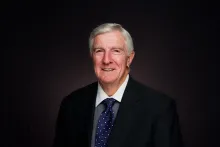
Before his retirement in 2021, Dr. Donald Ward pastored churches in Texas and Louisiana, and taught at Ambassador Bible College in Cincinnati, Ohio. He has also served as chairman of the Council of Elders of the United Church of God. He holds a BS degree; a BA in theology; a MS degree; a doctor’s degree in education from East Texas State University; and has completed 18 hours of graduate theology from SMU.
