

Don Ward
This transcript was generated by AI and may contain errors. It is provided to assist those who may not be able to listen to the message.
During the Feast of Unleavened Bread, 1981 years ago, a new order of beings came into existence.
There had never been anyone who had lived in the flesh, and then, upon death and resurrection, became a born spirit being. Of course, God and Jesus Christ exist in eternity. Have always been without mother, without father, without beginning or end of days. But for one to be born as a spirit being had not happened before. Yes, the angels were created, they were spirit beings, but they were not born spirit beings. So Jesus Christ was resurrected from the dead, and He became the firstborn among many brethren. Let's note Romans chapter 1. The awesome plan of salvation that God and the Word worked out together whereby they could bring into existence a family relationship a kind of relationship that had never existed before on a spiritual plane. Of course, God created humans, and to some degree the human family parallels that which God is doing on the spiritual plane.
In Romans chapter 1 verse 3, concerning His Son Jesus Christ our Lord, which was made of the seed of David according to the flesh and declared to be the Son of God with power according to the Spirit of holiness by the resurrection from the dead. Of course, the first step was when the Word humbled Himself and was willing to take on the form of a man to give up His glory, not His divinity.
You should always remember one of the names of Jesus Christ, as in Matthew 1.21, where it says, in His name shall be called Emmanuel by interpretation, meaning God with us. He emptied Himself of His glory, but not His divinity, and became the first begotten Son of God. And now upon resurrection, the Son of God.
Now to Revelation chapter 1. In Revelation chapter 1, He is referred to as the firstborn. Thus we see resurrection equated with birth. That is a very important point. We should never forget resurrection equated with birth. In Revelation chapter 1 verse 4, John to the seven churches which are in Asia, and that's Asia Minor, grace be unto you and peace from Him which is, which was, which is to come, and from the seven spirits which are before His throne.
Verse 4 is referring to the Father. Some people, I think, read verse 4 and think it's referring to Jesus Christ. But as you shall clearly see in verse 5, and from Jesus Christ, who is a faithful witness, the firstborn of the dead and the prince of the kings of the earth, unto Him that loved us and washed us from our sins in His own blood.
This event marked one of the most significant steps in God's great plan of sharing who He is and what He is with humankind. And thus He is not ashamed to call us brethren. As you heard in the opening prayer, we often refer to that. Let's go to Hebrews chapter 2.
This resurrection from the dead took place during the Feast of Unleavened Bread. At the close of the first weekly Sabbath, I've well, the only weekly Sabbath within the Feast of Unleavened Bread, which this year we have a double high day, which the weekly Sabbath and the holy day are one and the same.
In Hebrews chapter 2 and verse 9, Paul starts off this chapter talking about how much greater our calling is than that of the angels, and talking about really why we were born and why we're here. In Hebrews 2 and verse 9, we see Jesus, who was made a little lower than the angels, for the suffering of death, when He took on the form of flesh, crown with glory and honor that He by the grace of God should taste death for every man. For it became him for whom are all things and bringing many sons unto glory to make the captain of their salvation perfect through sufferings.
We heard somewhat about affliction and sufferings in the sermonette, and the unleavened bread that we eat during the Feast of Unleavened Bread, as He noted, is oftentimes referred to as the bread of affliction. Of course, it is a figure of speech and also a metaphor for many of the things that can happen in this life. That is, the bread of affliction. We all have to eat of the bread of affliction and do so from time to time. And in many cases, it seems like all the time. For both He that sanctifies, that means to be set apart, both He that sanctifies and they who are sanctified are all of one. See, there is one God family. The same spiritual essence as in God, as in Christ, as in each one of us.
For which cause He is not ashamed to call them brethren? Thus, we are heirs of God and joint heirs with Jesus Christ. Let's note this in Romans chapter 8. Romans chapter 8 and verse 17. In Romans 8 and verse 17, and if children then heirs, heirs of God. If you are an heir, you inherit whatever those who bequeathed to you, whatever it is they are going to leave to you.
In this case, God and Christ have bequeathed to us the opportunity to live forever, to be spirit beings in the kingdom of God, to live on the God plane. And at the present time, there are of course only two that have reached that mark, God the Father and Jesus Christ. And if children then heirs, heirs of God, and joint heirs with Christ, it so be that we suffer with Him that we may be also glorified together.
This is the greatest mystery of God. That is how one can live in the flesh, be begotten of God's Spirit, and then upon resurrection, born into the family of God. Let's notice Colossians 1. Colossians chapter 1 verse 23. Colossians 1, 23. Paul oftentimes reuses the term mystery, that which is not readily apparent, that which is oftentimes, especially in the spiritual sense, not known apart from revelation. In Colossians chapter 1 verse 23. If we continue in the faith, grounded and settled, and be not moved away from the hope of the gospel, which you have heard, and which was preached to every creature which is under heaven, whereof I, Paul, am made a minister, who now rejoicing my sufferings for you, and fill up that which is behind the afflictions of Christ in my flesh for His body's sake, which is the church. Whereof I am made a minister according to the dispensation of grace, I'm sorry, whereof I am made a minister according to the dispensation of God, which is given to me for you, we are in the dispensation of grace at the present time, to fulfill the Word of God, even the mystery which has been hid from ages and from generations, but now is made manifest among you to whom God would make known what is the riches of the glory of this mystery among the nations, which is Christ in you, the hope of glory. And by that same Spirit that He raised Jesus from the dead, the same Spirit that is in us, He will raise us from the dead. Notice Romans 8 again, verse 11.
So what are you beginning to see from this? Are you beginning to see any theme at all? The theme is having to do with first born, first fruits.
And we're going to go from here to the symbolism of the first fruits of the barley harvest and the wave sheaf offering that was waved on the Sunday after the first weekly Sabbath within the Feast of Unleavened Bread. In Romans 8, Romans 8, once again, in verse 28, And we know that all things work together for good to them that love God, to them who are the called according to his purpose, for whom he did foreknow, he also did predestinate to be conformed to the image of his Son, that he might be the first born among many brethren. The resurrection of Jesus Christ from the dead makes him the first of the first fruits. We'll go now to 1 Corinthians 15. 1 Corinthians 15. 1 Corinthians 15 and verse 13 will begin. As we noted on Passover evening when we read various scriptures from 1 Corinthians, the great rhetorical question of 1 Corinthians is, is Christ divided? Paul in this epistle shows from your calling to the resurrection Christ is not divided. One of the things that was going on in Corinth, they had in virtually every chapter of 1 Corinthians, deals with some great division that they had in the church at Corinth. And one of the things that some of them in Corinth was saying, that there is no resurrection. I mean, why in the world would you be in any church unless it granted some kind of pleasures of the flesh or whatever, you couldn't get any other way, if this is all there is to it? But it shows how far off people can be and yet claim to be a part of the church of God. So 1 Corinthians 15 and verse 13, but if there be no resurrection of the dead, and you look back in verse 12, now Christ be preached that he rose from the dead. How say some among you that there's no resurrection from the dead? You can see that people will say almost anything. But if there be no resurrection of the dead, then is Christ not risen? And if Christ be not risen, then is our preaching vain and your faith is also vain. I mean, what's the point? There is no point.
Yes, and we're found false witnesses of God because we have testified of God that he raised up Christ. That was one of the main points of Paul's ministry was the resurrection of Christ. When he was there on Mars Hill and debating with the various philosophers there, and one big thing that they really jumped on was Paul talked about the resurrection of the dead. I mean, that just wasn't to be according to them.
Yes, and we are found false witnesses of God because we have testified of God that he raised up Christ, whom he raised not up, if so be that the dead rise not. Or if the dead rise not, then is not Christ raised. And if Christ be not raised, your faith is vain and you are yet in your sins, then they also which are fallen asleep in Christ are perished. If in this life only we have hope in Christ, we are of all men most miserable. And if it's only in this life that we have any reason for being, we're also most miserable. And those pundits who are out there and God doubters and God haters really, I don't see how they can possibly take the position they do. It's like Wanda said about so many that from time to time have come and gone. And oftentimes it is those who would probably score highest on an IQ test among us, because they are lost in their own intelligence. And they come to the point that they worship themselves.
Verse 20, But now is Christ risen from the dead and become the first fruits of them that slept. He's the firstborn, he's the first fruits. For since by man came death, by man came also the resurrection of the dead. For as in Adam all die, even so in Christ shall all be made alive. But every man in his own order cries the first fruits afterward, they enter Christ, at his coming. Jesus Christ is the fulfillment of the wave sheaf offering which represents the first of the first fruits. Now we're going to go back to Leviticus, and it's very seldom that we go through this really in detail, I think, as we should with regard to this wave sheaf and what it represents.
Once again, under the terms of the Old Covenant, as we'll read here, that on the Sunday after the first weekly Sabbath within feasts of unleavened bread, the priest went out, and actually what they did, they went out on a Friday evening, members of the Sanhedrin and the priest, they went out into the barley fields and they selected the very best plot, marked it, set it aside. Of course, Jesus Christ was marked and set aside. The lambs that they had killed were marked and set aside on the 10th day of the month, as you read in Exodus 12. But they would go out there on Friday afternoon and mark off a plot where they were going to cut this grain. Then, just after sundown on the weekly Sabbath, they went out and they cut the grain.
And we'll pick it up and go through this. Now, let's go to Leviticus 23, beginning in verse 7. In the first day, well, let's back up. Let's start in 5. In the 14th day of the first month, it even is the Lord's Passover. Now, we have a movement that's been going on and some have left the fellowship of various churches and joined other splendor groups based on the fact that Passover is part of unleavened bread. And I don't understand all of the, well, I haven't tried to understand all the reasonings they say, but according to this, Passover is a distinct feast itself. It's on the 14th. Then it says, verse 6, on the 15th day of the same month is the feast of unleavened bread. Under the eternal seven days, you must eat unleavened bread. That it was the Passover that spared them that would enable them to leave Egypt on the 15th. So they had to have observed Passover first. And it is by us observing Passover, repenting faith in the sacrifice of Christ and being baptized that we can leave spiritual Egypt. Hold your place there. Look quickly at Numbers 33. It was on this day, the first day of the Feast of Unleavened Bread.
And it was by night, and last evening you observed night to be remembered. But in Numbers 33, verse 3, they departed from Ramesses in the first month, on the 15th day of the first month, on the morrow, after the Passover the children of Israel went out with a high hand on the side of all the Egyptians. Now back to Leviticus 23.
On the 15th day of the same month, verse 6, is the Feast of Unleavened Bread under the Eternal. Seven days you must eat unleavened bread.
In the first day you shall have an holy convocation, where having that day, a double high day.
You shall do no servile work therein, but you shall offer an offering made by fire under the Eternal. Seven days in the seventh day is an holy convocation. You shall do no servile work therein.
And the Eternal spoke unto Moses, saying, speaking to the children of Israel, and saying to them, When you have come into the land, which I give unto you, and you shall reap the harvest thereof. We're going to come back. I'm going to read through verse 14 with a few comments and come back with more detail. You shall reap the harvest thereof. Then shall you bring a sheaf of the first fruits of your harvest unto the priest. We talked about what they would do on Friday afternoon, mark it off. After sunset on the Sabbath, they would go out and they would cut it. And you shall wave the sheaf before the Eternal. Now, what did they wave? Did they literally wave sheaves of grain, which you might think they did, but that's not what happened.
And he shall wave the sheaf before the Eternal, that is, the priest, to be accepted, to be accepted, for you on the morrow after the Sabbath, the priest shall wave it. And you shall offer that day when you wave the sheaf a healamb without blemish, the first year for a burnt offering unto the Eternal. And the meat offering thereof shall be two tenths deals of the flour mingled with oil, an offering made by fire unto the Eternal for a sweet saver. And the drink offering thereof shall be of wine, the fourth part of a hen. And you shall eat neither bread, nor parched corn, nor green ears, until the selfsame day that you have brought an offering unto your God. It shall be a statue forever throughout your generations in all your dwellings. And then there's a connection here in verse 15 between this and the countdown to Pentecost. And you shall count, beginning on that Sunday, the day after the day that the wave sheaf was offered, you begin to count the fifty to come to Pentecost. So the barley grain was actually cut by members of the Sanhedrin according to the Sadduceean tradition at the end of the weekly Sabbath during the days of Unleavened Bread. Jesus was resurrected from the dead at the end of sunset and somewhere along in that period. And some talk about three o'clock versus sunset, but on that Sabbath after he was resurrected after three days and three nights in the grave, he was resurrected. And so at the end of this weekly Sabbath during Unleavened Bread, they went out and they cut this grain. The heads of the grain were separated from the stalks and the grain was removed. It was threshed. It was parched with fire, ground into flour in the courtyard of the temple that evening. So you have the threshing of the grain, the parching of the grain, sift the grinding, the sifting. Eventually it is made into fine flour. The flour was then sieved until it was pure and of a very fine texture. And according to the Mishnah, oil and frankincense were added. From this, the omer, about two quarts, was taken.
So this wave sheaf, if you go look at it in Strong's Concordance, you'll find the omer, and it's about two quarts. The omer was offered early the next morning at about 9 a.m., the time of the morning sacrifice in the temple as a meal offering waved before God.
There's some confusion when the various Bible translators describe this offering as a sheaf being waved because a sheaf, in its usual sense of a stalk of grain, is not what was waved here. In fact, the Bible does not actually refer to this ceremony as the wave sheaf offering. The Hebrew word omer that is translated sheaf. So you go back there and you look.
Verse 10, Speak unto the children of Israel, and say unto them, When you come unto the land, which I give unto you, and shall reap the harvest thereof, then you shall bring a sheaf. And if you look in the margin, some of your margins might have this mark. It's an omer, and an omer was a measure of about two quarts, according to the English measurement that we use today, to about two quarts of the first fruit of your harvest unto the priest, and he shall wave the omer before the eternal. And what he actually waved was this fine flower that had been, first of all, threshed, separated, then ground, parts, and all of that, made into the fine flower.
So the Hebrew word omer that is translated sheaf was a measure of about two quarts, and actually means a measure of dry things. The very first of the first fruits crop offered as a waved sheaf offering in the temple was two quarts of barley grain that had been parched, roasted, threshed, and sieved into fine flower. So this grain offering was of a similar format to other grain offerings that were waved before God. So it's very consistent. The Jewish Encyclopedia in the article under omer declares that a handful of it was burned on the altar, and the rest was eaten by the priest in accordance with the traditional wave offerings that are described under the giving of the wave offering. So you didn't cut the grain and get out, and I used to visualize this, that they would go cut the grain and then they would wave these stalks of grain. Well, actually it was just the grain itself. After it had gone through this process of being threshed and parched and ground up and made into fine flower, that was what was waved.
The ceremony was of great importance in ancient Israel, a commanded observance, as we read in verse 14. The offering of the wave sheaf marked the point for counting to the Feast of Weeks, which we pointed out in verse 15. You count 50 from that time that the wave sheaf was offered, and you come to the Day of Pentecost. Because of the connection between the wave sheaf offering on that Sunday and counting to Pentecost, it became common in some quarters to confuse terms and refer to the wave sheaf Sunday as the Feast of First Fruits or Pentecost. But the wave sheaf offering on the first day of the week after the weekly Sabbath within 11 bread is not the Feast of First Fruits. It could and probably should be called the Feast of the First Fruits or the Feast of the First Morn, as we have read as I set the stage in reading those verses about Jesus Christ being the firstborn among many brethren. Pentecost is indeed called the Day of First Fruits. Look at Numbers 28-26. Numbers 28 verse 26, Also in the day of the first fruits, when you bring a new meat offering unto the eternal after your weeks be out, you shall have a holy convocation, you shall do no servile work therein. That's the Feast of Pentecost. Unless the wave sheaf offering was successfully carried out, no spring grain could be harvested. The command to count from this day onwards also gave it a pivotal role in the sacred calendar. Jewish tradition teaches that Pentecost is a culmination of the Passover season. You remember it says, and that verse was read when we took up the offer, before they took up the offering today from Deuteronomy, three seasons in the year. That first season included Passover, Unleavened Bread, and Pentecost.
Unless the wave sheaf offering was successfully carried out, no spring grain could be harvested. The command to count from this day onwards also gave it a pivotal point. The counting of 50 ties together the Passover, Unleavened Bread season, and the Feast of Pentecost. The 50-day period incorporated the deliverance of ancient Israel from the slavery of Egypt through their baptism in the Red Sea to their arrival at Mount Sinai, where the first covenant was ratified and the marriage to the Son of God consummated. The barley grain of the wave sheaf chosen in advance, as we've already noted, just as Christ was chosen in advance. Barley was the the courses of grains. It was, I guess you would call, the grain of the poor people. And Jesus Christ, as the Lamb of God, He came from a poor carpenter's family. His father was a carpenter, Joseph. When they came to do the the offering, the eighth day for him to be circumcised, they offered the offering that poor people offer. So it was from this poor family, the son of a poor carpenter, who was chosen to be the Savior of the world. In Philippians chapter 2, once again we review this.
Jesus Christ was poor in spirit. He was poor in the physical sense. But of course, He had given up and He had been acquainted with and living on the plane of the highest order in the heavens in eternity. So He became poor that through His poverty, many could be made rich. In Philippians chapter 2, verse 8, Being found in fashion as a man, He humbled Himself and became obedient unto death, even the death of the stake. Wherefore God has also highly exalted Him, given Him a name which is above every name, that at the name of Jesus every knee should bow of things in heaven, things in earth, and things under the earth, that every tongue should confess that Jesus Christ is Lord to the glory of God the Father. So as we look at this offering, the wave sheaf offering, the grain being cut, being threshed, being parched, being ground up, the whole process it went through to come to the fine flower typifies what Jesus went through, that His body was bruised and beaten and broken, but not a bone was broken, His flesh was bruised and beaten, but not a bone of His body was broken. Jesus suffered the fiery trials culminating in the fiery pain of death, and just as the grain was sieve many times until it was pure, Jesus Christ was tested and purified and perfected by His earthly experiences, including the ordeal of crucifixion.
And because He has suffered and gone through all of those things, He is qualified to be our Savior. He is able to aid us and to help us at all times now. Now we go to Hebrews chapter 2, which shows this, that is, the suffering that He went through, typified by what the grain went through, that barley went through, and being threshed, being burned, ground up, and the fine flower, that whole process that Jesus Christ goes through. And we have been called to be partakers of His sufferings.
And it is through the bread of affliction and the metaphoric and figurative sense that becomes reality in our lives. We go through that same process, that whole process that Jesus Christ went through. In Hebrews chapter 2, once again, verse 14, For as much then as the children are partakers of flesh and blood, He also Himself, Jesus Christ, took part of the same, that through death He might destroy him that has the power of death, that is, the devil, and deliver them who through fear of death were all their lifetime subject to bondage. For verily He took not on him the nature of angels. He was made lower than the angels. He wasn't born into a rich family. He wasn't born into a priestly family, that is, priest of man. He sprang from the tribe of Judah. He was a Jew. The priest came from the tribe of Levi. He had no form or commonness that we should desire Him. It was just an ordinary person, as we might say. For as much then as the children are partakers, He also was partaker of that, that through death He might destroy him that has the power of death, that is, the devil, and deliver them who through fear of death were all their lifetime subject to bondage. He took not on him the nature of angels. He took on him, but took on him the seed of Abraham. Wherefore, in all things that behooved Him to be made like unto His brethren, that He might be a merciful and faithful high priest in things pertaining to God to make reconciliation for the sins of the people. For in that He Himself has suffered being tempted, He is able to succor them that are tempted. See, there's a great point here that oftentimes in the world of religion and also especially in Protestantism and sometimes maybe even with us, that it's like, okay, we've had to pass over. We believed in Jesus for their mission of sins, and once saved, always saved, and it's like you can put Jesus now on the shelf.
But look at Romans chapter 5. The role that Jesus Christ is playing today is just as important as the role He played leading up to His betrayal crucifixion.
In Romans chapter 5, verse 6, For when we were yet without strength in due time, Christ died for the ungodly. For scarcely for a righteous man will one die, yet for adventure for a good man, some would even dare to die. But God commends His love toward us, and that while we were yet sinners, Christ died for us much more than being now justified by His blood. See, that's Passover. Justification or mission of sins that are passed. Being justified by His blood, we shall be saved from wrath through Him. For if when we were enemies, we were reconciled to God by the death of His Son, much more being reconciled, we shall be saved by His life, in that He is resurrected from the dead, ascended back to the Father, sits on the right hand of God, ever lives to make intercession for us. You look at this wonderful scripture now, Hebrews 7, verse 25, which reminds me that in recent weeks I haven't been quoting this scripture in prayer before going to sleep, and why I don't know. I surely needed it. In Hebrews chapter 7, verse 22, By so much was Jesus made a surety of a better covenant, far better than the Levitical priesthood, and they truly were many priests because they were not suffered to continue by reason of death.
But this one, you see man is in italics, this one referring to Jesus Christ, because He continues ever hath an unchangeable priesthood. Wherefore He is able also to save them to the uttermost that come unto Him by God, seeing He ever lives to make intercession for Him. We are justified by His death. We shall be saved through His light. And oftentimes I think we forget that we have an advocate, one alongside, that is pleading our case continually before the Father, and He prays according to the will of the Father.
And it is quite sobering if we can keep that in mind. Really, we really need to be reminded of that every day and make it a part of our prayers continually. Back in Hebrews chapter 5, something that a lot of people have asked about and wondered with regard to this, and in one way it seems maybe perhaps difficult to understand, another way, it seems somewhat simple. But in Hebrews 5 verse 6, of course Hebrews 5 talks about how that no man takes to himself the role of being a priest, that God is the one who determines that, and just as that was true with the Levitical priesthood, it's also true with the priesthood of Melchizedek. So in Hebrews 5-6, and he said also in another place, you are a priest forever after the order of Melchizedek, who in the days of his flesh, so this verse right here absolutely equates Melchizedek with Jesus Christ. See, there are people, so-called biblical scholars, who want to dismiss Melchizedek as being an earthly priest and not the one who was a priest of the Most High God and eternal being. Once again it says, forever after the order of Melchizedek, who? Melchizedek in the days of his flesh, when he had offered up prayers and supplications with strong cries and tears unto him that was able to save him from death and was heard. See, Jesus Christ was not a kamikaze. He didn't just go out and say, hey, you know, I'll die for everybody. I just really want to be a hero or something like that. This was a very calculated and willful decision that he would give his life, and he prayed that that cup might be passed from him. If it be your will, Father, let this cup pass from me. It's going to be very difficult. This is going to be very hard, but this is a part of what's coming here of this verse that some think, well, this is really difficult to understand. Though he were a son, yet learned he obedience by the things which he suffered. Now, during this trial period that Jesus Christ went through, there was a period of time in which he said, think not that I could call upon my Father and he would send me, I forget what the number is, maybe 10,000 legions of angels, and deliver me.
As Jesus Christ went through this ordeal, as each lash was laid upon his flesh, or each nail was driven into his flesh, and all of the mockings and scourgings and everything that he went through, see, he could have recanted, he could have, quote, backed out, but he remained faithful through all of that. He was obedient all the way, and he learned obedience through the things which he suffered. And it's like, well, can I take one more of this, or can I take one more of that? In order to be obedient, to be the Savior of the world, and to fulfill the Scriptures, he had to go through it all, and thus it was, in that sense, a learning experience. And we, too, go through that same thing. At what point? Paul addresses this to some degree in Romans 8 and the last several verses where he talks about shall tribulation, shall peril, shall distress, shall any of these things separate me from the love of God? And he concludes, no, and all these things were more than conquerors through Jesus Christ who loved me, gave himself for me. So he could have backed out, but he didn't back out. He kept learning deeper and deeper commitment, obedience, to the will and plan of God. And being made perfect, he became the author of eternal salvation unto all them that obey.
He went all the way. Go back now to Romans 5.
Romans 5, verse 19. Or as by one man's disobedience, that's Adam, many were made sinners, and some might get confused by that. It doesn't mean that just because Adam sinned, were sinned. But we read earlier in verse 5 that we have all sinned. For as by one man's disobedience many were made sinners, so by the obedience of one shall many be made righteous.
Moreover, the law entered that the offense might abound, but when sin abound, and grace did much more abound, that as sin had reigned unto death, even so might grace reign through righteousness unto eternal life by Jesus Christ our Lord. So Jesus Christ was faithful unto death. And that's why it talks about him learning obedience through the things which he suffered. Just as the wave she was offered by the high priest before God on that Sunday after the weekly Sabbath of the Feast of Unleavened Bread, Jesus Christ, the firstborn among many brethren, the first of the firstfruits, after he had risen from the dead, he also was waved before the Father. Let's go now to John 17.
We've referred to this tangentially, I guess you would say, already by talking about Jesus Christ emptied himself of the glory that he had and took on the form of a man. But in John 17, that prayer that Jesus Christ prayed, which we read on Passover evening, in John 17 verse 5, and now, O Father, glorify you me with your own self, with the glory, with the glory which I had with you before the world began. In John 20 and verse 17, go to John 20 when the people came down to the grave site on that Sunday morning after Jesus Christ had been resurrected on late Sabbath afternoon.
John 20 and verse 17. Jesus said unto her, touch me not.
And the Greek literally says here, don't cling to me, don't hold on to me, don't attach yourself to me. And the reason being, for I am not yet ascended to my Father. Now, we have even had people in the church, even ministers, who debated this, and especially back during the time that the division was taking place in 1995, and the worldwide those who led that, claiming that Jesus Christ didn't make a quick trip to the throne of God and back. This says, touch me not. And once again, this touch literally means don't cling to me, don't try to hold on to me, don't try to attach yourself to me yet. For I am not yet ascended to my Father, but go to my brethren and say unto them, I ascend unto my Father and your Father, and to my God and your God. Now, this is not the account of the, of course, of the ascension that you read about in the last chapter of Luke or in the first chapter of Acts, that Jesus Christ fulfilled this wave-sheaf role thoroughly and completely. So let's go to Hebrews 9. Hebrews 9, remember that Hebrews compares the elements of the Old Covenant with the elements of the New Covenant in Hebrews 9.
In Hebrews 9, verse 18, this also was read on Passover evening, Whereupon neither the first Testament should be covenant, whereupon neither the first covenant was dedicated without blood.
We'll pick it up in verse 23. It was therefore necessary that the patterns of the things in the heavens, it was therefore necessary that the patterns of the things in the heavens should be purified with these, but the heavenly things themselves with better sacrifices than these. In other words, under the Old Covenant, there were sacrifices that were used for purification. Now, under the terms of the New Covenant, the heavenly things should be purified with sacrifices much better than that of the blood of bulls and goats. For Christ has not entered into the holy place made with hands, which are the figures of the true, but into heaven itself now to appear in the presence of God for us. And so he did ascend to his Father, and his sacrifice was accepted.
Nor yet that he should offer himself often as a high priest entered into the holy place every year with blood of others. For then must he have often suffered since the foundation of the world, but now once in the end of the world hath he appeared to put away sin by the sacrifice of himself. I believe what the Scripture says, that Jesus Christ ascended to the Father. He told Mary Magdalene, said, don't touch me. Now we go to Matthew 28. He told her to go tell the brethren a place to gather to. So we go to Matthew 28 in verse 8. And Matthew 28 in verse 8.
And they departed quickly from the sepulchre with fear and great joy. This is Matthew's account filling in some of the details that John didn't have. But we read from John that Jesus told her, don't touch me, for I'm not yet ascended to my Father. And they departed quickly from the sepulchre with fear and great joy, and did run to bring his disciples word. And as they went to tell his disciples, behold, Jesus met them, saying, all hail, and they came and held him by the feet and worshipped him. So that seems to be absolute proof that Jesus Christ did ascend to the Father. His sacrifice was accepted. He was waved before the Father as the firstborn and also the first of the firstfruits, fulfilling the wave sheaf offering in every form that you want to name or think of. Now Jesus Christ, as we have noted, sits at the right hand of the Father, making intercession for us. In this exalted position, as we have noted, he is a high priest, ever lives to make intercession for us. Now he is commissioned us, as we read right here in Matthew 28. He is commissioned us to go work in his harvest. Jesus Christ said, the fields are white under harvest. There are plenty of harvests out there, but the laborers are few. Pray that God will send more laborers into the harvest. So we read Matthew 28, verses 19-20, go you therefore and teach all nations, baptizing them in the name of the Father and the Son and of the Holy Spirit, teaching them to observe all things whatsoever I have commanded you, and lo, I am with you always, even unto the end of the world. So brethren, that's what we have been called to do. What will we do in the weeks and months that lie ahead? Will we labor in the harvest so people will be able to call on the name of the Lord and be counted among the firstfruits? God has not called us out as firstfruits just to hear what God and Christ have done for us. He has called us to go therefore into the world to be the light of the world to labor in the harvest. You don't need an office to labor in the harvest. You don't need any special title. More people have probably come in contact with those who hold no office than those who do hold office. And so all of us have been called to be lights of the world, to be about our Father's business, and to finish the work. Brother and you and I have been called in one of the most critical, crucial times in human history. These are the times that try men's souls, and we haven't yet seen anything as to what might be coming. Now look at Romans 13. We'll leave ourselves this evening, this afternoon, with this admonition in Romans 13 and verse 11. Starting in Romans 13 verse 11.
Well, once again, I want to start earlier. In Romans 13 verse 11, and knowing the time that now it is high time, see, knowing the time that now it is high time. Do we know that it is high time? Do we understand? Are we discerning the times, the urgency of the times? And whether or not the return of Jesus Christ is three years, ten, or a hundred, it is high time for us. It is our time.
It is high time to wake out of sleep. For now is our salvation nearer than when we believe. The night is far spent, the day is at hand. Let us therefore cast off the works of darkness, let us put on the armor of light, let us walk honestly as in the day, not in rioting and drunkenness, not in chambering and wantedness, not in strife and in being, but put you on the Lord Jesus Christ and make provision and make no provision for the flesh to fulfill the lust thereof. The Feast of Unleavened Bread is the time to cast out sin through putting Christ on and to really begin to do the things that we have been called to do. I believe we're beginning to get the vision, and we're more and more going toward what Christ expects us to do. We've been called to the kingdom for such a time as this.
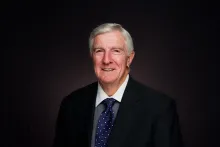
Before his retirement in 2021, Dr. Donald Ward pastored churches in Texas and Louisiana, and taught at Ambassador Bible College in Cincinnati, Ohio. He has also served as chairman of the Council of Elders of the United Church of God. He holds a BS degree; a BA in theology; a MS degree; a doctor’s degree in education from East Texas State University; and has completed 18 hours of graduate theology from SMU.
