

Ken Loucks
Society increasingly treats truth as something personal, emotional, or relative, but Scripture reveals that truth comes from God and does not change to fit our preferences. The real test is not whether we know the truth, but whether we love it enough to let it correct us, change us, and shape our lives. Those who actively seek God's truth, welcome correction, and put His Word into practice are building on a foundation that will endure.
All right. So today, the title of my message today is, "Do I really believe the truth?" No, that's not actually. It's do I really love the truth? I said that so fast. There's no way you could have written down the first one wrong and then come back to scratch that out to rewrite it. There's no way.
Do I really love the truth? That's the title. Okay. Do I really love the truth? I was thinking I've been thinking about this for a little while. mostly because I know I know myself and uh and you know I'm human, you're human, we're all human. Got this wonderful adventure we're on as we one of the things that has really uh struck me this year.
Here we are today is the 4th of July. Happy 4th of July to America, Independence Day. It's the Where's Mr. Curley? It's the filam. It is also the Filipino, if I get that correct, Mr. currently the Filipino Day of Independence from July 4th, 1946. So, we're not the only ones celebrating today, but we have 250 years here as a nation that we're celebrating.
Now, what's been fun to me is seeing videos people posting of themselves who've been coming here from other parts of the world and they think this place is amazing. They think America is outstanding. It's huge. Everything is huge. Probably the microcosm if you wanted to say a snapshot would be the big gulp. You guys remember what a big gulp is? I haven't had a big gulp since I was like 16.
So I don't you know but I remember him. You get him at 7-Eleven. I think the So there's this there's this Irish kid and he's drinking this big and he is so amazed. This thing, not only is it that that much and it comes with ice free, you can get seconds. And he's sitting there, he's telling his buddy about this. I can get another one of these.
And he goes, "Really?" He goes, "Yeah, I'm going to do it, too." And he's finishing this and it's massive. And his buddy's like, "Well, why would you need another one?" He goes, "Cuz they're free." Like that's a complete argument to this kid. They're free. So he does. He goes, he fills this thing back. How much coke do you need in a day? Like even diet coke, that can't be good for you. That cannot be good for you.
Well, I doubt two of those before he goes home will kill him. Hopefully not. Lots of people talking about how great it is here, how big everything is. That's probably why it's such a great idea of a microcosm. How big a big gulp is sort of like a microcosm of how people saw who came here see the US.
It's big, massive place that's full of awesome We have a whole bunch of people here who hate it. Apparently, can't stand it. Think this is the worst place on the planet. I've watched the interviews with young college kids and they're asked directly, "Do you love America?" No. Why not? Because it's evil and racist and full of full of homophobic people who hate people of color. I've heard it. I've seen it.
I've watched it. You probably have, too. If that's all you consume, you might think that this is a really terrible place. Yet, if I don't watch the news, I live in a great neighborhood. I bet you do, too. It's peaceful. I don't have to worry about somebody breaking down my front door. Our neighbors are wonderful.
We get along very well with all of them. It It's just I I I don't have an experience here. I mean, true, you can drive through downtown Portland and see enough of what it looks like to to think, okay, maybe if that's everywhere America, that's not great. But you can do that in downtown Los Angeles and downtown any major city and probably see something similar.
But I'm thinking about how we're not always being told the truth. When you look at this world, we're not being told the truth. Not about everything certainly. So I'm thinking about how important is the truth to me personally. The truth, no matter how good or how bad it is, do I love the truth more than anything else? What ways can you think of does our society twist the truth? One of the ways is is that you have your own version of it.
Your truth is true for you may not be true for me. My truth is true for me, but it may not be true for you. So truth is therefore subjective. That's one way. That's not much of a standard. What about feelings? How we feel is more important than truth? I've been seeing this a lot. How I feel is absolutely more important than the truth and my feelings need to be validated.
It's a reality of our world. We're told follow your heart. I just love this idea. Follow your heart. Songs that talk about how the heart the heart will lead you home. The heart is the one thing you can trust. Like is that what the scripture says? It's deceitful above all things. You know, it's the one thing you can trust or relative morality.
You know, if it doesn't hurt somebody that, you know, it's not wrong if it doesn't hurt someone. Maybe if society just accepts it, then that makes it okay. I wonder if that's what's behind forcing down our throat so many immoral things as being required to accept them because it's somebody else's preference, somebody else's choice, and it's not your job to judge.
And if it makes them happy, it must be okay. It should be okay because it makes them happy. These are all substitutes for truth. When I stare at the mirror and I'm looking at that dude in there, you think God cares whether that guy has feelings about the truth? I don't think he cares what I feel about the truth.
He provides it for those of us who want and seek it. He opens our eyes to understand it. But the truth is out there. It's interesting how the Bible talks about truth. We know the basic the most basic statement of the Bible. Your word is truth. Sanctify them by your word. So set apart your people by truth. Your truth, not any truth. Truth has a standard. It comes from God.
And that truth isn't true because we believe it. My belief or acceptance of God's truth has nothing to do with whether it is true or not. It is true because God said it. That has to be good enough. I want to walk through this question today. I want us to pause and think about this from this context. If we're not willing to defend the truth for ourselves in every aspect of our life, we put ourselves at risk on the most important thing of all, and that is God's word, God's truth.
So, we have to be thinking, I think, this is just Ken's way of approaching this today. My thinking is that we should be pursuing truth in all aspects of our life, not just opening the the word of God, which we need to do. Not all of the truth that we live isn't is by because of a law that God has said.
Thou shalt do this or thou shalt not not do that. How I treat my wife while it can be biblical or not biblical. Not every interaction we have is based on a biblical thing that I have failed or she has failed or that I have done right and or not done right. I mean yes you could say okay principles absolutely kindness is a principle but you don't find a kindness command there is no command that says thou shalt be kind to another human being Jesus Christ elevated and said okay let's let's think about God's law on the whole it's the law of love let's go through 1
Corinthians 13 and see what that looks like okay but what if what What if the truth disagrees with us? What if the truth disagrees with me? We'll make it personal. What's more important to me? What I want to hold on to, what I want to believe, or the truth? That's at the heart of the question.
Do I really love the truth? I I I find this as an irony, but I think you'll agree with me. It's easy for us to say when I look at my Bible, I I say, "How many of us love the truth?" And you would say, "Oh, absolutely love the truth." You were called because you had the truth opened up to you. But if I push on certain buttons, probably all of us can at least at some point in our life say, "Well, there was a time when I didn't love all of the truth.
" And I'm not talking scriptural truth. I'm talking about truth itself. If it disagrees with me, I might prefer this, but the truth is this. Maybe that truth would require me to change something about myself and maybe I don't want to. That's the hard part when we're looking at the question of what is truth and do I really love the truth? I want to make sure that I I guess if you walk out of this with anything, I want to make sure that it is simply that you identify and recognize that there can be nothing higher of value to us than the truth and that we have to fight
to hold on to it every single day until Christ returns. Where that becomes difficult is when truth requires us to change because it's easy to love convenient truth, easy truth. It's hard when the truth tells us change. That's when we have to ask ourself, do I really love the truth? My first point is truth is easy to value until it disagrees with us.
It's easy to value it until it disagrees with us. You notice the the wording because it isn't that I disagree with the truth. It's I'm living a certain way. I'm making certain decisions. I'm I have a certain life. Whatever that is, and the truth comes along, God's truth. I see it. What if it disagrees with me? The Sabbath is a classic case of where the truth often disagrees with someone.
A life gets built around how they live and the Sabbath may be a part of that. To them, it may be Saturday, not the Sabbath. Now all of a sudden the truth comes along and what do we do with it? This is the rub. Where does God want to find truth? I think at the end of the day, this is what we need to make sure that we understand. Psalms 51.
I'm going to give you your first verse here today. Psalms 51. We can deceive ourselves, but we cannot deceive God. This is where he is looking. Psalms 51 verse 6 says, "Behold, you desire truth in the inward parts and in the hidden part you will make me to know wisdom." It isn't enough for us to say, "I I love the truth.
" It has to permeate us where when God's looking at us on the inward parts, on the hidden parts, that that's what God sees. A desire for the truth no matter what. I'm not talking about perfection in living the truth. I'm talking about our desire for that. Am I willing to fight against myself to embrace the truth? Because where that begins to be revealed is when the truth disagrees with us.
Proverbs 27. Let's keep kind of thinking about this idea of making it personal. Imagine the person that says, "I love the truth. I'm open to the truth." and a brother or a sister has identified in them some flaw that they love them enough to be able to point that out to them and say you would be a more useful tool for God if you if you were to work on this area.
How do you think you would feel personally about that? Don't you love correction? Can you just not wait until someone says to you, "I'd like to talk with you about something." Have you ever had that call where like, "I need to meet with you. I need to talk to you about something." And you know, it just like everything in your body says, "I doubt this conversation is going to be about how perfect I am.
" Like you just know there there's I've done something wrong. whatever I and so are you looking forward to it in me I want to say yes sometimes the answer is no I'm not actually looking forward to that conversation why not because here we're we're in Proverbs 27 it would be nice if we could remember this verse 6 faithful are the wounds of a friend.
It It's juxtaposed to the next. But the kisses of an enemy are deceitful. Your enemies will say anything to flatter you, puff you up. They don't care about your character. Not really. A brother or sister, a spouse, family member who genuinely cares about you, who wants to see you become the best version of you possible, may actually see a flaw in you.
and may be willing if you were open to it to sharing something about yourself with you that you could work on. That's the hard thing. Can we see the faithfulness of the wound of that friend? Have you ever received that kind of criticism and it hurt? I have. Have you ever given that kind of criticism to someone and seen them get hurt? And I'd have to be honest and say yes, I have.
That doesn't mean intent, but it is a possible result. And in fact, it's the likely result because he's saying faithful are the wounds of a friend. You're going to be wounded by someone you care about if they care enough about you to say you're not Mr. Perfect or Mrs. Perfect. Maybe there is something you should work on if you want to become more like Jesus Christ.
What you can count on is that your enemies won't be there to help you. It's your friends who would if we would let them. This is what we have to combat. Proverbs chapter 12 in ourselves. Proverbs chapter 12 verse 15. The way of a fool is right in his own eyes. But he who heeds counsel is wise. And this is I think this is just a fair way to say isn't this human nature to think I already know things.
I I understand what I'm supposed to do already. I don't need you pointing out my flaws. You know, one of the reasons that it occurs to me that that's called foolish is because you can't see all your own flaws. It's impossible to see ourselves with that kind of clarity. No one can do it. You have blind spots. We're human.
And unless you wake up every day dysfunctionally looking to blame yourself for everything wrong in society, I don't think most people are that way. You're going to have blind spots about yourself. You're not going to see yourself perfectly. Others, this is why it's so funny. Why do you think Matthew 18 talks about how do we go to a brother when the first thing that it talks about is hey dude you got a plank sticking out of your own eye and you want to go over and get that tiny fleck out of your friends massive beam I just kind of picked your
old Basil Wolverton's picture of that right with the massive beam coming out of this guy's eyes smacking everybody in his path that's what I have in it's kind of my vision that's always stuck with me and it's the fool that can't see that beam but who sees the speck in his friend or his partner, his wife, his kids.
You see that speck real clear. You can't see your own beam here. It's a great visual. Let's go over to Psalms 14:15 because this is the attitude that God is looking for us to have. Psalms 141. Verse 5 says, "Let the righteous strike me. It shall be a kindness, and let him rebuke me. It shall be as excellent oil.
Let my head not refuse it." That should be our attitude about truth that disagrees with us. We ought to be willing to listen even though it's probably one of the hardest things we'll ever do if somebody says, "I need to talk to you about something." And you know, it isn't about the beauty of your perfection. So, am I willing to hear a little truth? If I love the truth, which is the question, if I really love the truth, then the answer has to be yes.
It has to be yes. For my own good, I'm willing to listen. David didn't surround himself with a bunch of sycopants who praise, praise, praise. Everything you do is perfect. He's saying, I would rather be surrounded with people who will tell me when I'm getting out of line, tell me when I need to correct something, tell me for my own good when I need to improve something.
I would like to think one day I'll be there. I'm working on it. You know, you're probably working on it. We can work on it together. But learning to receive the truth about ourselves, this is the question I'm thinking about that has to prepare us for the most important things we have to decide about in life, which is if I'm willing.
So, if I'm willing, this is the point, if I really love the truth, then I have to be willing to not only be open when somebody says, "Hey, I I'd like to talk to you about this imperfection in your character." Maybe maybe it also means maybe I should be going to them first. Maybe I should open the door for somebody else to actually do that with me.
Why? Because I love the truth more than what I want to believe. That's how much it's will I'm willing to sacrifice because I love the truth that much. Now, here's the thing. Loving the truth is more than knowing the truth. Loving the truth is more than knowing the truth. What did Paul say would happen? And this is a prophecy over in 2 Thessalonians chapter 2 verse 9. I'll I'll read 9 through 12.
It says, "The coming of the lawless one is according to the working of Satan with all power, signs, and lying wonders. and with all unrighteous deception among those who perish because they did not receive the truth or the love of the truth that they might be saved. And for this reason, And for this reason, God will send them strong delusion that they should believe the lie, that they may all that they all me condemned, who did not believe the truth, but had pleasure in unrighteousness.
Well, I mean, feel like you could go on to just about any social media platform and find that validated. Every form of immorality is celebrated. And every critique is ridiculed. Every moral argument, especially biblical moral argument, is lampuned. It's judgmental. There's I've seen all kinds of descriptions of what God would say, his word does say against these things and it's it's just flatly rejected.
We're a society turning steadily away from God. And we see this around us now. This is this is the world that we see largely around us. Not uniquely American. This is uniquely human. It's part of our condition. Satan uses signs and wonders and deceptions to deceive. And God lets this happen because this is what the people want.
That's what he says. They remember he ends with they take pleasure in unrighteousness. So it's not God forcing unrighteousness on anyone. He's this is the way you want to go. This is the way it will go. Now notice that Paul did not say they had never heard the truth. It says they did not receive the love of the truth.
It's not that they didn't hear the truth. It's not as important to them as something other than the truth. That's more important. And the word receive is correctly translated. It means to take or to accept something. They did not receive the love of the truth. And notice the order of the passage. First they receive they refused to receive the truth.
Then Paul says they had pleasure in unrighteousness. So you see how they go hand and glove. This is the great risk for us that we get anesticized to sin to whatever Satan's lies are. And so God gives them over to a strong delusion. And guess what? If we reject the truth, God's going to do that for us as well. The beautiful thing is he's given us the truth. We have it.
We just need to hold on to it. And in order to hold on to the truth, we have to have a love for it. A love that transcends anything in this world. So, they had the truth. They just didn't love it. See the difference? That's what I want us to see. Knowing the truth isn't the same thing as loving the truth. Loving the truth means welcoming God's instructions even when his instructions correct behaviors, our way of thinking, our attitudes.
God's truth matters more. If that requires me to change, then I have to change because I love the truth. over in John chapter 8. John chapter 8. Uh verse 31, I'm going to start here. Verse 31 says, "Then Jesus said to those Jews who believed him, if you abide in my word, you are my disciples indeed, and you shall know the truth, and the truth will make you free.
" You think he's talking about right now? Well, in the sense of being freed from deception, yes. What's our ultimate freedom? Being in the kingdom of God, transcending this life, the truth will get us there. That's our objective. That's our goal to be first fruits. To be risen from the dead or changed in the twinkling of an eye at the return of Jesus Christ.
That's the ultimate freedom that's in front of us. The truth will get us there. We would deny ourselves that truth because we're humans and we have this thing called human nature. It wants what it wants when it wants it, which is usually right now. So Christ then connects us with his word.
Obviously, this is the truth he's talk telling us to follow. So we have to hear his voice and follow him. By the way, that's the theme of camps this year. Follow me. It's a great lesson for us to be teaching our kids, right? Follow Christ. It's the only solution to a life well-lived and to preparing for Christ's return. So truth isn't something that we just once in a while touch on.
And that's interesting little piece of truth over there. It's our whole way of life. No matter how I feel about it, no matter what it requires of me to change, because it's the truth and because I love it, I'm willing. Over in Hebrews chapter 4, we're affirmed by the author. Hebrews chapter 4 verse 12. Christ just said that his word, if we follow his word, and here it says about his word, verse 12 says, "For the word of God is living and powerful and sharper than any two-edged sword, piercing even to the to the division of
soul and spirit, and of joints and marrow, and is a discerner of the thoughts and intents of the heart." Verse 13 says, "And there is no creature hidden from his sight, but all things are naked and open to the eyes of him to whom we must give account. We didn't get called out of this world to enter a free run at the kingdom.
Come as you are. No need to change." I've been listening to uh some music. Well, I listen to music every day as I when I work, but you know, much of the what's called modern Christian music today. And there's some there's some good songs. I was listening to one uh that Dolly Parton and Zack something somebody rather sing called uh There Was Jesus.
It's actually it's a beautiful song. So many of the songs that come I so I'm have a Pandora account and I type in this I want to hear this song and I'm listening to it. It's lovely enough. I'll just hit back up and I want to hear it again. I probably listen to it 10 or 15 times in a row. It's quite lovely. But then it created a station for me and and here we are driving up this morning and all of a sudden more you know it's all Jesus related songs because that apparently that's the station's name now.
I didn't know I had created this station. It's funny how many of those songs talk about how God loves us exactly how we are. You'd be surprised at that theme. an absolute failure to understand that the scripture doesn't call us to stay as we are. God didn't call us because we're perfect just the way we are. It calls us out of this world to change.
There isn't a human being on this planet that is like Jesus Christ. But we're called to become like him. That requires change. And how do we change? Well, the word of God is sharper than any two-edged sword. And it pierces the very place, the heart, the inward part that God is looking at where change must take place.
Albert Barnes writes, "There is nothing so powerful in searching the heart as the truth of God." That's why sometimes reading the Bible can maybe be a little uncomfortable when we're reading things that disagree with us because it's not enough to know the truth. We have to love the truth. So that brings me to my third point which is the people who love the truth learn to seek it.
The people who love the truth learn to seek it. And that is not limited to just reading the pages of our Bibles. Yes, we have to have our self-noseds deep into the word of God. We just heard from Christ. It's not that enough. That is not enough. I didn't think that was a tongue twister the first time, but it turned out to be one.
A person who really loves the truth does not wait for correction to find him or her. They go seeking it. This is the challenging part of our calling. It's not enough to wait for someone to come tell us what's the biggest problem with that. If you've ever offered someone correction, you know what the problem is. We read it already.
Faithful are the wounds. Have you ever been wounded? Did you respond perfectly the first time somebody came to you and said, 'Hey, I want to point something out about about you that I've noticed that you need to work on. Were you just, "Oh, thank you so much. I so appreciate you being willing to crush my soul like that and tell me how imperfect I am." We're all trying.
And that's why it's painful when someone says in all of your efforts to become like Christ, here's this really big area. You have failed to do that. And so we tend to kind of take it like that. Even though it's not meant that way, it's a wound because we care about the person. They care about us. They care enough to be willing to risk the relationship if it's important enough.
But how we respond to that will tell them just how much permission they have to repeat that. When we have that visceral negative response to them, when we are fully defensive about that thing that you're pointing out about my character which is so precious to me and I don't respond positively and now I have a very negative reaction to that.
Are you coming again anytime soon with more of that kind of helpful suggestion? I doubt it. Our human n nature just wants to preserve the relationship as much as possible. So it has to be a big deal if you're willing to risk the relationship to say something to somebody and we all I think innately know that which is why when you go asking for it who loves the annual review for those who are still employed who loves the annual review raise no you don't love the annual review who doesn't who likes the annual review come on you sit down
with your boss and you're supposed to look back over an entire year's worth of history to analyze in this meeting just how good you have become or not. And I I think about that a lot because I hated annual reviews. I like like we're going to plan out the next year from this or am I going to are we going to have a really thorough evaluation of how I did the entire previous 12 months and have something valuable exchanged in that? I I've always felt like no, not really.
Because evaluations shouldn't happen once a year. They should happen frequently, like ongoing, so that you can be correcting and changing in real time and really getting better as you go along instead of stopping abruptly at one point in a year to just go, "Okay, let's look back the entire 12 months and say, you were doing this wrong and this wrong and this wrong.
" And I would be like, you know, if I was doing that wrong nine months ago, wouldn't it be nice if you just said that? Cuz maybe I could have started working on it nine months ago and I wouldn't have been doing it wrong for the last nine months. That's kind of what I think about when I think about the annual review. And so then I think, well, what if we instead go to our boss periodically during the year and just say, "Hey, what can I be working on?" It's a lot better than when the boss says, "Come into my office.
I need to talk to you about something." Because we all love that phone call. So what if instead we just went to the boss and asked him, "Tell me what can I be doing to get better?" And maybe he would then tell you something you could do to get better. I think there's an inherent contract. Maybe you'll disagree, but I think you'll agree with me.
When somebody comes to you and says, "I'm really looking to try to improve myself. Can you point out something that you think that I could be working on?" Okay. You know how vulnerable it takes somebody to be to be willing to ask that question of you. What's your end of the contract? Well, since you brought it up, let me get out my notes I've been keeping for the last 17 years on you.
Let's begin here on page 39. And let me read to you all of your faults and sins. Like, no way. I think we all instinctively understand that there's a contract here when you do that. And what's my end of it? How about be kind? like be nice. Maybe if I did that, you wouldn't have a negative reaction to whatever it is the help that I'm offering you. So, we pursue it.
That's the whole point. If we pursue it, we're far more likely to get helpful information. And the other person's far more likely to be kind about it when they give it to us because of the inherent contract between human beings that becomes a part of that deal. Now, perhaps there's a person out there who is just ignorant of this contract.
Who when you say to them, "Give me something nice." They just unload on you because maybe they've just been holding something back for so long and you finally give them permission that they don't know how to deal with it in a in a loving way. I guess maybe that's maybe there's people out there like that. But I think people are genuinely kinder than that. So, we pursue it.
Proverbs chapter 15. Proverbs 15 verses 31 and 32. Proverbs 15:31 says, "The ear that hears the rebukes of life will abide among the wise. He who disdains instruction despises his own soul. But he who heeds rebuke gets understanding. This is the value of the book of Proverbs to give us these kinds of nuggets which I said this in different words but it's the same thing.
If we're open to correction and being corrected because we're seeking that because we love the truth even about ourselves when the truth disagrees with us. I still love the truth more than me. Okay. Really? Go ask somebody to give you a little truth. And we'll see if we have the Proverbs 15:31 attitude. I want to hear this because I want to get better.
If I know that Christ is the standard that God expects me to measure up to, I have to be pursuing it. I need to get better. I need to be open then to hearing that I'm not Mr. Perfect. Solomon gives us two paths here. One person listens and they get understanding about themselves. The other person refuses the instruction and they pay a high price.
And for us, if we don't genuinely love the truth, that price could be eternal. was thinking how easy it is for us to wait till a problem fixes itself. What's the likelihood if we've been wrestling with a problem for 30 years that it's going to fix itself anytime soon? It's like not very likely. Maybe you don't know you have the problem or don't see it as a problem.
That can happen. somebody else sees it and they go, "Yeah, that's a problem." You might be like, "What? How come I couldn't see this? How come I couldn't I never identified that as a thing?" Until somebody points it out and you realize, "Oh man, hm, I should work on that. I should work on that." Because problems don't just fix themselves, especially if you don't know that they exist.
So, if you're seeking the truth, you're going to find out that you have problems you need to work on. Hopefully, that gets less as we get older. Think that would be the ambition, right? I want those problems that continue to exist to be much less. I was thinking about this and it made me laugh. Problems don't fix themselves over time.
This is just a normal reality of being a human being. Just because we get old enough that something we used to have a problem with isn't a problem with us anymore because of age doesn't mean we've overcome. You can't you I was quite literally you can outlast a problem simply because you get so old it's not a problem anymore.
But is that the same thing as overcoming it? No, it is not. So, we can't outlast our overcomings. We have to overcome in real time and not rely on the fact that I'm just old enough. It doesn't matter to me anymore. Because what happens when I get this fresh spiritual body? Like, that's going to be God's question.
If you haven't really overcome sin, if there's still a few things you're hanging on to that you just outlasted because of age, but boy, if I gave you another 30 years, what would happen if I sent you backwards and you felt young enough that that problem might surface again? Something we should think about. Fortunately, I'm grateful that we have help in this life.
Ecclesiastes chapter 4, Solomon gives us advice here, he says in verse 9 of Ecclesiastes 4, two are better than one because they have a good reward for their labor. If they fall, which we do, one will lift up his companion. But woe to him who is alone when he falls, for he has no one to help him up. Again, if two lie down together, they will keep warm.
But how can one be warm alone? Though one may be overpowered by another, two can withstand him, and three-fold cord is not quickly broken. This is the sense of using our friends to help us to overcome. They're there. They probably see some of that blind spots that I can't see. And if they care enough and if I open the door, maybe they'd be willing to step into that room with me and help me.
But only if I truly love the truth. Because if they give me some truth that disagrees with me, that's when it gets very difficult. So I have to truly love the truth and then receive it when it's offered. Now, I will say this. Not every criticism that we get from somebody else is accurate. Sometimes people react from their own emotions.
They're carrying their own baggage. They may they may be seeing something in you that maybe that's not an accurate picture of you. At least not 100% accurate. Just because criticism is offered doesn't mean it's 100% right. and you must change according to 100% of what you've been told. I just want to validate that. Sometimes you get advice from somebody that you need to fix something in yourself and you look at it honestly and you say, "I just don't see that as a problem.
" Might even go to your spouse. Maybe it was your spouse that said that. So you go to your brother or you go to your mother. You go to another friend. My wife says this. How are they going to know it was your wife? Okay, let's take let's flip that the other way. Your friend says this about you.
So you go to your wife and then when she says that's actually true. Okay. I mean, it's unfair. Of course, she should 100% back you in that, but you know, if we're seeking the truth and she says, "Your friend told you the truth there, maybe we should listen." Proverbs 19:20. Proverbs chapter 19:20. I'll just read this one to you real quick. It says, "Listen to counsel.
Listen to counsel and receive instruction that you may be wise in your latter days. Well, hopefully we're getting wiser in our latter days. A bunch of us are getting into our latter days. And I hope I'm wiser than I was at the beginning of that. I was thinking this morning as we were talking in hood in in Olympia.
I'm going to be honest here. I'm thankful, maybe you are, too, for age. I I don't like the joints. I don't like the pains that come with age, but I'm thankful for the wisdom that comes with age. And here's what I was also thinking about. I'm also thankful that we're not getting 22-year-old ministers. Nothing against a 22-year-old, but honestly, I know I'm wiser than a 22-year-old.
So are most of you. Guaranteed 100%. And so, it's great blessing that God hasn't given us somebody who's so far back and so early in their life to come and teach us how to live and walk this Christian life. I'm thankful for that, that we have older elders and ministers to help us and to counsel us and to be there to teach us.
I'm using these old men same as you guys do because there's wisdom there and I want to be wise in my old age. If we love the truth and we're seeking to change, we will become wiser in our latter years. That's the point. Cambridge Bible notes on this verse. It says, 'The words are addressed to one who is still young enough to receive instruction.
Like, okay, that's true. But when are we too old to receive instruction? Well, hopefully never. I mean, we should be receiving instruction the day Christ returns. We're still seeking perfection. That means right up to the very end. I love the truth enough to seek it until the very very end. Okay. Last thing.
So it's one thing to know the truth. It's another thing to love the truth. The final step is acting on the truth. You can be told. You can go and earnestly ask. I I would love it if you would just help me correct something in myself. Show me and point something out I can work it. Okay, you're given it and you realize it might be some truth cuz I asked my wife and she said yes, it's true.
Well, James chapter 1, James chapter 1, verse 22. Well, let's just pick it up in verse 21. You're just going to have to scratch that off. Just put a 21 at the top of that. Okay. James 1 21 says, "Therefore lay aside all filthiness and overflow of wickedness and receive with meekness the implanted word which is able to sa save your souls.
" What is implanted word? What's implanted in us at baptism and the laying on of hands? The Holy Spirit. It says in verse 22, "But be doers of the word and not hearers only, deceiving yourself. For if anyone is a hearer of the word and not a doer, he is like a man observing his natural face in a mirror. For he observes himself, goes away, and immediately forgets what kind of man he was.
" But verse 25 says, "But he who looks into the perfect law of liberty and continues in it is not a forgetful hearer, but a doer of the work." This one will be blessed in what he does. So that's what our job is. It's not just to pursue it. It's not just to know it or understand it. It is to live it. That's the do. That's the deal.
That's the job. That's what sets us apart from anyone in the world who hears but doesn't change. And where does that get the hardest? It's when the scripture disagrees with us. It's when what God says to us is not what we want to hear, but it's true. And it requires me to change. That's when I'm being tested on whether I really love the truth.
Am I willing to do it? Christ says over here in Luke chapter 6 Luke chapter 6 towards the end verse 46 he says why do you call me Lord Lord and do not do the things which I say he says, "Whoever comes to me and hears my sayings and does them, I'll show you whom he is like." He's like a man building a house who dug deep and laid the foundation on the rock.
And when the flood arose, the stream beat vately against that house and could not shake it, for it was founded on the rock. But he who heard and did nothing is like a man who built a house on the earth with without a foundation against which the stream beat vehemently and immediately it fell and the ruin of that house was great.
This is the moral lesson for us. Our house is a spiritual one. What could be greater than the loss of our spiritual destiny? our future, our role as kings and priests in the first resurrection. You know, I I like to remind us of this because it's an earnest point I want us to make sure that we always think about.
We have come under judgment today, not in the millennium, not in the world to come. Today, this is our chance for salvation. It's one shot. We are either going to be first fruits or we are not going to be in the kingdom of God. It's serious business. And that's why it's so important for us to think about things like, do I really love the truth? If I love the truth, I'm going to change.
I'm going to make sure that I become like Jesus Christ so that I ensure that calling lands me where I'm supposed to be in God's kingdom as a first fruit. Nothing else will do. But we cannot change on willpower by itself. None of us can. We don't have the strength in us. And neither can we become righteous except through God. And the power of the Holy Spirit he gives to us to change, to become like his son.
We will never achieve that in its fullest because we're human. But we are to be working on that right up until Christ returns. It says in 1 John chapter 2, 1 John chapter 2, let's see here, verse three, where John, again, I love looking how John sees things because this is at the end of the first century and he's looking back and he's the last of the apostles.
ostles and he has this big view across time and he says here in verse three so for those who would say the the commandments were done away or hung on the cross in the 30s AD here's John in the '90s AD saying now by this we know that we know him if we keep his commandments he who says I know him and does not keep his commandments is a liar and the truth is not in him but But whoever keeps his word, truly the love of God is perfected in him.
By this we know that we are in him. Verse six says, "He who says he abides in him, that is Christ, ought himself also to walk just as he walked." One of the great reasons why we need to read through those gospels. One of the reasons why I gave the message on do we really know Jesus Christ is because he walked this earth as a man and God. He walked this earth and did things.
He cared for people. He loved people. He set us an example of how we should live. We We have no excuse really to say, "I I don't know what Christ wants me to be like." We have all of the gospels to tell us what he wants us to be like because it's about him. And so we can learn to be like him if we study who he was.
So the test for us isn't how much I agree with this sermon. How much I agree with the point that we should love the truth. I I agree with that point. That's that's not the test. The test is what we do from here. Whether I go home and I go to work fixing whatever's left in here that needs to be fixed.
And if I can't see it, then I need to go find a way to get it seen in me. Asking somebody who knows me well enough to know what my flaws are and then pursue fixing those things. It isn't enough to know the truth. It isn't enough to understand the truth. It isn't even enough to just say, "I love the truth." We have to act.
We have to do the truth. Do I really love the truth? That question is answered every time we choose whether we welcome God's instructions in our life or not. how we respond when somebody says, "Here's something I think you should work on." And we don't tear them apart because they love us enough to tell us we haven't achieved perfection yet.
It doesn't mean that we have to accept every single thing that they say, which might not be correct, but neither do we tear them apart because they were willing to try to help us. And better than that, we we should be pursuing finding that out. asking, seeking the truth so that we can live it.
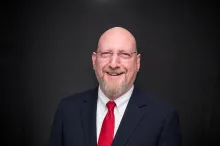
Ken Loucks was ordained an elder in September 2021 and now serves as the Pastor of the Tacoma and Olympia Washington congregations. Ken and his wife Becca were baptized together in 1987 and married in 1988. They have three children and four grandchildren.
