

Ken Loucks
Scripture shows that words have weight. They can strengthen or wound—especially when spoken within relationships of trust. This message explores how what we say and what we hear are both shaped by what’s happening in the heart—and why neither can be truly transformed without the help of God’s Holy Spirit. As we continue our walk out of sin and into newness of life, we must learn to speak with purpose and to listen with discernment. That’s not a natural skill—it’s a spiritual process. The tongue reflects the heart, and the Spirit is the only power that can truly change both.
(65) Ken Loucks - The Weight of Words - YouTube
https://www.youtube.com/watch?v=UKg2Ubo_9gA
Transcript:
(00:00) You don't think and communicate necessarily in pictures. You think and communicate in words. So, you know, contemplate like I think about this one of the million things I think about when I'm trying to go to sleep cuz you think in words. Have you ever really thought about that? You think in words in your head.
(00:18) You're talking to yourself. You're having a conversation. I talk to that inner 10-year-old a lot. A lot of things he's got to work on. So, I'm we're having a kind of an ongoing conversation. So, I know you think in words and you picture in words and you say things in because that's how we communicate, which is kind of interesting when you consider that most of the wounds that we cause or that have been given to us are from words.
(00:44) Somebody said something to us or I said something to somebody else and an offense has happened, right? And so I thought there's a this is a nice area we can think about transforming because it goes handin glove with forgiveness. So I want to talk about that and I want to start over in Proverbs chapter 18. Proverbsap 18 21. Proverbs 18:21 says, "Death and life are in the power of the tongue, and those who love it will eat its fruit.
(01:28) " Well, those who love what? They love the tongue. No. Do they love death and life? No. The power that's in words. And whether the fruit of those words is good fruit or bad fruit, you get to consume it. It's yours. it if it came from you, whether it's good or bad, you got to own it. That's the point of this scripture.
(01:58) It describes sort of a spiritual reality that words are not empty. They carry weight. And once they're spoken, they produce something. Fruit, good or bad. Fruit is in the words themselves. We can either heal with our words or we can hurt. And of course that fruit doesn't just grow in the speaker himself. It grows in the one who hears it.
(02:25) The Hebrew word for power here literally means hand. In other words, the tongue has the power of a hand. Like any hand, it can build or it can break. In the context of words have weight, it can offer or it can throw. Think about how words come out of our mouths, how they have been can be received after we've spoken them.
(02:52) That's sort of the imagery that that's at play here. So, I I like this idea of thinking about us holding a stone because you can hurl it like a weapon. You know, stoning in the Bible was a real thing. Stephen was stoned to death. That's, you know, that's that's individuals throwing rocks at someone until they die.
(03:19) So that hurts, right? And if we contemplate that idea that if our words were literally an object that we threw at someone carelessly, whatever, it would hurt. If we and if we pictured them like that, would we throw them like that or would we be more careful with how we treated them? And so here in Proverbs, we're given the same imagery of power being like a hand.
(03:49) And so our words, the tongue and our words being connected to this idea of grabbing a stone and throwing it or maybe offering it instead. So how we can receive these often depends on the intent of the heart. So both how we offer them out and how they come to us as we're going to see as we walk through this is largely a matter of the heart.
(04:24) Both how we give our words and how we receive the words of of others is going to boil down to a matter of the heart. So we're going to kind of walk through elements of this because the closer I'm going to begin here with my first point. The closer the relationship we have with someone, the more the weight of words matters. I want you to think about that.
(04:48) If you if you are criticized by someone you don't know, how do you feel about that criticism? Does does that lingering comment that some stranger just made to you maybe about your choice of cookies in your shopping cart? Yes, they're Oreos, and I'm not gonna feel bad about that, but they may not be the best choice. I get that.
(05:14) So, if some stranger points that out, am I gonna be crushed? No. Like, what could be said to me by a stranger that I actually will consume to the point where it crushes my soul? But what if a loved one says something hurtful? Somebody you really care about says something that could hurt. How do you feel about that? A criticism from somebody, whether that's a spouse, maybe a sibling, maybe a friend, maybe a brother or sister in Christ.
(05:49) Now, if they if you're close to them and they say something and they criticize, how do you feel about that? You know that it hurts more. We all know that. And so we have to contemplate this issue of the closeness because you know what the default position that we can take is we can lean on the fact that I have a relationship with somebody as a justification for being careless in our words.
(06:18) I trust the relationship enough that if I say the wrong thing, they'll be okay with that. And so you can devastate somebody by simply not caring enough about how they might hear those words. And you might trust your relationship too much and be willing to hurt them because you have a close relationship as opposed to really understanding that it's that very closeness that creates vulnerability.
(06:43) And it's in our vulnerability where we are susceptible to being wounded. That's why closeness in relationships matters in the words that we use. Psalms 55:es 12-14 is where I'm going to go next. Psalms chapter 55:es 12-15. He says, "For it is not an enemy who reproaches me, then I could bear it.
(07:17) Nor is it one who hates me, who has exalted himself against me, then I could hide from him." But it was you, a man, my equal, my companion, and my acquaintance. We took sweet counsel together and walked to the house of God in the throne. So, you're talking about two very close people here. And he's describing the very reality I'm trying to describe right here, which it is not the enemy that wounds us.
(07:42) It's the one that we love. It's the one that we care about. This is a really important principle for us to be thinking about as it comes to the issue of transforming our lives, becoming more like our elder brother. David wasn't upset or shaken by insults that came from Saul or even curses from the Philistines.
(08:03) It was the betrayal from a friend that hurt the worst. That's what left the deep wound. The principle holds true in every human relationship. The deeper the connection, the more the heart opens. And when the heart is open, words don't just bounce right off of us. They penetrate right into the center of that tender place.
(08:32) That's why words spoken in this relational context matter so much. They come from someone who could have chosen to be merciful, thoughtful, careful, but maybe instead wasn't. And because we care about them, how what and what they said hurt. On this verse here, the pulpit commentary says the following. Wounds inflicted by professed enemies are not always very hard to bear.
(09:01) They're expected. But when he who smites is one who has been admitted to the intimacy of private and confidential friendship, the blow falls with double force. And so this aligns with a fundamental truth that we have to understand. Words are not isolated events. They're tied to a relationship by context. The closer, the more dangerous, the more vulnerable and the more open we are to being wounded.
(09:34) So if you think about now I I want to I want to illustrate this by an example that was given to me by someone recently just just so you think about this because I bet we can all go back to some point in our past and remember something somebody said that hurt that we might still carry a little bit of this example I was told about somebody who had recently connected with an old friend and And I don't know, 30, 35 years ago, a minister said something to them and that has stuck with them.
(10:08) I just talked to somebody this morning in in Olympia who said, "Oh man, several decades ago, he asked for an evaluation by a pastor of his sermonet skills, of his of how he was doing. And he was crushed by negative, negative, negative, negative. Not a single positive thing to be said. And he remembers every single negative that was said to him.
(10:39) Like that's the weight of words that you can carry them for 35 years and still remember. I remember soul crushing things said to me when I was in when I was a teenager. Like we can't dismiss that reality. It's super important for us to understand if we can remember back to a time when somebody said something to me that was decades ago and it still hurts, then that ought to give us pause in every conversation we have moving forward.
(11:10) Like I need to be sensitive to the reality that I can say something today that might last that person the rest of their life, good or bad. the fruit of what I say. We'll both be consuming it if I'm not careful. So this is why we can't dismiss small statements as insignificant because there are no small words between two people who are close.
(11:46) I know I put out the did you know which talked about obligation. You know it's written to a physical people where God says hey you can't stand by and allow someone to get hurt if you could do something to prevent that. Okay we look for that spiritual application right what spiritually what would that be like? And we think naturally of the person who could harm themselves spiritually.
(12:12) Are we willing to say something? Well, the answer should be we we should be willing but carefully because words matter. How we approach them, what we say, it all matters. It literally could last them the rest of their life. And though it might be good for them, you might destroy the relationship to give them something you think is good for them.
(12:44) What benefit is that then? And so point number two is what we say reveals who we are becoming. You know, we're on a progress. We're we're on a we're on a journey. We we we like to use that language because it's it's accurate. We're moving towards a destination called the kingdom of God. It's a spiritual journey. And so on that journey, we are working on ourselves.
(13:11) We're supposed to be trying to work on ourselves and addressing those matters of the heart that would make us more like Christ and try to fix that and make us more like Christ. We're warned here in Matthew by Christ, in Matthew chapter 12, Matthew 12:es 36 and 37 where Christ gives us a warning. He says, ' But I say to you, Matthew 12:36 and 37, but I say to you, for that every idle word men may speak, they will give account of it in the day of judgment.
(14:02) For by your words you will be justified, and by your words you will be condemned. The Greek word translated idol here. So it says, I say to you that for every idle word, what does that word idol mean? It means lazy, thoughtless, or unprofitable. lazy, thoughtless, or unprofitable. Can we speak and give words that have come from us being lazy? Yeah.
(14:30) I mean, that's just I didn't I don't care. That's lazy, right? I I just I don't care. Thoughtless is I'm not really putting any effort into thinking about what it would sound like, how it would be received, what what words should I use, and in what order. And of course, unprofitable means they're useless. Are we thinking about our words in that context that I'm purposeful in how I form my sentences and what I use to communicate with somebody? Whether it's a criticism or whether it's a compliment, it doesn't really matter.
(15:03) Whatever my communication would be, am I thoughtful in it? Because Christ says if I'm not thoughtful that I'm going to be held accountable for that. If I'm lazy in how I communicate or if what I say is unprofitable, I might be judged for that. Meaning, if I don't examine my words before I let them out, if I am, let's say, reacting, responding instead of pausing and thinking, then Christ is warning, you better stop and think before you speak.
(15:40) Somebody might have hurled a a rock at us. And what's our human nature want to do? It wants to pick that rock up and throw it right back at them and maybe add a couple and put some sting on it. Maybe that's just me. I've got human nature. I call him in my inner 10-year-old cuz believe me, he's got a lot of human nature.
(16:08) But that's the way we would normally want to react, isn't it? But let me ask a question. What would change if everything you said in private was suddenly made public? Like can you imagine that? Like you know the are okay married couples you know the arguments you've had you know some of the things you've said.
(16:33) I'm not talking about what was said to you. I'm saying we know things we've said that if that were recorded and then somehow played publicly in front of an audience, how would we feel about that? Would we change those words? Oh, I'd be willing to bet. Would I say something different? Would I say nothing at all? How would it change? Simply by asking myself, well, if somebody's listening, that's really all we're doing when we ask that question.
(17:03) Who's listening? Like if a stranger walked into my house, would I talk to my spouse like that in front of a stranger? Oh, I guarantee you you would not. I mean, severely broken people, let's maybe, but most people, somebody's in front of you, you curtail the tongue. And how many of us have felt really great when you're in front of that couple that starts to fight right in front of you? We all feel good about that, right? Like, dive in.
(17:27) I want to watch. You get the popcorn out. You pull a chair out. You put your feet up. You're entertained. This is great. It's drama right in front. No one likes that. Nobody likes it. That's the point. Most people would curb their tongue. They would control what they're saying if there was an audience to what they're saying. But here's the reality for us.
(17:45) There's an audience. The father and the son know everything that we're saying and doing in real time. And yet, if we were honest, we'd have to say, "I know that, and yet I still said that." thing I shouldn't have said. So maybe we're not thinking about that enough. Like uh God's listening.
(18:12) You want to change that up a little? Maybe reward that? Yeah, maybe I would like to do that. Have a chance to say that in a different way. The reality is when we think about it like that is it tells us something. It tells us that we actually do know instinctively that words have consequences when we say them. Like they can be received right and they can be received wrong.
(18:39) So the question then is is well what's what's behind them? What's what's the source of those words? Well, it's our heart. It's our character. It's who we're becoming like Jesus Christ. or are we leaning into that natural man, so to speak, our human nature, and letting him drive the bus? Notice here in Malachi, just one book before Matthew, Malachi 3 and:e 16, where it says Malachi 3:16 where he says, "Then those who feared the Lord spoke to one another and the Lord listened and heard them.
(19:23) " So a book of remembrance was written before him for those who fear the Lord and who meditate on his name. That's saying what we already know. God's listening. That should be important to us. Our heavenly father cares what we say. Not only in conversations together at services. Certainly, he wants us to be talking about those things with one another out of fear and reverence for God.
(19:45) You know, we want to have conversation after church about, you know, spiritual things. Yes, that's good. But he's also talking about, you know, those private conversations that are happening behind closed doors. What do those sound like? Proverbsap 10 and verse 11. Proverbs 10 and verse 11. It says, "The mouth of the righteous is a well of life, but violence covers the mouth of the wicked.
(20:24) " The word mouth in Hebrew here uh is symbolic of the expression of the inner person. It's what flows from the heart. And it says that what should be flowing from the heart should be healing words, helping words, words that lift up. Like if our mouths were a well, then what flows out of our mouths reveals the spring that feeds the well, the character underneath the words.
(20:54) So what's flowing from our spring? If it's encouragement and gentleness and it's truth and love, we're doing well. But if it's sarcasm and criticism and defensiveness disguised maybe as I'm just being honest, how many people have been crushed by someone being honest with them, using that as the defense for saying things that hurt and and are hard to hear.
(21:28) So the Paul makes the apostle Paul makes this connection over in Ephesians chapter 4. Let no corrupt word proceed out of your mouth. But what is good for necessary edification that it may impart grace to the hearers. That word corrupt means rotten, putrid, or decaying. It's a really potent word, isn't it? He says, "Don't let those kinds of words come out of your mouth.
(21:54) They reveal what's in the heart. Rotteness, putridness, and decay." So this is what God's looking at when he looks at us and when he listens to us. What's flowing out of you is telling me something about what's inside of you. Where are you? So that this kind of communication might include criticisms that let's say belittle somebody or what about um we might offer correction to someone but that correction may be wounds which is very easy.
(22:32) Or what about humor that that cuts? Does that ever happen? Anybody ever inappropriately tease? Like it's kind of a funny thought to me. Like I could tease Mr. Pate no problem. would do it all day to each other. But that's a relationship that's gone back many, many years. And we've earned a level of humor with one another that moves in that direction where we can tease each other like brothers cuz he's a lot like a orary older brother.
(23:01) And yet, if I were to tease somebody else the way that I would tease Mr. P, I don't think they would appreciate it. So, you have to be very mindful, don't you, about, okay, well, what are the boundaries? Because we can say it's humor. I'm just teasing. Yeah. And if it hurts of what value is it that falls under unprofitable all of a sudden.
(23:26) So when it comes to weighing our words, we have to start with what's in our hearts. And that's not being that that's not about us cleaning up the words for the sound of the words themselves. It's really about us dealing with what's in the heart first so that the words that come out flow from the right heart. And that's what God wants from us.
(23:49) He doesn't want to see us speaking one way privately and another way publicly. He wants our hearts to control our words and they need to be producing the right kind of fruit as we read in Proverbs. And we have to face a reality. Uh our words not only shape ourselves or indicate from ourselves but they also have a dramatic effect on other people.
(24:14) They shape other people's lives. How else would you describe somebody who is wounded to the place where they remember word for word something that happened 35 or 40 years ago. They're still carrying the weight of those words. We can't acknowledge that reality and then dismiss it. like that should govern what we say and do today. All right.
(24:39) Point number three. Not all painful words are correction. Not all painful words are correction. I want to make sure that we understand now as we begin. So we began by looking first at what? At at how my words show what's in my heart. Right? We've looked at that. Now we need to look at okay well how do I receive words? So, it's not only about what's coming out of me, but it's about what's coming to me.
(25:06) We are all Christians on this walk, meaning I have to speak and I have to listen through the spirit. If I'm going to be transformed into something that looks closer to Jesus Christ than what I currently look like, then that's what I have to be paying attention to. So, I want to begin with this. Not all painful words are correction. We need to accept that.
(25:30) So, in other words, is somebody going to say something to you that's just wrong? Yeah. Is somebody going to say something to you that's careless? Maybe they think it's correction trying to help you, but not everything said to us is correction that's helpful. And we just have to admit when I hear something that a criticism, for example, and we're all we all need to pause when we get a criticism.
(25:59) We just have to stop and you have to look at it and ask yourself, is this true? Is it easy to do that? We need to do that. Is that easy? Can we just go, "Yeah, no problem. Say that really hurtful thing and I'll be just okay with that." Like, it takes a while to get there. I would say that takes a while to get there. That's what God's trying to do to us and with us and through us with his Holy Spirit.
(26:24) But if we can admit one thing, it would be to actually be honest with ourselves about those words. I can see what they said, but it's not true. And so I don't have to own that. They can own it. Maybe they're really angry about something and they say it and they spit it out and here you go. And you're like, "Okay, um, none of that's true.
(26:47) What do I do with it? Can I just I know what I should do. I should pick up those rocks and throw them right back at them because that's what my human nature wants to do. You said something hurtful. It's not true. So, I'm going to say something back to you to make sure you're put in your place.
(27:08) My human nature would like to do that. I bet all of our human nature would like to do that. It's why we're trying to change that nature into something better than that. But people can come to us that are tired. They can be wounded themsel, right? They can have had a hard day. They could have had some really negative interactions in that day.
(27:28) And by the time they get to us, I can give you I can give you a physical example. This happened to me when I was in high school. There was this there was this kid. He's kind of clumsy and he was bigger than me by about 50 pounds. And we were out playing soccer in the field. We call it soccer in the United States. We don't call it football.
(27:49) Don't ever call soccer football here. We just don't do it. Soccer. So, we were playing soccer in high school in gym class and this kid was clumsy and he was really struggling. He couldn't kick the ball and he was constantly getting away from him and the kids were mocking him big time. So, he was being picked on.
(28:08) And so, we get into the locker room. This is an hour of this kid being tortured out there. And, you know, kids are obviously kind all the time to each other. So, we get into the locker room and I'm I'm sitting there, you know, I got my shorts on and I'm about to take my cleats off and put my pants on and all that.
(28:27) And I'm just sitting there and his locker's up here and he's reaching up here and all of a sudden he just swings down like this and he punches me right in the middle of the forehead. Now, I just I don't You've probably never had this happen, but you can feel it when the lump the lump just goes this weird little lump just kind of pulls right out of my forehead.
(28:47) It kind of hurt. You know, your instinct is as a guy is to stand up and knock him out like that's what you want to do. But I'm like, I don't know. I was stunned and I wasn't really interested in fighting. I'd learned that lesson long before that. I wasn't really interested in fighting.
(29:01) So, I just looked at him and I said, "What's the matter?" And he was like standing there like this at me and then he just kind of dropped his hands and he's just looking at me and he says, 'Well, you were out there picking on me like everybody else. And I said, the one guy who wasn't doing that was me. There's the one guy who wasn't picking on him was me.
(29:18) And I was the one guy who happened to catch all the wrath at the end of that experience. Like that's what I'm talking about. Like we can do that same thing. We're at the end of a very long day. We've had a lot of problems and we're just full and then who's the next person? Like it's like that one straw, right? It's like at some point there's one too many straws on the camel's back.
(29:40) You don't know which one, but you don't want to be the last one cuz you know eventually that's why there's a saying, the straw that broke the camel's back, right? I mean that's a I don't know. Did it ever actually happen? It's great imagery though. Works for me. It's like maybe it's just that one comment too many and that's it and you snap or the other person snaps and that's it.
(30:02) You're going to get the full gravy train. And how are you going to receive that? Cuz they may say some things that are just flatly not true or certainly not true about you. Can you let them own it? Can you let them own their own words without you owning them when they're wrong? That's the whole point. If we're going to grow, we have to at least be willing to admit not everything that's said is true.
(30:25) So, I don't have to own the stuff that's not true. Okay? This is why discernment matters because there's a difference between wise rebuke and a piercing remark. There's a difference between someone who's correcting us to build us up and someone speaking, reacting, responding, unloading, unleashing, venting, something that we don't have to own.
(30:53) Proverbs chapter 12. Here's the other thing. Sometimes somebody might say something that's right but not say it very well. So Proverbs 12:18 gives us a little bit of context for that. Proverbs 12:18 says, "There is one who speaks like the piercings of a sword, but the tongue of the wise promotes health. speaks like the piercings of a sword.
(31:27) Have you ever Have you ever listened to two people arguing? This is my favorite one. When they're arguing about something in the Bible and they're both passionate about their position and they're both maybe they don't have the same opinion. Both passionate though and you're like, "What's going on?" on and they're like, "Oh, just a little iron sharpening iron.
(31:52) " Like, I don't think you know what that means. Do you know what it means? Really? Some of you do, but you know, when you buy a a box set of knives, there's a round knife in there, but it's not a knife. It's a steel. You pull it out, looks like it's just a round long things, but you know, they vary in length, but it's a steel, so it's not a round knife.
(32:15) you know, you're not supposed to cut things with it. So, you pull that out and you're like, "Well, what is this for?" And you're like, "Well, if you you what you can't see going on with your knives when you're using them is is they get dull over time." What happens is that really sharp edge that you once had starts to curl over a little bit and then it gets fragmented a little bit.
(32:29) Chip chips and pieces kind of come out. They're microscopic. You're never going to see them with the visible like with your eye, your naked eye, you're never going to see that. So, what you do is you take your knife that has that happening to it and you take that steel and you gently rub that thing at a really, really close angle.
(32:45) So, it's not like this and you wonder why your knife is not getting any sharper. You gently lift what's called lifting the edge. You lift that edge on both sides and you just you do that a few times and if you got a good steel, it cleans that edge up and makes it sharp enough so that you can actually cut a tomato again. Okay? That's what that's for.
(33:01) That's what that's iron sharpening iron. So when you see two people sword fighting and they want to call that iron sharpening iron, I want you to understand there's a difference between iron sharpening iron, which is two people building each other up, removing some of the roughness maybe during the conversation, but that's two people that are working together on this spiritual journey for each other's benefit.
(33:27) That's real love in a relationship when you're actually doing that. But when you're sword fighting, that's not iron sharpening iron. And so it's those kinds of things where you're saying things that could be hurtful to somebody else when you're wielding your sword violently towards them and not in a way intended to help or benefit or lift them up.
(33:48) And that's of course what can happen to us when someone uses sharp words with us. The question is, how do I hear that? Am I listening with spiritual ears or am I taking everything personally? So, if you've heard or been told things that are hurtful or that are not true, you know, the scripture does not tell us that we have to accept that kind of careless speech and we don't have to own that speech.
(34:31) We don't have to own those hurtful wrong words was my point on that. But it takes spiritual maturity not just to speak well, but to listen well. Because whether the words are intentional or accidental, well-meaning or misplaced, how we respond matters. Because again, that response is coming from in here. How am I going to treat that person who just said the wrong thing or said the hurtful thing? Because then what about those words that are for our good, but they still hurt? Why is it that words that are for our good hurt? Like, don't I know when I'm, you know, I
(35:15) need to have my blade sharpened a little? My iron needs a little lifting on the edges. Don't I know that? Well, raise your hand if you're a big fan of waking up in the morning and just deciding, you know what today I'm going to do? I'm going to ask everybody to criticize me so I know exactly what I have to work on. I'm really open to this today.
(35:39) I can't wait to get to work. First thing I'm going to do is ask my boss. Tell me everything I could be doing better. Or my spouse. I know I'm not perfect. Pretty close, but I'm not perfect. So, I'm assuming there's maybe one thing I could work on. Like, nobody does that. You don't. Are you trying in your life? Of course you are.
(36:00) Are you trying to be a better person? Of course you are. If you are in this journey, you are trying. So naturally, when you're trying to do well, you love it when somebody says you're failing. We're all kind of like that, aren't we? The a microcosm of that is the speaker who gets up here and does their best to deliver a message and they and then in club you sit down and the evaluation is going to come.
(36:28) Can I just be honest with you guys? Most evaluators are not very good. I'm just putting it out there. We had two categories for most evaluators. They were either what? Whitewashers or brutal like carve you up, dice your message and you no distinction. And then, you know, sweep it off into the garbage can, moving on to the next message.
(36:57) Like that's a microcosm of what most people hate about speaking is they don't want to try their very best and to be told there's nothing really good that you did. And that's what it feels like when you've been evaluated in club, by the way. Especially by the brutal the brutal guys, man. That's that's what it is. And it's like, how do you want to get up and give another message after that? And then there's guys like I'm going to say this out loud. Mr.
(37:21) Dick, you're going to hear this later and you're going to hate that I use this, but Mr. Dick was a fabulous evaluator. You know what a good evaluation does? It makes you as a speaker want to do better. It makes you believe you can. It inspires you to try. That's what he could do. It might be something that you because he wouldn't pick on the thing that's like, you know, if you were 6'4 that would be much better like but I'm 5'11 and a half.
(37:52) Well, you know, do I have to wear platform shoes to be a better speaker then? No. Or if your eyes were brown, you'd be a more effective speaker. Like, can't do anything about that. I got blue eyes. So, like, you can't be criticized for things like that and be able to do anything about it and then feel hopeful.
(38:06) Like, nobody does that. So, it's a real skill when somebody can make you feel like trying. But that's thoughtfulness in the words expressed to correct and give you hope that you can do it and maybe even a desire to do it. That's lifting someone up. How many of us are really good at that? I doubt it.
(38:28) I mean, I wouldn't even raise my hand on that. I was This was an example of raising your hand. It's not me raising my hand. All right. I have to get moving here. I don't want to be running too long. All right. Some of these they just beg for some some examples that I I'm like I've got a lot in my head here on these.
(38:49) Well, the weight of words is kind of an important subject to me. It's like this is our whole life in communicating with each other. And yet, how do we hurt each other if it isn't by the words that we choose to use with each other? That's mostly how we do it unintentionally or intentionally. You know, it's one thing to be hurt by a careless comment that maybe doesn't isn't even true, but we can usually tell when something is thoughtless.
(39:13) But when someone close to us has the courage to speak what we don't want to see, then how do we respond? You know, it takes courage, right? I mean, think about yourself. You see somebody who's going to do something in their life and you know that's a train wreck for them spiritually and you know you've got to say something.
(39:35) That was what the did you know was about yesterday. You know, it's that we go back to the Old Testament to read a scripture that describes what you can't let something happen to someone that would harm them and not be culpable for that. Well, we look for the spiritual application, don't we? And so, we can look forward and we say, "Okay, I'm a New Testament Christian.
(39:58) I don't know anybody who's going to have an ox that's going to get out and gourd someone probably. So, I don't like I don't know that that's not going to be a problem I have to solve." Oh, but you know what could be is I might see a friend, a loved one, a a brethren who might be moving down the wrong road and I know it.
(40:18) And now it's a decision on my part. Am I going to say something? Do I say something? Like part of me says for their own good, but then how do you say it? You're going to charge right at him? I know there are some hotblooded people that are like, "Oh, yeah. I'd go right at them." Like, not if you want to keep a friendship, a relationship.
(40:42) You probably would stop, pause, and think about, "Well, how do I say that to them for their good?" Well, that's kind of the point of this. It has to be right in here first. We've got to make it right inside of our hearts first. But over in Proverbs, notice what it says here in Proverbs 27:6. Proverbs 27:6 says, "Faithful are the wounds of a friend, but the kisses of an enemy are deceitful.
(41:19) " The kisses of an enemy, you know, we have a we have a term for that, don't we? But it's somebody who basically we think of as a yes man. They always say what you want to hear. Like, is that is that good for us? Like if I said, I don't mind if you have some comments on the message from today, just nothing negative.
(41:42) I'd love to hear all the positives. Overflow with the positive. I just don't want to hear any negatives. Like maybe, you know, maybe a comment, a a critique would be appropriate and I might need to hear it. And so we don't ask for you to only say kind and nice things, even if that's only really what I want. Like sometimes you might say, "Well, you know what? This one thing you said, I don't know that that really was accurate or maybe that wasn't entirely the correct way to interpret that.
(42:11) " So this word here, faithful, is the Hebrew term for reliable, trustworthy, dependable. Faithful are the wounds. Reliable, trustworthy, and dependable are the wounds of a friend. So you notice that it doesn't say words here. It doesn't say actions. It just says the result wounds. But somebody who genuinely loves us.
(42:30) If this is the part where we're talking about receiving, somebody who really loves us, who's willing to risk the relationship by saying something good for us, even if we might not want to hear it, how will I hear it? Will I let them or will I pick up those rocks and throw them right back at them? Defend myself? That's a question of what's going on in the heart.
(42:53) If I truly understand where they're coming from, which is listening with spiritual ears. If I understand where they're coming from, then I can extend mercy to the words. Really, that's what it's boiling down to, isn't it? Letting somebody be who they are. Let my wife and I say this, you've heard me say it, but love them where they are.
(43:11) Some people, man, you know, however they grew up, they can be brutal with how they say things. Some people are I know of one person, she died a few years ago, but how she grew up was pretty terrible. I don't think she ever heard a positive word in her life before she left her home. that kind of upbringing.
(43:30) And so that can take and turn somebody so that the only communication they know how to give is a negative or trying to give a positive, it still comes out with a lot of negative sharp edges on it. But if you know her and if you know her background, do you have to hold that against her? You love her where she is. You know that about her and you're like, "Yeah, that I get it.
(43:54) She said something probably not the ideal way to say that." And if she said that to somebody who didn't know her very well, that might have been soul crushing. But for those of us who know her, we love her where she is. We can accept the words we know. Not perfectly said, but we can accept it where she is. Faithful wounds aren't reckless.
(44:15) It's a wound you can trust. It's delivered not to break, but to build. And that's the kind of wound a true friend offers if we're willing to let them do that for us. It's not a piercing jab intended to penetrate deep into the heart to wound on purpose. The wound may be real. You might be hurt by what's said cuz you know hearing the truth sometimes when it's an ugly part of our personality or maybe our character that does need refining like who loves to hear that though we need to hear it if we're going to become like Christ who doesn't
(44:48) have those same foibless and problems who doesn't have those character issues. So, we got to become like our future spouse, the bridegroom, waiting for us to become like him so that we are equally yolked together. And notice what what uh Solomon says here in Ecclesiastes 7. It's the book right after Proverbs.
(45:21) I know it's a it's a small one. that's wedged in here. Ecclesiastes 7:5. Verse 5, it says, "It is better to hear the rebuke of the wise than for a man to hear the song of fools." It's like, yeah, kind of using the speaking analogy. It's like saying, "When I'm done with the message, I I never want to hear anything negative about it.
(45:45) Just all I want to hear is how great it was." It's like, well, that's what fools will do for you and you won't grow and you won't change, but you don't want that. So, if the words of the wise would hurt but still would build you up, would lift you out of where you are and take you further to becoming like Christ, endure that for your own good.
(46:05) Be willing to endure that for your own good. Ask yourself, what do I need to learn from this? Because that's really what this shift is all about. The Hebrew word for fools here refers to those who lack moral seriousness. People who do not consider the consequences of their words. People who are comfortable in very shallow thinking.
(46:27) Like that's what it's talking about. Don't surround oursel with people who really won't help us grow. Who won't say things when they need to be said. But of course the wise here, even if it stings, we know that it's meant to help us. And so we should be tuning our ears to hear that real correction, real loving, spirit-led correction is one of God's greatest gifts to us.
(46:52) But that's not because it flatters us. It's because it steers us back, puts us back on that narrow path and helps us to stay tracking towards God's kingdom. You know, if you go back over to 2 Corinthians, you remember that first Corinthians, Paul was brutal with those brethren, and he was very corrective. But you get over here to second Corinthians, and now this is a very different book.
(47:18) This is a very different letter. And here he begins and he says really profoundly here. I'm I'm in verse uh 9 here. 2 Corinthians 7:9. Actually, I think I'm going to pick this up in 8. So he says here, look, Paul recognizes that there's been growth. They they read, they took to heart what he said in the first letter and made changes.
(47:39) And he's acknowledging that where he says here in verse 8, "For even if I made you sorry with my letter, I do not regret it. Though I did regret it, for I perceive that the same epistle, the same letter made you sorry, though only for a while. Now I rejoice, not that you were made sorry, but that your sorrow led to repentance.
(48:05) For you were made sorry in a godly manner that you might suffer loss from us in nothing. And I think this is where we need to be. When somebody comes to us, we need to be open to them saying something hard. Maybe it's true and we need to be open to that possibility and then let them say it. Just let them say it. If it's true, it's correction.
(48:27) And if I'm to take the scripture, it's for my own good. And Paul is saying, this is what we should desire for our own growth is to have that correction and then to accept that and to let that lead to change. That's not talking about abuse. It's not talking about accepting things that are wrong and then just saying, "Well, okay, I'll just accept the whole thing.
(48:49) " It's focusing on those things which are true and letting the other go. Okay. So, those are the first three things I wanted to talk about today. And then here's the last one I want to I want to cover. And that is spiritual transformation should transform our tongue. In other words, love has to guide both what we say and what we hear.
(49:20) That's that's our lesson that we take from all of this today. Love has to guide not only what we say, but what we hear for our own good, for this spiritual journey that we're on. We've seen how words can harm. We can see how they expose what's inside our heart, how we respond, and how they test us when we receive them, whether that's correction or criticism or careless speech.
(49:45) So really, we need to ask at this point, what does God want from our words? The answer is not say nicer things. That's a mask. That's performance. Anyone can just stop saying mean things. That doesn't mean there's been any transformation of the heart. So just because you're not saying the mean thing anymore, I'm just going to clean up my words as though God's worried about the words that you're choosing as a vocabulary test.
(50:17) It's much more important than that. God isn't trying to clean up our vocabulary. He's working to rebuild this inner man. And love is at the center of that work. And that's not surface level kindness, but it's the kind of love that chooses the good of the other person. That's why you're so careful when you love someone and you're like, I I need to say something here.
(50:42) First of all, I hope you will pause for a while before you say the thing. Maybe a day or two, like let some of the heat come out of you. If there's heat behind the words, if you truly love somebody, do you want to hurt them? Of course not. So, if we truly love somebody, we need to stop and think sometimes for a long time. Let the heat come out.
(51:10) Let it all dissipate until if you're going to say something finally, what you say is truly uplifting, truly beneficial. The spiritual maturity to speak well and to listen well begins when love, not our ego, governs both ends of the conversation. But we can't do that on our own.
(51:36) It's not natural to hold back a sharp word when we feel provoked. It's just not. We want to defend oursel. We want to get back at them. We want to say something mean because they did. That's our human nature. But that's why this isn't just a personality issue. It's a spiritual issue. The tongue and the heart that drives it can only be governed by the power of God's Holy Spirit. Romans chapter 5 and verse 5.
(52:14) Romans 5 and verse 5. Now hope does not disappoint because the love of God has been poured out in the hearts by the Holy Spirit which was given to us. So the ability to speak with godly love and to hear with godly ears doesn't come from us. That natural man, he's not that way. So this is God's way.
(52:43) It's way he wants us to be because this is the way his son is. And if we're going to be equally yolked with the son, we've got to change and correct and transform in this area. So love has to guide what we say. And of course, that doesn't mean that we avoid every hard conversation. Sometimes we have to speak plainly and have the difficult talk.
(53:06) Be willing to bet I'm not the only one who hates that. The hard conversation that you have to have for the sake of the relationship. This is what Paul's talking about in Ephesians 4:15. If you wanted to make a note, that's the passage that talks about speaking the truth in love. You know, we have a whole business plan for the church built off of that scripture.
(53:34) But really, the practical application for us to be thinking about is do I speak the truth from love? That's not to say that every single word that I that comes out of my mouth, you know, it's not that we're out there we're lying routinely. We're my guess is the vast majority of us are speaking the truth all the time.
(53:55) But in love is the careful consideration of how I'm saying those words. Have you ever I don't know if any of you have played around with any of the AIs recently, but the A I I have a good time playing with these things. I will tell you this. If you've never done it, ask an AI to explain something really harsh and it just can't do it.
(54:19) I Here's what I wrote. I I put in to two different AIs to see what it would come up with. I put in a friend invited me over for dinner and served kale salad, Brussels sprouts, and liver and onions for dinner. Then they asked me how the meal was. What do I say? You know, parathetically, I hate these things.
(54:44) So, it knows like it's no question. It knows I'm not eating that stuff. And, you know, it doesn't know how to be mean. So it's its response was, "Well, thank them for the effort of asking you to come over and preparing a meal for you." Like, "Can you do that? Could you do that, Ken?" Like, what if they knew? Like, here's this is even worse, right? What if they knew? You all know. You have no excuse.
(55:12) Like, you all know probably shouldn't serve Ken of kale salad followed up with Brussels sprouts and liver and onions. Probably not a good idea. He's probably not eating that. I'm saying it out loud. If you're not sure, it's true. He's not eating that. Anyway, so I'm just thinking about this reality.
(55:33) So, I put it into the AI and the AI is just super nice about it. And I'm like, how come we are not nice like this with each other? It was my instinct. It's probably not to compliment them on taking the time to make a meal for me and how thoughtful that was. And that made me shameful. I'm like, well, why didn't you think of that? I don't I don't know.
(55:55) I'm thinking about myself is why you served me a meal that I hate every second of. Not one thing on that plate am I happy with. So, I'm thinking about a number one. And that's where my response was coming from. That's where my instinct comes from is from right here first. And the AI was like, "No, no, no, we don't go there first.
(56:15) " I'm like, "Why not?" I actually asked it that. Well, why don't we do that? like how do you be nice like this? And it says well I'm not trained to create negative experiences with people. Like is that it really? It's like at the end of the day it's like yeah I'm just not trained to be mean to people. I'm trained to be nice to people to create positive experiences.
(56:41) Like genius why didn't I think of that? Like seriously, it's worth thinking about that this is the challenge we have as human beings because our backgrounds, how we're raised has a lot to do with how we speak and communicate. We we've all got some tapes as the old saying was all got tapes playing in there of how I was talked to and how I was told to do things and how I was disciplined and you know, it's all playing in there.
(57:09) And so that affects how I produce words and what I say to other people. So love, we have to let love guide that process. As Paul said in Ephesians 4:15, speaking the truth, but in love, it's not like lie to them. Tell them that that was great. I enjoyed that. I wouldn't even be able to do it. I wouldn't be able to do it.
(57:36) I promise you now that I've seen how the AI would respond, that's how I would respond. Thank you. That was so sweet for you to invite us over and to make dinner for. Thank you. That was great. Really appreciate. If you hear those words, it doesn't necessarily mean that I hated the meal. I'm still going to be nice that way. I'm going to compliment. Just saying.
(57:51) Now, everybody's going to think, "Oh, every time you say thank you, you really for working and making this meal that now he's saying he hated it." That No, I'm not saying that. I'm just saying I'm not going to say I hated it. You took the time to make it nice. All right. Anyway, I've beaten that thing to death.
(58:05) Love must also guide what we hear. Okay? So, that's why I talked about these two issues. It's not just what we say, but it's what we hear. This spiritual journey is inside of us. I'm not the boss of what they say. I'm the boss of what I say and what I hear and how I hear it. All right? So, we need to be a good boss on this.
(58:25) Let's go over to f 1 Corinthians chapter 13 here as we wrap up. 1 Corinthians 13. We often call this the love chapter. Verse 7 reminds us about love. This agape love that comes from God which is not natural to us human beings. This is godly love. It says that it bears verse 7 says that it bears all things.
(59:01) If it's in here, it means I'm supposed to be bearing all things, willing to endure because I love you and I'm willing to allow wherever you are in your journey that you're probably not going to say everything perfectly. I'm not going to say everything perfectly either. But if we love each other, then what we should do is forgive and allow for that.
(59:22) They're not going to say it perfectly, but maybe something they said is important and right, even if it wasn't said well. How do I hear it? Am I only defensive? Am I only worried about this guy? Or do I care about them? And if I care about them, then maybe I care what they think about me, too. And what they if they care about me, maybe they're willing to say something that's really hard to say, and they're willing to do it because they love me.
(59:48) Maybe I can get myself to that place if I really love them, if I really care. Because that kind of love listens. It sifts for the truth. It looks for what God may be saying through them to me if I'm willing to hear the hard things from somebody else. But that requires God's Holy Spirit. We're right back there. I can't do this without the spirit of God.
(1:00:17) That's why these transformation messages should all encourage us to be thinking about that gift that God gave to us when we were baptized. that gift that was made available on the day of Pentecost 2,000 years ago that God was willing to give me that helper so that I could overcome and become like Jesus Christ. So we began with words are like stones, the weight of words and that we can either offer those words or we can throw them carelessly or maybe deliberately and we can hurt somebody by what we say and somebody else might do the same back to us and we can be hurt by what is
(1:01:03) said to us. The difference really here is the intent and how we use our words. And we've seen how love gives words power. How speech reveals our inner condition. How hearing hard things tests our humility. Cuz it does if we're willing to allow hard things to be said to us when they need to be said.
(1:01:35) But true transformation can only come by receiving the Holy Spirit of God and letting it work in us. So I'm going to wrap up here in James. James chapter 3. Now you will know this chapter most of you. I think mine is the chapter is titled with the untameable tongue. And what I wanted to do was something like what I had done previously, which is to build the case of understanding such that by the time you get here and you read this, it just makes more sense.
(1:02:13) There's a lot here and I don't have time to read all of this, so I'm not going to. I'm going to read just a couple passages here before I quit. James 3 and chapter 6 where James says, "And the tongue is a fire, a world of iniquity." The tongue is so set among our members that it defiles the whole body and sets on fire the course of nature and it is set on fire by hell.
(1:02:39) Now that's what my Bible says. Will you let me re-ransate that for you? This is a Ken's translation. So I'm not claiming that this is an official translation. This is Ken's translation. This is how I would translate this for you to better understand what's being said. The tongue, if not ruled by the spirit of God, becomes a spiritual wildfire capable of corrupting the speaker, destroying others, and fueling cycles of harm that ripple through life.
(1:03:08) And its energy, when unchecked, is not from above. It's fed from below. James explains it better this way over in verses 17 and 18. 17 and 18 of chapter 3, he says, "But the wisdom that is from above is first pure, then peaceable, gentle, willing to yield, full of mercy and good fruit, without partiality, and without hypocrisy.
(1:03:42) " Now, the fruit of righteousness is sown in peace by those who make peace. I'd like to encourage everybody to read through James chapter 3 now with the background of this message so that you have a better understanding when he's talking about wildfires coming from this tiny thing this spark called the tongue that when you see that wildfire in that person that you created when you said the wrong thing the heart the hurtful thing the careless thing and it erupts in them like a wildfire and consumes them spiritually ually that maybe if you could see that imagery that
(1:04:19) James is trying to get us to see that maybe we could step back, pause, and reflect on the words we choose before we let them escape our mouths. The tongue cannot be tamed by discipline alone. It can only be transformed when the heart is transformed by the Holy Spirit. Which is why we're looking forward to the day of Pentecost.
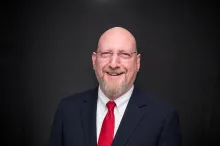
Ken Loucks was ordained an elder in September 2021 and now serves as the Pastor of the Tacoma and Olympia Washington congregations. Ken and his wife Becca were baptized together in 1987 and married in 1988. They have three children and four grandchildren.
