
Robin S Webber
This transcript was generated by AI and may contain errors. It is provided to assist those who may not be able to listen to the message.
At the New Testament Passover services, we often conclude by covering passages from John 13 through 17. We do that in an attempt to simulate that service, that initial service, as much as possible as we go back, and to repeat the words of Jesus Christ to His disciples. If I'm not mistaken, many of you at one time or another have heard that this was the last instruction to the followers of Jesus Christ. And yet, there is another powerful series of messages that Christ chose to share with His disciples through all ages to guide, to inform, to educate, and to encourage His followers in their rescued existence and in their new life. When we say a new life, I do mean a new life, and a new life that I think all of us continue to find as expansive, because just as we begin to think that we understand all that Jesus Christ shared, we find that there is still just so much more to grasp and to understand. These instructions that I speak of are the seven last recorded sayings of Jesus Christ as He laid nailed to a piece of wood on Golgotha.
Yes, living words from a dying man. It's amazing the amount of instruction that Jesus gave at the end of His life. And it's quite incredible to think what He offered as He Himself was struggling. And yet beyond that struggle, what He continued to share with His followers for all times. It is interesting that these words of wisdom and encouragement occurred while He was dying. Many, many years ago, General Norman Schwartzkopf, in the Persian Gulf War, made this comment. General Schwartzkopf was the supreme commander of the Allied forces at that time. And speaking of a soldier and speaking of facing battle, Schwartzkopf said, the reality of death puts the mind in a wondrous focus, and then the training takes over. If ever the training took over in the face of death, it was the step-by-step example of our Lord and Savior, Jesus Christ, as He was still teaching us from the cross. Even as He was reaching within Himself, utilizing His own Holy Spirit to finish the course for the Father and for us to become that sacrifice in place so that our sins might indeed be forgiven. But these statements, and there are seven of them telling statements, I think we're going to come to find that they are the very, very essence of the Christian experience. We might say, Christianity 101. And what these statements really reveal simply is this, is who we are and who we rely on. And isn't that what it's all about when we come up to that evening, when we come before the table that has the symbols of Jesus' life and death upon them, of that bread and of that wine, that basically on that evening as we renew that commitment, we're saying, God, this is what we are, and this is who we rely on, you. These words that we're going to discuss in the course of this message are not geared to the head, but they're geared to the heart. They're not geared just simply to knowledge, but they are geared towards having a relationship with God Almighty, the supreme God of the universe. So today, in light of the Apostle Paul's words in 1 Corinthians 11, 28, that we're to examine ourselves, and we take that seriously as we come up to the evening that is ahead of us. Let's focus on these seven recorded messages of Christ from the cross. I think you'll find them an accurate measurement to give us an ability to understand where we are at, where we are going, what we're about, because the measurement we're going to use are the very words of Jesus Christ. I believe that we'll come to see that these last words of Jesus Christ should be our first response in everything that we do. So there's just seven of them, but when I say that, please be ready, because I think as it is with the San Diego congregation this morning, they are touching, they are real, they are revealing, and I hope that you're ready not only to be preached at, but to recognize that we might do some spiritual meddling along the way to go deep, because God wants us to go deep. He wants us to appreciate the sacrifice of His Son, Jesus Christ. Join me, if you would, please, in Luke 23. Let's open up our Bibles here on the Sabbath day. Come with me, and let's explore Luke 23, verse 34, to find the first phrase that Jesus Christ used from the cross. Luke 23 and verse 34.
And then Jesus said, Father, forgive them, for they do not know what they do. So the first utterance that came out of Jesus Christ's mouth as He was on the cross was, Father, forgive them, for they do not know what they do. Let's back up a little bit just to gain the context of what is occurring and what is the framework of these words being spoken. There were also, in verse 32, two others, criminals, led with Him to be put to death. And when they had come to the place called Calvary, there they crucified Him and the criminals, one on the right and the other on the left. Calvary was a rocky knoll on the outside of Jerusalem. It's where the criminals were put to death. And it mentions here that the death was by crucifixion. Crucifixion was a form of humiliation and execution that had been devised by the Phoenicians and then copied by the Greeks and then copied by the Romans. Crucifixion was designed twofold, to be humiliating and number two to be excruciating. And so it served a dual purpose. And Rome, oftentimes, was brutal. That Roman boot would come down. And they would let all know that they were in charge. And it was, through this means, called crucifixion. When we say crucifixion, let's understand what is happening here. And these words that we're going to be hearing Jesus speaking, all these wonderful understandings that He's sharing and teaching, is we've got to recognize that at that time He's got nails in His hands. Nails. Big ones. Big, rusty Roman nails in His hands. And He's been boarded to a piece of wood and hung up. And basically, at this point, He is in severe pain. He is dehydrated. And He is affixiating all at the same moment. And it says, then, that there is one on the right and one on the left, verse 35. And people were standing around looking at Him. But even the rulers with them sneered, saying, He saved others. Let Him save Himself if He is to Christ, the chosen of God. And the soldiers also mocked Him, coming and offering Him sour wine and saying, Oh, if you're the King of the Jews, save yourself. And an inscription also is written over Him in letters of Greek and Latin and Hebrew. This is the King of the Jews.
And so here, both by His own people and by the Romans, He's being mocked. He's being insulted. He's being made fun of. This is the environment that we find these words coming from. Father, forgive them, for they do not know what they do. What I find so heart-revealing about all of this, it is essential to grasp that the opening chapter of Jesus' last moments is simply this forgiveness. It is about forgiveness. It is the first words out of His heart and off His lips to the world around. Forgiveness, which reminds you and me as we are about to renew the conditions of the New Covenant, that forgiveness is the engine of the Kingdom of God. It's God 101. And if we are to be like God and if we are to be like Jesus Christ, we must be a forgiving individual.
It's very interesting that when you just see it this way, that Christianity and Christianity forgiveness comes first. It is the gateway. It is the gateway that everything else passes through.
A forgiving person is a living person, is a loving person, is a growing person. And if there were one individual, humanly in a sense, that should not have been forgiving when you see what was done to him. And these people at this time were not asking for forgiveness either, and they were non-repentant at that time as well. But Jesus had it within him to say, Father, forgive them, for they know not what they do. We therefore find, friends, that forgiveness is not marginal to our Christian experience. Forgiveness is central. Let me say it again. Forgiveness is not marginal to a Christian. It is central. It is underlined. It is the engine of our life. It is not something that maybe we have to kind of get around to doing. Someday, it is what we are to be about every day. When we see what Jesus did here, this was an expansion even on all the elements that he had already given during his earthly ministry. During his earthly ministry, he had at one time changed the equation and said, well, you know, we are to turn the other cheek. But this was more than turning the other cheek. This was changing the equation once and forever, and a completely different way of responding. Why was Jesus doing this? What left and what is he teaching us? What he was trying to share with us is exactly what God is like. Join me, if you would, in Psalm 86. In Psalm 86 and in verse 5, we come to find why God is God. We're not talking about his nature, but we're talking about his eternal attributes. In Psalm 86 and in verse 5, let's notice.
For you, Lord, are good.
So in one sense here, David is praising God and saying, Lord, you are good. But why is God good? Why do we trust in him? Why do we have our confidence not in ourselves, but in him? Because, and you are ready to forgive, and you are abundant in mercy to all those who call upon you. It's very interesting that in verse 5, you find that God is ready to forgive. Let me put it this way, if you'd like to look up for a second. It says, if God is leaning forward, it's his initiative. It says, it's his trust in his being. He's looking for opportunity to forgive. He's looking over from the ledge or the edge of heaven from his throne, and he wants and is desirous of wanting to forgive. He looks forward to it. He's looking at opportunity to exercise it. This is the God that we worship. It's his initiative.
We need to be like that, and we need to think about that as we're coming up to the New Testament Passover. That's just a very simple question I want to ask you, please. How forgiving are you as an individual? How forgiving are you? What grudges are you holding? What anger have we latched on to? What evil thoughts about others, perhaps, have we lingered with too long, thinking God will turn the other way? Here's Jesus Christ, and he's saying this while he's nailed like a piece of meat to a piece of wood, with everybody staring and gawking at him, and all of Jerusalem having just rejected him, and yet he has the capacity to save father, for give them, for they know not what they're doing.
A question. How is Christ able to forgive? Allow me to give you a couple thoughts. How was Christ able to forgive? Number one. Number one, he didn't take them personally. He did not take them personally. Jesus, from his vantage point, with a spiritual perspective, recognized their humanity, and he also recognized Satan's deception of this entire world. He realized that most of those people did not truly know and realize what they were doing. In fact, when it says, Father, forgive them, for they know not what they do, the essence of what's behind it would be more like this, Father, forgive them, for if they really, really knew what they were doing, they wouldn't be doing this. They wouldn't be doing this to your son.
I suggest that Jesus had a way of looking beyond the moment, and recognizing that these people were in the grips of Satan, and were a part of a world that's been dysfunctional since Eden, when humanity made a choice to Adam and Eve to cut themselves off from a father, that the world has been dysfunctional since Eden, that the family has not been whole from that time. And he recognizes the results. Now, when he does that, let's understand something. In the forgiveness that he is talking about, he is not excusing wrong behavior. He is not excusing sin, because when he says, Forgive them, he recognizes that sin lies at the door.
But he recognizes that there are reasons and there are causes. Number two, it's very interesting that Christ teaches us from the cross about this and why he was able to do this. Number two, he said, Father, forgive them. He said, Father, forgive them.
It's very interesting that he was teaching us then, even in that unique moment, to push it up to God, that it's not our responsibility to forgive or to unforgive. That's not a part of our job description. It's God who is the great forgiver. So he said, Father, forgive them.
He had the confidence and the faith and the trust that in the right time and in the right way, God will sort these matters out. You say, But, you know, I don't know if I could do that. I'm only showing you what Jesus Christ, the Son of God did. You say, Yeah, but Mr. Weber, I don't understand. You don't understand. You're not going through what I'm going through right now. Well, that's why Jesus is the perfect example. We're talking about a guy who's saying this while there are rusty Roman nails and he's hanging. Folks, remember, while we're talking, we're having this discussion. He's hanging. He's saying, Father, forgive them. Remember what Shakespeare once said? Shakespeare put it this way. He just had scars who never felt the wounds.
Well, Jesus Christ has the scars, and I suggest that he felt the wounds, and he knows what he's talking about. So my experience is I've got to take it from my experience. I've got to push it to Jesus Christ, who is the example of God, from God, to us. He was abused more than any human being that has ever lived, and he sets us the example to be able to live. Hopefully, as we're coming to this New Testament Passover table in a few weeks, we're not going to bring our anger with us, but we're going to have the forgiveness of God in us. We can't grow if we're not a forgiving people. We can't grow if we have hate in our hearts. We can't grow if we have anger in our hearts. Some of us have anger in our hearts because we refuse to release our stranglehold on vengeance. We just don't want to let go. I know I'm dealing with people over the years, many times even adult people, people that are older than I am, 22 and above. Just see if you're awake. That they are still battling their parents and their grandparents, and you know what? They're still strangling their parents and they're underneath the sod, and they will not let go. When you don't let go, you become a prisoner of the past, a victim in the present, and a hostage for the future.
Your anger imprisons you. Jesus set the course. He set the tone. He gave us the message from the cross that Christianity is not only about forbearance, it is about forgiveness. Forbearance is passive. Forgiveness is action. This is the strong message that Jesus sends you and me from the cross as we go towards Passover. Father, forgive them, for they do not know what they do. Join me for the second saying over in Luke 23. In Luke 23, and let's look at verse 43.
In Luke 23 and verse 43, Jesus said to him, assuredly I say to you today, you will be with me in paradise. Who is he talking to and what can we understand from this verse? Well, again, we need to understand some context. In verse 39, just a few verses before that, then one of the criminals who were hung, blasphemed him, saying, If you are the Christ, save yourself and us. But the other answering rebuked him, saying, Do you not even fear God, seeing you are under the same kind of nation? And we indeed justly, for we receive the due reward of our deeds, but this man has done nothing wrong. Then he said to Jesus, Lord, remember me when you come into your kingdom. And Jesus said to him, assuredly I say to you today, you will be with me in paradise. Now, this is an amazing scenario going on, probably one of the most amazing scenarios in the Bible. Here are three men surrounded by everybody, but in a sense alone. Here are three men, and they're basically hanging together seven or eight feet above the ground. They're going through a common experience. They're dying. They're going through a common experience. They've got nails in their hand, and they're talking. Now, remember, this is all happening. Nope, like not. You know, everybody else is down here. This is up here. They're going through something in common that nobody around them is going through at that point. And by the way, none of the apostles are around, say, John, which we'll get to in a few minutes, all the disciples. And it's amazing that this conversation is going on. And what Jesus does here amazingly is, in verse 43, assuredly I say to you today, you will be with me in paradise. What I gain out of this, and I want you to stay with me, especially you Church of God members, is to recognize this because so often we just simply use this as a doctrinal treatise rather than just allowing the words to speak to us and to understand the immediacy and the conviction that Jesus Christ had of the coming kingdom of God. That even as he was dying, that even as he was dying and these men were dying around him, that in God's plan, in God's plan, the kingdom was assured. And there was a confidence that there was something beyond the grave. Now, you notice this. It was overwhelming. The kingdom was real. And he could reach out and touch it so vibrantly that he shared it with those that were around him.
I think that's such a marvelous example for each and every one of us to emulate. That we need to make sure that whatever circumstance that we are in, that we are so full of God's kingdom. We are so full of God's truth. We are so full of God's word that it emanates out of us at the most unique human moments to encourage and to elevate others. I remember many, many years ago being around Mr. Herbert Armstrong and had that pleasure. And Mr. Armstrong, whether he was talking to somebody in the church or out of the church, whether he was talking to an elevator operator or a barber shop, what was always on his mind was the kingdom of God. That was his discussion. That was his starting point. That was his ending point. I know Mr. Scriber was around Mr. Armstrong from time to time. The man was full of what he believed in at any given point. It is what he was about. It was his discussion point. Jesus Christ was full of thinking about the kingdom of God, and he wanted those around him to believe it as well and extended that conviction and invitation to them for him to recognize and for those around him to recognize that there was something else. Join me if you would in 2 Corinthians 4. Join me in verse 16. The reason I'm going to 2 Corinthians 4 in verse 16 is because this was written by another follower of Jesus Christ that had something very much in common with him, and that was that this individual would also likewise be martyred. These are the words of Paul, but it's very interesting the way he puts it. Therefore we do not lose heart, even though our outward man is perishing, and yet the inward man is being renewed day by day for our light affliction, which is but for a moment. Now this is being spoken by a man that would, by tradition, be beheaded as he was a Roman citizen. So he got the easy death. I don't know if that sounds easy to you or me, but Roman citizens were not crucified. They were given the quick way to go. For our light affliction. To Paul, that would have been a light affliction. And in a sense, for Jesus, even being crucified for him, as grievous as it was, it was a light affliction, because as the author of the book of Hebrews says, for the joy that was set before him, he endured the cross. But for a moment, it is working for us a far more exceeding and eternal weight of glory. Weight being the same word as substance. And while we do not look at the things which are seen, but that the things which are not seen, for the things which are seen are temporary, but the things which are not seen are eternal.
Assuredly, I say to you, you will be with me in Paradise. Now, time-wise and time-frames, that's another discussion, another message, another time. But the power of the message, the power of the message, is the immediacy of God's kingdom in the mind of Jesus Christ. Jesus always talked about things being in the now, having an anticipation, having an expectation, having an excitement, touching it, feeling it, smelling it, sensing it, as if it had already come.
You know, this sequence of Jesus talking with what we have commonly called the good thief should also, in a sense, I think, offer us a note of encouragement. Sometimes, I think, some of us think that maybe sometimes our best days have gone by. What is there left to do in life? I'm 65, 70, 75, 80. I'm, well, you know, I've written my chapters. What else would God have in store for me? Who else could I help? Have you ever thought about Jesus and the good thief, that perhaps, in a sense, God and His blessing saved the best for last for Christ? Here, Christ had preached in Judea and Galilee and Samaria for three and a half years, and here none of them had really followed Him when it was all said and done and ran off and left Him when it was all said and done. And who does God give to comfort Jesus to the end?
Who does He give to comfort Him at the end? Who is acknowledging Him? Who's saying, you're the one, you're it, we belong here, He doesn't. And to recognize that it's a criminal.
Would you and I have chosen the good thief to spend the last few moments of Jesus' life?
Wonder if you were the casting director. Who would you put up there? And yet, I most assuredly tell you, I believe it was the greatest comfort to Jesus Christ.
And it should be the greatest comfort to each and every one of us, because, you know, my friends, we are that good thief. We are that good thief. We deserve to die that death just as the good thief acknowledged. And just as to that good thief, Jesus says, assuredly, I say unto you, and He offers us encouragement, and He offers us hope. And I tell you, that conversation must have just been priceless. Never, never underestimate how God is going or who God is going to use to encourage you towards great things in your life. I've always over the years come to learn to expect the unexpected from God. I've given up choosing, because I recognize that God's perfection is better than my best choices. And He'll know exactly what I need and who I need in turn to encourage as life goes on. The message of Christ on the cross is that the reality of God's Kingdom must be embedded in us where neither man nor trial can reach. And some of you are going through trials right now. Some of you are facing life-threatening diseases. Some of you are facing some very challenging family situations. Some of you are perhaps facing some incredible personal turmoil in your life. But when we have the truth of God and the love of God and the purpose of God in us, it's got to be deep to where neither man nor trial can reach. And at the same time, we must be willing to reach out to others. Join me in John 19, verse 26, as we look at the third saying. Notice what Jesus says here. When Jesus therefore saw His mother and the disciple whom He loved standing by, that meaning John, He said to His mother, Woman, behold your son. And then He said to the disciple, Behold your mother. And from that hour the disciple took her to his own home. Now this is amazing. Here Christ is, again, nailed to a cross. This is the context of all of this happening. The nails are still in there, still tearing at Him. He's slowly officiating. He's being humiliated. And yet His total persona is outward, outslowing, outgoing, away from self. And He looked down from His position, seven or eight feet up in the air, and saw His followers as a family, and gave them responsibility to take care of one another.
See, God always looks at His followers in the context of family.
We need to recognize that God's given us one another. We're not just individuals. We're not just persons taking up a row in a church, seeking a congregation. We're the body of Christ. We're brethren. We're family. And God wants us to care for one another. You know, sometimes when we follow Jesus Christ, not that we wish for it, and hopefully we strive in every way to use wisdom and balance and love with family members that might not understand, but I know at times in the past, and it'll be the same in the future, at times, family can become alienated, because of your desire to follow the ways of God. Peter had a question about that. Peter always had questions about a lot of things. Join me if you would over in Matthew 19. Join me if you would, please. In Matthew 19, in verse 27, Peter just always spoke what everybody else was thinking. That's why we like Peter. We'd like to have him in a classroom, because he'd at least voice maybe what we don't understand. In Matthew 19, in verse 27, then Peter answered and said to him, speaking of Christ, See, we've left all and followed you. Therefore, what do we have?
And so Jesus said to them, Assuredly I say to you that in the regeneration, when the Son of Man sits down the throne of His glory, you who have followed me will also sit on twelve thrones judging the twelve tribes of Israel. Well, that's in the future. But notice what he says about now, And everyone who has left houses or brothers or sisters or fathers or mothers or wives or children or lands for my name's sake shall receive a hundredfold and also inherit eternal life. God gives us family. Not that anything can ever replace our physical family, because we love them so very, very much. But God looks at the body of Christ as being family.
Now, it's very interesting how true God was to His Word. Join me if you would in Psalm 68. In Psalm 68 and verse 6, interesting verse. And again, it defines why we love God and why He is so wonderful and great. In Psalm 68 and verse 5, describing God as a father of the fatherless, a defender of widows, and is God in His holy habitation. And God sets the solitary in families, the single people He places in His families. Isn't that amazing that at the end of his life, here's Jesus, He's on a cross, He's got nails in His hands, and yet He's fulfilling the very words that He gave to David as the word of old about setting the solitary person in family.
And here's Mary, His mother. Joseph, by tradition, has been dead back for many, many years because we don't hear about Joseph. And here His mother had given Him up to the entire world for God's purpose. But some of His very last thoughts in life were about Mary, His mother. And He said, Woman, behold your son and son your mother. What a marvelous example of consistency of Jesus, of placing the single person into a family, taking care of her, and also by yielding to the fifth commandment of honoring your father and mother.
It was not only honoring His heavenly father, but He was honoring His physical mother and making sure that she would be taken care of. What do we learn from all of this? The message of the cross reminds us it is not our job to choose God's family, but to accept them. It's not our job to choose God's family, those that God brings into our lives. You can't be at the door and say, Nope, sorry, can't come in. Lock that door. No, I've had enough family. Done this thing for 30 or 40... No, keep in mind, no, nope, nope, nope, nope, been there, done that.
John was accepting. Mary was accepting. God was sending through Jesus Christ. As we come up to the New Testament of Passover, we must ask ourselves, how open are we to receive the people that God is going to place in our lives? That is the message that Jesus has in this store. Fourth message, Matthew 27, 46. Matthew 27, 46. I'm going to keep you just a little bit longer today because I want to get through this because I'm going to be in San Diego next week.
Matthew 27, these go rather rapidly. Matthew 27, 46. In about the ninth hour, Jesus cried out with a loud voice saying, Eli, Eli, lama, sabachthina. That is, my God, my God, why have you forsaken me? My God, my God, why have you forsaken me? Now, this verse is not always understood, unfortunately, because the message is extremely powerful.
Christ's statement here of, God, why have you forsaken me is not based upon doubt of God's purpose for Him or any of them. Jesus is not having a hessie set up on the wood, thinking that somehow God deserted Him for no good reason. But I suggest that rather His sensory overload of awareness at that moment is on high alert when He took upon Himself the sins of the world. He did take the sins of the world upon Himself.
There was that moment when, as the Apostle Paul describes in 2 Corinthians 5, verse 21, that He, meaning Jesus, that He became sin for us. Now, that's very important to understand. There was a moment when Jesus became sin for us. At that moment, God the Father had to turn away, draw away, for the Holy Father of heaven cannot come into contact with sin. His presence was removed.
It was as if the entire universe was moving away at light speed, and there was a vacuum that Jesus had never experienced in His life of awareness as He stood as sin for all of mankind.
And it was the first time that the Son of God had ever experienced that, the one that had been the Word, who was in the beginning and was God, who had always experienced worthwhile eternity with the one that He came to reveal as the Father, and now separate. No connection. You know, we think of that even in our own human framework. When we've lived with somebody 30 or 40 or 50 years and all of a sudden they're not there, and the grief that is there, the loneliness that is there, the separation which is heart-wrenching. And to think that these two have been together forever.
And so Jesus uses an expression from Psalm 22. Join me if you would. Psalm 22, in verse 1, to express what He is going through. Actually, it's interesting. Psalm 22 is prophetic in nature about the sacrifice of Jesus Christ. And notice what it says in Psalm 22, and beginning in verse 1. My God, my God, why have You forsaken me? Why are You so far from helping me? And from the words of my groaning? Oh, my God, I cry in the daytime, but You do not hear, and in the ninth season, and am not silent. There was that separation. Sin, becoming sin, of which He literally did become sin for us, cut Christ off from God. Sin also cuts us, brethren, off from God. And we need to be aware of that. In Isaiah 59, join me if you would for a moment. In Isaiah 59, and let's notice in verse 1.
In Isaiah 59, verse 1, If you hold the Lord's hand is not shortened that it cannot save, nor is the ear heavy that it cannot hear. But your iniquities have separated you from your God, and your sins have hidden His face from you. God cannot be confronted with sin. He's the Holy Father. Now, that's an interesting scenario today, because sin has been so downplayed over the last 20, 30, or 40 years. It's mocked. It's made fun of. It's been belittled. It's been downgraded. But God has a certain point of view toward sin, and society has a certain point of view toward sin. I want to read a description of going back and forth between how God views sin and how society views sin. And I ask you, as you come up to the New Testament Passover table, how do you confront sin? How much of this world, perhaps, has rubbed off on us? That maybe sin is just, well, I don't like using that biblical word, sin. It sounds so, well, it sounds so mean.
Man calls sin an accident. God calls it an abomination. Man calls sin a blunder. God calls it blindness. Man calls sin a chance. God calls it a choice. Man calls sin a defect. God calls it a disease. Man calls sin, well, an error. God calls it enmity. Man calls sin a fascination. God calls it a fatality. Man calls sin an infirmity. God calls it iniquity. Man calls sin luxury. God calls it lawlessness. Man calls sin a trifle. God calls it a tragedy. Man calls sin a mistake. God calls it madness. Man calls sin a weakness. God calls it willfulness.
Yes, brethren, God has the final say. And God tells us that sin separates us from Him. And that is why Christ bred it. I believe, in a sense, when He was in the Garden of Gethsemane that evening before He became our sacrifice, when He was saying, Lord, if there is just any way that this cup can be taken from Me, please take it, but Thy will be done. In understanding the mind of Christ being the very Son of God and recognizing the relationship that He had with God, I think it moves beyond simply physical pain. Not that that wouldn't be enough. Being a Jew of the first century, every Jew had seen probably multiple crucifixions in his lifetime. And so, yes, that was very much a part of it. But I think a part of that cup that he did not want a taste of was separation from his Father, the one that he loved and loved Him. And not to have that presence, not to have that comfort, not to have that spirit abiding with Him and surrounding Him and comforting Him. And Christ is telling us something. And as we come up to the Passover, my comment is simply this, how sensitive are we to the presence of God in our life? How sensitive are we to that spirit that God has placed around us? Do we know when it's there? Do we know when it's not there? Do we think that it's there when we are sinning, when we are hiding from God, when we're being less than everything that God has called us to be, that somehow we think that it's there? Well, we're only playing games with God then, because God cannot be confronted with sin. He can forgive it through His Son, Jesus Christ, but He will not come into contact with it. That's the rules. That's the Bible. That's what we need to understand from this phrase. John 19 and verse 28.
John 19 and 28, as you turn over there, I'm going to take a glass of water.
In John 19 and verse 28, it's very interesting, because what we're about to talk about, I just needed the water for my throat.
I'm so glad I'm able to bring this message to you today. I wanted to. I kept on alerting all the men. They better be ready. Larry was ready, and others were ready, and I didn't know if I was going to make it. I was going to call you yesterday morning. I didn't think I was going to make it. In John 19 and verse 28, after this, Jesus, knowing that all the things now being accomplished, that the Scripture might be fulfilled, said, I thirst. Yeah, you know, He was the Son of God, but He was also the Son of Man. He was a human being, and He'd been up there for hours and hours, after hours and hours of being tortured the night before, and He was thirsting.
What did they give Him when it was all said and done? He's thirsty. And now a vessel full of sour wine was sitting there, and they filled a sponge with sour wine, put on a hyssop, and put in His mouth. They gave Him a bottle of vinegar, basically.
And that was it. That's all that mankind offered to their Savior.
Let's understand that when it's all said and done, and I think the example is here that Jesus was showing us something, is that we're not going to be nurtured from this earth below. We that are His followers. He was not nurtured at the end, and neither are we. What we have, brethren, and what we need to persevere is not going to come from down here below. It's going to come from above. Because, just like Jesus Christ, I believe that the man of God, the person of God, is a thirsty individual. Join me, if you would, in Psalm 42. In Psalm 42 and in verse 1, it's interesting what King David said.
As the deer pants for the water brooks, so pants my soul for you, O God, and my soul thirst for God, and for the living God. And when shall I come and appear before God? So we see that here is David, whose soul thirsteth for God, and for the living God. The man of God is a thirsty individual, but our thirst cannot be quenched down here below by earthly things. You know, it's interesting that when the man of God, Jesus, needeth to be quenched and given something, basically humanity turned around and gave him nothing but a rag of vinegar. And yet, notice in John 7, 37, how Christ opens up and how desirous He is to give. Join me in John 7 and verse 37. On the last day, that great day of the phase, Jesus stood, quite out, saying, If anyone thirst, let him come to me and drink. And he who believes in me, as the Scripture has said, out of his heart will flow rivers of living water. Jesus said, Come! I'll give you full jars. I'll give you all that you need towards real life. I won't be stingy. I won't play around with you. You know, when you see what the Romans did, it's almost a come off of Isaiah 5 and verse 20, that prophetic rhyme where it says, Woe unto them that give bitter for sweet and sweet for bitter. But God doesn't play that kind of games with us. For those that are really thirsty, that are really in need, that are really dehydrated, Jesus says, I'm going to give you something that's going to be sustaining.
The message of Jesus from the cross to us is the realization that God alone can supply our needs and that he alone can nurture our spirits. I realize that all of us, as we're coming up to the table of the New Testament Passover, are probably dehydrated. It's been a year.
And I hope that we truly thirst for that cup of sacrifice. And to recognize that in it is life.
And to recognize that as we partake of that symbol of Jesus' blood, that our life is in that sense reborn, that we are given new existence, that we have a new lease, that we're able to write another page under the new covenant with God the Father and Jesus Christ through the example of Jesus Christ and by the very power and auspice of their spirit. And to recognize that we can have another opportunity in preparing to be citizens of the kingdom of God. What a wonderful opportunity! John 19 and verse 30. Sixth thing, John 19.30.
So when Jesus had received the sour wine, he said, It is finished, and bowing his head, he gave up his spirit. What does this mean? Christ was expressing a fact and a triumphal statement. Let's understand the development of what's occurring in this afternoon of sacrifice. Now everything is coming to play. It is at this point that the Lamb of God is being fully sacrificed on the altar of Golcotha. The sins of the world have been placed upon him. He has become sin for us. And it is at that moment there is a recognition that Jesus knows that the moment is there and he says, It is finished. Done! It's interesting that the commentaries bring out that this can be translated. Not only It is finished, or you might want to jot this in your notes, that it has been paid in full.
It has been paid in full. That certificate that Paul speaks of, that note of debt, has been paid off by the sacrifice of Jesus Christ. That God in the flesh was sacrificed on the altar of Golcotha. Not a lamb, not a goat, not a bullock, not a little turtledove. What does this mean to you and me as we approach the symbols of Christ's sacrifice in a couple of weeks? It should mean to us, brethren, recognizing that no matter what we have done, no matter what we have been, no matter where we let down this year, that no matter what it is that Jesus' sacrifice is able to forgive it. You know, even Christian sin? You probably understand that.
Kids are listening, well then, why become a Christian? Why get baptized? Well, let's understand something. Before baptism, it's as if we were running towards sin.
After baptism, we're running away from sin. Before baptism, what was occurring? That was our natural way. Now, it's not that we want to. It's not our desire, and yet we're still within this human framework. What we need to recognize is simply this. The sacrifice of Christ is bigger than anything that we've done. Join me, if you would, for a moment in 1 John 1. Because I often have found in dealing with people, and we all deal with our challenges and our trials differently, but sometimes people have a hard time forgiving themselves, even when God wants to and has. And whatever they have done has already been rubbed out. And yet, we have people that are still beating themselves up. In 1 John 1, notice what it says here. Because John had to explain this 60 or 70 years after Jesus' sacrifice in verse 7. If we walk in the light as He is in the light, and we have fellowship with one another, and the blood of Jesus Christ is sin, notice, cleanses us from all sin. There is not anything that a human being will do, or will yet do, that the sacrifice of Jesus Christ is not big enough to forgive. Notice again in verse 9, if we confess our sins, He is faithful and just to forgive us our sins, and notice, and to cleanse us from all unrighteousness.
See, I put it this way, please. And I realize that some of us at that time say, boy, I've just really done it.
But there's nothing that any of us have ever done in our lives that is not too big that God can't handle. And if you don't think He can handle it, maybe you need to start figuring out how big of God do you worship, and how big of Christ do you worship? Jesus was not just merely a man. He was God incarnate in the flesh, Son of man, the Messiah, the Immanuel, the one who'd been the Word. He's not a turtle dove, not a goat, not a bullock, not a lamb, Son of God. And it had to be that to be able to have that which could be paid in soul. And He said, it is finished. And He would want you and me to have the same encouragement that He gave His disciples on that night before He was sacrificed in John 16 in verse 33. Join me there in John 1633. These things I have spoken to you that in me you may have peace. You know, when we know that we are forgiven, there is peace, and there is tranquility, and there is harmony. When our personal human blackboard is wiped away and scrubbed clean, there's peace. In the world you will have tribulation, but be of good cheer. The same kind of cheer when Jesus says, it is finished. It's been paid in full. I've overcome the world. The victory is in place. Now only the details have to be worked out. And that's what we're working on. The victory is in place. The payment was made. The certificate was released and paid off. The bill of debt was signed for by the sacrifice of Christ.
And He sees things as if they already are. And we that sometimes have trouble forgiving ourselves, we need to begin seeing things the way God sees them. And He sees us already on the other side of the river with Him. Luke 23, 46. Let's conclude. Luke 23, verse 46.
The last saying of Jesus Christ.
And when Jesus had cried out with a loud voice, very important throughout the Gospels, it will always mention how Jesus spoke with a loud voice. Remember how He did that with Lazarus? And He looked up towards heaven and with a loud voice. Jesus, to the very end, wanted to make sure that everybody understood what was being said, that it wasn't some kind of Babylonian mumbo-jumbo, hocus-pocus, smoke and mirrors. And Jesus cried out with a loud voice. He wanted to know, He wanted everyone to know that He and His Father were one. Father, into your hands, I commit my spirit. He was actually quoting out of the Psalms. Join me if you would in Psalms 31. And let's read it together to conclude. In Psalms 31, this will be our last verse. And hopefully, this can be our prayer as we move towards the New Testament Passover. Because, friends, here in Redlands, what better place do we have than to commit our life's works, our hearts' hopes, into the hands of God? In Psalm 31 and verse 1, In you, O Lord, I put my trust, Let me never be ashamed, Deliver me in your righteousness, And bow down your ear to me, Deliver me speedily, Be my rock of refuge, Of fortress of defense to save me, For you are my rock and my fortress. Therefore, for your name's sake, Lead me and guide me, Pull me out of the net, which they have secretly laid for me, For you are my strength, And into your hand I commit my spirit. You have redeemed me, O Lord, God of truth.
The last words from a dying man, living words for you and I to absorb, is where he put his trust and where he put his confidence and where his life's direction was going. And he committed his works to God. Seven messages from the cross, living words from a dying man. Tremendous example. I hope these words of encouragement will be words of self-introspection as we prepare ourselves. And again, I want to share with each and every one of you as your pastor, that as we approach the Passover, I would hope and pray that each and every one of us approach it with confidence and faith, not in fear, not in doubt, not in trepidation. I want to share something with you. May I? God the Father and Jesus Christ are looking forward to sharing that evening with each and every one of you. It is so important for you to be there because of the great love of God. And He wants you and He wants me to be there so very, very, very much that you know what He did? He let His Son die so that we might have a seat at that table that night. I think we ought to be there in great appreciation with great faith and hope. Looking forward to it. Looking forward to seeing you all after services.
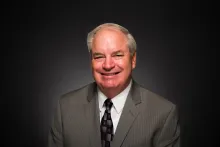
Robin Webber was born in Chicago, Illinois, in 1951, but has lived most of his life in California. He has been a part of the Church of God community since 1963. He attended Ambassador College in Pasadena from 1969-1973. He majored in theology and history.
Mr. Webber's interest remains in the study of history, socio-economics and literature. Over the years, he has offered his services to museums as a docent to share his enthusiasm and passions regarding these areas of expertise.
When time permits, he loves to go mountain biking on nearby ranch land and meet his wife as she hikes toward him.
