

Robin S Webber
This transcript was generated by AI and may contain errors. It is provided to assist those who may not be able to listen to the message.
I want to build upon the fine foundation that Mr. Budge laid for us this afternoon, and that is addressing that we are in a very unique time with social spacing, with calamity that is upon some individuals and some families, and actually a very unique experience in global history. And so our nation right now in our world has experienced a severe interruption. Almost every person on earth to one degree and another has been affected by this.
The societal order has been interrupted as to how you and I live, to our very existence, to our habits, to our patterns. A lot of life has come to a standstill. But I'd like to share some perspective on that, both historically and in the present and towards the future, and wrap it around the meaning of this festival of Passover and Unleavened Bread, which are combined together. And I'd like to go back, and I'd like to read a little bit. If you'll allow me to read some. I dare not read too much. I don't want to lose you on this cast, but that I would like to read from C.S.
Lewis. For those of you that don't know who C.S. Lewis was, he was a Christian author and a theologian in the middle of the last century and the 20th century, British of nature. And you'll hear some of that in the words that I'm going to share with you. But I read this yesterday, and I'd like to bring it to you, because it certainly impacted me. And as I do read this, friends, just substitute the word corona for what I'm about to address and center on, which was the centering piece of C.S.
Lewis nearly 70 years ago. This comes from a writing on living in an atomic age, and it was written in 1948. Living in an atomic age, as the world was changing, as society was changing, and then just again substitute the word coronavirus. Again, quote from C.S. Lewis, in one way we think a great deal too much of the atomic bomb. How are we to live in an atomic age? I'm tempted to reply, why, as you would have lived in the 16th century when the plague visited London almost every year, or as you would have lived in a Viking age when raiders from Scandinavia might land and cut your throat and unite, or indeed as you are already living in an age of cancer, an age of syphilis, an age of paralysis, an age of air raids, an age of railway accidents, an age of motor accidents.
In other words, do not let us begin by exaggerating the novelty of our situation. Believe me, dear Sir or Madam, you and all whom you love were already sentenced to death before the atomic bomb was ever invented, and quite a high percentage of us were going to die in an unpleasant way. We had, indeed, one very great advantage over our ancestors, and that's anesthetics, but we have that still.
It's perfectly ridiculous to go about whimpering and drawing long faces because the scientists have added one more chance of painful and premature death to a world which already bristled with such chances, and in which death itself was not a chance at all, but a certainty.
C.S. Lewis concludes with one paragraph. This is the first point to be made, and it is the first action to be taken, is to pull ourselves together. If we are all going to be destroyed by an atomic bomb—again, remember this is 1948, just three years in—let that bomb when it comes find us doing sensible and human things.
Praying, working, teaching, reading, listening to music, bathing the children, playing tennis, chatting to our friends over a pint and a game of darts. So very British. Not huddled together like frightened sheep and thinking about bombs. They may break our bodies. He mentions here a microbe can do that, but they need not dominate our minds. The remainder of this message is going to build upon this. Dear friends around the circuit and those that are joining us today as members of the Body of Christ, with all that is surrounding us right now in a very unique way—wasn't that totally unique the other night when we were observing the New Testament Passover where we were behind closed doors?
We were in our homes, and we recognized that there was something out there—invisible, lurking in the business place, in the marketplace, in the care facilities, in our hospitals.
Life is a circle. Made it very unique and very powerful. Not only that night, but last night as we gathered with our families, maybe just indoors in our homes, or Susie and I were right here in our living room and having a meal and then thanking God for His deliverance down through the ages—past and present and future—and to thank the early church, the early followers of Jesus. They were meeting at home churches. So to recognize that life truly is a circle, and we're in that circle, and we know not yet where it will end other than the sure kingdom of God coming to this earth. The storms of history and personal challenges of life are part of each of our lives. No time. No age in history. None of us are exempt. The matter at hand is not whether or not the storms of history or the storms of our personal lives will come.
The matter at hand is our heart. What lies inside of us is much more important than what lies behind us, what lies before us. That will be the measure of how we move forward, either in faithless fear or fearless faith. And that's why God gives us these holy days, these festivals, this roadmap of where He allows us to join Him on this pilgrimage forward. Knowing that, again, as Roland says, so often trying to mention all of you, we read to know that we're not alone, that we have a Father in heaven, that we have that good shepherd that is always there, and that has promised that He's not going to allow one of us, one of the sheep, one of the flock of God, to be snatched out. God does interrupt human history. It's all right when we read prophecy, and we see He's going to do this, or He's going to do that, about this people or this nation. But we've also got to remember that He interrupts us, His children, down here below, not always in a time or in a way or in a making, that we would ever imagine, but that it might be to His glory, and that it might be to His good. I want to deal with those interruptions today a little bit more. I want to build upon what I spoke about a couple of weeks ago, but I'd like to give you the title of this message right up front so you'll know what I'm speaking about. The title of this message is simply the Exodus story. The Exodus story from Passover to eternity, because it's really one story that continues with different verses, with different people over time, but always, always with the same Father and with the same Savior. And we're going to find and we're going to expand. We're going to magnify this story. You know, I can't remember the church that I grew up, we used to sing this song. I love to tell the old, old story. Well, that's exactly what we're going to do, but we're going to find that it is as old as today, and it's as new as tomorrow, because Jesus Christ is the same yesterday, today, and forever. And God set forth a plan for you and me to one day experience Him and the Christ in eternity, face to face, to be able to love Him, to know Him, to be with Him, with no social spacing in between. That's the whole story, that we're going to be able to be with God and experience Him without any distance. We will be immortal. We will be invited into eternity. We will be able to move beyond that light, that unapproachable light that's mentioned in the pastoral epistles. That's what these festivals are about. They're a pathway to eternity. It will embrace them and understand them. And as we come up against them, not just a coronavirus and or what comes after the coronavirus dissipates, but if we will allow ourselves to allow the Spirit of God to prompt us to reorder our lives and to re-align ourselves in the image of Jesus Christ, then we'll come to understanding and implementing the lessons of the festivals. The big question before each and every one of us, and we're waiting, we read the news every day, and we read the papers, and we're kind of waiting for a date.
We've learned in the Church of God community not to set dates, right? But right now, we're all waiting to see a date set that when we can again be out in public, we can begin to be with our families again. Some of us are going to actually be able to be with our loved ones that are in a hospital or in care facilities. We're going to be able to go back to work. For we that live in the Los Angeles metropolitan area, and I'll throw in San Diego too, we're going to be able to be in those traffic jams again anytime, any day, any way, either in or out of town. Kind of interesting sometimes what you miss. But the big question is, what are we going to go back into? How are we going to reorder our life? And in that reordering, are we just going to go back to same old, same old, and or are we going to do something new, something different? Are we just going to have a 21-day cure just like so many did during 9-11 to where what's going on? I remember reading about this 20 or 30 years ago and what's happening? Having people call me. Is this it? Is this the time? And they were watching the news and they read their Bible and they prayed for 21 days. And then they went back, back to a life of SOS, same old stuff, same old, same old, and they're still out there.
Dear friends, that's not the life that we've been called to. Our reordering cannot, our realignment in Christ cannot just simply be when the festivals of God come up seven times a year. The festivals are an event. But the festivals are only a microcosm and a guide to an existence on a day-by-day basis of recognizing that we are sanctified and set apart by God Almighty. And I recognize that we remember the words of Isaiah, that prophet with the new mind, where he said, quoting God, Behold, I do a new thing. And sometimes we understand new until God re-explains new to us again and again as he interrupts our life, just as he did with ancient Egypt and the Israelites at that first Passover, to recognize that God wants us to go so much deeper, so much deeper than up and by ourselves we are humanly enabled. Reminds me of the story of the man that was in an industrial section of a downtown area, and he was interested in purchasing a building. And the current owner of that building was taking the man through that was interested, and had been broken down, kind of one of those 1915-1920 industrial buildings that you'll find on the side of an old downtown area. There were some rafters coming down, part of the wall was coming out, and they had to step over things. And it was like the owner was trying to say, well, use your imagination here. If I do this, and if I do that, and excuse me, I've got to move this for just, and and if we remove everything out of here, maybe you can just imagine what a wonderful facility this will be for you and your interest to be in. After a few minutes, the owner just looked at the individual and said to you, I really don't want to waste any more of your time. You don't understand.
You don't understand. I'm not here to buy this facility. I'm not interested in the building.
I'm interested in the site.
I'm going to build something new here. Completely brand new. But if you'll sell me the site, if you will give that to me, I'm going to build something. That's really what being a member of spiritual Israel, of being a New Covenant individual, really recognizing the depth of the interruption, and yes, the disruption to our human nature, to our human nature, that God intended. That he might make that new man, that he might allow that new and living way to develop in us. That we might indeed throw out that old bump, that old facility, that old man, and become a new lump to God's glory, to God's pleasure, and also to be a blessing to other people. That's what I'd like to kind of build upon for a moment. That is, what is your new normal going to be? What's new normal going to be for you? I know what it's going to be like for most of us as Americans, or British, or Canadians, and every country on earth is being affected by this, but what is going to be your new normal as a Christian, as a follower of Jesus, as a child of the Father? What are your realignment plans? Well, thank God! I don't say that lightly. That's why he gives us this, the Days of Unleavened Bread. And I'd like to talk about that a little bit with you, because we're going to have a choice as to the site and the manner of which we build. Jesus addressed this in talking to the disciples. He said, you know, you can either build on sand, and you know what's going to happen there. How that worked on the beach as a kid when you built your sand castles, built the biggest wall. You look down the beach both ways, and said, my wall is like Nebuchadnezzar. My wall is going to be bigger than everybody's. But then we recognize what happens. The tide comes in, the walls come down. And Jesus said, I'm going to challenge you, and that you can build on a rock. The wise man will build on a rock. We'll address those scriptures a little bit later. The other thing that we need to consider as we reorder and as we realign ourselves is simply this. Are we shooting for that which is temporary?
Or are we moving towards eternity? As Jesus said, follow me. I will take you to the Father. But it's going to be my way. It's going to be the path that I lay before us. And I will be your example. That's what we're going to talk about in the minutes that I had.
We talk about going back to normal. That's kind of a question. And Susan mentioned this to me many, many years ago, and I always remembered it. It's like, you know, we always wanted to kind of say, well, let's go back to the good old days. But have there really ever been good old days since Eden? You know, when you think about it, in Eden is where we were removed from the garden. Our ancestors at least were, and we've done a good job of doing our own job in that since then. And in a sense, the world has been without a father. And when you're without a father, without, when you're without the guide in the family, it's, do I dare say, use the Greek word, dysfunctional. And yet, I want to encourage each and every one of us today that are listening, that our Father, through Christ, has invited us to be a part of an exodus, to be a part of the pilgrimage, to go from not only physical death, but spiritual death, not only to go through a gulf of water, a sea of water, but to go from one shore to another, from the shore of death to the shore of life, and to go not just simply across river, but to eternity with both of them, God the Father and Jesus Christ. I'd like to, for a moment, give you a definition of exodus, because we're talking about the Passover. Kind of interesting. Exodus is not even a Hebrew word. It's actually a Greek word. It's a Greek word out of the Septuagint that was written in the 3rd century BC. The word actually means this, the Greek word, xex, means out. And the next word is hedos, h-e-d as in dog, o-s, x-hedos, and or out-way, and or, are you ready, way out. I know sometimes people have said, well, you're a way out already. Now, what are you getting into? But let's build on that a little bit here. That means really a departure. It means an exiting from that which is. And that's exactly what the Israelites did in researching this this morning. And I never thought of this before. I thought this was, to use a Hebrew phrase, cool. And that is just teasing. We read the book of Exodus. We've probably seen the old 1960 movie with Paul Newman Exodus off of Leon Uris' book. But have you ever thought about this? You are an exodist. There's actually a term, exodist. To Exodus is a verb. But to be an exodist, an exodist is a noun. Now, I'm not calling you something naughty. Please understand. It might sound bad. No, this is a good thing. You are an exodist. I am an exodist. God has called us out of this world. He said, come out of my people. Don't be partakers ever since. Be like me.
And to recognize that, the term Exodus. And so here we are, just like God interrupted ancient Israel. As he interrupted ancient Egypt, he's interrupting us today. We went over the Lord's Prayer the other night in John 17. He says, you be with them. Now, it's a little bit different. In John 17, he says, I'm not asking you to take them out of the world, not weigh it out.
I'm going to keep them in the world. You say, humanly and as a spiritual person, he'd be a lot easier just to beam me up, not Scotty, but God and Christ. But we have a purpose that's being worked out here below. We walk on this earth, but as New Covenant Christians, we are to walk with Christ in us and be a light, to be a difference, to be tangible, to be noticeable. As Mr. Budge was mentioning, that as we reach out, not only reach in, but as Jesus himself, wherever his path led him, he did not always handle everything on the other side of the hills of Galilee, but what came into his pathway, what was laid before him, what stood beside him, where there was a need. This is where our hero, the example, acted.
That's our call to be an Exodus. Now, let me mention something here. Exiting from this world is not humanly easy. I'd like to mention a couple quick examples of people that responded to the call of Exodus to come out, to depart. I mentioned this the other day, but we think of a Brahm. We think of a Brahm in Ur of the Caledas, the very repository of all human civilization in that part of the world at the time, right at the base of the land of the two rivers, Mesopotamia. God said, get up, get out, and get going.
A Brahm said, well, where's my compass? Looked at his hand, where's my compass? God said, follow me. God would be the compass. We also know another example is Jesus calling the disciples. I hope you'll take note of this for a moment. Jesus, when he called the disciples on the shores of Galilee, it's an amazing story of departure from what they had known. A bunch of young guys probably in their 20s and in their 30s, their ancestors had been there maybe three or four or five hundred years. They fished just like their fathers had fished. They dropped the nets in the early, early mornings of the day to catch the fish. Jesus came along and he gave them a calling. And he said, he said, I will make you fishermen of men. I will make you fishermen of men. And the gospel says that they dropped their nets immediately. They dropped their nets. Wow! How often when the Word of God, the living Word, or the written Word, and we come up against it, do we just simply drop our nets and follow in the call of Exodus?
Number one, let's understand something. Number one, number one, he gave them a promise. And that was, I will. And when God says, I will, you can take that to the bank.
Number two, he gave them a position. He gave them a promise. Number two, he gave them a position.
He said, I'm going to make you fishermen of men. But number three, he gave them a condition.
And that was, follow me. So let's review that for a moment as we reorder our lives and as we begin to realign our spiritual existence as we go out again into the populace. Number one, God has given us a promise through Jesus Christ. Number two, he has given us a position. He's called us into his holy family that bears his name. He even says that in the future that he has a promise that we're going to be kings, we're going to be priests, those that are under the new covenant, that are resurrected, and that are given the opportunity to serve in the wonderful world of Maryland. But number three, it comes to the condition, and that is to follow him. Now, let me reverse that for a moment. I'd like you to join me, if you would. Let's open up our Bibles to Acts 7, because not all covenant people responded with the thought of Exodus as it came into their time, and to change, reorder, and to realign their lives. Actually, Stephen mentions this in Acts 7, verse 36. Join me if you would, please. In Acts 7 and verse 36, Stephen, in the Sanhedrin, defending himself, giving him an apologetic for the gospel and for Jesus Christ, says this, and he brought them out, speaking of Moses, after he had shown wonders and signs in the land of Egypt, verse 36, and in the Red Sea and in the wilderness, 40 years. This is that, Moses, who said to the children of Israel, the Lord your God will raise you up, a prophet like me from your brethren. Him shall you hear. Now, this is an introduction to what Stephen is about to reveal about Jesus, being the one that is the revelation that was mentioned back in Deuteronomy 18. He is that prophet. He is that second Moses. He is that greater Moses that will lead into a new exodus, the new story towards eternity. And this is he who was in the congregation of the wilderness, the angel who spoke to him on Mount Sinai, and with our fathers, and the one who received the living oracles to give us whom our fathers would not obey, but rejected. And in their hearts, they turned back to Egypt. In their hearts, they turned back to Egypt.
You go, I don't get this story. How could the Israelites of old have done that? We might say, how could the Israelites of that day that were in that Sanhedra not understand the interruption of reordering and realigning that Messiah had come? They would rather go back in bondage or stay in the relationship that was with God, rather than recognizing the expanded covenant that our father was offering through Jesus Christ. It's interesting. A thought came to my mind today about the Stockholm Syndrome.
Many of us will remember that kind of came up during the 1970s, or was it the early 80s, with Patty Hurst, that with the old SLA, the Symbionese Liberation Army, hadn't said that word in many, many years. Why would she at that moment—and I believe she's gone on to lead a very productive life, and I do hope so after that horrible episode—but at that time, it was almost as if she was in alignment with them. Why would Israel want to go back and be in alignment with slavery after God had liberated them? I'd like to read a little bit out of what—it's called the Stockholm Syndrome. The Stockholm Syndrome. And it originated in Sweden when some people that were held captive in a, I believe it was in the safe of a bank, were in there for six or seven days with their captors in a hostage situation. So this is called the Stockholm Syndrome. It's a condition in which hostages develop a psychological alliance with their captors during captivity. Emotional bonds may be formed between captors and captives during intimate time together, but these are generally considered irrational in light of the danger or the risk endured by the victims. But I suggest that each Israel was suffering before Stockholm was founded thousands of years later. They were so accustomed to the familiar of going back to how life had been. Like a pair of comfortable shoes, old shoes, or an old wallet, or for you ladies, an old recipe to go back again and again. They wanted to go back to that same old broken-down facility rather than recognizing that God had called them to be a new site to build on them. Let's talk about that a little bit more about departure. I'd like to go to 1 Corinthians 3.
In 1 Corinthians 3, God reveals to us about the new moment. In 1 Corinthians 3, and let's pick up the thought if we could here in verse 10, According to the grace of God, which was given to me as a wise master builder, I have laid the foundation and another builds on it. But let each one take heed how he builds on it. These are the words of God coming across this Zoom presentation to you from my voice, not the voice of God, but I'm reading the words of God, that he says, Woah! And not in L.A. As we move through this festival, and as we consider not only reentering society physically, but maintaining our spiritual existence with the events of the festival, and the events of the festival, and the events of the festival, and the events of maintaining our spiritual existence with the events that have been around us, the reordering, and the reordering. You know, it's not enough to reorder. You can reorder, and you can shuffle a bad duck. God doesn't only want us to reorder, he wants us to realign with the one that he's given us. Because it says here about being careful about where you build. For no other foundation can anyone lay than that which is laid, which is Jesus Christ. Now, if anyone builds on this foundation with gold and silver and precious stones, wood, hay, and straw, each one's work will become clear. For the day will declare it, because it will be revealed by fire, and the fire will test each one's work of what sort it is. Now, this is important, and to recognize that.
Because we build on the foundation of Jesus Christ, and because we've given our life to God Almighty, His Father and our Heavenly Father, doesn't mean it's a cosmic picnic to the kingdom. Jesus never ever promised that it would be easy, but He did promise that it would be worth it.
And to recognize that in our mind, and it's something that, well, frankly, I've been trying to really consider that, will I be ready for God's interruptions? Can I be like those disciples, that when the Word of God comes to me, that whatever I'm doing, and that Word of God can come through listening to television or radio, listening to my wife, who's right over there—I'm not going to turn the camera—right over there, or from a babe, because from the mouth of babes, God's Word can come wherever it comes. Will I be able to drop that? Will I be able to expand on being that new lump and be on that foundation of Jesus Christ?
We need to recognize—and I say this especially to we in the Church of God community—who have sometimes what we call the truth. You've heard that phrase before. Sometimes in our jargon, or our church talk, we'll say, and out of interest, well, when did you come into the truth? What is the truth?
Jesus asked—or Pilate asked—Jesus, what is truth?
But what is truth? Is truth merely a matter of explanations, a matter of black and white that we then imprint into our mind, recognizing the perhaps heresy of man, or the lack of man's explanations of who God is, what He would ask us to do?
You see, the filter that God is moving us through from Passover to eternity is not found in an almanac. It's not even found in black and white. It's a matter of the heart.
It's a matter of not always getting stuck on the why and the where and the when and the how, but it's holding fast, gripping, putting our arms around the who. Because sometimes only He will know the what, the why, the where, the when, and the how.
How do I know that? How can you know that? Because I've read Job just asked Job.
But He never cursed God. But everything underneath—all those boils that He was going through—He understood that God was working a purpose.
He had called Job to be an exodus out of the blessed and comfortable life that he was experiencing and took him a step further. And to come to understand, as Job came to understand, that there were some things that were too wonderful, too marvelous for him to understand. He did not want, or at least came to understand, that who he gave his allegiance to was a God that was not small enough to understand, but was big enough to worship and to hold on to, even when He did not understand. I think we find that in the story of the Apostle Paul, another person that departed. Join me if you would, and join me if you would, please. Let's open up the Word of God here in the book of Philippians, Philippians 3. In Philippians 3, let's notice, here was an Israelite that did not turn back but gave up everything. And in Philippians 3, in verse 1, we come to understand everything that this man of Tarsus, Noah and Saul, later Paul, Paul of Tarsus, had a pedigree and had a resume that would just make the average Benjamite or Jew's mouth water. But it says this, but what things, in verse 7, were gained to me that I have counted lost for Christ, yet indeed I also count on all things lost for the excellence of the knowledge of Christ, my Lord! He personalizes it. Yes, He is for all, but He is also my Lord, for whom I have suffered the loss of all things, and counted as rubbish, that I might gain Christ, and be found in Him, not having my own righteousness, which is from the law, but that which is through faith in Christ, the righteousness which is from God by faith, that I may know Him, and the power of His resurrection, and the fellowship of His suffering, being conformed to His death, if by any means I might gain to that resurrection from the dead. Not that I've already attained. I don't have a halo, or am already perfected, but I press on that which I might lay hold of, that for which Christ has also laid hold of me. That is so gripping, so tangible, so colorful, that He understood that Christ had grabbed a hold of Him. Now He had to reorder, keyword reorder, and second keyword, realign His life in Him, His life, His suffering, His resurrection. And I do not yet consider myself to apprehend but one thing I do, forgetting those things which are behind and reaching forward to those things which are ahead. What about some of the things that greater Moses, that second Moses, the one that the apostle Paul wanted to just envelop Him, to be found in Him, to abide in Him, to be in that framework. What are some of the things that He would ask us to do and to consider as we move forward now, during these the days of 11 breads, so that it's not just an event? Yes, we take the wine. Yes, we imbibe with the bread. Yes, we observe the night to be much observed last night and focused on deliverance. And yes, we observe these holy days. But there's more. These are events. God wants us to experience and be found in Christ in His existence. Join me if you would. Join me in Exodus 12, and I'm going to give you some takeaways here in a moment. Some homework, some heart work. How's that? In Exodus. If you'll join me there, please. I'm actually looking for it myself a second. Okay, yeah, Exodus 12 verse 11. This goes back to the first Passover. And remember, the title of this message is about the story of the Exodus from the Passover to eternity.
We're not in Goshen. We're in southern California, Arizona, and Nevada. But notice the initial instructions here that God gave. It says, And thus you shall eat with it, speaking of the Passover meal, with a belt on your waist, your sandals on your feet, and your staff in your hand. And so you shall eat it in haste. It is the Lord's Passover. For I will pass through the land of Egypt on that night, and will strike all the firstborn in the land of Egypt, both man and beast, and against all the gods of Egypt. And I will execute judgment. I am the Lord. Let's think about that for a moment. Let's think about that for a moment, because sometimes we lose that lesson, and actually then over Deuteronomy 16, as Israel is about to go across the Jordan and become a stationary nation, it's brought up one more time over in Deuteronomy.
And verse 16, notice what it says here.
Observe the month of Abib, and keep the Passover to the Lord your God. For the month of Abib, the Lord your God brought you out of the land of Egypt by night. And you shall sacrifice the Passover to the Lord your God from the flock, and in the place where he chooses. Now notice verse 3, and you shall eat no leavened bread with it. Seven days you shall eat unleavened bread with it. That is the bread of affliction that you came out of the land of Egypt in haste, that you may remember the day in which you came out of the land of Egypt all the days of your life. You are to remember God's interruption. You are to remember God's disruption, not only to the world at large that did not know him, but to the people of God.
Life changed. God became more real. And he told Israel, when I come to you, and you have a word for me, just like Father Abram, you get up, you get out, you get going. These days of unleavened bread should bring into our consciousness that we need to drop net like the disciples like the disciples when God comes to us and speaks to us in whatever manner he might do and never limit how God's going to speak to us and to be ready and to make haste to do it immediately.
Don't be like Scarlett O'Hara, you know, gone with the wind.
There's always the tomorrow. Tomorrow can be a beautiful word, and it can depict hope. But tomorrow has a double edge to it. It can be a put-off rather than a put-on. It can defer what God is wanting to do with us today. And when God's Word comes to us, it can be an opportunity to seize upon. The very word opportunity, the word opportunity, think of the word port, it's when the tide was right to come into port, to come into harbor, because there was just that unique time when the time was right that the surge would move you forward and you could land on safe shore.
Will we be prepared for when the Word of God, the voice of Christ through His Word, the prompting of the Holy Spirit comes to us? Allow me to conclude with giving you specific takeaways very quickly as to what we can implement as Jesus comes to the shore of our life and says, I want the sight.
I've got something for you to do, but here's the condition. Follow me. Here we go. How can we quicken God's Spirit and make haste with what God tells us? Number one, you're going to go very quickly and if you want to take notes, fine. Number one, the key word here is haste. The key word is haste. This is the great netting of the days of Unleavened Bread that Israel followed God so quickly the bread didn't have time to rise. Number one, hasten to open God's Word. Number one, hasten to open God's Word. I've got God's Word right here. I don't have my notes in front of me. God's Word. Hasten to open God's Word. A closed Bible might as well be a lost Bible. These are the words of life. Mr. Clark mentioned that. That we were going to read because this is to be a lamp unto our feet. Men and women have given their life. They've been burned at the stake to translate faithfully this Word that gives us the story of Exodus from Passover to eternity. It says in Hebrews 4, 12 through 13, that God's Word is like a sword. It's a tool. It's an instrument. It's a weapon. It goes down so deep that sometimes it hurts because we recognize, okay, time to pull stake again. Thought I had it right. Get up. Get out. Get going.
Realigning with Christ is in this direction. John 6, verse 63, these words are life.
You want eternal life, which is but a gift from God. And we are saved by faith, but the evidence, the handprints that create the heart prints, come from this book. Will you join with me, dear friends? Let's reorder our life. Let's realign our life. Let's make haste every day towards the Word of God. Number two, hasten to ask God's Spirit to direct our steps and to give us understanding. Hacing God's Spirit to direct our steps. Jeremiah 10, verse 23, tells us that there is not a man who walks, who knows to direct his own steps.
We need help. Not from that, which we see around us, but from above.
Hasten to ask God's Spirit to direct our steps. Number three, hasten to seek application with the situation in hand. Allow me just to read one set of verses, Psalms 119. Psalms 119.
And let's pick up the thought if we could in verse 15.
Would you join me, please? Practice what I'm preaching. I'm opening up the Word of God. Psalm 119, verse 15.
I will meditate on your precepts and contemplate your ways, and I will delight myself in your statutes, and I will not forget your Word. You know, when we think about that, when we hasten to open God's Word, and then when either the Bible or the Spirit of God prompts us, and we have a Word from God, and then when we sit down to meditate, you know what we're doing? We're following the old carpenter's rule. And by the way, our spiritual boss, the Lord of our life, he was a carpenter. What's the carpenter's rule? Measure twice. Cut once.
Measure twice. Cut once.
Some of us that are in the trades would always think of doing that with an expensive piece of board. But aren't we precious to God? Haven't we enough bruises and sores and aches and ouchs for the young people? Ouchies? That we brought upon ourselves, not only in our skin, but in our hearts, that we need to use these first three steps? I hope so, and I hope you'll begin today. Number four. Hase him to conform your thoughts and words and deeds into the conformity of Christ.
Into that image, Romans 12 verses 1 through 2, that we'd literally abide in that. That's the realignment, and we can't understand the realignment. We can't understand the realignment until we've gotten to know Him. And we can't get to know Him until we begin to read through the Gospels.
Those four books that explain the totality at different angles and in different ways of the totality of God's greatest gift to each and every one of us.
Number five. Hase him quickly, quickly, quickly. How's that? Hase him towards those who will direct you and build you up in the way of God. Hase him. Paul warns us in one of his epistles, bad company corrupts good communication. Jesus chose His disciples very, very carefully. Pray for those that you surround yourself with, and pray that you might be surrounded by the right people. You know, in Ecclesiastes, just real quickly, Ecclesiastes 4, a word of wisdom from Ecclesiastes. Join me if you were there. Ecclesiastes 4. Ecclesiastes 4.
Ecclesiastes 4, verse 9. If you can't find it yet, it's on page 766 of my Bible. I hope that helps. And here's what it says in verse 9. Two are better than one, because they have a good reward for their labor. For if they fall, one will lift up his companion, but woe to him who is alone when he falls. For he has no one to help him up. Again, if two lie down, together they will keep warm. But how can one be warm alone? Though one might be overpowered by another, two can withstand him, and a threefold cord is not quickly broken.
It's important who we surround ourselves with. In a world which is becoming more humanistic, more secular, in which even some amongst us have been caught by the cares of this world. And sometimes folks that present themselves before God have a foot in both worlds. One foot in the world and one foot in the kingdom world.
God doesn't want a part of us. What we said at the New Testament Passover as we partook of that bread and we partook of that wine.
We surrendered ourselves once again to God. All of us. All of us.
Every bit. Our past, our present, our future. We said, God, it's yours. Here's the sight.
I pray that as we recuve on this evening that you will continue by your grace and your sustaining grace to continue to build on this sight.
It's me. Not much. But that was your call. You called me to take that which is little and to produce something on this trek, on this pilgrimage, from this Passover to eternity.
Number six. Haste and implement God's answer as quickly as possible. Go, go, go. Once you've studied the Word, once you've prayed about it, once maybe you've consulted it with a friend, your wife, perhaps a minister.
Do it. Do it. If it's something that is on that site of the rock of Jesus Christ and it is replicated in the Word of God and you have meditated on it, don't put it on.
Go quickly and do it. I remember years ago, Susan and I heard a message by a gentleman named Mr. Tom Root. It was in the auditorium. It was a sermonette. Remember, a sermonette is sometimes it's like a minor prophet. So there's more in a sermonette than there is in a sermon and often is, like today, Ted. Tom gave this message that so often humanly we want to put off fasting. His whole theme was this, when you're thinking about fasting, fast, fast. Don't let too much grass grow underneath your feet or you'll see a commercial on television, on food. You say, honey, that looks good for tonight. When you fast, fast, fast. When you're convicted by the prompting of God's Spirit, go for it. Do it quickly. You're going to find this happening this week. The next point, pace into the realization that you will be tested as soon as you walk out the door. Or do I dare say, saying we're not walking out the door because of social spacing. As soon as this message is over, you will be tested. How do you know?
Because you already know. We will be tested. We are but humans. And like Paul, be patient. God's not done with me yet. He's still doing a lot of molding to help me to understand that I cannot put him in the little box, and I can't put him in my little pocket and take him out when I want. No, I can't put God in my pocket. But of the New Testament Passover, during these days of 11 bread, when we live this new life in Christ, we've said that we will put our life, our past, our present, our future into His hands. For after all, He is the potter, and we are the clay. Next, hasten to realize our Heavenly Father and Christ are with us, and will keep us.
They are with us, and they will keep us. Jesus Himself, the very last verse of the first gospel, Matthew, simply said this, Love, I shall be with you always, not Tuesdays and Thursdays, but always, even unto the end of the age. That concludes with Amen. So be it. Remember the story I shared about the sheep? I may go back a couple weeks and recognize. There is no social distance, none whatsoever, between a flock of sheep and the shepherd. Remember that old song, soup and sandwich, go together like? It's a little bit for my kind, but anyway, I remember hearing it on radio. Well, that's what the shepherd and that's what the sheep are like. There's no social spacing. And not only that, let's always remember, as we did on the evening of the New Testament Passover, our shepherd, the shepherd of the sheep, the great shepherd, as it says in the Hebrews, died for you and for me.
And on the cross, when He said it is finished, and on the cross, when He committed Himself to God into your hands, I commit my Spirit, that finish was just the beginning. The veil was open on that altar of Golgotha, as the uncreated, encapsulated in human flesh, died at the hands of the creation. The veil was open.
It was ripped from top to bottom because it came from heaven. It was not man-made or man-done. And from that point, the victory has been won. The victory is won. The victory is won. That's why Jesus on that night before He was crucified said, Be of good cheer. I've overcome the world.
I've overcome my peace. My peace, I leave with you. Let's finish with this one. Payson to calling. Payson to—excuse me, let me just look at this as my eyes fall on it.
Payson to your calling. Payson to your calling to glorify God's name by what we do. This will be my last verse. Join me if you would in Matthew 5 verse 16, and we'll conclude. In Matthew 5 and verse 16.
Last night we had a couple of candles on our table.
It was a very restful, peaceful night to be much observed.
I remember many, many years ago when Susan and I had the privilege of being able to have dinner with Denny and Leanne Luker, and they'd lit the candles. And they always had this phrase that they said that they would use, that they would always light the candles. And they would reflect that Jesus, the Christ, your Lord, your Savior, your Messiah, proclaimed. In the first person, the first person, the same one that had brought light into the physical world.
In Genesis 1 said, I am the light of the world. Dear brethren, some of you I may never be able to meet person to person. Some of you, even in our circuit, due to circumstances, I may not see you again for one reason or another in this lifetime. But I want you to realize that Jesus told us something very special. He said, He is the light. Denny said, as He was lighting the candles, this is the light. And Jesus is the light of the world. Couldn't help but reflect on that last night as Susan and I were alone at a table. But you know what? None of us were alone. The Good Shepherd was looking after us, and so was His Father.
You and I have been called to number one and glorify God. And I think as Ted brought out so beautifully and elastorably in His message, we are to be a blessing to other people. Not only to the household of God—that's where it begins, and that is first, absolutely—but to others. We start with the household of faith. We start with the household of God.
But we're also a light. We're also a comfort. We're also an encouragement to those in this world of dark that need a light.
Brother Yu and I have been called for an incredible calling. We're on an exodus.
It's that same old story, that old old story from Egypt till now and into the future. It's a story of which we do not yet know exactly when it's going to end. We know how it's going to end, and God wins. That's what the festivals are about. God wins, and if God wins, we win. But the Exodus story is to be a linear line moving into the future. You and I, right now, as were the Israelites, as was the Apostle Paul in his time, as were the early Christians, as were some of our parents and grandparents of their time, in being a pilgrim on this exodus. They were on that current edge, but it was always moving forward. It did not look back to Egypt. It did not look back to Sodom, but it was looking to the promises of God.
Let's continue on that Exodus from Passover to eternity. Let's follow the one that has given us a promise, given us a position, not because of who we are, but because of who He is. To ultimately become a child of eternity in the very family of God and experience, experience the Father and the Son, up close and personal. And as I say in this unique Zoom presentation, there will be no social spacing, just immortal and eternal hugs. Are you ready? Our Father is waiting. Christ is waiting. Let's continue on the pilgrimage to your brethren. If I could say that Susan and I, when we've seen different faces come on, it's been so encouraging to see you. You laugh, you smile, you look around.
It's been a wonderful being with you today. May God bless you and may God keep you.
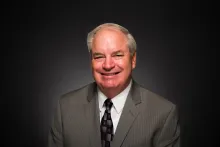
Robin Webber was born in Chicago, Illinois, in 1951, but has lived most of his life in California. He has been a part of the Church of God community since 1963. He attended Ambassador College in Pasadena from 1969-1973. He majored in theology and history.
Mr. Webber's interest remains in the study of history, socio-economics and literature. Over the years, he has offered his services to museums as a docent to share his enthusiasm and passions regarding these areas of expertise.
When time permits, he loves to go mountain biking on nearby ranch land and meet his wife as she hikes toward him.
