
Robin S Webber
This transcript was generated by AI and may contain errors. It is provided to assist those who may not be able to listen to the message.
And I'd like to begin a little bit just talking about something that all of us go through, and probably all of us have seen it one time or another, when we're going down to 15, the 215, the 60, the 10, wherever we might be, even coming down from the mountains. That is simply, there's always been a car in front of us with a little, little bumper sticker on it. You know those bumper stickers? Bumper sticker wisdom! And it says, don't sweat the small stuff. And he said, that's good, I just needed to see that in front of me. But the really big question is simply this, or the reality is, how often do all of us suffer from worrying about the small stuff? Right? About the small stuff. We do. And we say, well, we shouldn't, we just really shouldn't, but we recognize that there's times that we do. And we sweat about all sorts of things. You know, it's very interesting when you think about it. 90% of that which we worry about, 90% of that which we worry about, doesn't happen. And the 10% of that which does happen, 90% of the time it doesn't happen the way that we thought that it might happen. But have you noticed? Have you noticed? It doesn't make us refrain from at times sweating over the small stuff. We just reload it, we repackage it, and we play it all over again in our minds and our hearts and also for other people.
But beyond that, and let's get a little bit deeper into this now, there are some, shall we call, mid-weight and heavy-weight items that aren't going to go away today or tomorrow. And there doesn't seem in a sense to be any answer for it in this day and this age. And that is what I would really like to address today as well as the small stuff.
Let's talk about some of those issues, and looking around this audience, I'm sure that somewhere we will bring all of you into the net that I'm about to spread out here for all of us for a moment. We do have heavy-duty challenges. We do have, some of us, have threatening diseases. There are others that have the loss of a loved one.
There are those that, whether they be a young person, a teenager, or even an adult child, will not respond to our love. Seemingly, for now, there is a dead end. There's the loss of a cherished job. There's a business deal that has gone south.
There's a marriage that has gone sour. And if not sour, still. Just quiet. And that can almost be as challenging as that which has gone sour. There's a friend that continually disappoints us.
And so, for the moment in all of this matters that don't necessarily move in a day, a week, or a month, the reality is that at times God can seem very, very far away. So, what I want to do here today, I want to go a little bit deeper. And I want you, I'm going to ask you a couple questions, and I'm going to give you the title of this message, and we're going to move forward.
Here's the biggest question I can ask you for right now. Think about it for a moment. Whatever you are concerned about right now that weighs heavily in your heart, that is perhaps separating you from our God, separating you from another human being.
Here's my question to you simply. Is it truly worth the energy load and the heart distraction from matters that are truly worthy of your life's devotion? I'm here to remind all of us today that we only have one physical life to lead. And for some of us, we are in either the autumn or we are in the winter of our lives.
What are we doing about it? What is weighing on our heart? Are we looking around? Are we looking down? Or are we tied into that, which is above? That's what I want to talk about today. The message that I'm going to bring to you today is simply entitled this, and that is eyes fixed on eternity.
In other words, a vision that moves beyond the moment. A vision that moves beyond the challenge. Perhaps even a vision that moves beyond what and how you think things should be working out right now. With that stated, and what I'm really talking about is this. With whatever we're going through today, and I don't know what you're going through, you don't necessarily know what I am going through. Please, let's understand so that we can all be in this together as I talk. None of us are living life with a silver spoon. None of us are living life with a silver spoon. We are all going through this together.
So with that stated, how do we live in the light of eternity, in a dark and a cluttered world of time and space, in which we will be confronted with people? We will be confronted with disappointment? We will, by being confronted with people and events and disappointments, can possibly move towards despair? Can possibly then move towards even departure? Not just from people, but from the presence of God in us. So let's talk about that. Eyes fixed on eternity. Join me if you would. Let's go to the book of Philippians. Philippians is a statement by the Apostle Paul, but it is also actually a promise that comes from God.
It's just that Paul is stating it. Over in Philippians 4 and verse 13. In Philippians 4 and verse 13, let's take a look at it. It says, I can do all things through... notice Christ, who strengthens me. I can do all things. You say, no, I can't.
Scripture says that you can, but you can't do it on your own. It's not by our works, but it says that by that which Christ who strengthens me. Now, what I want to share here with you is simply this. This is a value statement. This is something that we can take to the bank of our heart.
We can put this in a safety box so far down deep inside of us that God intends that nothing from the outside can touch that or rob it from us. But here's the point. The promise is based upon a premise. Join me if you would in Luke 9. In Luke 9, let's take a look here at Luke 9 and notice what the premise is. Before God can do His work, and there's something that we have to do. In Luke 9, and we notice in verse 23, Then He said to them, If anyone desires to come after Me, let him deny himself, and take up his cross daily, and follow Me.
Now, let's notice something here. Very important. It's not that we take up the cross of Jesus Christ. That is something very special. That instrument of death was towards salvation for all humanity, as they accept the rule of God and His Son in their life. It's not that cross, but notice what it says here. It says to take up His cross. So God never, through Christ, promised that life was just going to be a breeze.
And that sometimes is what confronts us, like a storm front coming off of the Pacific, smacking up against the front rain chair that perhaps we were not expecting of. God never said that it would be easy, but Christ said that it would be worth it. That is, if our eyes are fixed on eternity, for whoever desires to save his life will lose it. But whoever loses his life for my sake will save it. For what profit is it to a man if he gains the whole world and is himself destroyed or lost?
So what we see in a sense, it's just contrary encounter to how we think. We have to lose something before we gain it. We have to admit our weakness before God gives us his strength. We have to give away our eyes and our vision, which are human-born, before God gives us his eyes, which are spirit-born.
In other words, you don't get something for nothing. We have to first give ourselves away and then allow God to do the rest of it. Until we do that, we will only settle for human eyes. We will only settle for the eyes that we are born with, rather than eyes that are fixed on eternity, which are the gift of God. Let's turn over to John 3, if you would, for a moment. I want to show you how this works for a moment before we get into some specific points. I want to be just like Mr. Sharp. I'm going to give you three points today.
Mr. 3-point Larry Sharp. I'm going to give you three points. You always know what Mr. Sharp is going to bring you. He lays it out clear, clear, just like a pie. 1, 2, 3. Let's go to John 3. Again, as I said, the eyesight that is fixed on eternity is, first and foremost, based on personal sacrifice. You have to give yourself away before God gives you that gift. And I think the most important thing that what I'm talking about here, friends, eyes that are fixed on eternity, you might want to write down this four-letter word to remember this.
It's a gift. What God is giving us is a gift. You cannot earn it. There's no amount of merit down here below that can purchase it. What we're really talking about is a gift. Let's see how it works here. Are you ready for me? And before we get too hard on ourselves, let me make a comment. You can say, well, you know, I have been in this way of life for years and years and years, and yet, you know, I'm getting stuck here.
I'm just kind of looking at the moment. I'm looking at the day. I'm looking at the situation. And here I've been in the quote-unquote church for 25 or 30 years. Well, that is what is so neat about what we're about to read about, because we're going to study, we're going to talk about the story of Nicodemus.
Let's remember that Nicodemus, are you with me? Nicodemus was in the church of his day. Nicodemus was a Pharisee. Not all Pharisees looked like, if you remember the story of Simon LeGree, but not every Pharisee necessarily looked like, you know, Simon LeGree and the villain that was looking around the corner.
No. Pharisees in that day and age, many of them were looked upon as the people of the people, that were dedicated to the law, that were dedicated to the Scriptures, because most of Judah was much more in favor of the Pharisees than of the Sadducees, who were the hometown boys in Jerusalem that were cozying up to the Romans. So here's a man that, while not perfect, can I ask you a question? Do any of us ever have perfect questions that we ask God?
But we put it in the words the best that we can, seeking answers. Because this is how Nicodemus came. Let's go to John 3 and notice. There was a man of the Pharisees named Nicodemus, a ruler of the Jews. And this man came to Jesus by night and said to him, teacher or rabbi, we know that you are a teacher come from God, for no one can do these signs unless God is with him.
And Jesus answered and said to him, Now notice this, most assuredly, which is a solemn Hebrew way of setting the stage, most assuredly I say to you, unless one is born again, he cannot see the kingdom of God. Now when we look at that phrase in the Bible, it can also be translated born from above. You can go through the words of Gennao or this or that. Born again, born from above. And when we say born again, we're not talking about one saved, always saved.
That's a wrong road down that path. But what is being talked about here, unless there is a miracle that comes into your life from above, notice what it says, you cannot see the kingdom of God. You will have a vision that is stuck in the moment, stuck in the trial, stuck in this decade of your life, blocked by the person that is in front of you, stymied by the challenge that is confronting you. You will not be able to see beyond that, as God has asked us to. Nicodemus said to him, How can a man be born when he is old? Can he enter a second time into his mother's womb and be born? He wasn't quite understanding it. And then notice what it says here. And Jesus answered, Most assuredly I say to you, Unless one is born of water in the spirit, he cannot enter the kingdom of God. That which is born of the flesh is flesh, and that which is born of the spirit is spirit. Do not marvel that I say to you, you must be born again. There must be, in other words, a new birth, a new life, a new way of thinking and of being. And actually what it's talking about, let's just think about it this way, we need a new pair of eyes, and that is what is given to us at baptism. We are given, in a sense, a new pair of eyes. Not just merely, oh please don't poke your physical eyes out right now, please don't do anything desperate here. But we're no longer just functioning with the eyes of our first physical birth.
But God, by His mercy and grace, gives us, as it were, new eyes, new vision, a lens that moves beyond that which is in front of us, that is if we are willing to continue to give ourselves away. Now, let's talk about this for a moment. It's very interesting. That is, with all of this said, and you say, well, you know, I've read John 3. And you know, Mr. Weber, this all sounds pretty good. You're excited about it, and we're going through Scripture. But let's break this down for a moment, okay? May we? And that's simply this. With all this said, we can live as if these eyes that God has given us don't really exist. Number one, we may not know that they exist at all. Number two, we may forget how to use them. Number three, most sadly, we may choose not to use them. Well, you say, well, I want to use them. I really do, Mr. Weber. I really want to use them. Well, you know how human eyes get cataracts? And human eyes, even with age, they get glaucoma, and they block our vision, don't they? Hasn't gotten to me yet. I'm just a recycled teenager. But it's coming. But I have been having to wear the cheaters since I was 42, just last year. Oh, you are awake. Thank you. Oh, goodie. But all of us, as we continue to even utilize the eyes that God has given us, age, time, circumstance, disappointment, things that don't seem to go away, things that don't quite work out the way that we wanted them to, but God has allowed it, it can begin to narrow our vision. It can begin to blur our vision. And we forget that God has given us the greatest gift that we can have, eyes that are fixed on eternity. Let's think about the advantage of that just for a second. What advantage is it when we use eyes that are fixed for eternity?
John Lennon wrote a song just before he died. It's called Imagine.
Just imagine for a moment what it would be like. Can you imagine avoiding temptation, whatever that temptation might be?
Because you see the consequences beyond the temptation that lies in front of you, whatever that temptation might be.
Can you imagine, because you have your eyes fixed on eternity, that you are establishing correct priorities, not after the fact, but before the fact, to allow a life that glorifies God and is a blessing to other people? How about eyes that are fixed on eternity make the best use of time? They love unlovable people. They avoid the tyranny of the urges. I've got to do it now. This has to be fixed now. God, where are you now? Now, now, now, now, now.
Imagine what kind of advantage there is. Imagine when your eyes are fixed on eternity that you can discern by God's Spirit people's intentions and their motivations. Eyes that are fixed on eternity will accept the uncontrollable, and they'll live a continent life, a continent life without sweating the small stuff and being able to bear the mid-weight stuff, and even being, yes, being able to endure the heavy-weight stuff when we have the eyes and use the eyes that God has given us. Let's talk about these eyes fixed on eternity, and let's talk about their benefit for a moment. I'm going to give you three points, just like Mr. Sharp. I don't know if I've ever heard you give a fourth point, Larry, but anyway, no? Three? Okay. Just like a piece of pie. Here we go. Number one, eyes fixed on eternity grant us God's perspective. They grant us God's perspective on our past and on our present moments.
They really do. Jeremy, if you would, in Colossians 1. In Colossians 1, and let's pick up the thought here if we could in verse 12. In Colossians 1, verse 12.
Let's notice what it says here. Giving thanks to the Father who has qualified us, we don't qualify ourselves merely by what we're doing here below. God qualifies us to be partakers of the inheritance of the saints in the light, not in the dark.
He has delivered us from the power of darkness and conveyed us into the kingdom of His Son and of His love, in whom we have redemption through His blood, the forgiveness of sins. And He is, speaking of Jesus the Christ, He is the image of the invisible God, the firstborn over all creation. And our other translations will say, the source of all creation.
For by Him all things were created that are in heaven and that are in earth, visible and invisible. And that's why we have to have eyes that move beyond simply seeing that which is visible in front of us for right now.
And that are, excuse me, whether it's thrones or dominions or principalities or powers, all things were created through Him and for Him.
Now, verse 17 is extremely important. That's what I'm leading up to. Notice now, and He is before all things. Notice, and in Him all things consist.
God is inspiring Paul to tell us something very tremendous here.
This set of scriptures brings us into total alignment of the incredible purpose that God the Father is working through Jesus Christ down here below, and that we're a part of it. It says, all things were created by Him and through Him and consist in Him. Think that through for a moment. Whatever we are going through, may I say, whatever we're going through right now is not a part from God and or a part from Christ.
It consists in Him.
We are reminded, and I believe all of us that are members of the body of Christ do not look at God as simply being a first cause, winding up the earth like a top and letting it go.
If you do, you're in the wrong church.
We do not look at God being an absentee cosmic landlord. He is not just simply first cause. He intervenes in the lives of humans, in the lives of empires, in the lives of nations, and will ultimately come in and intervene in human history once and for all.
Sometimes we can see the macrocosm, and we don't understand the microcosm, that God is involved in our own individual lives. That's what makes him God. He can deal with empires. He can deal with nations. He can deal with two different worlds, that which is physical and spiritual. And with all of this spoken, He can deal with us individually.
Have you ever just had an individually wrapped piece of candy?
Not just in the bag. God can deal with the bag, and He can also just deal with us individually. Because, just like it says in the scripture, that we are truly the apple of His eye. And the one thing that we need to remember if we are believers is that we are made in the image of God. We are made in His likeness. There is a purpose that is being worked out here below. Now, with that stated then, join me if you would in Revelation 4 and verse 11.
In Revelation 4 and verse 11, let's pick up the thought here.
Notice you. This is speaking of Christ. Let's get the context here. The vision has extended to chapter 4. Everything is beginning to be laid out. We find out that there is a scroll. And the question is, but who can break the seals of the scroll? And it's kind of in a sense creating a little stir, both in heaven and in the heart of John. They're getting worried with all of this. And if this is everything that is going to happen between this revelation and the future, it's like, okay, it's there, but who can open it? Then it says here, speaking of Jesus Christ, You are worthy, O Lord, to receive glory and honor and power, for You created all things, and by Your will they exist and were created.
All things. That's including me. That's including you. All things. And yet I realize, and this sometimes comes up interestingly right before the Spring Festival and the New Testament Passover, that there will be people sometimes who'll say, I don't know if I'm up to Passover this year. I don't know if I should go. I just don't. I do not feel worthy. I just don't feel worthy. I just don't feel that I should go. And what happens is this. Are you ready? When God gives us eyes that are fixed for eternity, they are not to be stuck in a mirror, because a mirror will only show us. It will only be our image. Eyes that are fixed on eternity, which are a gift from above, are eyes that have a window to heaven, an eye that moves beyond a mirror, that moves beyond a wall, and that has a clear window of what is happening up in heaven. In fact, it was very interesting. I wasn't planning to mention this. When you look at the book or the Gospel of John, the Gospel of John, the way John writes about the kingdom of God in there, it's as if he takes a knife or takes a pair of scissors and opens up heaven as to what it is like, so that God's will might be done on earth as it is in heaven. It's not a mirror of just looking at ourselves, but recognizing that God has done this for you and me. You know, there's an old phrase that goes like this. There are some things that are loved because they are worthy. Susan and I go in. We enjoy art galleries, and sometimes we'll go into Pasadena, and we go into the Huntington Museum, the house where the English Gallery is, of Romney and Gainsborough, and some of you have done that. And you walk in, and right in front of you, right on the main wall looking in, it captivates everything. It's the Blue Boy. Gainsborough's Blue Boy. By the way, if you haven't been there, it's still blue. So anyway, that is the Blue Boy. And it is loved because it truly is worthy. It's a masterpiece of the ages. But there are also things that are worthy because they are loved. That's what gives us worth, is because God so loved the world that He gave His only begotten Son. So we recognize that our worth does not come from our own self-esteem. It comes from God placing His value and His worth and the worth of Jesus Christ on us. When we ask God for us to really get that by using this gift of eyes, we understand it's not about us, it's about Him. And that what we do before us, no matter how hard it is, it is towards His pleasure, it's towards His glory. And it doesn't mean it will be easy. As the old expression goes in the old gym days, there's no gain without what? Pain. No gain without pain. And we have to recognize that God not only has a purpose, but He has pleasure in what He's doing.
He has pleasure in what He's doing. And He's saying, Well, God, I don't know if this is so pleasurable right now because of what I'm going through. It's like the old story in Cheri. It's a fire, the story of Eric Little, a Scottish runner back in the 1920s with the Olympics. And he came out of a faith-based church where back in those days they would call Sunday the Sabbath. And there were like blue laws, I think a lot of us that are older remember that.
And the last thing you know, you kind of forget how strict even Protestant America was 50 years ago with everything shut down. So he was not, he found out that the big race was going to be scheduled, you know, on what he considered the Sabbath day, which for him was Sunday. And he was a man of principles, and he was dedicated to go to France and to be in the Olympics of, what was it, 1924 or whatever. And he was doing this, and he was doing that, and his fiancé kept on kind of, hmm, hmm, hmm, give up.
Why are you doing this? Just go and be a missionary, which actually he was a missionary later on, and actually died in China during World War II under Japanese occupation. Sorry to ruin the rest of the story for you. But anyway, what happens is, the lady in her frustration with the little Scottish, it was a little Scottish lady accent frustration.
Her attic is that, she says, why are you doing this? And he just simply said, I run to feel God's pleasure. I run to feel God's pleasure. Aren't we on a run? Aren't we on a run? If it's just to be about purpose without understanding that there is even a pleasure in the pain, and that there is something beyond the moment, not just in something beyond the day, and that our eyes are fixed on eternity, and that we really do use this gift.
You say, oh, well, that's just what it says. No, it says, if you are not born from above, you cannot see the kingdom of God. Did I make a mistake in reading that?
You do not have that vision that comes from above. That's what we need to pray for. That's what we need to ask for. That is so very, very important. Let me take you to point number two here for a moment. Point number two. Point number two is, eyes that are fixed on eternity changes the way that we view time. Changes the way that we view time. No, it's very interesting when we go through the scriptures, and we will in a moment, when God tells us as human beings that we have a certain number of days on this earth. In contrast, and really, scripture is a matter of contrast, and I think that's the best way that God teaches us.
Contrast, while we have a set number of days here in this physical creation, in the spiritual creation, as God bids us to enter eternity, there is simply that. There is eternity. But here's the problem.
You say, well, Mr. Weber, you make it sound so easy. The problem is, you and I are still locked into time and space with doors that close around us, with clocks, with schedules, with smartphones that run our life. Let me give us a reality check, and I'm echoing this wall back there.
It's echoing this back to me. Our human reality is that our days are numbered for each of us. You might want to write this down and think about it. It's going to be real quick. Our days are numbered. You say, yeah. But each of us have a different number. Let me take you to the third point. And none of us know when our number is up. Our days are numbered. Each of us have a different number. And none of us know when our number is up. Now, did all of us kind of know that?
Before I even said that. But have you noticed that we live life sometimes like we don't think about that? You notice when you look at young people, it's kind of very interesting. They think they're immortal. Remember when you thought you were immortal? Some of us, I see the younger ones, may still think they're immortal. Have you ever seen a seven to eleven year old boy get up on a fifteen foot wall and jump?
And his mother's watching. And he's doing. He thinks for his mother's enjoyment. And the boy lands. And he looks. Wasn't that fun? And the mother is shrieking and all of that. What is it about seven to eleven year old boys and sometimes sixty four year old boys that think they're immortal? There's something about these men, right? At the same time, have you ever noticed that as we get into autumn or we even move gently into winter?
How's that, folks? Gently into winter. Have you ever noticed that we talk about all the old people and the oldest fifteen years older than us? Anything that is old as fifteen years old, those old people. My dad is running out of that phrase right now. You know, he's almost ninety five. I don't know what he's going to do.
So we all have this. But what does God say about this? Show me if you would in Psalm 39 and verse five. Psalm 39 and verse five. Let's take a look here here. Let's actually begin in verse four. Lord, make me to know my end.
And what is the measure of my days? That I may know how frail I am. And if we just keep with those first born eyes, and we don't use those eyes that come from above, well, we're going to remain frail. Because life in time and space is not easy of and by itself. Indeed, you have made my days as hand-breaths and my ages as nothing before you.
For certainly every man at his best state is like a vapor. Join me if you would. Just turn over to Psalm 90 and verse 12. Just to set our clocks according to eyes that are fixed on eternity.
In Psalm 90 and verse 12, let's take a look here. Notice what it says. So teach us, because it does not come naturally to the human heart or the human mind. God, teach us, because we don't have the clock that works down here below. Teach us, notice what it says, to number our days that we might gain a heart of wisdom.
That's what we're going to do. Our days. That doesn't mean the past. Our days is that which lies in front of us. What lies ahead? Now, I have a question for you, please, and it's a personal question. And it's simply this.
And that is simply this. Think about it. Is what we are going through right now as humanly painful as it might be, as humanly challenging as it might be with all of God's Spirit. How consequential is that compared to eternity? God asked us in Scripture to weigh that which we are going through in time and space versus what He has in store for us in eternity. Now, oftentimes what happens, stay with me for a moment, people hear that word eternity and they base it upon their life now. And they say, oh, you've got to be kidding.
You know, the last 40 years has been like crazy, challenging, horrible. And now God is asking me to stretch that out, in a sense, forever. That's a big challenge. Same kind of challenge that happens when we sometimes talk to people about our loving Heavenly Father. They've never seen it down here below. And so they say, okay, is this just an upstairs version of that which I've experienced the last 40 years of my life from Daddy?
Sometimes it's not just Mommy, dearest, it can be Daddy, dearest, right? And so you say, I don't know how to equate because I've never seen it in front of me. That's the same thing that can happen is we can say, well, if my life has been like this, how do I know that what God has in store for me I want to have forever?
I read it earlier in the announcements, for the joy that was set before Him. Remember what it says? Fix your eyes on this. Hebrews 12. Fix your eyes on Christ, who for the joy that was set before Him endured the cross.
See, there's no way of explaining how incredible eternity is. We just don't have the equipment right now to fully appreciate it or understand it. We can get an inkling, we can get hints out of what is in our scriptures. You know what I'm saying? But it's only when we are fully resurrected that we're going to have the equipment to really experience God. We can't fully experience God right now. We can as human beings and as beloved children.
But at the resurrection, we're going to get all of the equipment to prepare us for eternity. And it is so incredible. It is so worthwhile that God sent His Son to die for us. That's always what happens. Actually, the whole book of Romans is about people who are saying, well, how do I know that it's worth it? How do I know that God loves me? And God said, just remember what I did. I gave you my Son. I didn't give my Son for good people. I gave my Son for sinners. I didn't give my Son for those that are at the top of the class. I gave my Son for all of those that were underwater, which was all of humanity. And with that spoken, He bids them to come into eternity. When we begin to focus that way, can you imagine how we use our life? Whatever we do—and let me ask you a question. I'd like you all to look up for a moment. I want to lock eyeballs for a second. Whatever is weighing on your heart and your mind right now, do you want to carry that into eternity? What luggage, what baggage do you and I have? What is dominating our time? Taking our heart, taking our life's energy. What are the goals that we're establishing now? We're on what we think are positive goals, but will those goals move into eternity? Therefore, then, what are we doing with the time that we have seeing that our days are numbered? One thing that we can do—let me just put this down, and then go to the third point—is simply this. Have you ever noticed that at times we say yes too often and not know enough to things that come our way? Yes too often and no not enough. And sometimes we can turn that around conversely. Because when we recognize that our days are numbered— let me use an example, are you with me? When God asks us to tithe and we say, He says to us, you will give to me one tenth of all. You say, I don't know if I can afford to do that. We can't afford not to do that. But have you noticed when you give God 10% or 90% left? How much more carefully do you use that 90%? Right? Think about it for a moment. Or like when it comes to the Sabbath day, God says, you will honor me by keeping my commandment to keep the Sabbath day holy. He said, I can't do that. I live in a world that doesn't stop. But have you noticed that if you honor God here and keep the Sabbath day holy, how much more effectively you use the other six days of the week? Just like Supreme Court Justice Brandeis once said, I can work seven days in six weeks. But I can't work seven days in seven days. Got that? Did I miss it? Dave, I'm watching your eyes. I didn't make that. I'm going to try again. Brandeis said this, I can do seven days work in six days, but I can't do seven days in seven days. In other words, you have to loosen the string. You have to loosen... Bob's a hunter. He knows he's done a little... You cannot keep your bow that tight. Oh, you can? And it will not work for you long run, will it? Right, Bob? Yeah. That's one thing I remember from camp, how to loosen the bow.
Or it will snap. And so we have to recognize where we are in life. What are you... Some of us here in this room, do I dare say, are... I'm going to guess over 50 years of age.
Maybe over 60? Maybe over 70?
Not eternal yet, but over 80?
What are we going to do with the rest of our life that God gives us and holds our breath in His hands? Are we going to continue just to use these eyes, or are we going to use the gift that God has given us from above? Let's go to point number three. We'll finish here.
See, my eyes are fixed on eternity.
And eternity is almost over. Point number three. Eyes fixed on eternity. Eyes fixed on eternity look at people differently. Eyes fixed on eternity look at people differently. You know, most of our problems... most of our problems are people-related. Do you realize that as people come into this way of life, as they attend services with us, most people come and go not based upon doctrine?
Most people leave over other people.
Some people even leave with the thought that if they're in here, why am I in here? God must not be in here. If they're in here, what is God doing? And therefore, they go somewhere else.
I don't think they're dealing with eyes that are fixed on eternity. When you have eyes fixed on eternity, you recognize... are you with me? It's very simple.
This is not Hebrew or Greek. Every human being is made in God's image and likeness. That's it. And Jesus Christ came to this earth to die for every human being. You know and I know that not everybody knows that right now. Not everybody's acting upon it. Those that do know that are not even acting upon it.
And that down here below, that you and I will sometimes have a human nature fit.
And we see it in front of us. Or we see somebody that's not up to expectations. It doesn't mean that we don't deal with it. It doesn't mean that we don't pray about it.
But to recognize that sometimes God sees things in people that we don't, because we just see people for the moment.
And we don't give them a time to grow up physically and or spiritually.
I'm glad that God did not finish with me at age 21.
I'm glad that God did not finish with me at age 30.
I've now been in the ministry 40 years, 41 years.
I'm glad that God did not give up on me as a young elder.
You might have asked when I was 25 or 28, What is God doing with him?
Some of you might still be having that question.
But you've got to be patient with me. I'm a work in motion, just like you are. And we need to give one another the benefit of the doubt. Isn't it fun? I mean, you're not always laughing when you have that person in front of you that's causing you fits. But we need to see things as God sees things.
We're not going to have all of the answers. You know, so often we have all of the good answers for everybody else. Have you ever asked how they're working on you? We want to do everybody else's homework, and God work on them, and when we have so much on ourselves already. But you know what God says in 1 Corinthians 13 to 18? He says, Love never fails.
Love never fails. And basically, that is about loving the unlovable. Loving the unlovable. As I read in that letter, the Chairman's letter, that we, more than ever, have got to love people for who they are and to work with them. You've got to learn to love. That's hard to think like God, to have those kind of eyes. You know, when you think about it, let's talk just about a few people. When you look at time, the great benefit of viewing people through eyes fixed on eternity is that we will see their potential and their possibilities, rather than just, frankly, at the moment, their dumbness and or their limitations of what they're allowing in their life. We will remember where we were. Eyes that are fixed on eternity also have a little bit of a rear-view mirror to remember where God picked us up.
Remember that, where God picked you up and what you were like and had to scrub us up and continues to have to scrub us up with the example of Christ? We are, at times, so much harder on other people, harder on other people than ourselves. Just think of the Pharisee. I'm going to be actually talking about that this afternoon in L.A. A man who prayed unto himself. His prayers were not going to God. He was praying to himself. It was like he locked himself in a closet and was just talking in there. It wasn't going anywhere. He was praying to himself. He was gloating about what he did. Look at this guy over here. God, have the rules changed? Who let him in? Do you know what he is? Do you and I remember who and what we were before God's grace and intervention in our lives caused us to repent, to be baptized, to receive the Holy Spirit, and to have this gift of eyes that are fixed for eternity. People look at David. Oh, look at that scrubby little youth. He's one of the Runt brothers. You obviously don't want him to be a king. What about Jacob? What about Jacob? God gave him a lot of time to grow up. Jacob was not a teenager when he was wrestling that angel. Jacob probably looked like Bob. I'm having fun with Bob. Jacob was a grandfather. He had his whole tribe down by the river. Because Jacob, all of his life, said, you know, what do you do? It's a little bit like I was watching the funeral yesterday with the Reagan kids on the front row. What do you do when you're the kids of Ronald Reagan and Nancy? You know, big personalities in American history, and there are those kids.
I have comments on that, but I'll leave that outside of the sermon. A lot was going on there yesterday. Very interesting, between the kids and figuring it out. It's hard to live in the shadow of greatness and then to be in a sense left on the outside. But what happened was, here's Jacob. Who's your grandfather? You know, when he asked about your grandfather, well, he was an engineer. He was a doctor. My grandfather was the father of the faithful. Well, who's your daddy? You know, like, what did your daddy do in the war? You know, who's your dad? Well, he is the son of promise. So you have the family line, the father of the faithful, then there's the son of promise. That can kind of cause you to maybe a little bit humanly want to run the other way. And it was only later on in his life, as God gave him the new pair of eyes, that he says, you know, that he says, it's no longer just the God of Abram and Isaac, but now it's my God. He internalized it. God had time for him. God had time for Rahab the harlot. God had time for Peter to get a hold of himself and go from being a coward to a conqueror. God had time for that man that was nailed to the side of Jesus Christ, the one man who had done everything in his life that was one of the few people at the end that in a sense recognized that Jesus Christ was there for all the wrong reasons, humanly speaking. That this man was being unjustly condemned. While all the religious people of that day were sneering at him and scorning him. But that guy got it at the end, and Jesus said at the end, he says, I think this is the guy that I can do business with. And I'm sure that'll be continued one day. That's wonderful. Join me if you would, and let's finish if we could. Let's go to 2 Corinthians 4. And 2 Corinthians 4. Because this kind of puts everything into perspective. 2 Corinthians 3-4. Therefore, verse 16, we do not lose heart. Even though our outward man is perishing, yet the inward man is being renewed day by day. Now, notice this, because the Bible has always spoken with contrast. For our light affliction, you say, you've got to be kidding. I feel like Atlas with the globe on my shoulders. For our light affli... and remember what Paul had been through. Humanly, it sounded like a horror story. On the other side, what a courageous man that God used to spread the gospel around the world. For our light affliction is but for a moment. How could Paul say that? Because he had eyes that were fixed on eternity. Notice what it says. Is working for us a far more exceeding and eternal weight of glory. So it's not just because it is, it's for a purpose. There is something that is being molded and shaped for eternity. While we do not look at the things which are seen, but at the things which are not seen. For the things which are seen are temporary, but the things which are not seen. Are eternal.
1 Corinthians 2 verse 9.
There is a difference, brethren, and I really do mean this, and I hope you'll take this home and think about it. There is a difference between these human eyes and the vision and the eyesight that God gives us at the new birth. You say, well, how do you know that, Mr. Weber? Because I can read scripture. 1 Corinthians 2 verse 9. Let's take a look at it.
But as it is written, I has not seen, nor has ear heard, nor has entered into the heart of man the things which God has prepared for those who love Him. Those are eyes that look beyond a mirror of where we only see ourselves.
Those are eyes that look beyond time, look beyond people, and stay fixed on God Almighty and Jesus Christ.
Let's keep those eyes. Don't ever let anybody, anybody, take them from you. Keep your eyes fixed on eternity and watch the results of what God will do with us. Susie and I are going to look forward to staying with you here for a while. We have about 45-50 minutes. If you have any questions, please come up and see me afterwards.
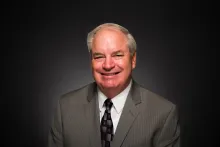
Robin Webber was born in Chicago, Illinois, in 1951, but has lived most of his life in California. He has been a part of the Church of God community since 1963. He attended Ambassador College in Pasadena from 1969-1973. He majored in theology and history.
Mr. Webber's interest remains in the study of history, socio-economics and literature. Over the years, he has offered his services to museums as a docent to share his enthusiasm and passions regarding these areas of expertise.
When time permits, he loves to go mountain biking on nearby ranch land and meet his wife as she hikes toward him.
