
Robin S Webber
This transcript was generated by AI and may contain errors. It is provided to assist those who may not be able to listen to the message.
I do want to build upon the foundation of our first message, which has certainly opened up a discussion as we approach July 4th. July 4th is approaching us on this Tuesday, as once again our nation will be celebrating this holiday. It's a time when families will gather together and barbecue. Some of them will, especially in the Midwest, go down to the town square. There will be a band shell. They'll listen to some patriotic music. And then, wherever you are in America, at nighttime, people will gaze towards the skies and perhaps see the illuminations and the fireworks. Frankly, some will, especially the way it's set up this week, with a very, very long weekend, some will just take these four or five days, and they'll just simply collapse just due to the stress of society and what is happening. And, frankly, they'll sleep right through it. But allow me to share a thought with you, if I may. National holidays, like Holy Days, are a terrible thing to waste. They do have a purpose, and they do have a meaning. And therefore, today, I would like to share matters of historical note that are not addressed in our educational systems today.
They are not addressed in the secular media today. And I want to speak upon them. There's two very key words that we're going to be talking about at the beginning of this message, and especially towards the end. And it's interesting how similar they are, but for one letter, which makes somewhat of a difference. But we're going to tie them all in together. You might want to just jot this down to be kind of interactive. You might just take a piece of paper out. You might want to write these two words down.
One is revolution, and the other is revelation. They almost sound alike, don't they? Revolution and revelation. We're going to see how they come together as we go along. Because we're going to be talking for a while about a revolution regarding a physical people. And we're going to be talking about matters of revelation to a spiritual people.
And they both deal, hear me please, they both deal with the aspect of exceptionalism. So the title of my message is simply this today. Are you ready? Faith of our fathers down to our day. Faith of our fathers down to this day. And its intended purpose for all of us will be to draw spiritual lessons gained from this the 4th of July.
Let's begin, first of all, with discussing the American Revolution and America for the last 240 years. Let's put it this way that oftentimes in history we call it the American experiment. The American experiment. And that is vital to understand because what occurred in America starting in the 1760s to the 1770s and ultimately to 1776 is something that had not ever occurred in human history. There was an interruption. There was something totally unique that came on the fore of the historical spectrum.
Something that had never been thought of. Something that had never been done, at least to that extent. In fact, once it occurred, our forefathers just didn't know what was going to happen day by day. They had this idea. They had this hope. They had this vision. But it had never been done before. And they just simply didn't know how long it was going to go on. And thus we have what is called the American experiment.
And some people think that is an experiment that is yet in progress. The question in all of this is simply this. What has made America a self-proclaimed and widely viewed exceptional nation for the last 240 years? Let's ask ourselves some questions, maybe throw in some answers and fill in some of the blanks. A very basic thing we often hear about is Yankee ingenuity. Is it Yankee ingenuity that has made America exceptional? And or is it the practice of Anglo-Saxon common law for the preceding 1,000 years before that that came into full bloom on this side of the ocean?
That could be an answer. Could it be that we're protected by, as Abraham Lincoln said, we are protected by two oceans? Is it the racial and ethnic diversity of our people? These are questions we can ask ourselves, and these all seem to be somewhat good answers. They are all, indeed, a part of the contributing factor. But let's ask ourselves something as we move into this message, please, and I try to draw you in.
Is there something bigger? Is there a greater answer? Is there a bigger matter that is in scope? Join me if you would. Let's anchor this message in the Scriptures. Join me if you would to the middle of your Bible. Let's open up to Psalm 33 and understand what is occurring here and has occurred in America down through the ages. In Psalm 33 and beginning in verse 8, Let all the earth fear the Lord, and let all the inhabitants of the world stand in awe.
For he spoke, and it was done. He commanded, and it stood fast. The Lord brings the counsel of the nations to nothing. He makes the plans of the people of no effect. The counsel of the Lord stands forever. The plans of his heart to all generations. Then notice, and let's focus on verse 12, Blessed is the nation whose God is the Lord, the people he has chosen as his own inheritance.
Blessed is the nation. Notice what it says. Blessed is the nation whose God is the Lord. Now the question is, we look at Psalms. And as we now come to today, the question is simply this, how does this relate to America today? We're going to go across the ocean for a moment to Africa. There's a saying amongst the Yoruba tribe of West Africa that goes like this, However far the stream flows, it never forgets its source.
Let's sink that through for a moment. No matter how far the stream flows, it never forgets its source. But then let's throw in the butt. But has America, which remains one of the most outwardly religious nations in the Western world, which may astonish some of us, but it is still, when you look at the other nations of the world, has it forgotten the source of its blessings?
Do we as a people, do we as a nation simply place our God on a convenient shelf where we can reach for Him when we have a Pearl Harbor or we have a 9-11 back in 2001? And all of a sudden pray, and all of a sudden, where are you, God? And we all gather together on steps of a capital and sing, God bless America. And then simply go back to business as usual. Let's understand something, and I'm delighted that we have so many younger people here, especially in the middle, because I specifically would like to talk to you today and all of God's children, because we need to understand something about American history.
American history is being photoshopped. Many of you that are younger will understand that term photoshopped and how you can take people out of a picture or you can put people into a picture. But American history is being photoshopped. Plain statements regarding the sentiments of our founding fathers are being lifted out of our collective memories and reinserted with what matches with contemporary sensibilities. The true sentiments of our founding fathers are being erased.
If they're not being erased, they're being ignored. And if they're being ignored, they are being misinterpreted. Our national greatness was once inseparably linked in our citizens' minds with the nation's respect as Mr. Zajac brought out for God and the principles of morality and character taught in the Holy Scriptures. That reality has been attacked by academia, by secular progressives, for over 100 years. Much of it has been expunged from our textbooks. The actions of our founding fathers have been reinterpreted by modern scholars in ways that odds with their plainly recorded statements.
Therefore, we have to move through scholarly work and go to the source. Having worked in a museum myself and understanding the importance of original source and going to the source, getting all the filters out of the way. What I want to share with you for a little bit here is actually hearing the words of our founding fathers and what they believed. And that is so very important because when we understand that, we understand what is at the source of our national bounty.
This American experiment fundamentally rests on the opening lines of our founding document as was brought out by Mr. Zajac, the Declaration of Independence. And we're so used to saying that word that we forget something, that there is something that is literally being declared. The Declaration of Independence was basically written to be read to audiences. It was to be declared. And there's a very specific reason why, and I'll be mentioning that in a moment. Let's understand that you and I are used to maybe, as was mentioned in the first message, knowing a little bit of the first lines.
But what is the reason for the Declaration of Independence? Let's kind of get a backdrop of what is happening. We often think, oh, the Declaration of Independence was signed and then it was opened to delivery on July 4th, that's why we call it July 4th, and everything started from there. No, no, no, no, no. Not at all. The war had been going on for over a year. There had already been cannon fired on the hills of Breed's Hill and Bunker Hill on the other side of Boston.
Lexington and Concord had already occurred for over a year. What was occurring was people, as so often happens with war, whether it's World War I or back to the Civil War, to the Revolutionary War, we have what Thomas Paine called the Sunshine Patriots. They put on their happy face, they put on their hat, and they're ready to go to war for a while, while it looks like everything is good. But then war wears on, doesn't it?
And war takes a nation to where it has never been before. And during this time, you have to understand that most of these men had left their wives, they had left their farm, they had left their crop, they had left perhaps three to four to five to six children, because families were so big back then, and we realized how rampant disease was back then, and the number of fatalities, especially amongst children, that were having smallpox, cholera, typhoid, diphtheria, etc., etc., etc.
And these men were away! And it did not go so well the first year of the Revolutionary War. Just get a book. It was not going well for Washington and or the troops. And America needed to be galvanized. Why are we even here? What is this about? Why should I be away from my wife? Why should I be away from my children who I don't even know if they're sick, ill, or even alive? Who's going to take care of the crop? And so the men gathered in Philadelphia and wrote this, the Declaration of Independence. I'd like to just read it for a moment again. Please stay with me for a moment, and we'll draw on some of the different words.
When in the course of human events it becomes necessary for one people to dissolve the political bands, which have connected them with another, and to assume among the powers of the earth the separate and equal station, to notice which the laws of nature and nature's God entitle them. A decent respect to the opinion of mankind requires that they should declare the causes which impel them towards that separation. Let's understand something plainly and clearly. The colonies, thirteen colonies, were divorcing themselves from the British Empire. This was a divorce statement from them.
It goes on to say simply this. We hold these truths to be self-evident that all men are created equal, that they are endowed by their Creator with certain unalienable rights. Boy, that's a fancy word. What's an unalienable? Are those like Martians? What does that mean? Unalienable. That simply means it's impossible of transfer. It's impossible to surrender these rights to another human being. They come from God, not man, not king, not count, not vicount, not duke, but from God and God alone. That among these then are life and liberty and the pursuit of happiness.
And for the support of this declaration, it had to be declared from Georgia up to New Hampshire. It had to be read to the troops. It had to be read in the greens of the villages of New England. It had to be read on the plantations of Virginia and Maryland. And for the support of this declaration, with a firm reliance on the protection of divine providence, we mutually pledge to each other our lives, our fortunes, and our notice, sacred honor.
How important is the Declaration of Independence when we're dealing with American history and what we are about? While many of us affirm allegiance to the Constitution, the Declaration of Independence is the founding document of American governance. It springs from this affirmation of the divine. How seriously did they take this affirmation that they made, that they would mutually pledge to each other their lives, their fortune, and their sacred honor?
Let's understand the men that wrote this. You might find this interesting. When they pledged, when they affirmed, how serious were they? Five of the signers were captured by the British and tortured before dying. Twelve had homes ransacked or burnt. Two lost sons in war. Two others had sons in prison. And nine of the 56 would fight in the war. And yes, they would die. What would be the source of their conviction? What would give muscle to these words that were written?
What I'd like to do for a few minutes is just walk through American history with you, because it really starts before this, about the exceptional nature of the then morality and character of these people that were being bound together, these 13 colonies. I'd like to acquaint you with the writings of John Winthrop. John Winthrop was one of the leaders of the Puritan community, as they came to establish Boston in 1630. He was on ship on the Arabella, and he gave a very important message.
Yes!
Okay. And he gave a very important message called, A Model for Christian Charity. You might know it as the city on the hill, and I'd like to just read this to you for a moment. It's been made famous over the last 50 to 60 years. President Kennedy would mention it, and of course Ronald Reagan, the city on the hill, is often attached to him. But this was the original thought, where Winthrop speaking on board, you know, when you have everybody on board, you think you're a captive audience, they're really captive. There's no way to get away from this sermon. But John Winthrop gave this sermon, and he said, We have thus stands the cause between God and us. We are entered into covenant with him for this work. For we must consider that we shall be like a city on a hill, which is a quote right out of, in that sense, the Sermon on the Mountain. The eyes of all people are upon us, so that if we shall deal falsely with our God in the work we have undertaken, and so cause him to withdraw his present help from us, we shall be made a story and a byword throughout the world. We shall open up the mouths of our enemies to speak evil of the ways of God and all professors for God's sake. And we shall shame the faces of many of God's worthy servants and cause their prayers to be turned into curses upon us, until we be consumed out of that good land whither we ought go. He concluded that sermon with Deuteronomy 30. I set before you life and death, good and evil, and concludes his sermon with this. Therefore let us choose life, that we in our seed may live by obeying his voice, cleaving to him. For he is our life. He is our prosperity. Of course, you might say, well, this was a Puritan zealot headed for Boston.
A lot of people will say, well, America was more than the Puritans, more than the Pilgrims. And they'll talk about the Dutch of Manhattan, and we'll get into that a little bit later. They'll talk about the Urbane Gentry of Philadelphia. We can talk about that later. They'll talk about the wisdom of the sages that read books by Locke and Rousseau and others, Voltaire, those in Virginia that had the time to write. They will talk about how so many of these founding fathers were deist and or agnostics.
They did not really honor him. What I want to share with you for a few minutes here, and I hope you'll bear with me, because we go to the source. Because I want to share with you again that history in America has been photoshopped. So much has been either taken out of our textbook, not mentioned to our children, ignored or misinterpreted from what was originally stated by the founding fathers. Today, normally in the mainstream media, etc., or education, again, you'll hear that most of our founding fathers were deist. Most people don't even know how to spell that, much know what a deist is, but primarily an agnostic type that looks somewhat at a first cause but can't quite figure it out and come to terms with that. I want to read exactly from the words of our founding fathers, and I hope this will give you encouragement and allow you to be so thankful for their sacrifice, but we're also going to bring you into all of this by the end of this message. How many of you heard of Patrick Henry? Patrick Henry, give me liberty or give me death? But you probably never heard Patrick Henry and what he said here, where Patrick Henry said, it cannot be emphasized too strongly or too often that this great nation was founded not by religionists, but by Christians, not on religions, but on the gospel of Jesus Christ. But Patrick Henry was not alone. There was a research by scholars and researchers at the University of Houston, and over a 10-year period of time of research, they came up with these facts and simply thus found that the founding fathers quoted from the Bible four times as much as any other source. And more than one-third of their quotes actually came from Scripture itself.
I'd like to mention what Samuel Adams said. Samuel Adams, the cousin of John Adams, who was one of the primary movers in the Sons of Liberty and in Boston early on in the Revolution, he said this, Benjamin Franklin, Uncle Ben, who everybody thinks is just simply kind of, well, brilliant but unique, a little bit out there, kind of the older, fun, aged guy that was in the room. But this is what Ben Franklin said in 1787, a few years after the Revolution, at the Constitutional Convention. If a sparrow cannot fall to the ground without his, God's notice, it is probable that an empire can rise without his aid. We have been assured, sir, in the sacred writings that except the Lord build the house, they labor in vain that build it. He then asked the committee to offer daily prayer, to ask for God's assistance and blessing in their deliberations. Of all people, it was Benjamin Franklin that began the course of prayer before our public meetings, like later on in Congress. I'd like to share a thought from George Washington for a moment. George Washington said this, I now make it my earnest prayer that God would most graciously be pleased to dispose us all to do justice, to love mercy, and to demean ourselves with that charity, humility, and a Pacific temper of the mind, which were characteristics of the divine author of our blessed religion. I could give you another 15 or 20 quotes, but I want to bring this in because I want to share one that will quite surprise you because oftentimes we might say, well, that's a Washington or that's a so-and-so, but certainly not Thomas Jefferson. Thomas Jefferson was way out there. You know, they had to reel him back in. I want to quote Thomas Jefferson.
Thomas Jefferson, God who gave us life gave us liberty. It just sounds like what you were saying, Ole. You and Tom. God who gave us life gave us liberty. Can the liberties of a nation be secure when we have removed a conviction that these liberties are the gift of God? Indeed, I tremble for my country when I reflect that God is just and that His justice cannot sleep forever. Again, let me take you one more step further with Thomas Jefferson. The practice of morality being necessary for the well-being of society, He has taken care to impress its precepts so undeniably in our hearts that they shall not be effaced by the subtleties of our brain.
We all agree on the obligations and the moral principles of Jesus, and nowhere will they be found in greater purity than in His discourses. Many people, because they don't study this anymore, so many don't study American history other than under Dr. David Lewis out there in Citrus or wherever, but that many people do not read, and they have not read, that actually when Thomas Jefferson was buried, he did have a Christian funeral. That might come as a surprise to some of you because of what we have been taught and what keeps on coming at us over these past hundred years. Now, all of these statements that these men make, starting with Winthrop and some of our, do we say, founding fathers, join me if you would in Deuteronomy 4. In Deuteronomy 4, let's take a peek here of the words of Moses in Deuteronomy 4, and let's pick up the thought in verse 5. Surely, I have taught you statutes and judgments, just as the Lord my God commanded me, that you should act according to them in the land which you go to possess. Therefore, be careful to observe them. For this, what is? Moses alone? No. This is your wisdom, the laws of God, the words of God, and your understanding the sight of the people who will hear all of these statutes and say, Surely, this great nation, do we dare put in parentheses exceptional, this great nation is a wise and an understanding people. For what great nation is there that has God so near to it, as the Lord our God is to us, for whatever reason that we might be able to call upon Him?
No, brethren. It is not Yankee ingenuity. No, it's not just simply because we have two oceans keeping enemies away from us. No, it's not just the quilt of the American fabric of races and ethnicities and languages all bound together to salute the flag and to honor the Constitution.
We have for these past 240 years been blessed because of the moral character foundation of this nation at one time.
But you know, and I know, brethren, that things have been changing over these last 50 or 60 years.
When these men that I quote allow me to be very frank with you, were these perfect men?
No. Did they embrace the Scriptures as we do today in this room? I would dare say no, not in the fullness that we understand.
Did they have their own issues? Did they have their own problems? Those that study history know a maxim that great men have great vices.
Great men oftentimes have great vices.
And you have to be able to separate that, whether it be a politician, whether it be a founding father, whether it be a composer.
You have to understand what moves forward and what is left behind.
No, no, no. They were men. They had flesh and blood just like you and I did. But there's a principle that I want to share with you and ingrain in your mind. It's actually a law of the Spirit. It's a living law that is intact. Join me if you wouldn't have first Samuel 2.30. In 1 Samuel, and let's pick it up in the second chapter.
If you cannot find 1 Samuel, I've got a hint. It's before 2 Samuel.
Okay, 1 Samuel 2, verse 30. Let's notice what it says here.
1 Samuel 2 and verse 30. Okay, there we go. 1 Samuel 2, verse 30. Therefore the Lord God of Israel says, I said indeed that your house and the house of your Father would walk before me forever. But now the Lord says this, For be it from me, for those who honor me, I will honor, And those who despise me shall be lightly esteemed.
Those that honor God to the degree that they understand God is to the degree that they are blessed. Now these men did not have the revelation that you and I, by the grace of God, have been granted to us. But these were men that surely grounded their souls and the souls of their feet on the foundation of Scripture. They spoke of nature's God. They spoke about the disposer of events. You hear the founding fathers, how they even speak of the kingdom of our Lord and Savior, Jesus Christ. They were in tune with something. So we look at all of this. What America enjoys today is superhuman. It's beyond human. One thing I want to share with you is this.
If there is anything that is exceptional, why we come together today to worship on the Sabbath day, if this is an exceptional nation, it is because we have an exceptional God. Because men will come and they will go. You know, Scripture itself says, don't put your hope in the sons of men. And there's a reason, because you stick around long enough, you will be disappointed.
But it is God who is exceptional. It's He that supplies the fireworks. And it is He, then, where the Scripture says, blessed is the nation that God is for and the people He has chosen. America, to a great degree, not totally. Please understand. There are people that are still attuned to the message that I am sharing today with you.
But much of America, unfortunately, has suffered from spiritual amnesia. We do not want the people of God to suffer from spiritual amnesia. We want to know what we are about. We do not want to forget God as our nation has. I want to have you join me over in Romans 1 for a moment. In Romans 1...
Let's pick up the thought of He could in verse 21. Romans 1, 21. Notice what it says here. Because although they knew God, they did not glorify Him as God, neither were they thankful, but became futile in their thoughts, and their foolish hearts were darkened.
Professing to be wise, oh, we are bigger than God. We did it all of ourselves. We are an exceptional nation. It is our Yankee ingenuity. Oh, we have God still. We have a little corner on the market. On our money, we put, and God we trust. We are not all that bad.
You know, the story of America is really the story of two cities, Plymouth and Manhattan. Plymouth with the pilgrims. The pilgrims coming. It's interesting that the pilgrims were so driven to come out of this world. The pilgrims were actually a subset of the Puritans. The pilgrims themselves were called separatists. They really wanted to separate out of all the glitter of the churches of Europe. And they were so serious about it that they indentured themselves. They found an old wine ship called, wine cargo ship, called the Mayflower. And they actually indentured themselves and put them into the servitude of a company so that they could have a plot of land begin in their mind to develop a culture apart from this world.
But that's only one city. The other city is Manhattan. Unfortunately, that's where my ancestors come from, the Dutch. Our family actually landed in Manhattan in 1630. But unfortunately, what the Dutch did, and I hope you'll still like me after this message, but the Dutch, when they landed in Manhattan, the Dutch were all about money.
They were all about commerce. They were all about the mercantile. They were all about making the almighty buck. The Pilgrims wanted to worship the almighty God, and the Dutch wanted to worship the almighty buck. America is a conglomeration of that. We're all about making money, but we make sure that we stamp God's name in it, in God we trust. But unfortunately, today, the weight of the coin is outweighing the weight of the trust of America in God. So it says here that they forgot. Now, one of the things that lead us into sin and lead us apart from God— if you want to think about this on July 4th— one of the first things that leads us away from God is not being thankful.
Thankful is what greases the slide of moving away from God. How thankful will we be as Americans this weekend for God fulfilling the promises as only brought out to our forefather Abraham? And blessing us and increasing us. Frankly, not that we make money in America, but that he might be glorified and might be known that he is God, that he fulfills his promises down through the ages to those that are faithful. Are we just going to watch the boob tube this weekend?
Are we just going to sleep away the weekend? Or can we be a thankful people that you and I can congregate and worship God? Have free expression. Have free speech. Have freedom of assembly. We come to understand that all men are created equal. How in tune is that with the Scripture when it says that we are one in Christ? Neither Jew nor Gentile. Neither free nor slave. Neither man nor woman. But all at the same starting block.
That's what America is about. That is not what the French Revolution is about. The French Revolution is about liberty, equality, and fraternity. Different revolution, different outcomes. America is about all men are created equal. Now, we recognize that we have fallen far short on that theory. It's easier to write than it is to play out over 200 years. And we recognize that that is an experiment that is still in the making. We have not always treated one another equal. We are striving to. But that was the theory. That was the germ of spirit that was written.
That there is not a king. There is not a Viscount. There is not a duke. It's not who your daddy was. It's not where you are from, but what you are doing and what you will accomplish with your own hands. And take personal responsibility for your life. That sounds so very Christian, doesn't it? I think so. Here's what I want to share with you. In the very beginning, I want to use the last 15 minutes on this. It's simply this. We talked about a revolution of this earth.
I want to talk about a revolution that you are a part of. And that's based upon a revelation. And we want to talk about that for a moment. To recognize that we, too, are to sacrifice. We, too, are to give our sacred honor and to keep our word. Basically what occurred at baptism. When we said that we were no longer just simply going to be a citizen of this world, but that we were going to be a part of something new, something different, something incredible, something that most people have never entertained or had the opportunity to experience.
Brethren, we as Americans, when you look at the American Revolution, this is something that had never been. This was something that had never been thought of except in microscale. There had not been a republic for over 2,000 years the size of the American nation when it developed. The Roman Republic died in 31 BC. During that time, especially by the Middle Ages and the High Middle Ages, these small little republics developed in Italy on mountaintops with little castles. But they basically were postage stamp republics.
Nobody thought that this could be, and nobody had ever thought of something in the 18th century called republics. There were empires. There was the Ottoman Empire. There was the Prussian Empire. There was the Habsburg Empire. There was the British Empire. There was the Spanish Empire. Nobody even thought of being on the outside of having a king or a queen or somebody with blue blood ruling over them and making their own decisions. This was one of the greatest interventions in human history that God provided that he might be true to his promises to Abraham.
You that are here today are also one of the greatest interruptions in humanity by the grace of God. That he has called you also to be a part of a revolution that is based upon revelation. I want to just give you a few points here. Number one, to understand that God, as unlikely as those 13 colonies, became a nation, it is unlikely in a sense that you and I are here. Number one, let's understand something. God today is establishing a spiritual nation. Join me if you would in 1 Peter 2. 1 Peter 2. Let's take a peek here.
In 1 Peter 2 and picking up the thought of verse 9. But you are a chosen generation, a royal priesthood, a holy nation, his own special people, that you may proclaim the praises of him who called you out of darkness into his marvelous light. Now, notice who once were not a people, who once were not a people, but are now the people of God that had not obtained mercy, but have now obtained mercy.
We come from so many different specters of life in the 20th and 21st century. When America was developing and then finally put down the gauntlet of the Declaration of Independence, you have to understand something that America was not a nation. America did not understand federalism at that point. These were 13 separate colonies, some speaking actually different languages, like in Pennsylvania, which was very Germanic at that time.
All with different royal governors, all with different charters to the King of England. You talk about disunited, okay? And then they all come together. They were not a people, but then became a people. And the same with you and I today. We were not a people, but now are a people to show forth the praises of God, to show that He is truly intervening in human history through your changed lives, through your changed hearts, with a different spirit in coming out of the world. What binds us together?
Point number two, Scripture is God's declaration. Scripture, the Bible, is God's declaration of independence. Proverbs 29 and verse 18. In Proverbs 29 and 18, and I remember this verse being read so often when I was a boy growing up in the Church of God. In Proverbs 29, let's take a look at it here in verse 18. Notice what it says. Where there is no revelation, the people cast off restraint, but happy is he who keeps the law. I grew up with the old King James Version, where there is no vision, where there is no declaration that is looked to.
And the people perish. In 1776, our ancestors needed a declaration. They needed a vision of why they were in the field, why they were separating, why they were to be different, why they were to go on, no matter what came at them. Today, we as a people are given the Bible as God's declaration, as our vision of why we are doing what we are doing. By reading the Holy Scripture, it is this word that binds us together. Otherwise, I wouldn't be here.
I'd be out in Sun City today. This is God's Constitution. This is the Declaration of Independence and the Constitution, all put together by the King of the Universe. We wouldn't be together. Just as Americans, what binds us together is our allegiance to the flag and our allegiance to the Constitution. We don't have a king. We don't have somebody coming out on a porch.
We don't have a king. We don't have a queen. The emblems that bind America together are the flag and the Constitution. This is what binds us together, is the grace of God and the law of God and this Constitution. This tells us that we are made in God's image and after his likeness, but that you and I are still a part of a creative process that is yet in motion.
Because, as it says in Hebrews 2, 9-10, God is calling many, many, many sons to glory. There's a purpose that is being worked out here below. There is a vision that we need to tune to and go back to every day, every week, and every Sabbath. Remember why we are doing what we are doing, that we have declared our independence from this world and has only brought out our dependence upon God Almighty. So very important. We have to have that vision. Jesus had a vision even as he was nailed to the cross. In Hebrews 12, 1-2, it says that, For the joy that was set before him, he endured the cross. Our forefathers, the patriarchs, Hebrews 11, join me if you would there for a moment. Hebrews 11. Let's take a look here. In Hebrews 11, and let's pick up the thought if we could in verse 13.
In Hebrews 11, verse 13, notice this. They had a vision, and they maintained that vision, even though they did not fully embrace it or gain it in their life.
Very interesting. I see Mr. Garnet out here, and I know how much Mr. Garnet enjoys that other kingdom down in Anaheim, called the Magic Kingdom. What happened with Walt, Uncle Walt, as we used to call him back in the late 50s and 60s, for us that are a little bit older and tune in every Sunday night, he realized, as excited as he was back in the 50s, he'd made a mistake. He only bought a couple hundred acres down in Anaheim and got closed in by the Orange Groves and by the suburbs. He said, I'm not going to do that one again. And so you know, and I know the rest of the story, he went down and bought a quarter of the state of Florida around Orlando, which had up to that point just been a sleepy southern town. I have relatives there. And somebody said, it's a shame that Walt couldn't see Disney World as it is today.
And the other person spoke back to him and says, it is here because he saw it. He had a vision. It was in his head. It was in his heart. He put his tired being to it. Our patriarchs had a vision that moves beyond the magic kingdom, but to the kingdom of God.
These all died in faith, not having received the promise, but having seen them afar off, were assured of them, embraced them, and confessed that they were strangers and pilgrims on the earth. For those who say such things declare plainly that they seek a homeland, and truly if they had called to mind that country from which they had come out, they would have had an opportunity to return. But now they desire a better that is a heavenly country, and therefore God is not ashamed to be called their God.
For he has prepared a city for them. As we in our life have the vision that God has kept us on this world, to be a light not hidden underneath a bushel, but to be on top of it as a light, as a lamp in a world of darkness, you and I have an opportunity one day also, along with Abraham, Isaac and Jacob and Joseph and Moses and David, to be members of that city of God. That's why it is so important to go over the Constitution again and again and have the vision that God wants us to have. Number three, quickly, they separated themselves.
When we look at the men of old, they separated themselves from this world, and that's the same call to God's pilgrims today. You and I are spiritual pilgrims. Oh, no, we don't wear buckles on our shoots, and we don't have a funny-looking musket, and we don't wear a broad brim hat. And we're not out chasing wild turkeys in November, but you and I are pilgrims.
We're passing through. This life is not an end in itself at all. And God tells us in Revelation 18.4, we have come out of this world. Just as much as America separated itself from the empires of the old world, we are to separate ourselves from the worldly culture, the worldly society, that which is opposed to God, that which confronts the laws, the love, the mind of God. It's very interesting when you look at the Declaration.
I hope that this weekend, if I can encourage you to do anything, please read the Declaration of Independence straight through. You ready for that, Bob? Maybe you already have. The Declaration of Independence, we know the first part is only brought out, and we know the last part about them giving allegiance and their sacred honor.
Most of us do not read the 28 grievances that are in between. Remember, the Declaration of Independence was a divorce from the empire, and they gave 28 reasons why? Because the army and their wives and their children needed to know why they were going through, what they were going through. 28 reasons, one after another. When you and I were baptized, we gave our purpose, we gave our cause, we gave our reason as God began working with our mind, Spirit began leading and guiding us, that we recognized we didn't want to be a part of this world anymore.
We'd have been offered a better kingdom. Our citizenship was mentioned in heaven and registered there. And we said, I'm going to put away the old man. I'm going to live anew. I'm going to be a patriot for God. I'm going to be a pilgrim of the Father. And I'm going to look ahead, as Abraham did, to that better city, that better world, that better age.
Have we gone back at all because we have forgotten, or we have gotten tired, or we've lost a vision and began to renegotiate with the world and see how close that we can get to it? That's why God gives us these encouraging thoughts about being a nation of separating ourselves. These men of old age, they did count the cost. They knew what was coming. They knew that they were a part of something that had never occurred. Join me if you would in Luke 14, verse 20, 27. Luke 14, 27.
Luke 14, again notice, Whoever does not bear his cross and come after me cannot be my disciple. For which of you, intending to build a tower, does not sit down first and count the cost, whether he has enough to finish it? Lest after he is laid, the foundation is not able to finish. All who see him begin to mock it.
When our forefathers went up against the greatest army on earth, and they were not sending over the C and D Leaguers, they were sending over the best troops across the Atlantic to crush this rebellion. That's how empires exist. They must, to a degree, maintain an atmosphere of fear and repression. Or there is a chance that they will lose it all. Our forefathers knew that. They were going up the greatest empire on earth in the 18th century, and they were willing to give their lives for it. That's what you and I said as patriots of God's kingdom, that we would count the cost, that we would take Jesus seriously when he said, if anyone is going to follow me, if anyone is going to follow me, he too must bear a cross. When you and I at baptism were asked two questions as to whether or not we have repented of our sins, and whether we accept Jesus Christ as our Lord and our Savior, in a sense we take those words out of the Declaration of Independence, and we did make a declaration. We said that we were going to be dependent upon God the Father and Jesus Christ. We, in a sense, gave our sacred honor. We affirmed it. It's a vow. There are two vows that you take in life. One, your baptismal vow, and number two, your marriage vow. And they are very similar because it's until death do you part. I could go on and on, but I'm going to wrap up. I do want to share one thing before I go, though. Many of you have read biographies over the years. I see some X History teachers out here and History majors, and maybe some of you have read Flechner's work on the indispensable man. There was a man that was incredible. I think he is God-given. His name was George Washington. Flechner, in his book, entitled him the indispensable man. You see, when Washington came along, he was granted by the Continental Congress to lead a revolutionary army that basically didn't exist. Later on, he was offered the opportunity to be the first President of the United States. There had never been a President in world history. What do you do? And he set the model. He set the model. Is it any wonder that our nation's capital is named after him? Is there any wonder that a state is named after him? Is there any wonder that the tallest monument in the District of Columbia is the Washington Monument? But he was a man. And the Scripture at the end of the day says, Don't put your trust in the sons of men. He had great qualities, but he was a man. You and I have the opportunity to follow the one indispensable man that interrupted human history and came and did something that nobody had ever done before, just as our forefathers set up a republic, had a president, developed a congress, developed a Supreme Court. But the Supreme Court of Heaven and the kingdom of God sent this indispensable man to earth. This is his story. It's called the Gospel, the Good News. The one insuspensible man that God the Father has given is Jesus of Nazareth. He is the model. He is the truth, as Olay was talking about. He is the life. He is the way for us to continue with the revelation and the revolution that God has granted to us to understand by his Spirit. Let's rejoice, spiritual patriots, on this patriotic holiday that is coming up. Learn a lesson. Whether it be July 4 as a holiday or whether it be the Feast of Tabernacles as a holy day, a holiday or a holy day is a terrible thing to waste. Get into it. Study it. Ask God to guide your study, whether it be the word of God or whether or how he has blessed this nation, the United States of America. May God bless each and every one of you. And may God continue to bless the United States of America.
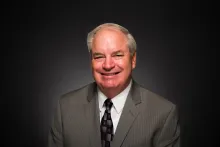
Robin Webber was born in Chicago, Illinois, in 1951, but has lived most of his life in California. He has been a part of the Church of God community since 1963. He attended Ambassador College in Pasadena from 1969-1973. He majored in theology and history.
Mr. Webber's interest remains in the study of history, socio-economics and literature. Over the years, he has offered his services to museums as a docent to share his enthusiasm and passions regarding these areas of expertise.
When time permits, he loves to go mountain biking on nearby ranch land and meet his wife as she hikes toward him.
