

Jorge de Campos
This transcript was generated by AI and may contain errors. It is provided to assist those who may not be able to listen to the message.
Paul was a great, great servant of God and a great apostle. And towards his latter days, we know that he was in prison, and there was a second imprisonment that he had. And then, towards during that time, he wrote to Timothy. Timothy was, let's call it, a young minister in the church, and he had great love and respect for Timothy. And while he was in prison, he wrote to Timothy, as I mentioned, but I particularly want to refer today to the second letter that he wrote to Timothy, which is Second Timothy.
And you might put a little marker there, because I'm going to go in and out. But in Second Timothy, as we read at the beginning here, he says, Paul, an apostle of Jesus Christ, by the will of God, according to the promise of life, which is in Christ Jesus. You know, brethren, in God's church, people are not God's ministers, because they pick and choose, and you go to a college or university and say, therefore, I'm going to now become a minister.
It's not, it's God that calls, it's God that chooses. You can read the story about Paul, how he was called, and he was given that responsibility by God. So it is an apostle of Jesus Christ by the will of God. You know, it was God called him, God gave him that responsibility. And then in verse 2, he goes on, grace, mercy, and peace from God the Father and Christ Jesus, our Lord. That is very much traditional way that Paul wrote, always pointing to the Father and to the Son, and asking for grace and peace, particularly those also in this case, mercifully.
Then in verse 3, he says, I thank God, whom I serve with a pure conscience. And Paul had always had a pure conscience in a way he did things, even when he was a Pharisee and he persecuted the church. He did it thinking that he was right. That was the right thing to do. It was sincere. He had a pure conscience. He was sincere. Granted, he was sincerely wrong, but he was sincere. And so he did, and he did it with a pure conscience.
So as my forefathers did, as without ceasing, I remember you in my praise 19 days. So he says, look, I remember you, Timothy, continuously. I pray for you all the time. And in continuing verse 4, he greatly decided to see you, and obviously he was designed to see him, but he couldn't because he was in jail. He was in prison, being mindful of your tears.
So Paul recalled how Timothy cried. Not sure why, but maybe when he heard that Paul was going to go to jail or whatever, and then he cried for that situation. So whatever it was, he recalls how Timothy cried for the situation that Paul was in. He greatly decided to see you being mindful of your tears, that I may be filled with joy. And so that gives him encouragement, and he is filled with joy, how Timothy is being faithful and remaining faithful.
But that is the very reason also why Paul is writing to Timothy, because he wants to also encourage Timothy. And you see, let's continue in verse 5. We're not called to remembrance the genuine faith that is in you, Timothy. In other words, I know that your faith, your belief, is genuine.
I mean, you're also absolutely sincere. Your heart is there, and you are committed to God, you are sincere. Which dwelled first in your grandmother Lois and your mother Eunice. And now we have two ladies. Two ladies that serve God. Ladies do a tremendous service to God and to His church. Ladies, you are important to God, and yet the ladies trained a man that was going to be used by God, specifically Timothy. And so, ladies, you have very strong capabilities. I many times, I don't have years in everything.
I don't have tabs on everything. I might think of things in a certain way. Then I have a help comparable of meat that God gave me, which is my lovely wife. And she then says, George, but this, you're not doing this quite correctly. You're doing that. Do it this way. And she shows me, and she is a great help to me because she says, George, this is, you're not doing it right. You've got to change, yeah, or whatever it is. And therefore, us together, the two together, are a team.
And that's the way God wants it. So, ladies, you have an important job. You have an important job. God sees you highly. I was doing a study just this past week. And I was going through that study about how Christ spoke to and made reference of ladies, of parables that He had. Now, Christ, in a lot of His parables, criticized rulers and people and Pharisees and priests. He said, you're weaker than you are this than you're hypocrites than this that. But there's not once, not once, a negative comment in one of Christ's parables or interactions, not once a negative comment about ladies.
And so, Christ valued you very highly. And yet, Paul is recognizing Timothy's mother and grandmother for the job they did in preparing a man to serve God. So, you all have tremendous responsibilities in the Church. Not every man speaks, and God has not given you ladies a responsibility to preach.
Even in Old Testament, we can never find a priest of the line of Aaron that was a lady. But we can see prophetesses in Old Testament. That does not mean that they were preaching. That does not mean that they were taking the position of a man. But they were serving and speaking and encouraging others in ways that were positive.
So, ladies, you have a big, vital role in this. And so, he praises the ladies, yeah. And then he says, this is the faith that you got from your mother and grandmother, and I'm persuaded, easy in you also. You know, I know it's him.
But now he gets you in verse 6 to an interesting point. He says, therefore, says Paul, I remind you to stir up the gift. As we heard in, I think it was in the opening prayer or during the sermon, everyone, to stir up that gift. God's Holy Spirit we have. And so, Paul is encouraging Timothy to stir up God's Holy Spirit, which he says, which is in you through the laying on of my hands.
So, Paul laid his hands on Timothy, and Timothy had received the Holy Spirit through Paul's laying on of hands. You might just turn one page back and tip your fingers there in 2 Timothy, but turn one page or two pages back to 1 Timothy 4. And this is also Paul writing to Timothy, and he says, do not be let the gift that is in you, which was given to you by prophecy, with the laying on of hands of the eldership. So, the elders laid their hands on Timothy and received God's Holy Spirit. So, God, through Paul, was training Timothy to be a powerful minister, particularly in Ephesus. That was the area where he then became, let's call it, the main pastor in the area of Ephesus, the church in Ephesus. And God had given Timothy certain talents. You and I, we all have certain talents. Some of you have talents to do something, others have other abilities, other talents. And God announces them with the Holy Spirit. God announces those talents that you have, those gifts. And so, Timothy had certain abilities, and then he goes on. He says, stir up the gift of the Holy Spirit, which is in you, through the laying on of hands. For God has not given us a spirit of fear, but of power, and of love, and of a sound mind. And this is what I want to talk about today. In a sense, it's like my theme today. God has not given us a spirit of fear, but of power, and of love, and of a sound mind.
Did Timothy have doubts? Did Timothy have fears? It appears so. It appears so. And Paul is saying, basically, he's coming to the end of his race. And Timothy, you're going to have to continue the baton. The baton continues this war. And I want to encourage you to do it and be strong. You need to continue this job. So don't be ashamed. Don't be fearful. But go on in faith, forwards. Keep going forwards. And look at verse 8-12. If we just read through these verses quickly at this moment. He says, therefore, do not be ashamed. Now, Paul is telling to Timothy, don't be ashamed. Are we sometimes ashamed of what we believe? And maybe we a little bit hold back in maybe telling other people what we believe. Are we ashamed? Do not be ashamed of the testimony of our Lord, nor of me. Don't be ashamed of me because I'm in jail. He's prisoner. But share with me in the sufferings for the gospel according to the power of God. In other words, don't be afraid to stand up and speak what needs to be said at the right time.
Because it's for the gospel. It's for the good news. And we all can do that part. I'm not talking about preaching, but I'm talking about we all can speak. We all can interact with people. We all can communicate. We all can, quote unquote, prophesy. That is not preaching. When he says we all prophesy, that's not preaching. You know, like there was the prophetess in the Old Testament, but they were not priests of the Aaron's priesthood. They were not priests. They were not ministers. But those people prophesied. And so prophesying is not preaching. Prophesy is talking. You with other people who talk, you speak about God's words. We all do that. And that is speaking about God's revelation and God's truth. That's what it's all about. And so don't be ashamed. But share with me in the sufferings. In other words, if somebody is going to criticize you because of your beliefs, be prepared to share of that suffering. Don't be afraid. Don't be embarrassed.
In the sufferings for the gospel, according to the power of God, who has saved us and called us with a holy calling, not according to our works, but according to his own purpose and grace, which is given to us in Christ Jesus before time began. So God, according to his purpose, he decided to call some of us now. In the end, he wants all mankind to have eternal lives, but he has chosen some now. Not because we are any better, but just because maybe we've got certain abilities or whatever that he sees he can use now. He called us. And so it's his purpose. And he is Christ. He is his divine favor towards us. He is really caring and willingness to share and give things. He's given it to us in Christ Jesus before time began. It was before even time began he had planned that he was going to do it this way. He knew that he was going to do it this way. That was his plan. But verse 10, it has now been revealed by the appearing of our Savior, Jesus Christ, who has abolished death and brought life and immortality to life through the gospel. And now this is revealed because Christ has abolished death. What do you mean, he has abolished death? Because indeed we all die. We still die. But he's abolished death because of him now. Death is not permanent. We will resurrect. So death, which was kind of permanent, he's abolished that permanency and he's given us opportunity we're going to resurrect. So he is abolished that stronghold of death. He's released it. He's opened the hand so that you and I can be resurrected at his coming or later on at the end of the thousand years. To which, in other words, he's abolished death and brought life. He brought life. He brought the people to come back to life. And some of those will, if they qualify and remain loyal, etc., they'll be given eternal life. They'll be given immortality to life through this good news. To which I was appointed a preacher, an apostle and a teacher of the Gentiles. God appointed me to be a preacher, an apostle and a teacher of the Gentiles. For this reason, Paul says, I also suffer these things. Nevertheless, I'm not ashamed. I'm not embarrassed. So Paul is telling Timothy, I'm not embarrassed. For I know whom I have believed and am persuaded that he's able to keep what I have committed to him until that day. Christ is able to keep us and keep us going till the end.
So, looking at the context of that era, of that time, what was happening? The Church was being persecuted. The Roman Empire was coming up and was starting to persecute Christians. We know how Nero ended up killing many Christians. So, there was a very hostile environment against two Christians. There was a very hostile environment. And so, maybe Timothy could see that. I believe he could. And therefore, maybe he was a little shaky, to put it just mildly. Maybe he had some concerns, certain fears. And Paul is now trying to encourage him and say, listen, Timothy, don't be fearful. We've got to go forwards. Don't be fearful. Brethren, it's natural for us to have fear. Which one of us don't have fear? Don't we live in a world? You look around things now, and you see things blowing out in Europe. You see North Korea having an H-bomb and sending missiles and declaring that they're going to do terrorist acts against southern Korea. You see the United States getting involved there. Then you see China making up little islands and declaring that. And there's this tension there. Then you see the problems in the Middle East and Libya and ISIS and also all of them. There's dangers in this country. There's basically a political revolution going on in this country. So everything is kind of in the air. And you and I could become a little fearful. And it is natural for us to become fearful. We live in this world, and our minds are attacked by the things of this world. And you and I would all subject to fears. You and I don't know what the future holds. I mean, yeah, we do know there's a hope, but some of the details you and I do not know. I mean, you and I can make little scenarios of what probably will be, but it might be so or might not be so. We know the final outcome, but every little detail and twist and turn down the road, we don't know. The world can fall apart suddenly around us. Today, tomorrow, you could suddenly have a illness. I could suddenly have a illness. And then suddenly, everything just falls apart. I cannot keep going on doing the things that I'm doing. You cannot. Any of us can. It's possible. We see people suddenly have a heart attack or whatever. We see so many prayer requests. It happens. So doubts can come along. That affects our fear, our life. It drains our thinking. It drains our energies. It drains our emotions. And we can become depressed. We can become discouraged. We can become fearful. And the point here that Paul is saying is not saying, look in verse 7, For God has not given us fear. He's not talking about fear. He's talking about a spirit of fear. Think about it. It's a spirit of fear. It's a vibe. It's an attitude. It's a thing going around as things get tougher, particularly in this country.
People are going to start having that spirit, and that's going to affect us. It's like a vibe. You talk this vibe of certain fears and uncertainties and things like that.
And through fear, through fear, you and I can be controlled by Satan. Think about it. Satan controls people through fear.
Go a little one or two pages ahead, there in chapter 3 of 2nd Timothy. Look at verse 12. He says, Yes, all who desire to live godly in Christ Jesus will suffer persecution. Now look at it. It says, all. Doesn't it like some of us? It says, all, which does not exclude me or none of us. And it says, will suffer persecution. It does not say might or could or possibly. It says, will. Now, therefore, that is a fact. That is a fact. It says, if we desire to live godly in Christ Jesus, there will be people that will come at us. Fact.
None of us is exempt. None of us is vaccinated against that. It's going to happen. So, sooner or later, you may be disliked by some of your friends, maybe in school, maybe at college, maybe at work, maybe some of your neighbors, could be some of your relatives. You could be insulted. You could be attacked, not necessarily physically, but at least verbally or emotionally, with things people say. And when you're under that pressure, what is going to happen? I know what I am. I'm a human being. I'm sure you are. I might just say something wrong. I may have the wrong thoughts. I may make the wrong decisions. We all could. Why? Because we want to protect self. Because we want to protect self. And so, we all can have different fears. We're all different. So, your fears might be different than mine, probably will be. And Timothy was experiencing some of that. And what Paul is saying is, Timothy, you don't have to fear. You don't have to have that spirit of fear. And the lesson is to all of us. Because it's written, yeah, it's an instruction to us. Not just to Timothy, but it's to us, which says, George, and put your name there. You don't have to have that spirit of fear. Not just fear, but a spirit of fear, that vibe, that feeling, that thing that depresses us.
Satan controls us through fear. And what is the ultimate fear? What is the ultimate fear? Death, isn't it? We all... what you might say, I'm not afraid of death. But I think we all are. Otherwise, it's hell, or what, or not, or not. We all... you see people always trying to prolong their life with medication, whatever it is. I'm not saying that's wrong. Please. But we all have that desire that we want to hold on to life. We all have a fear of death. Look at Hebrews, chapter 2. We're going to start reading in verse 14. Hebrews, chapter 2, verse 14.
Hebrews, chapter 2, verse 14. Inasmuch then, as the children have partaken of flesh and blood. So it's... our children have partaken of flesh and blood. You know, our children are just as human as you and I are. That's a fact. We know, you know, we all are flesh and blood. We all partake of this. But just as we all partake of flesh and blood, he... that's Jesus Christ... He, himself, likewise shared in the same. So, just like you and I are flesh and blood, that means we have our own concerns, problems, fears, strengths, weaknesses, etc. Human flesh and blood. So, Christ, when he became flesh and blood, he also, as a human being, as a physical flesh and blood being, also had the same. Himself shared in the same. That through death, he might destroy him who had the power of death.
You see, he became flesh and blood so that he could die. So that he could destroy death. Because he lived a perfect life, before the Father resurrected him. That clearly shows him with two different beings. You know, if God is only one being and the Son is God and he's dead, how can you resurrect himself? So, he's two beings, right? So, he resurrected him, but by the resurrection, he destroyed him who had the power of death. Who is the power of death? See, there is a devil. Satan. Satan inspired, motivated, encouraged sin. And he has got this power to control us through fear, the fear of death. But now, because Christ died, because he was a human being like you and I, and because he resurrected, because he never sinned, he destroyed death. So, he's given his life and immortality, possibility of that. And not only that, he destroyed that power that Satan has on us. Now, continue reading in verse 15. And release those who through the fear of death will all their lifetime subject to bondage. We all have the fear of death. We all have death to a degree or another. And he's releasing us from that fear. He has that power over the world, over the power of people. People do anything so that they don't die. They'll compromise with their values for not to die. You know that. They'll do anything so they don't die. So, ultimately, there is a natural fear of death. But he says that we can be released. Satan has power over us. He has put some limitations. Because God has limited his power. But he controls or wages wars. Through guidance that he sets up. And through his wars, he can keep us in control. He can control and through other people making threats to us or whatever it is, that fear, he can control people. And while we're reading that, maybe I should just explain verse 16 because it might be a difficult scripture for some of you. But he says, for indeed, he does not divide to angels, but he does divide to the seed of hybrid. That is a bad translation. Because you've got to read the context. And you've got to read the word, diphai, in Greek. It's a difficult word to say, i pilam bona mai. But it basically means take hold of. Take hold of. That word has been used, for instance, in 1 Timothy 6, 12 and 19 to say, lay hold on. It means to take hold. So, for indeed he, Christ, did not take hold of. In other words, it did not become like an angel.
But he, Christ, took hold on, became flesh and blood of the seed of Abraham. And if you read verse 14 in the context, it says, Christ became flesh and blood, freed us from death. And because Christ did not take on, did not become an angel, he is God, did not become an angel. That is a matter of proof that he was not an angel, he was hired, he did not become an angel. But he became a human being of the seed of Abraham. And so he became flesh and blood, as we saw in verse 14. And because of that, he releases us from the fear of death. And so, you and I don't need to continue to live in fear, because we will be resurrected.
We will be resurrected. Now, this is a very interesting thing. The fear of death. Do you know that, in a sense, that is what Satan used with Adam and Eve? And he might say, ah, that's interesting. But let's look at Genesis, chapter 2. Genesis, chapter 2.
Verse 15. Starting verse 15. In the first section, we see a beautiful relationship between Adam and Eve and God. First Adam, and then Adam and Eve. They communicated freely with God. There was no fear, no need to hide because of fear. They just had a beautiful relationship, a healthy, sound, interaction relationship. And so, you read, yeah. Then the Lord God took the man and put him in the Garden of Eden to tan and kick it. And the Lord God commanded the man, saying, every tree of the garden shall eat them. But the tree of the knowledge of the evil shall not eat them. So, there is this lovely relationship. And then a little later, God created Steve. And then Adam says in verse 23, Now this is it! This is it! Wow! Beautiful! That's what I was waiting for! This is it! This is now, burn my bones and flesh. She be called woman because she was taken out of man.
And therefore man shall leave and father and mother and be joined, be together. The two become one, one flesh. And so we can see, there was a beautiful relationship. Adam and Eve could look into the face of the Creator and have no fear. There's no fear. They talk. And I'm sure there's a lot of things they talk that doesn't say, because this is a very brief synopsis. So they must have talked about a lot of other things. And they must have walked together and talked absolutely love and respect for one another.
Until chapter 3.
Something comes into the senior. And you know, in first place, really, I'm verse 4, then the serpent said to the woman, well, it doesn't even say it was a snake. Now, maybe you don't like snakes. I know a lot of people are not snakes. But I think a serpent has a little meaning, a little bit more yucky than snake. You know what I mean? It's a serpent who's got that vibe of it's worse than a snake. It's kind of subtle. It's intimidating. But anyway, he says, you shall not surely die.
For God knows that in a day, you'll be like God. So yeah, it's kind of instilling a certain fear that evil would be harmed in some way. Okay. So that because God was not giving her everything. So there is breaking the trust and respect and creating a certain fear. And so there's a decision. There's a little bit of fear because look at the lighter in verse 8. Look at in verse 8. And then they heard the sound of the Lord walking in the garden in the call of the day. And Adam and his wife hid themselves. Why do you hide?
You hide because there's a fear, right? I mean, if the relationship is good, etc. There's no fear. Why are you going to hide? So there was a fear that came into the scene. Very subtle, very subtle. But he created that fear. He themselves from the presence of the Lord God made the trees. And the Lord God called to them and says, Where are you? And so he said, verse 10, I heard your voice in the garden and I was afraid. Where did this fear come from? Where did fear come from? It was installed very subtly by Satan. And that's what Satan does to us today. Installs fears into us. Satan aroused that fear.
And you and I, therefore, sometimes are afraid to make commitments. Commitments to God, commitments to the truth, commitments to the church, whatever it may be.
Why? Could it be because we have certain fears, certain, maybe, shame or embarrassments? Maybe we'll say, well, I will obey God sometime later. Why later? Why not now? What does that mean? Are we afraid to become disadvantaged? And before we pull back, maybe because of some fear?
Or maybe, maybe I don't want to be seen. So let me hide and maybe there's a door out there at the back just to go and disappear. Look, brethren, as Christians, as ambassadors for Christ, there's no back door. We've got to stand up and be soldiers for Christ.
You know, when Christ told the apostles, do you remember when He told the apostles and sent them out? And He gave them instructions to those first apostles? Let's look at those instructions He gave to them in Matthew chapter 10. Matthew chapter 10. Can you think about... it's a very famous statement. Can you think about it? Let's look at it. As soon as you read it, you say, oh yeah, that's right. Matthew chapter 10, verse 16.
Matthew chapter 10, verse 16. Behold, I'll send you out as sheep in the midst of wolves, and therefore be as wise as serpents and armless as duds.
In other words, be streetwise. Just be sharp. Be careful. Don't be silly. Don't make silly things. Be wise. So He's telling us, be aware, because verse 17, Man, they'll deliver you up to councils and skirts, skirts, and synagogues. In other words, you're going to be persecuted. There's going to be certain difficulties. Verse 18, you'll be brought before governors and kings for mind's sake. As a testimony to them and to us the Gentiles. But when they deliver you up, do not worry about what you're going to say, how and what you should speak, for it will be given to you in that hour that you should speak. And it's not you that speaks, but the Spirit of the Father who gives it to you.
So don't worry about it when you get in that situation. Isn't that what happened to the apostles? Isn't that what happened to Peter and to Paul and others?
You look at some of the situations in the books of Acts. Peter got into jail, and then they came out, and he says, by no other name. He says, oh, you don't speak in this name. And he went out and spoke. And he says, but didn't we tell you not to speak? He says, no, we're all a fear God and man. Remember? They knew and God inspired him to say the right things. You look later when Paul went into Iconum and Lister and others, then he was stoned. And then he dragged him out as he feels dead.
And when he kind of resurrected, when he died, he went back into the city. Well, would you have that? You know, that run the opposite direction. You know, I mean, was he fearful?
Reverend, we have to prepare, as Christ said, take up the cross and move forwards. We've got to be prepared to move forwards. While we're in Matthew, let's just look at Matthew chapter 10. Matthew chapter 10, verse 26. Matthew chapter 10, verse 26.
He says, therefore, do not fear them, for there is nothing covered that will not be revealed and hidden that will not be known. Whatever I tell you in the dark, speak in the light. And what you hear in the ear, preach on how stop. And do not fear those who kill the body. But cannot kill the soul.
What do you mean, soul? For one, kill the soul. So if it was an immortal soul, it says, yeah, let's continue. But fear him, who is able to destroy both soul and body in hell. So soul can be destroyed. So if it was an immortal soul, it can be killed. What he's actually talking about is soul is the spirit of man. He's actually talking about Suke, which is the breath of life that when you and I die, God keeps that breath of life, which is basically, let's call it, a recording, a memory of you. Man kills the body, but God still holds that breath of life, that spirit, recording about you. God can resurrect the body, you can live for a certain period of time, you'll need a great white throne judgment time. How? Because he puts that spirit back into this brand new body. So you become you, just a new physical version of you, like version 2, but it's still you, because it's that spirit, it's you, it's your memory, it's your experience, it's all in there. But human beings did not kill the spirit, they only killed the body. You were dead, you were resurrected. At your resurrection, God puts the spirit back into the body. You can see that in Ezekiel 38, I think, or 37. And the Valley of Dry Bones, it explains that clearly. And then, it's the great white throne. And then, at the end of that period, there will be the Gethanah Fire, in which God will then decide whether you will die forever, which means the spirit and the body are destroyed. Or you'll be changed to spirit being eternal life. So that's what he says there.
Only God can do that. Man can't kill your life potential, which is the spirit of man in man. As Paul describes it in 1 Corinthians 1 and 2. Only God can destroy that. So, then he continues here in verse 31. Therefore, do not fear. Do not fear, therefore. You are of more value than many sparrows. You are of far more value, but don't fear. Continue in verse 32. Therefore, whoever confesses me before man, him I will confess before my father, who is in heaven. In other words, you're not ashamed to speak about Christ and the work. Then, Christ will not be ashamed of you as well. But whoever denies me before man, I will also deny before my father, who is in heaven. So, there is going to be a temptation to deny God, but we must not have that temptation. We must stand up. Continue. Do not think that I came to bring peace, but I'll come to bring peace. But so, why? Because we've got to stand up for our values. And when we stand up for our values, the correct way, of course, the gentle, loving, caring way, not being rude and whatever, but we stand up in the right way. And when we stand up for our values, some people that are affected by this world will object us. One day, they'll learn the truth, and one day, they'll see the truth. But when that day comes, you don't want them to turn around and say, but why did you do it that way? Because you knew better! So, we better do it right, and we better ask God for help. So, and look at verse 39, it completes that section. It says, who will find his life, who will lose it, I beg your pardon, who will find his life, who will lose it, and he will lose his life, for my sake, will find it. In other words, if you are being persecuted and therefore lose good things in this life, for Christ's sake, don't worry, because he'll give you the reward, ultimately, and he will win a far greater reward. So, we can't be intimidated in this world. We cannot fear. We cannot have this anxious thought, doubts, uncertainty, and human reasoning without God that destroys faith. We can't have that. So, Paul, if we go back to Timothy, so let's go back to where we were in Timothy, Paul is trying to encourage Timothy in case he's not going to see him again.
And therefore, he's writing this letter saying, Timothy, in case I don't see you again, don't be discouraged. Do the work. Don't have the spirit of fear. Look at some examples of how he tries to encourage in this letter. Let's just look at a few verses ahead. Look at verse 13 of the same chapter. Second Timothy, chapter 1, verse 13. Hold fast the pattern of sound words which you have heard from me in faith and love, which is in Christ Jesus. It was, hold fast. Don't let it go. Stick to it. Keep going.
Hold fast. Look then in chapter 2. Look in verse 1 and 2. You therefore, my son, Timothy, in other words, be strong in the grace that is in Christ Jesus, and the things that you have heard from me among many witnesses, commit these to faithful men who will be able to teach others also. In other words, pass on this knowledge.
I'm teaching you. You go on and teach to others so that others then in the next generation can continue. And that is what's happened. That's why we've got the truth today, because that is being passed on from age to age. Look at... So he's encouraging them. Keep doing it. Pass it on. Then also look at in verse 14 of the same chapter. He says, I remind you, 2 Timothy, chapter 2, verse 14. Remind them of these things, charging them before the Lord not to strive about wars of no profit to the ruins of the years.
Be diligent. Present yourself with proof to God. They're working. Will this Lord need to be ashamed? Rightly dividing them. In other words, there's going to be people who are going to be attacking you, but stay the course. Be diligent. And then later on, look at verse 22, he says, for instance, Free also youthful lusts, but pursue righteousness, faith, love, peace.
In other words, don't be pulled down by passions of the world, but keep going on. Hold on. Hold on. Do what's right. Look at chapter 4, verse 2, for instance. Preach the Word. Be ready in season and out of season. Convence, rebuke, exhort with all the own suffering you teach.
In other words, don't give up. Keep preaching the Word. Don't let go. And continue there in verse 3 of chapter 4, 2nd, he said, For the time will come, brethren, I think we are in this time. It's the end time. The time will come when they will not endure a sound doctrine. Brethren, a lot of people not endure a sound doctrine. I mean, we preaching the Word, and how many people are coming and repenting? Hardly any.
Why? Because society has become calloused, and they just don't want to hear it. And by the way, brethren, pray this weekend. They're doing the Kino God Seminar in Nashville, Tennessee tomorrow, and they all went down there to do a big personal appearance campaign in Nashville. The time is now. Please pray for the success of that as well. So, but what we see is people in the world are not enduring sound doctrine.
And they have itching ears. They go for their own desires. They do things to please themselves. It's the way of the world. And so brethren, Timothy was maybe going through, let's call it, a little lull in his spiritual life. And Paul is encouraging him, listen, keep going. Keep going. Don't have the spirit of fear.
Don't allow the spirit of fear to pull you down. Do not allow. But going back to 2 Timothy, I beg your pardon, 2 Timothy chapter 1 verse 7. But the spirit of power and of love and of a sound mind. In other words, God's Holy Spirit, which is power. The word power comes from the Greek word, dunamis, where we get the word dynamo, which is power.
It's a very strong energy, mind, strength. And yeah, we know the Church would continue. The Church would continue. And we get that power, even though the Church continues, even through difficult times, through weight, through what? Through God's Holy Spirit. Reverend, you and I can do nothing but through Christ in us. We can do nothing but through Christ in us. Christ in us, that's the power of God's Holy Spirit living in us, which is Christ's mind and Christ's approach and Christ's power, which is God's power, is given unto us.
That's how we can move forward. Look at Ephesians chapter 3. Look at Ephesians chapter 3. Ephesians chapter 3. Ephesians chapter 3 verse 7. And he's talking about... Yeah, in chapter 3 of Ephesians, he says, he's talking about the promise of, in Christ through the gospel, of which I became a minister. So he's talking about this gospel, the good news, of which he is a minister, according to the gift of the grace of God given to me by the effective working of his power.
So God gave me this responsibility, continued then in verse 8. To me, who am less than the least of all the saints? Yeah, he considered himself the least of all. Why? Because he persecuted Christians and things like that. So he says, this grace was given to me, this divine favor was given to me, that I should preach among the Gentiles the unsearchable riches of Christ. And to make all see what is the fellowship of the mystery, which from the beginning of the ages has been eaten in God, who created all things through Jesus Christ.
To the intent that now the manifold wisdom might be made known by the church to the principalities and powers in heavenly Christ. It was even the angels are learning because of what God is doing through the church. According to the eternal purpose that he, the Father, accomplished in Christ Jesus, our Lord, in whom we have boldness and excess with confidence through faith in Him. We have courage because of Christ in us. And look at it, for this reason, verse 13, therefore I ask you, do not lose heart.
It was done. Don't get fined. Don't let go down. And my tribulations for you, which is your glory. For this reason, I bow my knees to the Father of our Lord Jesus Christ, of whom the whole family in heaven on earth is named, that He would grant you, according to the riches of His glory, to be strengthened with might through His Spirit in the inner man. You see, our strength with might comes through God's Spirit in us. It's not the question of being a charismatic church and being singing and making noises and whatever it is.
That's a wrong spirit. That's the spirit of the devil. It's that genuine spirit in us, which is the inner man that gives us solid, confident strength. That is a power of strength inside that gives us peace, that gives us a resolve, that we just simply know and we know that it's right and we do it. And so, what we do is, says, continue there in verse 17, that Christ made well in your hearts through faith, that you being rooted and grounded in love, and this power of God's Holy Spirit is placed in love.
It was an interest for the other person, which we have a genuine interest at heart. And that is very powerful. And then continue. Grounded in love, verse 18, may be able to comprehend with all the signs what is the width and the length and depth and height to know the love of Christ, which passes knowledge, that you may be filled with all the fullness of God. Now to Him who is able to do exceedingly abundantly above all, that we ask or think, according to the power that works in us, to Him be glory in the Church by Christ Jesus to all generations forever and ever.
Amen. Brethren, it's Christ in us is the only hope. Christ is the only hope. Think about the story about the vine and the branches, and if you break the branch, you can't do anything, and it goes dead. You've got to have the branch on the vine without Christ.
We are nothing. We are nothing. So, brethren, we have this power that comes from Christ, that comes from God, that is greater than every any other power. Look how John put it in 1 John 4. Look at it. Look how John put it in 1 John 4. 1 John 4. It says, You are of God, little children, and have overcome them. In other words, the wrong spirits of this world. Because He who is in you, there was Christ who is in us, for the power of God's Holy Spirit, is greater than He who is in the world, which is Satan.
So, the power of Christ in us is far greater than a power of Satan. So, don't be afraid. Don't be afraid. Yes, it says we will suffer persecution. But that teaches us to become better people. That teaches to become better people.
And that comes to love, and through the love that Christ has given us. Look at the same chapter, 1 John 4. Look at verse 17. It says, Love has been perfected among us in this, that we may have boldness in the day of judgment. Because He is, because as He is, so are we in this world. In the day of judgment, you and I will not be afraid.
Why? Because just as Christ is, we are today. Why? Because He is in our mind, He is in us, He is in a sense, He is like He is living His life in us. We are trying to imitate Him, and therefore we have boldness on the day of judgment. We have no fear. We have no fear. So, going back to Timothy, where we started in 2 Timothy 1, verse 7.
For God has not given us a spirit of fear, and we've seen that He is from sight, but has given us a spirit of power and of love. That power, which is Christ's power, living in us, is based in love and of a sound mind. It was a mind which is patient, a mind which is moderate, a mind which is balanced, a mind which is sober-minded, a mind that looks at things in a right perspective. And so, brethren, as then Paul says, Yah, at the rest of this chapter, and as we read a little earlier on, he says, Don't be ashamed.
Don't be afraid. We've got a great calling, and we've read that section already. And then we also read in verse 13, and he says, Hold fast the pattern of sound words, that sound mind. It's that spirit of power, of love, of outg and we would hope that they're good understanding of what the gospel is that we have faith.
That's a good thing. Keep by God's Holy Spirit. Let's keep it with God's Holy Spirit, the spirit of power, of love, and a sound mind who dwells in us. If we have that, brethren, we will then have solid permanent change in our lives, and we can then be growing towards the world tomorrow, not having a spirit of fear, which is the spirit of this world.
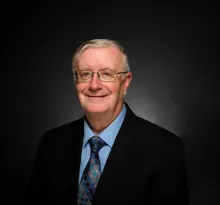
Jorge and his wife Kathy serve the Dallas (TX) and Lawton (OK) congregations. Jorge was born in Portuguese East Africa, now Mozambique, and also lived and served the Church in South Africa. He is also responsible for God’s Work in the Portuguese language, and has been visiting Portugal, Brazil and Angola at least once a year. Kathy was born in Pennsylvania and also served for a number of years in South Africa. They are the proud parents of five children, with 12 grandchildren and live in Allen, north of Dallas (TX).
