

Robin S Webber
This transcript was generated by AI and may contain errors. It is provided to assist those who may not be able to listen to the message.
Today we're going to turn to Scripture. And we're actually going to turn to the beginning of Scripture to inform our faith. And our faith at times does need to be informed and to solidify our hearts for the pilgrimage that is set before each and every one of us. For as we just heard in the music, you and I are also on a journey. Not in the eras before BC, but here in AD in 2016, Israel has come and gone in that sense for the moment. They've gone through the Red Sea. They've been on their journey. They've gone through their pilgrimage. The journey, the pilgrimage, and following God remains for each and every one of us. And so we want to move to Genesis 1 and verse 1. Let's go right to the beginning. And again, that's what the book of Genesis does mean. Because when we go to the beginning, to Genesis, and we go to Genesis 1-1, it is the four most important words in Scripture. For everything builds upon these four words. And it says here in Genesis 1 and verse 1, And in the beginning God, in the beginning God, 1, 2, 3, 4, in the beginning God created the heavens and the earth. And so we find that what is first mentioned, before there was a creation, before there was life, before that which was created, would be created, there was the uncreated, there was the sovereign God. And then it's interesting that it mentions in verse 2, The earth was without form and void, and darkness was on the face of the deep, and the Spirit of God was hovering over the face of the waters.
So we are invited back into now time, back into the beginning. And we notice that the Spirit of God is hovering. Now it's very interesting how this is set about and how God inspired Moses to write this. I know that many people will look at Genesis 1 and Genesis 2, and they will try to figure out all the different aspects of creation, and time elements, and periods, and etc., etc.
And I will leave that to them for now. But when I look at the book of Genesis, I look upon it as a statement that God inspires Moses to make. For remember that Moses is the one that led the people of Israel out of Egypt. And it is that same Moses who had been a prince of Egypt that had been reared, as Stephen says in the book of Acts, and to all the wisdom of Egypt.
So he would have been familiar with sacred writings. And consider for a moment then, as we look at Genesis 1, that as the rollout comes the first day, the second day, the third day, the sea, the land, the trees, the animals, let's understand that these were all the things and all the items that Egypt worshipped.
Because Egypt worshipped the creation. They worshipped the sun. They worshipped the water of the Nile River. They worshipped the critters, big and small. They worshipped that which was created. God inspires Moses to move beyond the creation and to show that the God that brought Israel out of Egypt was above that, before that, uncreated, sovereign over his creation. And then, notice what it says here, it was hovering and then the days of creation began. Join me if you would for a moment, because we're going to build upon this, just one of the days of creation in Genesis 1, where it says in verse 9, Then God said, Let the waters under the heavens be gathered together in one place, and let the dry land appear.
You might take note of that, because we're going to build upon that later. Now, we just heard the anthem about Israel through the sea and God dividing the waters. This was not the first time that God had touched and divided moisture and waters and separated them. He did it at the creation to that which is in the firmament versus that which is beneath. But then notice what it says, He gathered them into one place and let the dry land appear.
That's not the last time we're going to hear about the dry land appearing. Now, let's see where we are so far. Are you with me? As we read this account of Genesis 1, most of us, and even much of America today, have no difficulty with discussing God as a first cause, as the originator of the creation, as the creator. Even our Declaration of Independence speaks of a creator and speaks of a creation.
But where people may be satisfied with God being a first cause, recognizing that there had to be something there. Nonetheless, what I want to discuss with you today is not that God is simply a first cause. He is not only a creator that winds up this earth and sends man on his way. But we're going to come to recognize that what we're going to discuss today about God opening seas, about Israel going through the Red Sea, informs and reminds us that God is a sustaining presence. And he is an intervening force in human history. Not only at the macro level, not only at the macro level in world history with the comings and goings of kings and empires, but intervenes in our personal lives, our personal lives at a micro level.
Both are discussed in Scripture. Both are essential to carry out God's will. In all of this, whether God intervenes in human history, are you with me? At the macro level or the micro level, it is for one purpose. And that is simply that he will be honored and so that he will be glorified. And so that all will know, indeed, that there is a God.
So with all of that said as a backdrop and as a background, I'd like to bring you a message today, as was advertised, and the title of this message is simply this, The God Who Opens Seas. The God Who Opens Seas. And we're going to come to find out, it's not only about the Red Sea of yester-age, but the sea that may be in front of you and me today, in which we seemingly see that there is no crossing.
I have a question for you. Are you with me? This evening we're going to be discussing about the presence of the tribes of Israel and the patterns of evidence thereof that ascribe that they were indeed there.
They were there in Egypt. God moved them through the Red Sea to go into that land of which we call a promise. But the big question is why? Why did God liberate slaves out of Egypt that had been there for hundreds of years and moved them through the Red Sea and bring them to that land of promise? Join me, if you would, in Genesis 12. In Genesis 12, in which God is addressing the Patriarch Abram. God made a promise. And God is one that when He makes a promise that you can take it to the bank of your heart because indeed He cannot lie. This is the God who says that I will declare the end from the beginning and the beginning from the end and I will do my purpose, I will have my pleasure, and I will do it. So we notice in Genesis 12 and verse 7 where Abram has taken God's statement to flee the land or to leave the land. We notice then in verse 7, notice, Then the Lord appeared to Abram and said to your descendants, I will give this land. I'm going to give it to your descendants. I'll give them this land. And there he built an altar to the Lord who had appeared to him. And then verse 8, And he moved from there to the mountain east of Bethel, and he pitched his tent with Bethel on the west and eye on the east. And there he built an altar to the Lord and called on the name of the Lord. Now pick up the thought if we could in chapter 13 verse 14. Again, if God says something once, wonderful. And we ought to take note. But now He says something else again in Genesis 13, 14 to Abram. And the Lord said to Abram, After Lot had separated from him, lift your eyes now, and look from the place where you are, northward, southward, eastward, and westward, for all the land which you see I will give you and your descendants forever. God made a promise. God said, I will do it.
He didn't say that He would give them Egypt. He didn't say that they would always put their feet and their legs near the Nile to cool off. He said, Abram, your ancestors are going to inherit this land, and in that sense, whatever it takes, I will turn over heaven and earth and all the waters therein to make it happen.
Brethren, if my voice sounds excited right now, that's because this is the God that you and I worship. This is why we're here. The God of Abraham, Isaac, and Jacob, and the one that is the Father of their seed, Jesus Christ, who is our God, who guides our pilgrimage. Now, with all of that stated, let's understand something. That is, Israel came up against the Red Sea. What was happening here? We need to understand that. Join me, if you would, in Exodus 13. Let's open up Scripture to Exodus 13, and let's look at verse 18 and what's going on here. This is after the plagues. They're now ready to roll, as we might say. So God led the people around by the way of the wilderness of the Red Sea. Now, notice what it says here. It was God that took the lead. He had delivered them on that night of the Passover. They were now leaving Egypt, and God was in charge. God was sovereign, and He led them. But notice what it says. He led them into the wilderness. Very important, as we continue to develop the story. In verse 21, And the Lord went before them day and day in a pillar of cloud to lead the way, And by night in a pillar of fire to give them light. So as to go by day and by night. Yes, God can do that. God made light. He made dark. He owns both worlds. And notice what it says in verse 22. He did not take away the pillar. He did not take away that pillar of clouds by day, And the pillar of fire by night from the people that were following Him. I think the most important thing that we might look at as we study the story of the Exodus is simply this. God led them into the wilderness. And we notice later on here where it says that as He did that, We notice what happens further in Exodus 14 when He does get them almost to the Red Sea, Something happens here. And it says, notice what it says, Then, verse 4, I will harden Pharaoh's heart so that he will pursue them, And I will gain honor over Pharaoh and over all his army, That the Egyptians may know that I am the Lord. And that he did. Most of us know the story that after seven days Israel was at the banks of the Red Sea, But they were also up against a wall. God had led them to that point. God had led them to that point. You know, what kind of a general is this spiritual general that God led them to this point? They had been in bondage for 200 years. They were ready to escape. They were ready to go. They had put their trust. They had put their confidence in God. And now they're up against a brick wall with the ocean on the other side. Where are we going to go? What kind of a general was God? Was he going to have to do a reset? Humanly we would like a reset. Maybe reset 2.0, 3.0, 4.0, whatever it is. I'm here to remind all of us today, if I can, that we worship a God that does not have accidents. We do not worship an accidental Savior. We worship a God who knows what He is doing, and that why the Red Sea occurred the way that it did was that God might be honored, God might be glorified, and that His promises that He had promised to Abram might come true to His ancestors. For we that are on that same pilgrimage and that same journey today, as we had not towards the land of promise in what is now called the Holy Land, but ultimately to the Kingdom of God, sometimes we believe that, especially when we're first baptized and when we first give our life to Jesus Christ, we think everything is going to be green pastures. We think everything is going to be still waters.
And yet we know that our very own Savior, which is very interesting in Matthew 4, in verse 1 says, and that the Spirit led Him into the wilderness.
The Spirit led Messiah into the wilderness.
The Spirit did, as God brought Israel up against the sea.
Now, as our God does the same with us at times, in matters that you and I don't understand, it's so important then to look at some of the aspects of Exodus 14. And I'd like to do that for just a few minutes with you. Join me if you would in Exodus 14, because there's four specific commands that God gave before He opened up the sea. It didn't just happen. Our God, our Father, will do what only He can do. But He also asked us to follow Him in faith. There is a response. There is something that we ought do because of His sovereignty and because of His love for you and for me. And we begin to notice that in Exodus 14. And let's take a look at verse 13. These are going to be very simple. But let's look at each and every one of them. And allow me to bring you and let us, in a sense, time travel for a moment. And we are on the edge of the Red Sea, a gigantic body of water. And in back of us are the soldiers of Pharaoh who are furious. They have lost their relatives. They've lost their family members. All the firstborn of Egypt is dead. Now today, it wouldn't be chariots. I wonder if we were to say that we look over and we see gigantic dust billowing up above us and we recognize that there are 600 tanks that are moving through the desert of Egypt. And they're looking for you. And they're looking for me. And we follow this Moses who talks about this God, the I AM. And we've given everything in that sense. And now we're wondering, what is this all about? And maybe that's our experience today and our journey with God. That maybe you and I, when we have a couple hundred people here, we don't know everybody's story. We don't know what they've brought today with them. That is larger than life in their mind. Knowing that they're going to have to go home to that in Bakersfield or to Hunga or in Riverside or down in Cyprus or down in Hawaiian Gardens. But this is what our God tells us because our pilgrimage continues. In verse 13, and Moses said to the people, number one, number one, let's learn the lessons of the Red Sea. You and I will never know how to exactly open up the Red Sea. That is to the uncreated and that's to the sovereign God. We'll leave that to him. But he would ask us to do something. Number one, don't be afraid. Don't be afraid. Now, you read that. You recognize that there's 600 tanks coming over the desert as it worries. Oh, don't be afraid. No, who? Me? I'm not afraid. I'm ready to go, Moses. I don't know why I'm shaking like this, but, you know, God says, don't be afraid. Do you realize, maybe you've heard hearing this for the very first time, that it's over 350 times in Scripture that God says, don't be afraid. You think there's a problem down here below? Are we getting? It's our natural inclination to be afraid. It comes with the human territory. And yet, our God says, don't be afraid. And that's very important. God's going to open up that Red Sea, but we've got to do our part. He says, don't be afraid. Because God cannot use fear, no matter how large it is. He can't use it. Because love cannot be perfected in fear. That's what the epistle of John tells us. Fear depletes us. Fear de-energizes us. Fear gets the eyes of our heart off the goal of the kingdom of God. Fear gets us off the eye of the reality of Scripture that says that greater Moses, that second Moses, the divine Moses, the Son of Man, the great Passover abides in us, resides in us, and says, I will never leave you nor forsake you. Now, we hear this. We read it in our Scriptures. We read it in our Bible study.
We might even say it in our prayers. We hear it in church. But then we go our way to Tohongo, or to Atwater, or to Santa Monica. And you know what happens? We know that we're not supposed to be afraid, but our human nature arrives early and changes the equation. The lesson of God opening up the sea is simply this. To come to recognize that our exhausted, mortal conclusions are but the beginning of God's saving work. Our extremities are the beginning of God's greatness.
And opening up the sea, wherever it is in your life right now, whether it's your marriage, whether it's child-rearing, whether it's employment, whether it's something that's happening in the community, whether it is a disease, that where we stop is merely where God begins. I was at lunch with some people today, and I talked about a dear friend that I used to have back in the auditorium, some of you that in our old Pasadena might remember Garth Ward-Rob. Garth Ward-Rob was a gentleman that had been blind since he was three years of age.
And one time Garth, who lived in an apartment with ten other bachelors, that's kind of a red sea to go through. But he asked me to come over and anoint him to pray with him about an illness. And I'll never forget that above his bedroom there was like a bumper sticker. And he goes, oh yeah, that's just one more bumper sticker. But I've never forgotten it. And I believe that there was a reason why God called me that day to come over and to visit Garth and to walk through that bedroom.
And as we're talking about, it was a sign that he never saw. But it's a sign that he believed in. And it simply said this, worry is a responsibility that God hasn't given me. I have a question for you today. Are you worried? Are you afraid? It comes with the territory. I'm not sharing this to diminish you. I know you're human. I know that I'm human. But just as much as Jesus spoke to the man who wanted his son to be healed, he said, the man cried out and said, Lord, I believe.
Help thou my unbelief. Brethren, we can pray that prayer. Whatever Red Sea that we're facing, wherever it seems as if there's a blockade and we want to reset God, wrong angle here, wrong pathway. No, it's the pathway that God has called you, perhaps, to lead. So that in your life and in your surrender, as the Israelites had to surrender and not be afraid, that it might be to his honor, that it might be to his glory.
That is not simply about you or me, but that it's about him. Let's notice the next thing that was spoken here in Exodus 14. It said, do not be afraid. Number two, he said, to stand still. To stand still. Have you ever been in an experience where somebody just says, sit down and leave the driving to us? For those of you that are a little bit older, remember the old Greyhound ads? Sit back. Today we might say, chill and leave the driving to us. That's what God says.
Sit back. I who am, I who am always, I that am above the creation and that which Egypt of old worshipped and that man worships today. I have no beginning. I have no end. Join me if you would in Psalms 46 and verse 10 for a moment. In Psalms 46 and verse 10. Notice what it says. Be still. And know that I am God. And I will be exalted above all the nations. And I will be exalted in the earth.
Very hard to be still in today's world where we have so many answers in our pocket or in the pocket of our shirt or on our desk. We live in a world of amazing technology. And please understand, I am not in any way unnecessarily bashing the incredible technology that is out there.
But there are answers that cannot be found in the Bay Area. There are answers that cannot be found from Seattle. There are not answers that can be found on your smartphone. There are only answers that come from the wisdom of God and His Spirit guiding, directing each and every one of us. And God says, Be still. That's hard because, in a sense, that's what He told Adam and Eve, Be still. You've got the tree of life.
Keep your hands off the tree of good and evil. But Adam and Eve thought they might have been missing something. So they got fidgety. And they took that. The one thing that God said, Don't do. They did. And God says, Be still. Isaiah 55 and verse 8. Join me if you would there for a moment. Isaiah 55 and verse 8. Again, powerful thoughts. For my thoughts are not your thoughts, nor are your ways my ways, says the Eternal.
For as the heavens are higher than the earth, so are my ways higher than your ways. And notice my thoughts than your thoughts.
Just imagine Israel at the edge of the Red Sea.
I would probably tell you what they were thinking, but we're in a family audience.
But God is not locked into time and space. While we live moment to moment and breath to breath, we follow one that is ageless, and have its eternity.
And when I am saying this, brother, and I'm not speaking of being in a Pollyanna world, and not feeling the pain of what some of you are going through as you confront your Red Sea, but I know from Scripture and Scripture is given to us that we read to know that we are not alone, and that God, the same God that led Israel through the sea, as we heard in the song of praise, is the God that we have given our life to, and a Father that knows best.
Number three. Exodus 14 again.
Next is 14.
You notice then again what it says, going down a little bit further. Actually it says, by the way, if you stand still, I'm going to accomplish something. For the Egyptians whom you see, you will see no more after today. Then notice verse 14. The Lord will fight for you, and you shall hold your peace.
Number one is don't be afraid. Number two is to be still. You know, you can be physically still, but not mentally, or emotionally, or spiritually at peace. And we know that when the Christ came, He taught us that God is no longer concerned about the outside in, but works from the inside out. That He weighs not only what we're doing as we wave our hands, but He's weighing the motives of our heart.
For it is the motives and the foundation of our heart that engineer everything else. And He says, hold your peace.
He's basically wishing them shalom.
Shalom is a Jewish blessing. It's a Jewish phrase. It's a hello and it's a goodbye, just like aloha. Just Jewish style, down through the ages.
Shalom means peace.
But the Jewish community understands that the peace that they talk about is not a peace, or a world, or an environment that is absent of conflict.
But of an assurity and a blessing to those that hear that phrase, shalom, that their God, the God that has led their people down through the millennia, will give us the wherewithal. Will give us the answers. Will give us the courage. Will give us the comfort.
Just as later another rabbi, the great teacher, the master teacher, Jesus Christ said, not the peace that the world gives, but my peace. You know the one thing about the Lord of our life and the head of the body is he practiced what he preached.
As he went to Golgotha, were his knees shaking? Absolutely. He was the son of man. Was his heart shaking? No, it was not. For he was the son of God.
And he said, for the joy that was set before me, he endured the cross. And not only that, but we understand then that, as we consider it, he did, in that sense, remain still and allow that perfect sacrifice to be carried out. And then beyond that, he held his peace. And he had such a peace that after everything he'd been through that night, that second Moses, that greater Moses, that lawgiver, that life giver, that deliverer, that leads us more than from one shore to another shore on this earth, but from the shore of death to the shore of eternity, that he was at such peace. That at the end, he says, until you I commit my spirit.
And that was when he was about to die. Brethren, we need to pray for that kind of peace. But then let's notice again, Exodus 14 and verse 4. Exodus 14. And notice, don't be afraid. Stand still. Hold your peace. And then notice what it says. And the Lord said to Moses, Why do you cry to me? Stop the complaining.
Have you ever considered, my wife and I were talking about with something that she was reading today, that complaining is not conversation?
Complaining is not conversation. Conversation is having a dialogue. Complaining is a monologue. It's doubts with amplification by our throat and by our tongue. Doubts are not seeking answers. Doubts don't seek answers. A doubt is an answer in itself.
And notice what God says then. Tell the children of Israel to go forward. Go forward. Get moving. Get into action.
This is one of the great spiritual principles of the Bible, dear friends.
Our God, your God, my God, the God of creation, the God that opens seas and opens doors and open hearts, does not work in a vacuum.
He is active. He is dynamic. There is a time in our lives, in whatever is facing us today, to not be afraid, to stand still, to understand God's peace. And then there is a time to put it into action. One of my favorite phrases over the years comes from Tennyson, the poet, where he said, I must lose myself in action, lest I wither in despair.
How many of us have sidelined ourselves, have become tourists on the benches, letting everybody else go forward towards the kingdom of God?
Thinking that sitting down and watching everybody else, and not even looking up above for help, but just sitting there when God has invited you and me to that ultimate land of promise that we're waiting for somebody else.
When God says, get the people moving. How important is this, friends? Let's understand. Whatever you and I are going through today, fellow Angelenos, Southern Californians, whatever you and I are going through that looks so difficult to go through, like a Red Sea that went all the way down to the deeps, I'm sorry. I do not ascribe to a sea of reeds.
When you look in 1 Corinthians 10, when it says that they were baptized unto Moses in the sea and followed that same rock, and that rock was Jesus Christ.
I think our God, who is the Master Teacher, and I think you will agree with me, would have to find a hard way of figuring out how going through a bunch of seaweed pictures burial. Scripture itself says that the walls of the water were high and deep. Israel is at sea opened up, could have said, oh, you go first. Ladies first, and children, please follow. No, they all had to go into the sea.
Whatever sea is in front of you, you have to understand a very basic understanding when it comes to success.
You must move through the panic that you feel. Don't be afraid. Be still and think about it.
Embrace the peace of God that He has offered us, and move. You cannot skirt the panic. Recovery is on the other side of the panic that we feel. You can't go to the right, you can't go to the left, you can't go under, you can't call for a Black Hawk helicopter to take you up and over.
You must go through whatever you go through, and yet to recognize that you will not go alone.
For indeed, that Moses, that greater Moses, that second Moses, the divine Moses, Jesus Christ said, lo, I will be with you to the end.
Let's finish up in Exodus 15.
We're now on the other side of the Red Sea. Aren't you glad we all made it through? Anybody get wet? But I hope somebody got informed.
This is why God had Israel go through the Red Sea.
And this is why the God that you and I worship continues to open up the sea for the children of God today in the 21st century.
Notice what it says here. Verse 1, Then Moses and the children of Israel sang this song to the Lord and spoke, saying, I will sing to the Lord, for He has triumphed, glorious slayed. The horse and its rider He has thrown into the sea.
Speaking of the destruction of Egypt, the Lord is my strength and song, and He has become my salvation.
He is my God.
And I will praise Him, my Father's God, and I will exalt Him.
The Lord is a man of war. The Lord is His name.
But notice, stay with me carefully now. This is the last scripture I'm going to go to. Notice why they did this.
He is my God.
And I will praise Him. He is my Father's God.
Yes, He is the God of Abram and Isaac and Jacob and Joseph.
But when we allow God to be our guide, to follow His instructions, to give our fear to Him, to be still, to embrace and internalize a peace that is from above, a peace that passeth understanding, as Paul says in Philippians 4, 7-8, a peace that is better than the facts on the ground, that at times, simply, in our minds, don't seem to calculate.
It is then when we are on that journey with Him, when we abide by His commands and His instructions to cross the Red Sea that is in front of us, God no longer becomes the God of my parents.
Many of you remember Thomasine Weber. Many of you remember my wife's father and mother, Russell, Shirley Leimbach.
We came into this way of life through them.
But there comes a time when it's no longer our own. It's not our parents' religion.
God has called us.
And it's not always a picnic of green pastures and still waters and happy meadows.
It can be going through the valley of death.
It can be going through a Red Sea.
And not all Red Seas have water.
Brethren, today we are here to rejoice. Are you with me? We are here to rejoice that we worship a God, uncreated above all, above the gods of Egypt. Egypt, those ruins are there, and we'll see some of them this afternoon and this evening.
But you and I are being called to something greater than going to the Holy Land on this earth.
You and I are being called to the heavenly Jerusalem. You and I are being offered to be citizens in the kingdom of God now.
And you and I are offered to exalt God and to allow others to know our story, to know our Red Seas, so as to encourage them. Saying, brothers, sisters, I've been there. I've been on the brim. I've been on the rim.
I'll tell you what, don't be afraid.
Take it easy. Chill. Be still.
Understand that things up there are not quite like what they seem to be down here.
And get to moving. Get to moving. Get to going.
You do your part. God will do His part.
Let us remember, Israel went through the sea.
And the rock, the rock that they followed, was Jesus Christ.
Our Lord, our Savior, one who never promised, never promised, that it would be easy.
But He did promise that it'd be worth it.
And you can put that in the bank of your heart.
On this day of days, this wonderful presentation that we're going to have this afternoon, let us always remember this, brethren. We worship a God, a God who opens seas.
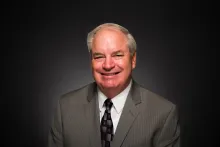
Robin Webber was born in Chicago, Illinois, in 1951, but has lived most of his life in California. He has been a part of the Church of God community since 1963. He attended Ambassador College in Pasadena from 1969-1973. He majored in theology and history.
Mr. Webber's interest remains in the study of history, socio-economics and literature. Over the years, he has offered his services to museums as a docent to share his enthusiasm and passions regarding these areas of expertise.
When time permits, he loves to go mountain biking on nearby ranch land and meet his wife as she hikes toward him.
