

Robin S Webber
This transcript was generated by AI and may contain errors. It is provided to assist those who may not be able to listen to the message.
Let me bring you a message, because we're here to learn from God's Spirit today, and to learn from God's Word. I do have a message that I'd like to share with you today. It's going to center on one word. This is not going to be multiple choice, just one word. You might want to jot it down. It's haste. H-A-S-T-E.
Now I can walk away. We're done. No. Moving with haste towards God's purposes is one of the powerful themes of the Days of Unleavened Bread. It's the theme that I would like to bring to you today. Join me if you would. Let's open up the Scriptures. Turn to Deuteronomy 16. Notice this aspect of haste as mentioned in the Scriptures. Deuteronomy 16.
In Deuteronomy 16, verse 1, it says, The reason why we call this the Days of Unleavened Bread is that when God Almighty makes a decision, makes a determination, and brings the promises that He said He would bring, and He brings them the fourth, they are mighty. They are immediate. And as we know what happened in just a very short spectre, and then in one night we recognize that God brought down the greatest empire that had ever existed on earth. And it happened so quickly that Egypt, leaving the land, that it happened so quickly that the bread itself could not rise. It was unleavened. It was flat. And so it was a memory of just that when God does act, and when God does favor a people, there's nothing that holds them back. It holds them back from favoring us. And thus there was unleavened bread. It's kind of like a reminder. The reason why He's bringing this out in the book of Deuteronomy, Deuteronomy is oftentimes called the second giving. See, Israel had been wandering for 40 years, and now they're crossing the river, as it were. They're going across the Jordan. They're going to become a settled people. They're going to become a nation within a community of nations. 40 years has gone by, and God's bringing them into remembrance of how quickly things happened and the haste that they had to leave Egypt. And sometimes we need to be reminded, just as Mr. Victor Howe just reminded us about the aspect of not being stale during the days of unleavened bread. Some of us can remember our initial enthusiasm when we learned about the festivals of God that are throughout the Scriptures, both the Old Testament and the New Testament, and got excited when we saw that Jesus, and that the early apostles kept them, and the early church kept them. Wow, wow, wow! This is incredible! This is a wonderful revelation! I want to be a part of everything that God is doing.
And then 20, 30, sometimes 40 months or 40 years goes by, and the wow-wow factor, the whoop factor, can kind of flatten if we're not careful. So God was bringing their attention back as to what happened. Exodus 12 verse 11. Join me there, again, dealing with this aspect of haste. Exodus 12 verse 11.
And thus you shall eat it with a belt on your waist, your sandals on your feet, and your staff in your hand. So you shall eat it in haste. It is the Lord's Passover. The bread couldn't rise. God said, Be hasty. I'm going to deliver you from Egypt, for I will pass through the land of Egypt on that night, and will strike all the firstborn in the land of Egypt, both man and beast, and against all the gods of Egypt, and all those distractions that are out there.
I will execute judgment. I am the Lord. So this whole Passover in Days of Unleavened Bread, this word of haste comes out. It's God's interruption of human history. And the aspect of Unleavened Bread, let me use an example that maybe we could understand a little bit more here. I know you don't have as many down here, per se, as we do further up north, but earthquakes. Not that you don't have your share of earthquakes. You're in San Diego.
But when there's an earthquake, oftentimes a clock will stop because of the swaying. You've had that mighty force of movement, and if you have a pendulum clock, it stops. So that you know that something big happened. And so that you know exactly when it did happen.
And you know what made it happen. And or all of us, let's go to another analogy that from time to time. And I know just about three or four years ago, there was that gigantic blackout down here in San Diego County, where everybody lost their power. And that when that happens, everything comes to a standstill. And sometimes you just see things stop, and you know exactly when it happened.
That's what God wants us to understand with the past over in the Days of Unleavened Bread. The Almighty God who owns the earth that we heard about in the song that we just heard by Marty Gatz, stopped Egypt in its tracks and delivered a people out of Egypt to be a people unto himself. So when we put all this together, then, God's sovereign intervention and deliverance and the rapid departure of Israel need to be synonymous. They did it in haste. They did it in haste. And we're going to keep on bringing that point back for a very specific reason. They got out of there, but there's one thing that they left behind.
Join me, if you would, in Acts 7 and verse 38. In Acts 7 and verse 38, there's one thing that they didn't take with them. And Stephen comments upon this in this trial before the Sanhedrin. This is he who was in the congregation in the wilderness for the angel who spoke to him on Mount Sinai with our fathers, the ones who received the living oracles to give to us, whom our fathers would not obey but rejected. And in their hearts, they turned back to Egypt.
There's one thing that they didn't take with them. You know that old song by Tony Bennett? I left my heart in San Francisco. Well, the Israelites really left their heart in Egypt. That's where home was. Not what God was doing with them, but they leaned back towards their home. The slave was taken out of Egypt, but Egypt was not taken out of the slave.
And this is the theme that Mr. Howe was telling us that we need to recognize that God is calling us to be a new lump, not an old lump, not an old bump on the road, but something completely different. What can we learn today of what I brought you so far?
We are a covenant people. We're just not a bunch of people that joined a church down the block. We're a covenant people. We're bonded to God by His grace. We come to Him in faith. A covenant's been made by blood. And we go to wherever He leads us and guides us, and we say, yes, Father, we will follow.
Just as much as Abram did out of Ur of the Chaldees or Israel did out of Goshen, you and I have a responsibility to leave that which was home. Join me, if you would, in Revelation 18, verse 4. This is a cry that comes down through 2,000 years since Revelation was written. And it's not just for the future during the Tribulation. I believe it's for every generation of Christian. In Revelation 18, verse 4, I heard another voice from heaven saying, Come out of her, my people, lest you share in her sins, and you receive of her plagues.
That's what God told Abram as he was in Ur of the Chaldees that was steeped in moon worship. That's what he told the Israelites when they were in Goshen, surrounded by paganism, surrounded by a culture that worshiped multitudinous gods for every reason, for every season. And that's what he tells you and me today. He tells us basically three things. I'd like to give it to you. This is going to be real simple. I want to make this real simple and real practical today. Basically what he's told all of his people down through the ages is this.
Number one, get up. Number two, get out. And number three, get going. Get up, get out, and get going. And as this message develops, we're going to focus a lot on the get-going as we go along. And so we need to understand that. The thrust of these two spring festivals, when we put them together, the Passover, the thrust is, let my people go. The thrust of the spring festival is, let my people grow. Two different concepts. One is to let my people go. And only God can do that. Only God could break the power of the Egyptian Empire. And only God, by His grace, can break the power of sin that is in our life.
Only God can do that. But then we jointly venture with God in faith of this new creation that Mr. Howe spoke to us about.
That's what the Days of Unleavened Bread are about. And that is about growing. What I'd like to share with you today is about, the title of this message is simply this, Making Haste Towards Godliness. Making Haste. What do I mean by that? Can we talk? What I'm talking about is that when God speaks to us, and when God intervenes in our life, be quick. Be quick to respond. Don't let time go by. I find that so often in my life as a Christian and as a pastor, that sometimes God is prodding me by His Spirit. Normally, a name comes, it's the name of an individual, and it kind of goes off my radar screen, then prompts again. God's pushing my cerebellum around up there. He keeps on coming at me, pushing and pushing until I know I've got to go. I've got to pick up a phone. There's something happening. And then I pick up the phone, and somebody says, I was just thinking about you. I was just about to call. God is marvelous that way. He's working with our minds. He's working with our hearts. The thing is, will we heed and will we respond? And will we be lively and quick to respond when God calls us? God believes in haste when it comes to His deliverance. He also believes in haste when we are to respond to Him. I'd like to take you for a moment to 1 Corinthians 10. 1 Corinthians 10. Pick up a thought there.
Paul is writing the Corinthian church, and let's notice what it says. Moreover, brethren, I do not want you to be unaware that all of our fathers were under the cloud and all passed through the sea, and all were baptized into Moses in the cloud and in the sea, during these days of Unleavened Bread. And they ate the same spiritual food, and all drank the same spiritual drink. For they drank of that spiritual rock that followed them, and that rock was Christ. But with most of them, God was not well pleased.
For their bodies were scattered in the wilderness. Now, these things become our examples to the intent that we should not lust after evil things as they also lust it. God had rescued them and given them a hope, given them a future, told them, I'm going to fulfill the promises that I gave to Father Abraham and Isaac and Jacob, that their descendants would inhabit the land. And I'm ready to take you back, but you're going to have to believe that.
The reason I'm mentioning this is that we are people of covenant. We're not just a corporation. We're not just an organization. We're the body of Christ. And what we did the other evening in partaking of the bread and the wine is we came once again. We established that ongoing union that we have with God the Father and Jesus Christ through the blood of Christ. And that second Moses, that greater Moses, Jesus Christ, has been commissioned by God the Father to move us towards that land of promise. Absolutely. Join me if you would in Hebrews 4. In Hebrews 4. Notice God's encouragement to all of us through the author of Hebrews.
Therefore, since a promise remains of entering his rest, let us fear less. Any of us seem to come short of it. For indeed the gospel was preached to us as well as to them, but the word which they heard did not profit them, not being mixed with faith in those who heard it. For we who have believed do enter that rest, that the word there is cataposis. And this is speaking of that spiritual rest. It's speaking of the fulfillment of the kingdom of God and our part in it.
So I swore in my wrath they shall not enter my rest. Although the works were finished from the foundation of the world, for he has been in a certain place of the day in this way, and God rested on the seventh day from all of his works. And again in this place they shall not enter my rest. Since therefore it remains that some must enter it, and to whom it was first preached did not enter because of disobedience, again he designates a certain day saying, today after such a long time as it has been said, today if you will hear his voice, do not harden your hearts.
For if Joshua had given them rest, then he would not afterward have spoken of another day. Therefore it remains a rest for the people of God. Now the rest that's mentioned there in verse 9 is actually the Greek as Sabbatis Mosapalepatos, which literally means therefore remains a technical seventh day rest for those that are in covenant with God. But then in verse 10 it says, for he who has entered his rest has himself also ceased from his works, as God did from his.
We cease from our works because Jesus Christ our Passover has been sacrificed for us. And therefore we do not keep the days of unleavened bread with the malice that was spoken about. But in sincerity and in truth. What I want to share with you today is simply this.
Some very simple points. This is going to be a very simple message. When God rescued Israel out of Egypt, he did it quick. He did it powerful. He did it mighty. And he delivered. Likewise, as his servants, we are to respond to him the same way. Quick, deliberate, and sure.
And that's what I like to talk about. When we talk about the abiding in the unleavened bread of sincerity and truth, what does that mean? How can we do that? What are the ingredients to make haste? I want to share some very specific items, one, two, three, with all of you to help you to respond to God's calling. When you want to get someplace, what do you do?
You're running a little late. You step on the pedal, don't you? Not too quick. Not too fast. We also live in a world... Or am I the only one? I've noticed everybody wants to speed up the process of everything technological. That's why they keep on just when you have one cell phone, they add another cell phone that goes quicker, or another computer that goes quicker, and all of that just quick and quick and quick. Why do a lot of you that are younger here, why do you keep on getting new technological gizmos? Because you get more all at once, quicker and quicker.
I want to share that with you and turn that into Christianity. God wants a quicker and more full response from all of us to respond to what He has done. So this is what some of the points I would like to ask you to consider. Remembering what the days of unleavened bread are about, that when you eat unleavened bread, you remember that God delivered Israel so quickly that the bread could not rise.
And because of our deliverance today as the spiritual Israel of God, we respond to God quickly. Because we love Him, because we have faith in Him, that what He is doing for us is for our good. The first one that I would like to ask you to consider, you can just write it down if you want to. All of this is a congregation. Put this into practice. Hasten to open God's Word. Hasten to open God's Word. Be quick about it. Get up. Get out. Get going. Be quick to respond to God's Word.
Why is that? Let's go to Matthew 4 and verse 4. Here we are during the days of unleavened bread. And here is a comment about bread. Matthew 4, 4. But He answered and said, It is written, Man shall not live by bread alone, but by every word that proceeds from the mouth of God. Today we have so much coming at us that I am concerned about the people of God at times, that so much is coming at us that we become distracted from that which is ageless, and that which is eternal, and that which God has given to us for our good.
There is simply no substitute for getting it straight from the Bible and the open Word of God. And we've got to open our Bibles. A Bible that is not open might as well be a Bible that is lost. Think about that. If you don't open your Bible, it might as well be lost. And God gives us this living Word. John 6, verse 63. Again, verses that illuminate the importance of us turning quickly to God's Word and being in the Word. John 6, verse 63. It is the Spirit who gives life.
The flesh profits nothing. The words that I speak to you are Spirit. Notice, and it says, And they are life. Ancient Egypt thought it had life. The Nile River soured on them. The firstborn of Pharaoh died. This world thinks it's going to go on and on and on.
Get better and better and better. And we've read the prophecies of the Bible. We know otherwise. But these words speak to you are the Spirit and they are life. And brethren, that's why it is so important. I'm not here as your pastor that our speakers, we open up the Word of God to our people here at services. And you, as the people of God, open up your Bibles along with them.
There is no such thing as a familiar Scripture. There's no such thing as familiar Scripture. Each Scripture is like a gold mine. You have to dig. You have to go down deep. There's more and more.
There's always a new window, a new facet, a new way of looking at what God is intending for us. We need to hasten to open God's Word. 2 Timothy 3 and verse 16. In 2 Timothy 3 and verse 16, all Scripture is given by inspiration of God and is profitable for doctrine, for reproof, for correction, for instruction in righteousness, that the man of God may be complete, thoroughly equipped for every good Word. But we've got to go to God's manual. We've got to open it up. I know that there are some times when we become frustrated as Christians.
Life seems overwhelming.
Life seems too complex. It doesn't seem to be answers.
That's when we have to go to God's Word. If we're having a specific challenge on the situation, maybe on the job, maybe in marriage, being a lady, being a man, being a parent, you begin to look up every Scripture on that subject.
I remember many, many years ago, I sat in on a counseling with Mr. Dean Blackwell, and somebody came up and said, Mr. Blackwell said, done everything we can, done everything I can.
Doesn't seem to be any hope, sir.
And Mr. Blackwell said, Well, sir, I have you gone through your Bible and have you looked at every Scripture of concern to you, and have you written down that Scripture?
When you've done that, then you come back and you tell me that you've done everything that you can.
That was one of those Kodak snapshot moments that registered in a young pastor's mind at the time, to show us that sometimes we think we've done it all and we have not begun to do the homework, that God embeds in His Word so that we can partake of that unleavened bread of sincerity and truth, and the wholeness of God's Word, and the truth of God that is embedded in it.
Let's talk about another thing that we need to be quick on. So quick that the bread doesn't rise, as it were.
That is, hasten to ask God to direct our steps, to give us understanding.
Be quick!
Be quick! Get up!
Get out!
Get going!
Sometimes it's easier to get up, sometimes to get out, it's to get going or keep on going that becomes a challenge for all of us.
Ask God to direct you. Jeremiah 10, verse 23.
Notice what it says here. Oh Lord, I know the way of man is not in himself, and it's not in a man who walks to direct his own steps.
Be honest. Be humble.
God, I'm stuck here.
I don't see the way forward. I need your help.
I don't simply want to partake of that unleavened bread of sincerity and truth seven days in the spring, but I want to be unleavened like Jesus Christ every day of my life.
Help me!
Psalm 119, verse 173.
You see, we don't want to just abide of this aspect of unleavened bread for seven days, and then think, well, we can just go out and be like we were before. No, this is a springboard. This is a lab session that then expands throughout every day of our life, every moment of our life.
We're to be unleavened spiritually all the time.
Psalm 119, verse 173. Let's notice it. You're already there. Thank you.
And it says this to us.
Let your hand help me.
Let your hand help me.
Become my help.
For I have chosen your precepts.
Before God's hand can help us, we've got to make a choice.
We've got to make a choice to choose his precepts. Well, how do you know his precepts? Unless you get into the Word of God, go through the Psalms, go through the Proverbs, go through Exodus 21, 22, 23, as to the statutes and to the judgments of God that regulate human conduct between us and him, between one another, between the environment around us. We've got to do our homework, we've got to do our hard work, and then only then will God help us. John 16, verse 7.
Call out and say, God, guide us by your Spirit.
And notice that it says, Nevertheless, I tell you the truth, it is to your advantage that I go away, for I do not go away. The Helper will not come to you, but if I depart, I will send him to you.
And when he has come, he will convict the world of sin and of righteousness.
He's not just going to point out that, which is bad. He's going to point out the good.
Just like it says in Deuteronomy 30.19, I set before you blessings and cursings, life and death.
Therefore, choose life of sin, because they do not believe in me, and of righteousness, because I go to my Father, and you see me no more, of judgment, because the ruler of this world is judged.
Boy, I have a lot of things yet to tell you, but you cannot bear them now. Notice verse 13. However, when he, the Spirit of truth, has come, he will guide you into all truth, for he will not speak on his own authority, but whatever he hears, he will speak, and he will tell you the things to come.
Notice what it says, that that Spirit will guide us into all truth. Now, we think of the parallels between ancient Israel and the Israel of God today. We think of the pillar of the cloud by day, the pillar of fire by night, as it guided ancient Israel from Goshen to the Promised Land.
God's Spirit, God's essence itself, will guide us.
But we have to be open, we have to be willing, we have to be available, and we have to ask.
And we also have to be receptive.
I wrote a column for 13 years.
It was called, This is the Way.
Walk you in it.
And if you ask God's Spirit to guide you, and you pray to our Father above, you've got to be ready to walk, where He says to walk.
So, I didn't want to walk down that. Walk.
So, when you pray, recognize that you are opening yourself up to be willing, to be open and available, and to walk through the door that God sets before you.
Well, I don't see any door.
Oh, you mean that person.
You mean, oh, that situation.
Because so, we're looking for a door.
There's the exit sign. We're not talking about that kind of a door. We're talking sometimes doors are situations. Sometimes doors are people.
Sometimes doors are people that we don't necessarily find easy in our life.
Therefore, we have to go to God's Word.
Again, to hasten to God's Word, quick to God's Word, to understand how to deal with people, to not allow God's, to not allow anger to go down, the sun to go down on your anger, to learn to be a person of smooth words, to learn to be wise as a serpent, but harmless as a dove, and begin to gain the wisdom of the ages as to how to deal with one another. The third point I want to give you. Hasten to seek application with the situation at hand.
Hasten. Be quick.
Be quick. Get up. Get out. Get going.
A lot of us don't have problems with the get up.
A lot of us don't have problems with the get out. I'm out of here.
It's the get to go on and stay in to going.
That's why we have these days of Unleavened Brad.
To grow in grace and knowledge of how to be unleavened.
We notice this, then, we need to again, hasten to seek the application at hand. Psalm 119. Join me there.
Psalm 119. Psalm 119.
And let's pick up the thought in verse 15.
Psalm 119 verse 15.
It's 15? Excuse me a second.
Yeah, so many.
I will meditate on your precepts and contemplate your ways.
Notice verse 23. Princes also speak against me, but your servant meditates on your statutes.
Your testimonies also are my delight and my counselors.
God's words. God's testimony.
God's truth.
My soul clings to the dust. Revive me according to your words.
I've declared my ways, and you answer to me. Teach me your statutes. Make me understand the way of your precepts.
So shall I meditate on your wonderful works.
But here's the thing, especially in our day and age, and I bring this to you as a friend and as a fellow Christian.
Are you ready?
It takes time to meditate.
It takes time to meditate.
I have a question, and confession is good for the soul.
Are you ready? You're nervous.
How many of you run out of time every week?
I'm raising my hand.
I'm a busy man.
And yet, the rest of you are retired. Okay, good.
Wow!
Wow!
But time is of the essence.
To meditate means that you take time to really move it through your mind and your heart and your personal situation.
You say, well, I don't have the time.
You need to make the time.
You need to make the time.
God creates time. He's so gracious. He gives us the Seventh-day Sabbath.
But even for some of us that serve in the work of God, that can also be a busy time.
So we're all in the same boat.
We've got to find the time.
And sometimes, if you don't have the time, you've just got to stop the world. And if you can't stop the world, you've got to get off the world because it's still spinning.
Life is a hamster cage.
You know the old hamster?
Did I already do the hamster here? No. Was that in this congregation?
Forget where I left the hamster last.
But we know the hamster.
Life is like a hamster.
Have you ever seen a hamster? You know that little cat? Just love the little hammy the hamster. And he's in there.
I just like that little cheeks going up like this. And you know that wheel just spinning?
I mean, he's in motion.
He thinks he's going places.
I mean, he's using time and he's using energy and muscles and ability.
And you know what? He's not going anywhere, is he?
He's on the hamster wheel of life and he's just spinning, going nowhere.
Brethren, we need to hasten.
Be quick.
Remember, God delivered so quickly that the bread could not rise.
In our response, we need to abide by the ways of God quickly so that His love can rise in us, the love and righteousness.
And so that's what we need to do. And I recognize that right now, I don't want to speak like an old fogey, because I'm only 39.
That didn't go over big.
I'm very concerned about the world at hand.
And I'm not trying to dis, as it were, the world of the young people today.
But there is so much coming at every American today, much like the global citizens. So much that you have to handle, that you have to juggle, that you have to navigate. Things that we didn't have to deal with when we had rabbit ears on a television and there were just three stations.
Things that we didn't have to deal with when some of you that are older, there was just a radio and Jack Benny was on it.
It was always 39 before my time.
And all of this is coming at us. You know, this world that Daniel talked about, this world that knowledge is going to increase so much, it's going to go to and fro. This is the world that we live in. And I'm concerned about the people of God that we take the time, redeem the time, make the time, make the time to read God's Word, make the time to appeal to God that He will guide us by His Spirit, make the time then as God's Spirit guides us through the Word of God, that we can then crunch it down and meditate on it as to how we can apply it in our life.
Here's the bottom line. Be quick. Make haste.
Remember, God made haste in delivering ancient Israel.
He made haste when the time came to call you into His family.
Now, in turn, we make haste, and we are quick to respond to the ways of God. Here's another one. Hasten to conform your thoughts, words, and deeds into the conformity of Jesus Christ.
Make haste.
No, there's that famous bracelet. What would Jesus do?
And I know sometimes people minimize it or perhaps scoff at it.
But the concept is, what would Jesus do?
What would He do? How do we know what He would do?
Now, we know that He kept the days of Unleavened Bread.
We know that He is our Passover. We know that He's coming back. But we have to read the rest of the Gospels.
All of those words and all of those verses in between to understand how He would approach life.
Hasten to conform your thoughts, words, and deeds into His example. Here's another one. Hasten towards those who will direct you and build you up in the way of God.
And I think this is very, very important. Join me, if you would, in Hebrews 3 and verse 12.
Hebrews 3 and verse 12.
Why am I telling you this as you turn there? Let's understand something.
God does not operate in a vacuum.
God does not operate in a vacuum.
Satan does.
Get up. Get out.
After that, if we don't do something, we're in a vacuum. We've got to get to going.
Romans 12 and verse 21 says, To replace the evil with good.
Can't be in a vacuum.
Notice what it says here in Hebrews 3 and verse 12.
Revelation 12. Hebrews 3 and verse 12.
Beware, brethren, lest there be in any of you an evil heart of unbelief and departing from the living God.
But exhort one another daily while it is called today.
Lest any of you be hardened through the deceitfulness of sin. I looked at that this morning. I thought, that is really a neat verse.
It's telling each and every member of the body of Christ to exhort one another, to buck up, to encourage one another, encourage one another with what? How do I do that, Mr. Weber?
Tell people to get into the Word.
Tell people to look at the promises of God.
Tell people to appeal to God that His Spirit will direct them.
Help people to know that you have a situation, you want to know how to live life. Read the Gospels.
Be conformed to Christ.
Rather than, oh man, life is a bummer.
Your life is like my life.
By the way, you have been one of those conversations I have.
I don't like it.
It's not uplifting.
It doesn't make me rise upward.
It just pulls me downward to this earth.
That's where, as the people of God, as individuals, when somebody is down and we aren't going to get down, we're in this human tent, we need to challenge one another and uplift one another and encourage one another.
More so these days, as we see the Church of God community scattered, and even in the United Church of God, we live far apart from one another.
And we need to encourage one another by letter or by a telephone, or when we do gather together. And you're, oh, so faithful in coming to Sabbath services and feast days, that when we do come together, lift one another up. Last night, I wish you could have been... Chuck and Ken wasn't last night neat.
Wonderful, as we heard the promises of God. People sharing miracles.
People sharing about breakthroughs in their life, how good God has been to them.
And you just create an environment and an atmosphere. We started by opening up God's Word and talking about his deliverance last night, and how he not only delivered ancient Israel, but he's delivering us today, if we'll allow him to, and how he's going to deliver the whole world one day.
And then to hear different stories of things that are happening with family members, or how jobs opened up, where there wasn't a job, and just on and on and on.
It was a night to not only be much observed, but a night to be remembered, because God's Spirit was there. And that's what we need to do.
When we're talking to somebody, as God says, where there's one or two or three gathered in my name, there am I also.
Now, you notice I'm getting a little excited talking about this. I was born excited.
Because I'm excited about what God's Spirit can do, and what each and every one of you can do, because this is what God called you to do, to buck up one another, to encourage one another, even more so as the day comes. Join me in Hebrews 10 and verse 23.
Hebrews 10 and verse 23.
I tell you, brethren, if you cannot get excited talking about God, and talking about God's word, we've got problems.
Because we worship an exciting, loving, grace-filled, generous, fantastic, delivering God.
And these feast days, He pours the Spirit out upon us. He puts the high in the high day. He knows that we need to hear these words. He knows that we need one another. He knows that we need to be filled with this Spirit. He knows that these days cannot afford to be stale. He knows that we have a commission, each and every one of us, to be members of the body of Christ that are vibrant, that are dynamic, that really believe the Word of God so that others can know by our witness that God does live. Notice what it says in Hebrews 10 verse 19.
Therefore, brethren, having boldness entered the holiest by the beloved Jesus, by a new and a living way which He consecrated for us through the veil that is His flesh, and having a high priest over the house of God, let us draw near with a true heart in full assurance of faith, having our hearts sprinkled from an evil conscience, and our bodies washed with pure water.
Let us hold fast the confession of our hope without wavering, for he who promised is faithful, and let us consider one another in order to stir up love and good works.
There's no organization box in the church. Are you with me? There's no organization box. Where's that organization box? Let's see. What deacon do I have to go through? What elder do I have to ask? No, that's the prompting of God's Spirit. That's having Christ live in us, because grace has come into our life, and because we've been redeemed and we know it.
We want to give hope and love and encouragement and share our faith with others to allow them to rise, not in a leavened manner, but in that unleavened manner to give God the glory.
Here's another one.
Hasten to implement God's answers as quickly as possible.
Hasten. Be quick. Step on the spiritual pedal to implement God's answers as quickly as possible. Tomorrow is one of the most dangerous words in the English vocabulary.
We don't want to be like Scarlett O'Hara.
Oh, Ralph. Oh, Ralph, what am I going to do? Oh, I don't want to think about it right now.
Oh, because after all, there's always tomorrow. Well, that plays well in the movie, but that can damage your spiritual life.
When you've read something in God's Word, the living, dynamic Word of God, the words of life, and God's Spirit prompts you to read that, and then you have meditated on it, and you are convicted by the Spirit of God that that must be what you ought to do. Be ready to implement it immediately. Don't put it on a calendar. If it's Monday, don't say, I'll get to it on Wednesday. If it's Tuesday, don't say, I'll get to it on Sabbath. Do it. Move right into it. That's so very important. Another point. Be quick and hasten to the realization that you will be tested as soon as you walk out the door or walk into another person. You say, you know, God, I'm stupid.
I just don't exercise common sense. God, grant me your wisdom. So what does he do? Let me ask you a question. What does he do? Does he put a funnel on the top of your head? You know, like a goose to fatten you up with wisdom? Is that what he does? Does he just kind of pour wisdom up here?
No. He's going to allow you because you have appealed to him, because you've read his word, because you've asked his spirit to guide you, because you've meditated then, because you've talked to others about the need to have wisdom and what they're doing in their life.
Then you've got to recognize that he's going to put you into the arena of life.
Because until you're in the arena of life, where you're put into the oven, it's just so many recipes.
Wisdom comes by exercising God's Spirit, by applying God's word, by doing things the way that Jesus would do. Sometimes you say, well, why is it that I'm always getting into arguments with people? Well, maybe because you haven't read the Gospels. Well, what he said, he read the Gospels. Because sometimes, did you ever notice that Jesus just didn't make comments about certain subjects with certain people? He just moved on. He didn't stay there. He said, don't lay down your pearls before swine. He wasn't calling people pigs. It was about time management and wisdom. Just don't stay there if the audience is not receptive. And then you're wondering why they don't like you.
It's time to move on. But you wouldn't know that unless you read the Gospels.
Unless you wanted to be like Jesus Christ and conform to his example. You see, we can talk about the unleavened bread of sincerity and truth.
And that can seem like so much kosher toast. That can seem like so much language up here. This is how to break it down and make that unleavened bread of sincerity and truth happen in your life. This is the diet. This is the plan. Here's another one I want to share with you. Hason to realize that God is with you and will keep you. Hason to that realization.
Let me use an example personally right now.
As a pastor over four congregations.
And as a council member of our church. And as a chairman of that board. And everything else that's going in life sometimes. People will say, well aren't you busy Mr. Weber?
I'm not saying this to be busy. I'm just because we're all busy. We all have 24 hours a day.
Sometimes people say, can you keep on going?
I have to manage my time appropriately. There's a certain amount of human wisdom.
And thank God that I guess because of my Germanic background, I've got a lot of but you know what? I get tested. I get tried. I run out of words. I run out of thoughts.
I run out of sometimes waking up every day thinking how can I motivate other people?
How can I help other people towards God's way of life? God's kingdom. Because I'm starting to go dry. That's why I have to pray. That's why I have to go to God's word. And one of the things that I know is that it's not by my might, it's not by my power, but it's by God's Spirit. And God has placed me in a position for a time, and He's placed you in a position in your condition, wherever you are for this time. And God's Spirit will never guide or lead you to a place where His grace cannot keep you. That's a promise. That is an absolute promise. Some of us sometimes we've been in the way for 30 or 40 years, and sometimes the load is heavy. God said that He will never leave us nor forsake us. And you know, when I go and meditate that, I'm just sharing my own personal feelings with you. When I think about that way, that Robin, yeah, you're worn out, and that's a good thing, because now we can watch God take over, and God can lead, and God's Spirit can revitalize, and God can tune you up, and He can tune each and every one of us up. Can I know why I'm talking about this? Because if I know there's about an audience of 80 or 90 out here, we've got some people that are worn out, have tired, might even be at the end of their road.
Don't give up on God, because God's not going to give up on you. He gave you His Son. You say, well, how do I know that I still have God's love? God says, I gave you my Son. That's it. What more do I need to say? That is my love, past, present, and future. So this is why it's so very important, brethren, that we recognize this point. Be quick to realize that God is with us, and will keep us on this journey as much as He kept Israel on the journey to the Promised Land. Last, hasten to the calling. Hasten to the calling that we are to glorify God's name by what we do. Matthew 5 and verse 16. Matthew 5 and verse 16. Let's notice what it says.
Let your light so shine before men that they may see your good works and glorify your Father in heaven. One thing that we have to really realize, brethren, as we conclude and as we move through these festivals is simply this. I just want to give you some real, raw gospel truth. You ready? Straight up? That's what you're supposed to nod, so I can tell you the rest of the story.
It's not about you, and it's not about me. It's about God. It's about giving His name, and His purpose, and His promises, and His provisions, glory. That when people see us and our response and our unleavened actions and our quickness to respond to our God, our quickness to emulate the example of our Savior, the quickness of putting His words into our life, it gives God glory. It's not about you. When we stay down in the hole and in the cellar of despair, all we see is ourselves in the mirror, in our own self-reflection. God, through these festivals, gives us a window to a glorious future, and He's called each and every one of us to be His son and to be His daughter in Christ. Let's learn this one lesson of the Days of Unleavened Bread.
That the reason why we eat unleavened bread is because our God delivered a covenant people so quickly that the bread could not rise. Our response, then, as a covenant people, is to quickly respond to our deliverer's request in our life that we might glorify Him.
The bottom line is, be quick. Be quick in serving God the way He wants to be served.
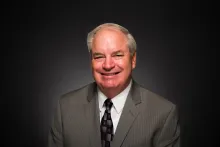
Robin Webber was born in Chicago, Illinois, in 1951, but has lived most of his life in California. He has been a part of the Church of God community since 1963. He attended Ambassador College in Pasadena from 1969-1973. He majored in theology and history.
Mr. Webber's interest remains in the study of history, socio-economics and literature. Over the years, he has offered his services to museums as a docent to share his enthusiasm and passions regarding these areas of expertise.
When time permits, he loves to go mountain biking on nearby ranch land and meet his wife as she hikes toward him.
