


Robin S Webber
This transcript was generated by AI and may contain errors. It is provided to assist those who may not be able to listen to the message.
I think many of you realize, know, that over the years, in reading our publications, various publications of the United Church of God, that I've written columns 22 years now.
The first column I wrote for many, many years was entitled, This is the Way.
And the second column that I've been writing now for nearly eight years is called, Follow Me.
I'd like to build upon those two titles today, that this is the way, and to follow me. And I want to build upon the fine foundation that Mr. Paul Schimmick gave addressing the aspect of hope, and I think you'll see how these two tie in. Let's just think about that for a moment, to be able to share, This is the Way, Isaiah 30, verse 21. And then to understand Jesus' admonition to follow me. It's the first thing that he always mentions to a disciple, and it's the last thing that he mentions to a disciple when we look at the bookends of his conversations with the Apostle Peter. That when he met Peter, he said, Follow Me. And then when he met, or at the end, when he talks to Peter at the end of the Gospel of John, with everything that has occurred, and everything that Peter was about and had to come back to, and to have restored, restored Peter, he said, Okay, follow me. But those thoughts I thought today that as each and every one of us are on the road to God's kingdom, and that kingdom lies ahead of us, and that's our great hope. And we travel that road together right now. But what perchance that one of us goes to the left, or goes to the right, and God directs us in a different venue, moves us in a different direction, and maybe in this lifetime, that it might be the last opportunity for us to witness about God the Father and Jesus Christ. And what would we tell somebody? What would we tell our fellow pilgrim? What would we tell our fellow follower of Jesus, our Lord and our Master? What would you or what would I share with them to encourage them, to anchor them in the hope of the gospel of Jesus Christ in the kingdom of God, and to bring peace to them in a very troubled world, and at times in our own personal Christian lives, a troubled existence? Well, I'd like to build upon that. Thinking about this message, and I gave it recently elsewhere, but I wanted to give it to all of you today, because I was thinking that at the end of multiple decades of ministry, what might I share with somebody to put it all down in one article, and into one column, of what God would have us to do in walking this pathway towards the kingdom of God? As Jesus says, you can follow me. So I hope you'll stay with me for a few minutes as I share some thoughts with you in a world that, well, we've read about it for years, that it might come, and it might come, and what's happening, and prophecy, etc., etc. But when it comes upon us, as Paul was mentioning with some of the thoughts that he shared with you, it becomes a whole lot more real as to what our witness will be regarding God the Father and Jesus Christ dwelling in us, that we might glorify them, and that we might be a blessing to other people. Let's begin this message, if we would. I'd like to introduce us to a very dramatic moment in the life of other followers of Jesus. Let's go right to the book of John. And in the book of John, we find followers of Jesus, and they are in a very troubled moment.
We find them in an upper loft behind a closed door. After all, their leader, their Lord, their rabbi, had been crucified, and the posse was out looking for them. So you and I might have also been behind those closed doors, and our hearts might have been troubled. And not only our knees, but our hearts might be shaking. And all of a sudden, in this moment of trouble, walks in Jesus. And join me now if you look at John 20 in verse 18. Mary Magdalene came and told the disciples that she had seen the Lord, and that He had spoken these things to her. And then the same day and evening, being the first day of the week, when the doors were shut, where the disciples were assembled for fear of the Jews. Jesus came, and He stood in the midst. And He said, and He said, peace be with you.
The first words that He uttered after His resurrection to an assembled group of His followers and disciples, that had laid down everything three and a half years before and followed Him. In the moment of despair, He offered hope, and beyond hope, He also offered peace. Peace be with you. And when He had said this, He showed them His hands and His side. And then the disciples were glad when they saw the Lord. So Jesus said to them again, notice, peace be to you. As the Father has sent me, I also send notice you.
God the Father had sent Jesus to this earth for a purpose. And Jesus was saying that it is not the end, but it's only the beginning of the next part of the story. As the Father sent me, I am now going to send you. And what will be on your lips and what will echo out of your heart and resonate to others? And He gives us the key. He says, peace be with you. Now, sometimes when God mentions something or Christ mentions something in the Bible once, that's enough. That's important. But when it's twice, but now let's go just a little bit deeper. He exits from this initial meeting, and then we pick up the thought in verse 20—excuse me a second—then we pick up the thought in verse 26.
And after eight days, His disciples were again inside, and Thomas was with them now. He had not been there in the beginning story, as we know. Now He's back with them. And Jesus came, and the door is being shut, and stood in the midst, and said, peace—notice, peace to you. Peace was on Jesus' heart. Peace was on Jesus' lips. Peace was the message that He wanted to instill in His followers for all times. Now, let's notice something. It says, when you go back up here, in verse 19, peace be with you.
Let's break that down for a moment. Peace—important, and we'll describe that—be with you. The four-letter word there is very important. What four-letter word? I didn't see what. With. W-I-T-H. Peace be with you. It was to remain. It was the peace that He offered was to stay upon us. When we look at this, there's two takeaways out of this. Number one, there was to be Jesus administering to His disciples.
There was to be a belonging, a belonging and a unity between the Master and the students, between the Lord and the followers, a belonging of the peace that He was bequeathing unto them. And secondarily, then, there was to be—are you with me? Belonging is the first word. I want you to kind of maybe jot that down if you want to. But the second word, then, is we have a custodianship. We have a stewardship of that gift of peace that God has granted us. Let's understand as we consider this belonging, this custodianship, this stewardship, what the word peace means. If we just go into the New Testament, which is written in Greek, the Greek term here means simply harmony.
The peace that God gives us is there's to be a unity. There's to be a harmony. First of all, let's break it down into pieces and then bring it back together. First of all, the peace that Christ shares with us is a harmony and a unity between God and man, our Father and we, His children. Number two, because it's only when we can have a harmony between God and ourselves that then we are able to have a harmony and or a peace between man and man, person and person.
And then only because God tends to develop matters in a small manner first until they build. And then it's only then that we can have peace between nations and nations because they've come to understand the good news of the gospel. Let's deal a little bit more with this piece, just staying in John 14 verse 26 as we lay a foundation. In John 14 and verse 26, he not only said this after he'd been resurrected.
Well, that's, you know, wow, I've been resurrected. I can say whatever I want. I'm on the other side of this mountain. I'm on the other side of this river. But let's go back to John 14. Are you with me? And let's understand. He was talking about peace on the night just before he died. Wow. He knew he was going to be nailed to a stake.
He's going to be a piece of human meat, stapled to a rough, crude piece of wood. And yet, the night before, and just hours before he was betrayed by one of his own, notice what he says here. Verse 25, these things I've spoken to you while being present with you, but the Helper, the Holy Spirit, whom the Father will send in my name, the Holy Spirit will teach you all things and bring to you remembrance all things that I say to you.
Peace. You say, what? He's about to die. And yet, this was foremost on his mind. Peace, I leave with you. My peace, my peace, I give you. Not as the world gives. It's not from around here. It's from out of here. It's not earth bound. It's heaven sent. I give to you, not as the world gives to you. Let not your heart be troubled, neither let it be afraid.
Let's keep on building for a moment on this foundation. Jesus said that my peace, I leave with you. Later on, as not only the living Word would speak these words, but as his followers, disciples, now apostles, and others would write, and the epistles would be recorded for us down to this day. It's very interesting that what was prime on the mind of the early followers is found in the introduction and also at the conclusion of many, many of the epistles. Epistles that are written by Paul, by Peter, by John, James, and also by the author of Hebrews. I just want to show an example of this for a moment. If you'll join me in Romans 1 verse 6. In Romans 1, 6. Let's go to Romans 1. Actually, let's go to Romans 1 and verse 7. To all who are in Rome—and they had not met Paul. Paul was sending this epistle out ahead of himself to let that church know that it had its roots in Pentecost back in 31 AD. He was writing to them to let them know. They'd heard a lot about Paul. They maybe read some of his writings, heard about his writings, Galatians, etc., others. He wanted to let them know what he was about as a messenger of the Gospel. Right here in the introduction, he says, to all who are in Rome, beloved of God, call to be saints, call to be holy. Notice, grace to you, and peace from God our Father and the Lord Jesus Christ. Right up front.
Sometimes people will say in our church of God, well, when did you come into the truth? We've all heard that. We've probably said that. When did you come into the truth? And so we'll sometimes give a litmus of all of our different doctrines and belief structures, and we kind of pull it out like a wallet and go, oh, did you know this? Did you know that? Did you know that? But this is what is up front. This is what God the Father sent his Son to this earth that you and I, in this age of man, and in the times of trouble that come and go, might have this, might understand this, where it says, grace to you and peace from God our Father and the Lord Jesus Christ.
Grace in the great carousel means gift, to be gift. It was a blessing. It was a Hellenistic phrase like an aloha. It was like, aloha is kind of hello and goodbye in Hawaiian. And that's how the Hellenistic community would do it. And you see peace. The peace here is in Greek, but when you understand what it meant to the first century Jew, when the disciples were hearing that for the very, very first time, they would have registered as Jews do, as they say, shalom, and or peace. It would be the first thing that they would mention to somebody. It would be the last thing. It was aloha. It was aloha. Peace. But it was more than just a hello. It was a blessing. What the Jewish community understood through all of this was simply this, that it was not wishing you a trouble-free, conflict-free life. It was a blessing designed from one person of covenant to another, that the God of peace would be alongside of you, would be there for you, would not depart from you, and would give you the strength, would give you the wisdom, would give you the encouragement to face that whichever comes your way, recognizing that the Lord is our Shepherd, we shall not want. Join me now in the book of Hebrews. In the book of Hebrews, I said it's used in many an intro in the epistles. You can look that up. But Hebrews 13 verse 25, notice, at the very end, Hebrews is an exposition of the majesty and the supreme office that God the Father has placed Jesus Christ in. It's a lawyer's argument towards what God is doing through Jesus Christ. When it is all said and done, the last verse in Hebrews says, grace be with you all. But I'm just going to give you some verses to look at real quickly if you have pencil and paper. Here you go. 1 Corinthians 1-3. 2 Corinthians 1-3. 1 Peter 1-3. Right up front. And 2 John 3. Again and again. Grace and peace. Grace and peace.
Now, let's get personal here for a moment. How is your world going right now? Paul mentioned the age of COVID that we live in, which is affecting all of us. But every day, we are as human beings, even though we are Christians and human beings. We are tugged back into this world, tugged back into our natures, tugged back into our emotions, tugged into events that maybe we were not prepared for, never thought would come our way. What level of peace are you in right now? You know, it's interesting that in Isaiah 9 verse 6, it says that one of the Messianic titles for Jesus would be that He is the Prince of Peace. And if He is the Lord of our life, and if He's ruling our hearts, and we have surrendered our hearts to Him, then we, even whatever we are going through, there should be an element of peace as we draw upon His Spirit that is within us.
The Bible says in the Beatitudes that we are to be peacemakers. Blessed are the peacemakers. And peace begins with us. That's what I want to kind of deal with you to help us get down to peace on the road that is ahead of us towards the kingdom of God. How do we do that? Didn't say the peace-hoppers. Didn't say the peace wannabes. It says that we are to be peacemakers, that it starts with us. I know a lot of us have traveled on airplanes, and we go through the rigmarole at the beginning, and a neat little one, of being advised of how to deal with the emergency-sound planes. And one other thing is that when they get to the oxygen mask, God forbid, but if there is an accident or whatever on the plane, the stewardess shows you the van, goes back and forth, and you know, will drop out of the ceiling. And what's the first thing that they tell you? They say, before anything, you put the oxygen mask on yourself. You put the oxygen mask on yourself. In other words, before you can help others. And that goes against us, because it might be an infant, it might be a spouse, it might be an older person, but it says, before you can help others, you've got to take in that oxygen yourself. In other words, in a spiritual way, we've got to be at peace. So, I want to talk about peace.
You know, in this day and age, there may be no common cure. Excuse me, there may be no cure for the common cold, but there are spiritual solutions for troubled times. The message today is simply entitled, How to be at Peace. How to be at Peace in Troubled Times. Are you ready? Got your seatbelt on? Airbags deployed? Because we are right now in a time of unanticipated turmoil around the world in our nation and in our communities. And then you put that on top of everything that we may be carrying in our own lives, marital situations, financial situations, children's situations, health situations, this situation, and you fill in the blank. So, we have to realize what's going on. So again, how to be at peace in troubled times. Let's ask what's going on down here, because right now sometimes we can be a little bit like in Star Trek, for those that remember the Star Trek series with Captain Kirk and Mr. Spock and all the rest of the space gang back in the 60s. And there would be Scotty and they'd be down on Earth or some planet and they would say, Beam me up, Scotty! Beam me up! And this phrase was not as extent then as it is now, but Enough already. And sometimes as Christians we can say, Enough already! And I'm refined. I'm ready. Beam me up! Why are we down here? What are you doing, God? What are you doing with me?
And we have this escape mechanism. What's going on? Join me if you would again. Let's go to John 17.13. John 17.13. In John 17.13, let me pick up the thought here. But now I come to you and these things I speak in the world that they may have my my joy might be fulfilled in themselves. I've given them your word and the world has hated them because they are not of the world just as I am not of the world. Now notice verse 15. Here's the clincher. I do not pray that you should take them out of the world but that you should keep them from the evil one. Christ's Prayer on that night, thinking of you and me now in 2020, prayed not to take us out of the world but to keep us in the world. And as the rest of the information gives us in this chapter that we would be sanctified by His Word, which is true, and that we might be a witness. So that's the reality. And sometimes we say, why now? Why me? But when we look at all the different covenant people down to the ages, let's just go real quickly through the Bible. When we look at the different personalities, what about Noah? Noah did not know how long he was going to be in that ark. We're looking at his story in a rearview mirror.
And sometimes we can say, well, how long is the COVID going to be? Or how long is my marital situation going to be? Or how long is my financial situation going to be? Like the Beach Boys used to sing back in the 60s, God only knows, but God is in the equation. What about the stories of Abraham and what he went through? What about David, who was on the run from Saul for years? What about Nathan, when the Word of God said, you've got to go to David. You've got to stand in front of the king, and you've got to tell him, you are that man. What about the stories of Daniel facing up to a type of the beast, Nebuchadnezzar? What about Mishael, Hanani, and Azariah standing while everybody else fell down before the idols? What about the early apostles? What about Stephen? I'm going to talk about him at the end. So what is happening to us is not unique. It happens to all the people of God, whether under the Old Covenant and or under the New Covenant. Why? Let's talk about that for a moment. Let's huddle and understand something. Simply, as I've often said over the years, can we talk? Let's all get together on this. Are you with me? And to recognize simply this, when Christ called us, when Christ called us, he never said that it would be easy, but that it would be worth it. And as Paul said, that is our hope, not the apostle Paul, our friend Paul, that it would be worth it. And remember that God is not in the process of creating trinkets, fake jewelry. He's in the process of creating a new glorified jewels that are going to be with him for all eternity. And Christ right there at his right side. Again, so much is coming into our life. What's happening here? A very basic principle to understand as disciples of Jesus, and being able to follow him, and following where he points that this is the way. God and Christ will always allow more to come into our lives than we can possibly humanly handle. What? Why? So they will see what we will put first. Hmm, interesting.
Let me share this with you for a moment, where we're going next in just a moment.
Less than two years ago, I had knee surgery. Most of you know that. It was a challenge. Some go through it better than others. I was probably on a lower scale of going through it. I was given a brand new artificial knee. Brand new? Spanking brand new. Artificial knee. I wish they'd given me some artificial intelligence, but they gave me the artificial knee. And oftentimes people ask me, well, how is your knee doing? How's that new knee doing? Are you okay? I don't know. I'm okay, but are you okay? And I said, I'm okay. It's not my knee. It's not my knee. My knee is artificial, and it's brand spanking new. It's all those muscles that I have to work with that were cut, that were torn open, that were shredded. And I'm not the first one that's gone through this. Of course, every day I've got to exercise, or my muscles contract. And by the way, I'm doing very, very well. I mean, I am blessed right now. But I can never take it for granted. If I do not exercise every day and get on my 20 speed and go up the mountains, go up the hills, my leg tends to contract, and I can feel it. So I was given internally something brand new. But I've got a partnership and do my part for the rest of my life in making sure that I get my exercise. I want you to think about it this way. You know, there's a prophecy in Ezekiel talking about the New Covenant of what God would do with us. In Ezekiel 36, 25, through 27, it says that I'm going to give you a new spirit. I'm going to give you a new mind, and I'm going to give you a new heart. That's wonderful! That's fantastic! Wow! Thank you, God!
But if we're going to walk in the spirit, if we're going to run valiantly with hope in the spirit, we've got to exercise that day by day. Got to exercise that day by day. It doesn't just happen because, brother, I'm going to share something with you. And we have an audience, and some in this audience I may never speak to again. They're joining us today, or something could happen to me tonight. But to recognize, remember the Abundition in Jeremiah 12 and verse 5, and it is simply this, if we cannot run now with the footmen, how then can we ever hope to run with the horsemen? We're in training. We're in training. Let's talk about that. I'm going to give you four basic spiritual principles. I'm going to go boom, boom, boom, boom. Footsteps. You know, three feet make a yard. These are, and we're going to go more than a yard because we're headed for the kingdom of God. Okay? And I'm going to give you four basic spiritual principles. And in all the many messages that I've given to you over 40 years, this could be one of the most important. It's that important that I want to share this with you. So let's talk about that for a moment. Four spiritual principles to develop spiritual muscle. These are specific takeaways that you can begin to put in your life, even as I'm speaking to you right now. Number one. Number one is develop the spiritual muscle. The spiritual muscle of being still. The spiritual muscle of being still. What? Me? No? Everything is going on? But I want to do this, and I've got to do this, and I've got to do that. No. The spiritual muscle of being still. In our American mind, being still is like death. Being still has more of a—well, it's godly to begin with—but was more relevant in Asian philosophies. And to remember that Christianity began in Judea and spread around the world. So you have to know the audience that's being talked about at the time. In Psalms 46 and verse 10, join me in understanding still in Psalms 46 and verse 10.
In Psalms 46 and verse 10, God's encouragement and admonition—he's our coach—and he says this, Be still and know that I am God, and I will be exalted above all the nations, even when doesn't seem like it's going to happen. Be still. The Lord of hosts is with us. The God of Jacob is our refuge. Being still and knowing that God is God—you can't know God. You can't know God. Oh, say, well, I've known God since I was a kid. But to know God in the moment, to know Christ in the moment, means you have to be still. You have to go back to that initial baptismal moment in your life when you surrendered the kingdom of self. You rendered your kingdom null and void, no longer existing, and that Jesus Christ was going to be your Lord and your Master and was going to rule your heart through the Spirit of the Father and of the Son. And all other gods, including us, the little God, really interested very quickly when we had the chalk and kim boree over, our neighbors down here in Willamar, they come out of an Asian country. They come out of Cambodia, of where there are many statues, many monuments to Buddha and to other gods, because there's different Asiatic religions there. And there's this God, that God, everywhere a God-God. And they had a different scenario to bring into their life that when they accepted Christ as their Lord and their Master, they had to put away all these, what we call these little gods, all these statues that were 500, 800,000 years old, and they came to the light that they were going to worship the great God, the only God, and his Son. It's kind of different than what you and I are faced with in a Judeo-Christian society, or at least was. But there's one other God that has to come off the altar, has to be pushed off the altar of everyday existence. That's me. That's you. Mm-hmm. Because at times we can be a God to ourselves. We like making our own rules, making happen everything in our own times. Join me if you would in Habakkuk 2. In Habakkuk 2, and if you don't know where Habakkuk is, it's on page 1082 in my Bible. Micah Nahum Habakkuk. I'm going to let you get a moment to go there. Let's just look at this. Habakkuk 2 in verse 20. But the Lord is in his holy temple. Let all the earth keep silence, silence before him, to be quiet in his presence, to come to a standstill. When you know that the Lord is your shepherd, and when you know that our father above knows the sparrow that falls from the tree and lights to the ground, it is only then, and in that faith, and in that understanding, and in that understanding, even when the walls are closing in on us, that God can begin to act in our lives. In Ecclesiastes 3 in verse 7, you can jot that down. I'll just allude to it. It's very famous passages about a time for this and a time for that. And again, remembering we that are baby boomers back to the 60s when the rock folk group, the bird sang turn, turn, turn. It's to recognize, maybe you've never noticed that. In Ecclesiastes 3 in verse 7, one of the seasons of life is to be silent. It is to be silent before you speak. There's a time to be silent, and there's a time to speak.
That's really difficult when you understand how our mind works. This computer up here with all of these words and all of these thoughts going on and just always going on. You know, I'm sure we've all been in a conversation before where you said, you're not listening to me. You're thinking about what you want to say. So you know, and Susan is upstairs guilty. Okay, we're all guilty because we've got to bring into captivity this computer of ours, which is going lickety-split, to be able to receive the 150 to 200 words that are coming at us. Can we be so filled with self that we are not hearing God and hearing His messages to us because we haven't turned off this computer in the back of our mind? It's only when we become still that we can begin to glorify God.
Come still so that we can measure our words. To be still, even in the moment of panic. You know, when you think of a theater, that famous thought or that famous, we all hear about where somebody shouts fire in a crowded theater, the pandemonium that can occur. God has not called us to call out fire. He's called us to be at peace. And that the peace that God has given us can be the peace that we and the hope that Paul spoke about can be transmitted to others. Let me just go to Psalm 62 and verse 5 to plant this in you to help you develop the muscle of being still. Psalm 62 and verse 5, my soul waits silently for God alone. Silently to be still. For my—and Paul spoke about in his sermon about expectation—for my expectation is from him. There's nothing lonelier in this world than a Christian that knows God but lives without him, that doesn't have expectations, that doesn't really believe in what God tells us to do.
To wait silently. He is my rock, my salvation. He is my defense. I shall not be moved. In God, my salvation and my glory. The rock of my strength and my refuge is in God. Trust in Him all times, you people. Pour out your heart before Him. It is God who is our refuge.
Standing still. Are you with me? Standing still is not for weenies.
Standing still is not for pushovers. Standing still and watching God work for us takes incredible spiritual muscle. But it is only then that we wait on the Lord, that we give Him honor, that we give Him glory, and His faith and His peace—the peace of the Prince of Peace that will one day expand all around this world—begins to expand in us. Point number one. Spiritual muscle. Be still. Point number two. Develop the spiritual muscle of solitude. Develop the spiritual muscle of solitude in heart, in mind, and in soul.
We live in a world that is restless. We live in a world that does not stop. We live in a world that is coming at us 24-7. I remember back when I was a kid that the Beatles came out with a song called Eight Days a Week—not seven, eight—it just never stops. Never, never, never stops.
We've got to know how to exercise this spiritual muscle of solitude. Allow me to share something with all the the bads that is out there that Paul spoke about and everything coming at us. There's two things that I want to encourage all of us to think about. This is a specific, specific action item that you can take away and begin using right now. Except don't turn me off, okay? Right now. We talk about fasting. We fast on the Day of Atonement. We fast on other times when occasion can give to us. Here's what I want to share with you. We need to fast from this world fast. We need to fast from this world, and we need to also fast from the news. I didn't say give up on the news, but we've got to change our diet of news. Because Satan above would like the people of God to become so congested, as Paul was mentioning, with what is bad and what is wrong. We need to recognize that. But I found it myself at times where you're just listening and listening, and it's the same story just with another reporter enough already. Pull the wire. I didn't say be an ostrich. I didn't say put your head in the ground because when you do that, expose to something else. We need to be wise as serpent, harmless as doves. We do need to watch and pray, but we need to watch out how much negativity is coming in us, into us at this time. I want to share a thought with you very quickly. Christ sent us the example. He said, No, he is Jesus being the word of old, and the one that spoke to Israel said, This is the way. Walk you in it. Later he would say, Follow me. One thing that Jesus did—he was the son of God, but he is the son of man—he could wear down. When you think about it, the number of times that Jesus went into solitude—and Mark 1.35, just here, me there very quickly, Mark 1.35. It tells us this. Now, in the morning, having risen a long while, before daylight, he went out and he departed to a solitary place, and there he prayed. He connected with God, away from everybody else. Even though he was sent for everybody, he needed to have that solitude time. More than ever, with everything coming at us, we need to carve out solitude in our lives. We need to do that. Very, very important. In John 7, if you want to jot that down, John 7, 8-10, it talks about a journey that he took up to the feast by himself. The disciples were elsewhere, which really tells you from where he was to going to Jerusalem. It was about four or five days where he could get himself together before he went into Jerusalem. There's another verse I'd like to share with you, Matthew 6, verse 31, where it says, he went to a quiet place. Then in Luke 5 and verse 16, share me there. That's a good one to look at. Luke 5.16.
Luke 5.16.
Notice what it says here. So he himself, here's the K word, often, often withdrew into the wilderness and craved.
Dear friends, any encouragement that I can give you moving forward is that all of us at times need the wilderness experience. What I call the wilderness experience. The wilderness experience oftentimes is the spiritual gymnasium of God to get in the shape, away from people, away from the news. It's the spiritual gymnasium of God that he has sent many to. Jesus went into the wilderness. You and I know that. Moses went into the wilderness. The children of Israel were in the wilderness for 40 years to have Egypt sandblasted off of them. Elijah was in the wilderness. The apostle Paul was also in the wilderness, most likely having direct communion with Jesus Christ and understanding the extent and the expansion of the gospel to all of mankind and not just one group.
We have to carve out wilderness. I'm going to be really, really frank. I'm your friend, okay? This is Robin speaking. If I can give you any encouragement, is that be a committee of one as God's child and Jesus' disciple, that more than ever that you carve out wilderness in your life. Time away, time alone, time to yourself so that you might be able to hear the voice of God. Remember Elijah's story that the voice of God was not in the earthquake. It wasn't in the storm. It wasn't in the wind. It was in a still, small voice.
If the thunder of the world is shaking us, if the roar of self is in us and we're not still, we will not hear the voice of God. It will not give us guidance towards a path forward. It's really that important. It's only when we're alone, like Jesus, our example, and the covenant people of old, that we can hear the voice of God. Be still.
At times, be alone. It is the key to salvation. But it recognizes, as God calls us in the wilderness, we're not hermits. We're not monks.
The spiritual gymnasium of the wilderness prepares us to re-engage, re-engage with our God, with our spouses, with our families, with our congregations, with the body of Christ, and with the world. Because our goal and role is not only to glorify God, but as we do, is to be a witness to others. That there's a calm and that there's a peace in us. That's not from around here, as Jesus said. Let's go to point number three. Okay? Point number three.
Develop the spiritual muscle of abiding faith in God. Abiding faith. You know, we live in a world where things are changing. All you have to do is go to a computer store, and you know how computers, technology, are changing. It's almost designed obsolescence. There's another discovery, and the world is changing, changing, changing, changing. We've seen, apart from the computer stores, society is changing. Culture is changing all around us right now. Please understand that. Please understand that. We are in times that America has not experienced since the Civil War. There is a challenge, and as people of covenant, as children of the Father, as followers of Jesus, we've got to have that peace at the center. We've got to know what we're about and be about doing it. And that's why it's important that we have the spiritual muscle of abiding faith. As everything in the world is changing, I remember as a young boy when I was 11 or 12, I heard a voice over the radio when things were changing back in the 60s, and there's this strong, powerful voice saying, there are absolutes. In this world of change, there are absolutes. Let me just share a few. Number one, I'm going to give you some real quick verses. I'm actually going to send all these notes out to you anyway, so take it down if you want to. Isaiah 46, 9 through 10, where God says, Behold, I declare the beginning from the end and the end from the beginning, and what I plan to do, I will do. It's going to happen. I am coming back. This is absolute. God sees the future already there and is waiting to meet us there. His plan is there. Christ is there. He sees you in His picture as if it already is. He sees you in that family. He's going to seal the deal of your citizenship in heaven at the resurrection.
That's an absolute. That is the rock. In a world that is melting and evaporating away in its morals and its culture, there is the ultimate culture of the kingdom of God, where there is a sovereign, where there are laws, where there is territory, and where you and I are privileged to be citizens of that kingdom. 2. Malachi 3.6. God says, right before we go into the New Testament, Malachi says, by the way, I change not. I change not. I change not. You know, when there are earthquakes around, you kind of want to hold on to something firm, something that you know that is solid, something that stands the test of time. God says, I change not. Hebrews 13, 7-8, if you want to jot that down, says, Jesus Christ, the same yesterday, today, and forever.
And when our boots are shaking, when our knees are shaking, when our hearts get a little wiggly, Jesus Christ, the Son of Man, now the glorified Son of God at His right hand, says, Father, I've been there. I know what they're going through. My knees were shaking as the Son of Man, but because I was the Son of God, my heart was firm, and I did Your will to the very, very end.
James 1, verse 17. Speaking of God the Father, in whom there is no variableness, neither is there a shadow of turning. Let's go to 1 Peter 5. Let's go to 1 Peter 5.
1 Peter 5, and let's notice verse 7. Verse 7.
Well, I like verse 6. Therefore humble yourselves under the mighty hand of God, that He may exalt you in due time. Remember that exaltation that was spoken about? Be still, know that I am God, and I will exalt myself above the nations. He's not only dealing with nations, He's dealing with you and me. He loves us. How do we know that He loves us? Because He gave a son for us. That's where it begins and ends, is why He loves us. Sometimes it was, how do I know that God loves me? And He says, don't you know, don't you remember what I did and what He did on that altar of Gokathun? I let my son die. My son is my love, personified. Then it says, casting all your cares upon Him, for He cares for you.
Point number four, quickly. Develop the spiritual muscle of moving forward. Develop the spiritual muscle of moving forward. Yes, there's a time to go to the wilderness. But there's also a time to come out into the world, to make a difference in community. We were not called to simply be a depository of truth, of understanding, of Greek, of Hebrew. I do this, I do that. And we can talk about all of our different distinctions in the revelation that God has given us, and thank God that He has given those distinctions.
But the most important distinction, I think, that we need to have is the hope that Paul spoke about and the peace that God wants us to embrace, internalize, and spread to others. It's very interesting. I mentioned Stephen earlier. You talk about a time of trouble. Here was a Hellenistic Jew named Stephen, and he's dragged into the Sanhedrin. And as we realize, he knew he was going to be drilled and grilled, and he knew what they wanted to do to him.
And what happened at the end of that was, and it's actually in Acts 6, verse 15, if you want to jot that down, it says that they looked upon him, these people that were angry, that were in a riot mode. Not a protest mode, but a riot mode, a takedown mode.
And they looked upon him, and it says that he had the face of an angel. There's something different about him, not from around here. There was that peace that passeth all understanding, that it just, he was saturated with it, and it emanated from his facial features, maybe from his gestures, as a fragrance upon all of them. And they stood still, and there was something different about him.
Yeah, the wilderness and community go hand in hand, and to be still and to be on the move, are like gloves, they go hand in hand. Remember in Exodus 14, you can just jot it down, look it up yourself. In Exodus 14, remember, when they're at the Red Sea, their backs are against the Red Sea, and you know, what are we doing here? And Moses said, tell the people what? To stand still and see the salvation of the Lord.
Maybe right now you're just like an energizer buddy of despair and disappointment and frustration, and your backs are up against the wall, regarding something that's happening inside of you, or your health, or your job, or your marriage, or dealing with your adult children, dealing with your neighbors. Can I make a comment? Dealing with somebody that is in your fellowship or in your congregation? Stand still and know that God is God. Get off your own altar, get off your own pedestal, and let him rule your heart. And you watch the difference. Because remember the Red Sea? What happened? In one moment, God said, tell them to stand still, and then he says, basically, what are you doing there? Get the people moving. I'm going to do what I can do. I'm going to open up the door of the Red Sea, but now get the people moving. The combination of spiritual handiwork is simply this. To be still, but also to be listening for that voice of God. And then you get moving in faith and hope and peace. And it's not always going to be an easy walk, humanly speaking. But when you do, you're giving glory to God, and you're going to be a blessing to other people. And they're going to know that, in a sense, that you have that peace at the center. You have that inner calm, just like Stephen, in the very, very pressing moment.
First angle, 1748, quickly. David is down in the valley of Elah with Goliath. He's picked up his five stones. He says, the battle is the Lord's. And what did we find David doing? It says, and it says here that he ran. Other translations said that he heard. He ran towards the giant. He didn't run away. He ran towards, because he recognized that he was not in that valley alone, and he had committed himself. God bless him. He's our example. And a forebearer in that sense of Jesus.
And he ran towards his giant. But he had to be still for a moment, recognize it was in his battle. He had to give it to God. The battle is yours. And he told the giant that, you're not coming down because of me, but you're coming down because the one that I worship, I get to find. I want to conclude today. Let's back up just a second. How can we be at peace in troubled times? I'm really encouraging you to put into your life now. I may never have another opportunity to talk to this unique audience that's on this Zoom today. So let's remember how to have peace in troubled times. Number one, develop the spiritual muscle of being still. Are you going to join me in that? I've got a lot of homework to do on that. Not quite there yet. I've not totally apprehended, but that's what I want to do for our Father above and for his Christ. Number two, develop the spiritual muscle of solitude. Solitude. Move yourself out so that God can move in. Number three, develop the spiritual muscle of abiding faith in God. At number four, develop the spiritual muscle of God by moving forward. I want to share one last thought. Revelation 1. Join me there. We look at John's writings. That was then, and what about now? That's why God gives us the book of Revelation. Sometimes the trouble is coming up. If we cannot run with the footman, how are we going to run with the horseman? We can go into Revelation. If we don't look at the beginning of the book, we're not going to understand what's happening in Revelation 6 and 7 with the seals and everything happening, and the woes, the plagues, etc. Notice what it says here in Revelation 1 verse 12. Then I turn to the voice that spoke in verse 12, and having turned, I saw seven golden lampstands. Notice this. Remember what it said in John, that he came into the midst of the disciples.
Here we go again. In the midst of the seven lampstands, one like the Son of Man, clothed with the garment down to the feet, and girded about his chest with the golden band. It talks about his qualities. It talks about what he is all about. Then it says in verse 16, he had in his right hand seven stars out of his mouth, when a sharp two-edged sword, and his countenance was like the sun shining in its strength. Those stars in his hand was that he has absolute control, absolute power, and that he is the light. He has the strength. And when I saw him, my fellow to speed is dead. But he laid his right hand on me, saying, Don't be afraid. The same words that he said in John 16.33, Don't worry. Don't be troubled. I have overcome the world. Now he said that before he died. This is now after he died. He's resurrected, and he's ascendant. And as Mr. Helge brought out a few weeks ago, point number four, he is now exalted at the right hand of God. And I fell his feet, and he laid his right hand on me, saying to me, Don't be afraid. I am the first and the last. I am that Alpha and Omega. And I am he who lives and was dead, and behold, I am alive forever. And I have the keys of Hades and of death. He is all in all. He owns both worlds. Life and death are seamless to him who has existed in both. And that's exactly how he, as the word, and the one that we now know as the Father, planned all along. See, that's in the beginning of Revelation. If you don't see that Christ is a fellow passenger with us as prophetic times occur, and or is our captain in the current pilgrimage that we are in, and we don't know who is with us and loves us so much that he died for us, we're going to get lost from the couple times come.
Allow me to share one last thought with you, then, may I?
Just want to read this to you. I have it on my desk because sometimes I need to be reminded of the peace of God. And I have it right on my desk as I do some of the other sayings that I've shared with you over the years or in my writings. But I have to say that this is probably my favorite and something that I'd like to share with you. Like I said, this is a very unique audience, and I mean as a follower of Jesus, your fellow disciple on the road to the kingdom, might not have another opportunity to share this with you. So allow this, then, to be my last word to you on this day that you'll remember and be encouraged and to know that you're never alone. It's called the hand of God. It's from King George VI, the New Year broadcast, nearly 70 or 80 years ago. Just listen to the words and allow them to penetrate your heart. I said to a man who stood at the gate of the year, Give me a light that I may tread safely into the unknown. And he replied, Go out into the darkness and put your hand into the hand of God. That shall be better than a light and safer than a known way. So I went forth, and finding the hand of God trod gladly into that night. And he led me toward the hills in the breaking of day in the lone east. So heart be still. God knows. His will is best. The stretch of years which winds ahead, so dim to our imperfect vision, is clear to God. Our fears are premature, and in Him time hath full provision. Whether you're in Nevada, Arizona, California, these words today I would leave with you. The same words that Jesus left in part, the disciples left, the apostles left in their time, the message of Revelation, and the words that I'd like to share with you at the end. May the grace of God and may the peace of God, a peace that surpasseth all understanding, be yours now and always.
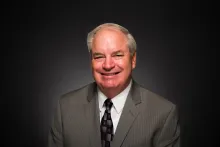
Robin Webber was born in Chicago, Illinois, in 1951, but has lived most of his life in California. He has been a part of the Church of God community since 1963. He attended Ambassador College in Pasadena from 1969-1973. He majored in theology and history.
Mr. Webber's interest remains in the study of history, socio-economics and literature. Over the years, he has offered his services to museums as a docent to share his enthusiasm and passions regarding these areas of expertise.
When time permits, he loves to go mountain biking on nearby ranch land and meet his wife as she hikes toward him.
