
Robin S Webber
This transcript was generated by AI and may contain errors. It is provided to assist those who may not be able to listen to the message.
Well, it certainly is an honor to be able to address the Redlands congregation on this Sabbath before we commemorate our Lord's death at the New Testament Passover. I am reminded of a phrase that comes out of Shakespeare's Macbeth, written nearly 400 years ago, maybe a little bit more than that, but from Macbeth comes a phrase that says that there was nothing in this life that became him as the leaving of it. And it is to that that I would like to speak today as we consider how Jesus Christ left this physical life on the last day thereof. So often, when we come to the Passover service towards the end, we move through the words of Jesus Christ found in John 13, 14, 15, 16, and 17, and sometimes make a comment that these were, in a sense, the last words of instruction that Christ gave before he died. But really, when one looks at the Bible, we understand that there are a whole other set of instructions that are given to you and to me as we come to covenant with God at the New Testament Passover. These are what you might want to call, if you want to jot down a note, these are the words of the crucified existence. The words of the crucified existence. Not only that Jesus Christ was crucified, but to remember Paul's admonition in the book of Galatians that likewise we are crucified. And there are echoes that come from Golgotha to remind us of the life that we confirm when we come to the New Testament Passover. When one goes to Scripture, we find that through the Gospels that Jesus Christ, on that day of days, as he was being crucified on Golgotha, actually spoke seven different phrases. And it is to that which I would speak today, these echoes that come down to us today, as to the crucified life. Because I want you to think about it as we come up to the New Testament Passover, we are not only commemorating the crucified life of Jesus Christ, but we are before his father, and before him saying that we continue now in that spirit and in that vein. That is Jesus said to follow me, thus we follow him. Join me for a moment, if you will. Let's turn to 1 Corinthians. 1 Corinthians. And let's notice the instruction that is given to us through the Apostle Paul.
1 Corinthians. And let's turn to chapter 11.
And we notice in verse 28. But let a man examine himself, and so let him eat of the bread and drink of the cup.
I believe that as we go through these seven last sayings of Jesus, that we're uttered on that cross on Golgotha, that allows you and me to examine ourselves as to whether or not we be in the faith, as to whether or not we stand in the faith, whether or not you and I are committed to live that same crucified life as our Lord and Savior, Jesus Christ, did. I think you will come to see that the last words of Christ should be our first response to life as it comes our way. The words are before us. All we have to do is turn to them. First point, Luke 23, verse 34. The first utterance that Jesus made on the cross. Father, forgive them, for they do not know what they do. Join me, if you will. Let's open up our Bibles on the Sabbath day and turn with me to the Gospel of Luke, Luke 23 and verse 34. We come to understand, as we look at the context, which is basically from verse 32 through verse 38, what is occurring here. Let's read it together. There were also two other criminals led with him to be put to death. And when they had come to the place called Calvary, same as Golgotha, there they crucified him. And the criminals, one on the right hand, the other on the left. Now crucifixion was the most hideous, ignominious death that could be devised by man. My point is not to go inch by inch on what crucifixion was. I think we are, to a degree, versed in that. But let's just put it bluntly. Just imagine being nailed to a piece of wood to die. We'll leave it at that for now. We may build upon it later. Other criminals were being crucified. And then Jesus said, Father, forgive them, for they do not know what they do. And then they divided His garments and cast lots. And the people stood looking on, but even the rulers with them sneered, saying, He saved others, let Him save Himself. If He is the Christ, the Chosen of God. And then the Gentile soldiers, the Romans, also mocked Him, coming and offering Him sour wine. And saying, If you are the King of the Jews, save yourself. This is the context. This is the environment in which Jesus came forth the first words that were out of His mouth that are recorded. Father, forgive them, for they do not know what they do.
It is essential, as followers of His way, to grasp that the opening chapter of Christ's last moments was about forgiveness. These words remind and refresh us as we come to renew the covenant that forgiveness and mercy are the first steps towards eternal joy and happiness and well-being.
In Christianity, forgiveness comes first. Forgiveness comes first. Not only in experiencing it, not only in receiving it, but in allowing God to create an environment in us, a heart in us that is prepared and prepped and ready to forgive others. It is the gateway for everything else that God desires to put in place into us and to flow from us. It is the gateway. It is the great door by which every other gift of God is enabled.
Let's understand that when we read these verses that Jesus Christ did not only turn the other cheek.
When we see what He is speaking on from the cross, and remember as He is saying this, He is literally nailed to wood.
Having been beaten all the night before and getting all of this incredible abuse coming His way, He not only turned the cheek. Just understand something. Are you with me? He changed the entire equation. He changed the entire equation. A different way of responding. Join me if you would to Psalm 86 and verse 5. Psalm 86 verse 5.
Jesus was God in the flesh. If you ever wondered what God would be like walking on all twos, Jesus Christ is the answer.
How would God act? How would God respond? Psalm 86 verse 5. Notice what it says here. For you, Lord, are good, and you are ready to forgive. There is always that readiness. There is always that environment. There is always that framework that is out front and forward to forgive. It does not necessarily mean that forgiveness is granted at that moment. Forgiveness is not offered to those that have not yet repented. But the whole heart of a follower of Jesus Christ is leaning forward, poised, prepared, ready in spirit, ready in mind, ready to emulate the example of Jesus Christ when it comes to forgiveness.
Give ear, O Lord, to my prayer, verse 6, and attend to the voice of my supplications.
It is in this first utterance that Jesus reflects the greatness of God. Let's remember something, dear brethren, here in Redlands. Simply put, forgiveness is what makes God God. Forgiveness is what makes God God. It is at the forefront of his way of thinking.
Most importantly, consider this. As we come up to partake of the bread and the wine next Thursday evening, forgiveness is his initiative. Forgiveness begins by God's grace. It is his initiative stemming from him. He starts it all on the roll. While we were yet in sin and did not even know what we were doing, God was poised and prepared and put a plan into motion through his Son that you and I might be redeemed, that you and I might be accepted, that you and I might be approved, that those caribs might be gone away from the gates of Eden, and that we might be able to return to that tree of life and have God walking and talking in our midst. God prepared and planned all of that from the beginning, as it says that from the very foundation of the world that the Lamb of God was prepared to be sacrificed. If forgiveness is at the tip of our heart, it will be at the tip of our tongue. Forgiveness was at the tip of Christ's heart, even in the most incredible, dire, awful moment, physically speaking, of his life. He was prepared to forgive.
Here's what I'd like you to all understand, and for me to reflect on, because I'm just talking to myself up here, as I also prepare for the Passover. Ultimately, forgiving is not something that you do and you reach for. It's something that you are. It is something that we grow into, becoming a forgiving person and poised to forgive. Not as our last thought, not as our last resort, when everything else has not worked, but it is our first thought. It is our way of life. Forgiving is hard to do, humanly speaking. Sometimes, because we have not forgiven others, even when they've asked for forgiveness, but we hold them down, we are dead men walking. You and I are perhaps in that category, and we know people in that category that go through life like living zombies, because they have not forgiven.
It's something for us to really consider as we come up to the Passover. That if we have ought against a brother, that this is the time that we consider this. Two things I'd like to deal with, just in this first point. Father, forgive them. Point number one is, how was Christ able to forgive? How was Christ able to forgive? Point number one, because you say, wow, I want to be like Christ. Well then, how did He forgive? And thus, how do I forgive? Number one, He didn't take them personally, but recognized their humanity and Satan's deception. How do you not take somebody personally when they're spitting at you, when they're sneering at you, when they've driven nails in your hand, when they've beaten you all the night before, and yet that's exactly where Jesus Christ was.
He recognized their humanity, Satan's deception. In a sense, if you read this verse, it kind of goes with this feeling, Father, forgive them. For if they really knew what they were doing, they wouldn't do it.
As we sit here today on March 31st, 2012, I've got news for you. The news is this. The world hasn't changed just in the last 10 or 20 or 30 years. You know, sometimes people say, well, you know, I remember what the 50s were like. I remember what the 40s were like. Oh, if we could only go back then. I've made that. I talked about that last week in Los Angeles.
Having grown up with Leave It to Beaver back in the 50s. And that whole genre and that whole era, some of you that are older, remember what it was like before World War II. And you say, oh, if only we could go back. And we could whistle underneath the apple tree. And we could do this, and we could do that.
Brethren, here's the point. Are you with me? And are you ready to hear this? The world has been dysfunctional since Eden. We just like to give it more credit because of where we grew. The world's been dysfunctional. The world has been cut off from God, rejected God from the very beginning. Then we get surprised. We get a stonyed, astonished. The one that was the Word, the one that later on became Jesus Christ, the one that they rejected at Eden, the one that had come down and walked with Adam and Eve, understood man's condition and their position apart from God.
Even in that, Christ does not excuse sin. Christ never excuses sin but recognizes its source and its results. Point number two. Christ teaches us from the cross. Remember where He is. He's not behind a pulpit. He's not behind wood. He's stuck to wood by nails. Christ teaches us from the cross, Father, forgive them. He didn't say, I forgive. He put it on the Father. He said, Father, forgive them. By Christ, you and I hear me, please, need to internalize and embrace it as God's function to sort it out.
Oh, now you're going meddling. I thought it was my function. I'm the one that was injured. I'm the one that's upset. I'm the one that's being proverbially nailed to the cross. Christ on the cross said, Father. He pointed to the Father. He realized that only people had to be accepted and approved by the Father. It would be by Him, but it's the Father's business to forgive. As we will come at the end of this message to recognize, are you with me? As you and I have been forgiven. What's good for the goose is good for the gander.
Just go to point number two. Luke 23 verse 43. Join me there, if you would. Luke 23 verse 43. I'll turn there, and you turn with me. Let's do it together as a congregation. Let's notice the next phrase. Luke 23 verse 43. The second thing that Jesus said. He's speaking at that time to the one that came to be known as the good thief. And Jesus said to him, the one that came known to humanity as the good thief, Assuredly I say today, you will be with me in paradise. Now, let's talk about this for a moment, friends.
This is a conversation between two dying men. So often, we have conversation with those that are dying. I want you to put yourself in this. These are both men that are dying, that are raised a little bit above the rest of the audience. And you know what they're having? They're having a conversation. And it's being led by Jesus Christ. Verse 39. Then one of the criminals who were hanged blasted him, saying, If you are the Christ, save yourself and us.
But the other said, answering, rebuking, saying, Do not, don't you even fear God, seeing you are under the same condemnation. And we, indeed, justly, for we receive the due reward of our deeds, but this man has done nothing wrong. And then he said to Jesus, Lord, remember me when you come into your kingdom. And Jesus said, Whom surely I say to you today, you will be with me in paradise. How do we learn from this? And how do we continue in the crucified life?
The immediacy of God's plan was overwhelmingly present in the mind of the heart of Jesus Christ, even as his flesh was dying. His kingdom was more real than what was really happening to him in time and in space. He could reach it, he could touch it because he lived it, and it was a part of him. In his mind, it was the next step in life's journey to Jesus Christ and to followers of Jesus Christ, death is not a ditch. Do you hear me? Death is not a ditch. It's but a springboard. It's but a passageway, ultimately, to eternity.
And he wanted those around him to believe it as well. I suggest we don't have the whole conversation, only what is recorded. I suggest that man, whatever his name was, we don't have the entire conversation, but something fascinating was happening here with this individual. Jesus wanted those around him to believe it as well and extended that conviction and that invitation to all of those that would hear and accept who he was.
What else do we learn from this example? This sequence within the story of Jesus' death should encourage us that some of the most rewarding moments and lasting relationships are yet to be. Sometimes some of us are maybe 60, 70, 80, and we think that our life is spent. We think that it's all over.
We think that our story is written. We don't think that there's anything else to add. Here we are, 31 AD, and here are three men that are on a hill, and two men are having this conversation. This guy's life had been, well, I'll let you fill in the word. I don't know what his background was. We don't know exactly what he did, but we know that he was a rascal. We know that he was up there for something that he did that was wrong, that brought the death penalty.
He could have said it's all over. And yet it is at that moment that the most exciting moment of his life came. Can you and I imagine just sitting down and having a conversation with Jesus Christ? And yet here are two men that are nailed to pieces of wood, and they are having a conversation, and they are talking. What did Christ do with this individual? He shot it down and then think what we're going to do in the crucified existence. He offered this thief dignity when he had no dignity given to him in this life.
He offered him words of perhaps exhortation, as we heard from Mr. Marchbanks, when every bell just sneered at him. Jesus chose to touch the untouchable, to love the unlovable, to forgive the unforgivable. And this thief, the one that's called ultimately the good thief, represents each and every one of us.
Because the death penalty spiritually was upon us. We had no acceptance. We had no approval. And yet the words of Christ come out of the Bible. And that when we understand who he is, or begin that understanding, we are accepted, we are approved. And just as much as that, man, I'm not dealing with the doctrinal aspects of today of what it means assuredly, I say unto you. Because when you come to understand that, that's a Jewish idiom of solemnity.
It's not talking about today, you and I understand that. But he said, assuredly I say unto you today. Drumroll! That's what it means. Assuredly I say unto you, catch this buddy, catch this fellow prisoner of Rome. No matter what you're going through today, as you're being torn apart emotionally, mentally, and physically, you will see me again. And acceptance and approval can be yours. That thief on the cross represents each and every one of us and what Christ would say to us. At the end of the day, the second message of Christ on the cross is the reality that God's kingdom must be embedded in us where man and trial cannot reach.
That we have it tucked away so much in our lives that it is real. That's what you're saying is you come to Passover and you partake of the bread and you partake of that wine. That you are saying to God Almighty, I understand assuredly that you have said unto me today that I will have that opportunity to experience you and Christ fully and be in your presence one day in that kingdom. And no matter what I'm going to go through the rest of this year, spiritually, emotionally, physically, or mentally, I'm going to stay the course.
I am going to be yours as you are mine. And we are going to do this together. Number three. John 19. Let's turn there. John 19. John 19, verse 26. It is here in John 19, verse 26. When Jesus therefore saw his mother and the disciple, whom he loved, standing by, speaking of John, he said to his mother, Woman, behold your son.
And then he said to the disciple, Behold your mother. And from that hour the disciple took her to his own home. What do we learn from this? As we continue to move forward in what we might call the crucified life. Simply this. Christ looked down from his position and saw his followers as a family and gives us responsibility to take care of one another. We are a family. As we put on Christ, our spiritual identity must move beyond our physical roots and where we have been, but now where we are headed.
Very important. Join me if you would for a moment, 1 Corinthians 10. 1 Corinthians 10 verse 16. The cup of blessing, which we bless, is it not the communion of the blood of Christ? The bread which we break, is it not the communion of the body of Christ? And though we, for we though many, are one bread and one body, for we are all partakers of that one bread. When you and I come together, at the New Testament Passover, and when you and I partake of that bread, which represents the spirit of experience of Jesus Christ, we are saying we want to experience the words that He also spoke from the cross.
He was crucified. His life was given. We now renew that at Passover that we too want to exist within that crucified life and experience it and exhibit it. And therefore, when we partake of the bread and partake of it, while the bread is one, it represents all of us becoming members of that body of Christ and exhibiting the same care towards one another as Jesus mentioned to John regarding his mother. The message of the cross reminds us that it is not our job to choose God's family, but to accept them. You know, I'm looking around here. We have people from the high desert. We have people from the low desert. We have people from the mid desert.
We have people from no desert. And we have people that have been deserted. Why are we here? There's only one thing that draws us together, friends. That's because the call of the Father. And because of our desire that when Jesus Christ said to follow me, we followed Him no matter where it took us, even to New Jersey Street in Rutlands. We would not have known one another otherwise, but God has said, This is my body. And if I am the head, then you are the hands, you are the feet, and you are the tongue, to do my work and to speak my words, one to another. As Jesus spoke to John about Mary and said, Behold one another and now take care of one another.
As we partake of that bread on that evening, we are saying that we are family. As they say in France, Nous sommes une famille. We are family. It's not our job to choose God's family. It's our job to accept them. It's not our job to look over the door and say, Who's God calling now? Look at that one. Never saw anything like that in church. Where did you start? On the journey. How good did you look spiritually?
So often we forget that salvation is about God calling sinners. God calling people out of the world and beginning to groom them spiritually and in every aspect of their life. It's not where you've started, it's where you're going. It's looking at the baggage, it's looking at the ticket. And the ticket says, the kingdom of God. This crucified life and this crucified existence has a lot to say here. And Jesus was sharing all of this with us as he is nailed to a piece of wood. Which leads us to number four, Matthew 27, verse 46. We'll pick it up here a little bit quicker, or we'll make San Diego wait. Matthew 27, verse 46. Let's notice what it says.
In about the ninth hour, around three o'clock, Jesus cried out with a loud voice saying, Eli, Eli, lamas, abacte na. That is my God, my God, you have forsaken me. Now, this verse is not always understood. And it's unfortunate because the message is powerful. Christ's statement is not based upon doubt of God's purpose in him, but rather the sensory overload of awareness that at that moment, He had voluntarily taken upon Himself the sins of the entire world. And there's something in that that we will never understand because we're not God and we're not Christ. But there created this cosmic vacuum.
It was something that Jesus had to experience, that He might become that spirit of experience. Here He was, our Savior from the foundation. But He came to earth to qualify to be our High Priest, that He might be touched and understand God in the flesh. And notice if you will, join me if you would in 2 Corinthians 5, verse 21. Just one verse here. 2 Corinthians 5, verse 21. Because this is that impactful moment that is spoken of here in 2 Corinthians 5, verse 21, when it says, For He made him, speaking of Jesus, who knew no sin. The worst thing that Jesus ever did in His life was be perfect. Think about that for a moment. It's supposed to be an oxymoron. The worst thing that Jesus ever did in His life was to be perfect. I think you know I say that with a smile, but I'm trying to make a point. He who knew no sin, to be sin for us, that we might become the righteousness of God in Him. He was forsaken so that we might not be. He died that we might live. Here was the one that was the Word of God, the one that was the Creator, the one that had made wood. Later on, in this physical existence, He would work with wood. But now, on the last day of His life, He is nailed to wood. But it wasn't even the physical pain that He was going through. Here is the one that had been with the one that we now know as the Father for eternity. That there was this seamlessness, that there was this unity, that there was this commonality of Spirit. And to have that severed. Because the sins of the world, your sins, my sins, not just the Jews, not just the Romans on Golgotha, but all of us, cut Him off. And here He inspired Isaiah to say that your sins have cut you off from God, intellectually understood. But when it occurred, He understood the plight of man apart from God, that we are cut off, that there is no life. And He said, Eli, Eli, blamas bhaktinā. I feel forsaken. He quoted right out of Psalm 22. He felt like there was, at that moment, hopelessness. It wasn't that He didn't know God, it was the whole aspect of recognizing the bondage of sin. And He took that upon Himself for you and me. The message of Christ from the cross is that to us as true believers, we ought to be distressed over sin's results. And that when we sin, when we move away apart from God's holy and righteous law, to understand that we are cut off, and that we are sensitive to sin. Can we say that? Can we consider that as we partake of the wine on Passover evening? That that wine represents our Savior's blood, and that as He was and is in that crucified existence, we too need to be oh so very sensitive to sin.
Point number 5, John 19.28.
Here Jesus said, after this, knowing that all things were now accomplished, that the Scriptures might be fulfilled, He said, I thirst. He was quoting out of again Psalms 22, which is a wonderfully rich chapter in the Psalms that came to the fore. You might want to read through Psalms 22 as you're preparing for the Passover. We know what happened was, after this all night of torture, and then to be crucified, He was incredibly dehydrated. After such a long ordeal, He quoted out of the Psalms, and He said, I thirst. We know the story in mocking the stain, the guards, those that were around, they offered Him a mixed cocktail of wine and of vinegar.
What does this tell us as we approach Passover? I would suggest this, dear friends, here in Redlands. As we approach Passover, we too are thirsty. We've gone through a year. I see all of you. I know basically what most of you have gone through. Spiritually, emotionally, surgically, financially. We have to come to a point in this life, sooner or later, to recognize that there's nothing down here on this earth that man can supply that will quench the thirst that God put in us from the very beginning. There's something within the human framework that God made that only He can supply.
Man can't supply that. Even man, not only in his vain attempts, but even in his uttermost attempts, of and by himself, cannot quench our thirst. Hopefully, we have the words of David before us in Psalm 42.
Join me if you would go there for a second. Psalm 42. Let's pick up the thought in verse 1. As we come and humbly submit ourselves to commemorating the Lord's Passover, commemorating His death, it's His death that gives us life. It's His death that recognizes that God will supply our needs. It is in Him that we recognize that we have a shepherd in whom we shall not want. And it is our desire as we go from Passover back out into this world that this be our words.
Psalm 42, verse 1, As the deer pants for the water, brooks, so pants my soul for you, O God, my soul thirst for God, for the living God, and what shall I come and appear before God. As Christians, we are thirsty. As Christians, we come to the Lord's table on that Passover evening and we recognize that there's nothing down here below, nothing down here below that can satisfy.
It is only from the well-springs of God that we can be sufficed. But did Jesus say in John 7, To those that will come to me, out of me, will living waters flow? The same one that was denied any kind drink in the last moments of his life says, in turn, I'll give. It will be abundant. And it will not just come and go.
These are waters of eternal life. Hopefully, as we approach the Passover, we thirst for that glass of wine and that we thirst for the kingdom of God as all of us have been spiritually dehydrated. You know, I'll tell you something, folks. God is the master of timing. And while I move towards the Passover with the spirit of joy, not happiness, but joy, joy is having a smile on your heart because you know what God has done. It's not a grin on your mouth, but it's a smile on your heart.
It's an assurance. But God is the master of timing. He knows that we need to come before Him individually and as a church family. And to recognize that He's just the master of timing. And He knows that we need to partake of that bread.
He knows that we need to partake of that wine. He needs to know that we know that we are loved. And that somewhere in this universe there's someone that cares so very, very, very much that He gave the most precious thing that He could ever give. And that is His own Son. Which leads us to point number six. Point number six. John 19 and verse 30. John 19 and verse 30. The sixth thing that Jesus said from the stake was this.
So when Jesus had received the sour wine, He said, It is finished. And He bowed His head. He gave up His Spirit. When Jesus said it is finished, He was expressing a fact and a triumphal statement. The sacrifice of redemption was in place. It was finished. It can actually be translated, paid in full. That's where the thought of redemption comes from. Understand that the word redeemed was used in antiquity to pay a price for those that could not pay the price for themselves.
Be it gladiator, be it slave, be it criminal. There is no hope. There is no way of buying yourself out of this. That's why God had to send Jesus Christ. He says it's been paid in full. The Lamb of God was now squarely being offered up on that altar of Golgotha. Not sheep, not bullocks, not turtle doves. But a chunk of God nailed to wood for the sins of the world. And He said it is finished. The message of Jesus Christ from the cross is that our Savior is in place. He finished the course. He's not just a beginner. He's a finisher. It teaches us that as Christians that we not only begin the journey, but we finish the journey following Jesus Christ.
His last breath was our first moment of real life. And we too must follow Him to the end, wherever that Spirit allows. This coming year, God's Spirit is going to guide us. And we will follow it. Not only into green pastures, and not only by still waters. We're not just all going to Disneyland. There will be valleys of shadow of death. There will be passages that seem difficult. But we always remember what it says in Matthew 4.1. It says, And then the Spirit led Jesus into the wilderness. God's Spirit does not always lead us into the happy points of life.
God's Spirit directs and guides us and leads us into those areas to be. Are you with me? Mold it. Complete it. But God says in Philippians 1 that if He has begun it, He will finish it with us. That's what you're saying, friends, as you come and partake of the Passover wine and bread that night, that I have not only begun the journey, but by God's will and by God's Spirit and by the example of Christ.
It is my whole desire in my life to give myself to God and to finish the course, not for me, but for Him who loved me so very much. That's what you're saying. That is the covenant. That is the beauty of what God has given to each and every one of us. Point number seven. Luke 23, verse 46. And when Jesus cried out with a loud voice, He said, Father, into your hands I commit my Spirit. Having said this, He breathed His last. Again, Jesus was quoting from the Psalms. And He was committed, totally resolved, to give of Himself, not only for man, but for God.
That's why Jesus Christ is going to be the King of the wonderful world tomorrow. Because the Father knows how committed His Son is to the Father's will. No, Jesus had said in the Garden of Gethsemane, Father, please take this cup away from me if there's any other way, and it was not taken. And He said, Yes, sir. Not my will, but Your will be done.
And I commit myself to it. Brethren, as we think of the head of the church, the head of the body, the spiritual organism called the body of Christ, it is His words, it is His example that are the standard.
It is His assured submission and surrender to the will of the Father that you and I say that we emulate as we come up to the Passover. Join me for final verse, Galatians 2 and verse 20. Galatians 2 and verse 20, let's focus on this. Allow this to be maybe a foundational thought as we head towards the New Testament Passover. Notice what it says. I have been crucified with Christ. It is no longer I who live, but Christ lives in me. We're speaking about the crucified life.
The crucified life is not something that ended at Golgotha. It only began there and now lives in you and me as Christians, as followers of Christ. This one that lives in me and the life which I now live in the flesh, I live by faith in the Son of God who loved me and gave Himself for me.
The one in whom nothing in this life became Him as the leaving of it. And those echoes from Golgotha come to you and to me today to consider as we come up to the New Testament Passover. Seven echoes. Father, forgive them, for they know not what they do. Assuredly I say to you this day, you shall be with Me in Paradise. Woman, behold your Son, disciple your Mother. My God, my God, why have you forsaken Me? I thirst.
It is finished. Father, into your hands I commit My Spirit. The echoes once again become reality in the voice that you give God next Thursday evening as you and I partake in covenant with our Father above the bread and the wine that represents this one, that in this life there was nothing that became Him like the leaving of it. See you after church.
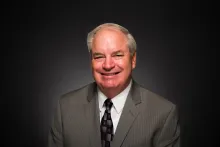
Robin Webber was born in Chicago, Illinois, in 1951, but has lived most of his life in California. He has been a part of the Church of God community since 1963. He attended Ambassador College in Pasadena from 1969-1973. He majored in theology and history.
Mr. Webber's interest remains in the study of history, socio-economics and literature. Over the years, he has offered his services to museums as a docent to share his enthusiasm and passions regarding these areas of expertise.
When time permits, he loves to go mountain biking on nearby ranch land and meet his wife as she hikes toward him.
