
Robin S Webber
This transcript was generated by AI and may contain errors. It is provided to assist those who may not be able to listen to the message.
Well, ladies, thank you very much. That sounds like the gluke that I studied about 40 years ago in music appreciation. Thank you very, very much. One thing that we have in the Los Angeles congregation that I hope that we're always very appreciative of is lovely special music and performs so nicely. So thank you very much. At the New Testament Passover, we often go over verses out of the Gospel of John.
We cover John 13, 14, 15, 16, and 17. And we often comment that we do this because, in a sense, this was some of Christ's parting words to his followers and to his disciples. But I would bring to you this afternoon other words that Jesus gave before he parted, in powerful messages that he gave to us down through the ages.
There are seven last recorded sayings of Jesus Christ as he died on a piece of wood, nailed to a piece of wood on Golgotha, on the place of the skull. And these living words come down to you and to me 2,000 years down the line from the voice of a man that was dying. These are telling statements. We are going to go through all seven of them. I think it will help prepare us as we come up to the Passover of the New Covenant.
One thing that we want to consider in all of this is, I think, a comment that Mr. Hall made. And that was simply that we are not to measure ourselves one against another. We have no other measurement than to look at Jesus Christ and to understand his example, to understand his words, and to understand his actions.
So today, to be able to allow us to examine ourselves, we're going to go through these seven recorded messages of Jesus Christ on the cross. And what I really want to share with all of you, if we can kind of tie some thoughts together, is simply this. Jesus' last words on the cross ought to be our first response to life, our first response in the covenant relationship that you and I are going to once again renew at Passover.
This is what it is about. When we come to the New Testament Passover, we're going to partake of the wine, and we're going to partake of the unleavened bread. That unleavened bread ultimately represents the great unleavened one. And thus, we're going to look at some of the ingredients of what allowed the Son of Man to be that unleavened existence for all of us to ascribe to. It's often said that out of the abundance of the heart, the mouth speaks. And thus, we're going to go to the heart of the matter.
We're going to understand what was on Jesus' mind in the last minutes of his life. So let's go through all seven together. Let's reflect on it as we prepare for the New Testament Passover. Join me, if you would, in the first one is found over in Luke 23. Let's pick up the thought in verse 34. In Luke 23 and in verse 34, notice what it says. Then Jesus said, Father, forgive them, for they do not know what they do. Now, the context of verses 32 through 38 that surround this verse are discussing how he was crucified and how he was scorned by people that actually he came to save.
And yet those that he would save were the ones that unsaved him and, in that sense, put him through crucifixion. And made him bear that crossbeam from Jerusalem to outside the camp after a night of beatings and torture. And having his skin, in that sense, torn apart by the flagellum that was used to flog him. To have a crown of thorns put on his head. I don't think I need to go further. I don't mean to overdramatize that. I think the words that I've used are, frankly enough, but it happened.
It was real. It occurred. And those thorns were thrust on our Savior's head. It speaks to this in verse 32. There were also two other criminals led with him to be put to death. And when they had come to the place called Calvary, there they crucified him. And the criminals, one on the right and the other on the left, and it mentions how he said, Father, forgive them, for they know not what they do.
And they divided his garments. They cast his lots. They cast lots. And the people stood looking, staring, gawking, saying that he wanted to save everybody, but he can't even save himself. What does this bring, friends, to you and me as we come forward to the New Testament Passover 2013? It is essential to grasp that the opening chapter of Jesus Christ's last moments on earth was forgiveness. I want to make that explicitly plain. The opening chapter of this litany of seven phrases that are going to come out, start it with forgiveness.
Why is that essential for you and me as we come up to renew covenant with God Almighty above? These words remind us and refresh us that forgiveness and mercy are the first steps of relationship with God. They are the first steps towards eternity and happiness and true well-being. Friends, simple word, forgiveness. Forgiveness. In Christianity, forgiveness comes first. Sometimes, unfortunately, for practicing Christians, it comes as a caboose rather than the engine of our lives. Maybe that's happening to you right now.
Maybe you're off track. Maybe you're not on the right track because you have not forgiven somebody. Because you have somewhat ought against an individual as we come to the Passover. Forgiveness is the door. It is the gate that allows all of other God's grace to pour through, to allow us to experience and to develop and to grow in what He wants to give us. Let's understand that when we look at this story, we recognize that this was more than turning the other cheek.
He changed the entire equation. He responded in a way that was not human. He reflected the greatness of God. Psalm 86 and verse 5. Join me there for a second.
Psalm 86 and verse 5. Who was the light of the world reflecting other than the qualities of His Father? Psalm 86 and verse 5. Notice what it says there. For you, Lord, are good, and you are ready to forgive, ready, and abundant in mercy to all those who call upon you. Give ear, O Lord, to my prayer and attend to the voice of my supplications. In the day of my trouble, I will call upon you, and for you will answer me because God is ready to forgive. It's at the forefront of the way God thinks His being, His initiative.
If forgiveness is at the tip of our heart, the natural equation or the spiritual equation is going to be at the tip of our tongue. A forgiving heart is a living heart. An unforgiving heart is a prisoner of the past and a victim in the present. I speak to all of us this afternoon as we come up and prepare to partake of the symbols of our Savior, who from the cross said, Father, forgive them for they know not what they do. That is the measurement that Mr. Hall mentioned to us that we measure ourselves towards, that we emulate, that as we partake of that unleavened bread and we bite into it, we say, yes, we want the existence of the unleavened one in us.
We commune with that. We have fellowship with that. That is what we desire. How is Christ able to forgive? Number one, He did not take them personally, but He recognized their humanity and Satan's deception. The sense of the way that this is mentioned, that some commentaries offer simply this, Father, forgive them for if they really, really knew what they were doing, they wouldn't do this. Jesus did not personalize it. He understood that from the very beginning of time, since Eden, you know, sometimes you and I fall into this. I'm sure some of us that are just getting a, do I dare say, a tad older?
We'll say, boy, things aren't like they used to be. Boy, I remember when the world was good back in the 50s. Or I remember, well, I remember what the world was like before World War II. Or I remember when. I remember when. Sounds like a song. I remember when. Brethren, the world has been dysfunctional since Eden.
Can we talk? It lost contact with the Creator at Eden. But sometimes we like to say, well, it was better here, it was better there, it was better here, it was better there. Jesus recognized that he came for a purpose to restore all of humanity.
It was not a surprise to him. Man rejected God's perfection at Eden. Said, no, no, no. We'll experiment. We'll go by the rule of so far, so good, and see how far we get. Jesus came to be a Savior. He did not take it personally.
Beyond that, point number two, Christ teaches us from the cross. Hear me, please. For some of us that are wrestling with forgiveness right now. I do not say these words lightly. I realize some of us, in one sense or another, because of situations that we're in, or situations that we were raised in, that we feel that abuse in whatever form has perhaps come our way.
But remember, Jesus was abused, big time, on that night before, and of that day thereof. He was abused. He was abused from the beginning, just even judicially, that the trial was illegal, much less the torture, and all of the screaming down that path towards Golgotha. Perhaps even things thrown at him. Obviously, verbal abuse thrown at him, emotional rage thrown at him. He took it all, and yet he said, this Father forgives them.
What he understood, basically, was it's not about me. That forgiveness comes from God Almighty. It comes from God the Father. God alone can forgive, and forgive totally. That's a cardinal belief that we must have as Christians. We don't forgive. Oh, yes, we can accept and say, yes, yes, yes, but ultimately, it's up to God. And when we realize that, and when we realize that God's responsibility, then we begin to be able to release our stranglehold on vengeance and turn it over to God.
When we do that, we release our self-appointed task that we've got to hit back. We've got to poke somebody in the eye because we got poked. And we've got to let down that barrier. Some of us, at times, even as Christians, in those deep recesses of those imprints that have been put on us, we, at times, are still strangling gravestones of family members, not letting go.
And thus, even when they're dead and gone, they still have their prints on us because we have not let go. We must let go. I want to share something with you. May I? For some of us that have real issues right now, anger inside of us, bitterness inside of us, that we cannot release, perhaps even amongst us ourselves here in Christian community, the one thing that we need to understand is God is not going to take our anger from us. He's not going to, we have to give it to Him. He's not going to, like that sound effect. He's not going to just suck it out of us. That's not how it works. In faith, in faith, we have to turn over our desire to hit back. We have to unloosen our hands from strangle holding the graves of parents or grandparents or uncles or mates. We've got to let go. We've got to let God. And we've got to turn it over to Him, recognizing in His perfection that He will bring things to fore at the right time and the right way. Humorably, that's pretty hard to do, isn't it? But that's what Jesus Christ did. He said, Father, forgive them for they know not what they do.
Understand this, number one, the message of the cross on the cross is not merely forbearance, but forgiveness. It's not passive, it is action, which is the first step towards reconciliation and restoration.
Brethren, at times, you know, we can come into the Church of God community and we can talk about the Sabbath and we can talk about the festivals and we can talk about Unleavened Bread and we can talk about the ingredients of Unleavened Bread and we can talk about the future and the apocalyptic events that are, yes, indeed, going to be forthcoming. But brethren, what God wants to know is, can you recite what Jesus Christ recited? Father, forgive them for they know not what they do. It is the door that opens up everything else in Christianity. And we forgive because we recognize that we have been forgiven. As the Lord said in that prayer, Father, forgive us our debts as our debtors forgive us. It's two ways. Point number two, second statement, Luke 23 43. Right over in the Gospels. We're going to go back and forth between the Gospels for a moment. Luke 23 43. Let's pick up the thought here. Luke 23 43. And Jesus said to him, him being that thief that was next door to him, on Golgotha, also being crucified on another cross, assuredly I say to you today you will be with me in Paradise. Let's understand the context by going back to verse 39. Then one of the criminals who were hanged blasphemed him, saying, if you are the Christ, save yourself and us. But the other answering rebuked him, saying, do you not even fear God, seeing you are under the same condemnation? And we indeed justly, for we receive, notice, the due reward of our deeds. But this man has done nothing wrong. Then he said to Jesus, Lord, remember me when you come into your kingdom. And thus, this very famous phrase, verse 43, and Jesus said to him, assuredly I say to you today, you will be with me in Paradise. What did we learn from this? Where was Jesus' heart? Where was Jesus' mind? The immediacy of God's plan was overwhelmingly present in Christ's life. God's kingdom was real. He could reach out. He could touch it. Because he lived it, and it was a part of him. Jot down Hebrews 12, 1-2. Remember what it says, for the joy that was set before him, he endured the cross. He had this overwhelming contentment, and peace, and joy. He had this knowing. Even as he was nailed to a piece of wood with people looking at him, he was abiding in the love, and the purpose, and the will of God. And that purpose could not be taken away from him. And he shared it. Now, I realize at times we use this verse as far as a approved text, recognizing that Jesus was speaking of a future date, this future rendezvous with this tape. And that is not the part that I want to deal with today. We can ascribe to that. We recognize that the comments are different. I don't want to get into that part of the subject today. What we do recognize is this, is that Jesus Christ wanted those around him to believe it as well, and extended that conviction and that invitation to them. What is very interesting here, and here's what I want to share with you, friends, here in Los Angeles, Christ offered this thief dignity. This guy was not a good hombre. He was a criminal.
As he said, we are justly being punished. He recognized that he was no good. He'd blown it.
Okay? He knew where he stood. He knew that he was apart from God.
And yet, at this moment, this man, one of the last people that Jesus talked to, most likely, who would you choose to talk to if you were about to die? Other than your wife and your attorney. Jesus the perfect one, unleavened, son of God, on the cross.
What would you and I do? We'd say, well, we need to get somebody really good up there. You know, somebody, no, let's just choose somebody out in the church. You know, somebody that's been in the church for 40 years. We need to put them up there. You know, somebody that knows the ropes, right? That's humanly what we would do.
We need to have somebody special up there. Jesus knew exactly what he was doing.
And what he did is he offered that thief dignity. And they comforted one another, even as the people of covenant of old were rejecting him. Here is the criminal on the cross, comforting Jesus, that at least somebody got it, somebody knew, somebody understood that he did not deserve to be there. Are you with me? Did not deserve to be there. The comfort was going from the thief to Jesus and from Jesus to the thief that, buddy, you've got it. And when my kingdom is manifest, you indeed will be there. Some of us might say, well, he hasn't gone through all the hoops.
Jesus knows who's going to be in his kingdom and who's not. After all, he's Savior and high priest.
And he gave that man confidence and he gave that man hope. He chose to touch the untouchable, to love the unlovable, and to give hope to the hopeless. I have a question for you as we partake of the Passover of the new covenant 2013. Are we prepared to follow the example of Jesus Christ and covenant? Are we prepared to offer hope to the hopeless, love to the unlovable, help to the helpless? Are we ready to do that? Are we prepared to do that?
Jesus looked at this man and that thief represents each and every one of us caught in our sins.
And yet God gives his attention and words of comfort to us. The same comfort that we'll hear that night when Mr. Garnet, Mr. Fish, Mr. Helgi will speak words out of Luke where it says, I have really been looking forward, Jesus speaking, to partake of this Passover with you.
The message of the cross is simply this. The reality that God's kingdom must be embedded in us where man and trial cannot reach, even as we reach out to others in trial.
Brethren, we have not been called for personal salvation alone.
We have been called to be tools and witnesses of Jesus Christ. That because we have been forgiven, we forgive others. And because God, through his grace, has given us dignity through his Son, thus, as we can and is proper, we offer dignity and grace to others that come into our life.
Number three, John 19.26.
In John 19.26-27, we find something unique here. It says this. And when Jesus, who's hanging on a cross, not just hanging but nailed on the cross, and let's remember that. When Jesus therefore saw his mother and the disciple whom he loved, which by tradition is John, standing by, he said to his mother, Woman, behold your Son.
And then he said to the disciple, Behold your mother. And from that hour the disciple took her to his own home. What do we gain from this, the third of the last sayings of Jesus Christ?
Christ looked down from his position and saw his followers as a family. And he gives us responsibility, each and every one of us friends, to care for one another.
To care for one another. As we put on Christ, our spiritual identity must move beyond our our physical roots. Where we've been, who we came from, but rather now where we are headed. No, I have to tell you something. I saw often run into people over the years that I knew as a young Susie and I might have known as young people when we were in college or back in imperial days when I was playing basketball and just a few might remember that. I did play ball at one time. And people were running, often remember running around in shorts playing ball.
And or as a young married couple in Pasadena or later on here or here or there or this feast side or where we were and they say we remember and I always say yeah it's nice that we were there but what's more important is that we're here today. It's not where we've been, it's where we are and where we're headed together. And Jesus says this example, he says, woman look at your son, son look at my mother you are now family. Again, we are not simply called for personal salvation. You and I are part of this magnificent special creation as significant even more special than the physical creation, do I dare say. As the Bible there says, say that God is in the process of creation, a spiritual creation. It's called the body of Christ and he puts it here together this jigsaw puzzle of humanity. Different components, different parts, different colors, different languages come together, fit it, fitly frame together that it might bear witness that there is a God above. When we look at all of this we recognize that we have a new identity. When John went to Golgotha he didn't know he was about to adopt Jesus' mother and Jesus' mother Mary didn't know that she was going to have a new son. Let's go to Galatians 3 for a second. Galatians 3. Again, speaking of this new identity that you and I should be reminded of as we come to the Passover. Galatians 3. Verse 27. For as many of you as were baptized into Christ have put on Christ. There is neither Jew nor Greek, there is neither slave nor free, there is neither male nor female, for you are all one in Christ Jesus. And if you are Christ, then you are Abraham's seed and heirs according to the promise. In that sense, when we partake of that bread and when we sup of that cup of wine at the Passover of the New Covenant, we are saying that we are one. We are in that family in which Jesus Christ is our elder brother. And that just as that elder brother said to the apostle, you have responsibility for my mother and my mother has responsibility to be under your wing, that indeed we are one. We are one family. Let's go to Matthew 19.27 in this aspect of family, in this bonding. Matthew 19. And this may even speak to some of you that are new, that have just newly arrived into the community of God here in Eagle Rock. And you say, well, my family is not here with me today. My family doesn't necessarily even agree with the steps that I've taken.
Well, notice what happens here in Matthew 19 in verse 27. It says this, Then Peter answered and said to him, See, we have left all and followed you. Therefore, what shall we have? We've forsaken our family. We've forsaken perhaps our culture.
We've left behind our familiar family ways. So Jesus said to them, Assurely I say to you that in the regeneration when the Son of Man sits on the throne of His glory, you have followed me will also sit on twelve thrones judging twelve tribes of Israel. And everyone who has left houses or brothers or sisters or fathers or mothers or wives or children or lands for my name's sake shall receive a hundredfold. You're not going to necessarily lose family, and our physical families are precious to us. But God is saying, I'm going to be a fruitful bow.
I'm going to bring more individuals into your life, this spiritual family called the body of Christ. For you to care for them and for them to care for you to nurture one another, to stir up one another, to good works, to pull out a Bible and speak about the promises of God. That when there's confusion in our midst, we pull out the Bible and we seek the wisdom of God in the Proverbs or Ecclesiastes or in the book of James. That when somebody needs help, that we're there to help, just as John was for Mary. Let's understand that. What do we gain throughout all of this? The message of Christ from the cross reminds us simply this fact. It is not our job to choose God's family. You mean? Yeah. I mean, yeah. It's not our job to choose God's family. It's our job to accept who comes through that door, who keeps the commandments of God, and has the testimony of Jesus Christ, as it says in the book of Revelation.
And that's our responsibility. We are to move beyond our separate past, and move forward in spiritual oneness.
That's the role. That's the job. Number four, Matthew 27 46. Matthew 27 46. Notice what it says here. And about the ninth hour, Jesus cried out with a loud voice, saying, That is, my God, my God, why have you forsaken me?
This verse is often misunderstood, unfortunately, because the message is indeed so very powerful.
What I want to share with all of you here today in this conclave is this. Christ's statement is not based upon doubt of God's purpose in Him. That is what some people might think. You know, I'm up here.
I'm stuck like a piece of meat with these nails in my hand. I'm in pain. I've been tortured all night.
And is this what it has come to? This is it. Have you ever done that? This is it.
This is what it's all about. God, this is what you want to call me for and to give me your purpose and give me your revelation. This is it. Be stuck like a piece of meat on a piece of wood.
Some people say, well, you know, Jesus seems to be having second thoughts here.
He wants to get down off that cross. That's not the point at all. Let's understand what is being spoken here.
It's not about Him feeling forsaken by God, but rather His sensory overload at that moment, of the awareness at that moment that He voluntarily took the sins of the world upon Himself.
You see, Jesus is the Spirit of experience. He came as God in the flesh.
It was one thing to, in that sense, as the book of Philippians says, to voluntarily come down.
But when He was down here being a man with feelings as well, and yet the Son of God in mystery, He came to a sensation that was incredible. Join me if you would in 2 Corinthians 5.21 to set it up. 2 Corinthians 5 verse 21. Notice what it says here. For He made Him who knew no sin, to be sin for us, that we might become the righteousness of God in Him.
It was at that moment that the sins of the world were put upon Him. Imagine! What's the worst thing that Jesus Christ ever did in His life other than do what? Be perfect. Think that through for a second. The worst thing that Jesus ever did was be perfect.
I think you know how I'm saying that. He's perfect. No sin was found in Him.
And then have the sins of the world put upon Him. As it says in Isaiah, that our sins separate us from God. Now you think about that for a moment. Here's the one that came to be known as Jesus, the one Messiah. And yet we also realize in the Old Testament He was indeed the Word. He was pre-Old Testament. He is always, as it says in the book of John, he is.
He'd always had this unique, seamless relationship with the one that we know as God in the beginning was God. In the beginning was the Word. And the Word was God. And the Word was with God eternally. And then to have that feeling, that knowing, that separation that had never been throughout eternity of those that truly loved one another in a way that you and I can only believe, separated.
Imagine some of us that have lost our mates through death and what separation is like.
How grievous, how painful. And the steps that we have to go through, perhaps even a divorce, which is like a death, to recognize that in the separation.
And to recognize that the one that loved the one and the one that loved the other to be separated. And he felt it. And I suggest to you that when Jesus was in the Garden of Eximony, and he says, Father, if there's any way that you can lift this cup from me, I suggest that that is the cup.
Not even the pain, not even the affliction that was born upon him by the whip or by the thorns, but the sheer knowing that he was going to be separated from him who had always been with him.
What did we learn from all this? Let's talk about it for a second.
And that is to remember as we come up to the New Testament Passover, sin separates us from God.
And this is what Christ dreaded the most.
The most. The physical agony would be excruciating, but the spiritual separation from God was worse. It was the ultimate pain. You see, you've heard me speak to this, and it's been my theme this year, but you and I were created as men and women. So I'm not going to leave out the women either. Men and women, all of us. You teens that are down here in the front, all of us were created by God.
We are not talking to Megan and Kalen coming in our granddaughters, and they're teaching them about evolution. And I think one of our granddaughters said, if you want to belong to a monkey, that's fine. I don't.
You see, you and I, folks, and young folk here, we're a special creation.
God Almighty made us. And we were basically made to be in union with God. That's what the Tree of Life is all about. Union with God. He wants fellowship. He wants communion. He wants us to rejoice in His love. He wants us to live in His love, His ways and His laws that are good.
And we were basically designed for Him to look into our eye and for us to look into His eye and to have nothing between us. That's what this New Testament Passover is about. It's the gateway to eternity with God Almighty.
You know, when you go to the book of John, and I'm sure either Mr. Garnard or Mr. Helge or Mr. Fish will read it that night, but it says, what is eternal life? Eternal life is knowing God and knowing Jesus Christ without any filter, without any barrier, moving beyond that unapproachable light one day and having total union, total fellowship. But the one who loved us so much that He gave us His only Son. Join me if you would here for a second then to understand simply this.
Jesus' message from the cross to us as true believers is a true believer is distressed over sin's results and is acutely aware of its ramifications and is sensitive to the presence of God. I have a question for you. May I? Just talking. Have we, some of us that have been in this way of life for 40 or 50 years as Christians, have we become more sensitive to the presence of God? Have we become more sensitive to even perhaps, dare say, the encroachment of sin on our lives?
How sensitive are we towards God's righteousness? How sensitive are we to the ways of this world that, as Mr. Fish told us in Bible study, are going to melt and are going to pass away and yet we try to hold on to them? How sensitive are we to the sin that so easily ensnares us as, say, the words of the Apostle Paul? No. This phrase is here to teach us that we need to be sensitive. Let's go to point number five. We're going to conclude this rather rapidly. John 19, verse 28.
Hope I'm giving you some 11 food for thought as we come up to the Passover. John 19, verse 28.
Notice what it says here. After this, Jesus, knowing that all things were now accomplished, that the Scripture might be fulfilled, he said, I thirst. You can only imagine that he was incredibly dehydrated after having been tortured the night before, after having been hung out to dry, as it were, all day long towards that three o'clock hour and to recognize that after such a long ordeal, oh my, he was truly dehydrated. And here he quotes from Psalm 22. Join me if you would. Psalm 22, verse 13. And so a prophecy about Messiah in Psalm 2013. They gave at me with their mouths, like a raging and roaring lion. I am poured out like water, and all my bones are out of joint, and my heart is like wax, and it has melded within me. We see this, we understand this, and he wanted a drink. And what he got instead was, in mocking the stain, the guards offered him a bitter mix, laced with a vinegar.
Man's in humanity to man. Jesus was thirsty on that occasion of Passover. Man gave him something that did not fill the bill, and humanity can still not fill the bill of which only God can offer.
I would pray, and I would hope that our congregation here in Los Angeles, as we approach the Passover, we too are thirsty. And we are reminded by this event that we cannot expect to have our spiritual thirst satisfied here below. Man by himself is totally lacking. Join me if you would in Psalm 42 and verse 1. Psalm 42 and verse 1.
Notice what it says. As the deer pants for the water, and the heart brooks, so pants my soul for you, O God, my soul thirst for God, and for the living God, when shall I come and appear before God?
On that day of Passover, oh, our Savior was so thirsty. It was tortuous. He only wanted a little. And yet man gave him a mix of gall and vinegar. It was not satisfying. It was distinct.
Sometimes you and I, during this year, can we talk? We try to satisfy ourselves by human things and things wrought by man. Dead in results. They don't really satisfy. They don't fill the bill.
We put our hope for joy in all the wrong places when only God can satisfy that.
By drinking of his word, by drinking of his spirit, by communing with him in meditation, by being around wise people that he's granted us to mix with down here below. John 7, verse 37. Total contrast to what the Romans offered. John 7. The man who would not be given water. The decency of having a cup of water when he was about to die was the same one that said this in John 7, verse 37.
On the last day of that great day of the feast, Jesus stood and cried out, saying, If anyone thirst, let him come to me and drink. And he who believes in me as the scripture has said out of his heart will flow rivers of living water. The message of the cross to us is the realization that only God alone can supply our needs. And hopefully, as we approach this Passover, we thirst for that glass of wine, for the kingdom of God. As we have been spiritually dehydrated by some of the events that we've gone through this year, I'm sure some of us have been bruised. Bruised? Can we talk? We don't have to. Confession is good for the soul, but not here. You and I are going through this arena of life. Punches here, pokes there, some by others, some by things that we have done just all by ourselves, if we want to be honest.
You and I have an opportunity at Passover to no longer thirst, but to partake of that wine, which symbolizes our Savior's blood, that atoning sacrifice that allows us to have reconciliation and restoration with God Almighty, reconciliation and restoration with God Almighty, union broken at Eden, restored now.
How wonderful that is! Number six, John 19.30. Just two quick points. We'll finish here. John 19.30.
John 19.30. So when Jesus had received the sour wine, he said, it is finished. It's finished! And bowing his head, he gave up the Spirit.
Here, Christ was expressing a fact. He was expressing a triumphal statement.
The sacrifice of redemption, your redemption and my redemption.
Let's remember for some of you that are new to the Word and searching the Scriptures, what's that word mean? The word redeem was a Greek term that was used for people that could not win their freedom of and by themselves, like a gladiator, like Ben Hur. Remember Charlton Heston?
Or am I dating myself?
I didn't talk about gone with the wind, but remember Charlton Heston and being on a galley.
Living death. To be a slave was a living death. You were not even recognized as a human being. You weren't called by a name if you were a slave because that gave you dignity.
And they had no way of winning their freedom, so it had to come from somewhere else.
That is what the word redemption means, that our salvation, our freedom, breaking the lock-hold of sin, had to come from a source other than ourselves.
And we were redeemed. That price had to be paid. That we could not pay ourselves.
That we might be restored to God Almighty. And that word finished literally means, if you want to jot this down, if this is new to you, it means paid in full. Paid in full.
Now the Lamb of God was squarely being offered up on that altar of Golgotha. Not sheep, not bullocks, not turtle doves, but a chunk of God in human flesh, nailed, nailed to wood, for you and for me, a sacrifice without any imperfection, because it was the gift of God. The book of John says, for God so loved the world, that he gave his only begotten Son, that whomsoever believeth in him should not perish, but again have life.
It all, all stems from here. At Passover, when we partake of that wine and bread, we're renewing a lifetime commitment to finish the course God has chosen for you and for me. See, Jesus served the Father's purpose, and Jesus said long ago, follow me. We were given purpose.
Our lives were given worth. Our lives were given dignity. That conversation by the Spirit came to us as much as any conversation to that thief on the cross, follow me.
And we must finish that to the end. We can't do it by ourselves.
We need to renew that covenant. We need to continue to follow the lead of God's Spirit.
The message of Jesus from the cross is this. I have no better news to tell you than this. This is gospel. This is good news. Our Savior is in place. When He said, it is finished, it means it was paid in full. And for those that believe that Jesus Christ was sent by the Father and is the Son of God and is that perfect sacrifice, that our sins can be forgiven.
We can be redeemed to God. We can be reconciled to God. We can have restoration as near and dear as the story of the prodigal son, that our Father is always waiting for us at the door of heaven, as it were, looking down, waiting for us to come to our senses, just as it says to the prodigal son as he was in the pig mill or the pig mire. And it says, and he came to himself.
He came to himself. There is this moment in the human experience when God the Father begins to call us. And as that spirit begins to work with us, that if we surrender our lives, we can come to ourselves and say, my life has no worth of an apart from God who loved me so much that he gave us, gave me his Son. Luke 23, verse 46. Seventh saying, and we conclude, Luke 23, verse 46. And when Jesus had quiet out with a loud voice, he said, Father, into your hands I commit my spirit.
Into your hands I commit my spirit. You know, it's very interesting, as Mr. Fish was bringing out in our adult Bible study, that I really encourage more of us to come to. There are so many wonderful things that we're all learning there together as a church family, but we were talking about the seamlessness of the Old Testament and the New Testament. Well, here's another case. Join me if you would in Psalm 31. In Psalm 31, and let's pick up the thought in verse 1. Psalm 31.
Notice what it says.
In you, O Lord, I put my trust. Let me never be ashamed. Deliver me in your righteousness. Bow down your ear to me. Deliver me speedily. Be my rock of refuge, a fortress of defense to save me. For you are my rock and my fortress. Therefore, for your name's sake, lead me and guide me. Pull me out of the net, which they have secretly laid for me.
For you are my strength. Notice in verse 5. Into your hands I commit my spirit. You have redeemed me, O Lord, God of truth. Messianic. Portfolio. The words that Jesus would speak as men had nailed the most perfect of all to a cross. Snared at, jeered at, half naked up there, flies a-buzzing, blood dripping down, and he said these beautiful things, Father, into your hands I commit my spirit. He had told a resolve to give himself not only for man but to God. Is it any wonder that Jesus Christ is going to be the king of the world tomorrow? Because he unconditionally surrendered himself before God the Father for you and for me. Let me share something with you as we conclude, may we?
As we come to renew covenant with God at the Passover of the New Testament, let's remember it's a covenant. Young folks, I want to share something with you.
A covenant is based upon blood. A covenant of old could not be ratified unless there was blood.
And when we come together on that Passover evening, we are in blood covenant.
The blood of God shed abroad for our sins. And Jesus gave us all in all.
He was not only a servant because a servant gives what he can give and says, here, this is what I give to you. But he was more than that. He unconditionally surrendered himself to whatever God has in store that into your hands I commit my spirit. I have a question for you, and it's simply this. Are you ready to make that a commitment once again this coming year, knowing we that are in this human arena, knowing what life is like, knowing what's going to come at us, to have that confidence, that same confidence that as we commit our lives into God's hands by partaking of that bread and partaking of that wine and renewing that covenant.
That you and I worship a good God. That's what it's about. And that even when we don't see what God is doing, we realize that God's purpose is being worked out in us. That all things work together for good. It doesn't say that all things are good. No, no, no. It says all things will work together for the good. That love and God. That's it. I'm not going to be able to be with you. Susie and I are not going to be able to be with you in these coming weeks, but I want to share some wonderful things about what our Savior, Jesus the Christ, did for you and for me.
And not only that, but to remember it's not only what Jesus did, but it's what His Father did.
Our Heavenly Father, who loves us so very, very much, and loves His Son so very, very much, allowed Him to be sacrificed. Allowed Him to be sacrificed. Did what Abraham finally was asked not to do.
That long ago, there were two divine beings looking down from their sovereign heights to the hills of Moriah, seeing an old patriarch and a young man as a type.
And they wanted to know whether or not Abraham really believed God, and would really go all the way and commit even His flesh and blood into God's hands. And as that knife went back to sacrifice the boy, God said, no, no, no. I now know Abraham. I got it. I got it that you got it.
I know what you will do. And what He did not ask of Abraham, God the Father and Jesus Christ, dead for each and every one of us in this room. Wow. That's why they deserve all honor, all praise, all glory for the grace that they have shed upon each and every one of us.
Let us consider the Scriptures. Let us consider the seven last sayings of Christ to measure our walk towards the table of the Passover, 2013.
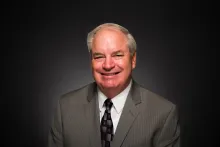
Robin Webber was born in Chicago, Illinois, in 1951, but has lived most of his life in California. He has been a part of the Church of God community since 1963. He attended Ambassador College in Pasadena from 1969-1973. He majored in theology and history.
Mr. Webber's interest remains in the study of history, socio-economics and literature. Over the years, he has offered his services to museums as a docent to share his enthusiasm and passions regarding these areas of expertise.
When time permits, he loves to go mountain biking on nearby ranch land and meet his wife as she hikes toward him.
