

Robin S Webber
This transcript was generated by AI and may contain errors. It is provided to assist those who may not be able to listen to the message.
But anyway, I do have a message in relationship to our meeting this evening. I wanted to give some pertinent comments. We do have our annual membership meeting once a year. It gives us a chance to take stock of our congregation. Tonight is more organizational. During church, we want to talk about the spiritual end of things, because when it's all said and done, all of us want to remember we're a part of the spiritual body of Jesus Christ. In every monthly church bulletin that Mr. Barreca and I work on, every monthly church bulletin, we have our congregational mission statement. It's right there on page 3 at the bottom if you've had an opportunity to read it recently. Put it in there for a reason, because I figure sooner or later somebody will read it. Think about it. Meditate about it. Pray that they can be a part of that mission. If you haven't read it recently, I'd like to read on it, because we're going to comment on it then. The United Church of God San Diego is a part of the spiritual body of Christ and is associated with the United Church of God and International Association. Notice in the next word, it says, together we preach the gospel of the kingdom of God into all of the world. We're committed to creating and maintaining a positive and dynamic and nurturing environment based on the Bible, the Word of God. This enables all members to learn and to grow in the grace and the knowledge of our Lord and Savior Jesus Christ, laboring in love and unity to serve all. It's quite a statement. It's a wonderful statement. And it's something for each and every one of us to understand and to live up to. But I have a question for you. Beyond the words of a mission statement, how do we collectively, person by person, develop an atmosphere committed to creating and maintaining a positive, dynamic, and nurturing environment based on the Bible, the Word of God? One thing that we notice in the mission statement is the word together. And that's a very important word. It's put there for a reason. Because our congregation, much less our church as a whole, is not simply what is happening in Cincinnati, but what is happening in every congregation and in every home and in every heart of every member of those that are in this fellowship. Beyond that, then, when we recognize that it's our mission statement, it becomes our mission statement. It's not just simply some congregational mission statement or the thing that the pastor does or the elders do, but each and every one of us can be committed to what these beautiful words tell us. The question is, are they only words? Because talk is cheap. What I want to share with you in the course of this message is simply this. How do we practice what we preach in our mission statement? How do we practice what we preach in this mission statement? Today, I'd like to share with you seven key attributes of a church that matches the description above. It's going to be very short. It's going to be very succinct, and I'm going to come to point on each and every one of them. That's why I've entitled this message Seven Signs of an Open Church. Seven Signs of an Open Church. Basically, this message is going to focus on a four-letter word. I don't want to scare you. Oftentimes, it might be love, L-O-V-E, but today's message is basically going to center around a four-letter word. It's simply open.
God above wants us to be an open people so as to be able to glorify Him. Allow me to bring you to point number one. The first sign of an open church is simply this. Point number one are open doors. The first sign of an open church is open doors. That means a church with a welcome sign, with doors that are open to all people that have a variety of needs that need to understand the gospel of Jesus Christ and the kingdom of God. Join me if you would. Let's open up our Bible's turn to the gospel of Matthew. Matthew 5 and let's notice verse 14.
Matthew 5 and verse 14. Our master above tells us exactly what kind of a church we are to be and pinpoints to this first sign. That is, the sign is of an open door. In Matthew 5 and verse 14, you are the light of the world.
A city that is set on a hill cannot be hidden, nor do they light a lamp and put it under a basket, but on a lampstand, and it gives light to all that are in the house.
Then notice verse 16. Because of all of this, then, let your light so shine before men that they may see your good works and glorify your Father, which is in heaven. We are not to put our light underneath the bushel.
We are not to have closed doors. We're not to bar them. Now, I recognize what I'm saying, maybe Starling, but I'm just bringing us from the parking lot forward as somebody enters church and the kind of church that we're going to be and the people that we're going to serve in our community and or one another.
That is that the first key sign is that of having an open door. Why is that important? Join me if you would in Matthew 11. In Matthew 11, again in the Gospels, a statement that Christ makes, talking about those that the Father would draw to Him. In Matthew 11, beginning in verse 28, Now, I understand, and I think you understand, as students of the Bible, this is, first and foremost, talking individually in a relationship with God the Father and Jesus Christ.
And every minute and every hour and every day of every month or every year, we have that privilege and opportunity to come to Jesus Christ and to have a personal, intimate, and deep relationship.
That is the basis of the Scripture. But beyond that is the body of Christ. As those that are Christ-like, also, we should have the understanding that people are going to come to church because of that world that is out there that is pretty heavy on their shoulders. There's a whole lot going on out there, isn't there?
Right now, with all the challenges that are happening, not only in America, but in the globe around us, challenges that affect people every day in their marriages, in their job, in their relationships, in that vast world that is occurring between their two ears, the battlefields of the mind, the battlefields of the heart. People are looking for comfort. They're looking for rest. They're looking for security. They're looking for sanctuary. They're looking for a light that is occurring and coming out of this dark world. We have that opportunity as a congregation in the body of Christ to be an oasis, to be a sanctuary, to be a safe place, to be a welcoming place.
We need to remember that. But one thought, at times, and I only share this to remind you, because I am one, at times church folk can be uninviting. Church folk can be uninviting. Sometimes we want to close those storm doors and say, well, who let them in? Where did they come from? Who invited them?
Join me if you would in Luke 15 for a moment. These were the church folk of Jesus' day. And they had that kind of comment about others. In Luke 15 and verse 1, then all the tax collectors, those were the bad folk of the day, and the sinners, well, we already know that they are the bad folk of the day, drew near to him to hear him speaking of Jesus Christ. And notice what the Pharisees and the Pharisees and the scribes, that is, the church folk, you know, quote-unquote, the good people, the folks all dressed up and suited up and going to church folk, said, this man receives sinners and eats with them.
Bottom line, let me bring it down into whatever paraphrase. What are they doing here? Luke 19.10. The specific purpose verse of this beautiful gospel called Luke, Luke 19 and verse 10. Lest we forget the specific purpose verse, for the Son of man has come to seek and to save that which was lost.
Bottom line, Scripture tells us, Christ came to save the lost. The body of Christ has a welcome sign, has an open door, doesn't judge by what people look like from the outside, but are looking at how the heart is dressed. The overwhelming weight of scriptural context shows that Christ came into contact with people, not saints, and shared a message. Some of those people went away from them. They were not changed, but nonetheless, he shared the message and he shared the hope and he shared the good news that God had come in the flesh.
When you read the Scriptures, most of Jesus' time was spent with those that were lost, were released, and were last in social order. What then does that say about us as members of the body of Christ? And again, why does the Scripture say that we are to be the light of the world? Join me back again in Matthew 5, and then we'll go to the next point. In Matthew 5, again, let's go to verse 16. Why are we to be the light of the world, not hidden underneath the bushel?
And why do we, point one, have an open door? In Matthew 5, verse 16, it says, Let your light so shine before men that they may see your good works, and that they might glorify your Father in heaven. How then and what are the good works that they see? That takes us to point number two, friends. Point number two.
The next key. The next key of an open church. Point number two is this. Having open Bibles. Having open Bibles. A hallmark of any church in the body of Christ is a reverence for God and a reverence for the men and the women that sacrificed their lives that we might have the Bible in our tongue. That Bible that you have on your lap right now is a Bible that is basically, well, it's sometimes called the book of love. Others look at it as a book of prophecy.
It is also a book of blood. It is the blood of the Old Testament. It is the blood of Jesus Christ. And not only that, you can read about that because men and women have literally given their blood, gone to the stake that you and I might read of the wonderful works of God in our own tongue. Beyond that, join me if you would in John 6 and verse 68.
We have an open Bible because we recognize that this is the treasure trove. This is the gold mine. This is the fountain not only of youth but of life. In John 6 and verse 68, let's notice what it said here. When Simon, when many, many people had begun to leave Jesus Christ and were confused about his message and didn't know where to go.
And then Jesus said to the 12, Do you also want to go away? But notice verse 68, But Simon Peter answered him, Lord, to whom shall we go? You have the words of eternal life. This book that is open today and that we're reading from is a wellspring of life. It is a fountain of life.
A couple pages over in John 8 verse 32, let's notice this. We're again commenting about the truth and about the words that are in this book. And the understanding that Jesus gives us that you shall know the truth and the truth shall make you free. The words that are in an open Bible that we open up and we read from are true and they are liberating and they bring life. What is our response to that then? I won't turn to it right now, but you can jot down Nehemiah 8 and verse 5. It's a really neat set of scripture where in the days of Ezra and Nehemiah, and it says that they opened up the book of the law.
And whenever Ezra opened up the book of the law, guess what? The people stood. The people just stood because they had a reverence recognizing that these were the words of God. Never take it for granted, friends, that you have your Bibles open. I, as your pastor, your elders, we have our Bible open because in a congregation within the body of Christ, the Bible is the source of truth. It is the authority that is in our lives. And rather than wondering what man is saying or reading poetry or philosophers or some new age thought, we must always go back to a cardinal point.
Join me if you would in Romans 4 and verse 3. In Romans 4 and verse 3, and why we have an open Bible at the church and that it is a sign, a sign of a church that is healthy and prospering and has an environment of which God is going to be pleased in.
Simple thought. Romans 4, 3, Romans 4, 3. For what does the Scripture say? For what sayeth the Scripture, as it says in the authorized version? That's also repeated over in Galatians 4 and verse 30. So, Paul didn't just think of it once. I get so excited sometimes when people are after church, sitting around, talking around, and they begin talking about an issue or some personal situation or something that's just compounding their life.
And somebody will go and they'll open up a Bible. Open a Bible! Open Bible, and they'll say, let's find the answer in the Scripture. But you can talk about it forever.
But what does the Bible say? What does the Bible say? And get it right out of the Bible. One thing I've always mentioned, and the corollary is not always true, but I think that an open Bible is a corollary to a heart that is open, that God wants to speak to and to work with, and to change their lives. Never underestimate the power of an open Bible. Very important. Which leads us to point number three.
Point number three, as to a sign of an open church. That is a church that has an open heart. I want you to notice that everything is about open, open, and open. Aren't you excited about being a part of a church that is open? A Bible that is open? And do you want to have an open heart that God can work with, mold, and shape? You know, we can open our doors, as I mentioned in the first point. Or we could open our eyes and our ears as we either read the open Bible or hear from the open Bible, but God desires for us to go deeper. And that is to have an open heart. God's spoken and read word in church is not simply to be informational. It is about transformation. I hope that when we come through those open doors and we read our open Bibles, that our hearts are open to be transformed every week. That when we come into church, we are expecting a blessing from God. We're not just going through a Buddhist prayer wheel. Buddhists can do that. Go around and around and do the notches or somebody doing beads and doing this or no Sabbath in and Sabbath out and just come to church and just come to church. When somebody comes to church and we invoke the name of God to be here and to bless us, we should expect a blessing. We should expect a result. We should be listening to no matter who is up here and or who is talking to us in the aisles that God will open our hearts. Join me if you would in Ezra 7. I want to share something with you here in Ezra 7 back in the Old Testament. Let's pick up the thought, please, if you would. If you're there with me in Ezra 7 and verse 10. For Ezra had prepared his heart to seek the law of the Lord and to do it and to teach statutes and ordinances in Israel.
The bottom line is simply this, friends. Open hearts just don't happen.
We need to prepare our heart as we prepare for services and as we come to church to prepare our heart. How much of our heart? Join me if you would in the book of Psalms, Psalms 138. Right in the middle of the Bible, Psalms 138.
Let's pick up the thought in verse 1. We sing this oftentimes. Notice what it says, I will praise you with my whole heart. Our whole heart.
And that's what we need to do to prepare before we come to church. That we prepared our minds, we prepared our hearts to receive what God wants us to have on that day, to give us our daily bread.
I know when when Susie and I, whether it's at the feast or whether it's coming amongst you or our friends up in Redlands, we always ask, God, help us to give. Help us to share ourselves fully and completely with all of you. And by the way, Father, also open our hearts to receive the message that we need to receive today. To learn what we need to learn from your people, not just the guy that was up here in front of me, Mr. Miller, who's a very nice person, by the way, but by a lady on the back row or by one of our young adults or by somebody that's in the hallway or somebody that's out in the parking lot. To open up our hearts and to be ready to receive whatever God wants to have us learn on that day. You know, when this begins to happen and people come in our midst, they begin to say, wow, these people are at church for a purpose. There is a reason and there is a calling and they are expecting not only to receive something, but to give that day. I know over the years and I've got to, you know, confession is good for the soul. I remember growing up, I used to be younger than all of you on the right. I'm still younger than some of you on the left, but that I remember I'd go to church and I go, I didn't get much out of church today. All right, guys, boring, boring. You've never said any of that, have you out there? I'm sure. Okay. But you know what? I I miss something. You don't go to church to get a good sermon. You don't even go to church to get good food in the potluck. You don't go to church to get good special music because you didn't get any today. In between, you go to church not only to receive, but to give of yourself as a wholehearted living sacrifice who not only walks through an open door, but you are an open door. You are a receptacle of God's Holy Spirit to enlighten and to brighten another person's life. Point number four. We need to be open to apply God's Word. Open to apply God's Word. We've gone through open doors. We've opened our Bible. We have prepared an open heart, but what happens sometimes, we can do all of that and we go, oh, they've just gone from preaching to meddling. They're talking about something that I need, but let's understand we need to be open to apply God's Word. James 1.22. Basic foundational scriptures. James is often called the book of wisdom in the New Testament. I'm turning to a verse that many of us have seen at one time or another, but let's focus on it for a moment. James 1.22.
But be doers of the Word and not hearers only deceiving yourselves. You know, we read that verse. It's a very familiar verse in the Church of God culture, but allow me to expand upon it for just a moment. The reason why this was being mentioned is that in the world of antiquity, Christianity was so different than all the other religions. There were many religions that had grand philosophy, had wonderful thoughts, flowering considerations, and deep thinking. The only problem is those people did not practice what was preached. And so oftentimes, their leaders didn't either. Jesus Christ practiced what he preached. And his followers had the same expectations put upon them, that they would not only be hearers, but that they would be doers, that they would not only receive the message, the words of life, as is mentioned in John, but they would look for ways to apply them. We need to be open to that. Join me in Psalm 143. In Psalm 143 and in verse 8. And again, it's amazing the number of verses I'm using today is that we often sing about the words come to mind when we do this Psalm 143 in verse 8. Cause me to hear your loving kindness in the morning. For in you do I trust. Then notice, cause me to know the way in which I should walk. For it's to you that I lift my soul. Father, help me to understand how to apply the message that I have just heard.
Help me to meditate on it. Maybe if I don't understand it, help me maybe go to Mr. Smith or go to Mr. Gardenheier. Go to one of our ladies if it's a ladies issue. And somebody just said this and I want to do that. I sense that it's important, but can we just have a Bible study on it? Can we talk about it? Can we just share some thoughts about it? Help me to understand how to apply God's Word. In doing that, that leads us to point number five. Again, starting with open. As we're open to applying God's Word, and that's the first step, point number five is we have to be open to change. We have to be open to change. Why is that? Because when we open up this Word, things happen. You know, the author of Hebrews reminds us of how far and how deep the Word of God goes. In Hebrews 4 and verse 12, speaking about the Word of God, which is the authority in our life, which is what we read from the open Bible, is simply this. The Word of God is living and powerful and sharper than any two-edged sword piercing even to the division of the soul and the spirit of joints and marrow and is a discerner of the thoughts and the intents of the heart. And there is no creature hidden from its sight, but all things are naked and open to the eyes of Him, to whom we must give account. This Bible, while approximately 10 to 11 inches long, basically says that it goes deep. It goes a lot deeper than those 10 or 11 inches. It goes way, way down as God begins to mold and to shape our existence by working with our heart. I don't know of how to come to church if I only give God my brain.
If we only allow God to tickle our intellect at church services, rather than dealing with our heart and giving our wholeness and our humanity and all of our life to Him to deal with, we will not go away well served. We have to be open to change. Let me use an example of this in Luke 18. Here was a man that saw the welcome sign, came to Christ, maybe even had the Word of God opened. He might have even had an open heart. But then Christ began teaching him how to apply that and something happened. Luke 18, verse 18. And you'll understand this when we get to it. Now, a certain ruler asked him, saying, Good Teacher, what shall I do to inherit eternal life? There's the words of God from the living Word of God, Jesus Christ. Okay? So Jesus said to him, Why do you call me good? No one is good, but one that is God. You know the commandments. He said, Okay. And he gave the list. Verse 21. He said, All these things I've kept from my youth. So when Jesus heard these things, he said to him, You still lack one thing. Sell all that you have. Distribute to the poor and you will have treasure in heaven. Come and follow me. Now, very interesting. Jesus always had a welcome sign. He attracted all sorts of people. Sinners, tax collectors, and the church folk of the day. Jesus was a very big beacon. A lot of people came to him. He had a welcome sign. He never turned away anybody. He had an open door. He spoke from an open Bible. He wanted to work with people with open hearts. He wanted to openly share how to apply God's Word as he did here. The man asked the question. But notice the man was not willing to change. His heart was not open. His mind was open. His mind was open. His mouth was open. He carried on a conversation. His heart was not open. He walked away.
When we come to church, friends, it is so very important to have an open heart. Because there is no greater witness before God and before man than to see a transformed life.
I've seen that many, many times over many, many years in God's church, where a person comes in one way with one situation and you never thought that they would have stuck. While the other person who looked just right for church and they're sappin' the best. With all their teeth in their mouth. With their hair just done right. Blew away with a storm. And became like the person that came in the door that was open, that they thought, what is that individual doing there? There is no greater witness of glorifying God than a transformed life. A transformed life can only come from a transformed heart. And a transformed heart can only come from a heart that is prepared to worship God and is open to change. Which predicts us to point six. We're going pretty quickly here. We're almost done. And that is that point six is, we must be open to Christ living in us. We must be open to that reality of Christ living in us. Living in us. These are not the words of Robin Weber. Join me, if you would, please, in Galatians 2 and verse 20. In Galatians 2 and verse 20. Paul speaking, I have been crucified with Christ. It is no longer I who live, but Christ lives in me. And the life which I now live in the flesh, I live by faith in the Son of God, who loved me and gave himself for me.
Point number six is that we must be open to Christ living in us. Twelve chaps walked all around the Galilee with Jesus for three and a half years, and it didn't work.
They wound up betraying him. Three and a half years, they walked with Jesus Christ. Here's the point I want to share with you today, friends. Simply this, there is a difference between walking with Jesus Christ and allowing Jesus Christ to walk inside of you. And therein lies the difference. Therein lies the transformation. You know, we use the terminology Emmanuel, God with us. And that's a beautiful, beautiful title and a wonderful prophecy out of the book of Isaiah. But we must recognize that God wants to be more than just simply with us. He wants to dwell inside of us. Join me, if you would, to solidify this point in 1 Corinthians 6. In 1 Corinthians 6 and verse 19.
Again, something that we need to remember.
In ancient times, the covenant people of God would go to the tabernacle in the wilderness, and or they would go up to the temple in Jerusalem. But things changed after the life, the death, and the resurrection of Jesus Christ. We are reminded in 1 Corinthians 6 and 19, Paul speaking, speaking about an issue that was happening in Corinth, but to a broader issue that we can wrap our thoughts around. Do you not know that your body is the temple of the Holy Spirit who is in you whom you have from God and you are not your own? Paul tells us that temple, and the temple that he mentions, if you want to jot down this word, it's another four-letter word, NAOS, the term NAOS there literally means the Holy of Holies, that of which God resided in. God is not just simply saying, well, you're the you know, you're the courtyard of the women, you're in the patio of the women, or you're in the courtyard of the Gentiles, you're out in the outside of the temple, or the outside of the sanctuary, the Holy Place. God refers to his new covenant Christians as the Holy Place, the Holy of Holies, where he abides and chooses to abide. Is that not just exciting when you think about that? That same Shekinah presence that came down from above and would come down and dwell behind the veil and be in the Holy of Holies is the same thought, the same conveyance that Paul is telling us. That the one that was the word, the one that was the one that directed Israel of old, the one that was that Shekinah, now desires to dwell in you and me. So we no longer go to the temple. We are the temple. God is living in us. So we need to be open to Christ living in us. And if we do, notice what Paul says in Philippians 4, verse 13. Philippians 4 and verse 13. Because, may I make a comment, friends? Because we're all on this pilgrimage together? It is not easy, any of what I've mentioned, to have out that welcome sign. To have that open door not only to our church building, but to our lives. To open that Bible. To open our hearts. To prepare our hearts. To be open to change. To be open to applying change. To be open to having Christ live in us. But notice what it says in Philippians 4, verse 13. I can do all things through Christ who strengthens me. You know, it's kind of me. I'll just share a little personal side with you. We were at a potluck in senior citizens Bible study up in Redlands.
And I asked all the people who was interacting. I've said, you're all senior citizens. I mean, there was, can I say something? There were a lot of years in that room, trust me. I said, what would you pass on to somebody if you could? This is it. Kind of the epitaphal phrase. This is what you kind of want to go to the next generation. And it's kind of interesting. Susan and I were kind of amazed because my own mother was here at the time, Tommy. And she said, this is what I would share with somebody. This is a thought. This is what I've learned in my mother's over 21. Okay. Some of you know how old she is. She said, this is what I would pass on. This is my anchor verse in the Bible. So I'm happy to share that testimony with you of her verse where it says in Philippians 4 and verse 13, I can do all things through Christ who strengthens me. Now, right now, we are in this wonderful facility. We do have the open door. We have an open Bible. Hopefully we are opening our hearts. Hopefully we are open to change, open to applying change and all of these things. But then you know what you and I have to do? We have to go back out there. We have to go to school, have all of our students over here. We have the challenges there. We have the challenge in the office place. We have the challenges in home. Poor Mr. Walls has the challenge of being up there in Escondido Hospital. We're going to have challenges when we go out here because right now what we have in a church service is basically lecture.
The laboratory is out there. The recipes are given here. Then we have to go out and put it into the oven. The bottom line is simply this. We read to know that we are not alone.
The head of the church, the head of our congregation right here, says that he will be with us. And if he is with us, we can do all things. Which leads us into point seven. When we've understood all of this, that leads us to the last point. When we understand what God has done for us, then point number seven, we are open to serve. We are open to serve. Why has God revealed all of this to us? And why do we go through these first six steps? Join me if you would in 2 Corinthians. 2 Corinthians 1. And let's pick up the thought in verse two. 2 Corinthians 2. Right at the very beginning. It's a very wonderful scripture. Verse three. Paul and his greetings is always beautiful and worshipful towards God. Blessed be the God and the Father of our Lord Jesus Christ, the Father of mercies, and notice the God of all comfort, the welcoming God, the God that wants to bless us, the God that in that blessing in number says that his face might shine upon us, smile upon us, the God that is open to us, that has an open door and hears our prayers and allows us to have that open heart. He says, Blessed be to that God who comforts us in all tribulation. He comforts us in this life for a specific reason. Notice that we may be able to comfort those who are in any trouble with the comfort, we might say the same comfort, with which we ourselves are comforted by God. That's pretty neat.
That's pretty neat. That's how we serve. Ephesians 4 and verse 12.
A part of our responsibility as pastor and elders is to work with the members within the body of Christ towards this goal to equip the saints for works of service and for the building up of the body of Christ. The service that I'm talking about, friends, is not just simply the service of potlucks, of which is a service. And all of you ladies that are involved in potlucks know we, God's army, just like any army, moves on its tummy. And that's a wonderful service, and that's a gift, and we appreciate that. It's not the service just simply to have socials, and more socials, and more socials, and train you how to operate and do socials. The service that is being talked about here, and the service that I'm talking about here, is to serve fellow members in the body of Christ, to make it from point A, and to help them along in the pilgrimage, and the challenges that lie ahead of us. The service of having an open heart. The service of saying, you know what, I don't know the answer, but let's look for it in the Bible. Let's sit down and read the Word. God surely has an answer. He's the author of life. The service of calling somebody that you have not seen today in church as you're looking around, who may be frustrated, who may be lonely, who may be discouraged, and they need to hear your voice. The service of seeing somebody that's sitting alone in church, maybe has a tear in their eye, maybe something's happening, of where the prompting of God's Spirit in you says, I'm going to go over. Now, timing is everything too. I've seen that sometimes, and sometimes some people want to be alone. So just don't jump at the first person that you see crying. You know what? Wisdom does dictate, doesn't it, sometimes?
We're talking about a spiritual service. We're talking about something above simply operational, organizational. This is something I think we really need to grow in the body of Christ. Some people are very good at, well, let's put this on the calendar, let's put this on the calendar, let's put this on the calendar. But the service that God is talking about is a service that we are open minute by minute and moment by moment at people's heart needs, spiritual needs. This journey that we're on together, moving through a dark world and a world that is opposite God's ways. The service of being sensitive in the Spirit, tender in the Spirit, discerning in the Spirit, encouraging in the Spirit. That's where we need to grow. That is what people will sense when they come through an open door. An open door was just the first point. But as we open our door, what do they come in and see? Do they see a people that are mesmerized by the physical or encouraged and dedicated to the spiritual. We are being called to a greater service.
Let me conclude with this thought.
All the points that I've given you today, point number one, open door, point number two, open Bible, point number three, open a heart, point number four, open to apply God's Word, point number five, open to change, point number six, open to Christ living in us. It does not just happen in this facility. A very prime understanding that has always been espoused in the Church of God is simply this. The Church is not a building. We don't go to church. We are the Church. So all of these points that I'm sharing today are not just simply for this facility on Trina Street. This is what we are to be every day of our lives, every moment of our existence. Church is not an event. It is an existence. It is not just from two to, whenever Mr. Weber ends here in a moment. It is our life. The Church is not in brick and stone. It is in the living order of flesh and blood and feelings and emotion and spirit and outreach. Allow me to read something from Michael Green's book. I find fascinating. It's a book entitled Acts for Today. I'd like to read from page 34 through 35. Speaking of that early Church, that Church that we oftentimes... what's the word I want to say? Wow! I wish we could be like them. But the Bible also reminds us they were a lot like us, people of like passion. But it's something that the early Church understood. It says that this Church had no backing. They had no power base. Indeed, most of them did not even live in Jerusalem their first headquarters. They had no organization. They had no backup. They had no secretaries. They had no phones. They had no blackberries. No, it wasn't there. They didn't even text message. No TV. None of the things that we regard as indispensable for outreach today in the world of the Church today.
There were no buildings that people today oftentimes in Church were considered as an albatross, but don't know what to do without them. Green says this, though. This proved to be a great advantage. It kept them mobile, and it meant that they did not see their identity in buildings and or their role as curators of ancient monuments.
My observation of all of this is simply this, to use that four-letter word. It kept them open. It kept them moving and moving forward. Moving forward, an expansive church for an expansive God, for an expansive work. They were open to opportunity. They were seeing needs in people and filling them.
When we come to the United Church of God, San Diego, and as we have our meeting this evening, I hope that you will just simply think of one four-letter word, because it's a handle that applies to many things, as we've seen today. It's the handle that applies to our life so that we can be the light of the world, so that people that come can understand that God is working here, and that Christ is alive and well in our midst. They are encouraged. They come in and they say, there is something different. There is a light in here. There is a welcoming spirit. There's a growing spirit. There's an open spirit. Wouldn't you like to be a part of a church like that? We're growing in that. We're not there completely yet, and never will be. But that's the goal. That's the reach. That's where I as your pastor want to lead you. And that's why I've shared with you today, then, seven signs of an open church.
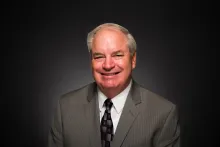
Robin Webber was born in Chicago, Illinois, in 1951, but has lived most of his life in California. He has been a part of the Church of God community since 1963. He attended Ambassador College in Pasadena from 1969-1973. He majored in theology and history.
Mr. Webber's interest remains in the study of history, socio-economics and literature. Over the years, he has offered his services to museums as a docent to share his enthusiasm and passions regarding these areas of expertise.
When time permits, he loves to go mountain biking on nearby ranch land and meet his wife as she hikes toward him.
