

Robin S Webber
This transcript was generated by AI and may contain errors. It is provided to assist those who may not be able to listen to the message.
And the title of my message is simply this, Being a Kingdom Bringer. Being a Kingdom Bringer. Maybe you've never put those two words together. We always think about Christ bringing the Kingdom. But to recognize what our role right now is as witnesses of God the Father and Jesus Christ, and what our current role is as far as being Kingdom Bringers in our everyday life. We are here right after the festivals, as I mentioned. We heard about the plan of God, the purposes of God, the personage that God has put front and center as far as bringing the ultimate fullness of His Kingdom, which is Jesus Christ.
We also heard messages that allowed us to explore ourselves and where we are at right now, where we perhaps need to be as we grow in the grace and the knowledge of Jesus Christ. And that's perhaps what I'm going to touch upon a little bit in the course of this message. At least in Oceanside, and I think sometimes God inspires perhaps different themes at different sites, all out of the same scripture. But sometimes it kind of comes together as a cohesive whole. I would say that the theme that we experienced in Oceanside was that we are now preparing, we are now preparing to become a kingdom of priests before our God, to serve our God, and to serve others by teaching them the ways of God as we become the glorified children of God.
And He continues to add and to develop His spiritual family. It was very, very, very exciting. I'd like to go to a very fundamental scripture that perhaps all of us know, but I'd like to unpack it for a moment. And then this afternoon we're going to center on the third part, which will dovetail with what Mr. Hall brought us. But as we sometimes need to come to understand, repetition is the best form of emphasis.
Let's open up our Bibles. That's why we're here. Mine's open. I hope that you'll join me, even though we're virtual. And let's go to Isaiah 2. If we'll go to Isaiah 2 for a moment, I'd like to just read a very fundamental passage about the pilgrimage that is going to occur in the future by God's grace and by God's intervention, as He calls nations and peoples around the world, but also our calling and our invitation now. In Isaiah 2, in verse 1, the word that Isaiah the son of Amos saw concerning Judah and Jerusalem, and now it shall come to pass in the latter days that the mountain of the Lord's house shall be established on the top of the mountains.
That means on top of the kingdoms, on top of empires, on top of nations. This is not speaking geographically or topographically. We're not talking about being on top of Mount Ararat. Again, that's already been there, done that with Noah. This is talking about in the future when God's kingdom, centered in Jerusalem, is going to reign supreme and shall be exalted above the hills, and all the nations shall flow to it, and many people shall come and say, Come and let us go up to the mountain of the Lord.
So that's their desire, and they're responding to the invitation of the Christ now on earth. Come and let us go up to the mountain of the Lord, to the house of the God of Jacob. So that's the first part. Number two, and He will teach us, train us, teach us, disciple us in His ways, with the capital H, His ways, not our ways, not just simply new and improved, but different, spiritual, holy, not of this world, not from this world, but brought down from heaven, were to be instructed, now and then.
And then notice what it says here, the third part then, and we, we, this is a declaration, a declaration, and in that sense a promise that we will walk in His ways. Well, here we are now. We lived out the millennium, as it were, and we touched on eternity during the Feast of Tabernacles in the eighth day. So the lecture is over, and now here we are. We're, we're, we're back in the lab session. We're here in the workshop, the workshop of hearts and minds and souls and beings, being our being as a human being, to learn what it means to be a new kind of man, a new kind of woman, a new creation, a new spiritual community, and yet also at the same time, while we're still in the age of man.
My, when we think about, when we think about when we think about so often, I think in our Church of God culture, if I daresay, our Church of God minds, we tend to project the Kingdom of God in the future. We look forward to it. We see it, in a sense, coming yet, and not yet arrived. That tends to be our general thought. In other words, if I can use this word, you might want to jot it down. We tend to project the future and look forward to it, even as we pray, thy Kingdom come.
But what I want to throw out at you this afternoon for your consideration and further study is this. Is the Kingdom of God simply a projection into the future, or is it our election today to experience? Our election, not that we raised our hand and we elected ourselves, but to realize that the election, the choosing, the choice, the selection, the election came from God, that you and I might have the honor and the privilege to be a Kingdom bringer, not just a Kingdom-hopper, not just looking through a telescope into the future, but recognizing that in part it is incumbent upon us now to be a witness, a witness of that King, of that Kingdom, of that way of life, as subjects, as citizens of that Kingdom now.
Again, let me come back a second to draw you into the message. Do you view yourself—and maybe you've never had it quite put this way, and that's why we keep on trying to put some seasoning on the meat of God's word—do you consider yourself an active agent and a Kingdom bringer in the sphere, your sphere, your area of influence in your life as we begin to proceed from the feast forward into the world that we've been drawn from? I think it's an important question that we ask ourselves, a very important question to consider. The question comes into play as far as the Kingdom of God, and I'm going to share a thought with you. I've used this material before for a moment because I think it is as clear as any material that I've read, and I've used it in sermons, I use it in the writings that I share with others, to really display that the Kingdom is not just something off in the future, but is now, is present, is with us. Allow me to read for a moment from again the Interpreter's Bible Volume, Volume 7, page 656, and it's under the title, The Kingdom of God is at Hand. Let me read Mark 1, 14 through 15, because this is seminal to our message that I want to share with you today. In Mark 1, in verse 14, and it says, now after John was put in prison, Jesus came to Galilee, preaching the Gospel of the Kingdom of God, and saying, the time is fulfilled, the time is fulfilled. That means something has happened. It's not just off in the future, but something has happened. The time is fulfilled.
And the Kingdom of God is at hand. If you go to the NIV version, or if you go to the New Living Translation version, it says, the Kingdom of God is near. Repent and believe in the Gospel. So, what does it mean there when it means that the Kingdom of God is at hand? Let's understand something. I'm not talking about the Kingdom of God and that sense being in its fullness at this time. We are still in this world. If you don't believe it, just read the news. Christ has not yet returned to this earth in Todos, along with the heavenly host and along with saints, and that the kingdoms of this world have become the kingdoms of our God. But the Kingdom of God is at hand. It says here, out of this commentary, this was beyond all the questions, the main subject of Jesus' teaching. What is that? The Kingdom of God. Now, I'm going to set the table here for you, and it's going to be important because this is going to speak to you and to me as we have this discussion, as we have this talk. What is that Kingdom? What is the Kingdom?
I'm going to read it slowly. The Kingdom is the reign of God. It's the reign of God. It's His sovereignty over mind and heart and will in the world. It's His sovereignty. I'm going to repeat that because only you can answer if you are experiencing the Kingdom reality today in your life and thus can be a Kingdom bringer to others. It is His sovereignty over our mind, our heart, our will, and in the world. Now, listen to this. It's sonship to God and brotherly relationships, brotherly relationships with men. It's the future. It's the future. But to end the quote, whenever a human life is brought into harmony with the Father's purpose, it is present.
The Kingdom of God is not just something ethereal, kind of out there and beyond us. Jesus Christ came when the time was ripe and right as He entered human history and interrupted it and began the inauguration of the Kingdom of God on this earth when He came as God incarnate, when He came as eternity wrapped in human flesh to live amongst us, to tabernacle amongst us, to dwell amongst us, and to set us an example. He said, now is the time, and He said, and to repent. In other words, get a mind that fits that Kingdom because our mind, even by itself, does not fit. We need to recognize that. I want to piggyback on my friend David's message for a moment about being a light because he not only gave an announcement, but to those that would believe that God Almighty actually sent His Son to this earth and believe in His words, believe in His words, we'll recognize what it says in Matthew 5, 14-16. He gave us a responsibility because salvation is not just personal. Salvation before God that only comes from God to the grace of God, which is the gift of God, also comes with an assignment and with a responsibility so that God knows that we really got it and know that we have been touched by God and that He now dwells in us. And it says this in Matthew 5, 14-16, you are the light of the world. A city that is set on a hill cannot be hidden nor do they light a lamp and put it under a basket, but on a lampstand and it gives light to all who are in the house. Let your light so shine before men that they may see your good works and glorify your Father, which is in heaven. We're a light. We're to create an effect.
In times before Mr. Edison, and even since that time out of the country, sometimes when you put a candle in a kitchen window on a sill and it's totally dark out there in the countryside and there's somewhat of a leveling to where you could actually look and see that light, that one little light out of that candle can pierce the darkness, can be seen at a great distance and make an impact, and bring a weary traveler or a weary guest or pilgrim or sojourner to comfort, to warmth, to a meal, and to know that a home is being shared.
With all that thought, then, I want to share this afternoon how Christ light in us and fulfilling the responsibility that God gives us is called being a kingdom bringer. And my question I'm going to keep on coming back to you because only you can answer that. I can talk to you, I can share scripture to you, and I will be doing that, but it's between you and God. It's between you and God as to whether or not you will reach deep with the Spirit of God in you and recognize the incredible opportunity you and I have now, not in the future alone, but we're in training as priests in training to serve our God under the great high priest Jesus Christ to share with others in the future. But we cannot share in the future if we're not learning that assignment now. So let's talk about being a kingdom bringer. How can this be? I want to share something with you. Join me if you would in Matthew. Excuse me, can I say Matthew? I want Mark. Let's go to Mark. In Mark 12, I want to show you something here. You've heard this before. We don't always read it in CODO, and I want to do a lot of reading today. I like sharing scripture because if there's any argument that you have, then it's not with me. It's with God. It's not my instruction. It's God talking to us through the Holy Word. So let's take a look at this where it says in Mark 12. Then one of the scribes came, and having heard them reasoning together, perceiving that he had answered them well, asked him, which is the first commandment of all? What's the big one? What's numero uno?
And Jesus answered him, the first of all the commandments is here. Hear, O Israel, the Lord our God. The Lord is one. So he starts out out of the echo of Deuteronomy, what we call the Shema. And to hear in the mind of the Hebrew mind and in the Hebrew heart is not just auditory. It is a compulsion to obey. To hear and obey. To hear was to do. Hear, O Israel, the Lord our God, the Lord is one. And you shall love the Lord your God with all your heart, with all your soul, with all your mind, and with all your strength. And this is the first commandment, but it's not alone. And the second is like a dendhood. And it's this, you shall love your neighbor as yourself, and there is no other commandment greater than these. So the scribe said to him, well said teacher, you have spoken the truth. For there is one God, and there is no other but he. And to love him with all the heart, and with all the understanding, and with all the soul, and with all the strength, and to love one's neighbor as oneself, is more than all the whole burnt offerings and the sacrifice. It's better than the ritual. It's better than the coming and the going.
This is what is being said. This is the deep part of what God wants us to be a part. Now, verse 34, notice this, please. Now, when Jesus saw that he answered wisely, he said to him, you are not far from the kingdom of God.
But after that, no one dared to question him. I would suggest, as I read this, this has a twofold thought in it. Number one, Jesus was God in the flesh, and God the Father used him in his earthly ministry to inaugurate the kingdom of God.
And so this scribe was right smack dab right up against the king of that kingdom. He was in the presence of the kingdom of God. That's one thought. Allow me to share another thought. Another thought would be simply this. He internalized this. This scribe was going deep, as we might say. He got it. He understood what the message of the kingdom was. What a kingdom bringer was like. Jesus was the ultimate kingdom bringer. And he came to this earth to tell us what that kingdom was going to be like. And those commandments tell us what it was going to be like. Remember when I mentioned the definition of the kingdom of God, the sovereignty of God over heart, and mind, and soul, and that the kingdom was not only to have that sovereignty of God over our heart, mind, and soul, but it was to have brotherly relationships with others. Sometimes, if you look at those two commandments, you sometimes would like to just leave it off the first one. Because it's you and me, God. Just dealing with you is kind of easy, but it's what's down here below that I'm in the midst of. It's dealing with people like me. Oh, human beings! And what do you do with people at times that you want to love, but they're unloving? You want to give, but they're not giving? You would hope that the heavenly Jerusalem had come down and that all the citizenry was holy. But look what I'm stuck with, and we'll talk about that a little bit later as we go on. So we look at this and realize that what we have here is to understand that you and I have been called to be a witness of that kingdom. In Acts 1 and verse 8, you can just jot that down. And again, recognizing the original audience that that was spoken to in the book of Acts, but we can draw the principle because as those gentlemen, the 12 were disciples of Jesus Christ, we are no left—they had a very special role. We understand that. Got that. So we have to kind of break that down, but we can build upon that. We can extend upon that when it says, and you are my witnesses in Jerusalem and Samaria and to all ends of the earth. And that's where the body of Christ is today. And we continue to be those witnesses. So often we think of witnesses—excuse me—witness comes from the Greek word martis, M-A-R-T-U-S, and we often think of a of a martis with martyr, which means somebody that has died, died for the faith, died in the name of Jesus Christ, died for Christ down through the ages. But the word martis is also, in a sense, a legal term, a standing of somebody that has a testimony, has a witness, has hands-on facts of what they are talking about. And that's where you and I come on, and not as dead martyrs at this point, other than we are to die daily, die daily before God and Christ and surrender ourselves, but we have a witness to give. We need to understand that.
Now to understand something else is to recognize that when we say that we've been called to be a witness, I would hope today that in some small measure I am more of a witness at this stage of life, and I hope to be much, much more after this message and during this message. Being a witness for God the Father and Jesus Christ and the kingdom of God is something that you continue to grow and to mature in, especially when you come to this reality that it's not just about—it's not about me. It's about God. It's about Christ. And it's not only for personal salvation. That was something that was drilled in very early on, as we were spoken to decades ago, that salvation is not just for me to get mine and get the ladder into the kingdom or cross the bridge on my own, to the kingdom. It was to not only serve God and to be with God, but also that God, as we came to Him and became more like Him, we were going to serve others. That's the call that you and I have. He gives us a spirit, and that spirit allows us to be a witness. I like to make a quote here for a second. It's from N. T. Wright's book, Simply Jesus. But I think it's what will enable us and empower us moving forward as we come off the festivals of the Feast of Tamarindacals in the eighth day. Hear me out, please. Again, N. T. Wright from his book, Simply Jesus. Speaking of the Spirit of God, a new power is let loose in the world. A new power is let loose in the world at Pentecost as those original witnesses. As we experience Pentecost, as we experience the Spirit of God coming into our lives, it's let loose. Now listen to me, please. Think where you are today now that you're back home.
Maybe you have challenges, as I have challenges, who, Susan is upstairs listening on her computer, as we all have challenges. Nobody has the silver spoon in this life. We all have our challenges. We all have our difficulties. We all have our issues that I'll go in a little bit later on. So listen to this, please. A new power, speaking of the Holy Spirit, speaking of the indwelling of the Father and the Son's Spirit—literally tabernacle, literally dwelling, imbibing, residing, making a home in us. The Holy Spirit is not a holy spook.
It is not ethereal. It is not just a spiritual power tool. It is God dwelling in us, as we'll illuminate later on as we go through the book of Ezekiel.
It is the power to remake what is broken. Do you have relationships that you now have homework and hard work on? Maybe starting with God Himself, to reconnect starting today, or with a family member? We'll talk about that as we go along. Or somebody at work, or somebody in the church, or somebody at school. It has the power, real power, to remake what has been broken, to heal what is diseased, not only physically, but emotionally, mentally, to restore, to bring back, to make good that which was lost. That is the power. That is part of the glory, God's glory, that is in us. For you and me to be a kingdom-bringer starting today. It is interesting that in the book of Acts, I think it is Acts 4, verse 13, you may want to jot it down, that when Peter and John and the other disciples were hauled in to see KFS and the other high priests and different members of the temple court, they were Galileans. There was somewhat of a snobbery from the Jerusalem crowd. Galileans would be recognized because of the clothes that they wore, or perhaps their particular accent. They thought, well, who are these unlearned men? But here's what it says.
But they know that they recognized that they had been with Jesus.
There was something different about them. To borrow Dave Hall's line out of the scripture, there was something shining from them. There was something different. They recognized that these people, these Jerusalem elite, recognized that these unlearned men had rubbed shoulders, had rubbed hearts, had walked a path that made them completely different, and that there was something residing in them now that created a witness. And I would say at that moment, as they were in the temple court, before the temple judges, before the men that thought they knew God but had rejected Jesus, that they recognized that these men somehow were different. Here's the line out saying, those apostles at that moment were kingdom-bringers. My question to you as we continue to proceed—and I'm seeing myself on the screen, so I'm like looking in a mirror right now, it's simply this—can I say that when people come into my life, when I talk with them, when I listen to them, can they say that Robin has been with Jesus, that Robin has been with Jesus? Pretty simple question that only others can answer. Can people say when they see you that you have been with Jesus, that you have been near that kingdom, just like that scribe described, as the scribe described him about Jesus himself? I want to share some thoughts here. Let's go to Genesis 1. It's going to build upon what David spoke about.
Genesis 1. The four most important verses in the Bible and the rest of the Bible is built upon these four words. In the beginning, God—that's the foundation.
What is all around us is not accidental. It's not by the nature. It's Father God, and it's the Word. And by the Word, all things were created.
When you come to understand this, you come to understand that the world was created and has a design, and not just simply accidentally made. We are not accidents. We are made in God's image. We are to live a life of design, not accident after accident after accident.
We have the greatest hope in the world. That's God Almighty and Jesus Christ and their spirit residing in us. In the beginning, God created the heavens and the earth, and the earth was without form and void, and the darkness was on the face of the deep, and the Spirit of God was hovering over the faces of the water. Then notice right here it says that the world was without form and void, and darkness was on the face of the deep. It was dark. Then God said, let there be light, and there was light. What I want to share with you is simply this. God created light. Boom! And there was light. Created light. The world was without form, was without void, and it was dark. As we re-enter our world after the feast, I can only appreciate that our world is to one degree or another, because we have not yet obtained, as the Paul himself says, I have not yet obtained, I have not yet obtained, but I move forward towards the high calling, the upward call of God. I would suggest, knowing the number of people in this audience, that there is darkness, that there are parts of our life right now that are without form, without void, that are in the void, and that are dark, and that we have some homework and some hard work to be a light for God almighty and Jesus Christ, and to be a kingdom-breaker to those that are in our life. I'd like you to go to Revelation 22 for a second. We're going to go from the beginning to the end, because I'm going to ask you some questions here. We're going to take a test in a moment. In Revelation 22, speaking of that ultimate Garden of Eden, which is eternity, which is the New Jerusalem, I just want to read a few verses. He showed me a pure river of water, of life, clear as crystal, proceeding from the throne of God and of the Lamb. And in the middle of Hood Street, and on either side of the river, was the tree of life, which bore twelve fruits. Each tree yielding its fruit every month, never stops. And the leaves of the tree were for the healing of the nations.
And there shall be no more curse, but the throne of God and of the Lamb shall be in it, and his servants shall serve him. And they shall see his face, and his name shall be on the foreheads, and there shall be no night there. They need no lamp nor light of sun, for the Lord gives them light, and they shall reign forever and ever. That's projection. That is what is to occur. There will be no sun. There will be no moon. God and his Christ will be in place on their thrones, the Lamb. They will be the light. Now, you know, and I know we can't even begin to understand what it means, that unapproachable light that is mentioned by Paul. But we're going to see God as he is, and we're going to move beyond that. But my question is, building upon what David said, we have some homework and some hard work to be alive. You know, it's interesting here that it mentions this word, these words here, about these leaves that are a healing of the nations.
I'd like to borrow a few words out of an article that I recently wrote, called, Living in the Light of Eternity Today. We're going to take a test, okay? That's what I said in the article. Maybe you've read it, maybe you haven't, but I've got your fair and square right here right now. You can't get away, okay? So we're going to take a test, and here's the name of the test. It's called the Living in the Light of Eternity Today Test. Because again, there is a tension between the past, the present, and the future. There's always a tension of what God is doing. It all comes together. So only you can answer this, and a few instructions. Number one, it's not multiple choice. Sorry about that. And this exam can only be answered by yes or no.
And you don't have to turn it in. I'm not going to grade it. It's going to be between you and God. And so this is good. I'm going to be taking it with you, okay? God knows your answers already, but you get to admit them to Him. Confession is good for the soul, so make sure you turn off your mute button. Nothing audible, okay? Here's what I'd like to ask you. As we recognize that we are to be kingdom bringers, wherever we are, to be that light, only you can answer this. Number one, do we personally bring life, healing, and times of refreshing, where relationships have died and hope is lost? Do we personally bring light and healing and times of refreshing? Are we like cold water on somebody's face or soothing warm water when that is needed? Does it heal? Does it refresh? Is it a balm? Are people helped by our presence? We know we are helped when we come into the presence of God. Are people helped when we come into their presence?
All people. Because God said we're not to be a respecter of persons. You thought you had it until I sent all people.
As Jesus, as the man asked Jesus, who then is who then is who then is neighbor?
And then that's where we find that neighbor is anybody that is in our path. Jesus always dealt with that which was in his path. Didn't necessarily deal with what's over the hill, but what was in his path. Who is in your path? Who is your neighbor? My closest neighbor is my wife. She's upstairs right now. Our children, our grandchildren, all of you that are here in our church community. Our neighbors. You can add your co-workers.
You can add fellow students at school. You can add the stranger that's on the street.
Shakespeare said that the whole world is a stage and you and I walk on it.
Jesus in that sense never met a stranger and he was always a healing balm.
Do we make room in our end for others that have only known closed doors?
Do we make room in our end in our lives?
Jesus knew all about that. Joseph and Mary knew all about that. We are to be a kingdom bringer. Jesus went as he told his disciples at the end, I have gone to prepare a place for you. There's going to be room. It's not just going to be a house, it's going to be a home.
And you're welcome.
Or do we bar our doors? Do we bar our windows?
Do we bar the different interests of our life and say, nobody can see?
Brush off people and go away. Do we build walls or do we build bridges in regards to relationships?
Walls or bridges? Kind of simple. I'm not even going to throw in a third kind of structure. Do we build bridges or do we build walls where people can't even get near us?
Jesus opened himself up to everybody. Children, Samaritans, lepers, what we might call the those that were not on the plate of normal, everyday society. People that people looked down on, that they had no time for, that they kept outside the camp. Jesus, welcome to them.
Do we use our ears more than our mouth? Do we exercise patience?
Or do we always push the anger button?
Giving you time to think about that.
Do we seek cures and solutions from scripture for people whose lives are in pain? Do we go to the Bible?
Do we go to scripture?
And that's something I think that more than ever, before our church services, after our church services, in our discussions on the phone, we need to be more than ever growing in that spirituality of talking more about God and less about ourselves. And imagine what kind of a light that would beam to others, that when we're in Sabbath services after church, and sure, it's a time to share and this or that, and we did this this week or that with this week, but beyond that, to have the spiritual environment, this kingdom readiness to share what God is doing in our lives, what he's done this week. And if a brother or a sister come to you to sit down with them, to talk to them, to listen, don't be like Job's friends, it didn't work the first time, and listen to them. Do we bring joy in lives that are filled with sorrows? Do we wipe away tears from those who cry, or do we make people cry?
It's pretty blunt. But preaching is about meddling, and I'm meddling with you right now, because only you can answer those questions. Do we bring blessings where there have only been cursings? Is there a light in the darkness? Do they recognize that there's something different about us because of what we have internalized?
Do we bring light where only darkness has been known? I've often said that over the years that it's not our responsibility to choose God's family, it's our responsibility to accept God's family, and to what is in our way here to deal with.
I want to share a few thoughts. I'm going to go about five or ten minutes, so keep your eye on the topic. I'm going to go about the topic in a minute. I'm going to go about the topic in a minute. I'm going to go about the topic in a minute. I'm going to share a few thoughts. I'm going to go about five or ten minutes, so keep your seat belt on. I want to give you some thoughts to think about.
I realize that all of us are human beings, and we're going to be making our mistakes. But here's what I want to share with you as we galvanize ourselves and buckle up for the ride that's ahead of us towards the Kingdom of God.
In the beginning, God. I mentioned this during the eighth day message. This is going to be my personal goal this year.
That with every...
I'm going to go into reverse. With every deed that stems from an action, that stems from a word, that stems from a thought.
We'll go back to the very engine of my life as to what makes me tick. What are my motives?
If we're going to be a light and if we're going to be a kingdom-bringer, a child of God, a disciple of Jesus Christ, elected to be in training now for the Kingdom of God and for eternity, simply put four words.
In the beginning, God. That's got to be the foundation. That's what's got to be the straw that stirs my drink.
That's got to be the battery that rubs up my heart. Because, you know, you can do all the right things for all the wrong reasons. You can look really good on the outside, but we have motives that are generating some of the things that we're doing, and our motives do not necessarily match our outcomes. It's not totally outflowing, outgoing concern.
It's not tethered to the heart of Christ in us, but tethered to something else that's going on.
We've got to go to the very beginning. We've got to go to what our heart is grounded in.
What makes us tick?
Is it our thoughts? Is it our ways? I want to share something with you. We're going to come up to having to make decisions this year, and we're either going to use our spirit or we're going to use God's spirit. I want to make a quote here. I kind of want to put it in a sequence right here for all of you. It's from Victor Frankl's book. It's a quote that I didn't mention that I wanted to mention during the eighth-day sermon, but I'll mention it to you. It's from his epic book, Man's Search for Meaning, that he wrote after Matthew. He wrote after World War II, Victor Frankl, psychologist.
Things are going to come at us that we're not prepared for. Just like the other day, Art and Beckman Toya were in this dastardly accident.
We can't be in an accident waiting to happen because things are going to just come at us left and right that we're not necessarily prepared for. We have to kind of visualize something. We have to know what we're about in doing our father's business and being a kingdom bringer, not just a kingdom receiver, but being a witness and being alive. Allow me to share this.
Think of when that car hit the Montoya's.
There was a stimulus and then a response. The car was spinning around.
Frankl, between stimulus and response, between stimulus and response, there is a space. And in that space is our power to choose our responses.
In our responses lies our growth and our freedom.
Stimulus and response.
As things come up to us, how will we respond? There's a space.
And will we turn to our way or the highway, or will we turn to God's way? I'd like you to turn over to Ezekiel 36 for a second. Okay? Ezekiel 36.
And notice what it states here.
In verse 26, God's promise is about His new covenant.
It's about that heart that changes our motives. We begin to have the heart of Christ in us, and we have the peace of God beginning to rule over our hearts.
I will give you a new heart and put a new spirit within you, and I will take the heart of stone out of your flesh and give you a heart of flesh. And I will put my spirit within you and cause you to walk.
We will walk in His paths. Walk, and you will keep my judgments to do them. A new heart, a new spirit, a new mind, to galvanize us in that space between stimulus and response, to be a witness. Now, I want to share something with you. That doesn't mean just because we have God's spirit and a new mind and a new heart and a new spirit, that things are going to happen overnight and change. You may be in a situation in marriage that is going to drop you to your knees, where you've done everything that you can, and you need God's help.
Because you're not going to be able to do it with your good looks or your dashing personality, because it hasn't worked so far.
And you may have to be on your knees again and again. You may have a challenge with a child that you love, but that love is not being returned. You may have an adult child that you're reaching out to and that you're trying to help, but they're an adult. You may have a situation at work.
You may have a situation at school. You may have a situation within one of our congregations.
And because we pray to God, does not necessarily mean it's going to change overnight.
You know, sometimes in our American mentality, we want everything done and done now.
We want it to be, well, God, I just prayed to you over and out. I'm ready. Do it.
I said my prayers. I've got your spirit. I'm your disciple. No, no, no, no. It's not how it works.
No, when you go back and you think about waiting on the Lord, you think about Moses. Excuse me. Think about Noah. He preached for 120 years. It wasn't a one-night tent stand down a corner preaching to the world. It was 120 years. You look at Israel in the wilderness as God died and tooled them. It was 40 years. You look at Judah being in Babylon. It was 70 years.
You look at the time between Malachi and the time when Matthew was written. That was 400 years.
God does not always answer immediately because it's in his wisdom. And it's what he's doing as he's tooling and dying us to establish us as spirits of experience, just as the Great High Priest, Jesus Christ, to wait on the Lord. And we need new tools. We need a new mindset. I want to take you to 2 Peter for a second. I want to take you to 2 Peter.
And I'm actually going to read. I'm going to finish. I think this is just going to be it.
I'm just going to read from 2 Peter in conclusion to encourage you to be a kingdom bringer. And sometimes being a kingdom bringer is lonely work. You, Christ, and the Father.
And they know exactly where you are. And they know the witness that you are developing and the patience that you are developing. 2 Peter. This would be my encouragement for all of us as kingdom bringers and lights to continue doing our responsibility, but to recognize that also God is working on us.
If we live by the minute, and if we live in the moment, we'll be disappointed minute by minute. But if we live with eternity in our mind and begin with that end in mind of what we are being called to and what we are experiencing, that is the path that Jesus Christ set for us. For the joy that was set before him, he endured the cross. And I realize that some of you, dear brethren, are bearing heavy loads and dealing crosses, not always of your own making, but you've come alongside somebody, somebody in your family, somebody at work, somebody at school. And for this moment, in this time, you have been called to be a light and to be a kingdom bringer. Notice what it says in 2 Peter 1.
This is a letter from Simon Peter, a slave, a slave and an apostle of Jesus Christ. I'll add a kingdom bringer. I'm writing to you who share the same precious faith we have.
And so I'm speaking to all of you that have the same precious faith that I have and you have, Susie has upstairs, that God has granted us by his revelation. This faith was given to you because of the justice and the fairness of Jesus Christ, our God and Savior. May God give you more and more grace and peace as you grow in your knowledge of God and Jesus, our Lord. By his divine power, God has given us everything we need to live a godly life. He's given us the entire spiritual tool chest. We just have to use it. We have to become acquainted with it. And the more that we use it in practice through God's grace makes it perfect. We have received all of this by coming to know him and the one who called us to himself by means of his marvelous glory and excellence. And because of his glory and excellence, he has given us great and precious promises.
These are the promises that enable you and me to share his divine nature and escape the world's corruption caused by human desires. In view of all of this, make every effort to respond to God's promises. Supplement your faith with a generous provision of moral excellence and moral excellence with knowledge. Morality is out the window today. Morality, virtue, it's down the sink in society.
It's a course. It's a crass. It's a degrading society and becoming more degrading every day.
I'm not making this up. All you have to do is turn on the radio, turn on the news, read the newspaper, be at school, be at work.
Virtue is increasingly a lost heart. And add to that the knowledge with self-control.
Add knowledge with self-control. If you want to make one model, just this year, go to the book of James, the book of wisdom. Be swift to hear. Slow to speak.
Avoid anger. Just those three things can change your life. And you can be a light and a kingdom-bringer to others. Swift to hear. Slow to speak.
Slow to anger. Everybody's talking over everybody today, and nobody's listening.
Are you with me?
Are we inhabiting the same space in the same world?
Let's not be like the world, brethren. Let's use that book of wisdom in James so that we can have self-control. I spent a whole three hours about self-control and be talking to myself. But that... three simple steps. Two ears, one mouth. God's telling us something.
Swift to hear. Slow to speak.
Put down the fist. Have open hands. Reach out.
It was self-control with patient endurance. And patient endurance with godliness. Godliness with brotherly affection. And brotherly affection with love for everyone. Remember what was spoken about? What the kingdom of God... it is brotherly relationships.
And there's a lot of people, even in our church community, that are single, that are alone. They come to church, and you can be lonely in a church.
Lonely. In a church setting. Lonely wanting to have spiritual conversation.
Lonely wanting to talk about God rather than yourself, and stirring one another up with what God is doing in our lives, rather than what we bought at Walmart last week.
That's the time to stir one another up. To galvanize one another in this world that we're living in. And brotherly affection with love for everyone. The more you grow like this, the more you become a kingdom-bringer, the more productive and useful you will be in your knowledge of our Lord Jesus Christ. But those who fail to develop in this way are shortsighted or blind, forgetting what they have cleansed from their old sins.
So, dear brothers and sisters, Peter speaking to you, me speaking to you as your pastor, work hard to prove that you really are among those that God has called and chosen. Elect it! They be kingdom-bringers! Do these things, and you will never fall away. And then God will give you a grand entrance into the eternal kingdom of our Lord and Savior Jesus Christ. Do be a kingdom-bringer now, and we are granted then entrance into that eternal kingdom. Again, remember, there is this tension in Scripture, tension in God's purpose, who is outside time and space, past, present, future, all together. I leave you with this. All of us, we sincerely need to pray that Thy kingdom come.
But to recognize that now, even as Jesus said in Matthew, He said that the kingdom of God is like a mustard seed, where a man takes a seed and plants it in his ground.
In his field. And, ultimately, that tree grows and grows and grows.
Well, that's part of our role today. That we have been granted that vision, as Matthew calls it, the kingdom of heaven and other gospels, the kingdom of God, that you and I have been given a seed to plant, to put the flag of the kingdom down and plant it, not as a conquistadore in California 500 years ago, but to plant the flag of the kingdom of God and plant the mind of Christ, the heart of Christ, the love of God, and allow it to illuminate out of us.
So that as we go day by day, that as God is working with other minds and as people, there's something different about that individual. There's something different about that individual. And some people that God might be calling will say, you know what? I get it. They've been with Jesus. In fact, there are a lot like Him that are growing in the stature.
Let's continue to keep on keeping on. Let's understand our role now, and let's move forward in faith and confidence.
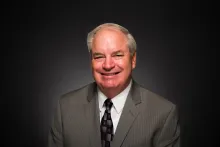
Robin Webber was born in Chicago, Illinois, in 1951, but has lived most of his life in California. He has been a part of the Church of God community since 1963. He attended Ambassador College in Pasadena from 1969-1973. He majored in theology and history.
Mr. Webber's interest remains in the study of history, socio-economics and literature. Over the years, he has offered his services to museums as a docent to share his enthusiasm and passions regarding these areas of expertise.
When time permits, he loves to go mountain biking on nearby ranch land and meet his wife as she hikes toward him.
